In 2007 bassist Anneleen Boehme was one of the founders of LABtrio, which is considered as one of the most acclaimed Belgian jazz bands of the past decade. Just like her companions Lander Gyselinck and Bram De Looze, she quickly asserted herself in the most diverse contexts. Now Boehme is launching her "dream project": Grand Picture Palace. A jazz quintet and a string quartet that blend different worlds together. Boehme leads and plays bass and has been writing eight compositions that break through genre walls, music both powerful and elegant, showing how jazz and classical music can balance each other without cliches.
All recordings were made in the early summer of 2020 in the studio of mentor and fellow musician Nicolas Rombouts. The self-titled album 'Grand Picture Palace' will be released on February 19th 2021.
Buscar:bassi m
For Another Michael, it all boils down to trust. In mid-2017, the critically acclaimed indie three-piece packed their bags and collectively relocated from Albany, NY to a shared house in West Philadelphia. This move signaled not only the start of a new chapter for the trio, but also a deepening of the bonds that would come to define their captivating debut LP, `New Music and Big Pop.' "It's hard for a group of people to get closer than living together," says bassist and producer Nick Sebastiano. "The stronger our connection grew, the more it shaped the music we found ourselves making." It should come as little surprise, then, that `New Music and Big Pop' is Another Michael's most collaborative work yet. Recorded in a small A-frame house-turned-makeshift studio outside Ferndale, NY, the record finds the trio pushing their sound in a dreamier, more folk-influenced direction, building songs around vulnerable, intimate performances using an ethereal palette of breezy guitars, subtle keyboards, and layered harmonies. As on the band's early EPs, singer and songwriter Michael Doherty's mesmerizing voice is front and center here, calling to mind Robin Pecknold or Ben Bridwell in its reedy, crystalline timbre, but it feels more at home than ever before amidst the album's lush, Technicolor landscape, which the band partnered with producer and fellow housemate Scoops Dardaris to create. The result is a masterfully understated record that belies its status as a full-length debut, a thoughtful, poetic, collection all about growth and change, hope and faith, endings and beginnings, delivered by a band that's only just begun to scratch the surface of their story.
• The veteran roots reggae duo returns with ‘Back A Yard' (patois for 'back in Jamaica').
• The 11-song set features longstanding members, Winston "Pipe" Matthews and Lloyd "Bread" McDonald, in the studio with producer/ singer Alborosie, whose deep study of Jamaican music was heavily influenced by the Souls and their heyday at Channel One studio in the 1980s.
• The production features all-star musicians including keyboardist Tyrone Downie (formerly of The Wailers) and bassist Errol "Flabba" Holt (of the historic Roots Radics band).
• The first single is a re-make of "Shark Attack" one of the bands classic '90s hits, featuring a deejay verse by Alborosie.
Wild Pink’s last album, 2018’s Yolk In The Fur, concluded with a song about the strange sense of relief that comes with “letting go of youth.” Frontman John Ross, then in his early thirties, was singing from a place of newfound comfort and wisdom, but it ended with a repetition of the line, “I don’t know what happens next.” The song, titled “All Some Frenchman’s Joke”, is a beautifully concise rendering of a universal milestone: leveling up from the wide-eyed naivety and self-destructive routines of our youth, only to realize that we’re as unprepared for the future as we were for the past. On Wild Pink’s third album and first for Royal Mountain Records, A Billion Little Lights, Ross explores that dichotomy of finally achieving emotional security—of accepting the love and peace he deprived himself of in his twenties—while also feeling existentially smaller and more directionless than ever before. The record is a two-pronged triumph: an extraordinary reflection on the human condition presented through the sharpest, grandest, and most captivating songs Wild Pink have ever composed. The band, which is rounded out by bassist T.C. Brownell and drummer Dan Keegan, formed in New York City in 2015 and put out a handful of EP’s before releasing their critically acclaimed self-titled debut in 2017. It was a sophisticated showing for a band’s first album, but it was the striking maturation of Yolk In The Fur that established Wild Pink’s unique sound: a glistening variety of pastoral indie-rock akin to The War On Drugs, Death Cab For Cutie, and Kurt Vile, but informed by classic American rock poets like Bruce Springsteen and Tom Petty.
With 2017’s ‘Planetary Prince’, pianist/composer Cameron Graves established himself as a visionary creative force emerging from the Los Angeles genre-defying collective The West Coast Get Down.
With his sophomore album ‘Seven’, Graves further expands on his otherworldly inspirations, alongside guitarist Colin Cook, bassist Max Gerl, drummer Mike Mitchell and special guest Kamasi Washington.
Upon an initial listen, the juggernaut metal force and hardcore precision of ‘Seven’ can knock you back. After all, Graves grew up in metal-rich Los Angeles, headbanging to Living Colour as a kid and, after immersing himself in jazz and classical studies for years, he reignited his love for hard rock through records by Pantera, Slipknot and his most profound metal influence, Swedish titans Meshuggah.
But a closer listen to ‘Seven’ reveals a myriad of other influences at work. “Los Angeles is a melting pot of everything,” Graves points out. His father, Carl Graves, was a great soul singer, and you can hear his imprint along with the likes of Marvin Gaye and Otis Redding, on “Eternal Paradise,” which marks the younger Graves’ vocal debut.
Throughout the album, the generation of 1970s jazz-rock fusion pioneers is a source of inspiration. “Our mission is to continue that legacy of advanced music that was started by bands like Mahavishnu Orchestra, Weather Report and Return to Forever,” Graves says. “That was instilled in us by the masters. Stanley Clarke, Chick Corea, Herbie Hancock - these guys sat with us and told us, ‘Look, man, you’ve got to carry this on.’
“Cameron Graves is a musical genius. He has an innovative approach to the piano that is completely unique.” - Kamasi Washington
“In all aspects of his being, Graves embodies intense seeking and absurd skill.”
- LA Weekly
The band that became Nightshift formed in 2019 in the ecosystem of Glasgow's current indie scene. The city's fertile & creative group of musicians have been committed to pushing the boundaries of and blurring the lines between DIY, punk, experimentalism and indie pop for decades now; a home to bands like Shopping, Vital Idles, Current Affairs, Still House Plants, and Happy Meals as well as forebears like Orange Juice, Teenage Fanclub and Yummy Fur. Nightshift slot right in with all mentioned, featuring members from current indie stalwarts Spinning Coin, 2 Ply and Robert Sotelo. Initially formed by guitarist David Campbell and bassist Andrew Doig as a "No Wave/No New York/ early Sonic Youth/This Heat-esque" group, the addition of Eothen Stern (keyboards/vocals) and Chris White (drums) instantaneously transformed their approach (guitarist/vocalist/clarinetist Georgia Harris joined as the band was writing "Zöe"). The band self-released a full-length tape on CUSP Recordings in early 2020, laying the foundation of their sound; hypnotic, melodic, understated indie post-punk with hooks that stick around long after you've heard them. "Zöe" is the band's newest effort, and first for Trouble In Mind. Unlike the band's previous album, the songs on "Zöe" weren't conceived live in the band's practice space, but rather pieced together and recorded remotely during quarantine lockdown, with each member composing or improvising their parts in homes/home studios, layering ideas over loops someone made and passing it on. The isolation actually allowed for an openness and creativity to flow and many of the songs took on radically different forms from when they were originally envisioned. Vocalist & primary lyricist Eothen Stern says "The process of writing these songs separately during lockdown was a kind of exquisite corpse - I liked this gesticulation of reaching out to one another and responding. Building up the next layer and passing it on." Stern says "poetic restraints" to writing & Eno's Oblique Strategies concepts were on their mind when composing the words to the songs on "Zöe" and lists the influence of author Rosi Bradiotti's book "The Posthuman". "Zöe" means "live drive", derived from the word conatus. Bradiotti defines conatus as "an effort or striving, endeavour, impulse, inclination, tendency, undertaking, serving is an innate inclination of a thing to continue to exist and enhance itself." and Stern views it as "...a kind of feminist re-claiming of communal public, anti- privatisation, looking to strive for social and environmental justice. Zöe kind of became a character of striving for me when writing.". "Zöe" kicks off with "Piece Together", a hypnotic song anchored by the band's chanted vocals and serpentine guitar licks. "Spraypaint the Bridge" showcases Harris' clarinet in an unexpected & delightful melodic shift during the song's anti-chorus. Elsewhere tunes like the swooning "Infinity Winner" and "Outta Space"s minimalist, slinky rhythm swirl in a late-night vibe, while "Make Kin" ruminates on "Looking to kinship as a way of engaging with entangled environmental and reproductive issues... how a band is a bond" and lurches forward with kinetic guitar strangling and staccato rhythmic percussion from White and Doig. "Power Cut" is the album's centerpiece, kicking off side two and lures the listener into its world over it's 7-minute runtime. Lulling them into involuntary movement with its waves of melodic harmonies, synth drones and metronomic pulse, until they all come crashing down in the song's dissonant midsection. The band acknowledges the whiffs of nostalgia prevalent in "Zöe"s songs (the title track in particular), and the nature of writing and recording the album is soaked in the self-work, reflection and reevaluations involved not only personally but creatively in each member's lives. Consequently, the album becomes a collection of sketches of hope, growth, awareness of the power of the world and the power of self, kith, kinship, friendship, resistance, and possibility.
‘Pacific Kiss’ is the fourth album from Australian musician David West’s underground pop band, Rat Columns. It was engineered by Griffin Harrison and DW in New York City and Perth, and mixed by Mikey Young in Victoria. ‘Pacific Kiss’ sees Rat Columns plunging headfirst into an azure sea of power pop, rock’n’roll and indie. The tones are bright and optimistic, though fans of confusion and gloom will still find solace in the album’s darker moments, of which there are a few. Rat Columns emerged from San Francisco via Perth, Western Australia in the late 2000’s with the mope ’n’ jangle of their first self-titled cassette release, from which several tracks were drawn for their first vinyl release, a four-song 7” on the San Francisco based indie label, Smartguy Records. From that moment, DW and a constantly evolving troupe of friends and co-conspirators have forged a persistent trail of albums and EP’s on a number of interesting small labels such as RIP Society, Upset The Rhythm, Blackest Ever Black, Syncro-System, Adagio 830 and now the London-based Tough Love Records, who have also released many of David’s eponymous pop records. DW has also found time to play in a number of other interesting outfits, such as Rank/Xerox, Lace Curtain, Liberation, Scythe, Total Control and Burning Sensation over the years. ‘Pacific Kiss’ was primarily recorded in a dingy but comfortable practice space in East Williamsburg, Brooklyn. The core of the record is DW, bassist Max Schneider-Schumacher, drummer Dylan Stjepovic and keyboard wiz Joey Fishman. Additional fairy dust was sprinkled by Amber Gempton and Raven Mahon (vocals), Jef Brown (saxophone) and Mikey Young, who found time to contribute some off the wall guitar solos during the mixing process. ‘Pacific Kiss’ is a record for those astral voyages into the spheres conducted from bedrooms, kitchens, grassy fields and open car windows.
GER Angefangen hat das alles Mitte der Achtziger in der nordhessischen Provinz, im Zonenrandgebiet (so hieß das damals offiziell) in Eschwege. Vier Jungs, die Spaß an Punkrock hatten, dazu ein gehöriges Maß an Talent und Fleiß und in Zimbl einen sehr charismatischen Frontmann und Songschreiber, in Personalunion Sänger und Bassist. Und es hat nicht nur den Bates selber Spaß gemacht, was sie da anstellten. Über die klassische Ochsentour durch Jugendzentren, kleine Clubs und Spelunken, regionale Festivals erspielten sie sich den Ruf, das Geilste zwischen Werra, Fulda und Weser zu sein, was man live erleben konnte. Es dauerte dann auch nicht lange und sie erspielten sich den gleichen Ruf im Rest der Republik. "Unfucked - Live" ist im Original in 1993 bei Snoop erschienen, ihr letztes vor dem Wechsel zur Virgin und das einzige, welches bislang nie wiederveröffentlicht wurde. Keine Ahnung warum, denn es ist ein eindrucksvolles Zeugnis, welche Kraft diese Band gerade live entwickelt hat. Die Aufnahmen selber stammen von 1992, aus dem Outpost in Göttingen und der Weinberghalle in Eschwege. Sie wurden bei Pauler Acoustics gemastert, was schon ein Qualitätssiegel ist und jetzt bei Master & Servant speziell nochmal fürs Vinyl bearbeitet.
The trinity of piano, bass and drums is an ensemble construction with a particularly prominent place in jazz, past and present. Indeed, some of these piano trios are among the most revered and popular groups the music has seen.
The standing of the piano trio in the Norwegian jazz landscape is no different. And like a lot of modern jazz from Norway it has also taken on flavours very distinct to this country.
Pianist Torvik met and played with double bassist Bjornar Kaldefoss Tveite and drummer Oystein Aarnes Vik during a short stint in Oslo.
They quickly hit it off, and the idea of making an album with this trio began to take shape. The resulting album, ‘Northwestern Songs’, was recorded at Newtone Studio in Oslo, June 2019.
Here, Torvik continues to explore the relationships between pop sensibilities and jazz, which was also a feature of the music on his debut as a leader, the 2016 quintet recording ‘Northwestern Sounds’. At the same time, the open and revealing nature of the trio format allows him to further explore and challenge himself as piano player.
Personnel: Arne Torvik (piano), Bj rnar Kaldefoss Tveite (bass), ystein Aarnes Vik (drums)
Mercurial bassist and bandleader Charles Mingus was signed to Columbia Records for the briefest of time during 1959. His Columbia recordings, however, remain some of the most inspired, mood-jumping jazz in history. The flowing sadness of "Goodbye Porkpie Hat" rings like a funeral chorus that pitches headlong into a celebration of Lester Young's life and improvising flexibility, rather than his death. And there's the funky furnace blast of "Boogie Stop Shuffle" , which reaches its glory with Booker Ervin's Texas tenor sax, wrapped tight in bluesy tone. With the index of emotions captured, these songs nail why Mingus is possibly the most relevant jazzer for the '90s generation. He swings and shouts and hollers and somersaults. His tunes either induce foot-stomping with their intensity or reach for poignant yearning with their lyrical tapestry of orchestral colors. --Andrew Bartlett
Columbus, Ohio’s Rudolph Johnson drew comparisons to John Coltrane during his career; like the jazz legend in his later years, Johnson eschewed drugs or alcohol and spent his time every day either meditating and rehearsing on his horn. You can definitely hear
a little bit of Coltrane in Johnson’s playing on this, his 1971 debut release for the Black Jazz label, the first of two he recorded for the
imprint and the first he recorded as a leader after some sideman work (most notably for organist Jimmy McGriff); his ability to explore the upper registers and overtones of his tenor sax while retaining control is quite striking. Of course, this being a Black Jazz release, along with the bebop sounds of “Sylvia Ann” and the mid-‘60s Blue Note stylings of “Sylvia Ann,” there’s the soul jazz of “Diswa” and the groove funk of “Devon Jean,” all played by, as is typical on Black Jazz releases, by top-notch sidemen including drummer Raymond Pounds, who’s layed
with everybody from Stevie Wonder to Pharoah Sanders to Bob Dylan, and pianist John Barnes, whose work is very familiar to Motown fans (Supremes, Temptations, Marvin Gaye). Bassist Reggie Jackson, who appeared on the Walter Bishop, Jr. Coral Keys record we previously released, rounds out the quartet. First vinyl reissue of another stellar Black Jazz release!
Calvin Keys’s 1971 debut album for the Black Jazz Records label announced the arrival of a new star in the jazz guitar firmament. Keys had spent the ‘60s backing up the crème de la crème of jazz organists— Jimmy Smith, Jimmy McGriff, Jack McDuff, Richard “Groove” Holmes—but for his first record as a leader, he was eager to play with a piano player instead. So he recruited one of the best—Larry Nash,
who, besides being a member of the L.A. Express, played with everybody from Eddie Harris to Bill Withers to Etta James. Bassist Lawrence Evans, drummer Bob Braye, and flautist-songwriter Owen Marshall rounded out the group on Shawn-Neeq, which might remind some of Pat Metheny’s early work (Metheny acknowledges Keys as an influence), or Grant Green. But what gives Shawn-Neeq extra depth is that it comes from the heart; as Keys says in Pat Thomas’ liner notes, which feature an interview with the artist: “My thing was, I write about some of the experiences that I’ve had in my life.” Keys has since become a fixture in the Bay Area jazz scene; this is the album that started his journey. Another gem from the celebrated Black Jazz catalog!
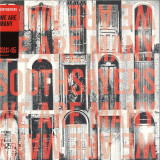
South London-based band Soothsayers are set to release their ninth studio album 'We Are Many'. Held together by heavy basslines, solid grooves, and socially and politically charged lyrics; the album takes the listener into different sonic spaces with elements of dub, Afrobeat, improvisational jazz and electronica.
The initial steps in recording 'We Are Many' came in January 2019 when the band's founders - saxophonist Idris Rahman and trumpeter Robin Hopcraft - set out on a journey to Brazil. With executive production in the Sao Paulo studio by renowned music journalist and author David Katz, they hooked up with bass player and producer Victor Rice who they'd met sharing the bill at Freedom Sounds festival in Cologne, Germany a year earlier. Victor organised a session in Studio Traquitana, home of acclaimed Brazilian band Bixiga 70, and invited a selection of local musicians. Percussionist and singer Ligia Kamara contributed lyrics and melodies written in the studio, and drummer Bruno Buarque, guitarist Joao Erbetta and bassist Victor provided some solid, personality-driven input. Fresh and vital, what came out was a fascinating blend of Soothsayers' dub and Afrobeat mixed with distinctly Brazilian inflections.
After arriving back in the UK, Idris and Robin set about creating the remainder of the album in a different, yet complimentary way, and called on the services of Wu-Lu and Kwake at their The Room studio in South London. Things started to take shape very quickly, Wu-Lu and Kwake combining Soothsayers' music with electronic elements, while also referencing elements of the current UK jazz scene.
When lockdown hit in March 2020, there was still a lot of work to do in order to complete a full album and Robin and Idris set about working on tracks with their musicians remotely. Having time to consider the album as a whole, they found strong connections between the music recorded in Brazil and the tracks recorded in London and they set about fusing and combining these elements further into a satisfying whole.
UK based Sengalese singer Modou Toure was enlisted to guest on one track while percussionists Satin Singh and Maurizio Ravalico were engaged to help affirm a sound-world where Brazilian flavours, such as the low-end Surdo drum, were combined with sounds more readily associated with reggae and Afrobeat.
Soothsayers' three part vocal harmony is a defining factor in this album. With strong references to the vocal styles of reggae legends such as The Gladiators, Mighty Diamonds, Heptones, and Abyssinnians; it has benefited from the long-standing friendship between Robin, Idris and Julia Biel. Lyrics, melodies and harmonies were presented, discussed, explored and recorded at Idris' and Julia's home studio in Streatham in a relaxed and positive way, with concepts from social and political commentary turned into powerful songs.
Themes cover political observations of Trump and beyond alongside Brazil's president Bolsanaro (Rat Race), speaking out against increasing levels of violence from the Brazilian government towards its native and indigenous people (Love And Unity) and keeping hopeful despite the impending horrors of a no-deal Brexit (We Won't Lose Hope).
Elsewhere they discuss striving to create space for meditation and reflection against the background noise of 24/7 news and social media (Move In Silence), the daily grind (No Sacrifice) and workers' rights (Slave), while highlighting those that fall through the cracks in society and end up without a permanent address, what led to this and how close we all are from this happening (One Step Away).
'We Are Many' represents a positive and uplifting statement in the face of challenging times - the overriding force, power and positivity of the music to continue forward, pushing the boundaries of musical concepts into the future.
"Whilst heavy questions of life and death and the future of our species surround us all, music is a guide that can help us perceive the challenges in a different way - a guide that can help us towards a deep inner peace. If we listen, music can help light the way. We hope you will listen, and we hope you will experience the joy, meditative power and beauty in the connection of different musical cultures that was experienced in the creation of this album."
Cocteau Twins were a Scottish rock band active from 1979 to 1997. The original members were singer Elizabeth Fraser, guitarist Robin Guthrie, and bassist Will Heggie, who was replaced by multi-instrumentalist Simon Raymonde in 1983. The group has earned much critical praise for its innovative, ethereal sound and the distinctive soprano vocals of Fraser.
Four-Calendar Café is the seventh album by Scottish band Cocteau Twins. It was originally released on 18 October 1993 on Fontana. The album distinguished itself from the rest of the Twins' catalogue in two major areas: The sound was much more pop-oriented and less ambient than previous works, and Liz Fraser's lyrics were much more intelligible than usual.
Milk & Kisses is the eighth and final studio album by Cocteau Twins, issued by Fontana Records in March 1996. It proved to be their last
The song ''Rilkean Heart'' was a homage to Jeff Buckley, who was a lifelong lover of the work of poet Rainer Maria Rilke.
- A1: White Room
- A2: Sitting On Top Of The World
- A3: Passing The Time
- A4: As You Said
- A5: Pressed Rat & Warthog
- B1: Politician
- B2: Those Were The Days
- B3: Born Under A Bad Sign
- B4: Deserted Cities Of The Heart
- B5: Anyone For Tennis
- B6: Deserti Ride
- B7: Hey Now Princess
- B8: Weird Of Hermiston
- C1: Crossroads (Live At The Fillmore)
- C2: Spoonful (Live At The Fillmore)
- D1: Traintime (Live At The Fillmore)
- D2: Toad (Live At The Fillmore)
Back in print! Gold sleeve 180 gr. Wheels of Fire is the third album by the British rock band Cream. It was released in August 1968 as a two-disc vinyl LP, with one disc recorded in the studio and the other recorded live. It reached number three in the United Kingdom and number one in the United States, becoming the world's first platinum-selling double album. The band's drummer Ginger Baker co-wrote three songs for the album with pianist Mike Taylor. Bassist Jack Bruce co-wrote four songs with poet Pete Brown. Guitarist Eric Clapton contributed to the album by choosing two older blues songs.
For the second disc, Felix Pappalardi chose "Traintime" because it featured Jack Bruce performing a harmonica solo, and "Toad" because it features Ginger Baker's drumming while "Spoonful" and "Crossroads" were used to showcase Eric Clapton's guitar playing.
Originally conceived as a quarantine EP collecting material recorded in Memphis during sessions for ‘The Unraveling’, the project quickly grew to include provocative new songs written and recorded over what Drive-By Truckers co-founder Patterson Hood calls “this endless summer of protests, riots, political shenanigans and pandemic horrors.”
Tracks such as Hood’s ‘Watching The Orange Clouds’ - inspired by the protests which followed George Floyd’s murder by Minneapolis police - and a fiery cover of The Ramones’ classic ‘The KKK Took My Baby Away’ (vocals by bassist Matt Patton) were exchanged between Hood, cofounding singer / songwriter / guitarist Mike Cooley, bassist Patton, keyboardist / multiinstrumentalist Jay Gonzalez and drummer Brad Morgan and then mixed by long-time Drive-By Truckers producer David Barbe.
South London-based band Soothsayers are set to release their ninth studio album 'We Are Many'. Held together by heavy basslines, solid grooves, and socially and politically charged lyrics; the album takes the listener into different sonic spaces with elements of dub, Afrobeat, improvisational jazz and electronica.
The initial steps in recording 'We Are Many' came in January 2019 when the band's founders - saxophonist Idris Rahman and trumpeter Robin Hopcraft - set out on a journey to Brazil. With executive production in the Sao Paulo studio by renowned music journalist and author David Katz, they hooked up with bass player and producer Victor Rice who they'd met sharing the bill at Freedom Sounds festival in Cologne, Germany a year earlier. Victor organised a session in Studio Traquitana, home of acclaimed Brazilian band Bixiga 70, and invited a selection of local musicians. Percussionist and singer Ligia Kamara contributed lyrics and melodies written in the studio, and drummer Bruno Buarque, guitarist Joao Erbetta and bassist Victor provided some solid, personality-driven input. Fresh and vital, what came out was a fascinating blend of Soothsayers' dub and Afrobeat mixed with distinctly Brazilian inflections.
After arriving back in the UK, Idris and Robin set about creating the remainder of the album in a different, yet complimentary way, and called on the services of Wu-Lu and Kwake at their The Room studio in South London. Things started to take shape very quickly, Wu-Lu and Kwake combining Soothsayers' music with electronic elements, while also referencing elements of the current UK jazz scene.
When lockdown hit in March 2020, there was still a lot of work to do in order to complete a full album and Robin and Idris set about working on tracks with their musicians remotely. Having time to consider the album as a whole, they found strong connections between the music recorded in Brazil and the tracks recorded in London and they set about fusing and combining these elements further into a satisfying whole.
UK based Sengalese singer Modou Toure was enlisted to guest on one track while percussionists Satin Singh and Maurizio Ravalico were engaged to help affirm a sound-world where Brazilian flavours, such as the low-end Surdo drum, were combined with sounds more readily associated with reggae and Afrobeat.
Soothsayers' three part vocal harmony is a defining factor in this album. With strong references to the vocal styles of reggae legends such as The Gladiators, Mighty Diamonds, Heptones, and Abyssinnians; it has benefited from the long-standing friendship between Robin, Idris and Julia Biel. Lyrics, melodies and harmonies were presented, discussed, explored and recorded at Idris' and Julia's home studio in Streatham in a relaxed and positive way, with concepts from social and political commentary turned into powerful songs.
Themes cover political observations of Trump and beyond alongside Brazil's president Bolsanaro (Rat Race), speaking out against increasing levels of violence from the Brazilian government towards its native and indigenous people (Love And Unity) and keeping hopeful despite the impending horrors of a no-deal Brexit (We Won't Lose Hope).
Elsewhere they discuss striving to create space for meditation and reflection against the background noise of 24/7 news and social media (Move In Silence), the daily grind (No Sacrifice) and workers' rights (Slave), while highlighting those that fall through the cracks in society and end up without a permanent address, what led to this and how close we all are from this happening (One Step Away).
'We Are Many' represents a positive and uplifting statement in the face of challenging times - the overriding force, power and positivity of the music to continue forward, pushing the boundaries of musical concepts into the future.
"Whilst heavy questions of life and death and the future of our species surround us all, music is a guide that can help us perceive the challenges in a different way - a guide that can help us towards a deep inner peace. If we listen, music can help light the way. We hope you will listen, and we hope you will experience the joy, meditative power and beauty in the connection of different musical cultures that was experienced in the creation of this album."
- Idris Rahman and Robin Hopcraft