Features
Portable turntable for vinyl lovers & scratch artists
Mobile fun with your turntable, anywhere you go
Outstanding for mobile scratching and cutting
Out of the box: comes with 7'' scratch vinyl, pre-installed 45-mm-crossfader & cartridge, integrated speaker, Bluetooth audio receiver, USB recording function, slipmat, and dust cover
High-grade 7''-scratch-record: professionally recorded samples for scratching and beats for juggling
Bluetooth audio streaming: wireless streaming of music or beats to the device
Smart USB recording: direct recording of scratches & cuts to USB in MP3 format
Can also be used for digitizing vinyl
Integrated speaker on the turntable's left
3 selectable speeds (33 1/3, 45 & 78 rpm)
Extremely stable tone arm with transport lock
Cartridge with excellent tracking features
Precise 45-mm-crossfader with two-rail glide technology
Crossfader can be installed on preferred side (both-way)
Two headphones connections for listening and monitoring
AUX input facilitates connection of several turntables (daisy chain)
Easy battery charging via USB PSU or USB power bank (sold separately)
Installed start/stop button
Precise speed adjustment via pitch control with +/-20 %
Tone control to adjust low frequencies by +/- 10 dB
Volume control for AUX input and master/headphones
Power LED indicates the turntable's operational status
7'' record puck adaptor with holder
Anti-skip rubber feet for secure stand
Especially sturdy and portable shape factor with optional battery operation
Additional protection thanks to dust cover; can be transported via carrying handle when closed
Locking of dust cover for safe transport
Can be operated with regular USB PSU (5 V, 2 A), USB power bank or batteries (sold separately)
Batteries can be inserted into battery compartment on the device's bottom 2x Li-Ion 18650 (sold separately)
Incl. 7'' scratch vinyl, pre-installed cartridge, slipmat, dust cover, puck adapter, USB cable, instruction manual and Super Spin Duck Looper app
Technical Data
Belt drive
Inputs: AUX 3.5 mm stereo, Bluetooth audio
Outputs: master RCA, USB (USB-A), headphones 3.5/6.3 mm stereo
Recording format: MP3 with 192 kbit/s
Recording quality: 16 bit / 44.1 kHz
Battery type: 2x Li-Ion 18650 (batteries sold separately)
Power supply: 5 V, 2 A micro USB (PSU sold separately)
Dimensions: 370 x 95 x 260 mm
Weight: 2 kg
Cerca:battery
Through a sleet storm of bunkered kicks and arpeggiation arrives the rushing EP 'No Rest Among Angels' from Free The ID. Best recognised as Internazionale, and for directing the label Janushoved, the principal transmission under this new sign presents a collection of tracks as spartan as they are romantic, contorting the noisiest impulses into a sleek toolset.
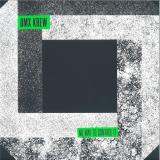
"Ed DMX has been part of Shipwrec since the label's inception. Under his DMX Krew moniker, this analogue wizard has released four Eps and one LP on the Nijmegen imprint. DMX Krew returns to Shipwrec for a brand new album, a collection that displays yet another side of this sculptor's sound. Brutal and cold, shadows are long and shades dark from the outset. Drum patterns twist in tempo and intent, from hard and punishing to gentle and fragile. Elements of breaks and industrial are also present in the percussion, this fragmenting allowing deep and soulful melodies to counter the battery. In fact, echoes of electronica permeate the harmonies across the LP such as deep and divergent "Interrupt." No single style is adhered to. Instead, the full palette of machine music is employed. From the squelchy Tudor electrofunk of "I Wonder Why" to the melancholic braindance of "Rephlections in Time", genre boundaries are given little credence. Instead, Ed DMX draws on his decades of experience to create sounds that are both familiar and completely one of a kind. The deep-sea dive of "Final Comedown" is juxtaposed with the ambling calypso of "Dinosaur Reaction", styles reimagined and reshaped to the creator's evolving purpose. Echoes of the halcyon days of Rephlex permeate the 2LP. The harshness and softness of the Cornwall imprint being present throughout, those more subtle tones coming to the fore in the delicate beauty of the "Phaser Level 2." A transcendent album and a certified future classic. To accompany this very special release, there will be a limited edition run with full cover art by Ruwedata. An artist very close to Shipwrec's heart, Ruwedata was responsible for the sleeve work on DMX Krew's Cosmic Awakening."
- A1: Assault & Battery / The Golden Void
- A2: The Wizard Blew His Horn
- A3: Opa-Loka
- A4: The Demented Man
- B1: Magnu
- B2: Standing At The Edge
- B3: Spiral Galaxy 28948
- B4: Warriors
- B5: Dying Seas
- B6: Kings Of Speed
Half speed vinyl edition of the classic album, 'Warrior On The Edge Of Time' by HAWKWIND. Recorded in 1975, the album is a ground-breaking classic from Hawkwind’s long career. Featuring a line-up of DAVE BROCK, NIK TURNER, LEMMY, SIMON HOUSE, SIMON KING and ALAN POWELL, the album is arguably one of the finest rock albums of the mid-1970s. This new Atomhenge half speed master edition of has been cut at AIR Studios utilising the original master tapes. The half-speed mastered cutting process offers the finest audio reproduction and this new edition is the definitive LP release of this classic album
Scupltures is composer and pianist Derek Hunter Wilson’s third solo album, an ode to the ancient and contested shorelines of the Pacific Northwest. Deeply embedded in place, the six longform pieces that make up the album reflect the artist’s journey through grief (including losing his father) and the passage of time, each one built upon loops created from extended sessions with harpist Joshua Ward. Like the foggy, moss-encrusted locations that inspired the album, Sculptures has a timeless feel to it, shadowed by the rumblings of a colonial system in decay.
Award-winning poet Mathias Svalina composed a poem for the album, entitled “A Dream for Sculptures”. It is reproduced on an insert that accompanies each LP.
Derek Hunter Wilson is a composer and multi-instrumentalist based in Portland. He has released two solo albums on Beacon Sound (Travelogue, 2017; Steel, Wood, & Air, 2019), as well as a collaborative album with Location Services entitled Wake (2022). In 2018 he collaborated with visual artist Gregory Euclide for his Thesis Project label, resulting in a split 10" with Spanish musician Rauelsson. He has additionally worked with poets Zachary Schomburg and Brandi Katherine Herrera for several sound and performance pieces, and has performed live on the West Coast and in Berlin, sharing the stage with artists such as Colleen, Amulets, Patricia Wolf, Pulse Emitter, and Liima.
Nina Wilson, better known as Ninajirachi, is a 26-year-old Australian electronic producer who released her debut album I Love My Computer earlier this year via NLV Records. A concept record built on her connection with her PC, swiping between genres of EDM, tech-house, speed garage, dubstep, and hyperpop. Wilson builds on the legacy of early-2000s and 2010s Australian electronic artists like PNAU and Flume using technology as a medium, a motif, and a mirror for reflection. Between remixing Princess Nokia, Deadmau5 & The Neptunes, releasing on Nina Las V egas’ NLV Records and RL Grime’s Sable V alley, Ninajirachi has performed at Lollapalooza, EDC, Laneway, Listen Out, Splendour, Falls Festival, and more and toured with Mallrat, Charli XCX, Porter Robinson and Cashmere Cat.
- A1: Robert Pico - Le Chien Fidèle
- A2: Annie Girardot - La Femme Faux Cils
- A3: Spauv Georges - Je Suis L'état
- A4: Zoé - Zoé
- A5: Jacques Da Sylva - Fou
- A6: Valentin - Je Suis Un Vagabond
- A7: Jacques Malia - Histoire De Gitan
- A8: Bernard Jamet - Raison Legale
- B1: Jean-Pierre Lebort - Barbara Au Chapeau Rose
- B2: Les Concentrés - Fils De Dégénérés
- B3: Les Missiles - Publicité
- B4: Hegessipe - Le Credi D'hegessipe
- B5: Marechalement Votre - Ethero Disco
- B6: Mamlouk - Decollez Les
- B7: Mozaique - L'amour Nu
- B8: Jean-Marc Garrigues - Je Dis Non
- B9: Penuel - Astronef 328
The journey through French-speaking pop archives continues with this fifth volume, packed with fuzz, gimmicks, and dissent. Far from the charts, the selected tracks display a great creative freedom, often backed by corrosive humor. Welcome to the surprising, kaleidoscopic, and colorful world of the late sixties and early seventies, Wizzz!
Born in Montauban, Robert Pico stumbled into music by chance when he met René Vaneste, then artistic director at Pathé-Marconi. René brought him to Paris to record his first 45 RPM EP in 1964. A year later, Pierre Perret introduced him to Vogue, where he recorded his second album with Claude Nougaro’s orchestra. Sylvie Vartan then introduced him to RCA, where he recorded four singles, including the astonishing "Chien Fidèle," a track backed by a hair-rising fuzz guitar. Alongside his solo career, he also composed for other artists like Alain Delon (the song was recorded but remains unreleased), Magali Noël, Bourvil, and Georges Guétary. In the Paris of the sixties, he mingled with Mireille Darc, Elsa Martinelli, Marie Laforêt, France Gall, Françoise Hardy, Petula Clark, Régine, Dani, Serge Gainsbourg, Joe Dassin, Franck Fernandel, Charles Level, and Roland Vincent. Despite his efforts and winning a Grand Prix Sacem for his final record, Robert Pico didn’t achieve the expected success in show business and decided to leave Paris and return to the Southwest, where he devoted himself to writing. He is the author of 23 books (including Delon et Compagnie, Jean-Marc Savary Editions 2025, a memoir about his youth and his many encounters). Today, he is relieved to never have become a celebrity and devotes himself to his work with passion.
In 1969, the Franco-Italian movie Erotissimo was released, directed by Gérard Pirès (who later directed Taxi in 1998, written and produced by Luc Besson). This pop comedy features Annie Girardot, Jean Yanne, Francis Blanche, Serge Gainsbourg, Nicole Croisille, Jacques Martin, and Patrick Topaloff. The soundtrack was written by Michel Polnareff and William Sheller, with lyrics by Jean-Lou Dabadie. "La Femme Faux-cils," performed by Annie Girardot. It recounts the feelings of a rich CEO's wife who seeks to develop her sex appeal under the influence of advertisement and magazines. Groovy, sparkling and light, this track, with ITS lush arrangements humorously critiques consumer society and feminine beauty standards.
“Je suis l’Etat” (1967) is the flagship track of the first EP by singer-songwriter Spauv Georges, aka Georges Larriaga, better known as Jim Larriaga (1941-2022). Born into a family of bakers, the young man was initially planning to become a hairdresser when he discovered English-speaking music through Elvis Presley and the Beatles. After this revelation, he decided he would become a songwriter and gave himself five years to succeed. He recorded his first two EP’s independently for RCA under the pseudonym Spauv Georges; meaning “that poor George”, a nickname given to him by the mother of her friend Jean-Pierre Prévotat (future drummer of the Players, Triangle, or Johnny Hallyday). Portraying a depressed and eccentric young man, Spauv Georges created corrosive and amusing songs that didn’t reach a wide audience, despite a TV appearance with Jean-Christophe Averty.
Supported by his loyal friend and fellow songwriter Jean-Max Rivière, Georges Larriaga met the future singer Carlos in the early '70s, then Sylvie Vartan’s assistant. He wrote songs for Carlos, including the popular "La vie est belle," "Y’a des indiens partout," and "La cantine", which went onto become a huge hit in 1972. He also composed for Claude François (“Anne-Marie”, 1971), Charlotte Julian (“Fleur de province”, 1972), helped launch child singer Roméo (who sold 4 million records), and later wrote the hit "Pas besoin d’éducation sexuelle" (1975) for the young Julie Bataille. In 1971, Jim recorded an album for Disc'Az: “L’univers étrange et fou de Jim Larriaga”, which featured pop gems like “La maison de mon père”.
The story of the song "Zoé" began when Pierre Dorsay, artistic director at Vogue Records, asked Swiss singer and musician Pierre Alain to write a song for a new female singer. The inspiration came when he realized that Zoé (the artist's name) was also the name of France's first atomic battery, created in 1948, which consisted of uranium oxide immersed in heavy water! The lyrics reflect a bubbling energy that must be handled with caution, while the instrumentation echoes this atomic theme, notably with the use of a theremin.
Zoé’s career lasted only as long as a single 45 RPM, but it seems Christine Fontane was the vocalist behind this pseudonym, who is known for several EPs, a good "popcorn" album in 1964, and a handful of children’s singles in the '70s. Regardless, the photograph on the cover is of a different girl entirely.
Later, Pierre Alain continued his career, writing songs for himself, Marie Laforêt, Danièle Licari, Alice Dona, Arlette Zola (3rd place in Eurovision 1982), and achieving multiple gold and platinum records in Canada. Also an inventor with several patents, president of the Romande Academy, and head of the French Alliance in Geneva, he now composes atonal music, books, and poetry. Moreover, he is also the host of "Les Mardis de Pierre Alain" at "Le P'tit Music'Hohl" in Geneva.
Filled with oriental choruses and fuzz guitar, "Fou" is from Jacques Da Sylva's only EP released by Vogue in 1967. Despite the quality of this recording, all traces of this singer disappear after this first effort.
Valentin is a baroque pop singer born in Belgium. He is the songwriter and composer of most of the tracks on his three singles released in the late 60s in Canada. A legend says that he reincarnated himself as Jacky Valentin during the 1970s for a rock'n'roll revival career in Belgium, but his older brother sadly debunked this story. Valentin's first two singles were arranged by Claude Rogen, a Parisian session pianist who had come to Canada to promote the song “Mister A Gogo”, a cover of David Bowie’s “Laughing Gnome”, adapted by singer Delphine, his wife at the time. Far from his usual network, Claude Rogen arranged music for Polydor, including the arrangements for “Je suis un vagabond” in 1969, a jerk tune with string arrangements and a furious optimism.
Jacques Malia wrote, composed, and recorded his only 45 EP for Festival in 1966. “Histoire de gitan” is an incredible beat track with bohemian scat that tells the story of a gypsy musician who came to Paris to make it in the Music-Hall, to no avail. The hero of the song and its author probably shared a similar fate, as Jacques Malia faded into anonymity after this remarkable attempt.
Bernard Jamet recorded two EPs for Barclay in the late sixties and co-wrote several songs with Christine Pilzer, Pascal Danel, and prolific songwriters Michel Delancray and Mya Simile. The track “Raison Légale” (1968), his masterpiece, immerses the listener in a courtroom right when a murderer is being judged, with jerk rhythm and free arrangements. A unique, paranoid, judicial, and psychedelic oddity.
Jean-Pierre Lebrot-Millers started his career in show business in 1967 as a singer and songwriter for the Philips label. After three singles, he wrote several songs of a new kind with his friend Pierre Halioche, in the midst of the sexual liberation movement and the democratization of drugs. With provocative lyrics, “Les filles du hasard” and “Barbara au Chapeau Rose” were released on a Philips singles in 1968. The character of Barbara was inspired by a queen of Parisian nightlife during the psychedelic years: model Charlotte Martin, who dated Eric Clapton from 1965 to 1968, then Jimmy Page from 1970 to 1983. Jean-Claude Petit’s arrangements, with a table-filled intro, soul brass, and Hendrixian guitar, emphasize the flamboyance of a hedonistic and sexy character, whose dog is named Junkie because “Junkie est un nom exquis”! The track was recorded live in three takes with a full orchestra.
Upon its release, the record was censored by Europe 1 and RTL due to its references to drug use. Jean-Pierre Lebrot was then banned from the airwaves and later dismissed by his record label. He changed his artist name to Jean-Pierre Millers, while his companion Pierre Halioche became D. Dolby for a new dreamy composition, “Chilla”, which Jean-Pierre produced himself with arrangements by Jean Musy. Once again, the song was immediately censored everywhere. After this setback, he decided to stop singing and started taking on odd jobs to support his Swedish wife and their son until the day he met Jean-Pierre Martin, then production manager at Decca, who had worked with Manu Dibango. Martin offered Jean-Pierre Lebrot-Millers, then employed at Rank Xerox, the position of artistic director at Decca. He accepted and became, a year later, promotion director (radio, press, TV). He worked on Julio Iglesias’s first album for Decca, which became a massive hit and allowed him to meet Claude Carrère. The latter asked him to write new songs and find their performers, much like a “talent scout.” It’s through him that Jean-Pierre discovered Julie Pietri and Corinne Hermès. He composed “Ma Pompadour” for Ringo, Sheila’s husband, and took the microphone again for the syncope hit “Rendez-Vous” in 1982.
That same year, Jean-Pierre Lebrot-Millers tried to release a track for which he had heavily gone into debt: “Si la vie est un cadeau”. Having recorded it in London, he presented it to numerous professionals, all of whom refused to get involved. The same thing happened with Antenne 2 and the Sacem when he proposed the song as France’s entry for Eurovision. He then met Haïm Saban, who was producing cartoon soundtracks and had just launched the Goldorak theme song. Saban, having listened to the song, declared it had the potential to become a hit. He sent Jean-Pierre and Corinne Hermès to meet the CEO of the Luxembourg radio and television network. The latter received them, asked to hear a verse and chorus a cappella in his office, and immediately hired them to represent Luxembourg at Eurovision 1983. They reworked the arrangements and recorded a new version with Haïm Saban as co-producer. The song ended up winning Eurovision 1983, a great comeback for our hero. He continued producing and hung out with the band Nacash in Belgium when a couple came to introduce their daughter for an impromptu audition in a hotel room. The girl sang “Les démons de minuit” while dancing to a radio cassette. Impressed, he had her take singing lessons for a year and composed a song for her (for which he had the melody and title, but no lyrics). This required him to go on the hunt for a lyricist, who ended up being Guy Carlier. They recorded the song, which was initially a ballad, at Bernard Estardy’s CBE studio, and gave the singer a new name: Melody. They showed the song around their industry network without success. Later, Estardy called Jean-Pierre to suggest changing the rhythm and making it pop-rock. Orlando, Dalida’s brother, liked the result and decided to co-produce the track. “Y’a pas que les grands qui rêvent » became a classic hit. The song has since been covered by Juliette Armanet (as a ballad, like the original) and Valentina.
Born into an aristocratic Breton family, Hervé Mettais-Cartier worked as a DJ at Queen Kiss, a nightclub in Poitiers, where he formed the band Les Concentrés with Michel (an actor) and Christian (a radio technician). Together, they created a repertoire of whimsical songs (“Ma bique est morte”, “J’suis un salaud”, “Fils de dégénéré”...) that they performed on stage dressed in white (in homage to “concentrated milk”). They performed at Bliboquet and Olympia in 1968 for the 10th edition of the “Relais de la chanson Française” organized by L’Humanité-Dimanche and Nous les Garçons et les Filles, sponsored by Pepsi Cola. Winners in the author-composer category, alongside Danish singer Dorte, their visibility allowed them to record a 45, and appear on television in Jean-Christophe Averty’s show. The A-side of the disc features Bruno le ravageur, a casatchok dedicated to Bruno Caquatrix, the director of Olympia, nicknamed in the song “Coq Atroce” or “croque-actrices”. The B-side is dedicated to “Fils de dégénéré”, a quirky tribute to Hervé's aristocratic roots, mixing absurdity with sophisticated vocal harmonies.
After Les Concentrés, Hervé Mettais-Cartier formed the duo La Paire et sa Bêtise with his friend Olivier Robert. They performed in Parisian cabarets and toured with Pierre Vassiliu. In the late 1970s, Hervé began a solo career. He recorded two albums for the Motors label in 1978 and 1979, which did not achieve their anticipated success due to lack of promotion. In 1980, he met Bernadette, with whom he started a family and created a “Chansons à voir” (songs to see) show that he performed until his death at the end of 2024.
Publicité comes from the final EP by the Missiles (Ducretet Thomson, 1966), a disc that also includes “La (nouvelle) guerre de cent ans”, featured on Volume 4 of our Wizzz! series. Please refer to the booklet for the story of the band.
“He’s 1.82 meters tall, 28 years old, weighs 135 kg, is black and Belgian”: this is the description of singer Hegesippe on the back of his sole single (Decca, 1967). He appears on the album cover wearing a Greek toga, like a hippie gag – we are at the end of the year 1967. In “Le crédo d’Hegesippe”, this former bodyguard of Antoine and the Charlots plays the delightful card of the thick brute converted to Flower-Power and non-violence, with arrangements by Jean-Daniel Mercier, aka Paul Mille.
“Ethéro-disco” was released on a promotional record for clients of the Maréchal company (Liège, Belgium) for the New Year 1979. Over a funky rhythm, celebrity impersonations (Brigitte Bardot, Jacques Dutronc, Fernandel…) deliver an enigmatic text about pharmaceutical products like ether, bismuth, and aspartate. The track was composed by Dan Sarravah (responsible for Joanna's “Hold-up inusité” featured on Wizzz! Volume 3) and Tony Talado, who was also a singer (one 45 in 1967), songwriter (with over a dozen credits between 1964 and 1985 in various styles from surf music to disco), author (Devenez Végétarien, Dricot Editions, 1985), ad designer, and psychologist.
Décollez-les is on the A-side of Mamlouk's only single, a pseudonym for Marsel Hurten, who is known for his work on several EPs in the late sixties, as well as composing music for Hervé Vilard’s “Capri, c’est fini”, Claude Channes' “La Haine”, Annie Philippe’s “On m’a toujours dit”, and Nancy Holloway’s “Panne de Cœur”.
This strange song, with Afrobeat horns and absurd dialogues between a chef and his kitchen staff, is the result of a collaboration between Marsel Hurten and one of his neighbors, a photographer from Pavillon-sous-Bois (93), where the musician settled after returning from the Algerian War. A music video was shot to promote the record.
Marsel Hurten was born in Tourcoing (59) into a musical family. At a young age, he joined the brass band founded by his grandfather, playing the piston before studying trumpet at the conservatory, as well as teaching himself how to play the guitar. As an orchestra musician, he toured in France, Belgium, Germany, and England. He released a series of solo 45’s between 1965 and 1968 for the DMF and Az labels before stopping recording to focus on working for other artists (Gilles Olivier, Noëlle Cordier…).
“L’amour nu” (Vogue, 1971) is the work of the short-lived Belgian band Mozaïque. The track, written by singer Jacques Albin, closely resembles another of his compositions, “Carré Blanc”, which he recorded in 1969 for Disc’AZ.
Represented by the Lumi Son micro-label based in Marignane (Côte d'Azur), Jean-Marc Garrigues released two 45 RPMs in the late sixties, defending the French jerk sound. The song “Je dis Non” is a short, joyful ode to youth, pop music, and rebellion.
Songwriter and performer Jacques Penuel released three singles. The first one, “Astronef 328” (Fontana, 1969), features a dizzying series of chords punctuated by sound effects, a sci-fi story, and arrangements by Jean-Claude Vannier.
We would like to sincerely thank Pierre Alain, Moon Blaha, Marsel Hurten, Bastien Larriaga, Jean-Pierre Lebrot-Millers, Bernadette Mettais-Cartier, Robert Pico, Olivier Robert, Claude Rogen, Micky Segura.
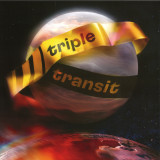
For AI-41 Astral Industries presents a vinyl reissue of Robert Henke’s multifaceted concept album ‘Layering Buddha’. An erudite masterclass on sampling and composition, ‘Layering Buddha’ encapsulates the material process of metamorphosis and a well of nascent, ever-present potentialities. This new edition comes remastered by Henke himself.
Originally released in 2006, ‘Layering Buddha’ began with a curious encounter with the ‘Buddha Machine’ - a pocket-sized, battery powered playback device that, over the past two decades, has quietly achieved a cult status around the world. Conceived by the Beijing-based group FM3 (Christiaan Virant, Zhang Jian), the machine takes inspiration from Tibetan Buddhist prayer boxes and consists of nine sound loop compositions of varying length, which can be toggled with a single switch. Due to low production cost and manufacturing imperfections, each Buddha Machine is unique, giving slight variations in sound, pitch and duration.
Using a state of the art A/D converter Henke made high quality recordings from a single machine, providing the source material for the album. Through various processing and arrangement methods, new pieces emerged, most of them all deriving from a single source loop. The pieces were then set up on the computer as generative arrangements, living as continuously permutating structures that could theoretically go on forever - just as the loops do within the Buddha Machines…
The final pieces featured on the album are rendered excerpts of these infinite permutations, and therefore exist as momentary views on a perpetual machinery, as opposed to closed works. Upon initial exploration, it also became a natural development to format the work into an immersive multi-speaker performance - which premiered on January 31, 2007.
Within the music, subtle artefacts and idiosyncrasies are transmuted into new realms of texture and timbre. Through the extractive hand of subtle augmentations, an array of ethereal dimensions emerge from the vast unseen ocean. Suspended in a sense of timelessness, their undulating rhythms point to a pool of endless mysteries.
- A1: Bluffing In The Snow
- A2: And Then One Day You'll
- A3: When You're A Ant And You Wake Up In An Awesome Mood, About To Drive Your Son To School, Only To Discover That You Left The Lights On In The Car Last Night So Your Battery Is Drained
- A4: Hotel Lobby Pianos
- B1: Blueberry Mansions
- B2: Off Rhythm Laughter
- B3: I Spend All Day Waiting For The Night
Swan Song
The vinyl LP at the heart of this éthiopiques 31 tracks 2 to 11 was one of the very last vinyl records ever released in Ethiopia. But above all it represents, we felt, the absolute masterpiece of the Ethiopian Groove – the Swan Song of Swinging Addis. The album leaves a clear idea for posterity of the level of sophistication and mastery that modern Ethiopian music had achieved, before being crushed under the Stalino-military heel of the Derg – as the bloody revolution that was unfolding came to be called.
Ethiopia1976.
The Revolution that broke out in February 1974 rolled on in a ruthless march. The whole of Ethiopian society was utterly stunned. The bouquets of flowers handed joyfully to the first tanks of the coup d'état were to wilt very rapidly. From September 1976 to February 1978, 18 months of Red Terror (the name given by the junta itself) spilled blood throughout the country. This fratricidal conflict took its heaviest toll among students and youth. The shift from feudalism to a cruel and primitive Stalinism left the country's citizens deeply traumatised, and snuffed out any pretence of activism, whatever the sector of society. This ice age was to last for seventeen long years.
ሙሉቀን፡መለሰ Mulukèn Mellèssè Muluqän Mälläsä
It was three tracks by Muluken that served as the opener for éthiopiques-1 more than 25 years ago. Seven more tracks appeared on éthiopiques-3 and 13, all accompanied by The Equators, which was soon to become the Dahlak Band.
The first track, Hédètch alu, also the very first piece that Muluken ever recorded, left audiences both unsettled and amazed. Reflecting the singer's extremely young age (he was just 17 at the time), this angelic voice mystified many, who thought they were in fact listening to a feminine voice. He was not yet 22 when he released his last vinyl record in 1976 with Kaifa Records (KF 39LP), one of the very last to be issued in Ethiopia, before the cassette tape became the dominant medium for music distribution – and before the new revolutionary regime put a stop to all independent musical life, via an unspeakable barrage of prohibitions and other persecutions.
Mulu qèn, literally, “A well filled day”. This tender maternal intention wasn't enough to ward off the cruelty of fate. His mother's premature death drove Muluken to leave his native Godjam, in northeast Ethiopia, to live with an uncle in Addis Ababa. Born Muluken Tamer, he took his uncle's last name – Mèllèssè.
The spelling Muluken appeared in his administrative records. Transcription of Amharic to the Latin alphabet, both in Ethiopia and for scholars, gives rise to controversies and quibbles that can never be neatly settled. French allows for a closer approximation of the original pronunciation, thanks to its battery of accent marks, confusing as they may be to anglophones.
Between rather accommodating administrative record-keepers and the various versions that pop up in interviews given by the artist, Muluken's year of birth oscillates between 1953 and 1955…
1954? One thing is certain: the artist's talent made itself known very early indeed, because he got his start in 1966-67, at the age of 13 or 14. Photos from the period attest to his extreme youth. It's a strange sort of initiation for a very young teenager to become a sensation in the heart of Addis's nightlife at the time, Woubé Bèrèha – the Wilds of Woubé. And what's more, in the club of the Queen of the Night, the Godjamé Assègèdètch Alamrèw herself, the very same that was portrayed by Sebhat Guèbrè-Egziabhér in his novel-memoir Les Nuits d’Addis Abeba2… The legendary female club owner who is remembered to this day by the capital's ageing boomers.
Muluken first tried his hand at the drums, before he grabbed the microphone. He emigrated briefly to the Zula Club, across the street from the old Addis Post Office, one of the ground-breaking bars of the burgeoning musical scene, before joining the Second Police Band in 1968, for around three years. He spent a few months with the short-lived Blue Nile Band founded by saxophonist Besrat Tammènè. As the musical scene grew increasingly successful, and pulled slowly but decisively away from its institutional ties, Muluken released his first 45rpm single in February 1972 (Amha Records AE 440). It was included in two LP Ethiopian Hit Parade compilation albums in September of the same year. All in all, Muluken released eight two-track 45s and the same number of original cassette tapes between February 1972 and 1984, the year that he departed for permanent exile in the USA. After converting to Pentecostalism in 1980, Muluken gradually abandoned all secular musical activity. In 1985, at the end of a concert in Philadelphia, he decided to quit concerts and recording for good. Mèlakè Gèbré, the historic bass player from the Walias band who was playing with him that night, recalls that everything appeared so irredeemably diabolical in Muluken's eyes, that it was to be the end of his contribution to Ethiopian Groove.
The end of the story, the beginning of a legend.
Dahlak Band, forgotten by History
Aside from his personal history and vocal talents, it must be remembered that Muluken Mèllèssè was one of the biggest names in the musical innovations that marked the end of the imperial period. These éthiopiques aim to convince those who are just discovering this hidden gem... As for Ethiopians themselves, they are to this day captivated by this singular and atypical figure in the Abyssinian pop landscape – even though he withdrew from public life some 40 years ago. Incorrigible devotees of poetic twists, of more or less hidden meanings, Ethiopians appreciate above all the care Muluken took in choosing his lyrics and the writers who penned them, such as Feqerte Haylou, Alemtsehay Wodajo and, here, Shewalul Mengistu (1944-1977). Love songs, written by women, a far cry from the conventional drivel that pleases sappy sentimentalists.
Muluken is equally acclaimed for his perfectionism when it came to music, the opposite of the overly casual approach that is all too common. He remained a faithful partner of musicians who came from a lineage that borrowed from several inventive and pioneering bands (Venus, Equators, Dahlak). Amongst them were certain artists who began their musical lives with Nersès Nalbandian at the Haile Sellassie Theatre and who come of age in around 1973 – at just the wrong time, you might say. Among them were the pillars Shimèlis Bèyènè (trumpet), Dawit Yifru (keyboards) and Tilayé Gèbrè (sax & flute). Most notably Tilayé Gèbrè, certainly one of the most important musicians, composers and arrangers of his generation, of the end of the imperial era, and of the early years of the Derg.
It was only in 1981 that a miraculous opportunity arose for Tilayé to escape the Stalinist paradise of the dictator Menguistou Haylè-Maryam. Once again it was Amha Eshèté (1946-2021) who provided a solution. The spirited and courageous producer, who had been in exile in Washington since 1975, succeeded, thanks to his incredible perseverence, in bringing the Walias Band to the USA. It was, in fact an extended Walias Band comprising ten musicians3, six of whom chose to slip away after a few concerts and the recording of an LP (The Best of Walias, WRS 100). Tilayé Gèbrè was one of these. He has been living in the USA ever since. There he joined the then-nascent Ethiopian diaspora, which lived largely unto itself, and was making only very modest headway in the American musical market. It seems unfair that Tilayé Gèbrè and the Dahlak Band were not able to benefit earlier from the public recognition that they do deserve.
A similar draining away of the top-rate talents would lead to the reorganization of the major groups of the “Derg Time”. The remaining artists spread themselves around between Ibex Band (renamed Roha Band), Ethio Star Band and a remodeled Walias Band. That spelled the end of the Dahlak Band.
With this record, produced by the essential Ali Abdella Kaifa a.k.a. Ali Tango, we can appreciate everything that the Derg not only destroyed, but also prevented from flourishing. This gem of Ethiopian-style afrobeat came out in 1976 (and, by way of a parenthesis, before the FESTAC 1977 in Lagos, which was attended by an impressive delegation of Ethiopian musicians — although Fela was already personna non grata in his own country). Despite everything that might distinguish this ethio-groove from Fela’s music – no colonial axe to grind, no question of political confrontation with the authorities, no claims to negritude or Africanism for the Ethiopian musicians, and less extrovertion! –, this LP fits beautifully into the saga of intense and electrified soul of the new “African” groove that Fela and Manu Dibango embodied so well from that point onwards.
In restoring this record to its place in the afrobeat epic, it can be seen that, if nothing else, the timeline bestows a legitimate pedigree and a historical primacy to works that had no international impact when they were originally released.
Warning! Masterpiece!
- Walking Distance
- E.s.p
- Strange Thing
- Harmony In My Head
- Why She's A Girl From The Chainstore
- I Believe
- Fiction Romance
- Breakdown (Live)
- Love Battery (Live)
- Real World
- I Don't Know What To Do With My Life
- Airwaves Dream
- Ever Fallen In Love (With Someone You Shouldn't've?)
- Orgasm Addict
- Running Free
- Are Everything
- What Do You Know
Buzzcocks - Total Pop 1977-80: Rare, Live And Great Diese Compilation vereint rare Studioaufnahmen und energiegeladene Live-Versionen aus der Hochphase der Buzzcocks und zeigt, warum die Band als Pioniere des britischen Punk gilt. Mit kompromisslosem Sound und scharfem Songwriting ist das Album ein authentisches Zeitdokument der späten 70er.
- High Wallow
- You Have To Lose Your Hat Someday
- Sweet Nothing
- In A Way
- Escape Artist
- Non Prophet
- Holy Hock
- Hill Still Nameless
- Infinity Leaf Clover
- Hot Water Song
- Burnt Hand Hymn
- May Day
- Battery Lifer
- Green Ink Pen
- Long Winter
- Smoke Punching
- I Don't Know Why Double Birthday
- Wild Violent
- Mt S
- Bitter Suite
- Vanishing Point
In einer Welt, die von zwei Monden umkreist wird, tanzen die Mondphasen im Gleichklang und beeinflussen die Gezeiten. Unter diesen Lichtamuletten liegt die Landschaft, in der SAINTSENECAs neues Album ,Highwallow & Supermoon Songs" entstanden ist. Zac Little wirkt an der Oberfläche subtil, aber die Kunstfertigkeit in jeder seiner Phrasen ist fast überwältigend. HIGHWALLLOW & SUPERMOON SONGS findet seine Stimme in ihrer elastischsten Form, reitet auf den Hügeln seiner Heimat, schwirrt vorbei wie eine Libelle und legt sich dann ruhig wie ein alter Hofhund.
Limited edition ORANGE SWIRL vinyl 1000 copies worldwide. Remastered by Bob Weston at Chicago Mastering Service. Originally released in 1990 vinyl reissue includes 3 bonus tracks. "We drove up there and my cousin Tracy had turned punk rock. And she said, 'I'm going to this show tonight. Come with me.' And so I went to this club called The Cubby Bear - it's right across the street from the baseball stadium - and a band called Naked Raygun were playing, and they're this legendary Chicago punk rock band. But I'd never seen live music. So my introduction to rock and roll was in a club that held about 150 people that was half full and I was belly up against the stage watching this incredible live band, like, sweat and spit and bleed in front of me." - Dave Grohl interview, The Record, 2011- // Naked Raygun were an extraordinary staple in the Chicago music scene - beginning in the early 80's and continuing until their quiet demise in the early 90's. Their music showed the world that punk rockers could play and be really good at it. Founded in Chicago in 1980, by Marco Pezzati, Jeff Pezzati and Santiago Durango, Naked Raygun released six albums during their eleven year career that would change the sound of punk rock indefinitely. The band is widely recognized as being one of the most influential punk bands of the 80's. Their anthemic style incorporated politics in a uniquely accessible way, melding pop and hardcore into one cohesive sound, that would later be dubbed, "The Chicago Sound". Shortly after their first release, Basement Screams, Durango left to join Big Black permanently, and was replaced by John Haggerty, whose unique style of buzzsaw guitar would define Raygun's sound for their next four albums. Additionally, Pierre Kezdy replaced Camilo Gonzalez and Eric Spicer took over drums for Jim Colao. In 1990, Haggerty left the band to start Pegboy. Bill Stephens joined the band for their final studio release entitled, Raygun...Naked Raygun.
The Labor Days 20th Anniversary Edition 2xLP is pressed on metallic copper vinyl. Labor Days was Aesop Rock's fourth release and his third full-length studio album. The project was originally released in 2001 as his first album on Definitive Jux. The album includes popular songs "Daylight" and "9-5ers Anthem", and guest features from Illogic and C-Rayz Walz, as well as production from Aesop Rock, Blockhead, and Omega One.
Nuke Watch stretch out and zone in on “Wait For It…”, two side-long jaunts that run their freeform M.O. to their own illogical ends. Following on from recent excursions on The Trilogy Tapes and Impatience, they revel in the long format for Patience, crafting a steady assault of haywire rhythms and swampy, off-world ambience.
On the A-side’s Supersonic Percussion Anagram, a battery of electronic and sampled drums - from window-shaking subs to melodic subcontinent percussion - shift from one bar to the next, a continuously morphing, snake-charming ruckus confirming their status as Bushwhick’s finest rhythm purveyors.
For the B-side Nuke Watch mind-meld with fellow NYC phreq Bryce Hackford for Think Peace, a disorienting lurch through the knotty depths of free associative modular synthesis, unraveling spools of intrigue that goes deep into the unknowable.
Nuke Watch is Aaron Anderson and Chris Hontos.. They’ve released records as Nuke Watch on The Trilogy Tapes, Commend, Impatience and Moon Glyph. As Beat Detectives they’ve released records on Not Not Fun, 100% Silk and their own studio imprint NYPD Records.
“Wait For It…” was written and produced by Aaron Anderson and Chris Hontos. Electronic drum pads on Supersonic Percussion Anagram by William Statler. Additional instrumentation on Think Peace by Bryce Hackford. It was mixed by Chris Hontos and Justin Randel, and mastered by Justin Randel. Art and design by Luca Schenardi..
RIYL - tabla, meandering, beat tapes, swamp jazz.
Dummy is a rock band from Los Angeles comprised of Alex Ewell, Emma Maatman, Nathan O'Dell, and Joe Trainor. Their debut full-length "Mandatory Enjoyment" (Trouble in Mind) arrived in late 2021, becoming one of the year 's sleeper hits and garnering praise from Pitchfork, Stereogum, and more. Coming out of lockdown, the band spent two years touring in support of the record, and it is this transformational experience that pulses through "Free Energy ", the exhilarating follow-up to "Mandatory Enjoyment". A creatively restless band, Dummy (Ewell: drums, synths, bass; Maatman: vocals, synths, organ; O'Dell: vocals, guitar, organ; Trainor: guitar, bass, synths) wanted to get harder, dancier, more psychedelic for their next record. This meant applying explorative potentials of electronic textures to the elemental qualities of rock i.e. more vocal loops, sampling, more crazy rhythms, and playful synths - but make those samples of Trainor 's guitar, let Maatman sing bolder, experiment with using cold mechanical elements in warm and sparkly ways, and lean harder into traditional-yet-still-awesome forms of rock guitar experimentation like feedbackThe result is a record that celebrates music's ability to move the body, whether that be through a teeth-rattling wall of MBV-esque noise, a sticky pop chorus, or a joyous drum machine_or, if you're Dummy, maybe all of them in the same song. Pop music has always been a big part of Dummy's sound and it manifests in different ways all over Free Energy: the bubbly synth sequence made with a Korg EM1 popping all over "Nullspace," the revved-up drone-pop inspired by second and third wave Dunedin Sound bands like Look Blue Go Purple and Dadamah, and the motorik beat powering "Nine Clean Nails," perhaps the most confidently pop song Dummy has ever recorded and one that exemplifies "Free Energy "'s balancing of live performance intensity with electronic augmentations, the dancier rhythmic elements created out of a drum loop recorded by Ewell while the bridge recalls the Feelies with call-and-response guitars from O'Dell and expressive vocals from Maatman. "Free Energy " also features guest appearances from Oakland-based saxophonist and electroacoustic artist Cole Pulice (Moon Glyph) contributes saxophone and wind synths and Jen Powers of Powers / Rolin Duo (Astral Editions, Feeding Tube Records).
- 01: That Work
- 02: Restaurant Not
- 03: Went Off (Featuring Open Mike Eagle)
- 04: Ta Da
- 05: Dial Up (Featuring M.sayyid)
- 06: Scales Sway
- 07: Inner Animal
- 08: Recycling Night (Featuring Fatboi Sharif)*
- 09: Untouchable
- 10: No Cops
- 11: Wasteland Embrace (Featuring Billly Woods)
- 12: Epinephrine Pen
- 13: Breakneck (Featuring Myka 9)
- 14: Not For Airports
- 15: Best Metric (Extended)
All Portrait, No Chorus is the new album from indie rap pioneer doseone and NYC producer Steel Tipped Dove. Together, these two artists have crafted an uncompromising masterpiece. Knowing the caliber of MC he is paired with, dove skillfully paints with every color on the palette, and doseone skates effortlessly on every track, whether skating languid figure 8s or landing lyrical triple axels. Somehow the veteran sounds sharper than ever and the songs are lean and hungry, cut to the quick. It is no accident that this project is released under the Backwoodz Studioz imprint; the road that leads to this collaboration starts with, of all things, a ShrapKnel demo. Here is how dose explains it: "I have been inspired by Backwoodz for a while, in many ways, but the most potent being all these distinct pens. September 2023, I had heard a nearly done version of ShrapKnel's latest record, and something snapped in me. Hearing that perfectly hungry, inspired rapping turned my power back on. For me, being inspired warrants telling those who are inspiring you, so once I heard Decay I reached out and sent Fatboi Sharif and Dove some kind words about that record. The rest is history." At the end of December 2023 Dove sent dose the first beat pack. Somewhere around the second week of January 2024 dose already had five songs written and recorded. By the middle of March, a rough album framework was essentially done, and they brought on Minneapolis producer Andrew Broder to freak the turntables across the whole project. Then, as a final piece, dose and dove added select collaborations from some of their favorite rappers. By the end of April it was done. "I'm not really a features guy, but to align with and connect with those who inspire me, I called in some beautiful humans I had never worked with but always meant to: Open Mike Eagle, M.Sayyid, billy woods, Fatboi Sharif, and Myka 9 connect eras, artists, and styles of unconventional rap I hold incredibly dear," doseone explains. Listening to All Portrait, No Chorus you can hear the battery in doseone's back as he pythons his way through each instrumental. For his part, Steel Tipped Dove_a prolific producer over the last two years_delivers some of the most diverse work of his career. The result is a dynamic, propulsive listen that casts its crackling energy in every direction except backwards.
- Girl Battery
- Lovespell
- Trauma Curl
- Unnatural
- Meow Meow
- Sweet Revenge, Sour Regret
- Sleep So Softly (You And Me)
- Pedestal
- Permanent Stains
Perlenfarbenes Vinyl. Die in Berlin ansässige Songwriterin und Produzentin Neva Demure präsentiert ihr Debütalbum Antidote. Antidote zeigt Nevas Entwicklung von experimentellen elektronischen Klängen zu einer reichen Vielfalt an Genres und verbindet Elemente, die sowohl Nostalgie als auch Neuheit hervorrufen. Das Album behandelt Themen wie Liebe, Identität und innere Konflikte und spiegelt Nevas persönliche Reise der Selbstfindung wider.
- A1: On Green Dolphin Street
- A2: Fran-Dance
- B1: Stella By Starlight
- B2: Love For Sale
Mastered by Matthew Lutthans at The Mastering Lab from a new 30 ips quarter-inch stereo master tape transferred from the original 3-track session tapes. Plated and pressed at Quality Record Pressings for flawless production and superior fidelity! Stoughton Printing Old Style tip-on gatefold heavyweight jacket with scuff-resistant matte finish.
Miles Davis's Kind of Blue was the number-one jazz album in history. It totaled five songs. There are four more songs from that same historic group, recorded in the same time period and at the same studio. And here they are. These songs deserve to stand on their own with artwork to highlight the quality of the music and that matches the time period of the recording. This is a rare opportunity to have a smash follow-up to what many consider the greatest jazz record ever!
Through the years, these four remarkable performances — all from a single recording session in 1958 and all exemplary of the sound of Miles Davis' legend-loaded sextet of that year — have not been served well. They have been largely treated as add-ons for other compilations. Now, for the first time, Analogue Productions, the audiophile in-house reissue label of Acoustic Sounds, Inc., together with Quality Record Prssings, has deservedly given these tracks a stellar stand-alone release for jazz fans to savor!
The once-in-a-generation lineup that recorded these tunes is the very same that would be immortalized for the enduring classic they would record almost a year later, Kind of Blue. Davis played trumpet sublime with his ensemble sextet featuring pianist Bill Evans, drummer Jimmy Cobb, bassist Paul Chambers, and saxophonists John Coltrane and Julian "Cannonball" Adderley.
Undervalued since their recording, the tunes on this album reflect historial and musical significance. They offer early glimpses into the modal jazz that Kind of Blue would bring to the forefront. Using modes common in modern classical music, rather than the chords of popular songs, Miles had begun to experiment with the new approach on the Milestones recording sessions previously.
Analogue Productions is proud to present Birth of the Blue in an exclusive first-of-its-kind stand-alone release that reflects our reputation for meticulous production, capturing authentic sound with clarity, depth and fidelity that exceeds the audiophile standard.
For this release, we started with the original 3-track recording session tapes that were mixed down to a brand-new 30 ips quarter-inch stereo master tape by senior mastering engineer Vic Anesini at Battery Studios. From that stereo master tape, Matthew Lutthans at The Mastering Lab cut the lacquers at 33 1/3 RPM utilizing the legendary Doug Sax's custom all-tube system and cutting lathe. The lacquers were plated and pressed on 180-gram vinyl at Quality Record Pressings. Lastly, the Stoughton Printing tip-on gatefold jacket with a deluxe scuff-resistant matte finish is the highest quality available. The artwork has an incredible spot-on look to a 1959 Columbia records release!
Features:
• Pioneering Ensemble: Captured the same rare and short-lived alignment of jazz legends including Miles Davis, John Coltrane, Cannonball Adderley, Bill Evans, Paul Chambers, and Jimmy Cobb, as heard on the historic Kind of Blue.
• Innovative Sound: The session represented a crucial transition in jazz, blending elements of hard bop with early modal jazz influences, showcasing the ensemble's experimentation and forward-thinking approach.
• Undervalued Legacy: Despite its historical and musical significance, the session's recordings have been historically overlooked, often relegated to being add-ons in compilations rather than recognized as standalone masterpieces.
• Modal Jazz Precursor: Offered early glimpses into the modal jazz that would later be fully realized in Davis's groundbreaking album "Kind of Blue," laying the groundwork for future jazz innovation.
• Impact on Artists: Served as a critical point of development and confidence for the musicians involved, particularly Bill Evans, who noted the significant impact of this experience on his own identity and style.
• Historical Context: Occurred at a peak moment in Miles Davis's career, following his signing with Columbia Records and his critical and commercial successes with albums such as ‘Round About Midnight and Miles Ahead.
• Revealed backstory: Extensive liner notes by the Grammy Award-winning author Ashley Kahn, who also penned the estential book, Kind Of Blue — The Making Of The Miles Davis Masterpiece
- A1: Dance On A Volcano
- A2: Entangled
- B1: Squonk
- B2: Mad Man Moon
- C1: Robbery, Assault & Battery
- C2: Ripples
- D1: A Trick Of The Tail
- D2: Los Endos
180-gram 45 RPM double LP. Pressed at Quality Record Pressings. Tip-on old style gatefold double pocket jacket with textured stock by Stoughton Printing
Genesis' seventh studio album was released in February 1976 on Charisma Records and was the first to feature drummer Phil Collins as lead vocalist after the departure of Peter Gabriel. The album was a critical and commercial success in the U.K. and U.S., reaching No. 3 and No. 31 respectively. A Trick Of The Tail was a landmark album for the band, and it still stands today as one of their best with classics such as "Dance On A Volcano" and "Squonk."
In the wake of Peter Gabriel's departure from the band, the remaining members of Genesis were determined to forge ahead, showcasing their songwriting prowess and recording prowess in the absence of their iconic frontman. This period marked the genesis of A Trick of the Tail. In mid-1975, the band embarked on an intensive creative journey, crafting new compositions and diligently rehearsing them. Their quest for a new lead vocalist led them to sift through a staggering 400 audition tapes.
As the autumn leaves began to fall, Genesis found themselves at Trident Studios in October, accompanied by producer David Hentschel. Surprisingly, the recording sessions began with an air of uncertainty regarding who would take on the role of lead vocalist. However, fate intervened when Phil Collins was persuaded to step up and deliver a powerful rendition of "Squonk." The strength of his performance not only won over the band but also paved the way for him to assume lead vocals for the entirety of the album.
Genesis has always been synonymous with grandeur and innovation, both in their electrifying live performances and their trailblazing studio albums. From timeless classics such as Nursery Cryme, Foxtrot, Selling England By The Pound, to the epic concept album The Lamb Lies Down On Broadway, the band has consistently pushed the boundaries of musical creativity.
Pressed on 180-gram vinyl at Quality Record Pressings, and housed in a tip-on old style gatefold double pocket jacket with textured stock by Stoughton Printing.
Over the span of four remarkable decades, Genesis has left an indelible mark on the music industry, having sold a staggering 150 million albums worldwide. Their influence extends far and wide, inspiring artists ranging from the indie rock stylings of Elbow to the experimental sounds of The Flaming Lips, and even the soulful resonance of Jeff Buckley. A Trick of the Tail stands as a testament to their enduring legacy and their ability to adapt and thrive in the face of change.
Dave Brock und seine Mannen liefern ein unvergessliches Set mit Titeln aus ihrem gefeierten 2023er Album "The Future Never Waits", aber auch mit Stücken aus ihrem umfangreichen Backkatalog. Zu den Höhepunkten des Abends gehörten Fan-Favoriten wie "Levitation", "Spirit Of The Age", "Master Of The Universe" und "Assault And Battery". Der Mitschnitt ist ein weiterer Beweis für das bleibende Vermächtnis der Band und ihre Fähigkeit, die Grenzen des Space Rocks zu erweitern.
- A1: Be Ill Feat. Kurupt & Masta Killa (Prod + Cuts By Rakim Allah)
- A2: Now Is The Time Feat. B.g, Hus Kingpin & Compton Menace (Prod. Rakim Allah)
- A3: Love Is The Message Feat. Nipsey Hussle, Planet Asia, Louis King & Snoop Dogg Additional Vocals By: Sally Green, Kobe Honeycutt & The La Grand Choir (Prod. Rakim Allah) (Violin Quartet Courtesy Of Nino Chikviladze)
- A4: God's Playground Feat. .38 Spesh, Fred The Godson & Skyzoo Additional Vocals: Dmx (Prod + Cuts By Rakim Allah)
- B1: Pendulum Swing Feat. Kxng Crooked, La The Darkman, Canibus & Chino Xl (Prod. & Cuts By: Rakim Allah)
- B2: International Feat. Kool G Rap, Tristate & Joell Ortiz (Prod. Rakim Allah)
- B3 - Sign Of Se7En Feat. Prodigy (Of Mobb Deep), Method Man, X-Raided & Big Twins (Prod. Rakim Allah)
Cassette[14,50 €]
Hip-hop legend Rakim is breaking new ground with his upcoming studio album, G.O.D.'S NETWORK (REB7RTH), by flexing his skills both on the mic and behind the boards. Widely lauded as the best lyricist of all time, The God MC himself is blessing the culture with the next step in his historic career.
“I feel like the battery in my back has been reenergized,” Rakim said about his new album, which arrives nearly four decades after the release of his classic debut with Eric B., Paid In Full. Since then, he’s continued to shape the landscape and culture of hip-hop as we know it, inspiring rising artists with his hype live shows and incredible studio albums. And while he’s produced some of his previous work—notably “Don’t Sweat the Technique,” “Juice (Know The Ledge),” and “Paid In Full”—this feels like new territory for the 18th Letter, whose production and scratching talents are nothing short of remarkable.
G.O.D.'S NETWORK (REB7RTH) is proof that Rakim is truly one of the most special artists we’ve known not just in hip-hop, but all of music. You can tell he feels that level of praise when speaking about the genesis of the album. “Having the ability to showcase my talents behind the boards coupled with the elite lyricism the world already knows and gives me infinite praise for alongside some of the best talents to ever do it is truly a blessing and for that I am humbled,” he said.
Rakim is more than an official triple-threat as an artist, because he’s also showing off skills as a curator. On this album’s seven tracks, he enlists a who’s-who of top hip-hop talent, including the dearly departed Nipsey Hussle, Fred the Godson, DMX, and Prodigy (of Mobb Deep). Rakim also linked with many of his contemporaries, such as Snoop Dogg, Method Man, KXNG Crooked, B.G., and Kool G. Rap, among others.
The album’s first single, “Be Ill,” is the perfect introduction, as it pairs Rakim’s raw rhymes and head-nodding production with slick guest features from Kurupt and Masta Killa. Elsewhere, Rakim slows it down for the soulful “Love Is The Message,” which features Nipsey Hussle, Planet Asia, Louis King, Snoop Dogg, Sally Green, Kobe Honeycutt, and the LA Grand Choir. And then there’s the chest-thumping “International,” a straight-up slapper with hard-hitting rhymes from Kool G. Rap, Tristate, and Joell Ortiz.
For fans of hip-hop, and especially of Rakim’s storied discography, there is so much to love on this record. You can hear his hunger as an emcee and producer on every track, as well as his desire to collaborate with so many respected artists. Despite having decades in the game and many classics to his name, it feels like Rakim is just getting started.
While the world awaits the July 26th release date, fans can catch Rakim performing live throughout the US from now until the end of year in support of G.O.D.S Network (REB7RTH). In addition to debuting new material, he’ll be performing all the classics from his beloved catalog.
- A1: Be Ill Feat. Kurupt & Masta Killa (Prod + Cuts By Rakim Allah)
- A2: Now Is The Time Feat. B.g, Hus Kingpin & Compton Menace (Prod. Rakim Allah)
- A3: Love Is The Message Feat. Nipsey Hussle, Planet Asia, Louis King & Snoop Dogg Additional Vocals By: Sally Green, Kobe Honeycutt & The La Grand Choir (Prod. Rakim Allah) (Violin Quartet Courtesy Of Nino Chikviladze)
- A4: God's Playground Feat. .38 Spesh, Fred The Godson & Skyzoo Additional Vocals: Dmx (Prod + Cuts By Rakim Allah)
- B1: Pendulum Swing Feat. Kxng Crooked, La The Darkman, Canibus & Chino Xl (Prod. & Cuts By: Rakim Allah)
- B2: International Feat. Kool G Rap, Tristate & Joell Ortiz (Prod. Rakim Allah)
- B3 - Sign Of Se7En Feat. Prodigy (Of Mobb Deep), Method Man, X-Raided & Big Twins (Prod. Rakim Allah)
Vinyl LP[25,17 €]
Hip-hop legend Rakim is breaking new ground with his upcoming studio album, G.O.D.'S NETWORK (REB7RTH), by flexing his skills both on the mic and behind the boards. Widely lauded as the best lyricist of all time, The God MC himself is blessing the culture with the next step in his historic career.
“I feel like the battery in my back has been reenergized,” Rakim said about his new album, which arrives nearly four decades after the release of his classic debut with Eric B., Paid In Full. Since then, he’s continued to shape the landscape and culture of hip-hop as we know it, inspiring rising artists with his hype live shows and incredible studio albums. And while he’s produced some of his previous work—notably “Don’t Sweat the Technique,” “Juice (Know The Ledge),” and “Paid In Full”—this feels like new territory for the 18th Letter, whose production and scratching talents are nothing short of remarkable.
G.O.D.'S NETWORK (REB7RTH) is proof that Rakim is truly one of the most special artists we’ve known not just in hip-hop, but all of music. You can tell he feels that level of praise when speaking about the genesis of the album. “Having the ability to showcase my talents behind the boards coupled with the elite lyricism the world already knows and gives me infinite praise for alongside some of the best talents to ever do it is truly a blessing and for that I am humbled,” he said.
Rakim is more than an official triple-threat as an artist, because he’s also showing off skills as a curator. On this album’s seven tracks, he enlists a who’s-who of top hip-hop talent, including the dearly departed Nipsey Hussle, Fred the Godson, DMX, and Prodigy (of Mobb Deep). Rakim also linked with many of his contemporaries, such as Snoop Dogg, Method Man, KXNG Crooked, B.G., and Kool G. Rap, among others.
The album’s first single, “Be Ill,” is the perfect introduction, as it pairs Rakim’s raw rhymes and head-nodding production with slick guest features from Kurupt and Masta Killa. Elsewhere, Rakim slows it down for the soulful “Love Is The Message,” which features Nipsey Hussle, Planet Asia, Louis King, Snoop Dogg, Sally Green, Kobe Honeycutt, and the LA Grand Choir. And then there’s the chest-thumping “International,” a straight-up slapper with hard-hitting rhymes from Kool G. Rap, Tristate, and Joell Ortiz.
For fans of hip-hop, and especially of Rakim’s storied discography, there is so much to love on this record. You can hear his hunger as an emcee and producer on every track, as well as his desire to collaborate with so many respected artists. Despite having decades in the game and many classics to his name, it feels like Rakim is just getting started.
While the world awaits the July 26th release date, fans can catch Rakim performing live throughout the US from now until the end of year in support of G.O.D.S Network (REB7RTH). In addition to debuting new material, he’ll be performing all the classics from his beloved catalog.
Jabu return with ‘A Soft and Gatherable Star’, an LP that sees the Bristol-based trio evolve from a uniquely spectral take on trip hop to proffer a singular vision between cloudy, downered dream-pop, off-kilter ambient, and the warm, low-end throb of sound system culture. This development is aligned with contemporaries like HTRK, Dean Blunt, Tarquin Manek, YL Hooi and Rat Heart Ensemble, whilst also harkening back to the likes of AR Kane (with whom they are set to play shows and release a collaborative single), the languorous drift of 'Victorialand' era Cocteau Twins or The Cure circa ‘Disintegration’. Comprising Jasmine Butt (vocals, guitar), Alex Rendall (vocals, keys) and Amos Childs (production, bass guitar), the trio’s method may have shifted but the feel remains consistent - slow, spatial, sensuous and gently melancholic. With a career arc unlike almost any other current guitar outfit, Jabu sit within a strong lineage of off-centre Bristolian music, and a very British strain of home-spun DIY bands. Self-recorded between Jas and Amos’ home in South Bristol and Amos’ mum’s house in rural North Somerset, the album came together via a process of trial and error - learning to play on borrowed instruments, using the equipment “wrong”, staying up late recording and slipping into strange, semi-conscious sleep deprived/inebriated headspaces. Having captured over 50 tracks, they honed in on those they liked most, shaping them further, whilst carving out space to allow input from people they love and admire - Daniela Dyson’s voice and Will Memotone's clarinet on ‘Ashes Over Shute Shelve’, Birthmark's synth on ‘Gently Fade’ and ‘Sea Mills’, Rakhi Singh (Manchester Collective) and Sebastian Gainsborough (Vessel)’s strings and arrangements on ‘All Night’, Josh Horsley’s cello on ‘If I Asked You, You'd Tell Me’, and Lorenzo Prati’s sax, again on ‘Sea Mills’. The album was mastered by Amir Shoat (HTRK, ML Buch, Dean Blunt, Carla Dal Forno). Influence-wise, the guitar-based material recalls the bands Amos listened to when younger, and Jas’ more folk-leaning inspirations. Deep-lying dub, hip hop and soul influences are also evident in both the way the LP was mixed, and the space ingrained in their subconscious. Tinged with melancholy, the songs cohere as a set of soliloquies and ruminations on love and tenderness. The album’s title comes from a poem by Amos’ late father which hangs on his wall and seeped into the record. ‘Ashes Over Shute Shelve’ is formed of lines from another poem of his. Recited by longtime collaborator Daniela Dyson and with Will Yates (Memotone) playing his mother’s clarinet, the track was imagined as a conversation between his parents. Geography and location also play a big part in the record, with several significant places name-checked in songs. Shute Shelve itself is a hill near Amos’ mum’s house, who explains “There’s a tree at the top with a 360° view of the Mendips, where my dad’s ashes were scattered. We used to go up there when we could first buy booze from the petrol station down the road, get drunk, light a fire, listen to music from my little battery powered CD player and sleep out without tents.” Titled after a Bristol suburb near where Amos’ grandparents lived and where Jas would spend time as a teenager, ‘Sea Mills’ references her being abandoned by friends on the Downs while high on mushrooms, stranded and missing the bus back. ‘Kosiše Flower’ references the city in Slovakia where Amos and Jas holidayed shortly after getting together and a flower he gave her, which she pressed in a book after an argument. ‘Oceanside Spider House’ is a location in Nintendo 64 game The Legend of Zelda: Majora’s Mask, where someone seeks shelter from the falling moon. Genre: Electronic / Ambient / Dream-pop
- Zorbing
- This Must Be The Place
- We Are The Battery Human
- Between The Saltmarsh And The Sea
- Trouble With The Green
- The Bigger Picture
- Enjoy The Silence
- Get Low
- Farewell Appalachia
- Fuel Up
- Bag In The Wind
- The Only Way Is Up
Stornoway release "Best of Unplucked", featuring hand-picked versions of their much loved "unplucked" recordings from their career to date. Featuring brand new versions of favourites including "Zorbing" and "Farewell Appalachia", as well as Talking Heads" "This Must Be The Place" and Depeche Mode"s "Enjoy The Silence", plus recordings from the 4AD vault ("Beachcombers Windowsill" and Tales From Terra Firma"), live favourite "The Only Way Is Up" ("Bonxie Unplucked"), and "Dig The Mountain!" Shed Sessions, this is Stornoway in their most natural form, and perhaps their most beautiful.
“Commencement/Mineral Blend” delivers a fusion of rough and ready dub-adjacent bass music compositions from the London based trio Damos Room. Also featured are eclectic remixes from artists Gonjasufi, Lewi Boome, Dome Zero, and Nudibranch residents Polyop.
The bulk of the EP came from a rare in-person collaboration at Elijah Minnelli’s loft. The Horse Militia laid belly to the ground, endlessly feeding an effects chain like a battery hen with noises from multiple contrasting sources. It was particularly hot that day and the windows were wide open, so if you listen closely you can hear the humid Selhurst skyline bleeding into the recordings. This long weekend was punctuated by visits to the local swamp and an outing to see Channel One Soundsystem.
"Commencement," the EP's inaugural offering, unfolds with a hypnotic, droning bass groove, providing the floor for a paranoid stream of consciousness.
"Mineral Blend" takes a lazier dancehall-esque approach. Littered with unloved sounds from previous sessions and repurposing the lyrics ("I want to be a vessel") from Damos Room's DR Viewings #2 release with Polyop, this track weaves in and out of consciousness without ever truly bubbling over.
Remixers Lewi Boome and Dome Zero contribute imaginative 150bpm takes on both "Commencement" and "Mineral Blend” respectively, drawing inspiration from their backgrounds in bass, techno and experimental electronic music.
Polyop's remix of "Mineral Blend" leans further into dub techno stylings, infusing a refreshing and spacious perspective that echoes their acid roots.
The LA-based artist Gonjasufi transforms "Commencement" into a foggy and mysterious rendition, using his unique production techniques to transcend the dancefloor and immerse listeners in a misty sonic landscape.
Inverted Hyperspace Splatter Vinyl[19,96 €]
Cassette[14,08 €]
TRANSPARENT GREEN VINYL[21,43 €]
Permanent Parts is the second album released by visual artist Katharina Grosse (synthesizer) and musician Stefan Schneider (synthesizer; So Sner, To Rococo Rot). Grosse and Schneider were joined at Galerie Max Hetzler on 29 April 2023, performing as part of the Spectrum without Traces exhibition, by three artists who all generally work within improvised music – Carina Khorkhordina (trumpet), Tintin Patrone (trombone and electronics), and Billy Roisz (noise generator, piezo and mini cymbal). Permanent Parts is an extraordinary set of recordings that inhabits multiple zones at once: within its thirty-five minutes, we can hear the interactions of non-idiomatic collective music making, and the electronic glimmers of electro-acoustics, while, at the same time, the music remains untethered to genre.
This capacity to work within liminal zones makes perfect sense when thinking about both Grosse’s and Schneider’s prior work, whether the energetic diffusions and spatial explorations of Grosse’s artistic practice, or the slippery texturology of Schneider’s recent work with electronics. Khorkhordina, Patrone and Roisz all find their own ways into this dynamic, too, and Permanent Parts feels like an equal exchange of presence and contribution; there are no hierarchies here. This might explain the music’s curious sense of development, where several elements are allowed to exist alongside each other, not in direct contact but in a mode that’s somewhere between carefree layering and unconscious juxtaposition. The musicians are listening, but not just with their ears – their skin, their bodies are hearing, too.
When talking about Permanent Parts, Schneider is careful to place it within contexts that are specific, to some degree, but which allow for difference to blossom. “Although it was recorded live, it somehow was not meant to be a documentation of a live event in the first place. The five piece line up that appears on the record had met for the first time only a few hours before the concert took place.” While it might take a leap of faith for all parties to walk together, and so willingly, into a place of such freedom, of such risk, there is clear sympathy here between the musicians, and a shared appreciation of the immediacies of the situation.
It also throws some of our preconceptions about this music out of the window. “The record does not feel like a document of a performance as the music was not pre-composed and there was no reference,” Schneider continues. “Perhaps it was not even an improvisation?” For Grosse, her musical relationship with Schneider similarly shakes free from expectation: “My sound does not exist without Stefan’s. It is neither written down nor is it improvised. It is instantaneous.” When thinking about the five-piece exploration on Permanent Parts and asked to expand on what each musician brings to the table, she continues, “We all love the thrill of an unknown encounter and we seem to have a need for building connections through the thicket of our voices.”
There’s a curious phrase on the back cover of the album, before the artists are listed: “Wir sind eine Batterie / We are a battery.” This sums up the spirit of Permanent Parts. Schneider recalls that Grosse said this phrase to the musicians at the start of the performance. Grosse explains further, “The figure of the battery referred to our placement in the space building out a small circle facing one another from where the sound could spill into the impressive volume of the gallery.” The battery as an arrangement of similar devices; but I also think of charge, and the conversion of chemical energy, and of fortification. It’s a poetic metaphor that sums up much of the febrile pleasure of the music contained on these Permanent Parts.
– Jon Dale, Melbourne
After his debut album 'Happy Floating' in 2022, Leipzig-based producer Damian Dalla Torre returns to Squama with 'I Can Feel My Dreams'. Developed during a residency in Santiago, Chile, it incorporates electronic, jazz and ambient influences utilizing Andean quena flutes, synthesizers and field recordings and again centering on collaborations with fellow artists like Ruth Goller, Miriam Adefris and Christian Balvig.
A wistful haze runs throughout the album, coming out at the end, there's both light and darkness and no need to choose.
KEYS has just completed their second album, “The Grand Seduction”. This all-keyboard band is the brainchild of singer Jake E (Cyhra, Amaranthe and others) and keyboardist Mark Mangold (Touch, Drive, She Said, Michael Bolton, Cher, Paul Rogers and others) with Emanuel Bagge (Sweden’s Got Talent Finalist) on additional vocals and keys, Irwan Fabrien (noted keyboard guitar sound designer) with help of drum gurus Alex Landenburg (Kamelot, Cyhra and others).
Featuring live performances with three keyboardists and a huge battery of keyboards, this ambitious band brings keyboard and instrumental prowess to new heights while playing songs that run the gamut from scathing progressive melodic forays to catchy and melodic rock anthems …and Jake’s award-winning voice (Burrn Vocalist of the year 2020). Previous KEYS album also featured guest keyboard additions by Charlie Calv of Angel and others.
Though songs are first and foremost, this band shows the versatility of keyboards in this day and age. These artfully crafted songs are ripe with scathing synth, organ and “guitar” pyrotechnics, dazzling time signatures and drumming, bombastic choruses and “guitar” riffs (played on keyboards with the now available plug in’s that perfectly emulate guitars). As Mark and Jake are first and foremost award winning songwriters, they never lose sight of the composition and melodies, though couched in the very signature and hard to pigeon hole sound (isn’t that the whole point?) of this band and Jake's 4 octave vocal range.
Real Gone Music is proud to present the original mono version of what most folks consider to be the single greatest postwar album of Western music, Marty Robbins’ 1959 record Gunfighter Ballads and Trail Songs. Everything about this album is iconic, from its “quick draw” cover art to the songs it contains—“Big Iron,” “Cool Water,” “The Master’s Call,” “Billy the Kid,” “The Strawberry Roan,” and, of course, “El Paso” (here in its rare, full-length version)— that have come to define the Western genre. And the music has never sounded better than it does here: this silver and red “Bullets ‘n’ Blood” pressing was remastered from the original tapes by Vic Anesini at Battery Studios in New York. Comes complete with the amazing original album art, too…a classic album now even collectible than before!
Fellwarden was a concept forged by The Watcher (Fen, De Arma) back in 2014 to give voice to an epic, exultant form of black metal that nonetheless carries with it echoes of deep lamentation and remembrance. The Watcher’s goal was simple – to tell tales of sacrifice, of long-forgotten heroism and the rearing timelessness of the storm-forged landscape against a backdrop of windswept extreme metal. Fellwarden’s sound is steeped passionate vocals, subtle waves of keyboards, acoustic guitars, booming choirs and powerful riffs, underpinned by a cavernous percussive battery courtesy of Havenless (also of Fen).
After two years of careful crafting, the debut album of Fellwarden ‘Oathbearer’ is now ready to be proudly unleashed by Eisenwald – six stirring hymns of strident ambience and powerfully emotive songwriting. A heavily layered, textured release, ‘Oathbearer’ at once convokes the essence of contemporary acts such as Drudkh and Negura Bunget whilst simultaneously channelling the spirit of the old masters – Summoning, Bathory, Abigor, (early) Emperor and (early) Ulver.
Formed in 1971 by guitarist John Evan-Jones and his bassist brother Trevor, obscure British prog-rock act Jonesy had a shifting line-up and unusual elements, Chicago-born Jimmy Kaleth’s battery of keyboards including a Mellotron. Sophomore set Keeping Up saw Trevor return to the fold, along with drummer Plug Thomas, fresh from sessions with Supertramp; guitarist Ray Russell’s lush string arrangements and Alan Bown’s plaintive trumpet and flugelhorn add extra musical dimensions. Capturing the group at their most eclectic, Keeping Up is a must for Mellotron fans and all lovers of pop, jazz, and blues-tinged prog.
For catalog number 003, '...is serving' presents CRYME's 'The BACKROOM Ep', a powerful three-tracker of Hardgroove-infused Fast House oscillating between dubby hypnosis andbuoyant ecstasy.
'Back2Room' envelopes the listener in the intimacy of backroomoblivion. An infectious bassline and whispered mantra set todeep chords and a compact beat conjure the perspiring intensityof endless nights and mornings.
'Bring Me' infuses CRYME's aesthetic with layers of up-tempofunk, thrumming chord hits, and soulful vocal chops. Playful andevolving, 'Bring Me' is an airy power trip of 90s House nostalgia.
The "BACK ROOM" EP
Merging 808 Electro and London Grime with G-Houseundercurrents, 'London Boy' reimagines a genre-bending batteryof block party energy in the club setting.
With 'The BACKROOM Ep', CRYME delivers a playful and deepbrand of Fast House with an eclectic array of influences. An up-tempo tour de force of warehouse euphoria is served.
Over the course of a couple of years in the mid-1970s, several musicians from the St. Louis, Missouri area gave notice to club and festival crowds that they were there to rock the house down. Their cover and original songs were accentuated by a bedrock rhythm section, heavy guitar riffs and tasty solos, topped off with powerful vocals. Rockers that witnessed them agree—Back Jack created solid songs and high-energy performances. Beginning in 1971 as Trellis, the band members changed their name to Back Jack when they saw the bumper sticker that Kim McKinney’s dad, Jack McKinney, distributed during his election bid for the Mayor of Pacific, Missouri, home of the core three-piece band: Kim McKinney, Mike Collier, and Hans Myers (RIP). The 1974 version of Back Jack was active from very early 1974 to late-fall of 1974. The core three-piece band, Collier, McKinney, and Myers, recorded several tracks during their tenure and four of those tracks are included on this release. Temporary band members not on the recordings were Gary Reed (piano, RIP), Greg Witt (guitar, keyboards), Paul Cockrum (guitar), and Bill Niehoff (drums). The four-piece, 1975 version of Back Jack was a merging of members of Back Jack 1974 (Mike Collier and Kim McKinney) and another local band, Osage Lute (Jeff Ballew and Mike Lusher). They were active from late-fall of 1974 to late-summer of 1975. Four of the tracks on the Back Jack LP were recorded by these four musicians.
When the grunge explosion of the early `90s elevated Seattle's flannel-clad misfits out of the divey clubs of downtown and into the mainstream, a new generation of restless artists filled the void left in the Pacific Northwest's underground music scene. The under-21 crowd making music in the wake of Nevermind seemed even less enamored with the slick production values, classic rock nods, and testosterone-fueled moshing culture that came with the Zeitgeist, favoring their own kind of Revolution Summer-style pivot away from the popular sounds of the era towards a more emotionally nuanced, melodic, and inclusive style of punk. The Puget Sound trio Lync perfectly captured the spirit of that era, blending the passionate chaos of the DC and San Diego scenes with the rough-hewn DIY pop sensibilities of Olympia's thriving indie community into one unified sound. Though they were only a band for two years, they helped define the next era of the Northwest underground, inspiring countless other artists and instigating the creation of beloved records from the region. After being out of print for over a decade, the band's sole LP These Are Not Fall Colors has been remastered and expanded into a 2xLP with the inclusion of "Can't Tie Yet"_a compilation track from the album's recording session_into a deluxe edition available courtesy of Suicide Squeeze Records. Originally released on K Records in the summer of '94 just a few months before the band called it quits, These Are Not Fall Colors is a boisterous collection of scrappy basement-show anthems played on duct-taped-together gear. Led by the off-kilter melodies of late singer/guitarist Sam Jayne and hammered into place by the driving bass of James Bertram and drum battery of David Schneider, the album's eleven songs channel that undefinable sound of the early `90s before descriptors like "post-hardcore" and "emo" became pejorative terms. Sure, you get a sense of the more sophisticated mid-tempo punk approach on songs like "B" and "Silverspoon Glasses," and maybe catch wind of wistful songwriting on "Pennies to Save" and "Cue Cards," but Lync seemed to cull their ideas from whatever bits of inspiration they could find in the gray gloom and geographic isolation of western Washington, absorbing it all and churning it together into a style uniquely their own. Despite Lync's short existence, modest aspirations, and DIY approach, their work had a ripple effect. Jayne would go on to make music under the moniker of Love As Laughter. Built to Spill's Doug Martsch was so enamored by the album that he enlisted Bertram and Schneider to serve as his rhythm section on the There's Nothing Wrong with Love tour. These Are Not Fall Colors engineer Phil Ek would go on to help record and produce records by Fleet Foxes, Band of Horses, and The Shins. Early bassist Isaac Brock and These Are Not Fall Colors album art contributor Jeremiah Green would go on to form Modest Mouse. Bertram and Green would also go on to form the revered indie rock group Red Stars Theory. At times it feels like you could pick any major Northwest indie rock group from the `90s and `00s and trace their DNA back to Lync. The deluxe edition of These Are Not Fall Colors comes pressed on 180g vinyl and packaged in a gatefold cover with printed inner sleeves and expanded artwork by Jesse LeDoux. The 2xLP also features an 18x24 poster with extensive liner notes by Brian Cook. Altogether, this new version of These Are Not Fall Colors not only brings this celebrated classic back into analog libraries of old fans, it also provides new context and appreciation for Lync's ongoing impact on both a local and international level.