Strings and swinging traps pulse beneath radiant brass painting a daring dynamic East Coast evolution of Chicago style avant-garde. Fly or Die received “Best of 2017” honors from The New York Times, Los Angeles Times, NPR Music, WIRE Magazine, Aquarium Drunkard, Stereogum, The Quietus, Bandcamp, and more.
Buscar:be angel
- A1: Brian Bennett - Canvas
- A2: Wil Malone - Death Line
- A3: Syd Dale - Huckleberry Fine
- A4: The Harry Roche Constellation - Spiral
- B1: The Ivor & Basil Kirchin Band - Jungle Fire Dance
- B2: The Laurie Johnson Orchestra - The New Avengers Theme
- B3: James Clarke & Sounds - Folk Song
- B4: The Reg Tilsley Orchestra - Strike Rich
- B5: The Barry Gray Orchestra - Joe 90
- C1: Keith Mansfield - Soul Thing
- C2: Ccs - Whole Lotta Love
- C3: Syd Dale - Artful Dodger
- C4: John Gregory & His Orchestra - Jaguar
- D1: Nick Ingman - Down Home
- D2: Barbara Moore - Steam Heat
- D3: Alan Parker - Angels
- D4: Alan Moorhouse - Face Up
The 36 track 2CD album comes with 50-page book featuring text, biographies and photography. It also comes in a limited run two volume double-vinyl super-loud super-heavy gatefold sleeve editions. Compiled by Stuart Baker (Soul Jazz Records) and sleevenotes biographies by Jonny Trunk (Trunk Records).
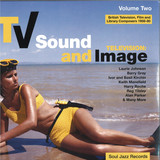
TV Sound and Image features British composers who worked in television, film and music libraries the second half of the 20th century.
Aside from John Barry, whose work on the James Bond films made him a household name, or Tony Hatch and Laurie Johnson, the majority of composers featured here - Simon Park, Keith Mansfield, Reg Tilsley, Syd Dale, Keith Papworth – remain relatively unknown. And yet ironically they have created some of the most recognisable songs in British popular culture, their music widely disseminated on television.
A quick role call of these would include Neil Richardson (who composed the theme tune to Mastermind) and Barry Stoller (who wrote Match of the Day). The Simon Park Orchestra’s Eye Level, theme song to the BBC series Van der Valk, reached number one in 1973. CCS’s cover of Led Zeppelin’s Whole Lotta Love was the theme tune to Top of the Pops. And so on.
This album is not however a stroll through the TV memories of the mind, but an exploration of the serious contribution that these creative musicians have on the landscape of popular music in Britain.
Here then is a guide to the amazing music of many of the composers (both well-known and obscure) responsible for some of the most widely known music ever to come out of Britain in the second-half of the 20th century.
Reviews:
Quietus
Der Spiegel: "spannende Klänge ... die oft funky und immer lässig klingen"
"thrilling sounds.... often funky and always chilled"
New Zealand Herald: ***** "Every track is a killer... This is more than just music to mooch too."
Irish Times: **** "downright funky"
Volkskrant: "Ze leverden spanning op maat, die onbekende makers van fenomenale Britse film en tv-muziek. Door de cd TV Sound and Image opnieuw in de aandacht"
Evening Standard: "deeply funky"
Uncut Magazine "excellent 36 track set ... welcome additions to your collection"
Q Magazine: ****
- A1: Concrete & Glass
- A2: Back To Your Heart (Feat Kate Nv)
- A3: We Forgot To Love (Feat Kadhja Bonet)
- A4: What Makes Me Think About You
- A5: Time On My Hands (Feat Kirin J Callinan)
- B1: The Foundation (Feat Cola Boyy)
- B2: Catch Yourself Falling (Feat Alexis Taylor)
- B3: The Border
- B4: Turn Right, Turn Left
- B5: Cite Radieuse
- C1: Concrete & Glass
- C2: Back To Your Heart (Feat Kate Nv)
- C3: We Forgot To Love (Feat Kadhja Bonet)
- C4: What Makes Me Think About You
- C5: Time On My Hands (Feat Kirin J Callinan)
- C6: The Foundation (Feat Cola Boyy)
- C7: Catch Yourself Falling (Feat Alexis Taylor)
- C8: The Border
- C9: Turn Right, Turn Left
- C10: Cite Radieuse
When Air’s Nicolas Godin released his debut solo album, Contrepoint (2015), he channelled the influence of Bach into a rich, resonant and hugely rewarding spread of musical explorations. One soundtrack (A Very Secret Service) later, Godin builds on equally fertile conceptual foundations for the follow-up. Released through Because Music on 24th January, Concrete and Glass is an exquisitely crafted set of variations on architectural reference points: mounted with minimalist precision and delivered with an abundance of pop warmth, it finds Godin in his element, working seductive wonders with poise and style to spare.
For Godin, the album circles back to his formative work as half of ground-breaking French electronic group Air. Revered modern architect Le Corbusier was an influence on the young architecture graduate’s music, notably on his 1997 debut “Modular Mix”. Twenty-plus years later, Le Corbusier featured on a list of modernist architects Godin was invited to compose tributes for, tributes intended to be heard as the soundtrack to site-specific installations around the world.
In its soft ambient pulse and melting minimalism, lead track “The Border” is a perfect entry-point to Godin’s hymns to buildings, arranged and co-produced with Pierre Rousseau. Its levitating synths, vocoder vocals and scudding bass hove into view with understated elegance, all the better to accommodate the discreet slow-build of delicate details within. As with Air, Godin makes gorgeously light work of every angle: this is music that seems entirely unperturbed by gravity, occupying an elevated atmosphere of its own.
Elsewhere, the title-track’s clean synth lines, crisply apportioned arrangements and tender timpani offer another inviting entry-point, sculpted with architectural clarity. While Godin’s vocoder vocals also hark back to Air’s early work, the album accommodates a diverse spread of guest vocalists elsewhere. Hot Chip’s Alexis Taylor guests on the falsetto-soul dream-pop of “Catch Yourself Falling”, one of Godin’s sweetest melodies yet. Oxnard singer/activist Cola Boyy brings soul to the righteously engaged “The Foundation”; the squelchy synths and buoyant grooves burn slow, allowing the stealthy arrangements and message room to resonate. Psychedelic soul singer Kadhja Bonet sings with measured serenity over tremulous synths on “We Forgot Love”, while Russian experi-pop artist Kate NV brings a gracefully aching romanticism to the blissful swoon-pop of “Back to Your Heart”.
Additionally, Australian conceptual provocateur Kirin J Callinan contributes a vocal of restrained drama to “Time on My Hands”, a midnight-drift soft-pop ballad with a silky allure. One of the quickest tracks to record for the album, it emerged in collaborations between Los Angeles (”During some lively sessions in Mac DeMarco’s studio,” notes Godin) and Paris. After he missed his flight home, Callinan stayed in France for a day as the guitar solos were recorded, complementing the song's air of sleek luxuriousness.
Between its title-track and the sultry, smoky jazz stylings of closer “Cité Radieuse”, Concrete and Glass is an album that truly travels, in tune with its global pitch. For Godin, it marks another milestone in a musical journey that began when Air’s 1998 debut album, Moon Safari, became the sublimely weightless soundtrack of its time. For Concrete and Glass, Godin builds on his storied past with tremendous finesse, charm and fluency, opening fresh windows of perspective at every lovingly executed turn.
Future Ethics’ first release is an eight-track compilation on a special USB stick with an accompanying zine. The label wanted to foster a spirit of collaboration with an unusual compilation-building structure. Artists gradually added to the compilation as it grew: each artist received the existing tracks and was asked to contribute or remix a track from the compilation. This took time, but resulted in a cohesive and beautiful compilation, rich in emotion, ranging from a vintage club rant from tati au miel; disoriented housy jams from Bergsonist, Beta Librae, and Violet; tense experimental compositions from Englesia and Odete; a 139 BPM banger from softcoresoft; to a dancefloor-melting System of a Down edit from Estoc & Bored Lord.
The zine features an interview from Discwoman’s Frankie Decaiza Hutchinson, writing on off-Facebook event organizing from Adwoa Afful, a beautiful cover from collage artist Fenna Fiction, and a guide to recognizing opioid overdoses and administering Naloxone from Liz Singh and Sara Martin in Toronto. It also features a comic from Berlin-based artist @juicycomics and a poem from Wafa Ktaech.
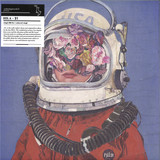
"21" is the well-crafted, sharp and original first album by the duo HILA, composed by American cellist Artyom Manukyan (who already worked with Kamasi Washington, Daedalus, Flying Lotus, Run DMC, Gretchen Parlato, Raphael Saadiq, Clive Lowe Mark...) and french producer Dawatile.
The combination of jazz, Los Angeles beat-scene and the vibrations of 80s and 90s Soviet Armenia make it a striking and unprecedented fusion. These kind of nostalgic and unconventional references forcefully shake the codes of mainstream culture to create a sincere, raw and intimate expression.
"HILA" was born from a spontaneous and intense creative impulse between Artyom Manukyan, a Los Angeles-based Armenian celloist and his partner in crime, David Kiledjian aka Dawatile, a French multi-instrumentist of Armenian descent. This project is proving to be a true master stroke given that it only took 21 days for the duo to make it a reality.
"HILA" was made in less a moon cycle but captivates and electrifies audiences upon its first outings. "H.I.L.A" colors the warmth of the Californian "High" with Armenian vibes. The artists chose this name for their creation since both have a close and valuable connection to these locales. This journey began in 2007, on the day Dawatile went to Yerevan, the capital of this small country in the Caucasus mountain to realize a first fusion project centered around local folkloric music genres.
There he was introduced to local musicians including the Armenian Navy Band, one of the country's foremost groups in which Artyom played the bass and cello. In this context, he also met many musicians such as Tigran Hamasyan and Norayr Kartashyan. This will be the beginning of connections between Lyon, Yerevan and Los Angeles. The following year, the two artists will be be seen performing next to Taylor Mc Ferrin at the Jazz à Vienne festival. More recently, they partnered up again when the cellist, who had freshly relocated in California, invited Dawatile to produce his album. As soon as the studio’s threshold was crossed, they decided to postpone this record and create a joint project: Hay (as the Armenians call themselves) / High In Los Angeles. HILA was born at the end of these 21 days of intense creation. The association of Artyom Manukyan and Dawatile is the combination of two visions, two versions of Armenia, two personalities, the reunion of the Eastern and Western blocs.
One grew up nurtured by the sounds of hip-hop and jazz in Europe and the other by art music and Russian-influenced 1980s Armenian folkloric music before moving to L. A., Ca. The cornerstone of it all, the glue that unites everything : Armenia and music. They generate a new identity synthesizing two perceptions, their complicity transcending these cultural discrepencies. To achieve this, they will scour through images of Artyom’s childhood, within the popular culture of Soviet Armenia. Together, they revisit this decidedly retro vibe, based on the work of Caucasian groups inspired by African American music. This background is rehashed and fused with ancestral Armenian sounds. The DNA of the album "21" is molded by these dear influences.
We can also hear the ancestral sounds of Armenia, a country at the edges of both Europe and Asia. The presence on two tracks of Armenian music Master Norayr Kartashyan, infuses the languor of past melodies and traditions. These purposeful anachronistic sounds offer a fantastic depth to this powerful opus. Listening to the album, one can appreciate the successful fusion of styles and influences. Those combinations, however, manage to preserve individual identities only to enhance the art through an adamant musical dialogue.
Being driven by the urge to transpose Armenian musical traditions into a unique universe, the daring artists, offer an innovative combination by blending, for the first time, these ancestral sounds with the world of Los Angeles beat-scene and jazz. An invention largely fueled by the magic strings of Artyom and maestro Miguel Atwood-Ferguson, a pillar of the genre in Los Angeles combined. These associations resonate with a triumphant equilibrium. HILA is musical uncharted territory in which Artyom's cello strings intertwine to ignite the harmonies of keyboards, the machines, the vocals and electronic layers Dawatile pieced together. HILA plays the soundtrack of an adventure set between Armenia around the end of the Soviet era and a mysterious near future.
Artyom Manukyan grew up in Armenia in the 90s. At the time, he studied Russian classical music while learning jazz with assistance by his father, a music journalist. Being an unconditional music lover, he went on to sharpen his skills at the prestigious Berkelee College of Music. Subsequently, he’s been lucky enough to travel the world touring with numerous acts and mainly with the Armenian Navy Band. The group has fostered alacritous success honored by a BBC Award as a crowning achievement. He moved on 10 years ago and made his way to L.A. with his cello on his back. In the City of Angels, he quickly became a popular figure of the jazz and hip-hop scenes thanks to his first album "Citizen". He’s accompanied prestigious musicians such as Kamasi Washington, Melody Gardot, Daedalus, Flying Lotus, Run DMC, Gretchen Parlato, Raphael Saadiq, Clive Lowe Mark, or Vulfpeck. He released his solo album on the cello, "Alone" in October 2019.
Dawatile is a bold producer and multi-instrumentist as well as a passionate and resolute musician molded by jazz. As a versatile artist, he handles and juggles the saxophone, the keys, the bass and composition. Simultaneously, Dawatile produces cross-over projects and soundtracks for the movie industry. He, as well, has had the opportunity to be a part of many tours, including with his electro hip-hop band, Fowatile and more recently with the "Future Kreyol" trio, Dowdelin. Being the ever workaholic, he has under his belt a string of prestigious collaborations with the likes of Talib Kweli, Foreign Beggars, Roy Ayers, Tigran Hamasyan, Mathieu Boogaerts, Voodoo Game and Piers Faccini. His taste for developing new musical recipes and his know-how in production make him a much sought-after album producer. In concert, the HILA duo offers a sober, precise and rhythmic performance. "21" is an aerial and lively album taking the audience on an at times joyous and sometimes melancholic dreamlike journey. The magic of "HILA" operates at the speed of light and positions it already as an avoidable group.
Were you ever really here? Plug in to the history of feeling with four beautiful cuts of post-genre sentimentalism from YS. Traversing the landscape of urban emotion, the duo find solace in the momentary states of being in this post-internet epoch. On the A-side ‘Music Angel’ and ‘Dreams We Share’ explore the processing of healing through poignant dub and empathetic ambience. On the flip, B1 ‘Touch’ raises the tempo with a timeless slab of ghetto nostalgia straight from the early days of Databass Records. Closing things is ‘The Future’, a bold not-so-sanguine gambit around the end of modern times; truly a beast of its own. So here it is - now and always x
Twelve years have passed since eedl released their masterpiece “Everse” spa.RK, 2007 and in that time the duo -formed by Miguel Ángel Martínez and Joan Duat- have shied away from the spotlight and stage. Despite this apparent lethargy, their previous two works - "Parallemped EP" spa.RK, 2003 and the aforementioned "Everse"- provided them with cult national scene status, while raising more than a few eyebrows among European “headz”. Both works continue to sound overwhelmingly modern and
undated, an obvious signal that eedl is a special breed of cutting edge electronic music.
Although creatively silent for a number of years they have remained musically active. As well as his career as a product designer, Miguel Ángel has applied his musical experience to the technology sector, and since 2016 has fully immersed himself in “modular”–Winter Modular, Plankton Electronics and Patching Panda–; Meanwhile, Joan, office programmer and classically trained pianist, has found his equilibrium with work and building a family life.
"Unstored" is their long awaited return to the fray and their second studio album. It is comprised of eight songs, some of which have been have been slow cooked since 2002, with others gestating more recently. Maybe such a long hiatus seems excessive, but the meticulousness nature and obsessive love for detail found in "Unstored" more than justifies the wait, which at times felt like a long goodbye.
This collection of songs navigates between perfectionist electronica, new generation electro, noisy harmonies, glitch and deconstructed rhythms; a sonic memoire with strong roots in British experimental electronic music -reminiscent of Autechre or Plaid-, another reason in understanding the longing produced by their extended absence.
It is therefore with great honour that in early January 2020, Lapsus will release the new album from the elusive eedl project in a luxury edition format.
A record to be enjoyed to its very last second AM Jazz is set to place this songwriter where he just might, finally, receive the recognition he deserves; from unsung hero to a truly worthy candidate for being called up to join the City of Manchester’s ranks of great musical icons. Whether you prefer to know him as Mr. Roberts or simply call him Al, it’s time to become acquainted with the real Jim Noir.
Tossing his bowler onto the hat stand and sliding on his slippers, AM Jazz sees ‘Jim’ putting his feet up whilst Alan Roberts takes the lead. A creative masterpiece for the record player and the mantlepiece, it’s a multi-layered album that features close friends including those dearly departed, and is his truest record to date, by a songwriter painting his own hypnotic Portrait of the Artist as a Young Man.
“I haven’t 'felt' like Jim Noir for a long time. I’m not sure I ever did; it was a construct of other people’s imaginations,” reveals Al. “AM Jazz is definitely the kind of music I make generally. It harks back to when I started making music years ago and didn’t worry about capturing a particular style. It will be nice to show people more of that.
It's the best album I've written; real hypnotic minimalism, the good stuff!” 15 years since he recorded the first ever 'Jim Noir' EP, AM
Jazz is the record all Noirheads won’t be surprised Al had inside him.
Letting the Beatlesesque stylings of his most recent album Finnish Line be (5 years ago no less), AM Jazz suits the Noir repertoire of his catalogue so far and is another homegrown offering which sees the Daveyhulme composer tinkering in his suburban Manchester studio once more, with the magic of his computer work sorcery, analog and tape recordings.
“For this I went back to the slightly more haphazard way I wrote my first album, Tower Of Love, wherein I’d use things in front of me, or a bit wrong like headphones for a microphone, to make the most Hi-Fi Lo-fi album ever.”
Whilst a brief disappearance of Jim’s online persona may have provoked bleak theories as to his whereabouts, Al had little time for digital distraction. Whilst writing and creating with friends, he has worked on electronic pet project, FAX with former Alfie guitarist, Ian Smith, and the vintage analogue house meets electro sound of his own solo EP Granada Personnel Recovery, as well as producing local band, Shaking Chainsor, and helping long-time musical colleague, Aidan Smith with his long-awaited 'The Planets' project; “I’ve been writing in dribs and drabs when I feel like it,” Al says. “I used to write all day everyday but it’s a lot harder now I’m (feeling) over 100 years old.” Never not sonically exploring or being inspired by the sounds around him, there was even a red-carpet moment when he appeared as a film premier guest after a couple of his songs were selected for the OST of director Jason Wingard’s film Eaten By Lions.
Performing all AM Jazz’s instrumental parts himself but also, at the right moment, bringing in present and past pals along the way, sexy lounge song, ‘Hexagons’ features 'Phil Anderson' and Mark Williamson singing and playing “legendary OTT guitar solo” respectively. Meanwhile the orchestration of ‘Peppergone’ waltzes like a beautifully romantic ode to Beethoven’s Moonlight Sonata – a tribute to dearly departed best friend 'Batfinks' who originally wrote the chords in his song 'Peppercorn.' “I hope he doesn’t think it’s shit,” Al jests. Listen closely and you may even find a few unsuspecting celebrity guest appearances as, perhaps, it could be the very first album to feature soundbites of podcasts sneaking onto the recordings. “I will have a podcast on if I’m recording; Adam Buxton, Athletico Mince, Frank Skinner or Richard Herring… I’m sure some mics will have picked them up, like in the old Tower of Love days,” he says referring to his breakout debut.
Culled from around 50 tunes AM Jazz moves like the time of the day, from dawn to night, stirring from the pop of ‘Good Mood’ and ‘Upside Down’s Beta Band groove. “As the album was playing, I imagined this smoky backstreet with all those neon signs outside clubs at about 4am,” Al says. Mellow ‘TOL Circle’ is like Percy Faith’s Theme From A Summer Place synthesized, capturing the style of TV library music or movie soundtrack obscurity that has always stirred Al’s curiosity, and the album plunges into a vast chasm of instrumental exploration with ‘Mystermoods,’ visiting Japan’s funky synth whiz duo Testpattern and Hakabashi Sakamoto. Darkening and deepening in intensity, ‘Eggshell’ is like an undiscovered gem from Angelo Badalamenti’s cutting room floor, the Panda Bear shimmer of ‘Lander’ is where blissful positivity and sadness meet, about another of his friends who left the world too young. “By the album’s close, its nearly time to let go and enter the ether,” he says of the album’s story. “Like one would do when they take their final sigh on this earth.”
Chicago-based contemporary electronic musician Steve Hauschildt has composed panoramas of synthesized sound for over a decade. First within his former band, Emeralds, an American touchstone of 2000s home-recorded psychedelic noise music, and later across a steady and critically-acclaimed stream of solo releases spanning ambient techno, arpeggiated electronica and post-kosmische styles utilizing synthesizers, computers, and digital processing. In 2018, he extended a collection of rich, visceral tracks titled Dissolvi, his first release on Ghostly International and his most collaborative work to date. Just a year later, Hauschildt returns with Nonlin, an album that's freer, leaner, and looser, both structurally and conceptually; less linear compared to its predecessor, but still captivating. Developed and recorded in several studios during and around the edges of tour - Chicago, Los Angeles, New York, Tbilisi, and Brussels - this material emulates an alienating encounter with a smattering of places, a replicant of culture shock, a solitary and stark experience with uncanny environments, melody and dissonance as oblique locales. Nonlin finds Hauschildt evolving his palette of tools, integrating modular and granular synthesis. The improvisatory and generative nature of modular systems, when paired with his signature grid-oriented and hand-played techniques, guides these compositions slightly out of line to hypnotic effect. Opener "Cloudloss" permeates the mix with an unsettling smog, which reappears and all but engulfs "A Planet Left Behind." On cuts like "Attractor B" and "Subtractive Skies," pockets of air rest between sequenced pulses, whose crumpling and flattening folds build into a restrained rapture of crisp frequencies and milky reverb-swallowed coruscations. The album's title track and centerpiece logs on to a foreign network, a fractured percussion signal that modulates and stutters into static amidst curious melodic sparkling in the hazy bandwidth. "Reverse Culture Music" casts an elegant and brooding stream of strings, pizzicato and churning bow from Chicago cellist Lia Kohl, against chiming minimalist synth frameworks. A surprising pattern emerges in the taciturn systems at work. Hauschildt continues to expand his already horizon-wide repertoire, here exploring the effects of corrupting coordinates; a flight subject to the collapsable abilities of time in remote spaces, a smearing of the axis to elegiac ends.
"I'm always looking for ways to be surprised," says composer and multi instrumentalist Jeff Parker as he explains the process, and the thinking, behind his new album Suite for Max Brown, released via a new partnership between International Anthem and Nonesuch Records.
"If I sit down at the piano or with my guitar, with staff paper and a pencil, I'm eventually going to fall into writing patterns, into things I already know. So, when I make music, that's what I'm trying to get away from-the things that I know." Despite its musical departures, in presentation Suite for Max Brown is an informal companion piece to The New Breed, Parker's debut release on International Anthem, which was honored as one of the "Best Albums of 2016" by New York Times, Observer, and Los Angeles Times.
"I made The New Breed based off these old sample-based compositions and mixed them with improvising," Parker says. "That's in a nutshell how I make a lot of my music; it's a combination of sampling, editing, retriggering audio, and recording it, moving it around and trying to make it into something cohesive... With Max Brown, it's evolved." Though Parker collaborates with a coterie of musicians under the group name The New Breed, theirs is by no means a conventional "band" relationship.
Parker is very much a solo artist on Suite for Max Brown. His accompanists are often working alone with Parker, reacting to what Parker has provided them, and then Parker uses those individual parts to layer and assemble into his final tracks. The process may be relatively solitary and cerebral, but the results feel like in-the-moment jams-warm-hearted, human, alive. Suite for Max Brown brims with personality, boasting the rhythmic flow of hip hop and the soulful swing of jazz.
TERANGA BEAT proudly presents MAR SECK, a delicate singer and songwriter who marked the history of Senegalese music. TIP!A cross over between Cuban compositions and Senegalese Folklore, his songs gave birth to Salsa-Mbalax, the popular dance music of '70s Senegal that went onto influence a new generation of Senegalese musicians including a young Youssou N'Dour. Featuring 12 tracks recorded over three different sessions, ‘Vagabonde’ focuses on the best of MAR SECK’s career. The first recordings are taken from a raw and unreleased 1969 session at the Dakar National Radio. Recorded with his first group SUPER CAP-VERT from Rufisque, it captures an 18-year old MAR singing the first version of his now famous composition “Vagabonde”. The remaining six tracks from the session includes a beautiful cover of Fonseca’s “Sibouten”. A 1973 live recording is also featured here, made with the STAR BAND de DAKAR in Saint Louis. Previously unreleased, it comes from a time when MAR was establishing his name playing at the legendary Miami Club in Dakar, the “École de Passage” for all great Senegalese musicians. The final two tracks (one of them unreleased) finds MAR accompanied by the most complete band of Senegal, the NUMBER ONE de DAKAR. The 2LP & CD booklet includes photos and liner notes outlining MAR’s career. LP version comes with silk screen print, European 60s style, gatefold sleeve. All tracks are mastered & mixed from the original recording tapes.
Lost Soul is an uptempo funk song recorded and written in Kunming, China with a killer breakbeat that has already become an underground hit in the b-boy scene, finally receiving a release on 7" vinyl via Dinked Records. DJ DSK, The People's Rhythm & Angela Cory penned ideas for the song while touring the Chinese club circuit together.
DSK then approached different musicians living in different parts of China at the time for their help in recording the song. The song has been played at many high level b-boy battles including the final of the UK B-Boy championships by DJ Renegade.
Havazelet's story is both fascinating and mysterious. She was born in Aden, Yemen, in 1936 as Havazelet Damari, she immigrated to Israel when she was 8 years old and grew up in the disadvantaged Ezra neighborhood, in south Tel Aviv. Havazelet discovered her love for singing when she was a teen, when she would sing at feasts and family events. At one of these events she was discovered by an impresario who decided to take her under his wing.
He asked her to change her family name from Damari to Ron, as there was already a young singer called Shoshana Damari in Israel, who was becoming quite popular. In March 1960 Havazelet Ron's only Israeli album, "The Music of the Desert" was released, produced by the "Makolit" label, featuring Yemenite folk songs. Both songs on this 7" are from that album. The identity of the promoter, the album's recording date and location, and the identity of the musicians, could not be found.The album was ahead of it's time in that it introduced an innovative sound, comprised of drums, electric guitar and an organ, making it one of the first albums in Israel to record this type of composition.
... However, it confused the Israeli audience of the time: The vocals were in Yemeni-Arabic, preventing it from being played on the radio, which mainly played Hebrew music, moreover, it was too innovative and far from traditional music for the Yemenite scene. The album fell between the cracks and her big breakthrough to mainstream did not happen.
Following the album's failure, Havazelet left Israel in 1963 and went to Germany, where she performed in festivals, TV shows and recorded several more albums. All of this was made possible by her unique singing talent in five languages - Hebrew, Yemeni-Arabic, German, English and Yiddish, her impressive appearance and remarkable stage charisma. The European audience enjoyed the original music she produced and her Yemenite-style cover versions of Hebrew songs.
In 1968 Havazelet married and a year later retired from the music scene. In 1980 she returned to Israel but she left again four years later, this time to Los Angeles, where she worked as a kindergarten teacher. Havazelet Ron passed away in Los Angeles, in 2013, after a long battle with cancer. In Israel, her name is almost unknown among music lovers in general and among record collectors in particular.
- A1: Angelo Vaggi - Chameaux Tunisiens
- A2: Baker Street Band - Talkin Bout You
- A3: Al Aprile _ The Electric Art - Frattonove Under The Sky
- A4: Alphaville - Alphaville
- A5: Le Jour Prochain - Susan
- B1: Rocky Schiavone _ The Gangsters - Nessuno Mi Puo Giudicare
- B2: Off Set - 240 Seconds
- B3: Monofonic Orchestra - Lucys 1St Appointment
- B4: The Stumblers - Last Clean Shirt
- B5: Roberto Masotti - Automatic Guitar
'Matita Emostatica' is the re-issue of a sought after compilation connecting the most underrated outsider artists of the Milan scene, in the early eighties. The amazing artwork is the creation of influential designer and photographer Roberto Masotti, a very well known figure in the avantgarde and jazz realm (he made astonishing portraits for the likes of Anthony Braxton, Art Ensemble Of Chicago, Carla Bley, etc.)
The compilation was produced in 1981 by Al Aprile and released by Materiali Sonori. Among the 10 artists you can find future journalists, unstoppable record collectors, renowned photographers and influential underground persona ... just scroll down the album and read the names of Monofonic Orchestra, Angelo Vaggi, Baker Street Band, Al Aprile, Roberto Masotti and many others. The result was quite unbelievable, ranging from small cosmic opus to avantgarde symphonies and asymmetrical etno-world jams. In the end ‘Matita Emostatica’ was quite in line with the efforts coming from the rest of Europe and the other side of the ocean, so to speak the compilation wouldn’t be out of place in the Ralph or Crammed Discs catalogue. A postcard from a country that is no more.
Being heavily influenced by the house sounds coming from the U.S. past and present it should not come as a surprise that Red D‘s WPH imprint is launching a new 12” series on which his favorite producers from Detroit, New York, Chicago and beyond get to shine in all their glory. A whole slew of Detroit and New York friends of the label have already confirmed to take part in this series, so good things await us!
But to kick things off we are extremely happy to present label boss Red D’s collaboration with Reggie Dokes, who has been a WPH regular since the very early days. Reggie Dokes and Red D a.k.a. RD² team up for three tracks full of electronic soul and analogue dirt, ranging from the ethereal beauty that is ‘Sharing Angels’ to the minimal dance of ‘Beyond Borders’ and the tribute to their respective cities of birth ‘From D To Shining D’. To complete the E.P. Reggie contributes the solo track ‘Birth Day’, bringing his trademark deepness to the table.
Time will tell if there was a better way to start this new series on WPH, but we are pretty happy with this one as it is. Stay tuned for more and enjoy!
Lefto: ‘Sharing Angels’ & ‘Birth Day’ are my favourites!
Red Rack’em: ‘Beyond Borders’ & ‘Birth Day’ for me. Loving the chords and choppy melodicness of them.
Satoshi Fumi: I really love ‘Sharings Angels’ & ‘Beyond Borders’. Timeless tracks!
Fabrice Lig: ‘Sharing Angels’ is magnificent!
The vitality you hear on Antique Blacks is a testament to the unique energy of the community around The Foxhole Cafe in Philadelphia, as Ra honed his unique brand of Afro-Futurism through the late 60';s and 70's. Cosmic theatre, spiritual chants, and experimental electronics make this record an essential document that was ahead of its time. Ancient to future! BIG TIP !
The 1970s saw change in Sun Ra's recorded output, and as far as we can tell, the content of his live performances. By the middle of the decade, Sun Ra's music no longer seemed comprehensible as part of the jazz New Thing – quirkier, more idiosyncratic elements were more to the fore.
At this time, 1974, every Sun Ra record still surprised, and seemed radically different from everything else he had released up to then. The musical universe proposed by free jazz had never circumscribed Sun Ra. He had been part of the movement, but was able to use the possibilities it suggested without being limited by its conventions.
The Antique Blacks illustrates this well. Recorded as a radio broadcast in Philadelphia, according to Dale Williams, it has a well defined but oddball structure. Sun Ra was a master architect, very concerned to use the unfolding of an album, a broadcast or a live performance to create a satisfying structure.
Song No 1 starts on an upbeat note, it's a lively, tonal introduction, featuring John Gilmre on tenor saxophone, Sun Ra on roksichord, Dale Williams, then aged 15, on guitar, and Akh Tal Ebah on trumpet.
Sun Ra's poetry is featured on There Is Change In The Air, a track which has on occasion been used for the album title: in its original incarnation as a Saturn LP, there was no dedicated sleeve artwork, and this record appeared under many names. Ra's poetry is allusive, elusive and paradoxical, and this was its first major appearance on a record. During instrumental passages, Dale Williams' guitar is heard, along with the saxophones of Marshall Allen and Danny Davis.
The Antique Blacks is a similar setting for a Sun Ra poem, which encompasses "spiritual men", and Lucifer as a dark angel. The Arkestra is heard in conducted improvisational ensembles, in between the sections of the poem.
This Song Is Dedicated To Nature's God has Arkestral vocals, with John Gilmore's voice in th foreground. Williams' guitar is once again prominent in the instrumental passages.
Sun Ra's poetic declamations provide the structire for The Ridiculous I and The Cosmos Me, which also has a fine unaccompanied tenor solo by John Gilmore, keyboard improvisations by Sun Ra, and closes with bass clarient from Eloe Omoe.
Sun Ra's keyboards are heard with minimal Arkestra support on Would I For All That Were – a fine synthesiser improvisation, with electric piano left hand accompaniment.
Tension is resolved by Space Is The Place, which rounds the album out in an upbeat mood, with Akh Tal Ebah, James Jacson and Sun Ra prominent among the vocalists. The closing section includes the chant Sun Ra And His Band From Outer Space, often used at the close of live performances. This isn't strictly live, though: in one line the vocal is played backwards on tape!
We're proud to present these four tracks of pure electronica on a Ferox debut EP from Macedonian maestro Mihail P. Despite his young age, it's easy to hear the influence of 90's UK techno in this release with a slight hint of Terrace and Dan Curtin.
With five quality releases under his belt, Mihail is already fast becoming a favourite on the underground electronic scene and obviously injects his own techno soul into his productions. Available on 180g vinyl only.
Greg Hates Car Culture was Venetian Snares' first ever vinyl release. Long out of print, it came out in 1999, as the third release on Minneapolis label History Of The Future. Aaron Funk's hallmarks were there from the start. His absurdist sense of humour, the razor sharp edits and his use of odd time-signatures. There is a rawness here, not often captured on later records, where you can imagine Aaron playing live in front of a room full of young breakcore fanatics. Indeed most of the tracks here were recorded live, tweaking his effects and EQ on the fly, to DAT from his Amiga. The album opens with "Personal Discourse", recorded in 1997, which samples Aaron calling into a Dominatrix live on community cable TV, while "Fuck A Stranger In The Ass" samples from the film The Big Lebowski. The track "Aqap" has a different sound to the others having been recorded later, in 1998, on Aaron's first PC.
We have also added three hitherto unreleased 1997 tracks to this reissue. Two of them "Eating America.." and "Punk Kids" appeared on Venetian Snares rare self-released 1998 cassette Spells and the long sought after "Milk" was only passed around by his friends.
Greg Hates Car Culture lets you hear the raw energy of a musician at the birth of his sound.
- A1: Love Is All We Have Left
- A2: Lights Of Home
- A3: You're The Best Thing About Me
- A4: Get Out Of Your Own Way
- A5: American Soul
- B1: Summer Of Love
- B2: Red Flag Day
- B3: The Showman (Little More Better)
- B4: The Little Things That Give You Away
- C1: Landlady
- C2: The Blackout
- C3: Love Is Bigger Than Anything In Its Way
- C4: 13 (There Is A Light)
- D1: Ordinary Love (Extraordinary Mix)
- D2: Book Of Your Heart
- D3: Lights Of Home (St Peter's String Version)
Deluxe Box Set[41,60 €]
Double cyan blue vinyl in a gatefold sleeve. Two printed inner sleeves and a six panel oversized booklet. Download card enclosed. The vinyl includes the Deluxe track listing - 17 tracks in total.
U2 return with their hotly anticipated new studio album 'Songs of Experience'. The Island Records priority release completes a stellar year for the Dublin band, following their return to stadiums with the critically acclaimed, sold out 'The Joshua Tree Tour 2017' playing to 2.4 million fans in just 51 shows across Europe and North and South America, as well as the successful 30th Anniversary re-issue of 'The Joshua Tree'.
Recorded in Dublin, New York and Los Angeles, Songs of Experience was completed earlier this year with its subject matter influenced by Brendan Kennelly's* advice to Bono, to ...write as if you're dead'. The result is a collection of songs in the form of intimate letters to places and people close to the singer's heart: family, friends, fans and indeed himself.
Songs Of Experience is the companion release to 2014's 'Songs Of Innocence', the two titles drawing inspiration from a collection of poems, Songs of Innocence and Experience, by the 18th century English mystic and poet William Blake.
Produced by Jacknife Lee and Ryan Tedder, with Steve Lillywhite, Andy Barlow and Jolyon Thomas, the album features a cover image by Anton Corbijn of band-members' teenage children Eli Hewson and Sian Evans.
'The Blackout' and 'You're The Best Thing About Me' were the first songs to be made available from the album. 'You're The Best Thing About Me' is the band's first UK Top 20 airplay record in a decade and has also been remixed by Norwegian superstar DJ and producer Kygo.
*Brendan Kennelly - Irish poet, novelist and Professor Emeritus at Trinity College, Dublin.