Zwerm is a Belgian-Dutch electric guitar quartet (with a backyard rehearsal shed located in Antwerp) that operates along the borders between styles and traverses traditions that are typically not convergent. Zwerm rhymes Larry Polansky with Nadah El Shazly and are galvanized by the likes of guitars pioneers like The Velvet Underground and Sonic Youth, the microtonal DYI-er Harry Partch, Middle Eastern sonorities and the prog-madness of Kind Gizzard & the Lizard Wizard. ‘Musical adventure’ is not just a hollow cliché for this quartet, but a genuine commitment. Zwerm calls itself a ‘guitar quartet’, but that can be interpreted broadly as well as with a pinch of salt: “If we want to do something on instruments we don’t really master, we’ll just figure out a way to make it work.”
Toon Callier, Johannes Westendorp, Kobe van Cauwenberghe and Bruno Nelissen all met in 2007 while working on a project with Glenn Branca. A new guitar quartet was born and it became clear rather quickly that staying in the strictly contemporary compositions lane was not for this quartet-with-five-to-six-members (an organizational chart is available upon request).
An appetite for new and lasting collaborations has been a constant theme throughout their artistic parcours. The group has shared stages with theatrical producers like Walpurgis and Post uit Hessdalen, dancers such as Ecce and with the musicians Fred Frith, Stephen O’Malley, Shiva Feshareki, Rudy Trouvé, Mauro Pawlowski, Larry Polansky, Eric Thielemans, Yannis Kyriakides, François Sarhan, Serge Verstockt and Stefan Prins. These projects have not always translated into records, but they have been decisive in creating a unique musical approach. In 2015, when Zwerm was asked by De Handelsbeurs to collaborate with Fred Frith, they proceeded to pen a few new musical sketches over which Firth sublimely improvised. In 2018 ‘Badminton in Tehran’ was released, their first record that was made up completely of only the group’s compositions.
“a basket full of buttons here
and if you push the wrong one: fear
and if you push the right one: love
or maybe none of the above”
The route that Zwerm has taken is often defined by the question “What if... ?” - like a dart thrown at a musical map, not quite blindly, but naive enough to lead to unexpected endings.
“What if we play Renaissance pieces written by John Dowland, but instead of playing lutes we play these tunes with a Telecaster – and then jam it through effect pedals and an amplifier?”
“What if we connect one hundred guitar pedals and just leave our guitars at home?”
“What if we record a record with ten different one-page-pieces that we found on the Internet?”
In 2020 our metaphorical dart landed on “What if we tried microtonality?”.
‘Microtonality’ sounds a bit creepy, but actually there is nothing to be afraid of: there are no out-of- tune notes, just alternate notes. On the continents where Western musical theory is less stringently applied, microtonality is the rule, and has become the subject of many deep and thoughtfully written theories. However for Zwerm, this phenomenon occurs in many, often surprisingly lighthearted forms. A dilapidated piano that has settled into a beautiful microtonal tuning of its own accord, enthusiastic choral singing, a guitar whose three strings are tuned a quarter-tone higher, a saz (Turkishquarter-tone lute), a maddening guitar pedal, ...
"the dreams they were convicted for telling only lies reality came after for claiming to be wise what you don’t see is what you get just never light a spark I’m a crow in the dark”
“And… what if we work with a drummer?” Enter Karen Willems - dummer, extraordinaire, and ardent player in groups, projects and collaborations galore. One chance meeting and the deal was done. It was obvious before the start that Willems was the versatile and creative percussionist-in-a-toy-store necessary for this project. And in the studio, to our delight, she demonstrated an easy dexterity when switching quickly from one idea to the next.
At the reins behind the scenes was producer Rudy Trouvé, who – during previous sessions for ‘Badminton in Terhran’, when the classically trained guitarists went completely off the rails, staring deeply and forlornly into their scores, looking for answers – was able to pinpoint the problem and get the wagons rolling in the right direction again. Completing the team were Mark Dedecker (recording)and Joris Calluwaerts (mixing).
The results are in and it’s called ‘ Great Expectations’ – a title that, in several ways, fits perfectly with these strange times.‘Great Expectations’ goes wide! Zwerm is at its best when it can run along the borders between style and across traditions that otherwise would not necessarily intersect. The most straightforward rockers have a proggy tinge while the dreamy psychedelic songs lean more toward Richard Youngs. And if a nice melody dared come to close to becoming a ‘Kit-Katjingle’, then barbs-a-la-Pere-Ubu were trailed, tracked, found and promptly embedded. ‘Heavy Machinery’ sits neatly somewhere between Captain Beefheart and Richard Wagner, and ‘On My Way To Aguno’, set to an Iranian folk song chord progression, grew into a hyper-personal lullaby. Zwerm used the saz (Turkish lute) and the sinter (Moroccan gnawa bass instrument) without falling into pastiche psychedelia, but you can still sense the orient.
Buscar:be quit
Debut album, duo from Detroit which includes Chris Samuels of Ritual Howls 350 Units of limited cloudy clear/Bronze splatter colored vinyl Electronic, Industrial, Experimental music for Fans of Ritual Howls, Throbbing Gristle, Coil, The Legendary Pink Dots, Drew McDowall, Suicide, Cabaret Voltaire // Mission to the Sun synthesizes ambient, post-industrial landscapes with expansive arrangements and haunting vocals. Comprised of Christopher Samuels (synths, samples, programming) of Ritual Howls and Kirill Slavin (vocals), the Detroit-based duo creates an atmosphere of lamentation for a world left behind. Fragments of industrial noise and hypnotic synths fill Samuels' foreboding, alien terrain, and it's in this vastness that Slavin's voice mourns the drudgery of everyday life and the loss of universal consciousness. The duo's debut album, Cleansed by Fire, takes the listener on a journey home to the inferno of the sun, navigating memories of a life lived, dissolved into time. A wind of desolation opens "Take Me Back," with Slavin mourning for a return home to a distant reality. The song uses repetition to build a somber ambience while maintaining a spaciousness sparsely accented by noise with care and precision. Slavin's lyrics examine the conflict and paradoxes that riddle the human condition with Samuel's instrumentation providing a fitting backdrop. "The Unbroken Sea" illustrates this symbiotic reflection with a propulsive bass line contradicted by ethereal synths that swell and contract, only to be finally engulfed by a pulsating crescendo of rhythmic noise at the end. The dystopian title track "Cleansed by Fire" marches steadily along to a creeping darkwave rhythm. The basic elements of dance music are there, yet the song remains devoid of danceability. Punctuated by lyrics inspired by J.G. Ballard and technological isolation, a glimmer of pop sensibility can be found beneath the haze of the track's potent mood. Mission to the Sun beautifully captures an alien feeling: one ripe with despair and longing, one that doesn't quite belong to this world or time. A slow, satisfying burn, Cleansed by Fire traverses the dystopian past and present, while moving toward the future.
On "Neon Genesis: Soul Into Matter²" Meemo Comma (a.k.a. Lara Rix-Martin) takes Kabbalistic text and Jewish prayer and guides them through twinkling ambient synths, breakbeats and cranking industrial noise, full of strange wonder and drama. You can hear soft synths transmuted into choirs of seraphim and moments of occulted dancefloor rapture, from Aramaic chanting and ravey breakbeats to readings from the Zohar. It is quite beautiful at times. Jewish mysticism is at the root of Western esoteric beliefs and therefore has formed the structure of many films and books that explore the question of humanity. Inspired by the visuals of Evangelion and nineties anime soundtracks such as Ghost In The Shell (and its later Stand Alone Complex series), the new Meemo Comma album is a soundtrack to an imaginary anime that, like its real counterparts (e.g. Full Metal Alchemist), takes the beautiful parts of Kabbalah and sets them to science fiction stories. When asked about the themes that inform her new album, Lara Rix-Martin says "Judaism is filled with many tales and teachings that prevail in science fiction to this day - whether consciously or not. Sci-Fi is the genre best equipped to explore the immensity and challenges of human experience. Something that Judaism has also been attempting for over three thousand years." "I watched Ghost in the Shell when I was 14 and it was so striking, visually and sonically. The soundtrack has acted as a backdrop to explore my Jewish identity. I have been reading the Talmud since last year, discovering a deeper love for Jewish stories and teachings. There are some beautiful, hopeful ideas in Kabbalah too, which were a central inspiration to this album such as the idea that the first human was non-gendered and just this form made up from the qualities of HaShem (God) who performed 'Tzimtzum', contracted their form using their Ein Sof (eternal light) to create 'Adam Kadmon' whose form split into all human souls." Lara playfully subheads her album: "In the year 5781 humanity is ever closer to becoming a singular consciousness. A team of humans are forming an android, Adam Kadmon (CODENAME: UNIT KADMON). First, humans have to gain higher consciousness guided by the Sefirot." While you don't have to know about these influences to enjoy the music, it stands true that the intention is an irreverent love letter to the way grand myths are birthed into the future through new forms, retaining their beauty and elegance.
random color vinyl
Miles was right, Embryo was more than a unique experience. While talking with Charlie Mariano (the saxophone player was one of the most impressive collaborator of the german band) one day he stated: ‘Embryo - they are these crazy creative musicians playing really weird stuff.’ When you get the blessing from the prince of darkness itself, nothing can go wrong, so here’s the story. Opal was the beginning of all things to come, the record was released in 1970 and licensed by pioneering early Berlin rock/jazz/experimental music label Ohr. It was quite a shock! Forget about your kosmische debris and sought after kraut rock genetics, this was pure and mind bending (heavy) psychedelia, the kind mr. Julian Cope would have killed for. The long stretching People From Out The Space – seven minutes plus of outstanding jam – was sitting at the end of the album, right after a series of heavy hitting jazz rock numbers. This was the foundation of a whole myth. A cornerstone in European experimental and popular modern composition. (Released by LONEOS in cooperation with MATERIALI SONORI.)
“Gyropedie,” Anne Guthrie’s third record for Students of Decay, takes us further into her hermetic practice, wherein expertly captured field recordings, French horn, and electronics are woven into potent and richly imagined electroacoustic environments. In Guthrie’s own words, “Quite literally a record of pilgrimage from East to West. Remnants of Midwest and East Coast soundmarks, instruments sold to lighten the travel load, sketched out and then buried under the new. Winter birds and crunching snow, frozen playgrounds, broken synths - I spent a year decoupaging over this, but of course it's still there. A second moon appears occasionally in the daytime, and there are frequent, murky transmissions. California has something alien about it I'm still trying to grasp. Primarily vintage, unabashed, corny, I find myself becoming an impressionist.”
Anne Guthrie is an acoustician, composer, and French horn player. She studied music composition and english at the University of Iowa and architectural acoustics at Rensselaer Polytechnic Institute, where she completed her Ph.D in 2014. Her music combines her knowledge of acoustics and contemporary composition/improvisation. Her electronic music has focused on exploiting the natural acoustic phenomena of unique architectural spaces through minimal processing of field recordings. Her composition has focused on the orchestration of non-musical sounds, speech in particular. Her French horn playing has focused on electronic processing and extended techniques used in improvisatory settings, as a soloist and with Fraufraulein and Delicate Sen, among others. Her acoustics research has focused on the use of ambisonics for stage acoustics.
Rarely does an artist pay homage to the classics quite like Dimitri From Paris, whose illustrious repertoire of original productions and remixes effortlessly capture the essence of the disco greats. After releasing his acclaimed collection of CHIC remixes on Glitterbox Recordings in 2019, Dimitri now partners with NYC singer-songwriter Fiorious, an artist who represents the dawning of a new era in dance music talent, to release ‘Music Saved My Life’ on the label.
With Fiorious’ previous Glitterbox releases including powerful call-to-resistance anthem ‘I’m Not Defeated’ and re-work of Aly-Us’ 90s classic ‘Follow Me’, his impassioned vocal paired with Dimitri’s meticulous production make for a perfect match. A celebration of music’s ability to provide sanctuary and liberate, ‘Music Saved My Life’ encapsulates the ethos of the disco golden era and its modern-day equivalent, Glitterbox. Beautifully brought to life by an international ensemble of over twenty world-class musicians, this is a truly exceptional release from a pioneer of dance, and a future star of the scene, that stands up alongside the disco greats.
The latest from Mr. K and Most Excellent Unlimited pairs lowdown and stomping disco from an unlikely source with a funked-out floorfiller from some very familiar voices.
Minnie Riperton’s 1977 single “Stick Together” was an outlier in her catalog of smooth modern soul, an intentional nod in the direction of the prevailing disco sound. Co-written with Stevie Wonder, “Stick Together” in its original single release was divided into two parts, the first a fairly conventional uptempo cut with all the catchy qualities you’d expect from Stevie and the husband and wife team of Richard Rudolph and Minnie. It was the second half of the song that caught the ears of DJs who played for funkier dancefloors, however. Freddie Perren, a former member of Motown’s legendary Corporation collective of songwriters and producers, and a man then red-hot off his success with Tavares’ “Heaven Must Be Missing An Angel” and the Sylvers’ “Boogie Fever,” was on production duties, and the song clearly benefits from his disco-friendly touch. In Mr. K’s epic edit we are treated to a lengthy exploration of the second part of “Stick Together,” featuring keyboardist Sonny Burke (veteran of Marvin Gaye’s band and fresh from playing on Candi Staton’s disco smash “Young Hearts Run Free”) working out an irresistible Jingo-esque piano part, Riperton’s sensual ad-libs, and, as if that wasn’t enough, a cameo appearance by Pam Grier on finger snaps! Krivit’s 8-minute-plus edit passes way too quickly to get enough of the hypnotic groove — rewinds are called for!
Our flip side, “Body Language,” originated as an album cut on the Jackson Five’s last album of original material for Motown, Moving Violation, recorded before Jermaine left to go solo and the remaining brothers joined Epic Records in a new incarnation as the Jacksons. For such an obvious heater it’s puzzling why the label never released it as a single; but regardless of that apparent misstep, “Body Language” has long been a sure shot in many DJs’ bags. With his new edit, Mr. K presents the track in its ultimate form, loud, remastered, stretched out and rippling with energy over a full six minutes. With an iconic bass line that just doesn’t quit, and Michael and the boys in fine form, it’s impossible to imagine a situation where this wouldn’t set the room on fire.
- A1: Engineering Systems
- A2: The Latent Space
- A3: Speech & Ambulation
- B1: Thousand To One
- B2: Walking & Talking
- B3: Youmachine
- C1: Doublekeyrock
- C2: Machine Rights
- C3: Go Tick
- C4: The Fear Of Machines
- C5: Artificial Authentic
- C6: Machine Perspective
- C7: Cut That Fishernet
- D1: Tools Use Tools
- D2: Loose Tools
- D3: Seven Months
- D4: Paymig
- D5: Borrow Signs
- D6: New Definitions
- D7: New Life Always Announces Itself Through Sound
Mouse on Mars, the Berlin-based duo of Jan St. Werner and Andi Toma, approach electronic music with an inexhaustible curiosity and unparalleled ingenuity. ‘AAI’ (Anarchic Artificial Intelligence) takes their fascination with technology and undogmatic exploration a quantum leap further.
Emerging from a primordial ooze of rolling bass and skittering electronics, hypnotic polyrhythms and pulsing synthesizers propel the listener across the
record’s expanse. Hidden in the duo’s hyper-detailed productions is a kind of meta-narrative.
Working with AI tech collective Birds on Mars and former Soundcloud
programmers Ranny Keddo and Derrek Kindle, the duo collaborated on the creation of bespoke software capable of modelling speech; text and voice from writer and scholar of African Studies Louis Chude-Sokei and DJ/producer Yağmur Uçkunkaya were fed into the software as a model, allowing Toma and Werner to control parameters like speed or mood, thereby creating a kind of speech
instrument they could control and play as they would a synthesizer.
The album’s narrative is quite literally mirrored in the music - the sound of an artificial intelligence growing, learning and speaking. This exploration of artificial intelligence as both a narrative framework and compositional tool, allowing the duo to summon their most explicitly science-fiction work to date. Original artwork by Casey Reas, inventor of the computer graphics language Processing.
Recently, Mouse on Mars received the 2020 Holger Czukay Prize for Pop Music.
Mouse on Mars have been regularly streaming performances throughout 2020, partnering with organizations like Goethe-Institut, Haus der Kulturen der Welt, Conditions of a Necessity and others and will continue these in 2021.
‘AAI’ is available on grey or black double LP packaged in a single sleeve with full colour insert / lyrics. CD comes with 8-panel poster booklet.
“Andi Toma and Jan St. Werner continue to create soundscapes that blur the line between programming and live musicianship, and sometimes between Earth and outer space.” - AV Club
“Enthralling and impossible to categorize.” - Pitchfork
“Sustained and ephemeral electronic sounds conjure unearthly open spaces… It’s not a song; it’s sound as a temporal phenomenon, a few minutes of sculpted attention.” - The New York Times
Peter Hook and The Light are an English rock band, formed in May 2010 by bass guitarist/vocalist Peter Hook, formerly of the influential post-punk bands Joy Division and New Order.
The band is noted for performing the Joy Division and New Order albums live.Their setlists primarily feature the two Joy Division albums, Unknown Pleasures and Closer or the first two New Order albums, Movement and Power, Corruption & Lies, depending on the respective tour.
The very concept is bound to stir up conflicted feelings -- bafflement, interest, cynicism, anger -- in any Joy Division fan. Here’s that band’s Peter Hook, singing lead and playing bass, supported by a guitarist, drummer, keyboard player, and additional bassist. In front of a Melbourne crowd, the band roars through the entirety of Joy Division's Unknown Pleasures, book-ending the album with six additional reinterpretations. The musicians play their hearts out, and Hook is absolutely locked into the material. One can’t deny the man’s conviction. The moments of aggression are far more suited for his gruff, seething vocals than the likes of “Candidate” and “I Remember Nothing,” where he has some trouble dialing it down. As an in-the-flesh experience, this was probably quite thrilling. As a home listening experience, it seems unnecessary -- at best, a curiosity -- especially when the source material is a couple clicks away.
The dusty streets of apartheid-era Soweto, 27 July 1987. The politically charged funeral of a young activist who fled South Africa to became a commander in the military wing of Nelson Mandela's African National Congress. Police await in armoured cars. The funeral is restricted by specific government decree.
The man being buried is Peter Motau, assassinated in neighbouring Swaziland on the orders of South Africa's most notorious government-sanctioned killer, Eugene de Kock, orders carried out by his secret police unit in a bloody ambush.
For De Kock and the apartheid government, Peter Motau was a terrorist. For the singing, chanting mourners at his funeral, he was a freedom fighter, a hero from the streets of Soweto itself.
ZA87 is a raw audio document of one extraordinary day under apartheid. A father mourns, himself breaking the regulations declaring any political statements at the funeral illegal. Young activists, the "Comrades", sing in praise of the banned ANC's military wing, sirens blare, helicopters hover overhead, a police officer orders all television and photojournalists to leave. Nigel Wrench's microphone remains. Also there is Winnie Mandela, on behalf of the ANC's exiled leadership. Banned from speaking at the funeral, she speaks instead into Wrench's microphone and stages a remarkable intervention as the police seek to detain activists.
The authorities sought to keep the events of that day away from the eyes and ears of anyone who wasn't there. ZA87 breaks that silence.
Nigel Wrench is an award-winning journalist whose career began in South Africa under apartheid. He is the winner of a Sony Award for "Out This Week", BBC Radio's first national lesbian and gay news programme, and a New York Radio Award for BBC Radio 4's "Aids and Me", chronicling his experience of living with HIV. "Few journalists have quite so intimately captured the essence of their era's great moral panics as Nigel Wrench" (The Quietus).
ZA87 is the follow-up to Wrench's acclaimed first cassette on The Tapeworm, ZA86, "a remarkable documentation of South Africa under apartheid in 1986" (Boomkat), "chilling and at times stunningly beautiful" (The Quietus), "stylistically not dissimilar to Adam Curtis's 2015 documentary 'Bitter Lake', its hypnagogic float through the rushes feels curiously vivid, free of the dating or distancing effect further media packaging might bring" (The Wire).
Both tracks produced by Robin The Fog at The Sticky Shed, Penge during lockdown 2020. Side A features a recording of a wine glass. Side B is created entirely from closed input sounds of the tape machines themselves. One take, no edits, no overdubs, no artificial FX. Mastered by Steven McInerney. A.H.M.F. and long live the Wyrm.
Robin The Fog is a sound designer, radio producer, audio archivist, educator and occasional DJ based in London. His work falls under the broad term "radiophonics" and includes composition, sound installation, field recording and documentary. Best known as founder and chief strategist of "tape loop quintet" Howlround, he also produces work alongside DJ Food and Chris Weaver as The New Obsolescents and with Ken Hollings as The Howling. Originally described as a "second wave hauntologist", his current obsession is attempting to use closed-input feedback loops to create primitive techno, which is quite a long way from where he started. His biggest fear is being swallowed by a python, but living in South London he appreciates the contingency is a remote one.
Los Saicos created a raw, wild and visceral sound, the Southern Hemisphere equivalent of the garage rock that was coming out of the US and their anthem 'Demolición' is one of the most insane '60s punk songs of all time. Unavailable on a 45 for over a decade, here it is again! The archaeology of rock'n'roll is much like any other form of digging. Significant finds demand the re-addressing of previously considered certainty. You can hear direct links to both The Stooges and The Cramps here and several more equally enthralling combos. The latter spawned several generations of individuals who would dig deep to previously (mostly) unheard seams of music and other forms of culture that have since become part of the mainstream fabric. When Los Saicos' front man Erwin Flores was asked how aware he and his friends were of what was happening in Britain and the US at the time, here's what he had to say: "We knew the Beatles, they were our idols. We heard the Rolling Stones after recording 'Demolición' and also Bob Dylan and others. The primitive nature of our songs is something that came spontaneously out of my head. The band had no problem with assimilating and arranging it. We thought of ourselves as bad boys and that must have been a driving force." "Primitive to the point of primordial, Los Saicos are an important benchmark. Not were. Who ever thought there could be a combo out there in Peru that would make The Sonics sound like Simon and bloody Garfunkel? There is quite possibly some other music out there, someplace, that could well make us re-address this consideration, but until then, cherish this short course of Saicotherapy."
Repress
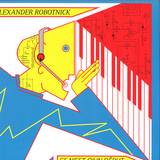
Alexander Robotnick (aka Maurizio Dami) is an Italian electronic musician. He made his debut on the Italian music scene as the founding member of Avida, a dance-cabaret band featuring Daniele Trambusti and Stefano Fuochi.In 1983 he attained international popularity with his track Problemes d'amour, published first by the Italian label Materiali Sonori and then by Sire-Wea. Problemes d'amour went on to become a cult track of the disco scene. It became quite an import hit in America's underground club scene, and sparked the mini-LP Ce N'est Qu'un Debut that same year (originally released on Materiali Sonori in 1984 (Italy). It consists of 6 captivating tracks including the hit Problemes d'amour as well as the track Dance boy dance which has appeared on other cult disco compilations.
Dies Occidendum is a mythical voyage across fog-laden, scorched earth terrain from the original friar of dark hip hop, Dj Muggs the Black Goat. Known and revered as the sonic mastermind behind both Cypress Hill and his own Soul Assassins imprint, here Muggs sheds the MCs and presents his latest dark-soaked productions as an illuminated manuscript of sorts; a fully immersive, instrumental soundtrack to the mysterious Dies Occidendum. No one wields the Excalibur of sonic darkness quite like Muggs. Combining ingredients of psych rock, gypsy folk with modern elements of trap, forged together under layers of his signature sonic grime, Muggs has created yet another blueprint for the utmost sonic menace and macabre. The Renaissance is upon us. Long live King Muggs. ABOUT DJ MUGGS: One of the original architects of dark hip hop in the early '90s, DJ Muggs helped craft a singular sound that blended darker sensibilities of psychedelic rock and hip hop in a unique way that influenced many in its wake. As the primary producer of legendary rap group Cypress Hill, Muggs' productions and sonic sensibilities are unmistakable and deeply revered by the truest of hejkvgads. Muggs' own MC round-robin imprint, Soul Assassins has been home to countless productions, laying sonic drop cloths for everyone from Dr. Dre, Ice Cube, Chuck D, GZA, Mobb Deep to MF Doom, Freddie Gibbs, Roc Marciano and Mach-Hommy.
LTD. RED VINYL
Dies Occidendum is a mythical voyage across fog-laden, scorched earth terrain from the original friar of dark hip hop, Dj Muggs the Black Goat. Known and revered as the sonic mastermind behind both Cypress Hill and his own Soul Assassins imprint, here Muggs sheds the MCs and presents his latest dark-soaked productions as an illuminated manuscript of sorts; a fully immersive, instrumental soundtrack to the mysterious Dies Occidendum. No one wields the Excalibur of sonic darkness quite like Muggs. Combining ingredients of psych rock, gypsy folk with modern elements of trap, forged together under layers of his signature sonic grime, Muggs has created yet another blueprint for the utmost sonic menace and macabre. The Renaissance is upon us. Long live King Muggs. ABOUT DJ MUGGS: One of the original architects of dark hip hop in the early '90s, DJ Muggs helped craft a singular sound that blended darker sensibilities of psychedelic rock and hip hop in a unique way that influenced many in its wake. As the primary producer of legendary rap group Cypress Hill, Muggs' productions and sonic sensibilities are unmistakable and deeply revered by the truest of hejkvgads. Muggs' own MC round-robin imprint, Soul Assassins has been home to countless productions, laying sonic drop cloths for everyone from Dr. Dre, Ice Cube, Chuck D, GZA, Mobb Deep to MF Doom, Freddie Gibbs, Roc Marciano and Mach-Hommy.
- Warm Canto (Mal
- Waldron)
- Allegretto, Symphony No
- 7: (Ludwig Van
- Beethoven)
- A Remark You Made (Joe
- Zawinul)
- Sintra (Joachim Kühn)
- Ponta De Areia (Milton
- Nascimento)
- Redemption Song (Bob
- Marley)
- Touch The Light (Joachim
- Kühn)
- Fever (John Davenport &
- Eddie Cooley)
- Blue Velvet (Bernie
- Wayne & Lee Morris)
- Stardust (Hoagy
- Carmichael)
- Purple Rain (Prince)
- Last Tango In Paris (Gato
- Barbieri)
- Peace Piece (Bill Evans)
The variety of Kühn’s pianism in this collection is
quite remarkable.
The listener is first welcomed into the inviting,
comforting and regular pulse of Mal Waldron’s
‘Warm Canto’. And yet later, by complete contrast,
Kühn’s own composition ‘Sintra’ gives a
masterclass in freedom, delay and the alchemical
art of keeping the listener waiting on tenterhooks.
Prince’s ‘Purple Rain’ is achingly soulful, whereas
Kühn found the encouragement to revisit Bill
Evans’ ‘Peace Piece’ from the dignity and restraint
of classical pianist Igor Levit’s version.
LP pressed on 180g vinyl.
The music on Dance Nos. 1-5 was originally conceived as a three-way collaboration between composer Philip Glass, choreographer Lucinda Childs and artist Sol LeWitt. Dance received its world premiere in Amsterdam on October 19, 1979 and its New York premiere at the Brooklyn Academy of Music on November 29, 1979.
Post-dating Einstein on the Beach - Glass’s 1975-76 collaboration with director Robert Wilson - Dance was another Glass collaboration, this time with choreographer Lucinda Childs, known for her austere, athematically exact dances, and artist Sol LeWitt, who provided a ghostly, gigantic black- and-white film for several of the piece’s five sections.
RELEASE: 5-3-2021
• 180 GRAM AUDIOPHILE VINYL
• DELUXE HEAVYWEIGHT SLEEVE WITH GLOSS LAMINATE
• PVC JACKET
• THE COMPLETE ALBUM, AVAILABLE ON VINYL FOR THE FIRST TIME IN ITS ENTIRETY ON A 3LP-SET
WITH FIVE SIDES OF MUSIC
• INCLUDES PHILIP GLASS CATALOGUE WITH INFO ON THE PHILIP GLASS SERIES ON MOV
SIDE A
Dance has an abstract purity that easily earned it the label “minimalist,” a term that Glass himself disavows but that seems appropriate, at least in this case. After Dance, Glass’s music took several turns, not so much in style as in the various new contexts in which it was presented: major opera commissions and film scores led him to write for forces other than those of the Philip Glass Ensemble. At the same time, an attempt to reach a wide audience resulted in some shorter, perhaps more accessible, narrative pieces. Dance marked the blossoming of the composer’s experimental work. Here, though, the music - particularly Dance Nos. “1”, “3” and “5”, all written for the Ensemble— has an unforgettable exuberance that somehow speaks all at once of joyful innocence, intense erotic desire, tenderness, regret and, finally, acceptance. On the other hand, Dance Nos. “2” and “4” see Glass composing several large-scale works for solo organ; for instance, Dance No. 2 originated as a 1978 work entitled Fourth Series Part Two. This piece, later incorporated into Dance, and Dance No. “4” as well, have a more subdued, more darkly romantic quality than the work’s other sections and are quite unlike anything Glass had previously written. Still, they too, with their mysterious tilts of time and key signatures, continue the exploration of polyrhythms and harmonic complexities within the context of Glass’s repetitive, “minimalist” style.
The complete Dance Nos. 1-5 album is now available on vinyl for the first time in its entirety on a 3LP-set with five sides of music. The 3 LP’s are housed in a heavyweight sleeve.
- Bare Faced Cheek
- Yul Brynner Was A Skinhead
- How Do You Deal With Neal?
- Howza Bouta Kiss Babe??!
- Fisticuffs In Frederick Street
- A. Diamond
- Quick To Quit The Quentin
- Nowt Can Compare To Sunderland Fine Fare
- Neville Is A Nerd
- Park Lane Punch Up
- The Ashbrooke Launderette..... .....You'll Stink, Your Clothes Shrink, Your Whites'll Be As Black As Ink
- Bare Faced Cheek
By the time Toy Doys issued Bare Faced Cheek as the inaugural LP of their own Nit Records
label, bassist Flip had been replaced by Dean Robson and drummer Happy Bob by Martin
Yule, with Olga still the vocal focal point. “Yul Brynner Was A Skinhead” is the best of the
bunch, “Neville Is A Nerd” and “Quick To Quit The Quentin” are typical Toy Dolls punk
piss-takes, and there are digs at a hotel and a local launderette too. Everything is delivered in
lightning-fast bursts of energy, poking fun at all and sundry, the Toy Dolls punk way.
Sealed original copies of the Horace Tapscott's 'The Tapscott Sessions' solo piano series, released on Nimbus West Records from 1982 to 1984. Horace Tapscott has been one of the top "unknown" jazz pianists in the Los Angeles area since the 1960s, recording far too few sessions which has led to him being continually overlooked by jazz fans from outside L.A. During 1982-84 he recorded seven solo piano albums for the tiny Nimbus label, playing unaccompanied solos, his improvisations consist of deeply emotional exploration of his music. Tapscott has always had a strikingly original sound that, despite occasional hints at other pianists, is quite distinctive, falling between advanced hard bop and the avant-garde. Totally Essential.
Jazz, with its many iterations and forms, has always been a music on the move - its own changes and evolutions mirroring a flux in the perception of what is and was. This is all too evident when addressing its avant-garde realisations, particularly those rising across the 1960s and 70s - free and spiritual - musics which were both of their moment and beyond them - of a specific people, culture, social reality, philosophy, and political position, while transcending each. These radical sounds have rarely received the wide understanding, recognition, and appreciation in their own time. Thankfully, we have have hindsight. Historical Avant-garde jazz, springing from African American communities and taking seed in every corner of the globe, is increasingly celebrated for the seminal music is was and remains, but there’s still plenty of work to be done, especially when addressing the long standing rift in the United States which favours the east coast over the west.
Esteemed drummer Brian Davison was a key part of The Nice during the mid-60s, and when Keith Emerson quit to form ELP, Davison put together Every Which Way with former Skip Bifferty frontman Graham Bell, bassist Alan Cartwright, guitarist John Hedley and saxophonist Geoffrey Peach. Self-titled debut LP, released by Charisma in 1970, was an intense slice of prog with excellent sax solos, emotive vocals, tasteful bass, soaring guitar and forceful drumming, but Cartwright soon joined Procol Harum and Davison drifted into Refugee, making this album the group’s sole release. Well worth exploring, it’s another
highly sought-after album for fans of well-produced prog.