
out of Stock
Order now and we will order the item for you at our supplier.
12,19 €
Last In: 13 months ago
Order now and we will order the item for you at our supplier.

4XLP. Hardcover slipcase box. Liner notes from Soichi Terada, Colour: translucent red, clear, blue, and yellow vinyl
It has been 25 years since the release of Saru Get You (サルゲッチュ), known stateside and in the UK as Ape Escape. Ape Escape marked a significant milestone for the PlayStation, as it was the first game to require use of the PlayStation's DualShock (analog) controller. In Ape Escape, the use of the analogue sticks goes beyond camera rotation and acts as an extension of Kakeru's (Spike's) own character, controlling his many gadgets like the stun club, time net, and sky flyer. It's a unique form of control that, really, didn't become popularized until the release of the Nintendo Wii. It feels like a distinctly Japanese design, the sort of off-the-wall design that is either embraced or rejected on a global scale. In Ape Escape's case, the mechanic caught on.
Ape Escape is fast, frantic, and—at times—downright frustrating. Pipo monkeys dash, taunt, and swim away from your advances. They ride water monsters, fly UFOs, and even shoot uzis! Whether it's Kakeru, his friends, or the monkeys themselves, the characters are always running across the levels. This mad dash is enhanced by the game's soundtrack, composed by legendary composer Soichi Terada. As he recalls, the director of the production said, "Spike and his friends always have the image of running." In response, Terada happily produced fast songs with an average speed of over 170bpm. The resulting gameplay and audio is a match made in heaven.
Ape Escape is the first game soundtrack Mr. Terada ever created. The producers of the game heard one of his singles, "Sumo Jungle," and thought his frenetic drum-and-bass (Jungle) would be perfect for the game. The marriage of Ape Escape's charming overworld and Soichi's upbeat compositions is nothing short
of sublime. Especially now, it is difficult to separate the mischievous Pipos and fast-paced action from Soichi Terada's silky smooth synthesizer and heart-pounding bass. Earlier this year (2024), Soichi Terada's Ape Escape work was celebrated by the six-track EP Apes in the Net, which includes music from Ape Escape 1 and 3 (Terada did not compose the series' second installment). The label, Rush Hour Music, has prestigiously championed almost all of Soichi Terada's music, especially his (specifically non-VGM) house, jungle, and drum and bass releases (Sounds from the Far East, Asakusa Light, and more).
Before Apes in the Net, Terada's Ape Escape music was only available on CD, released in Japan around 2010. This release featured reconstructed tracks created by Mr. Terada himself, identical to the music arrangements featured in the game. The biggest difference, of course, was that they were of higher fidelity than was originally available on the PS1 disk format. Completing all of the aforementioned releases is this box set, released by Far East Recording in partnership with Cartridge Thunder and officially licensed by Sony Computer Entertainment. This box set release includes four LPs, housed individually by a hardcover slipcase. This box set includes every song from Ape Escape 1, except those available on Apes in the Net. This box set release also includes one bonus song, previously unreleased anywhere else (including the game itself!).
The music on this box set was meticulously mastered by Justin Perkins of Mystery Room Mastering. Using Mr. Terada's premastered source files, the music was completely and specifically mastered for vinyl. Rounding out the audio is absolutely stunning artwork created by Gobo3D. CT worked with Gobo to recreate some of Ape Escape's most iconic characters, referencing the original Japanese guidebook and other promotional materials. The result is visually delicious 300dpi artwork that takes you straight back to 1999. As uber-fans of the original PlayStation game, Cartridge Thunder and Far East Recording are proud to celebrate Soichi Terada's music and pay our respects to such a legendary PlayStation franchise—on the original hardware's 30th anniversary no less! It's with a happy heart, then, that Far East Recording and CT present to you Soichi Terada's Ape Escape Originape Soundtracks in a Box.
Please note: due to licensing exclusivity, this release does not include tracks previously released on Apes in the Net
Order now and we will order the item for you at our supplier.

The Ibex Band, with Giovanni Rico and Selam Woldemariam at the creative helm, provided the musical backbone for legends like Aster Aweke, Girma Beyene, Tilahun Gessesse, Mulatu Astatke, and Mahmoud Ahmed, including the iconic album Ere Mela Mela, shaping modern Ethiopian music as we know it today. This 1976 album (Ge’ez Year 1968) played a pivotal role in that legacy and has now resurfaced to set the record straight.
There’s a tendency to talk about the seventies as a golden age of Ethiopian music. There are good reasons for that, and just as good reasons against it. However, the notion of a golden past privileges the role of Western explorers and suggests that the pinnacle of Ethiopia’s musical culture is something only a foreigner can appreciate and unearth. It downplays the complexities of Ethiopia’s culture and history, creating an artificial divide between then and now. And it underestimates the constantly evolving sound that has followed.
The legendary musical outfit The Ibex Band, later metamorphosed into The Roha Band, has played a central role in defining the sound of many of the greatest stars on the music scene of Ethiopia from the mid-seventies onwards–but their golden output has never really waned. The story of the origins of the band that provided the musical backbone for greats such as Aster Aweke, Girma Beyene, Tilahun Gessesse, backing the solo career of group member Mahmoud Ahmed as well as backing Mulatu Astatke and many others has yet to be properly told.
Two misconceptions plague the image of Ethiopian music, one is that the music is pure because it is, by some notion, unexploited, the other is that it is all traditional. To begin with, a combination of political changes between the late sixties and the mid-nineties created an environment where only the most dedicated and skilled musicians struggled on and pursued a musical career against fierce odds. The whole Ibex Band, with Giovanni Rico and Selam “Selamino” Seyoum Woldermarian at the creative helm, are arguably the origo of the vibrant scene in the mid-seventies, and the said pair are foremost responsible for not only navigating the band through troubled times, but also modernizing the 6/8 chickchicka rhythm to a contemporary form. Giovanni laid the rhythmic foundation with heavy looped basslines that reinvented traditional melodies as dance music, and with Selamino’s innovative guitar work they influenced scores of musicians from Abegaz Kibrework Shiota to Henock Temesgen. Even Giovanni’s Fender bass and Selamino’s Gibson guitar inspired younger musicians in their choice of instruments. Not only in choice of instruments but also in sound–even as the digital revolution hit Ethiopian music, a lot of popular music still took its cue from the masters from Ibex and Roha.
Ibex emerged out of the ashes of the sixties group the Soul Echos band, adding Giovanni and Selamino to their ranks and taking their cues from a slew of influences, such as Motown and The Beatles, fused with traditional music. A tighter-knit unit than most bands at the time – Ibex has remained six to seven members throughout their whole career, compared to many bands that were as large as fifteen or sixteen men strong when Ibex set out. Their playing has been viciously focused, economical yet heavy. Just a year before the recording sessions of the album in your hands, Giovanni and Selamino made a contribution to the popular musical lexicon of Ethiopia that was simply defining the popular sound: their arrangement and recording of bandmate Mahmoud Ahmed’s solo effort and real commercial breakthrough tune and eponymous album, Ere Mela Mela, from 1975.
Selamino has never limited himself to being an adroit lead guitarist, but has always been a scholar of history, and as such he has probably contributed as much to modern Ethiopian music with his guitar playing and compositions as with a deepened understanding of modern or contemporary – Zemenawi – Ethiopian music. Selamino’s contributions serve as a metaphor for those of the whole band, at one and the same time creating and defining a new, danceable and updated sound anchored in Giovanni’s bass, whilst also elevating the broader scene through their support for others on the scene and on top of that, increasing the understanding of the music.
There is an understandable desire to romanticize the musical heyday Ibex and Roha were at the forefront of, because so much of the output is sorrowfully hard to come by. Ibex creativity was nothing short of ridiculously fierce compared to many of their Western contemporaries. Based on their sheer recorded output alone they could have usurped the title “hardest working in show business” from James Brown, recording more than 250 albums or 2500 songs in the seventies and eighties. Some only surface as cassettes today, others were never given full LP release, and some are simply impossible to find today. In the light of that, it’s nothing short of a miracle that the recording Stereo Instrumental Music from 1976 (Ge’ez Year 1968) has resurfaced. Unearthed in perfect condition on a chrome cassette, this is musical history comes alive–to set the future straight. Stereo Instrumental Music was recorded in collaboration with Karl-Gustav Lundgren, a Swedish national working for the Radio Voice of the Gospel. It took two sessions at the Ras Hotel ballroom in Addis Ababa. The Ibex Band was the first band in Ethiopia to employ a four-track recorder for their recording (the first available in the country, lent by Karl-Gustav). Later the same week, Giovanni and Selamino realized that, lengthwise, the recorded material fell short of what they wished for, so they recorded four more tracks in one more session on a single-track recorder. The Ras Hotel and Ghion Hotel, where the Ibex Band held musical residencies were to Ethiopia in general and Addis Ababa in particular what Motown was to the USA and Detroit a few years earlier – a hotbed of musical creativity and showmanship.
The most astonishing thing about Ethiopian music of the last half century is how tradition and modernity are intertwined. Because of this feature, it’s kind of hard to tell when there ever was or when we are in a “golden age”. So much of music from the past has been criminally neglected, but because of the hardships in the past, it would be an oversimplification to say that said past was a golden age. Probably, the golden age is what we are approaching, because for the first time both the past and future are accessible, and the monumental contributions from before can lay a firm foundation for a thriving music scene today. The Ibex Band stands firmly in the past, present and the future. That, if anything, is golden.
The detailed history of Stereo Instrumental Music is in many ways unique. To begin with, it couldn’t have been recorded earlier (there were no four-track recorders available) and it really couldn’t have been recorded afterwards either, at least not in the years directly following, because of the toll the musical scene took from the unfavorable political climate that followed when the nascent Derg regime and rival groups tried to assert themselves, the musical equipment lent from The Voice of Gospel Radio simply disappeared from Ethiopia when the radio station folded in 1977. Karl-Gustav Lundgren,
the Swedish foreign national who assisted during the recording, worked with the Ethiopian Evangelical Church Mekane Yesus at the time, recalls how they only had about fifteen minutes to get the microphones in place for the recording as to not alert neither the management at Ras Hotel nor the authorities and most importantly, to complete the recording before the curfew came into effect at midnight. In leaping to the opportunity to use previously unavailable equipment to push their sound forward and improvising to meet the logistical challenges, the Ibex Band displayed the very avant-gardism and adaptability that explains their longevity as a band through the years. The recording of Stereo Instrumental Music is from a given time in history, but it sounds as beyond time.
Much of the energy that burst out of the scene that Stereo Instrumental Music came out of dissipated or got sidetracked during the societal changes Ethiopia went through in the 1970s and 80s. Whilst leaders might have professed to be revolutionary, the work ethic of the Ibex Band can truly be described as that. They never called it quits, but adapted, toured extensively abroad in Africa, Europe, and the Middle East, and found ways to work even in the face of the curfew that curtailed a lot of musical life. They even played major arenas in the nineteen eighties, despite said curfew and restrictions. The whole extent of their legacy has never been told, but their music speaks louder than words, so therefore… tune in to the Ibex Band’s Stereo Instrumental Music.
Order now and we will order the item for you at our supplier.

After “A Journey Into Abstract HipHop” and “Snap Your Neck Back” 7inch EP vinyls , the series continued with "Fuck You I'm 21" EP, which was released digitally only on April 1st 2023…celebrating the 21th anniversary of the first EP ever released back in 2002.
Today we release the 7inch vinyl version of this new EP.
For the occasion, DJ/beatmaker Ugly Mac Beer drops an exclusive B-side track, “Human Sucks”, custom-produced in the spirit of the Gasoline collective project.
Only 500 copies of this gold-colored vinyl will be released, a must-have item.
Order now and we will order the item for you at our supplier.

Released in late 2012, Odes was the fourth studio album from The Flowers of Hell. It is a covers record and the first release from the group to feature vocals and verse-chorus-verse song structures. Never available on vinyl until now. Greg Jarvis, front man of The Flowers of Hell, has created something very special; the artwork features a die cut outer sleeve, revealing the printed inner sleeve and when removed, revealing more artwork on the inside of the 300gsm outer sleeve. The music has been remastered for LP by Odes co-producer Peter Moore.Pressed in a red 180g heavyweight vinyl, the whole package is stickered and poly bagged, a real show stopper!
expected to be published on 22.04.2025

Repress!
Layer upon layer of noise and distortion, like ashes of nuclear apocalypse raining down. The final LP Disclose released, in 2004, captured the band at a high point. When other d-beat raw punk bands were running low on ideas, Kawakami reinvented the sound, incorporating more metallic influences like Broken Bones while still sticking assiduously close to the template. Originally released for Disclose’s tour of the US west coast, ‘Yesterday’s Fairytale, Tomorrow’s Nightmare’ includes ten tracks and closes with a rampaging masterpiece, the 10-minute ‘Wardead,’ which exists on another astral plane from generic Discharge copyists. This authorized reissue reproduces the original artwork and includes a new insert with liner notes by Stuart Schrader.
expected to be published on 22.04.2025

“Trustworthy”. is the meaning of “danama”, this Bambara word from Mali. Believing in oneself, in others, in the word given, in desirable futures. Advocating optimism, momentum towards the future, collective strength and the wise magic of cultural blending… especially during these troubled times of endless wars, of nationalist withdrawals or the abundance of naturals disasters, all encouraged by a carnivorous capitalism?
So confidence, we need tons of it. Maintained by the flame, the phlegm and the stratagem of these afro-groove scientists, without ignoring their sorrows nor the scandals of History. This is the athletic art of Arat Kilo, who remain without question the best ethio-jazz orchestra in France, on the trail of this fifth album recorded in the Spring of 2024. Confidence was also needed to change the way things worked. For all the previous albums, the band came together in the studio to play each track together, all in the same room, in the romantic idea of a warm, lively, organic gesture, in the manner of the great Ethiopian masters of the 60s and 70s.
For Danama, the music was initially collected in tandem: guitar/bass, drums/percussion, saxophone/trumpet, and the two voices. A few new instruments were added along the way : dark synthesizers, a bass clarinet, a tiny guitalélé (similar to the ukulele) and a Malian n'goni (sometimes described as ‘the griot's lute’). Then, and above all, there was the question of experimenting with real sound production, using sound design, multi-track exploration and effects applied to the textures collected over eight days at the Gong studios in Montreuil and OneTwoPassIt in Bagnolet just outside Paris.
In this way the band, all growing up influenced by the hip French Radio Nova's ‘Grand Mix’, were completely free to express their natural taste for fusion between genres. Borrowing from the frantic rhythms of Newark's jersey club, English 2-step or New Orleans brass bands, grafted onto Arat Kilo's musical base: tezeta, the famous minor pentatonic scale typical of Ethiopian jazz, melancholic to perfection. The result is layers of sound, collages of emotions, like the album cover, created by artist Clément Laurentin from multicoloured fragments of posters torn up in the street.
So Arat Kilo are back: The same band, the same collective strength, the same fight for values, their new album “Danama” carries the demand for a better world even further, with words of hope from singer Mamani Keita and the social critique of American MC and poet Mike Ladd ! The result is this luminous voyage down the Danama canal. In all, eleven songs and an instrumental, mixed by Mathieu ‘Gib’ Gibert - one of French band La Fine Équipe's beatmakers - set to drive the crowds wild and remind us how to stick together again.
expected to be published on 21.04.2025

Repress
Traveling time to the year 1979 we find ourselves on the Gulf Coast of Florida in a city called Sarasota. Sal Garcia leads Omni, the resident band at the Columbia, a Spanish restaurant operating in the city since the turn of the century. Sal and his band look to record a single ironically called Disco Sucks but the restaurant isn't willing to fund a record with the word 'sucks' in it, so the band changes the track title to 'Disco Socks'. The song is a disco odyssey with driving drums, ethereal flutes, playful lyrics, and a synth solo for the gods. On the b side there's a little latin number called 'Sarasota (Que Bueno Esta)'. An ode to their city, the song praises Sarasota for its beautiful women and precious beaches. Sal is still living his dream playing at piano bars in the city. Terrestrial Funk provides you with the first officially licensed reissue of this rare disco 12". Floridian Love.
Order now and we will order the item for you at our supplier.

Here comes a very special production from East Germany of the early 70s!
One of the TOP Soul-Jazz & Beat combos in the country led by bassist and singer HORST KRÜGER,
recorded two previously unreleased, outrageously good titles here in the newly formed septet format.
"Ich will die Zeit nicht bereuen" is probably by far one of the most crispy produced German-language soul beat numbers that existed in the GDR at that time! From the pen of Ralf Petersen, the then head of Berliner Rundfunk personally, no pure high-class hit was recorded here, but hard-hitting, rocking beat.
It was not without reason that the choice of the head of broadcasting fell on the recently formed Horst Krüger Septet, which also gave the contemporary jazzy sound a perfect touch through an intensified brass section from 1970 on.
The title "Sonderbar" is exactly what its title promises, peculiar and extraordinary. A feat that was created as such in 1972. This somewhat sweeter SoulJazz vocal piece had a concrete idea, which composers Dieter Kopf, Horst Krüger and Franz Bartzsch as a musical arranger as well as Jens Gerlach in the musical free spirit of the hippiesque era. A through the stylistic device of Repetito in the text
dominant repetition, which is complicated in the context of the ever-evolving theme about feelings and love Groove of bass, guitar, drums and organ theme is reflected, redefined and constantly found again, simply masterfully. An interlude with a flute solo and a groovy dreamy Hammond organ solo at the end of the title, envelops the verses very contemporary.
Horst Krüger on bass guitar and his wife Gerti Möller with her outstandingly distinctive and powerful voice on the microphone.
A must for every fan of early beat, rock and soul!
Order now and we will order the item for you at our supplier.

Newly mastered from restored audio fidelity tapes. Comes in digi sleeve with alternate sleeve artwork and includes a rare 8-page booklet. Includes the original version of 'Pop Corn', later a worldwide hit in 1972 . Adds rare single B-side as bonus track. This CD edition also adds exclusive mono mixes to the expanded tracklist.
One of the earliest & most influential Electronic albums OF ALL TIME "Audio Fidelity Records... believes Gershon Kingsley is a true genius and a worthy creative compliment to the electronic wizardry of Robert A. Moog, the creator of the Moog Synthesizer." 1969 The Beatles were influenced by him (and sampled his music on their 1968 Beatles Christmas EP). Since 1972, his music accompanies each day's Main Street Electrical Parade in Disney theme parks. Yet Gershom Kingsley (born: Götz Gustav Ksinski) remains a mystery to many, despite being one of electronic music's finest pioneers and earliest exponents of Robert Moog's synthesizer and the possibilities its use bought to music. Newly mastered from restored Audio Fidelity tapes - this reissue sounds incredible! The rare non-album B-side The First Step (The Sea Of Tranquility) has been added to the LP while the CD adds additional mono mixes and comes in the album's alternate cover. Both LP and CD include the rare 8-page booklet that came with initial copies of the Audio Fidelity LP. To repay The Beatles compliment of including one of his songs, Gershom Kingsley covered two Fab Four classics in his own unique electronic style and included them on Music To Moog By: 'Nowhere Man' and 'Paperback Writer'. "First-wave Moog enthusiast and electronic music pioneer...." Electronic Sound - The Electronic Music Magazine, January 2020.
expected to be published on 18.04.2025
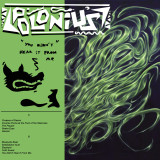
Full page feature in Wire Magazine (March 2025, Issue 493) 'the freak audio series continues with the lysergic You Didn't Hear It From Me which combines dubbed out sampledelia and metallic beats with ghostly saxophone soaked in an acid bath'
Polonius AKA Egyptian-French artist Seif Gaber, whose works spans a decade of “science fiction archeomiragical time travel" explorations and is an important piece of the healthy electronic/far out mosaic in Milan.
With a considerable number of releases under his name, both self released and through such likeminded labels as Ikuisuus, Goaty Tapes or Sun Araw's Sun Ark, Polonius grand vision encompasses a myriad of languages culled from kosmische travelings, exotica's dreamlands, soundtrack psychedelia, spiritual jazz escape routes and transmuted beat science to convey them into a sonic fiction where all these trails intertwine in a cosmological soundscape filled with wonder and speculation.
Building on last year's more beat-centric excursions of his self-titled vinyl debut on Stoned to Death, Polonius' first entry into the Discrepant extended family via Souk finds him dwelling deeper into rhythmic mystic extrapolations through a series of hallucinatory tracks. Conveying jungle's kinetic energy, dubwise meditations on bass weight, collapsing beats, globetrotting percussion accents and synth-driven night drives, 'You Didn't Hear It From Me' finds Polonius with a strong sense of purpose and direction, reconvening bits and pieces from the netherworld into a more urban scenario, not quite any we can stand or dance on. Just dream of.
expected to be published on 18.04.2025

Vinyl repress of the sought after second album by Azuzena, queen of Spanish Heavy Metal. A powerful return to her Metal roots originally released in 1989. Originally released in 1989, "Liberación" is the long out of print second album by Metal Queen and ex-Santa frontwoman Azuzena. After a disappointing first effort, "Liberación" meant a return to true Heavy Metal form by Azuzena, a powerful statement and the great, last album by this legendary woman. Includes two bonus tracks, remastered audio, new cover and a foldout inner sleeve with extensive liner notes. Limited edition of 300 copies.
[j] SUPER STAR [VERSIóN JOMEINI]
expected to be published on 18.04.2025

VOL.2[24,79 €]
For the first time on vinyl, a pressing of this legendary tape released in 1993 in Colombia, documenting Ultra Metal, the country's early extreme Metal scene. Volume 1 of 2 of the vinyl release of The Colombian Awakening tape, released in 1993 by Schizophrenia Records, a comprehensive collection of face melting, raw recordings from the early Colombian extreme Metal scene, known as Ultra Metal, with styles ranging from Death Metal to Thrash and Grindcore. A savage and powerful document of one of the most intense underground scenes of the era, kickstarted by the infamous Parabellum. A must for fans of underground Metal! Includes remastered audio, new cover and a foldout inner sleeve with extensive liner notes. Limited edition of 300 copies.
expected to be published on 18.04.2025

VOL.1[24,79 €]
Second and final volume of the vinyl pressing of this legendary tape released in 1993 in Colombia, documenting Ultra Metal, the country's early extreme Metal scene. Second volume completing the vinyl release vinyl release of The Colombian Awakening tape, released in 1993 by Schizophrenia Records, a comprehensive collection of face melting, raw recordings from the early Colombian extreme Metal scene, known as Ultra Metal,with styles ranging from Death Metal to Thrash and Grindcore. A savage and powerful document of one of the most intense underground scenes of the era, kickstarted by the infamous Parabellum. A must for fans of underground Metal! Includes remastered audio, new cover and a foldout inner sleeve with extensive liner notes. Limited edition of 300 copies.
expected to be published on 18.04.2025

Carrying on their longstanding dedication to the seminal output of Merzbow, Urashima returns with what is unquestionably their most ambitious release to date: “Collection 001-010”, a deluxe, 10 LP vinyl box set limited to 299 copies, gathering together the entirety of the project’s first ten releases, originally released in 1981. Encountering the band in its early incarnation of the duo of Masami Akita and Kiyoshi Mizutani, raw, exposed and bristling with energy, foreshadowing numerous trajectories they would follow over the coming years, these astounding full lengths - the majority of which have never been released on vinyl - come housed in a beautifully produced, deluxe wooden box, with each LP in its own individual sleeve reproducing the original artwork, and a LP-sized 32-page book containing reproductions of artworls and collages by Masami Akita, an interview conducted by Jim O'Rourke, and liner notes penned by Lasse Marhaug, Thurston Moore, and Akita himself, amounting to what is unquestionably one of the most historically significant releases we’re likely to encounter in 2025.
Deluxe Edition of 299 copies, remastered from the original analog tapes by Masami Akita, each LP comes in its individual sleeve reproducing the original artwork, also includes a LP-sized 32-page book. ** Since its founding during the late 2000s, the Italian imprint, Urashima, has become a definitive voice in the landscape of noise. Bringing forth beautiful limited edition releases, they’ve sculpted a singular vision of one of the most vibrant and revolutionary bodies of experimental sound to have graced the globe. Among the many projects that they have supported over the decades, there has been an undeniable dedication to the output of the seminal Japanese noise outfit, Merzbow, making a significant amount of the project’s out of print back catalog available across a range of formats. Now they return with what is arguably their most stunning and ambitious release dedicated to the project to date: “Collection 001-010”, gathering the entirety of Merzbow’s first ten releases, largely privately released by the band on cassette across 1981, in a deluxe, 10 LP vinyl box set. Representing what is effectively ground zero in Japanese noise and collectively amounting to some of the most sought after releases ever produced within that movement, Urashima’s truly beautiful collection comes fully remastered by Masami Akita himself from the original tapes, presenting all but a small number in their first ever vinyl pressings, with each LP housed in its own individual sleeve reproducing the original artwork, alongside a LP-sized 32-page book containing reproductions of artworks and collages by Masami Akita, an interview conducted by Jim O'Rourke, and liner notes penned by Lasse Marhaug, Thurston Moore and Akita himself. Towering with energy and groundbreaking creative vision, within the realms of noise and experimental music, releases don’t get more monumental or historically important than this!
Merzbow came roaring onto the Tokyo scene in 1979, and remains, to this day, one of the most prolific and aggressively forward-thinking projects in experimental music. Eventually becoming the solo vehicle for the efforts of Masami Akita, in its earliest incarnation the project was the duo of Akita and Kiyoshi Mizutani, taking their name from German artist Kurt Schwitters' pre-war architectural assemblage, The Cathedral of Erotic Misery or Merzbau, and quickly set out to challenge entrenched notions of what music could be. Embracing technology and the machine, even in its earliest iterations, Merzbow pushed toward new territories of the extreme, arriving at a space of pure, unadulterated sonic onslaught that has continued, for over 40 years, to set the pace for the entire genre of noise, and has remained one of the movement’s most important, definitive voices, continuously laying the groundwork for countless artists who have followed in its wake.
When dealing with historical gestures, there’s an invertible aura surrounding original line-ups and early statements, and rightfully so. It is often within a band’s debut that we catch the purest glimpse of the raw energy and creative ferment that made them what they are. This is certainly the case when regarding the coveted early releases of Merzbow, capturing the emergence of the project in its form as the duo of Masami Akita and Kiyoshi Mizutani as they helped set the blue print from the then emerging movement of Japanese noise. Over the course of its nearly five decades of activity, Merzbow has always been noted for how prolific and ambitious the project is. This was no less the case in the very beginning. While they were active for roughly two years prior, in 1981 alone they issued ten self-released cassettes numerically titled “Collection 001-010”, albums which have both individually and collectively become holy grails in the realms of noise, with only two - “Collection 007” and “Collection 009” - ever receiving vinyl reissues prior to now.
As Lasse Marhaug deftly articulates in the newly commissioned liner notes for “Collection 001-010”, despite having been recorded in different location across a span of time, the sum total of Merzbow’s first ten releases might be best regarded as a single release to be listened to in the same, durational sitting, with the material standing well apart from what most came to expect from Merzbow, while foreshadowing numerous trajectories the project would take over the coming years. Not only do these recordings feature a vast array of instrumentation - tapes, acoustic and electric guitar, violin, drums, voice, recorder, organ, found sounds, clarinet, homemade and prepared instruments, a vast arsenal of effects and electronics, and piano, to only begin to scratch the surface - the majority of which would disappear from the project’s active sources of sound generation over the subsequent years, but there is a slow pacing and raw sense of openness and exposure that reveals strong connections to the avant-garde improvisations of groups like AMM, Musica Elettronica Viva, and Gruppo di Improvvisazione Nuova Consonanza, the psychedelia of groups like Taj Mahal Travellers and Flower Traveling band (both of whom Akita mentions having seen in youth within his interview with Jim O’Rourke), and rock in general - albeit in fully abstracted forms - unspooling as brittle, pointillistic, textural, raw and abrasive forms, that occasionally flirts with unexpected tonal sensibilities. As Marhaug describes it in his excellent liner notes: «Sonically, “Collection” sounds more sparse and stripped. It’s dry sounding, up-front, no reverb, and there’s less heavy low-end grime and thin on the signature frequency sweeps. Viewed in a 1981 context, musically, it’s more akin to what the LAFMS (Los Angeles Free Music Society) pool of artists were doing at that time than what was happening in industrial music... There’s a strong playfulness throughout, like the sound objects are being explored for the first time, without neither restraint nor hurry. Events are allowed to be fully examined before the music moves on, or simply cuts off. To a large degree, the music on “Collection” feels acoustic in nature, although a Electro-Harmonix ring-modulator features prominently throughout.»
Easily described as a rarely encountered revelation into the original and earlier documented studio sound of Merzbow, “Collection 001-010” collectively amounts to an engrossing sonic journey in its own right, while also allowing for important, often overlooked connections drawn from numerous other creative wellsprings, notably free jazz, underground rock, the output of European and Japanese avant-garde music, as well as Dada, Fluxus, and Mail Art, much of which, beyond the illumination made possible by the sounds, Jim O’Rourke’s fantastic interview with Akita, published in the booklet, further explores, offering great insights into the origins of Merzbow and the thinking behind the project, as well as aspects of the earliest days of Japanese noise.
expected to be published on 18.04.2025
expected to be published on 18.04.2025
Wild ecstatic vocals, distorted electric guitars, rocket bass, and the amphetamine beat! // Unlike anything else, this is THE high life music you've always wanted // Ceremonial music played with abandon and extreme intent, honoring the living and dead alike // Recorded on location in SW Madagascar by Maxime Bobo // “Tsapiky music from Southwest Madagascar features wild ecstatic vocals, distorted electric guitars, rocket bass, and the amphetamine beat! Unlike anything else, this is THE high life music you've always wanted - ceremonial music played with abandon and extreme intent, honoring the living and dead alike. In Toliara and its surrounding region, funerals, weddings, circumcisions and other rites of passage have been celebrated for decades in ceremonies called mandriampototse. During these celebrations – which last between three and seven days – cigarettes, beer and toaky gasy (artisanal rum) are passed around while electric orchestras play on the same dirt floor as the dancing crowds and zebus. The music, tsapiky, defies any classification. This compilation showcases the diversity of contemporary tsapiky music. Locally and even nationally renowned bands played their own songs on makeshift instruments, blaring through patched-up amps and horn speakers hung in tamarind trees, projecting the music kilometers away. Lead guitarists and female lead singers are the central figures of tsapiky. Driven as much by their creative impulses as by the need to stand out in a competitive market, the artists distinguish themselves stylistically through their lyrics, rhythms or guitar riffs. They must also master a wide repertoire of current tsapiky hits, which the families that attend inevitably request before parading in front of the orchestra with their offerings. This work, a constant push and pull between distinction and imitation, is nourished by fertile exchanges between various groups: acoustic and electric, rural and urban, coastal or inland. What results during these ceremonies is a music of astonishing intensity and creativity, played by artists carving out their own path, indifferent to the standards of any other music industry: Malagasy, African or global. Recorded live on location by Maxime Bobo, this vinyl LP includes a 4-page full-color insert with detailed liner notes plus photos of the musicians and surroundings.”
expected to be published on 18.04.2025

KZ1 originally came from Fair Oak, Southampton and during the early 90’s he worked for Fantazia as their event photographer whilst also employed as a writer and record review for Mixmag, Blaze, Wax and Hit The Decks. Known locally as a solid DJ, his decks were used by the DJ Format and by Brent from Aquasky to practise on before they could afford their own.
He only released one record back in the day for Madison’s resident DJ Stu J’s label Adrenalin Records (Drop The Bass/I Know I Can Make It – repressed by Vinyl Fanatiks in 2022) and remixed a couple of tracks for 3rd Rail on Delirious Recordings (repressed by Vinyl Fanatiks in 2019). Then he vanished, work taking him away from the rave scene and to pastures new in Swindon.
Enjoying being back in the scene again via the represses, he decided he would hunt long and hard for some tracks that he wrote in 1993 but never released… and finally he found them. Using the mastering skills of Dapz at Compound Audio, the tracks were brought back to life and pressed on this beautiful bubblegum pink vinyl.
Own a slice of the nice… 4 tracks from an era of music that was made for partying… and partying hard!
Take me away!
Order now and we will order the item for you at our supplier.

Almost Like You Could ignites its art punk fire with Lucy Alexander proclaiming, “Everyone wants something to talk about / But not a minute to spare, so be brief.” Not surprising from a song that’s 1:54 (‘Higher’), but the raw honesty in her lyrics ring far after the music ends. Alexander, along with bandmate Luke Cartledge, place the propulsive power of their beliefs at the core of their debut full-length album, and their guiding motivation towards social justice is as fierce as it is welcoming. “Living as part of the queer community, and being queer myself, leads me towards supporting every person’s truth,” Alexander says. Scrounge’s songs skip to a fast beat, electrifying the entire album with a sense of empowerment. Their approach is OG punk: they make music for their peers and themselves. Only now, with a world of connections possible, they’re able to open arms wide for a far-reaching embrace. Alexander’s rich vocals give their sound its central force, anchoring the songs with confessional lines (“If this is the pinnacle, then I need a miracle/ Cause everyone’s laughing at me,” “There’s not much left/ this corpse I have to keep/ Above board.”). They sing about economic inequality, political corruption, environmental destruction, and collective change. “We’re inspired by those around us, and we write about what we care about. Art has always existed for us as a means of catharsis, a way of expressing something we might not be able to otherwise, and we hope our music can be that for other people too,” says Alexander. “I think I’ve actually written a filthy banger,” she states while re-listening to “Buzz/Cut”, a grunge-honoring hammer of a song that takes a journey from disappointment, to self-realization, to release. Alexander and Cartledge’s gratification in making an album they’re proud of mirrors the empowerment conveyed in their lyrics. A follow-up to debut mini-album Sugar, Daddy (Fierce Panda, 2022), Almost Like You Could came together over 18 months, in between “teaching, touring, graduation, and a wedding”, as Lucy explains, for the band always has a handful of shows coming up. It’s a strange outcome for a duo who first bonded over their mutual love of SOPHIE. “She radicalized the structure of sound, and revealed herself through it,” Cartledge explains. “That was a massive inspiration when we started playing together, stripping everything away to open up new possibilities as artists and as people." Having already toured Europe and the States, Scrounge is preparing to be on the road throughout 2025. In a world where the idea of true community is ephemeral, Lucy and Luke seek to foster it everywhere they play. And their belief in change is ultimately buoyed by hope. “I know that it’s never been this good,” they sing.
expected to be published on 18.04.2025

In den letzten 24 Jahren war Tunde Adebimpe vor allem als Mitbegründer, Co-Sänger und Hauptkomponist von TV On The Radio bekannt. Die mehrheitlich schwarze Art-Rock-Band überstand zwei Jahrzehnte des unbeständigen kulturellen Wandels und wurde zu einer der beliebtesten, beständigsten und einflussreichsten Gruppen der New Yorker Rockszene der frühen 2000er Jahre. Obwohl Tundes poetisches Songwriting und seine überragende Stimme im Mittelpunkt von TV On The Radio stehen, wird die Band immer eine Zusammenarbeit zwischen einer Gruppe von Musikern sein. Tundes persönliche Geschichte verläuft parallel dazu, er ist eine Art kreativer Polymath. Er ist Musiker, aber auch Illustrator und Maler. Er ist ein ehemaliger Animator und Stop-Motion-Filmemacher (Celebrity Deathmatch). Er ist ein Fernseh- und Filmschauspieler, mit Rollen in Jump Tomorrow (2001), Rachel Getting Married (2008), Spider-Man: Homecoming (2017), Twisters (2024) und Star Wars: Skeleton Crew (2024). Und jetzt ist er auch ein Solokünstler, mit seinem allerersten Soloalbum, "Thee Black Boltz". Das Album wurde von Tunde Abebimpe & Wilder Zoby produziert, mit Zoby als ausführender Produzent, mit zusätzlicher Produktion und Beiträgen von Jaleel Bunton & Jahphet Landis (von TV On The Radio) und anderen. Tunde hatte die Idee zu diesem Album im Jahr 2019, als TV On The Radio eine Pause einlegten. Zwei Jahre später, als sich die Welt von der Covid-Pandemie erholte, begann er ein Notizbuch mit Worten, Illustrationen und Ideen zu erstellen, das er als "Mixtape der Emotionen, die die Musik hervorrufen könnte. Eine Art Gefühlskarte" bezeichnet. Auf diese Weise beginnt Tunde die meisten seiner Projekte, und 2021 begann er, diese Ideen mit Hilfe des Multiinstrumentalisten Wilder Zoby (Run The Jewels), mit dem er sich in Los Angeles ein Studio teilt, in Musik umzusetzen. "Thee Black Boltz" ist kein TV On The Radio-Album. Aber die Aufregung, etwas alleine zu machen, entfachte in Tunde einen ähnlichen Funken wie in den frühen TV On The Radio-Tagen. Der Songwriting-Prozess ist derselbe, aber ohne seine TVOTR-Bandkollegen hatte Tunde "nicht dieses Gerüst, an dem er sich festhalten konnte. Das war sowohl beängstigend als auch aufregend". Das Herzstück des Albums ist sein Titel, eine Anspielung auf Tundes Neigung, über den Zustand des Menschen zu schreiben und zu singen, in all seinen Formen, unter all seinen großen und kleinen Stressfaktoren. Es ist seine Antwort auf das makroökonomische Unbehagen einer Welt nach der Pandemie, die sich auf einen gewalttätigen Autoritarismus zubewegt, und auf die persönliche Trauer, die durch den Verlust der letzten Jahre entstanden ist, insbesondere durch den plötzlichen Tod seiner jüngeren Schwester während der Aufnahmen zu diesem Album. "Thee Black Boltz" ist Tunde's verzweifeltes Festhalten an kleinen Momenten der Freude inmitten der Dissonanz und Traurigkeit, auf jede erdenkliche Weise. "Es war meine Art, mir einen Felsen oder eine Plattform inmitten dieses verdammten Ozeans zu bauen." Tunde schreibt in sein Notizbuch: "Die Funken der Inspiration/Motivation/Hoffnung, die inmitten von (und manchmal als Ergebnis von) tiefem Kummer, Depression oder Verzweiflung aufblitzen. Wie Elektronen, die sich in Gewitterwolken ansammeln und zusammenstoßen, bis sie einen Blitz abfeuern und einen Ausweg erhellen, wenn auch nur für eine Sekunde." Er fügt hinzu: "Außerdem ist es ein guter Name für eine coole Metal-Band, und ich denke, dass die meisten Leute mich als eine sehr coole Metal-Band bezeichnen würden."
expected to be published on 18.04.2025
