Mia Zapata was the greatest rock singer of her time. She may have likely been the greatest blues singer in punk rock history, the woman who married the 78 and the '78. Tragedy did not make this true. Mia Zapata made this true, and the ferocious, spring-loaded shrapnel frame that was built around her by Andy Kessler (guitar: metronomic and furious), Matt Dresdner (bass: fluid, punching, beat-addicted and melodic), and Steve Moriarty (drums: martial and explosive) - who, with Mia, combined to form The Gits - made it true. The Gits were formed at Antioch College in Yellow Springs, Ohio in mid-1986, grabbing and swapping pieces of art, thrash, noise, punk rock, classic rock, and all the sorts of magical silly and bookish jingle bells that an old-school liberal arts education handed you; for the next few years they worked on turning it all into something tough, sensitive, both brutal and kind. Andy, Matt, Mia, and Steve moved to Seattle in middish 1989, landing in a house on Capitol Hill where they (and fellow travelers) wood-shedded and rehearsed for the next few years. The Gits put out three EPs in 1990 and '91 before signing with C/Z Records and releasing their first full-length album, Frenching the Bully. Seattle quickly claimed the quartet as their own and embraced the Gits blend of ferocious fangs and soft heart, the slug/slap of the guitars, and the gorgeous, soft underbelly of the poetic emotions. These qualities not only fit in with the doe-eyed/sharp-clawed grunge ethos but earned the Gits the respect of their peers, including Nirvana, who tapped them to open a major local show in 1990. Then other stuff happened, and their frantic, confessional barbed-heart snowball began rolling up hill very, very fast; the Gits "quickly" (hah! After half a decade learning to implode and explode hearts and stomping their boots on manifold beer-softened, Marlboro-weeded wood stages!) inspired rapture, awe, and the levitation that happened when peak emotion meets peak grindage in front of amps spitting out something that sounded like the mad marriage of Bolan swagger and Dischord tension_ all fronted by a genuinely incomparable woman who held her heart in her mouth and shared it, in all its celebration and fear, without hesitation. The Gits were an angry, inflamed slinky fully in tune with and tuned by the Bessie Patti Smith of her time, truly the only singer who could summon Joplin, Poly Styrene, Sam Cooke, Iggy Pop and Ian MacKaye all in the same goddamn song. In 1993, less than four weeks after accepting an offer from Atlantic Records, Mia died. I leave it at that, because this is not about death; it's about an extraordinary life. I do not say, "You should have been there," I say, "We are lucky so many of us were, and I am so glad we have this extraordinary evidence of the power and gifts of Mia and the Gits that you now can hold in your hands." And I note that Frenching the Bully, this extraordinary testament to the soul, shock, fury and feeling of the Gits, has been long out of print on vinyl and CD, and this new edition - remastered by legendary Seattle engineer Jack Endino - joyfully rectifies that. -Tim Sommer

Suche:beat c
Carpenter Brut draws its influences from 80s TV shows and B-movies loaded with synthesizers.
The mysterious and discreet man evokes an encounter between Justice beats and the universe of John Carpenter.
Across ten tracks, Leather Temple, the third and final chapter of the Leather trilogychannels a raw and nervous energy, somewhere between saturated electro, industrialfever, and 90s synthetic pulse. Yet behind this intensityalso lies a cinematic andorchestral dimension, with arrangements that expand the horizon and add dramaticscope. A tight format, a constant intensity: Leather Temple goes all in on impact,balancing raw immediacy with the feel of a post-apocalyptic moviesoundtrack.
- A1: Lazy Love
- A2: The Best
- A3: Like The Sun
- A4: Bitter Medicine
- A5: Hunned Bandz
- B1: Natural
- B2: The Blue Sky
- B3: Sundays
- B4: Perfect
- B5: This Time
Sundays is the debut full length from Oakland-based Tanukichan, aka multi-instrumentalist Hannah van Loon. At surface level, the album sounds just how the title describes: hazy, dreamy, reflective, just like a lazy Sunday afternoon. Upon second and third listens, the dreamy music unveils a deeper world: an ever present sense of longing, an endless state of summer and a period of instability that plagues us all at one point or another in our lives.
Raised in San Francisco, van Loon started out making classical, bluegrass and jazz music as well as playing in numerous bands in the area before deciding to make something more personal. What started with a few unfocused demos, with van Loon playing all the instruments herself in her house, became a studio experience and viable collection of music after her friend Anthony Ferraro of Astronauts, Etc. introduced her to Company Records founder Chaz Bear (Toro Y Moi, Les Sins). After collaborating on her 2016 EP Radiolove, van Loon and Bear set out to make a much more sonically cohesive release, with both the producer and artist playing all the instruments on the record. The result is a slice of dream pop that could only come from the combination of the laid back atmosphere of California and the nostalgic and often difficult memories that are generally associated with coming of age.
To van Loon, the tracks of Sundays are a form of contemplation and approaching life’s issues from a different and less complicated perspective. “Sometimes for me, it feels easier to write songs about things than to talk. A lot of things in life are layered and paradoxical, but with songs it always seems simpler.”
Opening track “Lazy Love” sets the stage, sonically and lyrically, for the rest of the album, combining vulnerable lyrics with gorgeous, fuzzy tones. Above pummeling synths and guitar tones, van Loon sings “you know I'd do anything/don't you know I try my best/if I could wake up when the sun is rising” showing the album’s constant theme of balancing always wanting to be the best person you can be, while also feeling a low level joy at letting life play out as it wants to. “Natural” is a track that feels perfect for a road trip, a track that hums away with a driving beat, culminating in the sheer excitement of finally having a night alone with someone you’ve loved for a while, among many highs and lows: “a window too bright/it's natural sunlight/grey fades to white lie/kiss you tonight/it's natural delight/help me feel right.” The tracks collectively address a deep rooted sense of yearning for someone, something new, while also feeling content with your life; a realization that maybe the places you’ve always belonged aren’t where you should be anymore, that suddenly you might be looking for something completely different.
“I settled on the name Sundays as the title of the record because it encapsulated how the record felt to me,“ van Loon says. “I was thinking about the laziness, and dreamy clarity that you can feel after a late night, waking up having to face the world with a new perspective.” Sundays encapsulates this feeling, a nostalgic way of looking at the world, waking up feeling like a slightly different person than before, looking back on life, not sure if you can tackle what’s next, but doing your best, day in and day out
- A1: Give It To Me Baby
- A2: Ghetto Life
- B1: Make Love To Me
- B2: Mr. Policeman
- C1: Super Freak
- C2: Fire And Desire
- D1: Call Me Up
- D2: Below The Funk (Pass The J)
Rick James Blends Brazen Attitude, Fearless Sexuality, and Shrewd Charisma on Street Songs:
Punk-Funk Album Aims for the Hips and Head, Includes the Timeless Hit “Super Freak”
Sourced from the Original Master Tapes and Strictly Limited to 4,000 Numbered Copies:
Mobile Fidelity’s 180g 45RPM 2LP Set Presents 1981 Smash in Audiophile Sound for the First Time
1/4” / 30 IPS analogue master to DSD 256 to analogue console to lathe
“Punk funk” was a relatively unknown concept before 1981. But once Street Songs took the charts by storm that year, the world soon knew about what became Rick James’ signature style. And how. True to its name, Street Songs blends outspoken sexuality, brazen attitude, and edgy commentary amid contagious R&B-fueled arrangements that simultaneously aim for the hips, head, and various nether regions. And it’s never sounded better.
Sourced from the original master tapes, strictly limited to 4,000 numbered copies, pressed at Fidelity Record Pressing, and housed in a Stoughton gatefold jacket, Mobile Fidelity’s 180g 45RPM 2LP set presents James’ platinum-certified effort in audiophile quality for the first time. Playing with crisp dynamics, lively textures, airy headroom, and revealing clarity, this collectible edition of the record that stayed at the No. 1 spot on the R&B Album Charts for 20 weeks invites you to get closer to music that beckons you to turn your space into a private dance floor.
Then again, you’ll likely be so taken by how the taut bass lines, snappy rhythms, and four-on-the-floor beats — all rendered in stunning detail and with full-bodied architecture — come across with such accuracy and presence, you might stay pinned to your seat. On this pressing, the soundstaging, imaging, and lit-fuse energy of Street Songs reach new heights. Everything from the rubbery feel of the guitar lines to the depth of James’ temperature-raising vocals to the scale of the horn charts emerges as if James and his ace session crew set up in your room.
The Buffalo native and his ensemble waste no time getting their message across. On the album-opening “Give It to Me Baby,” James and company lay down a mix of sleek funk and pulsing disco that practically activates the bright lights of a discotheque and stimulates the libido of anyone within earshot. Having reached No. 1 on the Billboard Hot Soul charts, the song is pure sex — and just one of the carnal delights on a record that embraces the subject as fearlessly as James does his identity.
Of course, the most famous of James’ erotic excursions — the timeless “Super Freak” — hit No. 1 on Hot Dance Club Play charts, No. 16 on the Hot 100, and, later, No. 153 on Rolling Stone’s list of the Top 500 Songs of All Time. Bolstered by a quavering keyboard theme and electro riffs, the much-sampled track worms itself inside your muscles with smile-inducing subject matter, gliding vocals, nimble movements, a hot tenor-saxophone solo, and backing vocals by the Temptations.
The iconic Motown group isn’t the only celebrated guest artist on the Grammy-nominated Street Songs. James’ then-labelmate, Stevie Wonder, lends harmonica to the frank sociopolitical narrative on “Mr. Policeman,” a protest tune that also manages to stroll ’n’ strut via simmering organ, staggering brass accents, and James’ gritty vocal performance. In addition to contributing backing vocals on several cuts, Teena Marie turns in one of the album’s signature moments on “Fire and Desire,” a romantic old-school duet with James that impresses with smoothness, sensitivity, and smokiness.
High-profile colleagues aside, James remains the undisputed star, a figure whose leather-and-latex attire, braided hair, and natural swagger made him misunderstood by some in the mainstream and embraced by everyone in the know as a true original. As a testament to his magnetism and skills, his charisma and rawness seemingly seep through every note, whether on the balladic sweep of the risqué “Make Love to Me” or strident, poke-and-prod persuasion of the moonwalking “Call Me Up.”
On the closing “Below the Funk (Pass the J),” an uptempo autobiographical tale that addresses the visionary musician’s second-favorite love, the singer acknowledges his upbringing and inseparable connection with his roots — an homage to where he began and a toast to where he’s gone.
Rick James, keepin’ it real on Street Songs, still as real as it gets.
In an engrossing lattice of polyrhythmic beat science and deep atmospheric meditation, Samurai Music is thrilled to welcome Marco Shuttle to the fold for the Sumud EP.
Since his early years locked into the 00s London techno scene, Marco Sartorelli has developed as an artist entirely on his own terms. Through the rush of new ideas and cross-pollination that has characterised cutting-edge techno over the past 20-odd years, Sartorelli has travelled as Marco Shuttle from one considered stylistic concept to the next. On his own Eerie label and across expansive releases for respected outposts such as Spazio Disponibile, Incensio and Astral Industries, he's taken an exploratory approach to rhythm and spatial design while always drawing on intentional thematic frameworks, creating distinctive and immersive dance music in the process.
As Samurai Music continues to celebrate the rich seams of inspiration where deep techno and drum & bass intersect, Sartorelli's malleable, mysterious strain of drum work fits right in and sets a captivating tone for the label's operations in 2026. 'Sumud' is a steely drum mantra dealing in fractured patterns with the primal patina of the early Artificial Intelligence era, while 'Las Dunas de Taroa' leans on gently pulsing melancholia undulating at a half-time pace. 'Iso 50' taps into raw, analogue minimalism once more, evoking the sound of Roman Flugel's Ro70 records in their icy, alien formation. Completing the set, we're guided towards the tense electronica of 'Polylayering What I've Got', where uneasy melodic chimes interlock with intricately programmed drum machines.
There's a distinct sense of golden-era, mid-90s electronica coursing through Sumud EP, but Sartorelli shrouds the classic tools at his disposal in his subtle signature atmospherics, pushing towards a plain of expression that transcends time.
Heavenly return! As fiercely independent as any punk band, but as sweetly melodic as any chart-topping act, Heavenly combine sharp-edged lyrics with shamelessly joyful pop music. The band comprises original members Amelia Fletcher, Peter Momtchiloff, Cathy Rogers and Rob Pursey, who are now joined on drums by Ian Button. An important element of the Heavenly story was the loss of Mathew Fletcher, who took his own life just before the fourth album was released. It took Amelia, Peter, Cathy and Rob a long time to get over the loss; maybe it took even longer to find a drummer as good as Ian. 'Highway To Heavenly' shares its musical recipe with the band's first four albums, all of which were released in the 1990s at a time when sensitive indie types in the UK were sheltering from the prevailing macho-rock storm under the Sarah Records umbrella, and when women in the US were starting to find their Riot Grrrl voices in the small town of Olympia, where labels like K and Kill Rock Stars were designing a new creative space. The new songs are full of anger, of grief, of empathy, of love, and set themselves in opposition to the resurgence of the cold 'masculine energy' that is making the world a miserable, aggressive place today. It's all pop here, but Highway To Heavenly has a huge range of tones and moods. Heavenly have recently enjoyed a huge resurgence of interest from a younger generation of fans, who have cottoned on to Heavenly's music, but also embraced the band's inclusive version of feminism. The new Heavenly have played a number of sell-out shows in the past couple of years, where older fans have mingled with new devotees. Still our love is Heavenly!
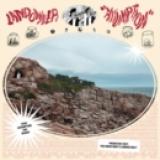
"Western Massachusetts band Landowner play abrasively-clean minimalist punk. Singer Dan Shaw started Landowner in 2016, writing and recording the project's debut Impressive Almanac with a practice amp and a laptop drum machine. Shaw's initial concept was a made-up genre called “weak d-beat”, meant to sound intentionally absurd “as if Antelope were reading the sheet music of Discharge”. When Shaw joined with his current bandmates in 2017, they translated these early experiments in restraint, minimalism, and caricatured hardcore as a live band. This provided Landowner with its own unique set of blueprints: the guitars “slap hard” without using any distortion or effects, the rhythm section is tight, fast, and repetitious, and the song structures make space for lyrics that reflect on the global systems and dark absurdities our lives are tangled in. Comparisons could be made to The Fall, Lungfish, or Uranium Club, but across their five albums, they make it clear: Landowner just sound like Landowner.
Assumption is the band's fifth album. Sonically, it captures the vibrancy and intensity of their live performances. The album title “Assumption” encapsulates the album's multi-layered themes. We make assumptions, taking in information online through an overload of decontextualized snippets and headlines, and then quickly form conclusions, or we allow artificial intelligence to do the thinking for us. Assumption is the sound of a band that established its own musical identity and has reached a place of tightness with an ease gained from years of playing together, sounding mechanically precise and at the same time fully human. It may be the band's most cohesive and fully realized work to date."
On and on, the beat goes on. Sound System culture plays a huge part in the history of House music, shaping Mysticisms, its founders and the music it brings into the spotlight. Continuing the dive into that history, in all its forms and permutations, Tranquil Elephantizer’s 1995 classic Zombie Dawn is reissued here in its original form.
A name that has been getting noticed on recent releases for the likes of legendary San Francisco collective Wicked Records and Manchester’s cult Red Laser label, the project has, in fact, been around for several decades.
Morphing out of the late 80s Acid House revolution, members Alexis Worrall, brothers Caspar and Darius Kedros and focal point, David Jenkins aka DJ Shakra came together in the South London melting pot of free parties and DIY anything is possible ethos.
Born of a collaboration between the short-lived Camberwell Butterflies project – featuring Alexis Worrall and DJ Shakra amongst others – and the Kedros’ bothers downtempo/trip hop forbears Slowly. With a shared label, on the ground-breaking Chill Out Records, and Thursday late-night encounters at London’s legendary Megatripolis club, they decided to pool studio resources and Tranquil Elephantizer was born.
Mixing lo-fi 808 heavy analog jams of the Butterflies, with the studio sophistication from the Slowly crew, sparked something new and Zombie Dawn was the first result. Local producer Crispin J Glover dropped by the studio, riding high with his Caucasian Boy project’s hypnotic Northern Lights (featuring DJ Shakra on Roland 303) – recently out on Strictly Rhythm – he offered to remix both Zombie Dawn and the Slowly album cut No Slo Dub for release on his own Matrix label and an underground hit on the London and West Coast 90s party scene was born.
Coming in the original “Saxmental Mix”, alongside Glover’s storming “Nu Dawn Club Mix” Zombie Dawn was a correlation of the past, present and future in one record. The history of British House can be heard in the bumpin’ nature of the beats, the sharp hats encompassed around dub overtones that give it added warmth. The slightly quirky, left field touches of the tracks, set against the then weekly overload of sharp US imports, brought the mix of influences from the Tonka and Sugarlump Sound Systems they had partied and been involved with, on to vinyl, adding touches of jazz keys and disco’s heritage for good measure.
A bedfellow for the emerging UK House sound coming on the likes of Luxury Service (Rob Mello / Zaki Dee), Other (A Man Called Adam / DJ D) and Nuphonic (Faze Action / Idjut Boys), that shaped and defined London clubs and far beyond. Some 30 years later, with a new album on the way, here is debut Tranquil Elephantizer’s release, remastered especially for this reissue, ready to bring that optimistic thinking back.
Tranquil the Mystery.
- A1: Brave
- A2: Work
- A3: From Before... What?
- A4: Relax The Pleasuredome
- B1: Sodastream
- B2: Gush Goog
- B3: To Win Her Love
- B4: Thanks Mr Jones
- C1: To Tell A Lie
- C2: I Won't Forget
- C3: Be Clowns
- C4: Different Time
- C5: Different Time (Reprise)
- D1: Young Ones
- D2: Track 5
- D3: Existential Megamix
- D4: Methodologies
- D5: Lush Nova Elec
- E1: Old Dat Biz 1#46 (Wakey Wakey)
- E2: Acid Frog Fave
- E3: Techyarr
- E4: A Reasoning
- E5: Old Tech 38
- E6: Sweets (Bring U Back)
- E7: New Guardmeter
- F1: To Win Her Love
- F2: What I Offe
- F3: Mein Herr
- F4: Some Curious Joy (Cute Tough Beat)
- F5: The Cuban Situation
- F6: Odds
- F7: The Gamble Room
To celebrate its 25th anniversary, XL Recordings today announce a special, expanded version of Leila’s acclaimed second album Courtesy Of Choice. Originally released on 11th September 2000, the album followed the success of her Rephlex Records debut Like Weather and felt like a broadcast from a futuristic radio station no one else could tune into. Twenty-five years on, alongside collaborations with the likes of Bjork, Aphex Twin and Terry Hall and iconic performances at the likes of the V&A and Venice Biennale, more and more listeners have found the frequency. While Courtesy of Choice's influence continues to transmit through contemporary culture. the Iranian-born, London-raised producer remains utterly singular:
"I realised very early on that people don't really belong anywhere. That's what gives me the freedom to do any kind of music...I don't feel any commitment or loyalty to anything. My commitment is to noise." – Leila
This new version, Courtesy Of Choice… asides and besides, re-presents the original 14 track album — including the previously vinyl-only “Relax the Pleasuredome” — alongside a wealth of unreleased material. Leila chose to re-edit rather than remake the album (she has all the original data… midi and audio), choosing to set the parameters of only recovering buried details while preserving its spirit. “I wanted this reissue to be honest,” she explains. “Nothing added, just making sure the performances came through as they were meant to.” Among the twenty unheard tracks are Roya Arab’s striking collaboration on Cabaret classic “Mein Herr,” the surrealist collage “A Reasoning” with a sample of Max Ernst, the hypnotic “Acid Frog Fave,” the digi rave blowout “Birdie Rave,” and “techyarr”’s future forever funk from the realm of primetime Neptunes. Together they reveal both the breadth of Leila’s vision and the enduring power of an album that continues to sound ahead of its time.
The second release from Irish label IL Corpo Records comes from Dublin native Dave Hughes. The Fastplay E.P. sees the accomplished audio engineer and Dj return to production duties with 4 carefully crafted excursions into mid tempo deep house with elements of dub and techno. Having had multiple releases on John Tejada’s legendary Palette label and iRecords amongst others, the production values are top notch and well executed making this an interesting listen indeed.
Fastplay chugs along building gradually before sultry vocals from Svelte weave their way into the mix and beckon the listener to the dance floor for the night ahead.
Feel Better is a downtempo dubby experiment inflected with a dose of rave nostalgia.
Walk Alone sees more atmospheric chord work and well chosen percussion that cements the sentimental feel of the E.P.
Tabouli rounds out the release with broken beats wrapped up in mid eastern rhythms. Moody chords and a G Funk lead line keep the groove evolving to the end.
Andre Zimmer lands on Craigie Knowes with some certified block-rockin’ beats. The ‘Swamp Circuit’ EP pulls influences from the early UK hardcore scene, electro, the new-wave progressive movement, electro and more – rolling them into something new, cohesive, unique and furious. If that’s not a package worth listening to then we don’t know what is. A proper record for the proper DJs!
Alongside with the release of the new album “Tote Winkel”, Sankt Otten will be delighting us with another limited vinyl bonus release. “Hymnen und Helden” (hymns and heroes) is a collection of cover versions created over the last few years. As the album title suggests, it pays homage to self-proclaimed musical hymns and heroes from the seventies and eighties.
HYMNEN UND HELDEN – track by track: A well-known Moog sequence leads us on the way into the cover album. Giorgio Moroders 1977 disco classic “I feel love” has been tackled here. Sankt Ottens instrumental interpretation starts out familiar, but ends in a slightly disturbing disharmony of mellotron and ebow guitar.
The instrumental version of the melancholy Wipers anthem from 1983 starts with a rather unusually fast 808 beat for Sankt Otten. The 80s electronic echoes suit the punk rock earworm “Doom Towen” surprisingly well.
Without Deutsch Amerikanische Freundschaft, more unusual electronic music would hardly have been conceivable in Germany in the early 1980s. “Alles ist gut” tribute to this band and singer Gabi Delgado-Lopez, who passed away in 2020 and with whom they shared the festival stage in 2015. Gabi‘s lyrics are rendered by text- to-speech software with the voice of an unknown Claudia.
“Wishing (If I had a photograph of you)” was made famous in 1982 by A Flock of Seagulls. This record was regularly played on Stephan Ottens turntable back then. Reason enough to remember this with “Sehnen (Hät- te Ich von dir eine Fotografie)”. The recordings for this album were made in 2007 and have been updated and completed in the last year. Carsten Sandkämper, who was also featured on Sankt Ottens debut album “Eine kleine Traurigkeit”, contributed the vocals and lyrics.
The Swiss band Grauzone became famous with the NDW hit “Eisbär”. Instead of this title, they took on the B-side of this single with “Ich liebe sie”. A synthpop love song full of innocence, stylishly sung by Carsten San- kämper and refined with Kraftwerk-like choral sounds and an herbaceous motorik beat.
The band has enjoyed a personal friendship with Harald Grosskopf since their collaboration in 2013 on the album “Messias Maschine”. With “So weit, so gut”, they take on his little hit from the album “Synthesist”, which is one of the gems of the synthesizer albums of the eighties.
“Kriegsmaschinen, fahrt zur Hölle” is an anti-war song from 1974 by Günter Schickert, the Berlin master of the echo guitar. Unfortunately, the lyrics are still relevant. Oliver Klemm contributes the delay guitars and Stephan Otten puts the lyrics through a vocoder. Sankt Otten compress the 17-minute original to just under 5 minutes and move it musically from the 70s to the 80s.
Sankt Otten’s adaptation of David Bowies “Heroes” is equipped with warm Juno 106 sounds, ebow guitar and synthesizer pads. The German “Helden” version, known from the movie Christiane F. – Wir Kinder vom Bahnhof Zoo, is sung in a touching way by Carsten Sandkämper.
New York-based Rafael Anton Irisarri was responsible for mastering the record. As part of the series with graphic covers, this die-cut artwork was also created by Mexican designer Daniel Castrejon. The one time only vinyl pressing, limited to 350 copies, comes in a beautifully designed die-cut cover and colored vinyl. The Osnabrück duo Sankt Otten, founded in 1999, have been releasing on Denovali since 2009. The band has dedicated itself to the holy trinity of Krautrock, Ambient and contemporary Electronics.
d Sehnen [Haette ich von Dir eine Fotografie]
Taroug is the solo project by drummer and electronic music producer Tarek Zarroug with roots in the suburbs of the Tunisian desert and having grown up in Germany. Following the release of his 2020 EP, "Perpetual," as well as a number of notable remixes for artists such as Archive, Taroug has continued to refine his musical aesthetic.
Taroug's debut album Darts & Kites, set to be released on Denovali Records, draws inspiration from the Penrose tiling and explores themes of change and transformation. Fascinated from the pattern's unending possibilities, Taroug incorporated its infinite permutations not only into the album's nine tracks, but also in the cover art design. Darts & Kites showcases a blending of genres and styles, resulting in a sonic landscape, that is both hunting and beautiful. Experimental and abstract soundscapes are enriched by oriental influences, collected field recordings, pulsating dark beats and hypnotic vocals.
The album also features the contributions of other notable artists, including Beate Wolff's cello performance on Jewels I. Benedikt Koch's saxophone adds a sense of controlled chaos with delayed and swelling notes to the track Deguech, while Timo Schieber's piano provides a crucial element of the album's title track, Darts & Kites. Niklas Genschel lends his vocals to Queen of Carthage, which also features the saz playing of Abdallah Abozekry.
Created in collaboration with architect and designer Marie Brosius, the album artwork captures different ornaments reflecting the album's content. Darts & Kites is a mosaic of sound, blending together elements of unfamiliar and familiar.
Partisan’s stacked catalogue continues to evolve with another spaced out whirlwind. Heading up the release is jack-of-all-trades iO (Mulen), whose versatile sound and consistent craftsmanship have long defined his reputation for distinct, high-calibre production. His Hyperspace EP delivers four high-energy, acid-tinged cuts that pay testament to his trademark precision — modern in execution yet infused with a nostalgic rave soul. Leaning into techno, new beat, and gritty tech house with attitude, each track feels purpose-built for peak-time impact. It’s no surprise that a label as established as Partisan and a timeless producer like iO (Mulen) have crossed paths, exceeding the high expectations their names evoke.
Another essential addition to Anthea’s Partisan artillery.
- A1: Tomorrow
- A2: T.m.t. <3 T.b.m.g
- A3: Matter Of Opinion
- A4: Victims
- A5: For A Friend
- B1: Never Can Say Goodbye
- B2: Lovers And Friends
- B3: Hold On Tight
- B4: If I Could Tell You
- B5: C Minor
- C1: I Just Want To Let You Know
- C2: Scat
- C3: 77 The Great Escape
- C4: I Do It All For You
- C5: Zing Went The Strings Of My Heart
- C6: When The Boy In Your Heart Is The Boy In You Arms
- C7: Piece Of Saxophone
- D1: Tomorrow (Stephen Lipson Extended Version)
- D2: There’s More To Love (Jalapeno Mix)
- D3: Never Can Say Goodbye (San Paulo Mix)
Black Vinyl LP[24,16 €]
Red Vinyl
The Communards’ sophomore album ‘Red’ consolidated the genius of the musical partnership between Bronski Beat singer Jimmy Somerville and pianist Richard Coles. Fusing synths and hi-NRG production with lush string and horn arrangements, The Communards straddled pop and the political, the album’s themes set against the political unrest and moral panic of late 80s Britain. A global smash upon its release, this remastered and expanded 35Th Anniversary Edition features an extensive array of B-sides, live tracks, demo versions and remixes, including classic mixes by legendary 80s club doyens Shep Pettibone, Clivilles & Cole (better known as C&C Music Factory) and a euphoric new 2022 remix of ‘Never Can Say Goodbye’ by UK outfit The 2 Bears (Hot Chip’s Joe Goddard and DJ Raf Rundell). Available on Deluxe Double CD , Collector White & Red Double Vinyl , Black Vinyl. All editions remastered , with new sleeve notes.
Especial is delighted to reprise the label’s relationship with Osaka’s acid master, Akio Nagase. Following his debut, Global Acid EP and follow up African Acid EP covered a range of influences, all with the heavy dose of Roland TR-303, here he completes a trilogy of EPs, culminating in a homage to his love of dub reggae.
Having made reggae influenced dance music under the Makedub alias for decades, here he takes it a step further, utilising a knack for catchy hooks and acid lines, while fusing reggae and live desk-dub mixing.
I Love Smoke, a chant, the stand-out, those classic vocals flowing in and out with a 3AM (Eternal) bump. Riotously expounding the virtues of smoking ’Mari Jane’, the hypnotic stoner vibes are wrapped around Nagase’s meditative and dancefloor heartbeat.
Night Time High Acid swings, the low-end rumble and kick build before the TR-303 and harmonica lead interweave, samples and sirens encase in an ethnic, tribal slo-mo dub flow.
Things shift with the 4/4 bump of Creation Dub. A call to rise wrapped in the warmth of Dub House beats. Melody and dub flow, no need for 303. Vox are space echo’d to the limit. Keys stab, horns call, slip side away.
To finish, Harmonica Dub is just that. Heavy mouth organ solo, the blues calling atop a dub-techno stepper beat. Rimshot, stabs, echo. All encompass that psychedelic flavour of Akio. Dub, Love and Respect. Thank you Mr Kikumoto for the acid, thank you Mr Nagase for beats
Als direkte Folge des großen Interesses der Beatles an experimenteller Musik und anderen avantgardistischen
Kunstformen gründete Apple Records im Februar 1969 das kurzlebige Tochterlabel Zapple. Es sollte ein Forum für ungezügelte Klangexperimente bieten, oder, wie es damals hieß, für „noch abgefahrenere Sounds“.
Georges „Electronic Sound“ und John Lennons und Yoko Onos „Unfinished Music No. 2: Life With the
Lions“, beide im Mai 1969 erschienen, waren Zapples einzige Veröffentlichungen vor der Schließung des
Labels. Das von George gemalte Cover von „Electronic Sound“ zeigt seinen Moog IIIp (der später von den
Beatles auf vier Stücken ihres Albums „Abbey Road“ verwendet wurde) mit den vier Modulen, aus denen
der Klang synthetisiert wurde. Jede Seite der LP „Electronic Sound“ enthielt ein experimentelles, längeres
Werk.
George Harrisons „Wonderwall Music“, erschienen im November 1968, war das erste Soloalbum eines
Beatles-Mitglieds und die erste LP, die von Apple Records veröffentlicht wurde. Der Soundtrack zu Joe
Massots Spielfilmdebüt „Wonderwall“ ist ein überwiegend instrumentales Album, das einen komplexen und
lebendigen Klangteppich aus westlicher Rockmusik und Kompositionen im Stil der indischen Klassik bildet.
1992 erinnerte sich George: „Ich entschied mich für eine Art Mini-Anthologie indischer Musik, weil ich die
Öffentlichkeit für indische Musik begeistern wollte.“
Als direkte Folge des großen Interesses der Beatles an experimenteller Musik und anderen avantgardistischen
Kunstformen gründete Apple Records im Februar 1969 das kurzlebige Tochterlabel Zapple. Es sollte ein Forum für ungezügelte Klangexperimente bieten, oder, wie es damals hieß, für „noch abgefahrenere Sounds“.
Georges „Electronic Sound“ und John Lennons und Yoko Onos „Unfinished Music No. 2: Life With the
Lions“, beide im Mai 1969 erschienen, waren Zapples einzige Veröffentlichungen vor der Schließung des
Labels. Das von George gemalte Cover von „Electronic Sound“ zeigt seinen Moog IIIp (der später von den
Beatles auf vier Stücken ihres Albums „Abbey Road“ verwendet wurde) mit den vier Modulen, aus denen
der Klang synthetisiert wurde. Jede Seite der LP „Electronic Sound“ enthielt ein experimentelles, längeres
Werk.
George Harrisons „Wonderwall Music“, erschienen im November 1968, war das erste Soloalbum eines
Beatles-Mitglieds und die erste LP, die von Apple Records veröffentlicht wurde. Der Soundtrack zu Joe
Massots Spielfilmdebüt „Wonderwall“ ist ein überwiegend instrumentales Album, das einen komplexen und
lebendigen Klangteppich aus westlicher Rockmusik und Kompositionen im Stil der indischen Klassik bildet.
1992 erinnerte sich George: „Ich entschied mich für eine Art Mini-Anthologie indischer Musik, weil ich die
Öffentlichkeit für indische Musik begeistern wollte.“
- Track
- Intro / There's Something Goin' On
- Proceed
- Distortion To Static
- Mellow My Man
- I Remain Calm
- Datskat
- Lazy Afternoon
- ? Vs. Rahzel
- Do You Want More?!!!??!
- What Goes On Pt. 7
- Essaywhuman?!!!??!
- Swept Away
- You Ain't Fly
- Silent Treatment
- The Lesson Pt. 1
- The Unlocking
- Bonus Tracks
- Proceed Ii Feat. Roy Ayers
- Proceed Iii
- Proceed Iv (Aj Shine Mix)
- Proceed V (Beatminerz Mix)
- Silent Treatment (Kelo's Remix)
- Silent Treatment (Beatminerz Remix)
- Silent Treatment (Black Thought's 87 You And Yours Mix)
- Silent Treatment (Question's Mix)
- Silent Treatment (Street Mix
Do You Want More?!!!??! Is the second studio album and the major-label debut from The Legendary Roots Crew. The album, recorded with the original crew, including Scott Storch, was released January 17th, 1995, and was immediately welcomed with open arms by critics, the Chicago Tribune wrote, “This is an impressive display of skills, intelligently arranged and performed.” Do You Want More?!!!??! prepped fans for what The Roots were capable of, and would later show on their magnum opus, Things Fall Apart.