Search:beating me

Styles
All
Michelle Branch - The Trouble with Fever LP
  • 1: Closest Thing To Heaven
  • 2: You Got Me Where You Want Me
  • 3: I'm A Man
  • 4: Not My Lover
  • 5: When That Somebody Is You
  • 6: You
  • 7: Zut Alors!
  • 8: Fever Forever
  • 9: Beating On The Outside
  • 10: I'm Sorry

"The Trouble with Fever" ist das insgesamt vierte Soloalbum von der Grammy-ausgezeichneten und vielfach Platin-dekorierten Singer-Songwriterin Michelle Branch und folgt auf das 2017 veröffentlichte "Hopeless Romantic" (2017), mit dem die Musikerin einmal mehr glänzende Kritiken einfuhr. Die Songs wurden von Branch
gemeinsam mit ihrem Ehemann Patrick Carney (The Black Keys) produziert.

Wie Branch berichtet, sorgten die ungewohnten Lebensumstände dafür, dass sie sich kreativ frei entfalten konnte: "Das Album nahm seinen Anfang während des Lockdowns 2020, als Patrick und ich in Nashville daheim hockten. Zunächst war mir gar nicht bewusst, dass hier ein Album in der Mache war - es ging primär darum, bei gesundem Verstand zu bleiben. Wir hatten reichlich Zeit, zusammen Musik zu machen und im Studio unterschiedlichste Sachen auszuprobieren."

pre-order now16.09.2022

expected to be published on 16.09.2022

30,29
DJ Overdose - Powers Of Ten EP

Like meeting an old friend again, Dalmata Daniel welcomes DJ Overdose back to their catalog. Six years ago the infamous Dutchman's '05 Poly 800 Loop' EP was released, which served as a powerful launch to Dalmata Daniel, opening the first chapter in their story. Later in 2019, a split release with Sematic4 was also a highlight in the life of the label; and now, 3 years later, DJ Overdose checks in with the 'Powers of Ten EP' with a J. Mono remix, available both in digital and vinyl format, the latter having 2 bonus tracks.

The distinct, crunchy sound of DJ Overdose, bearing aspects of old school hip-hop-infused sampling and contemporary analog vibes creates the perfect blend of both worlds. 'Garden of Lust' opens up the adventure with a combo of warm basslines and solid drum-programming. This initial track feeds us these cardinal elements as the bread and butter they are: subtle variations and fine spices do appear here and there as the track goes along, but the key, beating pulse in 'Garden of Lust' brings massive hits stable as a sledgehammer in the hands of a blacksmith.

'Feed The Beats' elevates the game to cinematic territories: its majestic string-like central melody makes me alert and ablaze, making me feel like I'm in a late 80s L.A. setting facing malevolent zombie-aliens in my Wayfarer shades. Blasting beats and Carpenterian coolness all over the place, while the spooky bassline just keeps sneaking up on me endlessly.

If you are wondering when's the best time of the year to bring out your boombox at last, then this is your lucky day: with 'BOB', the first bonus track on the vinyl, we can experience some roarin' bassdrums, snappy snares, MCs with the speed of light and all that jazz. The low-bit sampling and vinyl scratching come and kick you right in the face so hard that it becomes pretty obvious you'll can't help but start some serious beatbox battles in your bathtub with your rubber duck.

A feverish groove in the prime time of a funky bash, in the haze of a sensual rave-up: that's all one really wants when going for a Saturday night out. We definitely get this and much more from 'Room 714', another vinyl-only bonus track. A berserk voice and ethereal chords guide us through this mysterious track, but while we are busy trying to impress our crushes on the dance floor, things around us are slowly getting very, very freaky, maybe a bit way too freaky.

As wobbly and jolly as it gets, our Dutch friend ends his session with 'Ðr ¡v€ M€ ¢r@z¥', a vocoder-heavy disco banger, full of merry vocal FX and smart rhythmic glitches as he completes his flight. To close the EP, our local hero, J. Mono delivers an insane remix of 'Ðr ¡v€ M€ ¢r@z¥': one can clearly imagine how he grabs and turns the BPM knob all the way up, fires up some arpeggios on his mighty synths and casts a complete reimagination of the original track.

out of Stock

Order now and we will order the item for you at our supplier.

10,88

Last In: 3 months ago
Roxy Music - Avalon (Half Speed Master)

"2022 marks a year of celebration for Roxy Music. Throughout the year, each of their eight studio albums, all heralded as modern classics, will be reissued as special anniversary editions with a new half-speed cut, revised artwork and a deluxe gloss laminated finish. In addition, Roxy Music will tour for the first time in more than a decade to mark the 50th year since their groundbreaking debut album.

The final studio offering from Roxy Music would draw upon a smoother, more adult orientated sound giving us the now iconic single ‘More Than This’. Avalon would be yet another UK no’1 album staying there for more than three weeks and in the album charts for over a year

out of Stock

Order now and we will order the item for you at our supplier.

36,35

Last In: 3 years ago
Manja Ristić - Him, fast sleeping, soon he found In labyrinth of many a round, self-rolled

It is to the detriment of our understanding of musicality that we mostly measure it by the capacity to produce, and much less by the capacity to receive some sort of acoustic information or event. The virtuosity of listening, of understanding the sonic situation and its potential, is, however, that which defines one's capacity to interact – with other musicians, with the audience, and with the environment. This could also be taken to mean that an ethical act is implied in the situation of listening – the decision to relate, to be attentive to, to actively position oneself in relation to what is heard.

Rarely is this capacity so thoroughly pronounced and ethically conscious as in the case of Manja Ristić, the Belgrade-born and Royal Academy of Music-schooled musician, composer, sound and multimedia artist (the list could go on), who currently lives on the island of Korčula in the Croatian part of the Adriatic. Ristić’s recent, field recording-based work, is indeed all about attentiveness, most of all towards the environment and the acoustic traces of the endangered ecological layers of her old-new Mediterranean surroundings. With that in mind, it is indeed no wonder that her newest album draws from Milton’s Paradise Lost, which could easily be the anti-slogan of the endangered Croatian coast, eaten up by the pressures of touristification and the usurpation and privatization of once common space. More precisely, the album is inspired by one of the fifty Gustave Doré illustrations of Milton’s epic, Him, fast sleeping, soon he found, In labyrinth of many a round, self-rolled, from which it draws its title. The verses and the scene are from Book IX, and depict the moment Satan inhabits the Serpent, the beginning of his subversion of God’s autocratic rule, as some interpretations would have it.

For Ristić, the actual Paradise she introduces us to is in a state of imbalance – the idyllic soundscapes of her island surroundings overlain with sonic anxiety, such as on the album’s first track, The Flies, with its unrelenting, nervous buzzing evoking the ominous Biblical entity of Beelzebub, or The Lord of the Flies. The next track, Whales, which beautifully utilizes archival whale recordings, could also be taken to establish an intertextual relation to Milton through Melville, whose Moby Dick was strongly influenced by Paradise Lost. The middle track of the album, dedicated to the Croatian-American painter and muralist Maksimilijan Vanka, uses to great, unsettling effect what to my ears sounds like a buried hydrophone, a technique often employed by Ristić in her work, giving us a rough, grinding impression of water beating the pebbles over a high-pitched drone. But perhaps the most ominous, pessimistic image is painted in The Flag Pole, in which the symbol of revolutionary victory (I’m thinking of the Yugoslav modernist Tin Ujević and his proto-avant-garde sonnet Farewell from 1914) becomes a source of terrifying sonic unease, as we are listening to the incessant sound of its rope hitting the metal pole. However, with Dlana Night comes relief – the drones become airier, calmer; there is a distant notion of people, dogs, everyday life, all shrouded in the calming sound of the crickets on the island of Silba. Ristić, ultimately, serves us some hope on this wonderful new album, showing us that something has been lost, but that something can also be gained through the thoughtful attention with which she listens to the world around her.

„My recording techniques all boil down to one thing – intuition. I do not use expensive or highly sensitive equipment nor do I employ special techniques. On the contrary, I believe that the information regarding a space or an object can be recorded well enough on an average device. My personal guideline when recording sound is the positioning of myself as the listening medium, active and with the intention of establishing a connection that is sometimes intellectual, sometimes conceptual, and sometimes phenomenological.” - Manja Ristić, in an interview for Kulturpunkt.hr

pre-order now22.07.2022

expected to be published on 22.07.2022

11,56
Pixelord - Demonslayer

Pixelord

Demonslayer

12inchSTRTEP082
SATURATE!
04.07.2022

"Insane and heavy beats by the og don Pixelord featuring great remixes by an all-star line-up comprising Dj Ride, Dj Pound, Starkey and Dranq!

Like a lightning bolt in the middle of a dark sea, PIXELORD has returned once again from the frozen lands to shock and disquiet the tides of Futuristic Bass Music. Perhaps the best thing about Russian electronic music godfather Alexey Devyanin's PIXELORD project returning to SATURATE! for this "Demonslayer" release is not simply the exciting and hard-hitting beats contained within, but the simple fact that it shall be offered on delicious, glorious VINYL. An artifact for all time, perhaps to be found in future wastelands by those who would consider this "Demonslayer" to be the VanHelsing (or perhaps Trevor Belmont) of the 21st century bass music scene.

The last decade has seen PIXELORD riding the wave of forward-thinking bass music, and always staying at the crest, and 2020 is no different. "Doomguy" comes tearing straight in with menacing, distorted synth weaponry, assaulting with ballistic beats (even some nods to Junglism) until finally bestowing some glittering melody atop the fray, showing that not only is Alexey an elder-statesman of the genre, he's still the eager bass monster that explores his own depths. The depths are again evident in "Pain Elemental" where the vibe is established immediately, and only delves deeper into the slightly-detuned bass signals and ominous creeping atmosphere. The melodic elements are no longer here to sooth, they are newly charged laser beams that sear the flesh, scorching the eardrums.

This foreboding, demon-dispatching vibe is indeed present throughout this entire release, as you enter the "Bonus Stage" of this deadly game, where the aggression does not abate, and the bass plays backseat to the synth bell sonic geometry on display. The drums especially feel the wrath of PIXELORD on this track, where some impossibly tortured tambourines take a beating, and the chopping and relentless reorganization of the rhythm keeps you churning with intensity. The title track brings the "wild style", even though the drums are less frantic, the bass frequencies and laser blasts from our protagonist, the ever-ready "Demonslayer", are sure to dismantle any submissive subwoofer in range.

"BFG" rounds out this collection in a disheveled fashion, dishing out low frequency divebombs and squelches, whilst otherworldly transmissions from synth realms afar come leaping in trying to assert their dominance, only to be eaten alive by daemonic bass and telluric currents of seismic drum activity. An utterly destructive end to this tale… BUT WAIT, IT GETS WORSE! We have here on hand SATURATE! stalwarts DJ Ride, DJ Pound, DRANQ and big daddy STARKEY on remix duty, who all take the tracks down their own rabbit holes to parts unknown, with equal aplomb. The result is equal in intensity and aggression, but the textures by which this is conveyed are wholly transformed and re-imagined skillfully.

All this on one slab of gorgeous VINYL. No demon shall stand a chance against PIXELORD's battalion of beats and bass."

pre-order now04.07.2022

expected to be published on 04.07.2022

19,96
Milton Nascimento - Maria Maria

Repress incoming...

Far Out Recordings proudly presents Milton Nascimento's Maria Maria. Recorded in 1974 and unreleased until almost thirty years later, the album was written as the soundtrack to a ballet which dealt with the legacy of slavery in Brazil. Raw, atmospheric and emotionally charged, Maria Maria reveals one of Brazil's greatest ever songwriters at his creative peak. Featuring an all-star cast of fellow Brazilian legends including Nana Vasconcelos, Joao Donato, Paulinho Jobim, and members of Som Imaginario, Maria Maria holds what Milton considers to be the definitive versions of some of his classic songs, including 'Os Escravos De Jó' and 'Maria Maria'.

Originally released in 2003 as a double CD package, with Milton Nascimento's 1984 follow up ballet soundtrack Ultimo Trem, Maria Maria will be available on vinyl for the very first time from December 2019, with Ultimo Trem set for vinyl release early 2020.

Milton Nascimento possesses one of the most immediately recognizable voices in Brazilian music: high and sweet and as breathtakingly sublime as that of any soul singer. It was this voice that the legendary Brazilian singer Elis Regina fell in love with back in 1964, having heard Milton perform his song 'Canção do Sal (Sultry Song)' at a private party in Sao Paulo. Ellis went on to record the song in 1967 -giving Milton his first hit in Brazil and beginning a career that has spanned over 50 years.

Born in Rio on the 26th October 1942, Milton moved with his adoptive parents at the age of 18 months to Tres Pontas, a rural town in the state of Minas Gerais, 500 miles north of Rio. He began his musical career as a young teenager, singing in a crooner style he learnt from listening to Brazilian singers and US groups such as The Platters on the radio. Hungry for more opportunities to perform, Milton moved to Belo Horizonte, the capital of Minas Gerais, at the age of twenty. By the beginning of the 60s Milton had made a name for himself both as an accomplished singer and guitarist.

Milton became part of a local network of musicians, film makers, dancers, theatre directors and writers that included the journalist and song writer Fernando Brant as well as lyricist Marcio Borges and his younger brother Lo Borges. Together these four wrote and produced what would become Milton's milestone album, 'Clube da Esquina (Club on the Corner)'. The originality of 'Club da Esquina' shaped the local scene, and it reflects the essence of 'the Nascimento Sound'. Milton's religious upbringing as an Afro-Brazilian Catholic saw him exposed to church choral music from an early age. His love of this genre of music is apparent in both his celestial falsetto and vocal choral arrangements. This collection also displays his early fascination with evocative, non-verbal, scat-style singing, spare, harmonic guitar work and local folk music, jazz and rock.

In 1976, Milton and Fernando Brant teamed up with a new contemporary dance company called Grupo Corpo, whose Argentinian choreographer Oscar Araiz, would become a collaborator with the two musicians. Together, they conceived a show based on the composite life story of the daughter of a black slave called Maria. Nascimento wrote music to Brant's lyrics and "Maria Maria" was premiered in the main theatre of the Belo Horizonte Palacio das Artes that year. "Fernando wrote the lyrics for the ballet, but there were originally no lyrics for the theme song, "Maria Maria'". Milton and Fernando worked on the lyrics together, basing them on folk stories about black women of the countryside. Adds Milton "These memories are mostly things that we witnessed – Fernando and I – rather than what we experienced ourselves.

Milton's music is impressionistic, emotional and romantic. Relying on songs without lyrics as well as evocative vocalizing and choruses, Milton experimented heavily with Afro-Brazilian percussion and taped jungle sounds. His composing method for these recordings was highly unconventional: "I wrote the music for 'Maria Maria' in a tiny Rio apartment with friends and their kids running around and having fun! I love to be in noisy places, surrounded by people", he says.
The music on 'Maria Maria' was performed by an impressive group of young musicians who are today household names in Brazilian music, including Naná Vasconcelos (percussion and effects), Toninho Horta (guitars) and Paulo Moura (sax). Several vocalist including Naná Caymmi, Fafá de Belém, Beto Guedes, and Milton himself, had hits in years to come with reworkings of these songs.

Milton says his compositions follow his visions "like a movie", and he believes that reflects his long love affair with cinema. "I only began composing because of enjoying the movies so much," he says. "I wrote my first song "Peace for the Coming Love" after seeing 'Jules et Jim' (the cult 60s French film directed by François Truffaut), with my friend Marcio Borges. We went early in the morning and watched it four or five times in a row, then went to Márcio's home and wrote the song."

The songs also include solo spoken passages set to music, clearly influenced by this style of French art cinema. On the title track, Maria's story is narrated and translated to music through the use of African Percussion, drums and metal signifying the field slave tools of the day. 'Trabalhos (Works)' runs to work rhythms and whipcracks: no words, just pain. 'Lília' documents the beating of the slave woman. After 'A Chamada (The call)' and the triumphant 'Era Rei e Sou Escravo (I was a king now I am a slave' things begin to turn and Milton employs tropical jungle cries to symbolize freedom. 'Santos Catholicos x Candomble (Catholic Saints vs Candomble)' represents the battle between African and European religions through the music of both sides. Milton's heavenly falsetto pours into 'Francisco' and 'Pai Grande (Great Father)' and the outstanding 'Eu Sou Uma Preta Velha Aqui Sentada no Sol (I'm an old black lady, sitting under the sun)' conjures images of an old woman sitting deep in the forest, her memories painted in drums, piano and voices.

out of Stock

Order now and we will order the item for you at our supplier.

31,05

Last In: 6 years ago
Drug Apts - Clean Living Under Difficult Circumstances

An explosive collision of garage punk and weirdo art rock from Sacramento's most exciting export since Mayyors. Clean Living Under Difficult Circumstances is a strange, haunting thrill ride driven by angular guitars, an unhinged drum attack and the dynamic, sometimes violent vocal delivery of Whittney K. Featuring long time members of the Sacramento punk scene, Drug Apts have released two E.P.s on Tyler Pope's (LCD Soundsystem, !!!) Berlin based label, Interference Pattern Records, the first produced by Death Grips' Zach Hill and Andy Morin, the second by Dub Genius and Slits producer Denis Bovell. "The band name is a reference to drug apartments, those Mid-Century Modern complexes scattered throughout Sacramento, with rows of palm trees out front and mock English names like Dorchester Court or the Royal Arms. Common features include: concrete stairs, prison-style walkways with dudes looking in your window every five minutes, moms beating their kids next door and cop car lights reflecting off the pool. An ex used to say, “I hate living in these fucking drug apartments,” and friends would say, “It’s three blocks that way, past the drug apartments.” We all spent time staying up and crashing in them, or we tried to sleep through the noise emanating from their windows. I hear they’re better these days, but who knows? So the name is rooted in places and times."

pre-order now20.05.2022

expected to be published on 20.05.2022

21,98
KHOMPA - Perceive Reality LP

Khompa

Perceive Reality LP

12inchMONO188VNL
Monotreme
13.05.2022

Limited 300 180g white vinyl LPs with printed inner Discobag and digital download.

500 CDs in gatefold digifile sleeve.

Each drum controls a virtual musical instrument (synthesizers, samplers, arpeggiators, etc.) within Ableton Live music software that, in combination with a custom step sequencer developed with MaxforLive app, allows Davide to perform real melodies/electronic orchestration without the use of any backing track. 100% live. In addition to that, he also uses a microphone set up in the middle of the drumkit to capture the dynamics of the acoustic drums and translate them through an 'envelope follower' into electronic parts in several ways. About ‘Perceive Reality’: Opener Belief bursts the record into life, as skittering arpeggios spin across a vast open plain of pad synths, before the ground splits beneath it with thrashing drums. On Conceived, Davide creates a simultaneously dark and euphoric wall of crystallised sound, a cacophony of pounding drum hits and icy electronic stabs, with an intensity that continues into Collide. With its shuddering, cut-out reverbed synth pads split in two by crashing cymbals and snares, the song spins itself into a transformative cycling trance, before slowly fading and washing away into silence, only to be broken by Conjectures’ sudden cymbal slams and transfixed toms that roll like thunder into a frenzy, before their final lightning strike. On Subjective, arpeggios twist around beating kick drums and toms, quickly scaling to a furious yet tightly wound sequence that envelops the listener, before Relief, where the album finally takes the shape of a huge wave of calm, glimmering hope and reflection. About the concept behind this latest album, Davide says, “Perceive Reality is a vivid exhortation to deepen the relationship with reality, avoiding simple and often illusory visions. In a historical context that fosters the proliferation of dual information and visions, individuals are increasingly exposed to the danger of perceiving less the complexity of events, thus losing the training to express complex and articulated opinions, the result of a reflection, whether individual or collective. Without having the presumption of resolving epochal issues, the project alerts to the fact that univocal answers do not exist and that only by developing a path of knowledge and giving ourselves the opportunity to examine things in depth, can we enter into the relationship with the existing.” Press highlights so far: Video premiere on Rumore.IT (Italy).

pre-order now13.05.2022

expected to be published on 13.05.2022

29,54
Sven Väth - Catharsis LP 3x12"

Without the West German-born Väth, techno would look, sound and feel very different. Since falling in love with electronic music and DJing in 1981, his dedication to the art has never faltered. He plays every party as if it were his last. His broad smile has connected with millions of people around the world. His colourful and curious character has imbued techno with a personality it was often lacking. His selections remain hugely unpredictable, despite the fact that he has been playing around the world for more than 40 years. To remain not only relevant but innovative after so long is a testament to Sven's ability to connect through music on a deeper level.

Technically, of course, he is a DJ who can play for thirty hours and not miss a beat. His track selections seem almost divine, and his aura is certainly otherworldly. But more than that, he is a ringleader who is able to mix the artful side of techno with the playful side of partying. Most famously he has done this for more than 20 years at his iconic Cocoon parties in Ibiza. They single-handedly introduced techno to the White Isle and have been its beating heart ever since. Under his charge, strict style guidelines and exaggerated pigeonholing no longer apply. Instead, he has perfected the art of playing far and wide while always remaining true to his own musical identity.

In the studio, Sven has always been just as unique. He has worked under several aliases but always brought a fresh perspective. Whether securing chart hits as part of OFF in the eighties, serving up brutalist techno and trance-tinged sounds in the nineties or crafting major label albums in the 2000s, his music has remained utterly forward-looking. That legacy continues with Catharsis as Sven teams up with highly respected producer Gregor Tresher for his latest long-form offering. Tresher has long been part of the Cocoon family and is a revered artist in his own right, when the two got together in the studio it was clear they had an instant connection and there would only be one person fit to co-author this LP.

It is a record inspired by Sven's interest in the physical and spiritual processes that take place when we dance. "They are realms into which we immerse ourselves to experience our own mysticism and ecstasy," he muses. "Dancing is a conversation between body and soul and it spiritually connects us with each other." Because of the pandemic, that is of course a feeling that we all missed out on for so long. "No dancing, no paradise!" says Sven. "My imagination for this record was fueled by the many cultural experiences and encounters I have had in my life. They gave me the strength to find a way, the way to myself." And that way to himself is through music, through purifying dancing rituals and the exchange of spiritual energies that are generated in the club.

The thirteen-track album explores all facets of Sven's sound. It opens with the stomping drums but sleek synths of 'What I Used To Play' and unfolds through deep and dirty rhythms like 'The Worm', subtly euphoric highs on 'The Inner Voice' and the bubbly tribalism of the title track. There is the impassioned call-to-arms that is 'Feiern', peak-time melodic workout 'Mystic Voices' and soothing electronic lullabies like 'Being In Love'. The second half of the album takes in many more twists and turns such as the exotic strings and driving drums of 'Butoh', the paranoid techno minimalism of 'NYX' and expansive synthscapes of ambient gem 'The Cranes Of Gangtey Valley' before things play out though rugged beats and emotive chords on 'We Are', which is named after the idea that we are what we think. "With our thoughts, we make the world.? says Sven.

Then comes the moody reflection of 'Silvi's Dream', which was written in French for Sven's girlfriend. Last but not least we have the immersive dream that is 'Panta Rhei', which completes a trio of electronica tunes on the album. Ambient music has been an integral part on almost every album Sven has written because it can bring a certain emotional deepness, a quality that Sven always has been looking for.

'Catharsis' is an adventurous album that captures the good times, the sad times and, most importantly, the times of hope.

out of Stock

Order now and we will order the item for you at our supplier.

28,53

Last In: 21 months ago
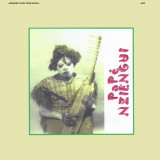
Papé Nziengui et son Groupe - Kadi Yombo LP 2x12"

Kadi Yombo, published in 1989, is the most successful album in the quest for a fusion between tradition and modernity in Bwiti harp music of the Tsogho people of Gabon. Combining beating rattles with a layer of synthesizers, Papé Nziengui blends in a contrapuntal dialogue characteristic of harp playing: male song in appeal and female choir in response, male voice of the musical arc and rhythms of female worship. But above all it’s Tsogho ritual music and modern studio orchestration. The result is an initiatory itinerary of 10 musical pieces which are all milestones likely to be simultaneously listened to, danced, meditated on, and soon acclaimed. In the years since, Nziengui has traveled he world from Lagos to Paris, from Tokyo to Cordoba, from Brussels to Mexico City to become a true icon, the emblem of Gabonese music.

Like Bob Dylan, "electrifying" folk and Bob Marley mixing rock with reggae, some purists have criticized Nziengui for having distorted the music of harp by imposing a cross with modern instruments. They even went so far as to claim that Nziengui was just an average harpist covering his shortcomings with stunts that were only good for impressing neophytes; like playing a harp placed upside down behind his back or playing two or three harps simultaneously. Sincere convictions or venomous defamations, in any case, Nziengui never gave in to such attacks, imposing himself on the contrary to pay homage to the elders (Yves Mouenga, Jean Honoré Miabé, Vickoss Ekondo) while instructing the maximum of young people. He is thus the promoter of many young talents, the most prominent of which is certainly his nephew Jean Pierre Mingongué. In a conservative society where the sacred is confused with secrecy, exposing the mysteries of Bwiti in broad daylight can be punished by exclusion or even execution.

Papé Nziengui has always claimed that he faces such risks because he never felt enslaved to a community that governs his life, that regulates his conduct, that has a right of censorship over his activities. Like Ravi Shankar, the famous sitarist, Papé Nziengui is a man of rupture but also of openness, a transmitter of culture. As proof, he has established himself in Libreville, Gabo’s capital, as the main harpist for sessions and concerts, accompanying the greatest national artists (Akendengué, Rompavè, Annie-Flore Batchiellilys, Les Champs sur la Lowé, etc.) as well as foreign artists (Papa Wemba, Manu Dibango, Kassav', Toups Bebey, etc.). In 1988, he was the first harpist to release an album in the form of a cassette produced by the French Cultural Center (Papé Nziengui, Chants et Musiques Tsogho). At the same time, he created his own group (Bovenga), combining traditional music instruments (musical bow, drums, various percussion instruments, etc.) in the framework of a true national orchestra, which gave the first concert and the first tours of a traditional music that was both modern and dynamic, thus "democratizing" the harp, to the dismay of certain purists.

On the other hand, in modern music, dominated by the logic of profit or even commercialism, artistic creation must often be adjusted for a specific audience based on reason rather than heart. But instead of allowing himself to be distorted, Papé Nziengui has always tried to produce music that is not a caricature, worthy in its expression as in its content, of the sacredness and transcendence of the music of the Origins. This is what makes Nziengui not only the musician, but the man someone whose age hasn’t altered any of his freshness or authenticity

pre-order now08.04.2022

expected to be published on 08.04.2022

32,73
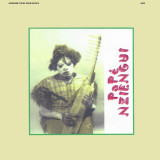
Papé Nziengui et son Groupe - Kadi Yombo LP

Kadi Yombo, published in 1989, is the most successful album in the quest for a fusion between tradition and modernity in Bwiti harp music of the Tsogho people of Gabon. Combining beating rattles with a layer of synthesizers, Papé Nziengui blends in a contrapuntal dialogue characteristic of harp playing: male song in appeal and female choir in response, male voice of the musical arc and rhythms of female worship. But above all it’s Tsogho ritual music and modern studio orchestration. The result is an initiatory itinerary of 10 musical pieces which are all milestones likely to be simultaneously listened to, danced, meditated on, and soon acclaimed. In the years since, Nziengui has traveled he world from Lagos to Paris, from Tokyo to Cordoba, from Brussels to Mexico City to become a true icon, the emblem of Gabonese music.

Like Bob Dylan, "electrifying" folk and Bob Marley mixing rock with reggae, some purists have criticized Nziengui for having distorted the music of harp by imposing a cross with modern instruments. They even went so far as to claim that Nziengui was just an average harpist covering his shortcomings with stunts that were only good for impressing neophytes; like playing a harp placed upside down behind his back or playing two or three harps simultaneously. Sincere convictions or venomous defamations, in any case, Nziengui never gave in to such attacks, imposing himself on the contrary to pay homage to the elders (Yves Mouenga, Jean Honoré Miabé, Vickoss Ekondo) while instructing the maximum of young people. He is thus the promoter of many young talents, the most prominent of which is certainly his nephew Jean Pierre Mingongué. In a conservative society where the sacred is confused with secrecy, exposing the mysteries of Bwiti in broad daylight can be punished by exclusion or even execution.

Papé Nziengui has always claimed that he faces such risks because he never felt enslaved to a community that governs his life, that regulates his conduct, that has a right of censorship over his activities. Like Ravi Shankar, the famous sitarist, Papé Nziengui is a man of rupture but also of openness, a transmitter of culture. As proof, he has established himself in Libreville, Gabo’s capital, as the main harpist for sessions and concerts, accompanying the greatest national artists (Akendengué, Rompavè, Annie-Flore Batchiellilys, Les Champs sur la Lowé, etc.) as well as foreign artists (Papa Wemba, Manu Dibango, Kassav', Toups Bebey, etc.). In 1988, he was the first harpist to release an album in the form of a cassette produced by the French Cultural Center (Papé Nziengui, Chants et Musiques Tsogho). At the same time, he created his own group (Bovenga), combining traditional music instruments (musical bow, drums, various percussion instruments, etc.) in the framework of a true national orchestra, which gave the first concert and the first tours of a traditional music that was both modern and dynamic, thus "democratizing" the harp, to the dismay of certain purists.

On the other hand, in modern music, dominated by the logic of profit or even commercialism, artistic creation must often be adjusted for a specific audience based on reason rather than heart. But instead of allowing himself to be distorted, Papé Nziengui has always tried to produce music that is not a caricature, worthy in its expression as in its content, of the sacredness and transcendence of the music of the Origins. This is what makes Nziengui not only the musician, but the man someone whose age hasn’t altered any of his freshness or authenticity

pre-order now08.04.2022

expected to be published on 08.04.2022

10,29
Papé Nziengui et son Groupe - Kadi Yombo LP

Kadi Yombo, published in 1989, is the most successful album in the quest for a fusion between tradition and modernity in Bwiti harp music of the Tsogho people of Gabon. Combining beating rattles with a layer of synthesizers, Papé Nziengui blends in a contrapuntal dialogue characteristic of harp playing: male song in appeal and female choir in response, male voice of the musical arc and rhythms of female worship. But above all it’s Tsogho ritual music and modern studio orchestration. The result is an initiatory itinerary of 10 musical pieces which are all milestones likely to be simultaneously listened to, danced, meditated on, and soon acclaimed. In the years since, Nziengui has traveled he world from Lagos to Paris, from Tokyo to Cordoba, from Brussels to Mexico City to become a true icon, the emblem of Gabonese music.

Like Bob Dylan, "electrifying" folk and Bob Marley mixing rock with reggae, some purists have criticized Nziengui for having distorted the music of harp by imposing a cross with modern instruments. They even went so far as to claim that Nziengui was just an average harpist covering his shortcomings with stunts that were only good for impressing neophytes; like playing a harp placed upside down behind his back or playing two or three harps simultaneously. Sincere convictions or venomous defamations, in any case, Nziengui never gave in to such attacks, imposing himself on the contrary to pay homage to the elders (Yves Mouenga, Jean Honoré Miabé, Vickoss Ekondo) while instructing the maximum of young people. He is thus the promoter of many young talents, the most prominent of which is certainly his nephew Jean Pierre Mingongué. In a conservative society where the sacred is confused with secrecy, exposing the mysteries of Bwiti in broad daylight can be punished by exclusion or even execution.

Papé Nziengui has always claimed that he faces such risks because he never felt enslaved to a community that governs his life, that regulates his conduct, that has a right of censorship over his activities. Like Ravi Shankar, the famous sitarist, Papé Nziengui is a man of rupture but also of openness, a transmitter of culture. As proof, he has established himself in Libreville, Gabo’s capital, as the main harpist for sessions and concerts, accompanying the greatest national artists (Akendengué, Rompavè, Annie-Flore Batchiellilys, Les Champs sur la Lowé, etc.) as well as foreign artists (Papa Wemba, Manu Dibango, Kassav', Toups Bebey, etc.). In 1988, he was the first harpist to release an album in the form of a cassette produced by the French Cultural Center (Papé Nziengui, Chants et Musiques Tsogho). At the same time, he created his own group (Bovenga), combining traditional music instruments (musical bow, drums, various percussion instruments, etc.) in the framework of a true national orchestra, which gave the first concert and the first tours of a traditional music that was both modern and dynamic, thus "democratizing" the harp, to the dismay of certain purists.

On the other hand, in modern music, dominated by the logic of profit or even commercialism, artistic creation must often be adjusted for a specific audience based on reason rather than heart. But instead of allowing himself to be distorted, Papé Nziengui has always tried to produce music that is not a caricature, worthy in its expression as in its content, of the sacredness and transcendence of the music of the Origins. This is what makes Nziengui not only the musician, but the man someone whose age hasn’t altered any of his freshness or authenticity

pre-order now08.04.2022

expected to be published on 08.04.2022

32,73
Various - (El Mundo Es Sonido) The World Is Sound - First: The Trip

Sounds move across the limits of space and time to leave imprinted in the mind an album of memories full of colors and emotions, a travel journal that from the farthest corners of the world burns every kind of distance and returns through warm and strongly evocative sounds the colors, scents, rhythms, the atmospheres of distant lands. The result is a rich and evocative soundscape, where images become sounds and sounds images, where the elements of nature echo voices of different places and cultures, distant in space but deeply similar and intimately connected.

Imaginária Records has commissioned the refined experience of Giovanni Santucci and LucaEffeSunset a journey through the sounds of the world, which from the enveloping wave motion of the warm Iberian beaches carry us to the crystalline dripping of waters and voices of the Mexican jungle, crossing Balearic rhythms and Brazilian brilliance, letting ourselves be captured by the persuasive voices and the chasing rhythm of the magical formulas of the masciare, ancient mysterious witches of southern Italy. In this journey, which represents the first stage of a wide-ranging project (a trilogy that will take the shape of new musical experiences gathered around the themes of the places first and then of the return), an exciting centrifugal movement that attracts towards a single center: the beating heart of a single Mother Earth; voices, suggestions, rhythms, emotions from the far/near, in order to confirm, together with Raymond Murray Schafer, that in the end "the whole world is sound".

out of Stock

Order now and we will order the item for you at our supplier.

12,56

Last In: 3 years ago
Alvin Lucier & Jordan Dykstra - Out Of Our Hands

“Out of Our Hands” brings together Alvin Lucier and Jordan Dykstra who, through the hands of Ordinary Affects, have created debut recordings of two new compositions.

These companion pieces have similar orbits as they were not only both composed in Middletown, CT (where Alvin and Jordan lived for a number of years), but are about Middletown, at least from a starting point. Alvin’s piece — a homage to the location of the house in which he recorded “I am sitting in a room” back in 1969 — continues his study into slow-moving glissandi and carefully crafted beating patters by interweaving three string players within a minor third (voiced by two vibraphonists). The result is entrancing, almost psychedelic, and opens space where one didn’t expect. Like much of his previous work, it is conceptual and process-based; once the wheels get turning they go on and on, giving the listener time to approach the piece, sit with it, and then move back inward.

On the other hand, Dykstra’s piece “32 Middle Tones” (a pun on his Middletown street address and the harmonic microtonality utilized in the composition) is a very textural work. His piece asks the cellist to sustain pitches for extended durations — at times quietly singing in close proximity to the stopped pitch coming from the cello — while the rest of the ensemble (violin, viola, and 2 percussion) voice a sequence of chords separated by notated silences. The cello voice is sometimes alone, but never for too long as it finds itself supported from both the top and bottom in a harmonic embrace. This supportive structure involves a percussion section which colors the seemingly simple chords (major 6th, inverted minor 7th, inverted minor 2nd, etc.) with a non-traditional toolkit of bowed singing bowls, stone sheets, harmonicas, and even leaves.

This is music that gently gives the listener a sense of predictability but always in an unexpected (and subtly indeterminate) shade. Speaking of shade, the album’s cover photo was taken in 2019 in Alvin’s backyard in Middletown. Alvin and Jordan sit with similar demeanors in front of his favorite tree — a crooked aspen which early on looked to be doomed — but which he would often saunter over to spend time with, giving it whispers of blessings and encouraging words.The world was blessed with Alvin’s presence and hopefully this album will whisper to you and yours.

Artist statement:
“With Alvin’s recent passing I was overwhelmed with messages and calls from friends, collaborators, and his former students. Everyone had a heavy heart, no doubt, but were grateful for the memories and their gift to be around Alvin during his lifetime of prolific dedication to the arts, his fascination with poetic storytelling through scientifically-inspired minimalism, and his calm and warmhearted spirit. In his last few years on earth, Alvin was busier than ever — brainstorming new ideas, creating new pieces, and planning big things. While he was here, he was alive, and may his music — and spirit — live on forever, spreading from his corner of Church and High (where he recorded his seminal piece I am sitting in a room) to every corner, concert hall, and loudspeaker in the world.”

pre-order now18.03.2022

expected to be published on 18.03.2022

27,94
YABBY YOU / THE PROPHETS - The Yabby You Sound: Dubs & Versions 2xLP

In the early 1970s the island of Jamaica, and in particular its reggae musicians, developed a love affair with small Japanese motor bikes. Honda bikes were eulogised in Big Youth’s ‘S90 Skank’ and Dillinger’s ‘CB200’, whilst their rival was lauded on Shorty The President’s ‘Yamaha Skank’, to name the most obvious examples. The plot of the film ‘Rockers’ revolved around how transformative a motorbike could be, providing a livelihood whilst projecting an image of success in the ghetto.
Vivian ‘Yabby You’ Jackson had been fiercely independent as a singer and producer, and the success of his early self-pressed productions, mostly on the Prophets or Vivian Jackson labels, had given him a sense of hard earned autonomy. A motorbike was one of the fruits of his labours, acquired as a way of zipping around the capital’s roads to deliver records and organise recording sessions. His wife Jean could often be see hanging on to the back. Twelve years after his death, she remembers various exploits on the pot-holed roads of Kingston.
Jean Vencella Williams: ‘His first motorbike was a Honda 50 and then a 100, a Yamaha. I remember the Yamaha, it was a dark blue colour, it must have been from the mid 70s til the early 80s. I used to ride around on the back and we ride all over, like we go to the country cos his mother lived in Clarendon. And he had a little carrier thing for boxes of records, so we go to Mandeville in Manchester, sometimes to Spanish Town fe sell records. Most of the time he sell them to the shops, like Randys, and the people them buy it from there. He had pressing plants like Byron Lee and later Tuff Gong, so when the records pressed we find out the time when we get back the records, which usually was at least a couple of days or about a week. And later when we living in Clarendon we come into Kingston to pick them up at the pressing plant. And when he book the studio he might book two or three days and we come in and usually stay til late.

‘He used to carry the records from the different pressing plants on the bike, but because of the rain and weather you know it not so good for the records, and also the sun beating down. Then Wayne Wade had an accident on the Yamaha, and he was hurt quite bad, and he had to go to the hospital for quite a while. Well Yabby didn’t ride it after that, cos it was getting dangerous with so many cars coming in. So he gave up the Yamaha and bought a Toyota Carina, and that car was very good to him. Then the Carina become a little shaky, so he got a Toyota Corolla which he drove until his death.’

This album presents a sample of the best of those ‘Dubs and Versions’ that Yabby was ferrying around town, whether rarities, B-sides or tracks culled from albums that showcase the breadth of Yabby’s productions between 1975 and 1982.

This release comes with sleevenotes original artwork.

pre-order now11.03.2022

expected to be published on 11.03.2022

32,56
Blue Rondo A La Turk - Chewing The Fat - GC Lost 80s
  • A1: Change
  • A2: I Spy For The F.b.i
  • A3: Coco
  • A4: The Heavens Are Crying
  • B1: The Method
  • B2: They Really Don't
  • B3: Sarava
  • B4: Klacto Vee Sedstein
  • B5: Carioca
  • C1: The Cities Are Dying
  • C2: Light & Shadow
  • C3: Klactofonkedstein
  • D1: Klactoblusedstein 2020
  • D2: El Ritmo Do Sanchez 2020
  • D3: Changez 2020

Demon Records is proud to reissue this album as part of the Gary Crowley’s Lost 80s project. This Classic LP
reissue is presented on double 140g translucent blue vinyl.
Blue Rondo A La Turk were a lively 6 piece British latin/jazz/pop group, formed in 1981 by singer/lyricist Chris
Sullivan, and disbanded in 1984 when several members moved on to form the hit-making band Matt Bianco.
‘Chewing The Fat ‘ is the debut album, originally released in 1982 and includes the charting singles ‘Me And
Mr. Sanchez’ and ‘Klacto Vee Sedstein’
Included in the release is a bonus LP of official remixes on vinyl for the first time.
“If there was one band I wanted to be in back in 1982 it was Blue Rondo A La Turk. Named after the classic
Dave Brubeck song, they were a bunch of sharp suited hedonists with a philosophy straight out of Spinal Tap,
have a good time, all the time! Thinking about it though they probably would have left a lightweight like me
for dead in some Soho gutter after the first couple of drinks on a night out. Known and loved for their
infectious blend of salsa, funk, pop and cool bop and swing as well as their renowned live performances, why
they didn't break through to the nations charts remains one of pop's great conundrums. But those who
knew, knew and for energy and sonic pleasure this, their debut album "Chewing The Fat" takes some beating
and I'm thrilled it's available once again on vinyl under our GC Lost 80s moniker. It really is a wonderful
reminder of their collective talent that was sadly never given time to flourish.

pre-order now25.02.2022

expected to be published on 25.02.2022

30,04
LARA ROSSEEL - HERT LP

Lara Rosseel

HERT LP

12inchWERF197LP
DE W.E.R.F.
18.02.2022

In 2020 double bassist and composer Lara Rosseel was thé revelation of the Belgian jazz scene. With her album 'De Grote Vrouw' she managed to conquer the hearts of jazz aficionados. Her compositions are firmly rooted in the jazz tradition but spiced up with exotic influences, balancing on that enviable border between mystery and recognisability. Music that didn't rely on boastful gymnastics, but a loud beating heart tailored to a wide audience.

Now Rosseel is continuing this journey of conquest with a young quintet and a new repertoire. Foundation and fantasy are key in her arrangements, intimate digressions and fine sound paintings.

The new album Hert is released on WERF Records on 18 March 2022.

pre-order now18.02.2022

expected to be published on 18.02.2022

21,43
Billy Bragg - The Million Things That Never Happened
  • 1: Should Have Seen It Coming
  • 2: Mid-Century Modern
  • 3: Lonesome Ocean
  • 4: Good Days And Bad Days
  • 5: Freedom Doesn’t Come For Free
  • 6: Reflections On The Mirth Of Creativity
  • 7: The Million Things That Never Happened
  • 8: The Buck Doesn’t Stop Here No More
  • 9: I Believe In You
  • 10: Pass It On
  • 11: I Will Be Your Shield
  • 12: Ten Mysterious Photos That Can’t Be Explained

Billy Bragg has been a fearless recording artist, tireless live performer and peerless political campaigner for over 30 years. Among the former Saturday boy’s albums are his punk-charged debut Life’s a Riot With Spy Vs Spy, the more love-infused Workers Playtime, pop classic Don’t Try This At Home, the Queen’s Golden Jubilee-timed treatise on national identity England, Half-English, and his stripped-down tenth, Tooth & Nail, his most successful since the early 90s. The intervening three decades have been marked by a number one hit single, having a street named after him, being the subject of a South Bank Show, appearing onstage at Wembley Stadium, curating Left Field at Glastonbury, sharing spotted dick with a Cabinet minister in the House of Commons cafeteria, being mentioned in Bob Dylan’s memoir and meeting the Queen. At their best, Billy’s songs present ‘the perfect Venn diagram between the political and the personal’ (the Guardian). Billy Bragg added best-selling author/musicologist to his CV with the success of his acclaimed 2017 book ‘Roots, Radicals & Rockers – How Skiffle Changed The World’. Billy Bragg will release a new single ‘I Will Be Your Shield’ on 14th July 2021. Taken from his forthcoming 10th studio album ‘The Million Things That Never Happened’, ‘I Will Be Your Shield’ is a beautiful love song and is the beating heart of his new record.

pre-order now

This item has not yet been released. You can pre-order the product now.

20,38
Aeon Station - Observatory

Aeon Station

Observatory

12inchSP1459
Sub Pop
10.12.2021

Aeon Station’s ‘Observatory’ is an epic statement more
than a decade in the making, with miles of timeless
melodies and the kind of overpowering songwriting
that will reaffirm your belief in life itself.
 Band leader Kevin Whelan co-founded and was a key
songwriter for New Jersey indie-rock legends The
Wrens. The Wrens’ landmark 2003 album, ‘The
Meadowlands’, received a 9.5 Pitchfork review and
made Pitchfork’s Albums Of The Year list. Since that
album, fans and press have been eagerly awaiting
new material from The Wrens members.
 Whelan’s scope of musical vision on ‘Observatory’ is
wide open and free with possibilities - at once recalling
the reflective wisdom of Bruce Springsteen, Broken
Social Scene’s huge anthemic burn, and the Wrens’
own pulsing-with-life take on rock music. Above all,
this is music not only for dreamers but for those who
realize and appreciate the enormity of every moment.
“It’s about never letting go about those dreams and
your passion,” he states. “The album starts from a
place of realizing that everything is temporary, what we
love eventually changes or leaves us, and regardless
we continue to search and find our way back home.”
 If you’ve ever caught air in your lungs or felt your heart
beating in your chest, there’s no doubt that you’ll find
some level of connection with ‘Observatory’’s openhearted, instantly classic-sounding rock.
 LP pressed on cloudy blue vinyl.

pre-order now10.12.2021

expected to be published on 10.12.2021

25,84
Mike James Kirkland - Time & Space

This is a special one. Very much indeed. I was on a train on my way to Galicia earlier this year when my phone started off. It was Mike. Me and him exchange a call every now and then, so I thought it was the classic how-you-doing thing, which of course was. Only that this time the call ended with him saying “I’ve emailed you something, a couple of vocal takes plus the only music line that survived that session which is some great drumming by Gad”. Nothing more. Gad (scratches head)? Who the hell is Gad? When I arrived at destination and found some steady wifi connection I downloaded the stuff and found out “who the hell” Gad was. Nothing less than the “most recorded drummer in the history of soul music” aka James “Big Foot” Gadson who, beside the Kirklands, in his career has been drumming for the likes of Marvin Gaye, Charles Wright, Bill Withers, The Temptations, Martha Reeves, Quincy Jones, you name a Soul Star or a famous album, or a legendary recording session, he was there beating snares and kicks. Having been much satisfied by our work on the “Love Scenario” release Mike wanted us, and I quote him literally, “to do our magic”. We did our best of course, but you just can imagine the pressure. This time we went the extra mile though because at some point, listening again and again to the verses and choruses I figured out it would have been a great experiment to give an ultra retro feel to an original recording of 1980. So, while we were doing our thing I’ve asked my mate Paul from Blue Lotus Recordings in Saint Louis, if they could “do their magic” themselves. They gladly accepted the challenge, I handed them over the vocal takes and Gad’s drumming and the result is this 4 tracks 7”/33 rpm biscuit which we hope you will enjoy as much as we all have enjoyed producing it.

pre-order now19.11.2021

expected to be published on 19.11.2021

20,13
Items per Page:
N/ABPM
Vinyl