Originally released in 2003, Marcos Valle’s Contrasts combined early noughties production techniques with his trademark Brazilian songwriting brilliance. The album quickly became one of Valle’s most in-demand, with tracks like the triumphant “Parabéns” (which was sampled by Childish Gambino, covered by Tom Misch and remixed by Misa Negra) and bossa beach classic “Agua de Coco”, both becoming firm fan favourites.
Produced by Roc Hunter, and executive produced by Joe Davis, with musicians including Robertinho Silva (percussion), Alex Malheiros (bass), and Marcos’ wife Patricia Alvi (vocals), Contrasts encapsulated Valle’s ever evolving musical vision, bringing together samba, baião, bossa pop, broken beat, house, trip-hop and more, on one era-defining record.
After 22 years, Contrasts is finally set for a double LP vinyl and CD reissue, with the original mix of “Valeu” and “My Nightingale” making it onto the vinyl edition for the first time.
Search:becoming
After years of parties and radio, Late Night Shopper have launched a fresh label.
Kicking off with a series of collaborative EPs - two artists, two original tracks & two remixes.
First up, one of dance music’s most respected experimental producers and DJs in the form of Peder Mannerfelt. He’s someone who has released on top top labels and has been on the cutting edge of dance music for a decade, and his unique approach to techno shines through his track ‘Records & Vibes’.
He is paired with a London-based producer who’s on track to becoming a mainstay in UK techno/bass - Dyslecta. He’s already had some weighty releases on stellar labels as well as his own imprint (Tenuous Links). His track ‘Muckle Drum’ showcases why Leo Bell is already one of UK Techno’s most promising artists.
Murky heads down Techno - plenty more to come…
- Under The Crescent
- Eyes Of The Sky
- Upon The
- Highest Mountain
- As Daylight Yields
- Greater Art
- Evil Inside
- Netherworld
- Tears
It was in such a dense and impenetrable darkness that Lake of Tears must have been
born.
And their debut album is immersed in this darkness. It was baptized "Greater Art" and
indeed the title sets the tone for what was to follow. Yes, it is a higher art, it was and is
something different. Although there are infuences from other Swedish bands of the
time, such as Tiamat, or even death metal elements, what is certain is that their doom
metal brought to the fore something new, fresh and completely innovative.
We won't go into the process of choosing any songs, as we've said it before, Lake of
Tears never included indifferent compositions on any album. However, we can't help
but make a small exception when talking about the magnifcent epic " Upon The
Highest Mountain ", which in itself would be an excellent reason to purchase the
album.
We are proud to release Lake of Tears ' debut on vinyl after 31 years. For the older
generation to remember and the younger generation to discover. Because what these
Swedes made here, three decades ago, stands as an immortal monument. Is it doom
metal? Does it have death metal infuences? Is it gothic metal? Yes, but it sounds a bit
different...Who really cares?
It was then that the magnifcent prologue was written, becoming the beginning of
everything that was to follow. And hold on... the epilogue hasn't been written yet...
- A1: Dry The Rain
- A2: I Know
- A3: B + A
- B1: Dogs Got A Bone
- B2: Inner Meet Me
- B3: The House Song
- C1: The Monolith
- C2: She's The One
- D1: Push It Out
- D2: It's Over
- D3: Dr. Baker
- D4: Needles In My Eyes
BIOGRAPHY BY IRVINE WELSH
I discovered the Beta Band, like I discovered a lot of great music, basically through eventually surrendering to the enthused urgings of a mate who was cooler than me. He continually evangelized about the EP's. I was lost to the concert hall and firmly ensconced on the dancefloor by then and highly resistant, but quite taken by the idea that a band would bring out extended plays rather than singles. When I did check them out, I was instantly smitten by their originality and power.
The band, therefore, were pivotal for me in terms of my own musical journey, in that they represented a gateway back into indie guitar music, which I'd basically given up since becoming obsessed with rave and acid house.
The Beta Band were definitely a band for the cool cognoscenti- like my buddy- the ones you make a bit of a tit of yourself trying to convert quite straight boring people to.
The emotions they induced were a kind of throwback to school days when you were very pompous and prescriptive about what you liked, and derisive towards non believers. It's a testimony to the power of the music that they could take me to the raw state of the younger man.
I took it personally that they didn't hit the mainstream commercial base. At least two of the three albums they made deserved quadruple platinum status. Hot Shots II and Heroes to Zeros are permanently lodged very high in my top one hundred albums of all time.
So, the return of the Beta Band has me moving into the same mode of immature, adolescent anticipation. Everyone should have the Beta Band albums and EP's in their collection. It still kind of annoys me - in fact it bugs the shit out of me - that most of them don't.
And that really is something.
- A1: Echoes Of Earth
- A2: Ancestral Machines
- A3: Abandoned Satellites
- A4: The Great Bell
- B1: Beneath The Dunes
- B2: The Ghosts Of The Black Drift
- B3: The Infinite
- B4: The Last Transmission
The Sorcerers' latest long player lands in perfect time for the summer, offering a further progression into their unique take on Ethio-inspired jazz. Other Worlds and Habitats is, of course, released on ATA Records and is blessed with the analogue recording and painstakingly loving production we have come to expect from this boutique studio. This, The Sorcerers eagerly anticipated fourth LP, follows on from the success of I Too Am A Stranger, a record which garnered praise from BBC Radio 2’s Jamie Cullum, “I love this, this is so good!”, Ethio-jazz legend Mulatu Astatke, “I like the grooves, and it is good to see The Sorcerers interpret Ethio jazz in their own unique way”, and Nightmares on Wax, “This sounds great! Love the way it's recorded”.
Never ones to stop moving forward, and ever vigilant to avoid the realm of pastiche, The Sorcerers see the Ethiopique sound as a building block for their natural progression as a group, but a block that sits at the base of a much larger, ever expanding, structure, The addition of keyboardist Johnny Richards, whose use of the Jen 73 piano, Mellotron and Farfisa Compact Duo, alongside the core members of the group, has opened some exciting doors for The Sorcerers, fusing the future looking optimism of the late 60s and 70s (when artists began to experiment with the new electronic technology and synthesisers becoming more readily available) and more traditional sounds. Taking inspiration from Ethiopian keyboardist Hailu Mergia and Nigerian musician William Onyeabor, Other Worlds and Habitats, as the name suggests, showcases The Sorcerers' shift to a new, and deeply exciting, musical landscape.
The Sorcerers’ Other Worlds and Habitats is a natural progression in the world they have created for themselves. Richer for shared experiences, and accepting the rise of the machines, they prove that while their journey is always going forward, there are many different paths to take.
Utopia, Saunders’ fourth solo album, is an extraordinary exploration of all her past lives.
If the singer regards her first three solo records — 2014’s Y Dydd Olaf, 2018’s Le Kov and 2022’s Tresor as “childhood records”, rooted in her upbringing, her parents, her formative identity, then Utopia captures a time of self-determination and experimentation.
These are songs of discovery, of the years between being someone’s daughter and becoming someone’s wife and someone’s mother. They range from floor-fillers to piano ballads, via contributions from Cate Le Bon and H. Hawkline, and encompass William Blake, a favourite Edrica Huws poem, and the Number 73 bus. It is her finest work to date.
- 1: Vomiting Glass
- 2: Half Life Of Changelings
- 3: Schizoid Rapture
- 4: Doors To Mental Agony
- 5: Vacuous Dose
- 6: Transmuting Chemical Burns
- 7: Gasping Dust
- 8: Fractured Bonds To Mecca
- 9: Gelding Of Men
- 10: Coagulated Bliss
- 11: Malformed Ligature
- 12: Bleeding Horizon
Full of Hell Coagulated Bliss bio Full of Hell burst forth with incredible force from the small, dagger-shaped city of Ocean City, Maryland, 15 years ago. Over five full-lengths, five collaborative full-lengths, and countless splits, EPs, singles, and noise compilations, they’ve evolved at extraordinary speed, their music becoming more complicated and technical without ever slowing down or losing its soul. Everything on a Full of Hell album feels like a blur: smears of guitar, harsh noise shaken like gravel in a bag, singer Dylan Walker’s snarl and bite carrying him into outer space or into the core of the earth. They’re coiled, interlocking, impossible to penetrate, and they move with alarming speed. They have now reached terminal velocity. Having created their own context, they’re now able to walk around within it, to survey its terrain, to visit far corners and see who’s nearby. Coagulated Bliss sounds like Full of Hell, but it’s nothing like any Full of Hell record that’s come before it.
Repress!
New Scene was a project created in the late 80’s by Arno Müller and Markus Barth. They were part of the roaster of the German label BOY Records together with acts like Time Modem, Cybex Factor and “O”. New Scene released in 1989/90 two singles/mega-mixes under the title of “Out of Control”, becoming both classics in the German Techno scene. Their third single “Tonight” also turned to a big success in the clubs and pushed New Scene to release their debut and only full-length album “Waves” in 1992.
Limited edition re-release with remastered audio and expanded double vinyl including as bonus the b-side “The Fog”.
- A1: Delivery 2 18
- A2: Fluctuation 2 26
- A3: Noratan 4 13
- A4: Peanut 2 58
- A5: Quiet Fear 2 57
- A6: Recollection 2 57
- A7: Lurk In The Dark 2 40
- A8: Soul Chosen 2 17
- B1: Reproach 2 26
- B2: Misogi 3 39
- B3: Roar Of God 3 00
- B4: Blind Spot 3 22
- B5: Shadow Dancing 2 29
- B6: Harmony 2 49
- B7: The One 3 29
- B8: Conversation Heart 2 08
By the composer of JoJo’s Bizarre Adventure Part 2, City Hunter: The Movie, Soul Eater, and Black Butler.
Yato dreams of becoming a famous and respected god, but his reality is far from that dream. One day, his fate takes a turn when he saves Hiyori, a high school girl, from a car accident. In return, he asks for her help to achieve his grand ambition. Together, with Yukine, a spirit who serves as his sacred weapon, they navigate the world of humans and deities, where Yato must prove his worth and divine heritage.
This vinyl record features several BGM tracks from the series. Taku Iwasaki, a renowned composer in the anime industry, has created a vast array of background music, blending numerous styles—from traditional music infused with electronic elements to rap, as well as dark and melancholic piano pieces. Through this musical variety, the composer perfectly captures the anime’s atmosphere: comedic and joyful moments, intense action sequences, and much darker themes that reflect the protagonist’s past.
Repress!
In the mid-1970s, a force of nature swept across the continental United States, cutting across all strata of race and class, rooting in our minds, our homes, our culture. It wasn’t The Exorcist, Goodbye Yellow Brick Road, or even bell-bottoms, but instead a book called The Secret Life of Plants. The work of occultist/former OSS agent Peter Tompkins and former CIA agent/dowsing enthusiast Christopher Bird, the books shot up the bestseller charts and spread like kudzu across the landscape, becoming a phenomenon. Seemingly overnight, the indoor plant business was in full bloom and photosynthetic eukaryotes of every genus were hanging off walls, lording over bookshelves, and basking on sunny window ledges. The science behind Secret Life was specious: plants can hear our prayers, they’re lie detectors, they’re telepathic, able to predict natural disasters and receive signals from distant galaxies. But that didn’t stop millions from buying and nurturing their new plants.
Perhaps the craziest claim of the book was that plants also dug music. And whether you purchased a snake plant, asparagus fern, peace lily, or what have you from Mother Earth on Melrose Avenue in Los Angeles (or bought a Simmons mattress from Sears), you also took home Plantasia, an album recorded especially for them. Subtitled “warm earth music for plants…and the people that love them,” it was full of bucolic, charming, stoner-friendly, decidedly unscientific tunes enacted on the new-fangled device called the Moog. Plants date back from the dawn of time, but apparently they loved the Moog, never mind that the synthesizer had been on the market for just a few years. Most of all, the plants loved the ditties made by composer Mort Garson.
Few characters in early electronic music can be both fearless pioneers and cheesy trend-chasers, but Garson embraced both extremes, and has been unheralded as a result. When one writer rhetorically asked: “How was Garson’s music so ubiquitous while the man remained so under the radar?” the answer was simple. Well before Brian Eno did it, Garson was making discreet music, both the man and his music as inconspicuous as a Chlorophytumcomosum. Julliard-educated and active as a session player in the post-war era, Garson wrote lounge hits, scored plush arrangements for Doris Day, and garlanded weeping countrypolitan strings around Glen Campbell’s “By the Time I Get to Phoenix.” He could render the Beatles and Simon & Garfunkel alike into easy listening and also dreamed up his own ditties. “An idear” as Garson himself would drawl it out. “I live with it, I walk it, I sing it.”
But as his daughter Day Darmet recalls: “When my dad found the synthesizer, he realized he didn’t want to do pop music anymore.” Garson encountered Robert Moog and his new device at the Audio Engineering Society’s West Coast convention in 1967 and immediately began tinkering with the device. With the Moog, those idears could be transformed. “He constantly had a song he was humming,” Darmet says. “At the table he was constantly tapping.” Which is to say that Mort pulled his melodies out of thin air, just like any household plant would.
The Plantae kingdom grew to its height by 1976, from DC Comics’ mossy superhero Swamp Thing to Stevie Wonder’s own herbal meditation, Journey Through the Secret Life of Plants. Nefarious manifestations of human-plant interaction also abounded, be it the grotesque pods in Invasion of the Body Snatchers or the pothead paranoia of the US Government spraying Mexican marijuana fields with the herbicide paraquat (which led to the rise in homegrown pot by the 1980s). And then there’s the warm, leafy embrace of Plantasia itself.
“My mom had a lot of plants,” Darmet says. “She didn’t believe in organized religion, she believed the earth was the best thing in the whole world. Whatever created us was incredible.” And she also knew when her husband had a good song, shouting from another room when she heard him humming a good idear. Novel as it might seem, Plantasia is simply full of good tunes.
Garson may have given the album away to new plant and bed owners, but a decade later a new generation could hear his music in another surreptitious way. Millions of kids bought The Legend of Zelda for their Nintendo Entertainment System back in 1986 and one distinct 8-bit tune bears more than a passing resemblance to album highlight “Concerto for Philodendron and Pothos.” Garson was never properly credited for it, but he nevertheless subliminally slipped into a new generations’ head, helping kids and plants alike grow.
Hearing Plantasia in the 21st century, it seems less an ode to our photosynthesizing friends by Garson and more an homage to his wife, the one with the green thumb that made everything flower around him. “My dad would be totally pleased to know that people are really interested in this music that had no popularity at the time,” Darmet says of Plantasia’snew renaissance. “He would be fascinated by the fact that people are finally understanding and appreciating this part of his musical career that he got no admiration for back then.” Garson seems to be everywhere again, even if he’s not really noticed, just like a houseplant.
Emerging from the fertile chaos of Düsseldorf’s Salon des Amateurs scene, Sequence of Events, the collaborative project of Deniz Saridas and Joshua Gottmanns, presents The Art of Memory, an album that feels both intimate and ungraspable, like recalling a dream that fades upon waking.
Rooted in the post-industrial landscapes of West Germany, The Art of Memory channels the bleak resilience of these environments into its sound. It’s a collage of kraut-infused electronics, shoegaze textures, and industrial pulses, filtered through a lens of introspective psychedelia. “We don’t consciously break down or combine genres,” they explain. “Everything is interwoven, like chemistry. Some reactions happen immediately, others take years under pressure.”
From the opening track TAR, with its stoic vocals and drum-heavy propulsion, to the robotic Meagre Gardens, where autotuned chants coil around unconventional drum programming, the album moves like a fever dream through fragmented memories. Soul Divider unfolds like a cinematic journey through yearning and desire, its repetitive pulses echoing the ache of unfulfilled longing, while Nature Hates Life distills pop music through the eyes of a killjoy: “Kurt Cobain on an AKAI MPC2000,” as the band describes it. Even moments of tenderness, like the drifting Becomings, shimmer with absolute sensuality: a seductive exploration of presence defined by absence. We lift each other up and hold each other down.
The creative process behind The Art of Memory is as fluid as the music itself. Saridas and Gottmanns, both self-taught musicians with backgrounds in fine art, worked intuitively, drawing from a shared pool of samples, text fragments, and images. Operating somewhere in the space between fin de siècle aesthetics and occultism, it’s a dream wedding with a continuous stream of meaningless (moving) images generated by human and non-human entities.
Ultimately, The Art of Memory is not an escape but an immersion. A meditation on the sensory overload of the present and the ghosts it leaves in its wake. In a world where music is often reduced to background noise for consumption, Sequence of Events offers something more elusive: a record that lingers, unsettles, and demands to be remembered.
- 01: Lucrecia Dalt - Cosa Rara (Ft. David Sylvian)
- 02: Mabe Fratti - Cosa Rara (En La Playa)
- 03: Lucrecia Dalt - Cosa Rara (Matias Aguayo's Dopamine Dub)
New Artwork. Lucrecia Dalt ist eine produktive und grenzenlose Musikerin, Performerin, Komponistin und Klangkünstlerin, die sowohl Genre als auch Form herausfordert, indem sie vertraute Elemente der Pop- und experimentellen Musik auseinander nimmt und sie auf unerwartete Weise neu zusammensetzt. Mit ihrem hochgelobten Album "¡Ay!" aus dem Jahr 2022 gelang ihr der Durchbruch bei einem breiteren Publikum. Dalt hat sich auch als Komponistin für Film und Fernsehen einen Namen gemacht, unter anderem mit ihrer originellen Filmmusik für die HBO-Serie "The Baby" und den in Cannes 2024 ausgezeichneten Spielfilm "On Becoming a Guinea Fowl". Mit ,cosa rara", ihrer neuen Single, die von Kultmusiklegende David Sylvian gemischt, produziert und mit einem seltenen Gastbeitrag versehen wurde, wird das Thema des eigenen Ichs zu einer unwahrscheinlichen Verliebtheit. "cosa rara" ist eine kühne Rückkehr von Dalt, die die Höhen der Liebe destilliert und mit Produktionspräzision und hyperfokussierter Klarheit klanglich umsetzt und den Hörer auf eine aufregende Eskapade aus Sound und Psychologie einlädt. Die B-Seite der 7" enthält Mabe Frattis "cosa rara (en la playa)"-Version, eine geisterhafte, von Fratti produzierte und gesungene Version desselben Songs, sowie eine 7" exklusive, erweiterte Version von Matias Aguayos, "cosa rara (dopamine dub)". Abgemischt von Sylvian und gemastert von Heba Kedry, ist die 7" eine einmalige, auf 500 Exemplare limitierte Pressung. RIYL: PJ Harvey, Broadcast, St. Vincent, ML Buch, Stereolab, Cate LeBon, Aldous Harding, Mabe Fratti, Dry Cleaning, Juana Molina.
- A1: Pharoah Jones
- A2: Ghost Gospel
- A3: Ill Feeling
- A4: Capital Punishment
- A5: Do Not Adjust
- A6: Cool Green Trees
- A7: Chill Scratch
- A8: Poisonous Fumes
- A9: Welcome Aboard The Starship
- B1: Keep On Runnin
- B2: Sounds Impossible
- B3: Painted Faces
- B4: The Knew Style
- B5: Chicken Wing Blues Sauce
- B6: Kool Breeze
- B7: Sexx Bullets
- B8: Soul Child
- B9: Take Off Runnin
- B10: Centurian
- B11: Bozack
- B12: Church
- B13: Splash One
- B14: Hank
- B15: 73 Goatee
"Chasing the funky symphonies that filled my head and my dreams..."
December 25th, 2023 - an Instagram post. Stimulator Jones shared half a dozen FIRE tracks from his beat tape archive. We were immediately drawn to the rough hewn boom bap.
"I'd release that", Rob commented.
Hours of material was shared and the result is this: Cool Green Trees (1999-2005). A collection of beats and loops Stimulator Jones created between the ages of 14-20 at home in his basement, bedroom and computer room in Roanoke, Virginia.
You will not believe the profound soulful genius contained within these naive schoolboy melodies.
December 25th, 1998 - 25 years ago to the day and his much-coveted Yamaha SU10 sampler was finally bestowed upon young Stimmy AKA Sam Lunsford: "I immediately hooked up a CD Walkman to the input jack and looped the beginning two bars of Grover Washington Jr.'s "Mercy Mercy Me". I don't know what exactly was so thrilling about hearing two measures of music repeating over and over but it was so infectious and hypnotizing and enthralling to me. I'll never forget that ecstatic rush of making my first loop - an uncontrollable, gleeful smile plastered all over my face." When you hear the pocket breakbeat symphonies featured here on Cool Green Trees, you'll feel the same sense of frisson.
In the wake of his Stones Throw breakthrough - Exotic Worlds & Master Treasures - Stimulator Jones was pegged by many as a 90s throwback artist. However, he literally IS a 90s artist. He's been recording music most of his life and he's now 40. He created the bulk of Cool Green Trees as a teenager. Everything before 2004 was recorded when Sam was still in school. He was in 8th grade when he made the 1999 tracks - he didn't even have his learner's permit. This album is a snapshot of a young man in a simpler time. Things were still mysterious back then and he was flying blind, relying on his ears and having to figure things out for himself: "I had no road map for becoming a beatmaker. I have been collecting music since I was a kid, I am a lifelong digger and seeker of cool and interesting sounds. I was there in the golden age of Hip Hop, and while I may have been a suburban white kid in Roanoke, Virginia, I was tuned in and I bought so many classic albums when they came out. I was attracted to Hip Hop because of the musical and poetic quality. I was hypnotized by the rhythms, partially because I was a drummer. I didn't brag about collecting my breakbeat records or making beats - it was something I did in isolation. It wasn't something I generally wanted to bring attention to and it didn't really score me any cool points. I certainly wasn't flexing on social media about it."
Hell, he can do that now!
Opener "Pharoah Jones" was inspired by Yesterday's New Quintet and Madlib's ability to capture that classic 70s sound whilst playing all the instruments. Sam created this one stoned afternoon by laying down a 2 bar loop and a shaker loop on his Yamaha SU700 sampler. He hung a microphone from the ceiling and played his Yamaha Stage Custom drum kit over the top before adding ender Rhodes and playing his dad's Selmer tenor sax through an Electro Harmonix Memory Man echo pedal. Yes! Up next, "Ghost Gospel" utilises a dope loop from a gospel record and adds some soul-funk drums overtop, whilst working that filter knob. Says Sam: "The loop reminded me of something Ghostface would rap over. The sample was in 3/4 waltz time but I flipped it for a 4/4 groove, a technique I picked up from RZA. "Ill Feeling" uses sped-up pieces from a dusty old funk record and putting them over a classic NOLA drum loop; gain chopping up a slow, bluesy 3/4 time signature and bending it to a 4/4 groove. Classy shit. "Capital Punishment" features drums tapped in live, inspired by MF Doom's Special Herbs series. "Do Not Adjust" consists loops found on a compilation of 70s French music at Happy's Flea Market, a classic Roanoke digging spot.
The sublime, evocative title track, "Cool Green Trees" was created when Sam was still living at home. He dumped samples off his SU10 into the family desktop and arranged them in a demo version of Pro Tools: "This track was sort of my ode to the DJ Shadow style of sample based production. Super spacey, slow, and moody. The heavily filtered drums were inspired by Alec Empire's 'Low on Ice' album. I later added some scratches and sounds from a Spider Man storybook record." "Chill Scratch" snags the final bit of a bossanova record and pairs it with a drum loop before adding experimental scratching run through an Electro Harmonix Memory Man echo pedal. "Poisonous Fumes" was made using a sampler, mixer and a turntable; a kind of mixtape beat collage with added scratches and sounds from various records. Using dialogue from superhero records was a nod to Madlib. "Welcome Aboard The Starship" is dark, downtempo trip-hop with a spooky bent. Sam paired a slow, hard drum loop with a guitar sample grabbed off a psychedelic rock record. To finish, he added various backwards sounds and weird atmospheric effects and a little scratching. Swoon.
Side B opens with "Keep On Runnin", made on a borrowed Roland SP202 sampler. Having always loved the sound of the Lo-Fi filter on those machines, reminiscent of the Emu SP1200, Sam always imagined Del or another of the Hieroglyphics crew rapping over this beat. You can certainly hear why. "Sounds Impossible" sees Sam experimenting with layering multiple kick samples at different volumes to create patterns similar to those heard by Showbiz and Lord Finesse during their God-level 1995 period. "Painted Faces" was made by chopping up a REDACTED record which he had gotten from Happy's Flea Market and paired it with a REDACTED drum loop. By the time Sam recorded "The Knew Style", he had acquired a shitty old 1960s portable turntable off eBay. It didn't function properly when he bought it but his brother opened it up, cleaned it out and got it working: "I remember he told me that there was a bunch of sand inside of it when he opened it up, as if its previous owner had taken it to the beach. I would take that turntable on my Happy's Flea Market digs so I could preview records...that's how I found this loop."
"Chicken Wing Blues Sauce" loops up a classic blues joint and pairs it with some REDACTED drums. A bit of filtering and arranging et voilà! "Kool Breeze", from 1999, is one of Sam's oldest surviving beats, as is "Sexx Bullets". The Roots sampled the same record, leaving Sam frustrated yet vindicated. "Soul Child" was an early SU10 creation, looping a dusty old Soul Children 45 and pairing it with 70s rock drum loops to great effect. "Take Off Runnin" was another loop found digging with a portable turntable. Paired with some boom bap drums it makes for a hypnotic head-nod groove. "Centurian" was intended to be a little beat interlude a la Pete Rock. The sample is from a sun-dappled soft-psych record and it's paired with a Robin Trower drum loop that just happens to fit perfectly. Sometimes you slap things together kind of haphazardly and magic happens. "Bozack" was the first beat Sam made using Pro Tools, his first foray into using chopped sounds instead of loops, an exciting new world. "Church" is beat interlude using a Phil Upchurch loop with the "Long Red" drums - a favourite break of Dilla et al. Sam was really on a tear in late 2004, probably because he was unemployed and phoneless and able to just make beats all day. He made "Splash One" on a borrowed Yamaha SU700 and again was experimenting with tapping the drums in live with his fingers, instead of using a loop or sequenced pattern. Channeling 9th Wonder, Sam used a water splash sound effect from a Batman record as a percussive element, hence the title (also a 13th Floor Elevators reference). The main loop is a backwards portion of one of his favourite Roy Ayers songs.
"Hank" is another fun little beat interlude thing, created on a borrowed Roland SP202 sampler with the fantastic Lo-Fi effect that resembled the Emu SP1200 at a fraction of the price. "73 goatee", from 99, is another of his oldest surviving beats, created in his bedroom with his Yamaha SU10 and his brother's Vestax MR-300 4-track recorder: "This one will always feel special. I can remember having a feeling all the way back then on the night that I created it that this was a solid beat with a catchy loop. There was something in the Fender Rhodes melody that resonated with me emotionally, and I had never heard a producer sample that portion before. I felt like I had found my own unique sound, my own unique loop. It came from an Ahmad Jamal '73. I actually even recorded myself rapping and scratching over this beat way back then, I still have that version in all its imperfect sloppy glory."
Sam explains just how much these tracks mean to him: "They all have immense historical and sentimental value and I'm proud of them. These beats come from an innocent, simple time when I was just figuring out how to craft these sounds. They're something very personal to me. They are the initial part of a journey that I really was taking *alone*. There was no YouTube. I couldn't Google shit. I didn't even know any other beatmakers, producers or DJs in my town that could teach me anything. It was always just me, alone, in a room with some equipment - chasing the funky symphonies that filled my head and my dreams. What I was doing wasn't cool. Most of my peers thought I was a weirdo and couldn't care less. Creating these sounds was an anti-social endeavour. In a sense, I felt like it was me against the world, and all I had to instruct and assist me were the recordings produced by my heroes - RZA, DJ Premier, Erick Sermon, Beatminerz, Showbiz, Diamond D, Beatnuts, Prince Paul, The Bomb Squad, Pete Rock, Q-Tip, E-Swift, Mista Lawnge, DJ Shadow, Cut Chemist, Peanut Butter Wolf, El-P and so many more...I dedicate this collection to them, and to my older brother Joe who has always been a musical and technical guiding light for me.
This was a time before every kid was a self-described producer and beatmaker, before everyone had a DAW, before Kanye and "chipmunk soul", before Red Bull beat battles, before there was any social media beyond chat rooms and AOL Instant Messenger, before Soundcloud, before SP-404 mania, before lo-fi beats to study to, before Splice, before targeted ads for MIDI chord packs, etc. In 99 when I told people that I had a sampler and made beats I was mostly met with bewildered confusion and indifference. Kids and adults alike would wonder why I got this weird machine for Christmas instead of something worthwhile like a Playstation or a mountain bike or even a guitar for that matter because at least that could be used to make "real music". Back then, sampling was still not widely respected as an art form - it was seen as lazy, talentless and unoriginal at best and outright criminal theft at worst. I had gotten respect for playing drums and guitar and things of that nature but this was a step in the wrong direction in the eyes of many."
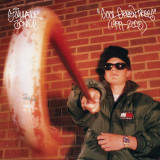
The cover photo is a picture of Sam standing on his back porch in the latter part of 1998, just before he got his first sampler. He was 13 years old, in 8th grade. His dad took the picture with his 35mm film camera: "I actually wanted to be pointing my dad's .22 pistol at the camera lens but he wouldn't let me. He gave me an old walking cane to use instead. The Tommy Hilfiger puffer jacket came from the lost and found at William Fleming High School where my mom worked as a secretary. I was thrilled when she brought it home because we never spent money on expensive name brand clothing like that - we were for the most part strictly a sale rack, bargain bin, thrift store, yard sale, flea market kind of family when it came to clothes. My watch is some cheap off-brand fake gold department store watch." Mastering for this vinyl edition was overseen by Be With regular Simon Francis and it was cut by the esteemed Cicely Balston at Abbey Road Studios to be pressed in the Netherlands by Record Industry.
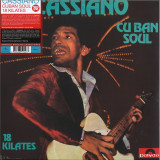
"Cuban Soul-18 Kilates" is Cassiano's third studio album, released in 1976, and stands as a milestone in Brazilian soul music. It combines Brazilian rhythms with classic American soul elements, creating a unique fusion. Cassiano's smooth, soulful vocal style and the album’s larger-than-life arrangements, reminiscent of Tim Maia's sound, give it a rich, deep feel.
The standout track, ‘Onda,’ is a relaxing anthem evoking beach vibes that has become a DJ’s favorite in recent years and also made it into several compilations. "Cuban Soul-18 Kilates" has earned cult status over the years, securing its place as one of the most coveted Brazilian records of all time. Remastered from the original tapes and pressed on 180g vinyl. This release is part of a new reissue series that will include many other outstanding Brazilian classics like Evinha “Cartão Postal” or Gerson King Combo.
"Cuban Soul-18 Kilates" is Cassiano's third studio album, released in 1976, and stands as a milestone in Brazilian soul music. Influenced by artists like Otis Redding, Eddie Kendricks, Stevie Wonder, and others, it combines Brazilian rhythms with classic American soul elements, creating a unique fusion. The album features 9 tracks, with ‘A Lua e Eu’ becoming a major commercial hit and the theme song for the soap opera “O Grito”. Cassiano's smooth, soulful vocal style and the album’s larger-than-life arrangements, reminiscent of Tim Maia's sound, give it a rich, deep feel. The standout track, ‘Onda,’ is a relaxing anthem evoking beach vibes, with its captivating bassline, subtle percussion, and natural sounds of the sea, making it perfect for moments of relaxation. This song, along with the album’s other tracks, showcases Cassiano's mastery of Brazilian soul, making “Cuban Soul-18 Kilates” a definitive and cherished record in the genre. This album has earned cult status over the years, securing its place as one of the most coveted Brazilian records of all time. Once incredibly rare and expensive, it's now at the top of every serious collector's wishlist. After not being available outside of Brazil for years, it’s finally been reissued – don’t miss your chance to own this legendary piece of music history.
Reissue of Don Cherry's 'Relativity Suite', recorded with the Jazz Composer's Orchestra in 1973. At this time, Cherry was becoming increasingly interested in Middle Eastern and traditional African and Indian music, having traveled extensively and studied with Indian musician Vasant Rai. This suite of songs was particularly influenced by the Indian karnatic singing tradition, as can be heard from the very opening moments of the album. Featuring Carla Bley on piano, Charlie Haden on bass, and Ed Blackwell on drums, as well as an extended horn and string section.
- A1: The Town
- A2: Kick Off
- A3: Blue
- A4: Underground
- B1: Lost
- B2: Two Sips
Stirring, snaking riffs, set closer to Josh Homme’s sun-bleached Joshua Tree compound, than the English Channel-lashed grin-and-bear-it character of Cleethorpes, sound the return of Lincolnshire teen-trio, Revivalry as they get set for 2025. Rushing and rattling into 2025, targeting fresh terrain as last year’s land grab of main stage festival and support slots becomes yesterday’s news, most recent single "Lost"'s three-and-a-half minutes of abandon pushes at the door of another sunny season of big shows and wild memories. School was out in 2024 as the teenagers took off from their hometown to first tackle the festival fields of Kendal Calling last summer, becoming the youngest ever band to play the Main Stage, having been hand-picked by bookers who spotted them mid-flow at one of their earliest shows. With trailblazing single, The Town, accompanying them on their way as thousands of new music-hungry gig goers caught the band on stages of increasing scale, their online listeners kept pace. Touring from sweaty venues to major outdoor support slots, their impressive run included a first, major Manchester headline, playing at Deaf Institute as the year met it’s festive close. Delving into record collections and distinct individual tastes, the three members of Revivalry refer with comfort to Rage Against The Machine and Bring Me The Horizon, as easily as fellow documentarians of youth, Arctic Monkeys or Supergrass, when discussing their beyond-years writing.
Dummy is a rock band from Los Angeles comprised of Alex Ewell, Emma Maatman, Nathan O'Dell, and Joe Trainor. Their debut full-length "Mandatory Enjoyment" (Trouble in Mind) arrived in late 2021, becoming one of the year 's sleeper hits and garnering praise from Pitchfork, Stereogum, and more. Coming out of lockdown, the band spent two years touring in support of the record, and it is this transformational experience that pulses through "Free Energy ", the exhilarating follow-up to "Mandatory Enjoyment". A creatively restless band, Dummy (Ewell: drums, synths, bass; Maatman: vocals, synths, organ; O'Dell: vocals, guitar, organ; Trainor: guitar, bass, synths) wanted to get harder, dancier, more psychedelic for their next record. This meant applying explorative potentials of electronic textures to the elemental qualities of rock i.e. more vocal loops, sampling, more crazy rhythms, and playful synths - but make those samples of Trainor 's guitar, let Maatman sing bolder, experiment with using cold mechanical elements in warm and sparkly ways, and lean harder into traditional-yet-still-awesome forms of rock guitar experimentation like feedbackThe result is a record that celebrates music's ability to move the body, whether that be through a teeth-rattling wall of MBV-esque noise, a sticky pop chorus, or a joyous drum machine_or, if you're Dummy, maybe all of them in the same song. Pop music has always been a big part of Dummy's sound and it manifests in different ways all over Free Energy: the bubbly synth sequence made with a Korg EM1 popping all over "Nullspace," the revved-up drone-pop inspired by second and third wave Dunedin Sound bands like Look Blue Go Purple and Dadamah, and the motorik beat powering "Nine Clean Nails," perhaps the most confidently pop song Dummy has ever recorded and one that exemplifies "Free Energy "'s balancing of live performance intensity with electronic augmentations, the dancier rhythmic elements created out of a drum loop recorded by Ewell while the bridge recalls the Feelies with call-and-response guitars from O'Dell and expressive vocals from Maatman. "Free Energy " also features guest appearances from Oakland-based saxophonist and electroacoustic artist Cole Pulice (Moon Glyph) contributes saxophone and wind synths and Jen Powers of Powers / Rolin Duo (Astral Editions, Feeding Tube Records).
- Shiva Interfere (9:10)
- Ion Storm (4:20)
- Magic (1:35)
- Regno Potiri (10:20)
- Carpet Bombing (2:25)
- Final Conquest (5:59)
- Logic (1:01)
- Sonar Bliss (7:39)
- Completion (6:32)
- Outro (1:30)
To fans of black metal, Dødheimsgard need no introduction, being one of the great purveyors of the Norwegian Black Metal creative evolution.
The band was formed in 1994 by Aldrahn (Thorns) and Vicotnik (Ved Buens Ende). The early incarnation was that of a raw and at often melodic black metal band, with their debut album also featuring Fenriz of Darkthrone on bass. In recent years, Dodheimsgard has become known for its eclectic musical ventures and poignant mood shifts, with a less chaotic, more considered approach compared to their earliest works. Following the 'Kronet til Konge' and 'Monumental Possession' opuses, there was a shift in direction as demonstrated on 1998's 'Satanic Art' EP and by Dødheimsgard's third album, 666 International, Vicotnik had taken over a lot of the writing duties, with DHG's style becoming more technical yet ferocious black metal, with strong experimental ideas and industrial elements.
Vicotnik's riffs were inspired by cult bands such as Thorns and perfectly entwined with Aldrahn's delightfully twisted lyrics and immense vocals to create something truly unique. In its 666 International incarnation, DHG (as they were later to be known) featured a line- up of well- respected Norwegian musicians including Czral (Aura Noir, Ved Buens Ends, Virus), Apollyon (Aura Noir, Immortal), plus Mr Magic Logic (Fleurety) on keyboards, as the album was constructed over a period of time. All in all, 666 International is rightly regarded as a highly influential masterpiece of avant-garde metal by many since its release in 1999.
This is certainly both a mysterious one and an elusive one! Who were Grupo Natureza (Nature Group), and why is this release such a rarity? ‘Pode Acreditar’ was pressed on Som Livre Records in 1981 and it is believed very few copies were released into the commercial market. Those familiar with the productions of Lincoln Olivetti and Robson Jorge will no doubt recognise their hallmark sound here and that this single is ‘probably’ the work of the pair or one member at least. They were a regular in-house production team at Som Livre at the time, and there is a definite resemblance to Adriana’s song ‘Sei la Amor’ from 1978 which Lincoln Olivetti was involved in. Very little information is available about this release. A tantalising comment by Brazilian collector ‘bargainvinyl1’ on the original release’s Discogs page suggests ‘Pode Acreditar’ was a reaction to the Baby Consuelo and Pepeu Gomes pro-marijuana song ‘O Mal o Que Sai da Boca do Homem’, which caused controversy with Brazil’s governing military dictatorship at the time. Though condemning marijuana’s use, the word “baseado” (joint) is mentioned in the song, and this could be the reason behind the release being pulled by the heads of Som Livre and consequently it becoming one of the rarest releases on the label. Whilst its backstory is not crystal clear, it is an undeniable sun drenched, laidback boogie groove with AOR touches by the clandestine group. Pure 80s Riovibes, super-catchy and an earworm that sticks with you throughout the day.
- Next installment in BRAZIL45 Series.
- One of the rarest releases on the Som Livre label.
- Pure 80s laid back boogie grooves.
Amara Soul – The New Voice of Soul
Born and raised in the heart of London, 25-year-old Amara Soul is quickly becoming one of the
most exciting new voices in the soul music scene. With a voice that blends raw emotion, rich
melodies, and a modern twist on classic jazz, she has captured the attention of Londoners
audience.
Amara’s journey to notoriety began at an early age, inspired by legendary artists such as Aretha
Franklin, Lauryn Hill, and Amy Winehouse. Her deep, expressive vocals and heartfelt songwriting
set her apart, making her a standout contestant in some of the most renowned pub stages in her
hometown. Her performances on these platforms not only showcased her vocal prowess but also
her ability to connect with listeners on a profound level.
Following her local success, Amara has been making waves in the music industry, performing at
major venues and collaborating with top producers. With a debut album on the horizon, she is
poised to bring a fresh yet timeless energy to the soul music scene.
Authentic, passionate, and undeniably talented, Amara Soul is more than just an emerging artist—
she is the future of soul!