Getting ready, putting on your best gear, pre-playing with your crew to get a nice buzz before you hit the club. Dancing and watching people get down on the dancefloor, the nerds in the back leaning against the wall nodding their heads. Going to the afterhours, wastedly making new friends, making out with a cute stranger and passing out on someone's couch. This record is about all that.
Search:bell
Much anticipated, the band's first full length release sees the four- piece surf a swirling wave of reverb-drenched organ, garage-rock guitars, hypno-motorik bass and pounding, ritualistic drums. Preferring to work in a village hall deep in the wilds of the east British countryside, JTV recorded live to an old 8 track machine with The Wytches' Kristian Bell.In 2020 the band released their third EP slice of
off- piste cosmic- beach psych before calling in top remixers ncluding UNKLE, Gabe Gurnsey, and James Welsh for a 2021 Record Store Exclusive around a headline UK tour culminating in a triumphant homecoming London show at The Lexington and playing with friends Snapped Ankles. EP III had followed two previous critically acclaimed and quickly sold out EPs supported heavily by key
alternative tastemakers from Marc Riley & Steve Lamacq at BBC 6Music to the likes of So Young, NME, and Clash.
Numbered limited pressing of The Craps Game from Double Dee and Steinski! 300 Green colored vinyl!
Our latest is now available on VINYL! Yes friends, Double Dee and Steinski return to vinyl -The Craps Game is now here on limited edition vinyl from new label Slamboyant!
The pressing is a short one, 300 numbered records, in jacket matching green vinyl! And also included is a brand new bumper sticker! Announce to the world your appreciation of our great works while performing double duty hiding those unsightly scratches and graffiti on your car (or home).
In addition to The Craps Game, and Stone Cold Crazy from ADA, is a brand new track “Let the Twenty Ride”, riffing on a bite in The Craps Game. It’s a loving tribute to JB, The Godfather, and c
The Ricardo Villalobos / Samuel Rohrer partnership has yielded increasingly interesting results over the past few years, with the former’s remixes of the latter’s trio Ambiq being supplemented by further reinterpretations of Rohrer’s solo work and live meetings at select events like Berlin’s Funkhaus and Radialsystem V. As should be the case with any strong collaboration, this partnership has been based on mutual challenge rather than compromise,
seeing each participant shuttle key technical and emotive aspects of the other’s work to previously unexpected places.
Those who have been closely following this relationship will notice a definite sense of continuity between previous outings and the new collaborative release entitled MICROGESTURES. As with those earlier Villalobos / Rohrer pairings, these four new pieces are defined by a special quality of being many things that once: that is to say, depending on the listener’s own level of focus, these can feel very tightly constructed and disciplined, or playful and freely wandering. That the tracks are equally engaging regardless of one’s chosen listening “mode” is a testament to the level of thought put into them; you could almost imagining the creators poring over some elaborate sketched set of architectural blueprints rather than coolly monitoring the usual multi-track editing software.
Altogether the music here is firmly a-melodic and percussive, but within these deliberate limitations there is still a greater variety of individual sounds than most would bother with. Each track is its own observatory of microgestures clustering together into a dense communicative fog or a sort of robotic sound swarm. Yet while all
these tracks are variations on that theme, each one has its own character and, consequently, its own rewards in terms of the exact sectors of the imagination that it activates.
Take for example “Cochlea” and its twin “Helix,” on which the magnetizing, busy layers of percussion are tempered with mischievously disruptive blossomings of digital noise, as well as sampled radio communications (which again bring us back to the idea of listeners’ attentiveness changing the meaning of this music - these
curious transmissions can either be taken as a purely aesthetic element or as something to be actively decoded).
Club-oriented elements are also not absent from this suite, particularly on “Incus” with its traditional sequenced baseline, crisp synthetic trap and hats, and dizzily sliding set of bell-like tones laid on top.?
Yet this track, too, is powered as much by its restless desire to deviate as by its rhythmic consistency: throughout the eleven-minute running time, a mass of ambiguous and restless machine sounds build a parallel narrative, and will maybe prompt the occasional glance over the shoulder as they seem to be taking on their own life. “Lobule” rounds out the program with the most rhythmically eventful sound set off the five.
What this all adds up to is a confident music which builds that quality from its faith in possibilities rather than firm conclusions: it’s an inspiring addition to both the musical landscape and reality in general
The Hill District were a group of working musicians assembled by bassist Walter “Sonny” Hughes who following one afternoon rehearsal session together the very same evening recorded their only ever 45 outing the somewhat elusive and now sort after amongst group harmony collectors “Your Scared Of Falling In Love”. The other group members were Sonny’s brother Richard Hughes (Lead Guitar), Anthony Law (Keyboards), William M. Standard Jr (Piano), Mark Smith (Drums) and Daniel S. Lee Jr (Lead Vocals). The groups name was taken from a grouping of African American neighbourhoods in the city of Pittsburgh P.A. locally referred to as ‘The Hill’. The recording session was held under the direction of record producer and song writer James Richard Calloway (A.K.A) Rich Calloway. Calloway would go on to release “Your Scared Of Falling In Love” on his own ‘C-Way Records’ label featuring a instrumental version on the flipside. Rich Calloway hailed from Uniontown P.A. with Uniontown being known affectionately by the local black community as ‘Oniontown’ the name which Calloway adopted for his publishing company. Unfortunately for the Hill District the final mastering of their song left something be desired (a scenario we’ve now rectified with our release) and as a result local Pittsburgh Disc jockeys refused to plug their song leaving their one and only 45 outing to fade into obscurity with the group members going their own separate ways to continue their careers as session musicians with other ensembles. Producer and lyricist Rich Calloway also continued with his own C-way Productions company later composing both sides of The Cleveland Ohio group ‘The Entertains’1975 outing for Steel Town records “Love Will Turn It Around/Why Couldn’t I Believe Them”. Calloway was no stranger to Cleveland having been earlier employed by Way Out Records owner Lester Johnson to compose the lyrics to Jesse Fisher’s “Your Not Loving A Beginner”, the songs arrangement’s being originally laid down by members of the Way Out group The Soul Notes, William Bell (A.K.A Bill Spoon), John Washington and Ricki Dannison under the working title of “I’ve Been Waiting For Your Love”. Prior to the Hill’s District release Rich Calloway had penned and released a 45 single on another local Pittsburgh artist Richie Merrett. The 1973 outing You’ll Always Have Yesterday Standing By” b/w “I Gave It Up” (C-Way 103). Merritt a professional singer who performed with several groups including The Electron’s on their 1968 outing “Turn On Your Lovelight (Shock 209) recorded his first solo outing on the Nashville Deltron label “Can I Get A Rebate/It’s Never Too Late” which he later released again on his own R.A.M label followed by two early 90’s outings, the modern soul favourite’s “Where Did I Go Wrong” and “You Got Problems”. Richie still performs today doing one off shows in between his solo performances aboard 7 Day Cruise ships travelling between Los Angeles and Sant Cabos, Mexico. “You’ll Always Have Yesterday Standing By” was later produced by Walt Maddox under the shortened title of “Yesterday’s Standing By” on his own group ‘These Gents’.
Therefore Soul Junction brings you two 70’s soul/Lowrider in demanders back to back for your delectation.
Originally released by Victory Music in 1991, Tin Machine II is the second and final studio album by Tin Machine. After this album and the supporting tour, frontman David Bowie resumed his solo career.
Tin Machine II’s reputation has only increased over the years. Uncut magazine placed the album on their list of 50 Great Lost Albums (their list of great albums not currently available for purchase), calling the album “extraordinary”.
As with all Bowie albums, there are plenty of strong tracks here to make this a must have. Opening track “Baby Universal” is pure Bowie. He re-recorded this track in 1996 for his 1997 album Earthling, but the track was not released on the album. It was eventually released in 2020 on the Bowie EP Is it Any Wonder?. The first single “You Belong in Rock n’ Roll” was released ahead of the album and peaked at No. 33 in the UK. The second single “Baby Universal” achieved success on the Modern Rock chart in the USA, where it reached No. 21, and the third and last single “One Shot” became an even bigger hit, reaching No. 3.
RELEASE: 17-7-2020
• 180 GRAM AUDIOPHILE VINYL
• INSERT
• SPECIAL SPOT VARNISHED SLEEVE
• SECOND AND FINAL STUDIO ALBUM BY THE SUPERGROUP TIN MACHINE, ORIGINALLY
RELEASED IN 1991
• TIN MACHINE = DAVID BOWIE, REEVES GABRELS, TONY SALES & HUNT SALES
• LIMITED EDITION OF 5000 INDIVIDUALLY
NUMBERED COPIES ON SILVER COLOURED VINYL
SIDE A
1. Baby Universal
2. One Shot
3. You Belong In Rock N’ Roll
4. If There Is Something
5. Amlapura
6. Betty Wrong
The album’s cover (which was censored for its original USA release!) was created by Edward Bell, who had previously worked with Bowie in making artwork for Scary Monsters. The MOV cover features a spot varnish finish.
Music On Vinyl gives Tin Machine II its first vinyl re-release since the 1991 original, and it’s pressed on coloured vinyl for the very first time. The initial pressing is a limited edition of 5000 individually numbered copies on silver coloured vinyl.
- A1: The Wind Of Ages - When A Human Can Be A Human
- A2: Mamma Aiuto
- A3: Addio!
- A4: Bygone Days
- A5: A Picture In Sepia
- A6: Serbian March
- A7: Flying Boatmen
- A8: Doom - Trap Of Clouds
- A9: Porco E Bella
- A10: Fio - Seventeen
- A11: Women Of Piccolo
- A12: Friend
- A13: Partnership
- A14: Madness - Flight
- B1: To The Adriatic Sea
- B2: In Search Of The Distant Era
- B3: Love At The First Sight In The Wildness
- B4: At The End Of The Summer
- B5: Lost Spirit
- B6: Dog Fight
- B7: Porco E Bella - Ending
- B8: Le Temps Des Cerises
- B9: Sometimes Old Stories
... The Original Release of 'TJJA-10023' was on the 25th July, in 1992. Score by 'Joe Hisaishi', Album including 23 tracks. Theme song “The Time Of The Cherries” Ending song “Once In A While, Let’s Talk About The Old Days” / Vocal: Tokiko Kato. ... Committed to acoustic sound, this album was recorded by full orchestra of 70 people.
Father John Misty returns with ‘Chloë and the Next
20th Century’, his fifth album and first new material
since the release of ‘God’s Favorite Customer’ in
2018.
‘Chloë and the Next 20th Century’ was written and
recorded August through December 2020 and
features arrangements by Drew Erickson.
The album sees Tillman and producer/multiinstrumentalist Jonathan Wilson resume their longtime collaboration, as well as Dave Cerminara,
returning as engineer and mixer. Basic tracks were
recorded at Wilson’s Five Star Studios with strings,
brass and woodwinds recorded at United
Recordings in a session featuring Dan Higgins and
Wayne Bergeron, among others.
‘Chloë and the Next 20th Century’ features the
singles ‘Funny Girl’, ‘Q4’, ‘Goodbye Mr. Blue’ and
‘Kiss Me (I Loved You)’
Reissue of the Count Basie Orchestra's 1970 album 'High Voltage',
arranged by Chico O'Farrill and featuring Eddie "Lockjaw" Davis, Cecil
Payne, Joe Newman, Freddie Green and Harold Jones among others
When in January, 1970 Count Basie entered the studio with his 17-piece big band
to record 'High Voltage', he ushered in the last full decade as bandleader of his
Orchestra. The Orchestra had left its imprint on the sixties by recording with the
likes of Frank Sinatra and Ella Fitzgerald. There would be more great albums with
star vocalists in the seventies, but the band's purely instrumental works, which
had begun in 1965, would also continue. Back then Basie had engaged acclaimed
Cuban composer/arranger Chico O'Farrill to arrange the music for such concept
albums as "Basie Meets Bond" and "Basie's Beatle Bag", transforming them into
crossover gems.
On 'High Voltage' O'Farrill demonstrates his affinity to Basie's big band sound, this
time with a repertoire of standards. For this album, Basie specifically chose
pieces the band had never recorded in their more than 30-year existence. This is
saying something, since the band covers such an impressive span of jazz history,
from the beginning of the swing era to the bop-influenced bands of the 50's on
through to the present album.
The Count's new drummer Harold Jones propels Fred Fisher's "Chicago" with a
tremendous drive. The Rogers and Hart classic "Have You Met Miss Jones"
features beguilingly dense deep- register horn lines and an almost languorous
piano, and Eric Dixon's tasty flute solo spices up "The Lady Is A Tramp". With its
smoky sophistication, Eddie Lockjaw Davis' Tenor dominates "Bewitched",
whereas guest trumpeter Joe Newman's muted tongue-in-cheek solo highlights
"Day In Day Out". Of course, Basie himself also steps forward: for instance, on the
Fats Waller-like intro to "I'm Getting Sentimental Over You", and with the playful
grace notes on "If I Were A Bell"." Reminiscent of the Las Vegas shows the band
performed with Frank Sinatra, "Get Me To The Church On Time" is also a
masterful dialogue between the horn sections.
Historically informed violin player, prize-winning street musician, new age experimentalist, chamber ensemble performer and conservatoire deviant. The career of Valentina Goncharova (b. Kyiv 1953) shares parallels with those associated with the broader new music movement of the 20th century and the dissemination of home recording technologies.
Valentina’s was a youth spent immersed in the world of classical music study under soviet rule, first in Kyiv- later in Leningrad & now St. Petersburg, from the age of 16. With the supervision of professors M. Vayman and B. Gutnikov she learned concert violin and developed alternate playing styles alongside skilled pianists. A student of the Leningrad conservatoire during the years 1969 - 1983, her repertoire included music for violin and later expanded to contemporary music composition.
The improvisatory nature of free jazz and then-budding experimental rock circles also intrigued Valentina during this period in Leningrad. Departing from the rules of the conservatoire, she briefly performed in underground rock clubs alongside future members of the industrial group Pop- Mechanika (Popular Mechanics). This perpetual state of flux is central to the variety found within ‘Recordings Vol. 1’, though as opposed to any degree of uncertainty Valentina’s practice is one
in flux by way of earnest curiosity.
Pushing further into an exploration of solo electro-acoustic sounds, she took to home taping on a modified Olimp reel to reel recorder. Intrigued by the manipulability of dubbing and the fresh sounds of DIY effects chains, Goncharova developed pickups alongside her husband Igor Zubkov. Her infatuation with the music of Stockhausen, Xenakis, Ganelin Trio and Pierre Boulez channels through considerations of space and erratic sound design, the 3 movements of ‘Metamorphoses’ embodying this textural approach to musique concrete.
The compositional skills developed in Leningrad unfold in the romantic gestures of ‘Higher Frequencies’, whilst manipulated cello combines with synthesise keys across ‘Passageway To Eternity’.
The slow, pulsating drone soundscapes recall the likes of Robert Rutman’s US Steel Cello Ensemble or even deep listening pioneer Pauline Oliveros.
The juxtaposition of written notation and improvisatory flare is central to Goncharova’s sound world. This period of home recording documents a confluence of minimalism, free form and flirtations
with new age tropes (inc. bell chimes and cavernous vocal mantras).
Experimenting with unusual performance techniques, such as shouting into amplified cello strings, Valentina’s home studio functioned as a place to foster full artistic and creative freedom
away from any academic strictures.
Relocating to Estonia in 1984, and in parallel to the deeply personal music of ‘Recordings Vol. 1’, Valentina performed at jazz festivals and gave classical concerts across Eastern Europe. In a sense, the recordings on these discs offer only a glimpse into her lifelong body of work. Over the past few decades she has taught at Tallinn Music College, expanded and updated post- Soviet popular music repertoire, collaborated with the Russian Philharmonic Society of Estonia and given concerts and charity events alongside the Catholic Church.
Hers is a life dedicated to the exploration of sound, a career forged through careful study and ceaseless intrigue. In a time where technological interconnectedness has allowed for music of the pas
to be continually mined and evaluated through new lenses, Shukai present an artist whose tendency for private home-taping had allowed recordings to go unheard for thirty years.
- A1: Die Folterkammer Des Dr Sex (The Torture Chamber Of Dr. Sex)
- A2: Crime And Horror
- A3: Der Feuerdrachen Von Hongkong (The Firedragon Of Hongkong)
- A4: Mord Im Ohio Express (Murder In The Ohio Express)
- A5: Tanz Der Vampire (Dance Of The Vampires)
- A6: Hallo, Mister Hitchcock
- B1: Der Henker Von Dartmoore (The Executioner Of Dartmoore)
- B2: Ende Eines Killers (Killer’s End)
- B3: Die Wasserleiche (The Soaked Body)
- B4: Eine Handvoll Nitro (A Handful Of Nitro)
- B5: Dr Caligaris Gruselkabinett (Dr
- B6: Caligaris Creeps-Cabinet) Frankenstein Grüßt Alpha 7 (Frankenstein Greets Alpha 7)
Finders Keepers present this uber-rare soundtrack to a
film that never existed, performed by an imaginary pop
group. Incredible Polanski-inspired German hip-hop
psychsploitation beats from 1969.
This is the movie soundtrack to a film that never existed.
This is the movie soundtrack by the band that was never
requested. These were the sound library musicians who
had to invent their own clients and imaginary cast, crew
and plot to get their music heard, by a niche audience,
before floating deep into the depths of the rare record
reservoir gasping for breath.
To take a cinematic cue the record in question is the
Eurotrash pop equivalent of Jean Renoir’s
tragic/triumphant Boudu character who as a homeless,
confused and desolate down-and-out plunged to the
depths to be unwillingly rescued, resuscitated then after
gradually winning the hearts of an entire family becomes
respected and revered as royalty. Over twenty years after
the mad scientists, Dr. Horst and Ackermann, first
breathed life into this short-lived beast, brave and intrepid
vinyl explorers have sporadically returned to the doors of
Dracula’s Music Cabinet to resurrect the sonic spooks and
mutated melodies to share with nerds, mods, rockers, hiphoppers, psych nuts and Krautsiders alike. The lifeless
corpses of The Vampires Of Dartmoore that lay six feet
beneath the belly of the Eins Deutschmark bins has since
crept through the record collections of the aforementioned
social circles devouring continental currencies and
demanding random ransoms of €250 plus, not to mention
sweat, tears (of laughter) and a lot of blood.
Revamped, remastered, and re-presented! Available once
again since the initial Finders Keepers’ limited edition 2009
pressing.
Sic transit gloria mundi! Roy Bianco & Die Abbrunzati Boys, die Halbgötter des Italo-Schlagers, nehmen den Ariadnefaden beherzt in die Hände und ziehen als gemachte Vielzahl von Theseus aus der Mitte des Labyrinths. 2020 is over if you want it. Und schon bot 2021 der Gruppe ein neues Reich der Ideen. Man schöpfte tief aus den Quellen der Inspiration über das heilige Land Italien und schließlich gab es neue große Werke des Italo-Schlager-Pops. Denn auserzählt ist diese Erfolgsgeschichte zwischen Kunst, Konsum und Kritik noch lange nicht. Von Roberto zu Roy, von „Greatest Hits“ zu neuen Titeln, heißt das neue Album fast schon folgerichtig „Mille Grazie“. Denn zum 40-jährigen (gegründet wurde die Gruppe schließlich 1982)
Bandjubiläum im Jahr 2022 muss man nach so einer bewegten Zeit auch einmal ganz bescheiden hinter den Mythos treten. Sich selbstverständlich mit dem nötigen Augenzwinkern, bei der großen Mutter Musik, bei den Fans und schließlich auch bei sich selbst bedanken.
Prima Materia was a vocal improvisation ensemble, founded by Roberto Laneri in 1973. Composed entirely of vocalists with no academic training, the group developed various techniques – revolving mostly around the use of overtones – that would embody their unique sound. No instruments nor electronic manipulations were ever employed within the group's physiognomy, which was realized purely through the human voice.
La Coda Della Tigre, the group's sole album, was recorded in 1977 by Alvin Curran and released on Ananda, an artist-run label founded by Laneri, Curran and Giacinto Scelsi.
As the original liner notes state, "The music of Prima Materia may sound radically new, yet at the same time it is likely to ring some distant bell and evoke ancient emotions. This is not due to chance: indeed, the very name of the group points to a specific path, namely, the unfolding of the potential implicit in the alchemical symbol as embodying a process of transmutation of consciousness."
Prima Materia's four members (Laneri, Claudio Ricciardi, Gianni Nebbiosi and Susanne Hendricks) combine voices to create a singular, beautiful drone that is (as the group's name suggests) both impossible to define and fundamentally simple.
This first-time standalone reissue is recommended for fans of La Monte Young, Terry Riley and Disques Ocora.
Three years after Stroom TV released his debut album Modified Perspectives, Kolàr released, Loops & Pieces, a documentation of sounds he has been working on in the period 2017-2020. According to Kolàr, this tape, also his first release for Dauw, was full of vaporous drafts transforming into solid forms with the help of time and distance. Compared to his previous work, the music on Loops & Pieces is much more stripped down and minimal, yet the dreamy character remained.
On Liquid Rhythm, we see Kolàr combining approaches of both albums. Using synths and acoustic instruments, he created 10 songs reflecting his typical playful yet melancholic aesthetics.
Montparnasse Musique is a balance of two distinct sensibilities: Algerian-French producer Nadjib Ben Bella’s passion for raw organic beats, and South African DJ Aero Manyelo’s love of DIY synthesis in the digital realm. It’s a bold blend of fresh and processed flavours; the acoustic grit of traditional Africa combined with the pulse of modern Johannesburg — gqom, kwaito, techno, afrohouse. Together they produce an electro-acoustic sound, loaded with infectious hooks, uncompromising and authentic. For their self-titled debut EP, the cross-continental duo collaborates with Congolese bands Kasai Allstars, Konono Nº1, Mbongwana Star and Basokin on five audacious dance tracks forged from the tribal rhythms and mystic voices of the Kasai rainforests, amplified by the aggressive growl of hand-wrought instruments from Kinshasa’s urban wilderness, and augmented with the slick precision of an EDM toolkit. The end result is an inevitable evolution of Congotronics into a sharp-edged, club-ready sound. Nadjib Ben Bella is a DJ and producer who draws influences from the gnawa music of his North African roots and a diverse range of Sub-Saharan sounds from musicians he has worked with over the years. Most recently he has been touring Europe with West African band Les Amazones d’Afrique. Aero Manyelo, a name now synonymous with the burgeoning South African house scene, has honed a distinctive electronic sound that translates across the international club circuit and has attracted a broad range of collaborators — including Idris Elba and The Mahotella Queens on the opening track of an album inspired by the Nelson Mandela biopic Long Walk to Freedom. The EP was recorded and mixed by Kwezydoctor at Khaima Studio in Lille, France.
c 3 Bitumba (feat. Mbongwana Star) Extended
d 4 Sukuma (feat. Muambuyi) [Extended]
[Extended]
Gerald Clayton gehört zu den wichtigsten Modern-Jazz-Pianisten unserer Zeit. Auf seinem zweiten BlueNote-Album will sich der sechsfach Grammy-nominierte Musiker mit den Auswirkungen der abstrakten Kraft der Zeit auseinandersetzen.
Bei der spannenden Umsetzung in mal lyrische, mal swingende, mal treibende Jazz-Klänge unterstützen ihn niemand Geringeres als sein berühmter Mentor Charles Lloyd am Saxophon, sein Vater John Clayton am Bass, Justin Brown am Schlagzeug und erstmals MARO als Vokalist.
Zu hören sind Originale, Stücke des katalanischen Komponisten Federico Mompou und von Geralds Onkel Jeff Clayton sowie zwei atemberaubende Solo-Klavierversionen des Standards „My Ideal“
Chris Imler likes to play drums standing up. He‘s the dandy with the killer offbeat, or, as one major German newspaper once put it, the "Grand Seigneur of the Berlin Underground". He has been making his mark on countless Berlin musical affairs since long before the fall of the Wall, with The Golden Showers, Peaches, Oum Shatt, Driver &Driver, Die Türen, Jens Friebe, to name but a few. He has also been perfoming across Europe as a solo artist for the past decade.
In "Operation Schönheit" (German for "Operation Beauty"), he has recorded his most, well, beautiful album to date. But Benedikt Frey's warm production subverts its own beauty with a multitude of clanking and ingling synth sounds, making the work very much about the cosmetic surgery it performs on itself. It's all in the tradition of the more experimental and electronic side of post-punk in which Imler and his unique groove are rooted. It doesn't take insider knowledge of Berlin's post-punk underground to realise that that Imler groove consists of rhythm that sings, vocals that dance and a look that fits, as illustrated by "Disappoint Me", his latest video: https://youtu.be/YeVJ75ljjB8
Elsewhere - such as in "Movies" - the rhythm sings, less electronically reduced, into the acoustics of an old, high-ceilinged Berlin apartment; metal clatters, a zither trembles and Imler plays with the metronome. Sometimes he moves ahead of time, sometimes trails behind it. He always manages to be in his very own groove, which carries everything along. And this is precisely the essence of the Imler rhythm, which lends itself to being applied to the very rhythm of life: Stretch and compress your time and loop it according to your own groove! Optimise nothing but feel everything! And dance to it! Even when contemplating everyday information overload, as Imler's high-speed mumbling suggests in the hectic yet smooth opening track "Temperature".
But being the ultimate night owl he is, Imler manages to make even the odd bout of paranoia seem like a good thing: like some kind of krauty, groovy B-horror-soundtrack-inflected high-pressure environment, "Whip Me" is a cross between Conrad Schnitzler and Bauhaus. In the title track, whose lyrics were written together with Jens Friebe, he intones: "You want to be something greater / You break your leg / When it heals again / You break it again" and sounds like the most gleeful fatalist you can imagine. Because in his city, one can still lose oneself better than anywhere else - a night easily becomes a whole universe that can be traversed, marvelled at and played with, and one might find one's old self again only when hearing "church bells" and "small birds singing". At least that's how Imler illustrates it in "Emptiness full of stars", and it seems likely that those "stars" are the human companions of the Berlin night in question.
And so once again Imler becomes Berlin's most important cultural ambassador: that scene of the eternally, and somehow successfully, failing creatures of the night, once the envy of the international postmodern bohème, has, despite many claims to the contrary, not been completely "optimised away", and its attitude to life is perfectly summed up in Imler's groove. And, of course, his look. "Schau Hin" (German for "Look!"), he sings in the track of the same name, masterfully dubbed out with the help of Melbourne's Leo James.
Quite right! Look - and listen.
Yours, Johannes von Weizsäcker (The Chap)
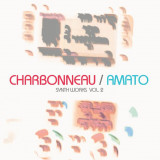
Montreal duo Mathieu Charbonneau (Avec Pas d'Casque, Organ Mood) and Pietro
Amato (Bell Orchestre, The Luyas) put melody and mood front and centre on this
second volume of luxuriant, immersive synth music. Like a humanist balm amidst
the ongoing wave of conceptronica, the pieces that comprise Synth Works Vol 2
were captured organically, live off the floor, on the eve of the pandemic. Recalling
elements of 70s kosmische and environmental musics, the collection finds the
longtime collaborators roving uncharted territory, ever mindful of their fellow
passengers.
Possessing one of the most distinctive and recognizable voices on the planet, former Men at Work frontman Colin Hay faces down struggle, loss and the existential questions about mortality on 'Now And Evermore', his first collection of new material since the 2016 release of Fierce Mercy
Written and recorded in Hay's adopted hometown of Los Angeles and at Compass Sound Studio in Nashville, the collection is a defiantly joyful celebration of life and love, one that insists on finding silver linings and reasons to smile through the challenges of recent times. That's not to say the record deludes itself about the realities of our modern world, but rather that it consistently chooses to respond to pain with beauty and doubt with wonder. The music on the new album
brims with fanciful melodies and lush orchestration. Hay's performances are likewise animated and full of life, drawing on vintage pop charm, pub rock muscle, and folk sincerity to forge a sound that's at once playful and profound, clever and compassionate, whimsical and earnest.
It begins with a rustle of noise, equally reminiscent of distorted factory noise and a cassette recording of cathedral bells unspooling, before a near-robotic beat and stuttering bassline enter the fray. Initially, you could be forgiven for thinking you’ve stumbled across the lost tapes of Joy Division’s early Warsaw incarnation, but the atonal blast of strafing guitars fading in and out soon make you realise this is a very different proposition. This is The Drin, and ‘Engines Sing for the Pale Moon’ is their debut album. It’s also one of the best things you’ll hear all year. Helmed by Dylan McCartney, drummer of the rock band Vacation, The Drin originally released this album as a hyper-limited cassette via Future Shock. It’s as much of a departure from McCartney’s usual output as it is for Drunken Sailor Records; songs don’t so much explode out of the gate as drift towards you like a creeping fog that turns your skin inside-out and leaves you sloshing organs all across the carpet. Second track ‘Guillotine Blade’ shows the pieces all coming together, a dubbed-out riot of claustrophobic noise that feels like Pere Ubu trapped in a cupboard one minute, and ‘Warm Jets’-era Eno trying on Bauhaus’ trenchcoats the next. Meanwhile, ‘Down Her Cheek A Party Tear’ unfolds across jittering, skittering rustles of drums and an undulating bassline, making you wonder why post-millennial post-punk so often settles for dickheads shouting non-sequiturs over landfill indie, when it could be entering these dark, unsettling territories instead. The Drin like to get weird. The Drin like to get wild. The Drin rarely cut loose, but that’s because the trip is already intense and haunting enough without things getting raucous in here as well. Hey kids, turn off those shite band name redacted records and get into this; you deserve so much better, and better’s right here. Fall into it, immerse yourself and step forward into a brave new world. I love this record