Charlie Hunter’s 1995 Blue Note debut Bing Bing Bing! was a groove-heavy tour-de-force that announced the arrival of a virtuosic new guitarist on the scene. Hunter’s unique concept on his 8-string guitar allowed him to lay down a bass line and play chords as well as a melodic line at the same time, producing music that was at once impressive and irrepressible. With his powerful trio featuring tenor saxophonist Dave Ellis and drummer Jay Lane plus contributions from trombonist Jeff Cressman, Ben Goldberg, pedal steel guitarist David Phillips, and percussionist Scott Roberts, Hunter delivered a 10-song set of propulsive originals including “Greasy Granny” and “Fistful of Haggis” plus an unforgettable cover of Nirvana’s “Come As You Are.” Hunter would go on to record six more excellent albums for Blue Note, and also gain notice for playing on D’Angelo’s 2000 neo-soul masterpiece Voodoo.
Cerca:ben g
Dutch multi-instrumentalist Felbm returns with the conceptual album "cycli infini" : a 38-minute composition of metamorphosing tape loops, musical patterns and instrumental sketches. Further exploring the concept is the vinyl release which features the track spread over both sides and cut to the end of each locked groove - creating an essentially never-ending piece that challenges the idea of the traditional listening process. The idea came to fruition by way of a lifelong interest and growing awareness of the cyclical nature of the world around him - be it through observing nature, or the mathematical and mind-bending works of Dutch artist MC Escher, or minimalist composers such as Erik Satie, Laraaji and Melaine Dalibert.
"The openness of Laraaji"s and Satie"s music have also been an influence to create a certain softness and feeling of comfort, as I like this piece to be a place you want to revisit", says Felbm, real name Eelco Topper. While Topper"s previous releases on Soundway Records comprised series of short, individual sketches, on cycli infini the tapestry is sewn seamlessly together using a step-like progression through the circle of fifths, which as the name suggests, brings the listener back to the musical key and soundscape at which they started. Should the full track be on repeat, it begins anew without being noticed. The piece began life with a layer of drone loops using tapes and delay pedals, over which acoustic instruments such as flute, saxophone and bass trumpet would playfully but gently interpret a melody - toying with jazz, ambient, fourth world and percussive sounds. As the music evolves through the key progression, organic elements such as birdsong and wind chimes ground the piece in nature. Says Topper: "the never-ending metamorphosis of matter has always fascinated me, the idea that nothing ever really disappears and everything has already been here... just in different shapes."
Black Truffle is pleased to welcome free jazz legend Joe McPhee back to the fold with Oblique Strategies, a wild trio recorded in Antwerp in 2018 in the company of Mette Rasmussen’s fire-breathing alto saxophone and Dennis Tyfus’s post-Fluxus antics on tape, voice, and percussion. Rasmussen and Tyfus have previously recorded together as Bazuinschal, and some similar strategies are on display here: mysterious metallic scrapes, extended tones in which voice and sax become indistinguishable, comic explosions of varispeed tape. With McPhee on board, however, proceedings are more sumptuous, with the two horns moving fluidly from expeditions into the extremes of their instruments’ registers to pointillistic note-splatter and Ayler-esque folk melodies; we even get to bask in some of the slow-motion free blues that McPhee has now been playing for half a century. McPhee is heard primarily on tenor, Rasmussen mainly on alto, but with Rasmussen doubling on sundry objects, and the whole trio contributing vocals, certainty about who is doing what becomes nigh impossible.
The recording and production add to this hazy unclarity. Where much contemporary improvised music aims at dryly clinical hi-fi, the lively reverberant space of Oblique Strategies calls to mind the less-than-pristine sonics of classic free jazz artefacts like John Tchicai’s Afrodisiaca or McPhee’s own Underground Railroad. A further dimension of oblique unpredictability is added by subtle changes in the sense of space: at times merely a reverb tail glimpsed between phrases, at other points the whole mix seems to be momentarily swallowed up in slap-back, blurring the lines between acoustic instruments and the decayed fidelity of Tyfus’ tape playback. Spread across four pieces ranging from four to nineteen minutes in length, Oblique Strategies moves with anarchic swagger from explosions of clattering cymbals and bellowing horns to near-silent episodes of mysterious rumble and clunk. ‘Death or Dinner?’ opens the record with a lovely duet of climbing melodic patterns shared between the two saxophones, played with a buzzing oboe-like tone. A long, wavering note sung by Tyfus cues the first of countless changes of direction, eventually leading to a crescendo of watery splutters and duelling saxes. At points Tyfus’ keening resemble the signature moves of his friend and collaborator, Ghédelia Tazartès; at others, his tape-sped huffs and puffs possess a rawness reminiscent of Henri Chopin or Gil Wolman. The dialogue between wailing saxophones and vocal cries, punctuated by percussive thuds and crashes, can at times feel less like a musical performance and more like the calls of some mysterious forest creatures, possessing a primordial energy that might remind some listeners of the outdoor antics of Brötzmann and Bennink’s Schwarzwaldfahrt.
Oblique Strategies can also be delicate at times, as on the beautiful third piece, ‘Destilled Edible’, dominated by a slow, microtonal melody played with a breathy tone resembling a shakuhachi. The closing side-long ‘Light My Fire’ ranges across classic improv call and response, skittering trumpet blurts, inept cymbal clatter, mock-operatic vocals, and crude tape manoeuvres. Momentarily pausing at the ten-minute mark for an interlude of ghostly room sound and crackling texture, its closing moments unfurl a glorious dual saxophone finale, the almost epic tone subtly undermined by Tyfus quietly tapping out swing rhythms. Arriving in a striking sleeve adorned with Tyfus’ drawings, Oblique Strategies is an invigoratingly free-spirited blast of improvisation.
Downloads
- A1: Introduction
- A2: Take Five
- A3: Bank Introduction
- A4: Nomad
- B1: Thank You ( Djiekuje )
- B2: Castilian Blues
- C1: Introduction
- C2: Just In Time
- C3: Small World
- C4: Make Someone Happy
- C5: Rags To Riches
- C6: One For My Baby ( And One More For The Road )
- C7: I Left My Heart In San Francisco
- D1: Lullaby Of Broadway
- D2: Chicago
- D3: That Old Black Magic
- D4: There Will Never Be Another You
A historic collaboration by two of jazz music's greatest artists on 180g Double LP Set! Impex Records' deluxe production captures the amazing outdoor acoustics with fine detail and wide dynamic range. The beautiful gatefold jacket is coated in a vintage high-gloss lacquer.
The White House Sessions, Live 1962 contains inspired performances of classic tunes "Take Five", "Castilian Blues", "Lullaby of Birdland", and "I Left My Heart In San Francisco".
"Bennett's vocals are particularly natural and present-sounding... Brubeck's group in its prime, with Paul Desmond on Alto, Eugene Wright on bass and Joe Morello on drums... Bennett/Brubeck is nonetheless a record I found myself playing more times than I expected to before sitting down to write this. There's something about a live performance from a time when life was so much simpler, even if more jittery and dangerous because of the cold war, that makes you want to go back in time and enjoy it all again."
This two LP set is beautifully re-mastered and the original artwork has been carefully replicated.
Two remarkable visionaries at the peak of their powers, Dave Brubeck and his quartet and Tony Bennett (both with his group and with Bennett with trio) give hot performances of some of their biggest hits: Brubeck's revved up "Take Five," and Tony Bennett's soulful "I Left My Heart in San Francisco."
Playing the popular White House Sessions concert on the Washington Mall for President John F. Kennedy, these titans of popular jazz have a great time informing, joking and playing the lights out. You'll want to play the grooves out of Impex's impeccably produced issue of this lost treasure. Quiet surfaces, incredible dynamics, full frequency responses and deluxe packaging will provide years of listening and viewing pleasure.
- A1: I Wanna Dance With Somebody (Who Loves Me) (Who Loves Me)
- A2: Just The Lonely Talking Again
- A3: Love Will Save The Day
- A4: Didn't We Almost Have It All
- A5: So Emotional
- B1: Where You Are
- B2: Love Is A Contact Sport
- B3: You're Still My Man
- B4: For The Love Of You
- B5: Where Do Broken Hearts Go
- B6: I Know Him So Well
Whitney did more than turn Whitney Houston into a pioneering sensation known around the world by her first name. Originally released in June 1987, the singer's blockbuster sophomore record became the first album by a female artist to debut at No. 1 on the Billboard 200 chart — a position it claimed for a total of 11 weeks en route to selling more than 10 million copies in the U.S. The Diamond platinum effort also contains four No. 1 Hot 100 hits that, when combined with the three chart toppers from her 1985 debut, gave her seven consecutive No. 1 singles — an accomplishment that no other artist has accomplished. Commercially and creatively, Whitney stands on hallowed ground — especially now that the record plays with a sound that puts into perspective just how extraordinary, engaging, and vital Houston's music remains.
Mastered from the original master tapes and pressed on MoFi SuperVinyl at RTI, Mobile Fidelity's 180g 33RPM SuperVinyl LP of Whitney invites listeners to experience the Rock & Roll Hall of Fame inductee's pivotal album in audiophile quality for the very first time. Free of the dynamic limitations and tonal flatness prevalent on prior vinyl and CD pressings, it lets the music breathe and reveals the copious detail, nuance, and texture within the immaculately produced songs. MoFi's SuperVinyl profile offers further advantages in the forms of a nearly inaudible noise floor, dead-quiet surfaces, and superb groove definition.
In addition to featuring extreme clarity and immediacy, this numbered-edition reissue does wonders for the attribute that inspired more than 20 million people around the globe to add Whitney to their record collections: that inimitable voice. Houston's trademark mezzo-soprano — an acrobatic instrument equally capable of taking off on fantastic flights and unwinding for hushed meditations — benefits from the fantastic airiness and transparency afforded by this meticulously restored edition. Whitney has never sounded or looked better. The crossover landmark deserves nothing less.
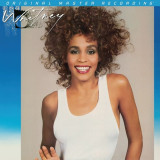
Issued just two years after Houston's breakthrough debut, Whitney immediately signalled the genre-defying singer's intent to continue to push ahead and expand her palette. Shot by photographer Richard Avedon, the album cover depicts an iconic image of Houston — captured with a gleaming smile, bright eyes, teased-out afro, toned arms, and a right hand that appears to wave a friendly hello — whose active, athletic profile stands in contrast to the extremely formal sit-down shot of her that graces her '85 record. The change is telling: Whitney overflows with unfettered joy, rhythmic vibes, and deep-seated emotions that forever endeared her to the hearts and minds of countless listeners — and which set the standard for the wave after wave of divas that followed in her footsteps.
It's no coincidence that the first track on Whitney is the declarative "I Wanna Dance with Somebody (Who Loves Me)." Like Michael Jackson's "Billie Jean" and Madonna's "Material Girl," the feel-good smash is one of the quintessential '80s gems — a lithe, melodic, celebratory release of pent-up energy and loneliness that glides across club floors, shouts to the rooftops, and shrugs off any concerns about vulnerability or embarrassment. Houston's swooping voice moves in sync with the sleek beats and dipping-and-diving synths. She practically takes her fellow musicians by their hand and leads them in a blissful dance that nobody would dare sidestep. Focusing on Houston's singing — a task made challenging only because of the impossible-to-ignore hooks and grooves — showcases the virtuosic facets of not only her register but her control, discipline, smoothness, and warmth.
That she replicates those feats for the entirety of the nearly 53-minute-long album makes Whitney that much more special. Houston reaches back and channels her childhood gospel training on the R&B-flared "So Emotional"; effortlessly slips into Quiet Storm mode on the duet with her mother, gospel great Cissy Houston, on "I Know Him So Well"; flirts with smooth jazz and collaborates with tenor saxophonist Kenny G on the lush "Just the Lonely Talking Again"; conjures dreamscapes and shadow-boxes with supple funk on a romantic cover of the Isley Brothers' "For the Love of You"; and, for the majestic power ballad "Didn't We Almost Have It All," displays the sky-scraping reach of her vocals amid a grand arrangement made even bigger by Houston's sweeping performance and triumphant finish.
Houston's once-in-a-generation talents weren't lost on the adoring public, radio deejays, or industry experts. In addition to harbouring four No. 1 hits and receiving nominations for four Grammy Awards, Whitney generated another Top 10 success in the guise of the Afro-Cuban-leaning "Love Will Save the Day." The album also netted Houston four American Music Awards; two Billboard Music Awards; back-to-back People's Choice Awards; a Soul Train Award; and various other accolades. It all makes the crux of the Washington Post's July '87 review of the album appear prophetic: "Her voice sounds stronger still and the songs are varied but so consistent she could garner 10 Top 10s out of a field of 11."
That claim still holds true. A brilliant fusion of pop, R&B, smooth jazz, and soul, Whitney is a showstopper – and one of the key reasons Houston is the most-awarded female artist of all time.
Die Düsseldorfer Frauen-Punkband Östro 430 wurde Ende 1979 gegründet. Östro 430 spielte erstmals im Mai 1980 auf dem Festival des Punkfanzines SCHMIER in Neuss, wo sie von der Band Fehlfarben entdeckt und als Vorgruppe für deren Deutschland-Tournee engagiert wurden. Auf einem dieser Konzerte war auch Lothar Rieger, der das Schallmauer-Label gründete und im Herbst 1980 drei Songs auf dem Schallmauer-Sampler veröffentlichte. 1981 folgte dann die erste EP Durch dick & dünn mit insgesamt 8 Songs, darunter u.a. ihr wohl bekanntester Titel Sexueller Notstand. Überhaupt waren Sex, überholte Ansichten (besonders gegen Frauen) und Spießigkeit oft vertretene Themen in den Songs von Östro 430. Auffällig war auch die Instrumentierung, die aus Gesang, Bass, Schlagzeug, E-Piano und Saxophon bestand - E-Gitarren hingegen wurden gänzlich vernachlässigt bzw. einfach nicht benötigt. Im Frühjahr 1983 erschien das erste "richtige" Album "Weiber wie wir", weitere Veröffentlichungen kamen jedoch nicht mehr zustande. Im Mai 1984 gab Östro 430 noch ein Abschiedskonzert in Düsseldorf und löste sich auf.
Seine Stärke ist ein Songwriting das musikalisch wie poetisch kratzt und schabt: am amerikanischen Traum, an dessen Wirklichkeit und den Menschen die ihn bevölkern. Immer wieder wurde seine spröde Musik und einfühlsamen Texte mit denen von Leonard Cohen, Lou Reed und Bob Dylan verglichen und somit Gewicht verliehen. Zu großer Bekanntheit führte das nicht, Simon Joyner bleibt ein outsider mit seinem Loner-folk, aber für die, die ihn entdecken bietet er ein Kraft von rauher Schönheit. Conor Obers von Bright Eyes nennt Joyner, der seit 1990 seine dunklen Americana Songs veröffentlicht, einen entscheidenden Einfluß. Simon Joyner's neuestes Album gerät noch dunkler und eindringlicher. Sein Thema hier ist Isolation, und er übernimmt es gleich auch als Grundlage für seine Produktion Ihm war es wichtig, dass die beteiligten Musiker allesamt alleine waren um ihre jeweiligen Parts zu finden. Die Abgeschiedenheit der einzelnen Musiker auf Songs From A Stolen Guitar bietet somit weniger Spontaneität vieler früherer Arbeiten von Joyner, führt aber zu einer Art Silberstreifeneffekt: Joyners Songs, die hier sorgfältiger und vielleicht absichtsvoller produziert wurden als auf jedem seiner früheren Alben, kommen viel klarer durch und stellen sowohl seine schillernden Wortspiele als auch seine klare Vision in den Vordergrund. Ein Kritiker bringt einen Vergleich zu Neil Young und meinte "Wenn (sein 2012 Album) 'Ghosts' sein 'Tonight's the Night' war - zornig, nackt und bodenlos - dann könnte sich 'Songs From A Stolen Guitar' als sein Harvest erweisen." Songs From A Stolen Guitar wurde in verschiedenen Städten aufgenommen. Joyner nahm seinen Gesang und seine Gitarre live in Omaha auf; Bassist Wil Hendrix fügte seine Parts zu Hause in San Francisco hinzu, Michael Krassner nahm seine Gitarren- und Klavier-Overdubs zu Hause in Phoenix auf, und Schlagzeuger/Percussionist Ryan Jewell nahm in Colorado auf. Dieser musikalische Kettenbrief machte sich dann auf den Weg zurück nach Omaha, wo David Nance (Gitarren und Backing Vocals), Ben Brodin (Orgel und Vibraphon) und Megan Siebe (Bratsche und Backing Vocals) - getrennt voneinander - ihre jeweiligen Beiträge einspielten. Dieses Vorgehen zahlt sich aus. Die "virtuelle" Band spielt eine unterstützende, aber komplementäre Rolle und erzeugt immer das richtige Maß an Spannung, um diese emotionsgeladenen Geschichten zu begleiten und zu umhüllen. Das Zusammenspiel ist einfühlsam und kohärent, auch wenn es aus geografischer Entfernung und Abgeschiedenheit zusammengefügt wurde und oft wie Musik klingt, die durch den Nebel eines Herbstmorgens gefiltert wurde. Doch wenn es um Simon Joyner-Platten geht, zahlt man sein Ticket, um großartige Songs zu hören, und auch in dieser Kategorie enttäuscht Songs From A Stolen Guitar nicht. Eins der seltenen Alben, das nach dem klingt, worum es geht: die Kluft zwischen Einsamkeit und Alleinsein, die Grenzen zwischen Liebe und Hingabe, der Unterschied zwischen dem Tornado und dem, was er hinterlässt.
Translucent Dark Red & Black Marbled Colored Vinyl. Seine Stärke ist ein Songwriting das musikalisch wie poetisch kratzt und schabt: am amerikanischen Traum, an dessen Wirklichkeit und den Menschen die ihn bevölkern. Immer wieder wurde seine spröde Musik und einfühlsamen Texte mit denen von Leonard Cohen, Lou Reed und Bob Dylan verglichen und somit Gewicht verliehen. Zu großer Bekanntheit führte das nicht, Simon Joyner bleibt ein outsider mit seinem Loner-folk, aber für die, die ihn entdecken bietet er ein Kraft von rauher Schönheit. Conor Obers von Bright Eyes nennt Joyner, der seit 1990 seine dunklen Americana Songs veröffentlicht, einen entscheidenden Einfluß. Simon Joyner's neuestes Album gerät noch dunkler und eindringlicher. Sein Thema hier ist Isolation, und er übernimmt es gleich auch als Grundlage für seine Produktion. Ihm war es wichtig, dass die beteiligten Musiker allesamt alleine waren um ihre jeweiligen Parts zu finden. Die Abgeschiedenheit der einzelnen Musiker auf Songs From A Stolen Guitar bietet somit weniger Spontaneität vieler früherer Arbeiten von Joyner, führt aber zu einer Art Silberstreifeneffekt: Joyners Songs, die hier sorgfältiger und vielleicht absichtsvoller produziert wurden als auf jedem seiner früheren Alben, kommen viel klarer durch und stellen sowohl seine schillernden Wortspiele als auch seine klare Vision in den Vordergrund. Ein Kritiker bringt einen Vergleich zu Neil Young und meinte "Wenn (sein 2012 Album) 'Ghosts' sein 'Tonight's the Night' war - zornig, nackt und bodenlos - dann könnte sich 'Songs From A Stolen Guitar' als sein Harvest erweisen." Songs From A Stolen Guitar wurde in verschiedenen Städten aufgenommen. Joyner nahm seinen Gesang und seine Gitarre live in Omaha auf; Bassist Wil Hendrix fügte seine Parts zu Hause in San Francisco hinzu, Michael Krassner nahm seine Gitarren- und Klavier-Overdubs zu Hause in Phoenix auf, und Schlagzeuger/Percussionist Ryan Jewell nahm in Colorado auf. Dieser musikalische Kettenbrief machte sich dann auf den Weg zurück nach Omaha, wo David Nance (Gitarren und Backing Vocals), Ben Brodin (Orgel und Vibraphon) und Megan Siebe (Bratsche und Backing Vocals) - getrennt voneinander - ihre jeweiligen Beiträge einspielten. Dieses Vorgehen zahlt sich aus. Die "virtuelle" Band spielt eine unterstützende, aber komplementäre Rolle und erzeugt immer das richtige Maß an Spannung, um diese emotionsgeladenen Geschichten zu begleiten und zu umhüllen. Das Zusammenspiel ist einfühlsam und kohärent, auch wenn es aus geografischer Entfernung und Abgeschiedenheit zusammengefügt wurde und oft wie Musik klingt, die durch den Nebel eines Herbstmorgens gefiltert wurde. Doch wenn es um Simon Joyner-Platten geht, zahlt man sein Ticket, um großartige Songs zu hören, und auch in dieser Kategorie enttäuscht Songs From A Stolen Guitar nicht. Eins der seltenen Alben, das nach dem klingt, worum es geht: die Kluft zwischen Einsamkeit und Alleinsein, die Grenzen zwischen Liebe und Hingabe, der Unterschied zwischen dem Tornado und dem, was er hinterlässt.
Miles Davis created just one studio album with his original sextet: Milestones. And he made every moment count. Pairing with Cannonball Adderley, John Coltrane, Red Garland, Paul Chambers, and Philly Joe Jones, Davis not only laid the groundwork for the modalism that immediately followed but tailored a genuine modern-jazz masterwork laden with performances among the most explosive of his distinguished career. Sandwiched between the more famous 'Round About Midnight and the epochal Kind of Blue, Milestones remains a seminal work of art.
Sourced from the original master tapes and pressed on dead-quiet SuperVinyl, Mobile Fidelity's numbered-edition 180g LP grants each musician their own space amid broad soundstages. Afforded the benefits of a nearly non-existent noise floor and supreme groove definition, this vinyl reissue doubles as a time machine back to the February-March 1958 recording sessions.
Colors, shapes, and dimensions appear in the manner that resembles what you'd glean from behind a studio control room's window. Davis' burnished trumpet is rendered in three-dimensional perspective and seemingly coaxes the band to play with unburdened zest. Coltrane's trademark saxophone teems with lifelike tonality and images with specificity; his solos work in tandem with and against the driving rhythms. Garland's swaggering piano lines? Visualize the keys as he hits full stride, the chords and fills slithering around skeletal frameworks.
Inducted into the Grammy Hall of Fame and selected as a "Core Collection" record by the Penguin Guide to Jazz, Milestones is as famous for its title track – widely considered ground zero for modalism and bolstered by Jones' hallmark "Philly Lick" rim shot – as the players that produced it. The launching pad for many of Davis' improvisational flights, the album teases the explorations Coltrane would soon chase. Davis' own solo work broaches territories that far exceed what he had done in his bop-rooted past. Every song is a highlight.
Take the bravado "Dr. Jackle," featuring a hot-foot pace and bebop strains, or "Sid's Ahead," which continues the album's blues theme while juggling edgy harmonics and inside-out structures. On "Billy Boy," distinguished with an arco bass solo from Chambers, Garland gets a turn in the spotlight and channels the openness practised by one of his heroes, Ahmad Jamal. Even more instructive is the band's reading of Dizzy Gillespie's "Two Bass Hit." Three years removed from the version Davis and company recorded for the trumpeter's Columbia debut, this interpretation demonstrates the extent to which the group had jelled in a relatively short amount of time.
Then there's "Straight, No Chaser," the definitive rendition of Thelonious Monk's signature piece. Coltrane's marbled playing pulls at the tune's borders, Adderley takes liberty with solos, and Davis dances around his mates, at one point quoting "When the Saints Go Marching In" while demonstrating his knowledge of tradition and casting an eye towards the future.
About that future. Garland already had one foot out the door during the Milestones sessions to the extent Davis spells him on "Sid's Ahead." Jones would stick around for a bit longer but soon plot his exit. History proves Davis navigated the changes with visionary aplomb. Yet the chemistry, excitement, and beauty the sextet achieves on Milestones cannot be overstated. This reissue helps put the album in proper perspective – and presents the music the fidelity it deserves.
"Happy Hour in Dub" ist ein himmlisches Set von Dub-Versionen, basierend auf Hollie Cooks von der Kritik gefeiertem 2022er Album "Happy Hour", und ihr erstes komplettes Dub-Album seit 2012. "Happy Hour in Dub" wurde durch das genaue Anhören des modernen Lovers Rock des Originalalbums ins Leben gerufen. Cook und Mckone erklären: "Der Grund und die Inspiration für die Dub-Platte ist, dass "Happy Hour" in seiner ursprünglichen Form so viele komplizierte musikalische Feinheiten hat, die sich durch die Songs ziehen - von den Hintergrundgesang- und Streicherarrangements bis hin zu einigen viel subtileren Details. Und als wir beim Abmischen einige dieser Parts alleinstehend über dem Schlagzeug- und Bassfundament hörten, hatten wir das Gefühl, dass es noch so viel zu erforschen und freizulegen gab..." An den Reglern sitzt neben Hollie der Produzent von Happy Hour, Ben Mckone, der ihre gefühlvollen Kreationen bis an ihre klanglichen Grenzen ausreizt, dazu kommen neue Gesangseinlagen von Josh Skints und Kiko Bun.
- 1: History (Extended Version) 03:37
- 2: Then You Run 01:7
- 3: The Pool 01:0
- 4: Daydream 01:56
- 5: Stink's Dream 01:41
- 6: Uncle Reagan 01:17
- 7: Teamwork 01:45
- 8: Stand Off 01:31
- 9: A Great Artist Knows When To Stop 02:01
- 10: For Mirko 01:25
- 11: Herd 02:57
- 12: Two Minds 04:09
- 13: Closer 02:15
- 14: Fingertip 01:25
- 15: The Hotel 03:55
- 16: I Know Him 01:51
- 17: Death Drive 02:12
- 18: In The Blood 02:02
- 19: Summer's Not Over 03:31
GAZELLE TWIN - aka composer, producer, singer, and visual artist Elizabeth Bernholz - has scored Sky's brand new TV series "Then You Run".
Created for television by Ben Chanan (The Capture), based on the novel YOU by Zoran Drvenkar, Then You Run follows four rebellious London teenagers on a city getaway to Rotterdam. This contemporary eight-part series boasts an incredible cast of rising stars; Leah McNamara (Normal People) as Tara, Vivian Oparah (Rye Lane) as Stink, Yasmin Monet Prince (Hanna) as Ruth and newcomer Isidora Fairhurst as Nessi.
The four friends embark on what should have been the perfect summer break which soon spirals into a dark and perilous adventure. When their attempt to take on some of the most dangerous people in Europe doesn’t quite go to plan, they find themselves on the run with three kilos of heroin, more questions than answers about Tara’s family, and a gang of deadly criminals tracking their every move.
Invada Records have previously released two recent Gazelle Twin scores (2020’s Nocturne and 2021’s The Power).
Her 2018 acclaimed album Pastoral was described by Pitchfork as “...belonging to a proud tradition of English satire, plumbing the depths of the nation’s psyche and twisting it to wryly discomforting ends”.
No shortage of colorful characters emerged from Cameroon’s bikutsi scene in the 1980’s and early 90’s. Gibraltar Drakus is one of the most enduring and enigmatic of the artists who helped transform bikutsi into a beautifully endless fabric of triplet rhythms that eventually reached ears around the world.
Following the advent of Cameroon Radio Television in 1987, bikutsi began to supplant makossa and soukous for domination of the local airwaves and the attention of cosmopolitan, thrill-seeking residents of Cameroon’s capital Yaoundé and beyond. Biktusi perfectly fused Beti traditional music and increasingly electronic, highly rhythmic guitarbased bikutsi. Mimicking the sound of village-based xylophone music by rigging a mute to electric guitar strings, bikutsi artists provided a relentlessly energetic dance format for those with a taste for music steeped in their hometown sensibility (countering the popular makossa that many felt sounded less indigenous).
By the early 1990’s, Les Tetes Brûlées were indisputably the most famous and influential artists in bikutsi, due in part to the innovations of their incendiary guitarist Théodore Zanzibar Epeme. Following their first European tour in 1987, the band blew up internationally but Zanzibar tragically, and mysteriously, passed away, which nearly brought an end to the band completely. In hindsight, the consensus among most Cameroonians is Zanzibar’s contributions to biktusi were transformational and immeasurable.
“Zanzibar is the one who taught me how to compose a song, and I learned a lot from Zanzibar musically. We spent whole nights working on methods and other approaches to compose beautiful songs. I owe half of everything I have today to Zanzibar!”
Swept up in all this was Gibraltar Drakus, who was the youngest member of Les Têtes Brûlées and was also the protégé of his biggest supporter, Zanzibar. So it was fitting that he dedicate his 1989 debut to their groundbreaking late guitarist who had meant so much to him. Drakus literally exploded from his first album Hommage A Zanzibar (1989), which sold over 100,000 copies despite rampant piracy. For the recording, Drakus made sure he engaged prolific producer Mystic Jim to record and mix the album. The innovation musically rests both within the guitar interplay and the discipline in the orchestration, which result in a mind-bending clockwork of cross-rhythmic harmony.
"Phoenix" is the highly-anticipated, expansive next album in the musical evolution of alto saxophonist and composer Lakecia Benjamin, and first for Whirlwind. The album was produced by the multi- Grammy- award winning Terri Lyne Carrington and featuring a star- studded line up of specially curated guests; Dianne Reeves, Georgia Anne Muldrow, Patrice Rushen, Sonia Sanchez, Angela Davis and Wayne Shorter. The band comprises trumpeter Josh Evans, Victor Gould on keys, Orange Rodriguez on synths, drummer Enoch (EJ) Strickland, percussionist Nêgah Santos and bassist Ivan Taylor. Trumpeter Wallace Roney Jr., Rhodes organist Anastassiya Petrova and bassist Jahmal Nichols all join for one track each.
- A1: Maroon Commandos - Bi Sophia N°1 (El Sofia)
- A2: Issa Juma & Waanyka - Ateka (El Corín Tellado)
- B1: Orchestre Shika-Shika - Diabanza (La Gallina Java)
- B2: Viva Makale - Safari (La Mecedora)
- B3: Les Mangelepa - El Trouble Pt 1 (El Trouble)
- C1: Nairobi Matata Jazz - Dada Mwajuma (La Pistola)
- C2: Les Volcano - Hakuna Dawa Ya Mapenzi (La Guitarra Sónica)
- D1: Lawi Somona - Safi (El Mapache)
- D2: Les Kilimambogo - Wakumbuke Wazazi (El Coyote)
- D3: Les Mangelepa - El Trouble Pt 2
This compilation takes us on a journey to the Colombian coast where the passion for African music burns bright.It's impossible to understand this love affair without first looking to San Basilio de Palenque - the first free town in colonial Latin America, established in 1691 as a place of refuge and autonomy for black slaves. It's a place where pride in African heritage and culture could be kept alive, just 50 km away from Cartagena de Indias.
The Afro Caribbeans' connection to their roots gave rise to the "picós" - artisanal, high-powered sound systems akin to those found in Jamaica. These music aficionados have a keen ear for African melodies, leading to a vibrant collector's scene that brought Afro sounds to the streets of Barranquilla, Cartagena, and Santa Marta. This compilation showcases the best of Kenyan Benga music - a unique style with a distinct guitar-picking method that draws from traditional instruments like the nyatiti and orutu. Learn everything about the history and stories behind these African tracks, from the carefully guarded "exclusives" to the piconema - the practice of renaming songs in Spanish based on their lyrics or the reaction of the dancefloor.
The project has been led by Spanish vinyl collector Joan Pujol aka Golfo De Guinea surrounded by a team of passionate music lovers including Don Alirio, a musicologist from Barranquilla who offered a coastal perspective, and George Ouma, a Kenyan DJ, collector, and Benga advocate who helped with track selection and securing rights. The result is a compilation that captures the joy and energy of sub-Saharan polyrhythm, bringing together a vibrant mix of genres that are sure to move your feet. So sit back, turn up the volume, and let yourself be transported to the vibrant streets of the Colombian coast and the shores of Lake Victoria.
Repress!
The debut album from the I & I Band, originally released in 1981. Excellent British roots, includes the tracks Marijuana,
Jah Made Them All and Marcus Children.
Analogue is the genre-bending debut album from ODIE. Originally released in April 2018. Analogue takes us through a range of emotions and explores themes such as growing up, figuring oneself out and striving for creative dreams as an analogue artist in a digital world. Channeling some of his key musical influences, such as Kid Cudi & Fela Kuti, the album acts as a coming of age story and introduces fans to who ODIE really is as a human and artist, "flaws and all." Singles from the album include "Little Lies," "Faith," "North Face," & "Night Terrific!" The second pressing of the album includes a gatefold jacket and 24x36 poster, and is pressed on Sky Blue Galaxy Vinyl.
Girl Ray, the three-piece comprising Poppy Hankin, Iris McConnell and Sophie Moss, release their much anticipated third album, Prestige, on 4th August 2023 via MoshiMoshi. Co-produced by Grammy Award-winning producer, Ben H.Allen (M.I.A, Gnarls Barkley, Christina Aguilera, Deerhunter) along with the band's singer and songwriter Poppy Hankin, Prestige takes the shambolic charm of their debut, EarlGrey (2017), and the indiefied R&B of 2019's Girl, and injects it with a booster shot of Hi-NRG eighties disco pop.
- A1: Did You Miss Me?
- A2: Film-Maker
- A3: Panzer Attack
- A4: Who Needs Enemies?
- B1: Amber
- B2: Digital Observations
- C1: Let’s Kill Music
- C2: 555-4823
- C3: Been Training Dogs
- D1: The Lake
- D2: Murder Song
Formed in Reading in 1998, The Cooper Temple Clause were an alternative rock band
consisting of Ben Gautrey (vocals), Tom Bellamy (guitar, keyboards), Didz Hammond
(bass), Daniel Fisher (guitar), Kieran Mahon (keyboards), and Jon Harper (drums).
• The band signed with RCA and burst onto the scene with their debut ‘See This Through
And Leave’ in 2002. Featuring the singles ‘Let’s Kill Music’, ‘Film-Maker / Been Training
Dogs’ and ‘Who Needs Enemies?’, the album earned the band a cult following and critical
acclaim including the Kerrang! ‘Best British Newcomer’ award.
• Previously only available on vinyl as a 7” boxset, Demon Records presents the complete
album on 12” vinyl for the very first time. Newly remastered by Phil Kinrade and cut by
Barry Grint at AIR Mastering.
• Pressed on two 140g vinyl with printed inner sleeves