
4
Banger of a Freetek and hardcore sound !
All benefits goes to association "Fédérer Entraide Sri Lanka.
A school in Sri Lanka.
Banger of a Freetek and hardcore sound !
All benefits goes to association "Fédérer Entraide Sri Lanka.
A school in Sri Lanka.

Das neue Flamingods-Album 'Head Of Pomegranate' wurde vom Grammy-gekrönten Produzenten Ben H. Allen (Animal Collective, Deerhunter, M.I.A.) aufgenommen. Die Londoner Band kreiert seit über einem Jahrzehnt unverwechselbare, genreübergreifende Musik. Das Durchdringen von Genres wie Psychedelia, New Wave, Electronica und Punk – oft innerhalb desselben Songs – ist ihre Spezialität, ebenso wie das Talent, Einflüsse aus dem einzigartigen kulturellen Erbe und die Liebe zum UK Rock'n Roll der 70er Jahre zu vermischen. Opener und erste Single 'Dreams (On The Strip)' geben mit stimmungsvollen Synths, düsteren Drum-Machines und dem euphorischen Refrain den Ton vor. Es ist eine neue Ära für die Band und sie möchte, dass wir dies von Anfang an wissen.

Cassette[14,08 €]
AUDIOBOOK, das neue Projekt des vielseitigen Multi-Instrumentalisten Sam Gendel und der bildenden Künstlerin/Filmemacherin Marcella Cytrynowicz, besteht aus 13 alphabetisch benannten Tracks, wie Botschaften aus dem Weltall oder ausgegrabene uralte Runen. An manchen Stellen melodisch und cartoonhaft, an anderen glitching und etwas nervtötend, ist es ein visuelles Werk und Instrumentalalbum in einem seltsamen Zwischenraum zwischen irdisch und Jenseitigem. Ein Puzzle, das nicht danach verlangt, vollendet zu werden, sondern zum Spielen einlädt. Cytrynowicz und Gendel arbeiten seit 2020 regelmäßig zusammen, wobei Cytrynowicz sowohl die Fotografie als auch Musikvideos und Bildmaterial, und Gendel die musikalischen Partituren beisteuert. AUDIOBOOK ist das Zusammentreffen von etwas eindeutig Analogem in einer Klanglandschaft, die auch in einem 90er-Jahre-Sci-Fi-Soundtrack zu Hause sein könnte, das parallele Spiel einer bildenden Künstlerin und eines produktiven Musikers, abstrakte Kunst und Klang, die sich berühren.

Miguel Atwood-Ferguson lebt in seiner Heimatstadt Los Angeles und ist einer der herausragenden Musiker, Orchestratoren, Arrangeure und Komponisten unserer Zeit. „Les Jardins Mystiques Vol.1“ ist sein lang erwartetes Debütalbum. Es präsentiert uns eine leidenschaftliche Liebeserklärung und ein Reich der schönen Möglichkeiten.
Es gibt eine Fülle von Möglichkeiten, sich Miguel Atwood-Fergusons Musik zu nähern - und es gibt keine Grenzen, wohin sie jemanden führen könnte. Als Komponist, Arrangeur, Multiinstrumentalist und Produzent hat er an mehr als 600 Alben und Soundtracks für genreübergreifende Künstler:innen gearbeitet, darunter Flying Lotus, Thundercat, Anderson .Paak, Mary J. Blige oder Seu Jorge. Seine Klangpalette umfasst Jazz, Klassik, Hiphop, Electronica, Avantgarde, Pop und vieles mehr. Zu seinen gefeierten Live- und Aufnahmeprojekten gehören die innovative orchestrale Neuinterpretation des Repertoires von J Dilla, „Suite For Ma Dukes“ (2009), seine produktiven Werke mit seinem langjährigen Freund und Kollaborateur Carlos Niño, darunter das improvisierte Album, „Chicago Waves“ (2020), auf International Anthem, und seine Gruppen wie das Quartetto Fantastico und das Miguel Atwood-Ferguson Ensemble. „Les Jardins Mystiques“ ist ein Projekt, das Miguel Atwood-Fergusons musikalisches Universum offenlegt und mit anderen teilt. Es hat sich über ein Dutzend Jahre hinweg entwickelt, wurde größtenteils von ihm selbst finanziert und zeigt seine ausgesprochen elegante Musikalität (u. a. auf Geige, Bratsche, Cello und Keyboards) sowie seine freigeistigen Dialoge mit mehr als 50 Instrumentalist:innen. ‚Volume 1‘ ist hierbei bloß der erste Teil eines geplanten Triptychons, das insgesamt ganze zehneinhalb Stunden origineller und erfrischend ausladender Musik umfassen wird. Atwood-Ferguson verband sich mit seinen Gastmusiker:innen auf vielfältige Weise: durch gesellige Studiodialoge, durch Fernkommunikation während der Pandemie und durch die Energie von Live-Auftritten in seiner Heimatstadt, darunter im Del Monte Speakeasy (das herrlich belebende, von einem Klavier begleitete „Dream Dance“) und im Bluewhale (u. a. „Ano Yo“ mit dem temperamentvollen Alt-Saxophon von Devin Daniels und den kosmischen Harmonien von „Cho Oyu“). Bennie Maupin, der legendäre US-Multi-Blasinstrumentalist, zu dessen Repertoire auch Miles Davis' Fusion-Opus „Bitches Brew“ gehört, spielt Bassklarinette auf der hinreißenden Eröffnungsnummer „Kiseki“. Im Laufe seiner illustren Karriere hat Miguel Atwood-Ferguson mit Künstler:innen wie Rihanna, Ray Charles, Lana Del Rey, Lady Gaga, Anderson .Paak, Dr. Dre, Kamasi Washington, Mary J. Blige, will.i. am, Big Boi, Arthur Verocai, Bonobo, Lianne La Havas, Kaytranada, Moses Sumney, Seu Jorge, Common, The Roots, The Cinematic Orchestra, Jamael Dean, Shafiq Husayn, Adrian Younge & Ali Shaheed Muhammad, Carlos Niño, Bilal und viele mehr zusammengearbeitet.

Black& White Swirl Vinyl,[34,41 €]
Hellhammer existierte nur zwei Jahre lang, von Mai 1982 bis Mai 1984. In dieser Zeit schrieb die Band drei Demos, eine 12"-EP (Apocalyptic Raids) und das legendäre Death-Metal-Compilation-Album, sowie eine Reihe von nicht aufgenommenen Songs. Angesichts des mittlerweile mythischen Status von Hellhammer in der globalen Metalszene ist es fast unvorstellbar, dass der Großteil dieser Musik fast vier Jahrzehnte lang nie live aufgeführt wurde. Hellhammers Nachfolgegruppe Celtic Frost, die von den ehemaligen Hellhammer-Mitgliedern Tom Gabriel Warrior und Martin Eric Ain gegründet wurde, spielte anfangs zwei Songs von Hellhammer, gab diese Gewohnheit aber schließlich auf, da die Band schnell eigenes Material entwickelte. Die 2008 gegründete Band Triptykon von Tom Gabriel Warrior hat bei bemerkenswerten Konzerten gelegentlich einen seltenen Hellhammer-Song gespielt. Der größte Teil von Hellhammers Werk blieb jedoch unaufgeführt. Bis zum Erscheinen von Triumph Of Death.
Die Wiederbelebung der Musik von Hellhammer war eine Idee, die Tom Gabriel Warrior und Martin Eric Ain seit vielen Jahren diskutierten, ausgelöst durch ihre erneute Zusammenarbeit bei den reformierten Celtic Frost in den 2000er Jahren. Die ersten Schritte zur Verwirklichung von Triumph Of Death, benannt nach Hellhammers berühmtestem Song und als sehr respektvolle und authentische Hommage an Hellhammer gedacht, wurden schließlich 2014 unternommen, und die Band wurde im Herbst 2019 offiziell gegründet. Triumph Of Death besteht aus Menschen, die diese Musik nicht nur lieben, sondern auch wirklich verstehen.
Seit den Anfängen hat Triumph Of Death eine Reihe von hochgelobten Konzerten gespielt, z. B. auf dem Hellfest (Frankreich), dem Wacken Open Air (Deutschland), dem Party.San (Deutschland), dem Brutal Assault (Tschechische Republik), dem Psycho Las Vegas (USA), dem Merry Christless (Polen), dem Inferno Festival (Norwegen), dem Maryland Deathfest (USA), dem UK Deathfest, dem Hell's Heroes Festival (USA) oder dem Mexico Metal Fest. Von Anfang an hatte die Band die Absicht, Live-Mitschnitte von einigen dieser Konzerte zu veröffentlichen. Triumph Of Death ist ein unbefristetes Projekt mit Sitz in Zürich, Schweiz.
Dieses Debüt-Livealbum ist Hellhammer in seiner ursprünglichsten und vitalsten Form, lebendig auf der Bühne und ein Dokument dessen, was Extrem-Metal-Fans auf der ganzen Welt seit der Gründung der Band erlebt haben. Das Album wurde bei drei Festivalauftritten im Jahr 2023 in Houston (USA), München (GER) und Barroselas (PT) aufgenommen.
Die Doppel-LP-Edition enthält ein 24-seitiges Booklet, ein Bandposter und einen Kunstkartendruck. Die CD ist ein 24-seitiges Deluxe-Mediabook.

Black Vinyl[34,41 €]
Hellhammer existierte nur zwei Jahre lang, von Mai 1982 bis Mai 1984. In dieser Zeit schrieb die Band drei Demos, eine 12"-EP (Apocalyptic Raids) und das legendäre Death-Metal-Compilation-Album, sowie eine Reihe von nicht aufgenommenen Songs. Angesichts des mittlerweile mythischen Status von Hellhammer in der globalen Metalszene ist es fast unvorstellbar, dass der Großteil dieser Musik fast vier Jahrzehnte lang nie live aufgeführt wurde. Hellhammers Nachfolgegruppe Celtic Frost, die von den ehemaligen Hellhammer-Mitgliedern Tom Gabriel Warrior und Martin Eric Ain gegründet wurde, spielte anfangs zwei Songs von Hellhammer, gab diese Gewohnheit aber schließlich auf, da die Band schnell eigenes Material entwickelte. Die 2008 gegründete Band Triptykon von Tom Gabriel Warrior hat bei bemerkenswerten Konzerten gelegentlich einen seltenen Hellhammer-Song gespielt. Der größte Teil von Hellhammers Werk blieb jedoch unaufgeführt. Bis zum Erscheinen von Triumph Of Death.
Die Wiederbelebung der Musik von Hellhammer war eine Idee, die Tom Gabriel Warrior und Martin Eric Ain seit vielen Jahren diskutierten, ausgelöst durch ihre erneute Zusammenarbeit bei den reformierten Celtic Frost in den 2000er Jahren. Die ersten Schritte zur Verwirklichung von Triumph Of Death, benannt nach Hellhammers berühmtestem Song und als sehr respektvolle und authentische Hommage an Hellhammer gedacht, wurden schließlich 2014 unternommen, und die Band wurde im Herbst 2019 offiziell gegründet. Triumph Of Death besteht aus Menschen, die diese Musik nicht nur lieben, sondern auch wirklich verstehen.
Seit den Anfängen hat Triumph Of Death eine Reihe von hochgelobten Konzerten gespielt, z. B. auf dem Hellfest (Frankreich), dem Wacken Open Air (Deutschland), dem Party.San (Deutschland), dem Brutal Assault (Tschechische Republik), dem Psycho Las Vegas (USA), dem Merry Christless (Polen), dem Inferno Festival (Norwegen), dem Maryland Deathfest (USA), dem UK Deathfest, dem Hell's Heroes Festival (USA) oder dem Mexico Metal Fest. Von Anfang an hatte die Band die Absicht, Live-Mitschnitte von einigen dieser Konzerte zu veröffentlichen. Triumph Of Death ist ein unbefristetes Projekt mit Sitz in Zürich, Schweiz.
Dieses Debüt-Livealbum ist Hellhammer in seiner ursprünglichsten und vitalsten Form, lebendig auf der Bühne und ein Dokument dessen, was Extrem-Metal-Fans auf der ganzen Welt seit der Gründung der Band erlebt haben. Das Album wurde bei drei Festivalauftritten im Jahr 2023 in Houston (USA), München (GER) und Barroselas (PT) aufgenommen.
Die Doppel-LP-Edition enthält ein 24-seitiges Booklet, ein Bandposter und einen Kunstkartendruck. Die CD ist ein 24-seitiges Deluxe-Mediabook.

Black Truffle is thrilled to present a previously unheard performance by rudra veena master Ustad Zia Mohiuddin Dagar, recorded in the North Indian city of Vrindavan at the Druhpad Samaroh festival in 1982. Z.M. Dagar was a nineteenth-generation descendant of the Dagar family of musicians, famed for their profoundly meditative approach to the tradition of Hindustani court music. Perhaps the most revered members of the family were the brothers Mohinuddin and Aminuddin Dagar, who played a key role in reawakening interest in dhrupad in the mid-20th century. The great exponents of the tradition from whom Z.M. Dagar descended were all singers, and dhrupad is essentially vocal music. However, as Z.M. Dagar explained, the veena family of instruments plays an important role in the education and practice of dhrupad singers, especially as an aid to mastering the fine microtonal nuances of pitch essential to the genre. Introduced as a child by his father to the rudra veena, a large and low-pitched veena amplified by two enormous gourds, Z.M. Dagar became the first modern dhrupad musician to perform with it as an instrumental soloist, giving his first recital at the age of 16. Devoted to the instrument throughout his life, he made innovations to its design and materials, as well as introducing novel techniques (such as playing without the use of the traditional wire plectrum, resulting in the remarkable warmth of his tone). In the great Dagar family tradition, his approach to the various ragas that make up the dhrupad repertoire was stately, slow, and considered, with a great emphasis on the alap, the heavily improvised exposition section. True to form, in this recording of Dagar performing the night raga Yaman Kalyan, the alap section stretches out to more than forty minutes of slow-motion bliss, a frozen tanpura drone hovering above Dagar’s gracefully bent notes and elegantly twisting phrases. In the alap’s first half, Dagar’s figures are so intently focused on the lower reaches of the rudra veena’s range that they register more as shudders and moans than melodic patterns. As the performance continues, he slowly climbs in pitch, though continuing with the same intent focus on the articulation of single notes and subtle microtonal variations. This leads to the jod section of the performance, which, though still accompanied only by the tanpura, gradually takes on a more rhythmic character. Developing almost imperceptibly over the course of nearly thirty minutes, the jod moves from the stillness of the opening alap to a rapid pulse that announces the closing section of the piece, where Dagar is joined by Shrikant Mishra on the pakhawaj (a double headed hand drum). Where many performers use the final section of the raga as an exercise in unrestrained virtuosity, Dagar and Mishra subtly weave a web of finely shifting accents and hypnotic melodic variations, bringing the recording to a fitting conclusion while remaining within the meditative space occupied by the performance as a whole. Adorned with beautiful archival photographs of Dagar taken by Swedish percussion legend Bengt Berger and accompanied by detailed notes from Bradford Bailey, Vrindavan 1982 is a stunning document of music unmatched in its patient focus and mysterious emotional depth. .

After glowing reviews of Dreaming Forever 001 and club plays from Ben UFO, Skatebard, Michael Mayer and many more, we are very proud to announce 002. Berlin based DJ Marie Lung is a regular performer at some of the best venues in the house and techno capital. After discovering Marie Lung’s set on HÖR and being blown away by her performances on the channel consistently, we contacted the artist to see if she had any demo tracks for us. The resulting tracks were two timeless and evocative house records that we play constantly in the Dreaming Forever offices. A spaced out remix from the inimitable Vril and a super classy rework from Matthias Reiling, one half of Session Victim, makes up the release. We are proud to release Marie’s inaugural record.

“A piece of music never truly comes to An end. Revisiting a theme illustrates this idea that life goes on.” These are the words of Wayne Shorter, uttered in 2018 upon the release of Emanon, his final opus. On this record, the octogenarian uses dusky hues to shade in the passions of his youth - drawing and science-fiction, as well as the causes he has defended all his life - the fight against ecological upheaval and structural racism. This sentiment did not fail to resonate with Julien Lourau, who has reached a stage in life where he has begun to look back over certain pages written by the man he has always considered one of the masters of his trade. Five years later, this Parisian native has also chosen to revisit his glory days, offering reworked versions of specific tracks composed by his titular elder throughout the 80s. “When I play this music, I find myself back in my teenage bedroom. These are my standards, and they remind me of autumn in Rambouillet.” At that time, after practising his scales, Julien would also play Dungeons & dragons, and immerse himself in SF as well as heroic fantasy - epic influences which are not without a certain connection to the dreamworlds Shorter conjured up, as another fan of landscapes beyond the grasp of reality.
This album features four themes taken from Atlantis, which came out in 1985, and two from Joy Ryder, released three years later. To these, he has added a composition penned at around the same time for Sportin’ Life, the penultimate LP by Weather Report. This is rounded off by a tune taken
from Native Dancer, the record which, ten years earlier, in 1975, brought together this saxophonist who learnt his trade alongside Art Blakey, before joining Miles’ second quintet, and Brazilian Milton Nascimento.
“Between Native Dancer and Atlantis, Shorter did not release anything under his own name, but he took the time and care to really perfect his writing. Upon his return, he injected a very Brazilian form of subtlety into his compositions, especially rhythmically. And from a harmonic point of view, these themes are extremely sophisticated, and reveal truly singular colours. In fact, he decided to display the score as if it constituted the liner notes of Atlantis.”
Julien Lourau is a fan of every Wayne Shorter era, from his Blue Note days, where Mr Gone defined the bases of a truly unique repertoire, all the way to his final quartet - a reference like no other. He decided to focus on this “highly electric” period, which is not necessarily Shorter’s best known, nor his most widely appreciated - despite being a unanimous reference, Shorter has nonetheless never had a direct descendent. In Lourau’s line of sight there lies a desire to focus on typically South American tonic accents which characterise this repertoire, twinned with the ambition to switch up their actual sound “by attempting to open up onto a production highly influenced by eighties fusion". However, he admits that modifying the structures of these most unique of worlds constituted a fresh challenge. “There’s this labyrinthine harmonic system where you’ve no idea how it holds together, but where it’s actually impossible to touch the slightest element without the whole edifice wavering. It is in fact a very difficult thing to achieve!”
In order to successfully transcribe all this creativity free of obstacles, Julien Lourau once again called upon the help of Mathieu Debordes. From January 2023 onwards, Mathieu endeavoured to break down all the musical elements, on paper, before creating any actual music. The record was therefore constructed on the faith of these scores, without necessarily transiting through a creative residency - just two live gigs, to make sure the setup worked. Besides Mathieu Debordes and his synthesisers, Julien Lourau has assembled an ad hoc team by his side. On the bass, according to the track, we can hear erstwhile companion Sylvain Daniel or a new acolyte on the fretless bass, Joan Eche Puig.
Stéphane Edouard, on percussion, even dives headfirst into an unlikely proto-rap of sorts, on Pearl On The Half Shell (where, on the original version, Bobby McFerrin adjusted his interventions in a rather madcap style). Aesthete and drummer Jim Hart as well as pianist Leo Jassef also figure on this release - both were present on previous project devoted to label
CTI. “At sixteen, I wanted to sound like Michael Brecker rather than Ben Webster - that was equated with modernity in those days”, adds Julien with a smile, as for him, all this rings out a little like a logical next step, a joyful immersion into the fountain of youth. And if, for this record, he plays the soprano more than ever, the saxophone Shorter set in his sights on, he never tries to replicate an unattainable ideal note by note. What would be the point?
“Wayne Shorter is not just a saxophonist’s saxophonist. In fact, I don’t know a single person who has risen to challenge of his solos. I have not done it myself either, but on the other hand, I have retained a lot of his phraseology. His way of approaching the instrument reveals a more evanescent language, a work on colour and shape. Keeping this in mind has allowed me to gravitate towards certain elements, that in hindsight, I find echoes of in my work, even in Groove Gang.” Shorter etches out these phrases, creating a groove within which Lourau had traced subtle punctuation, managing, from a highly written base, to create fresh apertures, promises of a great escape. Emblematic of this standpoint, his regal version of Ponte de Areia, originally a wonderful dialogue between Milton Nascimento and Wayne Shorter. Here, the Frenchman takes liberties with the original melodies, without ever growing distant from the original spirit, extending one section with delicacy, offering a rubato development and then a groove “like a little suite”. Julien Lourau also renews with an accomplice from last century, Magic Malik, who lends his high-pitched vocals to the track. Though they had not recorded together for more than twenty years, the two of them got on as if they had only ceased collaborating yesterday, everything flowed naturally. The track was wrapped up in just one take, much like other themes, such as opener Who Goes There where the flautist deploys smooth, enchanted and smoky wisps.
Fundamentally, reflecting of the sleeve which features a child playing with a ball, image that could symbolise the sun just as much as the moon, Julien Lourau manages to translate the ambiguous candour which characterizes Shorter’s work - solar and crepuscular at the same time, that of a visionary and poet definitively situated outside of all chronology, but with whom Julien shares surprising and ‘timely’ coincidences. Shorter was born August 25, 1933, the same day as Julien’s father, “if we take time zones into account”, and who died on Lourau’s birthday, March 2, 2023. Should we take this as a random fact? Or could we not see here the sign of a destiny connecting the agnostic Frenchman to the man who, as a fervent Buddhist, believed in the transmission of his spiritual flow ?
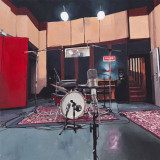
Five groups, one mythical studio - documenting the emergence of a generation!
The initial postulate was simple: five groups, one emblematic studio and 24 hours for each to imagine and record two unreleased tracks with one objective - the will to document a French jazz scene in the midst of renewal.
In these last few years, several innovative currents have shaken up the world of jazz and attracted new fans. They have bubbled up from Los Angeles, impregnated with hip-hop culture (Kamasi Washington, Terrace Martin, Thundercat), or from London, tinged with African rhythms (Nubya Garcia, Kokoroko, Ezra Collective). Meanwhile, in France, a new scene is emerging, carrying with it more of a dancefloor-oriented sound influenced by electronic music - an obvious kinship with the French Touch explosion of the late 90s.
Historically, every movement has been assimilated to a certain neighbourhood, to specific clubs where late at night, young guns stayed up to imagine the jazz of tomorrow - the Cotton Club for the jazz of the 20s, Minton’s Playhouse in Harlem for Be-Bop, the Black Hawk in San Francisco for West Coast jazz, Birdland in New York for Hard-Bop or a lot more recently, the Total Refreshment Centre which has been the playing field for the new London scene.
In Paris too, this new sound is associated with actual venues, places which have allowed these groups to form, create a repertoire and forge an aesthetic - Le Baiser Salé for Monsieur Mâlâ, La Gare/Le Gore for Photon, La Pêche in Montreuil for Ishkero, La Petite Halle for Underground Canopy and also le Duc des Lombards and le 38 Riv’ for Alex Monfort; it’s in a live context that this music will always continue to evolve.
Keeping this “live” spirit, with all its spontaneity, was actually the guiding line for the elaboration of this Studio Pigalle compilation. Each take was recorded in the most organic way possible, bringing all the musicians together in the same room to limit post-production alterations before the final cut was assembled, in just one day, by studio in-house sound engineer, Felix Rémy.
A feeling of urgency permeates a record guided by an artistic production taking care to crystalise the essence of this artistically free-range generation whose childhoods were rocked just as much by Bill Evans and Roy Hargrove as by J Dilla and Jeff Mills. One of the two tracks recorded is geared towards the dancefloor, and the other, more cosmic/ambient gives freer rein to individual interpretation.
There were therefore many possible ways of interpreting these guidelines for the five formations which number among the most distinctive on the current French musical landscape, and the occasion, for some, to rummage through their archives! With Transe (Mbappé) and Da Verdere (Vella), Monsieur
Mâlâ present us with two unreleased tracks issued from the very first rehearsals of the quintet reworked especially for this compilation. “Seen the aesthetic range of this group, it all worked out very naturally in the studio”, recounts keyboardist Nicholas Vella “Recording like they did in the sixties with all the channels live and working with small imperfections was a very interesting task, even when it came to the mix, we had to make do with the takes we had... “
“Our group is very recent, and with this session, in just two tracks, we had the opportunity to present the entirety of our musical universe,” says Photons pianist Gauthier Toux. “All too often, we assimilate this fusion between jazz and dance music to computers and post-production modifications. For “Dessine”, we kept the first take, and we must have recorded just three or four for the other track with more of a techno bent. In one day, we understood that we could play our entire repertoire live, from A to Z”.
“When the Komos label offered me this project, it immediately spoke to me”, remembers Alex Monfort “Straight away, I thought of “Since I Met You”, a track with a nine/four time signature which really is reminiscent of a new- soul groove, but with this extra cosmic vibe! I wrote the words to the chorus and Nina Tonji placed her voice on the track, adding her own verses. For “Tonight”, the up-tempo track, I wanted to head off in more of a hybrid direction inspired by Kaytranada or the Black Radio series by Robert Glasper. A cross-over between jazz and hip-hop which really does represent my world, and I also tried to place vocals centre stage (Emcee Agora)”.
“We truly resonated with the way Antoine Rajon imagined this compilation and the recording session”, confide Warren Dongué and Jérémy Tallon from Underground Canopy. “When arriving in this studio we felt as if we had gone backtothe70s! Inkeepingwiththespiritofthisera,heknewhowtoletus keep our spontaneity, without recording in too many takes, and that’s how we like to work”.
“We managed to adhere to the themes of the compilation without changing our instrumentation, we wanted to remain faithful to the sound of Ishkero on these new compositions and take them somewhere else” – says drummer TaoEhrlich -“Withoutaddinganyelectronics.Thesessionwassupervisedin a truly subtle and benevolent manner. From a human perspective, it was also a wonderful experience”.
Whether turned towards hip-hop, ethnic or electronic music, the artists featured on this Studio Pigalle compilation represent the eclecticism of a new generation in the process of writing the first chapters of its history. Open to experimentation, these artists continue to hold high an immutable love for improvisation and creation in the moment... another definition of the word Jazz!

Berlin-based Swedish bassist and producer Petter Eldh returns with a new Koma Saxo album Post Koma, out on We Jazz Records, 10 November. The title Post Koma aptly describes the vibe of this one: The Koma Saxo sound continues its evolution, morphing into a holistic vision of jazz now and soon, where live instrumentation and repurposed sampling lose their boundaries.
Over the course of its three iterations (self-titled debut in 2019, LIVE in 2020, Koma West in 2022) Koma Saxo has sounded at times "liquid" and postproduced, at times raw and direct, at times acoustic and at other times oddly electronic (even while still being made with acoustic instruments). Post Koma is a culmination of this sonic study by Eldh, resulting in a music vision that never second-guesses throwing tasty hooks and everlasting melodies out the window after a mere bite of them. But fear not: there are even more new ideas just around the corner.
Eldh's compositions and ideas merge together in a way that just flows. There are quality musicians in the mix, including Koma Saxo live band members Sofia Jernberg, Jonas Kullhammar, Otis Sandsjö, Mikko Innanen, Maciej Obara and Christian Lillinger, but that's like saying that a cake includes flour and sugar. This music is not about playing, it's essentially about how the music is and how it takes its shape, so you quickly lose track of who did what, and that's all in the benefit of encountering this music as an entity that is constantly challenging itself while moving forward. The musicians are valued contributors, and an integral part of what's here, but this is far from traditional jazz playing where a band sits in a room playing takes after takes of compositions on sheet.
That being said, this is jazz to the fullest. That is, music that understands its past but always moves forward, and is never afraid of taking risks. Petter Eldh uses jazz as a starting point, not the end goal. This gives his music edge and mobility beyond what can be contained on one album. In a way, an album, then, becomes a snapshot of a creative process in constant flux and evolution.
Opening track "Koma" is literally drum & bass. It only consists of those two elements, yet what comes out of it is an open invite, a way of clearing your palette. It would be useless to describe individual tracks beyond that, but there's a strong sense of deliverance to the set. It feels like an ending, and also like a new beginning.

Berlin-based Swedish bassist and producer Petter Eldh returns with a new Koma Saxo album Post Koma, out on We Jazz Records, 10 November. The title Post Koma aptly describes the vibe of this one: The Koma Saxo sound continues its evolution, morphing into a holistic vision of jazz now and soon, where live instrumentation and repurposed sampling lose their boundaries.
Over the course of its three iterations (self-titled debut in 2019, LIVE in 2020, Koma West in 2022) Koma Saxo has sounded at times "liquid" and postproduced, at times raw and direct, at times acoustic and at other times oddly electronic (even while still being made with acoustic instruments). Post Koma is a culmination of this sonic study by Eldh, resulting in a music vision that never second-guesses throwing tasty hooks and everlasting melodies out the window after a mere bite of them. But fear not: there are even more new ideas just around the corner.
Eldh's compositions and ideas merge together in a way that just flows. There are quality musicians in the mix, including Koma Saxo live band members Sofia Jernberg, Jonas Kullhammar, Otis Sandsjö, Mikko Innanen, Maciej Obara and Christian Lillinger, but that's like saying that a cake includes flour and sugar. This music is not about playing, it's essentially about how the music is and how it takes its shape, so you quickly lose track of who did what, and that's all in the benefit of encountering this music as an entity that is constantly challenging itself while moving forward. The musicians are valued contributors, and an integral part of what's here, but this is far from traditional jazz playing where a band sits in a room playing takes after takes of compositions on sheet.
That being said, this is jazz to the fullest. That is, music that understands its past but always moves forward, and is never afraid of taking risks. Petter Eldh uses jazz as a starting point, not the end goal. This gives his music edge and mobility beyond what can be contained on one album. In a way, an album, then, becomes a snapshot of a creative process in constant flux and evolution.
Opening track "Koma" is literally drum & bass. It only consists of those two elements, yet what comes out of it is an open invite, a way of clearing your palette. It would be useless to describe individual tracks beyond that, but there's a strong sense of deliverance to the set. It feels like an ending, and also like a new beginning.

Isabelle Adjani ist das, was man eine Ikone des französischen Kinos nennen kann. Mit ihren fünf César-Auszeichnungen (ein beeindruckender Rekord) in der Kategorie "Beste Schauspielerin" für "Possession", "Ein tödlicher Sommer", "Camille Claudel", "La Reine Margot" und "Skirt Day" hat sie keinen Zweifel an ihrem Starstatus gelassen - sowohl in Frankreich als auch international. Die Wartezeit auf ein Album von Isabelle Adjani schien nicht enden zu wollen.
Nach ihrer legendären Reise mit Serge Gainsbourg, die sie vom Grund des Swimmingpools (Adjanis eigene Worte in ihrer ersten musikalischen Veröffentlichung mit der französischen Musiklegende Gainsbourg, Pull marine) zu den Höhen des Ruhms führte, begann sie mit der unglaublichsten Besetzung zu arbeiten, die diese Ära zu bieten hatte - Benjamin Biolay, Etienne Daho, Gaëtan Roussel, Seal, Simon Le Bon, Christophe, Akhenaton, Daniel Darc, Philippe Pascal, David Sylvian, Youssou N'Dour und Peter Murphy. Diese Veröffentlichung ist das Ergebnis von 15 Jahren Sessions und Treffen, bei denen die Zeit einfach keine Rolle mehr spielte.
Das neue Album, das vollständig von Pascal Obispo produziert wurde und bei dem Pascal Obispo und Cécile de Laurentis gemeinsam Regie geführt haben, ist endlich aus seiner Puppe geschlüpft. Isabelle Adjani meldet sich mit ihrem einzigartigen Album "Bande originale" (dt.: "Soundtrack") zurück, das in Form von 12 Duetten ein musikalisches Großereignis für die Festtage sein wird.

Im Jahr 2022 veröffentlichten Bear's Den ihr hochgelobtes viertes Studioalbum "Blue Hours", das in den UK Album Charts auf Platz 6 landete, sowie den Original-Soundtrack für die Apple TV+ Serie Trying, bei dem sie mit Stars wie Maisie Peters und Jade Bird zusammenarbeiteten. 2023 kehrt das Folk-Pop-Duo Bear's Den zurück, um zwei neue EPs zu veröffentlichen: First Loves und White Magnolias.
Bear's Den wurden 2012 in London gegründet und haben sich mit ihren hymnischen Songs eine treue und internationale Fangemeinde erspielt. Mit vier Studioalben sowie einem gemeinsamen Projekt mit dem Komponisten Paul Frith sind sie seit ihrer Gründung regelmäßig in den Charts in Großbritannien und Europa vertreten. Ihr Debütalbum Islands" wurde für den Ivor Novello Award für den besten musikalischen und lyrischen Song nominiert.
Nach Tourneen durch die ganze Welt, bei denen sie in Theatern, Arenen und auf Festivals spielten, kehrten sie 2019 nach der Veröffentlichung ihres dritten Albums "So That You Might Hear Me" zu ihren Ursprüngen zurück, um eine Tournee durch winzige "Highlands and Islands"-Locations in ganz Schottland zu machen und eine begleitende Dokumentation zu drehen. Die Band ist keine Unbekannte im Bereich der Musikdokumentation und spielte neben Ben Howard, Nathaniel Rateliff und The Staves eine wichtige Rolle in dem preisgekrönten Dokumentarfilm Austin To Boston.

teen suicide's first & only proper album, `i will be my own hell because there is a devil inside my body', has been a sought after release for many collectors after it's ultra-limited vinyl release in 2012. Now, Run For Cover Records will be reissuing my own hell, with remastered audio, expanded artwork and 8 never-before-issued bonus tracks. Across the album's 10 songs, the band displays a knack for different sounds and styles. Intimate, keyboard driven tracks like `cop graveyard' and `grim reaper' sit beside more energetic full-band outings like `dead bird skeleton and `give me back to the sky', the latter even adding an evocative viola, piano and choral arrangement to it's chaotic center. It's to the band's credit that their more outré moments feel necessary, not distracting. What becomes clear upon listening to `my own hell' is that beneath the dreamy haze & noisy apathy of teen suicide's recordings exist ernest, extremely well-written pop songs that reflect and express the uncertainty and desperation of reality

Portrait of Art Farmer enthält Aufnahmen aus dem Jahr 1958 und war das erste Album von Art Farmer, das unter dem Label Contemporary Records von Lester Koenig veröffentlicht wurde.
Obwohl Art Farmer erst 1958 (dem Jahr, in dem dieses Album aufgenommen wurde) in der Down BeatUmfrage zum ”New Star” des Jahres gewählt wurde, hatte sich sein Ruf unter Musikern aufgrund seiner Arbeit mit Lionel Hampton, Gigi Gryce und Gerry Mulligan bereits etabliert.
Obwohl er für sein Flügelhorn bekannt ist, hat er viele Jahre lang eine vergleichbare Lyrik als Trompeter erreicht, wie diese Seiten zeigen.
Mit einer Rhythmusgruppe, zu der auch sein Zwillingsbruder, der verstorbene Addison Farmer, am Bass sowie der Pianist Hank Jones und der Schlagzeuger Roy Haynes gehören, ist er hier mit drei Originalen (zwei davon sind Blues) und fünf anderen geeigneten Stücken wie Benny Golsons ”Stablemates” zu hören.
Farmer war der Meinung, dass dies das beste Album war, das er in dieser Phase seiner Karriere gemacht hatte.

In celebration of his “I'M REALLY LIKE THAT” album release, Drama tapped in Queen Latifah, Omar Epps, Jermaine Hopkins, and Khalil Kain to recreate iconic scenes from the movie “Juice,” which was highly influential in Drama becoming a DJ.
The album peaked at #67 on the Billboard Top 200 chart and has accumulated over 100 millions streams. Now Available in color Marble Red & Black!

**LIMITED/HAND NUMBERED 200 COPY RELEASE ON HANDPRINTED SLEEVES** A limited edition of 200 records. Each sleeve is hand printed & numbered on recycled Kraft card by esteemed artist John Pedder. There’s also a card insert with an extra print and sleeve notes written by the music journalist Joe Muggs. ’Yarni is all about tactile, real, physical experience and the creations that result. Now, alongside printmaker John Pedder, he’s making that more explicit than ever. Yarni and John swapped musical and visual influences, each feeding the other; songs and art developing as a single process. From The Clash to the Bauhaus movement, references merged, and in particular, Anni Albers became a touchstone for both. Every physical copy of this EP is different, the geometry of John’s prints echoing Ben’s music. The loping hip-hop jungle of the title track, the airborne house groove of “Red Meander”, the footworking jitter of “Agitator II”, the cerebral dancing of “Rummy” – all are inspired by John’s artistry. The EP is brought to you via Sound Records, a label focused on artistry, process, and artifacts – things you can feel, hold and treasure. Here’s hoping you’ll hold it too, and feel the joy that has been put into it from the very start.

The band is John Dwyer (synths, vocals), Heather Lockie (viola), Thomas Dolas (synths), Andres Renteria (hand percussion), Brad Caulkins (tenor saxophone), Kyp Malone (synths) and Archie Carey (bassoon). The singers are YoshimiO (Boredoms, OOIOO), Albert Wolski (EXEK), Gracie Jackson (GracieHorse), Ciriza (Artist Extraordinaire), Kyp Malone (Bent Arcana, TV On The Radio, Rain Machine etc.), Brigid Dawson (Thee Oh Sees, The Mothers Network), AZITA (Scissor Girls, Bride of NONO, AZITA). For fans of Steve Roach, Eno, Syrinx, Howard Shore, Current 93, Terry Riley, Tangerine Dream and a proper sage scrub. “An experiment in symphonic improvisation paired with synthesizerscapes. Strings, reeds, synths and hand percussion all blend sweetly into an odd landscape indeed. The final touch was to bring aboard some singers I have loved over the years. I’m so pleased they were all willing to participate and I’m very tickled by the plane we navigate. Once YoshimiO agreed to be on board I knew we were going to be OK. Recorded and mixed at my home studio (Stu-Stu-Studio in Los Angeles) and remotely, this one was a slow burn to see the light of day. And here it is in its final crystal form. Celebrating the spaces between ritual, habit and ceremony. And all the parallels between. The line is blurred. This is occult adjacent strain of sound. At home in daily ritual, contemplation and meditation.” - John Dwyer

DEVO’s Hardcore documents the group’s beginning as pre-punk outcasts in the fertile Akron, Ohio, underground rock scene. Spawned at the nearby college of Kent State, site of the infamous May 4 Massacre, DEVO formed as a conceptual art project armed with the radical philosophy of de-evolution. Brothers Mothersbaugh (Mark, Bob and Jim) and Brothers Casale (Jerry and Bob) along with drummer Alan Myers soon whipped up an otherworldly brand of “devolved blues” that could hold its own alongside the beatnik groove of 15-60-75 (a.k.a. The Numbers Band) or the primal rock poetry of The Bizarros. Recorded on various four-track machines and in tiny studios, basements and garages between 1974-1977, Hardcore reveals their strikingly clear vision: rock ’n’ roll stripped bare of its collective cool and jerked back into propaganda fit for post-modern man. It’s no surprise that these transmissions would soon catch the eye and ear of Brian Eno, who later produced their landmark 1978 debut album. Noisy synth, strangled guitar chops and a primitive rhythmic thud power the early DEVO sound. Threaded beneath it all are lyrical themes of post-McCarthy paranoia, middle-class ephemera and DEVO’s long-running topic of choice: sex, or lack thereof. Few moments in pop music history can match the grinding, pent-up energy of “Mongoloid” and the spastic bounce and sputter of “Jocko Homo” (two anthems presented in their earlier and superior versions here). Cult favorites like “Mechanical Man” and “Auto-Modown” make Volume 1 essential listening. Superior Viaduct and Booji Boy Records are proud to present DEVO’s Hardcore to a new generation of spuds, lovingly packaged with Moshe Brakha’s stunning cover photography. As David Bowie said in 1977, DEVO is indeed “the band of the future.”
