Livity Sound welcomes Joe Milli to the fold with an assured EP of crisp club workouts that land between techno's evocative depth and UK funky's offbeat, drum-focused functionality.
Over the past few years Milli has been establishing his sound across a swathe of radio shows, guest mixes and releases, and he lands on Livity with a timeless take on the label's commitment to stripped back, atmospheric soundsystem music.
There's variety across the Deep Forest EP, ranging from the balmy bassweight house of the title track to the deep-diving dub pulses and bruk drum science of 'Look Again'. 'Keep That Wire' draws nervous energy from its synth hooks and the taut, angular beat before the rolling Detroit techno pulse of 'Expressions' brings the EP home in punchy, percussion-loaded style.
In line with past releases from the likes of Bakongo, DJ Polo and Tribal Brothers, Milli's strength lies in his ability to bend the UK funky formula to different styles, all precision-tooled for the club.
Livity Sound is a label set up by Peverelist in 2011 as a vehicle for a raw and exploratory strain of UK techno, rooted in the heritage of UK dance music and sound system culture. It has since become one of the UK's foremost protagonists for cutting edge underground electronic music.
Buscar:bend over
- 1: Blackmail David Ruffin
- 2: Crime In The Street David Ruffin
- 3: Look Out Your Window Frank Wilson
- 4: Just To Keep You Satisfied The Originals
- 5: I Pray You Still Love Me Jimmy Ruffin
- 6: I Hate Myself For Loving You The
- 7: If I Can´t Love You Then I Can´t Love Me Eddie
- 8: When The Lights Come Down On Love Dennis
- 9: You Are The Way You Are Leon Ware
- 10: Don´t You Wanna Come Leon Ware
Satisfaction comes in many forms. When the magical word Motown is uttered, most people are hard-wired to The Four Tops, the Temptations and The Supremes. But to reduce Motown to the effervescent sixties is only part of the label’s remarkable legacy.
By the 1970s, a different sound was gathering. America was on the verge of a nervous breakdown. The Vietnam War had been a disaster, urban street crime was epidemic and the nation’s college campuses were alive with political resistance. The joyful hope that had inspired “Baby Love” now felt anachronistic and out of time.
The music industry was changing too. The vinyl pop single on 45rpm which had been the staple of Motown’s success was being challenged by concept albums. This was the era of Edwin Starr’s anti-war album War and Peace (1970), The Temptations mind-bending Psychedelic Shack (1970) and Marvin Gaye’s state-of-the-nation classic What’s Going On (1971).
By the early 1970s Motown had a stable of male vocalists that was arguably the best in the world, among them former lead singers from The Temptations - David Ruffin, Dennis Edwards and Eddie Kendricks. Alongside them singer-producers like Leon Ware and Frank Wilson were asserting their presence.
David Ruffin’s “Crime in the Street” captured the epidemic of violence in Detroit allowing his exquisite voice to quietly rage against gun crime. Recorded a few years before his underground classic “Rode by the Place”, both sound more modern today than when they were recorded.
If there is a common thread here, it’s the mid-tempo shifting soul soon to be christened as “quiet storm” including groups on the margins of Motown such as The Originals and The Fantastic Four led by the impassioned “Sweet” James Epps.
Just to keep you satisfied, immerse yourself in the overlooked creativity of Detroit’s male voices in the early 1970s.
Back in 2020 we released the original of ‘Oliver Dollar & ADMN feat. Mr. V - Sanctuary’ on Industry Standard.
The original is a sublime track with a nod to a vintage deep house sound. ’Sanctuary’ features Mr. V’s spoken word vocal over a slick rhythm section, lush chords stabs, and ethereal synth pads.
Fast forward to 2025 and we are delivering a vinyl release featuring the original mix, and 2 new remixes from France’s DJ W!ld, and Detroit’s Bendersnatch.
DJ W!ld comes with a deep, rolling take on the track, with a low slung baseline, and trippy breakdown that will wig out the dance floor. Bendersnatch take their version into trackier territory with a heavy kick, stripped back vibe and FX on the vocals that give this version another dimension to the package.
The vinyl release will proceed this come some months before we release these remixes digitally, so get them while they are hot on wax!
FJAAK return with a powerful remix package, delivering fresh takes on a selection of tracks from their unforgettable 2024 album 'FJAAK THE SYSTEM'. Welcoming three standout remixes from some of techno's most respected names, 'REMIX02' sees offerings from Robert Hood, Shed and West Code, as well as some surprise Bandcamp digital only remixes selected from the participants of FJAAK's latest remix competition. Kicking off the main remix package release, Detroit legend Robert Hood brings his unmistakable raw, relentless and pioneering sound to the table as he reimagines FJAAK's 'Breathe Underwater'. The genre-defining godfather serves up an undeniably signature cut flooded with euphoric energy, thumping grooves, rippling musicality and spaced-out vocal injections, carving out an authentic Floorplan-esque peak-time jam. Berlin-based artist Shed (one of the many monikers of established electronic stalwart Ren? Pawlowitz) is next to feature, delivering another impressive spin on FJAAK's work, this time exploring his vision on 'Micro Expressions'. An impressive blend of hypnotism and electricity, this bold remix echoes FJAAK's preference for cultivating huge dancefloor heaters that thrive on live instrumentalism and limitless energy. It's racy, groovy and raw, building around rolling rhythms, warping layers of analogue sound and intricate breaks throughout. Argentinian talent West Code was the winner of the 'Redemption' remix competition and rounds off the main package with a huge interpretation of FJAAK's original mix. Almost bordering into tribal techno in places, its emphasis on groove and subtle South American influences create a unique remix, overflowing with boomy low-end drive, piercing percussive drive and mind-bending melodics - a real gem for the height of the party and irresistibly sinister from start to finish. The remix competition of 'Redemption' drew an overwhelming response from producers worldwide, which made it very difficult to choose a winner. Even though West Code's interpretation was the chosen remix, four other interpretations were so good that FJAAK decided to showcase the talent of Helsmoortel, Genex, Ay Din and Your friend daao by including their reworks on an exclusive Bandcamp-only EP, highlighting the duo's ongoing commitment to to the underground.
Bendik Giske’s Beatrice Dillon-produced 2023 album gets an addendum with reworks from Carmen Villain, aya, Hanne Lippard, Hieroglyphic Being, Wacław Zimpel and Dillon herself.
Giske’s clearly got his ear to the ground; his last remix record was an invitation for Laurel Halo to put her stamp on »Cruising«, while 2018’s »Adjust EP« roped in Deathprod, Total Freedom, Lotic, and Rezzett. Now comes this new LP of remixes and it’s one of the best we’ve heard in aeons. Carmen Villain boots things off with a remix of »Slipping«, following her excellent (and way, way too underrated) »Nutrition EP« with a giddy, subtle roller that sounds as if it’s been constructed using only Giske’s raw stems. His breaths and leathery key presses – already amped up by Dillon’s detailed recording – are magicked into a dubby concrète groove that’s enhanced with the sparest melodic elements: echoing rainforest-at-night horn blasts, and lopped off decay trails that help fuel the momentum.
aya’s revision of the same track takes a different approach, forming forceful overlapping polyrhythms from Giske’s clanks, using the gamelan-like arpeggios for melodic weight and repetition. The result is a constantly shifting, hypnotic trancer that’s achingly organic – more Raja Kirik than Paul Van Dyke. Polish clarinetist and producer Wacław Zimpel, meanwhile, supplements his trippy recent collaboration with James Holden on a similarly levitational wrinkle of »Slipping« that twists Giske’s quivering sequences with microtonal synth prangs, and gusty echoes. But it’s Jamal Moss who plays fastest and loosest with Giske’s source material, calling back to April’s psy-house stunner »Dance Music 4 Bad People« with a powdery, sexualised banger that buries the breathy »Start« stems underneath neon synths, and brittle drum loops.
»I’m a digital nomad,« Lippard deadpans over Giske’s »Not Yet«. »I’m addicted you know that.« It’s a typically dry treatment from the conceptual artist that unexpectedly amps up the hypnotic qualities of Giske’s original, adding her circuitous charm to his concertina-ing sax sequences. And to tie things up perfectly, Beatrice Dillon returns with her diaphanous remix of »Rise and Fall«, built to emphasise the radically different approaches of each artist.
A multidisciplinary artist, and avant-garde icon in her own right, Little Annie leaves little room for an introduction that is worthy of her prolific career. She has remained relevant for over four decades through her innate spirit of experimentation and the multiplicity of her genre-bending collaborations with artists traversing the globe such as Adrian Sherwood, Swans, The Wolfgang Press, Kid Congo, Current 93—the list goes on!
For this release, Noir Age is proud to present a 7” single of new material from Little Annie in collaboration with South Florida-based producer and label owner Richard Vergez, recording here under the moniker of Night Foundation. Annie and Richard met back in 2016 after a gig at the ICA in Miami through their mutual friend: Drew McDowall of Coil.
Sharing a requited spirit for visual art and music, they became fast friends and began collaborating, conjuring what you hear on this release: Inertia.
Edition of 300 records, each housed in a silkscreened, custom black 7" envelope jacket with newsprint insert.
Reviewed in The Wire magazine:
"Night Foundation is one of the current electronic projects envisioned by Florida's Richard Vergez. In this instance, his work is smooth and bassoid enough to have a vague dancefloor-friendly feel without being overtly prancy. This notion is enhanced by the presence of a dub B side, so things are not as dark as with most of Verge's projects. But they're still not sunny. Of course, Little Annie's lyrics and casual vocals have more in common with urban menace than sunshine pop, so the pairing works quite well."
- Cryptmaster Theme
- The Four Pillars
- Use Your Words
- It Sees You
- Rats!
- Spell It Out
- Toad Palace
- Whatever
- Rumble Underground
- Countess Ulara
- Hubble Bubble
- Heavy Hitter
- Iss The Enticer
- Loria The Fair
- Klaxo The Lawless
- Payn The Destroyer
- For Shallya!
- Bending The Law
- Audo The Pure
- Cryptmaster Theme (Ending Version)
- Level Up!
White vinyl. The record is housed in a gatefold jacket, designed as your own personal treasure chest. Akupara Games and Black Screen Records are over the moon (and down in the crypt) to announce the soundtrack release of the game hit Cryptmaster on vinyl. For the music, sound expert Surasshu, part of the duo Aivi & Surasshu (i.a. Steven Universe), has teamed up with Stemage and Catton Arthur to virtuously solve the puzzle of a perfectly fitting game score. SAY ANYTHING in this bizarre dungeon adventure where words control everything. Fill in the blanks with text or voice to uncover lost abilities, embark on strange quests, and solve mindbending riddles. Can you conquer the crypt and uncover the mystery at the heart of Cryptmaster? In the ancient past, four brave heroes banded together to destroy a terrible evil, giving their lives to save countless others. But now their eternal rest has been disturbed by the Cryptmaster, a capricious necromancer in whose thrall they must ascend through the buried strata of the city above them - the gloomy Bonehouses, mysterious Sunken Sea and freakish Downwood. With the enigmatic Soulstone in hand, the four adventurers must recover their memories, solve whimsical puzzles and defeat outlandish enemies. From fishing and card games to bardic rap battles, finding the right word is the key to success. Who knows, maybe you'll even remember a little more than you bargained for. Surasshu, veteran of television and game music, brings out the best in the Cryptmaster soundtrack, featuring his peers Catton Arthur on bass and Stemage on guitar. From laid back accordions of the Bonehouses, to the shredding guitar of battles, to the piper's haunting melody, this album features enough musical morsels to keep all kinds of dungeon-crawling deviants tapping their toes.
- A1: The Coming (Intro)
- A2: Do My Thing
- A3: Everything Remains Raw
- B1: Abandon Ship
- B2: Woo Hah!! (Got You All In Check)
- B3: It's A Party (Feat. Zhané)
- C1: Hot Fudge
- C2: Ill Vibe (Feat. Q-Tip)
- C3: Flipmode Squad Meets Def Squad (Feat. Jamal, Keith Murray, Lord Have Mercy, And Redman)
- D1: Still Shining
- D2: Keep It Movin' (Feat. Charlie Brown, Dinco D, And Milo)
- D3: The Finish Line
- D4: End Of The World (Outro)
In 1996, Busta Rhymes delivered his debut album, The Coming, three years after the Leaders of the New School unofficially disbanded. Though his talents were evident on those Leaders of the New School releases, Busta went on a series of features that only built up the public's desire for a solo Busta album. Right out of the gate, Busta dropped his classic debut single "Woo Hah!! (Got You All in Check)" that made it abundantly clear he was to be mentioned among Hip Hop's greatest solo artists. The energy and originality packed on that one song set a tone for the album that displays Busta's raw talent and ability to bend words with his ever rambunctious flow. The album features production by Easy Mo Bee, DJ Scratch, Q-Tip, and J Dilla. Songs such as "Everything Remains Raw", "Abandon Ship", and "Still Shining" all rise above as The Coming's stand-out tracks, but "Ill Vibe" is the album's crown jewel moment. Busta sounds right at home over this J Dilla beat, trading verses with his Native Tongue cohort Q-Tip. The Coming was a critical and commercial success for Busta Rhymes. It reached #6 on the Billboard 200 chart in 1996 and has since received a platinum certification from RIAA. As mentioned, The Coming boasts the hit single "Woo Hah!! Got You All in Check " which reached #8 on the Billboard Hot 100 chart in 1996. It was nominated for a 1997 Grammy Award for Best Rap Solo Performance. It also ended up sporting another hit single, It's a Party featuring Zhané. The Coming shows amazing variety where Busta can break free from the bells and the whistles of the Busta Dungeon Dragon flow to explore other ways of leaving our jaws open by his incredible lyricism. The Coming surely lives up to its title, as Busta delivers a performance that ignited his impeccable solo career.
Riding high on a prolific wave of output, Kloke returns to Mindgames with Lucidity — an album that confirms his position at the forefront of modern jungle.
Andy Donnelly has been actively releasing a broad swathe of electronic music since the late 00s, but it's his sharpened focus on jungle and drum & bass over the past 10 years that has cemented his reputation. As well as working closely with fellow scene leaders like Tim Reaper, the Australian artist has hit a flow state with his productions where the quality and quantity seems limitless. Since Mindgames started as a Samurai Music sub-label, Kloke has been a core part of the imprint's identity. Having already dropped the Mindgame 8 EP earlier this year, Donnelly is back with a full-length salvo of advanced jungle heavy on the technicalities and even heavier on the vibes.
Lucidity makes its mark from the very first blast of breakbeat science that opens up the title track. From that point on Donnelly works at full tilt, edging gritty textures into his sampling and capturing classic jungle's melancholic mystery through an expansive palette of re-pitched hooks. This is carefully crafted soundsystem music in thrall to the tradition of jungle, but at no point does it sound tired or throwback. One key element is the dynamic intensity of Donnelly's arrangements, shifting gears with devastating poise whether darting through the starry-eyed arps and deft breaks of 'Mobius Strip' or chopping around the jagged angles and noirish licks of 'Goose Cuts'.
Donnelly folds many moods into his jungle tapestries. 'Paradiso' conjures a smoky, haunting atmosphere while 'Nightfall' leads on techy darkside stabs before unfurling shadowy jazz licks that flicker like ghosts through the dense forest of drums. At all times, the commitment to mind-bending configurations of compound breaks drives the album forwards. No two beats roll the same as Donnelly indulges his precise and profound instinct for next-level edits and heavyweight production.
Gritty, raw and true to the roots of the culture, Kloke stands tall on Lucidity. It's the kind of detailed, deep and deadly album that shows jungle at its absolute best — a sound that still feels like the future in the right hands.
The discovery of Doris Dennison's score represents a genuine musicological breakthrough—what once would have been "a tree falling in the woods" thirty years ago now holds the potential to render "a thunderous clap in our minds." While researching Anna Halprin's lesser-known collaborators, scholar Tom Welsh uncovered the archives of AA Leath, one of Halprin's principal dancers. Buried within these materials was Dennison's handwritten score for Earth Interval, dated May 1956. Born in Saskatchewan, Canada, in 1908, and raised near Seattle, Dennison (1908-2009) encountered John Cage while teaching Dalcroze eurythmics at the Cornish College of the Arts. She joined Cage's earliest percussion quartet—alongside Margaret Jansen, the composer and his wife Xenia—in the group widely regarded as having performed the first complete concert of percussion music in the United States. This historic December 1938 concert was followed by tours and the landmark May 1941 performance at the California Club, comprising Cage and Lou Harrison's Double Music, the premiere of Cage's Third Construction, and Harrison's 13th Simfony.
As Bradford Bailey observes in his extensive liner notes, Earth Interval demonstrates "an extraordinary balance of elements that imbues the piece with a sense of clarity, directness, and constraint that is both distinct and ahead of its time." The work's most remarkable innovation lies in its approach to extended techniques, particularly Dennison's notation for the central movement: "In 2nd movement, 1st player lowers + raises a gong into a tub of water while beating." This technique, absorbed from Cage's experimental vocabulary, generates what Bailey describes as "fields of acoustic abstraction that bend and warp time through sustained resonances, beat, and space." The temporal sophistication of these manipulations anticipated Karlheinz Stockhausen's Mikrophonie I (1964) and Annea Lockwood's water-based sound investigations by over a decade. After joining Mills College as dance accompanist, Dennison maintained crucial connections to the Bay Area's experimental scene, collaborating with figures like Merce Cunningham and programming Cage's music throughout the 1950s.
Comprising three movements—Land Form, Air Tide, and Earth Play—Earth Interval is scored for recorder, drums, gongs, maracas, muted gongs, and bowl gongs. In total, the piece is just under eight minutes: "a fleeting glimmer of moment in time, a life spent at the cutting edge, and a singular creative vision that packs a powerful punch." When viewed in historical context, placed in contrast to roughly contemporaneous avant-garde percussion works by Cage, Harrison, Louis Thomas Hardin (Moondog), and Harry Partch, or important precursors like Edgard Varèse's Ionisation (1931) and Henry Cowell's Ostinato Pianissimo (1934), it's clear that Dennison was following her own path. Earth Interval is not derivative. It is a precursor to what was yet to come, alluding to developments of avant-garde and experimental music that wouldn't begin to appear on the cultural landscape until the 1970s and '80s, with the emergence of Post-Minimalism and more idiosyncratic artists and ensembles like Midori Takada, Ros Bandt, Peter Giger, Frank Perry, Christopher Tree, Michael Ranta, Gamelan Son of Lion, and Niagara.
This recording by Chicago's Third Coast Percussion, captured in March 2022, represents the first complete documentation of this pioneering work. The ensemble's interpretation reveals the piece's remarkable contemporaneity while maintaining its historical specificity. Where Cage, Harrison, and Partch employed "self-consciously off-kilter polyrhythms," Dennison's rhythmic sensibility anticipates minimalist developments by nearly a decade, yet integrates "forceful rests, as well as sharp shifts in sonic character, tempo, and meter, that break the momentum and breathe a sense of life into the piece's structure." This positions her work closer to Post-Minimalism decades before its emergence. The architectural approach demonstrates Dennison's understanding that "the composer almost entirely disappears" in favor of phenomenological listening experience, creating what might be called an egoless music that places its realities and meaning entirely in the ear of the beholder. The present recording, realized by Chicago's distinguished Third Coast Percussion ensemble, represents a significant achievement in experimental music scholarship and performance practice. As specialists in the Cage tradition and contemporary percussion repertoire, Third Coast Percussion approached Earth Interval with the historical sensitivity and technical precision required to illuminate Dennison's subtle compositional innovations. The March 2022 recording sessions, engineered by Colin Campbell, capture both the work's intimate chamber music qualities and its bold exploration of extended techniques. The ensemble's interpretation reveals the piece's remarkable contemporaneity—its ability to speak directly to current musical concerns while maintaining its historical specificity.
This recording serves multiple scholarly functions: it provides the first complete documentation of Dennison's compositional voice, offers insight into the broader network of experimental music practitioners surrounding Cage and Harrison, and demonstrates the sophisticated level of compositional thinking that was occurring within the Bay Area's dance-music collaborations of the 1950s. The work's emphasis on phenomenological listening—what might be called an "egoless" approach to musical experience—places it within a lineage of American experimental music that prioritizes perceptual process over compositional personality. The work's original obscurity—limited to AA Leath's performances at venues like the 1957 Pacific Coast Arts Festival at Reed College—paradoxically allowed it to remain "entirely on its own terms," free from the constraints of historical categorization. Drawing on Jacques Derrida's Archive Fever, the argument emerges that "the archive can acknowledge, celebrate, and resurrect" overlooked voices, transforming our understanding of experimental music history. The present Blume edition, featuring Third Coast Percussion's authoritative interpretation, includes a lavishly illustrated 16-page booklet designed by Bruno Stucchi / dinamomilano, containing complete scholarly apparatus, historical photographs, and detailed production notes. This recording enables "cross-temporal intersectionality," allowing Dennison to "belong to a newly formed and more dynamic understanding of the present and past," demonstrating how forgotten voices can reshape entire historical narratives when given proper scholarly attention and performance advocacy.
This new "Experimental Chapter" by DJ Narciso comes as no surprise, really. Autonomous in the motorization of his music, pushing for progress within the framework of an undeniable (inescapable?) heritage. Twisting and bending sound every step of the way, Narciso definitely keeps in touch with the dancefloor, offering the always much needed transcendence through distinctive, non-linear melodies and patterns. The artist pursues a direct link with bodies in motion but seldom in the expected, institutionalized way club culture is being largely promoted.
This is challenging dance music, proud statements of difference. Narciso's previous record was named "Diferenciado". Now we get "Dificuldades", a track that simultaneously carries the weight of being somewhat odd and the difficulties of life. Check how the piano is venting, freestyle, communicating a feeling, and then lets itself get stuck in a loop, but that's exactly when the groove really starts flowing. And then another layer. It's like direct speech.
A common assertion of pride is found in the origin of the artists. The ghetto as a place where any transformation projects more power precisely because of... inherent difficulties. As others (including himself) did in more or less obvious ways, Narciso clearly states "I come from the ghetto" ( "Não Sabes" ). Twice the value. At least. Almost every segment of music in this album ends up sounding heavily emotional, reaffirming what may be - perversely - a well-known characteristic of Portuguese music: melancholy.
"Não Quero" begins side B as a march maybe more significant than a thousand words, such is the ominous tone of its texture. Next track is another lunar tarraxo, pulling down the shades. Then, "Dor de Barriga" lets things loose again, steering clearly off road, shouting this way and that until a peaceful resolution comes. In "Livra-me Desta", vocal snippets blend into synth snippets, disembodied voices abandon all traces of humanity and finally mutate into different entities that, towards the end, again sound vaguely human but now we find ourselves doubting. Closer "Bob" is a rather classic percussion track with plenty of echo, reverb and an unconscious nod to dodecaphonic music. Unlikely? No, the structural ADN of this music is made up of elements western and eastern, southern and northern. To say all-over-the-place is usually not flattering but in this case the expression translates as wonder, surprise, The Unexpected, and reveals Narciso perfectly at ease inside the nucleus of creation.
Foehn & Jerome feat. Sonya Zlo - Macho Madness (PFFD003)
Berlin, Summer 2025 - A raw, hypnotic, and deeply conceptual collaboration is about to make waves. Austrian DJ and producer duo Foehn & Jerome, residents of Berlin's iconic Club Der Visionaere and founders of the Perfumed Freedom label, team up with Ukrainian artist and producer Sonya Zlo to present "Macho Madness" - a wild and genre-bending release born from an unfiltered studio jam that spiralled into something bigger. In addition to their experimental project Space Curls, with which the three artists also perform live shows, Sonya, Fabian, and Jerome have been working on their new techno/house project.
In a world where stereotypes wrestle for power, "Macho Madness" challenges everything we thought was normal. Overblown masculinity, the illusion of strength, and staged rituals of dominance – that is what we call the "Macho Madness".
Foehn & Jerome, known for their electrifying DJ sets, have been shaping Berlin's underground scene for over a decade. Sonya Zlo, who moved to Berlin from Kyiv in 2022, stumbled upon their gig by chance - and what started as a conversation about track ID's turned into a full-on collaboration.
"Working with Foehn & Jerome has taught me so much," says Sonya. "I come from a jazz background, so this was completely new territory for me - but bringing my melodic instincts into this heavy, industrial sound was crazy exciting".
Following Perfumed Freedom's recent releases "The Frisbee of No Return" and "Hermanngirl", the new record "Macho Madness" will be released in summer 2025. Play it, stream it, or pick up the limited vinyl - just don't expect anything ordinary.
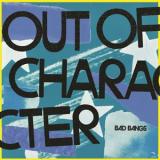
Turning heads with their unique blend of garage, psych, punk rock Bad Bangs played across notable festivals and club shows throughout a 23 show run in 2024. Making waves at Left of The Dial (NL), Leffingeleuren (BE), Truenorayo (ES) and Gliding Barnacles Festival (PT) Bad Bangs make a charging return to the 2025 European Summer festival circuit. Their 2024 sophomore release Out Of Character was the first offering since their debut album Character Building. Somewhere between punk and country, folk and psych, Bad Bangs find themselves Out Of Character. The Melbourne based outfit's sophomore album bends across genres to form a unique soundscape of their own. Live tracking with the masterful Paul Maybury (Cash Savage & The Last Drinks, The Murlocs) captured the bands enigmatic live energy, whilst mastering by Jim Diamond (Ghetto Recorders, The White Stripes, The Dirtbombs, The Gore Gore Girls) secured the signature gritty sound of Bad Bangs. The album arrives with the punchy, punk-laced opening track Contest, which questions the fabric of an industry hell bent on image and conformity, and concludes with the psych infused Wild Mess which laments the shifting state of the natural world. Themes of social and environmental unrest swirl in the undercurrent of an album reflecting on immediate frustrations and personal reflection. With a staple cult following in their hometown of Melbourne, Bad Bangs have supported a high caliber of contemporaries over the years such as Shannon and The Clams, The Murlocs, Rolling Blackouts Coastal Fever and Chastity Belt. Bad Bangs Out Of Character is set for re-release through Beast records (FR) and locally released via Blossom Rot Records (AU&NZ) (Snowy Band, Cassie Ramone and more) Bad Bangs are part of Ya Ya Yeah's booking roster throughout EU. Bad Bangs members are Shelby De Fazio, Tim Ryles, Sophia Lubczenko and Gab Portocarrero.
- A1: Eyeroll (Feat Elvin Brandhi) (4 01)
- A2: Malikan (Feat Abdullah Miniawy) (4 08)
- A3: Move On (Feat Iceboy Violet) (3 44)
- A4: 99 Favor Taste (Feat Juliana Huxtable) (0 57)
- A5: Nontrival Differential (Feat Elvin Brandhi) (4 25)
- A6: Partygoodtime (Feat Ledef) (0 09)
- B1: Cut Cut Quote (Feat Elvin Brandhi) (4 22)
- B2: Pique (4 26)
- B3: If The City Burns I Will Not Run (Feat Abdullah Miniawy & James Ginzburg) (3 23)
- B4: Hasty Revisionism (3 14)
- B5: Lacrymaturity (2 43)
Black Vinyl LP. The world has changed, we shouldn't try and pretend otherwise. While we were shut away in isolation our routines shifted, social patterns evolved, and our hopes and dreams were twisted into cobwebs we're still trying to wipe from our fingers. Ziúr tentatively approached this on her last album Antifate, an ambitious and complex hybrid pop fever dream that looked back to a Medieval escapist fantasy as the scent of revolution seemed to hum in the air. But when restrictions were eased, she found herself staring down a discombobulated society that had trapped itself in a spiral of microwaved nostalgia and detached, narcotic repetition. Eyeroll then is Ziúr's musical panacea, a tincture to wake us from our creative slumber and prompt external connection and reflection. It's a polyphonous hex that demands human interaction, and Ziúr's hand-picked alliance of collaborators - Elvin Brandhi, Abdullah Miniawy, Iceboy Violet, Juliana Huxtable, Ledef, and James Ginzburg - each provide distinct voices that together herald a bewildering sonic epoch. Ziúr's palette had to evolve to match the scope of the project, but it was pure necessity that informed the album's defining tone. Recording mostly at night, Ziúr was conscious of the noise she was making so developed a unique way to record organic percussion. Using a set of rototoms - low profile tunable drums - she scratched, scraped and gently tapped the skins to build up the undulating and unstable rhythmic backdrop for each track. It's the first sound we hear on the opener 'Eyeroll', rattling like lost marbles against Elvin Brandhi's primal croaks and screams. And when Brandhi's twisted articulations form words, Ziúr matches the energy with chaotic thuds and serrated blasts of saturated electronics. "I roll the shittiest cigarette," she squeals like she's about to start a mosh pit at Paris's GRM Studios. Without pause, Abdullah Miniawy takes over on 'Malikan', building on the promise of material with Simo Cell, Carl Gari and HVAD with corrosive trumpet blasts and charged, politically incendiary Arabic vocals. Inspired by pre-Islamic poetry and the Qu'ranic chanters he heard growing up in Saudi Arabia and Egypt, he spins labyrinthine stories that cross between the worlds, breaking down physical and spiritual borders simultaneously. Miniawy's scope is expanded even further on his second collaboration, 'If The City Burns I Will Not Run'. "If it rains and the city drowns," he utters over gaseous electronics, "I will not run away, but I will be anxious for the heart of one close to me." After a supple vocal turn from Manchester's Iceboy Violet on 'Move On' and a surreal interlude from poet- DJ-artist-theorist Juliana Huxtable on '99 Favor Taste', Brandhi returns with two more hyperactive collaborations: ,'Nontrivial Differential' and 'Cut Cut Quote'. On the former she slices into Ziúr's skeletal jazz eruptions, screaming and crooning interchangeably, fluxing between the rap battle and the cabaret. The latter is completely different meanwhile, with Brandhi settling into her role as front-woman and groaning dizzying improvised passages that sound like grunge crossed with psychedelic no-wave. Brandhi's spiky musical history has prepared her well for this collaboration; she's a prolific producer and has been using her voice spontaneously since debuting with father-daughter improv duo Yeah You in the mid 2020s. She's found an ideal foil in Ziúr, a producer who matches her restless energy and willingness to bend formality, and leaves an indelible mark on Eyeroll. But the album's most tender moments are from Ziúr herself, who winds the album down on 'Hasty Revisionism', growling over collapsible beats and cascading strings, and comes to an unexpected conclusion with country coda 'Lacrymaturity'. Its feverish amalgamation of country music and euphoric, experimental electronics might seem incongruous at first, but in context with the rest of the album is the only possible conclusion. With Eyeroll Ziúr is making a firm statement about togetherness, humanity, and the renewal of hope when all seems lost. By bringing together such a wide but philosophically harmonic team of collaborators, she's conducted a body of work that speaks to the creative fringe in no uncertain terms. Now's the time to throw away what you think you know, and build bridges you didn't think you need. Now's the time for action. She may have spent her entire career avoiding the solipsistic trappings of "queer art", but by assembling a communal statement that questions so many normative assumptions about music, politics, and beyond, Ziúr has chanced upon her queerest album yet. Cringe? Eyeroll.
- 1: Delete Key
- 2: Don't Protest (Too Much)
- 3: Flower Dragon
- 4: The Last Night
- 5: Bend
- 6: Never Die
- 7: Only Death Is Real
- 8: Organ Delay
- 9: September Goths
- 10: Rickety Ride
Despite the outright denial in its title, death is present in every one of the songs on Never Die, the collaborative album from MIDWIFE’s Madeline Johnston and Matt Jencik (of Implodes, Don Caballero, and Slint’s live band). Jencik held the tenderest thought imaginable when he came up with that phrase—Never Die—the fact that the people he loves eventually would, a certainty that feels impossible and remote, until the day it absolutely doesn’t. Never Die represents Jencik’s desperate bid to hold onto everyone he loves, to keep them on Earth so fiercely that they might enter the grave with claw marks on their skin.
Johnston, who recognizes the grace of mortality (and who, as MIDWIFE once sang: “I don’t wanna live forever,” over and over) serves as the spiritual guide for the album, transmuting the fear of death into an incentive to live more keenly and dearly. Following a number of ambient drone instrumental albums, Jencik felt the need to set himself a new creative challenge: to write vocal-heavy songs. He worked on them alone in his basement, recording directly to a four-track cassette. He sent those demos to a different collaborator to tinker with before that partnership eventually dissolved. Then, he thought of Madeline: the way her voice tended to glower in her songs, as well as her commitment to minimalism, which fell squarely within the project’s aesthetic and spiritual impulses.
“I was immediately drawn to what she was doing,” Jencik says. In both of their work, Jencik and Johnston understand minimalism as a vehicle for enormous, desperate and universal emotions. Entire worlds come in and out of existence between each of their sparse notes; a great breadth of feeling is bedded into the simple structure of their songs. Never Die offers a calm confrontation with the dour inevitability that bookends our lives. When the fact of death looms over life, it tends to denature every experience we have and every relationship we know we’ll eventually have to forfeit back to the Earth. No one, no matter how hard we love, makes it out of this alive thing. But we feel anyway. And we love anyway. And we sing anyway. Here, Jencik and Johnston have sung ‘die’ over and over, snowglobing life in the process.
Vacation Records finally lives up to its name — after years of throwing parties and pushing wax across Indonesia, the collective-turned-store-turned-label now drops its first official 12". VAC001 is here, and it's a punchy four-tracker pressed to vinyl and primed for peak time.
Side A is helmed by label head Angga, who delivers two tightly-wound cuts: the tough, acidic stinger ‘Failed System’, followed by the psychedelic and hypnotic builder ‘Extension’. These tracks channel Angga’s ear for raw basslines and left-of-centre rave magic, honed over years behind the decks across Indonesia.
Flip to Side B and Seoul’s Jesse You takes the controls. Kicking off with ‘Cherry Lights’, a pulsating ride for strobe-lit hours, Jesse then closes the record with ‘DJR’, showing off his knack for bending sonic layers without breaking the groove.
What started in 2022 as a simple mission — bringing electronic music’s vinyl culture closer to home rather than waiting for overseas digs — has grown into something much bigger. Now, with VAC001, Vacation Records cements its place as a platform connecting Indonesia’s scene with the rest of the world, one release at a time.
- A1: Pharoah Jones
- A2: Ghost Gospel
- A3: Ill Feeling
- A4: Capital Punishment
- A5: Do Not Adjust
- A6: Cool Green Trees
- A7: Chill Scratch
- A8: Poisonous Fumes
- A9: Welcome Aboard The Starship
- B1: Keep On Runnin
- B2: Sounds Impossible
- B3: Painted Faces
- B4: The Knew Style
- B5: Chicken Wing Blues Sauce
- B6: Kool Breeze
- B7: Sexx Bullets
- B8: Soul Child
- B9: Take Off Runnin
- B10: Centurian
- B11: Bozack
- B12: Church
- B13: Splash One
- B14: Hank
- B15: 73 Goatee
"Chasing the funky symphonies that filled my head and my dreams..."
December 25th, 2023 - an Instagram post. Stimulator Jones shared half a dozen FIRE tracks from his beat tape archive. We were immediately drawn to the rough hewn boom bap.
"I'd release that", Rob commented.
Hours of material was shared and the result is this: Cool Green Trees (1999-2005). A collection of beats and loops Stimulator Jones created between the ages of 14-20 at home in his basement, bedroom and computer room in Roanoke, Virginia.
You will not believe the profound soulful genius contained within these naive schoolboy melodies.
December 25th, 1998 - 25 years ago to the day and his much-coveted Yamaha SU10 sampler was finally bestowed upon young Stimmy AKA Sam Lunsford: "I immediately hooked up a CD Walkman to the input jack and looped the beginning two bars of Grover Washington Jr.'s "Mercy Mercy Me". I don't know what exactly was so thrilling about hearing two measures of music repeating over and over but it was so infectious and hypnotizing and enthralling to me. I'll never forget that ecstatic rush of making my first loop - an uncontrollable, gleeful smile plastered all over my face." When you hear the pocket breakbeat symphonies featured here on Cool Green Trees, you'll feel the same sense of frisson.
In the wake of his Stones Throw breakthrough - Exotic Worlds & Master Treasures - Stimulator Jones was pegged by many as a 90s throwback artist. However, he literally IS a 90s artist. He's been recording music most of his life and he's now 40. He created the bulk of Cool Green Trees as a teenager. Everything before 2004 was recorded when Sam was still in school. He was in 8th grade when he made the 1999 tracks - he didn't even have his learner's permit. This album is a snapshot of a young man in a simpler time. Things were still mysterious back then and he was flying blind, relying on his ears and having to figure things out for himself: "I had no road map for becoming a beatmaker. I have been collecting music since I was a kid, I am a lifelong digger and seeker of cool and interesting sounds. I was there in the golden age of Hip Hop, and while I may have been a suburban white kid in Roanoke, Virginia, I was tuned in and I bought so many classic albums when they came out. I was attracted to Hip Hop because of the musical and poetic quality. I was hypnotized by the rhythms, partially because I was a drummer. I didn't brag about collecting my breakbeat records or making beats - it was something I did in isolation. It wasn't something I generally wanted to bring attention to and it didn't really score me any cool points. I certainly wasn't flexing on social media about it."
Hell, he can do that now!
Opener "Pharoah Jones" was inspired by Yesterday's New Quintet and Madlib's ability to capture that classic 70s sound whilst playing all the instruments. Sam created this one stoned afternoon by laying down a 2 bar loop and a shaker loop on his Yamaha SU700 sampler. He hung a microphone from the ceiling and played his Yamaha Stage Custom drum kit over the top before adding ender Rhodes and playing his dad's Selmer tenor sax through an Electro Harmonix Memory Man echo pedal. Yes! Up next, "Ghost Gospel" utilises a dope loop from a gospel record and adds some soul-funk drums overtop, whilst working that filter knob. Says Sam: "The loop reminded me of something Ghostface would rap over. The sample was in 3/4 waltz time but I flipped it for a 4/4 groove, a technique I picked up from RZA. "Ill Feeling" uses sped-up pieces from a dusty old funk record and putting them over a classic NOLA drum loop; gain chopping up a slow, bluesy 3/4 time signature and bending it to a 4/4 groove. Classy shit. "Capital Punishment" features drums tapped in live, inspired by MF Doom's Special Herbs series. "Do Not Adjust" consists loops found on a compilation of 70s French music at Happy's Flea Market, a classic Roanoke digging spot.
The sublime, evocative title track, "Cool Green Trees" was created when Sam was still living at home. He dumped samples off his SU10 into the family desktop and arranged them in a demo version of Pro Tools: "This track was sort of my ode to the DJ Shadow style of sample based production. Super spacey, slow, and moody. The heavily filtered drums were inspired by Alec Empire's 'Low on Ice' album. I later added some scratches and sounds from a Spider Man storybook record." "Chill Scratch" snags the final bit of a bossanova record and pairs it with a drum loop before adding experimental scratching run through an Electro Harmonix Memory Man echo pedal. "Poisonous Fumes" was made using a sampler, mixer and a turntable; a kind of mixtape beat collage with added scratches and sounds from various records. Using dialogue from superhero records was a nod to Madlib. "Welcome Aboard The Starship" is dark, downtempo trip-hop with a spooky bent. Sam paired a slow, hard drum loop with a guitar sample grabbed off a psychedelic rock record. To finish, he added various backwards sounds and weird atmospheric effects and a little scratching. Swoon.
Side B opens with "Keep On Runnin", made on a borrowed Roland SP202 sampler. Having always loved the sound of the Lo-Fi filter on those machines, reminiscent of the Emu SP1200, Sam always imagined Del or another of the Hieroglyphics crew rapping over this beat. You can certainly hear why. "Sounds Impossible" sees Sam experimenting with layering multiple kick samples at different volumes to create patterns similar to those heard by Showbiz and Lord Finesse during their God-level 1995 period. "Painted Faces" was made by chopping up a REDACTED record which he had gotten from Happy's Flea Market and paired it with a REDACTED drum loop. By the time Sam recorded "The Knew Style", he had acquired a shitty old 1960s portable turntable off eBay. It didn't function properly when he bought it but his brother opened it up, cleaned it out and got it working: "I remember he told me that there was a bunch of sand inside of it when he opened it up, as if its previous owner had taken it to the beach. I would take that turntable on my Happy's Flea Market digs so I could preview records...that's how I found this loop."
"Chicken Wing Blues Sauce" loops up a classic blues joint and pairs it with some REDACTED drums. A bit of filtering and arranging et voilà! "Kool Breeze", from 1999, is one of Sam's oldest surviving beats, as is "Sexx Bullets". The Roots sampled the same record, leaving Sam frustrated yet vindicated. "Soul Child" was an early SU10 creation, looping a dusty old Soul Children 45 and pairing it with 70s rock drum loops to great effect. "Take Off Runnin" was another loop found digging with a portable turntable. Paired with some boom bap drums it makes for a hypnotic head-nod groove. "Centurian" was intended to be a little beat interlude a la Pete Rock. The sample is from a sun-dappled soft-psych record and it's paired with a Robin Trower drum loop that just happens to fit perfectly. Sometimes you slap things together kind of haphazardly and magic happens. "Bozack" was the first beat Sam made using Pro Tools, his first foray into using chopped sounds instead of loops, an exciting new world. "Church" is beat interlude using a Phil Upchurch loop with the "Long Red" drums - a favourite break of Dilla et al. Sam was really on a tear in late 2004, probably because he was unemployed and phoneless and able to just make beats all day. He made "Splash One" on a borrowed Yamaha SU700 and again was experimenting with tapping the drums in live with his fingers, instead of using a loop or sequenced pattern. Channeling 9th Wonder, Sam used a water splash sound effect from a Batman record as a percussive element, hence the title (also a 13th Floor Elevators reference). The main loop is a backwards portion of one of his favourite Roy Ayers songs.
"Hank" is another fun little beat interlude thing, created on a borrowed Roland SP202 sampler with the fantastic Lo-Fi effect that resembled the Emu SP1200 at a fraction of the price. "73 goatee", from 99, is another of his oldest surviving beats, created in his bedroom with his Yamaha SU10 and his brother's Vestax MR-300 4-track recorder: "This one will always feel special. I can remember having a feeling all the way back then on the night that I created it that this was a solid beat with a catchy loop. There was something in the Fender Rhodes melody that resonated with me emotionally, and I had never heard a producer sample that portion before. I felt like I had found my own unique sound, my own unique loop. It came from an Ahmad Jamal '73. I actually even recorded myself rapping and scratching over this beat way back then, I still have that version in all its imperfect sloppy glory."
Sam explains just how much these tracks mean to him: "They all have immense historical and sentimental value and I'm proud of them. These beats come from an innocent, simple time when I was just figuring out how to craft these sounds. They're something very personal to me. They are the initial part of a journey that I really was taking *alone*. There was no YouTube. I couldn't Google shit. I didn't even know any other beatmakers, producers or DJs in my town that could teach me anything. It was always just me, alone, in a room with some equipment - chasing the funky symphonies that filled my head and my dreams. What I was doing wasn't cool. Most of my peers thought I was a weirdo and couldn't care less. Creating these sounds was an anti-social endeavour. In a sense, I felt like it was me against the world, and all I had to instruct and assist me were the recordings produced by my heroes - RZA, DJ Premier, Erick Sermon, Beatminerz, Showbiz, Diamond D, Beatnuts, Prince Paul, The Bomb Squad, Pete Rock, Q-Tip, E-Swift, Mista Lawnge, DJ Shadow, Cut Chemist, Peanut Butter Wolf, El-P and so many more...I dedicate this collection to them, and to my older brother Joe who has always been a musical and technical guiding light for me.
This was a time before every kid was a self-described producer and beatmaker, before everyone had a DAW, before Kanye and "chipmunk soul", before Red Bull beat battles, before there was any social media beyond chat rooms and AOL Instant Messenger, before Soundcloud, before SP-404 mania, before lo-fi beats to study to, before Splice, before targeted ads for MIDI chord packs, etc. In 99 when I told people that I had a sampler and made beats I was mostly met with bewildered confusion and indifference. Kids and adults alike would wonder why I got this weird machine for Christmas instead of something worthwhile like a Playstation or a mountain bike or even a guitar for that matter because at least that could be used to make "real music". Back then, sampling was still not widely respected as an art form - it was seen as lazy, talentless and unoriginal at best and outright criminal theft at worst. I had gotten respect for playing drums and guitar and things of that nature but this was a step in the wrong direction in the eyes of many."
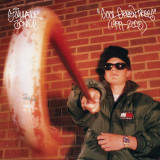
The cover photo is a picture of Sam standing on his back porch in the latter part of 1998, just before he got his first sampler. He was 13 years old, in 8th grade. His dad took the picture with his 35mm film camera: "I actually wanted to be pointing my dad's .22 pistol at the camera lens but he wouldn't let me. He gave me an old walking cane to use instead. The Tommy Hilfiger puffer jacket came from the lost and found at William Fleming High School where my mom worked as a secretary. I was thrilled when she brought it home because we never spent money on expensive name brand clothing like that - we were for the most part strictly a sale rack, bargain bin, thrift store, yard sale, flea market kind of family when it came to clothes. My watch is some cheap off-brand fake gold department store watch." Mastering for this vinyl edition was overseen by Be With regular Simon Francis and it was cut by the esteemed Cicely Balston at Abbey Road Studios to be pressed in the Netherlands by Record Industry.
A highly respected figure for dancers and artists alike, Markus Suckut offers his signature built-to-last sound to Fuse with 'Moments'. In this style, confidence is key and Suckut provides soul to club music in a way few have been able to. Simple yet ever so refined, the German artist furthers his sound with the Belgian label with rolling tracks that reach beyond the dancefloor yet again. 'Moments' is just that, a collection of instances spent inside the mind or outwards into the world in order to move and connect.
The A1 remains usually the first impression of every record, so it makes sense that 'Patience' would mark the beginning of this eight release for the Brussels' club. A bubbly yet impactful track, 'Patience' rolls through six minutes in no time with eccentric percussion and a viscous low-end. Unafraid to break the codes in order to push his sound forward while respecting the essence of what makes the genre great, Suckut puts years of mastery at work in order to find balance and air between his elements. This impressive low-end rhythm is continued into 'Resurrection' - which is more of an exploration of dissonance and texture than its predecessor. With hi-hats whipping around the stereo field through metallic bends and a harmonic kick/bass, the record knows for what context 'Resurrection' is reserved for. 'Myth' then comes along to lighten the load with a positive groove and an extraverted arrangement, maintaining balance to the overall EP. Complete with a subtly modulating live-played percussion that echoes the character of a vocal and layered over an almost vintage drum sequence, the persistence of 'Myth' finds a sweet spot between techno and house, making it a versatile tool in almost any record bag. The soul of the EP, however, belongs to its title track 'Moments'. Appropriately named, this fourth piece concludes Markus Suckut's latest statement for the dancefloor. A suspension of time in structure as much as in melody, the producer takes the time to unveil each element of the record while maintaining a burning intriguing throughout. A truly timeless piece reserved for only the most special moments and most deserving crowds, Suckut proves once again that his understanding of emotion through his medium will echo his music across the world for years to come.
I’d clocked this kid coming in to the shop over the last 6 months, quiet, serious, head down, digging through ALL the records, intently listening and then buying and scurrying off… Not the most chatty BUT he did let slip he was making music, and then it made sense, he was in the shop for one reason and one reason only… to find music he could use to make his own music. The kid is 17 this is the start of his musical journey. I suppose its been a Bristol thing for a long time, maybe its the same in other cities but here there’s been people taking other people’s music and bending it to their own will for a long time, making it their’s but also somehow making it OURS, it always seems to sound like its from here… So when ZEE asked if he could play me some music he’d made it wasn’t a surprise that it sounded like it came from here, the darkness, the clever twists and turns, soulful but heavy… I said it sounded like ’Shoegaze Hip-Hop’ which he seemed to like… So here’s three tracks that I hope you dig them as much as I do…. Tom Friend (Friendly Records).
Dark, brooding hip-hop instrumentals that joins the dots between Company Flow, The Bug and Dilla. A killer vibe from tipped new West Country producer, ZEE! Limited gold vinyl copies available in an edition of 100 — don't miss!
- Intro
- Oracle Bone Script
- Mosquito
- Thief And The Bell
- Horse Accupuncture (Ft. Agung Mango & Nakama.)
- The Well
- Haste
- Interlude
- Dragon Tail
- Minesweeper
- Tiger And The Ceiling
- Snake Head
- Crabs
- Iron Butterflies
- Grace
- Libations/Roots
This is what you get when an emcee/producer is fed on a diet of abstract hip-hop, Southeast Asian samples, and Taoist folklore. Together with the Clementi Sound Appreciation Club (a five-piece band of up-and-coming musicians schooled in jazz from the local scene in Singapore), Mary Sue melts samples with live instrumentation on 'Porcelain Shield, Paper Sword.' At the core of the album is the tale of a time-traveling oracle, struggling to find meaning in the modern world-where ancient wisdom feels fragile, and truth is ever-shifting. A reinterpretation of idioms shapes its journey, where spiritual pursuits feel performative, and where the weight of the past clashes with an uncertain future. The music mirrors this tension: phrases of Gamelan music dissolve into smoky brass, spectral melodies unravel over off-kilter drums, and time bends through layered textures. 'Porcelain Shield, Paper Sword' is both a reckoning and a dream, where echoes of the past find new life in the chaos of now. A porcelain shield shatters on impact; a paper sword folds before it cuts. It's about the constant, fragile push-and-pull between aesthetics and money, tradition and progress, meaning and spectacle. "Like the oracle, we're all stuck in a world where spiritual longing gets tangled up with consumerism, where authenticity is blurred by performance, and where finding real meaning feels shakier than ever," rapper and producer Mary Sue explains. "'Porcelain Shield, Paper Sword' lives in that field of tension. The album drifts between beauty and collapse, truth and illusion, and past and present, without ever landing on solid ground."