Search:best move

Styles
All
L7 - Hungry for Stink LP

L7

Hungry for Stink LP

12inchRLGM14461PMI
REAL GONE MUSIC
30.10.2022

L7 wasn’t just one of the best all-female
bands of the late ‘80s and ‘90s; they
were one of the best bands, period,
paving the way for the grunge and
riot grrrl movements with killer songs,
crunching riffs, and badass attitude.
And their 1994 masterpiece Hungry
for Stink is arguably their best and
most consistent record, featuring
such fan favorites as “Fuel My Fire”
and “Andres,” along with “Shirley,”
their tribute to drag racer Shirley
Muldowney, and “Questioning My
Sanity,” which unflinchingly tackles the
subject of depression. Our Real Gone
reissue includes the lyric sheet that
came with the original (and very rare)
LP release, and comes in a bloodshot
vinyl pressing. Must be played loud or
not at all!

pre-order now30.10.2022

expected to be published on 30.10.2022

41,98
Kim Salmon And The Surrealists - Grand Unifying Theory

As a teen Kim Salmon blew his mind on the fusion of Miles Davis' Bitches Brew, the stellar freakout of Sun Ra's 'Space is the Place' and the generally unhinged groove of Can's Ege Bamyasi. They showed him an alternative to just 'playin the blooze'. Then Punk Rock came along! The earlier inspirations, however, where not idealistically opposed to the free expression espoused by the punk movement. Some of the freeform freakout fusion can be heard in Kim's seminal band the Scientists on tracks like Nitro, Revhead and Human Jukebox, in fact most of what the band played throughout the nineteen eighties. As that band and decade came to a close Kim resolved to give free reign to that avant garde, jazz, in fact, downright weird streak, on his 'solo' venture The Surrealists. Their debut 'Hit Me with the Surreal Feel' is soaked in it all! Alas, as the nineties progressed, so did this band into a highly respected but conventional indie rock band. It did much successful touring around Europe, the USA and Australia on its own and with the likes of, U2, The Bad Seeds, Jon Spencer and the Cramps. It's best known and best selling album was 1993's Sin Factory. With the 2006 reunion of the Surrealists, for the Spanish Azkena Festival, Kim was re-acquainted with the free jazz/noise/ fusion bug and resolved to get the band back together for at least long enough to work through what it started back in the late 1980s. Recorded throughout 2008 and 2009 over a series of live sessions, 'Grand Unifying Theory' has the band given some framework compositions by Kim. The band - Kim, Stu Thomas and Phil Collings - then takes these ideas to the outer limits of punk/jazz/ thrash freakout!. The results are taken by Kim and producer Mike Stranges and assembled into the most far out music Kim Salmon has been responsible for to date! 'Grand Unifying Theory' with its polyrhythmic beats, its atonal keys, its heavy funk/punk grooves, its spaced out use of equipment buzz and Dictaphone.

pre-order now30.10.2022

expected to be published on 30.10.2022

20,13
Chris Crack - Growthfully Developed

Chris Crack is back with a brand new album called Growthfully Developed. Fans and critics alike are already calling it the Westside Chicago native’s best album in the last few years. Pitchfork said “Crack’s latest album is a delicate balance of fresh and familiar from one of the funniest and most thoughtful rappers working today.” With song titles like “Pussy Better When You Eat It First” and “Shitting With The Door Open,” it’s no wonder why he’s said to have the best song titles in the game. Whether it’s heavy hitting 808’s, soul loops or head nodding boom bap Chris laces up the variety of beats with style and finesse. Praised by media outlets such as Billboard and Rolling Stone as well as by iconic hip hop artists such as Earl Sweatshirt and Madlib. Like the album title suggests, Chris has fully grown and developed to reach this point in his career and critics will believe that Growthfully Developed be looked back upon as a pivotal album in his prolific career. The 18 track effort is set to drop on vinyl this fall via Chong Wizard Records in partnership with Fat Beats. TRACKLIST: 1. I The Buck They Couldn’t Break 2. Chicago Don’t Make Industry Plants 3. Therapy Don’t Work, Try Drugs 4. Jordan Never Did That Move 5. Pussy Better When You Eat it First 6. Whoa Dair 7. Celebrate Everything Until Further Notice 8. Uknowwhereihadderat 9. Ate Ball in My Sock 10. Illuminati Phone Numbers 11. Shitting with the Door Open 12. Nine 2 Fives Make You Fake 13. Beer Just Bread in a Can 14. A Blunt Forced This Trauma 15. That Hate Us Because We’re Magic 16. Air Mattresses and Machine Guns 17. Weed is an Expensive Habit 18 . No Shortcut to Enlightenment

pre-order now30.10.2022

expected to be published on 30.10.2022

32,73
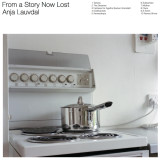
ANJA LAUVDAL - FROM A STORY NOW LOST LP

Produced by Laurel Halo and released via Norway's respected Smalltown Supersound label, Anja Lauvdal's first solo release, From a Story Now Lost, is a gorgeous musical essay reflecting on time, its perception, and lost histories rediscovered. Finally exploring her own voice after more than a decade of collaborative improvisational playing - starting at her time in jazz conservatory in Trondheim - the album is a jewel of subtle beauty and innovative detail. A freeform musician on piano, synthesizers, and electronics, Lauvdal's discography stretches back to 2013 and includes her participation in a myriad of ensembles and collaborations exploring the limits of sound and music in many forms, including noise, jazz, and more. Following her move to Oslo after graduation, she became deeply embedded in the music community there, touring with Jenny Hval as well as playing on her records. When pandemic hit and isolation was the norm, Lauvdal began working on her own, recording her improvisations in an attempt to capture something new for herself. Connecting to Laurel Halo via Smalltown's founder Joakim Haugland, the acclaimed American artist agreed to work with Lauvdal in shaping her solo record, becoming integral to its creation through all of its stages. Lauvdal credits Halo as a deep listener and gentle "thought-provoker", who contributed ideas as well as helping to shape the finished versions (Halo also worked alongside Rashad Becker on the final mix of the album). Together, they found a method of recording Lauvdal's improvisations, making small loops from those, feeding them back into the synthesizers, and making synthesizers out of the improvisations, which Lauvdal would then re-improvise with. She describes the end result, "like seeing different pieces of time around in the universe." While the record is based on Lauvdal's improvisations, some tracks were inspired Agathe Backer Grondahl, a Norwegian classical pianist and composer from the latter half of the 19th century. Lauvdal notes that Grondahl is not widely known, although her best friend Edvard Grieg is still considered Norway's most famous composer. Yet now, partly through Lauvdal, her story resurfaces and persists. "From a Story Now Lost means the story is still there," Lauvdal explains. "It hasn't gone anywhere even though nobody heard it, or maybe you're hearing it for the first time. And actually it was told a long time ago - maybe you weren't ready to hear that story at the time." This hints at the limitless nature of her music, as well as its new emotional texture. Direct in its vulnerability, immediate in its tenderness, From a Story Now Lost is a sophisticated evocation over restrained artistry spilling over with meaning.

pre-order now28.10.2022

expected to be published on 28.10.2022

21,22
VARIOUS - BUZZSAW JOINT CUT 08 LP

Limitierte Auflage - nur 500 Exemplare - alle auf violettem Vinyl. Buzzsaw Joint ist eine monatlich stattfindende Londoner Clubnacht, die die Fans mit einer hochoktanigen Mischung aus Rhythm & Blues und Rock & Roll Trash betankt. Buzzsaw Chef Fritz hat zudem eine Mixcloud Seite ins Leben gerufen, mit Mixen zum Thema von Sammlern und Jägern rund um den Globus. Da war es nur folgerichtig, dass das ganze auch auf Vinyl und CD stattfindet. Mit Stag-O-Lee fand sich schnell jemand, der das für eine gute Idee hielt. Mehr Volumen/Cuts to follow. Get your ears around the wild"n"weird sounds of the extraordinary and inimitable Buzzsaw Joint! Für den 8. Cut der Buzzsaw Joint Serie wühlen Johnny Alpha und Carl Combover in ihren reich bestückten 7"-Kisten. Beide sind Meister in Sachen sleazy, greasy und fuzzy. Carl ist Chef der Go Go Cage Nacht in Liverpool und Johnny legt in und um Wigan (legendärer Ort - Wigan Casino!) auf. Beide sind auch weltweit gefragt und unterwegs. Für Cut 8 wählten sie Tracks, die sich nicht auf anderen, ähnlich gelagerten, Compilations finden. Ein weiteres Highlight in dieser starken Serie.

pre-order now28.10.2022

expected to be published on 28.10.2022

21,22
Dragonette - Twennies

Dragonette

Twennies

12inch4050538830972
BMG Rights Management
28.10.2022

Overview:

With a career spanning over fifteen years, Dragonette, who is Martina Sorbara, has scored numerous global hits including "Pick Up the Phone," "Let it Go," "Tokyo Nights" with Digital Farm Animals and Shaun Frank, “Outlines" with Mike Mago, “Slow Song” with The Knocks, and the chart-topping “Hello" with Martin Solveig, which garnered a JUNO Award win for 'Dance Recording of the Year’ and returned to the Billboard Dance Charts just last year.

With Twennies being released on 28 October, Dragonette moves into the newest chapter of her illustrious career, looking forward with more wisdom, experience and confidence than ever before, creating her best work to date. Twennies marks a full-circle moment for Dragonette. “It’s a true hybrid of my original influences as a child and what I’ve learned along the way. It feels so representative of my musical journey.” She adds, “It’s my favorite thing I’ve ever done. I’m so proud of it.”

As a songwriter her credits include Keith Urban, Cyndi Lauper, Pretty Sister, and Carly Rae Jepsen, among others. Collaborating with the world’s biggest DJs including Martin Garrix, Basement Jaxx, Kaskade, Galantis, and more, Dragonette’s musical diversity knows no bounds.

pre-order now28.10.2022

expected to be published on 28.10.2022

27,69
Lee Tracy & Isaac Manning - Is it What You Want

As the sun sets on a quaint East Nashville house, a young man bares a piece of his soul. Facing the camera, sporting a silky suit jacket/shirt/slacks/fingerless gloves ensemble that announces "singer" before he's even opened his mouth, Lee Tracy Johnson settles onto his stage, the front yard. He sways to the dirge-like drum machine pulse of a synth-soaked slow jam, extends his arms as if gaining his balance, and croons in affecting, fragile earnest, "I need your love… oh baby…"

Dogs in the yard next door begin barking. A mysterious cardboard robot figure, beamed in from galaxies unknown and affixed to a tree, is less vocal. Lee doesn't acknowledge either's presence. He's busy feeling it, arms and hands gesticulating. His voice rises in falsetto over the now-quiet dogs, over the ambient noise from the street that seeps into the handheld camcorder's microphone, over the recording of his own voice played back from a boombox off-camera. After six minutes the single, continuous shot ends. In this intimate creative universe there are no re-takes. There are many more music videos to shoot, and as Lee later puts it, "The first time you do it is actually the best. Because you can never get that again. You expressing yourself from within."

"I Need Your Love" dates from a lost heyday. From some time in the '80s or early '90s, when Lee Tracy (as he was known in performance) and his music partner/producer/manager Isaac Manning committed hours upon hours of their sonic and visual ideas to tape. Embracing drum machines and synthesizers – electronics that made their personal futurism palpable – they recorded exclusively at home, live in a room into a simple cassette deck. Soul, funk, electro and new wave informed their songs, yet Lee and Isaac eschewed the confinement of conventional categories and genres, preferring to let experimentation guide them.

"Anytime somebody put out a new record they had the same instruments or the same sound," explains Isaac. "So I basically wanted to find something that's really gonna stand out away from all of the rest of 'em." Their ethos meant that every idea they came up with was at least worth trying: echoed out half-rapped exhortations over frantic techno-style beats, gospel synth soul, modal electro-funk, oddball pop reinterpretations, emo AOR balladry, nods to Prince and the Fat Boys, or arrangements that might collapse mid-song into a mess of arcade game-ish blips before rallying to reach the finish line. All of it conjoined by consistent tape hiss, and most vitally, Lee's chameleonic voice, which managed to wildly shape shift and still evoke something sincere – whether toggling between falsetto and tenor exalting Jesus's return, or punctuating a melismatic romantic adlib with a succinct, "We all know how it feels to be alone."

"People think we went to a studio," says Isaac derisively. "We never went to no studio. We didn't have the money to go to no studio! We did this stuff at home. I shot videos in my front yard with whatever we could to get things together." Sometimes Isaac would just put on an instrumental record, be it "Planet Rock" or "Don't Cry For Me Argentina" (from Evita), press "record," and let Lee improvise over it, yielding peculiar love songs, would-be patriotic anthems, or Elvis Presley or Marilyn Monroe tributes. Technical limitations and a lack of professional polish never dissuaded them. They believed they were onto something.

"That struggle," Isaac says, "made that sound sound good to me."

In the parlance of modern music criticism Lee and Isaac's dizzying DIY efforts would inevitably be described as "outsider." But "outsider" carries the burden of untold additional layers of meaning if you're Black and from the South, creating on a budget, and trying to get someone, anyone within the country music capital of the world to take your vision seriously. "What category should we put it in?" Isaac asks rhetorically. "I don't know. All I know is feeling. I ain't gonna name it nothing. It's music. If it grabs your soul and touch your heart that's what it basically is supposed to do."

=

Born in 1963, the baby boy of nine siblings, Lee Tracy spent his earliest years living amidst the shotgun houses on Nashville's south side. "We was poor, man!" he says, recalling the outhouse his family used for a bathroom and the blocks of ice they kept in the kitchen to chill perishables. "But I actually don't think I really realized I was in poverty until I got grown and started thinking about it." Lee's mom worked at the Holiday Inn; his dad did whatever he had to do, from selling fruit from a horse drawn cart to bootlegging. "We didn't have much," Lee continues, "but my mother and my father got us the things we needed, the clothes on our back." By the end of the decade with the city's urban renewal programs razing entire neighborhoods to accommodate construction of the Interstate, the family moved to Edgehill Projects. Lee remembers music and art as a constant source of inspiration for he and his brothers and sisters – especially after seeing the Jackson 5 perform on Ed Sullivan. "As a small child I just knew that was what I wanted to do."

His older brother Don began musically mentoring him, introducing Lee to a variety of instruments and sounds. "He would never play one particular type of music, like R&B," says Lee. "I was surrounded by jazz, hard rock and roll, easy listening, gospel, reggae, country music; I mean I was a sponge absorbing all of that." Lee taught himself to play drums by beating on cardboard boxes, gaining a rep around the way for his timekeeping, and his singing voice. Emulating his favorites, Earth Wind & Fire and Cameo, he formed groups with other kids with era-evocative band names like Concept and TNT Connection, and emerged as the leader of disciplined rehearsals. "I made them practice," says Lee. "We practiced and practiced and practiced. Because I wanted that perfection." By high school the most accomplished of these bands would take top prize in a prominent local talent show. It was a big moment for Lee, and he felt ready to take things to the next level. But his band-mates had other ideas.

"I don't know what happened," he says, still miffed at the memory. "It must have blew they mind after we won and people started showing notice, because it's like everybody quit! I was like, where the hell did everybody go?" Lee had always made a point of interrogating prospective musicians about their intentions before joining his groups: were they really serious or just looking for a way to pick up girls? Now he understood even more the importance of finding a collaborator just as committed to the music as he was.

=

Isaac Manning had spent much of his life immersed in music and the arts – singing in the church choir with his family on Nashville's north side, writing, painting, dancing, and working various gigs within the entertainment industry. After serving in the armed forces, in the early '70s he ran The Teenage Place, a music and performance venue that catered to the local youth. But he was forced out of town when word of one of his recreational routines created a stir beyond the safe haven of his bohemian circles.

"I was growing marijuana," Isaac explains. "It wasn't no business, I was smoking it myself… I would put marijuana in scrambled eggs, cornbread and stuff." His weed use originated as a form of self-medication to combat severe tooth pain. But when he began sharing it with some of the other young people he hung out with, some of who just so happened to be the kids of Nashville politicians, the cops came calling. "When I got busted," he remembers, "they were talking about how they were gonna get rid of me because they didn't want me saying nothing about they children because of the politics and stuff. So I got my family, took two raggedy cars, and left Nashville and went to Vegas."

Out in the desert, Isaac happened to meet Chubby Checker of "The Twist" fame while the singer was gigging at The Flamingo. Impressed by Isaac's zeal, Checker invited him to go on the road with him as his tour manager/roadie/valet. The experience gave Isaac a window into a part of the entertainment world he'd never encountered – a glimpse of what a true pop act's audience looked like. "Chubby Checker, none of his shows were played for Black folks," he remembers. "All his gigs were done at high-class white people areas." Returning home after a few years with Chubby, Isaac was properly motivated to make it in Music City. He began writing songs and scouting around Nashville for local talent anywhere he could find it with an expressed goal: "Find someone who can deliver your songs the way you want 'em delivered and make people feel what you want them to feel."

One day while walking through Edgehill Projects Isaac heard someone playing the drums in a way that made him stop and take notice. "The music was so tight, just the drums made me feel like, oh I'm-a find this person," he recalls. "So I circled through the projects until I found who it was.

"That's how I met him – Lee Tracy. When I found him and he started singing and stuff, I said, ohhh, this is somebody different."

=

Theirs was a true complementary partnership: young Lee possessed the raw talent, the older Isaac the belief. "He's really the only one besides my brother and my family that really seen the potential in me," says Lee. "He made me see that I could do it."

Isaac long being a night owl, his house also made for a fertile collaborative environment – a space where there always seemed to be a new piece of his visual art on display: paintings, illustrations, and dolls and figures (including an enigmatic cardboard robot). Lee and Issac would hang out together and talk, listen to music, conjure ideas, and smoke the herb Isaac had resumed growing in his yard. "It got to where I could trust him, he could trust me," Isaac says of their bond. They also worked together for hours on drawings, spreading larges rolls of paper on the walls and sketching faces with abstract patterns and imagery: alien-like beings, tri-horned horse heads, inverted Janus-like characters where one visage blurred into the other.

Soon it became apparent that they didn't need other collaborators; self-sufficiency was the natural way forward. At Isaac's behest Lee, already fed up with dealing with band musicians, began playing around with a poly-sonic Yamaha keyboard at the local music store. "It had everything on it – trumpet, bass, drums, organ," remembers Lee. "And that's when I started recording my own stuff."

The technology afforded Lee the flexibility and independence he craved, setting him on a path other bedroom musicians and producers around the world were simultaneously following through the '80s into the early '90s. Saving up money from day jobs, he eventually supplemented the Yamaha Isaac had gotten him with Roland and Casio drum machines and a Moog. Lee was living in an apartment in Hillside at that point caring for his dad, who'd been partially paralyzed since early in life. In the evenings up in his second floor room, the music put him in a zone where he could tune out everything and lose himself in his ideas.

"Oh I loved it," he recalls. "I would really experiment with the instruments and use a lot of different sound effects. I was looking for something nobody else had. I wanted something totally different. And once I found the sound I was looking for, I would just smoke me a good joint and just let it go, hit the record button." More potent a creative stimulant than even Isaac's weed was the holistic flow and spontaneity of recording. Between sessions at Isaac's place and Lee's apartment, their volume of output quickly ballooned.

"We was always recording," says Lee. "That's why we have so much music. Even when I went to Isaac's and we start creating, I get home, my mind is racing, I gotta start creating, creating, creating. I remember there were times when I took a 90-minute tape from front to back and just filled it up."

"We never practiced," says Isaac. "See, that was just so odd about the whole thing. I could relate to him, and tell him about the songs I had ideas for and everything and stuff. And then he would bring it back or whatever, and we'd get together and put it down." Once the taskmaster hell bent on rehearsing, Lee had flipped a full 180. Perfection was no longer an aspiration, but the enemy of inspiration.

"I seen where practicing and practicing got me," says Lee. "A lot of musicians you get to playing and they gotta stop, they have to analyze the music. But while you analyzing you losing a lot of the greatness of what you creating. Stop analyzing what you play, just play! And it'll all take shape."

=

"I hope you understood the beginning of the record because this was invented from a dream I had today… (You tell me, I'll tell you, we'll figure it out together)" – Lee Tracy and Isaac Manning, "Hope You Understand"

Lee lets loose a maniacal cackle when he acknowledges that the material that he and Isaac recorded was by anyone's estimation pretty out there. It's the same laugh that commences "Hope You Understand" – a chaotic transmission that encapsulates the duality at the heart of their music: a stated desire to reach people and a compulsion to go as leftfield as they saw fit.

"We just did it," says Lee. "We cut the music on and cut loose. I don't sit around and write. I do it by listening, get a feeling, play the music, and the lyrics and stuff just come out of me."

The approach proved adaptable to interpreting other artists' material. While recording a cover of Whitney Houston's pop ballad "Saving All My Love For You," Lee played Whitney's version in his headphones as he laid down his own vocals – partially following the lyrics, partially using them as a departure point. The end result is barely recognizable compared with the original, Lee and Isaac having switched up the time signature and reinvented the melody along the way towards morphing a slick mainstream radio standard into something that sounds solely their own.

"I really used that song to get me started," says Lee. "Then I said, well I need something else, something is missing. Something just came over me. That's when I came up with 'Is It What You Want.'"

The song would become the centerpiece of Lee and Isaac's repertoire. Pushed along by a percolating metronomic Rhythm King style beat somewhere between a military march and a samba, "Is It What You Want" finds Lee pleading the sincerity of his commitment to a potential love interest embellished by vocal tics and hiccups subtlely reminiscent of his childhood hero MJ. Absent chord changes, only synth riffs gliding in and out like apparitions, the song achieves a lingering lo-fi power that leaves you feeling like it's still playing, somewhere, even after the fade out.

"I don't know, it's like a real spiritual song," Lee reflects. "But it's not just spiritual. To me the more I listen to it it's like about everything that you do in your everyday life, period. Is it what you want? Do you want a car or you don't want a car? Do you want Jesus or do you want the Devil? It's basically asking you the question. Can't nobody answer the question but you yourself."

In 1989 Lee won a lawsuit stemming from injuries sustained from a fight he'd gotten into. He took part of the settlement money and with Isaac pressed up "Saving All My Love For You" b/w "Is It What You Want" as a 45 single. Isaac christened the label One Chance Records. "Because that's all we wanted," he says with a laugh, "one chance."

Isaac sent the record out to radio stations and major labels, hoping for it to make enough noise to get picked up nationally. But the response he and Lee were hoping for never materialized. According to Isaac the closest the single got to getting played on the radio is when a disk jock from a local station made a highly unusual announcement on air: "The dude said on the radio, 107.5 – 'We are not gonna play 'Is It What You Want.' We cracked up! Wow, that's deep.

"It was a whole racist thing that was going on," he reflects. "So we just looked over and kept on going. That was it. That was about the way it goes… If you were Black and you were living in Nashville and stuff, that's the way you got treated." Isaac already knew as much from all the times he'd brought he and Lee's tapes (even their cache of country music tunes) over to Music Row to try to drum up interest to no avail.

"Isaac, he really worked his ass off," says Lee. "He probably been to every record place down on Music Row." Nashville's famed recording and music business corridor wasn't but a few blocks from where Lee grew up. Close enough, he remembers, for him to ride his bike along its back alleys and stumble upon the occasional random treasure, like a discarded box of harmonicas. Getting in through the front door, however, still felt a world away.

"I just don't think at the time our music fell into a category for them," he concedes. "It was before its time."

=

Lee stopped making music some time in the latter part of the '90s, around the time his mom passed away and life became increasingly tough to manage. "When my mother died I had a nervous breakdown," he says, "So I shut down for a long time. I was in such a sadness frame of mind. That's why nobody seen me. I had just disappeared off the map." He fell out of touch with Isaac, and in an indication of just how bad things had gotten for him, lost track of all the recordings they'd made together. Music became a distant memory.

Fortunately, Isaac kept the faith. In a self-published collection of his poetry – paeans to some of his favorite entertainment and public figures entitled Friends and Dick Clark – he'd written that he believed "music has a life of its own." But his prescience and presence of mind were truly manifested in the fact that he kept an archive of he and Lee's work. As perfectly imperfect as "Is It What You Want" now sounds in a post-Personal Space world, Lee and Isaac's lone official release was in fact just a taste. The bulk of the Is It What You Want album is culled from the pair's essentially unheard home recordings – complete songs, half-realized experiments, Isaac's blue monologues and pronouncements et al – compiled, mixed and programmed in the loose and impulsive creative spirit of their regular get-togethers from decades ago. The rest of us, it seems, may have finally caught up to them.

On the prospect of at long last reaching a wider audience, Isaac says simply, "I been trying for a long time, it feels good." Ever the survivor, he adds, "The only way I know how to make it to the top is to keep climbing. If one leg break on the ladder, hey, you gotta fix it and keep on going… That's where I be at. I'll kill death to make it out there."

For Lee it all feels akin to a personal resurrection: "It's like I was in a tomb and the tomb was opened and I'm back… Man, it feels so great. I feel like I'm gonna jump out of my skin." Success at this stage of his life, he realizes, probably means something different than what it did back when he was singing and dancing in Isaac's front yard. "What I really mean by 'making it,'" he explains isn't just the music being heard but, "the story being told."

Occasionally Lee will pull up "Is It What You Want" on YouTube on his phone, put on his headphones, and listen. He remembers the first time he heard his recorded voice. How surreal it was, how he thought to himself, "Is that really me?" What would he say to that younger version of himself now?

"I would probably tell myself, hang in there, don't give up. Keep striving for the goal. And everything will work out."

Despite what's printed on the record label, sometimes you do get more than one chance.

out of Stock

Order now and we will order the item for you at our supplier.

11,72

Last In: 3 years ago
Air Waves - The Dance

Air Waves

The Dance

12inchFIRELP665
Fire Records
14.10.2022

Heady with hooks and unforgettable melodies, gliding on deeply danceable grooves, always with Air Waves’ innate compassion, concision and uncanny pop sense shining throughout. A masterpiece that’s beautifully simple, instantly accessible and entirely addictive. Featuring Cass Mccombs, Skyler Skjelset (Fleet Foxes, Beach House), Luke Temple, Brian Betancourt (Hospitality, Sam Evian), Rina Mushonga, Frankie Cosmos, Lispector, David Christian, Ethan Sass, and Ben Florencio. ‘The Dance’ has waited three years to see the light of day and it comes to us now, blinking, smiling in the widening light of 2022 feeling more needed and necessary but also more joyous than ever before. It’s both a snapshot of these songs as they were recorded but crucially, in the intervening time those songs have had additional arrangements crafted by Nicole, created remotely and virtually, with a few like-minded collaborators. The result is simultaneously Air Waves freshest, most spontaneous yet finessed album yet. Nicole Schneit released their first independent album in 2009 under the Air Waves moniker, a name inspired by a Guided By Voices song - subsequent albums like 2010’s ‘Dungeon Dots’ (which featured a guest vocal from fellow Brooklynite Sharon Van Etten), 2015’s ‘Parting Glances’ and 2017’s stunning ‘Warrior’ crystallised Schneit’s vision of loose-but-focused, convivial but startling pop. ‘The Dance’ continues that trajectory but finds Schneit opening up their music to a more fluid sense of space and movement, while keeping their lyrical eye between the personal and the political, from the specific to the universal with a haiku-like directness and suggestion. You won’t find a better soundtrack for the solidarity, strength, romance and movement we all need right now than ‘The Dance’ - Air Waves’ best album yet // “There is a rawness, both musical and emotional, proving that the simplest ways to communicate feelings are sometimes the most effective” Pitchfork // “More varied and ambitious than ever” Stereogum // Track List A1 The Roof (feat. Luke Temple & Rina Mushonga) A2 The Dance A3 Star Earring (feat. Lispector) A4 Alien (feat. Cass McCombs) B1 Black Metal Demon (feat. Frankie Cosmos & Merce Lemon) B2 Treehouse B3 Wait B4 The Light B5 Peer Peer

pre-order now14.10.2022

expected to be published on 14.10.2022

22,65
Klaus Weiss - Open Space Motion (Underscores)

They say: "Contemporary synthesizer sounds illustrating wide open space activities, environment and research."

We say: Panoramic proto-techno underwater-electro library dynamite.

One of the hardest pulls on the seminal Coloursound, Open Space Motion (Underscores) isn't just regarded as one of the best releases from library-funk overlord Klaus Weiss. It's one of the very best library records ever.

As cult as it gets when it comes to library music, the Klaus Weiss sound was built on top of sometimes funky, sometimes frenetic, but always hard-hitting drums. AND YET! Open Space Motion departs from his drum-heavy approach by being completely...BEATLESS! That's right, the virtuoso beat smith, Mr "drumcrazy of Deutschland", a man known for snapping necks at will, crafted one of the most horizontally sumptuous, elegantly sweeping electronic masterpieces, sans-drums, a good decade before chill-out rooms became a thing. It features organic instruments married to pulsing synth bass atop brilliantly subdued yet irresistibly funky percussion. Possessing a very special vibe, that's at once futuristic yet cinematic, it overflows with atmosphere.

The highlights - unsurprisingly - are many. The very first track - the unstoppable "Wide Open Space Motion" - is a sinister, string-fried electro bomb that rides an unrelenting bass loop. "Incessant Efforts" is more reflective, with pastoral yet probing flutes atop strutting synth chords and head-nod percussion that really swings. The heavenly, uber-kosmiche "Pink Sails" hovers over swirling neon-synthy-strings and yet more unobtrusive percussion. The beautiful "Transiency" is a dramatic piano-led underscore, its creeping unease created by patient strings, unhurried percussion and some wonderfully strident keys. "Driving Sequences" is perhaps the key tune here, and if the Detroit crew weren't listening to this staggering piece then, well, imagine if they *were*.

The bubbling rhythms of "Southern Mentality", at first ominous, give way to a more optimistic vibe as the movement progresses. The lush, gorgeous "Bows" is deep-sea slow-motion magic whilst the bright-eyed "Outset" feels as fresh as the dawn, and no less beautiful. How these tracks haven't been gobbled up by sample-driven producers is beyond us. Equally calming is the sweeping majesty of "Constellation", again conjuring images of being at one with and fully beguiled by the wonders of nature, of space, of underwater worlds. "Changing Directions" is another fidgety, propulsive non-Detroit beatless bomb.

As with all our library music re-issues, the audio for Open Space Motion comes from the original analogue tapes and has been remastered for vinyl by Be With regular Simon Francis. Richard Robinson has brought the original Coloursound sleeve back to life in all its metallic silver glory.

out of Stock

Order now and we will order the item for you at our supplier.

23,32

Last In: 3 years ago
Leonardo Marques - Flea Market Music LP

Leonardo Marques

Flea Market Music LP

12inch180GDULP09
180g
04.10.2022

-Long-awaited fourth solo effort by one of today's most talented Brazilian artists and the follow up to the now classic Early Bird album.
-Entirely written and recorded at the Ilha Do Corvo studio in Belo Horizonte, Minas Gerais, Brazil.
-180g heavy vinyl pressing, reverse board print, comes with lyrics and their English translation.

"I imagine this record to be just like a flea market, an ensemble of nostalgia, a collage of memories, of dreams, ideas, sounds, words, feelings, places, eras and styles. A unique sonic sound space that I've been trying to create for my own music. This is also a record about getting old, about the uneasiness of life, but also about how to embrace it and enjoy the ride. About taking a trip to a place and a time that we have never been to, but that we long for. " - Leonardo Marques

A multi-talented musician, singer songwriter and record producer full of tales to tell, Leonardo Marques has released three solo records – Dia e Noite no Mesmo Céu in 2012, Curvas, Lados, Linhas Tortas, Sujas e Discretas in 2015, and Early Bird in 2018. All of Leonardo's solo albums have been released in Japan by Disk Union and the latest one, Early Bird, has also been released worldwide on vinyl format by 180g x Disk Union.

Leonardo was the guitar player of Diesel (later called Udora), one of the main alternative rock bands in Brazil in the early 2000's. The band was on the main line up of the Rock in Rio III Festival, playing for over 250,000 people as an opening act for the Red Hot Chili Peppers, Silverchair, and Deftones. Leonardo then moved to Los Angeles with the band and signed a record deal with Clive Davis (J Records / RCA) and worked with Matt Wallace (Maroon 5, Faith No More), Gavin Macklop (Goo Goo Dolls, Toad the Wet Sprocket), Camus (David Byrne, Arto Lindsay), Bob Marlette (Black Sabbath, Tracy Chapman, Alice Cooper), and 16-time Grammy Award winner Thom Russo (Michael Jackson, Audioslave, Johnny Cash, Maná).

Back to Brazil a few years later, Leonardo launched his Ilha do Corvo recording studio in Belo Horizonte, Minas Gerais, Brazil. The studio is equipped with vintage instruments and gear from various decades which creates a unique sonic landscape and sound signature in each record it produces.

With Flea Market Music, Leonardo Marques presents his long-awaited fourth solo effort and the follow up to the now classic Early Bird album, with a majestic and unique musical trip into nostalgia, dreamy textures and lo-fi flavors, entirely written and recorded at his Ilha Do Corvo studio. This is essential Brazilian contemporary music at its best!

out of Stock

Order now and we will order the item for you at our supplier.

23,32

Last In: 3 years ago
Leonardo Marques - Flea Market Music LP

-Long-awaited fourth solo effort by one of today's most talented Brazilian artists and the follow up to the now classic Early Bird album.
-Entirely written and recorded at the Ilha Do Corvo studio in Belo Horizonte, Minas Gerais, Brazil.
-180g heavy vinyl pressing, reverse board print, comes with lyrics and their English translation.

"I imagine this record to be just like a flea market, an ensemble of nostalgia, a collage of memories, of dreams, ideas, sounds, words, feelings, places, eras and styles. A unique sonic sound space that I've been trying to create for my own music. This is also a record about getting old, about the uneasiness of life, but also about how to embrace it and enjoy the ride. About taking a trip to a place and a time that we have never been to, but that we long for. " - Leonardo Marques

A multi-talented musician, singer songwriter and record producer full of tales to tell, Leonardo Marques has released three solo records – Dia e Noite no Mesmo Céu in 2012, Curvas, Lados, Linhas Tortas, Sujas e Discretas in 2015, and Early Bird in 2018. All of Leonardo's solo albums have been released in Japan by Disk Union and the latest one, Early Bird, has also been released worldwide on vinyl format by 180g x Disk Union.

Leonardo was the guitar player of Diesel (later called Udora), one of the main alternative rock bands in Brazil in the early 2000's. The band was on the main line up of the Rock in Rio III Festival, playing for over 250,000 people as an opening act for the Red Hot Chili Peppers, Silverchair, and Deftones. Leonardo then moved to Los Angeles with the band and signed a record deal with Clive Davis (J Records / RCA) and worked with Matt Wallace (Maroon 5, Faith No More), Gavin Macklop (Goo Goo Dolls, Toad the Wet Sprocket), Camus (David Byrne, Arto Lindsay), Bob Marlette (Black Sabbath, Tracy Chapman, Alice Cooper), and 16-time Grammy Award winner Thom Russo (Michael Jackson, Audioslave, Johnny Cash, Maná).

Back to Brazil a few years later, Leonardo launched his Ilha do Corvo recording studio in Belo Horizonte, Minas Gerais, Brazil. The studio is equipped with vintage instruments and gear from various decades which creates a unique sonic landscape and sound signature in each record it produces.

With Flea Market Music, Leonardo Marques presents his long-awaited fourth solo effort and the follow up to the now classic Early Bird album, with a majestic and unique musical trip into nostalgia, dreamy textures and lo-fi flavors, entirely written and recorded at his Ilha Do Corvo studio. This is essential Brazilian contemporary music at its best!

pre-order now30.09.2022

expected to be published on 30.09.2022

26,35
Lee Tracy & Isaac Manning - Is it What You Want LP

As the sun sets on a quaint East Nashville house, a young man bares a piece of his soul. Facing the camera, sporting a silky suit jacket/shirt/slacks/fingerless gloves ensemble that announces "singer" before he's even opened his mouth, Lee Tracy Johnson settles onto his stage, the front yard. He sways to the dirge-like drum machine pulse of a synth-soaked slow jam, extends his arms as if gaining his balance, and croons in affecting, fragile earnest, "I need your love… oh baby…"

Dogs in the yard next door begin barking. A mysterious cardboard robot figure, beamed in from galaxies unknown and affixed to a tree, is less vocal. Lee doesn't acknowledge either's presence. He's busy feeling it, arms and hands gesticulating. His voice rises in falsetto over the now-quiet dogs, over the ambient noise from the street that seeps into the handheld camcorder's microphone, over the recording of his own voice played back from a boombox off-camera. After six minutes the single, continuous shot ends. In this intimate creative universe there are no re-takes. There are many more music videos to shoot, and as Lee later puts it, "The first time you do it is actually the best. Because you can never get that again. You expressing yourself from within."

"I Need Your Love" dates from a lost heyday. From some time in the '80s or early '90s, when Lee Tracy (as he was known in performance) and his music partner/producer/manager Isaac Manning committed hours upon hours of their sonic and visual ideas to tape. Embracing drum machines and synthesizers – electronics that made their personal futurism palpable – they recorded exclusively at home, live in a room into a simple cassette deck. Soul, funk, electro and new wave informed their songs, yet Lee and Isaac eschewed the confinement of conventional categories and genres, preferring to let experimentation guide them.

"Anytime somebody put out a new record they had the same instruments or the same sound," explains Isaac. "So I basically wanted to find something that's really gonna stand out away from all of the rest of 'em." Their ethos meant that every idea they came up with was at least worth trying: echoed out half-rapped exhortations over frantic techno-style beats, gospel synth soul, modal electro-funk, oddball pop reinterpretations, emo AOR balladry, nods to Prince and the Fat Boys, or arrangements that might collapse mid-song into a mess of arcade game-ish blips before rallying to reach the finish line. All of it conjoined by consistent tape hiss, and most vitally, Lee's chameleonic voice, which managed to wildly shape shift and still evoke something sincere – whether toggling between falsetto and tenor exalting Jesus's return, or punctuating a melismatic romantic adlib with a succinct, "We all know how it feels to be alone."

"People think we went to a studio," says Isaac derisively. "We never went to no studio. We didn't have the money to go to no studio! We did this stuff at home. I shot videos in my front yard with whatever we could to get things together." Sometimes Isaac would just put on an instrumental record, be it "Planet Rock" or "Don't Cry For Me Argentina" (from Evita), press "record," and let Lee improvise over it, yielding peculiar love songs, would-be patriotic anthems, or Elvis Presley or Marilyn Monroe tributes. Technical limitations and a lack of professional polish never dissuaded them. They believed they were onto something.

"That struggle," Isaac says, "made that sound sound good to me."

In the parlance of modern music criticism Lee and Isaac's dizzying DIY efforts would inevitably be described as "outsider." But "outsider" carries the burden of untold additional layers of meaning if you're Black and from the South, creating on a budget, and trying to get someone, anyone within the country music capital of the world to take your vision seriously. "What category should we put it in?" Isaac asks rhetorically. "I don't know. All I know is feeling. I ain't gonna name it nothing. It's music. If it grabs your soul and touch your heart that's what it basically is supposed to do."

=

Born in 1963, the baby boy of nine siblings, Lee Tracy spent his earliest years living amidst the shotgun houses on Nashville's south side. "We was poor, man!" he says, recalling the outhouse his family used for a bathroom and the blocks of ice they kept in the kitchen to chill perishables. "But I actually don't think I really realized I was in poverty until I got grown and started thinking about it." Lee's mom worked at the Holiday Inn; his dad did whatever he had to do, from selling fruit from a horse drawn cart to bootlegging. "We didn't have much," Lee continues, "but my mother and my father got us the things we needed, the clothes on our back." By the end of the decade with the city's urban renewal programs razing entire neighborhoods to accommodate construction of the Interstate, the family moved to Edgehill Projects. Lee remembers music and art as a constant source of inspiration for he and his brothers and sisters – especially after seeing the Jackson 5 perform on Ed Sullivan. "As a small child I just knew that was what I wanted to do."

His older brother Don began musically mentoring him, introducing Lee to a variety of instruments and sounds. "He would never play one particular type of music, like R&B," says Lee. "I was surrounded by jazz, hard rock and roll, easy listening, gospel, reggae, country music; I mean I was a sponge absorbing all of that." Lee taught himself to play drums by beating on cardboard boxes, gaining a rep around the way for his timekeeping, and his singing voice. Emulating his favorites, Earth Wind & Fire and Cameo, he formed groups with other kids with era-evocative band names like Concept and TNT Connection, and emerged as the leader of disciplined rehearsals. "I made them practice," says Lee. "We practiced and practiced and practiced. Because I wanted that perfection." By high school the most accomplished of these bands would take top prize in a prominent local talent show. It was a big moment for Lee, and he felt ready to take things to the next level. But his band-mates had other ideas.

"I don't know what happened," he says, still miffed at the memory. "It must have blew they mind after we won and people started showing notice, because it's like everybody quit! I was like, where the hell did everybody go?" Lee had always made a point of interrogating prospective musicians about their intentions before joining his groups: were they really serious or just looking for a way to pick up girls? Now he understood even more the importance of finding a collaborator just as committed to the music as he was.

=

Isaac Manning had spent much of his life immersed in music and the arts – singing in the church choir with his family on Nashville's north side, writing, painting, dancing, and working various gigs within the entertainment industry. After serving in the armed forces, in the early '70s he ran The Teenage Place, a music and performance venue that catered to the local youth. But he was forced out of town when word of one of his recreational routines created a stir beyond the safe haven of his bohemian circles.

"I was growing marijuana," Isaac explains. "It wasn't no business, I was smoking it myself… I would put marijuana in scrambled eggs, cornbread and stuff." His weed use originated as a form of self-medication to combat severe tooth pain. But when he began sharing it with some of the other young people he hung out with, some of who just so happened to be the kids of Nashville politicians, the cops came calling. "When I got busted," he remembers, "they were talking about how they were gonna get rid of me because they didn't want me saying nothing about they children because of the politics and stuff. So I got my family, took two raggedy cars, and left Nashville and went to Vegas."

Out in the desert, Isaac happened to meet Chubby Checker of "The Twist" fame while the singer was gigging at The Flamingo. Impressed by Isaac's zeal, Checker invited him to go on the road with him as his tour manager/roadie/valet. The experience gave Isaac a window into a part of the entertainment world he'd never encountered – a glimpse of what a true pop act's audience looked like. "Chubby Checker, none of his shows were played for Black folks," he remembers. "All his gigs were done at high-class white people areas." Returning home after a few years with Chubby, Isaac was properly motivated to make it in Music City. He began writing songs and scouting around Nashville for local talent anywhere he could find it with an expressed goal: "Find someone who can deliver your songs the way you want 'em delivered and make people feel what you want them to feel."

One day while walking through Edgehill Projects Isaac heard someone playing the drums in a way that made him stop and take notice. "The music was so tight, just the drums made me feel like, oh I'm-a find this person," he recalls. "So I circled through the projects until I found who it was.

"That's how I met him – Lee Tracy. When I found him and he started singing and stuff, I said, ohhh, this is somebody different."

=

Theirs was a true complementary partnership: young Lee possessed the raw talent, the older Isaac the belief. "He's really the only one besides my brother and my family that really seen the potential in me," says Lee. "He made me see that I could do it."

Isaac long being a night owl, his house also made for a fertile collaborative environment – a space where there always seemed to be a new piece of his visual art on display: paintings, illustrations, and dolls and figures (including an enigmatic cardboard robot). Lee and Issac would hang out together and talk, listen to music, conjure ideas, and smoke the herb Isaac had resumed growing in his yard. "It got to where I could trust him, he could trust me," Isaac says of their bond. They also worked together for hours on drawings, spreading larges rolls of paper on the walls and sketching faces with abstract patterns and imagery: alien-like beings, tri-horned horse heads, inverted Janus-like characters where one visage blurred into the other.

Soon it became apparent that they didn't need other collaborators; self-sufficiency was the natural way forward. At Isaac's behest Lee, already fed up with dealing with band musicians, began playing around with a poly-sonic Yamaha keyboard at the local music store. "It had everything on it – trumpet, bass, drums, organ," remembers Lee. "And that's when I started recording my own stuff."

The technology afforded Lee the flexibility and independence he craved, setting him on a path other bedroom musicians and producers around the world were simultaneously following through the '80s into the early '90s. Saving up money from day jobs, he eventually supplemented the Yamaha Isaac had gotten him with Roland and Casio drum machines and a Moog. Lee was living in an apartment in Hillside at that point caring for his dad, who'd been partially paralyzed since early in life. In the evenings up in his second floor room, the music put him in a zone where he could tune out everything and lose himself in his ideas.

"Oh I loved it," he recalls. "I would really experiment with the instruments and use a lot of different sound effects. I was looking for something nobody else had. I wanted something totally different. And once I found the sound I was looking for, I would just smoke me a good joint and just let it go, hit the record button." More potent a creative stimulant than even Isaac's weed was the holistic flow and spontaneity of recording. Between sessions at Isaac's place and Lee's apartment, their volume of output quickly ballooned.

"We was always recording," says Lee. "That's why we have so much music. Even when I went to Isaac's and we start creating, I get home, my mind is racing, I gotta start creating, creating, creating. I remember there were times when I took a 90-minute tape from front to back and just filled it up."

"We never practiced," says Isaac. "See, that was just so odd about the whole thing. I could relate to him, and tell him about the songs I had ideas for and everything and stuff. And then he would bring it back or whatever, and we'd get together and put it down." Once the taskmaster hell bent on rehearsing, Lee had flipped a full 180. Perfection was no longer an aspiration, but the enemy of inspiration.

"I seen where practicing and practicing got me," says Lee. "A lot of musicians you get to playing and they gotta stop, they have to analyze the music. But while you analyzing you losing a lot of the greatness of what you creating. Stop analyzing what you play, just play! And it'll all take shape."

=

"I hope you understood the beginning of the record because this was invented from a dream I had today… (You tell me, I'll tell you, we'll figure it out together)" – Lee Tracy and Isaac Manning, "Hope You Understand"

Lee lets loose a maniacal cackle when he acknowledges that the material that he and Isaac recorded was by anyone's estimation pretty out there. It's the same laugh that commences "Hope You Understand" – a chaotic transmission that encapsulates the duality at the heart of their music: a stated desire to reach people and a compulsion to go as leftfield as they saw fit.

"We just did it," says Lee. "We cut the music on and cut loose. I don't sit around and write. I do it by listening, get a feeling, play the music, and the lyrics and stuff just come out of me."

The approach proved adaptable to interpreting other artists' material. While recording a cover of Whitney Houston's pop ballad "Saving All My Love For You," Lee played Whitney's version in his headphones as he laid down his own vocals – partially following the lyrics, partially using them as a departure point. The end result is barely recognizable compared with the original, Lee and Isaac having switched up the time signature and reinvented the melody along the way towards morphing a slick mainstream radio standard into something that sounds solely their own.

"I really used that song to get me started," says Lee. "Then I said, well I need something else, something is missing. Something just came over me. That's when I came up with 'Is It What You Want.'"

The song would become the centerpiece of Lee and Isaac's repertoire. Pushed along by a percolating metronomic Rhythm King style beat somewhere between a military march and a samba, "Is It What You Want" finds Lee pleading the sincerity of his commitment to a potential love interest embellished by vocal tics and hiccups subtlely reminiscent of his childhood hero MJ. Absent chord changes, only synth riffs gliding in and out like apparitions, the song achieves a lingering lo-fi power that leaves you feeling like it's still playing, somewhere, even after the fade out.

"I don't know, it's like a real spiritual song," Lee reflects. "But it's not just spiritual. To me the more I listen to it it's like about everything that you do in your everyday life, period. Is it what you want? Do you want a car or you don't want a car? Do you want Jesus or do you want the Devil? It's basically asking you the question. Can't nobody answer the question but you yourself."

In 1989 Lee won a lawsuit stemming from injuries sustained from a fight he'd gotten into. He took part of the settlement money and with Isaac pressed up "Saving All My Love For You" b/w "Is It What You Want" as a 45 single. Isaac christened the label One Chance Records. "Because that's all we wanted," he says with a laugh, "one chance."

Isaac sent the record out to radio stations and major labels, hoping for it to make enough noise to get picked up nationally. But the response he and Lee were hoping for never materialized. According to Isaac the closest the single got to getting played on the radio is when a disk jock from a local station made a highly unusual announcement on air: "The dude said on the radio, 107.5 – 'We are not gonna play 'Is It What You Want.' We cracked up! Wow, that's deep.

"It was a whole racist thing that was going on," he reflects. "So we just looked over and kept on going. That was it. That was about the way it goes… If you were Black and you were living in Nashville and stuff, that's the way you got treated." Isaac already knew as much from all the times he'd brought he and Lee's tapes (even their cache of country music tunes) over to Music Row to try to drum up interest to no avail.

"Isaac, he really worked his ass off," says Lee. "He probably been to every record place down on Music Row." Nashville's famed recording and music business corridor wasn't but a few blocks from where Lee grew up. Close enough, he remembers, for him to ride his bike along its back alleys and stumble upon the occasional random treasure, like a discarded box of harmonicas. Getting in through the front door, however, still felt a world away.

"I just don't think at the time our music fell into a category for them," he concedes. "It was before its time."

=

Lee stopped making music some time in the latter part of the '90s, around the time his mom passed away and life became increasingly tough to manage. "When my mother died I had a nervous breakdown," he says, "So I shut down for a long time. I was in such a sadness frame of mind. That's why nobody seen me. I had just disappeared off the map." He fell out of touch with Isaac, and in an indication of just how bad things had gotten for him, lost track of all the recordings they'd made together. Music became a distant memory.

Fortunately, Isaac kept the faith. In a self-published collection of his poetry – paeans to some of his favorite entertainment and public figures entitled Friends and Dick Clark – he'd written that he believed "music has a life of its own." But his prescience and presence of mind were truly manifested in the fact that he kept an archive of he and Lee's work. As perfectly imperfect as "Is It What You Want" now sounds in a post-Personal Space world, Lee and Isaac's lone official release was in fact just a taste. The bulk of the Is It What You Want album is culled from the pair's essentially unheard home recordings – complete songs, half-realized experiments, Isaac's blue monologues and pronouncements et al – compiled, mixed and programmed in the loose and impulsive creative spirit of their regular get-togethers from decades ago. The rest of us, it seems, may have finally caught up to them.

On the prospect of at long last reaching a wider audience, Isaac says simply, "I been trying for a long time, it feels good." Ever the survivor, he adds, "The only way I know how to make it to the top is to keep climbing. If one leg break on the ladder, hey, you gotta fix it and keep on going… That's where I be at. I'll kill death to make it out there."

For Lee it all feels akin to a personal resurrection: "It's like I was in a tomb and the tomb was opened and I'm back… Man, it feels so great. I feel like I'm gonna jump out of my skin." Success at this stage of his life, he realizes, probably means something different than what it did back when he was singing and dancing in Isaac's front yard. "What I really mean by 'making it,'" he explains isn't just the music being heard but, "the story being told."

Occasionally Lee will pull up "Is It What You Want" on YouTube on his phone, put on his headphones, and listen. He remembers the first time he heard his recorded voice. How surreal it was, how he thought to himself, "Is that really me?" What would he say to that younger version of himself now?

"I would probably tell myself, hang in there, don't give up. Keep striving for the goal. And everything will work out."

Despite what's printed on the record label, sometimes you do get more than one chance.

out of Stock

Order now and we will order the item for you at our supplier.

23,49

Last In: 3 years ago
Yhdessa - Along The Simple Line

Purple Vinyl

Concentric Records present this special edition EP by the Berlin-based duo YHDESSA - composed of Dutch-Italian composer and poly- instrumentalist Grand River and Sardinian electronic music experimentalist Enrica Falqui.

Entitled Along The Simple Line, the 5-track EP is a unique sonic journey that merges in pure form the distinct worlds of the two composers, exposing a warm and delicate essence. Perfectly punctuated, and in a pace of its own, the album gently and precisely unfolds through touching musical spaces, dramatic textures, entrancing rhythms and unexpected vocal lines, revealing a wonderful depth. The result is so perfectly uniting as if woven by the same two hands.

Yhdessa is a collaborative project made up of Grand River and Enrica Falqui which was conceptualised in 2017 while the duo shared a music studio and were living as a couple in Berlin. Their first piece, released in 2018 on the label One Instrument Records, was named after the Vermona E-Piano and is composed entirely using the analogue synthesizer that was built in 1978. Following this came their lingering soundscape Waldorf Micro Q featured on the record “One Instrument Volume 01” as well as an impelling remix of Dunes by Jiska Huizing and Rudi Valdersnes.

Aimée Portioli is a Berlin-based Dutch-Italian composer and sound designer who records and performs as Grand River. The name Grand River evokes nature, scale, and movement, all key forces in Portioli’s work. Her first release as Grand River was the resolute 2017 Crescente EP, which includes Flies, a composition named by XLR8R as one of the best tracks of that year. She followed this with her melodious debut album Pineapple (Spazio Disponibile, 2018), which garnered praise from The Quietus, amongst others. The moving and dynamic subsequent album, Blink A Few Times To Clear Your Eyes (Editions Mego, 2020) was lauded by Resident Advisor and The Verge, and was elected among the best albums of 2020 by Inverted Audio. Separately, Grand River’s work has appeared on compilations by Ghostly International, Tresor, Longform Editions and has composed an official remix for Tangerine Dream.

Enrica Falqui is a Sardinian music producer and DJ currently based in Berlin. With artistic versatility as one of her defining traits: she comfortably traverses between the dimensions of electronic music. For over a decade she has dedicated herself to the study of sound and the relentless excavation of lesser-known music, which has earned her bookings all over the world and commissions for her productions from some of the most respected labels including Marignal Returns which released Plexus, a mini-album of cool, divergent compositions. Enrica is also part of the coveted duo, ERIS, whose debut and sophomore EPs, Moments and Champions League, found their home on the illustrious Cabaret Recordings. The releases entwine the forceful with the ethereal and create an original, future-facing and club-orientated sound. Moloko, a drum-focussed track laced with weaving synths, was considered by Resident Advisor as one of the best tracks of 2019.

Aimée and Enrica’s musical union through Yhdessa, is one of colour and warmth. It expresses an experimental electro-ambient side of the two composers, to form a style that is meditative, other-worldly and at times introspective. Although, the two are now, no longer romantically engaged, they maintain a passionate friendship to match this profound musical partnership.

pre-order now23.09.2022

expected to be published on 23.09.2022

20,46
Herman Hitson - Let The Gods Sing LP

In the music business, there are certain sidemen — players who back the stars — who play with such prowess that they gain fame of their own. By all rights, Herman Hitson should be one of those people. Over the years, he played with Jimi Hendrix, James Brown, Joe Tex, Bobby Womack, Wilson Pickett, Garnet Mimms, Major Lance, Jackie Wilson, the Drifters, the Shirelles, Hank Ballard & the Midnighters and many others. “I played behind Jackie Wilson and Sam Cooke on the same doggone show,” he said, recalling one night at the Royal Peacock. Along the way, he picked up every style of music that was popular in the early years of his career. Arguably, the original seeds of psychedelic rock were planted after Hitson and Hendrix became running buddies in the early 1960s. Both were playing the Chitlin’ Circuit, tours that would load somewhere between ten and two dozen African American musicians on a bus and tour the South, playing Black nightclubs. The two spent weeks together, Herman says. As the 1970s rolled in, Herman wound up playing funk guitar, recording some tracks with the Ohio Players and releasing some of his own funk singles, including the powerful “Ain’t No Other Way,” a number firmly in the James Brown vein which he reprised on ‘Let The Gods Sing.’ In the mid-1960s, he moved to New York City, where he once again hooked up with Hendrix. Early in 1966, Herman began work on his own psychedelic rock album under the title “Free Spirit.” Hermon sang and played lead guitar, and Hendrix played bass on a few tracks that went unreleased by ATCO at the time. Those recordings wound up being the source of a controversy in the 1980s that brought Hermon’s name into the limelight in a different way. The title song of the album, “Free Spirit,” was released on two albums of music allegedly recorded by Hendrix and then “lost” to history. “That’s my song,” Herman says today. "He Hendrix didn’t never play no lead on nothing of mine. And he didn’t sing on nothing of mine. In fact, back then he thought he couldn’t sing. We had to keep pushing him". Jimi would say, ‘I can’t sing.’ I’d say, ‘Man, you don’t have to be Wilson Pickett. All you got to do is sing like you sing.” Recorded and co-produced by Bruce Watson at his Delta Sounds Studio in Memphis, Hitson’s backed on the new album by guitarist and co-producer Will Sexton and some of Memphis’ best musicians.

pre-order now23.09.2022

expected to be published on 23.09.2022

20,55
Trouble - Live In Stockholm LP (2x12")

Live in Stockholm has Trouble riffing through a fantastic greatest hits setlist that will leave no fan untouched! Finally availble on vinyl for the first time! Remastered and cut in DMM! Trouble were invited by Leif Edling and Candlemass as special guests. The vinyl release (on CD it is available as a bonus disc that we added to the remastered deluxe CD edition of “Simple Mind Condition” covers all 14 tracks the legendary Doom Metal pioneers played that evening, and by hearing Trouble in action you can hear where the band leader of Candlemass, Leif Edling, was inspired. The whole gig is 75 minutes, and the guys serve us the best (lets call it a “Greatest Hits” set) from their long career on a fantastic 2-LP. Everything is played with an incredible passion and love for the music, and it’s really fun to hear the old Doom Metal icons on stage. Eric Wagner didn’t move too so much, he mostly hung over his mic with shades and a cigarette, but that turned out great, because of his amazing voice that was still intact. The tracklist should speak for itself with classics like R.I.P., Fear, Psalm 9, Run to the Light, The Skull and more!

pre-order now23.09.2022

expected to be published on 23.09.2022

31,89
ARUSHI JAIN - UNDER THE LILAC SKY LP (2x12")

Leaving Records presents Under the Lilac Sky, the debut LP by Arushi Jain, an India-born, US-residing composer, modular synthesist, vocalist, technologist, and engineer. At six songs spanning 48 minutes of ambient synth ragas intended to be heard during the sunset hours, Under the Lilac Sky invites the listener to transport themselves through intentional listening. Jain states, “You know that moment when the sun is bidding farewell to the sky, and the colors turn into beautiful hues of purple and pink and everything in between? That is the moment that this album will shine the most. The deeper you listen, the more shades you’ll see.”

Jain’s work focuses on reinterpreting traditional Indian classical music through the lens of electronic instrumentation. She re-contextualizes ancient sounds in a modern framework, carrying the torch of electronic luminaries such as Suzanne Ciani and Terry Riley while pursuing personal explorations of her musical heritage and upbringing. Under the Lilac Sky is a cinematic statement of intent, an album that reverently nods to Jain’s musical history while presenting a bold sonic point of view. Jain states, “This album is the coming together of two distinct cultures of Hindustani classical and modular synthesizers representing the two parts of me that evolved into one whole in between my time in India and California”

Voice is emphasized as an essential element of the album, not just for the lyrics or the melodies but also as a source of texture. It is most recognizable when Jain sings aalaaps or sargam of the different ragas the songs are composed in, however her voice is deeply embedded in other, sometimes quieter layers of the record. Jain, who spent her childhood studying indian classical as a vocalist says, “At any given point, there is at least one layer in the record that carries my voice. The human voice is powerful and unique to every individual. My voice is unique to me, so I decided it should be present at all times even if it’s unrecognizable.”

Another core theme of Under the Lilac Sky is the time of day, and the role it plays in influencing how one interacts with the music. “Intrinsic to Indian classical music is the concept of Time and Seasonality. For each raga, there is a specific time of the day when it is meant to be heard for it to shine in it’s authenticity. It harkens to the question of when the environment around you is most in tune with your own sound and breath, and how it supports you in realizing your vision of the moment. This album is meant to be an ode to those timely rituals, and is best heard while you take a moment to do what you love.”

Jain’s exploratory musical ethos finds a like-minded home within Leaving Records’ “All Genre” philosophy. Jain is acutely aware of her role as a composer and modular synthesist reinterpreting a historical art form. “For Indian classical music, this is atypical. The music I compose is inspired by a centuries old tradition, yet aestheticized in a novel way, using the tools and technical innovations of analog synth movements. My art is crafted using machines that I’ve slowly fallen in love with and made my own.”

out of Stock

Order now and we will order the item for you at our supplier.

26,01

Last In: 3 years ago
Electric Callboy - TEKKNO LP+CD

ELECTRIC CALLBOY melden sich endlich mit ihrem mit Spannung erwarteten neuen Studioalbum TEKKNO zurück. Mit jeder Menge Energie und Spaß an Bord liefert die Band aus Castrop-Rauxel ein beispiellos fulminantes Metalcore-Feuerwerk ab, das seinesgleichen sucht. Auf 11 unglaublich starken Tracks, darunter die bereits veröffentlichten Hit-Singles 'We Got The Moves' und 'Pump It', zeigen ELECTRIC CALLBOY auf ihrem bisher zweifellos besten Album, was in ihnen steckt.

out of Stock

Order now and we will order the item for you at our supplier.

22,14

Last In: 3 years ago
Patrice Rushen - Patrice LP 2x12"

Patrice Rushen

Patrice LP 2x12"

2x12inchSTRUT223LP
STRUT
16.09.2022

Strut continue their Patrice Rushedn original album reissue series with the definitive edition of her influential classic ‘Now’ from 1984.

Released after the global success of ‘Straight From The Heart’ and the huge hit ‘Forget Me Nots’, ‘Now’ stripped back the arrangements and explored a new sonic palette, combining top level musicianship with the evolving studio technology of the mid-‘80s. “By this time, I had built a little home studio,” explains Patrice, “and the new synthesizers and drum machines opened a lot of possibilities. A lot of the pieces on ‘Now’ started off as demos based on these instruments and we just went with it quite naturally, adding guitar, bass and drums.”

The album continued Patrice’s unerring skill in fusing intricate jazz musicianship with infectious grooves. The solid boogie classic ‘Get Off (You Fascinate Me)’ lit up dancefloors and ‘Feels So Real’ became one of Patrice’s best loved songs, an effortless mid-tempo soul stepper. The album is also celebrated for the tender ‘Gotta Find It’ and one of Patrice’s most poignant ballads, the intricate and politically charged ‘To Each His Own’.

The album marked the end of Rushen’s tenure with Elektra before a move to Arista and remains a much-referenced part of her career. “I think it was a great representation of where we were at the time and it may have been a little bit ahead of its time”, she reflects. Famously, Jimmy Jam and Terry Lewis had become fans, attending her live shows, and, allegedly, the feel of Janet Jackson’s debut album ‘Control’ two years later was heavily influenced by Rushen’s approach on ‘Now’.

pre-order now16.09.2022

expected to be published on 16.09.2022

34,24
Rishin Singh with Martin Sturm - Mewl Infans

Deep-listening organ piece from Malaysia-born, Berlin-based composer Rishin Singh, performed by Martin Sturm on the Lizst organ in Thuringia, Germany. RIYL: Kali Malone, Anna von-Hausswolff - "An endless and captivating exploration of one organ's timbres and tones. Both whispered and shouted, large and small, close and far, Singh's work is both unsettling and a balm, and has invited me to reconsider pitch, consonance, dissonance, tension and release." – Clarice Jensen, artistic director of the American Contemporary Music Ensemble (ACME) In the 1850s the influential composer Franz Liszt, who was living in Weimar, Germany at the time, carried out, with the famous cantor Alexander Wilhelm Gottschalg, a series of “ländlichen Orgelexperimente” (rural organ experiments) in Thuringia – investigating various instruments and their capabilities for contemporary music. They eventually settled on the organ in Denstedt because of its high quality. Many years later, award-winning organist Martin Sturm would invite the Berlin-based composer Rishin Singh to repeat these “ländlichen Orgelexperimente” with him and they again chose the organ at Denstedt, now named in honour of Liszt, as the best instrument – the most flexible and expressive – to perform and record Singh's music for organ. mewl infans is a contemporary classical piece that invites modern listeners to ponder the enduring pull of an instrument that was first conceived more than 2,000 years ago and has, in recent years, been rediscovered by a new generation of composers and listeners. Throughout the larger architecture of the four movements, melodic motifs return over and over, fractured by noise, fragmented by carefully calibrated alternate tunings, dissolving into thin air, and generating drones which then transform into new melodic variations. Over the 44 minutes of the piece the organist at times attempts to exert complete control over the instrument, and at other times relinquishes all control entirely. Conceptually rigorous and emotionally charged, mewl infans rewards deep listening and patience. At times conjuring a sense of doom, at other times suspense, pastoral drift, or aquatic submersion, the album is a universe of tiny details comprised of noise and air, of the journey each tone takes from birth to expiration. HIGHLIGHTS: – Singh has been commissioned by the GRAMMY-nominated JACK Quartet. Premiere in NYC Spring 2023 – Collaborations between Singh and Sturm are ongoing: Sturm will premiere Singh’s concerto for organ, timpani, and string orchestra later this year – Sturm is the youngest professor of organ in German history – The debut album from Singh‘s ensemble Leider, A Fog Like Liars Loving, was released by Beacon Sound in May of 2021 Bios: Martin Sturm, born 1992 in South Germany, in an International award-winning organist (ION, Schwäbisch Gmünd, Festival St Albans, Haarlem, Bavarian Culture Prize, and Keck-Köppe Foundation). He performs regularly as an interpreter and organ improviser at festivals, churches, and concert halls around the world. In 2019 he was appointed Professor for Organ and Organ Improvisation at the University of Music “Franz Liszt” in Weimar (Germany), after teaching at the Universities of Music in Würzburg and Leipzig. Rishin Singh (b. Kuala Lumpur, Malaysia) is a composer and trombonist living in Berlin. He has been commissioned to compose for the JACK Quartet (US), Piano+ (US), Claire Edwardes (AUS), DNK Ensemble (NL), Prof. Martin Sturm (DE), the Amsterdam Wandelweiser Festival (NL), Quiet Music Ensemble (IE), and others. Upcoming premieres include “every day” a concerto for organ, timpani, and string orchestra (Martin Sturm, Thuringia, 2022), and “melancholy objects” a string quartet (the JACK Quartet, New York, Spring 2023). He is currently working on his first chamber opera and is the composer and lyricist for the art song ensemble Leider.

pre-order now16.09.2022

expected to be published on 16.09.2022

27,31
Items per Page:
N/ABPM
Vinyl