Search:bill orcutt
- 1
Hausu Mountain continues the HausLive series of live show recordings that capture some of the headiest moments in Chicago underground music. On HausLive 4, we rewind the clock approximately one year to May 3rd, 2024 at Constellation, where the all-star Bill Orcutt Guitar Quartet (featuring Wendy Eisenberg, Ava Mendoza, and Shane Parish) made their barn-burning Chicago debut. The series channels the spirit of the informal bootlegging and tape trading of audience recordings as pioneered by the community surrounding the Grateful Dead, honing in on the raw live energy and in-the-moment emotions that can make any show stand out in the stream of time. HausLive 4 catches the Bill Orcutt Guitar Quartet in a sublime state of tour-hardened synergy with one another as they tear through the four-string guitar compositions that Orcutt wrote for his album Music for Four Guitars (Palilalia Records, 2022) with dialed-in fingers-on-fretboard precision, while also letting those songs evolve into flights of improvisation and extend into solo and duo passages led by each of the four guitarists. As Orcutt says on tape during one of the show’s interludes, “that record is thirty minutes; this show is an hour, so we’re improvising.” The resulting free-wheeling moments combine with the rigidity of Orcutt’s meticulous four-guitar compositions to form a program of music that draws power in equal measure from the forces of chance and discipline.
In a trajectory full of about-faces, Music for Four Guitars splices the formal innovations of Bill Orcutt's software-based music into the lobe-frying, blown-out Fender hyperdrive of his most frenetic workouts with Corsano or Hoyos. And while the guitar tone here is resolutely treble-kicked—or, as Orcutt puts it, 'a bridge pickup rather than a neck pickup record'—it still wades the same melodic streams as his previous LPs (yet, as Heraclitus taught us, that stream is utterly different the second time around). Although it's a true left-field listen, Music for Four Guitars is bizarrely meditative, a Bill Orcutt Buddha Machine, a glimpse of the world of icy beauty haunting the latitudes high above the Delta (down where the climate suits your clothes)..."—Tom Carter
REISSUED!!! Received an 8.1 rating from Pitchfork. "Sadly, many will hear Chris Corsano & Bill Orcutt's latest LP, Made Out of Sound, as 'not-jazz,' though it would be more aptly described as 'not-not-jazz.' In a better world, it would warrant above-the-fold reviews in Downbeat, or an appearance on David Sanborn's late-night show (if someone would only give it back to him). More likely, we can hope for a haiku review on Byron Coley's Twitter timeline to sufficiently connect the various improvised terrains trodden by this long-time duo—but if you've been able to listen past the overmodulated icepick fidelity of Harry Pussy, it should surprise you not an iota that Orcutt's style is rooted as much in the fractal melodies of Trane and Taylor as it is in Delta syrup or Tin Pan Alley glitz. As for Corsano, well, it may seem daft to call this particular record 'jazz' (because duh, it has a drummer), but to me Corsano is beyond jazz, almost beyond music, his ambidextrous, octopoid technique grappling many stylistic levers and spraying a torrent of light from every direction. Corsano's ferocity has elevated many 'mere' improv records to transcendence, but here he's crafted his polyrhythms within more narrative channels, bringing to mind his 'mannered' playing in the lamented Flower-Corsano duo. It's not 'groove' playing precisely, but it follows many grooves simultaneously, much like Orcutt's own melodic musings—which is why they're so naturally lock-in-key here. Which maybe makes it all the more surprising that Made Out of Sound was in fact recorded in different rooms on different coasts at different times, and stitched together by Orcutt on his desktop. Corsano recorded the drums in Ithaca, NY, and (as Orcutt states), 'I didn't edit them at all. I overdubbed two guitar tracks, panned left/right. I'd listen to the drums a couple times, pick a tuning, then improvise a part, thinking of the first track as backing and the second as the 'lead', though those are pretty fluid terms. I was watching the waveforms as I was recording, so I could see when a crescendo was coming or when to bring it down.' Fluidity ties the tracks together. With a little more groove and a little less around-the-beat maneuvering, one could almost hear the boiling harmonic layers as Miles-oid in 'Man Carrying Thing,' but with new-found Sharrockian modalities, Corsano accentuating the tumbling nature of the falling notes. The Sharrock vein continues with 'How to Cook a Wolf,' its Blind Willie-esque melodic simplicity and repetition extrapolated 360-style in a repetitive descending riff that falls into Cippolina-isms (by way of Verlaine ) until the end crashes upon the shore. Much like Orcutt's last solo album, Odds Against Tomorrow, there's a gentler, almost pastoral flow to some tracks ('Some Tennessee Jar,' 'A Port in Air,' 'Thirteen Ways of Looking') that calls to mind the mixolydian swamplands of Lonnie Liston Smith—but unlike Odds , other tracks ('The Thing Itself') smash that same lyricism into overdriven, multi-dimensional melodic clumps that push several vector envelopes at once in an Interstellar Space vein. With the help of Corsano, Orcutt has managed to slither even further out of the noise/improv pigeonhole lazy listeners/writers keep trying to shove him into. Looking at the back cover of Made Out of Sound , we should not see Orcutt hurling a guitar into the air with post-punk bravado, Corsano toiling behind him in the engine room—we should witness an instrument levitating from his hands, rising on invisible major-key tendrils of melody, fired by percussion, spiraling into an invisible event horizon..."—Tom Carter
"In a trajectory full of about-faces, Music for Four Guitars splices the formal innovations of Bill Orcutt's software-based music into the lobe-frying, blown-out Fender hyperdrive of his most frenetic workouts with Corsano or Hoyos. And while the guitar tone here is resolutely treble-kicked—or, as Orcutt puts it, 'a bridge pickup rather than a neck pickup record'—it still wades the same melodic streams as his previous LPs (yet, as Heraclitus taught us, that stream is utterly different the second time around). Although it's a true left-field listen, Music for Four Guitars is bizarrely meditative, a Bill Orcutt Buddha Machine, a glimpse of the world of icy beauty haunting the latitudes high above the Delta (down where the climate suits your clothes)..."—Tom Carter
"As Bill Orcutt’s most mature and exhilarating LP to date, Music for Four Guitars was a slab of undeniable Apollonian beauty. Its approachability and obvious novelty landed it not only on the year- end lists of every key-pushing codger in the underground in 2022, but also on NPR in the form of the Bill Orcutt Guitar Quartet, an ensemble assembled to perform this music and featuring Wendy Eisenberg, Ava Mendoza, and Shane Parish in addition to Orcutt. But while their Tiny Desk Concert gave a whiff of the quartet’s easy intimacy, the sterile confines of the virtual recital medium still left a puzzle unsolved: how might these brutally mannered bricks of minimalist counterpoint sound on a stage in front of actual breathing bodies?" "This was the question foremost in my mind when I first saw the quartet in San Francisco a few months before this double live LP was recorded. I was already familiar with the prowess of Eisenberg and Mendoza, two of the most technically intimidating shredders to blast out of the noise/improv underground, and knew Parish as the mastermind behind the epic translation of Orcutt's quartet recordings into a fully notated score. I was ready to be 'blown away'—and I most assuredly was. The quartet navigated Orcutt's jaggedly spiraling right angles into the shining core of the compositions with joyous ease, faithful to the originals in nearly every way (though their tempos were slightly ramped up, Blakey style, to communicate their breathless rush). The renditions were flawless, stellar and inspiring. I had expected nothing less." "Which leads us to this album, Four Guitars Live, recorded in November of 2023 at Le Guess Who? festival during the quartet’s first European tour. The true essence of this set is not simply in its faithfulness to the source compositions, but in the group's easy familiarity (no doubt the result of weeks on the road) and the generosity of their improvisations, both collective and solo. Orcutt, clearly cognizant of both the caliber of his collaborators and the singularity of their voices, has given everyone room to stretch out, and all have delivered some of their most moving passages to date." "One of this record's great thrills for me is imagining a listener, perhaps unfamiliar with the outer limits of contemporary guitar improvisation (or the Tzadik catalog), slammed into catatonia by Mendoza's liquefying lines on Out of the corner of the eye, then revived and healed by the languid, breathy lines of Parish's unaccompanied, spaced-out breakdown of the track's main theme, finally only to be crushed by Eisenberg’s staggering extended solo on Only at dusk (somehow channeling both Eugene Chadbourne and Buck Dharma)." "There's another peak, which begins at the end of side B, in Orcutt's own languid solo, encapsulating the flowing focus of his recent solo LPs, and serving as an introduction to the next side's ensemble tour de force, the psychic heart of the album, On the horizon: its melodic core passing first to Orcutt, launching into a sublime solo turn by Eisenberg, a duo of Parish and Mendoza, before parachuting back into the ensemble for a smashup rendition of Barely visible and Glimpsed while driving (renamed Barely driving) knitted together with an softly bubbling ensemble improvisation. The transfer is orchestrated yet seamless, its tonal form undeniable even in the presence of obvious dissonance." "The breadth of Four Guitars Live gives lie to the false notion that agile, polytonal improv is necessarily without soul, is necessarily inaccessible. Rather, Four Guitars posits a human avant-garde music that the most conservative will recognize as virtuosic and revel in its classic intervals, boiling counterpoint, and precisely- layered facets. Even the rockers in your life might dig it, so why not pass it on?"—Tom Carter
- Theme For Skantagio
- Theme For Narcoleptics
- Theme For Insuffi Cient Overpreparation
- Theme For Fruitful Tangents
- Theme For All Unawares
- Theme For The Path Made Visible
- Theme For Undivided Neglect
Squanderers sind David Grubbs (Gastr del Sol), Wendy Eisenberg und Kramer. Sie kehren zurück und liefern mit Skantagio den Nachfolger ihres Debütalbums If a Body Meet a Body (Shimmy-Disc, 2024). "Wir waren einen Tag lang im Studio und haben alle Stücke der ersten LP gespielt, bevor wir in die Mittagspause gingen. Skantiago enthält die Stücke, die wir nach dem Mittagessen gespielt haben", sagt Bassist und Shimmy-Disc-Gründer Kramer. "Wir mögen Squanderer (Verschwender) sein, aber wir trödeln nicht. Und wir vertiefen uns nicht zu sehr in unseren spontanen Erfindungen, während wir im Studio sind." Für Fans von: Gastr del Sol, Editrix, Pan American & Kramer, Jim O'Rourke, Bill Orcutt
- The Big E
- The Queen
- What's Wrong
- The Jackhammer
- Another World
- No
- Something Sweet
- Real Fire
- Flesh Debt
- Slight Return
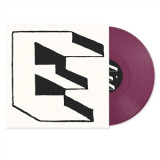
Editrix is a Massachusetts-rooted trio known for their wild, gnarly take on experimental rock. Blending jagged guitar riffs, unpredictable rhythms, and bursts of cartoonish eccentricity, the band creates a sound that's both chaotic and compelling. Composed of singer and guitarist Wendy Eisenberg, drummer Josh Daniel, and bassist Steve Cameron, Editrix thrives on musical risk-taking, often veering into noise-rock territory with a playful edge. On their latest release, The Big E, Editrix unleashes their fangs, resulting in a demonic wall of scuzz. But for as intense as Editrix sounds, the act is convivial and easygoing _ ingrained in deep friendships and speedy, yet jovial recording sessions. Editrix's most pummeling moments seem to be founded on a heartfelt connection, adding emotional resonance to their most feral noise. In the three years since their second LP Editrix II, Eisenberg, Daniel, and Cameron have thrived in individual states of motion _ in and away from music. New York City-based Eisenberg is an accomplished solo artist in the avant-garde realm, receiving recent acclaim for their album Viewfinder (released by American Dreams in 2024). They are also a prolific collaborator, performing in a handful of projects alongside the likes of romantic partner more eaze, Bill Orcutt, David Grubbs, and others. Cameron relocated from Massachusetts to New York City around the same time Editrix II came out, taking a slight step away from music to return to school. Daniel is the only member of Editrix left living in Massachusetts, and performs with the eclectic bands Landowner, Hot Dirt, and The Leafies. Due to Editrix being scattered, the band's new album, The Big E, found them toying with a fresh process. Editrix was quick to write off the idea of collaborating remotely, as the act relishes the warmth of happy accidents that only happen in person. The Big E sparked with Eisenberg, Daniel, and Cameron compiling a list of albums they each admire to establish a self-professed "vibe" up front. King Crimson, My Disco, and Horse Lords were a few key touchstones that shine through, their grounded grooviness balancing erraticism. Eisenberg also found themself infatuated with `70s outlaw country and Van Dyke Parks production. The Big E is titled after a comedic bit between band members, sharing its name with a prominent regional fair in Western Massachusetts, although the title-track aptly features massive E chords. When held up alongside Editrix II _ which found the act toying with Finnish death metal and harsh noise _ The Big E feels settled in its skin. Editrix recorded The Big E with legendary tech death producer Colin Marston (Krallice, Behold_, Dysrhythmia) at his soon-to-be-shuttered studio in Queens. Though these tracks sound toiled over and technical, they are very spontaneous. The majority of The Big E was captured live, with a handful of overdubs added after the fact and came to life over the course of four focused, but rewarding days. Eisenberg uses zen words like "meditative" and "evocative" to describe Editrix's methods, but the end result is crunchy, intricate, and impressively baffling. Easygoing as the band's operation may be, The Big E is a strong jump forward for Editrix inching them towards the center of the avant-rock constellation.
- A1: Ritual (5:24)
- A2: Your Move (15:36)
- B1: All Burning (5:23)
- B2: Argot (12:01)
Pink Vinyl[16,60 €]
"Every night we've been listening to RATTLE. They have a stark yet deep trance percussion vibe that is both holistic and rocking." Thurston Moore
“Quietly dramatic and loudly intimate.” The Quietus
“Two drum sets. Two voices. One great idea.” MOJO
Rattle are Katharine Eira Brown and Theresa Wrigley, they formed in 2011 after meeting on the live circuit whilst both playing in other bands. Katharine was a guitarist who had recently started playing drums in the band Kogumaza, whilst Theresa was the drummer in Nottingham band Fists. They’ve since released two long-players, 2016’s self-titled debut album Rattle (Upset The Rhythm / I Own You) and 2018’s Sequence (Upset The Rhythm) to much critical acclaim in the music press, and with James Acaster discussing the debut on his BBC Sounds podcast Perfect Sounds!
Rattle have honed the four songs that make up ‘Encircle’ by playing them live over the last few years, adapting and stretching them into endlessly inventive new shapes, playing with the concept of time and expectation. ‘Encircle’ was recorded at Foel Studios, Wales, produced and mixed by Mark Jasper, and mastered at Liminal Audio by Shaun Crook. The stunningly colourful artwork was created by Martha Glazzard, who was also responsible for Rattle’s other mesmeric covers.
‘All Burning’ opens the album, a live favourite of cyclical tumbling and evolving wordplay. ‘All Burning’ was built up gradually layer by layer with Theresa’s cumulative snare work and Katherine’s urgent calls for action: “hold your doctor, hold your daughter, hold your horses”. If ‘All Burning’ represents fire, then it’s accompanying 12-minute long track on Side 1, ‘Argot’, is informed by the air. ‘Argot’ is a song about uncertainty, with Katherine singing wordlessly across the majority of the track. “I prefer to sing wordlessly often because it feels a bit more expressive and universal” asserts Katherine. The track feels truly epic with a satisfying release that comes with the eventual introduction of the bass drum and snappy hi-hat section.
Side 2 also pairs a shorter song with a long-form composition. ‘Ritual’ is worked up from a simple snare drum pattern which becomes more and more overlapped into an elliptical form of waltz. Katherine considers ‘Ritual’ as “very earthy song - lots of low lying mist on the ground swirling around and the drums coming together to summon something”! ‘Ritual’ was inspired by a visit to the ruins of Boleskine House so multi-dimensional themes and occult practice loom large. ‘Your Move’ is a step-up gear change with the band wanting it to feel like the tape had suddenly started to spin faster, urging movement, venturing action. Clocking in at over 15 minutes, ‘Your Move’, is mesmeric and boundless, hypnotic in its minimalism of doubled-drums and almost tribal vocal cycles.
With ‘Encircle’ Rattle have grown again, these songs are alive with elemental power. They build-up and disintegrate, existing in two places at once, embracing the nuance, tracing the circle’s edge. These are modes of song as pure gesture and eternal imagination, refined in mirrors after midnight.
Rattle has performed at The Barbican, London and toured the UK with Animal Collective and Thurston Moore Group and Europe with The Julie Ruin and Protomartyr, and performed with Hot Snakes, Bill Orcutt Quartetand Codeine.
Black Vinyl[16,60 €]
"Every night we've been listening to RATTLE. They have a stark yet deep trance percussion vibe that is both holistic and rocking." Thurston Moore
“Quietly dramatic and loudly intimate.” The Quietus
“Two drum sets. Two voices. One great idea.” MOJO
Rattle are Katharine Eira Brown and Theresa Wrigley, they formed in 2011 after meeting on the live circuit whilst both playing in other bands. Katharine was a guitarist who had recently started playing drums in the band Kogumaza, whilst Theresa was the drummer in Nottingham band Fists. They’ve since released two long-players, 2016’s self-titled debut album Rattle (Upset The Rhythm / I Own You) and 2018’s Sequence (Upset The Rhythm) to much critical acclaim in the music press, and with James Acaster discussing the debut on his BBC Sounds podcast Perfect Sounds!
Rattle have honed the four songs that make up ‘Encircle’ by playing them live over the last few years, adapting and stretching them into endlessly inventive new shapes, playing with the concept of time and expectation. ‘Encircle’ was recorded at Foel Studios, Wales, produced and mixed by Mark Jasper, and mastered at Liminal Audio by Shaun Crook. The stunningly colourful artwork was created by Martha Glazzard, who was also responsible for Rattle’s other mesmeric covers.
‘All Burning’ opens the album, a live favourite of cyclical tumbling and evolving wordplay. ‘All Burning’ was built up gradually layer by layer with Theresa’s cumulative snare work and Katherine’s urgent calls for action: “hold your doctor, hold your daughter, hold your horses”. If ‘All Burning’ represents fire, then it’s accompanying 12-minute long track on Side 1, ‘Argot’, is informed by the air. ‘Argot’ is a song about uncertainty, with Katherine singing wordlessly across the majority of the track. “I prefer to sing wordlessly often because it feels a bit more expressive and universal” asserts Katherine. The track feels truly epic with a satisfying release that comes with the eventual introduction of the bass drum and snappy hi-hat section.
Side 2 also pairs a shorter song with a long-form composition. ‘Ritual’ is worked up from a simple snare drum pattern which becomes more and more overlapped into an elliptical form of waltz. Katherine considers ‘Ritual’ as “very earthy song - lots of low lying mist on the ground swirling around and the drums coming together to summon something”! ‘Ritual’ was inspired by a visit to the ruins of Boleskine House so multi-dimensional themes and occult practice loom large. ‘Your Move’ is a step-up gear change with the band wanting it to feel like the tape had suddenly started to spin faster, urging movement, venturing action. Clocking in at over 15 minutes, ‘Your Move’, is mesmeric and boundless, hypnotic in its minimalism of doubled-drums and almost tribal vocal cycles.
With ‘Encircle’ Rattle have grown again, these songs are alive with elemental power. They build-up and disintegrate, existing in two places at once, embracing the nuance, tracing the circle’s edge. These are modes of song as pure gesture and eternal imagination, refined in mirrors after midnight.
Rattle has performed at The Barbican, London and toured the UK with Animal Collective and Thurston Moore Group and Europe with The Julie Ruin and Protomartyr, and performed with Hot Snakes, Bill Orcutt Quartetand Codeine.
Originally released and sold on their fall 2009 US tour, Flower-Corsano Duo’s “The Chocolate Cities” stands as one of the group's most spirited releases. Recorded live in Cambridge, England and Geneva, Switzerland these recordings capture the power and energy being harnessed by the duo at a time of frequent touring, just after the release of their monumental double-LP “The Four Aims.” Michael Flower is perhaps best known for his work in Vibracathedral Orchestra, along with a slew of other bands, collaborations, and solo work. Meanwhile, Chris Corsano is well known as one of the premier drummers of modern times, and a frequent collaborator of Joe McPhee, Bill Orcutt, Bill Nace, Paul Flaherty, and many more. As a duo Flower and Corsano present an endlessly shifting and transforming sound, meshing elements of free jazz, drone, and ecstatic psychedelia into something all its own. While Corsano guides with his nimble and dynamic drumming, Flower plays amplified Japan Banjo (also known as a Shahi Baaja) providing melody, lead, and drone, often simultaneously. Gripping even in its quietest passages, thoughtful even in its most unrestrained crescendos, “The Chocolate Cities” documents a duo at the height of their collective prowess. Saved from the obscurity of its original CDr format and presented for the first time on vinyl with stunning new artwork by Chris Corsano, “The Chocolate Cities” stands as testament to the power of two magnificent players even 15 years on.
- 1: Cypress Crossing
- 2: Pink River Dolphins
- 3: Ride To Cerro Rico
- 4: Dust From The Mines
- 5: The Shadow Song
- 6: Irene, Goodnight
Ava Mendoza has never made an album quite as personal as her second solo full-length, The Circular Train. Through her decades of collaborations with Nels Cline, Carla Bozulich, William Parker, Fred Frith, Matana Roberts, and Mick Barr—plus years leading her power trio Unnatural Ways and playing in Bill Orcutt’s quartet—the guitarist’s name has become synonymous with virtuoso technique, raw passion, and visceral resonance, a player pushing the edges of the guitar’s possibilities. Along the way, from 2007 to 2023, Mendoza was writing these slow-burning, incandescent songs. The Circular Train is comprised solely of her single-tracked guitar playing and, on two songs, her corporeal singing. Her first solo LP of original material since relocating from California to New York City a decade ago, much of The Circular Train was honed amid pandemic years that clarified the virtues of slowing down. This expressive avant-rock is a definitive introduction to one of the most uncompromising and inquisitive visions in creative music. Mendoza’s thrilling melange of free jazz, blues, noise, classical training, and blazing experimental rock’n’roll all coheres with ecstatic feedback, with picking and solos that crest with shimmer. Sometimes she sounds like a one-woman Sonic Youth with guttural and poised vocals that equally evoke Patti Smith and blues greats like Jessie Mae Hemphill. Conceptually, The Circular Train is presented as a psychogeographical train ride through certain of Mendoza’s musical homelands. The songs draw on ancestral and recent familial memories, notably of her parents’ roots in mining towns—in her father’s home country of Bolivia and mother’s hometown of Butte, Montana, each country with its own history of colonialism, racism, forced labor, the eradication of culture and the subsequent excavation of it. These adventurous songs were composed in cars and planes, in the heart of the Mississippi Delta, in Los Angeles and upstate New York—which is to say in motion. “Ride to Cerro Rico,” named for the mountain and silver mine at the center of Potosi, Bolivia, was inspired by Mendoza’s great grandmother’s life there in a Quechua mining family. “Dust From the Mines” drew from that history as well as Mendoza’s familial lineage of miners in Montana, building up to stunning swaths of shredded iridescence. “Pink River Dolphins” was inspired by a visit to the Amazon rainforest, swimming with dolphins alongside her father—the pink bufeos that inhabit both Bolivia and Columbia—and the song is dedicated to the memory of Mendoza’s late friend, the Colombian-American trumpeter jaimie branch. They shared a fascination with those intelligent and agile creatures who often communicate by echolocation. “Make a sound, it comes back around,” Mendoza sings, and later, “Echo, echo/The answer in a sound,” evoking what branch knew well: through music we navigate life. The Circular Train contains one cover, “Irene, Goodnight,” composed by Gussie Lord Davis and popularized by Leadbelly; Mendoza has been performing it for over 20 years. Almost as deeply embedded in her repertoire is the penultimate track, “The Shadow Song.” “Treat your shadow kind and it might treat you good,” Mendoza sings on this song that she’s been reworking for over a decade, an emblem of devotion. “Treat your shadow kind and it might treat you right,” she repeats, becoming a blues mantra. What is a shadow self if not one’s secret world, which, once laid bare, awaits an echo, a return?
Forgetting You Is Like Breathing Water, the self-titled debut from the duo of trumpeter Will Evans and guitarist, synthesist, producer and multi-instrumentalist Theo Trump, arrives like a vault revelation. It feels like a decades-old yet newly unearthed masterwork of gorgeous ambient improvisation, the sort of thing scholars live to research and shepherd into deluxe reissue.
The patient, crystalline chords that swell and resonate like a series of confessions; the textured brass murmurs that suggest a ’60s or ’70s Fire Music master at their most poignant. Provocative found-sound experiments threading arcane religious recordings through dystopian soundscapes. Ear-shattering free-noise tumult. Where and when did this music come from? Who are these voices?
As it turns out, Forgetting You Is Like Breathing Water springs from an engrossing human story, though it isn’t necessarily the one you’d expect. This work of stunning maturity is in fact an entrance by two little-known explorers in their early 20s, who grew up together in Virginia, in the shadow of the Blue Ridge Mountains. It documents one of those perfect, sparkling moments in post-adolescence when big decisions and responsibilities are right around the corner, but for a spell, two young artists are able to create among the comforts and nostalgia of their shared past.
It also represents a reunion of sorts, as Evans and Trump connected as toddlers, became inseparable as boys, then pursued independent lives and creative paths as young adults. “Theo is my oldest friend,” Evans says, “and I feel like that’s what this band is — us meeting right in the middle of our interests.”
Now, having conjured this magic, they’ve detached once again: Evans, whose other works include the indie/avant-jazz unit Angelica X, is currently based in New York City. Trump recently moved to England, where he’d participated in his family’s theatre company, to go to school and further his solo ambient project. “This album didn’t start out as something super ambitious,” Evans explains. “It was more just an excuse to spend time together again and make music.”
***
In conversation, Evans and Trump are a delight, especially for cynics who might think that Gen-Z is only capable of doomscrolling. They come across as kindly young intellectuals who grew up using the internet as it was intended, for exposure to ideas and art across genres and generations. Trump points to indie-folk and the oracular post-rock of late Talk Talk, Bark Psychosis and Gastr del Sol. Pressed for his guitar heroes, he cites Bill Orcutt, Mary Halvorson and Marc Ribot, and mentions his devotion to alt-country. Heyday electro-industrial stuff like Skinny Puppy and Nine Inch Nails also meant a lot to him.
Evans is equally intrepid, though his background has a greater jazz focus. Ambrose Akinmusire, among today’s most thoughtfully commanding trumpeters, is a favorite. As for the soulful murmur he offers throughout Forgetting You, Pharoah Sanders’ wistful and lyrical contributions to Floating Points’ work is a touchstone.
The two grew up down the street from each other in the northern Piedmont town of Batesville, Virginia. Their families were friends, holidays were celebrated together and they became the most loyal of pals. As children they had a pretend band.
Then life unfolded, they attended different schools and their paths diverged. Evans discovered John Coltrane and became a jazz obsessive, as Trump found punk and hardcore and later began making ambient music. As a dedicated jazz trumpeter, Evans studied formally and widely; Trump was an autodidact, teaching himself guitar and absorbing synthesis and production techniques. The late teens and very early 20s brought moves away from home and back to home, as well as plenty of listening and learning. The Covid pandemic meant an opportunity to reconnect on long walks. Through it all, together and apart, they remained reverent of each other.
By early 2023, they found themselves living again among the Blue Ridge Mountains. In the evening, after giving trumpet lessons in Charlottesville, Evans would make the eerily beautiful trek “over the mountain” to Trump’s home in Staunton, Virginia. They’d talk and eat and begin to improvise, deep into the night. Evans played trumpet and sometimes drums. (Given the wee-hours recording schedule, the neighbors didn’t appreciate the latter.) Trump plugged a rickety, junk-store Telecaster-style guitar into a cheap solid-state amp and explored open tunings; he also layered on lap steel, electric bass, synths and electronics.
They locked in and relished each other’s gifts. In Trump, those include patience and intentionality and sonic decision-making; for Evans, a distinctive trumpet sound that both musicians think of as a singer’s voice. “Will’s playing is so thoughtful and well placed,” Trump says. “My goal from a producer’s mindset is that the trumpet will occupy the space that vocals would take.”
Often, they got lost in the best way. “The thing I look for most when I’m playing is that feeling of disappearing into what you’re doing,” Evans says. “Usually when that happens, the music is good.”
By the same token, they didn’t pursue free improvisation as an ethic, or as a pure process. Their goal was something closer to spontaneous composition. “We were trying to make good songs,” Evans says simply. Later, Trump did brilliant post-production work, expanding a modest setup into an enthralling soundworld. Under his judicious editorship, music that was wholly improvised sounds at times like a carefully composed new-music commission.
The results speak for themselves. “A Happy Death” summons up a swath of American desolation through the viewfinder of Wim Wenders. “Flesh of Lost Summers” and “Partings” are highlights from an essential ECM LP that never was. “A Collapse of Horses” infuses those seminal post-rock influences with the plod of doom metal or slowcore. The album’s final track, “The Mountains Are a Dream That Calls to Me,” was in fact the first thing the duo recorded, as an evocation of those twilit drives across the Blue Ridge Mountains. “Looking back at what we chose to name the songs,” Evans says, “and some of the sounds and how they make me feel, there is an air of impermanence and loss to this album.”
“I’m excited for everything that’s to come,” he adds, “but I recently thought, ‘Damn — that’s not going to happen again.’ It was a privilege for us to have that time together.”
The Flower-Corsano Duo, the world’s best and only drums / Japan banjo duo return to VHF for their first album since 2009’s monumental The Four Aims. Mick Flower (Vibracathedral Orchestra) and Chris Corsano (frequently seen with Bill Orcutt, Joe McPhee, and other luminaries) work an area that’s not really jazz, not really anything—a stream of endlessly mutating free sound, a unique mind-merge between Corsano’s nimble drums and percussion and Flower’s amplified Japan banjo (also known as a Shahi Baaja, a type of electric Indian zither with both fretted / keyed and drone strings).
Flower cuts a highly original line, playing neither “leads” nor making drone-music. Less amplified here than on the more “heavy” The Four Aims, the strings ring out with distinct clarity in short snippets of melody and a canvas of pleasing electric sound. Corsano’s bag is to charm out a flow of thoughtful percussion engagement, rolling around on his kit, continually varying his attack and approach in conversational free-jazz style. The Halcyon is a precious addition to a tiny discography, a fortunate event even in today’s world of small press overabundance. Thanks guys!
- 1