
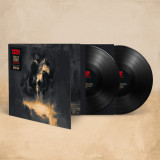
High Roller Records, first time on vinyl, black vinyl, ltd 250, 425gsm heavy cardboard cover, insert, mastered for vinyl by Patrick W. Engel at Temple of Disharmony.
Reservar26.01.2024
debe ser publicado en 26.01.2024
24,16 €
High Roller Records, first time on vinyl, black vinyl, ltd 250, 425gsm heavy cardboard cover, insert, mastered for vinyl by Patrick W. Engel at Temple of Disharmony.
debe ser publicado en 26.01.2024

High Roller Records, first time on vinyl, black vinyl, ltd 250, 425gsm heavy cardboard cover, insert, mastered for vinyl by Patrick W. Engel at Temple of Disharmony.
debe ser publicado en 26.01.2024

After her stunning collaborations with Vincent Royer (for Mode Records), Jim O"Rourke and Christoph Heemann (both for Oren Ambarchi"s Black Truffle Records) Brunhild Ferrari returns to the scene with this new solo album. Extérieur-jour is comprised of two previously unreleased compositions, one being the title track the album is named after and the other "Le Piano Englouti (version original)." Extérieur-jour translates to "Outside Day," and indicates an instruction for a film scene, a piece of cinéma pour l"oreille, a movie for the ears. It was recorded at Luc Ferrari"s Atelier Post Billig in January and February 2014. "Le Piano Englouti" ("The Sunken Piano"), another electroacoustic composition which was realized over a period of fourteen years between 1996 and 2010, also brings forth cinematic elements with sound sources recorded in places as diverse as a Greek island by the noisy Agean Sea, a Pachinko place and a quiet island in Japan. It comes across as a meditation on the loss and reappearance of memory and silence. The graphics for the album sleeve were created by the late Wolfgang Meyer Tormin, artist and composer and also father of Brunhild Ferrari. The album was mastered for vinyl from the original source by Jim O"Rourke.
debe ser publicado en 26.01.2024

Cam Cameron appears to be another one of those performers from an infinite list of Black American artists that cut a solitary 45 single and then disappear into obscurity never to be seen or heard from again. Couple this with the passing of any of the relevant protagonists from the time along with any of the surviving ones ever diminishing memories and the job of collating events and artists back stories from over 50 years ago becomes that much harder.
Cam Cameron appears to be one of those artists (although our investigations are ongoing). Therefore, from the information currently gleaned, the artist Cam Cameron was none other than Alvin Cameron the writer of the featured song “You Say”, with Cam being a kind of nickname. The string arrangements on both “They Say” and “I’m A Lonely Man” were provided by the late John Andrew Cameron a hugely respected arranger, producer and songwriter within the Chicago music scene of the 1960’s and early 70’s, more often credited as Johnny Cameron. Johnny’s credits can be found on many recordings of the time often working with fellow Chicago music scene producer Clarence Johnson, some of the highlights from this liaison being the song “I Really Love You” recorded by both Jimmy Burns (Erica) and Bobby James (Karol) and the girl group, ‘The Lovelites’, on their acclaimed album “With Love From The Lovelites” (Uni). Johnny’s involvement with the Scott Brothers goes as far back as 1965 when he provided the musical arrangements on The Howard Scott penned song “I’ve Got To Get Over” recorded by Syl Johnson for the TMP-Ting label. Although they share the same surname, Alvin (Cam) Cameron is believed to be of no relation to Johnny Cameron.
“You Say” would gain a release on the independent Capri label owned by Sephus Howard Scott who together with brother Walter Scott composed the 45’s flipside “I’m A Lonely Man”. Howard also featured as one of the songs producers alongside the mysterious Edgar Mullins (a name which has been found on a couple of other tape boxes, the investigations continue).
Musical accompaniment was provided by The Scott Brothers Band, with both songs being recorded at RCA Victor’s Chicago number 2 Recording Studio at 445 North Lake Shore Drive, in the Navy Pier section. on the 10th of August 1967 and released on Capri Records during the month of February 1968.
Cameron’s “You Say” was another 45 that was first introduced to UK Soul Collectors via those much lamented and fondly remembered soul packs, always regarded as a quality collector’s 45 the only regular turntable action remembered was provided by Northampton’s very own discerning DJ Cliff Steele at venues such as ‘Detroit Academicals’, ‘Bretby Country Club’ and later ‘Albrighton’ during the leaner days of the UK Rare Soul Scene?! Hopefully a wider appreciation of both sides of this soulful Windy City 45 beckons! The second release in Soul Junction’s Capri series.
debe ser publicado en 26.01.2024

High Roller Records, reissue 2024, 180g black vinyl, ltd 500, poster, insert, 10 tracks, mastered for vinyl by Patrick W. Engel at Temple of Disharmony
debe ser publicado en 26.01.2024

Tschechiens berühmt-maskierte Modern-Metal-Band veröffentlicht ihr neues Album "Five Angry Men". Der Name ist Programm! Tschechiens berühmt-maskierte Modern-Metal-Band veröffentlicht ihr neues Album "Five Angry Men". Der Name ist Programm! Dieses brutale Meisterwerk überrollt einen wie eine Dampfwalze und reiht sich in die Riege von Five Finger Death Punch, Disturbed und Stone Sour ein! Während DYMYTRY in den letzten Jahren mehrere Alben auf Tschechisch veröffentlicht haben, ist "Five Angry Men" ihr zweites Album mit englischen Texten und gleichzeitig Teil ihres Weges sich auf dem internationalen Markt zu etablieren. Produziert und gemixt wurde die Platte von Kristian "Kohl" Kohlmannslehner, der auch internationale Metal-Bands wie Powerwolf, Hämatom, Crematory oder Benighted produziert. Verpasse nicht deine Chance und schnappe dir das“ neue Album Five Angry Men" als limitierte Splatter-Vinyl, CD-Digipak oder digitale Version, welches am 26. Januar 2024 erscheint!
debe ser publicado en 26.01.2024
Anna Calvis fesselnde und atmosphärische Kompositionen für der 5. und 6. Staffel von Peaky Blinders, der rekordverdächtigen BBC-Fernsehserie, werden über Domino Soundtracks veröffentlicht. Der Original Score umfasst 37 Tracks, die verschiedene Mitglieder der Shelby Company Limited sowie neuere Charaktere wie Oswald Mosley einbeziehen. Das Album enthält auch die zuvor veröffentlichten Originalsongs "You're Not God" und das schwungvolle "Ain't No Grave" sowie Calvis Cover von "Red Right Hand", dem Peaky Blinders-Titelsong von Nick Cave & The Bad Seeds.
debe ser publicado en 26.01.2024

Early Life Forms is a new quartet fronted by Belgian guitarist and sound wizard Vitja Pauwels, and on the 26th January, they are set to release their self-titled debut album via W.E.R.F. Records; a stunning, one-off live show recorded with American guitarist Marc Ribot (Robert Plant, Tom Waits, Wilson Pickett, Marianne Faithfull, The Black Keys, John Zorn).
Having already earned his spurs as a sideman with artists including Naïma Joris, Bombataz and Lara Rosseel, rising Belgian star Pauwels released his debut album 'Day at Half Speed' in 2019, which explored the possibilities of acoustic guitar and live electronics. This experiment became a new artistic path for Pauwels and showcased his musical versatility, with second album 'Drift By, Sink In', released to critical acclaim in 2022.
The same year, Pauwels was invited as special guest by the BRAND! Festival, Mechelen, to showcase new material and he came up with the idea of putting together his 'dream' live band which included his hero Marc Ribot, one of world's most accomplished and acclaimed guitar players. Reaching out to him via videos and early demos for this new recording project, Ribot liked what he heard and agreed to perform with Pauwels and his new project Early Life Forms in what would be the band's first ever live show.
Joined by Frederik Leroux (baritone guitar), Laurens Dierickx (Hammond organ) and Casper Van De Velde (drums), during the lead up to the festival, Pauwels wrote a number of songs he felt would work for the live show, with the only agreement being that there would be no rehearsals ahead of the performance, only a brief soundcheck beforehand with Ribot. The music was stripped down to its essentials - compelling melodies, themes, and clear forms but with the possibility to change direction at any given moment. "The music was played and heard for the first time, and it felt like a birth of something that needed to be alive. We felt connected in the right state of mind - relaxed and focused - and it all happened in a rush of shared energy. No ego's or fear, only connection and the music", states Pauwels.
Drawing on latin, jazz, cuban, and rock with a touch of exoticism and cinematic explorations, 'Early Life Forms' cites Ry Cooder, Henry Mancini, Los Lobos, Ennio Morricone and of course Ribot, as heavy influences. There is something existential, primary, something epic and at the same time youthfully uncomplicated, which is strongly associated with the music. From the mischievous and imaginative 'My Little Renaissance' to the adventurous and hypnotic 'Latin Dancer', 'Early Life Forms' is overflowing with sharp twists and turns, with Ribot's heavily rhythmic, distorted guitar amplifying the cinematic feel to the sound. The on-stage relationship between each member of the band and Ribot is childishly uncomplicated, something primary but always epic. The music is left to the moment and the magic of their first encounter with their hero Ribot. "Marc's commitment in the music was better than I could have hoped for. What he played was with 200% intention, putting the rest of us in a state of hyperfocus. Given the fact that it was a one-time thing and a recording, we took risks without 'overplaying' or overthinking it. Right before the gig, we felt an urge to play, Marc said, "Let's rock!!" and we hit the stage", says Pauwels.
debe ser publicado en 26.01.2024

Contradictory accounts of Miles Davis’ creation of the soundtrack to Louis Malle’s film noir Ascenseur pour l'Échafaud have all become part of its legend. Rarely has a soundtrack been so decisive. Nearly seventy years on, beyond the myth, this taut, feverish recording, imbued with extreme dramatic tension, remains one of the Miles’ finest records. The basic outline remains: Jean-Paul Rappeneau suggested to Malle asking Miles Davis to create the film's soundtrack who agreed to record the music after attending a private screening. Davis was performing at the Club Saint-Germain in Paris in November 1957 and on December 4, he brought his four sidemen to the recording studio without having had them prepare anything. Davis only gave the musicians a few rudimentary harmonic sequences he had assembled in his hotel room, and, once the plot was explained, the band improvised without any precomposed theme, while edited loops of the musically relevant film sequences were projected in the background. Bassist Pierre Michelot recalled in 1988 that “Miles just asked us to play two chords, D minor and C7, 4 bars of each, ad lib.” Typically, Miles planned very little but know exactly what he wanted. François Leterrier, the film’s Second Assistant Director picks up the story: “The session started at around ten o’clock and went on until dawn. The screen in the auditorium was showing the scenes for which Miles had devised some harmonies, and they were edited into a loop. And that’s what makes this music unique: it was entirely improvised in conditions that went back to the days of silent films, while watching frames shot in black and white by cinematographer Henri Decaë: tracking shots of Jeanne Moreau wandering down the Champs-Elysées at night, passing in front of lit window displays or going into bars, while looking for her lover/murderer alias Maurice Ronet … All of us there in the dark auditorium were aware that something extraordinary was taking place, something that had definitely never happened before. … In the small hours we all met up again at the Pied de Cochon in Les Halles, and Louis was looking at Miles with the disbelieving eyes of a child … as if he couldn’t believe the gift he’d just received. Even in his wildest dreams he had probably never imagined what his film would be like once it had been as if illuminated by the trumpet of Miles, incisive or wrapped softly in cotton.” The music was released on 10” by Fontana and received the Grand Prix from France’s Académie Charles Cros. It was released in the USA on Columbia as the A-side of the 12” LP Jazz Track, which received a 1960 Grammy nomination for Best Jazz Performance, Solo or Small Group. This beautiful re-issue of the original recording is pressed on 180g vinyl at GZ, and packaged in a deluxe gatefold tip-on jacket with Boris Vian’s original liner notes and Jean-Pierre Leloir’s iconic studio photo of Miles and Jeanne Moreau, and an essay on the circumstances that led to this out-of-the ordinary music by Franck Bergerot.
debe ser publicado en 26.01.2024

Aus der Asche von DAWN OF DISEASE ist eine Melodic Death Metal Band entstiegen, die bereit ist, alles unter Feuer zu setzen: HIRAES. Alle vier
Instrumentalisten von DOD (Lukas Kerk, Oliver Kirchner, Christian Wösten und Mathias Blässe) haben ihre Kräfte gemeinsam mit Sängerin Britta Görtz
(CRITICAL MESS, ex-CRIPPER) gebündelt, um Musik zu erschaffen, die zwischen hymnenhaften Melodien und packenden Gitarrenriffs pendelt:
atemberaubende Hooklines kombiniert mit gnadenlosem Drumming sowie einem allgegenwärtigen melancholischen Spirit und variantenreichen und
eingängigen Growls
debe ser publicado en 26.01.2024

Studio One was founded by Clement "Coxsone" Dodd1 in 1954, and the first recordings were cut in 1963 on Brentford Road in Kingston.1[2] Amongst its earliest records were "Easy Snappin" by Theophilus Beckford, backed by Clue J & His Blues Blasters, and "This Man is Back" by trombonist Don Drummond. Dodd had previously issued music on a series of other labels, including World Disc, and had run Sir Coxsone the Downbeat, one of the largest and most reputable sound systems in the Kingston ghettos.
In the early 1960s, the house band providing backing for the vocalists were the Skatalites[3] (1964–65), whose members (including Roland Alphonso, Don Drummond, Tommy McCook, Jackie Mittoo, Lester Sterling and Lloyd Brevett) were recruited from the Kingston jazz scene by Dodd. The Skatalites split up in 1965 after Drummond was jailed for murder, and Dodd formed new house band the Soul Brothers (1965–66), later named the Soul Vendors (1967) and Sound Dimension (1967-). From 1965 to 1968 they played 9 a.m. to 5 p.m., 5 days a week, 12 rhythms a day (about 60 rhythms a week) with Jackie Mittoo as music director, Brian Atkinson (1965–1968) on bass, Hux Brown on guitar, Harry Haughton (guitar), Joe Isaacs on drums (1966–1968), Denzel Laing on percussion, and on horns (some initially and some throughout): Roland Alphonso, Dennis 'Ska' Campbell, Bobby Ellis, Lester Sterling, among others on horns during the era of Rock Steady. Headley Bennett, Ernest Ranglin, Vin Gordon and Leroy Sibbles were included among a fluid line-up, to record tracks directed by Jackie Mittoo at Studio One from 1966-1968.
During the night hours at Studio One from 1965-1968, singers like Bob Marley, Burning Spear, The Heptones, The Ethiopians, Ken Boothe, Rita Marley, Marcia Griffiths, Judy Mowatt, Alton Ellis, Delroy Wilson, Bunny Wailer[4] and Johnny Nash, among others, would put on headphones to sing lyrics to original tracks recorded by the Soul Brothers earlier each day. These seminal recordings included "Real Rock" (by Sound Dimension), "Heavy Rock", "Jamaica Underground", "Wakie Wakie", "Lemon Tree", "Hot Shot", "I'm Still In Love With You", "Dancing Mood", and "Creation Rebel".
Jackie Mittoo, Joe Isaacs, and Brian Atkinson left Studio One in 1968, recorded drums and bass for Desmond Dekker's and Toots' biggest hits at other Kingston studios, then moved to Canada. Hux Brown stayed in Jamaica to record on the soundtrack The Harder They Come, The Harder They Fall, and toured in Nigeria with Toots and the Maytals and Fela Kuti. The Soul Brothers (a.k.a. Sound Dimension) formed the basis of reggae music in the late 1960s, being versioned and re-versioned time after time over decades by musicians like Shaggy, Sean Paul, Snoop Lion, The Clash, String Cheese Incident, UB40, Sublime, and countless other Billboard originals and remakes trying to emulate their original Rock Steady sound at Coxsone's Studio One.
The label and studio were closed when Dodd relocated to New York City in the 1980s.
debe ser publicado en 26.01.2024

Studio One was founded by Clement "Coxsone" Dodd1 in 1954, and the first recordings were cut in 1963 on Brentford Road in Kingston.1[2] Amongst its earliest records were "Easy Snappin" by Theophilus Beckford, backed by Clue J & His Blues Blasters, and "This Man is Back" by trombonist Don Drummond. Dodd had previously issued music on a series of other labels, including World Disc, and had run Sir Coxsone the Downbeat, one of the largest and most reputable sound systems in the Kingston ghettos.
In the early 1960s, the house band providing backing for the vocalists were the Skatalites[3] (1964–65), whose members (including Roland Alphonso, Don Drummond, Tommy McCook, Jackie Mittoo, Lester Sterling and Lloyd Brevett) were recruited from the Kingston jazz scene by Dodd. The Skatalites split up in 1965 after Drummond was jailed for murder, and Dodd formed new house band the Soul Brothers (1965–66), later named the Soul Vendors (1967) and Sound Dimension (1967-). From 1965 to 1968 they played 9 a.m. to 5 p.m., 5 days a week, 12 rhythms a day (about 60 rhythms a week) with Jackie Mittoo as music director, Brian Atkinson (1965–1968) on bass, Hux Brown on guitar, Harry Haughton (guitar), Joe Isaacs on drums (1966–1968), Denzel Laing on percussion, and on horns (some initially and some throughout): Roland Alphonso, Dennis 'Ska' Campbell, Bobby Ellis, Lester Sterling, among others on horns during the era of Rock Steady. Headley Bennett, Ernest Ranglin, Vin Gordon and Leroy Sibbles were included among a fluid line-up, to record tracks directed by Jackie Mittoo at Studio One from 1966-1968.
During the night hours at Studio One from 1965-1968, singers like Bob Marley, Burning Spear, The Heptones, The Ethiopians, Ken Boothe, Rita Marley, Marcia Griffiths, Judy Mowatt, Alton Ellis, Delroy Wilson, Bunny Wailer[4] and Johnny Nash, among others, would put on headphones to sing lyrics to original tracks recorded by the Soul Brothers earlier each day. These seminal recordings included "Real Rock" (by Sound Dimension), "Heavy Rock", "Jamaica Underground", "Wakie Wakie", "Lemon Tree", "Hot Shot", "I'm Still In Love With You", "Dancing Mood", and "Creation Rebel".
Jackie Mittoo, Joe Isaacs, and Brian Atkinson left Studio One in 1968, recorded drums and bass for Desmond Dekker's and Toots' biggest hits at other Kingston studios, then moved to Canada. Hux Brown stayed in Jamaica to record on the soundtrack The Harder They Come, The Harder They Fall, and toured in Nigeria with Toots and the Maytals and Fela Kuti. The Soul Brothers (a.k.a. Sound Dimension) formed the basis of reggae music in the late 1960s, being versioned and re-versioned time after time over decades by musicians like Shaggy, Sean Paul, Snoop Lion, The Clash, String Cheese Incident, UB40, Sublime, and countless other Billboard originals and remakes trying to emulate their original Rock Steady sound at Coxsone's Studio One.
The label and studio were closed when Dodd relocated to New York City in the 1980s.
debe ser publicado en 26.01.2024

debe ser publicado en 26.01.2024

MRG223LP is black vinyl in a jacket + printed sleeve + printed insert for full album download. File Under: Alternative. In 2003, everything broke open for Ward with the release of Transfiguration of Vincent. Critically lauded and long beloved, Pitchfork hailed it as an album that “broadcasts timelessness and defies genre constraints,” and Slant placed it on their list of the best albums of the 2000s.
On Transfiguration of Vincent, Ward’s elegant fingerpicking, evocative croon, and heartrending lyricism came into full bloom, casting a spell so powerful that even a song as universal as David Bowie’s “Let’s Dance” felt not only new but irrevocably his.
One of the most cherished albums in the Merge catalog, Transfiguration of Vin- cent is both a great place to begin your love affair with M. Ward and a deep, stunningly realized work that listeners have returned to over and over again for 20 years. Tracklisting: SIDE A. 1 Transfiguration No. 1 2. Vincent O’Brien 3. Sad, Sad Song 4. Undertaker 5. Duet for Guitars No. 3 6. Outta My Head 7. Involuntary. SIDE B. 8. Helicopter 9. Poor Boy, Minor Key 10. Fool Says 11. Get to the Table on Time 12. A Voice at the End of the Line 13. Dead Man 14. Let’s Dance 15. Transfiguration No. 2
debe ser publicado en 26.01.2024

The Ganjas Meets Nairobi. The Space Rock of the Chileans together with the Dub of the Argentines. First time on vinyl celebrating 10th anniversary. Sounding laid-back and incisive at once, crisp production and rock sensibilities. The Ganjas are one of the best exponents of Chilean Space Rock and a fundamental-must-listen to understand the new Chilean psychedelic scene of the last decade. They began 25 years ago with long jam -kind -of-playing, with steady drum beats and simple basslines, but adding innovative and colorful lyrics and synths, without never losing the song structure. On the other side of the Andes, the eclectic by nature Nairobi laid the groundwork for a new style in Dub. Since 2009 they had released 3 studio albums and worked with the best legendary Dub producers: Mad Professor, Lee “Scratch” Perry and Sly & Robbie. Touring the same year 2014 in Chile they coincided with The Ganjas at BYM Studios for an unforgettable session that brought this recording, that boasts an intricate rhythm, sumptuous keyboards, and soaring guitars offering elastic grooves, disembodied vocals, and deep bass lines. The album itself revisits the past while also looking to the future. The songs are particularly creative, with the Bob Marley & The Wailers cover ‘The Heathen’ totally revitalized and other passages like ‘Pastor’ and ‘Eagle & Snake’ that travel through an incredible mix of styles, brilliantly blending Trip-Hop, Dub FXs from soundboard, a Brian Jones-esque style slide guitar, and songs like ‘Soul Salvation’ that brings an steady reggae beat with genius saxophones lines from Ignacio Czornogas (King Krule). Mastered by Cem Oral at Jamming Masters (Berlin). AVAILABLE 300 BLACK VINYLS. For fans of: Primal Scream (Echo Dek), Sumo, Dub Syndicate-Murder Tone, Upsetters, Peaking Lights, Peter Tosh-Mama Africa.
debe ser publicado en 26.01.2024

19 songs to follow up “Recreation” released in 2020, and shortlisted for rap album of the year by Wordplay Magazine. This record is a showcase of styles, flavours, moods and emotions, directed through and narrated by Mosik Rhymes. Entirely self produced with stellar features from genre defining artists - George Fields, Alecs DeLarge, Grim Sickers and Soul Supreme. Available on a limited run of black
vinyl from Spinning Wheel Music.
debe ser publicado en 24.01.2024

Let the Music Play: How R&B Fell in Love with 80s Synths is the overlooked story of how R&B, disco and funk were transformed by the explosion of music tech in the era of ghetto blasters and Ronald Reagan. It traces how pioneers like Stevie Wonder and Herbie Hancock inspired a new generation of black musicians and producers to reinvent music with a whole new set of rules.
From superstars like Prince and Sade to production geniuses like Kashif and Jam & Lewis, it tells the fascinating stories of the artists involved and how they made some of the best-loved records of the era – creating a blueprint for music today.
Haga su pedido ahora y le encargaremos el artículo en nuestro proveedor.

Night Trains were formed in 1987 by bassist, producer and DJ Hugh Brooker and along with Galliano became part of the first wave of acts to sign to Acid Jazz Records.
Originally a sax and Hammond organ-led 5 piece, Blue Note inspired instrumental combo, the band first cut their teeth at Soho's legendary Wag Club's Monday night Acid Jazz sessions, along with DJs and label founders Eddie Piller and Giles Peterson.
Hugh Brooker currently DJs globally and has been co-writing with and remixing and producing for artists.
Haga su pedido ahora y le encargaremos el artículo en nuestro proveedor.


