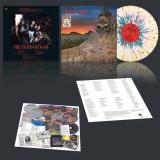
Influential industrial pioneers Skinny Puppy welcomed audiences into the embrace of the seminal Too Dark Park in 1990. One of the band’s most influential records, it includes “Tormentor,” “Spasmolytic,” and more. In addition to praise from Vice and many more, Metal Hammer fittingly named it one of the “10 Best Industrial Albums,” and Spin summed it up best as a “return to the bloodbath.” A menacing and massive pastiche of H.P. Lovecraft-style cosmic horror, addiction, mental disarray, and the disintegration of nature, Too Dark Park remains a cataclysmic and chaotic classic through and through. Now available on vinyl for the first time in 30 years to celebrate the 35th anniversary since relea. Legends of electronic industrial music. Restored to original art on classic black vinyl. “10 best industrial albums - metal hammer”
Cerca:black blood
Kwamé Bâ aka Fényan
Music producer, keyboardist and professional dancer based in France.
Coming from a Senegalese bloodline and growing up in Martinique (West indies), Fényan is deeply rooted in Black music. Epitome of a childhood in the West indies. A Caribbean Tale about Kreyol langage, about legacy and resilience, about turning victimhood into proactivity.
Douvan Douvan can be translated by "avant garde" in Kreyol. It is a story about People growing up and facing themselves, and their elders in order to move forward in their enlightenment.
It is your story.
- A1: Unity Feat Red Eye
- A2: And You Feel
- A3: Redemption
- B1: Horsepower Feat Modeselektor
- B2: Mechanic Love
- C1: Hustle
- C2: Sandstorm
- D1: Black Ice Feat Skee Mask
- D2: Scratchy
- D3: Vertical
- E1: Breathe Underwater
- E2: Wind Mill Hill Feat J Manuel
- F1: Stargazer
- F2: Timesqueezed
- F3: Glove Box
- G1: Nyx
- G2: Ringworld
- G3: Scoop
- G4: Dreamweaver
- H1: Flashback
- H2: The Deal
- H3: Micro Expressions
- H4: Pentatonic Light
Fuelled by the Berlin-based duo's love of club music in all its forms ''FJAAK THE SYSTEM'' is FJAAK's most definitive album to date, a winding sonic odyssey that surveys the rave landscape, dipping between frantic euphoria and deep contemplation. Featuring sizzling collaborations with Modeselektor, Skee Mask, Red Eye and J.Manuel, the album draws a bold line under FJAAK's 15 years of mischief and mayhem, pulling together 23 tracks (culled from over 300, no less) that truly reflect the duo's boundless enthusiasm for the dancefloor. Grazing UK breakbeat, techno, 2-step, d'n'b, jungle, trip-hop and ambient, these elasticated, hybrid bangers paint a vivid picture of FJAAK's utopian club ideal, a place where genre boundaries evaporate and only the groove remains. Since graduating in audio engineering in the early 2010s, FJAAK have been challenging the logic of a maddeningly conservative club scene with their hardware only live shows, DJ sets a myriad of record releases. In 2019 they launched the label and platform Spandau20 with a steady flow of records and a mixtape series featuring new talent and established artists. With their rebellious attitude and notoriously energetic live sets, the duo have brought back a crucial lost ingredient to the rave: playfulness. And if their well-loved albums 'FJAAK', released on Modeselektor's Monkeytown imprint, and 'Havel' set the scene, 'FJAAK THE SYSTEM' rises above and beyond expectations, creating a new benchmark. It's not just blood, sweat and tears either, FJAAK's advanced technical knowhow and love of synthesizers and drum machines helps them formulate a sound that's conscious of dance music history, but focused on a brighter, more equitable future. Their second single 'And You Feel' is an emotional rollercoaster combining UK breakbeat with a dubstep-influenced bassline wobler and alluring vocals, emulating the moment the mind becomes a tranquil void through the crescendo of adrenaline like a strain of physical exertion. This is reflected on their new music video which shows an unexpected ''rage room'' scene.
- A1: Natural High (Interlude)
- A2: Dy-Na-Mi-Tee
- A3: Anyway U Want It Feat Keon Bryce
- A4: Put Him Out
- B1: Brother
- B2: It Takes More (Bloodshy Main Mix)
- B3: Sick 'N' Tired
- B4: Afraid 2 Fly
- C1: Watch Over Them
- C2: Seed Will Grow Feat Kymani Marley
- C3: Krazy Krush
- C4: Now U Want My Love
- D1: Too Experienced Feat Barrington Levy
- D2: Gotta Let U Know
- D3: All I Ever
- D4: A Little Deeper
Fourth release for the Pennyroyal Rec label.
For the occasion a various artists was created entitled "TEAROOM VIBES."
Imagine a Tea Room where warm electronic sounds are ready to envelop the listener.
On Side A we find Lele Franza with dark and hypnotic sounds and spanish master Ildec with a real bomb from syncopated rhythms.
On Side B The Lumens and Luca Doobie pay special attention to the
dancefloor with two tracks to play in the middle of the party!
- A1: Outside (Feat. Lila Iké) 04 18
- A2: Crown 03 38
- A3: Blood In The Streets 03 57
- A4: Continent (Feat. Jesse Royal) 04 00
- A5: My Son 03 53
- B1: Wrath (Feat. Kabaka Pyramid & Capleton) 04 05
- B2: Ocean 03 25
- B3: Stormy Nights 03 19
- B4: History Of Violence (Feat. Mortimer) 03 42
- B5: Jah Love 04 02
- B6: Harvest 03 43
Samory I's solo debut album, ''Strength' on Overstand Entertainment/Easy Star Records is helmed by prolific reggae producer Winta James (Protoje, Chronixx, Damian Marley) and features guest appearances by Jamaican reggae artists Lila Ike, Jesse Royal, Mortimer, Grammy-winner Kabaka Pyramid, and Capleton.
Samory's career has been on the rise in recent years after his collaborative album 'Black Gold' (2017) with Jamaican producer Rory "Stonelove" Gilligan, which helped make Samory a household name in the reggae world. The breakout single "Rasta Nuh Gangsta" from this rich opus of conscious Rastafarian declarations has over 10 million views on YouTube alone.
Since then, Samory I has landed features on two Grammy-nominated reggae albums, including Jesse Royal's Royal (2021) for their collaboration "High Tide or Low," and Protoje's album 'Third Time's The Charm' (2022) for the closing track "Heavy Load." In 2022, Samory I released "Life Is Amazing" feat. dancehall star Chi Ching Ching and "Love and Mercy'' off the 'Gratitude' Riddim EP (produced by Winta James), which became one of his most streamed tracks to date.
gold / black LP[35,50 €]
'Sparagmos' von Spectral Voice ist das zweite Album unter dem Banner von Dark Descent Records und markiert den Höhepunkt einer Periode katabatischen Eintauchens in das Material. Der Titel selbst, der auf den dionysischen Ritus des Zerreißens von Gliedmaßen anspielt, bildet die Bühne für eine tiefgreifende Erforschung von Leben, Tod und der ungezähmten Essenz im Inneren.
"Der Inhalt des Albums oszilliert zwischen Wehklagen und Begeisterung. Eine eindringliche, morbide Atmosphäre der Funerealität sehnt sich nach der Befreiung durch den Tod und beklagt die Qualen des Lebens. Gepaart mit Momenten des frenetischen Wahnsinns, der Erhabenheit, des Schreckens und der Ekstase ist der Punkt, den wir zu erreichen versuchen, der Moment, in dem - durch das Opfer - die atavistische Wildheit entfesselt wird und die ultimative Erhöhung des Lebens durch den Tod realisiert wird", reflektiert Schlagzeuger/Sänger E. Wendler.
Einflüsse aus den esoterischen Bereichen von Death, Black und Doom Metal, Dark Ambient und arkaner Literatur fließen in Spectral Voice's neuestem Werk zusammen. Mit dem klanglichen Können von M. Kolontyrsky (Gitarre), P. Riedl (Gitarre) und J. Barrett (Bass) - ebenfalls von Blood Incantation - sowie dem Schlagzeuger/Sänger E. Wendler, weben Spectral Voice einen Klangteppich, der selbst ihre eigenen hohen Standards übertrifft!
Vier Jahre nach dem weltweit veröffentlichten und von der Kritik gefeierten Album "Nucleus" im Jahr 2019 (eine Neuaufnahme ihrer klassischen Hits mit englischen Texten) hat die führende japanische Heavy-Metal-Band ANTHEM die pandemische Auszeit klug genutzt und ist nun startklar, ihr brandneues Studioalbum "Crimson & Jet Black" zu veröffentlichen.
Alle Songs sind wieder in englischer Sprache, und das Album wird weltweit veröffentlicht werden.
Das Ziel von ANTHEM für das 21. Jahrhundert ist es, jedes ihre früheren Werke zu toppen, und mit diesem Album haben sie sich selbst noch einmal übertroffen!
"Crimson & Jet Black" ist unverkennbar "ANTHEM", klingt aber gleichzeitig frisch. Die Band hat wieder einmal bewiesen, dass sie eine der konkurrenzfähigsten Heavy Metal Bands der Welt ist und eine Kraft, mit der man rechnen muss. Verpassen Sie nicht ihr neues Kapitel, das gerade erst begonnen hat!!!
EXTREME return in 2023 with their brand new studio album “SIX”. The multi-million selling hard rockers present 12 tracks ranging from funk-tinged bangers to soaring ballads as only EXTREME can deliver. Spearheaded by the songwriting team of vocalist Gary Cherone and guitarist Nuno Bettencourt (who blessed the world with chart toppers like “More Than Words” and “Hole Hearted”), “SIX“ is an essential addition to EXTREME’s discography. The album opener and first single “RISE” will immediately fire up legions of anxious fans with its signature riff. Elsewhere, “OTHER SIDE OF THE RAINBOW” showcases EXTREME’s gift for passionate acoustic magic. EXTREME are back with “SIX“ – everything the fans have been waiting for. Formats; CD, 2LP Black, 2LP Ltd Transparent, 2LP Ltd Red & Black Marble.
Ursprünglich 1991 veröffentlicht, war dies das vierte Studioalbum der Band, das über Atlantic Records erschien. Es erreichte Platz 29 der US Billboard HeatseekersC hart und ist bis heute eines der meistverkauften Alben der Band. Enthält die berühmten Tracks "Coma", "Frankenstein" und "Horrorscope".
Limited Edition in blau-schwarz marmoriertem Vinyl.
Cremation Lily’s »Dreams Drenched in Static« exists at the horizon of consciousness and heavy experimental music. Through the use of frenetic vocal melodies, tape degradation, and guitar noise, the album documents the liminal moments at the edge of sleep, and the distressing thoughts that often accompany late-night R.E.M. disturbances. The lyrics were largely written at three in the morning and serve to evoke the depression and meditations on death that seem to haunt these early hours.
Based in London, England, Cremation Lily is the project of Zen Zsigo. Like many Flenser artists, the work of Cremation Lily is difficult to classify. The project began in 2009 as sample-based ambient music, but has evolved to incorporate more rock-oriented guitar instrumentation and influence from a wide range of genres such industrial, shoegaze, tape loops, noise, and power electronics.
Although rooted in electronic music, Cremation Lily shares similarities with Flenser artists like Planning For Burial and Have a Nice Life, as well as black metal. »Dreams Drenched in Static« is the first Cremation Lily album to rely primarily on guitar and vocal-based contributions, and is the project’s most intentional and developed work to date.
Helsinki quartet OK:KO releases their third album "Liesu" with We Jazz Records on 15 April. The band, led by drummer/composer Okko Saastamoinen and including saxophonist Jarno Tikka, pianist Toomas Keski-Säntti and bassist Mikael Saastamoinen (of Superpostion & Linda Fredriksson "Juniper") is a scene favourite in Finland and has recently garnered some international attention with their melodic, dynamic and original approach. The OK:KO sound is adventurous yet accessible, and contemporary yet rooted in the lineage of acoustic small group jazz.
When listening to OK:KO, you can feel that their influences also come from out of the musical realm. After all, isn't this just how it should be? Making music from your own life. Here, you can tell that the landscape of rural Finland, its poetic, at times even melancholy beauty, is ever present. It's folk song country. But don't be fooled, these guys form a real flesh and blood jazz band. That means that the music just starts when the first note hits, and onwards from there, we're in for a wild ride.
Whether punchy like on "Anima", solemn like on "Arvo", or just trekking out there a skiing lane of their own like on "Vanhatie", what you'll get is pure OK:KO. Melodic, interactive, honest and forward-reaching contemporary jazz music. That is something we appreciate – a lot!
Vinyl editions available on opaque white / black vinyl, with inside-out 3mm spine sleeve and a polylined black inner sleeve.
- A1: Parade Ground - The Lights Gone
- A2: Diseno Corbusier - La Esperanza Esta En Antena
- A3: Lena Platonos - Mia Gata Sas Perimenei Ste Gonia
- A4: Victrola - Luca (Instrumental)
- A5: Borghesia - Magla
- B1: Tom Ellard - Ga Duum Blitzfonika
- B2: X-Ray Pop - Corto Maltese
- B3: Second Decay - Lubeckerstrasse
- B4: From Nursery To Misery - Contentment
- B5: Cyrnai - Digital Grit Box (Demo)
Celebrating a Decade of Dark Entries with a compilation titled ‘Tens Across The Board’. We revisit our roster and chose 10 songs from 10 bands from 10 different countries spanning the years 1981-1993. The songs flow in chronological order and have never appeared on vinyl, with 7 of the songs previously unreleased.
The compilation begins in 1981 with Parade Ground from Belgium, the duo of brothers Pierre and Jean-Marc Pauly with help from Patrick Codenys and Jean-Luc of Front 242. “The Light’s Gone” was one of their earliest experiments and employs a stark minimalism with modular synthesizers, guitar reverb and tape delay. Next we venture to Granada, Spain in 1982 to meet the trio of Diseño Corbusier. Influenced by Cabaret Voltaire and Dadaism, “La Esperanza está en Antenas” was the band’s take on melancholic pop fueled by a robotic DR-55 bass-line. Sailing the Mediterranean Sea to Athens to meet Greek electronic goddess Lena Platonos who shares a demo from 1983. “Μια Γάτα Σασ Περιμένει Στη Γωνία” translates to “A Cat Is Waiting On The Corner” and is possibly the witchiest sounds we’ve shared yet, ending with a blood curdling scream. Frozen in 1983 we cross Ionian Sea to Messina, Italy and visit Victrola, the duo of Antonino “Eze” Cuscinà and Carlo Smeriglio. They’ve unearthed a melodic instrumental version of “Luca” fueled by a Korg Polysix and TB-303. Traveling across the Adriatic to Slovenia circa 1984, where Borghesia are working on their album ‘Ljubav Je Hladnija Od Smrti’. “Magla” translates to “Fog” fitting for the thick, somber electronics of Aldo Ivancic providing a dense atmosphere for the baritone vocals of Dario Seraval.
On Side B we go down under to Sydney and excavate a hidden Tom Ellard song recorded in 1984 under the alias Lord Metal, an anagram of his name for copyright reasons. “Ga Duum Blitzfonika” is a slow-motion, unadulterated dance groove originally released on the cassette compilation "Independent World”. Skipping ahead to 1986 in Tours, France we salute X-Ray Pop the minimum new wave duo of Didier "Doc" Pilot and Zouka Dzaza. They contribute the hypnotically fragile “Corto Maltese” that originally appeared on the cassette compilation ‘Plop’. Crossing the German boarder we arrive in Dortmund at the apartment of Andreas Sippel of Second Decay who recorded the instrumental demo “Lübeckerstrasse” in 1988 with partner Christian Purwien. Utilizing an TR-808, SH-101 and Arp Odyssey this cold slice of futurism was named after the street Andreas lived on. Traveling westward to England, specifically Basildon, Essex to the teenage bedroom of From Nursery To Misery, the trio of identical twin sister vocalists Gina and Tina Fear and keyboard player Lee Stevens. “Contentment” is an introspective, ethereal pop song with child-like vocals that originally appeared on the Belgian tape compilation ‘Heartbeat Vol.4’ in 1989. Finally, we return home to San Francisco and close out the compilation with Cyrnai the moniker of multi-instrumentalist Carolyn Fok. “Digital Grit Box (Demo)” was an outtake from the ‘Transfiguration’ album sessions recorded in 1993, utilizing dark dance drum beats made with MIDI sequencer programs Studio Vision and Sample Cell.
All songs have been remastered by George Horn at Fantasy Studios. The vinyl is housed in a custom designed jacket by Eloise Leigh featuring our label’s colors black-white-red with connect-the-dots pattern linking the 10 songs via maps/timeline/location, all relating to the reissue process, plus source images from San Francisco, our hometown. For this landmark release we've also printed a 2-sided fold-out wall poster that includes every artist we've released in our first 10 years 2009-2019 in black, red and silver metallic ink, plus an 8x11 insert with lyrics, notes and photos.
- 1: Seven Days Of The Weak
- 2: We Reap Our Crops
- 3: Raped Beauty Sleep
- 4: Old Blood Kapala
- 5: O Ziemia!
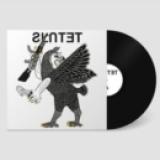
Crypt of the Wizard is proud to make available two legendary underground albums by Slutet on vinyl and digital formats. Here we present the debut self titled LP Slutet - Slutet
Slutet originated in Uppsala well over a decade ago, first emerging as a loose idea around 2010. The original cluster of strangely like minded individuals - Dingir, Ryttersson, J.P., Sviatopolk, were equally set on starting a cult as they were a band, the former emerging as a loose collective known as The End Commune, while the latter eventually began rehearsing together as Slutet on September 1, 2013.
From this constellation three notorious demo tapes sprung which were self-released in very limited numbers, and only available by trading bodily fluids, blood, and/or hair for the cassettes. “A very loose guess but we made probably around 20-30 hand-drawn/custom demo tapes of the first three releases. We got blood and hair from many places, actually the very first offering was from INDONESIA. Slovakia, Germany, USA, Argentina, Norway, Canada, Finland followed.... if my memory serves..... hazy years indeed”
J.P. left early 2015. Later that year, after trying the band as a bass-drum-vocals outfit for a while, Fjalar joined on guitar. This is the classic constellation. Dingir, Ryttersson, Fjalar, Sviatopolk. The same troupe playing to this very day.
While the difficulty of obtaining the demos certainly added to the band’s bottomless mystique, the subsequent release of the self-titled compilation / LP secured their reputation as one of the most interesting and unorthodox bands recording under the somewhat ill-fitting moniker of ‘underground black metal’.
First released as a cassette by Berlin label Teratology Sound & Vision, and later on vinyl in an edition of 100 by Goatowarex, the self-titled LP is the definitive document of the very early and very wild years of the band as they begin to take form, fulminating against whatever was on offer.
“Between September 2013 and September 2014 we rehearsed and recorded 3 very crude demo cassettes; although sub-par in many musical and performance-wise aspects, the passion seeping through those recordings were evidently very real.”
UILTY RAZORS, BONA FIDE PUNKS.
Writings on the topic that go off in all directions, mind-numbing lectures given by academics, and testimonies, most of them heavily doctored, from those who “lived through that era”: so many people today fantasize about the early days of punk in our country… This blessed moment when no one had yet thought of flaunting a ridiculous green mohawk, taking Sid Vicious as a hero, or – even worse – making the so-called alternative scene both festive and boorish. There was no such thing in 1976 or 1977, when it wasn’t easy to get hold of the first 45s by the Pistols or the Clash. Few people were aware of what was happening on the fringes of the fringes at the time. Malcolm McLaren was virtually unknown, and having short hair made you seem strange. Who knew then that rock music, which had taken a very bad turn since the early 1970s, would once again become an essential element of liberation? That, thanks to short and fast songs, it would once again rediscover that primitive, social side that was so hated by older generations? Who knew that, besides a few loners who read the music press (it was even better if they read it in English) and frequented the right record stores? Many of these formed bands, because it was impossible to do otherwise. We quickly went from listening to the Velvet Underground to trying to play the Stooges’ intros. It’s a somewhat collective story, even though there weren’t many people to start it.
The Guilty Razors were among those who took part in this initial upheaval in Paris. They were far from being the worst. They had something special and even released a single that was well above the national average. They also had enough songs to fill an album, the one you’re holding. In everyone’s opinion, they were definitely not among the punk impostors that followed in their wake. They were, at least, genuine and credible.
Guilty Razors, Parisian punk band (1975-1978). To understand something about their somewhat linear but very energetic sound, we might need to talk about the context in which it was born and, more broadly, recall the boredom (a theme that would become capital in punk songs) coupled with the desire to blow everything off, which were the basis for the formation of bands playing a rejuvenated rock music ; about the passion for a few records by the Kinks or the early Who, by the Stooges, by the Velvet mostly, which set you apart from the crowd.
And of course, we should remember this new wave, which was promoted by a few articles in the specialized press and some cutting-edge record stores, coming from New York or London, whose small but powerful influence could be felt in Paris and in a handful of isolated places in the provinces, lulled to sleep by so many appalling things, from Tangerine Dream to President Giscard d’Estaing...
In 1975-76, French music was, as almost always, in a sorry state ; it was still dominated by Johnny Hallyday and Sylvie Vartan. Local rock music was also rather bleak, apart from Bijou and Little Bob who tried to revive this small scene with poorly sound-engineered gigs played to almost no one.
In the working class suburbs at the time, it was mainly hard rock music played to 11 that helped people forget about their gruelling shifts at the factory. Here and there, on the outskirts of major cities, you still could find a few rockers with sideburns wearing black armbands since the death of Gene Vincent, but it wasn’t a proper mass movement, just a source of real danger to anyone they came across who wasn't like them. In August 1976, a festival unlike any other took place in Mont-de-Marsan – the First European Punk Festival as the poster said – with almost as many people on stage as in the audience. Yet, on that day, a quasi historical event happened, when, under the blazing afternoon sun, a band of unknowns called The Damned made an unprecedented noise in the arena, reminiscent of the chaotic Stooges in their early adolescence. They were the first genuine punk band to perform in our country: from then on, anything was possible, almost anything seemed permissible.
It makes sense that the four+1 members of Guilty Razors, who initially amplified acoustic guitars with crappy tape recorder microphones, would adopt punk music (pronounced paink in French) naturally and instinctively, since it combines liberating noise with speed of execution and – crucially – a very healthy sense of rebellion (the protesters of May 1968 proclaimed, and it was even a slogan, that they weren’t against old people, but against what had made them grow old. In the mid-1970s, it seemed normal and obvious that old people should now ALSO be targeted!!!).
At the time, the desire to fight back, and break down authority and apathy, was either red or black, often taking the form of leafleting, tumultuous general assemblies in the schoolyard, and massive or shabby demonstrations, most of the time overflowing with an exciting vitality that sometimes turned into fights with the riot police. Indeed, soon after the end of the Vietnam War and following Pinochet’s coup in Chile, all over France, Trotskyist and anarcho-libertarian fervour was firmly entrenched among parts of the educated youth population, who were equally rebellious and troublemakers whenever they had the chance. It should also be noted that when the single "Anarchy in the UK" was first heard, even though not many of us had access to it, both the title and its explosive sound immediately resonated with some of those troublemakers crying out for ANARCHY!!! Meanwhile, the left-wing majority still equated punks with reckless young neo-Nazis. Of course, the widely circulated photos in the mainstream press of Siouxsie Sioux with her swastikas didn’t necessarily help to win over the theorists of the Great Revolution. It took Joe Strummer to introduce The Clash as an anti-racist, anti-fascist and anti-ignorance band for the rejection of old-school revolutionaries to fade a little.
The Lycée Jean-Baptiste Say at Porte d’Auteuil, despite being located in the very posh and very exclusive 16th arrondissement of Paris, didn’t escape these "committed" upheavals, which doubled as the perfect outlet for the less timid members of this generation.
“Back then, politics were fun,” says Tristam Nada, who studied there and went on to become Guilty Razors’ frontman. “Jean-Baptiste was the leftist high-school in the neighbourhood. When the far right guys from the GUD came down there, the Communist League guys from elsewhere helped us fight them off.”
Anything that could challenge authority was fair game and of course, strikes for just about any reason would lead to increasingly frequent truancy (with a definitive farewell to education that would soon follow). Tristam Nada spent his 10th and 11th unfinished grades with José Perez, who had come from Spain, where his father, a janitor, had been sentenced to death by Franco. “José steered my tastes towards solid acts such as The Who. Like most teenagers, I had previously absorbed just about everything that came my way, from Yes to Led Zeppelin to Genesis. I was exploring… And then one day, he told me that he and his brother Carlos wanted to start a rock band.” The Perez brothers already played guitar. “Of course, they were Spanish!”, jokes their singer. “Then, somewhat reluctantly, José took up the bass and we were soon joined by Jano – who called himself Jano Homicid – who took up the rhythm guitar.” Several drummers would later join this core of not easily intimidated young guys who didn’t let adversity get the better of them.
The first rehearsals of the newly named Guilty Razors took place in the bedroom of a Perez aunt. There, the three rookies tried to cover a few standards, songs that often were an integral part of their lives. During a first, short gig, in front of a bewildered audience of tough old-school rockers, they launched into a clunky version of the Velvet Underground's “Heroin”. Challenge or recklessness? A bit of both, probably… And then, step by step, their limited repertoire expanded as they decided to write their own songs, sung in a not always very accurate or academic English, but who cared about proper grammar or the right vocabulary, since what truly mattered was to make the words sound as good as possible while playing very, very fast music? And spitting out those words in a language that left no doubt as to what it conveyed mattered as well.
Trying their hand a the kind of rock music disliked by most of the neighbourhood, making noise, being fiercely provocative: they still belonged to a tiny clique who, at this very moment, had chosen to impose this difference. And there were very few places in France or elsewhere, where one could witness the first stirrings of something that wasn’t a trend yet, let alone a movement.
In the provinces, in late 1976 or early 1977, there couldn’t be more than thirty record stores that were a bit more discerning than average, where you could hear this new kind of short-haired rock music called “punk”. The old clientele, who previously had no problem coming in to buy the latest McCartney or Aerosmith LP, now felt a little less comfortable there…
In Paris, these enlightened places were quite rare and often located nex to what would become the Forum des Halles, a big shopping mall. Between three aging sex workers, a couple of second-hand clothes shops, sellers of hippie paraphernalia and small fashion designers, the good word was loudly spread in two pioneering places – propagators of what was still only a new underground movement. Historically, the first one was the Open Market, a kind of poorly, but tastefully stocked cave. Speakers blasted out the sound of sixties garage bands from the Nuggets compilation (a crucial reference for José Perez) or the badly dressed English kids of Eddie and the Hot Rods. This black-painted den was opened a few years earlier by Marc Zermati, a character who wasn’t always in a sunny disposition, but always quite radical in his (good) choices and his opinions. He founded the independent label Skydog and was one of the promoters of the Mont-de-Marsan punk festivals. Not far from there was Harry Cover, another store more in tune with the new New York scene, which was amply covered in the house fanzine, Rock News (even though it was in it that the photos of the Sex Pistols were first published in France).
It was a favorite hang-out of the Perez brothers and Tristam Nada, as the latter explained. “It’s at Harry Cover’s that we first heard the Pistols and Clash’s 45s, and after that, we decided to start writing our first songs. If they could do it, so could we!”
The sonic shocks that were “Anarchy in the UK”, “White Riot” or the Buzzcocks’s EP, “Spiral Scratch” – which Guilty Razors' sound is reminiscent of – were soon to be amplified by an unparalleled visual shock. In April 1977, right after the release of their first LP, The Clash performed at the Palais des Glaces in Paris, during a punk night organised by Marc Zermati. For many who were there, it was the gig of a lifetime…
Of course, Guilty Razors and Tristam were in the audience: “That concert was fabulous… We Parisian punks were almost all dressed in black and white, with white shirts, skinny leather ties, bikers jackets or light jackets, etc. The Clash, on the other hand, wore colourful clothes. Well, the next day, at the Gibus, you’d spot everyone who had been at this concert, but they weren’t wearing anything black, they were all wearing colours.”
It makes sense to mention the Gibus club, as Guilty Razors often played there (sometimes in front of a hostile audience). It was also the only place in Paris that regularly scheduled new Parisian or Anglo-Saxon acts, such as Generation X, Siouxsie and the Banshees, the Slits, and Johnny Thunders who would become a kind of messed-up mascot for the venue. A little later, in 1978, the Rose Bonbon – formerly the Nashville – also attracted nightly owls in search of electric thrills… In 1977, the iconic but not necessarily excellent Asphalt Jungle often played at the Gibus, sometimes sharing the bill with Metal Urbain, the only band whose aura would later transcend the French borders (“I saw them as the French Sex Pistols,” said Geoff Travis, head of their British label Rough Trade). Already established in this small scene, Metal Urbain helped the young and restless Guilty Razors who had just arrived. Guitarist for Metal Urbain Hermann Schwartz remembers it: “They were younger than us, we were a bit like their mentors even if it’s too strong a word… At least they were credible. We thought they were good, and they had good songs which reminded of the Buzzcocks that I liked a lot. But at some point, they started hanging out with the Hells Angels. That’s when we stopped following them.”
The break-up was mutual, since, Guilty Razors, for their part, were shocked when they saw a fringe element of the audience at Metal Urbain concerts who repeatedly shouted “Sieg Heil” and gave Nazi salutes. These provocations, even still minor (the bulk of the skinhead crowd would later make their presence felt during concerts), weren’t really to the liking of the Perez brothers, whose anti-fascist convictions were firmly rooted. Some things are non-negotiable.
A few months earlier (in July 1978), Guilty Razors had nevertheless opened very successfully for Metal Urbain at the Bus Palladium, a more traditonally old-school rock night-club. But, as was sometimes the case back then, the night turned into a mass brawl when suburban rockers came to “beat up punks”.
Back then, Parisian nights weren’t always sweet and serene.
So, after opening as best as they could for The Jam (their sound having been ruined by the PA system), our local heroes were – once again – met outside by a horde of greasers out to get them. “Thankfully,” says Tristam, “we were with our roadies, motorless bikers who acted as a protective barrier. We were chased in the neighbouring streets and the whole thing ended in front of a bar, with the owner coming out with a rifle…”
Although Tristam and the Perez brothers narrowly escaped various, potentially bloody, incidents, they weren’t completely innocent of wrongdoing either. They still find amusing their mugging of two strangers in the street for example (“We were broke and we simply wanted to buy tickets for the Heartbreakers concert that night,” says Tristam). It so happened that their victims were two key figures in the rock business at the time: radio presenter Alain Manneval and music publisher Philippe Constantin. They filed a complaint and sought monetary compensation, but somehow the band’s manager, the skilful but very controversial Alexis, managed to get the complaint withdrawn and Guilty Razors ended up signing with Constantin with a substantial advance.
They also signed with Polydor and the label released in 1978 their only three-track 45, featuring “I Don't Wanna be A Rich”, “Hurts and Noises” and “Provocate” (songs that exuded perpetual rebellion and an unquenchable desire for “class” confrontation). It was a very good record, but due to a lack of promotion (radio stations didn’t play French artists singing in English), it didn’t sell very well. Only 800 copies were allegedly sold and the rest of the stock was pulped… Initially, the three tracks were to be included on a LP that never came to be, since they were dropped by Polydor (“Let’s say we sometimes caused a ruckus in their offices!” laughs Tristam.) In order to perfect the long-awaited LP, the band recorded demos of other tracks. There was a cover of Pink Floyd's “Lucifer Sam” from the Syd Barrett era – proof of an enduring love for the sixties’ greats –, “Wake Up” a hangover tale and “Bad Heart” about the Baader-Meinhof gang, whose actions had a profound impact on the era and on a generation seeking extreme dissent... On the album you’re now discovering, you can also hear five previously unreleased tracks recorded a bit later during an extended and freezing stay in Madrid, in a makeshift studio with the invaluable help of a drummer also acting as sound engineer. He was both an enthusiastic old hippie and a proper whizz at sound engineering. Here too, certain influences from the fifties and sixties (Link Wray, the Troggs) are more than obvious in the band’s music.
Shortly after a final stormy and rather barbaric (on the audience’s side) “Punk night” at the Olympia in June 1978, Tristam left the band ; his bandmates continued without him for a short while.
But like most pioneering punk bands of the era, Guilty Razors eventually split up for good after three years (besides once in Spain, they’d only played in Paris). The reason for ceasing business activities were more or less the same for everyone: there were no venues outside one’s small circuit to play this kind of rock music, which was still frightening, unknown, or of little interest to most people. The chances of recording an LP were virtually null, since major labels were only signing unoriginal but reassuring sub-Téléphone clones, and the smaller ones were only interested in progressive rock or French chanson for youth clubs. And what about self-production? No one in our small safety-pinned world had thought about it yet. There wasn’t enough money to embark on that sort of venture anyway.
So yes, the early days of punk in France were truly No Future!
- 1: Match Questions - Gasoline Truth
- 2: Goddess Of Paradox (Tiamat Yawns Awake)
Crypt of the Wizard is proud to make available two legendary underground albums by Slutet on vinyl and digital formats.
Slutet originated in Uppsala well over a decade ago, first emerging as a loose idea around 2010. The original cluster of strangely like minded individuals - Dingir, Ryttersson, J.P., Sviatopolk, were equally set on starting a cult as they were a band, the former emerging as a loose collective known as The End Commune, while the latter eventually began rehearsing together as Slutet on September 1, 2013.
From this constellation three notorious demo tapes sprung which were self-released in very limited numbers, and only available by trading bodily fluids, blood, and/or hair for the cassettes. “A very loose guess but we made probably around 20-30 hand-drawn/custom demo tapes of the first three releases. We got blood and hair from many places, actually the very first offering was from INDONESIA. Slovakia, Germany, USA, Argentina, Norway, Canada, Finland followed.... if my memory serves..... hazy years indeed”
J.P. left early 2015. Later that year, after trying the band as a bass-drum-vocals outfit for a while, Fjalar joined on guitar. This is the classic constellation. Dingir, Ryttersson, Fjalar, Sviatopolk. The same troupe playing to this very day.
Following on from the compilation Slutet began work on their next offering entitled Jihad. While the departure of J.P. left them temporarily without a guitarist, a chance meeting with Fjalar at a rave ushered in a new era for the band. “I met the drummer and the bass player at a psytrance rave in the forest. I didn’t have any band and I wanted to play music and I saw this fucking weirdo with long dreads and a Hellhammer shirt and I just went up to talk to him”.
After Fjalar joined the rather chaotic fray, songwriting duties were spread out more broadly and Jihad was rehearsed and recorded in a haze. First released as a cassette by Manifest Of Hate Creations, and later on vinyl in an edition of 100 by Goatowarex the release quickly sold out and became as legendary, and as incredibly difficult to obtain as the previous releases. “It has got some psychedelic improvs, some very unorthodox and quite genius vocal work, some electronic undertones, some noisy ambience, a message of existentialism; all this wrapped up in some sloppy but very authentic and intense black metal-ish music.”
“After the vinyl compilation was out (early 2015) we felt probably a bit directionless, and, having parted ways with a befriended and talented guitar player, we felt maybe a bit morally weakened to continue. First, for a year almost, we toiled on without the 6-strings and rehearsed quite lengthy material for a proposed upcoming LP. However, that material never surfaced. Then we got a new guitar player (Fjalar) and created and recorded this mess”.
It is with great pride that we make these albums available to a general audience and in a wider pressing without need for bloodshed.
- 1: Long Way Back From Hell
- 2: Snakes Of Christ
- 3: Killer Wolf
- 4: Tired Of Being Alive
- 5: I 'M The One
- 6: Her Black Wings
- 7: Devil's Plaything
- 8 77: 7
- 9: Blood And Tears
- 10: Girl
- 11: Pain In The World
- 1: I Will Kill You
- 2: Disposal Of The Body
- 3: Sentenced To Burn
- 4: Blood Drenched Execution
- 5: Gallery Of Suicide
- 6: Dismembered And Molested
- 7: From Skin To Liquid
- 8: Unite The Dead
- 9: Stabbed In The Throat
- 10: Chambers Of Blood
- 11: Headless
- 12: Every Bone Broken
- 13: Centuries Of Torment
- 14: Crushing The Despised
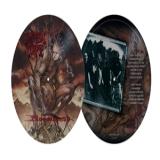
Stunning, limited edition 12" picture disc featuring iconic, gruesome artwork by Vince Locke. A crucial 1998 release that kept traditional death metal alive during the rise of nu-metal.
The ultimate 1999 Death Metal masterpiece on limited edition 12" picture disc!
- 1: Silver Smile
- 2: Nightmares
- 3: My Paper Heart
- 4: Fall In Fall Out
- 5: Stuck In The Melancholy
- 6: Golden Sands
- 7: Magic Sleep
- 8: I'm Breaking Out
- 9: Cut The Eyes Out Of The Photographs
- 10: A Black Moon
- 11: Sadness, Don't You Worry
- 12: Head Over Heels
Graphite Vinyl[29,37 €]
Tigercub are a UK alternative rock trio known for their dark, cinematic sound that blends heavy riffs with melodic depth. Fusing elements of grunge, alt-rock, and post-punk, the band delivers emotionally charged songwriting and powerful live performances. Praised for their balance of aggression and atmosphere, Tigercub have toured with acts like Royal Blood, Chevelle, and Highly Suspect, cementing their reputation as one of the most dynamic bands in modern rock.