Close your eyes and merge into Benedikt Frey’s 'Fastlane'. Imagine sitting in the driver’s seat of a an automobile, one with exceptional horsepower and torque, as you stare out the windshield at the red light, warping in fata-morgana a mile down the road. It’s a straight-away, a black top with two lanes, and against your better judgment you decide to floor the gas. No hesitation in your muscle, your ankle or the ball of your foot, which you now realize is some kind of universal pivot, the first point of contact fusing your body with the will of machine. In this moment you’re in awe that you, a human, an animal, grew from pond scum into something so advanced as to engineer this thing, a mechanical beast capable of overwhelming power and exhilaration. But you also feel a seductive dread, an outside force diverting you from caution toward a dangling carrot of curiosity, asking yourself, ‘How far can I take this thing?’ The dread, now a constant, is numbed, equalized by an adverse intoxicating gratification. You feel both sensations in real time, however, rather than take responsibility for yourself, friends, family and innocent bystanders, you cement your foot to the floor and lean your head back. Noise around you fades to mute. Smell the benzene-scented air, feel the wind on your face, the menacing vibration of the vessel you control beneath you and every grain of asphalt under its tires. This mile has now lasted an eternity and you’ve left your body for some objective view, as if watching climax of a film. Past the point of no return, you embrace abandon and lean into fate. The film becomes slow motion, a crawling pace so mesmerizing you convince yourself of an option to eject yourself from this madness, but as you finally let go of your last morsel of fear, you run the red light head-on into the nucleus of a fantastic glistening sculpture of torn metal, glass, oil, broken dreams and heartache. 'Fastlane' may be just drum machines and synthesizers if you’re timid, but listen harder and know the catastrophic reality of existence, a wreckage so gruesome we dare not rubberneck, but afterall it is our nature to stare.
Buscar:black light
Mit ihrem Debütalbum "Portal To Darkness" öffnen UNBLESSED DIVINE ein einzigartiges Portal in die Geschichte brutaler Musik.
UNBLESSED DIVINE kombinieren klassischen Death Metal aus den 90ern mit Elektronik, wie es noch keine andere Band zuvor im Extreme Metal getan hat, und entfesseln so ein einzigartiges Album, das Dunkelheit in unsere Welt bringt.
Die 8 Tracks des Albums beinhalten sowohl schnelle und kompromisslose Songs, als auch epische Songs, die dem Hörer etwas bieten, das er nicht vergessen wird.
Aber lasst euch nicht täuschen, das ist Death Metal in seiner rohesten und brutalsten Form, gepaart mit einem beunruhigenden Hauch von Endzeit-Stimmung.
- A1: Vortex Count - Growthh
- A2: Translate - Nyquist
- A3: Pulso - Unexpected
- A4: Aural Research - <>
- B1: Droneghost - Cartographer
- B2: David Bowman - Ligo
- B3: Animatek - Black Cat
- C1: Hd Substance - Kormoran
- C2: Groof - Al Caer Sube
- D1: Dorian Gray - Arcadia
- D2: Andrey Detochkin - Brain Impulses
- E1: Pedro Pina - Peakoil
- E2: Victor Santana - The Feeling Of Never Giving Up
- F1: Hironori Takahashi - Velk
- F2: Subtraum - Binare Code Ii
- G1: Plural - Stowaway
- G2: Hanton - Astral Travel
- H1: Eleck & Alex Schultz - Engine Control
- H2: Lakej - Someone Lead The Way
Neurotwin is a Trilogy:
Part I
In the fight against Alzheimer's, epilepsy, schizophrenia and other diseases characterized by an imbalance in neuronal activity, there are chemical weapons, such as those that try to prevent the protein fragments known as beta-amyloid plaques from developing in the cerebral cortex , and physical, such as electrical stimulation that allow to restore the functionality of brain cells. This last resort, which has already been shown to be effective in modifying the activity of the cerebral cortex, is today a weapon of general intervention. Converting it to precision requires the development of individualized and predictive brain models that allow identifying where and how much to stimulate each patient. To achieve this, an international European team is working on the creation of virtual replicas of the most unknown organ in the body: the Neurotwin project.
According to recent research, the decrease in power in the neuronal oscillations of the gamma band of the cerebral cortex (a pattern whose frequency ranges between 20 and 50 Hertz) favors the development of protein fragments related to Alzheimer's.
Transcranial application of weak electrical currents has proven to be an effective and painless way to modulate brain activity without side effects.
The objective is to create complete computational models of the brain with real data of living beings (human patients) and that allow to anticipate and specify the effects of non-invasive stimulation techniques on neurological mechanisms.
"Never turn your back on a friend."
- Alfred Hitchcock
Part II
The Neurotwin project is the successor to an initiative that encompasses many projects called Virtual Physiological Human, which was based on the idea of creating a complete model of a human being on a computer, to perform non-invasive tests at the computational level. Now the concept has been derived to "Digital Twin", which seeks not only to have an equal computational model for everyone, but to create "twin" digital models of each patient in order to be able to make personalized medicine from the genome of each individual. Specifically, in our project, we have focused on digital twin brains, which would be representations of patient brains created from data extracted with current neuroimaging and brain activity monitoring techniques.
"Mirrors are used to see the face, Art to see the soul."
- George Bernard Shaw
Part III
A digital twin is a computer system programmed in such a way that, receiving the same inputs as the physical object or process it is a twin of, it provides the same outputs.
Characteristics of digital twin technology
1 Connectivity
2 Homogenization
3 Reprogrammable and intelligent
4 Digital traces
"There is no light without shadows and no fullness of mind without imperfections. Life requires for its realization, not perfection, but fullness. Without imperfection, there is no progress or growth."
- Carl Gustav Young
Black Truffle is pleased to welcome free jazz legend Joe McPhee back to the fold with Oblique Strategies, a wild trio recorded in Antwerp in 2018 in the company of Mette Rasmussen’s fire-breathing alto saxophone and Dennis Tyfus’s post-Fluxus antics on tape, voice, and percussion. Rasmussen and Tyfus have previously recorded together as Bazuinschal, and some similar strategies are on display here: mysterious metallic scrapes, extended tones in which voice and sax become indistinguishable, comic explosions of varispeed tape. With McPhee on board, however, proceedings are more sumptuous, with the two horns moving fluidly from expeditions into the extremes of their instruments’ registers to pointillistic note-splatter and Ayler-esque folk melodies; we even get to bask in some of the slow-motion free blues that McPhee has now been playing for half a century. McPhee is heard primarily on tenor, Rasmussen mainly on alto, but with Rasmussen doubling on sundry objects, and the whole trio contributing vocals, certainty about who is doing what becomes nigh impossible.
The recording and production add to this hazy unclarity. Where much contemporary improvised music aims at dryly clinical hi-fi, the lively reverberant space of Oblique Strategies calls to mind the less-than-pristine sonics of classic free jazz artefacts like John Tchicai’s Afrodisiaca or McPhee’s own Underground Railroad. A further dimension of oblique unpredictability is added by subtle changes in the sense of space: at times merely a reverb tail glimpsed between phrases, at other points the whole mix seems to be momentarily swallowed up in slap-back, blurring the lines between acoustic instruments and the decayed fidelity of Tyfus’ tape playback. Spread across four pieces ranging from four to nineteen minutes in length, Oblique Strategies moves with anarchic swagger from explosions of clattering cymbals and bellowing horns to near-silent episodes of mysterious rumble and clunk. ‘Death or Dinner?’ opens the record with a lovely duet of climbing melodic patterns shared between the two saxophones, played with a buzzing oboe-like tone. A long, wavering note sung by Tyfus cues the first of countless changes of direction, eventually leading to a crescendo of watery splutters and duelling saxes. At points Tyfus’ keening resemble the signature moves of his friend and collaborator, Ghédelia Tazartès; at others, his tape-sped huffs and puffs possess a rawness reminiscent of Henri Chopin or Gil Wolman. The dialogue between wailing saxophones and vocal cries, punctuated by percussive thuds and crashes, can at times feel less like a musical performance and more like the calls of some mysterious forest creatures, possessing a primordial energy that might remind some listeners of the outdoor antics of Brötzmann and Bennink’s Schwarzwaldfahrt.
Oblique Strategies can also be delicate at times, as on the beautiful third piece, ‘Destilled Edible’, dominated by a slow, microtonal melody played with a breathy tone resembling a shakuhachi. The closing side-long ‘Light My Fire’ ranges across classic improv call and response, skittering trumpet blurts, inept cymbal clatter, mock-operatic vocals, and crude tape manoeuvres. Momentarily pausing at the ten-minute mark for an interlude of ghostly room sound and crackling texture, its closing moments unfurl a glorious dual saxophone finale, the almost epic tone subtly undermined by Tyfus quietly tapping out swing rhythms. Arriving in a striking sleeve adorned with Tyfus’ drawings, Oblique Strategies is an invigoratingly free-spirited blast of improvisation.
Downloads
Edna Wright's idiosyncratic "Oops!" is one of the most sublime vocal refrains in soul music history. Anchoring its host album's leadoff cut, it sets the tone for a uniquely satisfying modern soul LP. Indeed, whilst many of its ilk come laden with filler, Wright's one solo record is an exercise in elegant restraint, a concise killer.
Originally released in 1977 on RCA, this rare and sought-after album followed the 1973 disbanding of Edna's much-loved Honey Cone. Produced by her husband, legendary producer/songwriter Greg Perry, the album was somewhat of a risk, a deep soul album released during the period when disco was altering the landscape of popular music. And perhaps inevitably, despite the stellar production and spine-tingling vocals throughout, the album glided gracefully under the radar, spawning only one single and seeing no chart action.
That single - the magnificent title-track - soon became a notorious rare groove stepper in its own right. However, in the years since, it has become a crate diggers classic. Its fame was elevated among hip-hop heads when Prince Paul memorably looped the shimmering intro when crafting the melodic hook for De La Soul's late-summer-stunner "Pass The Plugs", a wistfully melancholic back-porch nostalgia trip. And, more recently, Leon Vynehall liberally lifted the same intro for his sepia-tinged "Midnight On Rainbow Road" to augment the excellent Rush Hour compilation Musik For Autobahns 2.
Yet this album is so much more than its most famous song. An assuredly lean masterpiece from start-to-finish, the album features a further six dynamite tracks of warm, smooth soul. As such, it's an impossible task to choose certain tracks to highlight alongside the mighty title track. Throughout, Edna's strikingly mature vocals are wonderful, proudly stepping out with a sophisticated groove reminiscent of Jean Carn or Gloria Scott, whilst Greg Perry's gorgeous string-drenched backdrops add a rich depth. So much so, many of the other tracks have been sampled by producers with impeccable taste, from 9th Wonder to The Alchemist for songs featuring Nas and Talib Kweli.
Following her glowing role in the acclaimed documentary 20 Feet From Stardom, we pray this long overdue reissue will allow further light to shine on Edna. Officially licensed and beautifully remastered for vinyl by celebrated engineer Simon Francis, it has been pressed on audiophile 180g vinyl for the first time and features the original iconic artwork. Each copy includes a printed inner sleeve with a sumptuous black & white photo, full lyrics and heartfelt notes from Edna herself.
Translucent Dark Red & Black Marbled Colored Vinyl. Seine Stärke ist ein Songwriting das musikalisch wie poetisch kratzt und schabt: am amerikanischen Traum, an dessen Wirklichkeit und den Menschen die ihn bevölkern. Immer wieder wurde seine spröde Musik und einfühlsamen Texte mit denen von Leonard Cohen, Lou Reed und Bob Dylan verglichen und somit Gewicht verliehen. Zu großer Bekanntheit führte das nicht, Simon Joyner bleibt ein outsider mit seinem Loner-folk, aber für die, die ihn entdecken bietet er ein Kraft von rauher Schönheit. Conor Obers von Bright Eyes nennt Joyner, der seit 1990 seine dunklen Americana Songs veröffentlicht, einen entscheidenden Einfluß. Simon Joyner's neuestes Album gerät noch dunkler und eindringlicher. Sein Thema hier ist Isolation, und er übernimmt es gleich auch als Grundlage für seine Produktion. Ihm war es wichtig, dass die beteiligten Musiker allesamt alleine waren um ihre jeweiligen Parts zu finden. Die Abgeschiedenheit der einzelnen Musiker auf Songs From A Stolen Guitar bietet somit weniger Spontaneität vieler früherer Arbeiten von Joyner, führt aber zu einer Art Silberstreifeneffekt: Joyners Songs, die hier sorgfältiger und vielleicht absichtsvoller produziert wurden als auf jedem seiner früheren Alben, kommen viel klarer durch und stellen sowohl seine schillernden Wortspiele als auch seine klare Vision in den Vordergrund. Ein Kritiker bringt einen Vergleich zu Neil Young und meinte "Wenn (sein 2012 Album) 'Ghosts' sein 'Tonight's the Night' war - zornig, nackt und bodenlos - dann könnte sich 'Songs From A Stolen Guitar' als sein Harvest erweisen." Songs From A Stolen Guitar wurde in verschiedenen Städten aufgenommen. Joyner nahm seinen Gesang und seine Gitarre live in Omaha auf; Bassist Wil Hendrix fügte seine Parts zu Hause in San Francisco hinzu, Michael Krassner nahm seine Gitarren- und Klavier-Overdubs zu Hause in Phoenix auf, und Schlagzeuger/Percussionist Ryan Jewell nahm in Colorado auf. Dieser musikalische Kettenbrief machte sich dann auf den Weg zurück nach Omaha, wo David Nance (Gitarren und Backing Vocals), Ben Brodin (Orgel und Vibraphon) und Megan Siebe (Bratsche und Backing Vocals) - getrennt voneinander - ihre jeweiligen Beiträge einspielten. Dieses Vorgehen zahlt sich aus. Die "virtuelle" Band spielt eine unterstützende, aber komplementäre Rolle und erzeugt immer das richtige Maß an Spannung, um diese emotionsgeladenen Geschichten zu begleiten und zu umhüllen. Das Zusammenspiel ist einfühlsam und kohärent, auch wenn es aus geografischer Entfernung und Abgeschiedenheit zusammengefügt wurde und oft wie Musik klingt, die durch den Nebel eines Herbstmorgens gefiltert wurde. Doch wenn es um Simon Joyner-Platten geht, zahlt man sein Ticket, um großartige Songs zu hören, und auch in dieser Kategorie enttäuscht Songs From A Stolen Guitar nicht. Eins der seltenen Alben, das nach dem klingt, worum es geht: die Kluft zwischen Einsamkeit und Alleinsein, die Grenzen zwischen Liebe und Hingabe, der Unterschied zwischen dem Tornado und dem, was er hinterlässt.
- A1: Introduction
- A2: Take Five
- A3: Bank Introduction
- A4: Nomad
- B1: Thank You ( Djiekuje )
- B2: Castilian Blues
- C1: Introduction
- C2: Just In Time
- C3: Small World
- C4: Make Someone Happy
- C5: Rags To Riches
- C6: One For My Baby ( And One More For The Road )
- C7: I Left My Heart In San Francisco
- D1: Lullaby Of Broadway
- D2: Chicago
- D3: That Old Black Magic
- D4: There Will Never Be Another You
A historic collaboration by two of jazz music's greatest artists on 180g Double LP Set! Impex Records' deluxe production captures the amazing outdoor acoustics with fine detail and wide dynamic range. The beautiful gatefold jacket is coated in a vintage high-gloss lacquer.
The White House Sessions, Live 1962 contains inspired performances of classic tunes "Take Five", "Castilian Blues", "Lullaby of Birdland", and "I Left My Heart In San Francisco".
"Bennett's vocals are particularly natural and present-sounding... Brubeck's group in its prime, with Paul Desmond on Alto, Eugene Wright on bass and Joe Morello on drums... Bennett/Brubeck is nonetheless a record I found myself playing more times than I expected to before sitting down to write this. There's something about a live performance from a time when life was so much simpler, even if more jittery and dangerous because of the cold war, that makes you want to go back in time and enjoy it all again."
This two LP set is beautifully re-mastered and the original artwork has been carefully replicated.
Two remarkable visionaries at the peak of their powers, Dave Brubeck and his quartet and Tony Bennett (both with his group and with Bennett with trio) give hot performances of some of their biggest hits: Brubeck's revved up "Take Five," and Tony Bennett's soulful "I Left My Heart in San Francisco."
Playing the popular White House Sessions concert on the Washington Mall for President John F. Kennedy, these titans of popular jazz have a great time informing, joking and playing the lights out. You'll want to play the grooves out of Impex's impeccably produced issue of this lost treasure. Quiet surfaces, incredible dynamics, full frequency responses and deluxe packaging will provide years of listening and viewing pleasure.
Featuring the singles "Desire Lines" and "Hypocrite", Split is the second full studio album by Lush. Produced by Mike Hedges - famed for his work on The Cure"s Seventeen Seconds & Siouxsie and the Banshees"s A Kiss in the Dreamhouse - and mixed by Alan Moulder, Split sees the band hit a poppier sound whilst retaining their almost pitch-black feel.
Rare 1986 Funk/Soul From Alabama.
Originally released as a private pressed cassette tape only.
First Time On Vinyl.
Released in collaboration with the Numero Group.
180g BLACK vinyl limited to 500 copies w/obi strip. Non-Returnable.
Armed with little more than his Peavey T-60 guitar and a Jumbo Fuzz pedal, Errol Stubbs and his bar-band cohorts cranked out a self-released tape of funked-up disco soul in 1986. With no label or distribution to speak of, Errol would simply put on his best suit and sell the cassettes by hand. The tape languished into obscurity…until now!
The story of Errol Stubbs begins in Birmingham, Alabama in 1959. The youngest of five, he was surrounded by music as a child–his aunt taught piano at Daniel Payne College while his older brother, Avery Beavers, was an accomplished jazz trumpeter. Under the guidance of Avery, Errol started playing trumpet at the age of nine, though he gravitated toward songwriting and quickly picked up the guitar. Inspired by blues greats the likes of Albert King, Buddy Guy, and Little Milton, 12-year-old Errol began mimicking the sounds that filled southern airwaves. As a teenager, he played at barbecues, fish fries, and dive bars across the Magic City. After a brief stint at Jefferson State studying music, Errol’s passion for songwriting beckoned him away from the classroom.
Stubbs bounced around bar bands before settling on a live lineup and saving enough dough to take his vision to the recording studio. Over the course of two days, his well-rehearsed band recorded Turning it Out mostly live to tape at the Sound Of Birmingham Studio. Located on Birmingham’s east side, the state-of-the-art studio kept the lights on by recording commercial jingles but was more than happy to open their doors to local talent.
Taking notes from guitar god Ernie Isley and funk legend Rick James, the resulting recordings are drenched in cosmic phaser-fuzz guitar work, slapping bass lines, and sexual disco innuendos. Big brother Avery lends a hand on Clavinet for “Sweat,” while studio owner/engineer Don Mosley adds a tasteful dose of Moog synthesizer across a handful of cuts.
Soon after the Sound Of Birmingham sessions, Errol released the private pressed EP “Dancin’ Fancy,” b/w “Spaced Out On Your Love,” the latter of which was featured on Numero Group’s 2019 compilation Visible and Invisible Persons Distributed In Space.
The seven-song cassette Turning It Out was sold in local record stores and from night club stages, but only a few copies made their way out of Birmingham.
A long-awaited release, this is the 7” version of the Bob Dylan Classic “Blind Willie McTell”, out exclusively on black vinyl on August 20, 2021. The record will be available only at indie record stores and the Third Man Records online and physical stores. The 7” features two previously unreleased takes of the song, with the A-side being exclusive to this vinyl release. The B-side (take 5) will be included as part of Spring In New York: The Bootleg Series, Vol. 16 (1980-1985). The recordings on this single feature a formidable lineup of session musicians, including Mark Knopfler, Mick Taylor, Sly Dunbar and Robbie Shakespeare. “Blind Willie McTell” was the first track seriously worked on at the Infidels sessions and the last attempted as recording concluded almost a month later. In the end, it did not make the Infidels album, but in 1991, the acoustic piano-guitar version that Bob Dylan and Mark Knopfler recorded the last day was released on The Bootleg Series Volumes 1-3. The full band version from the first day of the sessions will now see the light of day as part of Springtime In New York: The Bootleg Series, Vol. 16 (1980-1985). Notes: ● Two previously unreleased takes of the Infidels outtake “Blind Willie McTell” ● The A-side (take 1) is not available elsewhere and is exclusive to this 7” ● Indie exclusive Packaging: Full-color glue-pocket sleeve, standard weight vinyl
A white ship sailing in a sea of blackness, Codeine’s swan song arrived in 1994 amid grunge’s ascension to alt radio’s godhead status.
John Engle’s guitar alternates between crystalline and sludge, and Stephen Immerwhar’s distorted bass floats on top of punishing drums from newcomer Doug Scharin (Rex, June of 44), resulting in nine perfect meditations on the loneliness and uncertainty of early adulthood.
A white ship sailing in a sea of blackness, Codeine’s swan song arrived in 1994 amid grunge’s ascension to alt radio’s godhead status.
John Engle’s guitar alternates between crystalline and sludge, and Stephen Immerwhar’s distorted bass floats on top of punishing drums from newcomer Doug Scharin (Rex, June of 44), resulting in nine perfect meditations on the loneliness and uncertainty of early adulthood.
The Tribe co-founder’s debut, lacquered directly from his master tapes in an all analog transfer by Bernie Grundman. The definitive reissue of this Spiritual Jazz album which set the stage for his Vibes from the Tribe The Tribe label, one of the brightest lights of America’s 1970s jazz underground, receives the Now-Again reissue treatment. This is your chance to indulge in the music and story of one of the most meaningful, local movements of the 20th Century Black American experience, one that expanded outwards towards the cosmos.
In the words of the collective themselves, “Music is the healing force of the universe.” Included in an extensive, oversized booklet, Larry Gabriel and Jeff “Chairman” Mao take us through the history of the Tribe, in a compelling story that delves not just into the history of the label and its principals, but into the story of Black American empowerment in the latter half of the 20th Century. The booklet features never-before-seen archival photos and rare ephemera from Tribe’s mid-1970s heyday.
A central figure in Seattle’s fading disco scene, radio DJ, producer, engineer, writer and multi-instrumentalist…Tony Benton was the driving force behind the Seattle soul-funk sound during the late 70s & 80s. Starting off his career at the age of ten he learned how to play the piano and then finally got to take a music class in the 7th grade. Having access to an electric piano made him fall in love with the thought that he could make his own music. At the age of 16 Tony and his friends already formed their first band called ‘Crystal Clear’ and were making up songs in his basement.
Things would really start off when Tony Benton teamed up with his group to form the avant-boogie group Teleclere who went on to release their first single in 1982 (Fantasy Love / Ultra Groove). That’s when Tony started playing all of the other instruments and thus earning him the title ‘multi-instrumentalist’. Teleclere was all about creating and performing original music, there was no music scene in Seattle at that time for a black artist or group who played original compositions. Rap-music was also emerging and clubs slowly started to switch from live performances to deejays.
Through the success of their independent EP release, Teleclere followed up a year later with their Affection/Defection album which created a serious hype. This gave them the chance to regularly open at concerts for national artists in halls and clubs. They played at nightclubs, bars, festivals, private parties and did mini tours in the Washington State cities & Canada…including opening for Grammy-award winning soul-star Peabo Bryson (performing for a crowd of 3,000 in their hometown Seattle)
Sadly, radio would not play their music so folks never really had the chance to hear it unless they saw them perform live (they always won the crowd over). To add insult to injury, venues and the likes started to mainly book cover bands playing top 40 music. Disappointed by this Tony Benton became a radio personality but would continue to record and perform under the name ‘Teleclere’ with various players and vocalists for many years to come. Only a handful of his tracks recorded were released in the end.
Thankfully we are left with the unique audio-document that is the Affection/Defection LP. The album took the scene by storm in 1983 and sounds like a sci-fi space odyssey unfolding on an intergalactic dance floor…a chopped and slapped slice of 80ies electro-funk, sensual soulful serenades, pulses of Innervisions-worthy bass, top of the line vocals and a plethora of vocoder magic. Also included is the hit ‘Steal Your Love’ that was featured on the acclaimed 2014 Light In The Attic compilation ‘Wheedle’s Groove Volume II: Seattle Funk, Modern Soul And Boogie 1972-1987’.
Tidal Waves Music (in collaboration with the Numero Group) now proudly presents the first ever vinyl reissue of this fantastic private pressed Seattle electronic soul/funk album (originally released in 1983 on Telemusic Productions). This rare record (original copies tend to go for large amounts on the secondary market) is now finally back available as a limited 180g vinyl edition (500 copies) complete with the original artwork and obi strip.
- A1 10: Commandments
- A2: I'll Take You There
- A3: Message From The Black Ark Studios
- A4: Holyness, Righteousness, Light
- B1: Babylon Fall
- B2: Mr. Dino Koosh Rock
- B3: Hip Hop Reggae
- B4: Evil Brain Rejector
- C1: Jah Rastafari, Jungle Safari
- C2: Love Sunshine, Blue Sky
- C3: Clear The Way
- C4: Congratulations
- D1: Shocks Of Mighty
- D2: Jamaican E.t
- D3: Telepathic Jah A Rize
The year is 1989. Techno’s second generation has begun to permeate the globe leading a young Carl Craig to a tiny village in the countryside of Belgium. It is here, undistracted and determined to break out, that Craig encounters one of the country’s only drum machines, an Alesis controlled midi-808. In a single session he composes and mixes a handful of records that are still to this day regarded as some of his most raw and explosive contributions to the fabric of electronic music history.
Carl revisits this fateful chapter through the lens of a famed cut from his Psyche alias ‘From Beyond’, with a ‘C2 2023 Mix’ and remixes from Seth Troxler, Ataxia and Admn, out July 14 on Planet E Communications.
The Psyche alias, known for early Transmat releases like ‘Crackdown’ and ‘Elements’, embodied a stripped back, less sample based yin attitude to the yang of Carl’s more aggressive 69 and sample-forward BFC and Paperclip People identities. ‘From Beyond’, first released in 1990 via the ‘Crackdown’ 12” on Transmat, offers an eerie glimpse into the simplistic production that came through Carl’s mastery of the 808 and the sonic value of restricting himself to this movement defining tool.
This new ‘From Beyond’ package sees Carl lift and bend the original in his ‘C2 2023 Mix’ alongside a package of remixes from artists near to the hearts of Detroit and the Planet E fold. Seth Troxler brings a subdued acid tinge to the package, while label regular Ataxia pays homage to the source material with a renewed percussive energy, followed by a soulful rework by Admn.
Whether it be through the 30 year repertoire of his seminal Planet E, his Party / After-Party sound and light installation now on display at Los Angeles’ MOCA, or his continuous work as a champion of Black-led creativity, the Carl Craig mission remains the same: to always rep Detroit and be the realest mutha f***a alive.
An incredible 45 of Latin disco – recorded in Peru during the late 70s by funk pioneers Black Sugar, and right up there with the best from New York and LA of that era! It’s taken over four decades 'Baila' to become a winner spin at international events in the soul and disco scenes, a sought-after collector's item and, above all, the dancefloor hit that should have always been. First time reissue. Black Sugar is a Peruvian band, considered a pioneer group in Latin America in mixing funk influences with rock and Latin rhythms. In 1976, following their gig at Coliseo Amauta in Lima, opening the night for the legendary Spanish band Barrabás, they started to show a growing interest in disco music, resulting in some line up changes with members leaving the project due to their lack of interest in the new sound and new ones joining in. Word is that Sono Radio, home to a bunch of local Tamla MoTown releases for the Peruvian market, thought that Black Sugar's prestige, and their credibility in the new orientation towards disco sound, would benefit from seeing their new single pressed with the labels of the famous record company from Detroit. And so it was. Under certain lights and shadows, ‘Baila’ was finally released in Peru only in 1978, sporting the same look as the releases of the likes of Marvin Gaye, Diana Ross, Commodores or Thelma Houston. A clever marketing ploy that however failed in boosting the sales of the single…Only a few original copies have survived to this day, of either the first and the second edition from 1979 released on the US label Libra, and reached the collectors market. It’s now, over four decades later, when the interest on this recording has gone stronger and ‘Baila’ is getting regular spins at international soul/disco scene events, having become a very sought-after collectors item and, on top of that, the dance floor anthem that should have always been. The stunning piano arrangements of the intro, the outstanding brass sections —faithfully copied from the disco recordings coming from the States—, a very catchy chorus… ‘Baila’ has all the necessary ingredients to become an addictive invitation to join the dance floor. On the B side, a cover version of Barry White’s hit ‘Sha La La (Means I Love You)’ —as appeared on the original issue of this record— shows what the interest of the band was at the time. First time reissue. TRACKLIST Side A Baila Side B Sha La La (Means I Love You)
Repress!
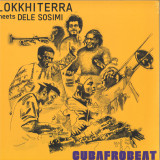
Funkiwala Records presents the third in the series of "Lokkhi Terra meets"albums, with the London fusionistas creating another unique sound-clash, this time with ex-Fela Kuti keyboardist and legendary UK Afro-beat ambassador Dele Sosimi, and members of his critically acclaimed Afro-beat Orchestra.
This particular collaboration has been bubbling away for a few years now, teasing audience expectations with a handful of sold out shows each year in between both bands busy schedules.
Featuring the two pianos of Kishon Khan and Dele Sosimi – Cuban percussionists/vocalists Geraldo De Armas (Yoruba Andabo), Oreste Noda (Ariwo), Javier Camilo (Ibrahim Ferrer) - a horn section led by Justin Thurgur (Bellowhead) featuring Yelfris Valdes (Sierra Maestra) and Graeme Flowers (Kyle Eastwood) to name a few – this is an All-star cast.
Kishon Khan's Lokkhi Terra have over a number of years now been quietly establishing themselves as one of London's more unusual heavyweight outfits, described as "Stunning Headliners… A majestic multi-cultural blend of sounds… effortlessly builds bridges between rolling Indian raga rhythms, Afro-Cuban grooves, Acid Jazz/funk and free flowing improvisation" (Timeout London). Included amongst the band members are London's top Cuban musicians, adding their infectious rich musical history to the city's melting pot.
When the band wanted to explore Cuban links with another of their favourite traditions, Afrobeat, who better to bring in then one of the Afrobeat originators – maestro Dele Sosimi – "Sosimi creates some of the most bewitching grooves in modern African music" E Jazz News.
Bringing together two Yoruba speaking musics - with different accents, from different sides of the Atlantic - Havana meets Lagos in London – A Cuban-Afrobeat-Experience. CUBAFROBEAT.
All About Jazz 4star review
A younger version of London's Grand Union Orchestra, founded by world-jazz pioneer Tony Haynes in 1982, Lokkhi Terra was put together by keyboard player Kishon Khan in 2005. Both ensembles have made a specialism of jazz / South Asian fusion, with Lokkhi Terra also giving as much attention to music from Cuba, where Bangladeshi-born, London-based Khan lived for a while in the early 2000s.
Cubafrobeat, as the title foretells, is a blend of Cuban dance music and Nigerian / Yoruban Afrobeat—a fusion rendered seamless by the synergies existing between Afro-Cuban and Yoruban music, language and mythology. The album is Lokkhi Terra's third and partners the band with the keyboard player and vocalist Dele Sosimi .
A young-going-on-child-prodigy member of Fela Kuti's Egypt 80, Sosimi went on to become musical director of Femi Kuti's Positive Force, before relocating to London and setting up Dele Sosimi's Afrobeat Orchestra, the finest Afrobeat band outside Nigeria, bar none, now with a string of consistently engaging albums under its belt. Cubafrobeat features Sosimi as lead vocalist on all four tracks, and on Fender Rhodes on two of them. His singing plays a prominent role in the Afrobeat Orchestra, but, such is the whirlwind impact of the band in full instrumental flight, that Sosimi is often thought of first and foremost for his keyboard and arranging talents. That may change by the time 2018 is over. Cubafrobeat is the third album in as many months to feature Sosimi as guest vocalist, spotlighting the gravitas, air of mystery, intimacy and ferocity his voice can bring to an occasion.
The first of these albums was the genre-bending spiritual-jazz band Emanative's Earth (Jazzman). One of the stand-out tracks, "Ìyáàmi," features Sosimi making obeisance to the titular Mother Goddesses of the Yoruba spirit worlds. His raw and intense invocations carry the track for nine mesmerising minutes. Otherwordly is not the half of it. Next up was dub / reggae / jazz band Soothsayers' Tradition (Wah Wah 45s), which featured Sosimi as lead vocalist on the compelling "Sleepwalking (Black Man's Cry)." Earth and Tradition are both outstanding albums and have previously been reviewed here.
Cubafrobeat is a total stonking blinder, too. It is an effectively nuanced affair, opening with the fiery "Afro Sambroso" and closing with the relatively reflective "Rumbafro." Sosimi's vocals light up the music, as do the several solos from trumpeters Graeme Flowers and Yelfris Valdes Espinosa and trombonist Justin Thurgur (a member of both Lokkhi Terra and the Afrobeat Orchestra). Sosimi and Kishon Khan's intertwining Fender Rhodes solos on "Cubafro" are also a delight, as is the drum and percussion section throughout.
The sound of summer, for sure, Cubafrobeat has enough depth and variety to make it something for all seasons.
Songlines 4star review
Lokkhi Terra are one of London's most authentic groups. They are a Latin-flavoured collective whose keyboard player and bandleader Kishon Khan segues from percussive montunos to complex Bengali rhythms and back, with jazz chops sparking funky and outward-looking fusions. Their collaboration with Dele Sosimi, Britain's foremost Afrobeat ambassador, has been bubbling for a while; here four tracks at ten minutes see musical conversations that never lose their sense of flow. An extensive line-up of stellar players, including trumpeter Yelfris Valdés, conguero Oreste Noda and trombonist Justin Thurgur, highlights the genre-crossing potential of world traditions. Opener 'Afro Sambroso' showcases batá drums from Gerardo de Armas Sarria before the track links Cuban grooves with Afrobeat. 'Timbafro' crackles and sways via Khan's organ, Sosimi's vocals and Oscar Martinez's timbales. 'Cubafro' features dazzling interplay between Khan, Sosimi and Javier Camillo's Spanish-language vocals. 'Rumbafro' is all rumba choruses, Yoruba vocals and Afrobeat horns. Rooted in their sources, but with musical threads intertwining, separating and reconfiguring – with grooves at a premium – this is a fusion lover's dream
This new album compiles several songs made in the years following Black To Comm's classic "Alphabet 1968" album. Originally released on the seminal Type label in 2009 (and to be reissued on Cellule 75 this year) "Alphabet 1968" combined the sound of vintage shellac and vinyl loops with broken electronics and field recordings, the press release mentioning disparate influences "ranging from Moondog to Basic Channel by way of Bernard Herrmann". In a beautiful one-page review in The Wire magazine (later reprinted in his book Ghosts Of My Life) Mark Fisher compared Richter's music to JF Sebastian’s miniature automata in Blade Runner ("with their bizarre mixture of the clockwork and the computerised, the antique and the ultramodern, the playful and the sinister"), ETA Hoffmann's inventor-magicians and Auguste Villiers de l'Isle-Adam's 1886 tale of Thomas Edison's (fictitious) construction of an artificial human.
Now titled "Coh Bâle" (inspired by a strange dream) these recordings were supposed to become a follow-up to said album but for reasons unknown it never materialized and the album seemed forever lost. At the time Richter started to dive deeper into several strains of (so-called) world music aka the folk music of Southeast Asia and Eastern Europe as well as liturgical and medieval music, the Kraut-Electronica of Harmonia and several certain Mediterranean experimentalists from the 1980's who started to merge their mostly electronic and field recording based compositions with traditional musics from all over the world by way of new sampling technology.
Many of the songs for the album were recorded while travelling and at various residencies around Europe: a detuned piano in a Thessaloniki basement (Richter played at a children's birthday party there), vintage synthesizers in the GRM studios in Paris, decaying acoustic instruments found in an old Black Forest mansion, childrens' voices at a workshop in Karlsruhe's ZKM Institute; then mixed on headphones in the ICE trains running between these places and his hometown Hamburg.
"Coh Bâle" is taking inspirations from old Nonesuch Explorer and Ocora LP's, Crammed Records, 80s Mediterranean Ambient (Nuno Canavarro, Roberto Musci) combined with the DIY spirit of Deux Filles and Flaming Tunes and the playfulness of Asa Chang & Junray. The songs are both mysterious and transparent, intricate and frugal, vibrant and patient. One of the album's unexpected climaxes is a gorgeous (artificial) berimbau version of the Welsh traditional "Iechyd o Gylch".
No two songs feature the same instrumentation and many acoustic sources (pianos, flutes, wood percussion, viola, tablas, autoharp) were disassembled and later coalesced into new configurations or used as virtual instruments; later combined with samples, field recordings, electronics and (on a few tracks) autotuned vocals reminding of recent works by the likes of Claire Rousay or More Eaze.
We had to wait for a worldwide pandemic for Richter to dig deep into the vaults and finally bring these recordings to light. This is the 2nd release from his archives after the "Diode, Triode" LP which presented Musique Concrète/Acousmatic recordings made at INA/GRM and ZKM. Another massive Double-CD (MM∞XX Vol. 1 & 2) was released last year featuring collaborations with 33 artists such as Andrew Pekler, Richard Youngs, Eric Chenaux, Maja Ratkje, Radwan Ghazi Moumneh of Jerusalem In my Heart, GRM boss François Bonnet (Kassel Jaeger), Felix Kubin, Timo van Luijk (In Camera, Af Ursin), Luke Fowler and many others, showing Richter's versatility and his willingness to reinvent himself for every new release.
Marc Richter is widely known under his Black To Comm moniker, having released (at least) 12 albums under this alias in the last 20 years. He is currently signed to the Thrill Jockey label. Richter composes soundtracks for film and has worked with visual artists such as Mike Kelley and Ho Tzu Nyen. He also records as Jemh Circs and Mouchoir Étanche for his own Cellule 75 label (named in tribute to the late Luc Ferrari).
»Outside of the world«, the second album by Japanese trio Usurabi, is a rare pleasure – a guitar pop album that’s deep with spirit, bristling with energy, melodically rich and precious: full of life. It’s even more thrilling than its predecessor, 2021’s Remains of the Light, also released by An’archives, its eight songs falling together just perfectly. If you’ve ever swooned to the sound of rattling, humming organs on countless ‘60s garage rock sides, the wistful beauty of David Roback and Kendra Smith’s music as Opal, the brittle immediacy of those 80s EPs from New Zealand acts like The Clean and The Chills, you’ll find plenty to love here.
The line-up’s still the same: the songs are written by Toshimitsu Akiko, previously a member of Doodles and Aminome; playing behind her is drummer Morohashi Shigeki and bass player Kawaguchi Masami, who’d previously played together in Kawaguchi’s legendary Broomdusters, where Kawaguchi really started to establish himself as one of Japan’s greatest rock guitarists. But Usurabi is very much Toshimitsu’s vehicle, a space for her to gift her gorgeous songs to the world, with Kawaguchi and Morohashi helping guide the songs into the light. Indeed, one thing that’s particularly noticeable about »Outside of the world« is the way all three musicians act in service to what the songs demand.
So »Meet again, outside of the worl«” opens the album with a beautiful 60s garage sway, all buzzing organs and Toshimitsu’s beautifully clear voice. »Even if it’s a lie« bristles with energy and tension, its driving rhythms recalling groups like The Feelies, but with Toshimitsu’s surf rock guitar riding the waves. »Pura« is pensive and melancholy, its graceful slow motion dissolving into a free-form section where Kawaguchi and Morohashi drill down into the earth, a fiercely responsive rhythm duo, while waves of coruscating noise guitar soar out into the ether; »Waves« is a stately closer, crushing guitars cossetting a slow, martial rhythm.
Recorded over 2021 and 2022, »Outside of the world« is a more than worthy follow-up to both »Remains of the Light «and the limited cassette, »Further closer«, released in 2022 on Kawaguchi’s Purifivia imprint. It has Usurabi stretching out, letting their songs breathe when they need, and tightening the screws on other songs so they become perfect pop statements. There’s plenty of joy and pleasure here, and a gentle but determined melancholy; inviting and beautifully sculpted, Outside of the world is a quiet masterpiece.
Edition of 400, comes in a 2 colors (gold & black) silkscreened on heavy jacket with obi (black or patterned light pink), with inserts and a postcard. Special A3 (fold out) full color & duotone insert by Andrew Chalk. Printed by Alan Sherry. Liner notes by Jon Dale.