Wendell Harrison was born in Detroit in 1942 where he began formal jazz studies for piano, clarinet and tenor saxophone. At 14, while still in high school, Harrison started performing & recording professionally with artists such as Marvin Gaye, Grant Green, Sun Ra, Hank Crawford … and many others.
In 1971, Harrison began teaching music at Metro Arts (a multi-arts complex for youth) where he also connected with Marcus Belgrave, Harold McKinney and Phil Ranelin…soon after they formed the (now legendary) Afro-centric TRIBE record label and artist collective. TRIBE used the Metro Arts complex as a vehicle to convey a growing black political consciousness. Wendell Harrison also published the very popular TRIBE magazine, a publication dedicated to local and national social and political issues, as well as featuring artistic contributions such as poetry and visual pieces.
In 1978 Harrison and McKinney co-founded REBIRTH, a non-profit jazz performance and education organization, in which many notable jazz artists have participated. Around the same time Wendell Harrison also created the WENHA record label and publishing company, which released many of his (now classic) recordings as well as those of other artists, such as Phil Ranelin, Doug Hammond and Reggie Fields (The Real ShooBeeDoo).
In the early 1990s, Wendell Harrison was awarded the title of “Jazz Master” by Arts Midwest. This distinction led Harrison to collaborate with fellow honorees and gave him the chance to tour throughout the United States, Middle East and Africa. Even to this day Wendell Harrison's recordings for the TRIBE, WENHA and REBIRTH labels have a large worldwide fanbase.
It is on WENHA that Harrison released the opus: DREAMS OF A LOVE SUPREME (1980), which we are presenting you today.
DREAMS OF A LOVE SUPREME is a monster album that features an all-star line-up that includes Phil Ranelin (Freddie Hubbard, Solomon Burke, Mulatu Astakte) on trombone, Harold McKinney (Tribe) on Keyboards and Roy Brooks (Yusef Lateef, Chet Baker, Mingus) on percussion. Although you can hear the 80ies creeping in with a smoother sound, more synths, and disco/R&B vocals… this remains a very spiritual (and soulful) jazz record. The record’s an irresistible blend of soul jazz combined with funky electric instrumentation…a groovy sound which is very much of its time, yet overtly timeless and as relevant today as it was back when it was initially released.
Tidal Waves Music now proudly presents the first ever vinyl reissue of ‘Dreams of A Love Supreme’ since its release in 1980. This official reissue is now available as a deluxe 180g vinyl edition (limited to 500 copies) and comes with an unreleased bonus track.
quête:black man
Minimal Wave presents an exquisite 7" EP release by Martin Lloyd entitled "L'Amant Electronique". Martin is mainly known for his Oppenheimer Analysis (Minimal Wave) and Analysis (Survival Records) projects, yet through the years he recorded over two dozen tracks on his own, most of which never saw the light of day. The four selected tracks were recorded between 1980 and 1984 in his own "Feedback Studios" in Battersea , London. Martin Lloyd delivers vocals via the vocoder and carefully layers synth melodies which range from upbeat and danceable, to what could be the soundtrack to a 1981 post-apocalyptic science fiction film. The record is pressed on white vinyl with a heavy black jacket (spot gloss) and is limited to 999 hand-numbered copies.
Collectors of Black American music have long revered maverick genius Jerry Williams Jr. a.k.a. Swamp Dogg. His brilliant songwriting and unique voice have left indelible imprints on soul for decades, and Soul 4 Real Records are proud to add a Swamp 45 to their ever-growing catalogue.
Both these tracks make their vinyl debut here. If you saw Swamp perform “Oh Lord” at 2019’s Soul 4 Real weekender, it’s a memory you’ll treasure forever. Swamp’s exquisite studio version of the soul standard was recorded in 1967 as a follow-up to “Baby You’re My Everything”, but inexplicably stayed unissued for 40 years.
Almost 40 years have also passed since Swamp recorded his demo of “If You’re Leaving”, a song from his “lost” country album on Mercury. Never issued anywhere before, it’s a rare chance to hear work-in-progress from one of soul’s most beloved artists.
As he enters his seventh decade of recording, Swamp continues to be active and musically provocative. A man of many names and many talents, here’s Swamp Dogg at his vintage best!
Miles Davis Kind of Blue meets Analogue Productions' UHQR, the pinnacle of high-quality vinyl!
Best-selling album in jazz history; mastered from the original master tapes by Bernie Grundman
Pressed at Quality Record Pressings using Clarity Vinyl® on a manual Finebilt press
Purest possible pressing and most visually stunning presentation and packaging!
Dream team of Davis, Adderley, Coltrane, Evans, Kelly, Chambers, Cobb make history.
Legends have a way of sticking around. If there was ever an album awaiting a high-fidelity, custom-pressed vinyl treatment of the level you now hold in your hands, it is Miles Davis' Kind of Blue. The top-selling jazz album of all time, it has been lauded, entered into "Best Of" lists and Halls of Fame, and universally acknowledged as a landmark recording — a five-track masterpiece of melancholy mood and melody.
It continues to be one of the most listened-to and studied recordings of all time, a required primer for many young musicians, and one of the most transcendent pieces of music ever recorded. Davis played trumpet sublime with his ensemble sextet featuring pianist Bill Evans, drummer Jimmy Cobb, bassist Paul Chambers, and saxophonists John Coltrane and Julian "Cannonball" Adderley with Wyton Kelly playing piano on "Freddy the Freeloader."
Now Analogue Productions, together with Quality Record Pressings, is putting Kind of Blue where it belongs: the Ultra High Quality Record (UHQR) pressed on Clarity Vinyl on a manual Finebilt press with attention paid to every single detail of every single record.
The 200-gram records will feature the same flat profile that helped to make the original UHQR so desirable. From the lead-in groove to the run-out groove, there is no pitch to the profile, allowing the customer's stylus to play truly perpendicular to the grooves from edge to center. Clarity Vinyl allows for the purest possible pressing and the most visually stunning presentation. Every UHQR will be hand inspected upon pressing completion, and only the truly flawless will be allowed to go to market. Each UHQR will be packaged in a deluxe box and will include a booklet detailing the entire process of making a UHQR along with a hand-signed certificate of inspection. This will be a truly deluxe, collectible product.
Kind of Blue is more than Miles Davis's most enduring recording, it's a testament to Miles' experimental approach, drastically simplifying modern jazz by returning to melody unlike the chord complexity more often heard at the time. "The music has gotten thick," Davis complained in a 1958 interview for The Jazz Review. "... There will be fewer chords but infinite possibilities as to what to do with them." Kind of Blue is, in a sense, all melody — and atmosphere.
None of the musicians had played any of the tunes before heading into the first of two recording sessions in early spring of 1959. In fact Miles had written out the settings for most of them only a few hours before the session. Miles also stuck to his old recording procedure of having virtually no rehearsal and only one take for each tune.
Miles remained proud of the album, performing at least two of its tracks — "So What" and "All Blues" — for years after, until his musical path took him in a different direction.
History was on the side of Kind of Blue; it was born in 1959, at the peak of the golden age of high-fidelity, featuring innovations in studio equipment (magnetic tape, high-quality condenser microphones), matched by advancements in home audio reproduction (long-player records — LPs; high-end turntables, and other stereo components). Kind of Blue also benefited from Miles' being signed to the leading major record company of the day — Columbia Records, a part of the CBS media conglomerate. Columbia had the means and wisdom to invest in cutting edge recording technology, and their own professional recording studio.
A minor audio complication with Kind of Blue has been addressed with this UHQR edition. The motor on the studio's 3-track master recorder was running slowly the day of the album's first session. This speed issue affected the album's first three tracks, "So What," "Freddie Freeloader" and "Blue in Green," making them a barely perceptible quarter-tone sharp. Before now, it was only addressed in 1995 for the Classic Records edition and by Columbia Records — or their latter-day parent, Sony Music — on a CD reissue in the late '90s.
Sixty years have passed; this LP bridges that time span in the best way possible, struck from the master reel of Kind of Blue, free of speed issues and replete with all the instrumental detail, sonic environment and minimal noise. As we set out to make our UHQR series the world's best-sounding vinyl records, we have also used Clarity Vinyl, which is free of any carbon black pigment which might introduce surface noise. All-in-all this edition of Kind of Blue meets the highest audiophile standards and offers the truest sound for the most enjoyment.
- A1: Motherless Jazz
- A2: Mama Gave Ya
- A3: Let's Go (Feat Cw Jones)
- A4: Beast On Beat (Feat Ra The Rugged Man)
- B1: Over The Limit (Feat Mysdiggi)
- B2: Stick Up (Feat Pav4N & Illaman)
- B3: Dirty Waters (Feat Non Genetic)
- C1: Prohibition 3 (Feat Yoshi Di Original)
- C2: No Reflection (Feat Blackout Ja)
- C3: Culture Clash (Feat Mysdiggi & Yoshi Di Original)
- D1: Get It Done (Feat Yudimah)
- D2: Hope (Feat Blake Worrell)
- D3: War Is Over
60 million streams after their 2nd opus Running To The Moon, the duo's 3rd album, War Is Over, is a dive into 70's funk and soul with the same will to get the essential: the beauty of the melodies and the implacable groove. The Hip-Hop instrumentals on which singers and MCs seem to have more fun than ever, serve as a link to the whole.
Recorded mainly in Bordeaux, this new opus marks a turning point in the group's production method. The brass section present on the Running To The Moon tour was involved in the composition and thus brings a more organic touch to the sound of the album.
As usual, the duo has surrounded themselves with a horde of cult singers and MCs: R.A The Rugged Man, Pav4n & Illaman, Yoshi Di Original, Blake Worrell, MysDiggi or the young hopeful Yudimah (Fair 2020 winner) and the Englishman C.W Jones.
War is Over sounds like a declaration of love to black American music, from Early Jazz to Hip Hop, via Soul and Funk.
The Artists Formerly Known As The Connection Machine (Utrecht, Netherlands) go raw and mean on this one! If the underground The Hague-style from the 90s is your thing, this 12" is your cup of tea. 4 hectic 808/303 trax, all mixed in a dirty way, with loadsa fx on the 303.
The Connection Machine/Cray Emoticon is the multi-talented duo of Natasja Hagemeier and Jeroen Brandjes, who debuted on U-TRAX in 1993 with their instant classic and much sought after 'The Dreamtec Album' (catalogue no: 3 UTR UMM 1). They went on to create another epic release called 'The Black Hole EP' on U-TRAX (catalogue no: 5 UTR UMM 2), but not after they presented 'Bitflower', a true work of art on Planet E from Detroit. Later they released the CD album 'Painless' on Down Low Music and in more recent years two 12"s (shared with The Lost Trax) and an album on Tabernacle Records from the UK.
The title track is originally meant as a replacement for the original game music of level 9 of the 2nd episode (E2L9) of the computer game Doom. The artists thought the original score wasn't doing right to the intensity of the game and made their own apocalyptic soundtrack. 'Gnawing The Heart' already proved its usefulness on many a dancefloor, whilst 'Choice Chip' will satisfy the ultimate speed freaks amongst you. If you're not into drugs or mushrooms, 'I Wish My Zapper Was A Gun' can deliver you the same effects: it's a psychedelic space-acid trip, built around a sample of the sitcom 'Neighbours'.
You can't get wrong with this vintage and merciless dance floor material from the mid-nineties.
Original release date: October 1995.
Rare and highly sought after in its original format, Os Brazoes self-titled album was originally released on RGE Discos in 1969. It is a psychedelic masterpiece that fuses samba, r'n'b and rock 'n' roll influences using fuzz guitars, synths, percussion, lush vocals and effects.
Os Brazoes formed in Rio de Janeiro in the late 1960's. They backed Gal Costa during her Tropicalia period, yet apparently never recorded in the studio with her. Miguel de Deus, the bands front man, recorded the highly sought after 'Black Soul Brothers' LP in 1977, which became an important record in the 'Black Rio' movement. Mr Bongo released the title track from that LP, on the 'Brazilian Beats: Brooklyn' compilation in 2006 and recently as part of their Brazil 45's re-issue series.
'Os Brazoes' features covers of Gilberto Gil's 'Pega a Voga, Cabeludo' and Jorge Ben and Toquinho's 'Carolina, Carol Bela'
The Mr Bongo LP reissue is manufactured in Japan, presented in a super high quality card sleeve with replica original artwork. The CD is presented in a 4-page digi-pack.
"In Vivo" is the result of the photographic work of Klavdij Sluban at the Fleury-Mérogis Young Offender Institution (France) from 1995 to 2016 Beds in addition to his work from Izalco prison, located in El Salvador, from 2008 [visiting rooms] connected to the music of Gareth Davis.
Gareth Davis is an artist, composer and musician living in Amsterdam. He plays clarinet(s), the result of a somewhat impulsive purchase whilst window shopping in Covent Garden, London, around ten years before the turn of the century. The serendipitous location of a rather wonderful (and equally important, rather cheap) second hand record shop less than 10m from the bus stop required for seven years of schooling, combined with delivering newspapers on a daily basis, lead to a somewhat eclectic, dusty and generally unclassified taste in music.
The result. Activity covering sonic art and contemporary classical music through rock, improvisation and noise with collaborations that have included the premiering of new written pieces by composers such as Bernhard Lang, Peter Ablinger, Toshio Hosokawa and Jonathan Harvey, soloist with orchestras including the SWR Symphonieorchester, Warsaw Philharmonic and Orquesta de la Comunidad de Madrid, performances with groups and performers ranging from the Neue Vocalsolisten and Arditti Quartet through to improvisers Elliott Sharp and Frances Marie Uitti, electronic artists Robin Rimbaud and Merzbow and multimedia work with artists including Christian Marclay and Peter Greenaway.
"In Vivo" is his second solo release after to have recorded a bunch of collaborative albums with artists such as Scanner, Machinefabriek, Steven R. Smith, Kleefstra Brothers, Frances-Marie Uitti, Merzbow, Adain Baker, Duane Pitre and more...
Klavdij Sluban, winner of the European Publishers Award for Photography 2009, of the Leica Prize (2004) and of the Niépce Prize (2000), main French prize in photography, is a French photographer of Slovenian origin born in Paris in 1963.
He develops a rigorous and coherent body of work, nourished by literature, never inspired by immediate and sensational current affairs, making him one of the most interesting photographers of his generation. The Balkans, the Black Sea, the Baltic Sea, the Caribbean, Central America, Russia, China and the Antarctic (first artistic mission in the Kerguelen islands) can be read as many successive steps of an in-depth study of a patient proximity to the encountered real.
His images have been shown in such leading institutions as the Metropolitan Museum of Photography of Tokyo, the Maison Européenne de la Photographie in Paris, the Rencontres d’Arles, the Museum of Photography in Helsinki, the Fine Arts Museum in Canton, the Musée Beaubourg, the Museum of Texas Tech University. His many books include East to East (published simultaneously by Actes Sud, Dewi Lewis, Petliti, Braus, Apeiron & Lunwerg with a text by Erri de Luca), Entre Parenthèses, (Photo Poche, Actes Sud), Transverses, (Maison Européenne de la Photographie) and Balkans -Transit, with a text by François Maspero (Seuil). Since 1995, Sluban has been photographing teenagers in jails. In each prison he organizes workshops with the young offenders to share his passion. First originated in France, in the prison of Fleury-Mérogis with support of Henri Cartier-Bresson during 7 years, as well as Marc Riboud and William Klein punctually. This commitment was pursued in the disciplinary camps of Eastern Europe –Serbia, Slovenia, Ukraine, Georgia, Moldavia, Latvia – and in the disciplinary centres of Moscow and St Petersburg as well as in Ireland. From 2007 to 2012, Sluban has been working in Central America with imprisoned youngsters belonging to maras (gangs) in Guatemala and Salvador. In 2015, he started photographing imprisoned teenagers in Brazil. In 2013, the musée Niépce showed a retrospective of K.Sluban’s work, After Darkness, 1995-2012. In 2015/16, he was awarded the Villa Kujoyama Residence in Kyoto, Japan. K.Sluban is member of national and international jurys, such as prix Niépce, prix de la Jeune Photographie de Niort, prix Leica, All About Photo…
Hannes Buder (born 1978 in the former GDR) is a musician, composer and improviser in the field of experimental music. His works concentrate on issues of movement, authenticity, intuition, minimalism, and slowness.
Buder's current projects include the bands 'Zug Zug' with Todd Capp and Andrew Lafkas, 'Gravity' with Hannes Lingens and Andrew Lafkas, the duo Nothingness with Sarah Jegelka, and his solo projects. Beyond that he has collaborated with Audrey Chen, Tony Buck, Audrey Lauro, Hilary Jeffery, Mike Majkowski, Steve Heather, Nicole Mitchell's Black Earth Ensemble, the Berlin Improvisers Orchestra and many others. Hannes Buder's Solo recordings include "Changes" (2000), "Dunkelbunt" (2004), "Openyoureyescloseyoureyes" (2006), "Changes II" (2015) and "Oustide WOrds" (2021). He performed concerts in Europe, Australia and in the USA.
Buder has also composed, improvised and recorded music for different dance (Oxana Chi, Judith Sanchez Ruìz), theater (Jörg Mihan, Johannes Maria Schmit) and film projects (Barbara Lubich, Annick Gaudreault). He's been giving workshops at festivals, music schools and with prisoners in jail. He studied guitar in Weimar and Dresden.
"Released in October 1971, Frank Zappa’s “200 Motels” was a miraculous feat, a cinematic collision of the venerated musician and composer’s kaleidoscopic musical and visual worlds that brought together Zappa and his band, The Mothers, Ringo Starr as Zappa – as “a large dwarf” – Keith Moon as a perverted nun, Pamela Des Barres in her acting debut, noted thespian Theodore Bikel, the Royal Philharmonic Orchestra, and an incredible assortment of characters (both on screen and off) for a “surrealistic documentary” about the bizarre life of a touring musician. The 2LP set : We are pleased to present the original soundtrack, a double-album set featuring all original packaging including the booklet & poster and a brand new remaster by legend Bernie Grundman at Bernie Grundman Mastering. Pressed on 180g black vinyl by Optimal Media in Germany.
In celebration of “200 Motels” golden anniversary, Zappa Records, UMC and MGM have assembled a definitive Super Deluxe six-disc box set of the beloved, yet hard to find, soundtrack. Fully authorized by the Zappa Trust and produced by Ahmet Zappa and Zappa Vaultmeister Joe Travers, the monstrous 200 Motels 50th Anniversary Edition brings together the original soundtrack, newly remastered by Bernie Grundman at Bernie Grundman Mastering, along with a staggering amount of unreleased and rare material unearthed from FZ’s Vault, including original demos, studio outtakes, work mixes, interviews and movie ads, along with newly discovered dialog reels, revealing an early audio edit of the film. Also included is a wealth of never-before-heard audio documentary material surrounding the project.
The six-disc set will be housed in a 64-page hardcover book in a handsome 12” x 12” slipcase. The packaging replicates the original booklet updated with revealing new liner notes from Pamela Des Barres, Ruth Underwood and Joe Travers, as well as Patrick Pending’s essay from the 1997 reissue, and is chock full of motion picture artwork, stills and images, from the film and its making, many which have never been seen before. This must-have collector’s release will also include a custom “200 Motels” keychain and Do-No-Disturb motel door hanger and a full-size replica of the original movie poster. Years in the making, all the audio was meticulously identified and transferred over several years as Travers dug through the Vault to create a new high resolution 96K/24B digital patchwork stereo master from the original analog tapes. The Vault material was mastered by John Polito in 2021. We are pleased to present the original soundtrack on 2 compact discs featuring all original packaging including the booklet & poster and a brand-new remaster by legend Bernie Grundman at Bernie Grundman Mastering. *Existing orders still stand."
Comet Records is so thrilled to present Psyco on Da Bus 20th Anniversary, for the occasion it will be reissued as a Double Vinyl LP and newly remastered.
Recorded in just few weeks in the US during Tony Allen's Black Voices album tour in Spring 2000, on Doctor L’s G3 in different places as hotels rooms, local studios (Nyc, Toronto) and the tour bus.
Doctor L and the members of Tony Allen & Afrobeat 2000 band get the idea of making a collective album alltogether, co-writing both songs and music a
nd creating a new spectrum that reflects their different musical backgrounds. Doctor L, Tony Allen, Jean-Phi Dary, Cesar Anot, Jeff Kellner are the “psyco bus” members.
Completed later in Paris with guests artists like Smadj, Dom Farkas and Eric Guathier, Psyco On Da Bus project fill the gap between the 70's and the new millenium, blending afrobeat rhythms, gospel & soul vocals, jazz & funk licks with wicked electronics and astonishing production.
From the futuristic funk of “Afropusherman” to the eastern sounds of “Many Questions” or the killer floor filler “Push your mind Breakbeat” , from the underrated spiritual suite “Time To Take A Rest”, hybrid fusion of free jazz, poetry, rare groove and nu-beats, to the outstanding “Never Satisfied”.
Last but not least the artwork was created and produced by the talented french graphist designer, filmmaker Edouard Salier. Tony told about his collaboration with Doctor L on this project in 2001: “Younger people are coming into Afrobeat right now. And I personally don't want to be past, I want to be future. Young people like hip-hop, and techno, which is what I must think about. It's the direction I want to take. It's an experiment I've wanted to try. That's why I wanted Doctor L to produce the album.”
The very first live stream on 9128.live broadcast from the studio of Rafael Anton Irisarri, as he and Thomas Meluch (Beno�t Pioulard) pieced together a completely live improvisation, christening the newly created 9128 airwaves and setting the bar for many more live takeovers. With one album between them as Gailes, and profound work individually (also together as Orcas), Rafael and Thomas are masters of the ambient craft, combining intricate field recordings, guitar, pedals, vocals and heady reverb across a 40-minute non-stop immersive listen, split into two 20-minute sides for the inaugural 9128 vinyl release. The 9128 label aims to document significant live performances by artists that previously performed on the 9128.live platform. With recordings initially created for a singular collective listening moment, and often as part of a festival or takeover weekend, label recordings will re-present this music for further listening across various formats that best suit each release. Gailes - Session Two, will be available as a digital download and 12", printed in a reverse-board die-cut sleeve, black vinyl.
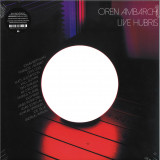
Black Truffle is pleased to announce Live Hubris, documenting the hypnotic and electrifying live performance of Oren Ambarchi’s 2016 LP Hubris by a fifteen-strong band at London’s Café Oto. Over three days in May 2019, Oto toasted Oren Ambarchi at 50/Black Truffle at 10 with Ambarchi and a large group of close friends and collaborators in a series of performances that interspersed existing projects with new collective endeavours, culminating with this: fourteen members of the extended Black Truffle family together on stage, joined by one special virtual guest, to translate the intricately studio-constructed layers of Hubris into a muscular live band workout.
Operating with only the bare minimum of pre-gig preparation after the planned afternoon rehearsal had to be wrapped up prematurely due to noise complaints, the gargantuan group lurches into motion with a 21-minute rendition of ‘Hubris Part 1’, powered by the pulsating electronics of Konrad Sprenger (the ‘ringmaster’ at the ensemble’s core) and no less than seven electric guitars spinning a web of intricately interlocking palm-muted polyrhythms. The layers of closely related but metrically distinct lines create ripples of shifting accents, flickering changes in emphasis that ricochet along the endless central pulse. Gradually building in density, this motorik continuum becomes the backdrop for the haunting tones of Eiko Ishibashi’s processed flute and an extended feature from long-distance guest Jim O’Rourke on guitar synth.
After the brief interlude of the second part, where Albert Marcoeur-esque guitar arpeggios accompany a halting attempt at phone conversation, the full ensemble gears up for the epic side-long rendition of ‘Hubris Part 3’. Now joined by the astonishing triple drum line-up of Joe Talia, Will Guthrie and Andreas Werliin, the layered pulse of the opening piece becomes a burning funk-fusion groove. Beginning on a medium simmer, the ensemble initially stick to its pulsating one-note mantra, over which Ambarchi unfurls a beautiful example of his signature shimmering Leslie-toned guitar harmonics, eventually joined by Ishibashi’s flute and some brooding, distorted dissonance from Julia Reidy’s guitar. Building steadily for the first nine minutes, the heat then rises dramatically with a first, gloriously loose chord change: with the all drummers now rolling and tumbling like a twice-cloned Jack DeJohnette circa 1970, Mats Gustafsson enters on baritone, his tortured roars and shrieks driving the band to peaks of insane intensity. Finally, the exhausted ensemble drops out, leaving only the jagged, skittering fuzz of Ambarchi’s guitar, brought to an abrupt conclusion at the command of crys cole. Arriving on hot pink vinyl with artwork by Lasse Marhaug and an extensive selection of live photos by Ivan Weiss and Fabio Lugaro, Live Hubris brings this ambitious and outrageous evening of music to the safety of the home stereo.
Tete Mbambisa has performed and recorded with many of the giants of South African Jazz (Bazil ‘Manenberg’ Coetzee, Johnny Dyani, Dick Khoza, Duku Makasi, Gideon Nxumalo, Dudu Pukwana, etc...), and is one of the very few South African jazz musicians that can claim to have played with the three jazz generations of the last fifty years. His work as a pianist, vocalist, composer and arranger is a landmark on South African jazz history.
After a recording hiatus, Mbambisa returned in 1974 with an octet album, 'Tete's Big Sound' released on a newly formed label, As Shams or The Sun, established by South African record store owner and independent producer Rashid Vally. 'Tet's Big Sound' included tracks like 'Unity' and the 'Black Heroes Lamentation', now considered a classic in the South African jazz underground. The sound that Mbambisa carved in this period was wholly acoustic, and is a style that now is often loosely labelled spiritual jazz, a sound that alludes to deep African textures and rhythms balanced with clear nods to American hard bop and modal jazz, sometimes edging toward free improvisation in echoes of John Coltrane and Pharaoh Sanders.
- 1: Blackness Of The Night (Feat. Azita)
- 2: Od'd In Denver (Feat. Matt Sweeney)
- 3: I've Made Up My Mind (Feat. Alasdair Roberts)
- 4: Red-Tailed Hawk (Feat. Matt Kinsey)
- 5: Wish You Were Gay (Feat. Sean O'hagan)
- 6: Our Anniversary (Feat. Dead Rider)
- 7: Rooftop Garden (Feat. George Xylouris)
- 8: Deacon Blues (Feat. Bill Mackay)
- 9: I Love You (Feat. David Pajo)
- 10: Sea Song (Feat. Mick Turner)
- 11: I've Been The One (Feat. Meg Baird)
- 12: Miracles (Feat. Ty Segall)
- 13: I Want To Go To The Beach (Feat. Cooper Crain)
- 14: Night Rider's Lament (Feat. Cory Hanson)
- 15: Arise, Therefore (Feat. Six Organs Of Admittance)
- 16: Night Of Santiago (Feat. David Grubbs)
- 17: The Wild Kindness (Feat. Cassie Berman)
- 18: Lost In Love (Feat. Emmett Kelly)
- 19: She Is My Everything (Feat. Sir Richard Bishop)
Cassette[19,96 €]
The Blind Date Party hosted by Bill Callahan and Bonnie ‘Prince’ Billy
and featuring AZITA, Matt Sweeney, Alasdair Roberts, Matt Kinsey,
Sean O’Hagan, Bill MacKay, George Xylouris, Dead Rider, David Pajo,
Mick Turner, Meg Baird, Ty Segall, Emmett Kelly, Cory Hanson, Six
Organs of Admittance, David Grubbs, Cassie Berman, Cooper Crain and
Sir Richard Bishop happened online in the autumn and winter of 2020 -
2021 but the party planning dated back to the spring of 2020.
Stuck at home, with no gigs in the foreseeable future, Bill, Bonnie and
Drag City needed an outreach program to keep themselves busy, not to
mention sane. In the absence of any company or anything on the
calendar, playing songs they loved was an idea; playing with people they
loved, the desire. And making it fun - so pairing someone with someone
else having no say in the matter, the essence of the blind date, was the
plan. Favourite songs were chosen; players from around the Drag City
galaxy were messaged. Pretty soon, songs were flying back and forth -
music in the air.
By autumn, the songs started to appear online: Bill and Bonnie singing a
song by someone they loved and admired; each song cut by another
artist they loved and admired, then sent to Bill and Bonnie to provide the
finishing touches. The spotlight pointed in every direction each week:
toward the singers and writers who’d originally played the songs (Yusuf
Islam, Hank Williams Jr., Dave Rich, The Other Years, Billie Eilish,
Steely Dan, Lou Reed, Bill Callahan, Jerry Jeff Walker, Robert Wyatt,
Lowell George, Johnnie Frierson, Air Supply, Will Oldham, Leonard
Cohen, David Berman, Iggy Pop and John Prine), toward their featured
collaborators, the artists whose artwork adorned each digital single and
videos made by still more collaborators.
Like the best parties, it turned out to be everything and more than they’d
even hoped for. So many more people were involved in the process that
would on the page here. Suffice to say, making records over the years
has required a broad sense of community and an always-surprising mix
of independence and unity, inspiration and utility. Some of the best
memories are those where as many of our folks as possible were
together in one place at one time. The Blind Date Party was one of
these, maybe the most improbable one yet. It’s for everyone who’s here
and it’s in the name of everyone who’s gone but will never go and will
always live with us here. This album will too.
- 1: Blackness Of The Night (Feat. Azita)
- 2: Od'd In Denver (Feat. Matt Sweeney)
- 3: I've Made Up My Mind (Feat. Alasdair Roberts)
- 4: Red-Tailed Hawk (Feat. Matt Kinsey)
- 5: Wish You Were Gay (Feat. Sean O'hagan)
- 6: Our Anniversary (Feat. Dead Rider)
- 7: Rooftop Garden (Feat. George Xylouris)
- 8: Deacon Blues (Feat. Bill Mackay)
- 9: I Love You (Feat. David Pajo)
- 10: Sea Song (Feat. Mick Turner)
- 11: I've Been The One (Feat. Meg Baird)
- 12: Miracles (Feat. Ty Segall)
- 13: I Want To Go To The Beach (Feat. Cooper Crain)
- 14: Night Rider's Lament (Feat. Cory Hanson)
- 15: Arise, Therefore (Feat. Six Organs Of Admittance)
- 16: Night Of Santiago (Feat. David Grubbs)
- 17: The Wild Kindness (Feat. Cassie Berman)
- 18: Lost In Love (Feat. Emmett Kelly)
- 19: She Is My Everything (Feat. Sir Richard Bishop)
Vinyl[42,98 €]
The Blind Date Party hosted by Bill Callahan and Bonnie ‘Prince’ Billy
and featuring AZITA, Matt Sweeney, Alasdair Roberts, Matt Kinsey,
Sean O’Hagan, Bill MacKay, George Xylouris, Dead Rider, David Pajo,
Mick Turner, Meg Baird, Ty Segall, Emmett Kelly, Cory Hanson, Six
Organs of Admittance, David Grubbs, Cassie Berman, Cooper Crain and
Sir Richard Bishop happened online in the autumn and winter of 2020 -
2021 but the party planning dated back to the spring of 2020.
Stuck at home, with no gigs in the foreseeable future, Bill, Bonnie and
Drag City needed an outreach program to keep themselves busy, not to
mention sane. In the absence of any company or anything on the
calendar, playing songs they loved was an idea; playing with people they
loved, the desire. And making it fun - so pairing someone with someone
else having no say in the matter, the essence of the blind date, was the
plan. Favourite songs were chosen; players from around the Drag City
galaxy were messaged. Pretty soon, songs were flying back and forth -
music in the air.
By autumn, the songs started to appear online: Bill and Bonnie singing a
song by someone they loved and admired; each song cut by another
artist they loved and admired, then sent to Bill and Bonnie to provide the
finishing touches. The spotlight pointed in every direction each week:
toward the singers and writers who’d originally played the songs (Yusuf
Islam, Hank Williams Jr., Dave Rich, The Other Years, Billie Eilish,
Steely Dan, Lou Reed, Bill Callahan, Jerry Jeff Walker, Robert Wyatt,
Lowell George, Johnnie Frierson, Air Supply, Will Oldham, Leonard
Cohen, David Berman, Iggy Pop and John Prine), toward their featured
collaborators, the artists whose artwork adorned each digital single and
videos made by still more collaborators.
Like the best parties, it turned out to be everything and more than they’d
even hoped for. So many more people were involved in the process that
would on the page here. Suffice to say, making records over the years
has required a broad sense of community and an always-surprising mix
of independence and unity, inspiration and utility. Some of the best
memories are those where as many of our folks as possible were
together in one place at one time. The Blind Date Party was one of
these, maybe the most improbable one yet. It’s for everyone who’s here
and it’s in the name of everyone who’s gone but will never go and will
always live with us here. This album will too.
- A1: Simon & Garfunkel - Bridge Over Troubled Water
- A2: Bread - Make It With You
- A3: Elvis Presley - Suspicious Minds
- A4: Deep Purple - Black Night
- A5: Free - All Right Now
- A6: Smokey Robinson & The Miracles - The Tears Of A Clown
- A7: The Jackson 5 - I Want You Back
- A8: Stevie Wonder - Signed, Sealed, Delivered (I'm Yours)
- B1: Elton John - Your Song
- B2: Rod Stewart - Maggie May
- B3: Slade - Coz I Luv You
- B4: The Who - Baba O'riley
- B5: Ike & Tina Turner - Proud Mary
- B6: Marvin Gaye - What's Going On
- B7: Diana Ross - I'm Still Waiting
- C1: Don Mclean - American Pie - Pt. 1
- C2: Sly & The Family Stone - Family Affair
- C3: Bill Withers - Lean On Me
- C4: Harry Nilsson - Without You
- C5: Roxy Music - Virginia Plain
- C6: T. Rex - Metal Guru
- C7: Mott The Hoople - All The Young Dudes
- C8: Lou Reed - Perfect Day
- D1: Roberta Flack - Killing Me Softly With His Song
- D4: Sweet - Ballroom Blitz
- D5: Wizzard - See My Baby Jive
- D6: Billy Joel - Piano Man
- D7: Bob Dylan - Knockin' On Heaven's Door
- E1: Queen - Killer Queen
- E2: Paul Mccartney, Wings - Band On The Run
- E3: Mike Oldfield - Tubular Bells
- E4: Suzi Quatro - Devil Gate Drive
- E5: Mud - Tiger Feet
- E6: Sparks - This Town Ain't Big Enough For Both Of Us
- E7: Barry White - You're The First, The Last, My Everything
- E8: The Three Degrees - When Will I See You Again
- F1: John Lennon - Imagine
- F2: 10Cc - I'm Not In Love
- F3: Barry Manilow - Mandy
- F4: Bay City Rollers - Bye Bye Baby
- F5: David Essex - Hold Me Close
- F6: Steve Harley & Cockney Rebel - Make Me Smile (Come Up And See Me)
- F7: The Stylistics - Can't Give You Anything (But My Love)
- F8: Minnie Riperton - Lovin' You
- G1: Abba - Dancing Queen
- G2: Frankie Valli & The Four Seasons - December, 1963 (Oh, What A Night)
- G3: Chicago - If You Leave Me Now
- G4: Joan Armatrading - Love And Affection
- G5: Electric Light Orchestra - Livin' Thing
- G6: Thin Lizzy - The Boys Are Back In Town
- D2: Harold Melvin & The Blue Notes - If You Don't Know Me By Now
- G7: John Miles - Music
- H1: Fleetwood Mac - Don’t Stop
- H2: Meat Loaf - Bat Out Of Hell
- H3: Status Quo - Rockin' All Over The World
- H4: Donna Summer - I Feel Love
- H5: Baccara - Yes Sir, I Can Boogie
- H6: David Soul - Don’t Give Up On Us
- H7: Commodores - Easy
- J1: Kate Bush - Wuthering Heights
- J2: Althea & Donna - Uptown Top Ranking
- J3: Chic - Le Freak
- J4: Boney M. - Rivers Of Babylon
- J5: The Jam - Down In The Tube Station At Midnight
- J6: The Boomtown Rats - Rat Trap
- J7: Siouxsie And The Banshees - Hong Kong Garden
- K1: The Clash - London Calling
- K2: The Police - Message In A Bottle
- K3: Pretenders - Kid
- K4: Blondie - Heart Of Glass
- K5: Earth, Wind & Fire With The Emotions - Boogie Wonderland
- K6: Tubeway Army - Are 'Friends' Electric?
- K7: The Buggles - Video Killed The Radio Star
- D3: Kiki Dee - Amoureuse
Coloured Vinyl[126,01 €]
NOW Music is delighted to introduce our new sub-brand ‘NOW Presents…’. This new series starts with ‘NOW Presents… The 1970s’, the first-ever NOW vinyl boxset featuring 5 LPs uniquely designed to reflect the era.
The boxset is a musical time capsule of the decade that saw so many different genres find chart success. Across its 74 tracks over 10 sides of vinyl, the massive hits sit alongside enduring classics from each year. The set not only includes 5 beautifully designed front covers on the individual albums (that slot into a rigid slip case), but also features track by track annotations with chart positions and facts about the artists and songs.
Each year, 1970-1979 is presented as 1 side of each LP… Kicking off with the iconic ‘Bridge Over Troubled Water’ by Simon & Garfunkel from the biggest selling album of the year, and of the decade. 1970 also includes Motown classics from Stevie Wonder, Smokey Robinson & The Miracles, and the debut hit ‘I Want You Back’ from the Jackson 5.
1971 includes the seminal ‘What’s Going On’ from Marvin Gaye, alongside Elton John’s breakthrough – the timeless ‘Your Song’, Rod Stewart’s breakthrough ‘Maggie May’, and The Who’s defining rock anthem ‘Baba O’Riley’.
The charts in 1972 began to reflect the popularity of ‘Glam Rock’ – and ‘Virginia Plain’ by Roxy Music, and ‘Metal Guru’ by T. Rex are included, as is the David Bowie-produced ‘Perfect Day’ from Lou Reed.
‘Killing Me Softly With His Song’ – one of the most beautiful songs, and vocals ever from Roberta Flack opens 1973’s side – and is joined by, amongst others, Billy Joel’s signature song ‘Piano Man’ and Bob Dylan’s ‘Knockin’ On Heaven’s Door’.
1974 celebrates Queen having their first Top 5 single with ‘Killer Queen’, and title tracks from two of the decades’ biggest selling albums: Paul McCartney & Wings with ‘Band On The Run’, and ‘Tubular Bells’ from Mike Oldfield.
John Lennon released ‘Imagine’ in 1971 – but it became a UK hit in 1975, and so, starts this side… and finds space for some of the year’s perfect pop from Steve Harley & Cockney Rebel, David Essex, 10cc, and the biggest hit ‘Bye Bye Baby’ from Bay City Rollers, at the peak of their popularity.
ABBA enjoyed 7 UK Number 1’s in the 1970s, and their biggest was the enduringly popular ‘Dancing Queen’ which leads into 1976. Electric Light Orchestra had a huge hit with ‘Livin’ Thing’, as did Thin Lizzy with ‘The Boys Are Back In Town’ – plus Joan Armatrading emerged with ‘Love And Affection’.
1977 saw Fleetwood Mac release their mega-selling album ‘Rumours’, and from it ‘Don’t Stop’ is here, as is Donna Summer’s ‘I Feel Love’ – one of the most influential dance tracks of all time – and one of 1977’s favourite TV stars, David Soul, enjoyed a #1 single with ‘Don’t Give Up On Us’.
With ‘Wuthering Heights’, Kate Bush not only had 4 weeks at number 1 in 1978, but became the first female artist to achieve this with a self-written song. The Jam, The Boomtown Rats and Siouxsie And The Banshees all found consistent success as Punk & New Wave established new chart stars.
1979 concludes the set and opens with the iconic ‘London Calling’ from The Clash, and includes two of the biggest bands of the era, The Police and Blondie. A couple of years later the first video played on MTV would be ‘Video Killed The Radio Star’ from The Buggles – and it’s fitting that this is the final track on the collection, a #1 in late 1979 – it signposted the synth-pop wave that would define the early 80s…. (but that’s a different box set).
- A1: Begin
- A2: Betweemus
- A3: Soaky In The Pooper
- A4: Because You Are The Very Air He Breathes
- B1: Under The Same Moon
- B2: I Will Drive Slowly
- B3: Oh, What A Disappointment
- B4: Hellmouth
- C1: Bon Soir, Bon Soir
- C2: Hickey
- C3: Breathe Deep
- C4: So I Hear You're Moving
- D1: Let's Go Bowling
- D2: What Was He Wearing?
- D3: Cowboy On The Moon
- D4: Or Thousands Of Prices
- D5: The Pack-Up Song
Back in 1994, when Lambchop first lurched lackadaisically into public view, they seemed to many people freakish, outlandish, destined at best for the pages of photocopied fanzines and the graveyard hours of specialist radio stations. A sprawling collective of Nashville musicians —eleven were credited on the sleeve of I Hope You’re Sitting Down / Jack’s Tulips, one of them apparently responsible for “open-end wrenches” —they’d named themselves after a sock puppet, inexplicably given their album two titles, and stuck a painting on the cover of a small, barefooted child holding a dog whose cock and balls are on proud display. Perhaps to counteract this bold depiction of canine masculinity, the inner sleeve offered a black-and-white shot of what the more refined sometimes call a “lady garden.” The back cover offered a painting detail of a wedding dress. So far, so weird.
Where Lambchop brought us was somewhere so singular and bewilderingly gripping that — to perhaps no one’s greater surprise than
the band themselves, whose homeland remained baffled for quite some years to come — the album ended up in British music paper NME’s Top 50 Albums of the Year. In case anyone were to consider this an anomaly, France’s similarly influential Les Inrockuptibles placed it at number 25 on their own list. Not bad for a band who had gathered since the mid-1980s, once a week, purely for pleasure, in that smoky, dimly lit basement. Not bad, either, for a record whose sessions were initially only expected to produce enough material for a handful of 7 -inch singles. Disheveled yet tender, anarchic yet intricate, I Hope You’re Sitting Down / Jack’s Tulips instead provided the springboard for a career — still ongoing, despite repeated reinventions, and still compelled by stubbornly freakish, outlandish intentions — during which Lambchop’s ever-changing line-up has continued to confound expectations. Wagner, meanwhile, remains one of our most cryptic but crucial voices, an authentic poet of the magical banal. Sure, it was weird here, but it was wonderful, too. Over a quarter century later, it still is.
Interiors, the title of this new release from Ultramarine, may have a topical resonance for many listeners who have found themselves in involuntary confinement during the past year, but the five tracks on this EP were actually recorded in 2011, and they represent a significant opening out of the duo's evolving musical perspective.
Ian Cooper and Paul Hammond, who had become friends while growing up together in the Essex countryside, formed Ultramarine in 1989. Throughout the 90s their distinctive music, an enticing blending of acoustic with electronic instruments, secured a loyal following and won critical acclaim. Then, throughout the whole of the next decade, Ultramarine lay dormant. Interiors documents their reawakening, with Cooper and Hammond exploring approaches to music-making made possible by recently developed software, designed specifically with live performance in mind.
Four of the five tracks to be heard here were issued digitally last year. But as Paul Hammond has pointed out, "with Ultramarine the whole point is to create an artefact, so the form and the look of the finished product is central." That's an outlook shared passionately by Simon Lewin's label Blackford Hill, and the music now available on this vinyl record is appropriately enhanced with cover art by printmaker Katherine Jones. Her imagery matches the music neatly in its nuanced interplay of solidity and shadow, line and colour, geometric form and organic growth.
Ultramarine returned refreshed in October 2011, bursting back into public awareness with "Find A Way," issued as a 7" single on their own label, Real Soon. Clive Bell, writing in The Wire, extolled its engaging mix of electronic beats with cool vocals and tropical percussion. More generally Bell embraced Ultramarine's thoughtful hybrid electronica as "music you could enjoy at home without feeling your intelligence was being scorned, or that if you were not physically in a club, you were wasting your time."
On Interiors, the roots of that slinky single are laid bare on the purely instrumental track "Find A Way Back." Its two distinct parts stretch out the beats and flaunt those tropical flourishes, shuffling and flexing, vibrant and heady, languid and sultry. This is techno filtered through the fabric of magic realism, an exotically spiced concoction, chilled and ready to be savoured at home.
With the diagrammatic clarity of its punchy thrust and spooling loops "Even When" distils the essence of Cooper and Hammond's way of working with their musical material: layering and shaping, nurturing textures, plaiting rhythms and juggling accents. The cumulative impact is almost sculptural in its physical immediacy and looming presence. In contrast, on "By Return" the duo skew the outcome, projecting a selection of limber figures into dub's auditory hall of mirrors. They are clearly revelling in the reverb, relishing the recoil and decay.
Interiors ultimately opens out onto "Decoy Point (Version)." With its ozone saturated ambience, this closing track evokes marshland and mudflat soundscapes, seabird mews, maritime signals and tidal wash. Cooper and Hammond feel deep attachment to the Essex landscape and, in particular, to the local history and physical features of the Blackwater estuary. Blackford Hill provides an accommodating home for Ultramarine's ongoing project Blackwaterside, which has featured to date a 7" vinyl record plus 28-page booklet, and a photo film with soundtrack. Now, delving into the Ultramarine archive, this welcome incarnation of Interiors offers a fascinating glimpse of the duo finding their bearings, at a vital stage along the way.
GALATHEA is the new project by DJ Massimo Napoli, and the title of his first solo album. Borrowing the name from the homonymous Nereid from the Greek mythology, the album is a deep dive into dub, spiritual jazz and African surroundings. Over 12 tracks, the LP conceals a strong personality. Departing from club culture with particular emphasis on electronic dub, Galathea unfolds into many influences and styles, making it a unique listening experience. Mediterranean culture, afro and cinematic melodies, jazz, spiritual echoes, and soothing beats lead the listener into a subliminal escape, where the fluidity and the convergence of genres freely progress into a dream-like journey.