Mica Levi is a musician and composer living in
South East London who uses programming
software, written notation and improvisation to
produce music. They are currently a member of
the groups CURL, Good Sad Happy Bad and
Tirzah and have composed scores for a number of
films including Under The Skin, Jackie, Monos,
Zola and Mangrove (part of the Small Axe series).
‘Blue Alibi’ is the second album Mica has released
under their own name. Vinyl edition released
concurrently alongside first album ‘Ruff Dog’.
‘Blue Alibi’ is available on black vinyl in uncoated
printed inner sleeve in printed reverse board 3mm
spine outer sleeve, with retail sticker and digital
download card.
‘Ruff Dog’ is the first album Mica has released
under their own name. Vinyl edition released
concurrently alongside second album ‘Blue Alibi’.
‘Ruff Dog’ is available on black vinyl in white paper
inner bag in printed reverse board 3mm spine
outer sleeve, with retail sticker and digital
download card
Buscar:black man
The new album American Quilt from Paula Cole. American Quilt, out May 21st, is the fondue of Cole’s melting pot, blending a variety of genres that include jazz, folk, and country. Cole takes on classics like “Black Mountain Blues,” “Nobody Knows You (When You’re Down and Out),” and “What a Wonderful World,” creating a patchwork of American music. The album also includes one original song, “Hidden in Plain Sight,” which is about quilts women made that provided clues to slaves in the Underground Railroad.
No one album could ever capture the claustrophobia-to-catharsis of an Eyehategod show, but this compilation of live tracks and demos comes as close as it gets. Giving you an idea of Eyehategod’s uncompromising, single minded purity of expression and exertion of raw nerve, “10 Year Of Abuse” is a monumental document all the way from the demo era to their later, legendary relentless live tour set. Many other bands have tried unsuccessfully to emulate Eyehategod and have never quite captured their dynamic. Formed in 1988 in New Orleans they have become one of the most well known bands to emerge from the NOLA metal scene. Eyehategod note bands like Melvins, The Obsessed, Discharge, Black Flag, Black Sabbath and Saint Vitus as major influences, but are often mentioned in the same breath as any of these legendary bands. Drawing comparisons to Grindcore, Crust Punk and Sludge Metal, their heavy bluesy, detuned rock and roll has been a lynchpin for the misanthropic and disenfranchised. Eyehategod has released five studio albums to date with a sixth in the works and have toured all over the world in a career spanning over thirty years. Though the band has never released a live album, we are left with “10 Years” as the only official witnessing document to decades of decimating live sonic abuse. Released on May 29, 2001, “10 Years” spans seven live tracks from their European tour in 2000, a live radio show from August 1994 and four songs from an early 1990 demo. The result is a feedback-laced window into that wonderful, brutal Eyehategod “sound”, that addictive, lower-than-low note that nestles somewhere in the pit of your burning, alcohol-soaked, nauseated stomach. The booklet alone is a delight for anyone who worships at the altar of Eyehategod’s oppressively heavy, crushing riffs.
- 1: Victory Lap
- 2: Rap Niggas
- 3: Last Time That I Checked Feat. Yg
- 4: Young Nigga Feat. Sean Combs
- 5: Dedication Feat. Kendrick Lamar
- 6: Blue Lace 2
- 7: Hussle & Motivate
- 8: Statue Symbol 3 Feat. Buddy
- 9: Succa Proof Feat. Konshens, J-Black
- 10: Keyz 2 The City 2 Feat. Teeflii
- 11: Grinding All My Life
- 12: Million While You Young Feat. The-Dream
- 13: Loaded Bases Feat. Ceelo Green
- 14: Real Big Feat. Marsha Ambrosius
- 15: Double Up Feat. Dom Kennedy, Belly
- 16: Right Hand 2 God
Founded in 2010, Hussle’s All Money In made an epochal debut with its very first release, “THE MARATHON,” marking Hussle’s fifth official mixtape and follow-up to his introductory “BULLETS AIN’T GOT NO NAME” trilogy. Named among XXL’s “100 Best Mixtapes of 2010,” the collection was quickly followed by 2011’s “THE MARATHON CONTINUES” and then 2013’s “CRENSHAW.” Along with his work as a lead artist, Hussle has previously collaborated with a veritable who’s who of contemporary hip hop, including Kendrick Lamar, Drake, Rick Ross, YG, Ty Dolla Sign, Meek Mill, DJ Mustard, Young Thug and many more. As if his musical career and role as label boss weren’t enough, Hussle is also successful entrepreneur. In addition to The Marathon Clothing line and store, Hussle also owns a number of successful businesses including The Marathon Agency, SC Commercial Ventures, Proud 2 Pay, and of course, All Money In No Money
Out Records.
[b] 2 Rap Niggas [Explicit]
BLK JKS are a seminal force in the South African underground.
After an extended hiatus the Johannesburg foursome, championed by The Mars
Volta and TV On The Radio (amongst many others), return with a groundbreaking
new album.
Monster grooves meet guitar and brass driven afro-rock. Echoes of spiritual jazz, postapocalyptic funk, renegade dub and kwaito.
Features Malian guitarist Vieux Farka Tour and Beastie Boys accomplice Money Mark
on the track “Maiga.”
”This South African art-rock band traffics in complexity, cross-hatching not only rhythms
and textures but also the signifiers of genre”- The New York Times
“A prequel to 2009’s amazing After Robots … What occurs when you listen to Abantu is
that it is an Old Testament support to After Robots – where that album prophesied Afropunk, this album suggests the roots to that moment, an engrossing journey of Afrobeat,
fuzzy yet hugely suggestive drone and psych textures, and a bristling sense of both pride
and critique that sings through.” The Wire
“A dark and brooding number that simmers and smoulders as it goes, fueled by a driving
rhythm section and mournful horns.” - Brooklyn Vegan about single “Human Hearts”
“BLK JKS, an awe-inspiring exemplar of modern Africa’s indigenous sound, make a victorious return after an extended hiatus … They create something unique on this album.”
***** Morning Star
Every Dunbarrow album has a hauntingly classic sound of, in the band’s own
words, “an eerie rawness.” But their third album feels like you’ve discovered a
mysterious half-century old recording tucked away in a decrepit abandoned
mansion. Perhaps there’s a note attached, begging its courier to beware. Alas,
whoever possessed the tape apparently never survived. ...that is to say, it feels like there’s a solemn
story to this album, not just in the
lyrics, but in the sound itself. Much like
the eponymous debut of Black Sabbath,
the band uses subtle sound effects to
dramatically set the scene for its mostly
clean tones and masterful use of open
space for which the band has become
known. But unlike their first two albums,
this one does see the band branching
out just a bit into heavier, more distorted
guitars. The result is a much more
in-your-face sound, while retaining the
Haugesund, Norway quintet’s masterful
proto-metal sound.
The album opens with the sound of falling
rain as Lønning and Eirik Øvregård’s
guitars seep into the speakers like
funereal bells and haunted drones on
“Death That Never Dies.” Drummer Pål
Gunnar Dale slams down three snare
beats as bassist Sondre Berge Engedal
slinks in harmony over it all. Andersen’s
crisp vocals paint a bleak picture of
dark perdition until the band slips into
a swaggering piano-led coda reminiscent
of “Sabbra Cadabra.” The 7-minute
psychedelic folk masterpiece “Turn In
Your Grave” is the album centerpiece,
replete with mournfully shimmering
Mellotron and bleak folkloric lyrics. Its
hypnotically spinning guitar notes and
old European parlando-rubato singing
hearken to dark early Steeleye Span with
a sinister edge. “In My Heart” perfectly
showcases the band’s penchant for folk
based, yet head-banging riffs that break
with tradition that has stilted modern
heavy music.
“I think with this record, we have managed
to create our own unique sound
with its own Dunbarrow tag,” says the
band. With that sound comes the perfect
artwork: A cover illustration from the
early 1900’s by artist Harry Clarke from
his work for Edgar Allen Poe’s Tales of
Mystery and Imagination.
Ampoule, doing things their own way since 1998. After repressing two classic Pub records, they now shine a light on the Lucky & Easy archives.
Lucky & Easy's take on IDM and deep techno took in influences from The Black Dog, Torsten Profock and Detroit. Rather than operating out of London, Manchester or Berlin, this stuff was coming from East Kilbride, a new town next to Glasgow thats probably best known for its roundabouts and being the home of Jesus & Mary Chain and Rubadub's very own Mother Mark. Back then it sounded like nothing else and today it still sounds just as vital.
'Cheeky' Speaker' compiles long out of print rarities taken from early Ampoule 12's and their Talent Hoover sub-label and previously unheard mixes.
All remastered and cut by D&M
Some info on the tracks from Lucky & Easy
A1. Bully Swimmer
A2. Kiss It Better
A3. Night Rainbows
B1. Wigged
These are from AMP01EP - Ampoule Records first release, only 480 copies were made never been repressed since. And that master cut was pretty terrible to be fair.
B2. Don't Play With Tractors
Taken from 'Electro Lix Sick' a limited edition 50 x 3"cd on Talent Hoover Discs.
B3. Puddle Pup
Is an exclusive mix of the original 'Puddled Up' which was released on the cd compilation on Ampoule 'Hookahs'
C1. Pimp Soul Sisters
Is an exclusive mix of 'Pimp Sole Blisters' Taken from 'Electro Lix Sick' a limited edition 50 x 3"cd on Talent Hoover Discs.
C2. Kitefinger
Remastered from the original release on the cd compilation on Ampoule's 'Hookahs'
C3. In 3 Minds
Is an exclusive mix of 'In Three Minds' Taken from 'Triple Warmer ep' on Earplug.
D1. Titswing
Titswing was recorded at Rubadub's infamous 69 party in Paisley, Scotland
D2. Pericardium Eight
Pericardium 8* Is an exclusive mix of 'Pericardium Eight' Taken from 'Triple Warmer ep' on Earplug.
The Black Keys release their tenth studio album, Delta Kream, via Nonesuch Records. The record celebrates the band’s roots, featuring eleven Mississippi hill country blues standards that they have loved since they were teenagers, before they were a band, including songs by R. L. Burnside and Junior Kimbrough, among others. Dan Auerbach and Patrick Carney recorded Delta Kream at Auerbach’s Easy Eye Sound studio in Nashville; they were joined by musicians Kenny Brown and Eric Deaton, long-time members of the bands of blues legends including R. L. Burnside and Junior Kimbrough. The album takes its name from William Eggleston’s iconic Mississippi photograph that is on its cover.
Auerbach says of the album, “We made this record to honor the Mississippi hill country blues tradition that influenced us starting out. These songs are still as important to us today as they were the first day Pat and I started playing together and picked up our instruments. It was a very inspiring session with Pat and me along with Kenny Brown and Eric Deaton in a circle, playing these songs. It felt so natural.”
Carney concurs, “The session was planned only days in advance and nothing was rehearsed. We recorded the entire album in about ten hours, over two afternoons, at the end of the “Let’s Rock” tour.”
Auerbach says of Delta Kream’s first single ‘Crawling Kingsnake’: “I first heard John Lee Hooker’s version in high school. My uncle Tim would have given me that record. But our version is definitely Junior Kimbrough’s take on it. It’s almost a disco riff!” Carney adds, "We fell into this drum intro; it's kind of accidental. The ultimate goal was to highlight the interplay between the guitars. My role with Eric was to create a deeper groove."
The music from northern Mississippi, which came to life in juke joints, has long left an imprint on the band’s music, from their cover of R.L. Burnide’s ‘Busted’ and Junior Kimbrough’s ‘Do The Romp’ on their debut album, The Big Come Up; to their subsequent signing to Fat Possum Records, home to many of their musical heroes; and to their EP of Junior Kimbrough covers, Chulahoma.
Formed in Akron, Ohio in 2001, The Black Keys, who have been called ‘rock royalty’ by the Associated Press and ‘one of the best rock ‘n’ roll bands on the planet’ by Uncut, are guitarist/singer Dan Auerbach and drummer Patrick Carney. Cutting their teeth playing small clubs, the band have gone on to sell out arena tours and have released nine previous studio albums: their debut The Big Come Up (2002), followed by Thickfreakness (2003) and Rubber Factory (2004), along with their releases on Nonesuch Records, Magic Potion (2006), Attack & Release (2008), Brothers (2010), El Camino (2011), Turn Blue (2014) and, most recently, “Let’s Rock” (2019), plus and a tenth anniversary edition of Brothers (2020). The band has won six Grammy Awards and a BRIT and headlined festivals in North America, South America, Mexico, Australia, and Europe.
- A1: The John Coltrane Quartet — Africa 16:27
- B1: Max Roach — Garvey's Ghost 7:52
- B2: Quincy Jones And His Orchestra — Hard Sock Dance 3:20
- B3: John Coltrane — Up 'Gainst The Wall 3:14
- B4: Elvin Jones/Jimmy Garrison Sextet — Just Us Blues 5:55
- C1: John Coltrane — Alabama 5:09
- C2: Charles Mingus — Better Get Hit In Yo' Soul 6:31
- C3: Shirley Scott Trio — Freedom Dance 4:50
- C4: Yusef Lateef — Sister Mamie 5:27
- D1: Archie Shepp — Malcolm, Malcolm—Semper Malcolm 4:48
- D2: Stanley Turrentine — Good Lookin' Out 5:21
- D3: Earl Hines — Black And Tan Fantasy 5:11
- D4: Oliver Nelson — The Rights Of All 3:58
- E1: Pharoah Sanders — The Creator Has A Master Plan (Edit) 9:08
- E2: John Coltrane & Alice Coltrane — Reverend King 11:03
- F1: The Ahmad Jamal Trio — The Awakening 6:22
- F2: Albert Ayler — Music Is The Healing Force Of The Universe 8:41
- F3: Charlie Haden — We Shall Overcome 1:19
- G1: Alice Coltrane — Blue Nile 7:02
- G2: Pharoah Sanders — Astral Traveling 5:50
- G3: Archie Shepp — Blues For Brother George Jackson 3:52
- G4: Michael White — Lament (Mankind) 2:28
- H1: Dewey Redman — Imani 7:09
- H2: Marion Brown — Bismillahi 'Rrahmani 'Rrahim 6:02
- H3: John Handy — Hard Work 6:58
Orange and black. Fire and ebony. Fury and pride. Wearing its signature colors proudly and raising its exclamation point high, Impulse! Records was the go-to label for music that harnessed the searching and political stand-taking of the Sixties. Launched in 1961, Impulse grew to become an inherent part of the era’s velocity as well as its volume, pulling jazz into the age of Black Power, Afrocentricity, and Spiritual Expansion. In its balance of tradition and transition, it bridged the golden age of jazz, that brief window from the late Fifties to the Seventies when players representing every jazz era were alive and active—from Louis Armstrong to Albert Ayler, from the legends of lore to a new generation of energy players. Impulse treated all its musicians as innovators, revolutionaries even—from swing and bebop, to free and Afrofuturist. The performances on Impulse Records: Music, Message and the Moment draw their staying power from a wide embrace of styles and sounds, as well as a tight focus on a historic moment when the promise of change was in the air and the message of racial harmony was in the music. Today that music has lost none of its relevance: the promise still deferred, the message still on time.
A reissue of the 2016 demo tape by New Orleans band
Special Interest, who combine elements of no wave,
glam and industrial music. First time vinyl pressing with
bonus track, new sleeve designed by Studio Tape Echo
and 8 page risographed zine insert.
Four of the tracks here are raw early versions of songs
that would appear in slightly more refined form on their
debut album, 2018’s ‘Spiralling’. The other four pieces
are unique to this release, including a cover version of
Italian new wave band Chrisma, raging opener
‘Disease’, the over-saturated shoegaze-punk of ‘ATC’
and comedown lament ‘I’ll Never Do Ketamine Again’.
The band’s second album ‘The Passion Of’ (2020) was
widely acclaimed and appeared in many album of the
year lists. It was recently followed by a companion
album of remixes on Boy Harsher’s Nude Club label,
with all profits going to NOLA charity House Of Tulip.
“A blistering vision of punk as possibility.” - Pitchfork
“Members Alli Logout (vocals), Ruth Mascelli (synth and
drum machine), Maria Elena (guitar), and Nathan
Cassiani (bass), together manage to make their
instruments and vocals sound like a fight for our
existence.” - The Quietus
Recorded and mastered by Jasper Denhartigh at Bird
Island Recording March-May 2016. Originally selfreleased on cassette in 2016. Cut by Beau Thomas at
Ten Eight Seven. All songs by Special Interest except
‘Black Silk Stalking’ written by Chrisma.
Black vinyl in 3mm spine reverse board sleeve with 8-
page risographed zine, digital download card and
sticker.
Pioneers of the British music scene, ‘Blackest Blue’ will be the band's 10th studio album in a discography that spans three decades. 2020 saw Morcheeba unable to tour or perform live, which gave Skye Edwards & Ross Godfrey “time to write songs and really get to hone them,” as Godfrey puts it. “There weren’t so many pressures so we could really take our time getting the songs right,” adds Edwards.
The result of this time is a refined 10 track album that fuses previous incarnations and sound of the band - such as downbeat, chill, electro-pop & soul - into one cohesive record that dives deep into the soul of the band’s genre-mashing musical heritage. As usual, the band didn’t approach the album with any pre-conceptions, and instead created an organic journey that represents everything great about Morcheeba.
Edwards’ lyrics are primarily focused on positivity and overcoming personal adversity that lies within. ‘Sounds Of Blue’, is a stunning cut that puts Skye Edward's sultry vocals to the forefront, floating high above an ethereal backdrop.
The album includes features with Duke Garwood (known for his work with Mark Lanegan, amongst others) and Brad Barr (The Slip, The Barr Brothers). “
Morcheeba’s global reach is impressive, taking them to every corner of the world . Their signature chilled electronic/organic sound has been border-hopping ever since the London-based band emerged as a household name. The past year has been one of introspection for the duo, as they take stock of their renewed global fan base and look forward to being able to play the new album live in the not too distant future. “This was the first time since I was a teenager that I’d spent a year off the road and I enjoyed the tranquility, although I missed playing my guitar in far off lands,” says Godfrey.
color/ltd
Columbia, South Carolina’s Chaz Bundick (aka Toro y Moi) rose to the fore of the music blogosphere in summer 2009 when he and a few peers made their hazy bedroom recordings the most talked-about sound of the season. Critics across the board took notice of the range of his compositions, and his debut album, Causers of This, showcased his ability to make elements of Brian Wilson’s pop, 80s R&B, and Stone’s Throw hip hop coalesce into a distinct sound that’s as suitable for a dancefloor as it is a pair of headphones.
When Chaz first signed to Carpark Records, the plan was to release two records in 2010 — one electronic and one with live instrumentation — and although it didn’t quite fit into the same calendar year as his debut, Underneath the Pine is that latter offering. This release sees him following the same creative urges to completely different ends. Having spent the year listening to film composers like Ennio Morricone and François de Roubaix, Bundick returned to his home in Columbia, the birthplace of many Toro tracks of yore, to bring his new ideas to fruition. The result of these sessions is an album evocative of R. Stevie Moore’s homespun ruminations, David Axelrod’s sonic scope, Steve Reich-ian piano phrasing, and the pervasive funk of his first record. Underneath the Pine announces a new phase for an artist whose talent defies classification.
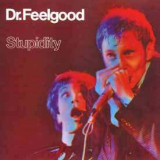
Black heavyweight vinyl pressing The third album / first live album from the British rock band, Dr. Feelgood.
Originally released in 1976, it was the first live album to ever hit number 1 on the UK charts in its first week.
Stupidity captures the relentless, hard-driving energy of Dr. Feelgood at their peak. Comprised of recordings taken from 1975 tours, the music is presented raw and without overdubs, making it clear that the dynamic friction between guitarist Wilko Johnson and vocalist Lee Brilleaux could propel the band toward greatness
Cuernavaca / Stateville / Frankincense And Myrrh / Apsara / Ancestral / Spin / Zincali
Approaching his eighty-fifth birthday, sharp and lean, Phil Cohran lives a couple of blocks from the lake on the north side of Chicago. His modest apartment is filled with a palpable richness. His cornet and trumpets, zithers, French horn, harp and frankiphones (an electric kalimba of his own invention); his beloved telescope; African art; a mural of the Chinese monastery where Muslim monks bestowed on him the name Kelan ('holy scripture'); hand-printed posters from the culture wars of 1960s Chicago; all reflect a life dedicated not just to music, but also to science and astronomy, to history and activism. In its range of subject matter the track-list of Kelan Philip Cohran & The Hypnotic Brass Ensemble embodies this invigorating and all-embracing curiosity: a Mexican hill-town filled with perfume and flowers... an Illinois state prison where Cohran taught inmates in the 1960s... heavenly dancers in the temples of Cambodia... a tribute to a sixteenth-century Venetian musicologist. Welcome to the musical world of Kelan Philip Cohran.
Cohran was born in Mississippi and grew up in St Louis. In the immediate post-war years St Louis was a jazz heartland, home of stalwarts like Clark Terry and Oliver Nelson (both of whom he played with), not to mention a genius called Miles Davis. In 1950 Cohran moved to another heartland, Kansas City, where he played trumpet in one of the hardest swinging swing-groups, led by Jay McShann (who famously had given Charlie Parker his first job). With McShann he spent 'the best year of my life', touring as far as Mexico and playing proto-rock'n'roll in Texas with the likes of Big Mama Thornton on vocals. Back in St Louis Cohran led his own group, the Rajas Of Swing, whose show involved wearing red jackets, grey slacks, blue suede shoes and turbans.
Then in the mid-50s he moved to Chicago. He had a small group with a friend, the legendary tenor saxophonist John Gilmore, whose regular gig was to play at Sarah Vaughan's weekly 'birthday' parties, an excuse for the Sassy One to splash the cash and have some fun. ('What, Sarah Vaughan would sing with you and John Gilmore' 'No way, Sarah didn't sing, she was too busy partying.') And in 1959, through Gilmore, he was invited to join Sun Ra's Arkestra, at a crucial period in the evolution of that extraordinary group. Effortlessly wrapping traditions as divergent as boogie-woogie and electronica in an Afro-centric, intergalactic mythology of his own making, Sun Ra casts a huge shadow across conventional narratives of jazz history. 'With Sunny', Cohran simply says, 'I found my own voice'.
You can hear the emergence of this voice on the LP Angels And Demons At Play, recorded in 1960 - Sun Ra's masterpiece from the period. On the track Music From The World Tomorrow, against the urgent whipped and chopped percussion of the Arkestra, it is Cohran's zither, initially bowed and then plucked and strummed, which is the track's magic ingredient. More profoundly it was Sun Ra's example - his defiant self-confidence and sense of purpose - that set Cohran on his own (to quote another Ra composition) 'pathway to unknown worlds'. Indeed this spirit of self-belief led Cohran to turn down the invitation to accompany the Arkestra when Sun Ra moved east in 1961.
Staying in Chicago, Cohran founded the Affro-Arts Theater and performed with the Artistic Heritage Ensemble, recording the group for his own Zulu Records imprint. (Co-members went on to become Earth Wind & Fire; Cohran taught the group's leader Maurice White the mysteries of the frankiphone). The AACM, a musicians' collective of immense influence and importance, had its first meeting in Cohran's front room. With Oscar Brown Jr and Gene Page he wrote and performed in a show celebrating the nineteenth-century Afro-American poet Paul Lawrence Dunbar. He taught music tirelessly in schools and prisons. His studies into music theory and history led him to the discovery of a key book in his life, Gioseffo Zarlino's treatise on harmony, published in Venice in1558. Astronomy is another passion and another area of expertise. One of the gems of the Cohran discography is African Skies, with its lovely harp playing, commissioned by the Chicago Planetarium in 1993.
In Chicago he also raised a large family. Many of his children have gone on to become professional musicians; eight of them are the Hypnotic Brass Ensemble. For each of them, their first teacher was their father, who famously insisted on giving them music lessons not just for several hours after school, but for several hours before school as well. Their father's music was all around them as children; they all vividly remember lying in bed at night not being able to sleep because their father was rehearsing with the Jazz Workshop downstairs.
For the Hypnotic Brass Ensemble, the voyage to where they are now - whether tearing up festivals from Glastonbury to Melbourne, or touring with Gorillaz, or recording their first album on Honest Jon's - has involved a necessary stepping away from their father's shadow. Phil Cohran is the first to recognise this, happily allowing their sound - heavy on the funk, with the urgency of hip hop never far away - to blossom.
But likewise this album is for all of them a natural step. Recorded in Chicago in June 2011, the idea was beautifully simple - 'my music and their band' as Phil puts it, 'we don't have to rattle on more than that'. Only to point out perhaps that here - in the majestic surge of Zincali, for instance, or in the sheer verve and bounce of Cuernevaca - is music not just filled with the warmth of home. This is music that plumbs the depths and rings with joy.
'Cuernevaca is a town in the mountains south of Mexico City. I was there in 1950 when I was on the road with Jay McShann's band. It's a place close to paradise, a city filled with the fragrance of flowers. I always wanted to go back... In 1974 I taught workshops at the prison in Stateville, the Big House where Al Capone spent time. There's a huge wall around the prison, and once I took Hypnotic there - ha - to see what the future holds for them... Makeda, the Queen of Sheba, sent a caravan of gifts to King Solomon - a caravan that took more than a day to pass one point - and the main gifts were Frankincense And Myrrh... I wrote Apsara in 1967, when Jackie Kennedy was in the news with her visit to the temple of Angkor Wat in Cambodia. Apsara were celestial beings, dancers who brought forth the civilization of ancient Cambodia, by dancing in the holy nectar called Amrita... Ancestral is a meditation drone written for my Friday-night residence at the Ethiopian Diamond Restaurant in Chicago's Rogers Park... Spin is the latest of these compositions. Everything in the cosmos spins, from the smallest objects we can see in a microscope to the largest galaxies. Spin is the motion of all things whether it looks like it or not... Zincali is a name Spanish gypsies call themselves. 'Zin', East Africa; 'cali', the people. One of the offshoots in my research into Moorish Spain has led me to Gioseffo Zarlino, the sixteenth-century master of music at St Mark's in Venice. It's said that Bach lost his sight reading Zarlino's treatise on counterpoint. His greatest composition is his setting of the Song of Songs - 'Nigra Sum', 'I am black'. This is my tribute to Zarlino and to the zincali.'
- A1: For Pauline
- A2: Tomorrow
- A3: Dance Ii
- A4: For Hilary
- A5: Street Fight
- B1: Royal Infirmary
- B2: Black Horses
- B3: Dance I
- C1: Blind Elevator Girl – Osaka
- C2: The Aftermath
- C3: Our Lady Of The Angels (Stu ‘Jammer’ James Mix)
- D1: Florence Sunset
- D2: All That Love And Maths Can Do
- D3: San Giovanni Dawn
- D4: For Friends In Italy
Clear / Orange Vinyl
Factory Benelux presents a remastered 2xLP coloured vinyl edition of Circuses and Bread, the seventh studio album by Manchester ensemble The Durutti Column. Originally released by Factory Benelux and Factory in 1986, the original 9 tracks have now been expanded with 6 bonus pieces.
The cover art retains the original design by 8vo. The remastered limited edition CLEAR+ORANGE vinyl set is housed in gatefold sleeve, with liner notes and rare band images. A CD version is also available (FBN 154 CD).
Self-produced by Vini Reilly at Strawberry and Revolution studios, the album saw Durutti playing as a quartet, with Reilly on guitar, vocals and keyboards, Bruce Mitchell in drums and percussion, John Metcalfe (viola) and Tim Kellett (trumpet).
‘The music ends up being very simple,’ Vini told NME. ‘People can dismiss it as being very simplistic, easy listening or whatever. It’s very honest, it’s very personal. People say it’s ambient, and it’s like Eno. I don’t like that, because the music’s made to be listened to, it’s not wallpaper.’
Of extended piece Blind Elevator Girl – Osaka, Vini adds: ‘The music really writes itself. For example, we’re in Osaka, in Japan, getting in this elevator. It’s very crowded with all these Japanese businessmen talking about distribution deals, and going on and on. On this lift was a beautiful Japanese girl, in an immaculate uniform. Each floor we arrived at, she’s starting talking Japanese, obviously saying what was on each floor. We went higher and higher, and finally we get to the top. And then, sort of walking out of the elevator, I suddenly realised she was blind... It got to me, this girl. It was incredible. So maybe a day later, I was thinking about that, and the whole tune came out. And every single piece of music is like that.’
Bonus tracks include Italian-only EP Greetings Three, scarce compilation track The Aftermath, and a previously unreleased working version of 1987 single Our Lady of the Angels produced by the late Stuart ‘Jammer’ James.
- A1: Fruity Loops Music 1
- A2: Abc Für Anglophone
- A3: Aughntone Brooheene
- A4: 1St Poem
- A5: 2Nd Poem
- A6: 3Rd Poem
- A7: 4Th Poem
- A8: 5Th Poem
- A9: Bastei Mit Strohdach
- A10: 99Neeneenee99
- A11: A A A A Oo Oo
- A12: Go Plus Coda
- A13: Troll
- A14: Coffee Kremkream
- A15: Lieber Markus
- B1: Guete Rutsch Und Guets Nüüs
- B2: Muy Knew Poem
- B3: Voo Poo Poo Pott F M Z
- B4: Tchakk
- B5: Nadder Nodder Nooder
- B6: Thrupht
- B7: Furanda
- B8: Mahwquabba
- B9: Poolpoolpoolpool
- B10: Down The River
- B11: Sonntagsgruft
Black Truffle is delighted to offer up a rare serving of unheard works by legendary Swiss artist Anton Bruhin. Active as a visual artist, poet, and musician since the 1960s, Bruhin has created important work in forms as varied as concrete poetry and landscape painting, imbuing everything he does with wit, humility, and absurdist humour. A recognised master of the jew’s harp (or Trümpi, as this ancient folk instrument is known in Swiss German), Bruhin’s sound work also encompasses tape collage, sound poetry, and manipulated bird song. On Speech Poems/Fruity Music we are treated to 26 short pieces made between 2006 and 2008 using the audio software Fruity Loops. These pieces carry on Bruhin’s long-running project of exploring the creative use and misuse of cheap, accessible technologies. In many of his analogue works, Bruhin explored the possibilities of simple cassette equipment. He invented DIY approaches to layering sounds by using multiple tape machines, experimented with distortion and tape speed, or, in his classic Inout (1981) created a maniacally single-minded audio monument to the pause button. Like the computer pixel drawings the artist produced around the same time as these recordings, Speech Poems/Fruity Music extends this approach to consumer software, presenting two parallel sequences of works that make use of Fruity Loops’ inbuilt synthetic instruments and its speech synthesis function. The instrumental works play like a twisted take on the aesthetics of 1980s video game soundtracks, using synthetic accordion and harpsichord sounds to realise jaunty little ditties that exploit their machine-realisation by making use of improbable pitch-bends and humanly impossible tempos and articulations. Between these samples of Fruity Music, we are treated to the Speech Poems, a series of recitations by a lone computer-generated voice. Many of them are in fact songs, as the synthetic voice crudely and hilariously changes pitch as it moves through its fragmented syllables and odes to cream in coffee. Carrying on Bruhin’s interest in the creative misuse of technology, many of the Speech Poems attempt to force Fruity Loops’ voice synthesis, designed only to speak English, to speak German. By entering phonetic text into the program, Bruhin gets it to produce a passable German alphabet and a series of approximations to a proper pronunciation of his name. Hilarious while strangely austere, entertaining but bizarre, Speech Poems/Fruity Music is classic Anton Bruhin, arriving in a beautiful mosaic cover by the artist, with the text of the ‘abc für anglophone’ on the back cover.
Tamiko Jones - born Barbara Tamiko Ferguson in 1945 in Kyle, West Virginia – debuted in 1967 on Atlantic with flautist and mentor Herbie Mann on the soul-jazz-bossa flavored ‘A Mann & A Woman’. Her solo career take off in 1968 with the rare groove inflected I'll Be Anything For You, released on A&M/CTI and produced by label owner Creed Taylor. Recorded and engineered by master Rudy Van Gelder at his own Studio in Englewood Cliffs, New Jersey, the album is such a lovely combination of soul-funk jams and r&b ballads with craft strings arrangements by Artie Butler and Don Sebesky. Featuring a who’s who line-up of classy session men – Bernard Purdie on drums and Eric Gale on guitar just to name a few - I'll Be Anything For You is namely one the best soul-pop crossover ever.
- A1: Double Trouble (Tiësto’s Euro 90S Tribute Remix) - Will Ferrell, My Marianne, Tiësto
- A2: Lion Of Love - Erik Mjönes
- A3: Coolin’ With Da Homies - Savan Kotecha
- A4: Volcano Man - Will Ferrell, My Marianne
- A5: Jaja Ding Dong - Will Ferrell, My Marianne
- A6: In The Mirror - Demi Lovato
- A7: Happy - Will Ferrell, My Marianne
- A8: Song-A-Long: “Believe”, “Ray Of Light”, “Waterloo” , “Ne Partez Pas Sans Moi”, And “I Gotta Feeling” - John Lundvik, Anna Odobescu, Bilal Hassani, Loreen, Jessy Matador, Petra Nielsen, Will Ferrell, Jamala, Erik Mjönes, Rachel Mcadams, Molly Sandén, Elina Nechayeva, Conchita Wurst, Netta, Alana Da Fonseca
- A9: Running With The Wolves - Courtney Jenaé, Adam Grahn
- A10: Fool Moon - Anteros
- B1: Hit My Itch - Antonio Sol, David Loucks, Taylor Lindersmith, Nicole Leonti
- B2: Come And Play (Masquerade) - Petra Nielsen
- B3: Amar Pelos Dois - Salvador Sobral
- B4: Husavik (My Hometown) - Will Ferrell, My Marianne
- B5: Double Trouble (Film Version) - Will Ferrell, My Marianne
- B6: Eurovision Suite - Atli Örvarsson
Eurovision Song Contest: The Story of Fire Saga is a 2020 American musical comedy film directed by David Dobkin and written by Will Ferrell and Andrew Steele. The film follows Icelandic singers Lars Erickssong and Sigrit Ericksdóttir (Ferrell and Rachel McAdams) as they are given the chance to represent their country at the Eurovision Song Contest. Pierce Brosnan, Dan Stevens, and Demi Lovato also star.
“Volcano Man” was the first song released from the album and features vocals from Will Ferrell and Swedish singer Molly Sandén (credited as My Marianne). Towards the middle of the film, as the characters of Lars and Sigrit get fully immersed in the Eurovision magic, the audience is treated to a “Song-A-Long”: producers mash-up iconic pop classics into a celebratory party anthem. Cher transitions into Madonna, which transitions into homages to the aforementioned ABBA and Celine Dion, capped off with a little bit of The Black Eyed Peas. The cherries on top are vocal cameos from former Eurovision champions: Conchita Wurst, Netta, Jamala, Loreen, and Alexander Rybak. The album also features the cult hit “Jaja Ding Dong”, also performed by Ferrell and Sandén.
2020 has been one rough ride for everyone, forcing us all to review what we thought was normal and maybe, one would argue, even our priorities.
Two years have passed since their previous Inflict LP and we don’t really know how what recently happened impacted on the band’s mastermind Michael but what’s sure is that Veil Of Light are now a fully grown-up band.
Landslide is their fifth full-length (and their third on Avant!) and it’s definitely their most elaborated album.
Ten new songs, rather than the usual eight, with a perfect balance of Coldwave-inspired intimate atmosphere and synthpop catchy melodies. Musically speaking it’s still clear where the Swiss duo draws their influences from, right in between New Order’s moodiness and The Klinik trying one softer, less brutal approach to their Electro. But a new sense of privacy is reflected all through these new tracks, enhanced by lyrics now more personal than ever.
The Prayer Wheel is a page torn out of a private diary, Love And Money is a mechanical mantra for a no-way-out situation; Suburban War is a confession of defeat whispered at night, No Return is the last dance before reaching the point of.
This is the kind of record that takes its time, and takes its toll, we just need to sit down and listen because there’s much to discover.
RIYL: Depeche Mode, New Order, Naked Eyes, Lust for Youth, Black Marble
- 01: Transcievers
- 02: A Mould Beyond Perception
- 03: False Fusion
- 04: The Bird Of Paradise
- 05: Everything Is Bleeding
- 06: Self-Mutilation
- 07: Phantasies From The Schema
- 08: Scope
- 09: Hallucinatory Violence
- 10: Grotesque. Empty. Spaces
- 11: Open As A Glade Unfolding
- 12: Emersion
- 13: Intramuscular Administration
- 14: Locked Within Herself
Dalhous end the 5-year silence with the long awaited follow up to 2016's House Number 44, presenting the second volume of The Composite Moods Collection. "Point Blank Range" reinterprets the established narrative with an inverse look at the proceedings. Taking the “point of view of the disease", the perspective is now turned inside out, revealing an alternate account from the eyes of the photographed subject of House Number 44. If Vol.1 was a documented presentation of another person's condition, Vol.2 takes the listener behind the facade.
From the outset, the album offers a narratively uncooperative stance, weaving together layers of anxiety and painful specificity that often overtly manifests the psychotic protagonist's stormy interior state. A clearly subjective assault, which is made evident right from opening track 'Transceivers' through to the imploding nature of 'Intramuscular Administration’, to the vulnerable, psychedelic mania of 'Open As A Glade Unfolding'. Continuing to work within the framework of a soundtrack-like structure, Dalhous ramps things up to provide the aural equivalent of sound and picture, manifesting an almost quasi-visual experience.
The entire record can be listened to as a continuous piece, each track seamlessly linked together as though part of an interconnecting nervous system. Where House Number 44 offered airy, widescreen soundscapes of detached detail, Point Blank Range presents an altogether different form. Creating airtight vacuums of agitated twitching feeling, tracks are pulled to the forefront of the stereo field, continually mutating their densely painted neurochemical hallucinations with a breadth of sound previously unheard on previous releases.
Listeners will be able to decipher nods to long standing soundtrack influences from composers such as Fabio Frizzi, with his use of strikingly bold and haunting melodies, to Tangerine Dream’s distinctively foggy atmospheres of The Keep. There are moments that evoke the nihilistic drones of Brian Gascoigne’s soundtrack to Phase IV, and the more horrific passages of metal clanging ambience from the likes of Chu Ishikawa with his scores for Shinya Tsukamoto.
After their former record label Blackest Ever Black disbanded, Dalhous found themselves out on a limb. It took 5 years to find a new home with Denovali. Given the unusually extended period between records, Dalhous had the time to dive deeper into the material, rendering a level of experimentation previously unavailable to them. Over 4 hours of material was created, a total of 1TB of data. Countless revisions to the track listing ensued with some of the unused material being reutilised in the making of the final chapter in the trilogy to form a direct companion piece.