Over six years have passed since HAGZISSA's successful debut album, They Ride Along. Some may have even declared the Austrians as dead in between; however, HAGZISSA never ceased to wander the borderlands of the here and beyond. In silence and yet in turmoil, too, a nightmare has been slain and gutted - in necromantic pride, its offspring gleams and dances to never-ending music of the night!
HAGZISSA's brand-new Revelry of a Maltreated Jade EP is a showcase of a pack in motion, marking this as the last recording with A White Pawn (Kringa, Weathered Crest et al.) and the first with V.Adalbert II (Sněť, Bahratal et al.). The four-song work is immediately recognizable as HAGZISSA: a now-trademark style of eyrie, olde-worlde black METAL that's obscure, enigmatic, and unbound. Here, intensities are both reigned in and let loose to roam even wilder, as Iron Curtain heavy metal magick weaves a spell perhaps even more potent than said full-length. The result is somehow more approachable and more foreign, but compellingly potent either way.
With heads both in the past and the future, thus passes the glory of the world and dives deep into another plane! Can't you hear their flutes and horns and whispers? So come, then, and join in boisterous battue!
Поиск:black motion
Все
- A1: Sirāt
- A2: Horizon
- A3: En La Noche
- A4: Surah Maryam (Excerpt)
- A5: Blank Empire (Sirāt Hu Remix)
- A6: The Fall
- B1: Desierto
- B2: Katharsis
- B3: Ritual
- B4: Les Marches
- C1: Amber Decay (Sirāt Remix)
- D1: La Route
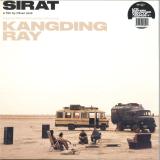
The official soundtrack to SIRĀT, written and produced by David Letellier aka Kangding Ray.
Pressed on opaque white vinyl with a black 7” single included as part of the package. The CD is presented in a digipack.
Set deep in the wild terrain of southern Morocco, SIRĀT is a visceral, atmospheric odyssey following a father (Sergi López) and son as they search for their missing daughter and sister. Their journey leads them through the throbbing heart of a nomadic rave scene where music becomes both guide and ghost — a haunting pulse that drives the narrative into the desert’s burning isolation.
At the film’s core is its mesmerizing original soundtrack, a fusion of electronic minimalism and grainy sonic textures that underscore the film’s themes of disappearance, connection, and liberation through sound.
Opaque Cream Vinyl LP + Black Vinyl 7" Single. Der offizielle Soundtrack zu SIRAT, geschrieben und produziert von David Letellier alias Kangding Ray. Die Vinyl-Version des Albums ist auf opakem weißem Vinyl gepresst und enthält eine schwarze 7-Zoll-Single. Die CD wird in einem Digipack präsentiert. SIRAT spielt tief in der wilden Landschaft Südmarokkos und ist eine viszerale, atmosphärische Odyssee, die einen Vater (Sergi López) und seinen Sohn auf der Suche nach ihrer vermissten Tochter und Schwester begleitet. Ihre Reise führt sie durch das pulsierende Herz einer nomadischen Rave-Szene, in der Musik sowohl Wegweiser als auch Geist ist - ein eindringlicher Puls, der die Erzählung in die brennende Isolation der Wüste treibt. Im Mittelpunkt des Films steht sein faszinierender Original-Soundtrack, eine Fusion aus elektronischem Minimalismus und körnigen Klangtexturen, die die Themen des Films - Verschwinden, Verbindung und Befreiung - durch Klang unterstreichen.
- 1: Skull Chamber
- 2: The Venus And The Sorcerer
- 3: Panel Of The Lions
- 4: Hillaire Chamber
- 5: Candle Gallery
- 6: Chamber Of The Bear Hollows (North)
- 7: Chamber Of The Bear Hollows (South) & Brunel Chamber
- 8: Entrance Chamber
Demetrio Castellucci and Massimo Pupillo present the music of Sleep Technique, a performance by Dewey Dell inspired by the Chauvet cave and its ancient cave paintings.
The music comes to life anew on record, an immersion into the depths of sonic particles, moist electroacoustic rhythms, the repeated forms of speleothems, and the electric bass that scrapes the walls, shaping them into concave or convex surfaces. A voice that moves incredibly slowly, yet is in constant motion, like the millennia-old, unceasing erosion of water.
The album’s journey follows the geography of the cave in reverse, moving from its deepest chamber back to the entrance.
Demetrio Castellucci is a composer and sound designer who has been involved in theater productions, choreography, and film since 2004. Around the same time, he began performing as a DJ, favoring an omnitemporal approach geared toward dance that transcends musical genres. Since 2006, he has been a member of the dance company Dewey Dell, and since 2007, he has been active as Black Fanfare, a maximalist electroacoustic project. He has collaborated on performances by Andreco and Enrico Ticconi/Ginevra Panzetti, as well as on films by Ahmed Ben Nessib, Beatrice Pucci, and Ilaria di Carlo. After living in London and Berlin, he settled in Vilnius, where in 2018 he founded Unarcheology, a digital platform that publishes music and radio programs. He is also active as Airport Gad, an ambient project which, together with Unarcheology, launched its own “Airline Company”: concerts in a flight simulator built from cardboard, where the pilots are also the musicians.
Massimo Pupillo is best known as a founding member of the band Zu, with whom he has released 18 albums and performed over 2,000 live shows worldwide. He has maintained a highly open and multidisciplinary approach that has led him to work with some of the most acclaimed figures in the contemporary art world: South African photographer Roger Ballen, actors Malcolm McDowell and Marton Csokas, Romeo Castellucci and Chiara Guidi of Societas Raffaello Sanzio, American choreographer Meg Stuart, poet Anne Waldman, and Italian poet Gabriele Tinti, among others. He has collaborated live and in the studio with avant-garde musicians and composers such as Alvin Curran, piano duo Katia & Marielle Labèque, and classical virtuosos like Viktoria Mullova and Giovanni Sollima. He has also worked with some of the most influential names in the international rock scene, including Mike Patton, Thurston Moore, Jim O’Rourke (Sonic Youth), Guy Picciotto & Joe Lally (Fugazi), Buzz Osborne (Melvins), and Damo Suzuki (CAN).
In the field of improvised music, he has collaborated with Peter Brötzmann, Toshinori Kondo, Mats Gustafsson, Ken Vandermark, and Tony Buck, among others. Within the experimental music scene, his collaborations include Oren Ambarchi, David Tibet (Current 93), Thighpaulsandra (Coil), Stephen O’Malley (Sunn O))), Abul Mogard, Mick Harris (Scorn), Gordon Sharp (This Mortal Coil), FM Einheit (Einstürzende Neubauten), and many more. In cinema, he composed the score for Kirill Serebrennikov’s film LIMONOV, presented at Festival de Cannes in 2024.
Julius Hemphill's debut record, 1972's Dogon A.D., was self-produced for his Mbari imprint, and it was issued with a beautiful black-and-white cover. Very DIY. The label's name writ large along the bottom edge, like it was the band's name. It's a quartet record featuring Hemphill on alto and flute, with Baikida Carroll on trumpet, Abdul Wadud on cello, and Phillip Wilson on drums – a classic jazz front line/rhythm section format, but nothing conventional about the way the music sounds.
The long track – from where the LP takes its title – is one of the key epic statements of new jazz in the era. Among its remarkable distinctions, it manages to draw on Wilson's schizoid experience having been a member of the Paul Butterfield Blues Band and the first drummer for the Art Ensemble of Chicago, in making an 11/8 rhythm into a staggeringly funky thing of joy. Over the course of fourteen and a half minutes, Hemphill builds a nearly continuous solo, his spiritual blood brother Wadud sawing the cello with a deep blues soulfulness that is raw and mantra-like in its repetitive incantation. It feels right and wrong in equal measure, the theme carrying its own piquancy with honked barnyard dissonances and some contrary motion between the horns and string. Most of all, it takes its own sweet time, in no hurry to get anywhere in particular, but out for a righteous stroll. – John Corbett (excerpt from the liner notes)
- こびと
- ハレルヤ:左?
- 孤独のハープ弾き
- パラダイス:真昼
- Black Hole
- 紫の夕べ
- 目の前の天使達
- Another Lonely Harpist
- They’ve Gone, They Will Come
- パラダイス
- 童話
- Spirit In My Hair
World Of Echo announces the reissue of two remastered albums by Japanese guitarist and songwriter Naoki Zushi, 1988’s Paradise, and 2005’s III. Two classics of Japanese psychedelia, both Paradise and III were originally released on Org Records, the imprint of Shinji Shibayama of acid-folk group Nagisa Ni Te, with whom Zushi has guested on second guitar for decades. Both intimate and expansive, rich with revelatory songwriting and blasted, sky-scouring guitar, these reissues return these albums to print for the first time since the 2000s. It’s the first time III has been officially released on vinyl, with an extra, previously unreleased track, “Under The June Moonlight.”
Recorded in Kyoto’s Townhouse Studios in mid 1987 and released in limited-to-500 vinyl pressing in 1988, Paradise emerged from a scene in Kansai, Japan that was embracing the idiosyncracies of 1970s singer-songwriters, the soaring solos of early seventies psychedelia, and the DIY impulse of 1980s post-punk. While Zushi’s musical history stretched back to the early eighties – he was a founding member of Jojo Hiroshige’s noise outfit Hijokaidan – he found his feet with groups like Hallelujahs, whose dream-pop collection Niku O Kuraite Chikai Wo Tateyo was recently reissued by Black Editions, and Idiot O’Clock.
Paradise appeared two years after that Hallelujahs album and share much the same membership – Zushi’s backing band on several of the songs includes Shibayama on drums and Ken-Ichi Takayama (aka Idiot) on electric guitar, though just as often, Zushi plays all the instruments himself. The coordinates here are wide-reaching – you can hear the volume and intensity of Neil Young & Crazy Horse (on “Hallelujah: Left Side” and “Paradise: Midday”), the slow-motion magic of Galaxie 500, the idiosyncratic spirit of The Only Ones, all mixed up with tender guitar miniatures and stumbling garage-psych-pop moves.
Seven years later, after the transitional album Phenomenal Luciferin, Zushi released III. Perhaps his masterpiece, it’s already been bootlegged on vinyl, but this reissue is the real deal. The album was recorded at Studio Nemu over seven years, and sees Zushi backed by Shibayama (bass) and Masako Takeda (drums), his erstwhile bandmates in Nagisa Ni Te. By this stage, Zushi had started to really stretch out, and many of the songs on III swoon languorously, taking their sweet time to say what they need to say. It’s rich with lovely, melancholy songs, in a similar realm to bandmates Nagisa Ni Te, of course, but you can also hear traces of everything from Syd Barrett’s The Madcap Laughs, through seventies private press loner folk, to the slow-burn meanderings of the likes of early Low or Damon & Naomi.
When interviewed by Shibayama in the mid-nineties, Zushi said of Paradise, “it was a sort of collection of songs that had meant something to me up to that point… it was my paradise. I wanted to create paradise.” That’s something Zushi achieves on both of these albums – visionary Japanese psychedelia, en route to paradise. - Jon Dale
A chance meeting in Mexico City set Points of Inaccessibility into motion. When Ibero-American composer Rafael Anton Irisarri crossed paths with Dutch media artist Jaco Schilp at MUTEK in 2024, a conversation about how technology shapes perception revealed an unexpected common ground. Schilp invited Irisarri to a spring 2025 residency at Uncloud, the Utrecht-based collective he co-founded, where Irisarri's sound began to take form amid an environment shaped by Schilp’s visual research.
The Uncloud studio was located inside the former Pieter Baan Centre, a forensic psychiatric prison where suspects of violent crimes were once confined. Its long history of silence and containment shaped the atmosphere in which the project developed. Within this setting, Irisarri coaxed long bowed-guitar tones through a network of pedals and looping systems. The raw gestures thickened into a vaporous and architectural field of sound. Schilp processed the material through a custom point-cloud software patch that produced images in continuous flux. The visuals flickered, dissolved and reformed like memories that resist coherence, functioning as a digital Rorschach that reflected the observer’s own perception.
Amid these spectral echoes, the project evolved into an examination of how the past persists within present signals. Memory endures as residue and interference, continually shaping perception even when its source has faded.
Schilp’s visual process required a continuous stream of sound in real time. Irisarri improvised throughout the residency, generating material that allowed the visuals to develop in parallel. Once back in his New York studio, he began shaping the recordings by carving pathways through the improvisations and mapping selected passages into MIDI. This process allowed him to build outward from the bowed-guitar material with minimal overdubs, adding Prophet 5 textures, Moog bass and strings that expanded the harmonic field while keeping the original performances at the center. To refine the structure, Abul Mogard provided editorial input, working with Irisarri’s stems to guide transitions and strengthen the overall pacing. The material, originally created under conditions of immediacy and constraint, evolved into a fully realized work through careful revision, patience and sustained reworking.
The title engages the geographic concept of the Poles of Inaccessibility, locations defined solely by their distance from all surrounding points. Irisarri adapts this idea to the conditions of digital life, where new forms of inaccessibility arise through the informational enclosures that structure perception. What appears to be a fully connected network often produces a deeper kind of separation, one shaped by the filtering logic of the systems that mediate experience. In this sense, the digital sphere mirrors its geographic counterpart. We inhabit spaces saturated with signals, yet the possibility of genuine contact becomes increasingly remote.
At its core, Points of Inaccessibility considers what can be understood as the new rituals of capitalist realism. Irisarri uses the term digital shamanism to describe the forms of simulated connection that organize contemporary life. These systems promise comfort through algorithms, influencers and AI interlocutors, yet they often reproduce the same conditions that generate loneliness in the first place. What appears as connection becomes the echo of connection, a sequence of gestures that imitate solidarity while withholding it. Like the geographic poles, these rituals are defined by distance. They pull us into environments where everything is illuminated, yet meaningful proximity becomes increasingly rare. In this sense, the work approaches a hauntology of the present, a reflection on futures that have stalled and intimacies that have been thinned by the algorithmic infrastructures that surround us.
This thematic tension unfolds across the album’s four movements. Faded Ghosts of Clouds introduces the work with textures that rise and dissipate in slow cycles, creating an atmosphere that resists clear definition. Breaking the Unison occupies a pivotal position in the sequence and focuses on the moment when the individual and the system fall out of alignment. Its shifting patterns trace the scattering of signals that once suggested connection, revealing the instability at the heart of contemporary perception. Signals from a Distant Afterglow forms the center of the album and features vocals by Karen Vogt, whose presence enters the sound field like a fragile transmission shaped by distance and delay. The closing piece, Memory Strands, follows motifs that appear, recede and briefly intersect before returning to quiet. Across these movements, the album outlines a landscape in which emergence and disappearance continually inform one another.
Listening to Points of Inaccessibility is an encounter with a sound field that is constantly in flux. Elements surface briefly, shift position and recede, creating a sense of motion that resists stable interpretation. The music moves between closeness and vastness, carrying traces of memory while withholding a clear point of resolution.
The album’s visual identity completes the project’s conceptual arc. In Mexico City, where Irisarri and Schilp first met, Daniel Castrejón transformed stills from Schilp’s point-cloud visuals into the cover image. The final artwork captures a single suspended frame of the digital material, a moment extracted from a field that is normally in constant motion. Its surface recalls the texture and abstraction found in the work of Catalan artist Antoni Tàpies, where material presence and erasure coexist within the same plane.
What emerges is a work that examines the tension between technological systems and human presence. Points of Inaccessibility asks whether connection is still possible within environments shaped by mediation and delay, or whether we have become isolated points within the very networks that promise proximity. What possibilities for relation persist within environments organized by algorithms and interruption? And how are we meant to understand presence when so much of it is constructed at a distance?
Points of Inaccessibility will be released on BioVinyl on February 6, 2026, with audiovisual performances planned throughout 2026.
Mastered by Stephan Mathieu
Artwork by Jaco Schilp
Design and layout by Daniel Castrejón
Artist photo by Iulia Alexandra Magheru.
In his own time, in his own tone and in his own company.
‘Win and lose without losing oneself’’ This line from French rapper Oxmo Puccino greatly accompanied David Walters while composing his fourth studio album. Over the eleven tracks on ‘Ti Love’, David took his time to find the right tone and in turn, tell his truth.
‘Ti Love’, is a French-Creole abbreviation for “petite love”, meaning ‘little love’, evoking that sweet fondness found in those small gestures and little acts of kindness.
Think of things like young kids' brotherly love or a stranger lending you a helping hand, while expecting nothing in return. It’s these motions that allow this album to feel full of real life, carried by beating drums that also pull at our heart strings.
Basing himself in a small village in Martinique, where David had not long since scattered the ashes of his late mother, the multi-instrumentalist decided to remain there and let the writing of Ti Love pour out from deep inside him. Taking influence from around the island, the energy from his makeshift studio set up in Fort de France, allowing a resilient yet grieving man to recount, let go and come to terms with his recent loss.
So embracing these new circumstances, on the rugged coastal Caribbean island of Martinique, David took up an artist’s residency in the island’s capital Fort de France, located near the town’s port is the ‘Manoir des Artistes’, a bustling recording studio space. A place where the walls shake as the latest sounds being created are blasted by locals and visitors alike. Most studio doors are wide open; as music here is a huge part of everyday life, feedback from encouraging neighbouring musicians is on hand and welcomed. A contrast to the isolation often assumed with working in more traditional music studios.
It was here in this stimulating environment that David recorded Ti Love’s initial demos.
With his first collaborator onboard, Neeweed, a 25-year-old producer and gospel expert who David met at the Martinique Jazz Festival.
Of the album’s initial versions of the record David recollects: ‘It took me three years to write it, then I rewrote it, reworked it. In the end I'm really glad I stepped back and listened to myself.’ I found a great ally in GUTS, who ended up being the artistic director of the record”
David surrounded himself with the right people who helped him express himself in the best possible way. He called on other friends and musical comrades; album opener and title track, ‘Ti Love’ features the incomparable Fatoumata Diawara (World Circuit Records / Africa Express) and further along additional production came in from; Izem, Art Of Tones, and GUTS himself, who all added just the right amount of ‘little love’ to this
project. Further helping hands came from Californian producer and DJ Captain Planet, who David was introduced to a few years ago. Closer to home, here in Europe, the German producer Bluestaeb appears on two tracks: the very catchy disco funk ‘Mr Maraboo’ and ‘Kite Koule’, the latter being the first single lifted from the album, where David invited Nigerian guitarist Keziah Jones.
Elsewhere on the album, fellow Heavenly Sweetness recording artist Blundetto contributed two tracks; the reggae ‘Voodoo Love’, which is David's tribute to Studio One, and the very sweet and resilient ‘Bon Voyage’, which closes the album... "It's gold, it doesn't need anything changing.” remarked David - ‘Bon Voyage’ is a goodbye to his mother, whose voice called him from the bottom of the sea one night while he was surfing during the full Moon.
Released almost 20 years after his debut album ‘AWA’ released on French imprint Ya Basta, home to Gotan Project and many others, David boasts a long list of radio supporters including; Gilles Peterson, Cerys Matthews and Don Letts at the BBC, while further field Cosmo Radio in Germany, and KCRW in Los Angeles.
On this new record, David has shown sincerity and vulnerability, while still honouring the infectious groove that he is known for the world over. Despite the upsets, a little love can indeed go a long way.
CREDITS:
Produced by Bluestaeb / Blundetto / Captain Planet / Izem / Art of Tones
A&R : Guts
Mixed by Mr Gib @ Onetwopassit
Except "Bon Voyage” and "Voodoo Love" mixed by Jerome “Blackjoy” Carron
Mastered by Benjamin Joubert @ Biduloscope
Art by Elliott Walters
- A1: She And Me Fall Together Like Free Death
- B1: Black Is The Color Of My True Loves Hair
- B2: Chicken Concret
- B3: Gusset Typing
- C1: She And Me Fall Together Like Free Death (Phosphorous Mix)
- D1: Chicken Korma
- D2: Fine Writin
- E1: She And Me Fall Together In Free Death (Funereal Mix)
- F1: Yellowed
- F2: Seeting Red
- F3: Black
Logical Absurd is very proud to present the 20th Anniversary of the album "She And Me Fall Together In Free Death" by Nurse With Wound. "She and Me Fall Together in Free Death" is probably the most approachable, largely "musical" album that NWW has released since Rock N' Roll Station. It's also one of his strangest concepts, a marriage of trance inducing Krautrock grooves with a traditional jazz standard and some jarringly atonal musique concrete. Side A is the 20- minute title track: a slow-motion jam reminiscent of of one of Can's sidelong tracks on Tago Mago or the more avant-garde grooves of Tony Conrad and Faust's Outside the Dream Syndicate.
The propulsive Jaki Liebezeit drumbeat is the foundation for a long jam session with what sounds like a dijderidoo and layers of guitar feedback. It's a massive, heavy sound, the kind that Julian Cope would devote a whole chapter to in his "Kratrocksampler". Side B is one long piece with three distinct movements. Beginning with those familiar, World Serpent-trademark windchimes, the listener is quickly ushered into Staple- ton's singing debut (!) in a rendition of the oft-covered traditional jazz ballad "Black is the Color of My True Love's Hair" This was a favorite of the recently deceased Nina Simone, and also of the avant-jazz screamer Patty Waters. Nurse With Wound's version is backed by cello drones, repetitive guitar strums and tambourine, sounding very much like The Velvet Un- derground's "Venus in Furs".
It's such a treat to hear Steven Stapleton's multitracked vocals cover this classic song, and this eerie version rates as one of my favorites. This song and the title track prove to the naysayers that Nurse With Wound is equally adept at rock n' roll songcraft as he is at demented sound collages. The creepy jazz cover seques into "Chicken Con- cret (For Missy E)", a truly warped tape-edit job that juxtaposes chicken squawks and sythesized birdcalls with random bleeps, speaker hiccups and gongs.
2024 repress
In February 2021, Jan Jelinek's seminal album "Loop-Finding-Jazz-Records" turned 20. The anniversary repress, a double LP with two bonus tracks (B-sides from the Tendency EP, 2000), is a little late to the party.
What the press said about Loop-Finding-Jazz-Records:
“Don’t be misled by the title, though for there isn’t a finger-snapping rhythm c bebop lead anywhere on the album. Instead, Jelinek chooses to explore the visual effect moiré - two shifting patterns creating an implied third dimension - in the audio realm.” (Alternative Press)
“The title acts as explanation for the studio technique that provided the basis for this album, snippets of other people’s arrangements deconstructed through a sampler into loops and then splashed onto an audio canvas.” (ATM)
“Jelinek’s sound evolved out of his dislike for (and inability to play) keyboards.” (RPM)
“Jelinek has abstracted his sources beyond recognition, looping his millisecond samples into flickering patterns of sonic moiré laid atop a dub Techno framework. (...) Jelinek might as well have sampled a horn player’s hissing intake of breath – it would have been ‘jazz’ enough for his purposes.“ (The Wire)
“It’s a perfect inversion of conventional music, a sonic negative. Everything that would typically be foreground is moved back or pushed off the screen altogether, and the flecks of sonic debris that would normally be covered by other sounds are left to carry the melody and rhythm.” (Pitchfork)
“All you need to know is that these onomatopoeic non-specific songs (...) are warm, paradisical creations”. (NME)
“Listen carefully and you’ll hear textures slowly unfolding and mutating. Presuming you’ve not fallen asleep of course.” (iDJ)
“At times, it’s all a bit dripping tap Japanese water torture; so sedentary it drowns in its own motionlessness” (DJ)
“Loop Finding Jazz Records' is a genuine modern classic whose re-release is anything but a cynical mortgage repayment exercise. Consider this a second chance, then pretend you had it all along.” (Boomkat)
PS:
“I’ve been fortunate enough to see Jan Jelinek live once, at Tonic NYC (...). Wearing a black and white striped shirt, he looked like a nihilistic Charlie Brown.” (beachsloth)
- Make Me Whole
- New Moon
- Peeling Cycle
- Contempation In Time
LTD RED VINYL[24,33 €]
Predatory Void returns with their third record, an EP titled `Atoned in Metamorphosis`, a concentrated statement of intent that compresses the band's restless energy into four precise movements. The music negotiates extremes: patient, reverb-saturated passages give way to sudden, metallic eruptions; subterranean basslines provide narrative weight beneath volatile guitar textures, vocals growl, wail and lament as drums alternate between measured architecture and volcanic release. The result is an austere, immersive sound that is both incandescent and violently sharp. Conceptually the EP takes on the ugly shadow of the unconscious and cathartically wrestles the demon onto canvas. Calling on elements from sludge, doom and black metal, as well as the unrelenting energies of hardcore and contrasting slower, haunted atmospheres, Predatory Void's signature sound is as volatile and piercing as ever. Concise, tight compositions that hook you in melody and then rage in filthy agony. The music can be confrontational, but it is never gratuitous_force is deployed to clarify rather than to overwhelm as emotional depth is at all times the compass. The production aesthetic prioritises fidelity to performance: takes are preserved for their immediacy, dynamics remain uncompromised, and the mix privileges contrast so that quiet moments carry as much dramaturgical weight as full-band climaxes. `Atoned in Metamorphosis` consolidates Predatory Void's forward motion and stakes a claim for a sound that prizes architectural heft and textural nuance in equal measure. Listeners should expect an immediate physical response in what is undeniably an ardent expression, and enjoy the reward of cumulative detail, for the EP dares you to listen closely: to feel transitions as processes, and to accept tension as a pathway to release. Predatory Void invites engagement, not escape, and demands to be met on its own terms, boldly. RIYL Hexis * CELESTE * Wallowing * LLNN * Downfall of Gaia * Witching
Black Vinyl[22,06 €]
Predatory Void returns with their third record, an EP titled `Atoned in Metamorphosis`, a concentrated statement of intent that compresses the band's restless energy into four precise movements. The music negotiates extremes: patient, reverb-saturated passages give way to sudden, metallic eruptions; subterranean basslines provide narrative weight beneath volatile guitar textures, vocals growl, wail and lament as drums alternate between measured architecture and volcanic release. The result is an austere, immersive sound that is both incandescent and violently sharp. Conceptually the EP takes on the ugly shadow of the unconscious and cathartically wrestles the demon onto canvas. Calling on elements from sludge, doom and black metal, as well as the unrelenting energies of hardcore and contrasting slower, haunted atmospheres, Predatory Void's signature sound is as volatile and piercing as ever. Concise, tight compositions that hook you in melody and then rage in filthy agony. The music can be confrontational, but it is never gratuitous_force is deployed to clarify rather than to overwhelm as emotional depth is at all times the compass. The production aesthetic prioritises fidelity to performance: takes are preserved for their immediacy, dynamics remain uncompromised, and the mix privileges contrast so that quiet moments carry as much dramaturgical weight as full-band climaxes. `Atoned in Metamorphosis` consolidates Predatory Void's forward motion and stakes a claim for a sound that prizes architectural heft and textural nuance in equal measure. Listeners should expect an immediate physical response in what is undeniably an ardent expression, and enjoy the reward of cumulative detail, for the EP dares you to listen closely: to feel transitions as processes, and to accept tension as a pathway to release. Predatory Void invites engagement, not escape, and demands to be met on its own terms, boldly. RIYL Hexis * CELESTE * Wallowing * LLNN * Downfall of Gaia * Witching
- 1: Opening
- 2: Intro
- 3: Eleanor
- 4: Fear The Sea
- 5: Leaves
- 6: In Motion #2
- 7: Adrenaline
With their bold blend of doom metal roots, atmospheric rock, and ethereal vocals, THE GATHERING were already reshaping heavy music in the mid-90s. But few recordings capture that electric live energy better than their iconic set at Dynamo Open Air , and now, for the very first time, this legendary moment finally arrives and it's everything fans could hope for. Expertly released by 7 Mater / Sevan Mater, this deluxe edition is limited to 500 copies each on Black and Purple vinyl, with a custom cover artwork designed by Sevan Mater that honors the spirit of the era while bringing new visual depth. It's not just a reissue - it's a resurrection. Recorded during a time when the band was ascending into cult status, the Dynamo performance showcases the perfect fusion of Anneke van Giersbergen's soaring vocals with the band's dynamic instrumental interplay. Songs like "Eleanor", and "Leaves" ring out with clarity and emotion, capturing both the power and subtlety that defined their live presence
London based experimental producer and composer "Leifur James" announces his return with news of a six date EU tour and the release ‘Wise Old Man’. The first single taken from his highly anticipated second album ‘Angel in Disguise’, which is due for release on the
24th April 2020 via "Night Time Stories" - Sister label to the coveted ‘LateNightTales’.
Driving, melancholic electronica, ‘Wise Old Man’ is a nod to what can be expected of James’ second album, Angel In Disguise, showcasing a more experimental side to his production. Traversing through musicality, progressive synths and introspection, this first single unveils the producer’s distinct sound with disorientated vocals; speaking of the interplay between reason and emotion, the lyrics repeat “Wise old man in my brain, soul bursting through my veins”, opening the gates to this captivating electronically steered opus.
This news comes after an incredible few years for the artist. In 2018 saw James release his esteemed debut album A Louder Silence on Night Time Stories and follow up remix EP that championed upcoming electronic talent including Bruce, FaltyDL and Whities producer, Coby Sey, on rework duties; projects which captured the attention of key tastemakers including Resident Advisor, Pitchfork, Mixmag, Electronic Sound and Future Music UK.
An aesthetically driven artist dedicated to marrying powerful visual backdrops with sonic explorations, James teamed up with Hungarian director, Balázs Simon; producing the critically acclaimed, ‘Wurlitzer’ project which saw widespread support from the likes of Boiler Room, CLASH, Directors’ Notes, Motionographer, the UK and Berlin Music Video Awards, the London Short Film Festival, Dublin International Film Festival and more.
Angel In Disguise promises to explore the themes of love and loss through a masterful blend of harmonic vocals from James himself, nuanced electronic soundscapes and vibrant percussion -
punctuated by bespoke visuals, directed by Balázs Simon.
This exciting project is expected to make waves and see James
step up, exhibiting his discerning ear and painstakingly honed production craft on aseminal label.
- The Serpent
- Contortionist
- Dead Throne
- Rome (Feat. Dal Av)
- One For The Money
- Conquer (Feat. Josh Mowery Of Catch Your Breath)
- Anodyne
- Catalyst
- Plagues
- Evergreen
- Second Sight
Arankai stammt aus Wisconsin im Mittleren Westen der Vereinigten Staaten und trat erstmals 2022 mit einer Reihe von Independent-Veröffentlichungen in Erscheinung. Mit einer Mischung aus Metal, Alternative Rock und empathisch-emotionalen Texten baute er sich mit seinen rauhen Sound und seinee beeindruckende Präsenz in den sozialen Medien schnell eine treue Fangemeinde auf. Im Jahr 2025 veröffentlichte er nun mit "A Portrait of Red" den ersten Teil seiner lang erwarteten Albumtriologie und festigt damit seinen Platz als aufstrebender Act in der Alternative-Metal-Szene. Inklusive der Single "Conquer" mit Josh Mowery von Catch Your Breath. Für Fans von Archers, Bad Omens, Corpse Husband, Motionless In White, Black Veil Brides, I Prevail, Sleep Token, Fit For A King, The Amity Affliction.
»La Traversée« (»The Crossing«) is Matthias Puech’s second album for Hallow Ground and follows up on 2023’s »Mt. Hadamard National Park.« Profoundly inspired by re-reading »The Odyssey,« the French composer, instrument designer, and scholar used a Eurorack modular synthesizer to create four pieces that are by far the most intuitive and emotionally charged in his ever-expanding catalogue. Puech’s masterful command of sound comes to the forefront with even more urgency on this record. A wandering meditation on the human condition, »La Traversée« is an album that is constantly in motion—complex electronic music at its most gripping and evocative.
The foundation for »La Traversée« was laid when Puech prepared a live set for a tour organised in collaboration with Hallow Ground in support of »Mt. Hadamard National Park.« Before writing the first three pieces—»Ennosigaios,« »Polyphármakos,« »Nekuia«—the 18½-minute-long »Ithâké« was composed in near-total isolation in the South of France at the end of 2023. Puech performed the material live several times before taking a step black from it for a while. He revisited the pieces when preparingthem for a release. »I was struck by how the technical process and the intention behind the music had completely vanished from my memory,« he says.
What remained intact, however, was Puech’s association of the material with one of the most influential texts of Western literature. Reading a graphic novel adaptation of »The Odyssey« with his two four-year-olds, he noticed the effect that it had on them and himself. »Its themes of longing, fear of and attraction to the unknown, unresolved quests, and the struggle for control felt topical,« he says. »I was completely taken. Every story ever told seemed contained in this ancient tale; every story I have ever tried to tell as a composer seemed inscribed in this framework.« This also extended to formal motifs such as the repetition of incidents, narrative developments, or dramatic effects that also mark »La Traversée.«
Puech says that he perceived Homer’s writing as musical, »like an old Delta blues or a Renaissance counterpoint,« which inspired his writing process. »With a couple of knobs on my Eurorack system, I could control the unfolding of a story,« he notes. »This made me pass through different emotional statesand led to moments in which everything made sudden sense—when you as an artist get a glimpse atsomething essential, can touch upon something universal.« This shines through »La Traversée,« a wildly imaginative album that is deeply personal while also telling a story far more wide-reaching than that of its creator.
- 1:
- 2:
- 3:
- 4:
- 5:
- 6:
- 7:
- 8:
The Sludge Of The Land is the new album by digital folklore and post-exoticism Italian duo Babau. Their first full length since 2023’s Flatland Explorations Vol. 2, with The Sludge Of The Land Babau lands on Impatience with their signature audio-prestidigitation at it’s most disorientingly pungent and zonked, a uniquely contemporary approach described as the sound of a continent moving; animals, plants and minerals included.
As part of a residency at Casa degli Artisti, Milan, in 2022, Babau turned their atelier into a recording studio and performing venue thanks to Francesco Piro, who produced the entirety of the album. There, the duo improvised with different acoustic and digital instruments for several hours a day. Returning after ten years to a sound more akin to a band or small orchestra, Babau re-explores tropes and themes of exotica and jazz from their unique and off-kilter perspective of terminally-online diggers-dwellers of the internet flatland.
An homage to digital content consumption and dopamine-infused sensory overloads, The Sludge Of The Land imagines itself as an abstract sonic wunderkammer of online detritus. By diving into the world of ‘sludge content’: audiovisual chaos produced by mixing different content using split screens or dizzying patchworks of videos, Babau celebrates the formless, viscous goo, spam, chum and slop of out-of-context moving image, fast paced digital videos and lo-fi mp4 artifacts. By endlessly spiraling into the non-spaces of The Net, Babau explore the uncharted parageographies of lavacasts, mysterious Chinese anthropozoomorphic legendary beings, vampiric doomscrolling glides and doppelganger, ctrl+c & ctrl+v spiritualism. These ghosts of pointless microevents and traveling-without-moving bedroom boredom are stuffed by Babau with the epic tone and compositional approach of exotica and world music 2.0 reveries, resulting in an absurd, playful narrative of the dangers and allures of the web.
Bringing together the sound of Richard Hayman and Black Dice, Korla Pandit and Sun Araw, Tony Scott and Carl Stone, once again the duo crafts a compelling audio-textual hallucination of transglobal chimera. A multi-fi, extremely layered treasure of fifth world music.
RIYL - Sun Araw, the strangest corners of the internet, Senyawa, digital wind instruments, Nuke Watch, Black Dice, exotica, hallucinating.
Babau is the pantropical project of Artetetra founders Matteo Pennesi and Luigi Monteanni, where their fascination with exotica, world music 2.0, and field recordings merges with the compositional and improvisational techniques of computer music.
Their latest work, All the Gurls were at the Women’s Archo Ashinto, was recently released by Bamboo Shows, while the previous Stock Fantasy Zone and Flatland Explorations Vol.2, were released by Discrepant. They were selected as SHAPE+ artists in 2023, and the duo has performed at various festivals in Italy and beyond, including Fusion, Club to Club, Terraforma, Nextones, Outernational Days, Camp Cosmic, and Saturnalia. For years, they have been striving to synthesize what has been described as the sound of a continent in motion—people, animals, plants, and minerals included.
The Sludge Of The Land was produced and mixed by Francesco Piro at Casa degli Artisti, Milan, and co-produced by Babau
Drums by Giovanni Todisco, bass by Francesco Piro and piano on A4 by Vittorio Cosmo.
Master by Nick Foglia.
Art by Luca Schenardi.
- A1: From Uncle Herm Pt. 6
- A2: 50'S In The City
- A3: Black Man
- A4: Meet Me On Harbor (Feat. Black C)
- A5: 7 Mile Bike Ride Pt. 2
- A6: Organic Free Range Chicken
- A7: Cardo's Groove
- A8: Ya Feel Me (Feat. E-40)
- B1: Gotta Be Love
- B2: On The Unda
- B3: 100 Bags (Feat. Don Toliver)
- B4: Canadian Snow
- B5: Still Game Related (Feat. Payroll Giovanni & Hbk)
- B6: Until Night Comes (Feat. Wiz Khalifa & Richie Rich)
With Until Night Comes, Larry June and Cardo reconnect to deliver a nocturnal cruise through laid-back luxury and introspection. The album feels like a slow ride through the city just after sunset—windows down, sky fading from gold to indigo, and a calm confidence guiding every turn. It’s Larry at his most self-assured and reflective, balancing the cool ease he’s known for with sharper focus and deeper pockets of honesty. Cardo’s production is smooth and expansive—built on warm basslines, polished synths, and sample chops that stretch like the dusk. Together, they create a cohesive soundtrack for night owls, hustlers, and anyone chasing peace in motion. The album continues to refine their seasoned partnership, evolving into something even more purposeful. No wasted energy, just clean living, big vision, and a reminder that progress doesn’t stop when the sun goes down. Features include E-40, Black C, Don Toliver, Payroll Giovanni, HBK, Wiz Khalifa & Richie Rich. Good Job, Larry.
2025 jährt sich zum 15. Mal die Komödie Scott Pilgrim Vs The World aus dem Jahr 2010, die von Edgar
Wright geschrieben, produziert und inszeniert wurde und auf der Graphic-Novel-Serie Scott Pilgrim von
Bryan Lee O’Malley basiert. Mit Michael Cera als Scott Pilgrim, einem Slacker-Musiker, der versucht,
einen Wettbewerb zu gewinnen, um einen Plattenvertrag zu bekommen, während er gleichzeitig gegen die
sieben Ex-Freunde seiner neuen Freundin Ramona Flowers kämpft.
Der Soundtrack der nun auf roter Vinyl erhältlich ist, wurde von Nigel Godrich zusammen mit Edgar Wright
produziert und enthält eine Reihe von Originalstücken, die von Beck komponiert und im Film von Michael
Ceras Band ”Sex Bob-Omb” eingespielt. wurden. Außerdem gibt es auch einen bisher unveröffentlichten
Song von Metric und auch Songs von Broken Social Scene, Beachwood Sparks, The Bluetones, Blood Red
Shoes, Black Lips , Frank Black und den Rolling Stones.
- A1: I Feel Alive - Jack Black
- A2: When I'm Gone (A Minecraft Movie Version) - Dirty Honey
- A3: Change Song - Dayglow
- A4: Zero To Hero - Benee
- A5: Could This Be Love? - Bret Mckenzie
- A6: Just Can't Get Enough (From "A Minecraft Movie”)
- A7: Steve's Lava Chicken - Jack Black
- A8: Birthday Rap - Jack Black & Jason Momoa
- A9: Ode To Dennis - Jack Black
- B1: Score By Mark Mothersbaugh
- B2: Minecraft (From “A Minecraft Movie”)
- B3: Mintage
- B4: Midport Village
- B5: Day To Night
- B6: Steve In The Nether
- B7: Chicken Fight Club
- C1: I Need A Win, Man
- C2: I'm Coming With / Minecraft
- C3: Nitwit Crosses And Steve Finds / Minecraft
- C4: Woodland Mansion Planning
- C5: Steve Vs Malgosha
- D1: Piglins Attack
- D2: Heroic Henry / Minecraft
- D3: Let's Go Fight Some Pigs
- D4: Run From The Great Hog
- D5: Back In The Nether
A Minecraft Movie (Songs from the Original Motion Picture Soundtrack) features the songs from the film, including Jack Black's "Steve's Lava Chicken' and the Mark Ronson/Andrew Wyatt/Jack Black-penned "Feel Alive". Alongside the film's other original songs and two score selections are bonus tracks "Welcome to Steve's!" and an extended versions of "Steve's Lava Chicken", "Birthday Rap", and "Ode To Dennis". The 'I. .. Am Steve" teal vinyl variant celebrates the iconic character's signature-colored sweater, instantly recognizable to any Minecraft fan.
[f] A6 | Just Can't Get Enough (From "a Minecraft Movie”) [instrumental Version] - Jamieson Shaw