After the release of "Acoustic Adventures - Volume One", most of the second chapter consists of faster tracks like 'Black Sheep', the all-time live classic 'FullMoon' and 'Flag In The Ground'. But SONATA ARCTICA wouldn't be SONATA ARCTICA if they played it safe: 'San Sebastian' or the closing track 'Victoria's Secret' manage to spread a completely new, refreshing feeling to the listener; a feeling that is best experienced in front of a stage, of course!
To complete this particular saga and finally celebrate the kick-off of their next, repeatedly postponed 'Acoustic Adventures' tour to uplift the Corona-shaken Finnish and European mainland minds. But first: come into the living room, sit back and follow SONATA ARCTICA on their stripped-down but no less exciting journey into the world of acoustic music...!
quête:black volume
- A1: Pepe Velasquez Y Su Arpa Paraguaya - Santo Domingo
- A2: Pedro Salcedo Y Su Orquesta - La Pollera Colora
- A3: Pedro Laza Y Sus Pelayeros - La Compatible
- A4: Los Alegres Diablos - La Magdalena
- A5: Juan Pina Y Sus Muchachos - Zapatico Viejo
- A6: Pello Torres Y Sus Diablos Del Ritmo - El Lunatico
- A7: Los Satlites - Pa La Playa
- B1: Julio Erazo Y Su Conjunto - El Indio Chimila
- B2: Ariza Y Su Combo - Ariza En Descarga
- B3: Pedro Jairo Garces Y Su Guitarra Estereofonica - Fajardos Charanga
- B4: Los Claves - El Dulcerito
- B5: Los Super Star De Colombia - El Toro Pusnaix
- B6: Peregoyo Y Su Combo Vacana - Salsa Pa Ti
- B7: La Carnaval Swing - Descarga Colombiana
- C1: El Sexteto Miramar - Cumbia De Serenata
- C2: Tono Y Su Combo - Con El Tambor
- C3: Los Corraleros De Majagual - Amaneci Tomando
- C4: Juancho Vargas Al Organo - La Murga Panamea
- C5: El Super Combo Los Diamantes - Salsa Sabrosa
- C6: Csar Pompeyo Y Su Sonora - Marcela
- D1: La Integracion - Wah Wah
- D2: Dimension Caribe De Pedro Conde - Atruku Truku Ta
- D3: Michi Y Sus Bravos - Corazon De Arana Negra
- D4: The Latin Brothers - La Noche
- D5: Wganda Kenya - El 77
- D6: Afrosound - Zaire Pop
Third volume in our series of Afro-Latin sounds from the golden period of the seminal Discos Fuentes label in Colombia. An outstanding selection of 26 hard-to find-tracks, many reissued for the first time, covering a wide array of Afro-rooted genres, with an stronger focus on the music's folkloric origins than in previous volumes, comprising recordings by the likes of Michi Sarmiento, Wganda Kenya, The Latin Brothers, Los Corraleros De Majagual, Peregoyo_ It's been a few years, but Vampisoul is back with the next installment of Colombian tropical bangers from the deep vaults of Discos Fuentes. The term Afrosound denotes an always exciting, sometimes surprising soundtrack chronicling the embrace, development, dissemination, and commercialization of the country's rich Afro-Coastal musical heritage over more than four decades. It is the proud sound of African-rooted culture translated, transformed, and transmitted through the commercial enterprise of Discos Fuentes, and this third collection offers an even more diverse and chronologically wide-ranging array of tracks than the previous two volumes, with an even stronger focus on the music's folkloric origins. The unifying factor this time is the same: African roots or influences and the period of experimentation, self-expression, upheaval, rebellion, and rebirth in the industry, nurtured by the label and its stable of musicians, song-writers, producers, and engineers. Although this volume does not list Fruko Y Sus Tesos in the track-by-track credits, the presence of Julio Ernesto Estrada Rincón can be felt throughout, with the first half setting the stage for his artistic birth, schooling and eventual emergence at the label, and the second half featuring bands that he was an integral part of or had a hand in creating, producing, and composing for. And with that said, we dedicate this collection to Fruko: long may he reign as The King of Afrosound. This incredible stream of black gold adorned and enriched the public airways of Cali, Buenaventura, Cartagena, Baranquilla, to become a symbol of pride and part of Colombia's collective identity. It includes an extended booklet with notes by compiler Pablo Yglesias aka DJ Bongohead.
- A1: Rock This Mother
- A2: Talk To Me Girl
- A3: You Can Find Me
- A4: Check This Out
- A5: Jesus Going To Clean House
- A6: Hope You Understood
- A7: Is It What You Want
- A8: Love Is Everlasting
- A9: This Is Hip-Hop Art
- A10: Opposite Of Love
- A11: Do You Know What I Mean
- B1: Saving All My Love For You
- B2: Look Out Here I Come
- B3: Girl You Always Talking
- B4: Have A Great Day
- B5: Take My Hand
- B6: I Need Your Love
- B7: Your Town
- B8: Talk Around Town
- B9: Booty Head/Take A Little Walk
- B10: I Love My Mama
- B11: I Never Found Anyone Like You
Cassette[11,72 €]
As the sun sets on a quaint East Nashville house, a young man bares a piece of his soul. Facing the camera, sporting a silky suit jacket/shirt/slacks/fingerless gloves ensemble that announces "singer" before he's even opened his mouth, Lee Tracy Johnson settles onto his stage, the front yard. He sways to the dirge-like drum machine pulse of a synth-soaked slow jam, extends his arms as if gaining his balance, and croons in affecting, fragile earnest, "I need your love… oh baby…"
Dogs in the yard next door begin barking. A mysterious cardboard robot figure, beamed in from galaxies unknown and affixed to a tree, is less vocal. Lee doesn't acknowledge either's presence. He's busy feeling it, arms and hands gesticulating. His voice rises in falsetto over the now-quiet dogs, over the ambient noise from the street that seeps into the handheld camcorder's microphone, over the recording of his own voice played back from a boombox off-camera. After six minutes the single, continuous shot ends. In this intimate creative universe there are no re-takes. There are many more music videos to shoot, and as Lee later puts it, "The first time you do it is actually the best. Because you can never get that again. You expressing yourself from within."
"I Need Your Love" dates from a lost heyday. From some time in the '80s or early '90s, when Lee Tracy (as he was known in performance) and his music partner/producer/manager Isaac Manning committed hours upon hours of their sonic and visual ideas to tape. Embracing drum machines and synthesizers – electronics that made their personal futurism palpable – they recorded exclusively at home, live in a room into a simple cassette deck. Soul, funk, electro and new wave informed their songs, yet Lee and Isaac eschewed the confinement of conventional categories and genres, preferring to let experimentation guide them.
"Anytime somebody put out a new record they had the same instruments or the same sound," explains Isaac. "So I basically wanted to find something that's really gonna stand out away from all of the rest of 'em." Their ethos meant that every idea they came up with was at least worth trying: echoed out half-rapped exhortations over frantic techno-style beats, gospel synth soul, modal electro-funk, oddball pop reinterpretations, emo AOR balladry, nods to Prince and the Fat Boys, or arrangements that might collapse mid-song into a mess of arcade game-ish blips before rallying to reach the finish line. All of it conjoined by consistent tape hiss, and most vitally, Lee's chameleonic voice, which managed to wildly shape shift and still evoke something sincere – whether toggling between falsetto and tenor exalting Jesus's return, or punctuating a melismatic romantic adlib with a succinct, "We all know how it feels to be alone."
"People think we went to a studio," says Isaac derisively. "We never went to no studio. We didn't have the money to go to no studio! We did this stuff at home. I shot videos in my front yard with whatever we could to get things together." Sometimes Isaac would just put on an instrumental record, be it "Planet Rock" or "Don't Cry For Me Argentina" (from Evita), press "record," and let Lee improvise over it, yielding peculiar love songs, would-be patriotic anthems, or Elvis Presley or Marilyn Monroe tributes. Technical limitations and a lack of professional polish never dissuaded them. They believed they were onto something.
"That struggle," Isaac says, "made that sound sound good to me."
In the parlance of modern music criticism Lee and Isaac's dizzying DIY efforts would inevitably be described as "outsider." But "outsider" carries the burden of untold additional layers of meaning if you're Black and from the South, creating on a budget, and trying to get someone, anyone within the country music capital of the world to take your vision seriously. "What category should we put it in?" Isaac asks rhetorically. "I don't know. All I know is feeling. I ain't gonna name it nothing. It's music. If it grabs your soul and touch your heart that's what it basically is supposed to do."
=
Born in 1963, the baby boy of nine siblings, Lee Tracy spent his earliest years living amidst the shotgun houses on Nashville's south side. "We was poor, man!" he says, recalling the outhouse his family used for a bathroom and the blocks of ice they kept in the kitchen to chill perishables. "But I actually don't think I really realized I was in poverty until I got grown and started thinking about it." Lee's mom worked at the Holiday Inn; his dad did whatever he had to do, from selling fruit from a horse drawn cart to bootlegging. "We didn't have much," Lee continues, "but my mother and my father got us the things we needed, the clothes on our back." By the end of the decade with the city's urban renewal programs razing entire neighborhoods to accommodate construction of the Interstate, the family moved to Edgehill Projects. Lee remembers music and art as a constant source of inspiration for he and his brothers and sisters – especially after seeing the Jackson 5 perform on Ed Sullivan. "As a small child I just knew that was what I wanted to do."
His older brother Don began musically mentoring him, introducing Lee to a variety of instruments and sounds. "He would never play one particular type of music, like R&B," says Lee. "I was surrounded by jazz, hard rock and roll, easy listening, gospel, reggae, country music; I mean I was a sponge absorbing all of that." Lee taught himself to play drums by beating on cardboard boxes, gaining a rep around the way for his timekeeping, and his singing voice. Emulating his favorites, Earth Wind & Fire and Cameo, he formed groups with other kids with era-evocative band names like Concept and TNT Connection, and emerged as the leader of disciplined rehearsals. "I made them practice," says Lee. "We practiced and practiced and practiced. Because I wanted that perfection." By high school the most accomplished of these bands would take top prize in a prominent local talent show. It was a big moment for Lee, and he felt ready to take things to the next level. But his band-mates had other ideas.
"I don't know what happened," he says, still miffed at the memory. "It must have blew they mind after we won and people started showing notice, because it's like everybody quit! I was like, where the hell did everybody go?" Lee had always made a point of interrogating prospective musicians about their intentions before joining his groups: were they really serious or just looking for a way to pick up girls? Now he understood even more the importance of finding a collaborator just as committed to the music as he was.
=
Isaac Manning had spent much of his life immersed in music and the arts – singing in the church choir with his family on Nashville's north side, writing, painting, dancing, and working various gigs within the entertainment industry. After serving in the armed forces, in the early '70s he ran The Teenage Place, a music and performance venue that catered to the local youth. But he was forced out of town when word of one of his recreational routines created a stir beyond the safe haven of his bohemian circles.
"I was growing marijuana," Isaac explains. "It wasn't no business, I was smoking it myself… I would put marijuana in scrambled eggs, cornbread and stuff." His weed use originated as a form of self-medication to combat severe tooth pain. But when he began sharing it with some of the other young people he hung out with, some of who just so happened to be the kids of Nashville politicians, the cops came calling. "When I got busted," he remembers, "they were talking about how they were gonna get rid of me because they didn't want me saying nothing about they children because of the politics and stuff. So I got my family, took two raggedy cars, and left Nashville and went to Vegas."
Out in the desert, Isaac happened to meet Chubby Checker of "The Twist" fame while the singer was gigging at The Flamingo. Impressed by Isaac's zeal, Checker invited him to go on the road with him as his tour manager/roadie/valet. The experience gave Isaac a window into a part of the entertainment world he'd never encountered – a glimpse of what a true pop act's audience looked like. "Chubby Checker, none of his shows were played for Black folks," he remembers. "All his gigs were done at high-class white people areas." Returning home after a few years with Chubby, Isaac was properly motivated to make it in Music City. He began writing songs and scouting around Nashville for local talent anywhere he could find it with an expressed goal: "Find someone who can deliver your songs the way you want 'em delivered and make people feel what you want them to feel."
One day while walking through Edgehill Projects Isaac heard someone playing the drums in a way that made him stop and take notice. "The music was so tight, just the drums made me feel like, oh I'm-a find this person," he recalls. "So I circled through the projects until I found who it was.
"That's how I met him – Lee Tracy. When I found him and he started singing and stuff, I said, ohhh, this is somebody different."
=
Theirs was a true complementary partnership: young Lee possessed the raw talent, the older Isaac the belief. "He's really the only one besides my brother and my family that really seen the potential in me," says Lee. "He made me see that I could do it."
Isaac long being a night owl, his house also made for a fertile collaborative environment – a space where there always seemed to be a new piece of his visual art on display: paintings, illustrations, and dolls and figures (including an enigmatic cardboard robot). Lee and Issac would hang out together and talk, listen to music, conjure ideas, and smoke the herb Isaac had resumed growing in his yard. "It got to where I could trust him, he could trust me," Isaac says of their bond. They also worked together for hours on drawings, spreading larges rolls of paper on the walls and sketching faces with abstract patterns and imagery: alien-like beings, tri-horned horse heads, inverted Janus-like characters where one visage blurred into the other.
Soon it became apparent that they didn't need other collaborators; self-sufficiency was the natural way forward. At Isaac's behest Lee, already fed up with dealing with band musicians, began playing around with a poly-sonic Yamaha keyboard at the local music store. "It had everything on it – trumpet, bass, drums, organ," remembers Lee. "And that's when I started recording my own stuff."
The technology afforded Lee the flexibility and independence he craved, setting him on a path other bedroom musicians and producers around the world were simultaneously following through the '80s into the early '90s. Saving up money from day jobs, he eventually supplemented the Yamaha Isaac had gotten him with Roland and Casio drum machines and a Moog. Lee was living in an apartment in Hillside at that point caring for his dad, who'd been partially paralyzed since early in life. In the evenings up in his second floor room, the music put him in a zone where he could tune out everything and lose himself in his ideas.
"Oh I loved it," he recalls. "I would really experiment with the instruments and use a lot of different sound effects. I was looking for something nobody else had. I wanted something totally different. And once I found the sound I was looking for, I would just smoke me a good joint and just let it go, hit the record button." More potent a creative stimulant than even Isaac's weed was the holistic flow and spontaneity of recording. Between sessions at Isaac's place and Lee's apartment, their volume of output quickly ballooned.
"We was always recording," says Lee. "That's why we have so much music. Even when I went to Isaac's and we start creating, I get home, my mind is racing, I gotta start creating, creating, creating. I remember there were times when I took a 90-minute tape from front to back and just filled it up."
"We never practiced," says Isaac. "See, that was just so odd about the whole thing. I could relate to him, and tell him about the songs I had ideas for and everything and stuff. And then he would bring it back or whatever, and we'd get together and put it down." Once the taskmaster hell bent on rehearsing, Lee had flipped a full 180. Perfection was no longer an aspiration, but the enemy of inspiration.
"I seen where practicing and practicing got me," says Lee. "A lot of musicians you get to playing and they gotta stop, they have to analyze the music. But while you analyzing you losing a lot of the greatness of what you creating. Stop analyzing what you play, just play! And it'll all take shape."
=
"I hope you understood the beginning of the record because this was invented from a dream I had today… (You tell me, I'll tell you, we'll figure it out together)" – Lee Tracy and Isaac Manning, "Hope You Understand"
Lee lets loose a maniacal cackle when he acknowledges that the material that he and Isaac recorded was by anyone's estimation pretty out there. It's the same laugh that commences "Hope You Understand" – a chaotic transmission that encapsulates the duality at the heart of their music: a stated desire to reach people and a compulsion to go as leftfield as they saw fit.
"We just did it," says Lee. "We cut the music on and cut loose. I don't sit around and write. I do it by listening, get a feeling, play the music, and the lyrics and stuff just come out of me."
The approach proved adaptable to interpreting other artists' material. While recording a cover of Whitney Houston's pop ballad "Saving All My Love For You," Lee played Whitney's version in his headphones as he laid down his own vocals – partially following the lyrics, partially using them as a departure point. The end result is barely recognizable compared with the original, Lee and Isaac having switched up the time signature and reinvented the melody along the way towards morphing a slick mainstream radio standard into something that sounds solely their own.
"I really used that song to get me started," says Lee. "Then I said, well I need something else, something is missing. Something just came over me. That's when I came up with 'Is It What You Want.'"
The song would become the centerpiece of Lee and Isaac's repertoire. Pushed along by a percolating metronomic Rhythm King style beat somewhere between a military march and a samba, "Is It What You Want" finds Lee pleading the sincerity of his commitment to a potential love interest embellished by vocal tics and hiccups subtlely reminiscent of his childhood hero MJ. Absent chord changes, only synth riffs gliding in and out like apparitions, the song achieves a lingering lo-fi power that leaves you feeling like it's still playing, somewhere, even after the fade out.
"I don't know, it's like a real spiritual song," Lee reflects. "But it's not just spiritual. To me the more I listen to it it's like about everything that you do in your everyday life, period. Is it what you want? Do you want a car or you don't want a car? Do you want Jesus or do you want the Devil? It's basically asking you the question. Can't nobody answer the question but you yourself."
In 1989 Lee won a lawsuit stemming from injuries sustained from a fight he'd gotten into. He took part of the settlement money and with Isaac pressed up "Saving All My Love For You" b/w "Is It What You Want" as a 45 single. Isaac christened the label One Chance Records. "Because that's all we wanted," he says with a laugh, "one chance."
Isaac sent the record out to radio stations and major labels, hoping for it to make enough noise to get picked up nationally. But the response he and Lee were hoping for never materialized. According to Isaac the closest the single got to getting played on the radio is when a disk jock from a local station made a highly unusual announcement on air: "The dude said on the radio, 107.5 – 'We are not gonna play 'Is It What You Want.' We cracked up! Wow, that's deep.
"It was a whole racist thing that was going on," he reflects. "So we just looked over and kept on going. That was it. That was about the way it goes… If you were Black and you were living in Nashville and stuff, that's the way you got treated." Isaac already knew as much from all the times he'd brought he and Lee's tapes (even their cache of country music tunes) over to Music Row to try to drum up interest to no avail.
"Isaac, he really worked his ass off," says Lee. "He probably been to every record place down on Music Row." Nashville's famed recording and music business corridor wasn't but a few blocks from where Lee grew up. Close enough, he remembers, for him to ride his bike along its back alleys and stumble upon the occasional random treasure, like a discarded box of harmonicas. Getting in through the front door, however, still felt a world away.
"I just don't think at the time our music fell into a category for them," he concedes. "It was before its time."
=
Lee stopped making music some time in the latter part of the '90s, around the time his mom passed away and life became increasingly tough to manage. "When my mother died I had a nervous breakdown," he says, "So I shut down for a long time. I was in such a sadness frame of mind. That's why nobody seen me. I had just disappeared off the map." He fell out of touch with Isaac, and in an indication of just how bad things had gotten for him, lost track of all the recordings they'd made together. Music became a distant memory.

Fortunately, Isaac kept the faith. In a self-published collection of his poetry – paeans to some of his favorite entertainment and public figures entitled Friends and Dick Clark – he'd written that he believed "music has a life of its own." But his prescience and presence of mind were truly manifested in the fact that he kept an archive of he and Lee's work. As perfectly imperfect as "Is It What You Want" now sounds in a post-Personal Space world, Lee and Isaac's lone official release was in fact just a taste. The bulk of the Is It What You Want album is culled from the pair's essentially unheard home recordings – complete songs, half-realized experiments, Isaac's blue monologues and pronouncements et al – compiled, mixed and programmed in the loose and impulsive creative spirit of their regular get-togethers from decades ago. The rest of us, it seems, may have finally caught up to them.
On the prospect of at long last reaching a wider audience, Isaac says simply, "I been trying for a long time, it feels good." Ever the survivor, he adds, "The only way I know how to make it to the top is to keep climbing. If one leg break on the ladder, hey, you gotta fix it and keep on going… That's where I be at. I'll kill death to make it out there."
For Lee it all feels akin to a personal resurrection: "It's like I was in a tomb and the tomb was opened and I'm back… Man, it feels so great. I feel like I'm gonna jump out of my skin." Success at this stage of his life, he realizes, probably means something different than what it did back when he was singing and dancing in Isaac's front yard. "What I really mean by 'making it,'" he explains isn't just the music being heard but, "the story being told."
Occasionally Lee will pull up "Is It What You Want" on YouTube on his phone, put on his headphones, and listen. He remembers the first time he heard his recorded voice. How surreal it was, how he thought to himself, "Is that really me?" What would he say to that younger version of himself now?
"I would probably tell myself, hang in there, don't give up. Keep striving for the goal. And everything will work out."
Despite what's printed on the record label, sometimes you do get more than one chance.
Basslines like a clumsy, exuberant puppy. A braid of guitar notes tickling your neck. The jittery buoyance of a marimba, so cartoonish you can picture its unblinking technicolor eyes. A snare that cracks like every friend knocking on your door at once. These are the fragmentary beats and visions that Josh Diamond and Eric Copeland spent the last two years exchanging, the magnetic, romantic, completely unashamed chunks stacked into the bubbling delight of "Riders on the Storm." These two are, yes, known for vastness, transcendence, and suffocation. Eric is a founding member of Black Dice, weaponizers of volume, misdirection, and alien language. Josh is a founding member of Gang Gang Dance, whose haunted, murky explorations drag listeners to infinite, irreversible revelations. Given these pedigrees, it's natural to anticipate their collaboration as an itchy, opaque monolith. Within the shit and terror of 2022 it's even understandable to yearn for something like that. But "Riders" with its light heart and wiggle and squirm is actually the record we need. "It's intentional," confirmed Josh of the record's lightness: "just wanting to make the opposite of what's going on outside." Eric reinforced this feeling of liberation and inversion, recalling the freedom of sharing unfinished ideas, of trusting Josh's creativity. "Nobody was vying for anything," he explained, "we were just trying to do it for each other." The completed exchange of sound unrolls like a laughter-filled conversation, Josh and Eric each banking on the other's improvements and re-configurations. The most remarkable thing about this trust, this generosity, is how their pair have managed to invite listeners into it, making everyone a part of this free-spirited dance. "Riders on the Storm" is the first full length collaboration between Josh Diamond and Eric Copeland, following their contribution to Mary Staubitz and Russ Waterhouse's 2020 `Distant Duos' project. It was recorded and mixed with the guidance of Ivan Berko (Hidden Fees, Ghost Exits). In addition to their work with Black Dice and Gang Gang Dance, Eric and Josh are both solo artists. Diamond released his debut solo album, "Seek Rips," in 2021. Copeland released his 16th solo album, "Spiral Stairs," in 2022.
From the first bass note within the driving drum beat you can tell
something is different about the new record from Nikki Lane - Produced
by Joshua Homme (Queens of the Stone Age), Denim & Diamonds has
the Highway Queen embracing a more rock-oriented sound while still
maintaining the heartfelt outlaw country sound she has developed across
her previous three releases
Denim & Diamonds still has the flare of which Nikki has come to be known. Her
stylized, story-telling lyrics are all there as well as her catchy country hooks. The
backbeat feels like a gutsy strut while the lead guitar feels like a revved up engine
shifting gears. Denim & Diamonds comes out firing, spit shining the cowboy
boots and tossing on a jean jacket.Denim & Diamonds still has the fuck-off flare
of which Nikki has come to be known. Her stylized, story-telling lyrics are all there
as well as her catchy country hooks. The outlaw country sound is now balanced
out with a gritty guitar and a machine gun snare that echoes the sound of 70's
rock. Nikki Lane has made a record that sounds new and old. Familiar and
surprising. She embraces where she has come from, ("First High", "Born Tough")
the lessons learned along the way, ("Good Enough", "Try Harder") all while doing
things her way, ("Denim & Diamonds", "Black Widow").
CONFIRMED. The Independent - interview / CelebMix - interview / The Line of
Best Fit - 9 songs feature / The Line of Best Fit - album review / MOJO - album
review / Classic Rock - album review / Off The Beat and Track - Podcast
interview / Maximum Volume Music - news story / The New Cue -
'Recommender' / NME - news story
- A1: Jadu Jadu, Tambala, Apltn, Makzo - Senzu Bean
- A2: Joe Bae - For Louis
- A3: Suff Daddy - Raki For 600
- A4: Flobama - No Screen
- A5: L.dre - Fool's Gold
- A6: Gnarly - On The Horizon
- A7: Moshun - Evening Loner
- A8: Saaaz - Too Much
- B1: Tenderlonious - Seventh Wonder
- B2: Baro Sura, Silentjay - Goodmorning
- B3: Arrangement Studio - Operator
- B4: Fredfades, Kristoffer Eikrem - Gold
- B5: Kuzich - All These Feelings
- B6: Silentjay - Limerence
- B7: Tropical Hifi - Subtropic (Butter Edit)
Vol. 1[17,52 €]
823 is a multifaceted Perth-based record label, fashion brand, and artistic community, founded by Australian producer and all-around creative, Ta-ku (846k monthly listeners on Spotify). With an ethos of attention to detail and appreciation for the everyday things in life, 823 doesn’t stick to any particular genre. 823’s releases include Cabu’s (800k Monthly Listeners on Spotify) “So Far To Go” EP, Ta-ku and matt mcwaters’s duo project “Black and White,” which featured Masego collaboration “Flight 99” (14 million streams on Spotify), their debut release with Australian producer and instrumentalist Kuzich, and multiple sold out clothing capsules. “All Things Considered Vol. 1” set off a collaborative series of curated compilations, featuring both budding and well-established artists around the world including Idealism, Wun Two, pastels, SwuM, Jinsang, Saltyyyy V, and more. “All Things Considered Vol. 2” sees the continuation of this project, this time in partnership with fellow Perth-based powerhouse, Butter Goods.
Butter Goods is a Perth clothing brand rooted in skating culture and style, but drawing inspiration from hip-hop, jazz, and music at large. Butter Goods has been featured in major publications, including GQ, Complex, and HYPEBEAST. They’ve collaborated on releases with Peanuts and Puma, and have reached international levels of popularity. Butter Goods co-founder Garth Mariano’s deep love for and eclectic tastes in music drive his creativity, and are front and center in his partnership with Ta-ku and 823 on “All Things Considered Vol 2,” where the two team up to curate a wide-ranging compilation.
Arriving on September 2nd, 2022, “All Things Considered Vol. 2” is an exploration of Ta-ku’s and Mariano’s extensive and often overlapping musical palettes in two parts. The record pays homage to the love of instrumental music and hidden gems of new school jazz and funk that act as a source of inspiration and nostalgia for the both of them. The collaboration brings together over a dozen producers and instrumentalists from Sydney to Chicago, including Jadu Jadu, Gnarly, Tenderlonius, silentjay, and more. Side A is curated by Ta-ku and 823. It’s as much a love letter to the past as it is a nod to the future of beat-making. Featuring sample heavy, drum looped beats, sprinkled with the occasional ear candy for the attentive listener, it presents cruisy soundscapes & easy listening. Side B is curated by Garth and Butter Goods. It’s a raw and eclectic companion to Side A, leaning heavily into the texture and grit of multi-layered jazz and funk-driven beats.
As with any 823 release, the project is as visual as it is sonic. The artwork and visualizers are a celebration of Garth’s love of thrift culture and old nature documentaries, fused with 823’s design aesthetic of bringing everyday inspirations to the forefront. CRT style visuals are paired with 90’s spin, slide and fade away transitions. When partnered with the music, each visualizer could easily work as the intro for an episode of a VHS series of nature docos.
1st single, “senzu bean,” arrives on July 7th and kicks off Side A, showcasing Ta-ku’s hip-hop-centric tastes. Sydney producer Jadu Jadu teams up with UK-based TAMBALA, apltn, and Makzo for a vibrant instrumental. From a head-nodding bassline beneath fuzzy synths, to soft horn licks sprinkled over electronic drums, “senzu bean” is sonically rich and multilayered.
2nd single, “Too Much” by UK producer saaaz arrives July 20th. It’s a moody and low-tempo beat that builds itself up over time, complete with cryptic vocal samples and syrupy drums and bass. Also off of 823’s Side A, “Too Much” maintains a laid-back hip-hop theme but with saaaz’s signature and definitive lo-fi twist.
3rd single, “Goodmorning” from Baro Sura and silentjay of Melbourne arrives August 3rd, kicking off Butter Good’s Side B. The track is bright from start to finish and is a sun-filled track perfect for closing out the summer with. Final single, “Fool’s Gold” by Los Angeles producer L.Dre arrives August 17th. The infinitely creative beatmaker layers soft hums and the sounds of crashing waves over crisp drums and an infectious bassline. Together, it makes for a beat that sounds like it was made outside, under the sun, and is best enjoyed in the same way.
Focus track, “Seventh Wonder” by Tenderlonius, comes off of Side B, and is a window into the ideas and palettes on both sides of the compilation. The beat slowly fades in, one sound at a time, until it reaches a full-fledged groove, soaked in synths, bass, and horns, that’s impossible not to move to.
On the whole, “All Things Considered Vol. 2” is a forward-focused, sonic journey into the minds behind two of today’s great creative brands, and is as artistically eclectic and varied as those minds are, and a proud follow-up to its first volume.
LP contains A2 poster on uncoated stock.
- A1: Quad
- A2: Don't Know Yet
- A3: Chipped
- A4: Slow Down
- A5: U33
- B1: Television
- B2: Woke Up
- B3: Widowmaker
- B4: Taken Too Much
- B5: Coogan's Bluff
- C1: Chipped (Peel Session, Maida Vale 10/11/95)
- C2: Widowmaker (Peel Session, Maida Vale 10/11/95)
- C3: Theme (Peel Session, Maida Vale 10/11/95)
- C4: Woke Up (Peel Session, Maida Vale 10/11/95)
- C5: Spliff Riff (Peel Session, Maida Vale 10/11/95)#
- D1: Quad (Live Bbc Radio 1 Rock Show, Glasgow 31/03/96)
- D2: U33 (Live Mark Radcliffe Bbc Radio 1, Manchester 02/05/96)
- D3: Television (Live Mark Radcliffe Bbc Radio 1, Manchester 02/05/96)
- D4: Jellystoned Park ( B-Side Of Television 7")
BLACK VINYL REPRESS
ITS 25 YEARS Since the first Heads album was released.. .so.. for 2021..Rooster has decided to get the album back in print on vinyl.. but changing the artwork. With some silver foiling and bordering, the single sleeve has been boosted to a sweet gatefold, Rooster also got the Radio 1 sessions from the time remastered, and re-cut along with the huge b-side to their Television 7” “Jellystoned Park”.
So there you have it, a double vinyl silver jubilee reissue of a fantastic debut album!
From the original reissue sales notes:
“The Heads had self-released a couple of 7"', and then Cargo Uk's inhouse label Headhunter UK got to release a further 7", and then the Debut album in 1996. Amidst a world suffocating in Britpop smarm, the Heads cut a timely swathe with their unkempt rock psychedelique. The album contained 10 tracks of guitar driven, amp destroying rock, with cues taken straight from the US underground, Stooges, MC5, Mudhoney, Pussy Galore, early Monster Magnet too but with a disitinctly British stamp, some of the drone and fuzz from Loop / Spacemen 3, some of the attitude of the Fall, Pink Fairies and Walking Seeds and overlaid with the spaced rock of early Hawkwind. It was obvious that the four members of the Heads were music obsessives. The debut album was recorded at Foel studios (owned by Dave Anderson from Hawkwind) and engineered by Corin Dingley, it was mastered by John Dent at LOUD.”
We’ve asked for some new appraisal of the Heads for the Silver Jubilee edition from good friends....
Stewart Lee February 2021
“The Halley's Comet victory orbits of historic heavy artefacts from Detroit, like The Stooges or The MC5, leave grateful onlookers aghast. But, hidden away in Bristol, The Heads are still with us now, our homegrown acid-garage godfathers, an ongoing thirty-two year old concern with a back catalogue arguably more consistent than the super-dense psyche-rock groups that inspired them. The Heads arrived fully formed and have spent three decades becoming more like themselves, a musical black hole that sucks in all surrounding matter. I love The Heads “
Phil Alexander February 2021
“The Heads make music for freaks in the know. If you were there in 1996, you’ll know just what that means…
Back then, they were gloriously out of step with the pop-cheese of the time and geezerly lumpiness of Britpop. Theirs was an altogether different take on music – a take inspired by the glorious burn-out of the ‘60s, the sonic overdrive of the ‘70s and the axis of joy created by the combination of excess volume and repetition.
We could name-check some inspirations and kindred spirits: The Stooges, Hawkwind, Floyd, Loop, Sabbath, Amon Düül II, Spacemen 3, Walking Seeds, Mudhoney, Monster Magnet among them... But in all honesty, The Heads have always existed in a world of their own, surfacing as and when the mood takes them, before returning to their subterranean rehearsal room to jam their way through yet more mind-altering riffs and mood-altering rhythms.
Relaxing With The Heads is their first defining statement. It is also possibly their most straight-forward release, the sound of a band attempting to find structure in their playing rather than abandoning themselves to their wildest impulses. That would come later…
And yet, 25 years on, this album blasts forth like few records from that time, its slacker charm welded to super-fuzzed riffs that propel its 10 tracks ever onwards. Righteous is probably the only word for it…”
- A1: The Plastik Beatniks Feat. Angel Bat Dawid - The Sun Is A Negro
- A2: The Plastik Beatniks Feat. Doseone - Hollywood Beat
- A3: The Plastik Beatniks Feat. Allen Ginsberg - What He Looks Like_
- A4: The Plastik Beatniks Feat. Angel Bat Dawid - Westcoast Sound 1956
- A5: All Those Streets I Must Find Cities For
- A6: The Plastik Beatniks Feat. Angel Bat Dawid - Bagelshop Jazz
- B1: The Plastik Beatniks Feat. Moor Mother - War Memoir
- B2: The Plastik Beatniks Feat. Angel Bat Dawid - Harwood Alley Song
- B3: The Plastik Beatniks Feat. Patti Smith - Ginsberg (For Allen)
- B4: Would You Wear My Eyes
- B5: A Particular Police Officer
- B6: The Plastik Beatniks Feat. Angel Bat Dawid - The End Always Comes Last
Sounds like supergroup. Rarely have outstanding figures of such a variety of musical styles collaborated on one album to pay homage to a nearly forgotten artist, one of the few black Beatnik poets, Bob Kaufman.
"All Those Streets I Must Find Cities For" by The Plastik Beatniks is an attempt to acoustically reanimate Bob Kaufman, to return the Beat to him in a transatlantic collaboration. It is a shimmering psychedelic, at times jazzy concept album, sometimes reminiscent of Krautrock or hip hop, about a Beat-era poet who was as great as he was forgotten. It takes spoken word to a new level, as a transatlantic showcase of musical avant-gardes and a joyful "sound archaeology" of modernity, in which the tracks of the "Plastik Beatniks" meet the best voices of America.
The 12 wildly different songs and audi collages, on the transatlantically-produced album, "All the Streets I Must Find Cities For," is based on lyrics by Beat author Bob Kaufman. They were originally part of the radio play "Thank God for Beatniks," for which author Andreas Ammer ("Ammer & Einheit"), Notwist‘s Markus Acher and Micha Acher and loop maker Leo Hopfinger ("LeRoy") formed "The Plastik Beatniks." On the eastern side of the Atlantic they composed music and crafted soundscapes. On the west side of the ocean, they asked three of the most renowned singers, activists and producers in the U.S. to recite or sing Bob Kaufman's poetry.
Punk-pop icon Patti Smith immediately signed on to read Kaufman's poem "Ginsberg (For Allen)". Free jazz vocalist Moor Mother passionately performed Bob Kaufman's "War Memoir". American jazz clarinetist, composer, singer and “International Anthem” labelmate Angel Bat Dawid, a legitimate successor to Sun Ra, polyphonically read and sang such poems as "The Sun is a Negroe" and "West Coast Sound 1956" and included some clarinet solos on top. Also on the album, Bob Kaufman himself recites his previously unknown poems "Hollywood Beat", "Would You Wear My Eyes", and the "Jail Poem" "All Those Streets I Must Find Cities For". Beat chronicler Raymond Foye, who still lives at the Chelsea Hotel in New York, contributed an interview he conducted with late beatnik Allen Ginsberg about Bob Kaufman. Completing the circle was hip-hop artist Adam "DoseOne" ("13&God"), who once gave Markus Acher a well-thumbed volume of Bob Kaufman, whom he admired. He contributed some raps. Thus 12 tracks emerged, as diverse as the artists, poets and musicians who contributed to it. More than an album. An epitaph. A work for the eternity of Beat.
Regarding Bob Kaufman - of course the FBI kept a file on him – first as a sailor, then a communist, and finally a Beat poet. As one of the mainstays of the movement, he edited the literary magazine "Beatitude" in San Francisco and defined "Beatnik" to Allen Ginsberg: half rhythm, half sputnik. Bob recited his poetry loudly on the streets (when he wasn't sunk into years of silence in protest of the Vietnam War) and in the bars and bagel shops of North Beach. Once, he almost landed a pop hit ("Green Green Rocky Road"), which then made Dylan's companion Dave van Ronk famous. That Kaufman is today less known than his friend Allen Ginsberg may be because he was a black Beat poet, and also a Jew. This was not compatible with fame in the US of the 1950s. Though Kaufman had the same publisher, City Lights, as Ginsberg, he was frequently arrested and jailed, and was treated with electric shocks until he developed serious mental heath issues. There he wrote his "Jail Poems". The seventh of these lent this album its name:
"Someone whom I am is no one / Something I have done is nothing Someplace I have been is nowhere / I am not me What of the answers / I must find questions for? All these strange streets I must find cities for, Thank god for beatniks."
The ever-prolific ZOMBI return once again with a brand new classic rock covers album! ZOMBI & Friends, Vol. 1 sees the band faithfully covering tracks ranging from The Doobie Brothers, to The Alan Parsons Project, Dionne Warwick, and Neil Diamond! ZOMBI & Friends, Vol. 1 features guest appearances from members of The Sword, Trans Am, Pinkish Black, Zao and more!
- A1: Stevie Qngo - Trois Hommes Dans Un Wagon
- A2: Bandler Ching - Pousmousse
- A3: One Frame Movement - Stokstaart
- A4: Stellar Legions - Wessel
- B1: L?P?Ganggang - Kienda
- B2: M.chuzi - Tzatzìki
- B3: Boombox Experiments - Miscellaneous
- C1: Echt! - Parakeet
- C2: Cargo Mas Feat. Mike 'Maz' Mahez - Samsara
- C3: Kau Trio. - Nightgrazer
- C4: Schroothoop - Obsolescence Programmée
- D1: Dishwasher¦ - Home Cinema
- D2: The Brums - Barbara
- D3: Tukan - Boréal
- D4: Shungu & Mejiwahn – Mejigu
Vol. 1[22,27 €]
Vol.2 Limted Red Vinyl[26,01 €]
Vol. 3 Black Vinyl[24,16 €]
Vol. 3 Transparent Violet Vinyl[27,52 €]
The groove-obsessed Sdban Ultra label are pleased to present an outstanding new collection of musical gems from Belgium's thriving jazz scene, compiled by Belgian DJ and eclectic connoisseur, Lefto.
'Lefto presents Jazz Cats volume 2', released 24th June, features a balance of known and obscure artists. From the thrilling frenetic grooves and innovative soundscapes of Bandler Ching and the electronic influenced Stellar Legions (Andrew Claes from (STUFF.), to the jazz fusion collective L?p?GangGang and weaving musical odyssey that is M.CHUZI, 'Lefto presents Jazz Cats volume 2' is a melting pot of the best musical talent coming out one of the smallest countries in Europe. In addition, there's the beautiful unease of One Frame Movement, the laidback 'acoustic electronica' of Boombox Experiments, the classic funky jazz stylings of Cargo Mas and the cinematic The Brums, making 'Lefto presents Jazz Cats volume 2' an essential release for any jazzhead with a passion for new sounds.
"By collecting all the music for 'Jazz Cats volume 2', I come to the conclusion that we are living in an era of very talented individuals and collectives. Even more so than 4 years ago. I have the impression that the Belgian jazz sound is more diverse, with more influences and more creativity. There was a time that jazz would be the starting sample to create a beat for rappers, today it is electronica, rap or afrobeat that influences our youth to create a sound or style that suits their vision of what jazz sounds like in 2022. So, once again it is with extreme pleasure that I present to you some of the best present and next generation of jazz cats this little country has to offer."
2018's 'Lefto presents Jazz Cats' included tracks from some of Belgium's biggest hitters including Black Flower, STUFF., and Glass Museum who have all gone on to receive global acclaim. The album was given the accolade of 'Album of the Week' on Worldwide FM and also received further radio support from Jazz FM in addition to numerous glowing reviews.
Tastemaker, selector, curator, DJ and producer, Lefto is one of the most important and respected tastemakers around the world with a record collection of over 15,000 records. Cutting his teeth on jazz and new beat, a genre that moulded the shape of electronic music in 80s Belgium, Lefto formed his early tastemaker know-how via his dad's record collection.
Creating his fine ear for music and the cutting edge at Belgium's legendary Music Mania record store in his hometown Brussels, he has been a resident on Belgium's leading radio station Studio Brussel and currently hosts a show on Kiosk Radio (BE) and The Lot Radio (US). He also curates his own stage at the Dour Festival and hosts his own nights in Gent. World renowned, he regularly blesses sound systems from Tokyo to Seoul, Singapore to Manila, Kazakhstan to Germany, San Francisco and Los Angeles, with residencies in Amsterdam and New York.
- A1: Stevie Qngo - Trois Hommes Dans Un Wagon
- A2: Bandler Ching - Pousmousse
- A3: One Frame Movement - Stokstaart
- A4: Stellar Legions - Wessel
- B1: L?P?Ganggang - Kienda
- B2: M.chuzi - Tzatzìki
- B3: Boombox Experiments - Miscellaneous
- C1: Echt! - Parakeet
- C2: Cargo Mas Feat. Mike 'Maz' Mahez - Samsara
- C3: Kau Trio. - Nightgrazer
- C4: Schroothoop - Obsolescence Programmée
- D1: Dishwasher¦ - Home Cinema
- D2: The Brums - Barbara
- D3: Tukan - Boréal
- D4: Shungu & Mejiwahn – Mejigu
Vol. 1[22,27 €]
Vol.2 Black Vinyl[24,79 €]
Vol. 3 Black Vinyl[24,16 €]
Vol. 3 Transparent Violet Vinyl[27,52 €]
Limited version 2LP on red vinyl in gatefold sleeve. An outstanding new collection of musical gems from Belgium's thriving jazz scene, compiled by Belgian DJ and eclectic connoisseur, Lefto.
The groove-obsessed Sdban Ultra label are pleased to present an outstanding new collection of musical gems from Belgium's thriving jazz scene, compiled by Belgian DJ and eclectic connoisseur, Lefto.
'Lefto presents Jazz Cats volume 2', released 24th June, features a balance of known and obscure artists. From the thrilling frenetic grooves and innovative soundscapes of Bandler Ching and the electronic influenced Stellar Legions (Andrew Claes from (STUFF.), to the jazz fusion collective L?p?GangGang and weaving musical odyssey that is M.CHUZI, 'Lefto presents Jazz Cats volume 2' is a melting pot of the best musical talent coming out one of the smallest countries in Europe. In addition, there's the beautiful unease of One Frame Movement, the laidback 'acoustic electronica' of Boombox Experiments, the classic funky jazz stylings of Cargo Mas and the cinematic The Brums, making 'Lefto presents Jazz Cats volume 2' an essential release for any jazzhead with a passion for new sounds.
"By collecting all the music for 'Jazz Cats volume 2', I come to the conclusion that we are living in an era of very talented individuals and collectives. Even more so than 4 years ago. I have the impression that the Belgian jazz sound is more diverse, with more influences and more creativity. There was a time that jazz would be the starting sample to create a beat for rappers, today it is electronica, rap or afrobeat that influences our youth to create a sound or style that suits their vision of what jazz sounds like in 2022. So, once again it is with extreme pleasure that I present to you some of the best present and next generation of jazz cats this little country has to offer."
2018's 'Lefto presents Jazz Cats' included tracks from some of Belgium's biggest hitters including Black Flower, STUFF., and Glass Museum who have all gone on to receive global acclaim. The album was given the accolade of 'Album of the Week' on Worldwide FM and also received further radio support from Jazz FM in addition to numerous glowing reviews.
Tastemaker, selector, curator, DJ and producer, Lefto is one of the most important and respected tastemakers around the world with a record collection of over 15,000 records. Cutting his teeth on jazz and new beat, a genre that moulded the shape of electronic music in 80s Belgium, Lefto formed his early tastemaker know-how via his dad's record collection.
Creating his fine ear for music and the cutting edge at Belgium's legendary Music Mania record store in his hometown Brussels, he has been a resident on Belgium's leading radio station Studio Brussel and currently hosts a show on Kiosk Radio (BE) and The Lot Radio (US). He also curates his own stage at the Dour Festival and hosts his own nights in Gent. World renowned, he regularly blesses sound systems from Tokyo to Seoul, Singapore to Manila, Kazakhstan to Germany, San Francisco and Los Angeles, with residencies in Amsterdam and New York.
After her stunning collaboration with Jim O’Rourke (Le Piano Englouti, BT055), Brunhild Ferrari returns to Black Truffle with Stürmische Ruhe, her first duo with Christoph Heemann. A legendary figure in underground music, Heemann has quietly produced a unique body of work since his beginnings with the absurdist cutups of H.N.A.S. in the mid-1980, including collaborations with Merzbow, Organum and Nurse With Wound, the eerie psychedelia of Mirror (with Andrew Chalk), In Camera (with Timo van Lujik) and Plastic Palace People (with Jim O’Rourke), and the precise cinema pour l’oreille constructions of his solo works. Created together in Ferrari’s Parisian studio (once shared with Luc) between 2011 and 2014, Stürmische Ruhe is a single half-hour piece that folds rain and storm recordings into a intricately woven fabric of haunted electronics, unexpected edits and disorienting processing. Banging with the jarring thump of a slamming door (an element that will reappear periodically throughout the piece as a kind of punctuation mark), it is immediately obvious that concrete sound is used here in a free, poetic way outside of the strict confines of documentary field recording. The wind captured by Ferrari’s microphone roars and whistles, accompanied by thick clusters of wavering tones whose unpredictable rises and falls in volumes are synchronised with the bumping and thudding of windows and doors. At some points the microphone sound melts into a wavering low-bit digital smear before fanning out into broad, atmospheric depths. The cinema for the ear constructed here suggests not linear narrative or documentary, but an organic flow of cross-fades, double-exposures and abrupt cuts, a free-associative dream in which wind and water take on mythical characteristics. Throughout the piece's second half, layers of synthetic floating tones and pinging upward glissandi negotiate a constantly shifting balance with wind-borne whispers and rustles, at times dropping to silence, at others rising up with elemental force. As Ferrari explains in her liner notes, Stürmische Ruhe is a meeting of ‘completely opposite sound worlds’ in which ‘almost-violence’ is joined with a ‘reconciling harmony’. Reaffirming the infinite possibilities of the musique concrète tradition while avoiding its academic tropes, Stürmische Ruhe is accompanied by tri-lingual liner notes from Brunhild Ferrari and arrives in a sleeve graced with the beautiful art informel paintings of her father, Wolfgang Meyer Tomin. Cut at 45rpm for maximum fidelity.
- A1: The Gripsweats - Gripsweats Theme
- A2: Kelly Finnigan - I Don't Wanna Wait
- A3: The Flying Stars Of Brooklyn, Ny - My God Has A Telephone
- A4: Aj & The Jiggawatts - It Is What It Is
- A5: Ikebe Shakedown - Supermoon
- B1: Derobert & The Half Truths - Judgement (Part 1)
- B2: Leroi Conroy - Tiger Trot
- B3: Orgone - Big Day
- B4: Jungle Fire - Nusau
- C1: Durand Jones & The Indications - Don't You Know
- C2: The True Loves - Famous Last Words
- C3: The Soul Chance - Give Love A Try
- C4: The Dip - Sure Don't Miss You
- C5: The Sure Fire Soul Ensemble - Aragon
- D1: Black Market Brass - War Room
- D2: Jr Thomas & The Volcanos - What A Shame
- D3: The Harlem Gospel Travelers - He's On Time
- D4: Delvon Lamarr Organ Trio - Concussion
- E1: Wesley Bright & The Honeytones - Happiness
- E2: Thee Sinseers - It Was Only A Dream
- E3: Soul Scratch - America
- E4: Mestizo Beat - Featherbed Lane
- F1: Ben Pirani - Light Of My Life
- F2: The Freedom Affair - Rise Up
- F3: Monophonics - Bang Bang
- F4: Jake Najor & The Moment Of Truth - High Costa Living
- F5: The Rugged Nuggets - Rugged Walk
Repress, note new price. Black vinyl issue of the long sold out RSD compilation. Housed in heavy duty slipcase box. FOR FANS OF… Daptone Records, Big Crown Records, 45s, Soul, Funk, R&B. This is the follow up to our first volume of Soul Slabs, which is a collection of tracks from our 7” release series. For many of them, it's the first time they'll be appearing on an LP. Soul Slabs Vol. 2 is a collection of A-sides from the 7” catalog of Loveland Ohio’s Colemine Records. Specializing in heavy soul, funk, and R&B, Colemine prides itself on authenticity and an old school production style, while still making songs that seem fresh and are moving the genre of soul forward. This 3LP collection of 27 tracks puts their diverse catalog on full display, many of these songs being presented for the first time on an LP. Featuring artists such as Durand Jones & The Indications, Kelly Finnigan, Ben Pirani, Jr. Thomas & The Volcanos, Delvon Lamarr Organ Trio, Monophonics, Ikebe Shakedown, The Dip, The Sure Fire Soul Ensemble, Soul Scratch, and more!
- A1: Eine Symphonie Des Grauens
- A2: The Jet Set Junta
- A3: Love Zombies
- A4: Silicon Carne
- A5: The Ruling Class
- A6: Viva Death Row
- A7: The Man With The Black Moustache
- B1: He’s Frank (Slight Return)
- B2: Fun For All Of The Family
- B3: Lester Leaps In, Ici Les Enfants
- B4: Fat Run, Alphaville
- B5: Avanti (Ten Don’ts For Honeymooners) Love Goes Down The Drain
- B7: Noise (Eine Kleine Symphonie)
Includes 2 bonus tracks.
Originally released in 1983 this hugely rewarding record acted as a round up of the group’s career to date and was of immeasurable value to fans. It’s aged well, too.
Comprising of A and B sides from their Rough Trade released singles plus extracts from sessions for Radio 1, Capital Radio and EMI Records, this LP contains unique versions of such classic tracks as “The Jet Set Junta” and “He’s Frank (Slight Return)”.
Oddities, and jocular moments run through the album, including John Peel introducing “Fat Fun” and thinking aloud that those Monochrome boys might be having a pop at him. The fact that it includes a wish list of the band’s best songs to this point in their career is another reason to recommend it.
Previously they may have made a handful of slightly-off-target albums, but this 1983 compilation is a front-to-back joy, fast, restless and perfectly sequenced. It plays like a cohesive album.
Includes 2 bonus tracks from the February 1979 Peel Session ‘Love Goes Down The Drain’ & ‘Noise (Eine Kleine Symphonie)’.
140g Black vinyl LP – Printed inner sleeve - Sealed plastic sleeve
In Trux We Pux is an editorial project organized by the Porto based label and collective Favela Discos. Focusing on the city’s thriving experimental and improvised music scene, it sets out to portrait in a series of four volumes some of the characteristic sounds and collaborative practices that have been in development in Porto during the last few years.
In Trux We Pux 01, the first record of the collection, is focused on the electronic side of the eclectic but characteristic experimental and improvised scene in Porto, and contains a selection of 23 musicians that have been developing their own take on whatever niche genre they dwell in. Among the list of musicians are Filipe Silva (HHY & The Macumbas), Crónica Electrónica’s heads @c, ocp, coletivo vandalismo and several others that populate a thriving scene that spans a wide gamut of sounds, from delicate to abrasive.
As the tracks themselves, the different approaches to composition and production add to this compilation’s schizophrenia. The first side of the record offers us a spacious and abstract scenery, starting with a collage of field recordings, banjos, and fans, narrated by google translate’s voice. The following two tracks flow along the granular tide of ambient spaces and atmospheres slowing down a bit before the second side turns around 180º and heads towards more rhythmic fields.
Coletivo vandalismo & querido lider present us with their exploration of half balearic, half german-synth-music pulsing away at the beat of broken down dancehallish drums and reggae breaks. Challenger & Lorr No’s track is a trainwreck heading down a break driven jungle that lead us to the album’s closing arguments: MOSCXS’ sludged beat goth-step exploration around the poem “Poema Agreste” by Glória de Sant’Anna.
140g Black vinyl LP – Printed inner sleeve – Sealed plastic sleeve
In Trux We Pux is an editorial project organized by the Porto based label and collective Favela Discos. Focusing on the city’s thriving experimental and improvised music scene, it sets out to portrait in a series of four volumes some of the characteristic sounds and collaborative practices that have been in development in Porto during the last few years.
In Trux We Pux 02 contains the first of Favela Discos’ collective pieces to be published, and it was chosen to represent a long series of site-specic pieces developed by the collective since its formation. Most of the time these pieces remain lost in time or in the label’s archives.
Desilusão Óptica is an audiovisual piece developed for the festival Serralves em Festa 2017 and was recorded between the concert and rehearsals. The piece is influenced by the book Musicophilia by Oliver Sacks, and tries to explore the notion of auditory hallucination, in this case based on the idea of a phantom sound unconnected to its object.
Starting quietly with a single flute note, Desilusão Óptica slowly grows fuller but more uncomfortable as the pitch rises gradually in a hypnotic effect. The sound we hear is a mix of the sound produced live, its manipulation and repetition, thus the piece exists between the time when it happens, its immediate repetition and ghosts of past sounds.
The flute, delayed and sampled, embodies both the sounds it produces and memories of past sounds, creating a confusion between objecto and sound. The sound is produced by an object but is at the same time separated from it, like in Mulholland Drive when we watch a singer emotionally dedicated to a performance and whose voice keeps on singing even when her body collapses.
Like in Dub Music, the musicians are divided into two groups: those who play, in this case divided by winds, percussion and electric guitars, and the dub master / sound manipulators who launch samples of previous recordings and manipulate the sound that is produced live, through loopers and delay pedals.
140g Black vinyl LP – Printed inner sleeve – Sealed plastic sleeve
In Trux We Pux is an editorial project organized by the Porto based label and collective Favela Discos. Focusing on the city’s thriving experimental and improvised music scene, it sets out to portrait in a series of four volumes some of the characteristic sounds and collaborative practices that have been in development in Porto during the last few years.
Milteto is an informal orchestra born out of the Favela Discos collective somewhere in 2014. The idea, that had been around for a while, was materialized for a concert in one of the first events hosted by Favela, in the extinct Picadilly Pub in Porto, a small strip club turned underground venue. It was one of those wet pre-covid nights where the condensation dripped down the mirrored walls, in a loud endurance contest that resulted in a fainted audience member.
For a very large number of reasons, it would be hard to define Milteto’s whole “career” in an album: the band has always inhabited the live context, trying to create massive immersive sound experiences for both the listeners and the musicians, subconsciously seeking to achieve transcendence by volume.
So, in reality this is a momentary reflection of an always mutating entity, instead of trying to define the several years of drastically different experiences in just 45 minutes, they took to the album as just another live presentation where they adapted to the idea of what a record could be as if they would adapt to a venue.
Faced with the idea of creating an album that reflected the project’s mutability, the band looked at the medium itself for inspiration, as the vinyl record has two sides, they thought that maybe it would be a good idea to reflect that on the music. So the recording sessions were split into two days, with two different groups of guests. One side set to recreate a more physical manifestation of the band, the other a more mental side, the first teeming with percussion, the other with electronic devices and synthesisers.
140g Black vinyl LP – Printed inner sleeve – Sealed plastic sleeve
In Trux We Pux is an editorial project organized by the Porto based label and collective Favela Discos. Focusing on the city’s thriving experimental and improvised music scene, it sets out to portrait in a series of four volumes some of the characteristic sounds and collaborative practices that have been in development in Porto during the last few years.
In Trux We Pux 04 is the last in a series of four records organized by Favela Discos, set out to shine a light on Porto’s thriving experimental and improvised music scene. Throughout the collection the label tries to expose the eclectic sound and collaborative practices that have been in development in the last few years in the city by promoting the collaboration between artists and the creation of new collective improvisation pieces.
As the first album dwelled into the electronic spectre of the scene, this volume veers itself to the physical side of experimental and improvised explorations. Although there is space for outsiders manipulating the sound by electronic means, most of the music in this album is plucked, bowed, percussed or sung. The artists themselves are as varied as the music they played, among the 13 artists that collaborated for the creation of this album are many promising newcomers but also some of the more recognizable and relevant names in the scene, with the presence of the Sonoscopia founder Gustavo Costa, João Pais Filipe one of the most characteristic drummers in Portugal, and the DIY duo and underground staple Calhau!.
As we could suspect, the diverse selection of musicians, while providing us a view on the various kinds of musical languages that populate the city’s scene, also creates a dynamic collection of sounds. Spanning a large gamut of sub-sub-genres, from near-musique concrète to tribal noise, the album is a rollercoaster collage that miraculously achieves logic and cohesion, like a voyeur listener taking us on a journey through an abandoned mall where most of the bands in Porto rehearse, whose halls reverberate with a cacophony of music.
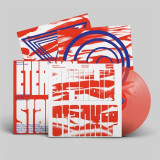
On their first official collaboration, Japanese noise pioneer Masami Akita aka Merzbow and Australian sound sculptor Lawrence English present a harrowing, surrealist portrait of nocturnal industrial activity, spawned by field recordings made in a sprawling factory complex seven hours north of English's home in Brisbane. He characterizes the area as "uneasy and unsettling," awash in the sickly glow of smelters and refinement machinery, somehow not of this world - a liminal quality vividly captured in Andrei Tarkovsky's sprawling purgatorial opus, Stalker, to which the title alludes. Akita, too, described early drafts of Eternal Stalker as feeling "like the soundtrack to a dystopian science fiction opera." A mood of mechanical dread and ruined futures permeates each of the album's seven potent compositions. Opener "The Long Dream" sets the stage with steady rain on sheet metal, punctured by thunder and metallic echoes, reverberating to the rafters in a collapsing warehouse. Quickly the tempest rises. "A Gate Of Light" and "Magnetic Traps" both convulse in churning furies of electric demolition and rattling chains, roaring and relentless. "The Visit" and "Black Thicket" operate more at a distance, surveying the topography of steam, rust, and liquid metal from above, their flickers of violence swallowed by blankets of darkness. This is noise at its most elemental and unknowable: brooding, bristling, and opaque, stalking forbidden peripheries of chaos and creation. Discussing Akita's music, English refers to its "intense substrata that is purely psychedelic; it consumes and confounds." The seasick swells of friction and fracture subsume the listener, forcing an auditory surrender: "this saturation of the senses can be a euphoria." Proof comes halfway through "The Golden Sphere," when the howling mayhem subtly recedes, revealing an eerie siren drone hovering in the void, like the resonance of a dead star galaxies away. Slowly a seething, venomous wall of volume returns, shredding the signal until its frequencies fray, whipping away into the eye of the storm. The combined effect merges obliteration and liberation, rapture and ravagement; it's the sound of dissolution as resolution, uprooted and unmoored, finally freed from form.
First Word Records continues its series of special collaborative releases for it's 15th anniversary with an absolutely firing double-header from 14KT and Tall Black Guy.
On this limited 7" vinyl, the two renowned US beat-makers revisit two of their previous First Word singles, turning out flips of each other's tracks, also featuring a multitude of talent, in the form of Moonchild, Muhsinah, Stro Elliot and James Poyser of The Roots.
Following on from the first volume in 14KT's jazz project 'IAMABEENIE', here he flips TBG and Moonchild's collab, 'I Will Never Know', originally from Tall Black Guy's 2017 sophomore album 'Let's Take A Trip'. The original neo-soul bump is transformed into a deliciously epic latin affair, drenched with deep Brazilian vibes throughout - this is one to draw for at those steamy get-downs; a slinky slab of dancefloor fire.
Tall Black Guy returns to First Word for the first time in a minute, and takes on the Muhsinah-lead joint 'The Power Of Same', the lead single from 14KT's 2019 acclaimed album, 'For My Sanity'.
As to be expected, TBG delivers his unmistakable blend of dope dubbed-out spacey soul and boom bap kicks & snares, complete with guitar licks from Stro Elliot, and keys from James Poyser. Two of the dopest producers in the game, this one is completely 1000% essential.
While Bauhaus have been waiting to continue their reunion shows, founding member David J has been trawling through his archive of tapes and diaries from the early 80s in coll;aboration with sound sculptor Tim Newman to present two volumes of unique spoken word and songs, including a vocal contribution from Black Francis of The Pixies and guitar overdubs by Warren Defever of His Name Is Alive and Adrian Utley of Portishead. Sleeve notes by Andrew Brroksbank of the Bauhaus Archive.
While Bauhaus have been waiting to continue their reunion shows, founding member David J has been trawling through his archive of tapes and diaries from the early 80s in coll;aboration with sound sculptor Tim Newman to present two volumes of unique spoken word and songs, including a vocal contribution from Black Francis of The Pixies and guitar overdubs by Warren Defever of His Name Is Alive and Adrian Utley of Portishead. Sleeve notes by Andrew Brroksbank of the Bauhaus Archive
- A1: Sudden Reverb - Sound Tlakotli (Deadbeat Remix)
- A2: Pitch Black - Transient Transmission (Adrian Sherwood's Delta B(0)=B Remix)
- A3: The Orb - Say Cheese (Gaudi's Dubble Mozzarella Mix)
- A4: David Harrow - In My Head (Inside My Head Mix)
- B1: Subset - The Astrogator (Sub Signals Mix)
- B2: 3Head - Afnaz (Dennis Bovell Dub Mix)
- B3: Groove Armada - Oh Tweak To Me (Gaudi Remix)
- B4: Shpongle - How The Jellyfish Jumped Up The Mountain (Cosmic Trigger Remix)
- C1: Aux25 - Passing Through
- C2: Simm Feat Phelimuncasi - Cracks
- C3: Alpha Steppa - Colour
- C4: Radikal Guru - Badman Skank
- C5: Paolo Baldini Dubfiles - Ethiolò Dub
- D1: African Head Charge - Disciplined And Dignified
- D2: Gaudi Feat Steel Pulse - Cry Dubber
- D3: 100Th Monkey - Fly Higher Dub
- D4: Dub Fx - Dub Everyday (Gaudi's Sub Signals Remix)
- D5: Phonolab Feat Bill Laswell - Where Do Comets Come From
Sub Signals Vol.2 is a deep dive into underground bass, guided by artist and producer Gaudi. Featuring predominantly unreleased originals and versions by some of the biggest names in the worldwide dub collective, it intricately combines analogue elements with digital grooves to stunning effect.
Much more than just a compilation, the Sub Signals series is a celebration of the evolution of the sound of dub, from its original roots in reggae to its fusion with a much wider spectrum of sounds and influences. Gaudi curated the first volume back in 2006 for the cult Canadian label Interchill, sourcing tracks and dubs from High Tone, Zion Train, Manasseh, Almamegretta, Noiseshaper, Creation Rebel, Greg Hunter, Dubadelic and more.
15 years on, Gaudi has created the second volume, blending contributions by established reggae names Steel Pulse, Dennis Bovell and African Head Charge with next generation dub producers Alpha Steppa, Radikal Guru and Paolo Baldini Dubfiles, headline acts Groove Armada, Dub FX and The Orb with underground artists Deadbeat, Pitch Black and SUBSET, to create a seamless 75 minute mix.
“With Volume 2, I wanted to create a deep vibrational experience by shaping an aural trajectory that encompassed the many aspects of dub and its related sub-frequencies. To achieve my goal, I reached out to the artists I regularly work with to ask for contributions, in some cases digging in their archives to find what I was looking for.”
As a solo artist, Gaudi has recorded over 20 albums, while as a producer he has hundreds of productions under his belt. He has worked with legends of the reggae and electronic music worlds including Lee "Scratch" Perry, Horace Andy, Dub Pistols, Hollie Cook, Youth, Mad Professor, Prince Fatty, Lamb, Trentemøller and Nusrat Fateh Ali Khan.
Dedicated to the sound of dub in its many forms, Gaudi’s latest excursion of his Sub Signals series is pure bass therapy, designed to excite your eardrums and worry your woofers.
- 1: The Clare Sisters Cool Cool Cool
- 2: Earl Hooker Apache War Dance
- 3: Chuck Daniels Tiny Tim
- 4: Otis Blackwell & His Band My Josephine
- 5: Lance Roberts Gonna Have Myself A Ball
- 6: Willie Wright Gibble, Gobble
- 7: Bob Calloway And The Chicks Native
- 8: Sonny Day Beyond The Shadow Of A Doubt
- 9: Howlin' Wolf Wang Dang Doodle
- 10: Toussaint Mccall Summertime
- 11: Titus Turner Coralee
- 12: The Voodoos Voodoo Walk
"Blues & Rhythm, Popcorn, Exotica & Tittyshakers" untertitelt, ist das der Reissue des 5. Volumens in der Exotic Blues & Rhythm Serie. Das Original erschien vor Jahren in einer limitierten Auflage von 500 Stück, war recht schnell vergriffen und ist heute ein begehrtes Sammlerstück. Auch der Reissue ist limitiert - es gibt 700 Stück - alle in durchsichtigem/ clear Vinyl.
This first-ever vinyl reissue, remastered from the original analog tapes, includes a gatefold jacket and inner sleeve with restored, new, and alternate art and photos by Terry and Jo Harvey Allen; an insert with lyrics, original notes, and Terry’s letter to H.C. Westermann about the songs; and a high-res download code. Deluxe CD edition features a trifold jacket and inner sleeve. Recorded exactly two years after acclaimed visual artist and songwriter Terry Allen’s masterpiece Lubbock (on everything), the feral follow-up Smokin the Dummy is less conceptually focused but more sonically and stylistically unified than its predecessor it’s also rougher and rowdier, wilder and more wired, and altogether more menacingly rock and roll. Following the 1973 Whitney Biennial, in which songwriter and visual artist Terry Allen and fellow iconic artist Horace Clifford “Cliff” Westermann both exhibited, Allen maintained a lively long-distance correspondence and exchange of artworks and music with Westermann, whose singular and highly influential art he admired enormously. In a February 1981 letter to his friend and mentor, written shortly after the late 1980 release of his third album Smokin the Dummy, while he and his family were living in Fresno, California, Terry explains the genesis of the album title: Westermann died shortly after receiving this letter, enclosed with a Smokin the Dummy LP, the minimalist black jacket of which Allen suggested that Cliff fold into a jaunty cardboard hat if he didn’t like the music. That response was unlikely, since Westermann loved Terry’s music, calling his debut record Juarez (1975) “the finest, most honest and heartfelt piece of music I ever heard.” The Panhandle Mystery Band had only recently coalesced during those 1978 Lubbock sessions, Lloyd Maines’s first foray into production. Through 1979, they honed their sound and tightened their arrangements with a series of periodic performances beyond Allen’s regular art-world circuit, including memorable record release concerts in Lubbock, Chicago, L.A., and Kansas City. Terry sought to harness the high-octane power of this now well-oiled collective engine to overdrive his songs into rawer and rockier off-road territory. His first album to share top billing with the Panhandle Mystery Band, Dummy documents a ferocious new band in fully telepathic, tornado-fueled flight, refining its caliber, increasing its range, and never looking down. Alongside the stalwart Maines brothers co-producer, guitarist, and all-rounder Lloyd, bassist Kenny, and drummer Donnie and mainstay Richard Bowden (who here contributes not only fiddle but also mandolin, cello, and “truck noise theory,” the big-rig doppler effect of Lloyd’s steel on “Roll Truck Roll”), new addition Jesse Taylor supplies blistering lead guitar, on loan from Joe Ely (who plays harmonica here). Jesse’s kinetic blues lines and penchant for extreme volume were instrumental in pushing these recordings into brisker tempos and tougher attitudes. Terry was feverish for several studio days, suffering from a bad flu and sweating through his clothes, which partially explains the literally febrile edge to his performances, rendered largely in a perma-growl. (By this point, he was regularly breaking piano pedals with his heavy-booted stomp.) Like the album title itself, the songs on Smokin the Dummy ring various demented bells. The tracks rifle through Terry’s assorted Obsessions especially the potential energy and escape of the open road, elevated here to an ecstatic, prayerful pitch and are populated by a cast of crooked characters: truckers, truck-stop waitresses, convicts, cokeheads, speed freaks, greasers, holy rollers, rodeo riders, dancehall cheaters, and sacrificial prairie dogs, sinners seeking some small reprieve, any fugitive moment of grace. A reigning deity of a certain kind of country music since the mid-70s. – The New York Times // The kind of singular American artist who expresses the fundamental weirdness of his country. – The Wire
- A1: Bob Marley - Sun Is Shining
- A2: John Holt & Dennis Brown - Wildfire
- A3: Johnny Clarke - Declaration Of Rights
- A4: Max Romeo - Material Man
- A5: Barrington Levy - Warm And Sunny Day
- A6: Freddie Mcgregor - Big Ship Sailing
- B1: Gregory Isaacs - Babylon Too Rough
- B2: Dennis Brown - Africa
- B3: Don Carlos - Rivers Of Babylon
- B4: Fred Locks - Vision Of Redemption
- B5: The Congos - La La Bam-Bam
- B6: Horace Andy -Ain't No Sunshine
- B7: Lee "Scratch" Perry & The Upsetters - Soul Fire
- C1: Alton Ellis - I'm Still In Love
- C2: Prince Lincoln Thompson - They Know Nat Jah
- C3: The Heptones - Take Me Darling
- C4: Beres Hammond - Rock Away
- C5: Marcia Griffiths - Come See About Me
- C6: Bob Marley - African Herbsman
- D1: Sly & Robbie - We Are Africa
- D2: Leroy Smart - Ballistic Affair
- D3: Errol Dunkley - Ok Fred
- D4: Bob Andy - Teachers
- D5: Black Uhuru – Sinsemilla
‘Hive Mind Records are here to help you through the winter months with this generous helping of Wet Tuna with their signature deeply fried rural psychedelia.
Matt Valentine (MV) and Pat Gubler (PG Six) have been jamming together since the mid '90s, floating around in the US psych-folk scene, playing together in Tower Recordings and separately with influential underground crews Woods, The Golden Road, Garcia Peoples and The Weeping Bong Band. Both MV and PG Six have been prolific with their solo work and over the years they've recorded for labels such as Ecstatic Peace, Drag City, Woodsist, 3 Lobed, and Crash Symbols and we are very happy to be joining such esteemed company.
On these recordings, made during the first months of the COVID lockdowns in the forests of the Vermont wilderness, MV and PG Six handle the guitars and synths but they're joined by fellow forest freaks S. Freyer Esq, Jim Bliss, Coot Moon and Carson 'Smokehound' Arnold on bass and drums. Brought to you in their patented mind-expanding SPECTRASOUND, Eau'd To A Fake Bookie Volumes 1 & 2 delivers an irresistible gumbo of deep, cosmic psychedelia, primitive drum-machine grooves and woozy country-funk jams. These 6 songs are cover versions of artists as diverse as The Blackbyrds, Michael Hurley and Jimmy Cliff, but stretched out over 4 sides, the album is entirely Wet Tuna - loose, free-flowing and lots of fun!’
Ten years into his role as poster boy for pop soul and peak-hour R&B, Syl Johnson did an unlikely about-face and cut the most inspiring and powerful song he'd ever touch. Issued on 45 in September of 1969, "Is It Because I'm Black" struck an immediate chord within the black community, forcing the song up the charts by sheer volume of call-in requests. It would be Syl's biggest hit for Twinight, climbing as high as #11 on the Billboard R&B chart during its 14-week stay, marking the defining moment of what had become more than just an occupation. Syl had his hands on a career and worked tirelessly rehearsing his next opus, an album of songs reflective of the changing times. With "Is It Because I'm Black" still bolding the pages of Billboard, the coming LP's title appeared to Syl plain as day _ or, in this case, black as night. Issued in April 1970 _ a full 13 months before Marvin Gaye's What's Going On _ Is It Because I'm Black can rightly be called the first black concept album, a distinction few give it credit for. But that factoid, whatever its meaning then or now, failed to inspire music buyers: Johnson's record never got a whiff of the two million copies Gaye's did in its first year of availability. Syl lays the blame squarely on the record's lack of marketability to a white audience. The album's cover didn't exactly move units either. Photographer Jerry Griffith dragged Syl to a burned-out building on 43rd Street to shoot the back cover image, and he finger-painted the iconic title over a stock photo of an eroding brick wall. The title track, coupled with the politically charged "I'm Talking About Freedom" and ghetto conscious "Concrete Reservation" sealed the album's cool reception as the work of an "angry black man." Which is unfortunate, as "Together Forever," "Come Together," and "Black Balloons" are positively uplifting, forming their own pot of gold at the end of a grayscale rainbow. The album's closer burns the brightest. "Right On" devolves into a full-on party track, ending with Syl riffing on the line "I'm gonna keep on doing my thing," as if to answer his critics before their needles reached the run-out groove.
- A1: Intro/Recap
- A2: Outro/Honest (Feat Marcella Arguela)
- A3: Living Happy (Feat Joseph Chilliums & Cavalier)
- A4: Sacred Safe (Feat Merrill Garbus, Cavalier & Homeboy Sandman)
- A5: Horizon
- A6: Moments (Feat Gondelman)
- A7: Bottle Black Power Buy The Business
- A8: Grease From The Elbows (Feat Pink Siifu & Billy Woods)
- A9: Black Twitter (Feat Moseel & Nelson Bandela)
- A10: Ritual (Feat Dr Tennille)
- A11: Sudden Death
- A12: Make It Better (Feat Starr Busby)
- A13: Graphic Bleed Outs (Feat Merrill Garbus & Melanie St Charles)
- A14: Mirage (Feat Earl Sweatshirt, Denmark Vessey, Merrill Garbus & Big Sen)
- A15: When You Fall (Feat Nappy Nina, Fresh Daily & 5Ill)
- A16: Fifoalsa/Credits
If now the time for voodoo amulets and protective talismans, sharpened swords and unbreakable shields, it’s also a moment for music to assume its highest form as a healing art, a source of benevolent spells, and a refuge from the chaos. After all, the best creators are always those that tap into the telluric current that exists below the surface. Those who delve into the collective unconscious so that timeliness is a happy accident; timelessness was always the intent. If Quelle Chris and Chris Keys’ Innocent Country 2 sounds like an antidote for a moment of surreal anxiety, the same could be said of it a decade from now. It’s an album best understand in a dialogue with the first volume of the series. Released in 2016, the initial Innocent Country focused on isolation, pessimism, and the notion of finding peace within pain. At a time when those feelings convey the mood of the moment, Quelle and Keys have responded with a soundtrack that offers soothing light in a bleak timeline. A hopeful record in a hopeless moment, precisely when it’s needed most.
- A1: Marie Knight - That's No Way To Treat A Girl
- A2: Jack Montgomery - Dearly Beloved
- A3: J. B. Troy - Live On
- A4: Porgy & The Monarchs - My Heart Cries For You
- A5: Freddie Chavez - They'll Never Know Why
- A6: Clarence Reid - I'm Your Yes Man
- A7: Lou Lawton - Knick Knack Patty Wack
- A8: The Gentlemen Four - You Can't Keep A Good Man Down
- A9: Betty Moorer - Speed Up
- B1: The Masqueraders - Do You Love Me Baby
- B2: The Ivories - Please Stay
- B3: Leslie Uggams - Love Is A Good Foundation
- B4: Lord Thunder - Thunder
- B5: Maxine Brown - Let Me Give You My Lovin'
- B6: Billy Thompson - Black-Eyed Girl
- B7: Chuck Jackson - Hand It Over
- B8: Stanley Mitchell - Get It Baby
- B9: The Platters - With This Ring
WELCOME to the third volume in our Wigan Casino mini-series exploring the diverse playlist of the world's No.1 Northern Soul venue. The 23rd September 2018 marks the 45th Anniversary of the super club and we have selected 18 tracks that we hope capture the unique atmosphere of the huge ballroom and the mesmerizing dance moves that held us spellbound all those years ago.
WIGAN CASINO finally closed its doors in December 1981 after eight long years of weekly All-Nighters, during which time it came to define Northern Soul. The term had, of course, been coined years earlier, but it was the Casino Soul Club that established the style of music and the scene to the wider public.
The Casino transformed the Northern Soul scene into a mass youth movement with its own sound track, uniform, cultural icons and a 100,000 strong membership. In reality, the stereotype of moustachioed young men in baggy trousers and vest tops, festooned with sew-on patches, was actually quite short lived. Northern Soul was ever evolving and as the Seventies progressed so did the music and the fashion, embracing soulful-disco and jazz-funk. Today, 45 years on, it is still evolving and attracts followers from all over the globe to its international Weekenders and Festivals. Right On!
A collection of instrumentals previously unavailable from Diggin' In The Crates producer, Buckwild. Buck has worked with the likes of Notorious B.I.G., Black Rob, Jay-Z, O.C., Big L, Fat Joe, Diddy, Big Pun and many, many more. Volume 2 of a 3 volume series.
Following the revival of the iconic 1990s dance album series, Club Culture in 2020, Stress presents Club Culture Vol. 2. Much like in volume 1, the label continue to pay homage to the UK’s rich and diverse club culture with a collection of the scene’s freshest tracks.
To celebrate the return of the series, a limited edition vinyl sampler will be available which features five of the album’s most cutting edge selections, including exclusives from Richie Blacker, and Danny Howard. Label favourites, Tommy Farrow, Ben Hemsley, and Because of Art are also included on the sampler. Each handpicked track captures the sonic essence of Stress and clubland today.
Stress brought the world many seminal house tracks in the 1990s including Bedrock’s ‘For You Dream Of’, Last Rhythm’s ‘Last Rhythm’, and Greed’s ‘Pump Up The Volume’. During the 1990’s, Stress was considered one of the world’s greatest independent record labels, where it became known for its growing influence on the progressive house scene. It gave birth to the early careers of iconic producers Sasha and John Digweed. Today it is carving out a whole new scene taking inspiration from the past but creating a whole new sound for the stable.
This is the sound of clubland and club culture.
- A1: Luli Lucina E O Bando - Flor Lilas (Kenny Dope Remix)
- B1: Jayme Marques - Berimbao
- C1: Di Melo - Pernalonga (Kenny Dope Remix)
- D1: Toni Tornado - Sou Negro
- E1: Milton Banana Trio - Primitivo
- F1: Milton Banana Trio - Cidade Vazia
- G1: Papete - Procissao Dos Mortos
- H1: Papete - Domingo No Parque
- I1: Antonio Carlos & Jocafi - Quem Vem La (Kenny Dope Remix)
- J1: Miguel De Deus - Black Soul Brothers (Kenny Dope Edit)
This special Record Store Day 5 x 45s collection comes packaged in a limited-edition Brazil 45 clamshell collector’s box.
The long-running relationship between Masters At Work and Mr Bongo has been a fruitful affair. Beginning in the 90s, it has included releases such as their seminal 'Brazilian Beat' 12" featuring Liliana, their magnificent rework of Atmosphere’s ‘Dancing In Outer Space’, and their recent hit Surprise Chef remixes 12". The influences of Brazilian music is evident in their DJ sets and productions, take the poly-rhythms of the 'Nervous Track’ as a prime example. We couldn't think of anyone more fitting to curate the third volume in our "Brazil 45 Boxset Curated by" series than one half of the MAW duo, the mighty Kenny Dope.
For his volume of the series, Kenny selected 10 knockout tracks from the golden era of Brazilian music. As you would expect from such a legend, he surpassed the brief of simply compiling the tracks, as he re-edited and remixed a number of his favourites especially for this boxset. Amongst these exclusives is a blazing, heavy psych-funk remix of Antonio Carlos & Jocafi's 'Quem Vem Lá’, and a hip-hop breakbeat bounce woven into Luli Lucinha E O Bando's folky-MPB beauty 'Flor Lilás’. Di Melo and Miguel De Deus are also given the Dopeman remix and edit treatment.
Kenny's selections pull out some forgotten classics and recently overlooked gems, many of which were once top of the want-lists for collectors in the 90s. These include Milton Banana Trio and the irresistible version of 'Berimbao' by Jayme Marques. Along with the Brazilian funk and jazzy-bossa dancefloor-oriented tracks, Kenny has also chosen the leftfield, deeper, trippy psychedelic folk sounds of Papete.
As with previous volumes, the selections are very personal and represent the individual sound and taste of the selector digging from the rich tapestry of Brazilian music. Its unique palate and stamp are exactly what you would expect from a Master At Work.
- A1: Orchestre Poly-Rythmo De Cotonou Dahomey - Minsato Le, Mi Dayihome
- A2: Super Eagles - Love's A Real Thing
- A3: Moussa Doumbia - Keleya
- B1: Manu Dibango - Ceddo End Title
- B2: Sorry Bamba - Porry
- B3: Orchestra Number One De Dakar - Guajira Ven
- C1: William Onyeabor - Better Change Your Mind
- C2: Ofo & The Black Company - Allah Wakbarr
- C3: Gasper Lawal - Awon-Oise-Oluwa
- D1: Bunzu Sounds - Zinabu
- D2: Tunji Oyelana & The Benders - Ifa
- D3: Orchestre Regional De Kayes - Sanjina
Back in 2005, the Luaka Bop and Stones Throw labels jointly issued World Psychedelic Classics 3: Love's A Real Thing - The Funky Fuzzy Sounds Of West Africa with the former releasing the CD edition and the latter a double LP version. As the elongated title suggests, the third edition of Luaka Bop's World Psychedelic Classic series swung the focus to West African music from the seventies and really opened people up to the psychedelic sounds of Manu Dibango, William Onyeabor, Gasper Lawal and a whole other host of artists from West Africa. Luaka Bop have evidently secured the rights for a vinyl reissue of the compilation, and anyone who indulged in their popular fifth volume focused on William Onyeabor will relish the opportunity to pick this up again.
Paul Wise aka Placid is the driving force behind ‘We’re Going Deep’ – a thriving online community and record label that’s showing no signs of slowing down as we start the new year. Born out of a lifelong affair with the many shades of electronic rhythm and an obsession for collecting records that first started in 1988.
As a label owner, his mission couldn’t be clearer: releasing new music for heads - old and new. Fresh cuts aimed squarely at the dance floor, your front room or even just the headphones! Rather than staying too hung up on the past, he’s very much focused on serving up the best in new Acid, Electro, Techno, Deep House along with the odd slice of Downtempo goodness.
Sticking to the trusted format of 4 different producers, all serving up high grade electronic explorations, WGD 006 launches with another stellar line up. Headed up by the foreboding sounds of Versalife with “Omikron” on A1, spacious atmospherics and half-step beat usher in a gnarled bassline that simply won’t let go. As delicately placed melodic touches light up an otherwise pitch black soundscape and open up the spaces in between, it’s a superb reminder of the Dutchman’s majestic talent. Accompanied with an outing from Belgium’s rising talent Mariska Neerman, snappy percussion and machine pulses greet you from the off on A2 “Twin”, evolving into a fully emotive and uplifting ride. Leading with layered synths, Neerman demonstrates her sparkling knowhow for drenching you in heart warming pads and strings that harmoniously sing.
Written under his Analogue-1 alias, head to B1 for the legendary sounds of James Zeiter shimmering through on “Counterpoint”. A subtle and stripped back 4/4 trip into the lighter side of acid inspired grooves that shuffles out into the unknown: tweaking all the way as the intensity build. Powerful stuff at the right moment, do not underestimate the alchemy at work here. Last but not least, newcomer Morthen Kiang leaves us on a punchy 909 driven martian inspired work out, that fully summons the vibe of our Red Planet friends. A perfect ending note packed full of machine oscillations and cosmic waves.
In the third of the series, we move to 1973 Detroit, we have been so excited bringing this through to pressing and it has been a long but exciting and rewarding road and we hope you enjoy listening to this this 45 taken directly from the Universal master tapes and brought to you 48 years after its initial release on promo only format. Now available under licence and blessings from Universal Music Group on the Black Top series from us.
Is it good – oh yes – but don’t take our word for it, crank the volume up and hit play.
The A side – Young Train is a fabulous funkedged dancer with a message for us all even today, driven by the constant wah wah guitar and bongos. flip it over for a feelgood crossover dancer that has already been getting radio airtime on some of the UKs best soul stations.
Young Train by the Originals. This incredibly rare 45 is a poignant reminder that 48 years later the struggle continues today for equality and harmony for all.
The title “Young Train” is a brilliant collaboration of using Colemans surname and a hark back to the freedom songs enshrined in the blues and soul history of Black America, think Freedom Riders, Southbound train, Midnight train to Georgia to name but a tiny number. It captured the imagination of Detroit leading to the inauguration of the First Black Mayor of Detroit in 1974. Coleman Young captured the hearts and minds of the people of Detroit, some of his actions and associates led to questions around his fitness for office, but the moment in time lives forever in this exclusively rare 45 now brought to you with the blessings of Universal Music Group via MD Records.
On a final note, it is in many ways incredibly sad that this anthemic song still holds a valid call to action in its message in 2021. So, turn the volume up and get on board the “Young Train” for democracy and equality.
Big thanks go out to Karl “Chalky” White for material used in the sleeve.
All aboard for the third release in the Blacktop series from the MD Collective.
- A1: Let Love In
- A2: Dizzy
- A3: Here Is Gone
- A4: Slide
- A5: Name (New Version)
- A6: Stay With You
- A7: Before It's Too Late
- B1: Broadway
- B2: Feel The Silence (Remix)
- B3: Better Days
- B4: Big Machine
- B5: Black Balloon
- B6: Sympathy
- B7: Iris
Originally released on CD in 2007, this is a long overdue first vinyl release of the Goo Goo Dolls compilation Greatest Hits Volume One: The Singles.
Spanning an incredibly productive and successful era for the band, this collection includes all their hit singles from 1995 to 2006, including Name, Slide, Black Balloon and Iris.
During this period, the band released the hugely popular albums A Boy Named Goo, Dizzy Up The Girl, Gutterflower and Let Love In that established them as a major player in alternative rock.
- A1: Barry White - Change
- A2: George Mccrae - I Get Lifted
- A3: Andre Maurice - You're The Cream Of The Crop
- A4: Sir Joe Quarterman & Free Soul - I’ve Got So Much Trouble In My Mind (Part 1 & 2)
- A5: Isaac Hayes - Theme From Shaft
- B1: James Brown - Funky Men
- B2: The Whispers - And The Beat Goes On
- B3: Syl Johnson - Ms Fine Brown Frame
- B4: Sweet Thunder - Everybody’s Singin’ Love Songs
- B5: Incredible Bongo Band - Apache
- C1: Manu Dibango - Soul Makossa
- C2: Curtis Mayfield - Toot An' Toot An' Toot
- C3: Al Jarreau - The Same Love That Made Me Laugh
- C4: Stretch - Why Did You Do It?
- C5: Black Ivory - I Keep Asking You Questions
- C6: Bobby Byrd - Back From The Dead
- D1: Cymande - Brothers On The Slide
- D2: Clarence Reid - If It Was Good Enough For Daddy
- D3: The Jimmy Castor Bunch - The Mystery Of Me
- D4: Uncle Louie - I Like Funky Music (Feat Walter Murphy)
- D5: Joe Bataan - Rap-O Clap-O
- D6: Imagination - Music & Lights