Cerca:blu mar ten

Generi
Tutto
Abul Mogard & Rafael Anton Irisarri - Where Light Pauses in the Silence of the Sun

In spring 2025, Abul Mogard and Rafael Anton Irisarri created the source material for their second album, Where Light Pauses in the Silence of the Sun, during a three-day residency at Morphine Raum in Berlin. Functioning as both recording studio and performance venue, the space has no stage, with the audience gathered around the performers. Working within an open framework, the duo reshaped the music each evening while recording the performances live to multitrack. Rotary speakers, modular synthesizers and bowed guitar formed the core of their sonic language, captured through a 1970s mixing console and microphones placed around the room.

Back in Mogard’s studio in Rome, the material was further crafted as motifs were stretched, fragments isolated, and tempos dissolved. Irisarri recorded additional guitar textures and treatments in New York, while passages recorded by Martina Bertoni and Andrea Burelli in Berlin reinforced the harmonic centres and brought breath, refinement and a new sensibility to their compositions. The process continued as Mogard’s layering and subtraction reassembled everyone’s parts into the final arrangement.

The album opens with “In the Eastern Wild,” building from a sparse outline into a monumental formation of low-frequency weight, its internal motion shaped by the rotating Leslie speaker. “Over the Domes” widens into a broader acoustic field, where sustained modular tones meet waves of softly plucked guitar. The music then turns inward with “A Blue Descent,” centred on Bertoni’s cello, whose growling timbre introduces a melancholic depth.

At the album’s centre, “In a Quiet Radiance” unfolds around a slow guitar ostinato, its luminous stillness opening into a more expansive and reflective state. Across its ten-minute span, Burelli’s violin lines and Bertoni’s lower cello phrases gradually surface, weaving through the harmonic field. Mogard brings Burelli’s processed voice to the fore, its emotive, operatic presence becoming one of the record’s pivotal moments. “Of Blessed Ages” suspends the sonic flow, shifting between parallel major and minor chords as lingering, slowly decaying melodies shape the music’s internal drift. The closing “Among Shadows” settles into a darker resonance as layered textures recede.

Mogard and Irisarri’s shared language balances restraint and maximalism. UK magazine Crack describes the music as “a tidal wave held in suspension,” while Dutch newspaper de Volkskrant writes, “What a colossal sound, and how this music strikes at the emotions.” Reflecting on the residency sessions, Irisarri recalls: “At moments I genuinely couldn’t tell if a sound was coming from me or from Abul. It stopped feeling like two people making decisions and began to feel like we were inside a system moving on its own."

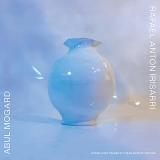
Marja de Sanctis’ cover artwork revisits the vessel sculpture from the duo’s first album, Impossibly Distant, Impossibly Close. There it appeared as raw, unfired clay. Here it has been fired in the kiln and finished with a glaze. Light gathers on its polished surface and spills into the surrounding space. As she explains, “I wanted to convey the idea of continuity within the duo, and the vessel became a kind of container for that idea. However, their music felt different this time, and with the collaboration of Martina and Andrea, I felt it should have a sleeker, softer, more glamorous look, very distant from the first raw appearance.” The transformation of the vessel from raw clay to fired form suggests a passage from immediacy toward permanence, mirroring the music’s gradual expansion.

pre-ordina ora26.06.2026

dovrebbe essere pubblicato su 26.06.2026
27,52
Abul Mogard & Rafael Anton Irisarri - Where Light Pauses in the Silence of the Sun

In spring 2025, Abul Mogard and Rafael Anton Irisarri created the source material for their second album, Where Light Pauses in the Silence of the Sun, during a three-day residency at Morphine Raum in Berlin. Functioning as both recording studio and performance venue, the space has no stage, with the audience gathered around the performers. Working within an open framework, the duo reshaped the music each evening while recording the performances live to multitrack. Rotary speakers, modular synthesizers and bowed guitar formed the core of their sonic language, captured through a 1970s mixing console and microphones placed around the room.

Back in Mogard’s studio in Rome, the material was further crafted as motifs were stretched, fragments isolated, and tempos dissolved. Irisarri recorded additional guitar textures and treatments in New York, while passages recorded by Martina Bertoni and Andrea Burelli in Berlin reinforced the harmonic centres and brought breath, refinement and a new sensibility to their compositions. The process continued as Mogard’s layering and subtraction reassembled everyone’s parts into the final arrangement.

The album opens with “In the Eastern Wild,” building from a sparse outline into a monumental formation of low-frequency weight, its internal motion shaped by the rotating Leslie speaker. “Over the Domes” widens into a broader acoustic field, where sustained modular tones meet waves of softly plucked guitar. The music then turns inward with “A Blue Descent,” centred on Bertoni’s cello, whose growling timbre introduces a melancholic depth.

At the album’s centre, “In a Quiet Radiance” unfolds around a slow guitar ostinato, its luminous stillness opening into a more expansive and reflective state. Across its ten-minute span, Burelli’s violin lines and Bertoni’s lower cello phrases gradually surface, weaving through the harmonic field. Mogard brings Burelli’s processed voice to the fore, its emotive, operatic presence becoming one of the record’s pivotal moments. “Of Blessed Ages” suspends the sonic flow, shifting between parallel major and minor chords as lingering, slowly decaying melodies shape the music’s internal drift. The closing “Among Shadows” settles into a darker resonance as layered textures recede.

Mogard and Irisarri’s shared language balances restraint and maximalism. UK magazine Crack describes the music as “a tidal wave held in suspension,” while Dutch newspaper de Volkskrant writes, “What a colossal sound, and how this music strikes at the emotions.” Reflecting on the residency sessions, Irisarri recalls: “At moments I genuinely couldn’t tell if a sound was coming from me or from Abul. It stopped feeling like two people making decisions and began to feel like we were inside a system moving on its own."

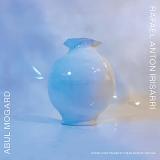
Marja de Sanctis’ cover artwork revisits the vessel sculpture from the duo’s first album, Impossibly Distant, Impossibly Close. There it appeared as raw, unfired clay. Here it has been fired in the kiln and finished with a glaze. Light gathers on its polished surface and spills into the surrounding space. As she explains, “I wanted to convey the idea of continuity within the duo, and the vessel became a kind of container for that idea. However, their music felt different this time, and with the collaboration of Martina and Andrea, I felt it should have a sleeker, softer, more glamorous look, very distant from the first raw appearance.” The transformation of the vessel from raw clay to fired form suggests a passage from immediacy toward permanence, mirroring the music’s gradual expansion.

pre-ordina ora26.06.2026

dovrebbe essere pubblicato su 26.06.2026
26,01
Regal86 - Doble Filo

Regal86

Doble Filo

12inchDNTB008
Discos Nutabe
29.05.2026

Despite the thousands of kilometers between them, Monterrey and Medellín have always seemed to move in parallel. Both cities rise around guardian hills that watch over their people, and if you look closer, even the concrete that forms the backbone of each city traces back to these rugged metropolises.

The list of coincidences could go on—small, almost conspiratorial links that chance has woven between the two places. Adding another chapter to this unlikely connection is Regal86, who had already crossed the bridge once before to dive into the depths of Colombia’s “city of eternal spring.”

Doble Filo, his first full-length cut to vinyl, now becomes his latest calling card. The eighth release on Discos Nutabe’s catalog arrives with six tracks—six sharp-edged pieces that lay bare Regal86’s sonic marginality.

It’s a form of exclusion that isn’t imposed but chosen, a deliberate stance to sidestep the demand for exotica that still shapes much of Latin America’s electronic landscape. This is spicy, rough-edged techno—ruleless and unruly—driven by dense, clipped progressions that plunge you into a vortex masquerading as a rayado ritual.

There’s no overload of concept here, nor any caricature of the extravagant. This album simply delivers music built to tear through any club or dive, without false promises or unnecessary labels. If there’s one thing worth highlighting about Doble Filo as a whole, it’s the way it consistently—and almost implicitly—reasserts its core premise from start to finish: these techno tracks are meant to be played wherever the hell you want.

In a moment when oddities tend to be rewarded more than usual, Doble Filo doubles down on fundamentals, reclaiming the spirit of early electronic music and carrying it into an era where immediacy seems intent on blurring the honesty of those who shape the sound.

For Regal86, sonic hustle is the only thing that keeps his spirit steady.

In Stock

Disponibile in Stock e pronto per la spedizione

15,55
SONGS:OHIA - DIDN'T IT RAIN
  • 1: Didn't It Rain
  • 2: Steve Albini's Blues
  • 3: Ring The Bell
  • 4: Cross The Road Molina
  • 5: Blue Factory Flame
  • 6: Two Blue Lights
  • 7: Blue Chicago Moon

Random Color ReVINYL Edition. Never has a Songs: Ohia album's process been so integral to its overall feel as is the case with DIDN'T IT RAIN, the band's sixth proper full-length. The album, like the working class South Philadelphia neighborhood in which it was birthed, has a real used goods kinda feel to it. Engineer Edan Cohen employed what some may consider "old-fashioned" recording techniques -- the entire album was recorded live with no overdubs, the full band playing in one room with the players always within arms' reach of one another; singers Jason Molina, Jennie Benford and Jim Krewson (the latter two of Jim & Jennie And The Pinetops) sharing microphones singing live together, sometimes sitting in chairs, sometimes standing. The result is a sound which resembles the warmth and personality of the classic Muscle Shoals Sound recordings of the early- to mid-70s: Willie Nelson's PHASES & STAGES, the Rolling Stones' "Wild Horses", and others by Aretha Franklin, Boz Scaggs, Bob Seger, Lynyrd Skynyrd and Wilson Pickett.Inspired by the Mahalia Jackson song of the same name, the title track is a beautiful song about the shifting tides of life and the old cycle of "a lot of shit going down before shit clears up". It's a damn fine place to start an album that seems in no hurry whatsoever to make a universal statement, instead perfectly content to walk its own path toward resolution. And damn if Songs: Ohia principal songwriter Jason Molina hasn't gone and created a record that is even more intensely personal and healing than any of his previous works. Neil Young had his AFTER THE GOLDRUSH, this is Molina's DIDN'T IT RAIN. Indeed, this is the album with which Molina really leaves his mark as a serious songwriter and artist. On 1999's genre-bending Ghost Tropic full-length, Songs: Ohia made it clear that it could make a cohesive album that took its listener on a journey from front to back. Its dislocated feel set a haunting tone, and its largely instrumental and drone-like quality was the process of the Ohia eluding itself and its own tendencies, searching for the underside of its roots freshly yanked. With DIDN'T IT RAIN, Molina & Co. return to the beauty of the song form and offer up a startlingly soulful and introspective song cycle in which Molina -- accepting a comfortable degree of anonymity amongst the other players -- meditates on what it means to feel rooted again (in the city of Chicago, where he's called home for the past three years), sounding more sturdy at his core than ever.

pre-ordina ora26.06.2026

dovrebbe essere pubblicato su 26.06.2026

22,27
Mental Note - Batteries Not included (Brain sold separately) EP

‘Batteries Not Included (Brain Sold Separately)’ EP Arrives Via No Static Automatic

No Static Automatic is proud to announce the new EP from UK Electro legend Phil Klein under his Mental Note alias. Titled “Batteries Not Included (Brain Sold Separately),” this release marks the dynamic follow-up to the acclaimed 2020 debut “Voices In My Head (Noises In My Pants).”

Few authentic Electro producers from the UK can wear the badge ‘legend’ with the same level of justification as Phil Klein, aka Bass Junkie. Active since the late 80s, Klein has tirelessly shaped his distinct vision of Electro, both as a solo artist and through storied collaborations with icons like Dynamix II, Keith Tenniswood (Radioactiveman), and Si Brown (Dexorcist). As a DJ, remixer, live act, and the driving force behind the seminal Battle Trax label, his influence is woven into the fabric of the genre.

With essential releases on labels including DMX Krew’s Breakin’ Records, Andrea Parker’s Touchin’ Bass, and Billy Nasty’s Elektrix, the Bass Junkie sound seamlessly bridges the old-school beats of Electro’s origins with a potent, borderline-industrial edge. As noted by Andy Barton of Bass Agenda: “From funky to ferocious, Bass Junkie’s discography is a must-have for anyone claiming passion for the genre – influential, individual, and infectious with every beat.”

Now, as Mental Note, Klein continues his exploration of electronic psychedelia. The new EP, “Batteries Not Included (Brain Sold Separately),” is a four-track expedition through the Electro cosmos:

“Brainwash” immerses the listener in swirling, hypnotic synths.
“They're Not Blue, They’re Purple” delivers a masterclass in crunchy, textured drums.
“Primordial Soup” showcases frantic, intricate programming.
“Kluster Funk” offers a moment of deep, sonic relief and groove.

Each track reinforces Mental Note’s signature: a journey that is cerebral, raw, and irresistibly rhythmic.


About Bass Junkie/Mental Note:
Phil Klein, operating primarily under the alias Bass Junkie, is a cornerstone of the UK Electro scene. For over three decades, his work has defined and evolved the sound, earning him a revered status among peers and purists. His Mental Note project is a focused outlet for a deeper, more experimental strand of his production genius, further solidifying his legacy as an electronic music innovator.

In Stock

Disponibile in Stock e pronto per la spedizione

20,22
Shinichi Atobe - Silent Way (2x12")

Following two 12-inch singles released via the self-run label Plastic & Sounds, which launched unexpectedly this past July, the culmination of their work to date—the album Silent Way, comprising ten tracks—will be released on 27th March as a coloured vinyl 2LP (gatefold sleeve/33RPM/limited press) and digitally.

Mastering and record cutting by Rashad Becker in Berlin. The artwork centres on photographer Yusuke Yamatani's work, with Satoshi Suzuki—who handles all P&S releases—constructing the overall aesthetic.
Last October, they appeared on Resident Advisor's popular series “RA Podcast”, with audio from their world premiere live performance in April 2023 released. They held the “Plastic & Sounds” label launch party at Shibuya. In January 2026, they performed a live set of their acclaimed album “Haet” at the venue's New Year's party.

This release comes amidst growing international acclaim, with their previous album ‘Discipline’ featured in Pitchfork's ‘The 30 Best Electronic Albums of 2025’, and one of their signature tracks, ‘Butterfly Effect’, selected for RA (Resident Advisor)'s ‘The Best Electronic Tracks of 2000-25’.

In Stock

Disponibile in Stock e pronto per la spedizione

43,28
I Marc 4 - Silver Music

The legends of the golden era of Italian soundtracks and library music go by many names, but the backbone of that era’s definitive sonic identity is most often identified as I Marc 4 (also known as Marc 4 or I Marc Quattro). While the moniker might be less familiar to the uninitiated, it is a simple acronym derived from its founding members: Maurizio Majorana (bass), Antonello Vannucchi (organ), Roberto Podio (drums and percussion), and Carlo Pes (guitar). The number "4" serves to highlight the core synergy of these four master musicians. Their journey began in Rome’s vibrant jazz scene of the 1950s and early 1960s, where they honed their craft as members of the RAI national orchestra and collaborated with the most prominent jazz and pop icons of the day. However, it was their pivotal role in defining the Italian cinematic sound of the 1960s and 1970s that secured their legacy. Their unmistakable style was an eclectic fusion of beat, jazz, classical, and Latin influences—textured with early synthesizers, experimental sound effects, and a blend of electronic and baroque instrumentation. Consequently, their initials are etched into the credits of countless landmark recordings by legendary composers such as Nino Rota, Armando Trovajoli, Gianni Ferrio, Alessandro Alessandroni, Piero Umiliani, and Ennio Morricone.

Beyond their work as session luminaries, they produced a vast body of library music under their own name at the legendary Telecinesound Studios in Rome. These recordings were released through prestigious library labels like Sermi, Ricordi, and Fonit Cetra, as well as through their own imprints: Nelson Records, Silver Men, and Silver Music, spanning a definitive series of sixteen albums. Ten of these volumes were issued on Nelson Records during the 1970s, featuring the now-iconic military stencil design. Each release was color-coded: red (G.L.P. 1001), dark blue (G.L.P. 1002), gold (G.L.P. 1003), light green (G.L.P. 1004), brown (G.L.P. 1005), black (G.L.P.1006), light blue (G.L.P. 1007), yellow (G.L.P. 1008), orange (G.L.P.1009), and cool green (G.L.P. 1010). The series was completed by two elusive companion releases: S.M. 2001 on Silver Music and S.M. 2002 on Silver Men, both presented in the same distinctive brown sleeve. Rediscovered in the 1990s and 2000s, these Nelson releases have since achieved cult status among collectors, producers, and DJs worldwide. The final two installments, S.M. 2001 and S.M. 2002, remain the rarest and most enigmatic of the set.

Often overlooked, they contain some of the most profound "hidden gems" in the group’s catalog. The tracklist traverses a wide stylistic spectrum: from the rare groove and proto-hip hop energy of "Trama Nella Metropoli", "Beat Morbido", and "Candy", to the lush cinematic atmospheres featuring the ethereal vocals of Edda Dell'Orso on "Summer In Love", "On The Rain", and "Arcobaleno". The collection is rounded out by sophisticated jazz pieces like "Flauti Ensemble", "Passeggiata", and "Atmosfere Dolci”. Sonor Music Editions has meticulously curated the finest moments from these two rare albums for this first-ever dedicated reissue. Bringing together the best of Silver Music (S.M. 2001) and Silver Men (S.M. 2002), this release retains the iconic stencil artwork but introduces a striking silver finish. This design choice honors the original ten-album sequence while shedding new light on these outstanding recordings—works that remain, in every sense, golden.

pre-ordina ora03.07.2026

dovrebbe essere pubblicato su 03.07.2026

26,85
Klint vs. Hemka - Versus 002

Klint vs. Hemka

Versus 002

12inchMRV002
Mutual Rytm
22.05.2026

Mutual Rytm welcomes new school tastemakers Klint and Hemka to sub-label Versus for imprint’s second drop. SHDW’s Mutual Rytm welcomes back two standout label alumnus for the second edition of Versus, a newly-launched conceptual sub-label focused around two artists whose sound works individually and in unity. Hemka made an impressive and well-received debut with her full solo EP back in 2025, while Klint appeared on ‘Federation of Rytm IV’. Both artists hail from France, and have crafted a well-earned reputation for their own distinctive approaches to sound design - pairing locked in grooves with cosmic synth escapes. Across the EP, each artist delivers three individual takes on techno to make for an essential collection of high-end cuts, exploring the label’s ethos of creative symbiosis between two artists on one shared release. Klint’s tracks lean towards minimal yet highly effective, dance floor-focused DJ tools, starting with the lithe, stripped back menace of ‘Prism’, before the sparse eeriness of ‘Dobermann’ keeps you looking over your shoulder while remaining trapped in the groove. Third cut ‘Romance’ is more bold and muscular, with contoured drums and icy pads ramping up the tension and energy. Hemka then dives deeper into a hypnotic and anthemic direction while introducing her own voice into the mix. ‘Leave It’ is textured, percussive deep techno with shadowy whispers, while ‘Breathe’ has a dark, grinning undercurrent and scintillating snares fluttering over the drums. ‘Mindness’ then pairs spoken word atmospherics with taught drum pressure and an ethereal backlit glow. In addition, Klint's digital only cuts ‘1112’ and ‘Blue’ marry minimal synths with meticulously defined drums that hit hard, while Hemka's ‘Push’ is an anxious percussive trip, contrasting with the introspective emotional core of ‘Live To Tell’.

In Stock

Disponibile in Stock e pronto per la spedizione

14,08
Heimat - Heimat LP

Heimat

Heimat LP

12inchTMR015_NOCOVER
Teenage Menopause Records
21.05.2026

Those albums that never age, that never cease to surprise with their innovative freshness—listen after listen—defying the years that go by.

Released in 2016, Heimat’s debut album is one of those records you love knowing is there on the shelf or on the turntable, like a reassuring talisman.

To mark its 10th anniversary, and such an awaited repress, we decided to honor this landmark album as it deserves: with a powerful remaster by Tioma Tchoulanov (UVB76, NzeNze) featuring enhanced dynamics, and an ultra-limited edition on blue splatter vinyl.

What a beautiful object this is, celebrating—alongside Armelle and Olivier Demeaux—ten years spent exploring the outer limits of music, in France and abroad, from SMAC venues to squats and other joyful initiatives.

Their deeply sincere music loses none of its naive tension; the emphasis is there, yet it remains restrained, contained, almost nervous, without any show of. Here, then, is something to make this fantastic album, a subtle milestone in a teeming musical landscape.

A fine achievement indeed!

In Stock

Disponibile in Stock e pronto per la spedizione

19,96
Heimat - Heimat LP
 
5
disponibile anche

Ohne Cover[19,96 €]


Those albums that never age, that never cease to surprise with their innovative freshness—listen after listen—defying the years that go by.

Released in 2016, Heimat’s debut album is one of those records you love knowing is there on the shelf or on the turntable, like a reassuring talisman.

To mark its 10th anniversary, and such an awaited repress, we decided to honor this landmark album as it deserves: with a powerful remaster by Tioma Tchoulanov (UVB76, NzeNze) featuring enhanced dynamics, and an ultra-limited edition on blue splatter vinyl.

What a beautiful object this is, celebrating—alongside Armelle and Olivier Demeaux—ten years spent exploring the outer limits of music, in France and abroad, from SMAC venues to squats and other joyful initiatives.

Their deeply sincere music loses none of its naive tension; the emphasis is there, yet it remains restrained, contained, almost nervous, without any show of. Here, then, is something to make this fantastic album, a subtle milestone in a teeming musical landscape.

A fine achievement indeed!

In Stock

Disponibile in Stock e pronto per la spedizione

21,22
Claudio Mate - 天 (Ten)

Claudio Mate announces the launch of his new solo imprint, Claudio Mate Records.

As the name suggests, the label serves as a personal platform where Claudio explores his past, present and future works, shaping his sound into a more spiritual and meditative direction.

The imprint will also feature collaborations with friends, artists and creative connections established over the years across the globe, while carrying his typical forward-thinking approach and a distinctive imprint sound trademark.

Over the past two decades, Claudio Mate’s music has received recognition and support within the electronic music scene, from main stage artists while remaining rooted in more underground circles.

Claudio Mate Records marks a new chapter in his artistic journey — a dedicated space where sound becomes introspective, evolving and deeply connected to emotion.

--------------------------------------------------------------------------------------------------------------
天 (Ten) CMR - 001
The Japanese kanji 天 (Ten) means “heaven”, “sky”, and the natural order of the universe — something vast, unseen, and beyond human control.

For the Japanese, 天 is more than a symbol: it embodies the connection between humans and the cosmos, the divine order that guides life, and the higher realms where sacred forces reside. In Japanese Buddhism, it refers to celestial realms and higher states of existence; in Shinto, it evokes the sacred heavens of the kami. But TEN is not about reaching heaven.

It's a deep, dub techno journey through shadow and space — obscure, hypnotic, and timeless. Sound that drifts between worlds, suspended in something greater than the sky itself.

The EP also features Atarashii Hi (“a new day”), a classic deep Detroit techno cut in true Claudio Mate style.

In Stock

Disponibile in Stock e pronto per la spedizione

14,24
Nia Archives - Emotional Junglist LP
  • 1: Feelingz Go Numb
  • 2: Around Tha Bend
  • 3: Danger
  • 4: Vertical
  • 5: This Could Be…
  • 6: Dance With Me 2Nite
  • 7: Get Me Down (Feat. Jorja Smith)
  • 8: Train Of Thought
  • 9: Superlust
  • 10: There Goes Ma Head
  • 11: Almost Always
  • 12: Tender (Feat. Sampha)
  • 13: Tha Darkest Hour
  • 14: Lovers Grief
  • 15: Boys In Blue

Nia Archives returns with Emotional Junglist, an album about love – but not just the shimmering romantic parts. Written throughout 2025 – a year that saw Nia fall in, and horrifically back out of, love – each track will encompass something of the experience.

Marking her biggest sonic leap to date, her alt-jungle sound honed alongside James Ford (Arctic Monkey’s, Blur), Ethan P. Flynn (FKA Twigs, David Byrne) and Julia Michaels (Lady Gaga, Sabrina Carpenter), will see her flirt with everything from dewy-eyed indie pop and nineties electronica, underscored by the syncopated beats and thudding basslines of her jungle roots with a tracklist that features Jorja Smith and Sampha.

The motif for the album is a shell – tough on the outside, but through pressure, maturation and resilience, something precious is built within. Nodding to the female form, the spiral chamber also symbolizes growth and self-development.

pre-ordina ora24.07.2026

dovrebbe essere pubblicato su 24.07.2026

23,49
Candi Staton - Back To My Roots (LP + 7")

Soul Music legend Candi Staton returns to her down-home Alabama roots on her 32nd album, Back to My Roots. The twelve-track Americana set features an array of Staton-penned originals and some well-chosen covers.

"These songs represent my roots," Staton adds as she reflects on her many trials and triumphs. "Even the new songs on some level represent something I've experienced and that's what real soul music is about." Back to My Roots was produced by Staton with her second eldest son, Marcus Williams, a professional drummer who has toured with the likes of Peabo Bryson, Isaac Hayes, and Tyler Perry. They brought in Mark Nevers of Lambchop fame, who produced three of Staton’s prior Americana albums for Honest Jon’s and Thirty Tigers, to sweeten certain tracks. “Some of the first songs I ever heard were songs like `Peace in the Valley’ and `It’s Gonna Rain,’” says Staton. “The new songs or cover songs are tracks that remind me of that era when I was growing up as a child and evolving as a young woman. That’s why I named the album Back to My Roots because I’m going back to the roots that made me who I am.”

Staton received the Americana Music Association UK’s highest honour, the International Lifetime Achievement Award, at the UK Americana Music Awards ceremony at Hackney Church in London last year for her southern soul work that stretches from her 1969 Muscle Shoals hits to her more recent collaborations with the likes of Americana kings Jason Isbell and John Paul White.
The album opens with a mid-tempo Bonnie Raitt-styled contemporary blues “I Missed the Target Again” that finds Harry Connick Jr.’s longtime guitarist Jonathan DuBose Jr. (aka the Prophesying Guitarist) showing off his skills that set the tone for the song and the album.

Staton’s older sister, Maggie Staton Peebles (who alongside Staton was a member of the Jewel Gospel Trio in the 1950s), joins her for two duets. The first, “It’s Gonna Rain,” features just a drum, steel guitar and vocals. “My mother used to sing that song to us all the time when I was a child,” Staton recalls. “It’s a really soulful kind of song I wanted to revisit.” They then take turns leading Thomas Dorsey 1939 gem “There Will Be Peace in the Valley” that Elvis Presley popularized in the 1950s.

“Hang on in There” is a new, mid-tempo song that has an old school gospel flavour and features vocals from veteran bluesman, Larry McCray.
While in Europe in 2023 for her farewell concert tour that took her to the Glastonbury Festival and Love Supreme, Staton and her British band, PUSH, went into a London studio to record a new version of The Rolling Stones’ 1972 gem, “Shine A Light.” “I love the way that came out,” Staton says. “We put a big choir on it and put our own twist on it.”
From there, Staton revives another Thomas Dorsey classic, “The Lord Will Make a Way Somehow,” with a bluesy vibe. When Al Green started recording gospel in the early 1980s, he re-introduced this song into the culture.

“God’s Gonna Use Me Anyway” is a new mid-tempo blues with subtle Caribbean influences.

The mood takes a turn on “1963.” It’s a poignant, spoken-word reflection on September 15, 1963, when four black girls were killed in the Birmingham Church bombing. “I was in the city that day and I remember the chaos and horror after the bombing,” Staton recalls. “Just thinking of how racism and hatred caused those men to kill those girls was so emotional for me that I could only do it in one take.”

It's a perfect segue into "Reach Down and Touch Heaven," a haunting, plea for divine intervention into the affairs of mankind. "That's straight Baptist," she says. "I used to be a church pianist back in the 1960s. I've never played piano on one of my records before so that's a unique song for me because I’m finally playing on one of my records. The message of that song is about the homeless. It came to me when a homeless person on the street asked me for $5. When God touches your heart to help somebody else that’s heaven to God’s hears. So, when we reach into our purse or wallet to help someone, we’re touching heaven."

Staton offers love as an antidote to hate on the bouncy, Motown-styled, “Love Breakthrough.”

Her publicist brought Aaron Frazer & the Flying Stars of Brooklyn NY’s 2017 cut “My God Has a Telephone” to Staton’s attention. She shifts the track from a retro 1960s groove to more of a 1980s Malaco Records arrangement, a subtle but distinct variation. Staton brought in her longtime friend and STAX Records legend, William Bell (“I Forgot to Be Your Lover” and “Trying to Love Two”), to add raspy seasoning to the track.

The album closes with the wistful, “In God’s Hands We Rest Untroubled,” that was originally written and recorded by the late country star, Lari White, who died in 2017 at the age of 52. “Lari sent me that song to consider at least ten years ago and I always loved it,” Staton says. “The record label didn’t want it on the album or something, so I just held it.”
Staton says, “I grew up hearing a lot of these old songs when they were new songs. I toured with the Jewel Gospel Trio in the 1950s and we got to know people like Mahalia Jackson, Sam Cooke and others who sang these types of songs. So, I’m sort of paying tribute to them and the influence they had on me by refreshing these songs and making new songs in the old style.”’

pre-ordina ora31.07.2026

dovrebbe essere pubblicato su 31.07.2026

29,20
Nu Genea - People of the Moon
  • A1: Acelera (Ft. María José Llergo)
  • A2: Onenon (Ft. Tom Misch)
  • A3: Puleza (Ft. Fabiana Martone)
  • A4: Celavi (Ft. María José Llergo)
  • A5: Carè
  • B1: People Of The Moon
  • B2: Ma Tu Che Bbuò
  • B3: Sciallà
  • B4: Shway Shway (Ft. Celinatique)
  • B5: Ondas Do Mar (Ft. Gabriel Prado)

After the acclaimed Bar Mediterraneo, Massimo Di Lena and Lucio Aquilina return with a new album that broadens the scope of their sound even further, sailing beyond the Pillars of Hercules into a constellation of gravity-defying creative freedom.

People Of The Moon is not an imagined cosmic species, but a dimension within us all. Deeply personal yet universally shared. An alternative way of thinking that lays dormant until we find the courage to untether it, helping us experience life more fully. It is that precious sphere of the soul that slips away from everyday life. A form of self-expression free from the social pressures that weigh on each, at every latitude on the planet.

Under the moonlight, these songs trace anxieties and aspirations, guided by the international language of groove and rhythmic motion, articulated in Neapolitan, Arabic, English, Spanish, and Portuguese. It speaks with equal clarity through the Afro-Cuban influences of Celavì (“That’s Life”), with its circular rhythmic energy, and through the Anatolian zurna of Ma Tu Che Bbuò (“What Do You Want?” in Neapolitan), moving from highlife guitars to the mandolins that have become a Nu Genea signature. New idioms and rhythms, filtered through an Italian perspective.

The first single Sciallà (“Go Away” in Neapolitan), released in the summer of 2025, already hinted at what was taking shape in the Nu Genea workshop - a radiant guide to embracing difficulty and finding relief in dance. Not so much an escape, but a form of catharsis. Looking up at the giant mirror ball orbiting above us, we catch a glimpse of our best selves reflected back, and appreciate that the People Of The Moon invoked in the title track are more familiar than we first realised.

There’s a kind of resilience in these voices that isn’t loud or triumphant, but persistent and rooted in the simple act of continuing. The imagery of high-speed motion is central to Onenon (“On and On”), where British singer and multi-instrumentalist Tom Misch helps conjure a Mediterranean brit-funk reminiscent of Pino D’Angiò’s basslines.

The voice in Acelera (“Speed Up” in Spanish) summons the strength to chase the moon as if it were an unattainable ideal, in this Andalusian-tinged track featuring María José Llergo, who also lends her voice to Celavì. Both tracks are among the more languorous arrangements, with flamenco palmas introducing an original fusion into the Nu Genea groove.
With its driving momentum, Puleza (“Clean Up” in Neapolitan) recalls the spirit of Nuova Napoli, albeit with vintage synth textures and wild, unrestrained delays. The track’s protagonist, performed by Fabiana Martone, is another of our lunar dwellers.

Yet even when it leans into forward motion, People Of The Moon doesn’t pulse at a frantic pace, moving instead through shifting states of speed, orbit, and suspension. In fact, the Levantine bossa nova Shway Shway (“Slowly, Slowly” in Arabic), sung by Celinatique, captures the orbital motion of the entire record. Not exactly slow, but measured. Rich in color, and marked by a rhythmic complexity that was also heard on the duo’s rare access to foundational afrobeat on The Tony Allen Experiments.
All the while, the album remains deeply attuned to melody - a Nu Genea hallmark - as heard in the effervescent hook of Carè (“Falling” in Neapolitan). In the lunar microgravity of these ten tracks, falling and flying become interchangeable with dancing as ways of following the beat, suspended yet compelled to move. That compulsion is also invoked by Brazilian percussionist Gabriel Prado, making his vocal debut on Ondas Do Mar (“Waves Of The Sea” in Portuguese). The pull of the waves, a constant interplay of motion and return, steady as a lunar phase, is impossible to resist. One might as well lean into the blue, not to dissolve but to rebuild. “Você vai ver que dentro de nós / vai rolar”: you’ll see that something will happen within us.

pre-ordina ora31.07.2026

dovrebbe essere pubblicato su 31.07.2026

30,21
EITAN REITER - 20 (PART 1)

LS002 marks the first vinyl chapter of 20, Eitan Reiter's two-decade retrospective, distilled through key collaborations and remixes. Featuring Patrice Bäumel, Infected Mushroom, Shpongle, Red Axes, and Echo, this six-track release connects psychedelic heritage with contemporary indie dance and deep electronic aesthetics.
20 (Part 1) is a 12-inch vinyl edition featuring exclusive vinyl cuts, available only on this pressing. The selection reflects Reiter's ability to honor his roots while maintaining a distinctly modern sound,blending psychedelic foundations with cluboriented precision.

A1 - Eitan Reiter - Blue Planet (Remix) Vinyl Cut
The A-side opens with a spacious, atmospheric rework of Blue Planet, balancing restrained tension with melodic clarity.
A2 - Eitan Reiter - X-Vision feat. Echo Vinyl Cut
Echo's vocal performance anchors the track, presented here in a refined vinyl cut that enhances its emotional depth.
A3 - Eitan Reiter & A. Balter - E0E (Eitan Reiter Remix) Vinyl Cut
A driving, hypnotic groove where rhythmic focus meets evolving textures.
A4 - Infected Mushroom & Yahel - Electro Panic (Eitan Reiter Remix) [Vinyl Cut]
A confident reworking of a psytrance classic, reshaped into an 80s-leaning indie dance format.
B1 - Eitan Reiter - Eat You (Patrice Bäumel Remix)
Patrice Bäumel heightens the track's underlying tension with a slow-building, immersive reinterpretation.
B2 - Out of Orbit & Shpongle - No Disco (Red Axes Remix)
Red Axes flip the original into a dark disco framework, adding weight, swing, and late-night character.

LS002 presents a vinyl-focused snapshot of Eitan Reiter's collaborative output, with each track adapted for turntable playback.

In Stock

Disponibile in Stock e pronto per la spedizione

13,66
Passarani - Analog Fingerprints Vol. 0 (2x12")

Analog Fingerprints Vol. 0 is a compilation bringing together the early 2000s works of Marco Passarani under his Analog Fingerprints alias, collecting key tracks originally released on Rome’s Plasmek and Pigna labels.

For Numbers, the story starts long before the label itself. In their formative years, digging in Glasgow’s Rubadub, Passarani’s records felt like dispatches from a future city. Releases on his own Nature Records and on labels such as Generator and Interr-Ference Communications were mind blowing: rooted in Detroit techno, Chicago house and electro, yet pushing somewhere new. Much like fellow travellers Autechre, who would remix him in 2001, Passarani’s music balanced machine funk with restless experimentation.

Information was scarce, and you would hear these records first on the dancefloor or at listening stations in shops like Rubadub. Print fanzines like Ear and early web outposts such as Forcefield offered only fragments. But there was a palpable axis forming between Detroit techno and a new European wave of record labels including Skam, Rephlex, Clone, Viewlexx and Nature itself. It was the sound that defined Saturday nights at Rubadub’s ‘69’ parties in Paisley, just outside of Glasgow.

Passarani’s records, in particular, were instrumental in bringing together the future Numbers co-founders. Richard had already booked him pre-Numbers; meanwhile Calum (Spencer) and Jack (Jackmaster), then 16/17 year olds working alternate Saturdays in Rubadub, were so enamoured with the Roman sound that they travelled to Rome for the Bitz Festival in 2003 to seek out Passarani and Lory D at their source.

The first Analog Fingerprints release landed as a 12” on Plasmek in 2001, following the fractured, IDM-leaning 6 Katun material. For Passarani, the project marked a recalibration. A DJ first and foremost, he had moved into production via early computer setups, from a Commodore Amiga through primitive PC audio, Cubase and Logic, later experimenting with Ableton. The IDM scene had offered a playground for trial and error, but there was always a tension between abstraction and the dancefloor. Analog Fingerprints became the bridge: still intelligent, but with more dance than distance. After years of broken beats and complex arrangements, he wanted directness without surrendering identity.

Working closely with Francesco de Bellis and Mario Pierro in the Pigneto district, the trio formed Pigna as a vehicle for reclaiming a more accessible dance sound, deliberately steering away from the minimal wave beginning to dominate Europe. Sessions were fast, instinctive, often stretching late into the night with friends dropping by. It was a studio as social space, production as collective energy.

“In that constant search for balance, Analog Fingerprints was my way of expressing something closer to the classic dance floor. The track 'Tribute' - a tribute to my favourite early Detroit techno track of all time, 'First Bass' by Separate Minds - came after I realised I had almost lost my connection with the dance floor. The simplest step was to take inspiration from early Chicago and Detroit and twist it in our Roman ‘Pigna’ way. My goal was to create more accessible dancefloor tracks by mixing my unconscious Italo roots with my teenage love for that early US sound, ensuring the result was as far as possible from the minimal sound that was starting to dominate everywhere.” - Marco Passarani

Technically, the Analog Fingerprints tracks span a transitional era: Roland TR-909, SH-101 and Alpha Juno hardware met early software experiments. A Novation Drumstation rack stood in for the unattainable TR-808, syncing with TB-303 and TR-606. Yet the true secret weapon was Jeskola Buzz, a tracker-style modular environment that allowed step-by-step parameter control and strange melodic constructions, later exported into the audio sequencer. Even the lead on ‘Tribute’ came from an early PPG Wave-style plugin. It was hybrid thinking at a moment when digital tools still felt unstable but full of possibility for technologists like Passarani.

Behind the music sat Finalfrontier, a loose Roman collective orbiting Nature and Plasmek. Distribution and production were intertwined; importing obscure records into Italy built connections with like-minded outsiders across Europe and the US. Expensive phone bills and fax machines forged an “electronix network” that linked Rome to Clone, Viewlexx, Skam, Rephlex, Rubadub and Detroit’s Underground Resistance. There was a shared sense of survival and resistance, of operating against commercial systems.

Passarani recalls “The first time I found a sheet of paper inside an Underground Resistance 12” with info about upcoming releases... and a huge picture of Spock on the back. Imagine that: you love the music, you love Star Trek, and there’s someone on the other side of the ocean sharing those same values and sounds. It was the perfect match. We even gave our original company the suffix ‘Finalfrontier’: that says it all.”

Feedback in that era arrived physically: distributor faxes, conversations with visiting DJs, the experience of playing abroad and meeting kids who had connected with the records. Glasgow became a key node in a scattered outlier network. Passarani personally brought the first two Nature releases to Fat Cat in London, playing them in-store. Shortly after, a fax arrived from Rubadub in Glasgow requesting copies.

“I still remember that phone buzz and the fax paper slowly sliding out, with someone I didn’t know saying they wanted 75 copies of Nature 001. Or like the time we got a fax from the Rephlex crew just saying, “Hello Nature Records, Keep up the good work.” That was how we knew the message was getting through. It was a fantastic feeling; just one piece of thermal fax paper as an analog notification - the mood for the entire week would change.” - Passarani

The connection to Glasgow has since stretched across generations. As Passarani reflects, links often fracture as scenes renew themselves, but in Glasgow something different happened. New and old mixed seamlessly. There was a visible trust in what came before, and a willingness to carry it forward rather than discard it. Observed from Rome, it was deeply encouraging.

Analog Fingerprints Vol. 0 captures that moment of exchange: Rome to Glasgow, Detroit to Europe, experiment to dancefloor. It documents an artist recalibrating his sound and a network of scenes discovering one another in real time, connected by vinyl, faxes and shared intent.

In Stock

Disponibile in Stock e pronto per la spedizione

24,16
Bézier - Decompose

Bézier

Decompose

12inchDE-353
Dark Entries
23.02.2026

Bézier ripples their way back to Dark Entries with Decompose, an LP of doomed spa music. Multi-instrumentalist Robert Yang has made numerous appearances on Dark Entries for more than a decade, with releases spanning the stylistic gamut from hi-NRG disco floor-fillers to lush ambient epics. Decompose, Bézier’s second LP, is perhaps his most introspective work yet. It is an album almost ten years in the making, a deep investigation of life, loss, and the struggle of knowing oneself. If one were to pull a tarot deck for this album it would be the Nine of Swords. The album honors the lives of the fallen victims of Pulse Nightclub. It honors lives lost or suffering through the ongoing genocide in Gaza. The title track takes the form of a Buddhist chant, a brooding synth-driven meditation that scales steadily until breaking into John Carpenter-esque arpeggios halfway through. Tracks like “Egg,” “Marionette,” and “A Fading Citadel Atop Black Sand Bluffs” build on this soundworld, one in which intricate melodies and cavernous reverb induce in the listener feelings of both claustrophobia and free-fall. The album’s dancefloor-leaning moments, like “Codebreaking” and “Split a Path Towards the Thicket” are spartan, tunnel-vision techno tracks speeding towards ego-death. Decompose chronicles Yang’s journey to find peace with himself, as a gay Asian American. During this process, they learned to “repot” long-lost parts of their identity so they could grow forth in wholesome fashion. The sleeve for Decompose was designed by Eloise Shir-Juen Leigh, and features a photograph by Frankie Casillo of Robert laying on a bed of rocks in savasana pose, resembling an ascetic, evocative of the monastic vibes of the record.

In Stock

Disponibile in Stock e pronto per la spedizione

20,13
CIRO VITIELLO - NOTES FROM THE AIR

CIRO VITIELLO

NOTES FROM THE AIR

12inchSTRLP-120
Stroom
20.02.2026

"Recorded in Naples historic recording studio Auditorium Novecento ‘notes from the air’ is the second Ciro Vitiello full-lenght album, that turns around the ambiguous figure of the seagull, a coastal apparition both ridiculous and divine, foolish and sacred, graceful in flight yet uneasy on land, something that knows more than it shows, carrying both wonder and threat in its gaze.

The album breathes through that tension, the desire to fly and the fear of falling, the suspicion of having already crashed somewhere unseen.
Wind, creaking ropes, invisible currents: these become signals from another uncoding state, reminders that air can be both home and haunting. The record lingers in suspension. Each track feels like a fragment carried by wind, a message blurred, a memory misplaced, something approaching meaning but never arriving.

The record drifts between orchestral gestures and dream-pop/post-rock shadows, guided by Ciro Vitiello’s fascination with shoegaze textures and cinematic atmospheres, and features contributions by Heith, Renato Grieco, Stefano Costanzo, Caraluce and Daniel Kinzelman. Vocal features include Martyna Basta, Heith and Antonina Nowacka, alongside Ciro’s own voice."

In Stock

Disponibile in Stock e pronto per la spedizione

23,11
KAITLYN AURELIA SMITH - 'RUIN : IT”S NOT JUST MUSIC LP

Across the past decade, KAS has established herself as a unique voice in experimental electronic music, a composer and synthesist whose work dissolves the boundaries between ambient electronica, contemporary classical, composition, and immersive sound design. Her new album “Ruin: It’s Not Just Music” arrives with a distinctive gravitational pull. The record moves with greater physical force, placing rhythm and impact at the centre of its architecture, revealing a more confrontational and embodied dimension of KAS’s musical language.
The first single “Ruin” arrives May 22nd, with the full album released October 2nd via SOMEONE SPECIAL the new label co-founded by KAS.
Where much of KAS’s earlier work explored harmonic environments, the forthcoming album is built around tension and release. Inspired by the sound of drum and bass, breakbeats fracture through dense fields of synthesis, percussive patterns and her signature melodic fragments – motions that feel closer to the kinetic language of club music than the meditative spaces often associated with her past catalogue. The result is a body of work that feels both recognisably hers and newly charged, music that moves through the body as insistently as it engages the mind.
For listeners who first encountered KAS through the glowing synthesis of “Ears” (2016) or the intricate experimental pop of “The Kid” (2017), this direction may feel initially surprising, yet the shift has been quietly unfolding across the past several years. KAS’s practice has steadily expanded beyond the expectations placed upon experimental electronic artists, moving between orchestral composition, audiovisual installations, film scoring, and large-scale commissions while retaining the unmistakable sonic signature that defines her work.
The 2022 albums “I Could Be Your Dog / I Could Be Your Moon” (2022) and “Let’s Turn It Into Sound” (2022) explored a deeply immersive approach to composition, expanded her reputation and instinct for constructing detailed sonic ecosystems while continuing to blur the lines between experimental electronics and contemporary pop structures. KAS’s most recent output has continued to widen that field including the rhythm oriented electronic album “Gush” (2025) and her return to more orchestral roots with “Thoughts on the Future” (2025). Together these releases underscored the breadth of her practice.
Her prolific collaborators and creative partners have ranged from Patti Smith and Suzanne Ciani to Danny Elfman, Tycho, Glass Beams, RY X, Caribou, Four Tet, Reggie Watts, and Max Richter, while her compositions have appeared in projects with Apple, Chanel, Meow Wolf, the BBC Orchestra, and major film and television productions.
On “Ruin: It’s Not Just Music”, that vocabulary becomes more kinetic than ever before. The record draws energy from jungle, drum and bass, and dance-floor focused electronic music while retaining the intricate synthesis and tonal curiosity that have defined KAS’s work from the beginning. The result is a record that feels equally at home within club culture, contemporary composition, and the experimental spaces that have long championed her artistry.
On May 27th KAS will present a major performance at London’s Barbican Centre alongside the London Contemporary Orchestra, marking the ten-year anniversary of her landmark album Ears. The evening will trace the arc of her creative evolution while also introducing material from the new album.

pre-ordina ora02.10.2026

dovrebbe essere pubblicato su 02.10.2026

21,64
Articoli per pagina:
N/ABPM
Vinyl