The seeds of composer Rafael Anton Irisarri’s latest LP were first planted during his 2016 tour in Italy, months before that Autumn’s unexpected presidential election. The linguistic glitch of an innocuous diner in Milan named “il Mito Americano” – meant as “The American Dream” but translated literally to English as “The American Myth” – sparked a series of ideas, both conceptual and musical.
Amid the chaos of 2020, while exploring the stark world of brutalist architecture and inspired by the false fronts of Potemkin villages, a vision started to take shape: FAÇADISMS. Composed over three years, it’s a late capitalist lament of simmering electric despondency.
Irisarri’s obsession with repeating motifs mirrors the cyclical nature of our tumultuous political history. The album’s eight tracks heave and storm like a tempest being drained of its rage. This is the sound of majestic dissipation, of morning afters, fashioned from a mournful haze with cavernous guitars and granular twilight. A euphony of a receding tide as one sifts through the remnants of what remains: dust, delusion, and memory.
Opening with the somber gauze of “Broken Intensification," FAÇADISMS moves fluidly between moments of absence and abandon. Ashen swaths of electronics billow above smoldering embers of melody, guitar, and scattered streaks of processed strings and voice, as on the rapturous doom of “Control Your Soul's Desire for Freedom,” featuring Julia Kent on cello and Hannah Elizabeth Cox on vocals. "The impoverished peoples of the Americas have known all along that 'freedom' is a cruel illusion crafted by the elites, akin to Potemkin's fake villages designed to impress Catherine the Great," Irisarri indicates. "FAÇADISMS illustrates a twisted inversion where the rulers deceive their subjects with illusions of safety, democracy, and free speech to create a grotesque mirage of control over their own lives.”
Elsewhere, Irisarri leans into passages of hushed oblivion (“Hollow,” “Dispersion of Belief”), while ragged drones rumble and disintegrate into wind-battered ambient wreckage. One has the sense that it’s all too late. The hour of fury has passed. The beauty has come and gone. Irisarri’s muse has become the crack in the façade of the unraveling myth.
The record closes with a climax of grand departure. Co-written with Kenyan sound artist KMRU, “Red Moon Tide” surges from flickering elegy to celestial disquiet, roiling waves of hymnal descent, and bristling noise. The effect is unsettling and unmooring: a soundtrack for the soul leaving the body, only to discover a void. It’s the sound of the center not holding, of shared illusions being dissolved in a tunnel of white light.
The cover photograph captures a profound sense of desolation. Taken in the historic shanty town of La Perla, Puerto Rico, where Irisarri spent his childhood, brutal colonial mysteries are lost to time. A skeletal concrete structure decays against an expansive blue horizon. Only the shadow of its shell ripples on the empty sea.
Has the American myth finally run its course?
Buscar:blue cell
- Untitled
- Really Insane
- Wondinwil
- Chokechain
- K-Sensa-My
- High School
- Afraid Of Babies
- Brand New Love (Strumental)
- Strange Love
- The Free Man
- Organ
- Run To You (Bryan Adams)
- Losercore
- Cello
- Not Nice To Be Nice
- Heartness Crane
- No Matter What
- Untitled Strumental
- Bells
- Spoiled (Live)
- End
Lou Barlow personified home recording’s rise in the late ’80s and was arguably one of the few key players that changed the trajectory of songwriting as the ’90s charted its cultural course. For the 30th anniversary of his Really Insane 7-inch and Winning Losers EP, Emil Amos and Steve Shelley have compiled an overview of Barlow’s best solo work under the name Sentridoh. Based around an even mix of legendary tracks and extra deep cuts, this compilation focuses on Barlow’s arrangement innovations, signature textural explorations, and radical ability to turn psychological upheaval into classic songs.
- A1: Wham! - Young Guns (Go For It!)
- A2: Adam Ant - Goody Two Shoes
- A3: Abc - The Look Of Love - Pt. 1
- A4: Spandau Ballet - Instinction
- A5: Haircut 100 - Love Plus One
- A6: Culture Club - Do You Really Want To Hurt Me
- A7: Duran Duran - Save A Prayer
- B1: Paul Mccartney - Ebony And Ivory
- B2: Elton John - Blue Eyes
- B3: Lionel Richie - Truly
- B4: Marvin Gaye - Sexual Healing
- B5: Bucks Fizz - My Camera Never Lies
- B6: Blondie - Island Of Lost Souls
- B7: Madness - Our House
- B8: Dexys Midnight Runners - Come On Eileen
- C1: Tears For Fears - Mad World
- C2: The Human League - Mirror Man
- C3: Visage - The Damned Don't Cry
- C4: Simple Minds - Promised You A Miracle
- C5: Ultravox - Reap The Wild Wind
- C6: Orchestral Manoeuvres In The Dark - Maid Of Orleans (The Waltz Joan Of Arc)
- C7: Soft Cell - Say Hello, Wave Goodbye
- D1: Survivor - Eye Of The Tiger
- D2: Meat Loaf With Cher - Dead Ringer For Love
- D7: Roxy Music - Avalon
- E1: Abba - The Day Before You Came
- E2: Donna Summer - State Of Independence
- E3: Shalamar - A Night To Remember
- E4: Irene Cara - Fame
- E5: Boys Town Gang - Can’t Take My Eyes Off You
- E6: Rockers Revenge Feat. Donnie Calvin - Walking On Sunshine
- E7: Malcolm Mclaren, The World's Famous Supreme Team - Buffalo Gals
- F1: The Jam - Town Called Malice
- F2: The Clash - Rock The Casbah
- F3: Bow Wow Wow - Go Wild In The Country
- F4: New Order - Temptation
- F5: The Associates - Party Fears Two
- F6: The Stranglers - Golden Brown
- F7: Japan - Ghosts
- F8: Clannad - Theme From Harry's Game
- D3: Pretenders - Back On The Chain Gang
- D4: Steve Miller Band - Abracadabra
- D5: Christopher Cross - Arthur's Theme (Best That You Can Do)
- D6: Foreigner - Waiting For A Girl Like You
NOW Music is proud to present the newest addition to the ‘Yearbook’ series: NOW – YEARBOOK 1982. 3 LPs of 44 defining tracks that ruled the charts in 1982.
Featuring number 1s, including ‘Eye Of The Tiger’ (Survivor), ‘Ebony And Ivory’ (Paul McCartney), ‘Town Called Malice’ (The Jam), and 1982’s biggest seller ‘Come On Eileen’ from Dexys Midnight Runners.
1982 saw the first huge hits from a wealth of new artists including Culture Club, Wham! and Tears For Fears, as well as an incredible line-up from artists who had established their chart presence in the prior 18 months and would produce some of the greatest tracks of the decade; Duran Duran, Spandau Ballet, ABC, Haircut 100, Soft Cell, The Human League, and a newly solo Adam Ant.
‘Fame’ was the TV phenomenon of the year, and Irene Cara’s theme from the original 1980 film enjoyed massive success.
As ABBA released their last singles for nearly 40 years, pure-pop from Bucks Fizz, Blondie, and Madness is celebrated alongside synth-pop gems from New Order, Simple Minds, Visage and Japan.
Leading artists from the punk scene enjoyed continued and renewed success, including The Stranglers, The Clash and Pretenders, whilst Foreigner, Meat Loaf with Cher, and Steve Miller Band provided radio-favourite rock and power ballads.
1982 saw a huge chart presence for dance music – from the hi-NRG of Boys Town Gang, to the electro-infused beats of Malcolm McLaren, and Rockers Revenge, the 1980’s disco of Shalamar, alongside soul classics from Marvin Gaye and Donna Summer… plus stellar ballads from Elton John, Lionel Richie, and Roxy Music.
This Autumn sees the release of Gavin Friday’s much-awaited new album, Ecce Homo, his first in over thirteen years, and via BMG. It is a work that heralds a fuller, more sonorous, form of expression for this ever-evolving artist, one that transcends the prescribed conventions of genre, breaks new ground and brooks no compromise. Where loss, filial grief, remorse and existential disquiet were the more conspicuous tenets of Friday’s 2011 release, catholic, the presiding spirit of Ecce Homo is altogether freer, less shackled, and sovereign — indomitable, too. Self-tyranny and its capitulations have here been sublimated into strength and enduring triumph. The credo is that of a man beheld, yes, but never beholden. Recorded in Dublin and London, Ecce Homo is produced by Dave Ball (of Soft Cell), Michael Heffernan and Riccardo Mulhall. Featuring the singles ‘Ecce Homo’ and ‘The Church of Love’, the album will be available as a Limited Edition 1LP Transparent Blue, 1CD & Digital.
Following on from September's "Sonic Underworld EP" by Shlomi Aber & Kashpitzky, James Ruskin's label delivers another first as Chloe Lula presents her Blueprint Records debut with the "Torpor EP".Her debut on Blueprint, "Torpor" is a reflection of her stylistic evolution, bringing the sounds of ambience and synths into a clean, contemporary techno framework.
Chloe is a resident DJ at Tresor. She's played at Berghain, Boiler Room, Khidi, Movement weekend in Detroit, and countless clubs, festivals and parties across Asia, Europe, and North and South America alongside artists like Kanding Ray, Helena Hauff and Lewis Fautzi, becoming known for atmospheric, acidic sets that dig deep into the niche recesses of techno. In addition to her career as a DJ and producer, Lula is a cellist-her debut instrumental full-length will be out on James Ginzburg's Subtext label in November 2024-and the senior producer of Resident Advisor, where she hosts and curates panels and interviews as a broadcast journalist at festivals like Nuits Sonores, Dekmantel, Unsound, Rewire and more.
Her debut on Blueprint, "Torpor" is a reflection of her stylistic evolution, bringing the sounds of ambience and synths into a clean, contemporary techno framework. A lifelong reader, each track-and the EP's name itself-pays homage to a book or piece of writing that has been influential in her development as a writer and an artist.
It took four years for The Lumineers to follow up their platinum-plus, multi-Grammy-nominated, self-titled debut. Cleopatra proves Schultz and Fraites - along with cellist/vocalist Neyla Pekarek- are neither taking their good fortune for granted, nor sitting back on their laurels. With the help of producer Simone Felice (The Felice Brothers, The Avett Brothers), the man Wesley calls "our shaman," the band ensconced themselves in Clubhouse, a recording studio high atop a hill in rural Rhinebeck, N.Y., not far from Woodstock. The Lumineers then set about trying to make musical sense of their three-year-plus roller coaster ride. Their skill at setting a visual story to music comes through amidst the delicate, deceptively simple acoustic soundscapes. This time, though, bassist Byron Isaac provides a firm, low-end on the apocalyptic opener "Sleep on the Floor," a ghostly tune about getting out of town before the "subways flood and the bridges break." It's a densely packed, cinematic song that echoes Bruce Springsteen's "Atlantic City" and John Steinbeck's East of Eden. Cleopatra also deals with what Wesley terms "the elephant in the room," the band's success and the way it can sometimes put a target on your back. The syncopated piano rolls in "Ophelia" , the organic sound of fingers squeaking on guitar strings in "Angela" and the Faustian bargain described in "My Eyes" consider the perils of getting what you wish for, with everyone knowing your name, and your songs. The band had total artistic freedom in writing and recording the album, so Wesley and Jer pushed the envelope. "We continue to make the kind of records we want to," says Wesley. "We believe in this music. It's a true labor of love. We just want to keep reaching more people with our songs." Given the evidence on The Lumineers' sophomore album Cleopatra, that shouldn't be a problem.
"‘A virtuoso guitarist with a galvanising charm that electrifies her audience.’ - Guardian
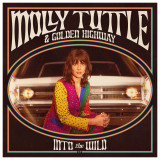
Molly Tuttle & Golden Highway release a new six-song EP, Into the Wild, via Nonesuch Records. The EP, a follow-up to their Grammy-winning and critically acclaimed 2023 album, City of Gold, includes three new songs as well as previously released covers of Jefferson Airplane’s ‘White Rabbit’ and Olivia Rodrigo’s ‘good 4 u’, and an alternate version of the City of Gold track ‘Stranger Things’.
In addition to the band’s previously scheduled US tour dates, which include a performance at the Ryman in Nashville in September, they have announced a new batch of US dates in November, including stops in North Carolina, Virginia, Maryland, upstate New York, Massachusetts, and more.
.
Of the new release, Tuttle says: “With this new EP we invite you to come on a journey with us Into the Wild. I wrote the title track with Ketch Secor after a week spent in the redwoods. This song is about getting lost in the wilderness even if it’s just in the forest of your mind. ‘Getaway Girl’ was an unfinished song I had started writing for our last LP City of Gold. It’s about a whirlwind romance set in New York City, kind of like Carrie Bradshaw meets bluegrass. In addition to these two new original songs, we included some of our favorite covers that we’ve woven into the live show, ‘White Rabbit’ by Jefferson Airplane and ‘good 4 u’ by Olivia Rodrigo.”
She continues: “We paid tribute to one of my favorite California songwriters Kate Wolf with a new version of her song ‘Here in California’ which features my dad, Jack Tuttle, and longtime friend AJ Lee singing with me. I used to play this one with my family band back in the day! On ‘Stranger Things’ (Down the Rabbit Hole Version) I wanted to go for a stripped back ethereal version of this song originally played by the full band on City of Gold. It features a trio with Dominick Leslie on mandolin, and Nathaniel Smith on cello and synth. I hope you enjoy trekking deeper into the woods with us as we pick up where we left off on City of Gold and explore new territory as a band.”
Earlier this year, Tuttle and the band—fiddler Bronwyn Keith-Hynes, mandolinist Dominick Leslie, bass player Shelby Means, and banjo player Kyle Tuttle—earned their second consecutive GRAMMY win for Best Bluegrass album for City of Gold, released last year on Nonesuch Records. Earlier this month, the band was nominated for eight IBMA Bluegrass Music Awards: Tuttle and the band are up for Entertainer of the Year, Vocal Group of the Year, Instrumental Group of the Year, and Album of the Year for City of Gold. Tuttle is nominated for both Female Vocalist of the Year and Guitar Player of the Year, and Bronwyn Keith-Hynes for Fiddle Player of the Year and New Artist of the Year. Additionally, Jerry Douglas, who produced City of Gold with Tuttle and is up for Resophonic Guitar Player of the Year, will be inducted into the Bluegrass Hall of Fame.
Raised in Northern California, Tuttle moved to Nashville in 2015. In the years since, she has received many accolades; in addition to the two GRAMMY wins she was also nominated for Best New Artist. She has earned three wins at the 2023 IBMA Bluegrass Music Awards and Tuttle won Album of the Year at the 2023 International Folk Music Awards. Additionally, she has earned Instrumentalist of the Year at the 2018 Americana Music Awards, and Guitar Player of the Year at the IBMAs in both 2017 and 2018. Tuttle has performed around the world, including shows with Billy Strings, Béla Fleck, Hiss Golden Messenger, Jason Isbell, Old Crow Medicine Show, and Dwight Yoakam, as well as at several major festivals including Newport Folk Festival and Pilgrimage."
Brighton (UK) punks THE BAR STOOL PREACHERS have announced their new EP 'Below The Static', which features reimagined versions of songs from the bands 2022 album 'Above The Static'. The EP is out 13th September 2024 via Pure Noise Records. Speaking about the new EP the band said, "For this release, we really wanted to highlight how good the songwriting was. We were stoked with how well the album went down but we really wanted to expose some of the more vulnerable elements and fuck with the format a bit. To hear such strong fxmale vocals, and having heavy guitar riffs on cellos/violins etc. really got us excited about these songs again. Some of the versions are stripped right back to just a voice and one instrument. It's the band like you've never heard it before, and really breathes a different life into the songs."
The Heads’ Simon Price returns to his kandodo project with 'theendisinpsych'; "primitive pieces of psychedelic tuneage+years of wasted time=43 minutes of headphone bliss." It's the follow up to the 2019 collaboration with Wayne Maskell and Hugo Morgan, Kandodo 3 – K3, but this time back in solo-mode. He is now relocated in Northumbria, and has recorded the album himself in his home studio, drawing on his wide collection of music/instruments and the rural environment for inspiration. The new album fizzes and crackles with a verve that will activate the “turn on, tune in, drop out” sense in all listeners… Simon explained the album in a focused/out of focus track by track way… is this Price’s paean to his obsession with Bowie? chamba7 - octave mandolin through fuzz, tambo beat, in praise of Bowie compilations. chamba is malawian weed theendisinpsych - bought a reel to reel tape off ebay in 2005, ('Bowie radio interview tape, USA, 1970, 3 minutes?') then bought a machine to play it on in 2015. Heard the words and laid them onto a fuzzy break bed. Thought it all too relevant to today, prophetic David from his 'hippy' days (not a prophet or a stone age man) fuzzy oceans - played on 1 string spamjo, bouncing echo over 70's drum machine, 'we've fucked the oceans' freefalling - rolling cello and hissing cymbals with vocoder dreams comes with african/stationtostation artwork stylings for the sleeve..pre-apocalypse blues (and pinks), the world isn't going a good way a sumptuous 4 course sonic supper, tuck in.
There are ghosts all across AVANTI, the debut album from Malice K. At points it's howling and unhinged, a grungy layer atop a lush foundation of melodic capital-s Songwriting, but in other moments it dissolves into a gentle, wistful haunting. Malice K's songs are blunt, uncomplicated and unflinching as he probes the interiority of memories, of mistakes - saturated with an innate intensity that sucks you into his gnarled and visceral world, so barbed it could draw blood. Malice K is helmed by visual artist and songwriter Alex Konschuh, New York-based but born and raised in Olympia, Washington. Following a stint living in Los Angeles, where he became a member of the artist collective Death Proof Inc., a trip to New York resulted in him simply never leaving the city. A period of chaos ensued, Malice K exhausted and unmoored and ultimately, unwell. The record is unpredictable across its 11 songs. The album opens with a jarring scream on "Halloween," Malice K's breathless vocals buried beneath a grungy, roving Nineties riff. The track emanates a manic energy, enveloping. It's a fitting entrypoint for the record, and for the vividness of Malice K. The snarling and obsessive "You're My Girl" has a swaggering paranoia: "I got so high I thought my hand touching my hand was your hand." But AVANTI exists in quieter moments too; "Radio," with its fluttering morose cello, moves at an almost glacial pace comparatively. The aching wistfulness of "The Old House" is an album stand-out, anchored in an acoustic guitar, an uneasy lullaby that never quite settles into itself: "I think to myself I got the things that I wanted, but I can't help think there's something else that I forgot to do." A recent press interview called Malice K a shapeshifter, but he's not amorphous in that way. He's decisive and intense, more concerned with carving his own path, and building his own world. Every part of Malice K is distinctly himself: from his sweaty high-octane shows to the high-flash high-contrast photos; from his gnarled and unsettling illustrations to the studio recordings that vacillate between grief and tenderness, there's an exceptional ferocity across everything Malice K touches. AVANTI feels lived in, like peering into an abandoned house through a window smeared with grimy fingerprints, relics of a life well-lived scattered inside - despite being a debut, there's the sense that Malice K arrived fully-realized, imperfections and all.
Greg 'Stakehouse' Prevosts Karriere ist eng als Frontman der Chesterfield Kings verbunden, aber seine Geschichte beginnt und endet nicht mit dieser Band. Seine Anfänge liegen in den Siebzigern als Sänger und Gitarrist in Combos wie Dr Electro & His Psychedelic Retards, Tar Babies, Distorted Levels, Cutdowns (dokumentiert auf der Prevost-Compilation Violence Vintage). Der hochkarätige Songwriter und einer der coolsten R&R-Sänger aller Zeiten kehrt nun mit seinem vierten Solowerk "After The Wars" zurück. Greg befindet sich in einem Zustand der Gnade. Nach der guten Resonanz auf sein drittes Werk (das akustische, gefühlvolle "Songs For These Times") kehrt unser Mann jetzt mit einem neuen, opulenteren Album unter dem Arm zurück. Und es steckt voller Überraschungen und Kollaborationen - mehr denn je, immer noch ein erstklassiger Songwriter und einer der coolsten R&R-Sänger überhaupt. Auf "After The Wars" finden sich wahre Folk-Rock-Wunder, stilvoller Barock-Pop und Psychedelia, Country, Blues, Gospel und natürlich Rock'n'Roll pur. Dies ist ein Festival des guten Geschmacks in Form von Songs mit glänzenden 12-saitigen Gitarren, plüschiger Akustik, ausgefeilten Gesangsharmonien, klagenden Harfen und hypnotischen Arrangements mit Cello, Klavier und Orgel, Steel Guitar und vielem mehr! All dies, abgerundet mit einer einfach perfekten Produktion, macht "After The Wars" zu Greg 'Stackhouse' Prevosts bisher abwechslungsreichstem, vollständigstem...und bestem Album. Checkt dies und auch den Backkatalog! Für Fans von Stiv, Johnny, David, Nikki, Dave, Epic, Tyla, Dead Boys/Lords Of The New Church, New York Dolls, Jacobites, Dog's Damour, Jagger/Richards, Woods/Stewart... Vinyl klassisch schwarz, CD mit einem Extratrack!
“There are lots of outstanding Joe McPhee LPs. Nation Time being chief among them, but there’s also Pieces Of Light, Oleo and Topology. The Poughkeepsie, New York-based multi-instrumentalist, by now an international star of free music, has amassed a daunting discography, no doubt. If you want to peer deeply into the soul of Joe McPhee, however, there’s no way around it, you need to spend some quality time with Tenor. “Tenor is McPhee’s first solo record. He did not set out to make it. It was an afterthought, quite literally, born of a gathering of friends at the Swiss farmhouse of cellist Michael Overhage. A beautiful meal, some drinks, warm conversation, and ... why not, an impromptu recital. Hat Hut producer Werner X. Uehlinger was there and a year later issued it as McPhee’s third LP for the label (Hat Hut C in their famed letter series). “The existential blues ‘Knox’ sets the stage, indicating that this will not just be a toss-off postprandial singalong. ‘Good-Bye Tom B.’ carries on with aching melancholy, through burred notes and hushed harmonics. The relatively jaunty ‘Sweet Dragon’ is also emotionally loaded with Ayler-esque vibrato, slurs, wipes, and blasts of tone. The side-long title track comes without a theme, as a kind of pure investigation of the horn, its potential, its limits, its expressive capacity. There have been few solo sessions as comprehensive and devastating as this spontaneous after-dinner diversion in rural Switzerland in 1976. We’re very lucky someone pressed record.” —John Corbett (excerpt from the liner notes)
THIRD EAR BAND stammen aus Canterbury und begannen als psychedelische Band namens THE GIANT SUN TROLLEY, die in Südlondoner Clubs lange und improvisierte Sets spielte. Nach einem Auftritt wurde der Band fast die gesamte Ausrüstung gestohlen. So wurden sie aus purem Zufall und offensichtlicher Notwendigkeit eine Akustikband und nahmen den Namen THIRD EAR BAND an. Von 1969 bis 1972 veröffentlichte die Band drei Alben auf dem progressivem Harvest-Label, "Music From Macbeth" (1972) war davon das bekannteste und kommerziell erfolgreichste. Am 24. April 1970 traten die Third Ear Band beim 2. Essener Pop & Blues Festival. Aus welchen Gründen auch immer tauchten sie aber weder auf dem offiziellen Plakat zur Veranstaltung noch in den Programmheften zum Festival auf. Das Billing des Tages war mit Acts wie The Flock, Ekseption, Rhinocerous, The Groundhogs, It"s A Beautiful Day und den noch unbekannten Black Sabbath, die gerade ihr erstes Album veröffentlicht hatten, prall gefüllt. Das Essener Konzert in der Quartettbesetzung mit Sweeney am Schlagzeug, Minns an der Oboe, Coff an der Violine und Smith am Cello fand nur wenige Wochen vor der Veröffentlichung des zweiten Albums statt, das die Fans als "Elements" kennen, obwohl es schlicht "Third Ear Band" heißt und im Juni 1970 erschien. Von den vier Elementen spielte die Band an dem Abend "Earth" und "Water", aber in einer kürzeren Fassung im Vergleich zu den Albumversionen. Erst vor kurzem sind die professionellen Tonaufnahmen vom Festivalauftritt der Third Ear Band wieder aufgetaucht und jetzt restauriert, klanglich aufgearbeitet und gemastert worden.
- A1: Samba 00 04:58
- A2: Panorama 00 04:39
- A3: Golfo Mistico 00 04:34
- A4: Open Sky With Tears Of Blue 00 04:56
- A5: Contemporary Lullaby 00 03:05
- A6: Requiem 00 02:55
- B1: Whispers 00 04:19
- B2: Modular Clouds In Rome 00 03:21
- B3: Piano Bells 00 03:30
- B4: Space Call From Mars 00 03:01
- B5: Tuning The Orchestra With Tears Of Blue 00 03:22
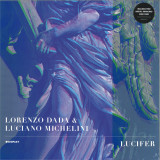
With Lucifer, Kompakt presents an album of rare beauty from two masters of modern music. A family affair, it’s a collaboration between the Italian father-and-son duo of Luciano Michelini and Lorenzo Dada, whose combined histories bring to Lucifer a depth of experience alongside clarity of vision and a finely tuned, neatly developed combined compositional voice. A lovely, beguiling suite of music that combines the electronic and the acoustic, the urban and the pastoral, its gorgeous night-eye vision and tender melancholy sits neatly within the Kompakt universe, while offering the curious listener some rich new perspectives.
There is already plenty to know both artists by. Lorenzo Dada creates across multiple fields – a techno producer and DJ who has already worked with the likes of Jay Haze, Fete, Leo Benassi, and Der, he’s released a small clutch of stylish, smartly designed EPs, and a solo album, Second Life (2018). His complementary background in classical music and composition informs his ensemble project, Tears Of Blue (who appear on Lucifer), where Dada paints with neo-classical tones for a quartet of violin, viola, cello and grand piano, supplemented by electronics for live performance.
Luciano Michelini’s history is yet richer. He may be best known, to many, for his piece “Frolic”, the theme to Larry David’s Curb Your Enthusiasm series; it was also sampled by Snoop Dogg for 2022’s “Crip Ya Enthusiasm”. But there’s much more to Michelini’s story. A successful soundtrack composer, Michelini both studied and taught at the Conservatoro di Santa Cecilia, and worked for RCA from the sixties to the eighties; his soundtracks from this period are gorgeous examples of the form, particularly his work for Il Decamerone Nero (1972), L’Isola Degli Uomini Pesce (1979), and the devastatingly gorgeous Dimensione Donna (1977).
In the eighties, Michelini and his wife Anna Gutling founded the Electronic Music Division studio and academy in Rome, which is where the majority of Lucifer was recorded. Dada reflects on the experience: “We never worked together before, so it was all new for both of us,” with Michelini adding, “I truly love this experience with my son. He’s a talented pianist and composer. I am not very familiar with electronic music nowadays, but we did it fluently.” There’s certainly a familial energy at play through Lucifer, and you can hear how Dada and Michelini, through exploration and experiment, find a shared language, balancing Dada’s tendency toward minimalism, and Michelini’s composerly voice.
Lucifer flows as a suite that interweaves electronic music with acoustic instruments: the lonely sigh of saxophone; Michelini’s lush, verdant piano; the weeping strings of Tears Of Blue (recorded at the studio of Michelini’s friend, the late Maestro, Ennio Morricone). These multiple voices are located within the electronic sighs and swarms from Dada’s kit; there are moments of propulsion, and passages of lambent drift, where the album revels in its tonal sweetness. If it flows so effortlessly, that’s because Lucifer was designed that way, as a suite or a sonata of sorts.
And the title? Dada reflects, “Lucifer was an angel who decided not to be one anymore. The miracle of life is that we can decide what we want to be, even if we are born as angels or vice versa.” This feels somehow apposite: there’s certainly something of the transformative, and the transportive, in Lucifer, a unique family collaboration of rare poetry and sensitivity, where two generations meet in the modern crucible that is the electronic music studio.
Black Truffle is pleased to announce the first vinyl reissue of Trancedance, a wild slice of Swedish Afro-fusion from Christer Bothén, originally released in 1984. A major figure in Swedish jazz and improvised music since the 1970s, often heard on bass clarinet and tenor sax, Bothen studied doso n’koni (the large six-stringed ‘hunter’s harp’ of the Wasulu) in Mali in 1971-2 before turning to the guinbri (the three-stringed lute of the Gnawa/Gnauoua) in Marakesh later in the decade. In between, he performed extensively with Don Cherry during his Organic Music Society period and taught Cherry the doso n’koni. In the later 70s and 80s he worked with the most important figures in the distinctive Swedish jazz-rock-world fusion scene, joining Archimedes Badkar for their African-influenced Tre and participating in Bengt Berger’s legendary Bitter Funeral Beer Band. Many of the musicians who played on the Bitter Funeral Beer Band’s ECM LP (including Berger on drums, Anita Livstrand on voice and percussion and Tord Bengstsson on piano, violin and guitar) joined Bothén for one of the sessions that produced Trancedance, the first release under his own name, dedicated to his compositions. The other session introduced his seven-piece group Bolon Bata, heard on the second track of each side. The title track opens the album with the rubbery buzzing strings of the doso n’goni playing a hypnotic ten beat pattern, soon joined by bass and piano before the entire nine-piece group kicks in with a rollicking Afro-jazz workout, Berger’s drums driving an intricate, winding melodic line played by the horns with Mattias Helden’s cello throwing in pizzicato slides and smears. Bothén then takes centre stage on tenor sax, soloing with a wide, vibrating tone and moving seamlessly from soaring melodies to guttural stutters. After a return to the composed horn lines and a solo from Elsie Petrén on alto sax, the piece builds to an ecstatic conclusion of yelping voices and handclaps, gradually simmering down to return to the solo doso n’koni where it began.
The hypnotic sounds of the hunter’s harp carries over to ‘Mimouna’, where it is joined by Bothen’s overdubbed guinbri. The piece develops into a haunting whispered and sung invocation, gradually building momentum until the organic textures of strings, voices, and hand percussion are ruptured by Lennart Söderlund’s distorted guitar, which brings an unmistakable touch of 1984 to the otherwise timeless sound. Joined by chicken scratch guitar and increasingly dominated by the insistent clang of three of Bolon Bata’s members on karqab (a kind of cast-iron castanet), the grove develops frenetically.
The B side opens with the multi-part epic ‘9+10 Moving Pictures for the Ear’, at over 16 minutes the record’s longest piece. Though Bothen is heard only on horns on this piece, the hypnotic repeating bass line carries on the first side’s link to African musical traditions. Using an expanded 16-piece ensemble, the music balances untethered improvisation with carefully arranged passages of knotty ensemble playing that at points suggest Mingus, Moacir Santos or some of the ambitious post-free work being done in the same years by figures like David Murray or Henry Threadgill. The piece ends with a triumphant passage of looping unison melody reminiscent of the Scandinavian folk explorations of Arbete och Fritid (whose Kjell Westling is heard on bass clarinet and soprano sax here). The sound of Bjorn Lundqvist’s fretless bass introduces the odd left turn made by the record’s final track, a spaced-out expedition into bluesy horn lines and distant guitar atmospherics set to a semi-reggae beat, perfumed by the core Bolon Bata group and bearing the appropriate title of ‘The Horizon Stroller’. A must for fans of the Swedish scene around groups like Arbete och Fritid and Archimedes Badkar, as well as any listener who has been seduced by Louis Moholo’s Spirits Rejoice!, The Brotherhood of Breath, or, more recently, the guinbri grooves of Natural Information Society, Trancedance is a lost classic ripe for rediscovery.
- Bad Blood
- Incineration
- Strawberry Soda
- Hashish
- Sanction Smith
- Zero Dok
- Touch
- Bits And Spurs
- Esso Dame
- Sice I Bones
- Gold Dust
- Jesse James
- Andersonville
- The Set Up
- Walking Machine
- Hawk'n Around
1000 copies worldwide. Deluxe freshly remastered edition of Royal Trux's seminal debut album, originally released on their own Royal Records label in 1988. Fierce and uncompromising, this long overdue re-issue comes with rejuvenated artwork and brand-new liner notes. Formed in 1987 by Neil Hagerty (vocals, guitar), formerly of Pussy Galore, and his then girlfriend Jennifer Herrema (vocals), Royal Trux successfully dismantled alternative rock with a discordant guitar and time signatures akin to Miles Davis on an unholy mission circa 'Bitches Brew' or Manson strumming in his prison cell. Often described as a garage rock act, Royal Trux were far more complex, an unravelling surge of ideas, influences, mangled theories and out-there meandering, setting the blueprint for lo-fi indie amid their intricate reflections on their self-destructive lifestyle. "Their music was wild and their lives even wilder." The Guardian // "A chop-shop approach to pop history." Pitchfork
Tara Nome Doyle's latest EP »Agape« marks her return to the music scene after a two-year hiatus following the success of her acclaimed sophomore album »Værmin« (Modern Recordings, BMG, 2022).
»Agape« is a profoundly intimate collection of songs documenting TND's emotional journey through grief, commemorating the passing of a loved one. Each track explores different facets of this emotional landscape, showcasing TND's otherworldly performances and unique approach to songwriting.
This self-produced EP represents an artistic leap for the Norwegian-Irish songwriter. Skill-fully capturing the arresting beauty of her compositions, TNDs minimalistic arrangements feature the haunting melodies of Norwegian-Scottish cellist Sunniva Shaw of Tordarroch (known for her work with Fay Wildhagen, Liv Jakobsen and Juni Habel). The ethereal atmosphere they create together evokes a distinctly Scandinavian eeriness while TND's dedication to crafting poetic lyrics and vivid storytelling pays tribute to her Irish singer-songwriter roots.
The EP's title »Agape« translates to unconditional, selfless love - a sentiment that permeates each of the six tracks. This timeless collection of songs aims to be a comforting and cathartic companion for anyone caught in the throes of grief. 1
On her new album Sun Without the Heat, McCalla brings more playfulness and joy than she has on previous records when she speaks to the concerns that have shaped her career, mainly including an ethos in which you must look back at lost and erased histories before you can embrace a forward vision of Afrofuturism and the importance of music making to heal and forge relationships across differences. Across Sun Without the Heat"s ten tracks, she achieves this with music that combines jazz, Haitian Twoubadou, American blues, folk and Brazilian Tropicalismo. Born in New York City to Haitian emigrants and activists, McCalla possesses a stunning mastery of the cello, tenor banjo and guitar. A founding member of Our Native Daughters alongside Rhiannon Giddens, Amysthyst Kiah and Allison Russell and an alumna of Grammy award-winning band The Carolina Chocolate Drops, McCalla has also received considerable praise and attention for her solo works, including 2014"s Vari-Colored Songs: A Tribute to Langston Hughes, which prompted the New York Times to rave that "her voice is disarmingly natural, and her settings are elegantly succinct" and 2022"s Breaking The Thermometer (4/5 review from The Guardian). Lyrically on Sun Without the Heat, McCalla draws from the writings of Black feminist Afrofuturist thinkers Octavia Butler, Alexis Pauline Gumbs and Adrienne Maree Brown, among others, with frequent themes being grief, connection and motherhood. Like these authors, McCalla is thinking hard about collaboration as a means of creative expression, community thinking, personal salvation, and rectifying social injustice. "The stories we"ve been told about ourselves and the stories that we have to learn to undo the stories we"ve been told," she explains."Sometimes these are painful stories to tell. This is especially vivid in the title song, "Sun Without the Heat.""
Costantino Luca Rolando Kiriakos, an influential figure in Athens' electronic scene since the 80s, showcased his diverse talents as a composer, sound engineer, and installation artist under his Coti K. alias on this EP from back in 1994. The five tracks he offered up all explore Balearic-ambient bliss-scapes and now get reissued on Dark Entries complete with their smooth breaks, cosmic pads, and lush pianos. Reflecting his Hellenic roots, track titles like 'Argonauts' and 'Theros' bring global ambient vibes and spoken word by Konstantinos Bhta and cello by Nikos Veliotis all help add their magic to this nostalgic journey with a Mediterranean twist.