Japan has produced some exceptionally talented jazz drummers and among them is Tatsuya Nakamura, who joins the BBE Music J Jazz Masterclass Series with his album ‘Locus’ from 1984, a session covering several bases, from heavy percussive samba to meditative avant-ambient. This is the album’s first ever reissue, although a track from ‘Locus’, ‘¼ Samba’, was included on J Jazz vol. 3. Nakamura began his drumming career as a teenager, inspired after seeing the documentary film “Jazz on A Summer’s Day” and listening to his idols Art Blakey and Miles Davis. By his early twenties, Nakamura was working with such luminaries as free jazz guitarist Masayuki Takayanagi, pianist Masaru Imada and band leader & composer Mitsuaki Kanno. In the mid-70s, like several other Japanese jazz players, Nakamura decided to make the move to New York where he studied drumming with Roy Haynes, and performed with members of the AACM and players from the loft and free jazz scenes including Richard Davis, George Adams, John Hicks, and Pharaoh Sanders. Returning to Japan, Nakamura continued playing as leader of his Japanese band The Jazz Fellows and in 1979, he went into the studio as leader for the classic “Where Is The Quarter” session featuring Masaru Imada, Hideto Kanai and Kenji Mori. This session includes the original percussion heavy version of ‘¼ Samba’ and was followed by a period back in NYC during which he recorded the funky/free session ‘Rip Off’ in 1980. 1984 saw Nakamura working as leader of a heavy-duty fusion septet and in February of that year he led them in a performance at Audio Technica Hall. The album ‘Locus’ on Sea Horse Records is the label’s one and only release. On ‘Locus’, Nakamura is joined by a stellar line-up. On trumpet is Shinobu Fujimoto and he’s joined by seasoned bass player Hideto Kanai (1931 -2011) who began playing in the mid-1950s, appearing on King Recs All-Star Jazz Series before going on to be a regular fixture on the legendary Three Blind Mice (TBM) label, backing many of its leading artists. He even released his own album on TBM, ‘Ode to Birds’ in 1975. On guitar is Kazumasa Akiyama. Born in Tokyo in 1955, he taught himself guitar at 10 years old and was influenced initially by The Beatles and Ray Charles, and later Jimi Hendrix, Cream, Chicago Blues, and jazz. When he was a student, he got a chance to appear on Sadao Watanabe's radio program ‘My Dear Life’, which led him to join the Isao Suzuki Group and Mikio Masuda Group. Akiyama released his first leader album ‘Dig My Style’ in 1978 and is still an active musician. On keys is the incredible Jun Fukamachi (1946-2010). Born in Harajuku, Tokyo, Fukamachi started playing the piano at the age of three, showing an extraordinary talent, recognised as a child prodigy. He became a professional musician while still in school and released his first album ‘Portrait of a Young Man’ on Polydor in 1971.
quête:blue led
All vinyl is in a Gatefold jacket w/ two 12pg booklets, printed insert + download card. SH289LPCB // SH289LPIE are both for Indie stores only. CD Packaging: Digipak w/ 12pg lyric poster insert. The Armed return with their new album Perfect Saviors, the first new music since 2021 breakout release ULTRAPOP. Providing a full accounting of album contributors for the first time, Perfect Saviors was produced by the band’s Tony Wolski along with Ben Chisholm and Troy Van Leeuwen, with contributions from Julien Baker, Sarah Tudzin, Mark Guiliana, Justin Meldal-Johnsen, Eric Avery, Stephen Perkins, Josh Klinghoffer, and many more. The album was mixed by Alan Moulder. Vocalist Tony Wolski offered this statement on the album: “Too much information has made us dumb and confused. Too many ways to connect have inadvertently led to isolation. And too much expectation has forced everyone to become a celebrity. Predictable primal dangers have given way to newer social ones. And the result is a world that is confounding and terrifying but ultimately still beautiful. We hope this record is exactly all of that, too. Perfect Saviors is our completely unironic, sincere effort to create the biggest, greatest rock album of the 21st century.” Perfect Saviors is the conclusion of a trilogy of albums examining and dissecting what constitutes “pop culture” in a world of limitless information and access. Using “pop music” loosely as a format in which to express these ideas, each album used composition and presentation as a way to challenge these questions further. Perfect Saviors is the ultimate product of this evolution. Using one of the world’s most well-known mixing engineers to create a beautiful album fully immersed in the language and world of pop through the inherently unique, extreme, and perverse lens, The Armed communicate their art. Perfect Saviors follows 2021’s critically acclaimed album ULTRAPOP which landed on numerous Best of 2021 lists including Pitchfork, New York Times, Stereogum, Revolver, and many more. Album announce along with first single/video "Sport of Form" and which features Julien Baker on vocals and Iggy Pop playing God set for June 27th . Indie Exclusive Sea Blue vinyl in gatefold jacket w/ two 12 page booklets + printed insert Limited to 1500. FADER cover confirmed to run with announce and additional Cover story features confirmed with The Guardian, Revolver and Kerrang! will run. Supporting Queens of the Stone Age on their North America Headline arena tour in August, UK/EU headline tour scheduled for early 2024. An interactive ARG campaign with numerous stages of engagement is underway and will continue through release. A website, media mailings and various social media interactions are leading fans to find easter eggs including songs, album info, videos and much more. Videos for all three focus tracks are completed and will be released along with each song. UK PR handled by Adrian Read at Inside/Ou.
Japanese jazz is sadly one of best-kept secret. But, it would be stupid to not discover "Green Caterpillar" by Masaru Imada trio + 2. Led by Masaru Imada and his Fender Rhodes, the record opens with " A Green Caterpillar", a 11 minutes piece whose the groove is somewhat reminiscent of Marc Moulin and his Placebo band. "A Straight Flash" continues along this line, while on "Blue Impulse" and "Spanish Flower" Masaru Imada uses the piano in a much more modal style.
ENG 180 grm classic black vinyl, 2023 repress. At the risk of further labouring a rather obvious point, with Thank God for Mental Illness, their third collection of absolutely stunning music in 1996, the Brian Jonestown Massacre parallels the prolific and effortless brilliance of the Rolling Stones at their fevered late-1960s peak; the sheer scope of their achievements is stunning - rarely are bands quite so productive, or quite so consistently amazing. Thank God is the BJM's down-and-dirty country-blues outing, all 12-odd tracks supposedly recorded on a single July day at a cost of just $17.36 The Brian Jonestown Massacre is a psychedelic rock band originally from San Francisco, California, led by guitarist/singer Anton Newcombe. Since 1995 The Brian Jonestown Massacre has released numerous albums, first for Bomp! Records, the label which gave them their start, and later for TVT and Tee Pee. BJM has been essential in the development of the modern U.S. garage scene, and many LA and SF musicians got their start playing with Newcombe, including Peter Hayes of The Black Rebel Motorcycle Club. Originally Newcombe was heavily influenced by The Rolling Stones' psychedelic phase - the name comes from Stones guitarist Brian Jones combined with a reference to cult leader Jim Jones, but his work in the 2000s has expanded into aesthetic dimensions approximating the UK Shoegazing genre of the 1990s and incorporating influences from world music, especially Middle Eastern and Brazilian music.
Nous'klaer Audio presents Martinou - Chiral, the follow full-length up to his 2021 album Rift. This time nine tracks across two vinyls. An album flowing 'in a way' like Rift, but it's different: More outspoken, heavier sound design and it peaks on a blissful note. ''Open up the blinds and take me there. We'll break the surface tension. We'll dive in. I'm locked in your devotion. You give an inclination to our demise. It will be our exit. To bliss, we'll be its guardian. Once there was love. Clear as glassy water. No ripples, no waves. I followed while you led. Our arrival was warm. Hot, even. Stunning to a startling degree. Hands intwined, frolicking towards the blue. Hours passed, and white heat cede to an orange hue. We cooled down. Red. We rallied. Black. It began. Into the deep darkness we ran. White sand, it has a tendency to get everywhere. Salt water will only dehydrate you more. Shriveled and dry. Scratchy and coarse. More. And then we were lost. Fingers once locked grew distant. Morning, dear. Where have you gone? We looked. A glimpse from afar. Red. We rallied. Shall we share a bottle of wine? Black, lost again. Afternoon, friend. Where were you? Red. Alone. Black. We rallied. Shall we try somewhere new? Sand and salt. Evening, sir. Reservation for one? Reservations a plenty, I say. Evening, miss. Dining alone? Aren't we all? Dining, miss, not dying. Oh, yes, alone. Black. Sand and salt. I found you. No. No. Wait, do I know you? You feel like a dream. Don't touch me. Move along, sir. Who are you? Leave. Who are you? Where did you go? Keep moving. I am, I will. Time to move on. I'm moving! Leave. Don't touch me. Leave. Why are you? Exit. Purple. Orange. Yellow. White. Blue. Morning, dear. Shall we have breakfast? I think I'll sleep some more. But it's our last day. I know. See you downstairs when you're ready. OK. I open up the blinds. A bird breaks the surface tension. Locked in. To Devotion? No. Demise. An inclination. Reverie. Take me there. Where? Exit (To Bliss) '' Text by Gregory Markus
- A1: Rock Extra 3 00
- A2: Slowrama 2 10
- A3: Latin Pop Sound 3 30
- A4: Morning Melody 1 12
- A5: Islam Blues 0 55
- A6: Phasing Drums N° 1 1 10
- A7: Phasing Drums N° 2 1 16
- A8: Phasing Drums N° 3 1 25
- B1: Pacific Rock 2 25
- B2: Quasimodo Pop 3 16
- B3: Carmel Beach 3 25
- B4: Auto Moto Rallye 1 32
- B5: V S.o.p Rock 2 10
- B6: Rythmiques N° 1 0 53
- B7: Rythmiques N° 2 0 45
- B8: Rythmiques N° 3 0 53
A Tele Music CLASSIC from 1972, Pierre-Alain Dahan's Continental Pop Sound is of those library albums with something for everyone. Breaks? Check. Fuzz guitar? Check. Slower, jazzy stuff? Double check. It's a stunning collection of psychedelic rock, soulful funk and retro pop stylings that's currently going for over £200 on Discogs. And with good reason. French drummer, percussionist and composer Pierre-Alain Dahan was a key member of the legendary Arpadys, Disco & Co, Voyage, Tumblack (with Wally Badarou and Sauveur Mallia) and Jef Gilson Septet. So, you know this Be With reissue is nailed on essential.
Skip the by-numbers opener "Rock Extra" and head straight to the deeeeeep, minimalist groove of "Slowrama", a humid masterclass in low-slung, creeping crime funk with weighty breaks and beefy bass complimented by hypnotic wah-wah and warm electric piano. Sensational. It was sampled by Prince Po in 2004 for his "Love Thang" track. The galloping "Latin Pop Sound" is a percussive, Santana-esque tour de force featuring fantastic guitar shreds over a bassline to die for. "Morning Melody" is a lightweight amble whereas the brief but deliciously psych-rock heavy "Islam Blues" is a must for your mixes when requiring short segue tracks. The A-Side closes out with "Phasing Drums N° 1, 2 & 3", all completely ace. For us, N° 3 is the pick of the bunch, with particularly slooooow and deliberate drums underpinned by a droning, sinister organ. Hip-hop, before hip-hop, no less.
The genuine monster "Pacific Rock" blasts out the gate to usher in Side B, a thrilling and unrelenting pop-rock instrumental that really drives. "Quasimodo Pop" contains great slow mo funk breaks and scratchy guitars that alternate with pretty heavy riffing to create a compelling base track. "Carmel Beach" is as beautiful as the location it's named after, as insouciant guitars glide over super slo-mo beats and dramatic organ before it breaks down to a laconic, reflective electric piano showcase. Sumptuous. "Auto Moto Rallye" is a brief driving funk gem, as you might expect, complete with revved up guitars tuned and played to emulate the irresistible sound of growling race cars.
The upbeat, piano-led rock stomper "V.S.O.P Rock" is all well and good but, what you might really be here for is the trio of tracks that ensure the LP ends on an almighty high. The three most famous tracks “Rythmiques 1, 2 & 3” all come complete with *ultra*-dope breaks. N° 2 is probably our favourite, with the shuffling bassline and breaks combo augmented by the wonderful cowbell. Though on any other day, it could be N° 3! This album is often considered as the “baby brother” to Tele Music's Rythmiques, and this triptych is all the proof you need. Outstanding.
One of the very best French drummers ever, Pierre-Alain Dahan began his career at the Blue Note in Paris with Sonny Stitt, Dexter Gordon and Daniel Humair. Some start, eh?! He also participated in the recording of Serge Gainsbourg's cult album 'La Ballade de Melody Nelson' before going on to make countless KILLER library funk records and be a key member in the legendary Arpadys, Disco & Co, Voyage, Tumblack (with Wally Badarou, Sauveur Mallia et al), Jef Gilson Septet (alongside Henri Texier) and many more. Some pedigree.
The audio for Continental Pop Sound has been remastered by Be With regular Simon Francis, ensuring this release sounds better than ever. Cicely Balston's expert skills have made sure nothing is lost in the cut whilst the original, iconic Tele Music house sleeve has been restored here at Be With HQ as the finishing touch to this long overdue re-issue.
- A1: We Crossed The Atlantic
- A2: The Love You Bring
- A3: When I Was Howard Hughes
- A4: Failed Adventure
- B1: Stars (Twilight Mix)
- B2: Grand Central
- B3: International Exiles
- B4: Merry-Go-Round
- B5: Radios Appear
- C1: City Terminus
- C2: Min Min Light
- C3: Oregon Snow
- C4: Cherry Lake
- C5: Blackout
- D1: Please Don’t Say Goodbye
- D2: Museum Station
- D3: Blue Train
- D4: You Were There
- D5: Something Better Beginning
Selected Songs 1997-2003 compiles some of the finest moments in the recording history of Hydroplane, the Melbourne-based indie-pop three-piece that operated alongside The Cat’s Miaow through the second half of the nineties. It’s the third release in what feels, now, like a loosely planned series by World Of Echo, documenting the music made by this group of friends in Melbourne sharehouses (The Cat’s Miaow’s Songs ’94-’98, 2022), or in the case of The Shapiros (Gone By Fall, 2023), while traversing the International Pop Underground.
Hydroplane would be familiar to anyone already following these breadcrumb trails – Andrew Withycombe, Bart Cummings and Kerrie Bolton were the group’s core, all members of The Cat’s Miaow. With Cat’s Miaow drummer Cameron Smith itinerant, having moved to London, the trio used this opportunity to expand their music. It’s a subtle, but important shift. If The Cat’s Miaow was about the perfect, minimalist, two-minute pop song, Hydroplane’s music was far more open-ended, embracing the loops and drones, sampled house-y shuffle beats, the burbling of a Roland Jupiter-4 synth, all of which the trio joined, effortlessly, to their endless capacity for moving, elegant melodicism.
They may have only planned to release one seven-inch single, but the sound Hydroplane created was so bewitching, so compelling, that the project’s lifespan ran for around half a decade, and they ended up releasing three albums, including a self-titled debut recently reissued by Efficient Space, and seven singles. There are all kinds of compelling things happening in the music compiled here – the hazy repetition of the gentler side of Krautrock is in here, somewhere, which also suggests Stereolab at their most intimate and disarmed; the gently drifting guitars, gauzy and oneiric, set the songs adrift and floating, each one lost in its own imagined, distracted world. Songs like “The Love You Bring” set indistinct tonal floats across dance rhythms, in a way not quite heard since My Bloody Valentine’s “Instrumental” – but with the added gift of Bolton’s gorgeous voice.
This loose coalition with dance music, and the quiet experimentalism at the heart of Hydroplane, also gestures towards peers like Hood, Acetate Zero and Other People’s Children, and releases on renegade labels like Wurlitzer Jukebox and Enraptured. Like those groups and labels, The Cat’s Miaow were reconciling independent pop music’s past – sweet melody and melancholy, chiming and droning guitars – with the futures promised by DIY electronics and nascent digitalia, the interface of indie and IDM that led to some of the underground’s most blissful, texturally swoonsome music. All that is here, but also, the poise of the melodies is pure Cat’s Miaow, though, with Bolton’s voice sailing, pacifically, over some of the most pared-down, gorgeous music made during their decade.
It was a time, too, when such music could make waves – “We Crossed The Atlantic”, one of their early singles, was picked up by John Peel, who played it repeatedly on his legendary radio show, the song reaching #13 on his 1997 Festive 50. That the song itself was a cover of a tune by 1960s Australian beatnik-pop-poet Pip Proud felt even more perfect – a group of outsiders paying tribute to another outsider, played on the radio one of the few broadcasters brave and human enough to take a chance on this music. But it was a time where everything was up for grabs, and genres were flowing into each other: folk songs went drone; indie re-discovered noise; ambient pop floated, again, out onto the dancefloor. And while they may have been sequestered away in Melbourne, Australia, Hydroplane felt core to that scene, a quietly driving force.
Compiling material from across their brief but mercurial career, this double album perfectly captures the magic and mystery of Hydroplane’s dreamlike, perfect pop songs.
Recorded October 1959, Paris.
Original LP issue: Decca 153.924
Critics often complain that small-group sessions comprised of members of the Duke Ellington Orchestra are somewhat disappointing; this is definitely not the case with this session led by Clark Terry, recorded during a 1959 tour of Europe in the final month of the trumpeter’s almost eight-year tenure with the band. Fellow Ellington sidemen Paul Gonsalves, Jimmy Woode, and Sam Woodyard are present, along with Raymond Fol at the piano. Terry was one of the most gifted trumpeters to grace the Ellington band and he blossoms when he has more opportunities to solo in a small group setting like this one. Gonsalves proves to be the perfect foil for Terry as they trade lines on several of the numbers. Unlike many dates led by Ellington veterans, this one doesn’t rely heavily on songs from the vast Ellington songbook; instead, Terry includes only ‘Satin Doll’, a Monk’s tune, one by Babs Gonzales and three of his own compositions, with ‘Serenade to a Bus Seat’ (a remake of his upbeat instrumental interpretation of the hectic life of a touring musician) proving to be the most memorable.
This studio date was recorded for French Decca label and was almost impossible to find until now.
Clark Terry (Trumpet)
Paul Gonsalves (Tenor saxophone)
Raymond Fol (Piano)
Jimmy Woode (Bass)
G. T. Hogan (Drums)
Mysteries Of The World is the stunning final studio album from legendary Philly supergroup MFSB. Expertly co-written and produced with the mighty Dexter Wansel, it features the untouchable, sparkling masterpiece "Mysteries Of The World". The whole album is truly exquisite; a stylish, classy collection of pure Philly soul and orchestral jazz-funk.
MFSB, an acronym for Mother, Father, Sister, Brother, was formed by producers Gamble & Huff of Philadelphia International Records. The band's roots can be traced back to the house band at the legendary Sigma Sound Studios, where they played on numerous hit records by artists like The O'Jays, Harold Melvin & The Blue Notes and The Stylistics. Mysteries Of The World comprises slick jazz-funk grooves, mostly penned by Wansel, who produced a fair chunk of the album in a similar style to his space-funk records. MFSB's smooth sound is retained but it receives a fresh, elegant and jazzy upgrade. While this album is as mellow as the rest of the latter-period MFSB recordings, it never forgets the group's soul music underpinnings.
Swaggering, well-timed horn blasts, sweeping strings and a percolating, hard thumping slap-bassline combine to devastating effect on amazing opener "Manhattan Skyline". It's a sexy mid-tempo instrumental which sets us up nicely for what follows. Essays could be written analysing the perfection of title track. Arguably the finest jazz-funk instrumental ever made, it's absolutely magnificent. Featuring musicianship of the highest calibre, the band play with their trademark tight discipline, cooking up a syncopating rhythm with an array of exploratory keyboard riffs wrapped around a punchy bassline sent from heaven. It sounds like house music, it's that ahead of its time. The string intro is sumptuous, hypnotic and divine and that's all before the beat hits. The track fuses classical, jazz and funk into a musical journey that you never want to end. Absolutely flawless, it's a dramatic disco dancefloor killer.
Says Dexter Wansel himself: "You know, of all the songs I wrote/produced/arranged for MFSB, this is for me the most different. I think it's an experiment in rhythmic, soft sonic synth and live string and harp combinations. I composed it in an effort to blend a funky groove, along with synthesis, and orchestral sounds. There are 3 synthesizers: Oberheim 4 voice, Polymoog, and of course Arp 2600v. And, as I remember, I recorded the track with the rhythm section, string, harp and flute players first. Then I added synthesis."
The profound elegance remains in abundance on the slinky, harp-laced "Tell Me Why"; Carla Benson's beautiful voice truly shines on this sophisticated cut. The side closes out in dramatic style with the string-drenched "Metamorphosis". It's a staccato, Blaxploitation groove workout featuring wah-wah guitar, creeping basslines, rich horn solos and soulful vocals drifting in and out of the mix. The bouncy, irrepressible "Fortune Teller" opens the B side in the bass-heavy orchestral funk style before the beautiful "Old San Juan" glides in, a Balearic-adjacent track with intricate arrangements, building its mellow soul groove around an atypical flamenco guitar hook. Melancholy, guitar-led instrumental "Thank You Miss Scott" is a real highlight, with gorgeous flute, string and percussive elements whilst closer "In the Shadow" works an otherworldly synth line into its bossa nova groove.
An essential record for fans of Philly soul and groovy jazz-funk, Mysteries Of The World was mastered for vinyl by Simon Francis and cut by Cicely Ralston for Alchemy at AIR Studios. The stunning artwork, the work of renowned illustrator Robert Giusti, was restored at Be With HQ to round out this beautiful reissue.
Joshua Ray Walker announces NEW RECORD “What Is It Even?” - lending his signature alt-country style to iconic pop songs - paying homage to female-identified powerhouse vocalists and their influence on global culture. Launching with his reimagination of Lizzo’s “Cuz I Love You,” Walker pushes himself and his band to respectfully and artfully build a bridge between two seemingly polar styles of music. What Is It Even? Album Rollout 6/2 - “What Is It Even?” Preorder launch & IG1 “Cuz I love You” 7/7 - "Linger" 8/4 - “What Is It Even?” Street Date The catalyst of Joshua Ray Walker’s new album, What Is It Even?, was sparked on the patio of the Tulsa, Oklahoma music venue and dive bar Mercury Lounge, a fitting origin story for any country record. But this is far from an ordinary country record. It was on that Tulsa patio, deep into tour, when Walker and drummer Trey Pendergrass were half joking about what their gospel jump blues version of Whitney Houston’s “I Wanna Dance With Somebody” would sound like, wondering “what if the Blues Brothers covered a Whitney Houston song?” At that point, it was still unclear how the Dallas native would follow up his trio of critically acclaimed, interconnected albums, all of which were packed tight with character-driven songs that put multiple national-tours worth of crowds on the precipice of staining their shirts with either beers or tears, depending on the song. The third of the trio, See You Next Time, led to Walker appearing on The Tonight Show and CBS Saturday Morning, brought with it performances at the Ryman Auditorium in Nashville and Gruene Hall in Texas, landed him on Rolling Stone’s “Best of 2021” list, and prompted SPIN to call him “one of country’s most exciting storytellers.” Those stories about dive bar dwellers running out of last chances made listeners feel a gauntlet of emotions. What Is It Even?, a 10-track covers album consisting of songs made famous by female pop acts, produced with John Pedigo and arranged alongside his touring band of Pendergrass, bassist Billy Bones, and pedal-steel player Adam Kurtz, was born out of wanting to make people feel joy.
- Moanin’ (Bobby Timmons)
- Superstition (Stevie Wonder)
- Iko Iko (James Crawford)
- Señor Blues (Horace Silver)
- When A Man Loves A Woman
- (C. Lewis & A. Wright)
- Freedom Jazz Dance (Eddie
- Harris)
- Sidewinder (Lee Morgan)
- Brother Where Are You?
- (Oscar Brown)
- Wade In The Water (Traditional)
- Work Song (Nat Adderley)
- Land Of 1.000 Dancers (Chris
- Kenner)
- Gimme Some Lovin’ (S
- Winwood & S. Davis)
- Motherless Child (Traditional)
- New Orleans Strutt (Jack
- Dejohnette)
- La Place Street (Stanley
- Turrentine)
- Amen (Traditional, Arr. By Bob
- Belden)
- Jubilation (Junior Mance)
- Joshua (Traditional)
- Mr. Magic (Ralph Macdonald &
- William Salter)
- Theme From Shaft (Isaac
- Hayes)
- Nobody Knows The Trouble
- I’ve Seen (Traditional)
Who did Aretha Franklin not want to miss out on when she recorded
her most inspiring albums in the early Seventies? Who gave Steely
Dan the beat? Who did Isaac Hayes, Donny Hathaway, BB King,
‘Sweet’ Lou Donaldson and Joe Cocker give the chair behind the
drums? No drummer has seen the inside of a studio as often as
Bernard ‘Pretty’ Purdie.
Not for nothing do colleagues attribute the ‘funkiest soul beat on the
scene’ to the drummer, and consequently, Purdie has never relied on
the genre of jazz alone, but rather curiously looked beyond the
borders. Sessions with The Rolling Stones, James Brown, Jimi
Hendrix or Tom Jones are no problem for him, whose precise and
sensitive playing is synonymous with drive and groove. This is
probably one of the reasons why his rhythms are still sampled by
many DJs today.
Released on CD back in 1996 and 1997 (and now out of print), the
two ‘Soul to Jazz’ recordings have a cult factor today and sound as
fresh as they did back then. Now both albums are released together
for the first time as a 3LP set.
These recordings are peppered with lots of prominent star guests
from jazz and soul, from Eddie Harris, Michael Brecker and Nils
Landgren to Hank Crawford, Stanley Turrentine and Cornell Dupree.
Purdie’s ‘Soul to Jazz’ project takes two different approaches: The
first part focuses on the renowned WDR Big Band led by Gil
Goldstein. Soul classics such as Stevie Wonder’s ‘Superstition’,
‘When a Man Loves a Woman’, Eddie Harris’s ‘Freedom Jazz Dance’
and Lee Morgan’s famous groove tune, ‘Sidewinder’, are interpreted
in large scale sound. One discovery of these recordings amidst all the
renowned guest soloists is the New York-born singer, Martin Moss.
The great success of this first album, released under ‘Soul to Jazz’,
led to ‘Soul to Jazz II’, a more intimate record, but one that picks up
where the first recording left off, by exploring similar themes. Again,
Purdie has called together a notable band of kindred spirits, including
saxophonists Hank Crawford (BB King, Ike and Tina Turner, Ray
Charles), Stanley Turrentine (Jimmy Smith, Shirley Scott) and Vincent
Herring, as well as guitarist Cornell Dupree (King Curtis) to pianists
Benny Green and Junior Mance.
Bernard Purdie’s ‘Soul to Jazz’ is a timeless classic and a blueprint of
the soul jazz genre in all its facets. Above all, it is a portrait of one of
the most influential and best drummers in the world, who made jazz
groove with his inimitable funky soul beat
On their sophomore effort Tusky, surrealist duet Robbie & Mona ascend beyond the lo-fi scrawlings of their debut album to something altogether more grandiose. Between the lights down drama of sprawling opener ‘Sensation’, to the ‘roll credits’ coda of closer ‘Always Gonna Be A Dead Man’, Tusky exists as a glitzy, lucid journey playing out before the listener.
While debut album EW captured William Carkeet and Ellie Gray as they were finding their feet with one another, creating Tusky was a wholly symbiotic process from day one. “We got better at knowing what each other wanted,” William offers. “This was the album that we were trying to make from the beginning.”
Simultaneously evoking multiple eras of music, the album drifts through worlds of synth pop, jazz, trap, drill, ballroom waltz and leftfield electronica, with the scatterbrain sound palette melded by a peppering of instrumental motifs and William’s addiction to sampling sounds across multiple tracks. “I wanted there to be this weird dimensional thing going on,” William explains, “where songs from the album are playing in multiple places.”
The record sees an expansive cast of musicians assembled, with a much heavier focus on live instrumentation than previous outings. Alongside the expected fare of crackly synths, samplers and drum machines, Tusky gets its glossy sheen from a rich tapestry of jazz drums, double bass, grand piano and saxophone.
Most of the tracks are laden with improvised saxophone from Campbell Baum (Sorry, Broadside Hacks) and Ben Vince (Housewives, Joy Orbison), much of which was scrambled by William in post-production, lifting scraps from one song and layering them atop an entirely different track. Elsewhere, session musicians were cherry picked, including Bingo Fury, his drummer Henry Terrett, and a string ensemble led by Caelia Lunniss and Jo Silverston (Spindle Ensemble).
Most surprising is a rap feature from Monika (of South-East London collective Nukuluk), who brings album centrepiece ‘Mildred’ to new heights with a fiery verse on pain. Aside from being the most unlikely addendum to a sombre piano ballad, it demonstrates Robbie & Mona’s natural state of playfulness, forever following emotions and sensuality over any notion of traditional compositional boundaries.
Many of Tusky's tracks owe their inception to cinema, be it the soundtrack to Betty Blue, the glowing films of Wim Wenders, or the surprising parallels between La Belle Et La Bete and Bad Boys. Equally, much of Robbie & Mona's new-found sense of tension and spectacle comes from William’s recent work soundtracking independent filmmakers, while Ellie gave greater priority to threading a narrative through her stream of consciousness writing style.
In all its majesty, Tusky celebrates creativity with creation. “If you begin to see fiction as real, you can reincarnate and become different things. You can grow,” Ellie implores. “Nothing stays the same. You can shed old characters in yourself. There’s great joy in that.”
Hailing from Macclesfield, Cheshire, and growing up in Cheadle Hulme, John Mayall had already made a name for himself on the Manchester blues scene before relocating to London in 1963 at the urging of Alexis Korner.
Following the breakup of The Bluesbreakers in 1968, Mayall took a three week break in LA, and it proved an eye-opener for him. As a result, Blues From Laurel Canyon was a concept album of sorts, a view of a Brit Abroad at a time when it wasn't de rigueur to travel. 2401 especially is an incredible confection – acknowledging Cream, foreseeing Led Zeppelin; Mick Taylor's slide guitar would soon be heard in the Rolling Stones. Fly Tomorrow is a nine- minute blues- rock tour de force.This re-issue faithfully replicates the original 1968 Decca Records UK stereo release with gatefold sleeve and is pressed onto high quality 180g vinyl.
This reissue expands the offering with some of their earliest known recordings, combining to form a full menu from a legendary band that ushered bluegrass into a more modern era! The band, led by the virtuosic mandolin player Roland White, delivers a collection of traditional and original tunes that showcase their impeccable musicianship and tight harmonies.
But it's not just about technical skill - the Kentucky Colonels also bring a sense of soulfulness to their music. Vocal tracks like "I Am A Pilgrim" and "Lonely Heart Blues" are delivered with heartfelt emotion, while instrumentals like "Dusty Miller" have a haunting beauty that lingers long after they've ended
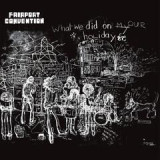
From a bunch of school friends setting out to be 'the British Jefferson Airplane', over the course of their first quartet of releases, the group metamorphosed into the leading exponents of British folk rock. In the way American folk and blues had looked back to gospel songs and spirituals, Fairport mined a seam a traditional English folk song, and then combined them with rock rhythms to create something ground-breaking and quickly emulated.
Clear LP[22,65 €]
Blue Lake is the musical moniker of American born, Copenhagen based multidisciplinary artist and musician Jason Dungan, who signs to the Tonal Union imprint for the release of his new longform album ‘Sun Arcs’. It follows 2022’s release ‘Stikling’, earning a nomination for ‘Album of the Year’ at the Danish Music Awards plus warm praise from The Hum blog and musicians and DJs alike including Jack Rollo (Time is Away/NTS) and Carla dal Forno. A self taught player, Dungan began freely experimenting with self-built multi-string instruments, preferring to build his own hybrid 48-string zither and working in the realms of left-field ambient music, off kilter folk and improvised acoustic minimalism.
The starting point of ‘Sun Arcs’ saw Jason travel for a week alone to Andersabo, a cabin set in the idyllic Swedish woods just outside of Unnaryd, known also as the music project, festival and residency space which has been run by Dungan since 2016, hosting artists like Sofie Birch, Johan Carøe and Ellen Arkbro. Whilst writing 1-2 pieces per day, a conscious decision was made to leave behind everyday distractions and shut out the outside world to instead focus on the natural passage of time as Dungan recalls: “My only sense of time came from these daily walks out in the woods with my dog, and an awareness of the sun’s path as it moved across the sky each day.”
The album’s immersive world unfolds with the opener ‘Dallas’, an ode to his home state and a musical synthesis of these two disparate spaces (Texas and Denmark), the touchstones of Dungan’s life. A folk-esque single acoustic builds to a flowing arrangement of clarinets, organ and cello drones coupled with percussion. ‘Green-Yellow Field’ chimes in as the first of two solo oriented zither recordings twinned with the dreamlike title track ‘Sun Arcs’, both densely rich as cascading and overlapping harmonic tones resound. ‘Bloom’ emerges with a krautrock psyche before an eruption of cello drones, slide guitar and free-ranging zither playing, ushering in the anticipation of spring. With half of the recordings conceived in Andersabo, Jason returned to Copenhagen to form the album's centre piece ‘Rain Cycle’ which features a tempered Roland drum machine alongside shifting zither improvisations. ‘Writing’ explores the shimmering harp-like qualities of sweeping playing figurations with Dungan mapping out adjusted tuning “zones” on the zither for unconventional but creatively liberating effects. ‘Fur’ captures the feeling of openness and the momentum of time, seeing Dungan perform waves of solo clarinet, often in one takes and embellished with textural drones, a zither solo, and layers of guitar. ‘Wavelength’ the album's closer is fondly inspired by the film works of Michael Snow and Don Cherry’s seminal live album ‘Blue Lake’ (1974), as it builds out from a drone-generated zither chord and features an alto recorder solo. Dungan found a deep connection to Cherry’s stripped back performance ethos, focusing on the core beauty of minimal instrumentation creating a genre-less meeting between folk and jazz. A dialogue is formed between the solo and the bandlike performances, interlinked in a geographical duality with all finding a sense of commonplace as musical sketches of visited landscapes. The bountiful instrumentation ebbs and flows as further layers emerge with Dungan constructing his material much like an artist would, recording and reviewing, adding and subtracting.
Musically it portrays a form of double life led by an American-identifying person living in Scandinavia, and a new found presence in Denmark, seeking out underdeveloped marshlands and barren stretches of beach adrift from other rhythms and distractions. Highlighting their individual and potent importance Dungan concludes: “Both places feel like “me”, I think on some level the music is always some kind of self-portrait.” ‘Sun Arcs’ depicts the intricate balance of nature’s cycles and the paths outlined by the seasons, from a winter dormancy to a warm sun drenched scene. The album scales new glorying heights and further defines Dungan’s musical narrative, inhabiting a unique space in left-field, improvised and experimental music, borning his most accomplished compositions to date. A singular and visionary expression, drawing on an array of instruments and sound worlds with a renewed sense of joy and discovery.
The album's rich tapestry was mixed by Jeff Zeigler (Laraaji, Mary Lattimore, Kurt Vile /Steve Gunn) and mastered by Stephan Mathieu (Kali Malone, KMRU, Félicia Atkinson).
Lewis II was the follow up to Lewis Taylor's epochal, self-titled debut album. It was initially released in 2000 and this double LP release, its first ever vinyl edition, has been heavily anticipated for nearly a quarter of a century. It's often years before most listeners catch up with an album's breathtaking vision and devastating execution, and so it has proved with Lewis II; it stands up exceptionally well today.
After Island rejected Lewis Taylor's second release (later released as The Lost Album), he returned to the studio to record Lewis II. Less esoteric than Lewis Taylor, Lewis II is a more polished, sophisticated funk and mature uptempo soul than the dark psych-soul of his debut. The production, whilst slicker, is a bit tougher, with more crisp, R&B-flavoured grooves and head-nod beats and more bass pumping up his voice. The vocal intensity present on album number one doesn't abate. Indeed, as Lewis himself noted, "my voice is better on Lewis II and the vocals are high in the mix."
The moody funk of "Party" sounds like a mad blend of Riot-era Sly Stone and Brian Wilson. It rides a stuttering drum machine groove with acapella harmony vocals arriving halfway through to stay for the duration. "My Aching Heart", with its clean, slick, late 90s R&B drums, could surely have been a single. Perhaps Lewis's idiosyncratic melodies would've been too challenging for the charts. Lewis *had hoped* "You Make Me Wanna" would be a single but the dank, organ-drenched groove, coupled with the growling eroticism of Lewis's vocals would've, again, made this beyond the pale for most mainstream music fans. Somewhat incongruous acidic synths and bleeps give way to a laconic summertime groove on breezy highlight "The Way You Done Me", all funky acoustic guitars and stunning, good-time vocals. Sumptuous ballad "Satisfied", a real fan favourite, marries unusual instrumentation with classic soul-ballad structure and closes with a monster guitar solo which almost out-Princes Prince in its gritty melodicism, set against sweeping strings of real majesty. Prog-Funk-Rock!
The dubbed-out, spaced-out "Never Gonna Be My Woman" is the closest the album comes to classic D’Angeloesque neo-soul, with echoes of the esoteric funk featured across Maxwell's contemporaneous Embrya. But what follows is on some next level business. As Lewis's biggest fan, Geoffrey Scull, noted, "the "I'm On The Floor" / "Lewis II" / "Into You" song cycle stacks up against any other consecutive 15 minutes of recorded music, ever!" And who are we to argue with that? These could've been hits for Justin Timberlake during his fascinating Timbaland-collaborating days, such is the sonic and textural pop experimentation at play here. The extraordinary title track sounds like an outtake from Marvin Gaye’s Trouble Man and spends its last third as a searingly dark piano-led psychedelic-guitar-crunching soul instrumental. Just astounding. And then. AND THEN! The way it segues into, er, "Into You" is just straight up genius. Goosebumps galore on this one, no words can describe its celestial brilliance. Just kick back and be beguiled by the "Let me come on over again" refrain that ornately adorns its sensational coda. Phew.
The swoonsome, lovelorn ballad "Blue Eyes", apparently written in the spirit of Marvin’s "Vulnerable", is a lush, slow swinger with some gorgeous noir touches. To close, Lewis completely retools Jeff Buckley’s beloved, beautiful "Everybody Here Wants You" and, while talking some liberties, even manages to surpass the original. Yes, really! With soaring, fiery vocals set against icy piano and psychedelic guitars, Lewis recasts Buckley's effort as dramatic, ethereal soul.
When it came to translating the original CD booklet into a 12 inch LP sleeve, thanks to some suggestions from Cally Callomon (head of Island’s art department, who designed all the sleeves for Lewis’s two Island albums and their singles) and his trusting us with his “Lewis Taylor” folder full of various negatives, test prints and whatever else he was able to salvage from the old Island art department, we’ve gotten pretty close to what the original LP sleeve would’ve looked like if it existed. Simon Francis’s vinyl mastering, presents the eleven tracks over a double LP so, as ever, the record sounds outstandingly good. The records have been cut by Cicely Balston at Air Studios and pressed at Record Industry.
- A1: Renaud Mayeur Dago Theme
- A2: The Nick Leonardo Orchestra Ghost City Blues
- A3: The Nick Leonardo Orchestra The 12 Bastards Of Lucifer
- A4: Jean-Marc Lederman Immaculate
- B1: Moaning Cities Easter
- B2: The Nick Leonardo Orchestra Hellhounds
- B3: Jean-Marc Lederman Man Behind The Curtain
- B4: Jean-Marc Lederman Blackout
- C1: Jack O'roonie Man Alone
- C2: Renaud Mayeur Murder One
- C3: Renaud Mayeur I Wish I Was With You
- C4: Renaud Mayeur Soulless
- C5: Jean Marc Lederman - Raw Deal
- D1: Ashtoreth Threnody V
Director's note : "My encounter with Wild Dee, the main actor in DOUBLEPLUSUNGOOD, was a determining factor in the making of this film. Not only are we strongly influenced by the same literary atmospheres - Among them American authors like Harry Crews, Iceberg Slim, N.Tosches and Belgian horror author Jean Ray - we also share the same cinematic tastes - low budget cinema be it French, Japanese or Spanish. Our main aim was to recreate the spirit, and play with and even subvert, the codes of Exploitation cinema. We also share the same taste for Rock & Roll, as our parallel musical backgrounds show. We were both singers in emblematic Belgian rock bands of the 80's and 90's - Wild Dee in The Wild Ones and me with Marine (79/81 - 3 singles with Les Disques du Crepuscule) and La Muerte (84/94 - 6 albums with Pias). The film's soundtrack, inspired by Francois de Roubaix, John Carpenter, Lalo Shiffrin, is like its second layer of dialogue: the original compositions of Renaud Mayeur (winner of the Magritte 2013 Belgian cinema awards for best soundtrack) and of J-M Lederman (Fat Gadget, TheThe, ... ), Moaning Cities, Ashtoreth, The Nick Leonardo Orchestra, The Manarays, Jack'O'Roonie. " A further thing that brings us together is something that has been with us since childhood and that we Belgians call: Belgitude...
Black Duck captures a band already deeply in tune with one another. The three-piece super-group consists of Douglas McCombs, Charles Rumback, and Bill MacKay each has a distinct musical voice that is instantly recognizable, yet blends seamlessly with one another-their time performing together, playing to the moment and reading each other and the spaces they"re in formed a fluency between the trio which allows them to follow each other down winding paths and short tangents alike. McCombs is a founding member of Tortoise, Pullman, and Brokeback and the long-standing bassist for Eleventh Dream Day, an artist whose contribution to the music world can not be overstated. MacKay began releasing records in the early 2000s. He has released several acclaimed solo albums with Drag City as well as a duo album each with Nathan Bowles (Banjo, Black Twig Pickers), and Katinka Kleijn (Cello, Chicago Symphony Orchestra (CSO)), and two beloved records with Ryley Walker. Rumback burst onto the fertile Chicago improvised music scene in the early 2000"s. His fluid technique and expressive playing garnered him much attention. In addition to his solo releases, Rumback has recorded with Ryley Walker, jazz greats such as Jim Baker, James Singleton, and Greg Ward. Black Duck"s debut is a testament to that fluency, an expedition led by three veterans into alluring worlds bathed in myriad splendors. Black Duck is a gallery of sonic tapestries, unbound by any genre constraints. Black Duck redefines what two guitarists and a drummer can do, pieces move from breezy shuffles to stormy blues rumbles to gorgeous textural drones. Playing entirely improvised live sets for years helped develop the trio"s acute senses for one another, knowing precisely how to listen to the others and bolster whatever direction they move in. In the short time the trio have played together, they have performed at Big Ears Festival and alongside acts like Yo La Tengo.