The Healer is a critically acclaimed album by the legendary blues musician John Lee Hooker. Released in 1989, it stands as a testament to Hooker's profound influence on the genre and his ability to evolve his sound while staying true to his roots. The album showcases his distinctive guitar style, gritty vocals, and masterful storytelling, creating an immersive and emotionally charged musical experience.
The Healer features an impressive array of guest artists, each bringing their unique talents to the table. Renowned musicians such as Carlos Santana, Bonnie Raitt, Robert Cray, Canned Heat, and Los Lobos join forces with Hooker, creating a rich tapestry of blues, rock, and soul.
On the title track Hooker's deep, resonant voice combined with Santana's searing guitar work creates an unforgettable blues anthem that speaks to the power of music as a healing force. The lyrics are introspective, introspective, and poignant, reflecting on the struggles of life and the solace found in the blues.
Throughout the album, Hooker explores a range of themes, from love and loss to societal issues and personal introspection. Tracks like "I'm in the Mood" and "Baby Lee" exude a raw sensuality, showcasing Hooker's ability to infuse his music with passion and desire. Meanwhile, songs like "Cry Baby" and "The Healing Game" delve into deeper emotional territory, capturing the pain and resilience of the human spirit.
Hooker was 73 years of age when The Healer came out and earned his first — of many future — Grammy accolades, winning Best Traditional Blues Recording for "I'm In The Mood." This edition features lacquers cut by Bernie Grundman, and pressing on 180-gram vinyl at Quality Record Pressings, for superior sound.
With its exceptional musicianship, thought-provoking lyrics, and powerful collaborations, The Healer remains a standout album in John Lee Hooker's discography.
Buscar:blue on blue
Clear LP[22,65 €]
Blue Lake is the musical moniker of American born, Copenhagen based multidisciplinary artist and musician Jason Dungan, who signs to the Tonal Union imprint for the release of his new longform album ‘Sun Arcs’. It follows 2022’s release ‘Stikling’, earning a nomination for ‘Album of the Year’ at the Danish Music Awards plus warm praise from The Hum blog and musicians and DJs alike including Jack Rollo (Time is Away/NTS) and Carla dal Forno. A self taught player, Dungan began freely experimenting with self-built multi-string instruments, preferring to build his own hybrid 48-string zither and working in the realms of left-field ambient music, off kilter folk and improvised acoustic minimalism.
The starting point of ‘Sun Arcs’ saw Jason travel for a week alone to Andersabo, a cabin set in the idyllic Swedish woods just outside of Unnaryd, known also as the music project, festival and residency space which has been run by Dungan since 2016, hosting artists like Sofie Birch, Johan Carøe and Ellen Arkbro. Whilst writing 1-2 pieces per day, a conscious decision was made to leave behind everyday distractions and shut out the outside world to instead focus on the natural passage of time as Dungan recalls: “My only sense of time came from these daily walks out in the woods with my dog, and an awareness of the sun’s path as it moved across the sky each day.”
The album’s immersive world unfolds with the opener ‘Dallas’, an ode to his home state and a musical synthesis of these two disparate spaces (Texas and Denmark), the touchstones of Dungan’s life. A folk-esque single acoustic builds to a flowing arrangement of clarinets, organ and cello drones coupled with percussion. ‘Green-Yellow Field’ chimes in as the first of two solo oriented zither recordings twinned with the dreamlike title track ‘Sun Arcs’, both densely rich as cascading and overlapping harmonic tones resound. ‘Bloom’ emerges with a krautrock psyche before an eruption of cello drones, slide guitar and free-ranging zither playing, ushering in the anticipation of spring. With half of the recordings conceived in Andersabo, Jason returned to Copenhagen to form the album's centre piece ‘Rain Cycle’ which features a tempered Roland drum machine alongside shifting zither improvisations. ‘Writing’ explores the shimmering harp-like qualities of sweeping playing figurations with Dungan mapping out adjusted tuning “zones” on the zither for unconventional but creatively liberating effects. ‘Fur’ captures the feeling of openness and the momentum of time, seeing Dungan perform waves of solo clarinet, often in one takes and embellished with textural drones, a zither solo, and layers of guitar. ‘Wavelength’ the album's closer is fondly inspired by the film works of Michael Snow and Don Cherry’s seminal live album ‘Blue Lake’ (1974), as it builds out from a drone-generated zither chord and features an alto recorder solo. Dungan found a deep connection to Cherry’s stripped back performance ethos, focusing on the core beauty of minimal instrumentation creating a genre-less meeting between folk and jazz. A dialogue is formed between the solo and the bandlike performances, interlinked in a geographical duality with all finding a sense of commonplace as musical sketches of visited landscapes. The bountiful instrumentation ebbs and flows as further layers emerge with Dungan constructing his material much like an artist would, recording and reviewing, adding and subtracting.
Musically it portrays a form of double life led by an American-identifying person living in Scandinavia, and a new found presence in Denmark, seeking out underdeveloped marshlands and barren stretches of beach adrift from other rhythms and distractions. Highlighting their individual and potent importance Dungan concludes: “Both places feel like “me”, I think on some level the music is always some kind of self-portrait.” ‘Sun Arcs’ depicts the intricate balance of nature’s cycles and the paths outlined by the seasons, from a winter dormancy to a warm sun drenched scene. The album scales new glorying heights and further defines Dungan’s musical narrative, inhabiting a unique space in left-field, improvised and experimental music, borning his most accomplished compositions to date. A singular and visionary expression, drawing on an array of instruments and sound worlds with a renewed sense of joy and discovery.
The album's rich tapestry was mixed by Jeff Zeigler (Laraaji, Mary Lattimore, Kurt Vile /Steve Gunn) and mastered by Stephan Mathieu (Kali Malone, KMRU, Félicia Atkinson).
Lewis II was the follow up to Lewis Taylor's epochal, self-titled debut album. It was initially released in 2000 and this double LP release, its first ever vinyl edition, has been heavily anticipated for nearly a quarter of a century. It's often years before most listeners catch up with an album's breathtaking vision and devastating execution, and so it has proved with Lewis II; it stands up exceptionally well today.
After Island rejected Lewis Taylor's second release (later released as The Lost Album), he returned to the studio to record Lewis II. Less esoteric than Lewis Taylor, Lewis II is a more polished, sophisticated funk and mature uptempo soul than the dark psych-soul of his debut. The production, whilst slicker, is a bit tougher, with more crisp, R&B-flavoured grooves and head-nod beats and more bass pumping up his voice. The vocal intensity present on album number one doesn't abate. Indeed, as Lewis himself noted, "my voice is better on Lewis II and the vocals are high in the mix."
The moody funk of "Party" sounds like a mad blend of Riot-era Sly Stone and Brian Wilson. It rides a stuttering drum machine groove with acapella harmony vocals arriving halfway through to stay for the duration. "My Aching Heart", with its clean, slick, late 90s R&B drums, could surely have been a single. Perhaps Lewis's idiosyncratic melodies would've been too challenging for the charts. Lewis *had hoped* "You Make Me Wanna" would be a single but the dank, organ-drenched groove, coupled with the growling eroticism of Lewis's vocals would've, again, made this beyond the pale for most mainstream music fans. Somewhat incongruous acidic synths and bleeps give way to a laconic summertime groove on breezy highlight "The Way You Done Me", all funky acoustic guitars and stunning, good-time vocals. Sumptuous ballad "Satisfied", a real fan favourite, marries unusual instrumentation with classic soul-ballad structure and closes with a monster guitar solo which almost out-Princes Prince in its gritty melodicism, set against sweeping strings of real majesty. Prog-Funk-Rock!
The dubbed-out, spaced-out "Never Gonna Be My Woman" is the closest the album comes to classic D’Angeloesque neo-soul, with echoes of the esoteric funk featured across Maxwell's contemporaneous Embrya. But what follows is on some next level business. As Lewis's biggest fan, Geoffrey Scull, noted, "the "I'm On The Floor" / "Lewis II" / "Into You" song cycle stacks up against any other consecutive 15 minutes of recorded music, ever!" And who are we to argue with that? These could've been hits for Justin Timberlake during his fascinating Timbaland-collaborating days, such is the sonic and textural pop experimentation at play here. The extraordinary title track sounds like an outtake from Marvin Gaye’s Trouble Man and spends its last third as a searingly dark piano-led psychedelic-guitar-crunching soul instrumental. Just astounding. And then. AND THEN! The way it segues into, er, "Into You" is just straight up genius. Goosebumps galore on this one, no words can describe its celestial brilliance. Just kick back and be beguiled by the "Let me come on over again" refrain that ornately adorns its sensational coda. Phew.
The swoonsome, lovelorn ballad "Blue Eyes", apparently written in the spirit of Marvin’s "Vulnerable", is a lush, slow swinger with some gorgeous noir touches. To close, Lewis completely retools Jeff Buckley’s beloved, beautiful "Everybody Here Wants You" and, while talking some liberties, even manages to surpass the original. Yes, really! With soaring, fiery vocals set against icy piano and psychedelic guitars, Lewis recasts Buckley's effort as dramatic, ethereal soul.
When it came to translating the original CD booklet into a 12 inch LP sleeve, thanks to some suggestions from Cally Callomon (head of Island’s art department, who designed all the sleeves for Lewis’s two Island albums and their singles) and his trusting us with his “Lewis Taylor” folder full of various negatives, test prints and whatever else he was able to salvage from the old Island art department, we’ve gotten pretty close to what the original LP sleeve would’ve looked like if it existed. Simon Francis’s vinyl mastering, presents the eleven tracks over a double LP so, as ever, the record sounds outstandingly good. The records have been cut by Cicely Balston at Air Studios and pressed at Record Industry.
Whenever Bill Evans sat down at the Piano to play, the world sat up, listened and
was carried away by the thoughtful and melodic sounds he achieved at the Keyboard,
with a style that was seductive and instantly recognisable. In 1955 he began playing
gigs at the Village Vanguard Jazz Club in New York where he met Thelonious Monk
and Miles Davis. Davis was among the first to appreciate the special qualities of the
young Pianist when the Trumpeter recruited him to play on Kind Of Blue, the 1959
album hailed as a milestone in Jazz history. This aptly named 'Platinum' collection
showcases the best of his recordings from the late 1950s and early 1960s; Autumn
Leaves, Blue In Green and Someday My Prince Will Come. Bill's unique combination
of Classical and Jazz influences is displayed on such songs as Waltz For Debby and
the sublime Peace Piece.
From Elvis in Memphis retains the distinction of being the most cohesive, passionate, mature, and emotionally invested record Elvis Presley ever made. Named one of the 500 Greatest Albums of All Time by Rolling Stone, the white-soul landmark features backing by "The "Memphis Boys" and teems with rhythm-heavy country, gospel, R&B, and blues. Lauded for its natural, open sonics, the 1969 set now comes across with remarkable clarity, presence, and warmth courtesy of a premium restoration befitting a king.
Mastered from the original master tapes, pressed on MoFi SuperVinyl at RTI, and strictly limited to 10,000 numbered copies, Mobile Fidelity's UltraDisc One-Step 180g 45RPM 2LP box set of From Elvis in Memphis unearths the ravishing inner detail, sticky rhythms, and brilliant arrangements of Chips Moman's inspired production. In short, this unparalleled reissue unlocks the spirit and gestalt of the recording and takes you inside American Sound Studio. It also brings you up close and personal with Presley's singing – widely considered by many to represent the finest of his career – located dead-centre amidst the instrumental hurricane. Equally impressive are the contributions of the aforementioned Boys, and how their Southern-brewed playing – a balance of leisure with swiftness, grandiosity with concision, freedom with control – dovetails with Presley's vernacular.
The lavish packaging and gorgeous presentation of the UD1S From Elvis in Memphis pressing befit its extremely select status. Housed in a deluxe box, it features special foil-stamped jackets and faithful-to-the-original graphics that illuminate the splendor of the recording. No expense has been spared. Aurally and visually, this UD1S reissue exists as a curatorial artifact meant to be preserved, pored over, touched, and examined. It is made for discerning listeners that prize sound quality and production, and who desire to fully immerse themselves in the art – and everything involved with the album, from the images to the finishes.
Sharing much in common with the full, rich, orchestrated Stax Records sound, From Elvis in Memphis oozes with choice nuances and distinctive flourishes that on this ultra-hi-fi edition not only arise with previously unheard transparency and sharpness, but complement and serve the whole. Take the specific tonalities and blending of violas, cellos, and horns that communicate mood and serve as counterpoints. Or lively performances of the backing quintet, and how the piano and Hammond organ trace the lines of the melodies and Presley's lead. Listen to the uplifting support provided by the cadre of backing vocalists (more than a dozen credited), unrivalled in Presley's canon and a precursor to the approach he'd soon adopt in Las Vegas.
Of course, From Elvis in Memphis precedes the icon's transition into his glitzy jumpsuit phase – and follows his merciful move away from the hoary soundtrack work that consumed nearly a decade of his creative life and prompted a rebirth that began in 1968. As the bridge between eras, the record seizes on Presley's rejuvenated attitude and commitment to quality, facets that drip from the fervency with which he delivers every word. For the same reasons, and for the fact it traces back to Presley's original roots and hip-shaking guise, the album further remains a cornerstone of American music history.
Writing about the work's 40th anniversary for Rolling Stone, James Hunter correctly observed: "From Elvis in Memphis represented the full-on immersion in the Memphis idea of Elvis Presley, the American singer second only to Frank Sinatra for the ability to conjure a particular sonic universe with his merest vocal utterance. And from the album's first song, in which a bluesy Elvis espies a woman 'Wearin' That Loved On Look,' to its last, in which a more straight-up-pop Elvis regrets the injustices of life 'In the Ghetto,' his fully engaged, newly energized voice finds its most logical album setting in years."
Incredibly, Presley and company completed more than two dozen cuts for From Elvis in Memphis. One, "Suspicious Minds," turned into the vocalist's final chart-topping single and lingers as one of his most beloved rock n' roll numbers. Even though it never formally appeared on the record, the non-album song is included here as a bonus track and attains newfound depth, energy, and swagger. Coupled with the other dozen tracks – including the sultry "Power of My Love," balladic take of Dallas Frazier's "True Love Travels on a Gravel Road," and driving cover of Hank Snow's I'm Moving On" – it makes for the finest Elvis listening experience available.
Lucinda Williams’ music has gotten her through her darkest days. It’s been that way since growing up amid family chaos in the Deep South, as she recounts in her candid new memoir, Don’t Tell Anybody the Secrets I told You. Over the past two years, it’s been the force driving her recovery from a debilitating stroke she suffered on November 17, 2020, at age 67. Her masterful, multi-Grammy-winning songwriting has never deserted her. To wit, her stunning, sixteenth studio album, Stories from a Rock n Roll Heart, brims over with some of the best work of her career. And though Williams can no longer play her beloved guitar – a constant companion since age 12 – her distinctive vocals sound better than ever. The band rocks out on the album’s jubilant opening track, “Let’s Get the Band Back Together,” which features a gang of background singers, including Margo Price and Buddy Miller. Inspired by “that need for community after all the isolation of the pandemic,” Williams offers, the song is “about getting old friends together again who’d drifted apart.” Price also joins her on the bluesy protest, “This Is Not My Town.” The evocative “New York Comeback” also includes guest vocalists – Bruce Springsteen and Patti Scialfa. A Lucinda Williams fan, Springsteen had joined her onstage in London a few years back, and he and Scialfa had wanted to contribute to a Williams album for a while. With Reese Wynans on B3 and the Pettibone-Mathis guitar attack, the musical setting perfectly matches the theme of “Comeback,” as well as on the catchy story-song “Rock N’ Roll Heart,” to which Springsteen and Scialfa also contributed vocals. Says Williams, “Having Bruce and Patti on these songs feels really great. It’s just so cool!” As she promises on the powerful last track of Stories from a Rock n Roll Heart–one of the best albums of her career–Lucinda Williams is “never gonna fade away.”
- 01: Worldwide
- 02: Angel Strike
- 03: Damien Darhk
- 04: Limbo Genki Dama Feat. King Kakarot
- 05: Old Earth
- 06: Intergalaktus
- 07: Fonk Abyss
- 08: 4000 Ad Feat. Renelle 893
- 09: Inside
- 10: Dustman Feat. Jerré
- 11: ?££ For Beats!
- 12: The Essence
- 13: Blue
- 14: House Of Cards
- 15: Hollywood Feat. Fliptrix
- 16: Soul Calibur
- 17: Most Blunted
- 18: Virus World
- 19: Solar Flare Feat. Verb T & Moka Only
- 20: Infinitizm
- 21: Astro Children Feat. Hpblk, Ash The
- Author & Booda French
- 22: North Star Feat. Maddy
- 23: Deepspace Slime
- 24: Old Earth
The adequately titled ‘The Album To End All Alien Abductions’ sees UK stalwart
King Kashmere and producer/rapper extraordinaire Alecs DeLarge unite for a 24-
track ride through an epic space age boom bap odyssey.
“F**k with your boy Judas Ascariot, who came back swinging - whipping the
super chariot” declares a triumphant King Kashmere on the album opener ‘Angel
Strike’, proving he hasn’t lost a step since his last full length rap project,
#LP4080 dropped back in 2017.
Thematically Kash’s lyrics are routed in sci-fi and Jack Kirby era comic lore,
but on cuts such as ‘Old Earth’ (an ode to his Mother and coming of age on a
North London council estate and ‘House of Cards’ (an exploration of mental
health) the Iguana Man shows a rare glimpse into the man behind the freshly
pressed super suit.
Several cuts also see Alecs stepping from behind the boards to join Kashmere
on mic duties, a pairing best displayed on the dusty bubbler ‘Most Blunted’ in
which the duo trade verses in a puff puff pass of lyrical spliff boxing.
[a] 01 - Worldwide [Intro]
[i] 09 - Inside [Skit]
[k] 11 - £££ For Beats! [Skit]
[m] 13 - Blue [Instrumental]
[o] 15 - Hollywood Feat. Fliptrix [Skit]
[r] 18 - Virus World [Instrumental]
[x] 23 - Deepspace Slime [Outro]
[y] 24 - Old Earth [Remix]
Originally released in October 1993, “The Crossing” was Paul
Young’s fifth and final album for Columbia Records. Produced
mainly by Don Was and featuring top musicians such as Billy
Preston, The Memphis Horns, Jeff Porcaro and Pino Palladino,
the album is regarded by fans and critics as one of Paul
Young’s very best solo works. When interviewed for this 30th
Anniversary release, Paul Young said: “If you were to ask me
the albums I most enjoyed making they would be the first
and the last for Columbia Records; No Parlez and The
Crossing. On The Crossing, it was the caliber of the musicians
that I worked with and I was working with my musical heroes,
some of which I’d admired since I was a teenager. The
sessions were so relaxed and all the people in the studio
were such lovely people to work with, I will remember it
forever.” 7A Records is reissuing The Crossing on 180g coloured vinyl and CD. The recordings have been remastered and
the packaging will include rare photos, extensive liner notes, an exclusive Paul Young interview and lyrics to all of the
songs. The vinyl version comes in a gatefold sleeve and pressed on 180g Turquoise Viny
Rico Puestel (Cocoon / Break New Soil) presents an exclusive collection of long-lost Techno tracks from his 2002-2004 archives on blue double vinyl, accompanied by a dream painting Rico did in basic school as full colour artwork!
Seemingly and somehow being ahead of their time, these tracks never made it to an official release although Rico always desired their sheer existence and overall sound, standing out in many different ways...
A further exhibition on the run!
Santana's self-titled debut album announces the arrival of a new Guitar God. Made during the legendary bandleader's most fruitful and creative period, the classic 1969 set functions as an accessible entry point into the tangy worlds of Latin music by way of an intoxicating blend of Afro-Cuban percussion, jazzy tempos, exotic leads, bluesy riffs, and psychedelic accents.
Indeed, separation between Carlos Santana's fluid fills, spicy solos, and broiling grooves and pianist Gregg Rolie's soulful Hammond organ runs allows the music to come alive with a newfound freshness and radiance. Songs simmer, with each passage bursting forth with vibrant colour. Just like the equally essential follow-up Abraxas, Santana also lays claim to one of the biggest (and unfortunate) production gaffes in music history.
For nearly four decades, copies were produced with the left and right channels reversed, meaning that everything was placed in a backwards manner. This even extended to compilations on which individual songs from Santana were included. Rest assured that, in addition to boasting reference audiophile sonics, this 180g 45RPM 2LP set gets all the specifications exactly right. And with a record of this magnitude, you want everything to be perfect.
Bound by natural chemistry and earthy spirituality, the record's innovative synthesis of myriad styles goes beyond anything that came before – as well as nearly everything that's followed. Playing with the finest band that the iconic guitarist ever had, Santana doesn't water down any exotic roots or simply incorporate mainstream Western styles into a Latin framework. This is a true hybrid, responsible for opening up borders, transcending cultural divides, and, most importantly, exhilarating the senses.
Released just weeks after the band blew minds at Woodstock, the groundbreaking record stands alongside Miles Davis' Bitches Brew and Jeff Beck's Beck-Ola as a pillar of rock fusion. Featuring the Top Ten radio smash "Evil Ways" and jam favorite "Soul Sacrifice," it hasn't aged a day. Hear like never before why Rolling Stone says Santana is #149 on its list of the Greatest Albums of All Time.
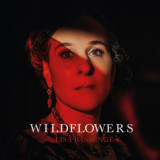
Lisa Bassenge ist zurück, und sie hat Blumen mitgebracht. Mit "Wildflowers" vollendet sie ihre Trio-Trilogie, wieder mit Jacob Karlzon am Klavier und Andreas Lang am Bass - wie schon bei "Borrowed and Blue" (2018) und "Mothers" (2020).
Elf Songs sind es diesmal, scheinbar querbeet und doch aus einem Guss. Von Dolly Parton bis Depeche Mode reicht die Bandbreite auf "Wildflowers", von Bob Dylan bis Death Cab for Cutie. Dazu Lisa Bassenges hintergründig-melancholische Eigenkomposition "Morning Song". Ein bunter Strauß, aber so wie die drei ihn arrangieren und darbieten, wirken die einzelnen Stücke nicht zusammengewürfelt, sondern wie Kapitel einer Erzählung. Jedes schillert für sich, doch das Ganze ist mehr als die Summe seiner Teile.
Das gilt auch für das Trio selbst. Die beiden Musiker - Jacob Karlzon aus Schweden und Andreas Lang aus Dänemark - betten Lisa Bassenges unverwechselbare Stimme in einen warmen, im besten Sinn skandinavischen Sound: entspannt, aber stets verbindlich; sehr spielfreudig, aber nie aufdringlich. "Dieser Sound hat uns gefunden", sagt Lisa Bassenge. Und auf "Wildflowers" haben die drei ihn zur Vollendung gebracht. Jeder Takt des Albums bezeugt die unglaubliche Chemie zwischen der Sängerin und den Musikern.
Was die Songs außerdem verbindet, ist die Qualität der Lyrics. Es sind poetische Texte von existentieller Tiefe, und in Lisa Bassenges eindringlicher Interpretation und glasklarer Phrasierung werden sie zum berauschenden Kopfkino.
Ist das nun Jazz, Pop oder Chanson? Mit "Wildflowers" zeigt das Lisa Bassenge Trio einmal mehr souverän, wie fließend die Grenzen zwischen vermeintlich ganz unterschiedlichen Genres sind. Diese Musik braucht keine Schublade. Es geht ihr um die Schönheit und Wahrheit der Songs.
- A1: Stompin' At The Savoy
- A2: Flying Home
- A3: Practising, Practising, Just Great
- A4: Relaxing At Camarillo
- B1: Blackbird - White Chicks
- B2: Cool Blues
- B3: You Go To My Head
- B4: If I Should Lose You
- B5: My Ship
- A1: Long Ago (And Far Away)
- A2: Good Morning Heartache
- A3: Never Let Me Go
- A4: Roy Haynes (Reprise)
- A5: Airto
- B1: Roll 'Em Charlie
- B2: What's New
- B3: Take The "A" Train
Charlie Watts “Anthology” is an affectionate retrospective and a reflection of just how frequently Watts was able to exercise his jazz muscles between Rolling Stones commitments to create a bespoke discography of his own. Including 3 unreleased tracks.
The names of Charlie's jazz heroes fell from his lips like a superfan turning the pages of a personal scrapbook. Charlie Parker, Gerry Mulligan, Chico Hamilton, Dave Green, Stan Tracey, Peter King, Courtney Pine, Gail Thompson, Brian Lemon, Gerard Presencer, the Red Rodney group and collaborator Jim Keltner. He knew every player, every session, every album, every outfit they wore on the cover, and he spoke about them with a deep and genuine reverence. He may have been a globally loved hero in the biggest band in the word, but he swatted away any compliment or comparison with his musical favourites. He counted himself their admirer, never their equal.
The Anthology includes an extended essay by Paul Sexton which documents Charlie Watt’s jazz career and the essential albums covered in the collection.
Der Titel des zweiten Siamese Elephants Albums ist so etwas wie die Umkehrung des Beatles-Klassikers 'Here Comes the Sun', weil darauf dessen hoffnungsvoller Optimismus auf ein Weltuntergangsszenario umgelegt wird. Darf man tanzen, wenn alles den Bach runtergeht? 'There Goes the Sun' ist ein Versuch, sich zurechtzufinden in dem ganzen Wahnsinn und ein Plädoyer dafür, die Zeit, die uns bleibt, zu genießen.
- 1: Helplessly - Moment Of Truth
- 2: After You've Had Your Fling - The Intrepids
- 3: Welcome To The Club - Blue Magic
- 4: I Can't Move No Mountains - Margie Joseph
- 5: Supernatural Thing Part 1 - Ben E King
- 6: Mellow Me - Faith, Hope & Charity
- 7: Georgia's After Hours - Richard "Popcorn" Wylie
- 8: Date With The Rain - Eddie Kendricks
- 9: Just As Long As We're Together - Gloria Scott
- 10: Wendy Is Gone - Ronnie Mcneir
- 11: Got To Get You Back - Sons Of Robin Stone
- 12: Night Of The Wolf (Tema Del Lupo) - Ivano Fossati
- 13: Good Things Don't Last Forever – Ecstasy, Passion & Pain
- 14: Tell Me What You Want - Jimmy Ruffin
- 15: Keep It Up - Betty Everett
- 16: Free & Easy - Satyr
- 17: Each Morning I Wake Up - Major Harris
- 18: It's The Same Old Story - Act I
- 19: You Can't Hide Love - Creative Source
- 20: The Whole Damn World Is Going Crazy – John Gary Williams
- 21: If That's The Way You Feel - White Heat
- 22: Wake Up Everybody - Harold Melvin And The Bluenotes
Before there was Saturday Night Fever there was underground disco. DJs across America went out and found the music to play; dancers went out and found the clubs. At this point, in the early seventies, the disco was the venue and not a genre of music.
By the time Nik Cohn’s short story Tribal Rites of the New Saturday Night was published by New York magazine in June 1976, disco was the biggest genre of music on the charts and was about to get bigger still, becoming an all-enveloping cultural phenomenon. Cohn sold the film rights to Robert Stigwood, and his classic club yarn became Saturday Night Fever.
“Tribal Rites Of The New Saturday Night” is the soundtrack to Cohn’s story, where disco began; a 1975 score for the underground clubs of Brooklyn and Queens that played R&B, soul and Latin beats to people who lived for the weekend.
Bob Stanley has put this collection together, sourcing what was actually played in Brooklyn discos in 1974 and 1975. Only a few specific records were mentioned in Cohn’s feature, but two of them – Ben E King’s ‘Supernatural Thing Part 1’ and Harold Melvin’s ‘Wake Up Everybody’ - were cosmically great and both are included here, alongside underground favourites like Moment Of Truth’s Four Tops-like ‘Helplessly’ and Gloria Scott’s Barry White-produced modern soul classic ‘Just As Long As We’re Together’. Ivano Fossati’s incredible ‘Night Of The Wolf’ has fans in northern soul, disco and prog circles.
Without Cohn’s original story, it’s quite possible that disco would have remained an underground phenomenon – “Tribal Rites Of The New Saturday Night” paints a scene in full flower. Saturday Night Fever would eventually, if unintentionally, wreck the underground nature of this scene, and clubs like Studio 54 would destroy the democracy of the party, but for two or three years the scene was largely undocumented and magical. This album is the sound of disco before it was captured.
Originally released in 1993 on DJ Phantasy’s Liquid Wax label, it has now been repressed in conjunction with Vinyl Fanatiks on coloured vinyl – options red/white/blue.
DJ Phantasy co-production alongside his mate Simon aka DJ Kid Twist. This was produced at Jack Smooth’s studio and engineered by a young Alex Reece, who later found fame on Metalheadz.
This record, as with most of the Liquid Wax backcat, is sought after on original press so we are delighted to be able to get this repress out to you in a high quality gloss Liquid Wax housebag and white inner sleeve. Released on either red, white or blue 180g heavyweight vinyl.
Fleetwood Mac is the tenth studio album by British-American rock band Fleetwood Mac, released on 11 July 1970. This was the first Fleetwood Mac album with Lindsey Buckingham as guitarist and Stevie Nicks as vocalist, after Bob Welch departed the band in late 1974.
The album peaked at number one on the US Billboard 200 chart dated 4 September 1976, 58 weeks after entering the chart, and spawned three top-twenty singles: "Over My Head", "Rhiannon", and "Say You Love Me", the last two falling just short of the top ten, both at number 11.
- A1: Renaud Mayeur Dago Theme
- A2: The Nick Leonardo Orchestra Ghost City Blues
- A3: The Nick Leonardo Orchestra The 12 Bastards Of Lucifer
- A4: Jean-Marc Lederman Immaculate
- B1: Moaning Cities Easter
- B2: The Nick Leonardo Orchestra Hellhounds
- B3: Jean-Marc Lederman Man Behind The Curtain
- B4: Jean-Marc Lederman Blackout
- C1: Jack O'roonie Man Alone
- C2: Renaud Mayeur Murder One
- C3: Renaud Mayeur I Wish I Was With You
- C4: Renaud Mayeur Soulless
- C5: Jean Marc Lederman - Raw Deal
- D1: Ashtoreth Threnody V
Director's note : "My encounter with Wild Dee, the main actor in DOUBLEPLUSUNGOOD, was a determining factor in the making of this film. Not only are we strongly influenced by the same literary atmospheres - Among them American authors like Harry Crews, Iceberg Slim, N.Tosches and Belgian horror author Jean Ray - we also share the same cinematic tastes - low budget cinema be it French, Japanese or Spanish. Our main aim was to recreate the spirit, and play with and even subvert, the codes of Exploitation cinema. We also share the same taste for Rock & Roll, as our parallel musical backgrounds show. We were both singers in emblematic Belgian rock bands of the 80's and 90's - Wild Dee in The Wild Ones and me with Marine (79/81 - 3 singles with Les Disques du Crepuscule) and La Muerte (84/94 - 6 albums with Pias). The film's soundtrack, inspired by Francois de Roubaix, John Carpenter, Lalo Shiffrin, is like its second layer of dialogue: the original compositions of Renaud Mayeur (winner of the Magritte 2013 Belgian cinema awards for best soundtrack) and of J-M Lederman (Fat Gadget, TheThe, ... ), Moaning Cities, Ashtoreth, The Nick Leonardo Orchestra, The Manarays, Jack'O'Roonie. " A further thing that brings us together is something that has been with us since childhood and that we Belgians call: Belgitude...