In 1975, under the oppressive air of military dictatorship in Brazil, brothers Lelo and Zé Eduardo Nazario invited bassist Zeca Assumpção to join their musical experiments in a basement under Sao Paulo’s Teodoro Sampaio Street. As teenagers, the trio had already been playing together in Hermeto Pascoal’s Grupo, alongside guitarist Toninho Horta and saxophonist Nivaldo Ornelas, and it was while working together under Hermeto’s direction that the Paulista rhythm section (as they were then known) began to realise their own potential.
With many nightclubs and venues closed in the mid-70s and government censors dictating the output of radio, TV and art galleries, many Brazilian artists fled during the years of dictatorship. But underground, Grupo Um were fusing avant garde ideals with contemporary jazz and Afro Brazilian rhythm; making phenomenally free and expressive music - in stark contrast to the sterile, conservative conditions being imposed above ground.
Just like Hermeto Pascoal’s Viajando Com O Som from the following year, Starting Point was recorded over two days at Vice-Versa Studios, by revered engineer Renato Viola. The studio was one of the best in Sao Paulo and musicians communicated with engineers through cameras and a monitor, allowing the group complete immersion in the process. They also made use of the studio’s hemispherical tiled room, which served as an acoustic reverberation chamber.
The album begins with Zé Eduardo Nazario’s thunderous drum solo on “Porão da Teodoro”, before clearing the clouds with the lone Berimbau which opens “Onze Por Oito”. Built around a hypnotic electric bass line, heady Fender Rhodes improvisations, and more rip-roaring drums, it’s a rapturous, electrifying freak-jam in 11/8.
Like some invertebrate deep-sea curiosity, the free-form “Organica” is made up of Lelo Nazario’s playfully eerie prepared piano, with Zé Eduardo’s percussion flurries darting around Assumpçao’s double bass. The equally non-conformist, percussion-only piece “Jardim Candida” features many of Zé Eduardo’s home-made instruments, including a long saw blade played with vibraphone sticks and violin bow. While working with Hermeto, Zé Eduardo famously built his own all-in-one percussion set-up known as the “Barraca de Percussão” (Percussion Tent) - the first of its kind in Brazil, which he would also use on Hermeto Pascoal’s Viajando Com O Som and throughout his career.
“Suite Orquidea Negra'' (Black Orchid Suite) was written by Lelo Nazario as the score for an imaginary movie - the story of a rare, black orchid which produced a substance meant to cure all diseases, but which had mysteriously disappeared from the laboratory… “As a screenplay it’s not very good” reflects Lelo in jest, “but the music ended up being very interesting, the way its parts are chained to one another carries a little of the mystery I imagined for the movie.”
The album closes with the triumphant “Cortejo dos Reis Negros” (Procession of Black Kings) - a groovy variation on the Maracatu rhythm, with a two-note bassline underpinning piano improvisations, exultant wordless vocals, cuicas, slide-whistles and a very special guest appearance from Zé’s dog Bolinha.
Starting Point was to mark the inception of one of Brazil’s most daring instrumental groups. Their debut now sits in the lofty echelon of otherworldly 70s Brazilian music, alongside the likes of Marcos Resende & Index’s self-titled debut, Cesar Mariano & Cia’s Sao Paulo Brasil, Azymuth’s debut and indeed Hermeto Pascoal’s Viajando Com O Som. But just like all of those titles, which were either shelved or largely ignored at the time, Grupo Um - so radically ahead of their time - struggled to find a label to release their debut album. So Lelo kept the tapes safe in his archives, which is where they sat for almost half a century. Finally, almost fifty years later, this mesmerising piece of history is here, and it was only the beginning...
Grupo Um’s Starting Point will be released by Far Out Recordings, on vinyl LP, with an insert featuring unseen photos and liner notes by the Nazario brothers, as well as a CD on 17th February 2023.
Search:boli group
- 1
- 1: Complicado
- 2: No Quiero Llegar A Viejo
- 3: El Adivino
- 4: Mi Imposible
- 5: Ven Debajo De Mi Bote
- 6: A Través De Las Lgrimas
- 7: Psicosis
- 8: Vino Dulce
- 9: Conexin
- 10: Llmame
- 11: Algo De Ttere
- 12: Toad
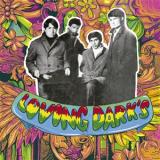
Los Amantes Oscuros" brings together for the first time on vinyl the recordings made between 1968 and 1969 by pioneers of Bolivian garage rock, Loving Darks, originally released on their three EPs. A selection packed with proto-punk covers of hits by the Stones, Cream, Tony Hatch, and more-often surpassing the originals in attitude and power. Their original records are highly sought after and are virtually impossible to find in any condition_ If we had to choose the Latin American country where the rawest and wildest garage and beat records of the '60s were recorded, Bolivia would be one of the clearest contenders. For some strange reason-surely related to the country's extreme conditions, its high altitude, and the influence of huayno-Bolivian recordings are truly unique and fascinating. A multitude of bands sprang up under the influence of groups-mainly British-that dominated the international charts. From the ashes of two of Bolivia's most important seminal bands, Los Black Byrds and The Turtles, two new groups fundamental to the history of Bolivian rock would be born: the mythical Climax and the legendary Loving Darks. "Los Amantes Oscuros" brings together for the first time on vinyl the recordings this band made between 1968 and 1969, originally released across three EPs on the local Lyra label. Their repertoire is packed with covers such as 'El Adivino,' a sped-up reinterpretation of 'Fortune Teller,' or even 'Algo de títere,' a reworking of 'Jumpin' Jack Flash.' They also adapt the classic 'Call Me' by Tony Hatch and 'Toad' by Cream, from whom they borrow the cover of one of their most iconic albums for the artwork of their EP "Complicado." In fact, 'Complicado'-a proto-punk version of the Rolling Stones' 'Complicated' and their signature track-is a perfect example of how a Bolivian band could outdo the British giants in attitude and power. Their importance lies in having paved the way for new sounds, styles, and aesthetics within a still-emerging scene. This compilation is a joint release with the Peruvian label Rey Record and includes an insert with notes on the band's history. First time vinyl reissue.
- Los Indios
- Bailarin A Go-Go
- Ronco Salvaje
- Las Pruebas
- Es No Hay Tiempo Que Perder
- Valeria
- Quiero Gritar
- La Gripe
- Helelule
- India
- Ovni
This compilation brings together some of the best recordings by Los Indios from Bolivia, recorded during their brief time as a band, pioneers in blending beat sounds with garage rawness through a repertoire packed with covers of artists such as Deep Purple, Wilson Pickett, Eduardo Araujo (via Los Iracundos)_ The birth of Los Indios took place at a key moment for Bolivian music, in May 1968, during the "Festival de la Canción" held at the Félix Capriles Stadium. This event was a milestone for the so-called Bolivian new wave, featuring various groups from all over the country. A month later, Jorge Filipo Dalence, in association with Freddy Valdivieso, decided to launch their own band, Los Indios, ready to make their mark on the music scene. Their discography includes one LP and a handful of EPs released on the Caracol and Imperio labels. Their album not only showcases their musical talent but also represents an important moment in the evolution of rock in Bolivia. The combination of their unique style helped open new doors for other artists in the country's music scene. By 1969, the group was enjoying overwhelming success and widespread popularity. This is a joint release with the Peruvian label Rey Record and includes an insert with notes on the band's history
- A1: Coro Del Amanecer (Feat. Vero´nica Valerio)
- A2: Corazon De Rubi (Feat. Minu¨k)
- A3: Tlacotlan
- A4: Juku (Feat. Rumbo Tumba)
- A5: Chucum
- A6: Complete (Feat. Feat. Dina El Wedidi)
- B1: Xica Xica (Feat. Uji & Barrio Lindo)
- B2: Brigantes
- B3: Papan (Feat. Citlaly Malpica & Pablo Emiliano)
- B4: Ynglingtal (Feat. Jhon Montoya)
- B5: Madre Tierra (Feat. Luzmila Carpio)
Black repress[26,85 €]
Repress!
Wonderwheel recordings is proud to present the first full-length album from
producer Robin Perkins, aka El Buho. Balance represents a meeting of different currents that make up Buho's music: a fascination with the natural world, and its protection, a fascination with the rhythms, traditions and sounds of Latin America and a fascination with modern electronic music and production aesthetics. The album is peppered with Cumbia, Son Jarocho, Andean instrumentation & Afro-Colombian rhythms. Mixed with this, Robin integrates this idea of "nature music" - putting the sound of a misty forest, the songs of birds, of crunching leaves under foot or the rhythmic tapping of rain alongside synthesized sounds, electronic clicks or claps, deep basses. Trying at once to give them their own space but in a new, surprising perspective - it draws electronic music into something more soft, natural, different and appealing.
Balance is also an album that celebrates community and collaboration, showcasing collaborations with ten different artists form Latin America and beyond, both producers, instrumentalists and singers. Including more of a lyrical presence than his previous EPs, Perkins solicited the participation of talented singers like Dina al Wedidi from Cairo, Luzmila Carpio from Bolivia and the incredible decimas of Mexican poet Citlaly Malpica. The album also features the likes of harpist Veronica Valerio, Argentine multi-instrumentalist Rumo Tumba, jarana player Pablo Emiliano from Mexican Son Jarocho group Semilla and members of the Shika Shika family (the global collective he co-run's) Uji, Barrio Lindo, Kaleema, Minük and Jhon Montoya.
El Buho's music has an incredible power to convey feelings, atmospheres, memories or messages. The message that sits behind this music is to value on the one hand the power of community, of collaboration and of our modern, globally, connected world but also the remembrance, protection and celebration of the very earth we depend upon for our existence.
- A1: Coro Del Amanecer (Feat. Vero´nica Valerio)
- A2: Corazon De Rubi (Feat. Minu¨k)
- A3: Tlacotlan
- A4: Juku (Feat. Rumbo Tumba)
- A5: Chucum
- A6: Complete (Feat. Feat. Dina El Wedidi)
- B1: Xica Xica (Feat. Uji & Barrio Lindo)
- B2: Brigantes
- B3: Papan (Feat. Citlaly Malpica & Pablo Emiliano)
- B4: Ynglingtal (Feat. Jhon Montoya)
- B5: Madre Tierra (Feat. Luzmila Carpio)
BLUE Vinyl[29,62 €]
Repress!
Wonderwheel recordings is proud to present the first full-length album from
producer Robin Perkins, aka El Buho. Balance represents a meeting of different currents that make up Buho's music: a fascination with the natural world, and its protection, a fascination with the rhythms, traditions and sounds of Latin America and a fascination with modern electronic music and production aesthetics. The album is peppered with Cumbia, Son Jarocho, Andean instrumentation & Afro-Colombian rhythms. Mixed with this, Robin integrates this idea of "nature music" - putting the sound of a misty forest, the songs of birds, of crunching leaves under foot or the rhythmic tapping of rain alongside synthesized sounds, electronic clicks or claps, deep basses. Trying at once to give them their own space but in a new, surprising perspective - it draws electronic music into something more soft, natural, different and appealing.
Balance is also an album that celebrates community and collaboration, showcasing collaborations with ten different artists form Latin America and beyond, both producers, instrumentalists and singers. Including more of a lyrical presence than his previous EPs, Perkins solicited the participation of talented singers like Dina al Wedidi from Cairo, Luzmila Carpio from Bolivia and the incredible decimas of Mexican poet Citlaly Malpica. The album also features the likes of harpist Veronica Valerio, Argentine multi-instrumentalist Rumo Tumba, jarana player Pablo Emiliano from Mexican Son Jarocho group Semilla and members of the Shika Shika family (the global collective he co-run's) Uji, Barrio Lindo, Kaleema, Minük and Jhon Montoya.
El Buho's music has an incredible power to convey feelings, atmospheres, memories or messages. The message that sits behind this music is to value on the one hand the power of community, of collaboration and of our modern, globally, connected world but also the remembrance, protection and celebration of the very earth we depend upon for our existence.
- 1: Verna Bloom
- 2: Wisteria Vine
- 3: Corduroy Couch
- 4: Dog Rose
- 5: All The Right Weaknesses
- 6: Holy Smokes
- 7: Radio Free Bolinas
- 8: Tombland
- 9: Curse
- 10: Wipers
- 11: Far Off Places
Brown Horse are excited to announce their second album, ‘All The Right Weaknesses’, out April 4th 2025 on Loose Music. The group returned to Sickroom Studios in Norfolk following a multi-month European tour. Road tested and road worn, the band tracked these eleven songs in a whirlwind week of live takes. Building on the stark twang of their debut album, ‘Reservoir’ (9/10 Uncut, **** The Times, **** Mojo), ‘All The Right Weaknesses’ sees an energised Brown Horse meld slacker-rock, folk, and alt-country – equal parts Lucinda Williams, Jason Molina, The Breeders and Silver Jews. Weary, wry and disarmingly honest, these songs flash a smile at the dark and strange. With contributions from the band’s multiple songwriters, the record is a patchwork far greater than the sum of its parts.
David Cunningham was born in Ireland in 1954. His work ranges from pop music to gallery installations including several collaborations with visual artists. His first significant commercial success came with The Flying Lizards' single "Money," an international hit in 1979.
Originally released in 1976, Cunningham's first solo album Grey Scale has become a landmark statement of DIY minimalist composition – continuing in the vein of the wild explosion of arthouse experimentation from the early '70s. Cunningham, then a student at the Maidstone College of Art in Kent, drafted fellow student non-musicians and (using whatever instruments available) crafted an endlessly shifting sonic palette with an improvisor's keen sensitivity to space, texture and tone.
As Cunningham states in the liner notes, his approach was to "pursue something (which may appear trivial or meaningless) so rigorously or relentlessly to the point that it reveals something new."
Cunningham was influenced by live performances he was attending at the time by English composers Cornelius Cardew, Gavin Bryars and Michael Nyman as well as free improvisors Evan Parker, Derek Bailey, David Toop and Paul Burwell.
The inaugural release on Cunningham's own Piano label, Grey Scale was indeed "something new" in 1976. The artist quickly integrated his experimental sensibilities to produce art-rock pioneers This Heat, whose debut appeared on Piano in 1979. His popular success performing as The Flying Lizards (with two electro-punk albums on Virgin during the New Wave era) was presaged by this seminal work of fascinating sound collage and tonal freedom. First-time reissue.
- A1: Lamparilla
- A2: Suplica
- A3: Tormentos
- A4: Lindos Ojos
- A5: Quimera
- A6: Corazon Que No Olvida
- B1: Las Tres Marias
- B2: Dicha
- B3: Mi Panecillo Querido
- B4: Sombras
- B5: Amor De Mi Linda Guambra
- C1: Vestida De Azul
- C2: Amor En Tus Ojos
- C3: Arbol Frondoso
- C4: Carnaval De Guaranda
- C5: Plegaria
- D1: Tus Ojeras
- D2: Limosna
- D3: Invocacion Sentimental
- D4: Nocturno
- D5: Desesperacion
- D6: Imploracion Indigena
Gonzalo Benitez and Luis Alberto Valencia were kingpins of the musica nacional movement in Ecuador. Check them out on the cover, on a rooftop in Quito’s Old Town, surveying their dominion. In 1970, when Valencia collapsed onstage during a performance of the yaravi Desesperacion — ‘My heart is already in ashes’ — and died four days later, aged 52, his coffin was carried through those city streets on the shoulders of his fans.
They began singing as a duo in their mid-teens. During twenty-eight years together they recorded more than six hundred songs, for Discos Ecuador, Nacional, Granja, Ortiz, Rondador, Onix, Fuente, Real, Tropical, Fadisa, RCA Victor — and of course CAIFE.
Their exquisitely romantic harmonising is a sublime blend of collected forbearance and abject self-annihilation, underpinned and elaborated by the heart-piercing, improvisatory guitar-playing of Bolivar Ortiz. Effectively the third member of the group. ‘El Pollo’ sets the tone and intensity for everything that follows: listen to his soloing at the start of our opener, Lamparilla.
Musically a pasillo — a cross between a Viennese waltz and the indigenous yaravi rhythm — Lamparilla draws its verses from a poem by Luz Martinez from Riobamba, written in 1918 when she was 15, under the influence of Baudelaire and Mallarme. Another pasillo here, Sombras is one of the best-loved songs in the musica nacional canon, setting lines about undercover sex and loss by the Mexican poet Maria Pren, which were considered pornographic on publication in 1911.
And Benitez & Valencia looked back still further, to the indigenous roots of Ecuadorian music, as the key to its future. Carnaval de Guaranda is their take on a song dating back to the era of the Mitimaes, a broad group of Bolivian tribes conquered by the Incas and displaced to Ecuador. ‘Impossible love of mine / I love you for being impossible / Who loves what is impossible / Is the truest lover.’
Lovingly presented in a gatefold sleeve with spot-gloss, and printed inners, with stunning photos and expert notes. Excellent sound, drawn from original tapes, by way of Abbey Road, D&M and Pallas.
Enter the Island is the new Concept EP of Daniel Monaco. Is the story of a group of friends who have ventured on a mysterious Island with the only mission to enter its infamous Reptilian Club. The tracks are a mix of Disco, Tropical and Dub an obscure psychedelic trip performed and recorded live at Daniel’s studio, but the adventure is not over yet because Enter The Island is not only a long trip into a mystical place is also a Board Game for two to four players. The idea was born during the first lockdown. Due to the big crisis brought by Covid-19 there were no chances to print Vinyl for this EP therefore Daniel thought to design a game made exclusively for this concept, its rules are unique as well as its design reflecting perfectly the spirit of the music.
Alessandro Rosa is the artist who made the design. The Board Game is the same size of a Vinyl cover made on Forex printed white on black. An unprecedented concept unique in its genre, a creative reaction against hard times.
Pedro "Ramayá" Beltrán, born in Patico, a small town in Colombia's Bolívar province, is a maestro of Colombian folkloric music known as the King of the 'caña de millo' flute, although he is also proficient in various percussion instruments as well as the reed instrument known as 'gaita'. He founded La Cumbia Moderna de Soledad in the early 1970's. With this group he set out to "modernize" the folkloric music of his people, adding electric bass and a brass section to
fresh arrangements of cumbias, porros, fandangos, puyas and other costeño genres. "La Clavada" (1979) was La Cumbia Moderna de Soledad's sixth record and first for Codiscos' Costeño imprint.
The LP has many excellent examples of Beltrán's inventive mix of the ancient and the modern, making for a collection of tunes brimming with tradition and yet fearlessly bristling with innovation, not the least of which is 'Crees que soy sexy', with its gaita refrain mimicking the main melody of Rod Stewart's international disco smash 'Da Ya Think I'm Sexy'.
The album's title song was a massive hit in Colombia and has become a standard of the genre. Restored to its original glorious sound, this LP is poised to be rediscovered as an innovative yet rootsy gem. Presented in facsimile artwork and pressed on 180g vinyl.
Part of Vampisoul's reissue series of classic LP's from Colombia's Codiscos and it's sublabels such as Zeida, Costeño and Famoso.
- 1


