If you collect vintage 70's soul-jazz vinyl, there is a good chance that you already own a record that features the amazing vocal talents of Dee Dee Bridgewater. Whether it be Roy Ayers, Norman Connors, Billy Parker or Carlos Garnett - Dee Dee is the glue that fuses these artists together. Although best known for her jazz work, Dee Dee has had a wonderfully rich and varied career encompassing soul, musicals, gospel, and underground disco from the 70's to the present day. She is still active as a vocalist, composer, and producer and remains one of our favourite vocalists at Mr Bongo HQ. We take things back to the early years of Dee Dee's career with her debut album 'Afro Blue'. Recorded in Tokyo in 1974, the album was released exclusively in Japan via two different Japanese labels (Trio Records in 1974 and All Art in 1985 respectively). Each release had unique cover art and we have opted to present the album in its original 1974 form.
'Afro Blue' features an exquisite collaboration of American and Japanese musicians, such as Cecil & Ron Bridgewater, Motohiko Hino and producer Takao Ishizuka. The result is a sublime deep soul-jazz masterpiece with timeless versions of 'People Make The World Go Round', 'Love From The Sun', and 'Afro Blue'. It is arguably one of the finest albums in its genre. This record has long been a sought-after item for DJs and collectors alike, so we are delighted to finally make this wonderful music from an understated great available to all.
Suche:bong ga
The late engineer and producer Paul C’s fingerprints are all over this single from Ultramagnetic MC’s, perhaps the defining release of their career. While earlier records gave notice of their strange and unique talents, they were loveably messy affairs. This, however, is the real deal, as polished as their early sound would ever be.
‘Give the Drummer Some’ grabs a fistful of different elements – from James Brown, Dee Felice Trio and James Brown – but bends them to its own purpose. This is a song with a momentum of its own and endlessly quotable lyrics. One of which, of course, was sampled by The Prodigy – huge hip-hop fans – for ‘Smack My Bitch Up’ in 1997. The now hugely rare 7” of ‘Give the Drummer Some’ edits this out to make it more radio-friendly, but this reissue reverses that cut, giving you the original lyrics. If anyone knows why Kool Keith also changes the word ‘rappers’ to ‘monkeys’ for that edit, answers on a postcard…
The brilliant B-side harks back to the time when every group had a song dedicated to their DJ. ‘Moe Luv’s Theme’ sees Kool Keith at his most straightforward, singing the praises of the turntable skills of Moe Luv. It would be throwaway were it not for the effortless repurposing of Jackie Robinson’s oft-sampled ‘Pussyfooter’. That – and the presence of one of the world’s great MC’s at the height of his powers – elevates it far above a footnote.
Jazz funk and gritty rare grooves ensemble from down under - Kerbside Collection - return with their third record "Smoke Signals"! Continuing in a down home, instrumental approach, but this time crafting newer ideas and flavours into their spectrum of warm, analogue, dusty grooves from much more Fender Rhodes electric jazz elements, to New Orleans sprinklings alongside their 60's inspired West Coast style.
"Smoke Signals" continues the wilder tones, textures and 'library' sounds of extra instrumentation found on their last output "Trash or Treasure", whilst introducing hints of fusion and cinematic analogue electric colours into the mix bringing things into early 70s territory. Opening with the lush, analogue synth and keys palate of "Waiting Game", reminiscent of some classic Air "Moon Safari" grooves, before the album properly begins with a fresh rendition of the Rhodes heavy Cedar Walton 70's jazz funk classic "Jacob's Ladder".
Then straight into the street-styled jazz bongo breaks and funky flute of "Traffic", a skankin' New Orleans reggae homage to one of its finest Creole dishes, featuring funky Hammond organ courtesy of guest Jake Mason (Cookin' on 3 Burners) and tasty piano work from multi instrumentalist Andrew Fincher who handles both guitar and keys on the whole record.
The middle of the record comes with a steaming afro funk workout, and a low slung N'awlins styled blues 'n' soul groove, both featuring the fruity, low-end brass action of Papa Jo on the big baritone sax, before taking a gentle emotional breather with a delightful, soft, soulful, Rhodes ballad, and a 'waltz-jazz-wig-out' attributed to their label's A&R Mr Mellow (reminiscent of some humorous UK acid jazz à la Corduroy and James Taylor Quartet) featuring some beautiful jazzy Flugelhorn, and acoustic double bass.
The album wraps up with another cover - a grittier reinterpretation and arrangement of a Bob James 80s jazz funk classic "Westchester Lady" complete with funky flute and soaring guitar solo, before finishing with the explosive rock funk workout and title track "Smoke Signals", rounding out a record with a full spectrum of handmade jazz funk, reggae, soul, library and gritty rare grooves all recorded to tape machine.
Mameen 3 are soFa and Cheb Runner from Brussels. Both versatile players in the rather niche scene of oriental electronic music in the European capital, they only ran into each other at the Nyege Nyege Festival in Uganda two years ago. They clicked and after a first jam session they immediately launched Mameen 3.
Cheb Runner is the young Moroccan producer previously known as Gan Gah, now focussing on giving a modern outfit to various MENA music traditions. soFa is a true digger between all crates (his Pingipung Podcast is a gem!), as well as the curator behind the highly recommended Elsewhere vinyl compilations, released on labels such as Emotional Response or Music For Dreams. Following the Mameen 3 debut singles on Bongo Joe with excellent spaced out reggae- disco hybrids, Pingipung proudly unearths the Collapse EP featuring two collabs with legendary musicians.
A side: "Impostrazione" is a collaboration with Claudia Radulescu and Walter Hus. Radulescu is a Romanian visual artist who has written the lyrics for the song, boldly interpreted by the legendary Walter Hus on the occasion of her exhibition 'Hit' in Kanal - Centre Pompidou Brussels in 2019. Hus gained international reputation as a pianist in the 1980s and works as an avantgarde composer today, among many projects he created an opera for the graphic novel “Lint” by Chris Ware. Walter Hus performs an effusive vocal style accompanied by his modified Decap organ which became his trademark sound in the past decade. This jam delivered the material which Mameen 3 subsequently transformed into a hypnotic oriental slow-mo banger.
B side: "Wireless C" features another music veteran, Rodion GA, who describes himself as „Romania’s first one man band". He produced a remarkable electro-prog output in the 1970s and 80s. “Rodion GA sounds like he learned about music from hearing someone describe it in their second language, drunk. It sounds like nothing else: wrong in all the right ways,“ says The Guardian about his music. His collab with Mameen 3 turns out as a balearic, space reggae trip, with dreamy vocals by Rodion and solid bass, definitely a hymn in this year’s festival season, if only there was one...
While it’s undeniable that Eric B & Rakim crafted and concocted classic after classic back in the Golden Era of the late 80’s and early 90’s, very few of their records could ever be classified as ‘dancefloor fillers’. But that’s exactly what ‘I Know You Got Soul’ was.
The duo’s third single was released at a time when their debut LP, 1987’s ‘Paid in Full’ was already being hailed as a gamechanger. Rakim’s smooth but sombre flow had introduced new phrases to the hip-hop lexicon, while the barrage of James Brown samples had declared open season on the Godfather of Soul’s back catalogue.
There were already stirrings of a backlash from the more frequently sampled artists at the time this came out, and the fact that it took not just its main hook but also its title from Bobby Byrd’s James Brown-produced 1971 single was almost like rubbing salt in the wound. The hip-hop fans and the dancefloor didn’t care – this played all summer long in 1987, elevating the group to a Soul Train performance.
Only months after this dropped, the UK collective M|A|R|R|S turned Rakim’s “Pump up the volume” line into the basis of their own hit. Pop will eat itself.
The original 7” was released in a no-frills generic sleeve – this re-release comes with a brand new cover utilising some of Dan Lish’s trademark artwork.
With the original UK 7” of this release now as rare as hen’s teeth, and with the group having recently ‘reformed’ for one last album together, the Mr Bongo replica re-release of this 1990 masterpiece by Gang Starr couldn’t be more timely.
The now-legendary duo of DJ Premier and Guru dropped this at the height of hip-hop’s sampling of jazz, which had led to a creative leap forward for the genre. Yet while others plundered in the dark, this instant classic wore its influences on its sleeve and paid verbal homage to the musicians they were sampling. The “melodious funk” of “Thelonious Monk” gets namechecked, while the track samples two of his records, including 1958’s Bop gem ‘Light Blue’.
While both versions presented here have common elements, the ‘Movie Mix’ – so-named for the song’s appearance on the soundtrack to Spike Lee’s mythic jazz biopic ‘Mo’ Better Blues’ – goes in a few different directions to the ‘Video Mix’. Rather than just drop in an instrumental for the B-side, DJ Premier instead shows his versatility by switching up the base track (Kool & The Gang’s 1971 ‘Dujii’) and layering in other samples. In more ways than one, his virtuosity here echoes the improvisation of a jazz musician, akin to Denzel Washington’s Bleak in the movie.
Of course, he’s not the only show in town. The late Guru’s voice is as mellifluous as an instrument itself here, his potted history of the genre and the artists of jazz delivered with his own unmistakable cadence. Without this record, would he have gone on to make his ‘Jazzmatazz’ projects.
It is hard to think of many 7” singles where both sides are as heavy as this one! "Change The World" & "Try, Try" were released in 1977 by 'Solat', a Dutch-based funk group made up of Surinamese and Dutch-Antillian musicians.
Formed after ex-band members of Reality/Tony And Reality; Eddy Veldman, Franky Douglas, Ivor Mitchell and Glenn Gaddum teamed up with singer Billy Jones, Solat went on to release two singles for Poker records. With it's crossover nature, it pleases disco, funk and modern-soul collectors and DJs alike, plus due to only been released in the Netherlands, the record has now become an extremely sought-after item with a high price tag to match.
Both amazing cuts are aimed straight for the dance-floor, but retain conscious and positive messages that are as relevant now as they were back then. 'Change TheWorld’ is an anthemic feelgood disco funk gem, whilst 'Try, Try ‘ is reminiscent of a Mizell Brothers golden-era production.
Mr Bongo present a replica edition with dinked centre- and original cover- and also label artwork, for all to enjoy!
The Star Beams album is a bit of an enigma. When we first came across their epic dance-floor monster 'Disco Stomp’ it was on a Disco Calypso compilation, so we assumed it originated from the Caribbean. Years later we worked out how wrong we were and that this nugget was actually from South Africa and taken off an ultra scarce album on JAS Pride records from 1976. The next problem was tracking down an original copy and we don’t think we’ve ever seen our Bongo team member Gary Johnson as happy as the day he turned up clutching a copy under his arm. 'Play Disco Specials' was produced by Ray Nkwe who also worked with Mankunku Quartet and The Soul Jazzmen, with all writing credits on the album going to Ray, the recording credited to engineer Robin Ritchie and the artwork to Carol Knowles. Other than this, the personnel of the record remains a mystery, but sometimes a bit of mystery is a good thing. Aside from the disco-jazz-funk of 'Disco Stomp’, which has found it’s way into the DJ sets of Theo Parrish, 'Play Disco Specials’ will appeal to fans of The Star Beams South African contemporaries The Drive, Batsumi and Pacific Express.
It's always unwise to judge a label that's still taking its' first steps, but Banoffee Pies has barely put a foot wrong since launching a couple of years back. Here, the Bristol-based imprint continues with its' successful split release formula, gathering together a quartet of tracks from up-and-coming producers. Beaner kicks things off with the bumpin', low-slung deep house grooves and delay-laden guitar samples of "It Takes Two", before Philou Louzolo raises the temperature with the looped horn samples and thumping beats of "Alter Ego". Flip for the dreamy Balearic house goodness of Ron Wilson's "Albino Turtle", and the bongo-laden, after-party deep house shuffle of Mome's "Assatta".
- A1: Africa Negra - Mino Bô Bé Quacueda
- A2: Africa Negra - Zimbabwe
- A3: Sangazuza - Sun Malé
- A4: Os Úntuès - Chi Bô Sá Migu Di Védê
- A5: Sum Alvarinho - M'konvètá Dédo
- B1: Conjunto Equador - Mad?
- B2: Tiny Das Neves - Cladênço Padê Cluço
- B3: Conjunto Mindelo - Taji Océdo
- B4: Africa Negra - Aninha
- C1: Pedro Lima - Nga Ba Compensadora
- C2: Sangazuza - Cortição
- C3: Os Úntuès - Piquina Piquina
- C4: Conjunto Equador - Meu Di Plôc?
- D1: Sum Alvarinho - Tólá Muandgi
- D2: Pedro Lima E Conjunto Os Leonenses - Esatela Licu
- D3: Agrupamento Da Ilha - Bô Gosa So Txi
"The two Portuguese-speaking African islands of Sao Tomé & Principe, located in the Gulf of Guinea, created an unique music called Puxa : a refined mixture of various musical components from both sides of the Atlantic Ocean. A blend of Semba, Merengue, Kompas, Soukouss, Coladeira patterns, often pushing forward with a voodoo-like energy, solid bass lines, delicate melodies and backing harmonies of the rich Sao Tomean melodic traditions. Very first compilation focusing on the golden age of these island’s sounds, the 16 tracks selected will surely set fire on all dance floors !
Léve-Léve is the first ever compilation devoted to music from São Tome and Principe, two small islands situated off the coast of Gabon in central Africa. The album unravels a story of liberation where the music of Africa, Europe and the Americas unify with a carefree spirit personified by a phrase the islanders use all the time: “léve, léve” (“take it easy”). With echoes of Angolan semba and merengue, of Brazilian afoxê, of coladeira from Cape Verde and dance music from the Caribbean, it is a sound fiercely proud of its island heritage, sung in local dialects and using distinctive local rhythms.
On this record you can hear the cultural and social history of São Tome and Principe, and how live music represented its beating heart. Once known as the “Chocolate Islands” (remarkably, these two tiny islands were the largest cocoa producers in the world, though now this title acts as a reminder of its colonial past), through the years leading up to independence from Portugal, music would be a fundamental voice of liberation and conviviality. Os Úntués were one of the first groups to make an impression, releasing a couple of 7 inches in Angola – the litmus test of success for any of the islands’ groups. They united unique rhythms and dances like socopé, puita and dança-congo – borne from the islands’ largely slave-descendant population – with the sound of pop music beamed in on the radio from Europe, even adding in a little bit of soukous and Brazilian instrumentation. Their main rivals were Conjunto Mindelo, who fused São Toméan rhythms with rebita, an Angolan style, to create high energy puxa, a truly original island rhythm.
From the mid-1970s, coinciding with independence from Portugal in 1975, the islands’ groups featured an even stronger African influence and nowhere was that more apparent than with Africa Negra. They would listen to the latest records from Gabon, Zaire and Cameroon, taking inspiration and trying out phrasing from the greats of Central African guitar playing, developing a devoted fan base off the islands, as well as on. A score of other bands would follow a similar musical path, with a few getting their dues overseas in Angola, Cape Verde, Portugal and across Africa.
Os Leonenses (led by the iconic Pedro Lima), Conjunto Sangazuza, Sum Alvarinho and Conjunto Ecuador were just some of the other bands that formed a lively home-grown music scene that lit up the islands’ bars and open-air shows from the 1950s through to the mid-90s. Regardless of class or age, they were responsible for keeping the population entertained come the weekend, with Sunday matinee shows the highlight of the week, the music not stopping from midday until midnight.
As a Portuguese island colony that was for many years populated with slaves brought from Africa, São Tome and Principe has much in common with other Lusophone countries and boasts a richly complex and idiosyncratic musical DNA. Whilst the musical tapestries of Angola and Cape Verde are well known, São Tome and Principe’s secrets were assigned to the islanders themselves. Until now."
- 01: Lord Beginner - Sons And Daughters Of Africa
- 02: The Lion - Royal Wedding
- 03: The Mighty Terror - The Hydrogen Bomb
- 04: Dai Dai Simba - Modern Telephone
- 05: Willie Payne & The Starlite Tempos - Wa Sise
- 06: The Mighty Terror - The Emperor Of Africa
- 07: Louise Bennett - Bongo Man
- 08: Marie Bryant - My Handy Man
- 09: Nigerian Union Rhythm Group - Tortoise Mambo
- 10: Calypso Rhythm Kings - Boul Ve Se
- 11: The Mighty Terror - Life Is Like A Puzzle
- 12: The Mighty Terror - Chinese Children
- 13: Bill Rogers - Hungry Man From Clapham
- 14: Lili Verona - Underground Train
- 15: The Lion - Highway Code
- 16: Billy Sholanke - Kana Kana
- 17: Calypso Rhythm Kings - L’année Passée
- 18: Lord & Lady Beginner - One Morning
- 19: West African Rhythm Brothers - Ema Foju Ana Woku
- 20: Trinidad Steel Band - Caroline
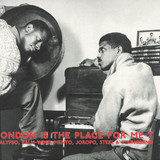
part 8[26,01 €]
Still deeper forays into the musical landscape of the Windrush generation. A dazzling range of calypso, mento, joropo, steelband, palm-wine and r’n'b. Expert revivals of stringband music, from way back, alongside proto-Afro-funk. An uproarious selection of songs about the H-Bomb and modern phones, prostitution and Haile Selassie, mid-life crisis and the London Underground, racism and solidarity, the Highway Code and a 100% West Indian Royal Wedding.
For example some frantic British-Guianan joropo music-hall about Eatwell Brown from Clapham, who starts out biting off a piece of his mother-in-law’s face at a party, then devours everything in his path… a chunk of Brixton Prison, a Union Jack, a policeman’s uniform. Or Marie Bryant — collaborator of Lester Young and Duke Ellington — taking time off from skewering the South African PM Daniel Malan at her West End revue, to contribute some arch, swinging filth about uber-genitalia. Superior sound, courtesy of Abbey Road, D&M and Pallas; lovely gatefold sleeve; full-size booklet, with full notes, and fabulous previously-unseen photographs, including a set from the family archive of Russ Henderson (who led the first, impromptu Notting Hill Carnival march, in 1966).
Bristol’s Sydney returns to Black Acre with two Jazz infused cuts featuring saxophonist Guy Hobley and emerging guitarist Charlie J-W. One of Gilles Peterson’s Future Bubblers, Sydney is a live artist and traditional instrument enthusiast who debuted on Black Acre with a Swaziland inspired debut mini-album entitled ‘Ode to eSwatini’ earlier this year, showcasing an eclectic mix of broken beat and Jazz.
Now the Bristolian returns with two collaborations featuring two vibrant Jazz and Blues musicians - Guy Hobley on the saxophone and guitarist Charlie J-W. “With the record being South American influenced the titles and artwork are based on a garden in Mexico named Las Pozas. Paraíso meaning paradise and Dahlia being the native flower toMexico found in the Las Pozas garden" – Sydney Conceptualized during Sydney’s first session as a Future Bubbler using one distorted PA speaker in a room full of the new generation year 3 bubblers with Gilles Peterson present, ‘Paraíso ft. Guy Hobley’ flutters into place with shuffling percussion, reverberating piano fills and smooth sax melodies from Guy Hobley whilst underlying world instrumentation operates throughout, including bongos, claves and shakers.
Created in one afternoon alongside fellow band member and friend Charlie J-W, ‘Dahlia’ gives a warming aural experience with a Nina Leão vocal sample, cantering south American drums, a mix of traditional guitar strums, pedal hits and accordion strikes, all glued together with stylish synth stabs.
Support from:
Gilles Peterson,Jamz Supernova, Bradley Zero, Moxie, Horse Meat Disco
Jean Claude Garvi returns for another three-track journey of beach-ready Balearic gold on his own EBO Records.
‘Nite Dubbin’ kicks off proceedings - a piano laden, rapturous slammer laced in acidic arps and bongo goodness. Take to the flip for a slo-mo boogie reinterpretation, ‘Interview By The Pool’ perfect for those beachside lounges and poolside shenanigans, with an unreleased 12 inch mix of atmospheric synth-pop swellings, ‘Last In The Bin’, to close out the EP.
- A1: Clandestino
- A2: Desaparecido
- A3: Bongo Bong
- A4: Je Ne T'aime Plus
- B1: Mentira
- B2: Lagrimas De Oro
- B3: Mama Call
- C1: Luna Y Sol
- C2: Por El Suelo
- C3: Welcome To Tijuana
- C4: Dia Luna .. Dia Pena
- D1: Malegria
- D2: La Vie À 2
- D3: Minha Galera
- D4: La Despedida
- D5: El Viento
- E1: Clandestino (Feat Calypso Rose)
- F1: Bloody Bloody Border
- F2: Roadies Rules
Limited 2019 edition of « Clandestino », remastered for the first time on triple Vinyl + CD.
2 x 180 Black Vinyl and a Blue 10’’ (+ dedicated printed inner sleeve) with 3 new songs : « Bloody Bloody Border », « Roadies Rules » & « Clandestino » featuring Calypso Rose (2019 version).
Includes the remastered CD. Gatefold packaging. Vinyl Mastering and lacquers cut by Chris Bellman at Bernie Grundman Mastering Studio.
- A1: Ferro Na Boneca
- A2: Eu De Adjetivos
- A3: Outro Mambo, Outro Mundo
- A4: Colégio De Aplicação
- A5: A Casca De Banana Que Eu Pisei
- A6: Dona Nita E Dona Helena
- A7: Se Eu Quiser Eu Compro Flores
- B1: E O Samba Me Traiu
- B2: Baby Consuelo
- B3: Tangolete
- B4: Curto De Véu E Grinalda
- B5: Juventude Sexta E Sabado
- B6: De Vera
Originally released by RGE in 1970 in Brazil, ‘É Ferro Na Boneca!’ features 13 songs composed by Luiz Galvão and Moraes Moreira. This record shows the roots of the group, moving through psychedelics, edgey pop, rock and Tropicália.
After writing ‘É Ferro Na Boneca!’ their music began to move towards MPB due to the influence of João Gilberto, who began working with the group. In 1972 they released their incredible ‘Acabou Chorare’ LP, which came top of Rolling Stone Magazine’s list of 100 Greatest Brazilian Records (published in 2007).
- A1: J B. De Carvalho E Seu Terreiro - Fui À Umbanda
- A2: Trio Ternura - A Gira
- A3: Alcione - Figa De Guiné
- A4: Impacto 5 - Longe Daqui Aqui Mesmo
- A5: Abaeté - Pisa No Taboado
- A6: Tobias - Coisa Sentimental
- A7: Os Flippers - Estrelar
- B1: Spaceark - Don’t Stop (Unreleased Long Version)
- B2: Pure Release - I'll Know It's Love For Sure
- B3: Luther Davis Group - You Can Be A Star
- B4: Marumo - Khomo Tsaka Deile Kae?
- B5: Splash - Peacock
- C1: Gyedu Blay Ambolley - Highlife
- C2: Harari - Senyamo
- C3: Kaleidoscope - Let Me Try
- C4: Elias Rahbani - I Want To Be
- C5: Tokyo Academy Philharmonic Chorus Group – Taharazaka
- C6: Cesar Roldão Vieira – Zé Do Trem
- C7: Elias Rahbani - Dance Of Maria
- C8: Galt Macdermot – Coffee Cold
Volume Three in the Mr Bongo Record club series. Another showcase of recent vinyl finds and favourites from our DJ sets and radio shows. This is an extra special one however, as it lands in 2019, the year that we celebrate 30 years since it all began way back in 1989.
Compiled by David Buttle and Gareth Stephens, assisted by Graham Luckhurst and Gary Johnson.
Classic Brazilian album from master drummer, Ronald Mesquita, originally released in 1972. Featuring songs by Jorge Ben, Antonio Carlos-Jobim, Gilberto Gil, Edu Lobo and others.
Mesquita is probably most well-known for playing with Luis Carlos Vinhas and his 'Bossa Tres' outfit, along with his own group, 'Ronie E A Central Do Brasil', that he formed after his return from the US in the early 1970s. He also played on several songs on Tenorio Jr.'s 'Embalo' album that Mr Bongo recently reissued.
The killer track 'Balanca Pema' was very big in the Jazz Dance scene in the 90s and also featured on the Mojo compilation 'Dancefloor Jazz Volume Four'.
Madlib sampled 'Balanca Pema' on his Medicine Show Number 2 'Flight to Brazil'.
Official Mr Bongo reissue. Licensed courtesy of Universal Music Group Limited.
'Chris Carter's Chemistry Lessons Volume One.1: Coursework' was created using a newly-formed piece called 'Bongo Glow' and reworkings of three tracks from the original album.
'Bongo Glow', a work in progress at the time, was finished using the same processes as 'CCCLV1' so that it could appear on the Japanese release of the album.
The additional three reworkings were created without direct instruction as an experiment to see how they changed with input from external sources.
Daniel Avery's remix of 'Usyring' is a slow building majestic tome that comes full circle.
The Radiophonic Workshop took 'Blissters' and created a more experimental reworking in their unique style.
Chris Liebing gave 'Tones Map' a brooding anthemic feel, adding his Slow Burn remix technique
If you read the name Shankar you may right away think of Ravi Shankar, the grand master of contemporary Indian folk music who was very popular in the 60s due to his connection with the music industry in the United States despite staying away from the pure pop music by maintaining his classic sitar and tabla style ragas to express himself musically. Ananda Shankar used to be his nephew who also made a journey to the USA to gather inspirations from rock artists like Jimi Hendrix among others. His first album from 1970, a conglomerate of classic Indian folk tunes and instrumental versions of the hottest rock songs of the day clothed in a veil of sitar melodies and backed up with tabla drum grooves, was an attempt to combine the spiritual approach of his cultural origins with the light minded blissful attitude of western psychedelic pop music. It worked well in the sense that it is still, nearly fifty years later on, a groovy little album that leaves nobody sitting around at any random hippie party. He took a five year break from recording to create what should become his second album and this is what I am about to present to you now. The cover-tunes were replaced by all original compositions with a lush instrumentation that features the typical sitar, tabla and bowed string instruments such as sarong and sera arrangements mixed with sounds that have a definite western origin such as rock guitars, Hammond organ and moog synthesizers plus full drum kits that take care to enhance the actual groove. Psychedelic rock, raga, fusion-jazz and funk flow into each other quite naturally giving birth to something fresh and exciting I would label as Bengali pop'. The borders between eastern and western music get abrogated here. If it was not for a few deeply mythical chants on a bed of drones here and there you could not even tell this was a record by an Indian artist. This album is quite accessible most of the time and comes with a certain slickness that makes it easy for the listener to understand and appreciate what is going on. Still there is the other side of the coin, the depth pop music often lacks. So in the end this might have been too far out for the average western mainstream fanatic back in 1975 when disco began to rule but it is an awesome sound trip for fans of psychedelic dance music like INCREDIBLE BONGO BAND and all eastern influenced popular rock.