quête:border one restless

Genres
Tout
  • 1
Border One - Restless EP

Border One

Restless EP

12inchSK11X003RP
SK_Eleven
27.01.2023

Manchester-born, Berlin-based producer Setaoc Mass returns to his own SK_Eleven imprint with his third outing on the Cycles EP. Here we see the artist's propulsive brand of techno take on an extra dynamic, starting with the muscular, mind-warping drive of 'Cyber' taking control, 'Kunfus' reverts back to a highly purified, galvanising techno groove, coalescing crisp percussion and a perpetual stomp to devastating effect, whilst turning over the sci-fi indebted 'Structured Deceit' adds to the strong release with its mesmerising melodies and ceaseless energy. Finished of by the more downbeat, reverb-drenched, insulated mindset of 'Escape From You'.

En stock

Disponible en stock et prêt pour l'expédition

10,29
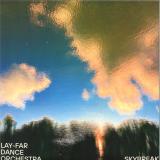
Lay-Far Dance Orchestra - Skybreak LP

DJ Support: Garnier, Opolopo, Worldwide FM, Marcia Carr, Bill Brewster, Timeout Moscow, Craig Smith, Delfonic, Tony Nwachukwu, Marcel Dettmann, DJ Rocca, Shuya Okino, Borrowed Identity, Titonton Duvante, Alex Attias, Rainer Truby, Sol Power All-Stars, Kyri R2, Robert Luis, Severino Panzetta, Lars Behrenroth, Kassian, Alkalino, Getdown Edits, Moodymanc, Gerd, Lea Lisa, Young Pulse, Mark de Clive-Lowe, Mark Grusane, Alex Barck….

International dance music heavyweight, producer and DJ Alexander Lay-Far returns with a powerful new chapter - Lay-Far Dance Orchestra (LFDO) - a fully-fledged live band project that reconnects him with his jazz-funk and fusion DNA while pushing dance music forward with unmistakable groove, musicianship and emotional weight. Formed in early 2024, LFDO is no nostalgia exercise. With Lay-Far at the helm as bassist, bandleader, composer, arranger and sound engineer, the orchestra has already been turning heads with explosive live performances, reinventing classic Lay-Far cuts, and now unveil their first album “Skybreak” with all new and original material written and produced by Lay-Far together with his bandmates and star guests, including Lipelis, Antoha MC and Seven Davis Jr. This work shows the departure from the predominantly electronic sound of Lay-Far's previous solo albums in favour of live instrumentation recorded to analogue tape and effortlessly bridging the gap between Jazz, Library Music, Disco-Funk, House, Broken Beat and Drum’n’Bass. “Skybreak” is dynamic, passionate, spiritual, cinematic, playful, heartfelt, life-affirming, dreamy and deeply romantic. Ultimately, there’s something profoundly romantic in recording and releasing such music in this day and age!


“Take Flight (Part 1)” is opening the album with style. It takes us on a beautifully orchestrated journey, blending the sensuality of Library Music with high-octane Jazz-Funk and raw b-boy breaks, propelled by breathtaking flute and Rhodes solos of Timur Nekrasov and Maxim Glonti. This aural symbiosis of “beauty and the beats” will become more and more prominent as the album unfolds.


It’s time for “Aquarius Love” created with the inimitable artist and vocalist Seven Davis Jr. (Secret Angels, Ninja Tune). In this composition cinematic soul and heavy jazz meet the restless energy of live drum & bass with deep and heartfelt vocals - timeless sound combined with a timeless message about love and life!


Next is “Head In The Clouds” - a theme for an imaginary rom-com, an ode to all the dreamers - sweet, light, naive and heartwarming. Space-Disco-Funk at its best!

“Where You From” is a fiery Soulful House number with heavy Afro-Latin influences recorded in collaboration with Lipelis. It’s full of Sun, joy and passion. Its irresistible rhythm is emphasised by funky octave bass, wah-wah guitar, catchy piano riffs, guitar solo by Lipelis and seemingly light conscious message delivered by Lay-Far and Maryag. Summer is here!

Now the album takes an unexpected twist in the form of “The Harp of Boom” which at first glance appears to be a classic-sounding Boom-Bap banger. Yes, It’s loud, raw, and gritty, yet it gradually evolves into something delicately-touching and deeply-soulful thanks to a memorable flute melody and lush string arrangement. Definitely recorded with tongue in cheek.


Next is “Feel The Moment” a remarkable collaboration with one of the most recognisable and distinctive Russian artists, singer, trumpeter and cultural icon Antoha MC. It’s a feel-good song, hopeful, life-affirming and bittersweet. A stylish excursion into Brit-Funk and Soviet Jazz-Fusion sound, drawing inspiration from the likes of Atmosfear, Light Of The World or Soviet Jazz bands like Allegro and Arsenal, but reimagining the influences through the modern West London broken beat lens.


The spectacular music journey continuous with “Take Flight (Part 2)” - it’s all about the deep infectious jazz-funk groove, heavy beats, rolling percussion and the glory of the soloing instruments - saxophone and flute by Timur Nekrasov, demonstrating the wide range of emotions from thoughtful and lyrical to restless and borderline vicious. One for freestyle dancing!

As the album draws to an end a vibrant musical triptych “Soul Constant” awaits, mixing together the deep and sensual mood of spiritual jazz with heavy syncopated drum’n’bass rhythms by Michail Fotchenkov, lush orchestration, expressive saxophone solos and the ending which can simply be described as “aural bliss”. It’s breath-taking!

A pleasant bonus is the exclusive version of “Where You From” by Lipelis himself, who is taking it into dub territories, further enhancing the rhythm section and enriching the song with his trademark playful synth flourishes and dreamy guitar solos for maximum effect (and appeal).

The album “Skybreak” by Lay-Far Dance Orchestra is the work of real artistry and craftsmanship with timeless sound that’s not only deeply-rooted but also forward-thinking.

En stock

Disponible en stock et prêt pour l'expédition

21,81
Various - La Buena Muerte

Various

La Buena Muerte

12inchKEEPIT002
keepitgoing.
26.09.2025

Swiss label keepitgoing. returns with La Buena Muerte, a three-tracker uniting Ricardo Villalobos & Washington Miranda, Siddhartha, and Wata with Jorge González of Los Updates — a cross-section of Chile’s most vital electronic voices brought together on one record.

The EP opens with Bajo Tierra – Mis Juguetes, a ten-minute drift of slow-burning minimalism where Villalobos’ elastic modular textures and patient rhythmic detail entwine with Miranda’s hypnotic vocal, processed and stretched into new shapes and forms — a continuation of the deep, organic dialogues the pair first explored on De Cada Uno in 2022. On the flip, Siddhartha – Poema 4 slides into minimal electro and broken beat territory, sparse yet restless. Razor-sharp drums and pulsing bass unfold through dynamic structures that thrives on tension and space where a menacing voice cuts through with insistence. Closing the record, Wata – El Soul de Los Que Sobran (feat. Jorge González) brings González’s unmistakable voice into Wata’s playful framework, a looser, rather light-hearted cut where percussion and gentle melodies expand the palette and connect the EP back to Chile’s rich electronic lineage.

With artwork by Damian Schopf, brother of Martin Schopf aka Dandy Jack, La Buena Muerte stands as a collective statement of Chilean experimentalism — free of borders, rooted in collaboration, and tuned for the floor.

En stock

Disponible en stock et prêt pour l'expédition

13,87
Guilty Razors - Complete Recordings 1977 - 1978

UILTY RAZORS, BONA FIDE PUNKS.


Writings on the topic that go off in all directions, mind-numbing lectures given by academics, and testimonies, most of them heavily doctored, from those who “lived through that era”: so many people today fantasize about the early days of punk in our country… This blessed moment when no one had yet thought of flaunting a ridiculous green mohawk, taking Sid Vicious as a hero, or – even worse – making the so-called alternative scene both festive and boorish. There was no such thing in 1976 or 1977, when it wasn’t easy to get hold of the first 45s by the Pistols or the Clash. Few people were aware of what was happening on the fringes of the fringes at the time. Malcolm McLaren was virtually unknown, and having short hair made you seem strange. Who knew then that rock music, which had taken a very bad turn since the early 1970s, would once again become an essential element of liberation? That, thanks to short and fast songs, it would once again rediscover that primitive, social side that was so hated by older generations? Who knew that, besides a few loners who read the music press (it was even better if they read it in English) and frequented the right record stores? Many of these formed bands, because it was impossible to do otherwise. We quickly went from listening to the Velvet Underground to trying to play the Stooges’ intros. It’s a somewhat collective story, even though there weren’t many people to start it.
The Guilty Razors were among those who took part in this initial upheaval in Paris. They were far from being the worst. They had something special and even released a single that was well above the national average. They also had enough songs to fill an album, the one you’re holding. In everyone’s opinion, they were definitely not among the punk impostors that followed in their wake. They were, at least, genuine and credible.

Guilty Razors, Parisian punk band (1975-1978). To understand something about their somewhat linear but very energetic sound, we might need to talk about the context in which it was born and, more broadly, recall the boredom (a theme that would become capital in punk songs) coupled with the desire to blow everything off, which were the basis for the formation of bands playing a rejuvenated rock music ; about the passion for a few records by the Kinks or the early Who, by the Stooges, by the Velvet mostly, which set you apart from the crowd.
And of course, we should remember this new wave, which was promoted by a few articles in the specialized press and some cutting-edge record stores, coming from New York or London, whose small but powerful influence could be felt in Paris and in a handful of isolated places in the provinces, lulled to sleep by so many appalling things, from Tangerine Dream to President Giscard d’Estaing...
In 1975-76, French music was, as almost always, in a sorry state ; it was still dominated by Johnny Hallyday and Sylvie Vartan. Local rock music was also rather bleak, apart from Bijou and Little Bob who tried to revive this small scene with poorly sound-engineered gigs played to almost no one.
In the working class suburbs at the time, it was mainly hard rock music played to 11 that helped people forget about their gruelling shifts at the factory. Here and there, on the outskirts of major cities, you still could find a few rockers with sideburns wearing black armbands since the death of Gene Vincent, but it wasn’t a proper mass movement, just a source of real danger to anyone they came across who wasn't like them. In August 1976, a festival unlike any other took place in Mont-de-Marsan – the First European Punk Festival as the poster said – with almost as many people on stage as in the audience. Yet, on that day, a quasi historical event happened, when, under the blazing afternoon sun, a band of unknowns called The Damned made an unprecedented noise in the arena, reminiscent of the chaotic Stooges in their early adolescence. They were the first genuine punk band to perform in our country: from then on, anything was possible, almost anything seemed permissible.

It makes sense that the four+1 members of Guilty Razors, who initially amplified acoustic guitars with crappy tape recorder microphones, would adopt punk music (pronounced paink in French) naturally and instinctively, since it combines liberating noise with speed of execution and – crucially – a very healthy sense of rebellion (the protesters of May 1968 proclaimed, and it was even a slogan, that they weren’t against old people, but against what had made them grow old. In the mid-1970s, it seemed normal and obvious that old people should now ALSO be targeted!!!).
At the time, the desire to fight back, and break down authority and apathy, was either red or black, often taking the form of leafleting, tumultuous general assemblies in the schoolyard, and massive or shabby demonstrations, most of the time overflowing with an exciting vitality that sometimes turned into fights with the riot police. Indeed, soon after the end of the Vietnam War and following Pinochet’s coup in Chile, all over France, Trotskyist and anarcho-libertarian fervour was firmly entrenched among parts of the educated youth population, who were equally rebellious and troublemakers whenever they had the chance. It should also be noted that when the single "Anarchy in the UK" was first heard, even though not many of us had access to it, both the title and its explosive sound immediately resonated with some of those troublemakers crying out for ANARCHY!!! Meanwhile, the left-wing majority still equated punks with reckless young neo-Nazis. Of course, the widely circulated photos in the mainstream press of Siouxsie Sioux with her swastikas didn’t necessarily help to win over the theorists of the Great Revolution. It took Joe Strummer to introduce The Clash as an anti-racist, anti-fascist and anti-ignorance band for the rejection of old-school revolutionaries to fade a little.

The Lycée Jean-Baptiste Say at Porte d’Auteuil, despite being located in the very posh and very exclusive 16th arrondissement of Paris, didn’t escape these "committed" upheavals, which doubled as the perfect outlet for the less timid members of this generation.
“Back then, politics were fun,” says Tristam Nada, who studied there and went on to become Guilty Razors’ frontman. “Jean-Baptiste was the leftist high-school in the neighbourhood. When the far right guys from the GUD came down there, the Communist League guys from elsewhere helped us fight them off.”
Anything that could challenge authority was fair game and of course, strikes for just about any reason would lead to increasingly frequent truancy (with a definitive farewell to education that would soon follow). Tristam Nada spent his 10th and 11th unfinished grades with José Perez, who had come from Spain, where his father, a janitor, had been sentenced to death by Franco. “José steered my tastes towards solid acts such as The Who. Like most teenagers, I had previously absorbed just about everything that came my way, from Yes to Led Zeppelin to Genesis. I was exploring… And then one day, he told me that he and his brother Carlos wanted to start a rock band.” The Perez brothers already played guitar. “Of course, they were Spanish!”, jokes their singer. “Then, somewhat reluctantly, José took up the bass and we were soon joined by Jano – who called himself Jano Homicid – who took up the rhythm guitar.” Several drummers would later join this core of not easily intimidated young guys who didn’t let adversity get the better of them.

The first rehearsals of the newly named Guilty Razors took place in the bedroom of a Perez aunt. There, the three rookies tried to cover a few standards, songs that often were an integral part of their lives. During a first, short gig, in front of a bewildered audience of tough old-school rockers, they launched into a clunky version of the Velvet Underground's “Heroin”. Challenge or recklessness? A bit of both, probably… And then, step by step, their limited repertoire expanded as they decided to write their own songs, sung in a not always very accurate or academic English, but who cared about proper grammar or the right vocabulary, since what truly mattered was to make the words sound as good as possible while playing very, very fast music? And spitting out those words in a language that left no doubt as to what it conveyed mattered as well.
Trying their hand a the kind of rock music disliked by most of the neighbourhood, making noise, being fiercely provocative: they still belonged to a tiny clique who, at this very moment, had chosen to impose this difference. And there were very few places in France or elsewhere, where one could witness the first stirrings of something that wasn’t a trend yet, let alone a movement.

In the provinces, in late 1976 or early 1977, there couldn’t be more than thirty record stores that were a bit more discerning than average, where you could hear this new kind of short-haired rock music called “punk”. The old clientele, who previously had no problem coming in to buy the latest McCartney or Aerosmith LP, now felt a little less comfortable there…
In Paris, these enlightened places were quite rare and often located nex to what would become the Forum des Halles, a big shopping mall. Between three aging sex workers, a couple of second-hand clothes shops, sellers of hippie paraphernalia and small fashion designers, the good word was loudly spread in two pioneering places – propagators of what was still only a new underground movement. Historically, the first one was the Open Market, a kind of poorly, but tastefully stocked cave. Speakers blasted out the sound of sixties garage bands from the Nuggets compilation (a crucial reference for José Perez) or the badly dressed English kids of Eddie and the Hot Rods. This black-painted den was opened a few years earlier by Marc Zermati, a character who wasn’t always in a sunny disposition, but always quite radical in his (good) choices and his opinions. He founded the independent label Skydog and was one of the promoters of the Mont-de-Marsan punk festivals. Not far from there was Harry Cover, another store more in tune with the new New York scene, which was amply covered in the house fanzine, Rock News (even though it was in it that the photos of the Sex Pistols were first published in France).
It was a favorite hang-out of the Perez brothers and Tristam Nada, as the latter explained. “It’s at Harry Cover’s that we first heard the Pistols and Clash’s 45s, and after that, we decided to start writing our first songs. If they could do it, so could we!”
The sonic shocks that were “Anarchy in the UK”, “White Riot” or the Buzzcocks’s EP, “Spiral Scratch” – which Guilty Razors' sound is reminiscent of – were soon to be amplified by an unparalleled visual shock. In April 1977, right after the release of their first LP, The Clash performed at the Palais des Glaces in Paris, during a punk night organised by Marc Zermati. For many who were there, it was the gig of a lifetime…
Of course, Guilty Razors and Tristam were in the audience: “That concert was fabulous… We Parisian punks were almost all dressed in black and white, with white shirts, skinny leather ties, bikers jackets or light jackets, etc. The Clash, on the other hand, wore colourful clothes. Well, the next day, at the Gibus, you’d spot everyone who had been at this concert, but they weren’t wearing anything black, they were all wearing colours.”

It makes sense to mention the Gibus club, as Guilty Razors often played there (sometimes in front of a hostile audience). It was also the only place in Paris that regularly scheduled new Parisian or Anglo-Saxon acts, such as Generation X, Siouxsie and the Banshees, the Slits, and Johnny Thunders who would become a kind of messed-up mascot for the venue. A little later, in 1978, the Rose Bonbon – formerly the Nashville – also attracted nightly owls in search of electric thrills… In 1977, the iconic but not necessarily excellent Asphalt Jungle often played at the Gibus, sometimes sharing the bill with Metal Urbain, the only band whose aura would later transcend the French borders (“I saw them as the French Sex Pistols,” said Geoff Travis, head of their British label Rough Trade). Already established in this small scene, Metal Urbain helped the young and restless Guilty Razors who had just arrived. Guitarist for Metal Urbain Hermann Schwartz remembers it: “They were younger than us, we were a bit like their mentors even if it’s too strong a word… At least they were credible. We thought they were good, and they had good songs which reminded of the Buzzcocks that I liked a lot. But at some point, they started hanging out with the Hells Angels. That’s when we stopped following them.”

The break-up was mutual, since, Guilty Razors, for their part, were shocked when they saw a fringe element of the audience at Metal Urbain concerts who repeatedly shouted “Sieg Heil” and gave Nazi salutes. These provocations, even still minor (the bulk of the skinhead crowd would later make their presence felt during concerts), weren’t really to the liking of the Perez brothers, whose anti-fascist convictions were firmly rooted. Some things are non-negotiable.
A few months earlier (in July 1978), Guilty Razors had nevertheless opened very successfully for Metal Urbain at the Bus Palladium, a more traditonally old-school rock night-club. But, as was sometimes the case back then, the night turned into a mass brawl when suburban rockers came to “beat up punks”.

Back then, Parisian nights weren’t always sweet and serene.

So, after opening as best as they could for The Jam (their sound having been ruined by the PA system), our local heroes were – once again – met outside by a horde of greasers out to get them. “Thankfully,” says Tristam, “we were with our roadies, motorless bikers who acted as a protective barrier. We were chased in the neighbouring streets and the whole thing ended in front of a bar, with the owner coming out with a rifle…”
Although Tristam and the Perez brothers narrowly escaped various, potentially bloody, incidents, they weren’t completely innocent of wrongdoing either. They still find amusing their mugging of two strangers in the street for example (“We were broke and we simply wanted to buy tickets for the Heartbreakers concert that night,” says Tristam). It so happened that their victims were two key figures in the rock business at the time: radio presenter Alain Manneval and music publisher Philippe Constantin. They filed a complaint and sought monetary compensation, but somehow the band’s manager, the skilful but very controversial Alexis, managed to get the complaint withdrawn and Guilty Razors ended up signing with Constantin with a substantial advance.

They also signed with Polydor and the label released in 1978 their only three-track 45, featuring “I Don't Wanna be A Rich”, “Hurts and Noises” and “Provocate” (songs that exuded perpetual rebellion and an unquenchable desire for “class” confrontation). It was a very good record, but due to a lack of promotion (radio stations didn’t play French artists singing in English), it didn’t sell very well. Only 800 copies were allegedly sold and the rest of the stock was pulped… Initially, the three tracks were to be included on a LP that never came to be, since they were dropped by Polydor (“Let’s say we sometimes caused a ruckus in their offices!” laughs Tristam.) In order to perfect the long-awaited LP, the band recorded demos of other tracks. There was a cover of Pink Floyd's “Lucifer Sam” from the Syd Barrett era – proof of an enduring love for the sixties’ greats –, “Wake Up” a hangover tale and “Bad Heart” about the Baader-Meinhof gang, whose actions had a profound impact on the era and on a generation seeking extreme dissent... On the album you’re now discovering, you can also hear five previously unreleased tracks recorded a bit later during an extended and freezing stay in Madrid, in a makeshift studio with the invaluable help of a drummer also acting as sound engineer. He was both an enthusiastic old hippie and a proper whizz at sound engineering. Here too, certain influences from the fifties and sixties (Link Wray, the Troggs) are more than obvious in the band’s music.

Shortly after a final stormy and rather barbaric (on the audience’s side) “Punk night” at the Olympia in June 1978, Tristam left the band ; his bandmates continued without him for a short while.

But like most pioneering punk bands of the era, Guilty Razors eventually split up for good after three years (besides once in Spain, they’d only played in Paris). The reason for ceasing business activities were more or less the same for everyone: there were no venues outside one’s small circuit to play this kind of rock music, which was still frightening, unknown, or of little interest to most people. The chances of recording an LP were virtually null, since major labels were only signing unoriginal but reassuring sub-Téléphone clones, and the smaller ones were only interested in progressive rock or French chanson for youth clubs. And what about self-production? No one in our small safety-pinned world had thought about it yet. There wasn’t enough money to embark on that sort of venture anyway.

So yes, the early days of punk in France were truly No Future!

pas en stock

Commandez maintenant et nous commanderons l'article pour vous chez notre fournisseur.

21,43

Derniere entrée: 62 jours
Ruben Fox - In Two Minds LP
  • Greensleves
  • Borderick
  • Light Blue
  • Dive
  • Impromptune
  • Saturn
  • Stronger Than Pride
  • A House Is Not A Home
  • A Nod To The High Priest
  • Why?

Recorded spontaneously in a single afternoon, the album captures an unguarded musical conversation between two of the most compelling voices of their generation. Born in Brixton and now based in Harlem, Ruben Fox has emerged as a major presence on the international jazz scene, renowned for the depth of his sound, the emotional clarity of his ballad playing, and a voice rooted in tradition while speaking firmly in the present. His work follows collaborations with artists including Wynton Marsalis, Barry Harris, Roy Hargrove, Jon Batiste, and George Coleman, and builds on the critical acclaim of his 2021 debut Introducing Ruben Fox.

Micah Thomas is one of the most celebrated pianists of his generation, praised for a style that is both restlessly inventive and deeply grounded in the history of the music. A Jerome L. Greene Fellow and Juilliard alumnus, Thomas has worked extensively with Immanuel Wilkins, Joshua Redman, Ambrose Akinmusire, and Billy Drummond, and has been recognised by DownBeat, Jazz Magazine, and The New York City Jazz Record as a defining contemporary voice. Fox and Thomas first developed their musical relationship while studying at Juilliard, where they regularly played duo sets. In Two Minds was recorded on a whim at Chris Pattishall's apartment in Washington Heights, with no rehearsal, no edits, and no agenda beyond mutual respect, listening, and shared musical values. Over three hours, the pair simply showed up and played.

The result is an intimate, conversational record that foregrounds generosity, empathy, and deep musical listening. Sparse, direct, and emotionally rich, In Two Minds offers a rare document of two artists meeting in real time, balancing history, intellect, warmth, and spontaneity.

pré-commande13.03.2026

il devrait être publié sur 13.03.2026

28,36
FLYING HORSEMAN - ANAESTHESIA

Flying Horseman

ANAESTHESIA

12inchUNDAY170LP
UNDAY RECORDS
12.09.2025

Limited first pressing on silver vinyl. Flying Horseman returns with their first new album in five years. Experience their renewed but signature sound with a fresh line-up.


Flying Horseman is back! After a five year hiatus and with a new line-up, the band is ready to once again captivate headphone junkies and live audiences alike with Anaesthesia, their seventh album. It's an urgent and passionate work of intelligent rock'n roll, hazy psychedelia and cosmic folk. Anaesthesia is brooding, angry and dark but at the same time full of life, wonder and sophistication. It's an invigorating, fascinating, electric brew.


Flying Horseman is still centered around the intensely personal song writing, singing and guitar playing of Bert Dockx. The band's line-up has changed,with Louis Evrard (Pruillip, Ottla, Grid Ravage) and Maximilian Dobbertin (Calicos, Frankie Fame) replacing drummer Alfredo Bravo and bassist Mattias Cré. Bravo and Cré were long-standing members, beloved by fans and fellow musicians alike, and they have played an important part in establishing Flying Horseman's musical identity. Today Evrard and Dobbertin are adding a fresh and personal twist to the idiosyncratic sound of Flying Horseman: their groove, their intuition and sensibility, their soul.


Then there's Loesje and Martha Maieu, who have been part of the group for almost as long as its frontman has, and who offer essential ingredients to bring about Flying Horseman's signature flavour, their haunting vocals and atmospheric electronics contrasting beautifully with Dockx' more earthy vocal delivery and his restless, fiery plucking of the guitar strings.


The whole record is fiery, alternately smouldering and violently burning. These are musical sounds capable of setting the listener's heart and mind ablaze. Anaesthesia is very consciously, a political record born out of Dockx and his friends' bafflement at the state of the world, the new rise of fascism, the onslaught of injustice, barbarism and stupidity which we, inhabitants of planet earth, are witnessing day in day out.


How to guard one's sanity in such a crazy world? How to maintain one's dignity? How to feel useful and joyful when surrounded by confusion and hate? These are the questions Flying Horseman is struggling with, as are so many of us today. But there is joy and purpose in the asking; in the struggling; in staying critical of dominant systems of oppression; in thinking or saying: "I don't agree, this is not how it's supposed to be"; in coming together and connecting, sharing, mourning and dreaming. Joy and purpose; questions and confusion; burning hearts and tarnished dreams: it's allhere, in the transportive sound world of Flying Horseman.


Anaesthesia was recorded in Antwerp by Joris Caluwaerts (keyboardist of the inimitable avant-jazz group .STUFF) and mixed by Yves De Mey (one of Belgium's most prominent & avant-garde electronic wizards), two experienced collaborators who know a thing or two about capturing sound and transforming it into a rewarding listening experience. With their help, Flying Horseman has crafted a tight collection of eight art-rock tunes with a clear identity, a rich sound, an original vision and a joyful purpose in the face of encroaching sinister forces.

pas en stock

Commandez maintenant et nous commanderons l'article pour vous chez notre fournisseur.

24,16

Last In: 8 months ago
ZIUR - EYEROLL LP

Ziur

EYEROLL LP

12inchHKLP53
Nyege Nyege Tapes
16.07.2025

Black Vinyl LP. The world has changed, we shouldn't try and pretend otherwise. While we were shut away in isolation our routines shifted, social patterns evolved, and our hopes and dreams were twisted into cobwebs we're still trying to wipe from our fingers. Ziúr tentatively approached this on her last album Antifate, an ambitious and complex hybrid pop fever dream that looked back to a Medieval escapist fantasy as the scent of revolution seemed to hum in the air. But when restrictions were eased, she found herself staring down a discombobulated society that had trapped itself in a spiral of microwaved nostalgia and detached, narcotic repetition. Eyeroll then is Ziúr's musical panacea, a tincture to wake us from our creative slumber and prompt external connection and reflection. It's a polyphonous hex that demands human interaction, and Ziúr's hand-picked alliance of collaborators - Elvin Brandhi, Abdullah Miniawy, Iceboy Violet, Juliana Huxtable, Ledef, and James Ginzburg - each provide distinct voices that together herald a bewildering sonic epoch. Ziúr's palette had to evolve to match the scope of the project, but it was pure necessity that informed the album's defining tone. Recording mostly at night, Ziúr was conscious of the noise she was making so developed a unique way to record organic percussion. Using a set of rototoms - low profile tunable drums - she scratched, scraped and gently tapped the skins to build up the undulating and unstable rhythmic backdrop for each track. It's the first sound we hear on the opener 'Eyeroll', rattling like lost marbles against Elvin Brandhi's primal croaks and screams. And when Brandhi's twisted articulations form words, Ziúr matches the energy with chaotic thuds and serrated blasts of saturated electronics. "I roll the shittiest cigarette," she squeals like she's about to start a mosh pit at Paris's GRM Studios. Without pause, Abdullah Miniawy takes over on 'Malikan', building on the promise of material with Simo Cell, Carl Gari and HVAD with corrosive trumpet blasts and charged, politically incendiary Arabic vocals. Inspired by pre-Islamic poetry and the Qu'ranic chanters he heard growing up in Saudi Arabia and Egypt, he spins labyrinthine stories that cross between the worlds, breaking down physical and spiritual borders simultaneously. Miniawy's scope is expanded even further on his second collaboration, 'If The City Burns I Will Not Run'. "If it rains and the city drowns," he utters over gaseous electronics, "I will not run away, but I will be anxious for the heart of one close to me." After a supple vocal turn from Manchester's Iceboy Violet on 'Move On' and a surreal interlude from poet- DJ-artist-theorist Juliana Huxtable on '99 Favor Taste', Brandhi returns with two more hyperactive collaborations: ,'Nontrivial Differential' and 'Cut Cut Quote'. On the former she slices into Ziúr's skeletal jazz eruptions, screaming and crooning interchangeably, fluxing between the rap battle and the cabaret. The latter is completely different meanwhile, with Brandhi settling into her role as front-woman and groaning dizzying improvised passages that sound like grunge crossed with psychedelic no-wave. Brandhi's spiky musical history has prepared her well for this collaboration; she's a prolific producer and has been using her voice spontaneously since debuting with father-daughter improv duo Yeah You in the mid 2020s. She's found an ideal foil in Ziúr, a producer who matches her restless energy and willingness to bend formality, and leaves an indelible mark on Eyeroll. But the album's most tender moments are from Ziúr herself, who winds the album down on 'Hasty Revisionism', growling over collapsible beats and cascading strings, and comes to an unexpected conclusion with country coda 'Lacrymaturity'. Its feverish amalgamation of country music and euphoric, experimental electronics might seem incongruous at first, but in context with the rest of the album is the only possible conclusion. With Eyeroll Ziúr is making a firm statement about togetherness, humanity, and the renewal of hope when all seems lost. By bringing together such a wide but philosophically harmonic team of collaborators, she's conducted a body of work that speaks to the creative fringe in no uncertain terms. Now's the time to throw away what you think you know, and build bridges you didn't think you need. Now's the time for action. She may have spent her entire career avoiding the solipsistic trappings of "queer art", but by assembling a communal statement that questions so many normative assumptions about music, politics, and beyond, Ziúr has chanced upon her queerest album yet. Cringe? Eyeroll.

pas en stock

Commandez maintenant et nous commanderons l'article pour vous chez notre fournisseur.

22,27

Last In: 10 months ago
Skeptical - Tell Me

Skeptical

Tell Me

12inchRUBI003
Rubi Records
30.10.2023

This third release from Rubi Records sees Ashley Tindall—aka Skeptical—stepping out of his usual drum and bass territory and slowing things down with three seriously deep dub-infused bass tracks in the 140-150bpm realm. While not the first time Skeptical has dipped his toes in such waters, these are easily among the finest, most musically mature examples to date. For those drum & bass fans out there unsure about Skeptical branching out into other genres, this EP shows that an open mind and listening without prejudice will reward your ears.

First up is the utterly dub-soaked 75/150bpm track 'Tell Me'. This solid stoner groove takes clear elements of Skeptical's more dub-orientated D&B and adds mesmeric pads and soulful vocal hooks, making it one of the deepest head-nodders in his overall catalogue. This is more a refined track for the 'listener' than for the dance floor, and while you can still easily throw some shapes to it, it's great to just immerse yourself in as a purely audio experience.

Next is the 140bpm 'Tapestry', which is somewhat the darker twin of 'Tell Me'. Again, we have a slow dub-infused head-nodder, but this time more menacing in tone thanks to the finely-judged use of some moody sound modules that Skeptical has tweaked and twisted in his inimitable fashion. This one's the audio equivalent of a restless mind in the depth of night.

The final offering is another 140bpm track – the unsettling beast 'Atomic v1'. It begins with a slow-burn build up of an off-kilter metronomic beat, subtly growling bass and haunting strings. This, in turn, gives way to a distorted rendering of Oppenheimer's famous use of 'Now I am become death, the destroyer of worlds' from the Bhagavad Gita, before becoming a sinister slow-motion dubstep rumbler. With its dragging beat and the purposefully off-point main sonic hook running over the top, this is a disorientating and unsettling weapon for the discerning DJ.

This EP continues the fresh direction of Rubi Records, showcasing exceptional, forward-thinking music without borders.

Support: Ben UFO, Joy Orbison, Gilles Pererson, dBridge, Break, DLR, Doc Scott, Mefjus, Kasra, Kings of the Rollers, Alix Perez, Jubei, Dub Phizix, Flight, Tasha, Loxy, Randall, Lens.

Radio Support: BBC Radio 6 Music, Rinse FM, Kool FM

pas en stock

Commandez maintenant et nous commanderons l'article pour vous chez notre fournisseur.

15,08

Last In: 2 years ago
Underworld - Drift Series 1 LP 2x12"

Electronic pioneers Rick Smith and Karl Hyde announce the conclusion of their groundbreaking fifty-two week DRIFT series: a new single, a new album and their biggest ever live headline shows

Released on October 25th 2019, the new album DRIFT SONGS marks the conclusion of their hugely ambitious 52-week DRIFT Series. During that period, music, film and text pieces are created and published every Thursday as part of the band’s on-going, very public recording process; a unique and visionary space Smith and Hyde have created for themselves to exist within. By the end of the DRIFT series, more new music and film will have been released by Underworld in its one-year duration than in the last fifteen years.

DRIFT SONGS expands and enhances a selection of the recordings the duo have released since they began their audio/visual experiment in November 2018. The album will be released as a single CD, double vinyl and crucially an all-encompassing box-set featuring the music, visuals and text pieces released throughout the entire 52-week DRIFT.

DRIFT SONGS is Underworld’s first album release since 2016’s Barbara, Barbara we face a shining future (“an album full of heart, soul and brilliant noise” The Observer ) and the first physically released music since 2018’s Q award winning collaboration with Iggy Pop, Teatime Dub Encounters (“Born of the friction from a restless need to create… others of their standing may choose the wallowing legacy of safety. These guys do not.” NME ).

Underworld are Rick Smith and Karl Hyde. The press say they are: “Electronic heroes” The Observer “Hugely ambitious and unimaginably relentless” Q “True mavericks” Prog “Thrillingly relevant” The Times “(Underworld) boast a breadth and attack largely lacking in contemporary laptop electronica ” The Guardian
“The Drift experience is one of a torrent of ideas, with its own internal logic… (where) instinct, experience and chance lead to a strange kind of harmony” Mojo

pas en stock

Commandez maintenant et nous commanderons l'article pour vous chez notre fournisseur.

19,75

Last In: 23 months ago
  • 1
Articles par page:
N/ABPM
Vinyl