one hand on the steering wheel the other sewing a garden is the name of the second album by Canadian songwriter Alexandra Levy, publicly known by the moniker Ada Lea. On one hand, it’s a collection of walking-paced, cathartic pop/folk songs, on the other it’s a
book of heart-twisting, rear-view stories of city life. Ada Lea has followed up the creative, indie-rock songcraft of her debut what we say in private with surprising arrangements and new perspectives. The album is set in Montreal and each song exists as a dot on a personal history map of the city where Levy grew up. Due on September 24th from Saddle Creek and Next Door Records in Canada, the physical record will be released alongside a map of song locations and a songbook with chords and lyrics, inspired by Levy’s love of real book standards.
Levy penned and demoed this batch of songs in an artist residency in Banff, Alberta. After sorting and editing she made her way to Los Angeles to record with producer/engineer Marshall Vore (Phoebe Bridgers) who had previously worked on 2020’s woman, here E.P. After a long walk to the studio each morning, Levy spent her session days diving into the arrangements, playfully letting everything fall in place with complete trust for her collaborators. She notes “Marshall’s expertise and experience with drumming and songwriting was the perfect blend for what the songs needed. He was able to support me in a harmonic, lyrical, and rhythmic sense.” Other contributors that left a notable fingerprint on the soundscape include drummer Tasy Hudson, guitarist Harrison Whitford (of Phoebe Bridgers band), and mixing engineer Burke Reid (Courtney Barnett). Many songs came together with a blend of studio tracks and elements from the pre-recorded demos.
The resulting sounds range from classic, soft-rock beauty to intimate finger-picked folk passages and night-drive art-pop. And the textures are frequently surprising due to the collage of lo-fi and hi-fi sounds that tastefully decorate the album without ever clouding the heart-center of the song. Tracks like “damn” and “oranges” feel timeless with their AM gold groove and 70’s studio sheen, while songs like “my love 4 u is real '', “salt spring” and “can’t stop me from dying” sound completely modern in their use of electronics, sound effects, and pitched vocals. In their subtle, sonic variety, all of the album’s songs flow together with ease into one big, romantic dream for Levy’s silken vocals to float above.
Inspired by personal experience, daydreams, and Elena Ferrante’s Neapolitan novels, the lyrics of one hand... center storytelling on a bigger scale. The experience and emotions of a year are communicated through Levy’s vignettes of city life. Her prose is centered in its setting of the St Denis area of Montreal as it draws up memories from local haunts like Fameux, La Rockette, and Quai des Brumes in rearview reverie. Levy creates a balance through the album’s year by splitting her songs evenly into four seasons. Opening track “damn”, as a song of winter, kicks off the narrative with the events of a cursed New Year’s Eve party. Immediately this timeline becomes jumbled into a Proustian haziness. The listener is then led through the heat-stricken, brain fog of Summer song, “can’t stop me from dying” and then into the autumnal romanticism of “oranges” before returning back to New Year’s on “partner,” which Levy describes as “a woozy late-night taxi blues reflection on moments when timing can be so right, yet so wrong…”. These collected stories as a whole chart the unavoidable growth that comes with experience. “All is forgiven in time. All is forgotten in time. And when the music stopped, I heard an answer” (from “my love 4 u is real”).
Whether to consider these songs fiction or memoir remains unknown. On one hand, Levy says “Why would I try to write a story that’s not my own? What good would that do?” but on the other hand, she is quick to note the ways that language fails to describe reality, and how difficult this makes it to tell an actually true story. The poetic misuse of the word “sewing” in the album’s title serves as a nod to the limitations words provide. What does it mean to sew the garden? And how can we appreciate its carefully knit blooms when the rearview mirror is so full of car exhaust?
Поиск:brain e
Все
93 minute collection of the electronic, ambient, prog, and kosmische side of the 80's-90's Paul Chain catalogue. Paul Chain is widely revered in the Doom Metal underground, and rightly so, but this collection aims to highlight the many 'other' sides to his work. Anyone interested in NWW list or Mutant Sounds should investigate. Officially licensed collection bringing these gems to back to vinyl for the first time in 30 years.
Numbered edition of 300 copies.
Repress
Following up on his contribution to the first Five Years Of Tears compilation, Randstad steps up to the bill and delivers his first solo release for Pinkman Records. 6 tracks ranging from twisted industrialized beat trax to brain melting weirdo dance. A great cross-over record for adventurous DJs and fans of the cold, minimal DIY sound of the 80s alike.
South African born, London based producer Kai van Dongen follows up two killer releases on 1Ø PILLS MATE and Ei8ht Records with a massive four tracker on CYBERDOME spanning lo-fi electro, gabber-influenced techno and Detroit acid.
‘Command’ gets started with the typical Cyber-aesthetic; a bruising, otherworldly electro cut that sounds like it was sampled from an intergalactic star-ship battle on a galaxy not so distant. Spooky, raw and uncompromising - classic horror synth lines creating a haunting atmosphere before its pulsating rhythm brings the listener back down to earth. ‘Losing Power’ again makes use of Kai’s knack for crafting emotionally captivating synth patterns, but this time under a lo-fi identity with hefty influence from the synthwave golden era; neon shapes and patterns blooming in the night as we continue our journey into darkness.
What sounds like an angry swarm of bees approaches on ‘Body Moving’ - a track title fit for purpose. Face-melting, brain-spinning techno creates a dark, psychedelic environment where sweat drips from the ceiling and faces react with a blend of euphoria and disgust, before we head to the Motor City on ‘Breathe’ - a cut of acid techno-electro that borrows from the icons of the past for a typically punchy and raw experience.
- A1: Everyone Rise
- A2: And Away We Go
- A3: Brain Fatigue
- A4: You Owe Me
- A5: They Will Return
- B1: Find The Mole
- B2: Do Without Me
- B3: Hold Your Horses
- B4: The Man In The Garden
- B5: As I Lay Down To Die
- C1: Cherry Gardens
- C2: Numb In The Head
- C3: There's Always Love
- C4: Little Eden
- C5: Here Come The Flies
- C6: Pasted All Over
- D1: Start Burning
- D2: My Own Hollywood
- D3: Never Knew What Hit Me
- D4: Dreams Of Flying
‘Little Eden’ glows with vintage McCartney-esque couplets before rolling out a chiming signature riff on ‘As I Lay Down To Die’ and adopting Jimi-like phrasing on ‘And Away We Go’.
A psychedelically-hewn panoramic take on brutalism Britain punctuated with pure pop melodies and beautifully-observed English melancholy.
This is an album that rekindles your love of music – from the harmonies that are oh-so Teenage Fanclub and Lemonheads, to the grunge and awe of Dinosaur Jr.
There’s perspective and retrospective tale-spinning where we wait “for the wonderful world to come” (©‘Start Burning’), an imaginary future soundtracked by the spirit of Arthur Lee, brought into focus with witty wordplay on songs that are littered with spine tingling guitar breaks.
A brand new album from national treasures The Bevis Frond.
“A cult favourite.” Pitchfork
Just what you want from “the E17 psych guru.” MOJO
“Harking back to the liberating songcraft of The Beatles, but with a jagged edge.” Classic Rock
“Still mixing pop, punk and psych to giddy effect.” The Guardian
Could the missing link between Eric Dolphy and Albert Ayler be the Michel Portal of 1970? After having worked alongside François Tusques defending a free jazz “made in France”, we find him here, heading up an international quintet of which each member is on fire: John Surman, Barre Phillips, Stu Martin and Jean-Pierre Drouet. The quintet had full leeway to break out the free-form in long ambient tracks to compose this Alors!!! which leaves listeners with just one word to say: More!
Do we still need to present Michel Portal?... Clarinetist destined for the classical and contemporary world after his passage in the Paris Conservatory, he decided to try his hand at jazz, with an incendiary flamboyance! After his first experience with André Hodeir and Pierre Michelot, he would break all the codes with François Tusques (Free Jazz, in 1965) before starting the emblematic Michel Portal Unit. It is the Portal of those years that Alors!!! offers us the chance to listen to again.
“There are periods of insolence”, the musician declared and the year 1970 was one all on its own. Heading up an impetuous international troupe, a quintet consisting of John Surman (saxophones, bass clarinet), Barre Phillips (double-bass), Stu Martin (drums) and Jean-Pierre Drouet (percussion), Portal moves from alto sax to clarinet in the compositions shared with his partners.
From the off, the group sparks an explosion with the sound of “OO Bam Ba Deep” battered by the horns and percussion. Next up is the fabulous free jazz of “Yes, Oh Yes, You Wonderous Sun Kissed Maiden!” and the fantastic disjointed march of “Ça Boom?” which shakes up the musicians every which way. The quintet imagined that listeners would need to catch their breath, and thoughtfully added: “Billie the Kid” and “Undercurrent”, marvelous moments of ambient mystery.
Audacious from beginning to end, including the sleeve – the bird-man and his quintet brain designed by Avoine, –, the album is a fabulous object, to which the label Futura gave wings at the time. And as it is being reissued today there is just one word to use: the French translation of the title, So!!!
Constructed from the brains and limbs of Wayne Adams and Henri Grimes, Big Lad is difficult to frame in words and perhaps much better served by their actions. Their live show having been continually captured, cropped and chopped over the years since their formation in 2015.
The project was rather appropriately founded off the back of a chance email, when Drummer Grimes (formerly Shield Your Eyes) suggested that the duo collaborate on a crossover project, having heard Adams’ vast Breakcore back catalogue. Adams had, somewhat serendipitously, been busy writing a Drum Trigger programme shortly before the email had hit his inbox and he jumped at
the chance to test the creation in a practice room. With Grimes strapped into this new system, songs started to appear thick and fast, and Big Lad was swiftly born.
2015’s recorded debut announced their collaboration, consciously marrying the collective excitement of both underground Punk and Electronic subcultures. 2018’s Pro Rock saw Big Lad extend the euphoria of their live show, using primal energy as an antidote against the jargonistic culture of our present.
After a year away from the heat of the stage lights, 2021 sees the triumphant return of the duo, announcing a brand new LP titled Power Tools. It’s a collection that sits as an unashamed monument, chiselled and stripped back to present the raw strength of what Big Lad has become. The results range from more familiar high octane tracks that nod to history of the rave community, to more brooding moments that appear (and vanish) like the ghosts of warehouses long since vacated.
- A1: Main Title From Dracula
- A2: Arrival At Castle Dracula
- A3: Plan Revealed/ Plea For Help/ Dracula's Rage
- A4: The Mausoleum/ Harker Stakes The Bride/ Empty Casket
- A5: The Diary/ Van Helsing Finds Harker
- A6: Sleep Well/ Dracula Seduces Lucy
- B1: Lucy's Second Encounter/ Garlic Flowers
- B2: Aunt Lucy/ Lucy Is Released
- B3: Mina Ensnared/ It Was There
- B4: Allergic Reaction/ Mina's Submission
- B5: Bloodstained Mina/ The Cellar
- B6: The Final Battle
- B7: Rhapsody For Lucy (Lucie)
- C1: Main Title From The Curse Of Frankenstein
- C2: A Brilliant Intellect/ It's Alive
- C3: The Gibbet
- C4: An Offer Of Help/ Goodnight Professor/ The Professor's Brain
- C5: The Creature/ He's Gone
- D1: The Creature And The Blind Man/ You Shoot Well/ I'll Give You Life Again
- D2: Justine's Fate
- D3: Get Up/ Final Confrontation/ The Guillotine
Hammer Films has long held a special place in the hearts of horror fans, defining the British genre during the 1950’s with classics such as Dracula and The Curse of Frankenstein. Composer James Bernard scored both and went on to compose the music to a host of horror films for Hammer during the Sixties and Seventies. His distinctive clashing harmonies, often doubling the musical theme a tone higher, raise the on-screen action to a frenzied pitch, terrifying 20th Century cinema goers to the degree that his scores have become synonymous with the titular monsters.
In the most literal sense, globally renowned whistler Molly Lewis makes her gorgeous
and curious compositions out of thin air.
New entrees into the Exotica canon; sprawling, would-be Spaghetti Western scores;
and a dash of Old Hollywood glamour - the whistle-led songs on her debut EP ‘The
Forgotten Edge’ are as complex, delicate and indelible as anything performed with
viola or piano.
“Whistling is like a human theremin,” said Lewis, an Australian native who’s spent the
last several years in LA and whose performances there and around the world are
changing any preconceived notions of whistling by the room-full.
That’s not to say Lewis is all serious and snooty about the craft. Quite the contrary.
Her sense of humour is witty, self-deprecating and zany. She’s as likely to reference
the slapstick Leslie Nielsen film series ‘Naked Gun’ for music video concepts as she
is a classic piece of noir cinema.
Look no further than the equatorial and breezy opening cut ‘Oceanic Feeling’, a
lovely walk across the flotsam-sprinkled sands in the rum-pumping vein of Les
Baxter. Meanwhile, the title track - and really, the entire collection here - is a loving,
albeit rather haunting, salute to one of Lewis’s heroes, the Italian composer and
musician Alessandro Alessandroni, whose whistle and guitar you hear on the title
theme of Ennio Morricone’s ‘A Fistful of Dollars’. Lewis and her ensemble create
classic cinema for your mind.
Her own love for the artform began when, around the age of twelve she was given
the CD ‘Steve ‘The Whistler’ Herbst Whistles Broadway’. Something contained in it
clicked. “It wasn’t that I was immediately obsessed, but I knew it was something I
could do well,” Lewis said.
The daughter of a musician mother and a documentary filmmaker father who often
focused his films on niche communities and topics, Lewis recalls watching a
television documentary with her parents about The International Whistlers
Convention in Louisburg, North Carolina. “My dad said, ‘If you ever make it into the
competition, I’ll take you there’,” Lewis said. Turns out, there was no bar to entry, just
a small fee. And so, several years later, she and her father travelled to the
convention. New to the form, Lewis didn’t take home one of the bigger prizes but they
were awarded the prize for Whistler Who Traveled The Greatest Distance. “We really
just used the trip to drive around the United States,” she said.
After studying film in Australia, Lewis moved to Los Angeles to be close to the film
industry. There, her circle of artist friends grew naturally and with providence - her
unique talent drawing more and more recognition. And over the last few years,
Lewis’s Café Molly events at LA spots like Zebulon, Non Plus Ultra and The Natural
History Museum have become fabled, elegant happenings with appearances from
guests like John C. Reilly, Karen O and Mac DeMarco.
Recorded with a crack team of friends and musicians during 2020’s quarantine, ‘The
Forgotten Edge’ is rife with incredible performances from Thomas Brenneck (Sharon
Jones & The Dap-Kings / Budos Band), Joe Harrison (Charles Bradley, Lee Fields),
Eric Hagstrom (Brainstory), Abe Rounds (Meshell Ndegeocello, Andrew Bird, Blake
Mills), Leon Michels (El Michels Affair), Gabriel Rowland and Dave Guy.
Within Melbourne’s burgeoning cinematic-soul scene, which includes
breakout acts Surprise Chef and Karate Boogaloo, mysteriously sit
The Pro-Teens.
Helmed by prolific drummer and percussionist Hudson Whitlock, who also
plays in both aforementioned bands, this breakaway studio project involves an
interchangeable collective of incognito, Melbourne-based, esteemed instrumentalists playing under outlandish pseudonyms such as “’Dead Honest’ Dean
Amazing” and “Libby Clique-Baite”.
Symbolically led by keyboardist “Snooch Dodd”, new album ‘I Flip My Life Every
Time I Fly’ is the latest musical concoction from Whitlock’s eccentric brain,
marrying the soul/funk roots of sample culture with the principles of boombap hip hop.
Incorporating the colourful comic book stylings of MF DOOM and Kool Keith,
or the dark and exotic flavours of Gravediggaz and The Wu-Tang Clan, The ProTeens also take cues from their composing heroes Galt MacDermot, Richard
Evans and Marc Moulin.
The Pro-Teens bop, zip, whip and fling on this phantasmagorical journey - an
unorthodox patchwork of cinematic soul, hip hop-guided funk breaks, vivid instrumental textures and film score-esque moods.
The Pro-Teens work on the same analogue recording model adopted by the
tight-knit College Of Knowledge label, self-recorded and produced with the ragtag crew of musicians putting tracks down live to tape in crammed attic studios
and sharehouse recording spaces.
The first limited pressing of ‘I Flip My Life Every Time I Fly’ was released on the
‘College Of Knowledge’ imprint in late 2020. It was one of the highlights of the
year at Mr Bongo HQ who loved the concept and felt this tripped out masterpiece from Melbourne needed to be heard well beyond those lucky enough to
have bagged those limited first copies.
Charlie Parr’s album, ‘Last of the Better Days Ahead’, is a collection of
powerful new songs about how one looks back on a life lived, as well as
forward on what’s still to come.
Its spare production foregrounds Parr’s poetic lyricism, his expressive, gritty
voice ringing clear over deft acoustic guitar playing that references folk and
blues motifs in Parr’s own exploratory, idiosyncratic style.
When it comes to what it all means, Parr says it best: “Last of the Better Days
Ahead is a way for me to refer to the times I’m living in. I’m getting on in years,
experiencing a shift in perspective that was once described by my mom as ‘a
time when we turn from gazing into the future to gazing back at the past, as
if we’re adrift in the current, slowly turning around.’ Some songs came from
meditations on the fact that the portion of our brain devoted to memory is also
the portion responsible for imagination, and what that entails for the collected
experiences that we refer to as our lives.
Other songs are cultivated primarily from the imagination, but also contain
memories of what may be a real landscape, or at least one inspired by vivid dreaming. The album represents one full rotation of the boat in which we
are adrift looking ahead for a last look at the better days to come, then being
turned around to see the leading edge of the past as it fades into the foggy
dreamscape of our real and imagined histories.”
“Like John Hartford jamming with St Francis of Assisi, Parr strikes a fine balance between immense generosity toward humanity and barely contained
outrage towards humanity’s tendency towards coldness and conformity.” 8/10
Uncut
“Hypnotic stories of low-key endurance and universal questions, like Raymond
Carver’s fiction set to a louch, crystal-clear soundtrack” **** Mojo
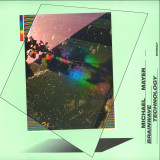
Michael Mayer’s latest EP, Brainwave Technology, comes at you purposeful, stealthy and sly. It’s a glorious left turn for the redoubtable producer, one that sees his typically lean and lithe productions buffed to a metallic, futurist sheen. There’s a gleam in the eyes of tracks like “Brainwave Technology” and “Alpha” that speaks of serious fun, of the intersection of the pleasure zone and the frontal lobe.
“Brainwave Technology” itself is informed by Mayer’s deep dive into the thorny terrain of artificial intelligence, transhumanism and posthumanism. Inspired by reading German philosopher Richard David Precht, Mayer found himself heading down the “proverbial rabbit hole,” as he describes it, “watching hours of YouTube material by self-proclaimed prophets of these ‘inevitable’ changes to come.” Never one to be taken in by the egotist’s dance, Mayer’s cynicism about the whole endeavour is tempered, a little, by the deeper questions that these figures gesture towards: “Is it really an evolutionary step that man and machine become one? Or is it rather a marketing plot by Silicon Valley billionaires?”
On “Brainwave Technology”, Mayer plays the charlatans at their own game, turning their logic against them by exposing the fruitiness of their ‘visions’. “I chose irony as my sword with which I chopped off some quotes from some of those batshit crazy prophets and self-promoters,” he explains of the drooling psychobabble he drops in the track’s lacuna. There’s a sense of humour here – how could you not laugh at these hungover egotists? – but there’s levity too, a sense that Mayer’s using sound to expose the contradictions and double-speak at the heart of these half-formed ideas. It’s a Burroughsian tactic, to slice into the heart of the voice to see what hidden truths surface.
It was Burroughs, too, who once said that “when you cut into the past, the future leaks out”; Brainwave Technology cuts into the logic of the futurologist to leak out the messiness of modern reality. On “Alpha” and “Gamma”, Mayer seems to conjure up the stark, ominous music that’d soundtrack a science fiction reinterpretation – or preinterpretation – of our modern malaise, all funereal wreaths of electronic noise and clatterboxing beats. As the EP resolves with “Device For The Young At Heart”, Mayer’s questions are piling up: “Do we want to become immortal and live on as a download? Do we really give up on Earth and put all our effort into colonising Mars?” There are no answers, of course, but plenty of imaginings-to-be. Brainwave Technology soundtracks both dystopian and utopian possibilities of what could come next.
Repress
Nina Kraviz launches her (pronounced 'trip') label with a double-EP compilation entitled 'The Deviant Octopus', featuring a pair of brand new productions from Kraviz alongside material from Terrence Dixon, emerging talent Parrish Smith & Bjarki, and veteran producers Exos & Steve Stoll.
The idea for has been gestating for some time with Nina Kraviz, an avid crate-digger and frequenter of numerous second-hand record stores, who has long wanted to begin a label of her own which would build on some of the principles of her beloved 90s techno labels in terms of attitude and aesthetics, whilst looking for forward-thinking modern productions that reflect her core tastes for idiosyncratic electronic music.
The art and title of 'The Deviant Octopus' comes from a single-sentence scenario dreamt up by Kraviz: 'Without a moment's notice an Octopus appeared and devoured everyone in sight'. Supplied with this scenario, artist Tombo rendered his own unique visualization for the artwork that adorns the release sleeve. It's Kraviz's own nod to the labels that inspire her and grab her attention while digging through second hand records, the best of which were imbued with the unique personality of the people behind them. This extends to the sound Kraviz intends for : dusky, divergent and trippy music to stimulate brains, dreams and fantasies.
In this respect 'The Deviant Octopus' is a perfect introduction: Kraviz herself is represented on the tracklist by two new tracks that take up the mantle of last year's Mr Jones EP by returning to the vocal-flecked hypnotic techno that marked out that release. Complimenting those are two new cuts from a true master of hallucinatory off-kilter techno, Terrence Dixon in his Population One guise.
Joining them will be a pair of names from the techno pantheon who have been huge influences on Kraviz: with a career that's taken in releases on Synewave, Trax, Novamute and Richie Hawtin's early-90s Probe Records, Steve Stoll has been mining his own variant on techno and acid minimalism for over twenty years, heading up the Proper NYC label and releasing under various pseudonyms, such as Cobalt, of which Kraviz has been a long-term fan. His counterintuitively titled 'Pop Song' sits alongside a 13-minute 90s techno excursion from Reykjavik's Exos - the only previously-released cut (originally appearing on Thule Records sub-label Plast Trax in 1998) - together illustrating that will also live up to its name in the geographical sense: showcasing great music from historically vibrant electronic music scenes outside of the usual Detroit-Berlin axis.
With Kraviz looking to build a small repertory of talent around , this first release also makes room for two newer names: Bjarki is an Icelandic talent to keep a firm eye on, who drew Kraviz's attention in a chance meeting after a gig at Copenhagen's Culturebox club, after which he passed her a collection of mind-bendingly odd demos; while Parrish Smith is a talented Netherlands-based producer whose short yet impactful sketch '1.0 / 8.0 Afrika Genocide' brings the second 12' to a bewitching close.
Boy Golden has a purpose: enjoy each day and make good music. Founder and minister of The Church of Better Daze, he wants to help people seeking to improve on yesterday’s themes. His songs, like hymns, are hopeful, fresh and upbeat. KD & Lunch Meat is fluorescent and fun, like its namesake, and easily ingested. Something to Work Towards searches for the meaning in life, while Smoke on the Breeze and Any Way It Works are warm, tender and linger like perfume. Church of Better Daze is the inspirational, musical manifesto. The harmonies are the collective idea of working together, the mellow melodies keep our hopes alive and the lyrics are golden rules to live by: Follow your heart / Make good art / Call your momma / Work real hard. Redefining jam band and stoner cultures by turning dead heads into lively brains, Boy Golden wants to unite us all in a hazy dream under one roof. “We’re all the same at the Church of Better Daze,” he sings. Find unity in the congregation of these 11 tracks, which redefine the precedent for collaboration, common goals and cannabis. If you’re open to learn, and can speak your truth, you can blaze and still get paid in Boy Golden’s Church of Better Daze.
WSTR were born from the belly of Liverpool in
2014 and had a swift rise as a part of the
burgeoning UK pop punk scene alongside bands
like Neck Deep, Boston Manor and As It Is.
Originally released on No Sleep Records, where
they signed before they had even played a show,
the band's debut EP ‘SKWRD’ and debut album
‘Red, Green Or Inbetween’ cemented them as one
of the favourites of the scene and saw them tour
the world multiple times over.
Now on Hopeless Records, who are reissuing
these titles on coloured vinyl (‘Red, Green Or
Inbetween’ on purple & bone split and ‘SKRWD’ on
red & bone split coloured vinyl) after having been
out of print for years.
For fans of Neck Deep, As It Is, Boston Manor.
For his first release with Artificial Dance, Black Merlin aka George Thompson takes a departure from the hard-wearing techno and intricate field recording work that he has come to be known for. Scape One is a fifteen-minute psychedelic diversion recorded in one continuous live session. While the track’s sonic characteristics may echo dance music from the turn of the millennium, its pulsating rhythm is more suggestive of the slowly evolving landscapes seen outside of a train window as opposed to raves from the late ‘90s.
Appearing on the B-side is Gordon Pohl’s remix of Scape One. Like its source material, this track is long and subtle in the way it develops over time, but Pohl dissects the most salient elements of the original to construct a new rhythmic urgency. The high frequency accent that guides the remix does so at a speed that recalls the rotations of Brion Gysin’s stroboscopic Dream Machine, which taps into your brain’s alpha waves, aiding drug-free hallucinations.
Pohl and Thompson are frequent collaborators and release music together as Karamika. While Scape One is not a collaboration in the strict sense, there is plenty of crossover in the working methodology of the two musicians, especially when it comes to constructing uncomplicated arrangements.
The repetitive nature of their respective tracks locks the listener into a contradictory sensation of travelling whilst staying seemingly motionless. This sensation is not altogether uncommon, but in this instance it’s not quotidian either. The result is a record that unravels slowly, leaving space for the listener to home in on all the available information and, in the process, discover elements that can be just as unnerving as they are satisfying.
Fractal City, the latest Cubenx album is a collection of terrestrial jams and arachnean ambient ballads that are particularly apt for urban listening. If its predecessors cracked the musical codes in force and shone by the versatility of their references, this new opus offers its listener an intense and symbolic sound environment.
The raw material of Fractal City was first conceived as a series of sound patches, designed to run in parallel with Canadian digital artist Maotik's installation. Broadcasted in real-time by generative patches reacting to various external and non-human data, those musical excerpts have been rendered in hundreds of nuances and extended over infinite durations. This unusual approach confers to the recording of the finished album's outstanding immersive strength.
Recorded live on a single track over a short period of a few weeks, the nine compositions of Fractal City capture the obsessions of its author for postmodern urban landscapes, and the revelation of new perspectives on the city of Paris.
The opening piece `Ssarg´ seems to hide the figure of the Mexican ambient producer Jorge Reyes. Cubenx built a cocoon of energetic layers, a new home of the mystical kind harmoniously integrated in a flourishing rainforest ecosystem.
`Transect ´refers to the urban development model of the same name, which is based on a division of the city into autonomous "fractal" zones. It also echoes the concept of "metro polarities" which considers the city as a mosaic of social groups. "By cycling in the evening with a friend, we could get away from the city centre to the suburbs of Paris. The contrasts are striking. You move from chic districts to bedroom communities, from industrial zones to improvised caravan camps. But there is a kind of energy in this heterogeneity that pushes you to always pedal further."
A few miles away, it would look like Art and urbanism have tried to level the cultural and social discrepancies of the outskirts of Paris. "Architectural sites like the Arcades of Bofill are splendid. There are completely extravagant projects, which seem to emerge from nowhere."
These buildings with ambitious aesthetics off the beaten tourist track, deteriorate over time and often remain far from the expectations of the local population. A feeling of nostalgic beauty is particularly perceptible on the slowest and most introspective ballads of the album as 'Urban Decay', 'Hagel' or 'Axe Majeur'. The producer leaves nonetheless no room for melancholic emptiness. "Every time, I have the impression that urban culture is taking its rights back and that young people appropriate the places in one way or another."
Just like `Transect', ` Quantified' and `Fractal City' present themselves as mirrors of a daily urban life in constant motion. All three are empowered by an overheated factory, which dispatches hypnotic beats and burst of analogue compressors with a clinical precision and direct them straight away to the reptilian areas of their listener's brains.
The sequencing leaves however space and time to take breath and makes way for aerial sonic excursions of spiritual and enlightened nature. On `Human Dilemma', Cubenx shows some concerns to opening the Pandora's box of transhumanist theories. While a long cosmic wave gives the listener a feeling of perfect fullness, a dizzying guitar distortion cast doubts on long term outlooks. `Smash Other' on the other way alternates gentle dissonances over an ocean of white noise and concludes the album on ethereal note.
With ´Fractal City", Cubenx eludes his irreconcilable love for shoegaze pop song and techno to concentrate exclusively on the production of mutant experimental materials. The result is an uncanny musical object, rich in image and sensation. Cubenx give us a guiding framework, enthralling enough to engage the listener to a tour of town. But he leaves it to the sole listeners to design their own projection of the city.