After a long hiatus, Tokyo-based french producer Dela comes back with Électrique, a new project paying tribute to hip-hop legends André 3000 and Big Boi, known together as OutKast. This new 7inch record includes three tracks of Électrique : Yosky Wosky Pisky Wisky, Dimanche Matin, and the bonus track Cergy.
Known for his laid-back, jazz influenced, dreamy rap instrumentals, Dela introduced his music to the world with his Atmosphere Airlines mixtapes and his albums Changes Of Atmosphere (2008) and Translation Lost (2011). A student of Q-Tip, Pete Rock and J-Dilla amongst others, Dela’s work foreshadowed today’s increasively popular lofi hip-hop / chillhop movement.
Side A features Yosky Wosky Pisky Wisky, a remix of Stankonia’s classic Humble Mumble, featuring Eykah Badu. Dela changes the mood of the original track, mixing samples and live instrumentation together to turn a salsa-breakbeat groove into a melody infused otherworldly super-funk.
On side B, Dela remixes Sole Sunday, a Goodie Mob featuring Outkast track, edited to feature only the two ATLiens and renamed Dimanche Matin. The beat is reminiscent of his early work, layering boom bap drums over a haunting saxophone melody. Also on side B, the bonus cut Cergy turns a Brazilian MPB sample into an ode to Dela’s hometown with the help of live drums, bass, electric keyboards and a few of his friends singing.
Suche:brazilian
(CLÁSSICOS EM VINIL) Som Imaginário was a famous Brazilian group responsible for support the singer Milton Nascimento. The group released 3 albums between 1970 and 1973.'Armina' and 'Matança Do Porco' are the keytracks, Progressive pearls lost in the haze of time. This is one of the true Brazilian classics.
It goes without saying that the global metal scene would not be the same without Sepultura. For 35 years now, the Brazilian icons are not only a band revered worldwide; they have been, are and forever will be at the very forefront of Thrash Metal, trailblazing ever since they released their long-since legendary debut album “Morbid Visions” in 1986.
While quickly establishing themselves as leaders of the second wave of Thrash already in the late eighties, to this day they never came even close to stagnation. “Quadra”, their mighty new undertaking, is proof of a will unbroken, a thirst unquenched and a quality so staggeringly high it’s a wonder this band doesn’t implode. Now three albums deep into what may very well be their strongest incarnation yet – uniting the talents of old-school members Andreas Kisser (guitars, vocals) and Paulo Xisto Pinto Jr. (bass), vocal force of nature Derrick Leon Green (vocals) and drummer Eloy Casagrande – Sepultura are an unleashed power to be reckoned with, uniting bucketloads of experience and youthful vigour in a totally revived way.
“On ‘Quadra’, we felt the urge to revisit that old thrash feeling of ‘Beneath the Remains’ or ‘Arise“,’ only seen through the eyes of today,” Andreas Kisser utters the magic words. “Add to that the tribal percussion, the orchestral elements, the choirs, the melodies and the clean vocals and you get a thorough run-through of our entire career, backed by a very contemporary approach.” Fuelled by an energy almost uncanny for a band that has been active for so long, Sepultura storm through a contemporary thrash monument, backed by sublime melodies, a very eerie atmosphere and a fiendishly high level of technicality. Kisser is appreciating these compliments, still maintaining his very down to earth approach. “We don’t heed the past and we don’t try to be preoccupied by the future too much,” he shrugs. “We’re in the now, trying every day to make Sepultura a little bit better. That’s what keeping us strong.”
And that’s what they have been doing for the last 30+ years. Album after album, tour after tour, no gap in between records longer than three years. “Music is all we do,” Kisser states matter-of-factly. “If it wouldn’t be for Sepultura,” he laughs, “I would be a sad and lonely guy. Sepultura is what we are.” And “Quadra” is living testimony to that. The old Sepultura echo through the very fibre of the songs in all its raw and morbid splendour, but yet it’s the present, the experienced and refined beast that is Sepultura in 2020 that’s blasting out thrash metal anthems for a fucked-up age.
With now 15 albums under their belts, Sepultura are the work horses of the metal world, always ready to attack. In many ways, “Quadra” broadens the vision the Brazilian thrash troopers had on “Machine Messiah” (2017), again relying on the impeccable talent of Swedish producing giant Jens Bogren and his Fascination Street Studios. “He is so full of passion, it’s unbelievable, man,” Kisser raves. “He’s really there, he really cares about the projects he’s doing. For Sepultura, he’s like the fifth member of the band. The chemistry was so amazing, 99 percent of what we were trying do to actually worked. That was insane!” Even after more than 30 years at the forefront of international thrash, guitarist Kisser sounds positively baffled by working with Bogren. “We felt like we were in our rehearsal room.”
Bringing together a monumental grandeur and a wild, untamed ferocity, Sepultura stepped up their game musically – and conceptually as well. “We were possessed by the number four, by the numerology of it”, Kisser starts to explain. “I divided the album into four parts as if we were doing a double vinyl. Side one is the pure and raw thrash side. Side two brings in the rhythms and percussion from our ‘Roots’ era. Three is getting a bit experimental and four brings forth the melodies and the acoustic guitars.” With John North’s book “Quadrivium” as a further source of inspiration, Sepultura dive deep into a mystical world full of hidden meanings. “You have four seasons and twelve month in a year just to pick one example. A lot of stuff in our culture is divided like that.”
Plus, Quadra also is the Portuguese word for ‘sport court’ that by definition is a limited area of land, with regulatory demarcations, where according to a set of rules the game takes place,” he adds. “We all come from different Quadras. The countries, all nations with their borders and traditions; culture, religions, laws, education and a set of rules where life takes place.” In the Quadra of thrash, however, we all are the same. And we bow our heads in unison to the mighty leader that is Sepultura.
- C3: Stronger Than Hate (Instrumental - Bonus Track)
- D1: Sarcastic Existence (Bonus Track)
- D2: Slaves Of Pain (Instrumental - Bonus Track)
- D4: Hungry (Instrumental - Bonus Track)
- A1: Beneath The Remains
- A2: Inner Self
- A3: Stronger Than Hate
- A4: Mass Hypnosis
- B1: Sarcastic Existence
- B2: Slaves Of Pain
- B3: Lobotomy
- B4: Hungry
- B5: Primitive Future
- C1: Beneath The Remains (Bonus Track)
- C2: Inner Self (Instrumental - Bonus Track)
- C4: Mass Hypnosis (Bonus Track)
- C5: Troops Of Doom (Live - Bonus Track)
- D3: Lobotomy (Bonus Track)
- D5: Primitive Future (Bonus Track)
Sepultura’s acclaimed 1989 album, Beneath The Remains, marks the band’s major label debut on Roadrunner. Widely regarded today as a thrash-metal classic, the album perfectly distilled the Brazilian band’s potent mix of piercing melodies and pummelling rhythms.
In December 1988, brothers Max (guitar/vocals) and Igor Cavalera (drums), Paulo Jr. (bass) and Andreas Kisser (guitar) recorded Beneath the Remains in Rio de Janeiro, Brazil with producer Scott Burns. Soon after it's release in April 1989, the album was hailed by fans and critics alike for standout songs like “Inner Self,” “Primitive Future” and the title track. The album has been remastered especially for this collection.
The Deluxe 2CD Edition also features nine unreleased “mixdown” recordings taken from the Beneath the Remains sessions at Nas Nuvens Studios in Rio de Janeiro. Highlights include versions of “Lobotomy” and “Mass Hypnosis,” as well as instrumental versions “Slaves Of Pain” and “Sarcastic Existence.”
The studio tracks are complemented by unreleased recordings of the band performing live on September 22, 1989 at the Zeppelinhalle, West Germany. The concert features songs from Beneath the Remains (“Primitive Future” and “Inner Self”) and the band’s previous albums (“Troops Of Doom” and “Escape To The Void”), along with covers of Black Sabbath’s “Symptom Of the Universe” and the Dead Kennedys “Holiday In Cambodia.”
Founded by the Cavalera brothers in 1984, the group recorded two full-length albums – Morbid Visions (1986) and Schizophrenia (1987) – before signing with Roadrunner Records in 1988. Since then, Sepultura’s dynamic studio recordings and intense live performances have earned it fans everywhere.
The current version of Sepultura (Derrick Green, Paulo Jr., Andreas Kisser, Eloy Casagrande) released a new album, Quadra, on February 7 and will tour the U.S. this spring. Former members Max and Igor Cavalera – who perform together in the band Cavalera Conspiracy recently completed a sold-out European tour in December 2019.
k 2) Inner Self (Mixdown) Instrumental
[l] 3) Stronger Than Hate (Mixdown) [Instrumental]
[o] 1) Sarcastic Existence (Mixdown) [Instrumental]
[p] 2) Slaves Of Pain (Mixdown) [Instrumental]
[r] 4) Hungry (Mixdown) [Instrumental]
Portuguese- Italian Producer "Vhycepicks" up where he left off,
once again teaming up with the talentedvocalistYves Paqueton Kraak & Smaak's very own Boogie Angst imprint.
He's already got an impressive list of top DJ fans in the shape of
Pete Tong, Claptone, Gorgon CityandSatin Jackets, and it's no surprise given his clean, pop aesthetics and catchy dancefloor sensibilities.Indeed it has led to releases on some of today's most respected dance labels like Kitsune, Future Disco and Casablanca Sunset.
As well as collaborating on their previous single 'Duran Duran' together, Brazilian born soulful vocalist Yves Paquethas previously collaborated with the likes of Aeroplane,and scored #1 in the Belgian dance charts with The Subs. He provides the perfect foil to Vhyce'sbeats with just the tonic – a melodic toplineall about the good times, having a drink and getting high…
In addition to the original mix there's another special treat as stepping up to provide a stellar remix is none other than PrinsThomas, a true pioneer of 'space disco' and regular bandmate of nu disco royaltyLindstrømin their imaginatively titled project 'Lindstrom & PrinsThomas'.
Yes, he takes his arpsynth lines out for a spin and serves up a prime cut of good time, ethereal, dancefloor fire. With all the hallmarks of his crisp and upbeat spacey productions it's not one to miss out on.
For those who are all about the beats, fear not we got you covered as there's an instrumental safely stowed in there too …
Alex Figueira, the man behind Music With Soul, Fumaça Preta & Conjunto Papa Upa, has teamed up with Maxado, Brazil's leading rocksteady vocalist, to create another impossible crossover, connecting the dots of the vast tropical music map that have remained appart for far too long.
What if the now-legendary producer Lee Perry had recorded & produced the nascent Wailers trio of Neville Livingston, Bob Marley and Peter Tosh, not in Kingston, the scorching hot Jamaican capital, but instead in Belém, an even hotter city, at the heart of the Brazilian Amazon.
Whilst Kingston's airwaves and street parties were dominated by the locally produced rocksteady, ska and reggae, Belém was dancing to it's own beat of carimbó and siriá.
Alex Figueira and Maxado, two avid fans of both musical traditions, entered the Barracão Sound Studio, Amsterdam's famed vintage recording studio, determined to find an answer to that hypothetical question. The result is not only tangible and unprecedented, but incredibly emotive & hypnotic too.
The chorus of "Quando Será" is unnervingly apt for our times tool, "Quando será que eu vou te ver?", or "When will I see you?" the song asks. Well until we see each other, Music With Soul offers some musical relief in the form of this collaborative song.
The B side offers a beautiful touching instrumental version, led by the impeccable flute rendition of Brazilian multi-instrumentalist Gabriel Milliet, a prominent member of the Brazilian music scene in Amsterdam and Alex's long time collaborator having shared the stage countless times in the past 3 years. His delicate phrasing will give you goosebumps.
Alex Figueira is well known as the man behind experimental tropical rock-outfit, Fumaça Preta, and more recently the psychedelic tropical dance band, Conjunto Papa Upa. Meanwhile, he has become a staple of the Amsterdam scene, having either played with, recorded or produced everyone from Mauskovic Dance Band to Altin Gün. São Paulo-based musician & singer composer Maxado made his mark fronting Firebug, Brazil's leading, if not only, rocksteady band, also featuring influential musician, producer and mix engineer Victor Rice. The two musicians met during Alex's first trip to Brazil, when he was already a massive Firebug fan, and quickly formed a firm friendship. Finally over the course of Maxado's first visit to Amsterdam, the pair had a crack at writing & recording together, quickly discovering that their chemistry extended to the studio. Now you can hear the first fruits of their blossoming musical relationship.
1970’s best-kept Bossa Nova secret. Surrounded by mystery for nearly 50 years due to its obscurity, this is one of the most honest, personal and unpretentious albums of it's genre.
A selection of 12 exquisitely crafted songs supported by measured, subtle arrangements. The list of musicians born or raised in the Tijuca district of Rio de Janeiro is long and illustrious and includes names that have shaped Brazilian music: Tom Jobim, Roberto Carlos, Tim Maia, Milton Nascimento, Jorge Ben or Erasmo Carlos – to mention but a few.
We can now add to that list another name: Werther. In 1970, a man by that name recorded an album unique in its personality, its honesty, and its lack of pretense. In a time when Bossa Nova had become a global phenomenon and its main characters were already household names in Brazil, Werther assembled a collection of songs that uncannily – almost naively – remind us of the time when Bossa Nova was just a group of youngsters making music. His songs are about simple things: bohemian life, the sea, love.
Despite Werther and his friends being only in their teens, without any previous experience recording music, those working behind the scenes were not equally amateur. Producer Peter Keller had already worked with Aloysio De Oliveira in the quintessential Bossa Nova label Elenco, and was also an initial partner in Roberto Quartin’s cult label Forma.
Studio owner Bill Horne was a very loved character in the Rio jazz scene who had regularly taken part in the legendary meetings in Nara Leão’s apartment and befriended some of Brazil’s most respected musicians. Some of these musicians were, for example, Naná Vasconcelos and Edison Machado, who provided small contributions to Werther’s album.
Rio meets Romford on Forest Law’s EP, the Essex-raised, London-based artist’s debut on Gilles Peterson’s Brownswood label. He was first discovered through Future Bubblers, Peterson’s programme for new and unsigned artists, and this release is an assured introduction to the singer and multi-instrumentalist’s tight, groove-driven sound.
The EP features Esa Williams (Soundway, Rush Hour) on the berimbau on ‘Keep an Eye Out’, his mentor through Future Bubblers and bandmate in Esa’s Afro-Synth Band.
A bright, Brazilian-tinted sensibility runs through every track which Forest Law creates. From Hornchurch, Essex, and now based in London, he makes warm, eclectic compositions in his garden shed. He takes groove as his driving force, building outwards in kaleidoscopic directions.
The outstanding 1971 debut by piano player and arranger Osmar Milito features his amazing cover of Herbie Hancock's Cantaloupe Island plus several classic Brazilian songs by Marcos Valle, Jorge Ben and Ivan Lins among others. Fierce samba jazz and bossa all the way through! The line-up of performing artists could hardly be more impressive: Quarteto Forma on vocals, Luis Ea, Marcos Valle, Pascoal Meirelles. This brilliant album is up there with the best work of Arthur Verocai and Marcos Valle. Presented in facsimile artwork and pressed on 180g vinyl
During the 90s, a walk around London’s Camden Market inevitably meant listening to the music with groove that the most popular DJs had made fashionable at the time: soul jazz instrumentals and Brazilian music targeting the club dancefloors. Among all those songs that ended up becoming classics of the scene was the amazing cover version of Herbie Hancock’s ‘Cantaloupe Island’ that Osmar Milito had recorded in 1971. This song was probably the main reason that made his LP for Som Livre one of the most sought after Brazilian records by collectors from all over the world. Now we finally have a new opportunity to enjoy this album, reissued on vinyl for the first time.
Along with the aforementioned version of Herbie Hancock’s song, this first album by piano player and arranger Osmar Milito is full of versions of Brazilian classics, from Marcos Valle to Jorge Ben or Ivan Lins. Fierce samba jazz and bossa all the way through! Note that Milito spent the first years of his career as a member of the backing band of big artists such as Elis Regina, Jorge Ben, Nara Leão... and after two years working with Sergio Mendes in the United States, he returned to Brazil and recorded his first LP.
The line-up of performing artists on this album could hardly be more impressive: Quarteto Forma on the vocals, Luis Eça, Marcos Valle, Pascoal Meirelles (what an amazing drummer he is!)... and both sides of the record hide a seamless sequence of solid tune after solid tune with similar doses of instrumental and vocal tracks. Just listen to the magnificent ‘Garra’, ‘Que bandeira’ or ‘Rita Jeep’, or the sweet samba that gives its name to the record, and you will see why this LP should be up there, next to the best works of Arthur Verocai and Marcos Valle.
Fully remastered from the original tapes and available on vinyl for the first time in 42 years, and CD for the first time in 30 years.
Sleevenotes by Jon Hassell and Brian Eno. Back in record shops on the day of the 2020 vernal equinox, the second release on Hassell’s own Ndeya label.
Hailed as one of the 50 best ambient albums of all time by Pitchfork, Vernal Equinox was the first commercially released work by Jon Hassell, originally put out by Lovely Music in 1977.
It's also the debut of a pioneering new form of music that would become known as “fourth world”: a subtle blend of field recordings, electric jazz, ambience and global music influences.
Hassell’s trademark FX-soaked trumpet is carefully embellished by a studio ensemble including the master Brazilian percussionist Naná Vasconcelos and David Rosenboom on synth.
The result is a quiet, meditative and highly original work of outstanding beauty. Vinyl version is housed in a reverse board outer sleeve with printed inner sleeve. Includes download code.
Fast-rising Lisbon-based DJ/producer PEDRO has shared details of his long-awaited debut album, ‘Da Linha’, which releases on March 20 via Enchufada. First teased with the release of bubbling lead single ‘Calores’ in January, ‘Da Linha’ crowns a defining breakthrough three years for PEDRO that has seen him establish himself as one of Portugal’s most vibrant and exciting new-school producers. His debut EP, ‘EP ‘Damaia’ (2017) – named after the suburb of Lisbon he was born in – immediately signposted a bright, borderless club sound rooted in experimentation, which has since been best emphasised by 2019 releases including the Buraka Som Sistema-sampling ‘Rapazes’ and a breathless collaboration with Nigerian MC, Magugu (‘Too Much’), both of which feature on the LP tracklist.
First inspired by his older brother, who would introduce PEDRO to the latest electronic music coming out of Portugal, he still references DJ Rolando’s ‘Knights Of Jaguar’ as a memorable early touch point – a record he still credits with influencing the melodies he writes to this day. Living and growing up in Damaia, PEDRO also went to school with friends of Angolan, Cape Verdean, Brazilian and Mozambican descent, exposing him to a whole patchwork of new sounds and genres like kuduro and kizomba from a very young age. With such a rich and diverse musical upbringing, it is perhaps no wonder that ‘Da Linha’ is bursting with energy and colour across all 10 tracks, melding together the hyper-specific sounds, instruments and voices that have sound-tracked PEDRO’s life so far. From the marching, militant rhythm of ‘Stuck On You’ ft. standout Ghanaian MC, Bryte, to the silky, bubblegum vocals and gloopy, earworm melodies of closing track ‘Para Ti’ featuring Xcelencia, you’d be hard pushed to find a debut record that captures a city so viscerally.
(180g LP) On his debut album Travesseiro Feliz (Happy Pillow) Rio de Janeiro based dreamer and new Far Out Recordings signing Ricardo Richaid melds his tropical heritage with his love for psychedelic music, jazz and rock.He also takes inspiration from the many Brazilian greats - Caetano Veloso, Arthur Verocai, Hermeto Pascoal, and Azymuth (to name a few) - who he has worked with as an engineer, assistant and producer, in Rio's former RCA studio, Cia dos Tecnicos.
Two giants of Brazilian music back-to-back!
Jorge Ben can do it all - vocalist,songwriter, musician, producer and to many their ‘all-round’ favourite Brazilian artist. Jorge has had an amazing career, involved in music from the early 60's through to the current day, writing countless classic songs for him and other artists.
This awesome samba-disco-funk joint 'Waimea 55.000’’ is a lesser-known production, taken off a 7” B-side released on Som Livre in 1978. This is a gem which needed to be dusted off and given the
wider audience it deserves.
Baby Consuelo with her distinctive voice is one of Mr Bongo’s favourite Brazilian singers. The only female founding member of the mythical group Os Novos Baianos, Baby is a real innovator andpioneer, changing her persona and musical styles over the years, but still staying unique.
Here we have Baby at the start in raw psychedelic hippy mode,
giving a powerful vocal delivery where she manages to sound simultaneously badass and lovable. This early song was released in 1970 on RGE records on a compacto 7” credited to Baby Consuelo and additionally featured on OsNovos Bahianos’s debut album 'É Ferro Na Boneca!’ in the same year (re-issued on Mr Bongo in 2019).
Lucindo signs the 6th release on Nexe Records with a 6 tracks EP which includes also a superb Umwelt remix. In this release, the Italo-Brazilian Berlin based artist explores two sides of his exquisite multiface production capabilities range. The first side consists of unconcealed thumpy techno, and the second one, leaning towards high class electro.
“Act_99” is a beat-less intro track to begin with an intense noisy drone which act as prelude of “Act_2000”, a mental, straight and driving tune. “Act_186” is closing the A side, an epic and melancholic broken techno, delicious for advanced dance-floors.
B side continues with a fascinating, melodic, electro track named “AG6”, which is the track remixed by Umwelt who developes his magic and elevates the original to a new highs. The punk “AG4” is the last track of this release, delivering a faster beat, providing a dark, refined electro touch. Definitely a marvelous piece of art ought to be on the bag of any precious vinyl collector.
First vinyl reissue of this fantastic 1981 album by Marcos Valle, one of the essential artists of Brazilian music.
Recorded in Brazil after spending the late 70s in the US, Marcos Valle brought together his innate talent and diverse influences on this irresistible record bursting with groove. Among a selection of top musicians, the line-up features Sivuca, Chicago's Peter Cetera, Robson Jorge and Azymuth's Jose Roberto Bertrami. Presented in facsimile artwork and pressed on 180g vinyl. A Record Store Day release.
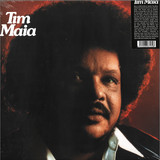
First vinyl reissue of this 1977 LP by one of the great figures of Brazilian music. Brilliant tracks like E necessario, Verao carioca, Venha dormir em casa or Musica para Betinha make it one of the strongest albums to come out of Brazil in the 1970s. Presented in facsimile artwork and pressed on 180g vinyl. TIP!
Tim Maia was born in 1942 in the suburbs of Rio de Janeiro and started his musical career at an early age, along with close friends such as Roberto Carlos or Jorge Ben. Carlos would eventually help him to get a deal for his first single at CBS.
During the 70s Maia started to incorporate soul and funk elements into his style. After a two-year period involvement in the Racional cult in Brazil, Maia's funky style was still at its best when he released this album in 1977. It was his first and only recording for Som Livre, the legendary label that became extremely popular due to the many soap operas soundtracks in its extensive catalogue.
- A1: Africa Negra - Mino Bô Bé Quacueda
- A2: Africa Negra - Zimbabwe
- A3: Sangazuza - Sun Malé
- A4: Os Úntuès - Chi Bô Sá Migu Di Védê
- A5: Sum Alvarinho - M'konvètá Dédo
- B1: Conjunto Equador - Mad?
- B2: Tiny Das Neves - Cladênço Padê Cluço
- B3: Conjunto Mindelo - Taji Océdo
- B4: Africa Negra - Aninha
- C1: Pedro Lima - Nga Ba Compensadora
- C2: Sangazuza - Cortição
- C3: Os Úntuès - Piquina Piquina
- C4: Conjunto Equador - Meu Di Plôc?
- D1: Sum Alvarinho - Tólá Muandgi
- D2: Pedro Lima E Conjunto Os Leonenses - Esatela Licu
- D3: Agrupamento Da Ilha - Bô Gosa So Txi
"The two Portuguese-speaking African islands of Sao Tomé & Principe, located in the Gulf of Guinea, created an unique music called Puxa : a refined mixture of various musical components from both sides of the Atlantic Ocean. A blend of Semba, Merengue, Kompas, Soukouss, Coladeira patterns, often pushing forward with a voodoo-like energy, solid bass lines, delicate melodies and backing harmonies of the rich Sao Tomean melodic traditions. Very first compilation focusing on the golden age of these island’s sounds, the 16 tracks selected will surely set fire on all dance floors !
Léve-Léve is the first ever compilation devoted to music from São Tome and Principe, two small islands situated off the coast of Gabon in central Africa. The album unravels a story of liberation where the music of Africa, Europe and the Americas unify with a carefree spirit personified by a phrase the islanders use all the time: “léve, léve” (“take it easy”). With echoes of Angolan semba and merengue, of Brazilian afoxê, of coladeira from Cape Verde and dance music from the Caribbean, it is a sound fiercely proud of its island heritage, sung in local dialects and using distinctive local rhythms.
On this record you can hear the cultural and social history of São Tome and Principe, and how live music represented its beating heart. Once known as the “Chocolate Islands” (remarkably, these two tiny islands were the largest cocoa producers in the world, though now this title acts as a reminder of its colonial past), through the years leading up to independence from Portugal, music would be a fundamental voice of liberation and conviviality. Os Úntués were one of the first groups to make an impression, releasing a couple of 7 inches in Angola – the litmus test of success for any of the islands’ groups. They united unique rhythms and dances like socopé, puita and dança-congo – borne from the islands’ largely slave-descendant population – with the sound of pop music beamed in on the radio from Europe, even adding in a little bit of soukous and Brazilian instrumentation. Their main rivals were Conjunto Mindelo, who fused São Toméan rhythms with rebita, an Angolan style, to create high energy puxa, a truly original island rhythm.
From the mid-1970s, coinciding with independence from Portugal in 1975, the islands’ groups featured an even stronger African influence and nowhere was that more apparent than with Africa Negra. They would listen to the latest records from Gabon, Zaire and Cameroon, taking inspiration and trying out phrasing from the greats of Central African guitar playing, developing a devoted fan base off the islands, as well as on. A score of other bands would follow a similar musical path, with a few getting their dues overseas in Angola, Cape Verde, Portugal and across Africa.
Os Leonenses (led by the iconic Pedro Lima), Conjunto Sangazuza, Sum Alvarinho and Conjunto Ecuador were just some of the other bands that formed a lively home-grown music scene that lit up the islands’ bars and open-air shows from the 1950s through to the mid-90s. Regardless of class or age, they were responsible for keeping the population entertained come the weekend, with Sunday matinee shows the highlight of the week, the music not stopping from midday until midnight.
As a Portuguese island colony that was for many years populated with slaves brought from Africa, São Tome and Principe has much in common with other Lusophone countries and boasts a richly complex and idiosyncratic musical DNA. Whilst the musical tapestries of Angola and Cape Verde are well known, São Tome and Principe’s secrets were assigned to the islanders themselves. Until now."
Cocada, a project which emerged as a diffuser of the musical talent present throughout Latin America, quickly spread its sounds to the four corners of the world, becoming a great initiative for electronic music. We couldn't be happier by this time, Cocada's first release as a record label is born with some respected artists and a beautiful story behind.
The wonderful artwork was illustrated by the Brazilian artist Paula Dornelles, who dedicates herself to the production of experimental artworks, she was able to convey through all her creative potential the depth of the meaning present in the word "freedom", a small sample of Latin American talent also in the visual arts.
On the album, who begins the work is the Brazilian duo, Diogo Vaille and Marcelo Abreu aka Bruce Leroys, with "Liberdade" (Original Vocal Version), a rework of a classic MPB song. The artists managed to perfectly merge the melancholy voice present in the song with a deep and dense bass line, bringing all the emotion present in the lyrics, causing goosebumps.
However, the duo isn't alone in this release. None other than Ricardo Villalobos has also left his trademark with a great remix, featuring fuller grooves and inserting multiple textures for the track.
After a few other successful projects, Franck Biyong, French-Cameroonian Afrobeat composer, guitar player and singer is back on Hot Casa with a hot futuristic Afro-Brazilian club anthem. The similarities and filiations between traditional West-African drumming and Afro-Brazilian religious musical rites are many: under colonial rule African people and African slaves outwardly practiced
Christianity but secretly prayed to their own God, Gods, or Ancestor spirits. So we aimed at keeping the gritty urban menacing sound and poetry of Afrobeat with the percussive mass rumble of Batucada and poignant beauty of Carioca. We then got in touch with Cristina Violle, the first lady of “Samba de Roda” in Paris who graced us with a startling inspired and heartfelt melody. The first completed version of the song then briefly went on alternative radio, we also made plans to release a vinyl version, but for one way or another we shelved the project, without thinking we would get back to it again…until a few months ago. We went back to the studio last summer and started ironing the song again from scratch. That same initial spirit and energy caught hold of us again from the day we started and we worked relentlessly to create a balanced but experimental track, showcasing rootsy sound, pop instrumentation, tight world beat drumming, song structure, jazzy horns, spacey synthesizers, choral-like vocal harmonies with call and response figurative vocals.
We now proudly present this brand new record; Like our predecessors years ago, we subconsciously did our best to keep alive a longtime tradition of cultural tradition of African Artistic
Renaissance, pushing further musical themes of contemporary African sound. To be continued…
To call Marcos Valle 'a legend' of Brazilian music is much more than just easy press-release hype. As singer, writer, musician and record producer, Marcos has played an integral role shaping the sound of the country’s music from the 'golden era' of the 60's and 70's, through to the modern day. Alongside his brother, Paulo Sergio Valle, they have penned a huge catalogue of classic songs, not just for themselves but for other greats such as Elza Soares, Astrud Gilberto, Claudia to name a few.
‘Braziliance!’ takes things back to the early heady days of Marcos’ career with the bright and optimistic sound of Rio's Bossa Nova scene. It includes an instrumental version of ’Crickets Sing For Anamaria’ or 'Os Grilos’ in Portuguese, which would also be re-recorded with vocals. Though only in his early twenties at the time, ‘Braziliance!’ depicts very sophisticated production for a musician so young. Recorded in 1966, produced by Louis Oliveira and Ray Gilberts with arrangements by the very talented Emir Deodato, the album was released on Warner Bros. Records.
The artwork presents a very clean-cut, wholesome looking Marcos but darker things were around the corner for Brazil. The ‘Tropicalica’ movement was on its way and about to shake thighs up both musically and politically.
Unlike some of his Bossa Nova contemporaries, Marcos continued to stay relevant, surfing the changes and adapting to the musical developments that culture and society projected and needed, without comprising his art. Under exclusive license to Light In The Attic Records & Distribution, LLC | Mr Bongo Records.