Thrasher is the soundtrack to a virtual reality video game about a creature that has a life cycle that traverses different psychedelic realities. Thrasher was composed and performed by Brian Gibson, bassist of Lightning Bolt. It is the follow up to the acclaimed best-selling game and soundtrack Thumper. The central character in Thrasher is a giant centipede like creature, so Gibson employed a lot of melodic sequences that resonated well with its segments moving through space. The soundtrack has the drive you might expect knowing Gibson"s work in Lightning Bolt combined with complex melodic structures that are absolutely irresistible. In addition to bucking the hyperreality trend in gameplay, Gibson"s DIY ethos and warehouse culture roots permeate the entire soundtrack. He says it best: "Thumper has that combination of psychedelic and iconic that takes me back to the Fort Thunder days. Thrasher is a further exploration into some of those motifs." We recommend that you play this record VERY loudly.
Suche:brian gibson
- 1
Thrasher is the soundtrack to a virtual reality video game about a creature that has a life cycle that traverses different psychedelic realities. Thrasher was composed and performed by Brian Gibson, bassist of Lightning Bolt. It is the follow up to the acclaimed best-selling game and soundtrack Thumper. The central character in Thrasher is a giant centipede like creature, so Gibson employed a lot of melodic sequences that resonated well with its segments moving through space. The soundtrack has the drive you might expect knowing Gibson"s work in Lightning Bolt combined with complex melodic structures that are absolutely irresistible. In addition to bucking the hyperreality trend in gameplay, Gibson"s DIY ethos and warehouse culture roots permeate the entire soundtrack. He says it best: "Thumper has that combination of psychedelic and iconic that takes me back to the Fort Thunder days. Thrasher is a further exploration into some of those motifs." We recommend that you play this record VERY loudly.
Bell Gardens combines the musical visions of Kenneth James Gibson (formerly of Furry Things, now recording as
*Bell Gardens' origins began arguably as more of an experiment than the duo's current 'experimental' projects - McBride's drone- and string-laden ambient symphonies, and Gibson's ventures in dub and minimalist techno - as they sought to manifest their mutual reverence for folk, psychedelia and chamber pop in a traditional band structure without cannibalising any particular past genre. Bell Gardens' sound is less reliant on effects and studio trickery than the pairs' independent guises, laying bare as it does vocals and live instruments with emotional sincerity, and presenting songs imbued with an almost pastoral or gospel simplicity and timelessness.
Slow Dawns for Lost Conclusions was again recorded mostly at home studios, but additionally the band made use of a friend's desert cabin in Wonder Valley, California, and it seems this willingness to retreat from the city has lent an expansiveness to the tracks, in particular the spacious, ceremonial 'Silent Prayer' (written in a snowbound mountain cabin in Idyllwild, C.A.) and the crepuscular 'She's Stuck in an Endless Loop of Her Decline' (mapped out under the stars in the desert).
While the addition of strings (contributed by Lauren Chipman of The Rentals and The Section Quartet) and trumpet (Stewart Cole of Edward Sharpe and The Magnetic Zeros) provides a double rainbow of tonal textures throughout, the nine tracks of Slow Dawns for Lost Conclusions are united by an understated elegance belying the newly expanded, communal effort in the studio: each instrument earns its place, nothing is overwrought or conspicuous. Moreover, it is McBride and Gibson's artistry in building stirring soundscapes from the barest of materials in their other guises that lends such assurance and sophistication to these arrangements.
The band is a result of the complimentary cross-pollination of Gibson and McBride's musical tastes - borne from a late-night conversation between the two that grew wings - and it is the universality of the sentiments and their restrained, reflective approach to writing and recording that allows the music to simultaneously straddle the past and the present. The music avoids pastiche, its pedal steel, sleigh bells and harmonies giving a nod to the ghosts of musical genres past, but never overriding or distracting from the emotional content of the sum of its parts.
The album ends with the glorious 'Take Us Away' - one of the first demos Gibson gave McBride when he was on tour with Stars of the Lid - neatly bringing their work to date full circle and exemplifying the band's mindfulness of their own serendipitous beginnings: the dawning of an auspicious, unique musical force.
Bell Gardens - Take Us Away -
Harmonies alert!! Actually, this is rather lovely. Slow-tempo, just the right side of 'twee' and packed full of strings, as if Air and Midlake had been taking balloon trips over the mid-West and sprinkling good-vibes dust across the land. From L.A. and subconsciously plugged into the '60s dream-pop scene, taking in a little bit of Mercury Rev and Brendan Perry en route, stopping off at Pearls Before Swine and Big Star's house for inspiration, before getting stoned with '70s era Brian Eno and Harold Budd.
The second instalment in George Miller’s disturbing post-apocalyptic film series, The Road Warrior (1981), saw Mel Gibson return as
Mad Max Rockatansky to defend a community from a violent band of raiders. The film won a clutch of awards, was a box office hit and
has achieved cult status, helped by its stylised costumes and sets. The last Mad Max film (Mad Max: Fury Road) was released in 2015,
receiving ten Academy Award nominations.
Australian composer Brian May wrote the music to the first two films (Mad Max and Mad Max 2 : The Road Warrior) as well a host of feature
films including Patrick, Gallipoli, Freddy’s Dead : The Final Nightmare and Dr. Giggles. He won multiple awards during his lifetime and is feted as one of Australia’s most highly rated soundtrack composers.
This release was originally issued for Record Store Day 2019 on “Sand with Oil Splatter” coloured vinyl.
Black Pus is the guttural, raw, freeform project of singular drummer, vocalist, & artist Brian Chippendale. A heavy drum foundation and distorted electronics anchor Black Pus" sound, and remain directly connected to the intensity of Chippendale"s legendary duo with Brian Gibson, Lightning Bolt. Recorded at Machines with Magnets by engineer Seth Manchester, Terrestrial Seethings is pure energy, pure Black Pus, capturing the precision, frenzy, and ecstatic performance in all its glory. After more than a decade playing and improvising, Chippendale"s imagination and curiosity continue to push his world of twisted joy in expressive new directions. While known primarily for his iconic style of drumming with Lightning Bolt, Chippendale has also worked alongside artists such as Björk, The Flaming Lips, Boredoms, Andrew W.K., and Lee "Scratch" Perry. Outside of music related endeavors, Chippendale has made a name for himself as a renowned painter and painterly silk screen artist. Known for his frenetic color work, for Terrestrial Seethings Brian created striking black drawings that, like its title, pervert assumptions. Chippendale"s approach to crafting music as Black Pus mirrors his restless and indomitable spirit as a creator. His daily practice of making music and art on his own is both as meditative and cathartic, as it is inquisitive and spontaneous.
New album of piano pieces by Matthew Bourne, provocatively titled This Is Not For You. The album is a return to solo piano following a series of recent collaborations with other artists playing a variety of instruments, including Keeley Forsyth, Alabaster Deplume, Keith Tippett, MINING, Nightports, Mzylkypop, Visionist, Paula Rae Gibson, Shiver, Jameszoo, Emil Karlson and Marcus Vergette. This Is Not For You. showcases Bourne"s more contemplative side, but there are flashes of the unpredictability that makes him such a unique and inspirational performer.
"Enjoy The Toons Records in conjunction with Lionsgate proudly present Little Monsters Original Motion Picture Soundtrack. Composed and Conducted by David Newman, the score to the 1989 film is available on vinyl for the first time. Little Monsters stars Howie Mandel, Fred Savage & Ben Savage.The fantasy comedy tells the adventures of a boy who befriends the monster under his bed, discovering a world of mischievous monsters below!
Little Monsters Original Motion Picture Soundtrack features new art by Garreth Gibson, and the 2xLP is housed in a 350gsm gatefold jacket and black poly lined inner sleeves."
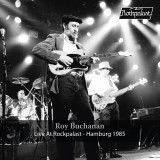
Roy Buchanan gilt bis heute als "der beste unbekannte Gitarrist der Welt". Die Rolling Stones wollten ihn als Nachfolger für Brian Jones, Eric Clapton als Gitarrist bei Derek & The Dominos - beides Angebote, die er ablehnte. Roy Buchanan war ein Meister auf der Fender Telecaster-Gitarre, sein Spiel beeinflusste Musiker wie z.B. Gary Moore, oder Jeff Beck maßgeblich. Roy Buchanan wuchs in Kalifornien auf, wo er auch Gitarre lernte. Als Teenager zog er nach Los Angeles und spielte mit Spencer Dryden (später der Drummer von Jefferson Airplane) in der Band Heartbeats. Danach tourte er mit Dale Hawkins und spielte mit Robbie Robertson (The Band), der Buchanan später als einen seiner Haupteinflüsse bezeichnete. In den 60er Jahren heiratete Roy Buchanan, zog nach Washington DC und arbeitete als Studiomusiker an mehr als 100 Produktionen, vornehmlich für Freddy Canon und Leiber/Stoller. Erst 1971 erschien sein erstes Solo-Album, was dazu führte, dass er und sein unnachahmliches Spiel auf der Fender Telecaster von Größen wie John Lennon, Eric Clapton oder den Rolling Stones als Geheimtipp gehandelt wurde. Die ab 1985 aufgenommenen Alben "When A Guitar Plays The Blues" (1985), "Dancing On The Edge" (1986) und "Hot Wires" (1987) gehören zu den Highlights seiner Karriere. Nur drei Jahre vor seinem tragischen Selbstmord wurde dieses Rockpalast-Konzert am 24. Februar 1985 in der Markthalle in Hamburg aufgenommen. Ein Auftritt, bei dem Roy Buchanans Genie als Gitarrist in einzigartiger Weise überzeugt - nicht zuletzt durch seine kongenialen Cover-Versionen u.a. von Jimi Hendrix oder Don Gibson. Es ist kein Geheimnis, dass Roy Buchanan seine Qualitäten vor allen Dingen bei seinen Auftritten ausleben konnte, von denen nur wenige aufgezeichnet wurden. Ein beeindruckendes Vermächtnis!
A Detroit resident, William Odell Hughes is a much-loved street educated singer-songwriter and music composer. As a regular passenger riding to work on the Detroit East Side bus route in the early eighties, he met jazz pianist Pamela Wise who also rode the bus to work every day and who he noticed was always reading music. Pamela told him about saxophonist, clarinetist, and producer Wendell Harrison (founder of the legendary Tribe collective and a regular collaborator of Pamela Wise). She introduced Odell to Wendell, who was impressed with William’s compositions and felt that it would be a great project for release on his WenHa record label.
Hughes and Harrison began producing and recording the album to be called “Cruisin”featuring musical arrangements by both Wendell Harrison and Pamela Wise. This album (released in 1981) was the first recording for Hughes and the beginning of a long musical journey that continues to this day. Cruisin’ features an all-star line-up that includes Andrew Gibson (The Counts), Pamela Wise (Tribe) and award-winning Detroit Jazz icon Wendell Harrison…all doing their bit and making this a monster of an album!
William Odell Hughes’ debut album has all the best characteristics of an 80s album: it’s filled with funky playful beats and has excellent soulful honey-dipped vocals. On Cruisin’ the listener is treated to both mellow soul sounds and electrifying disco boogie (that’ll make even the shyest of club goers want to get up and dance) and Wendell Harrison’s instantly recognizable flute-playing and synth pads give the record a warm, relaxed groove. Prepare yourself for funky vibes, cool soothing feet-tapping rhythms, fantastic interplays on vocal tempos…all backed by a beautiful array of soulful synthesized and cosmic music.
References to universal awareness are plentiful throughout and the spirituality of The Tribe remains a constant undertone; a gentle reminder of WenHa’s roots. With a sound like this, it’s no wonder that this album has long been considered a grail for crate diggers around the world. All of the above makes this incredible record both timeless and as relevant today as it was back when it was initially released.
Tidal Waves Music now proudly presents the first ever vinyl reissue of this rare funk & soul album (original copies go for large amounts on the second-hand market) originally released in 1981 on WenHa records. This unique record comes as a deluxe 180g vinyl edition (strictly limited to 500 copies worldwide) with obi strip. This vinyl edition also features the original photography by acclaimed British photographer Brian Smith known for his work with artists such as Screamin’ Jay Hawkins, Howlin’ Wolf, Chuck Berry and John Lee Hooker.
Die neue Ausgabe der Bootleg Series von Bob Dylan, "Fragments - Time Out Of Mind Sessions (1996-1997): The Bootleg Series Vol. 17" erscheint als 5 CDs umfassendes Deluxe Boxset sowie als Standard-Version auf 2 CDs oder 4 LPs. Sie enthält in der Standardversion das Album "Time Out Of Mind" in einem 2022er Remix sowie zwölf ausgewählten Outtakes und Alternativversionen. Volume 17 der gefeierten Dylan-Reihe wirft 25 Jahre nach seiner Erstveröffentlichung einen neuen Blick auf das Meisterwerk "Time Out Of Mind" und zeichnet dessen Entstehung nach. Angefangen bei den bislang unveröffentlichten Song-Fassungen aus den 1996er Teatro-Sessions mit Dylan (Gesang, Gitarre, Piano), Daniel Lanois (Gitarre, Orgel), Tony Garnier (Bass) und Tony Mangurian (Schlagzeug, Percussion) bis hin zu (ebenfalls unveröffentlichten) Live-Mitschnitten aus den Jahren 1998-2001. Anfang 1996 begann Dylan, der seit der 1990er LP Under The Red Sky kein Album mit Eigenkompositionen veröffentlicht hatte, mit der Arbeit an neuen Songs. Von August bis Oktober ging er mit Daniel Lanois, der sein 1989er Album Oh Mercyproduziert hatte, ins Teatro Studio in Oxnard/CA, um dort Demos für eine mögliche neue LP aufzunehmen. Als die Songs im Januar des Folgejahres Form angenommen hatten, zog man ins Criteria Studio in Miami/FL um. Die Studiobesetzung wurde aufgestockt, und so fand sich in Florida ein illustrer Mix aus Session-Musikern und Mitgliedern von Dylans Tourband ein: Bucky Baxter (Akustikgitarre, Pedal Steel), Duke Robillard (E-Gitarre/Gibson L-5), Robert Britt (Martin Akustikgitarre, Fender Stratocaster), Cindy Cashdollar (Slide Gitarre), Tony Garnier (Bass, Kontrabass), Augie Meyers (Vox Orgel, Hammond B3, Akkordeon), Jim Dickinson (Keyboards, Wurlitzer E-Piano, Pumporgel) sowie die Schlagzeuger Jim Keltner, Brian Blade und David Kemper. Das Album "Time Out Of Mind", der schließlich aus diesen Sessions entstand, avancierte zu einem Dylan-Klassiker. Songs wie "Love Sick", "Can't Wait" oder "Not Dark Yet" wurden zu Lieblingsstücken der Fans. Mit "Make You Feel My Love" gelang Dylan sogar das Kunststück, dem Great American Songbook einen neuen zeitgenössischen Standard hinzuzufügen. Zahllose Künstler, darunter Billy Joel, Neil Diamond oder Adele, haben diesen Song gecovert. Bei den Grammy Awards 1998 gewann "Time Out Of Mind" in den Kategorien 'Album of the Year' und 'Best Contemporary Folk Album'.
- A1: Bleeding Hearts
- A2: Waiting For You
- A3: No Regrets
- A4: Money Street
- A5: Love Blind
- B1: North Beach
- B2: What I Don't Like
- B3: Secret
- B4: Too Late
- B5: You Don't Rock
- B6: Price Of Sex
- C1: I Can See
- C2: Red Blue Jeans
- C3: Always Comes Back
- C4: I Walk The Line
- C5: Modern Living
- C6: Down At The Beach
- C7: New Year
- D1: Wanna See You Cry
- D2: Heart Of Stone
- D3: The Last Word
- D4: Snow Gorilla
- D5: Sex Attraction
- D6: How Could You Ever
An appealing blast of West Coast new wave, with good songs played with
blistering intensity
The late 1970s and early 1980s were an explosive and exciting period for
music and the local San Francisco music scene was no exception
Jack Casady had been playing constantly from 1965-1972 as Jefferson Airplane,
continuing on as Hot Tuna on through 1977. Hot Tuna took a bit of a break and
SVT was born of this period, and these recordings represent this period so well.
Brian Marnell, Paul Zahl, Bill Gibson, Nick Buck and Jack Casady made some
exciting and somewhat furious music during this time period, bringing back such
memories of all of their live shows
Entitled "The Body Remembers", this 14 song collection is a well rounded
combination of dance/pop, pop/rock, and ballads including a re-imagined version
of her mega-hit 'Lost In Your Eyes' with Joey McIntyre.
Her musical contributors on this new release range from Grammy award winning
DJ Tracy Young, to Emmy Award winning composer/ producer/ Cinderella
drummer Fred Coury, Former Guns n Roses guitarist DJ Ashba and, iconic mixers
Josh Gudwin and Brian Malouf. This album marks the debut of 19 year old
musical prodigy Sean Thomas. This recent Berkley graduate is Debbie's
producing partner on the majority of songs.
If one always looks at the sky, he will end up with wings, a wise French man once declared. Halifax, Nova Scotia based musician Jeremy Costello had wings, long before he looked up. Wings of imagination. Brandishing in his head, transforming deep-rooted emotions into poetry and sound. Since 2012 the Canadian self-releases music as Special Costello, a moniker under which he records solo or with local friends like Saxophone player Nick Dourado or guitarist Dave Burns. His lyrics are sincerely woven poetic enunciations that balance between introspective emotions and existential philosophical demands. Lyrics from a spirit that is in love without an object, unconditional, mirroring his very own subconscious inner being. The music reflects his tempers in many colours. Glimpses of Synth-Pop, psychedelic rock nuances, traces of new romantic utopia, infantile Casio minimalism, Shoegaze haze, drama wave: Special Costello blends many styles, uniting all in his very own musing grandeur of pop music.
After an array of digital releases, Berlin based label Marmo Music now publishes the Special Costello touch for the first time physically fabricated on vinyl. Seven songs featuring the longing voice of Jeremy Costello, sometimes in correlation with spoken words and dialogues by noted artists, poets, and scientists. All creations have been recorded by himself between Spring 2017 and winter 2020, using the extrasomatic help of instruments and machines like Farfisa Combo Compact transistor organ, Roland JX3P polyphonic analog synthesizer, Roland D50 linear synthesizer, Roland Rhythm Composer TR-08, Arturia Microbrute monophonic analog synthesizer or a Gibson Thunderbird IV bass guitar. In communication with his sensitive inner blues, they created an atmospheric voyage into the heart of Special Costello, that fulfils Arthur Russel’s sapient declaration: being sad is not a crime! Seven musical paintings full of intimate, vibrant feelings and existential thoughts, veiled in an antidepressant neo new romantic glam. An epic tune like “The Next Day”, in which Costello’s singing links with thought-provoking spoken word samples, sounds like Robert Ashley is meeting Hans-Joachim Roedelius in a psychic séance with Brian Ferry. In comparison, a song like “If Not Depression, Then What?” grooves with a pulsating wave bass figure and an overall gently floating electronic majesty, while Costello’s voice takes deep listeners to an unknown higher ground. On the other hand, a composition like “Unsetting” offers a nonchalant graceful funk drift with reverberant hand claps, minimal guitar strains and a chromatic synth pop grace. Above all the music Costello’s voice cries, screams, whispers, and weeps with a compelling introspective elegancy, that invites to associate intensely with the nonpareil Special Costello touch.
Written, composed, and recorded by Jeremy Costello between 2016 to 2020 in Halifax, Scotch Village and Toronto (Canada).
Instruments used by the artist: Farfisa Combo Compact transistor organ, Roland JX3P Programmable Preset Polyphonic Synthesizer, Roland D50 linear synthesizer, Yamaha DX7 Frequency Modulation/Programmable Algorithm Synthesizer and TX7 FM Expander, Roland Computer Controlled Rhythm Composer TR-08, Arturia Microbrute Analog Synthesizer, Gibson Thunderbird IV bass guitar, MicroKorg Synthesizer/Vocoder, Electro Harmonix Small Stone Phaser, Memory Boy Analog Delay, Alesis Quadraverb, and finally, their voice was recorded using Shure Beta57A and AKG D 330 BT dynamic microphones.
Heady power pop trio Portable Radio announce the release of their debut eponymous LP on March 12th 2021 on Crimson Crow Records. Lead track and first single Hot Toddy, out in February, introduces the album with its ethereal brooding pop arrangement.
Some years ago, the world started to go weird – and that’s when the then duo, Portable Radio, decided it was as good a time as any, to start making first steps.
Phil … and Mof … shared some messages and a love of melodies, and as a gift to friends and those feeling the weight of everything, recorded a version of Brian Wilson’s gorgeous opus, ‘Love & Mercy’. The result was enough for them to start writing songs, and the blueprint for Portable Radio was born – hope, empathy, fun, love, and mercy.
Phil had cut his teeth in the Beep Seals and Mof was a DJ and student of pop, and in each other they both wanted to make music that was a tonic for the times; what transpired was a clutch of songs that were filled with uplifting, rich harmonies – stirring power pop inspired by Todd Rundgren, Wings, Carole King, Electric Light Orchestra, NRBQ, Emitt Rhodes, ‘70s West Coast AOR, The Zombies, and of course, The Beach Boys.
The duo released their Baroque Pop debut single with You Are The Cosmos recordings – the double A-Side of ‘Seven Hills’ and ‘Parades’. A cult following started and some shows and radio sessions ensued, joined by extended family – tap room-Mozart Jim Noir, shed-pop wizard Aidan Smith, and Phil’s previous bandmate, the supremely talented Ian Smith (Beep Seals/Alfie).
Soon, Robyn Gibson (The Junipers/Bob Of The Pops) joined the ranks for their star turn and appearance on the ‘12 String High’ compilation. The two becoming a trio, the output cranked up, seeing the release of the debut Portable Radio EP (produced by Jim Noir) and the Christmas Selection Box, all loaded with killer hooks, washes of dreamy harmonies, and just a sprinkling of cynicism because no-one is impervious to the all-encompassing weirdness of the last couple of years.
All of these things were the groundwork for the imminent full-length, self-titled debut, out in March 2021. The LP (vinyl/download/streaming) is full to bursting with big choruses, reflective popsike, FM ready pop, melancholic ballads, with each song is treated like it’s going to be a single.
Gitkin sold guitars. To be precise, he re-branded, sold and traded knock-off Gibsons. A lone, travelling salesman, he toted his counterfeit wares to guitar stores and music emporiums. His trade took him to most corners of the USA, passing through big, smoggy cities and nowheresville small towns. His nights were spent at not-so-salubrious motels. It was at those nocturnal stop-offs that he'd often cross paths with newcomers to the States. His fellow travellers were mostly immigrants, newly-arrived, from places like Ethiopia, Mexico, Indonesia.
Or at least, that's the story as Brian J Gitkin has been able to piece it together. This album, '5 Star Motel', is by a different Gitkin, an ode to the one described above. Or to put it another way, this is the younger Gitkin's homage to his elder relative: the elusive, guitar salesman uncle he never met. A steady drip of anecdotes have construed an image of his relation's itinerant, huckster lifestyle. Finding a cassette of his recordings, it spoke of the effect of those encounters: lo-fi and scratchy, the music leaped seamlessly, in difficult to discern ways, between different far-flung styles.
On '5 Star Motel', that younger Gitkin (henceforth referred to simply as Gitkin) has sought to expand the philosophy he encountered on that tape. The guitar is common thread, the raft to navigate a sun-dappled stream of ideas. It's an embrace of cultures where folkloric stringed instruments still rule, or where they've led to a more recent embrace of the electric guitar. He traces the loose, meandering paths which join them together.
It's about America, the world outside its borders, and the inscrutable, inevitable dialogue that exists between them. Take 'Cancion Del Rey', where the sound of Peruvian chicha - steady-moving, alluring, and lyrical - winds its way through Gitkin's fuzz-filtered licks, and the rhythm underpinning it. Or 'Yama', where Middle Eastern influences echo out of grooving, cyclical riffs. Touching on the distinctive tones of Tuareg music and the Sahara, too, 'Grand Street Feast' charts a sand-dusted, melodic misadventure.
- 1