Lucille Mathis was a two-release mystery on the Abet label back in 1968.
‘I’m Not Your Regular Woman’ is a girl power anthem that was way ahead of its time.
The flipside of ‘Am I Asking Too Much’, the track is a stormer powered by roll-heavy drums and some great brass stings and goes for around £300 these days.
Cut with one of three singles by Holly St James (real name Lorraine Di Bonaventura) that also arrived in 1968.
‘That’s Not love’ is an enormous echoey Spectoresque wall-of sound that broods with incisive string chops and Holly’s groovy mid ‘60s vocal, a soul eruption that simmers with emotion.
A £40 price tag for the original.
Both sides remastered for dancefloor penetration.
Cerca:bro records inc
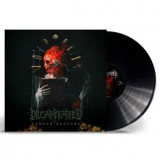
Across eight studio albums, DECAPITATED grew from the adolescent dream of teenagers from a small Central European town to one of the leaders of the metal genre. Each successive album further expands the band’s sound with genre-bending authenticity and integrity. As Metal Injection rightfully observed, “any self-respecting death metalhead knows the name well.”
DECAPITATED’s music is a weapon forged by four young men from a historic medieval-fortified town in Poland, which catapulted them to the top of a worldwide subculture. Like a rose in the devil’s garden, the DECAPITATED story builds triumph from tragedy. The gleeful grotesquery of extreme metal imagery and rifftastic bludgeoning beckons listeners to uncover broader truths.Upon the release of 2017’s Anticult, Metal Hammer declared DECAPITATED “a serious successor to the likes of Pantera and Lamb Of God – a band who can draw new legions into the metal world as its new champions.” Their diverse follow-up, 2022’s Cancer Culture, delivers on that promise.
Instantly recognizable devastation and deceptively sinister hooks abound. Freshly minted DECAPITATED anthems like “Last Supper,” “Hello Death,” “Just Cigarette,” “No Cure,” “Iconoclast,” and “Cancer Culture” shimmer with sonically sharp production and unrelenting bombast. There’s also a newly increased emphasis on melody, even venturing into darkly romantic territory. Wacław "Vogg" Kiełtyka (guitar), Rafał "Rasta" Piotrowski (vocals), Paweł Pasek (bass), and James Stewart (drums) are at the top of their game, delivering the goods at peak performance. Jinjer vocalist Tatiana Shmayluk and Machine Head frontman Robb Flynn make guest appearances.
Set on the descending plains of a mountain range amid a dense forest, Krosno boasts a 14th-century Gothic church, a Subcarpathian museum, and stunning artisan glassware. In this Polish town, teenage music student Wacław "Vogg" Kiełtyka discovered records from bands like Morbid Angel, Cannibal Corpse, Metallica, and Machine Head. The guitarist and his younger brother, drummer Witold “Vitek” Kiełtyka, cofounded DECAPITATED in 1996, inspired by a wide range of technical death, blackened thrash, and local heroes, like KAT and the world-renowned Vader. Death and black metal reigned supreme in the Polish scene of the 1990s, where Behemoth originated as well. In fact, a Vader song called “Decapitated Saints” inspired the band’s moniker.
The organic musical chemistry between the Kiełtykas was akin to the brotherly connectivity and vibe driving Pantera, Gojira, and the classic era of Sepultura. In 2006, Kerrang! praised the first three DECAPITATED albums - Winds of Creation (2000), Nihility (2002), and The Negation (2004) – as “superbly conceived and executed eruptions of technical brilliance and razor-sharp songwriting that turned these youthful Poles into one of the genre’s most widely respected bands.” That year’s Organic Hallucinosis further perfected Vogg’s penchant for blending extremity with catchy hooks.
The rule-breaking ferocity and invention of the first four albums reinvigorated death metal, as DECAPITATED inspired a new generation of bands who followed suit. Sadly, this era came to a shocking end in late 2007. While touring Russia, the band’s bus collided with a large truck near the border with Belarus. Both Vitak and then-singer Adrian “Covan” Kowanek sustained severe head injuries. Tragically, Vitak passed away in a Russian hospital a few days later. He was just 23.Vogg summoned the courage to continue, in honor of his brother and what they created, and returned with a new incarnation of DECAPITATED and the fiercely adventurous comeback album, Carnival is Forever (2011) featuring new vocalist Rafał "Rasta" Piotrowski. Blood Mantra (2014) introduced bassist, Paweł Pasek. Blabbermouth declared it “perhaps the most poised and gutsy” DECAPITATED album, adding “its courageous bends make it a turbulent but pleasurable ride.”
Cancer Culture sounds brilliant, modern, and tasty. “There is no place for any fake, plastic, bullshit drum machine or anything like that,” Vogg insists. “It’s all organic, pure, and clear, showing the true face of the band. Vogg and company entrusted the Cancer Culture mix to David Castillo at Sweden’s Fascination Street Studios / Studio Gröndahl (Sepultura, Carcass, Opeth, Katatonia), and legendary American producer Ted Jensen (Metallica, Slipknot, Pantera, Machine Head, Korn).
The devoted supporters who traveled to see DECAPITATED on international tours with the likes of Lamb Of God, Meshuggah, Soulfly, Fear Factory, and Suffocation over the years will recognize the ever-present pummeling backbone. Longtime fans and newcomers alike will connect to the variety of atmospheric depth throughout Cancer Culture’s ten boundlessly energetic and creative tracks.
“If you told me 25 years ago, in my neighborhood in the South of Poland, that I would be in Machine Head, sharing riffs with Robb Flynn,” Vogg marvels. “It’s simply incredible. It means that everything is possible in your life. That gives me the faith to believe that I can achieve even more in my career. The dreams we have when we are kids, things we can barely imagine, can happen.” Flynn contributes a hauntingly beautiful vocal to the Cancer Culture track “Iconoclast.” “Clean vocal singing is a really new thing in DECAPITATED,” Vogg notes. “It’s really unique and amazing.”
Driven by Vogg’s passion and integrity, the dual emphasis on creative invention and technical prowess maintains DECAPITATED’s stature as genre-leaders in 2022 and beyond. The band’s supporters continually demonstrate confidence and absolute certainty DECAPITATED will deliver.
Across eight studio albums, DECAPITATED grew from the adolescent dream of teenagers from a small Central European town to one of the leaders of the metal genre. Each successive album further expands the band’s sound with genre-bending authenticity and integrity. As Metal Injection rightfully observed, “any self-respecting death metalhead knows the name well.”
DECAPITATED’s music is a weapon forged by four young men from a historic medieval-fortified town in Poland, which catapulted them to the top of a worldwide subculture. Like a rose in the devil’s garden, the DECAPITATED story builds triumph from tragedy. The gleeful grotesquery of extreme metal imagery and rifftastic bludgeoning beckons listeners to uncover broader truths.Upon the release of 2017’s Anticult, Metal Hammer declared DECAPITATED “a serious successor to the likes of Pantera and Lamb Of God – a band who can draw new legions into the metal world as its new champions.” Their diverse follow-up, 2022’s Cancer Culture, delivers on that promise.
Instantly recognizable devastation and deceptively sinister hooks abound. Freshly minted DECAPITATED anthems like “Last Supper,” “Hello Death,” “Just Cigarette,” “No Cure,” “Iconoclast,” and “Cancer Culture” shimmer with sonically sharp production and unrelenting bombast. There’s also a newly increased emphasis on melody, even venturing into darkly romantic territory. Wacław "Vogg" Kiełtyka (guitar), Rafał "Rasta" Piotrowski (vocals), Paweł Pasek (bass), and James Stewart (drums) are at the top of their game, delivering the goods at peak performance. Jinjer vocalist Tatiana Shmayluk and Machine Head frontman Robb Flynn make guest appearances.
Set on the descending plains of a mountain range amid a dense forest, Krosno boasts a 14th-century Gothic church, a Subcarpathian museum, and stunning artisan glassware. In this Polish town, teenage music student Wacław "Vogg" Kiełtyka discovered records from bands like Morbid Angel, Cannibal Corpse, Metallica, and Machine Head. The guitarist and his younger brother, drummer Witold “Vitek” Kiełtyka, cofounded DECAPITATED in 1996, inspired by a wide range of technical death, blackened thrash, and local heroes, like KAT and the world-renowned Vader. Death and black metal reigned supreme in the Polish scene of the 1990s, where Behemoth originated as well. In fact, a Vader song called “Decapitated Saints” inspired the band’s moniker.
The organic musical chemistry between the Kiełtykas was akin to the brotherly connectivity and vibe driving Pantera, Gojira, and the classic era of Sepultura. In 2006, Kerrang! praised the first three DECAPITATED albums - Winds of Creation (2000), Nihility (2002), and The Negation (2004) – as “superbly conceived and executed eruptions of technical brilliance and razor-sharp songwriting that turned these youthful Poles into one of the genre’s most widely respected bands.” That year’s Organic Hallucinosis further perfected Vogg’s penchant for blending extremity with catchy hooks.
The rule-breaking ferocity and invention of the first four albums reinvigorated death metal, as DECAPITATED inspired a new generation of bands who followed suit. Sadly, this era came to a shocking end in late 2007. While touring Russia, the band’s bus collided with a large truck near the border with Belarus. Both Vitak and then-singer Adrian “Covan” Kowanek sustained severe head injuries. Tragically, Vitak passed away in a Russian hospital a few days later. He was just 23.Vogg summoned the courage to continue, in honor of his brother and what they created, and returned with a new incarnation of DECAPITATED and the fiercely adventurous comeback album, Carnival is Forever (2011) featuring new vocalist Rafał "Rasta" Piotrowski. Blood Mantra (2014) introduced bassist, Paweł Pasek. Blabbermouth declared it “perhaps the most poised and gutsy” DECAPITATED album, adding “its courageous bends make it a turbulent but pleasurable ride.”
Cancer Culture sounds brilliant, modern, and tasty. “There is no place for any fake, plastic, bullshit drum machine or anything like that,” Vogg insists. “It’s all organic, pure, and clear, showing the true face of the band. Vogg and company entrusted the Cancer Culture mix to David Castillo at Sweden’s Fascination Street Studios / Studio Gröndahl (Sepultura, Carcass, Opeth, Katatonia), and legendary American producer Ted Jensen (Metallica, Slipknot, Pantera, Machine Head, Korn).
The devoted supporters who traveled to see DECAPITATED on international tours with the likes of Lamb Of God, Meshuggah, Soulfly, Fear Factory, and Suffocation over the years will recognize the ever-present pummeling backbone. Longtime fans and newcomers alike will connect to the variety of atmospheric depth throughout Cancer Culture’s ten boundlessly energetic and creative tracks.
“If you told me 25 years ago, in my neighborhood in the South of Poland, that I would be in Machine Head, sharing riffs with Robb Flynn,” Vogg marvels. “It’s simply incredible. It means that everything is possible in your life. That gives me the faith to believe that I can achieve even more in my career. The dreams we have when we are kids, things we can barely imagine, can happen.” Flynn contributes a hauntingly beautiful vocal to the Cancer Culture track “Iconoclast.” “Clean vocal singing is a really new thing in DECAPITATED,” Vogg notes. “It’s really unique and amazing.”
Driven by Vogg’s passion and integrity, the dual emphasis on creative invention and technical prowess maintains DECAPITATED’s stature as genre-leaders in 2022 and beyond. The band’s supporters continually demonstrate confidence and absolute certainty DECAPITATED will deliver.
- A1: Seventh Mirror
- A2: Ionization
- A3: Cloud Chamber
- A4: Harmonic Oscillator
- A5: Transfiguration
- A6: Urzeit
- A7: Cybernetic Dreams
- B1: Interference
- B2: Computer Garden
- B3: Pyramid
- B4: Halide Crystals
- B5: Integratron
- B6: Imaginary Forces
- B7: Phantom Lfo
- B8: Opticks
- C1: Mannequin
- C2: Mind In Light
- C3: Palantir
- C4: Vertigo Of Flaws
- C5: Exit Syndrome
- C6: Stasi
- D1: Atomic Voyage
- D2: Ultraviolet
- D3: Violence Cascades
- D4: Traumsprache
- D5: Zeitgeber
- D6: Prism
- D7: Threnody
- D8: Mind Oscillation
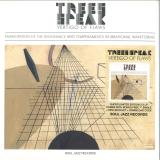
Trees Speak are back!
Speak’s new album, “Vertigo of Flaws: Emancipation of the Dissonance and Temperaments in
Irrational Waveforms” comes as a double-vinyl edition, single CD and digital release. The limitededition first pressing only of the vinyl includes a bonus 45 enclosed in an 8-page 7”x7” booklet
insert housed within the gatefold sleeve with cover artwork created by Soviet Union propaganda
artist Lazar Markovich Lissitzky in 1911.
Trees Speak are back!
This new release is a vast leap into an ocean of space and sound, a quantum leap into cybernetics, biology, anti-gravity,
time travel, dream speech and transfiguration. A seriously next step release!
Showing no signs of slowing down their rapid creative pace – incredibly this is their fourth album in the space of just over
one year – ‘Vertigo of Flaws’ is a mighty 29 tracks, one and a half hours of music across one double album that is surely
going to be a defining point in their musical career, a giant leap into the sonic unknown, an epic exploration of intensity
and sound.
Alongside their now trademark German krautrock motoric-beat rhythms, angular New York post-punk attitude, tripped-out
60s spy soundtrack, psyche-rock, and 70s synthesizers and vocoders, here you will also hear a new cosmic spacial
awareness (both personal inner space and galactic outer space) and a truly wilful pushing of sonic boundaries - as police
sirens, static noise, alarms, radio signals, avant-garde voices, and orchestral string quartets, all collide to add beautiful
dissonance to uber-powerful, intense, addictive and propulsive rhythms - in the process creating a truly unique
soundscape that Trees Speak have made wholly their own.
If you ever wanted to hear Can, Hawkwind, Destroy All Monsters, Pere Ubu, electric eels, John Cage, Liquid Liquid,
Tangerine Dream, Suicide, Neu!, Laurie Spiegel, Art Ensemble of Chicago, John Barry, Mother Mallard’s Portable
Masterpiece Company, Sun Ra, Stockhausen, John Carpenter, Electro-Acoustic and Musique Concrete and Mars in one
band - then this is it!
Trees Speak are Daniel Martin Diaz and Damian Diaz from Tucson, Arizona and their music often draws on the cosmic nighttime magic of Arizona’s natural desert landscapes. ‘Trees Speak’ relates to the idea of future technologies storing
information and data in trees and plants - using them as hard drives - and the idea that Trees communicate collectively.
Special guests from the hyper-creative hub of the Tucson music scene on this release are Gabriel Sullivan, Ben Nisbet, Saul
Millan, Stephani Guilmette, and Davis Jones.
The album Vertigo of Flaws was recorded in Brooklyn, New York, and Tucson, Arizona during the plague of 2021.
Extract from Vertigo of Flaws sleevenotes:
‘As we travel through space and time, avoiding the discarded remains of the industrial period, the
deconstruction of social norms through the expression of art, music, and philosophy guide the human
experience towards the unknown.
All that remains are musical echoes scattered throughout the universe, like ancient vibrations that now
populate the cosmos. These waves now show signs of decay. Melody, beauty, tonality have all but fallen
away as dissonance blossoms. As John Cage wrote in 1937,
“Whereas, in the past, the point of disagreement has been between dissonance and consonance, it will be,
in the immediate future, between noise and so-called musical sounds. New methods will be discovered,
bearing a definite relation to Schoenberg’s twelve-tone system and present methods of writing percussion
music and any other methods which are
free from the concept of a fundamental tone”.
Similarly, George Van Tassel claimed the Integratron as capable of
rejuvenation, anti-gravity, and time travel. So, what remains of the
“people”? We have adopted from them our own Zeitgeber: their pulses
now guide our sun, our planets, our earths, and are the new circadian,
diurnal, and ultradian rhythms of the galaxy. Traumsprache, dream
speech, is now the internal language of trees.
Decaying metal and machines liberated the note unto nature’s table,
and we sip the delicious nectar of music once more irrational, elaborate,
violent, vast. The past is the future, musical disintegration its own rebirth.
We are nature, once more the computer of the Universe.’
In November 2014 The Jesus and Mary Chain celebrated three decades of their incendiary cult-classic debut album, 'Psychocandy', with a run of tour dates in which the infamous Scottish group played the album in full for the very first time in the band's history. As part of the 'Psychocandy' tour, the Mary Chain descended on Glasgow's Barrowland Ballroom - a legendary venue down the road from where the Reid brothers grew up in neighbouring East Kilbride - and tore through the songs that would propel them to worldwide acclaim upon 'Psychocandy's release in 1985. The Barrowland performance - an equal-parts deafening and blinding assault on the senses - was cut to vinyl by engineer Noel Summerville and originally released in 2015. Fast forward to 2022 and the 'Live at Barrowland' album is now being reissued by Fuzz Club Records. Due for release April 22nd, the 2022 reissue comes with new artwork and on 180g vinyl in a gatefold jacket with a booklet glued inside that features pages of photos from the tour as well as an interview with the Reid brothers and Alan McGee. The influence that 'Psychocandy' and its pioneering sonic belligerence had on popular music cannot be overstated. Taking bittersweet pop melodies and tearing them up apart through the medium of buzzsaw guitars, ear-piercing feedback and an unapologetic hostility towards their listeners, the band's breakthrough album experimented with noise in a way that had never been done before and would inspire for generations to come. The 'Live At Barrowland' LP captures 'Psychocandy's complete 14 tracks in a live setting and in all their boundary-pushing and feedback-ridden glory. The CD and digital versions of the reissue - including the download card that comes with the vinyl - also feature seven bonus tracks taken from the prelude set on the night, including such fan-favourites as 'April Skies', 'Head On' and 'Reverence'.
- A1: Sound Dimension - Real Rock
- A2: Marcia Griffiths - Feel Like Jumping
- A3: Freddie Mcgregor - Bobby Bobylon
- A4: Horace Andy - Skylarking
- B1: Lennie Hibbert - Village Soul
- B2: Brentford All Stars - Greedy G
- B3: Johnny Osbourne - Truth & Rights
- B4: Ernest Ranglin - Surfin
- C1: Michigan & Smiley - Eye Of Danger
- C2: Dawn Penn - No, No, No
- C3: The Skatalites - Phoenix City
- D1: Prince Jazzbo - Crabwalking
- D2: Jackie Mittoo - Hot Milk
- D3: Lone Ranger - Badder Dan Dem
- D4: Cedric Brooks - Ethiopia
Soul Jazz Records are releasing this 20th anniversary edition of their classic Studio One Rockers on unique Record Store Day EXCLUSIVE coloured vinyl + download code. This new edition is a one-off pressing exclusively for Record Store Day Owned and founded by Clement "Coxsone" Dodd, Studio One's output serves as a comprehensive guide to the history of Reggae music.
The music on Studio One Rockers covers all areas of Reggae such as Ska, Rocksteady, Roots and Dancehall, all areas in which Studio One led the field and has become the essential introduction to reggae fans throughout the world.
Included in this compilation are classic Ska tracks ("Phoenix City"), Rocksteady ("Feel Like Jumping"), Roots music ("Truth and Rights"), Dancehall (Freddy McGregor, Michigan and Smiley) and many more. Featured here are many of the classic tracks from Studio One. From Dawn Penn's legendary "No, No, No" to classics such as Horace Andy's "Skylarking" and Marcia Griffith's "Feel Like Jumping".
"Compilation of the year. 100% Essential” Time Out "Compilation of the year. A compilation of unbelievable quality. Awesome” DJ "A who's who of Jamaican music” The Times "An essential slice of musical history" Wire "The most credible compilation of reggae you can buy” - The Guardian.
With their new album, If I Never Know You Like This Again, SOAK has
finally shaken the hangover of their starry debut ‘Before We Forgot How
To Dream’, and the pressures that came with it, hiding in the wings of
their ambitious follow up album, ‘Grim Town’.
Having come up through BBC Introducing at the tender age of 15, before
signing to Rough Trade Records, as well as winning the RTE Choice
Music Prize and The Northern Irish Music Prize, in addition to being the
youngest ever Mercury Prize nominee, SOAK has again and again been
described as “the voice of a generation.”
Showing, from a young age, an intensely artistic awareness of the poetry
of memory, Bridie Monds-Watson, aka SOAK, would incessantly
photograph and video everything, documenting and organising the
material so it was always there for them to revisit. “I always want to
remember exactly how I felt at a certain moment.” Now, at 25, SOAK’s
third album, ‘If I Never Know You Like This Again', is naturally made up
of what Bridie intimately calls ‘song-memories’.
Working closely with Tommy McLaughlin (Villagers), with whom Bridie
has been collaborating with since the age of 15, and armed with
influences from Pavement to Radiohead to Broken Social Scene, they
wrote most of the album together before recording it with the rest of the
band in Attica Studios, Donegal.
Throughout the album SOAK pushes and pulls at melodies, but never
milks their brilliance. Bridie masterfully glides their vocal melody slightly
off-kilter above excitable compressed high hats and flourishing guitar
lines. With the new direction of a grungier, more lo-fi production, the
swooning guitars are given a contemporary pop edge, reflected in the
rich and robust musicality of songs like ‘Bleach’, ‘Last July’ and ‘Pretzel’.
There’s a constant pulsating beat at the album’s centre, propelling it
towards a kind of dewy happiness, like the end credits of a 90s comingof-age film. Bridie’s lyrics move through the songs almost as effortlessly
and they sing them, and the songs when read, read like poetry.
With this album Bridie is, as the title suggests, freezing time in the
pursuit of truth: capturing their life into existence. In the world of ‘If I
Never Know You Like This Again’, a life is lived only because it's
remembered.
Single includes download. “Virginia Wing are not from the sedate school of dream-pop escapism…a hazy subversion of the traditional monochrome evocations of post-punk, a photo negative of an established form.” - The Quietus // “South London three-piece ally buzz and drone with sweetness and light” Guardian – New Band Of The Week // "A piece of noir-pop majesty that consistently pushes its own boundaries and frequently shatters the listeners’ sense of expectation" Loud and Quiet // "They possess a rare ability to dive deep beneath the skin.. a ghostly mix that flirts hard and fast with the avant garde while retaining a sly pop lustre" Mojo 4* // Following the 2015 release of their acclaimed debut album ‘Measures Of Joy’ on Fire Records, Camberwell based outfit Virginia Wing return with a striking new single. ‘Rhonda’, released for Record Store Day on 12” vinyl with a disco cut sleeve featuring artwork from longtime collaborator Florian Brooks. Recorded at Hackney-based Holy Mountain Studios with Misha Hering, ‘Rhonda’ sees the band expand the deep and varied sonic palette displayed on their debut ‘Measures Of Joy’. Featuring guest musician Koichi Yamanoha of Grimm Grimm, the single unfolds slowly as meditative incantations give way to a sprawling piece of experimental pop for the dance floor. The ambitious A-side flirts with disco beats and draws influence from a variety of schools of contemporary dance music whilst still remaining, at heart, a pop song. This is pop music with texture, depth and nuance; a daring and progressive piece. The B-side includes two new tracks: ‘Sisterly Love’ and ‘Daughter Of The Mind’ which further hint at the deviations we can expect on their second LP. Field recordings, ambient mediations and rhythmic experimentation abound; the new material sees Virginia Wing refining and reworking the sound conjured on their debut, a masterful workout.
Just as one can smell a storm swelling on the horizon, the cataclysmic tremor that is IMMOLATION approaches to unleash its latest, immense creation: ACTS OF GOD. Due to be released in winter of 2022, this 11th studio album serves as the next chapter of IMMOLATION’S Death Metal epic. With 5 long years passed since the most recent studio album, ATONEMENT, ACTS OF GOD vigorously showcases IMMOLATION’s ability to consistently create fascinating sounds, while still keeping their feet firmly rooted in the old school, New York Death Metal for which they are renowned.
Emblazoned with a haunting new masterpiece by artist Eliran Kantor, ACTS OF GOD displays a trifecta of angelic beings desperately trying to prevent one another’s flesh from melting in a blackened light from above. The muted colors and ethereal images will ring familiar to fans of IMMOLATION’s previous album covers. “We wanted this cover to feel much darker; more melancholy and hopeless. The music has always been very dark, and a lot of Kantor’s work had the feeling that we were going for; the semi-surreal colliding with a classic, almost renaissance feel,” explains founder and vocalist/bassist Ross Dolan. “It’s unnerving. It really reflects the music perfectly,” agrees founder and guitarist Robert Vigna.
The album’s third track “The Age Of No Light” is a powerful, hard hitting song with an extreme yet catchy melody. “It’s quick, hits hard, and gets straight to the point” explians Vigna. Consistently changing speeds and patterns throughout, the song is short but remains both dynamic and memorable.
“Blooded” has all the usual IMMOLATION elements: the slow, the fast, the explosive, the big overlaid sections of groovy harmony eventually dropping into evil, ripping guitar work. “It’s a little powerhouse,” describes Vigna, “it’s straightforward, and it has all the elements you would expect from us in a nice, neat package.”
A song like “Immoral Stain” is a slightly mid-paced track with an intense, creepy atmosphere. Equipped with plenty of unusual moments, the beat is catchy, dark, and echoing. Searing guitar starts to recite a story and then quickly begins a conversation with thunderous vocals and a vociferous beat. “That whole section of build up just needed to be done exactly as it is. That’s what makes it sound different and interesting,” describes Vigna. Much like the rest of the album, while the lyrics cover the usual, general topics of genuine evil and the great deception of religion, the specifics are most certainly left to the listener’s interpretation. Fortunately for IMMOLATION fans, there is no shortage of corruption and catastrophe in this world.
Fittingly, the concluding track “Apostle” was the last song written for the album. “Some of those chorus sections have a weird almost dream-like quality,” describes Dolan. Its steadily growing momentum discharges rounds of guitar solos and relentless vocals which eventually lead way to an explosive finale to the album.
The creative journey for ACTS OF GOD began with years of notes, and an abundance of inspiration. With Vigna at the helm of the structural writing as usual, further composing and concepts were tossed back and forth amongst all 4 members. Eventually, they began to skeletonize the beginning of what would become a full length, studio album. While the recording process and entering the studio can be a very sterile experience for some musicians, the ferocity of the demos combined with the expertise of long time friend and recording counterpart Paul Orofino of Millbrook Studios (BLUE OYSTER CULT, BAD CO, GOLDEN EARRING), assured that this would not be an issue for IMMOLATION. “Having such a level of comfort is key,” remarks Dolan. Final touches were brought about on the mixing and mastering by Zack Ohren of Castle Ultimate Studios.
Firmly aligned with Nuclear Blast Records, the often coveted sound of IMMOLATION has reemerged from the depths of a cursed and cruel world to illuminate our minds and ears with exquisite, sonic destruction.
Strut continue their deep dive into the archives of Black Fire Records with a new reissue of Oneness Of Juju's Bush Brothers & Space Rangers, showcasing the band at the peak of their powers in 1977. Primarily recorded at Arrest Studios in Washington DC, the album ispacked with landmark Oneness tracks including 'Be About TheFuture' ("possibly the first ecology-themed song that I know of") the George Clinton-influenced 'Plastic', an acoustic alternative version of 'African Rhythms' and strong covers of Caiphus Semenya's 'West Wind' and Bobby Womack's 'Breezin''. Plunky continues, "The album is composed of several different sessions featuring different personnel and only first came out as an album in its own right when Black Fire MD Jimmy Gray started working with P-Vine Records in Japan during the '90s. For me, it's one of the hottest periods for the band."
Strut continue their deep dive into the archives of Black Fire Records with a new reissue of Oneness Of Juju’s Bush Brothers & Space Rangers, showcasing the band at the peak of their powers in 1977.
Oneness had enjoyed two fruitful years with Black Fire prior to these recordings, breaking through with the African Rhythms and Space Jungle Luv albums. “When we recorded African Rhythms we didn’t use a guitar,” explains bandleader Plunky Branch. “So, when vocalist Jackie Eka-Ete and guitarist Ras Mel Glover came in in around ‘75, that moved our sound into a more soulful direction. The drummer on this album, Tony Green, was the drummer with Gil Scott Heron and he added a little more sophistication to our soulfulness. African percussionist Okyerema Asante was also fully incorporated into the band after joining in 1976. By 1977, we were in full production mode recording songs; one or two of the tracks here also feature Brian Jackson, known for his work with Gil.”
Primarily recorded at Arrest Studios in Washington DC, the album is packed with landmark Oneness tracks including ‘Be About The Future’ (“possibly the first ecology-themed song that I know of”) the George Clinton-influenced ‘Plastic’, an acoustic alternative version of ‘African Rhythms’ and strong covers of Caiphus Semenya’s ‘West Wind’ and Bobby Womack’s ‘Breezin’’. Plunky continues,
- A1: The Perfect Crime
- A2: Smilers Strange Politely
- A3: Material Condition
- A4: Butchering The Punchline
- A5: Up To My Elbows
- B1: I'm In The Water
- B2: Tricks On Everything
- B3: Caveats
- B4: Figure Eights
- B5: The Bell
LTD Clear Vinyl[24,79 €]
RIYL: Guided by Voices, Pavement, The Clean, XTC, Flying Nun. The title of The Stroppies' newest LP, Levity, serves as a creative statement of intent and an acknowledgment of the dichotomy between the music they have made and the conditions in which they were produced. For a group that started over an initial idea to "create open ended music, quickly and haphazardly”, the logistical challenges of creating their second album in the midst of a pandemic, in a city that endured the longest lockdown in the world, created a need to redefine process. Levity, The Stroppies strongest creative statement to date, is the result of this new approach to creative process. Playful yet focused, but broader in scope and experimentation than previous efforts, the ten songs that comprise Levity continue the band's exploration of the pop song as both foil for experimentation and conduit for personal reflection. Whereas the group's debut LP Whoosh! demonstrated their ability to craft clean, concise jangle pop, Levity takes a different route by utilizing a darker pallet of sounds to create its impressionistic whole. Fuzz and distortion are employed to add weight to songs built on tape loops and Motorik drum patterns. Warbling synthesisers and modulated keys add new moods and dimensions to The Stroppies unique brand of pop classicism. Thematically, the band continues their exploration of the personal refracted through the lens of the absurd, though this time around the music feels a few shades darker, a somewhat inevitable consequence of the collective trauma of the past 24 months. While the narrative around the 'lockdown record' is increasingly commonplace, there are unavoidable realities involved in making creative decisions under such circumstances that can't be overlooked, especially for a band that thrives on collaboration. "The restrictions around COVID really informed the way we made the record', says Angus Lord, the band's co-founder and guitarist. "It meant that there was a lot less opportunity to meet and build ideas collaboratively, which is how we’ve worked in the past. Instead, ideas were developed in isolation, then shared digitally, developing slowly over correspondence and only bearing fruit when we were able to be in a room together. I think this had a big effect on the songwriting and execution.” This process even extended to the studio, where The Stroppies found a kindred spirit in John Lee of Phaedra Studios, who mixed the record in isolation, somehow managing to synthesise the band's pop sensibilities with their penchant for studio experimentation. Furthermore, the addition of new member Zoe Monk, known for playing in a diverse array of Melbourne acts (Eggy, Thibault, The Opals) contributed both synthesiser experimentation and rock solid rhythm guitar, a huge addition to the band's developing sound, an infectious combination of the off-kilter 90s US underground, British artpunk ala Wire and a more than generous love of classic Pop songwriting. The Stroppies have managed to craft a record of weight and substance. Through Levity the Stroppies have, at least temporarily, found their feet amongst the chaos
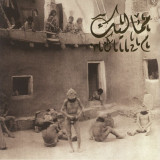
Long overdue pressing of cult band’s most sought after release. Engineered and remastered by Jack Shirly (Deafheaven, Bosse-de-Nage, Oathbreaker). For fans of Have a Nice Life, Xasthur, and Planning For Burial. Entirely remastered and includes a never before heard bonus track!! Mamaleek’s Kurdaitcha is finally back in print! The San Francisco-based duo released their third album of weirdo black metal, Kurdaitcha, on the legendary cult label Enemies List Home Recordings (Have a Nice Life, Giles Corey), and it quickly sold out. For years the LP has been a hard to find collector’s item. Kurdaitcha finds the project in its initial period of creating music influenced by black metal, hip hop, jazz, and spirituals. Founded in 2008 in the Bay Area by two anonymous brothers, Mamaleek has explored a vast sonic territory on the edge of a genre renown for its aversion to change. Their expert utilization of left-field samples and unconventional instrumentation, and their insistent drive to experiment continues to set the band apart from their peers. This pressing of Kurdaitcha has been remastered and features a previously unreleased bonus track with a gold foil stamped jacket. “Mamaleek are the great destroyers.” — Invisible Oranges // “An incredibly rich and rewarding experience.” —Heavy Blog Is Heavy // “Is it good, though? It’s fucking mental. It’s amazing. It’s absolutely horrible. It’s barely listenable at times and yet you can’t turn it off. The music is perfect. Like broken glass is perfect.” —Echoes And Dust // “The group cloaks its music in the kind of warm, hypnotic distortion that defines shoegaze, and underneath that haze is a style that’s conceptually abrasive yet altogether beautiful.” — FORBES
Ye Vagabonds release their second album for Rough Trade's River Lea
label.Nine Waves was recorded in the Dublin Mountains at Hellfire
Studios, produced by John 'Spud' Murphy (whose previous work includes records by black midi, Lankum and caroline)
The album features 11 tracks of both traditional and original songs and tunes. Nine Waves follows the duo's standalone single I'm A Rover, which won them an RTE Radio One Folk Award for Best Traditional Folk Track. Ye Vagabonds were also named Best Folk Group for the second time at the 2021 ceremony, where they hold the record for most awarded artists.The brotherly harmonies and multiinstrumental abilities of Diarmuid and Brían Mac Gloinn were joined on Nine Waves by Kate Ellis (cello) and Caimin Gilmore (double bass), both members of the Irish contemporary classical group Crash Ensemble, and Ryan Hargadon (Anna Mieke, Rachael Lavelle, Kojaque) on piano and saxophone.
RIYL: Guided by Voices, Pavement, The Clean, XTC, Flying Nun. The title of The Stroppies' newest LP, Levity, serves as a creative statement of intent and an acknowledgment of the dichotomy between the music they have made and the conditions in which they were produced. Levity, The Stroppies strongest creative statement to date, is the result of this new approach to creative process. Playful yet focused, but broader in scope and experimentation than previous efforts, the ten songs that comprise Levity continue the band's exploration of the pop song as both foil for experimentation and conduit for personal reflection. Whereas the group's debut LP Whoosh! demonstrated their ability to craft clean, concise jangle pop, Levity takes a different route by utilizing a darker pallet of sounds to create its impressionistic whole. Fuzz and distortion are employed to add weight to songs built on tape loops and Motorik drum patterns. Warbling synthesisers and modulated keys add new moods and dimensions to The Stroppies unique brand of pop classicism. Thematically, the band continues their exploration of the personal refracted through the lens of the absurd, though this time around the music feels a few shades darker, a somewhat inevitable consequence of the collective trauma of the past 24 months. While the narrative around the 'lockdown record' is increasingly commonplace, there are unavoidable realities involved in making creative decisions under such circumstances that can't be overlooked, especially for a band that thrives on collaboration. "The restrictions around COVID really informed the way we made the record', says Angus Lord, the band's co-founder and guitarist. "It meant that there was a lot less opportunity to meet and build ideas collaboratively, which is how we've worked in the past. Instead, ideas were developed in isolation, then shared digitally, developing slowly over correspondence and only bearing fruit when we were able to be in a room together. I think this had a big effect on the songwriting and execution." This process even extended to the studio, where The Stroppies found a kindred spirit in John Lee of Phaedra Studios, who mixed the record in isolation, somehow managing to synthesise the band's pop sensibilities with their penchant for studio experimentation. Furthermore, the addition of new member Zoe Monk, known for playing in a diverse array of Melbourne acts (Eggy, Thibault, The Opals) contributed both synthesiser experimentation and rock solid rhythm guitar, a huge addition to the band's developing sound, an infectious combination of the off-kilter 90s US underground, British artpunk ala Wire and a more than generous love of classic Pop songwriting. The Stroppies have managed to craft a record of weight and substance. Through Levity the Stroppies have, at least temporarily, found their feet amongst the chaos.
South London based producer and multi-instrumentalist Neue Grafik announces his new EP 'Foulden Road Part II' from his Neue Grafik Ensemble band, released 25th March on Total Refreshment Centre. The sequel to their impressive 2019 release 'Foulden Road', Neue Grafik continues to incorporate 100% live takes with the ensemble, as well as solo productions that reflect Neue Grafik's past work with both the Rhythm Section and 22a labels.
Neue Grafik explains, "This EP is a reflection of the social context which surrounds me" – created in a year of much social isolation as well as political unrest, 'Foulden Road II' explores the complex feelings that he found himself battling. He adds "In 2019, we released 'Foulden Road Part I', which was a transitional album, exploring a new culture and navigating between two worlds: Paris and London. 'Part II' is a bit darker, closer to realness with a sprinkle of hope. I couldn't have predicted that I'd finish it encased in my flat, between four walls, in December 2020 after a year of lockdown, Brexit, George Floyd protests, and without London's brilliant culture mesmerising my mind. Everything was sad and closed. Hills were difficult to climb. But it also gave me the time to work hard and deliver this second part of Foulden Road, pushing it forward".
Combining an array of influences — from London, to Paris via New York, Nigeria and Cameroon — with well-measured confidence, ' Foulden Road II' allows you to reflect on the complexities of the last year, whilst braced with energy and hope to move forward positively. Heavy horns and hypnotic poetry form the backbone record, which will ignite any room. 'Foulden Road II' begins with the grounding poetry of MA.MOYO on 'Black Bodies'. The EP is dedicated to Adama Traoré, a black man who died in police custody in Paris. Neue Grafik explains "His name is not well known outside of France. I was shocked, devastated even, to learn that his story didn't cross the Channel". 'Queen Assa' is a heavily percussive dancefloor-hitter which honours French activist Assa Traoré, (Adama's sister) her family, and her struggle to support all families hurt by police brutality. Broken beat elements flow through the horn accompanied 'Officer, Let Me Go To School', while West London rapper Lord Apex offers an unapologetic and poignantly personal perspective on 'Step To It'.
Released on the Total Refreshment Centre label, based out of Stoke Newington's Foulden Road, the EP is a testament to his versatility as an ever-shifting figurehead. Engineered by Capitol K, recorded at Total Refreshment Centre, mixed by Marcus Linon at Greasy Records and mastered by Guy Davie at Electric Mastering – a significant pillar in Neue Grafik's musical career. Having played a DJ set there in 2017, he was convinced by TRC founder Lex Blondin to start a band after he was heard playing some compositions on the communal piano. After spending a couple of sleepless nights on the living room couch, his first gig was booked in the venue space downstairs a week later. The ensemble was established and he has remained in London ever since.
Neue Grafik Ensemble's musicians include; Matt Gedrych, Benjamin 'The Chief' Appiah, Jack Banjo Courtney, Chelsea Carmichael, Dougal Taylor, Yahael Camara-Onono, Xvngo, Rebekah Reid, Dan-Iulian Drutac, Jamie-lee Glinsman and Zara Hudson-Kozdój.
Neue Grafik hosts The Orii Jam Sessions, an energising weekly jam night at Hackney Wick's Colour Factory, which has become a pivotal weekly gathering, inspired by the likes of Unit 31 and Steam Down.
To celebrate the 45th anniversary of iconic Dutch jazz label Timeless Records, Music On Vinyl is releasing a series that features albums that are part of the Timeless Records legacy and will be released mainly throughout 2021/2022.
American jazz drummer Billy Higgins recorded his second album The Soldier in 1979. Featured on this album are Monty Waters on alto saxophone, Cedar Walton on the piano, Walter Brooker on bass and vocalist Roberta Davis. The track “Peace” features guest performer Horace Silver and on “Sonny Moon For Two”, Higgins is accompanied by Sonny Rollins.
Higgins mainly played free jazz and hard bop. He was one of the house drummers for Blue Note Records and played dozens of Blue Note albums of the 1960s. His drums were an important addition to many recordings such as Dexter Gordon’s Go! and Herbie Hancock’s Takin’ Off.
The Soldier is available as a limited edition of 500 individually numbered copies on translucent green coloured vinyl and includes an insert with upcoming titles from the Timeless Records 45th Anniversary Jazz Series.
Ferocious JP / US free jazz bomb. A rare meeting between the NYC free jazz scene and the Japanese free music scene. Old-style Gatefold LP, with rare photographs & liner notes by Alan Cummings.
Following hot on the heels of the first, mid-sixties generation of Japanese free jazz players like Kaoru Abe, Masayuki Takayanagi, Yōsuke Yamashita, Motoharu Yoshizawa, etc., an exciting second wave of younger players began to emerge in the seventies. Two of its leading members were the saxophonist Kazutoki Umezu and multi-instrumentalist Yoriyuki Harada. Both were post-war babies and immigrants to the city, Umezu from Sendai in the north and Harada from Shimane in the west. They first met as students in the clarinet department at the Kunitachi College of Music, a well-known conservatory in western Tokyo. Harada was already securing sideman gigs on bass with professional jazz groups and was active in student politics, making good use of his connections to set up jazz concerts on campus. It was around this time that the two began to play together in an improvised duo, with Umezu on clarinet and bass clarinet and Harada on piano. They also experimented with graphic scores and prepared piano.
These experiments eventually led to the creation of a trio, with a high-school student called Tetsuya Morimura on drums, that they decided to name Seikatsu Kōjyō Iinkai (Lifestyle Improvement Committee) in joking reference to the Marxist discourse of the student radicals of the time. Around 1973, Umezu and Harada decided to call it a day and go their separate ways. Umezu began playing with the Toshinori Kondo Unit and Harada with the Tadashi Yoshida Quintet. In 1974 Harada formed his own trio and began to play at jazz coffeehouses across Japan.
Then, in September 1974 Umezu travelled alone to New York, where he set about building connections with the loft jazz scene in the city. It was a fortuitous moment to arrive in New York. Rents were cheap in the Lower East Side, possibilities for squatting existed, so many musicians and artists had moved to the area. Umezu soon became known on the scene as Kappo and he started to make connections with some of the young musicians like David Murray, Arthur Blythe, and Oliver Lake. He recalls making the rounds of the lofts every evening, checking out the performances, and getting the chance to sit in with many groups including Juma Sultan’s Aboriginal Music Society and trumpeter Ted Daniel’s orchestra.
Things were going so well that Umezu wrote to Harada and invited him to come to New York. He accepted and arrived in the city in July 1975. Harada and Umezu took the opportunity to resume their artistic collaboration. Their first concert together in over two years took place on July 20th at another loft, Sunrise Studios at 122 2nd Avenue. Umezu remembers Sunrise as an unusually sunny loft with the rarest of things, a grand piano. He invited along Ahmed Abdullah, a trumpeter he had got to know while playing with Ted Daniel. Abdullah led his own group and was a long-term Sun Ra sideman. William Parker, one of the key figures in the loft jazz scene of the period, was on bass. Abdullah also brought along Rashid Sinan on drums. Sinan drummed in Abdullah’s units throughout the seventies, but he had also played on Frank Lowe’s immortal Black Beings album and collaborated with Arthur Doyle, playing on Doyle’s Alabama Feeling album. By all accounts the evening was a huge success, with speed and dynamism of Harada’s piano playing gaining him lots of support.
Since they had managed to save some money from their day jobs, Umezu and Harada decided to set up a recording session with the same line-up on August 11 at Studio We, where there was a well-equipped studio on the third floor. Umezu recalls the session as follows, Of course, we recorded our performances in one take, with zero retakes as far as I remember. On all the tracks we recorded, we moved as one unit, sharp and fast. That was the nature of Lifestyle Improvement Committee, New York Branch.
Umezu and Harada would later become known for the elements of parody and entertainment that they brought to their music, a freewheeling blend of pastiche, humour and on-stage performativity that paralleled the approaches of the Art Ensemble, Sun Ra, and Holland’s ICP. But here, on their first recordings, the humour element is not yet present. Instead, there is a febrile sense of joy in creation and connection. On the Umezu-penned “Kim”, for example, Harada opens the piece with a speedy exploration of the full-range of the keyboard, hitting hard on the bass keys to create a rhythmic bed out of which patterns begin to emerge. Umezu enters at a much slower pace, longer held notes that at first float weightlessly over the urgency of the piano before they begin in splinter and accelerate. When Parker and Sinan kick in, it’s a rollicking tempo with Parker plucking deep and hard and the left-handed Sinan skittering hard across the topside of his kit. Abdullah kicks in a glorious solo twelve minutes in, bright and breathy at once. The piece slows and grows more spacious towards the end, giving Parker a chance to showcase some arco work that shades beautifully into the air against Abdullah’s trumpet.
- A1: Amputation
- A2: War On Peace
- A3: All Things Pass
- A4: Always Sad
- B1: Song For A Secret
- B2: The Two Of Us
- B3: Los Feliz (Blues & Green) (Blues & Green)
- C1: Mood Rider
- C2: Presidici (Et Chapaquisitch) (Et Chapaquisitch)
- C3: Get On Home
- C4: Facing Up To The Facts
- D1: Simian Split
- D2: Black & Blues
- D3: Can't Stop The Rock
Clear vinyl[33,07 €]
Originally released in 2017 on the band's own label Artificial Plastic and now being reissued by Fuzz Club Records, 'Damage And Joy' is the seventh studio album from Scottish alt-rock legends The Jesus and Mary Chain. The long-awaited follow-up to 1998's 'Munki', 'Damage And Joy' was the band's first studio album in nearly two decades and contained brand new material alongside reimagined versions of songs that had been released in various forms by the Reid brothers in between the Mary Chain's 1999 break-up and 2007 reunion. Co-produced by Youth (Killing Joke) and featuring the lead singles 'Amputation' and 'All Things Pass', 'Damage & Joy' also featured guest appearances from Scottish singer-songwriter Isobel Campbell ('The Two of Us', 'Song For A Secret') and American alt-pop star Sky Ferreira ('Black And Blues'). 'Damage And Joy' is now being given a deluxe, expanded vinyl reissue. The double LP is reissued on both black and coloured 180g vinyl with remastered audio by Pete Maher (U2, The Rolling Stones, Jack White, Liam Gallagher), a heavy tip-on-printed gatefold sleeve, printed inner-sleeves and a 16-page booklet, plus bonus tracks and an alternative track-order. Included in this reissue and available on vinyl for the very first time is 'Ono Yoko' (originally only available on the Japanese CD version of the album), as well as alternative versions of 'The Two Of Us' featuring Sky Ferreira and 'Black And Blues' featuring Isobel Campbell.
- A1: Amputation
- A2: War On Peace
- A3: All Things Pass
- A4: Always Sad
- B1: Song For A Secret
- B2: The Two Of Us
- B3: Los Feliz (Blues & Green) (Blues & Green)
- C1: Mood Rider
- C2: Presidici (Et Chapaquisitch) (Et Chapaquisitch)
- C3: Get On Home
- C4: Facing Up To The Facts
- D1: Simian Split
- D2: Black & Blues
- D3: Can't Stop The Rock
Black vinyl[31,72 €]
Originally released in 2017 on the band's own label Artificial Plastic and now being reissued by Fuzz Club Records, 'Damage And Joy' is the seventh studio album from Scottish alt-rock legends The Jesus and Mary Chain. The long-awaited follow-up to 1998's 'Munki', 'Damage And Joy' was the band's first studio album in nearly two decades and contained brand new material alongside reimagined versions of songs that had been released in various forms by the Reid brothers in between the Mary Chain's 1999 break-up and 2007 reunion. Co-produced by Youth (Killing Joke) and featuring the lead singles 'Amputation' and 'All Things Pass', 'Damage & Joy' also featured guest appearances from Scottish singer-songwriter Isobel Campbell ('The Two of Us', 'Song For A Secret') and American alt-pop star Sky Ferreira ('Black And Blues'). 'Damage And Joy' is now being given a deluxe, expanded vinyl reissue. The double LP is reissued on both black and coloured 180g vinyl with remastered audio by Pete Maher (U2, The Rolling Stones, Jack White, Liam Gallagher), a heavy tip-on-printed gatefold sleeve, printed inner-sleeves and a 16-page booklet, plus bonus tracks and an alternative track-order. Included in this reissue and available on vinyl for the very first time is 'Ono Yoko' (originally only available on the Japanese CD version of the album), as well as alternative versions of 'The Two Of Us' featuring Sky Ferreira and 'Black And Blues' featuring Isobel Campbell.