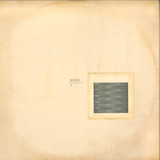
With the demise of the group Wire in 1980, founder members Bruce Gilbert and Graham Lewis joined forces to create Dome. With the assistance of engineer Eric Radcliffe and his Blackwing Studio Dome took the ethic of »using the studio as a compositional tool« and recorded and released three Dome albums on their own label in the space of 12 months: »Dome« (July 1980), »Dome 2« (October 1980) and »Dome 3« (October 1981). A final fourth album, »Will You Speak this World: Dome 4« was released on the Norwegian Uniton label in May 1983.
These albums represent some of the most beautifuly stark and above all timeless exercises in studio experimentation from early 1980s alternative music scene.
Поиск:bruce gilbert
Все
- 1
Bristol artists: Holsten, Grandma Love (AKA Karkossyn) & Frank Silva converge on 3 track VA for new Bristol underground label & club night Northfield.
Edition of 300. Mastered for digital and vinyl by Larry ‘Bruce’ McCarthy at Edgar Studios in Bristol.
Hand-stamped 12” vinyl. Matte black sleeves.
Supported by:
Pessimist, UVB-76, Clarity, Mackenzie, Anina, mad miran, Batu, Bruce.
- A1: Elton John - "Goodbye Yellow Brick Road
- A2: Paul Mccartney & Wings - "Live & Let Die
- A3: Slade - "Cum On Feel The Noize
- A4: T Rex - "20Th Century Boy
- A5: Sweet - "Blockbuster
- A6: Mud - "Dyna-Mite
- A7: Wizzard - "See My Baby Jive
- A8: 10Cc - "Rubber Bullets
- B1: John Lennon - "Mind Games
- B2: Bruce Springsteen - "Blinded By The Light
- B3: Billy Joel - "Piano Man
- B4: Carly Simon - "You're So Vain
- B5: Paul Simon - "Take Me To The Mardi Gras
- B6: Stealers Wheel - "Stuck In The Middle With You
- B7: Elvis Presley - "Always On My Mind
- C1: Roberta Flack - "Killing Me Softly With His Song
- C2: Marvin Gaye - "Let's Get It On
- C3: Harold Melvin & The Blue Notes - "If You Don't Know Me By Now" (Feat Teddy Pendergrass)
- C4: The Spinners - "Could It Be I'm Falling In Love
- C5: The O'jays - "Love Train
- C6: The Temptations - "Papa Was A Rollin' Stone
- C7: Ike & Tina Turner - "Nutbush City Limits
- D1: Dawn - "Tie A Yellow Ribbon Round The Ole Oak Tree" (Feat Tony Orlando)
- D2: Gilbert O'sullivan - "Get Down
- D5: Simon Park Orchestra - "Eye Level" (Theme From The Tv Series Van Der Valk)
- D6: Shirley Bassey - "Never Never Never
- D7: Diana Ross - "Touch Me In The Morning
- D8: Billy Paul - "Me & Mrs Jones
- D9: Gladys Knight & The Pips - "Help Me Make It Through The Night
- E1: Paul Mccartney & Wings - "My Love
- E2: Kiki Dee - "Amoureuse
- E3: Fleetwood Mac - "Albatross
- E4: Electric Light Orchestra - "Roll Over Beethoven
- E5: Thin Lizzy - "Whiskey In The Jar
- E6: Free - "Wishing Well
- E7: Faces - "Cindy Incidentally
- E8: Bob Dylan - "Knockin' On Heaven's Door
- F1: Sweet - "The Ballroom Blitz
- F2: Suzi Quatro - "Can The Can
- F3: Alvin Stardust - "My Coo Ca Choo
- F4: Mott The Hoople - "Roll Away The Stone
- F5: Roxy Music - "Street Life
- F6: David Essex - "Rock On
- F7: Wizzard - "I Wish It Could Be Christmas Everyday
- F8: Slade - "Merry Xmas Everybody
- D3: Olivia Newton-John - "Take Me Home Country Roads
- D4: Peters & Lee - "Welcome Home
Recorded on
10th March 1980 (Tracks 1, 3, 8, 9, 10)
16th March 1980 (Tracks 1, 2)
1st April 1980 (Tracks 2, 4, 5, 7, 9)
Produced: B.C. Gilbert : G. Lewis
Engineer: Eric Radcliffe.
Asst. Engineer: John Fryer
Recorded at Blackwing Studio
B.C. Gilbert: Voices, Guitars, Bass, Percussion, Tapes, Drums
G. Lewis: Voices, Guitars, Bass, Percussion, Tapes, Synthesiser
A.M.C.: Voice: Cruel When Complete
Floating-point re-master by Russell Haswell, August 2011
Cut at Dubplates & Mastering by Rashad Becker, August 2011
New artwork and layout: Dave Coppenhall
With the demise of the group Wire in 1980, founder members Bruce Gilbert and Graham Lewis joined forces to create Dome. With the assistance of engineer Eric Radcliffe and his Blackwing Studio Dome took the ethic of "using the studio as a compositional tool" and recorded and released three Dome albums on their own label in the space of 12 months: DOME (July 1980), DOME 2 (October 1980) and DOME 3 (October 1981). A final fourth album, WILL YOU SPEAK THIS WORD: DOME IV was released on the Norwegian Uniton label in May 1983.
These albums represent some of the most beautifuly stark and above all timeless exercises in studio experimentation from early 1980s alternative music scene.
Previously issued in the out of print DOME 1-4+5 box set in 2011. Now available as standalone LP with download card.
With the demise of the group Wire in 1980, founder members Bruce Gilbert and Graham Lewis joined forces to create Dome. With the assistance of engineer Eric Radcliffe and his Blackwing Studio Dome took the ethic of »using the studio as a compositional tool« and recorded and released three Dome albums on their own label in the space of 12 months: »Dome« (July 1980), »Dome 2« (October 1980) and »Dome 3« (October 1981). A final fourth album, »Will You Speak this World: Dome 4« was released on the Norwegian Uniton label in May 1983.
These albums represent some of the most beautifuly stark and above all timeless exercises in studio experimentation from early 1980s alternative music scene.
Repress!
Using an old door, 17 strings, chopsticks and combining them with phasers, echo units and amplification, the new device was to become his signature sound, mixing Irish folk influences with Asian and North African sounds in a mesmerising and soulful new way that brought him to the attention of the leading improvisers of his day - Alice Coltrane, Ravi Shankar, Don Cherry and more.
A logical follow up to AllChival's recent reissue of Stano's debut LP, Michael O'Shea's self titled LP was originally released on Wire's Dome Imprint in 1982.
The background to the album is as interesting and inspiring as the artist who created it - born in Northern Ireland but raised in the Republic, O'Shea was keen to travel and escape the troubles of his home.
Wandering throughout Europe and the Middle East, O'Shea found himself living and working as a relief aid in Bangladesh in the mid Seventies where he learned to play sitar while recovering from a bout of hepatitis. A later period spent busking in France accompanied on zelochord by Algerian musician Kris Hosylan Harp led to O'Shea's idea of combining both instruments as a homebuilt instrument - Mo Chara (Irish for "My Friend").
He later described the process on the back of the LP himself saying:
"Having sold my sitar in Germany and being desperate for money to travel to Turkey, I conceived of the idea of combining both sitar and zelochord. The first Mo Cara was born, taken from the middle of a door, which was rescued from a skip in Munchen"
A combination of dulcimer, zelochord and sitar, O Shea would play it with a pair of chopsticks, striking the strings softly using Irish folk rhythms mixed with the rich, nostalgic sounds of of the many Asian artists he'd encountered on his travels.
It was a pan cultural sound standing at an unusual crossroads of folk, traditional, rock, progressive, jazz, electronic and post-punk worlds without hesitation.
Perfecting the instrument on the streets, there were further spells spent busking in the underground stations and cafes of London's West End and Covent Garden during the heady days of the 1970s when they were full of eccentric street entertainers, jazz improvisers and musical pioneers.
His work with Rick Wakeman never saw the light of day but O'Shea's contact with the world of post-punk London ensured his name would live on.
Introduced to Wire's Bruce Gilbert and Graham Lewis via cartoonist Tom Johnston, O'Shea eventually acquiesced to an open invite to record at their studio. Turning up unannounced in the summer of 1981 the LP was recorded in a day in the legendary Blackwing Studios and released on Dome the year after.
The first side features the fifteen minute masterpiece "No Journeys End" with the B side featuring more input from Wire in processing the Mo Chara sound.
Lewis himself said years later of the forgotten masterpiece: 'I always said it was the best job we ever did.'
After an aborted LP with The The's Matt Johnson the following year, O'Shea quietly disappeared from the formal recording world and his brief but unique contribution to the music world came to a sad end in 1991 when O'Shea was struck by a post van and died a few days later in hospital in London.
This repress on All City's AllChival imprint has been remastered and reissued with the approval of both Dome and his surviving siblings.
After a year and a half writing and recording rock music, I needed to clear my head. I listened to and made music where things generally happen gradually rather than suddenly. I would set up patches on a Monomachine or Analog Four and listen to them, hearing one sound morph into others, making changes to a patch only after having listened for quite a while, gradually adding elements, and finally manipulating the sounds on the fly. All tracks were recorded live to CD burner, with no overdubs, and executed on one or two machines.
While I was almost exclusively listening to artists such as Chris Watson, Peter Rehberg, Bernard Parmegiani, CM Von Hausswolff, Jana Winderen, Oren Ambarchi, Hazard, Bruce Gilbert, Klara Lewis, Ryoji Ikeda, and so on, I was also inspired by my mental image of John Lennon's tape and mellotron experiments he made at home during his time in the Beatles, as well as events like the first minute of Bowie's Station To Station, ...And The Gods Made Love by Jimi Hendrix, the synths in the song Mass Production by Iggy Pop, and the general idea of Eno's initial concept of Ambient music.
Music being a solitary sculpture in sonic space was the main motivating thought. I was looking at pictures of sculptures and trying to make music that simultaneously conveyed both movement and stillness. I refrained from sudden musical changes, especially avoiding sequences of notes and rhythms. In fact, this music was made from sequences which never exceed a single note, many of these pieces being made on a single pattern. The movement which a good sculptor conveys when the shape of his medium meets the eyes of the viewer who walks around the piece, or the sun changes its position, are the kinds of movement which it was the role of the synth patches to communicate.
I've been listening to music like this since I was 13 or so, but I felt that making it was out of my reach because of the amount of restraint I imagined it required. Once I found myself making this music, it did not feel like a matter of restraint at all. I wanted to build a certain type of building, and hear certain types of movement, and I knew when it was complete. There was no place for sequences of notes and rhythms in my plans.
I also cannot overstate the role that being in my band played. I had previously spent 12 years programming and engineering my own music, and then spent a year and a half making music where my role was basically to write songs and play guitar. When the band's recording phase was completed, I needed to go back to my adopted language. I had done enough with chords, rhythms, notes, defined sections, sharp transitions, etc.. What I needed was to create music from the ground up with nothing but sound, and have that music reflect "being" rather than "doing". It was a therapeutic way of re-balancing myself, before and during my band's mixing process.
This music seeks to just exist, and is not attempting to manipulate or grab the listener in any way. I believe it works well if one listens loud and focuses on it, but also works well at soft volumes and in the background. It can compete with silence on silence's own terms, and it can also happily wipe silence out.
There are two versions of this album. The CD version is pronounced "two" and called : I I . This is the longer version. The vinyl version is pronounced "one", and called . I : This version is shorter, but contains one vinyl-only track. The reason the vinyl is shorter is that some of the tracks have sounds that can not be pressed on vinyl.
John Frusciante
Aix Em Klemm is the moniker of the ambient music project consisting of Adam Wiltzie (Stars Of The Lid / A Winged Victory For The Sullen) and Robert Donne (Labradford / Anjou).
As Wiltzie told Sadness Is In The Sky fanzine, his collaboration with Donne began when “we all met during a Texas swing of a Labradford tour that Stars Of The Lid opened for back in 1996. They stayed at my house for a few days and we became close.”
A year later Wiltzie was asked to join Labradford for their Mi Media Naranja European tour of 1997 as the sound technician. This tour also included Bruce Gilbert of the legendary band Wire who was the opening act and joined them in the van for the entire tour. With Gilbert’s nightly improvisations of minidisk field recording explosions running through a Sherman Filterbank, it left a profound effect on Wiltzie and Donne, and led to inspiring internal philosophical discussions on the importance of improvisation. After concluding six weeks in the van, the idea of creating a unique collaboration separate from their other projects was realized. The duo exchanged tapes over the course of a year and then Donne ventured to Austin, TX for a week to record at Wiltzie’s home studio in 1999. The in-person collaboration moved much more quickly than the exchange of tracks by mail. One track on the Aix Em Klemm album, “Sparkwood And Twenty-One”, was written and recorded in one day. The duo took the mysterious name Aix Em Klemm and the self-titled debut was released in the autumn of 2000.
As of late, Wiltzie lives in Brussels, and Donne joined Stars Of The Lid on their last tour of Europe in 2016 playing modular synth. They still collaborate musically so new Aix Em Klemm recordings remain a possibility.
“The two extracted some morsels of sound from their respective group’s structures and constructed an altogether different and Zarathrustian ‘building of sound’—one that combines the haunting spirits of the old with the mystique of the new unknown.” —Tape Op
- A1: Willie J Charles - Feelin' Kinda Lonesome
- A2: Little Joe Hinton - Let's Start A Romance
- A3: Ki Ki Page With Plas Johnson & Orchestra - Big Boy
- A4: Frank Heppinstall - Sweetheart
- A5: Faye Adams - The Hammer Keeps A Knockin
- A6: Roosevelt Jones - I Say! That's Alright
- A7: Johnny Appalachian - Up In Smoke
- A8: Jimmy Breedlove - My Guardian Angel
- B1: Ernie K-Doe - Love You The Best
- B2: Justin Jones - Dance By Yourself
- B3: Bruce Cloud - Lucky Is My Name
- B4: Chance Halladay - Bury Me Deep
- B5: Mary Ann Fisher - Put On My Shoes
- B6: The Knockouts - Fever
- B7: Roger Green - Betty Mae
- B8: The Chandeliers - She's A Heartbreaker
Belgium 'Popcorn' borrows its name from the 1969 James Brown LP, The Popcorn, which also became the moniker for the Popcorn Club in Vrasene, Flanders which, in its heyday, attracted 3,000 youths to its Sunday sessions. It was DJ Gilbert Govaert who pioneered the sound, blending blues, soul, jazz, latin, doo-wop and high-school pop in a unique melting pot that appealed to dancers seeking that chugging cha-cha beat.
Our POPCORN SOUL PARTY carries on the tradition with many tracks culled from the original playlists and others, such as the incredibly elusive Willie J Charles Feelin' Kinda Lonesome' which has become popular in more recent times.
This unique set will appeal to Popcorn oldies fans, new breed Northern Soul fans and R&B collectors alike. Look out for new-to-vinyl reissues courtesy of Ki Ki Page and Chance Halladay!
The Party Continues...
- 1