(Deluxe Edition) (translucent tri-coloured vinyl LP + MP3 download code in spot-varnished sleeve)
LP comes in gold foil lamination jacket housing printed record sleeve with 1x translucent gold, black & white insomnia effect vinyl, marketing sticker and free digital download card. The Sharecropper's Daughter Bonus Vinyl contains six new tracks serving as a companion piece to Sa-Roc's already acclaimed Rhymesayers debut, The Sharecropper's Daughter, released in October of 2020. These new songs further showcase Sa-Roc's sharp skills as a lyricist, and her gift for captivating melodies and engaging content, featuring production from Sol Messiah and Evidence, as well as a guest verse from MF DOOM. The lead single for the bonus vinyl, "Wild Seeds" is a lyrical testament to the beauty, mysticism, and wisdom of the elders and ancestors who've guided and bolstered generations of Black women through history's assault and neglect of them. With a title inspired by the sci-fi novel Wild Seed by visionary author Octavia Butler, the song serves as a celebration of women such as Queen Nanny, Harriet Tubman, Sojourner Truth and many others, whose legacies inform future generations of their propensity to bloom under the harshest of conditions. "Just like wild seeds, we remain unfettered and unbroken, adding beauty and immeasurable value to a world that chooses not to acknowledge us," Sa-Roc states, "but our very existence is the only acknowledgement we require." Throughout the songs of The Sharecropper's Daughter Bonus Vinyl, Sa-Roc maintains a concise blend of thought provoking commentary and razor sharp lyricism. On the opening track, "Options", she delivers a raw and searing testimony of the dedicated yet, all too often, underappreciated artist, reminding us to give our flowers to the living while we're still able. "The Great Escape" examines humankind's tendency to try to mask the unsavory elements of our past we're either unwilling or unable to confront head on. Echoing both sentimentality and sorrow, "Reconstruction of the Heart" recalls some of Roc's childhood memories and muses on the many ways in which our earliest experiences can scar, strengthen, and shape the very core of who we'll become. The Sharecropper's Daughter Bonus Vinyl chapter fittingly comes to a close with "The Rebirth", which remarks on the plight of the vulnerable artist and the quest for balance between creative transparency and overexposure. Here, Sa-Roc labors through her discomfort and commits to being brutally honest about the experiences that have informed her expression and made her a better artist. Featured guest, the late MF DOOM continues this line of thinking, offering his own unique observations, "Quick as a quitter will fold, some of what glitters is gold. Same story is old, getting left in the blistering cold. Broken souls get remold with little arbitration. Fortune favors the bold as does incarceration." This bonus vinyl pulls no punches in showcasing Sa-Roc's continual growth as an artist who, as NPR recently put it, "is a modern day griot whose aura radiates calm in a world of chaos."
Search:brutal
Mega Bog (der kosmopolitische Moniker der Musikerin/Künstlerin Erin Birgy) wendet sich von von der schwülen Atmosphäre der Grünlilien-Plantage des Vorgängeralbums "Dolphine" (2019) ab und bringt uns mit "Life, And Another" zurück auf unseren Heimatplaneten, in den dünnen Luftdruck eines Wüstentals, wo die vierzehn Songs geschrieben und wie Steine in der Landschaft verstreut wurden, jeder einzelne ein kostbares Juwel, das Birgy gemeißelt hat. Es ist eine weitere fantastische Off-World-Übertragung und ihr bisher anspruchsvollstes, forschendstes und zugänglichstes Statement. "Life, And Another" inszeniert ein halb-fiktionalisiertes Drama im Inneren des Ichs, mit Szenen kollektiver Sehnsucht auf der Bowlingbahn, Auseinandersetzungen über eine aufgeblähte Erinnerung außerhalb der Bar und einsamen Kreisen auf der Terrasse, die in sturer Ehrfurcht über den Hof hinausschauen. Diese Erinnerungen, sowohl aus der Vergangenheit als auch aus der Zukunft, sprudeln das ganze Album hindurch und präsentieren ihre Charaktere als neue Einträge in das Mega Bog Book of Symbols. Zusammen mit dem Co-Produzenten, Tontechniker und Perkussionisten James Krivchenia (BIG THIEF) lebte Erin Birgy in einer kleinen Hütte in der Nähe des Rio Grande und war zwischen ihren Tourneeplänen oft allein. In diesen Isolationen erlebte sie den teilweisen Verlust des "bekannten" Selbst inmitten der Weite. Aufgenommen in mehreren Sessions in verschiedenen Studios enthält "Life, And Another" instrumentale Beiträge von langjährigen und neuen Mitstreitern, darunter Aaron Otheim, Zach Burba, Will Segerstrom, Matt Bachmann, Andrew Dorset von Lake, James Krivchenia von Big Thief, Meg Duffy von Hand Habits, Jade Tcimpidis, Alex Liebman und die Co-Engineers Geoff Treager und Phil Hartunian. Ihre Hörer wissen inzwischen, dass sie MEGA BOG vertrauen können, dass sie kontinuierlich in tiefere und wildere, spirituelle Pop-Gefilde geführt werden. Flirrende Piano-Glissandi, eindringliche psychische Hintergrundstimmen und Tequila-inspirierte Improvisationen schleichen und kriechen über die dunkle Nacht-der-Seele-Rock'n'Roll-Traumlandschaft, bevor sie verschwinden, um Platz zu machen für Beschwörungen von stiller Klarheit und lebendig-atmenden Instrumentalpassagen. In "Life, And Another" verwandelt Mega Bog die brutale Schwere der Welt in den kollektiven Kampf des Lebens.
Ephat Mujuru exemplifies a unique generation of traditional musicians in Zimbabwe. Born under an oppressive colonial regime in Southern Rhodesia, his generation witnessed the brutality of the 1970s liberation struggle, and then the dawn of independent Zimbabwe, a time in which African music culture - long stigmatized by Rhodesian educators and religious authorities - experienced a thrilling renaissance. Under the tutelage of his grandfather, who was a respected spirit mediumand mbira master, Ephat showed an early talent for the rigors of mbiratraining, playing his first possession ceremony when he was just ten years old. By then, guerilla war was engulfing the country and his grandfather Muchatera tragically became a victim of the violence, a devastating blow to the young musician. In the midst of the liberation struggle, mbira music became political. Eventually, the Rhodesians were defeated, but rather than return to the past, the nation of Zimbabwe was born and a new future unfolded. Ephat threw himself into the spirit of independence, singing of brotherhood, healing, and unity: crucial themes during a time when the nation's two dominant ethnic groups, the Shona and the Ndebele, were struggling to reconcile differences. Ephat's band would eventually follow the popular trend and add electric instruments. But before that, he and Spirit of the People released two all-acoustic albums, and they may well be the most exciting and beautiful recordings he made in his career. Mbavaira, the second of these albums, was released in 1983. As the independence years moved on, there would be fewer and fewer commercial mbira releases. But for the moment, Ephat had the required stature and reputation. Also, with the energy and drive we hear in these recordings, the album could easily rival the pop music of its day. Within a few years after the release of Mbavaira, it and albums like it became harder to find in Zimbabwean record stores. Ephat adapted to the times and formed an electric band. They recorded more albums over the years but none of them have the particularly delicious energy of Spirit of the People in the first years of Zimbabwe's independence.
Four years after the release of their highly anticipated album The Immortal Wars (2017), Juno Award-nominated EX DEO returns with more massive, brutal soundscapes than ever! The Roman Empire inspired death metal band’s newest release, The Thirteen Years Of Nero, transports the listener back to Ancient Rome with 10 cinematic masterpieces that tell the emotional, conceptual story of the reign of Emperor Nero. Accented by sounds of ancient instruments like lyra and harp and detailing the harrowing stories of Nero’s surroundings, close allies and enemies, listeners will connect with intense psychological tones of political turmoil and paranoia.
Debut studio album by the American singer, featuring the global smash 'driver's license' and 'deja vu'.
Fuelled by an uncertain future and conflicting feelings towards the
connectivity and intensity of the modern world, Press to MECO’s eagerly
awaited new album ‘Transmute’ follows up from 2018’s critically acclaimed
‘Here’s to the Fatigue’.
Produced by Machine (Clutch, Lamb of God, King Crimson) in a 16th century
tower in the UK, ‘Transmute’ feels more defined, where the heavy moments
are brutal, the quiet aspects are beautiful, and the cinematic flourishes make
the whole thing feel epic.
FFO: Foals, Biffy Clyro, Billy Talent.
Print ads going in Kerrang, Rock Sound, Upset/Dork, Alt Press in UK, Visions DE
plus more EU TBC.
25k+ across socials, plus 300+ Discord group and guitarist has 500+ Twitch
channel
Key supporters of the band include BBC Radio 1, MTV Rocks, Kerrang! Radio,
Kerrang! Magazine, Alt Press, Rock Sound, Upset alongside editorial support
from Spotify, Apple Music, Deezer and Amazon Music.
Previous touring includes touring Europe with Shinedown, UK tours with
Don Broco, SikTh and Arcane Roots alongside performances at festivals
such as Download, Slam Dunk, Truck Festival, 2000 Trees, NAMM and Teddy
Rocks.
Fear Factory machten Metal zu Industrial-Metal und schufen damit einen einzigartigen Sound, wo Heaviness auf stilvolle Samples und melodische Phrasen mit einer unglaublich zerebralen Wirkung, die lange im Schädel hängen bleibt, trifft!
Diese Kombination aus maschineller Präzision, brutaler Härte und fragilen Refrains ist auch auf ihrem neuen Album genau das, was man sich von dieser Band wünscht!
Kilbourne, a Brooklyn-based producer and DJ with a prolific output in the harder, faster and more extreme underbelly of electronic music, is gearing up to share her latest work, an offering that doubles as her debut on Los Angeles-based imprint Evar Records. Out on July 23, SEISMIC explores the idea of "becoming," showcasing the value of speed, identity and transcendental bliss through an experimental lens entirely Kilbourne's own.
The four-track collection features a hard-earned collaboration with the legendary DJ Producer, whose work has been instrumental to both Kilbourne's approach and the hardcore scene at large, and a joint track with Buzzi, a fellow Brooklyn-based producer who shares her dedication to experimenting in the faster, harder techno realm. On SEISMIC, Kilbourne balances the dramatic beauty and brutality of hardcore, bringing gentler melodies into her production style as not an aberration, but rather a necessary aspect of heavy music.
- A1: Violence - The Rising
- A2: Violence X Code Pandorum - Behind Masks
- A3: Violence - I Met The Devil
- A4: Violence - Engine (Ft. Bastien Hennaut From 'Horskh')
- A5: Violence - Repression
- A6: Violence - My Fate (Ft. Billy From 'Biohazard')
- B1: Violence - Backfire
- B2: Violence - The Poison And The Cure (Ft. Julien Lebon From 'Atlantis Chronicles')
- B3: Violence - Wolves (Ft. Julien Lebon From 'Atlantis Chronicles')
- B4: Violence - Before It's To Late
- B5: Violence - Violence Will Not Save You (Ft. Anomali(E)S)
VIOLENCE is a brand new Metal, Industrial, Bass-music project produced by Niveau Zero. After “In_Sect” (2010) and “Jasmine” his last album released in 2012, It was time for him to produce a
new Lp. Composed of 3 members : Fabio Meschini (Guitar / L’Esprit du Clan, Ex: As They Burn), Morgan Sansous (Drums / Henker) and Niveau Zero ( Production & Vocal). VIOLENCE is an ode to a rising insurrection. It results in a raw, metallic and powerful sound.
Chronicle of the brutality of our era, OPUS 1 is a concept album composed with guests of choice such as Billy Graziadei (Biohazard, Powerflo), Code: Pan- dorum , Julien Lebon (Atlantis Chronicles), Bastien Hennaut (HORSKH)...
Polish alt-pop superstar Brodka announces new
album ‘BRUT’; a powerful examination of gender,
self-image and society.
Hot on the heels of her Speedy Wunderground 7”
‘Wrong Party’, ‘BRUT’ was recorded with Boxed
In’s Oli Bayston (Kelly Lee Owens, Loyle Carner)
and finds Brodka blurring the boundaries between
natural and synthetic sounds - post-punk riffs, icy
synths and the serrated, heavily-processed guitar
sounds that slice through glittering electro-pop to
bring an industrial edge to the brutalism-inspired
vision.
LP pressed on marbled vinyl.
The UK's breakthrough band, Venom Prison, are set to release their sophomore Prosthetic album, Samsara. Mixed and mastered by Arthur Rizk (Power Trip, Code Orange), the album is an uncompromising aural assault of brutal death metal, crusty hardcore and post 90s groove.
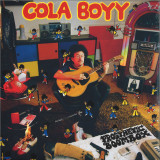
There’s liberation on the dance floor in the songs of Matthew Urango – glimpses of revolution that glimmer beneath the disco ball. “I want my music to bring people together,” says the Californian pop innovator, best known as Cola Boyy. “Because standing together is our best chance at fighting this shit show.” The shit show in question is a broken, brutal system the acclaimed multi-instrumentalist has witnessed up-close. Urango was born with spina bifida and scoliosis in Oxnard, California: a town in which almost 30,000 are estimated to live in poverty. Prosthetic Boombox, his eagerly awaited debut album, might at first glance seem a joyous confetti-burst of pop eclecticism, engineered to sound like “scanning between stations on a car radio, landing on all these different sounds and styles” as Urango puts it. Dig deeper, though, and you’ll discover a simmering sense of rebellion. “The working class are injured, struggling to pay rent and struggling to put food on the table,” he says. “I want to represent that.” Prosthetic Boombox
achieves that goal in a thrilling flurry of inventive indie, funk and soul: take Urango’s car radio analogy, place it in a time-travelling Delorean with Prince in the passenger seat, and you’re half-way there.
Look no closer than Prosthetic Boombox’s euphoric opener, the Avalanches-assisted ‘Don’t Forget Your Neighbourhood.’ The track – which Urango says mixes “the Beach Boys, French disco, house keys and ragtime piano, kinda like the Cheers soundtrack!” – ends with lyrics urging listeners to “fight for your town with your fist closed, strike it and make it more than just a memory.” It’s a reminder that the working classes need to “turn our fists against our oppressors instead of each other,” he explains. After that emphatic introduction comes a horn-laced funk wig-out titled ‘Mailbox’ – a song that gives Dua Lipa’s Future Nostalgia a run for its Studio 54-themed money, featuring rising Londoner JGrrey. Elsewhere, ‘Song for the Mister’ ventures into smooth R&B territory, before ‘Roses’ – a collaboration with Myd of Ed Banger fame – offers a bouquet of bustling disco guitars and infinite bisous of Connan Mockasin’s band drops in on the immaculate ‘Go the Mile’. Urango saves his most introspective moment for the album’s starry closer. ‘Kid Born in Space’, a cosmic collaboration with MGMT frontman Andrew VanWyngarden, sees the artist reflect on what he once had to overcome as a disabled person of colour. “I see them looking down on my dreams of being,” he sings tenderly. “I hear them making fun of my voice, but I keep on moving forward, I refuse to live in anyone else’s shadow.” Prosthetic Boombox, on this subject, is more than an album title – it’s a statement of intent.
“The message of my music is that our class is exploited, oppressed and murdered on the daily. That’s not right, and the system that enables that deserves to be wiped off the face of the earth,” he says. “The only way that happens is if we’re united. That’s the point of my music – to relate to people and unite them.” And what unites more than raucous, irresistibly danceable pop? Prosthetic Boombox is a riot of joyous grooves and catchy hooks for good reason. “I want to reach and spread my message to as many people as possible. You can’t do that if you’re some obscure motherfucker, you know?” he laughs. Don’t bet on him being an “obscure motherfucker” for long.
Fine Art Book, Ltd. to 400 copies:
Hardcover book printed on Munken Print White 115g/m2 // 108 pages, 24cm x 22cm, 65 photos // Logo, slot and circle embossed // Matt laminate + selective varnish // Hand-numbered, hand-stamped
"Même Soleil" is the result of a dialog between the French photographer Gaël Bonnefon and the French musician Frédéric D. Oberland initiated by IIKKI, between December 2019 and June 2021.
Self-taught multi-instrumentalist & photographer, Frédéric D. Oberland finds himself at the crossroads of image and sound, favoring a synesthetic approach. He articulates different modes of narration, combining the raw character of the documentary form with the transfigured reality of myth and poetry, allowing him to question notions such as the sacred, the monstrous, the fraternity, while at the same time returning to the political news of the present. Attentive to the pulse of the body, his work is willingly itinerant, modulating between the ripples of dreams, watching the points of incandescence and the bursts of electricity that act as revelations of our presence in the world, here and now. He’s the co-founder of leading bands such as Oiseaux-Tempête, FOUDRE!, Le Réveil des Tropiques, FareWell Poetry and is co-curating the label NAHAL Recordings.
"Fueled by travels and their emanations, Frédéric D. Oberland’s music had to build new horizons this year, outlined by the curves of semi-modular synthesizers, the avalanches of effect pedals and the zigzagging paths of electric circuits. Même Soleil, his third solo album, manages to merge mystical visions of the unconscious and the absurdity of an apocalyptic present in a sensory whirlwind, operating an astonishing mutation with tones still unexplored in his previous releases. A visual as well as a musical journey that takes shape in a book and a record of the same title, Même Soleil is the result of a collaboration with the photographer Gaël Bonnefon. Seeking the tension between the blinding light of day and the glittering visions of saturated night skies, the two pieces in dialogue transcend reality to deliver their own truth, as bright as the first light of the sought-after morning." (Alice Butterlin)
Gaël Bonnefon graduated with highest honours from the Fine Arts School of Toulouse (Isdat) in 2008. He has exhibited at Villa Pérochon, at the Eté photographique in Lectoure, at the 104 in Paris during Jeune Création 2012, at Rencontres Internationales de la Photographie d’Arles and at PhotoEspaña, at the Abattoirs Museum in Toulouse in 2014, at the Château d’Eau Gallery in 2012 and 2019 and in the Vitrine of Frac Île-de-France in 2020. His work is part of the collections of Frac Midi-Pyrénées, Château d'Eau gallery, Kulturamt in Dusseldorf and Kiyosato Museum in Japan ; he participated in Temps Zero projects Berlin, Braga, Rome, Bucarest, Groningen and Thessaloniki. He has also been granted artist’s residencies in Germany, France and Israel. His first book Elegy for the Mundane was published by La Main Donne in 2019. He continues his intimate and dense journey and presents his second publishing, Même Soleil with photographic works from 2009 to 2021.
"At first brutal and declining, the substance of Gaël Bonnefon's photography is just like a gaze that fears being one day extinguished and that is always looking to be born again. In photography as in love, recoil and desire, tension and easement, repetition, wandering and rest, flight and pursuit. Here photography allows itself to be traversed by flashes of life, renewed forces, echoes of far-off kindnesses and lost joys. It sings silently, lover of a thousand faces from which the thread of a single and same image is born, followed without relent, from the snowy peaks of childhood to the lost worlds of the present." (Michaël Soyez)
Forged in the cavernous labs of Indianapolis, the XK3 EP by producer D.Strange, dives into the metallic underworld of alienated shadows to create brutal, icy electro. The submerged acid-tinged opener, "Sonic Recoil" ascends with a snarling pathos of trap hats that pierce through the looming fog of the club. "Negative Center" haunts in cunning dexterity and grooves with a jacking pace of brooding momentum. Somewhere in the maze of resonance droplets, cascading hats, and the ominous synth pads, the track "A Black Liquid Filled My Lungs" hypnotizes in its atmospheric acid electro hybrid. Right out of the gate, the self-titled track "XK3" punishes with off-beat synth shards and glitchy, mechanical snares that snap in anthemic propulsion. While "Ghost of Kashif" weaves itself in esoteric, yet evocative, soundscapes with an absolutely grooving, club menacing fashion. Rounding out the release, fellow Indianapolis producer Noncompliant contributes a cruel electro sub-heating take of "XK3" to help warm the boreal landscapes of the EP.
“I don’t want to be a product of my environment. I want my environment to be a product of me.” The debut LP from Ocean City Maryland’s Jarhead Fertilizer is a hot dose in your veins. Our modern dystopian reality meets a brutal mixture of death and grind with primitive groove with blistering low end. On Product of My Environment, Jarhead Fertilizer makes a simple statement. Death is easy. Life is hard
Clear Vinyl
These Hidden Hands return after a 4 year hiatus with a new two track EP featuring Zanias, titled, ‘Shackles.’
The group builds upon their previous work embodied in These Moments Dismantled, in juxtaposing brutal futuristic electronic compositions with delicate female vocals. The A side, ‘Shackles,’ confronts the listener with a wall of distorted bass elevated to soaring heights with swarms of aggressive cimbasso and horn blasts shifting between harmony and dissonance, while the voice of Zanias waxes and is eclipsed by the enormity of the wall of sound. The music itself stands on the edge of the limits of the dancefloor. The flip side, ‘Change of Tide’ sees the duo explore a deeper, faster tempo murky soundscape of future-dnb also permeated by Zanias’s hypnotic voice.
Limited crystal clear vinyl. Artwork by Jesse Draxler.
Über den Zeitraum von mehreren Wochen während des Lockdowns entstanden, präsentieren Nick Cave & Warren Ellis in dieser Woche ihr neues Gemeinschaftsalbum: Carnage – was zu Deutsch so viel wie Blutbad oder Gemetzel heißt. Cave beschreibt das Gemeinschaftswerk denn auch als „eine brutale, aber wunderschöne Aufnahme, eingebettet in eine gemeinschaftliche Katastrophe.“ Obwohl die beiden schon viele Soundtracks zusammen komponiert und aufgenommen haben, und Ellis zudem seit geraumer Zeit Mitglied von The Bad Seeds ist, handelt es sich bei Carnage tatsächlich um den ersten Longplayer, den sie auch offiziell als Duo eingespielt haben.
„Die Arbeit an Carnage war eine komprimierte Phase intensivster Kreativität“, sagt Ellis, „denn es dauerte gerade mal zweieinhalb Tage, bis diese acht Songs in irgendeiner Form standen. Dann erst sagten wir uns: ‘Ach komm, lass uns doch ein Album machen!’ Das alles war also nicht sonderlich geplant.“
Das Klangspektrum der neuen Aufnahmen reicht vom düsteren, elektronischen Puls des Stücks „Old Time“ bis hin zum sehnsuchtsvoll-wunderschönen „Albuquerque“, einer klassischen Ballade, die auf einer kreisförmigen Klavierfigur basiert, überzogen mit hypnotischen Streicherparts. Insgesamt hat das Album eine etwas rastlose Energie, die Perspektive ist im Vergleich zum gefeierten Nick Cave & The Bad Seeds-Vorgänger Ghosteen eher nach außen gerichtet – wobei die beiden auch dieses Mal versuchen, die Grenzen des Songformats zu verschieben, immer wieder neu auszuloten, was ein Song eigentlich alles sein kann…
Während die eigentlichen Aufnahmen in recht kurzer Zeit stattfanden, waren die Songs von Carnage schon davor länger herangereift, in den ersten Lockdown-Wochen, die Cave damit verbracht hatte, „zu lesen, regelrecht zwanghaft zu schreiben und einfach nur auf meinem Balkon zu sitzen und über die Dinge nachzudenken.“ An ein Album dachten die beiden denn auch gar nicht, als sie zusammen ins Studio gingen, um zu jammen. „Das Album“, so Cave, „ist dann einfach so vom Himmel gefallen. Es war ein Geschenk.“
Carnage ist die Fortsetzung jenes kollektiven Improvisationsansatzes, auf den die beiden schon für Ghosteen gesetzt hatten – was Cave zugleich erlaubte, das klassische, eher narrativ strukturierte Songwriting hinter sich zu lassen. Als Rohmaterial dienen ihnen Textideen, die Cave zuvor über einen längeren Zeitraum verfasst und verfeinert; sie handeln zumeist von wenigen Kerngedanken und -themen, einzelnen Bildern und Metaphern, die er mit Worten umkreist. Die eigentlichen Songs entstehen dann in ausgedehnten Improvisations-Sessions im Studio: Anfangs sehe das so aus, wie Ellis berichtet, dass „da zwei Menschen im Raum sitzen und sich etwas trauen, indem sie erst mal einfach passieren lassen, was gerade passiert“. Ihre endgültige Form bekommen die Stücke daraufhin erst durch intensives Editieren und Filtern, wenn Musik und Text zu einer Art Klangcollage zusammenkommen. Das Element der Überraschung spielt bei jedem dieser Schritte eine zentrale Rolle, und mal geht alles ganz schnell – „Shattered Ground“, zum Beispiel, sei, so Ellis, „gleich im ersten Take fertig“ gewesen, während andere, wie beispielsweise der Titelsong, „sich erst kurz vor dem Abschluss der Mixing-Phase zu erkennen geben sollten.“
Wenn man bedenkt, dass Carnage in relativ kurzer Zeit entstanden ist, wirkt die enorme Bandbreite an Themen und Stimmungen um so beeindruckender, denn das Resultat klingt einerseits absolut eindringlich („Old Time“), andererseits auch zutiefst kontemplativ („Lavender Fields“). Wie sich die Stimmungen und Energien verschieben und überlagern, erkennt man auch daran, wie die beiden gewisse Zeilen, Refrains und flüchtige Bilder auf immer neue Weise in den verschiedenen Songs wieder auftauchen lassen, was dem Album insgesamt etwas Kaleidoskopisches gibt. In Songs wie dem aufrüttelnd-aufgebrachten „White Elephant“ und dem fast schon fiebrig-psychedelischen „Balcony Man“ kollidieren surreale Bildwelten, so dass die Zeilen nicht mehr wörtlich zu verstehen sind und an ihre Stelle etwas Suggestives, Impressionistisches tritt.
Die einzigartige kreative Chemie zwischen Cave und Ellis basiert auf einer langen gemeinsamen Geschichte, die sie als Kollegen und Solokünstler verbindet: Erstmals begegneten sich die zwei schon 1993, als Ellis die Geigenparts für einige Songs von Let Love In einspielen sollte, das achte Album von Nick Cave & The Bad Seeds. Wenig später schaute Cave bei einem Konzert von Ellis’ Band Dirty Three in Brisbane vorbei – und landete schließlich auch selbst auf der Bühne, wo sie gemeinsam Interpretationen von Neil Youngs „Helpless“ und Roy Orbisons „Running Scared“ zum Besten gaben. „Damit fing das alles an“, erinnert sich Ellis, der schließlich selbst festes Mitglied von The Bad Seeds wurde. Auch beim 2006 gegründeten Bandprojekt Grinderman arbeiteten sie zusammen, was laut Nick Cave ein Ventil für „die beste Midlife-Krise war, die sich ein Mann wünschen kann“. In dieser Konstellation sollten sie zwei Alben aufnehmen, Grinderman 1 und 2, bis sie die Band dann 2011 wieder auflösten.
Seit 2005 haben Cave und Ellis zudem an etlichen Soundtracks für Film, TV und Theater gearbeitet – u.a. für The Road (2009) und Lawless (Die Gesetzlosen; 2012), beide entstanden unter der Regie von John Hillcoat, sowie für David MacKenzies Hell or High Water (2016) und Taylor Sheridans Wind River (2017). Das gemeinsame Erschaffen derart atmosphärischer Instrumental-Scores, wobei oftmals elektronische Loops von Ellis als Ausgangspunkt fungierten, über denen Cave am Klavier improvisieren sollte, hat ihre Arbeitsweise und ihr Songwriting nachhaltig geprägt.
Mit Carnage legen sie das nächste Kapitel ihres musikalischen Abenteuers vor: Ein Album, das quasi aus Versehen entstehen sollte, während des langen, weltweiten Stillstands der Pandemie-Monate. Die verschiedenen Stimmungen und auch das Rastlose an diesen Aufnahmen spiegelt die existentielle Ungewissheit wider, aber zugleich flackern auch immer wieder Momente der Ruhe auf, Augenblicke der meditativen Selbstbesinnung. Unterm Strich ist es ein Album, entstanden in und gemacht für diese unbeständigen Zeiten, das durchsetzt ist mit Augenblicken konzentrierter Schönheit. Aufnahmen, die ihre unumstößliche Zuversicht fast schon trotzig zum Ausdruck bringen.
A little over a year ago, Nathan Williams found himself back in San Diego, writing what would eventually become Hideaway, his seventh album as Wavves, in a little shed behind his parents’ house. It was also the place where he made some of his earliest albums, before he became known for his uncanny ability to write songs that sneered at the world while evoking pathos, sympathy, and a deep understanding of how sometimes we’re our own worst enemies, and that can be okay. Williams’ return to his childhood home was not just a symbolic attempt at jumpstarting creativity. It came as a result of a series of major life changes. A decade ago, Williams released King of the Beach on the maverick indie label Fat Possum. The album was a cocky collection of pop punk gems that catapulted him into the public consciousness, eventually prompting a jump from Fat Possum into the major label system, where he released two albums before becoming disillusioned by the lack of creative agency available to him. In 2017, Williams self-released You’re Welcome on his label, Ghost Ramp. Now, Williams has returned to Fat Possum with a barbed collection of anxious anthems that grapple with the looming sense of doom and despair that comes with getting older in an increasingly chaotic world. “He’ll always skew toward the Bart Simpson character,” says Matthew Johnson, founder of Fat Possum. “But that does not mean that he doesn’t have some commentary, and once in awhile, it’s totally spot on.” Across its brief but impactful nine tracks, Hideaway is about what happens when you get old enough to take stock of the world around you and realize that no one is going to save you but yourself, and even that might be a tall order. The album features Williams’ most universal and urgent songs yet. “Honeycomb” lopes along sunnily, as Williams sings affecting lines like “I feel like I’m dying, it’s cool, it’s great, just pretend I’m okay.” His directness is shocking, and proof that Williams is the kind of songwriter who can capture pain and uncertainty with resonant brutal force. “It’s real peaks and valleys with me,” Williams says. “I can be super optimistic and I can feel really good, and then I can hit a skid and it’s like an earthquake hits my life, and everything just falls apart. Some of it is my own doing, of course.” It’s this self awareness that permeates each of Hideaway’s songs, marking them each as mature reckonings with who he is. After realizing the material he’d been working on in the hideaway was starting to take shape, Williams, along with bandmates Stephen Pope and Alex Gates workshopped the songs in a series of now-abandoned studio sessions, before linking up with musician and producer Dave Sitek of TV on the Radio to help fully realize their new songs.
The career defining 4th album from New Jersey Tech Death Metallers COGNITIVE. Fusing all the best elements of Death Metal - Groove, speed, brutality, technical prowess and forward thinking songwriting; this is an album with one foot planted firmly in the future and the other equally in the old school realm. Have toured the US, Canada and Europe in the support of previous album 'Matricide' including the Bloodletting North America Tour 2019!