Available on vinyl for the first time since its original release in 1984, Outernational Sounds proudly presents Build An Ark pianist Nate Morgan’s second outing for the celebrated Nimbus West label – the conscious and spiritualised sounds of Retribution, Reparation.
Pianist Nate Morgan (1964-2013) was a central figure on the Los Angeles jazz undergound. A core member of the circle around the legendary bandleader, pianist and community organiser Horace Tapscott, Morgan had been part of Tapscott’s U.G.M.A.A. (Union Of God’s Musicians and Artists Ascension) since he was just a teenager, and was a key member of the Pan Afrikan People’s Arkestra, known as ‘The Ark’. Through the 1980s and 1990s he kept the PAPA flame alive, organising the Ark’s sprawling songbook, running legendary jam sessions, and keeping LA’s deep jazz roots well watered. By the early 2000s he was bringing hard won knowledge to a new generation as part of the Build The Ark collective. He was a musician’s musician, at the beating heart of the radical, community-minded Los Angeles jazz network that Tapscott and his associates had first put together in the early 1960s.
Retribution, Reparation was the second of the two LPs Morgan recorded for Tom Albach’s storied Nimbus West imprint. His first, Journey Into Nigritia (Outernational Sounds OTR- 008), had been a declaration of arrival laced with energies drawn from Cecil Taylor and Coltrane. One year later, with nods to Herbie Hancock (‘One Finger Snap’) and Ellington (‘Come Sunday’), Retribution, Reparation was a confident statement of purpose. Politically charged with pan-Africanist and Black nationalist sentiments inspired by Marcus Garvey, and titled with uncompromising directness, the album focusses the soundworld of the Ark into a surging, restless masterpiece of spiritualised modal jazz. With Danny Cortez on trumpet and Ark stalwart Jesse Sharps on saxophones the frontline is explosive (this set is also one of the few places the extraordinary Sharps can be heard in a small group setting), while Fritz Wise and Ark regular Joel Ector hold down the rhythm section. Morgan’s forceful, Tyner-like chords and virtuosic solos and bind the music together. From the poised drama of the opening dedication to Tapscott’s U.G.M.A.A. (‘U.G.M.A.A.GER’) to the propulsive militancy of the title track, Retribution, Reparation spreads the word: ‘Advance to Victory, Let Nigritia Be Free!’
Buscar:build an ark
Legitimately available again on vinyl for the first time since its original release in 1983, Outernational Sounds proudly presents a major statement from a crucial figure on the Los Angeles jazz underground – pianist Nate Morgan’s spiritualised deep jazz classic, Journey Into Nigritia.
How many 16 year olds would have the confidence to walk up to a revered bandleader at a gig, and inform him that one day they’d be playing together? As improbable as it sounds, this is how pianist Nate Morgan introduced himself to the great Horace Tapscott, founder of the Pan Afrikan Peoples Arkestra. The teenage Morgan had heard Tapscott’s Flying Dutchman LP The Giant Is Awakened being played by Greg Kufahamu on local Los Angeles radio station KUSC, and Arthur Blythe’s wailing sax had gone ‘straight to the heart. It was a spiritual experience.’ Morgan showed up to all the Arkestra shows he could find. He was already studying with Joe Sample and Hampton Hawes and playing in local bands, but the draw of the Tapscott’s band was too much for the gifted young pianist:
‘I could only take about two or three more concerts before I had to run up on stage. When I first introduced myself to Horace, he tells everybody that I said, “Yeah, I’m Nate Morgan. I’m going to play with you all.” Not that I want to, but that I’m going to.’
Over the next decade and beyond, Morgan would become a central figure in Tapscott’s UGMAA (Union Of God’s Musicians and Artists Ascension’), bringing new figures into the fold (it was Morgan who first hipped Jesse Sharps to Tapscott’s circle; they were lifelong friends), running jam sessions, and eventually being given the task of organising the Arkestra songbook. During the early 1970s he also worked commercially, doing a stint with Rufus and Chaka Khan and appearing on Willie Hutch’s Foxy Brown soundtrack. Into the 1980s and 1990s he remained active, keeping the UGMAA flame alive in late night jams and private sessions, and working tirelessly around LA, including collaborations with Bone Thugs N’ Harmony; he was also part of the early 2000s LA jazz collective Build An Ark. A true musician’s musician, Morgan died in 2013.
Journey Into Nigritia, featuring firebreathing reedsman Dadisi Komolafe, was the first of two LPs Morgan recorded for Tom Albach’s storied Nimbus West imprint. A committed, spiritualised work that showcases Morgan’s heavy composing as well as his McCoy Tyner- influenced and technically flawless playing, Journey features dedications to Coltrane (‘He Left Us A Song’) and Cecil Taylor (‘Study In C.T.’). Surging, modal jazz from the LA undergound, Journey Into Nigritia is a crucial recording by an unsung jazz legend.
Heritage finds Mark de Clive-Lowe in the process of grand introspection about his Japanese heritage, with specific tracks as memories from the past illustrating the right history of Japan. The albums have a sweeping, almost majestic feel with signature electronic soundscapes throughout.
Day turns to night as Mark de Clive-Lowe's Heritage II takes us from the meditative zen of Heritage into a world of jazz and Japanese roots culture fused with hip hop, drum'n'bass and broken-beat.
On Heritage II, de Clive-Lowe is joined by a cast of world-class musicians: Josh Johnson (Leon Bridges/Esperanza Spalding), Teodross Avery (Talib Kweli/Mos Def), Brandon Eugene Owens (Terrace Martin/Robert Glasper), Brandon Combs (Moses Sumney/Iman Omari), Carlos Nin~o (Build An Ark/Lifeforce Trio) and Tylana Enomoto (Kamasi Washington/Bonobo) - who all contribute stellar performances in support of de Clive-Lowe's music.
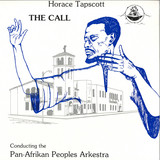
Available on vinyl for the first time in 40 years, Outernational Sounds is proud to present a masterpiece from the Los Angeles jazz underground - Horace Tapscott's burning, spiritualised 1978 set, The Call.
One of the unsung giants of jazz music, the composer, bandleader, arranger, pianist and community activist Horace Tapscott was the undisputed keystone in the grassroots Los Angeles jazz scene. Throughout the 1960s and 1970s, his radical community arts and music formations the UGMA (Underground Musicians Association, later changed to UGMAA - Union of God's Musicians and Artists Ascension), and his protean big band, the Pan Afrikan Peoples Arkestra, were at the epicentre of music, culture and politics in the Los Angeles area.
From their 1960s base at the Watt's Happening Coffee House on 103rd St, to their decade-plus- long 1970s residency at the Immanuel United Church of Christ on 85thE St and Holmes Ave, Tapscott's groups were the beating heart of underground music in LA. Hundreds of musicians passed through and played their part. Major figures in LA jazz such as Arthur Blythe, Azar Lawrence, Jimmy Woods, John Carter, Bobby Bradford, Sonny Criss, Ndugu Chancler and dozens of others all paid dues or just got down with Tapscott, not to mention the core Arkestra regulars who have since become celebrated names - Nate Morgan, Jesse Sharps, Adele Sebastian, Dadisi Komolafe, Gary Bias, to mention only a few.
Tapscott and the Arkestra were down on the ground - playing fundraisers in park and street, organising teach-ins and workshops for young and old, mixing it with radical theatre groups, firebrand poets, political radicals, Black separatists, community groups and churches. They lived communally, and built an ark for the Black arts in the heart of the city. But as a result of this grassroots community focus and Tapscott's antipathy to the music industry, the Arkestra didn't record for nearly two decades. That only changed when long-time jazz fan Tom Albach started Nimbus Records. The label was initiated specifically in order to document Tapscott and his circle, and the first three records showcased Horace and the Arkestra.
The Call was put together from two studio sessions in April 1978, one at Hollywood Sage and Sound, one at United Western - the latter session had the addition of a string section, who can be heard on the moody Cal Massey composition 'Nakatini Suite' and Jesse Sharps' swinging modal trip, 'Peyote Song No. III', with its swirling soprano solo. In keeping with the communal nature of the Arkestra, the other two compositions, 'The Call' and 'Quagmire Manor at Five A.M.' are also by Arkestra members. But at the centre of the music is the builder of the Ark, the visionary whose original call to action started a movement whose legacy continues to this day - Horace Tapscott.
Heed The Call!
- Messy Love
- Baobab Tree
- I Will Keep You
- Spirit Reflection
- Entranced
- Super Nova Lovers
- Stay A While
- Lo Mas Dulce
- Into Oya!
- Windwaves
'Spirit Reflection' is the third album LP from Los Angeles singer-songwriter
Gaby Hernandez. Blissful layers of instrumentation, electronics, vocal harmonies and folkloric percussion intertwine with west coast feel to create aunique, beautiful and multi-layered album.
The album features a stellar line-up of LA talent, jazz star Kamasi Washington, Stuart Howard (AKA Lapalux), Kelis and Gaslamp killer collaborator Dexter Story, plus Ninja Tune, Plug Research and Soul Jazz artist Carlos Niño, Miguel Atwood-Ferguson and Gabriel Reyes-Whittaker all accompany Gaby, with stunning results. Even before Spirit Reflection had been finished, the demo mixes caught the ear and gained support from Gilles Peterson, Lefto, Toshio Matsuura (U.F.O.) and JRocc (Beat Junkies). Born, raised and based in Los Angeles and of Chilean descent, Gaby Hernandez has been writing and recording since 2001. She was a founding member of the 'creative music ensemble' Build An Ark alongside others including Carlos Niño, Dexter Story and Dwight Trible.
Gaby was the only vocalist on Teebs' debut Brainfeeder release Ardour. She made major contributions to AmmonContact's Ninja Tune releases New Birth and With Voices, plus The Life Force Trio's Plug Research album Living Room. She was also the vocalist on Dimlite's Outernational Duet - released as part of his highly acclaimed Sonar Kollektiv longplayer This Is Embracing.
Hernandez was invited by Mia Doi Todd to sing on the Jonathan Wilson produced song Canto de Iemanja, which was included on Todd's City Zen record Cosmic Ocean Ship and the Red Hot + Rio 2 compilation, which also featured Beck, Seu Jorge, Aloe Blacc, David Byrne and Madlib. Among her main musical comrades is the prolific multi-instrumentalist, composer and producer Dexter Story, for whom Hernandez sang on the track Water Bearer from his LP Seasons, on Kindred Spirits. David and Graham from Mr Bongo met Gaby and Carlos Nino at the end of their hugely successful Arthur Verocai album launch and rare record sale at the RAPPCATS venue in LA. Gaby and Carlos passed us a copy of 'Spirit Reflection'.and we put it on the deck. It immediately grabbed us and we couldn't stop listening to it. When we got back to the UK we got in contact straight away and signed the album. We're very proud to be releasing it'... ...this is a future classic, an 'album' in the truest sense of the word. Brilliant.' says Graham.
Building on her first LP April Song Sara Mitra draws folk blues and psychadelic influences into her second LP. Recorded and produced by Ben lamdin / Nostalgia 77. The LP was previewed by Gilles Peterson on BBC 6 Music & Sara conducted an interview feature with Jamie Cullum on BBC Radio 2
Press quotes include the following:
Her skill as a songwriter and honesty as a performer shine through" Mercury Prize Recommends
Especially talented" The Daily Telegraph
Fresh sounding and free from cliche..., Sara is left to her own special devices and nails a good melody everytime." Blues and Soul Magazine
Mitra has a really fresh-sounding voice: a great night" The Sunday Times
I love her voice, I love her Englishness." Gilles Peterson