
pré-commande13.09.2024
il devrait être publié sur 13.09.2024
30,21 €
il devrait être publié sur 13.09.2024

180G BLACK VINYL
Since Outlaws in 2020, Ludivine Issambourg's flute has not cooled down. How could it have, when with that album of Hubert Laws covers, it had reached incandescence? Still panting, burning despite the lid of its case left wide open, it awaited the opportunity to continue the adventures that Master Laws himself had praised.
A continuation? Above The Laws isn't quite that.
Although his name still appears, Hubert L. is no longer the sole guide in exploring the vast galaxies of jazz-funk. Through covers but especially as an enhancer of her own compositions, Ludivine has invoked the spirit and intangible presence of Jeremy Steig, Ronald Sneijder, and Bobby Humphrey—the legends of the flute.
Guided by an unescapable groove, with a musical dial set to the late 70s and early 80s, Ludivine has enlisted the help of a brass section this time, a true propulsion engine for funk that can also shift to a soulful breath if the moment calls for it. Supporting the keyboards, there's a Moog laying down its rich layers or twisting tones.
The flutes are used like levers to stabilize the flight or, conversely, to make it soar even faster through the measures. The alto version, which Ludivine had previously used sparingly, adds the necessary velvety note when it’s time to embark on smoother destinations. Speeding up the tempo to make passengers rise from their seats as if danger were imminent; calming the atmosphere to put them in a reassuring cocoon where they can let their thoughts and spirits wander, the improvisations find their place in the compositions observed from the porthole. Detached from gravity, yet still very much in tune with the vibe of cities marked as hot spots on the current jazz scene radar, it's the scent of these streets that permeates some tracks of Above The Laws.
Directed from the control tower by Eric Legnini, Chassol, Alex Finkin, and Michaël Lecoq, Above The Laws benefits from a few stops along the way where precious connections are established. Nils Landgren and his trombone in the colors of the Swedish flag, Laurent De Wilde for a chase between flute and Fender Rhodes, Céline Bonacina’s saxophone for an Afrobeat detour.
But it's at the edge of a journey where organic intensity has continued to assert itself without losing power that Ludivine connected with Brian Jackson for a cover of "Angel Dust," a track from the era when he and his partner Gil Scott-Heron were creating soul masterpieces. One of them featured a flutist by the name of Hubert Laws.
The starting point of Ludivine's latest jazz-funk explorations also becomes the endpoint. Elevated by the ten tracks of Above The Laws, Ludivine Issambourg closes a loop where she has placed her flute and its flourishes in an undeniably leading role. Opening the doors to ambitious orchestrations, unexplored horizons, she weaves into her compositions the experiences, places, and encounters that have shaped her.
Disponible en stock et prêt pour l'expédition
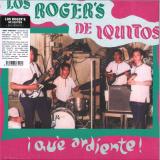
"¡Qué ardiente!" combines the best of Los Roger's limited discography, one of the most influential Amazonian cumbia bands from Iquitos, Peru.Their discography dives deep into Cuban-influenced sounds, where the guitar shares the spotlight with powerful percussion and-with tracks like 'Descarga Roger's'-with the vocals as well. A thorough look into one of the most essential Psychedelic cumbia bands in Peru. Iquitos, one of Peru's most remote cities and the capital of its Amazon region, was the epicenter of the psychedelic cumbia movement. Countless bands emerged from this place, each with a different fate in their musical journeys. Some rose to become international stars and flag bearers of cumbia, while others remained local legends, their fame never traveling far beyond the Amazon jungle. Los Roger's achieved great success in Iquitos and served as the foundation and inspiration for many local bands that emerged in the late 1960s and early 1970s. "¡Qué ardiente!" combines the best of the band's limited discography. The recordings come from their first 45 RPM single and their two mini Long Plays for the FTA label, as well as their only elusive LP from 1971, "¡Qué ardiente!", ("How Burning!") recorded for the prestigious IEMPSA label. Los Roger's came to an abrupt end just one year after the release of their LP, at the peak of their career, due to their disappointments with the music industry.
Commandez maintenant et nous commanderons l'article pour vous chez notre fournisseur.
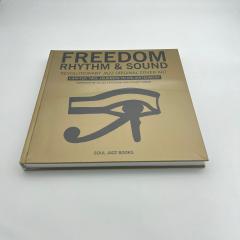
Freedom, Rhythm and Sound showcases the stunning graphic works of independently published jazz record cover designs in the 1960s, 70s, 80s and beyond, from radical jazz musicians such as Sun Ra, John Coltrane, Pharoah Sanders, The Art Ensemble of Chicago and others. This second Freedom, Rhythm and Sound book is a new ‘chapter’, featuring hundreds more unique, rare and beautiful jazz record cover designs.
This book documents the continued development in jazz as African-American artists set out on new journeys to enlightenment, heading out into Europe at the end of the 1960s. The artwork of these (often self-produced) record cover designs during this era reflected their radical agenda, spiritual awareness and singular search for musical and personal freedoms. From raw, DIY aesthetics to lyrical and poetic illustrations, sometimes containing futuristic worlds and ancient landscapes, the designs are always bold, strikingly graphic, and most importantly capture the spirit of the music, giving them a unique beauty. The book also includes sections on African-American poets and writers, Civil Rights and Black Power Movement leaders (Martin Luther King, Malcolm X) and early musical pioneers (Yusef Lateef, Max Roach, Art Blakey and others), all of which helped influence and shape the world of radical and spiritual jazz from the 1960s and onwards to its rebirth today. Since the 1980s, Gilles Peterson has been a pivotal figure in the club scene, renowned for his genre-defying approach to music with jazz at its core. As one of the UK’s most iconic DJs, he has spent over 40 years shaping music trends as a radio presenter, club DJ, producer, and festival curator.
He hosts a flagship show on BBC Radio 6 Music and, in 2016, launched Worldwide FM. He is founder of the Worldwide Festival in the South of France and We Out Here festival in the UK. He runs the label Brownswood Recordings, dedicated to discovering and promoting new talent and bringing fresh voices to the global stage. Stuart Baker founded Soul Jazz Records in 1992. For more than 30 years the record company has released over 500 records covering a genre-defying array of non-mainstream musical worlds – Jazz, Reggae, Punk, Latin, Brazilian, Disco, African, Gospel, Acid House and more.
In 2017, part of Stuart Baker’s jazz record collection (much of which appears in Freedom, Rhythm and Sound) was featured and displayed as part of the Soul of a Nation: Art in the Age of Black Power exhibition at Tate Modern in London, and subsequently at The Broad in Los Angeles (2019) and Brooklyn Museum (2019). Soul Jazz Books launched in 2007, a similarly diverse and critically acclaimed publishing house with graphic art, culture and photography titles that include ‘Voguing and The House Ballroom Scene of New York’, ‘Dancehall – The Rise of Jamaican Dancehall Culture’, ‘Yo! The Early Days of Hip-Hop’, ‘Freedom, Rhythm and Sound – Revolutionary Jazz Cover Art 1965-83’, ‘Punk 45 – The Singles Cover Art of Punk 1976-80’ and others. Reviews of the first Freedom, Rhythm and Sound: “A remarkable book” The New Yorker “If there can be such a thing as a revolutionary coffee table book, Freedom Rhythm & Sound is it―a chance to wallow in the Afrocentric visual language of the non-mainstream black jazz vinyl of this extraordinary fertile and creative period.” Eye “Like the uncompromising music they represent, all the covers broadcast a sense of bold, brazen ideology” Pitchfork “A definitive account of a complex passage of cultural upheaval.” The Independent “For decades, no one was sure how to refer to this extraordinary music.
Calling it ‘fire music’ does justice to its incandescent spirit, still burning from the pages of a book that preserves the memory of a special time.” The Guardian “These sleeves are the original independent legacy to America’s premier art form – Jazz. In terms of African-American cultural expression they are part of a long line of thought that was charged in the 1960s by John Coltrane, Martin Luther King, Ornette Coleman, Malcolm X and others” The Wire “A hefty compendium of radical jazz cover art” Mojo
Commandez maintenant et nous commanderons l'article pour vous chez notre fournisseur.

Jade Hairpins waste no time fulfilling their second album's titular demand. From its harmony-drenched opening note to its baroque-anthemic conclusion, Get Me the Good Stuff is positively loaded with musical ideas, an absurdist buffet of sound and aesthetic that comes with one hell of a floorshow as the Hairpins stack those ideas higher and higher, almost daring them to crash to the floor. Instead, those elements_punksploitation, power pop, baggy, funk, and Italo disco are just some touchstones_are not only held aloft, they defy gravity and convention. These pyrotechnics are, in true Jade Hairpins fashion, something of a sleight of hand. While the music swaggers and gallops, Get Me the Good Stuff grapples with anxiety and self-doubt, obfuscating pain and alienation with sparkling wit and some straight-up ravers. Get Me the Good Stuff opens with one of those, "Let It Be Me," in which Jonah Falco shouts lyrics about being alone with one's shortcomings against guitars, synths, and harmonized vocals that are on the verge of closing in. The song is just over 90 seconds long, hitting with the gnarled-barb ferocity of punk and the gleeful insanity of theatrical art rock. It is, in other words, overwhelming. Or it would be if Jade Hairpins_Jonah Falco and Mike Haliechuk_weren't remarkably nimble in their ability to bring unity to sounds by placing them in competition against each other. When those sounds are adjacent, like the glam and disco that saturate "Drifting Superstition," the thrill of those universes colliding in the heat of an absolutely filthy clavichord line turns its lyrics, about the habit of solving personal problems by ignoring them, into a winner's anthem on the order of Bowie or Hot Chocolate. Get Me the Good Stuff arcs towards unequivocal joy as Falco, Jade Hairpins' primary lyricist, breaks these cycles and attempts to run away with his dreams. The arc is roughly analogous to how the album came to fruition. Four years removed from Harmony Avenue, an album of material that proved too strong to be contained within the narrative universe of Fucked Up's Dose Your Dreams, Jade Hairpins have gelled as a live act_with Tamsin M. Leach and Jack Goldstein centering them on stage_and planted their flag in the UK punk scene in which Falco has embedded himself. Working out new material live, Falco noticed that crowds were digging into his unfinished lyrics, and the album tightened around the anxieties of being in the spotlight, of being worthy of attention. At times, those songs are eager to please, like the album's title track in which a winking self-deprecation rubs up against the self-congratulatory bombast of Freddie Mercury, Falco simultaneously turning heads as a shooting star and a burning car. Elsewhere, as in "Better Here Than in Love," Jade Hairpins pitch themselves towards creating gorgeous soundscapes that exist nowhere else, channeling postpunk through the glimmering haze of '80s Japanese electronic music. Theatrical and personal, absurd and true-to-life, playful and serious, Get Me the Good Stuff is album of tremendous personal and artistic growth that signposts towards dozens of potential futures to come. It's not only worth the attention, it continuously rewards it.
il devrait être publié sur 13.09.2024

Jade Hairpins waste no time fulfilling their second album's titular demand. From its harmony-drenched opening note to its baroque-anthemic conclusion, Get Me the Good Stuff is positively loaded with musical ideas, an absurdist buffet of sound and aesthetic that comes with one hell of a floorshow as the Hairpins stack those ideas higher and higher, almost daring them to crash to the floor. Instead, those elements - punksploitation, power pop, baggy, funk, and Italo disco are just some touchstones - are not only held aloft, they defy gravity and convention. These pyrotechnics are, in true Jade Hairpins fashion, something of a sleight of hand. While the music swaggers and gallops, Get Me the Good Stuff grapples with anxiety and self-doubt, obfuscating pain and alienation with sparkling wit and some straight-up ravers. Get Me the Good Stuff opens with one of those, "Let It Be Me," in which Jonah Falco shouts lyrics about being alone with one's shortcomings against guitars, synths, and harmonized vocals that are on the verge of closing in. The song is just over 90 seconds long, hitting with the gnarled-barb ferocity of punk and the gleeful insanity of theatrical art rock. It is, in other words, overwhelming. Or it would be if Jade Hairpins - Jonah Falco and Mike Haliechuk - weren't remarkably nimble in their ability to bring unity to sounds by placing them in competition against each other. When those sounds are adjacent, like the glam and disco that saturate "Drifting Superstition," the thrill of those universes colliding in the heat of an absolutely filthy clavichord line turns its lyrics, about the habit of solving personal problems by ignoring them, into a winner's anthem on the order of Bowie or Hot Chocolate. Get Me the Good Stuff arcs towards unequivocal joy as Falco, Jade Hairpins' primary lyricist, breaks these cycles and attempts to run away with his dreams. The arc is roughly analogous to how the album came to fruition. Four years removed from Harmony Avenue, an album of material that proved too strong to be contained within the narrative universe of Fucked Up's Dose Your Dreams, Jade Hairpins have gelled as a live act - with Tamsin M. Leach and Jack Goldstein centering them on stage - and planted their flag in the UK punk scene in which Falco has embedded himself. Working out new material live, Falco noticed that crowds were digging into his unfinished lyrics, and the album tightened around the anxieties of being in the spotlight, of being worthy of attention. At times, those songs are eager to please, like the album's title track in which a winking self-deprecation rubs up against the self-congratulatory bombast of Freddie Mercury, Falco simultaneously turning heads as a shooting star and a burning car. Elsewhere, as in "Better Here Than in Love," Jade Hairpins pitch themselves towards creating gorgeous soundscapes that exist nowhere else, channeling postpunk through the glimmering haze of '80s Japanese electronic music. Theatrical and personal, absurd and true-to-life, playful and serious, Get Me the Good Stuff is album of tremendous personal and artistic growth that signposts towards dozens of potential futures to come. It's not only worth the attention, it continuously rewards it.
il devrait être publié sur 13.09.2024

2024 Reissue
Limited Clear w/ Silver Splatter vinyl. 15 years after the band's debut album was release, Sargent House is set to do a special anniversary re-issue with updated artwork and limited-edition clear w/ silver splatter vinyl with Silver/Red foil jacket available. Upcoming tour dates include multiple festival appearances and a UK/EU headline tour in August. 12th Nottingham Rescue Rooms, 13th Manchester Gorilla, 14th London Underworld, 15th Bristol ArcTanGent. For Fans of Fu Manchu / Melvins. This the debut is being repressed. Red Fang is the formation of long time friends and collaborators Bryan Giles (Last of the Juanitas, Party Time), Aaron Beam (Dark Forces, Lachrymator), David Sullivan (Party Time, facedowninshit, Shiny Beast) and John Sherman (Party Time, Bad Wizard, Trumans Water, All Night). Unleashed on New Year's Eve of 2006 in Portland, Oregon, Red Fang stormed out of the gates, introducing a sweaty, seething basement to a new kind of unforgettable fist-pumping, beer-chugging rock music. Since that night, the band has continued with the same intensity, energy, and intimacy to quickly become a touring juggernaut, playing shows all over the US with bands like The Melvins, Big Business, and The Sword, to name just a few. Residing somewhere between Black Flag and Black Sabbath, Red Fang recall a time when rock was more urgent and horrifying. Synthesizing a variety of heavy music influences into their own distinct musical identity, the band easily shifts from barn-burning punk to mid-tempo, hyper-distorted bass destruction all while maintaining a cohesive sound. Red Fang create gigantic rock songs that are easy to listen to (not easy listening, mind you) and qualify the simultaneous usage of both the thinking and the banging head, which are usually mutually exclusive. Their instrumentation is fluid and effortless, and the vocals are delivered melodically and forcefully, with enough rasp and effect saturation to fit nicely within the music. Paired with elemental imagery, the lyrics are immense and satisfying without any pretense.
il devrait être publié sur 07.06.2024

From her first single "Muscles" in 2012 to her new album Nini, through numerous collaborations (Sabrina Bellaouel, Chassol, Varnish La Piscine, Hubert Lenoir, etc.), singer-songwriter Bonnie Banane crosses the French musical landscape with a pace that's all her own. With alchemical brilliance, she sets out to reconcile the most opposing realities: cold death, burning passion, and all those timid in-betweens to whom few songs are dedicated. Inspired by what surrounds her, her own story and those of others, between the surreal poetry of Brigitte Fontaine and the gospel of D'Angelo, she cultivates the art of being enigmatic, sexy and eccentric. Nourished by life, her music returns to it: on stage, it's between the exuberance of the clown and the dignity of the mourners that she teaches us to dance with doubt, laugh with gloom, forming the unexpected soundtrack of our lives. With her second album, Nini, Bonnie dedicates herself in a new way to the delicate art of doing what she likes. She chooses to extend the spectrum, finding her own signature in the most uninhibited of eclecticisms.
il devrait être publié sur 05.04.2024

In July of 2022, just one month before jaimie branch"s death sent shockwaves around the world, the trumpet player and composer was in Chicago at International Anthem (IARC) studios putting finishing touches on an album. It was a suite of music she had composed and then recorded with her flagship ensemble, Fly or Die, over the course of a residency at the Bemis Center for Contemporary Arts in Omaha, Nebraska. In her wake, the album was near complete, with only mixing tweaks, final titles, and artwork to be fully realized. In the months following, her family (led by sister Kate Branch), her band (Jason Ajemian, Lester St. Louis, and Chad Taylor), and her collaborators at IARC (engineers Dave Vettraino and David Allen, comrades Alejandro Ayala and Scott McNiece) banded together to gather memories, texts, emails, photographs, artwork and fragments belonging to jaimie to light the path forward. The goal was always to do what jaimie would have done. Packaged in stunning artwork by John Herndon, Damon Locks, and branch herself, Fly or Die Fly or Die Fly or Die ((world war)) is jaimie"s final album with the quartet.
Commandez maintenant et nous commanderons l'article pour vous chez notre fournisseur.

For more than 30 years, singer-songwriter and guitar hero Mary Timony has cut a distinctive path through the world of independent music, most recently as vocalist and guitarist of acclaimed garage-pop power trio Ex Hex (Merge) but also as a member of seminal postpunk band Autoclave (Dischord), celebrated leader of the deeply influential Helium (Matador), multifaceted solo artist (Matador, Lookout!, Kill Rock Stars), and a co-founder of supergroup Wild Flag (Merge). Described by Sleater-Kinney's Carrie Brownstein as "Mary Shelley with a guitar" and dubbed "a trailblazer and an innovator" by Lindsey Jordan a.k.a. Snail Mail, Timony has distinguished herself as one of her generation's most influential. Although she has remained a cult hero and critical favorite since the early '90s, Timony's many triumphs have long been counterbalanced by crippling doubt and self-nullification. Her fifth solo album, Untame the Tiger, approaches these emotions head on. Her first solo release in 15 years is a startling document of an artist fully coming into her own power during the fourth decade of her career. It is the product of lessons learned during life-altering struggle. The mystical, acoustic-driven Untame the Tiger emerged after the dissolution of a long-term relationship and was bookended by the deaths of Timony's father and mother. The album was recorded during a two-year period during which she was the primary caregiver for her ailing parents. The tectonic psychic shift Mary experienced due to this loss informs many of her lyrics. Standout track "No Thirds" "is a song about losing everything and having to keep on going," says Timony. "I wanted the verses to sound like a wide-open barren space, like driving across a desert, because that is what the song is about - losing people and the feeling that your future is a giant, wide-open blank space." The stripped-back acoustic instrumentation of "The Guest" conjures Sweetheart-era Byrds. Timony describes it as a song sung directly to loneliness: "I was imagining loneliness as a house guest who keeps knocking on your door. I thought it would be funny to say loneliness is the only one who always comes back." Untame the Tiger does not eschew Timony's guitar hero reputation; in fact, "Summer" relishes in it, a straight-up banger that you'd be half tempted to call "no frills" until its initial garage rock stomp breaks into the unexpected bliss of a twin guitar solo conclusion. "I wanted the recording to have the energy of the Kinks, early Dio and Elf, or Rory Gallagher," she explains. "I was also listening to a lot of Gerry Rafferty's first solo album and was inspired to have two simultaneous guitar solos." Untame the Tiger picks up the thread woven through Timony's freak-folk-anticipating solo albums of the early '00s. Basic tracks were recorded at Studio 606 in Los Angeles, with Timony backed by Dave Mattacks, drummer of legendary British folk-rock band Fairport Convention. "Mattacks is a hero of mine and one of my favorite musicians of all time. He is a true legend. I never in a million years thought he'd agree to play on my record," says Timony. "Before the session, I had a panic attack and had to go sit alone in the parking lot_ Once we started playing together, it felt so great that the fear subsided and turned into excitement. His playing felt instantly familiar, which makes sense because it's the foundation of many of my favorite records." Untame the Tiger was produced by Mary Timony, Joe Wong, and Dennis Kane. The album was recorded over the course of two years at Studio 606, Magpie Cage, 38North, and in Mary's basement Additional engineering by J. Robbins (Jawbox, Burning Airlines). Musicians include Chad Molter (Faraquet, Medications), David Christian (Karen O, Hospitality), and Brian Betancourt (Cass McCombs, Devendra Banhart, Hospitality). The album was mixed by Dave Fridmann (MGMT, The Flaming Lips, Mercury Rev), Dennis Kane, and John Agnello (Dinosaur Jr., Kurt Vile, Waxahatchee).
il devrait être publié sur 23.02.2024

For more than 30 years, singer-songwriter and guitar hero Mary Timony has cut a distinctive path through the world of independent music, most recently as vocalist and guitarist of acclaimed garage-pop power trio Ex Hex (Merge) but also as a member of seminal postpunk band Autoclave (Dischord), celebrated leader of the deeply influential Helium (Matador), multifaceted solo artist (Matador, Lookout!, Kill Rock Stars), and a co-founder of supergroup Wild Flag (Merge). Described by Sleater-Kinney's Carrie Brownstein as "Mary Shelley with a guitar" and dubbed "a trailblazer and an innovator" by Lindsey Jordan a.k.a. Snail Mail, Timony has distinguished herself as one of her generation's most influential. Although she has remained a cult hero and critical favorite since the early '90s, Timony's many triumphs have long been counterbalanced by crippling doubt and self-nullification. Her fifth solo album, Untame the Tiger, approaches these emotions head on. Her first solo release in 15 years is a startling document of an artist fully coming into her own power during the fourth decade of her career. It is the product of lessons learned during life-altering struggle. The mystical, acoustic-driven Untame the Tiger emerged after the dissolution of a long-term relationship and was bookended by the deaths of Timony's father and mother. The album was recorded during a two-year period during which she was the primary caregiver for her ailing parents. The tectonic psychic shift Mary experienced due to this loss informs many of her lyrics. Standout track "No Thirds" "is a song about losing everything and having to keep on going," says Timony. "I wanted the verses to sound like a wide-open barren space, like driving across a desert, because that is what the song is about - losing people and the feeling that your future is a giant, wide-open blank space." The stripped-back acoustic instrumentation of "The Guest" conjures Sweetheart-era Byrds. Timony describes it as a song sung directly to loneliness: "I was imagining loneliness as a house guest who keeps knocking on your door. I thought it would be funny to say loneliness is the only one who always comes back." Untame the Tiger does not eschew Timony's guitar hero reputation; in fact, "Summer" relishes in it, a straight-up banger that you'd be half tempted to call "no frills" until its initial garage rock stomp breaks into the unexpected bliss of a twin guitar solo conclusion. "I wanted the recording to have the energy of the Kinks, early Dio and Elf, or Rory Gallagher," she explains. "I was also listening to a lot of Gerry Rafferty's first solo album and was inspired to have two simultaneous guitar solos." Untame the Tiger picks up the thread woven through Timony's freak-folk-anticipating solo albums of the early '00s. Basic tracks were recorded at Studio 606 in Los Angeles, with Timony backed by Dave Mattacks, drummer of legendary British folk-rock band Fairport Convention. "Mattacks is a hero of mine and one of my favorite musicians of all time. He is a true legend. I never in a million years thought he'd agree to play on my record," says Timony. "Before the session, I had a panic attack and had to go sit alone in the parking lot_ Once we started playing together, it felt so great that the fear subsided and turned into excitement. His playing felt instantly familiar, which makes sense because it's the foundation of many of my favorite records." Untame the Tiger was produced by Mary Timony, Joe Wong, and Dennis Kane. The album was recorded over the course of two years at Studio 606, Magpie Cage, 38North, and in Mary's basement Additional engineering by J. Robbins (Jawbox, Burning Airlines). Musicians include Chad Molter (Faraquet, Medications), David Christian (Karen O, Hospitality), and Brian Betancourt (Cass McCombs, Devendra Banhart, Hospitality). The album was mixed by Dave Fridmann (MGMT, The Flaming Lips, Mercury Rev), Dennis Kane, and John Agnello (Dinosaur Jr., Kurt Vile, Waxahatchee).
il devrait être publié sur 23.02.2024

Their notoriously fierce live performances are only going from strength to strength, with Wolf Alice inviting her on their extensive 2021 UK tour having witnessed the energy of their show.
Her stagecraft also caught the eyes of legendary fashion house Alexander McQueen, becoming creative director Sarah Burton's recent muse. Having recently closed their flagship runway show at London Fashion Week, the band also partnered with McQueen for a campaign this summer which captured them taking to the stage in Glasgow's legendary and glitzy Barrowland Ballroom.
Oozing confidence and ready for what lies ahead, 2023 feels like a defining year for Lucia & The Best Boys.
il devrait être publié sur 13.10.2023
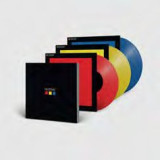
Im November 2021 startete De Staat sein Projekt „red yellow blue“. Nach mehr als 1,5 Jahren wird das Projekt im Juni 2023 seinen Höhepunkt erreichen und in voller Länge veröffentlichen. Dazu gehören Songs wie: “Who’s Gonna Be The GOAT?” (yellow), “Look At Me” (red) und “Running Backwards Into The Future” (blue).
Während der Pandemie gab es mehr Ruhe und Raum, um gemeinsam an neuen Songs zu arbeiten. Während des Entstehungsprozesses bemerkten De Staat verschiedene Stile in ihren Demos wieder - alle mit dem erkennbaren, eigenen Sound. Nachdem die ersten Songs fertig waren, wurden sie der Einfachheit halber in Primärfarben unterteilt. Diese drei Farben stehen für Gemütszustände: Rot für die dunkle Seite, Gelb für unbeschwerte, tanzbare Songs und Blau für Melancholie. Zusammen bilden sie das gesamte Spektrum
dessen ab, was De Staat im Moment ausmacht. Sobald sie das erkannt hatten, konnten sie die Grenzen innerhalb dieses Rahmen erweitern.
Während Torre schon immer den Großteil der Musik geschrieben hat, war die Band mehr als früher am Schreiben neuer Songs beteiligt. So entstanden Stücke, die sonst nicht geschrieben worden wären. Andrew Scheps ist der Mischtechniker dieser Songs. Er erhielt Grammy-Auszeichnungen für seine Arbeit an Red Hot Chili Peppers „Stadium Arcadium“, „21“ von Adele und „Fly Rasta“ von Ziggy Marley.
il devrait être publié sur 02.06.2023

'My Echo, My Shadow, My Covers and Me' is a fiercely collaborative and celebratory project. An eclectic collection of masterfully crafted and carefully curated covers, each track features at least one acclaimed musical artist. It includes epic re-imaginings of classics such as 'Wind Of Change' by Scorpions, 'Take A Chance On Me' by Abba and 'Beds Are Burning' by Midnight Oil. It features collaborations with artists like Portugal the Man, Brandon Boyd of Incubus, Jewel, Beck, Taylor Hanson and more. It will be available on one-of-a kind recycled coloured vinyl, mystery coloured cassette and CD.
il devrait être publié sur 23.12.2022

'My Echo, My Shadow, My Covers and Me' is a fiercely collaborative and celebratory project. An eclectic collection of masterfully crafted and carefully curated covers, each track features at least one acclaimed musical artist. It includes epic re-imaginings of classics such as 'Wind Of Change' by Scorpions, 'Take A Chance On Me' by Abba and 'Beds Are Burning' by Midnight Oil. It features collaborations with artists like Portugal the Man, Brandon Boyd of Incubus, Jewel, Beck, Taylor Hanson and more. It will be available on one-of-a kind recycled coloured vinyl, mystery coloured cassette and CD.
il devrait être publié sur 29.07.2022

'My Echo, My Shadow, My Covers and Me' is a fiercely collaborative and celebratory project. An eclectic collection of masterfully crafted and carefully curated covers, each track features at least one acclaimed musical artist. It includes epic re-imaginings of classics such as 'Wind Of Change' by Scorpions, 'Take A Chance On Me' by Abba and 'Beds Are Burning' by Midnight Oil. It features collaborations with artists like Portugal the Man, Brandon Boyd of Incubus, Jewel, Beck, Taylor Hanson and more. It will be available on one-of-a kind recycled coloured vinyl, mystery coloured cassette and CD.
il devrait être publié sur 03.06.2022

This the debut is being repressed for the first time in a few years. Red Fang is the formation of long time friends and collaborators Bryan Giles (Last of the Juanitas, Party Time), Aaron Beam (Dark Forces, Lachrymator), David Sullivan (Party Time, facedowninshit, Shiny Beast) and John Sherman (Party Time, Bad Wizard, Trumans Water, All Night). Unleashed on New Year's Eve of 2006 in Portland, Oregon, Red Fang stormed out of the gates, introducing a sweaty, seething basement to a new kind of unforgettable fist-pumping, beer-chugging rock music. Since that night, the band has continued with the same intensity, energy, and intimacy to quickly become a touring juggernaut, playing shows all over the US with bands like The Melvins, Big Business, and The Sword, to name just a few. Residing somewhere between Black Flag and Black Sabbath, Red Fang recall a time when rock was more urgent and horrifying. Synthesizing a variety of heavy music influences into their own distinct musical identity, the band easily shifts from barn-burning punk to mid-tempo, hyper-distorted bass destruction all while maintaining a cohesive sound. Red Fang create gigantic rock songs that are easy to listen to (not easy listening, mind you) and qualify the simultaneous usage of both the thinking and the banging head, which are usually mutually exclusive. Their instrumentation is fluid and effortless, and the vocals are delivered melodically and forcefully, with enough rasp and effect saturation to fit nicely within the music. Paired with elemental imagery, the lyrics are immense and satisfying without any pretense.
il devrait être publié sur 07.01.2022

VERY LIMITED COPIES OF THIS PREVIOUSLY RSD U.S. ONLY RELEASE
Engine Kid, the post hardcore collective featuring Greg Anderson (Southern Lord label owner, also in Sunn O))), Goatsnake & Thorr's Hammer) announce a special Record Store Day 6 x LP box set release Everything Left Inside, featuring the Novocaine/Astronaut 12 inch, Bear Catching Fish 2xLP, Angel Wings 2xLP and Split w/ Iceburn / Everything Left Inside 12 inch.
Almost 30 years since the inception of Engine Kid and the trio find themselves comprehending the enormity of their creation, honouring and celebrating the mountains they formed and the canyons they created.
Engine Kid was born in Seattle, WA 1991. The band's original lineup consisted of guitarist/vocalist Greg Anderson (Southern Lord, Sunn O))), Thorr's Hammer, Goatsnake), drummer Chris Vandebrooke & bassist Art Behrman. The three had all been in hardcore/punk bands around town and all had a burning desire to create a sound that was unlike anything they had done in the past. After just a few months of existence they quickly recorded and self-released the Novocaine 7”. Circa 92’ a close friend and bassist Brian Kraft (Krafty) replaced Behrman, and at that moment the entire aesthetic and execution of sound became heavier, darker and extremely dynamic. The power trio was picked up by local label C/Z records and set out upon recording the new music they were quickly creating. In 1993 the band had two releases on C/Z; their first offering was the Astronaut five song EP recorded by John Goodmanson. The songs were primitive and exemplified the bands worship of Slint and their loud/quiet song dynamic In the summer of 93’ the band drove all the way to Chicago to record with their hero Steve Albini in the basement of his house. They emerged with the eight song album they called: Bear Catching Fish. Albini intuitively captured the band exactly as they were at that moment: raw, vulnerable and mammoth.
Shortly after the albums’ release Jade Devitt replaced Vandebrooke on drums. This transition was extremely crucial in the “second phase” of the group. Devitt was an absolute beast and his power helped launch the band miles beyond where they had ever been before. The sound of “The Kid” started to transform into a sound much more of their own. The three dudes were hellbent on pushing the bounds of sonic exploration to its absolute fullest. Suddenly there was an abundance of depth within the sounds they were creating. Eclectic influences of punk/hardcore (Black Flag, Die Kreuzen), Metal (Entombed, Carcass) and even jazz (Mahavishnu Orchestra, Miles Davis electric era) were in a full collision course with the already dynamically heavy foundation of the band. The levee had broken and the resulting flood of sound completely saturated everything in its path.
Engine Kid toured relentlessly. They were constantly on the road playing every nook and cranny they possibly could. Any moment not spent on the road was instead spent focused on making their new material as potent as possible. Early in 94' the band decided to pay homage to their mutual love of jazz/fusion and recorded three instrumental pieces that would become a split album with like minded powerhouse Iceburn. The Engine Kid/Iceburn album showcased each group's love of jazz loosely framed by the intense enthusiasm of underground music. The album was released by Revelation records in 1994.
During the summer of 94’ the band reconvened with producer John Goodmanson at Bad Animals & AVAST! studios to record the new material that was literally bleeding out of the reinvigorated trio. These recorded songs were much more progressive, heavier, harder and more focused than past works. They even tackled John Coltranes’ “OLE” adding saxophone and trumpet from their brothers in Silkworm. In March of 1995, Revelation Records released these recordings as the Angel Wings album. Unfortunately "the Kid" flew too close to the sun and broke up very shortly after the album's release.
Everything Left Inside 6xLP box set (RSD release) includes:
LORD 288.1 Engine Kid-“Novocaine/Astronaut” 12”
LORD 289 Engine Kid-Bear Catching Fish 2xLP
LORD 290 Engine Kid-Angel Wings 2xLP
LORD 288.2 Engine Kid-Split w/ Iceburn /Everything Left Inside 12”
16-page color photo/liner note booklet.
il devrait être publié sur 24.09.2021

The Bright Lights of America is the seventh album released by American punk rock band Anti-Flag. Released in 2008, the album marked a change in the band’s sound: although still very much punk, the album is their first to feature a string section and child choirs. Two singles were released from the album: both the title track and “The Modern Rome Burning”. Other popular songs from this album are “Good And Ready”, “Spit In The Face” and “Vices”. Produced by Tony Visconti, Anti-Flag sounds fiery and angry as ever on this album.
il devrait être publié sur 10.09.2021

No one album could ever capture the claustrophobia-to-catharsis of an Eyehategod show, but this compilation of live tracks and demos comes as close as it gets. Giving you an idea of Eyehategod’s uncompromising, single minded purity of expression and exertion of raw nerve, “10 Year Of Abuse” is a monumental document all the way from the demo era to their later, legendary relentless live tour set. Many other bands have tried unsuccessfully to emulate Eyehategod and have never quite captured their dynamic. Formed in 1988 in New Orleans they have become one of the most well known bands to emerge from the NOLA metal scene. Eyehategod note bands like Melvins, The Obsessed, Discharge, Black Flag, Black Sabbath and Saint Vitus as major influences, but are often mentioned in the same breath as any of these legendary bands. Drawing comparisons to Grindcore, Crust Punk and Sludge Metal, their heavy bluesy, detuned rock and roll has been a lynchpin for the misanthropic and disenfranchised. Eyehategod has released five studio albums to date with a sixth in the works and have toured all over the world in a career spanning over thirty years. Though the band has never released a live album, we are left with “10 Years” as the only official witnessing document to decades of decimating live sonic abuse. Released on May 29, 2001, “10 Years” spans seven live tracks from their European tour in 2000, a live radio show from August 1994 and four songs from an early 1990 demo. The result is a feedback-laced window into that wonderful, brutal Eyehategod “sound”, that addictive, lower-than-low note that nestles somewhere in the pit of your burning, alcohol-soaked, nauseated stomach. The booklet alone is a delight for anyone who worships at the altar of Eyehategod’s oppressively heavy, crushing riffs.
il devrait être publié sur 21.05.2021

il devrait être publié sur 07.05.2021

The Bright Lights of America is the seventh album released by American punk rock band Anti-Flag. Released in 2008, the album marked a change in the band’s sound: although still very much punk, the album is their first to feature a string section and child choirs. Two singles were released from the album: both the title track and “The Modern Rome Burning”. Other popular songs from this album are “Good And Ready”, “Spit In The Face” and “Vices”. The song “Wake Up The Town” features guest vocals by Billy Talent-songer Benjamin Kowalewicz. Produced by Tony Visconti, Anti-Flag sounds fiery and angry as ever on this album. This is a limited edition of 500 individually numbered copies on solid red vinyl. The lp’s are housed in a gatefold sleeve with a deluxe leather laminate finish, and contains a double-sided poster with lyrics and liner notes.
il devrait être publié sur 30.04.2021

Commandez maintenant et nous commanderons l'article pour vous chez notre fournisseur.
