In late-1970s Japan, a new and unique “genre” called techno kayō emerged, blending catchy pop melodies with the futuristic sounds of synthesizers and drum machines. Rooted in the older kayōkyoku style, it was influenced by European electronic acts like Kraftwerk, but had a distinctly Japanese flair. Artists such as Yellow Magic Orchestra pioneered this retro-futuristic sound, creating music that felt both nostalgic and ahead of its time.
Dubby, owner of the legendary record shop Ondas in Tokyo, was one of the first to make Japanese music available to the outside world. He has teamed up with Antal, co-founder of the Amsterdam-based, Rush Hour Records, to release the first in a series of compilations.
Artwork from Johann Kauth (Stenze Quo)
TECHNO KAYO
Suche:but
Metallic Print Sleeve
Johnny Sais Quoi releases his debut release on Music From Memory - a 7-track LP entitled ‘Love On Ice.’ Channelling the spirit of Italo-pop and New Wave, ‘Love On Ice’ was crafted in the whirlwind of spontaneity and energy that changing circumstances often bring. Born from transition and exploring themes of leaving, arriving, coming together, and breaking up, ‘Love On Ice’ serves as an outlet to process, escape, and celebrate the challenges of a new life.
Johnny crafts exquisite dancefloor-focused pop—familiar yet unique, imbued with his own touch, a distinctive sensibility, and a knack for infectious hooks. The opener, ‘No Guilty Pleasures,’ sets the tone immediately as Johnny works his magic with a palette of synths, drum machines, picked guitar, and processed vocals. The title track, ‘Love On Ice,’ delivers a classic Italo-infused dancefloor bomb, featuring a driving synth bass line overlaid by hypnotic arpeggios. There is much here for the dancer, but ‘Love On Ice’ also ventures beyond the dance floor; the closing tracks ‘Ref 23’ and ‘Let's Find A Home’ are prime examples, both showcasing Johnny’s depth and range with their melancholic, mellow atmosphere.
DJ Support: DJ Harvey, Kelvin Andrews/ Balearic MIke (Down to the Sea and Back), Howler (Pikes/Totem Projects) Joe Morris (Shades of Sound/Pikes)
New vinyl only 4 track EP of reinterpretations on the fledgling Oswego Music label, from the mysterious Lovehandles.‘Unrequited Dub’ sees a quintessential eighties tune and Larry Levan favourite reframed as an epic 11 minute balearic slow jam- with scarce copies available digitally getting plays in recent months from Kelvin Andrews/ Balearic Mike (Down to the Sea and Back), Howler (Pikes/Faith/Totem Projects) Joe Morris (Shades of Sound/Pikes) and even Mr Harvey Bassett seeking out a copy. One for sunsets and heartbreak. Next up-‘Stars before the Sun’ is a recut of a thrift store Hare Krishna disco funk cut. WIth solina strings, drum breaks and a positive message to live for now. ‘Crystal Lites’ first on the flip; heads to the disco. Versioned here with whacked out pinging delays and reverbs. It’s been reworked before, but never like this. ‘It’s a Long Shot’ second on side two, is a 12” mix that never was- an eighties Balearic drum machine pop favourite,extended for djs. Its ethereal vocals, minor keys and spaced out fx perfect for late nights and early mornings. ‘The Drum-Set (skit)’ rounds things off here- a short and sweet reminder of the international, multiracial origins of rhythm. Perfect for mixtape intros and interludes.
Unearthed from the Crammed Discs vaults after nearly four decades (Originally recorded in 1987), a hidden gem finally sees the light. Maurice Poto Doudongo’s The Lost Album arrives on vinyl for the first time—limited to 500 copies, with printed inner sleeve featuring release notes and photographs.
Back in the hazy margins of late-’80s Brussels, where boundary-blurring sounds were seeping through the cracks of pop music, a young autodidact named Maurice Poto Doudongo was crafting music that didn’t quite belong to any scene. Born in Kinshasa and growing up in Belgium, Maurice was a sonic nomad—raised on Franco, Miriam Makeba, and Tabu Ley Rochereau, transfixed by James Brown and Prince, and shaped by the fertile collision between African music and experimental electronics occurring all around him.
Leaving school at 16 to concentrate on music full-time, he began recording on borrowed 4-tracks, using cardboard boxes for percussion, and absorbing whatever sounds the airwaves served him: “Music has no frontier,” he says. “You take what you like. Prince, Fela, Papa Wemba—there is no contradiction. It’s all part of the sound.”
The result? A record that’s equal parts analog drum machine funk, homegrown Afro-pop futurism, and new wave R&B-informed synth poetry. Marc Hollander, founder of Crammed Discs, met Maurice through his friend and associate, musician/producer Vincent Kenis and quickly recognized the spark. The two began working in earnest, preparing tracks intended for a full-length release that, for reasons lost to time and memory, never materialized—until now.
Marc remembers: “The album was never completely finished. “Bolingo” was the only track that came out on a Crammed compilation at that time… and the rest sat on the shelf for decades until we started opening the Crammed vaults.”
Maurice recalls the session as being, “like an unstoppable current”. Listening now, the Lost Album feels both of its time and well beyond it. While tracks like “Momo” sound not a million miles away from the slinky and sophisticated Balearic pop ambience of Wally Badarou’s Echoes album, "Passport Train" shakes itself loose of any genre boundaries, veering into free-form Afro-electronica and tough electronic rhythm. Others pulse with a sweet and soulful groove that suggests dance floors dreamed of but never reached.
In decades hence, Maurice never left music, and the music never left him. Now working mainly as an arranger, he describes his job as being like that of a musical psychologist: “Someone comes to me with their sound, and before anything I have to understand their mind and heart,” he explains. That same intuitive fluency can be heard across this entire album—music that listens before it speaks, that absorbs before it asserts.
This reissue is more than a remastering. It’s a second breath. Sourced from cassette roughs and 24-track demos, carefully restored with Maurice’s blessing, and released as a complete album on vinyl for the very first time, The Lost Album isn’t lost anymore.
It just took nearly 40 years to find its way to you. - Editions de Lux
Introducing OBI02 – Plight of the Gifted EP by TB Shine, the second release on
Dutch-label OBI Trackz.
Operating under various aliases since the early 2000s, TB Shine is one of the many expressions of Norwegian artist Terje Bakke. Plight of the Gifted EP holds five tracks that drift between hypnotic minimalism and raw percussive workouts, told through disjointed rhythms, haunting atmospheres, and layered tension.
The A side kicks off with Dopamine Dungeon—a slippery, low-end-driven roller wrapped in hazy textures and unstable euphoria. The track traps the listener in a quirky haunt, like the title describes accordingly. Red Army Moody Troopers follows with a tougher edge: straight drums, spectral pads, and an undercurrent of unrest. It’s a track that marches forward but never fully lands, suspended in an unresolved urgency.
On the B side, Plight of the Gifted appears in two versions. The original leans into emotional melodic motifs and fragmented structures, evoking both vulnerability and defiance. The Haunted Version strips things back further—bleeding with space, odd grooves, and a kind of post-club phychosis that lingers long after. Closing the EP is Plague Doctor, a slow-burning piece where a hopeful melody echoes and distant percussion round off the release with a sense of closure while being wrapped in a warm blanket.
With Plight of the Gifted EP, TB Shine offers a layered and personal collection— one that walks the tightrope between control and collapse, rhythm and mood. A fitting next step for Obi Trackz: cryptic, cinematic, and carved with intent.
Devianza, leading artist and owner of the label, returns to production by launching a new series of single-sided vinyl releases, each featuring only two tracks. The first instalment is a sonic catharsis rising from the very depths of a generous land, abundant with new seeds ready to sprout.
‘Le Piante di Elena’ is a dreamlike homage to a primordial world — untouched, pure, and still fertile. A tribute to a newborn bearer of the most radical values of a necessary humanism: a call to return to nature in its most spiritual and purest form. Devianza appears to be evolving into a higher, more spiritual dimension, where spirituality itself becomes the guiding force behind his musical production.
The single side opens with ‘Betullae’, a hypnotic ride between deep and leftfield, characteristic of Devianza’s sound, but this time enriched with an Indian tonal and modal flavour. Forest landscapes are traced by piano motifs that evoke interstellar journeys among endless birch trees.
‘Sunflower Sunset’ continues the hypnotic drift with a melodic crescendo that conjures the image of a sunflower field bathed in the warm glow of a summer sunset without wind. Here, where everything stands still yet everything is, this eight-minute piece becomes proof of the rarefaction of time — an instant that, though fleeting, feels infinite.
For fans of: Donato Dozzy, Voices From The Lake, Luigi Tozzi, Claudio PRC.
Related labels: Spazio Disponibile, Hypnus, Semantica, Silent Season.
On H008 Len Faki goes back to his crate for a unique journey through synth-led landscapes, carefully selected and bolstered up for the dancefloor.
Starting with 2000 And One - Edge Of No Return from the mid 2000s, when it was just a standout synth-line - no beats. The Hardspace Mix takes this masterclass in building tension, adds a driving beat and searing percussion while keeping the iconic synth-play intact -layered with big, booming bass for that full-bodied, dancefloor-ready energy.
The flip boasts two of longtime Figure-collaborator Viers' productions. Re-L, released almost 10 years ago, it delivered that unmistakable pulse of deep, dubby, shimmering synths. Hardspace picks up these potent elements and injects them with a new low-end, dramatic rises and tight rhythms, creating a high-energy yet hypnotic flow.
Equally energetic but much more brooding in atmosphere is the Hardspace version of Free Your Mind. An elusive original, this mix builds on dense percussion, subdued vocals and droning horns while carrying some seriously spaced-out acid synth textures. One for the wee hours and those special memorable moments in a set.
Initially founded in 2024 by Tantum, as an event series in Berlin, this new label will be the home for the music of its core artists Tantum & Hyunji-A, showcasing their music as well as hosting like-minded musicians. A platform for artists that dare to think differently.
Since our first release is so special to us, we decided to press KML001 as a vinyl, with a special edit to the tracklist exclusively for KMLV001.
A1 / Keep My Letters
What better way to start the label other than a very personal track that embodies our connection through music. We wrote this track in 2024 as a closing track for the first KML event where we hosted Guy J in Berlin.
Originally written in Montreal, we've managed to capture the magic in anticipation of something new. Hyunji-A's intimate Korean lyrics describe what this project stands for. We decided to keep it as close to the original sketch as possible - sometimes things don't have to be complicated.
A2 / Baires
Tantum's long sought-after 'Baires' will be part of KMLV001 as an exclusive gift to everyone supporting the vinyl release. A trippy and progressive track that was made, as the name suggests, in Buenos Aires. Capturing the vibrant feel of the city and the WeAreLost tour that inspired this track. Play it from start to finish, this record will make you move!
B1 / Keep My Letters (Simon Vuarambon Remix)
Simon is a close friend of ours and we could not think of anyone better to remix the title track for the label launch. He not only understands our vision but also puts his talent to use, crafting a soulful melodic twist on 'Keep MyLetters'. We are proud to call Simon our friend.
B2 / Mirror
This track is like the dark, evil twin of the title track. It was our first actual collab track, so of course it found its way on the debut EP . It's a proper secret weapon on the dancefloor. Try it out for yourself if you dare.
A record born of insurmountable joy and simultaneous profound loss; World Maker marks a time of great change for Psychonaut, both personally and musically, as the band burn away the philosophical narrative complexities of previous offerings with a searing, panoramic clarity that implores us to savour the beauty of the now as a means of leaving a legacy for the future. The traditional, three-piece line up of Belgian, psychedelic post-metal collective Psychonaut has long belied the compositional prowess, captivating narrative depth and crushing live presence of a band now operating at the forefront of forward-thinking, contemporary heavy music. Having sent a shockwave through the post-metal and prog scenes with their three times repressed Pelagic Records debut Unfold The God Man in 2020 before following it up with the transformative metaphysical complexities of 2022's Violate Consensus Reality, Psychonaut have played prestigious Belgian open-air festivals like Alcatraz, Rock Herk and Boomtown Festival as well as boutique events such as Soulcrusher, Roadburn Redux and A Colossal Weekend whilst sharing stages across Europe with the likes of Amenra, Brutus and Pelagic labelmates The Ocean and PG.Lost. The seed of World Maker took shape just as the campaign for Violate Consensus Reality came to a close, with the news that guitarist/vocalist Stefan De Graef was to become a father. This tilting of life's axis led De Graef, like most fathers-to-be, to re-assess what was really important. As such, the music he was inspired to write felt free of the band's previous philosophical and spiritual foundations and instead took the form of life lessons for his unborn son, a legacy of love in case something were ever to happen. This hopeful euphoria shines keenly throughout World Maker as an uncharacteristically optimistic warmth; from the reverberating Rhodes organ on the titular opening track and the meandering, free-jazz inspired guitar solo that introduces `Everything Else is Just The Weather' to elements of world music, electronica and the otherworldly voice of Dutch multi-instrumentalist and old friend Anthe Huybrechts (Anthe/Helion Creek) most notably on tracks like `Origins' which also features tabla, a pair of indian hand drums, as its propulsive heartbeat. Whilst Psychonaut's giant riffs, punishing polyrhythms and guttural vocal rage are more resplendent than ever, there is a wider dynamic spectrum to World Maker that sees the band proudly exploring their more delicate, intimate extremes as well as their most aggressive and abrasive. Not long after the birth of De Graef's son came the devastating news that both his own father and Psychonaut bassist/vocalist Thomas Michiels' father had been diagnosed with advanced cancers. Living day-to-day and torn between joy and grief, the band found themselves shedding the grand scope and world-shattering agenda of Violate Consensus Reality to focus on the here and now. Lead single `Endless Currents', the first full track on the album, explodes in a barrage of staccato guitar tapping but mellows to let the powerful, newly pared back lyrics ring out as a call to embrace the flow and follow joy. The song's final few words `Lead the way. / Soar. / Everlong.' double as both a greeting and a goodbye as the trio build their formidable post-metal might to a thunderous breaking point. Similarly, the pulsing, propellant `Stargazer', named so for De Graef's son being born in stargazer position, pairs delicate guitar motifs and folk-inflected optimism with huge and sprawling breakdowns as some of the band's most genre-pushing work to date; asking difficult but important questions of what happens next. It is `And You Came With Searing Light' though that most immediately exemplifies Psychonaut's redirected ambition on World Maker, as euphoria collides with blinding fury. The first track written for the album, `_Searing Light' is easily the most complex and initially wouldn't sound out of place on Violate Consensus Reality. Originally meant to be the new album's opening track; the decision to defer its impact, not to mention its compositional and dynamic gravity, speaks of a fundamental change to the band's very core. The words "Discover the world with wide eyes" recurring throughout speak as much to those having lost a part of their world as they do to those seeing it for the first time. Amidst such turbulent times, the band found strength and support within their Post-Metal community. The album was recorded and produced by the band alongside their longtime collaborator and close friend Chiaran Verheyden (Hippotraktor) with help and advice from Psychonaut's live engineer Victor, who will no doubt make this album sound just as awesome on stage. Even the artwork for World Maker was a family affair, being designed by close friend Sam Coussens of Belgian cosmic sludge metallers Pothamus. In the face of life's soaring highs and desolate lows, World Maker is direct and brave without sacrificing any of Psychonaut's raw power, creative innovation or inimitable musical depth. Where their previous full-length offerings have charted grand introspective courses through time and space, World Maker is breathtaking in its uncompromising clarity: a father singing to his newborn son as a son bids his own father farewell. FOR FANS OF Mastodon, Russian Circles, Tool, Gojira, The Ocean, Pelican, Hypno5e, Cult Of Luna, Amenra
El AMBIE—TÓN is back. The reference #002 is an exercise of Memory (Memoria), it is a place where the water blooms on the earth and the wind in the mountains. It is jungle and city. Mountain and noise. Imbalance and harmony. It is a lake in the sky, a forest between seas. A still cloud in la cordillera, a name that floats. This collaboration between Colombian Drone Mafia and Gibrana Cervantes is the beginning and end of a fragile geography, like the magic and mafia of our platanal.
But who is behind this new combo and bridge between South and Central America? CDM is the new alias of Nyksan, a Bogota-born techno-affiliated deejay and sound artist who is also one of the co-founders of TraTraTrax. From the other side, Mexican composer and violinist Gibrana Cervantes is one of the most outstanding string voices in the daring electronic music landscape in recent times. The duo's cabalistic work creates intricate and dark ambient, all woven around gut-moving sonorities. Colombian Drone Mafia dissolves the boundaries between synthesis and field recordings, crafting experimental yet primitive textures that infect listeners through the layered melodic spaces that Gibrana masters.
We cordially invite you to listen to this journey of immersive drones through vegetation and concrete jungle, music that is at times contemplative and at other times violent. Music framed between deep listening and deep boredom. A glimpse of the sound of the end.
Edition of 200 hand-numbered records, each housed in a custom Rosy womb French paper jacket with letterpress + a unique hand-cut found photo memory fragment on each cover with newsprint insert. Every copy has a different cover.
An archival release by short-lived post-punk, Brooklyn duo Möthersky. Xander Hing, with South African origins, vocals and guitar on Side A, bass + vocals on Side B. Richard Vergez, visual artist and Noir Age label owner, fuzz bass + drums on Side A and guitar + synths + drums on Side B. Played the Nothing Changes party in 2013. Shared bills with acts such as Cindytalk, Black Rain, Eric Random, Das Ding, and Drew McDowall.
Reviewed in The Wire magazine:
First single by this Brooklyn based duo named after the classic track on Can's Soundtracks LP. Their basic approach remains bottom-heavy in the vein of early Factory and 4AD units, but the guitar angles up top have gotten more slithery. Far less doom-ridden than their earlier work, this still stirs up dark waters aplenty. And it has a lovely package of which I think Peter Saville would approve."
-Byron Coley, The Wire
Black vinyl[13,03 €]
By the time of their second album, 1989’s ‘Unfinished Business’, EPMD were firmly cemented in the rap stratosphere. With one certified classic album under their belts, they proved they were no one-hit wonders, with the sequel possibly even better. A concise 12 tracker once again produced by the artists themselves, it saw them adhering to the ‘if it ain’t broke, don’t fix it’ maxim, while going somewhat ‘bigger’.
In other words, guests started to appear – not just on the records, but in the videos – and marketing budgets were higher. None of which watered down their sound. In fact, this is the ultimate EPMD record: a beat that’s simple but perfect, and two top-of-their-game MC’s going back and forth. But the appearance of NWA in the video for ‘The Big Payback’ hints at their reputation at the time – and at the cordial relations between coasts before the deadly beef that was to come.
‘Payback’ takes both its title and core sample from James Brown’s ‘The Payback’ from 1973, and then weaves two more JB elements with it, including the addictive stabs from ‘Baby, Here I Come’. It’s a golden track from the golden age.
The B-side is another gem from the same album, and only released before on 7” in a very rare, limited pressing. ‘So Wat Cha Sayin’ was the album’s lead single, and shows EPMD’s wide sampling palette. There’s bits of BT Express, a whole lot of Funkadelic and, brilliantly, some drums lifted from Soul II Soul’s gem from just the year before, ‘Fairplay’. Lyrically, it’s just all about threats to sucker’s MC’s – what else do you want from EPMD?
• A certified Hip Hop classic.
• Samples James Brown’s ‘The Payback’ from 1973.
Mr Thing : "Quick story and some background on the 45 of mine that Koco posted yesterday in his stories, some of you know about this but here’s the whole scoop!
Around the time Biz Markie’s second album was coming out Westwood used to play Tribute To Scratching Part 2 using all Jackson’s/Michael Jackson samples - absolutely amazing but never came out for obvious reasons. Fast forward a few years and I’m doing my debut set on the show and I asked about it and if I could get a copy - he was very cool about it but said he couldn’t let me have it, which was fair enough, although he DID play it on the show when it aired when he interviewed me. Fast forward a bit more and the Hot Chillin’ 12” comes out and even that is what sounds like a radio rip pressed on the record.
During this summer’s European tour with Junior Dell & The D-Lites, we were honoured to share the stage at This Is Ska Festival in Germany with none other than The Pioneers.
After the show, fate had me driving Jackie and George back to the hotel. On the way, we got to reminiscing about our last collaboration — Jump Up!, released on Original Gravity Records in December 2023. Mid-conversation, Jackie casually said: “Hey Neil, I’m in England all of July, we could record something.”
I dropped the guys off, said goodnight, but as soon as my head hit the pillow, an idea sparked: wouldn’t it be cool to have them record Jackie Edwards’ northern soul classic I Feel So Bad — but reimagined in an early reggae style?
So in July, we set up a session at Farm Factory Studios in Welwyn Garden City. George and Jackie came down, and it was nothing short of magical to hear these legends harmonising together once again in the booth. The result captures that late-60s moment when soul and reggae collided on dancefloors, raw and full of energy.
To add another dimension, we also created a version as if it had traveled from Kingston to London. The “Boss” version imagines the raw Jamaican master — while the A-side reflects how Trojan Records might have “sweetened it up” with horns and strings for the UK pop market.
Two sides, one timeless tune — a tribute to both the grit and the gloss of reggae’s golden era.
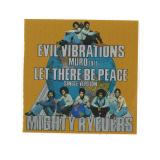
Mighty Ryeders
Let There Be Peace / Evil Vibrations (Muro edit)
Black Vinyl[21,43 €]
Although it was only reissued last year, that sold out in quick time, so now it lands once more but as a nice coloured pressing of The Mighty Ryeders' delightful single 'Let There Be Peace.' An OG is a rare and pricey collector's item and for good reasons - its scorching funk with big horns and raw rhythms. The B-side features 'Evil Vibrations' by MURO aka King Of Diggin', famously sampled by De La Soul in their brilliant 'A Roller Skating Jam Named Saturdays.' It's another timeless sound that pairs funk and soul into something as likely to get big reactions now as ever, not least because of how silky the groove is.
A – Raise & Risk – The Itch
A tiny camel keyring tossed around on a contact mic and run through an ancient plate reverb makes up most of the percussions, odd ad-libs and wooshes in "The Itch". A 60 ton bass growl of mesozoic depth and some messed up hihats nicked from a previously discarded track round things off. Unfolds particularly well at high volume with ample Waterhouse-level low end.
B1 – Raise & Risk – Anthistamine
The initial minimalist groove of "Antihistamine" had already been in place for a while. But it was the log drums we added after a long night spent in a dark room surrounded by and partaking in mayhem that really tied it all together. Overall a moody and somewhat dissonant affair, the track breathes and oozes in unexpected ways, like we've never managed before.
B2 – Raise & Risk – Screwfix E17
Sirens wail, shouts compete for attention, a gnarly bassline tests your speakers and the drums switch between half- and doubletime 165 business. "Screwfix E17" is a rowdy loveletter to everyone's fav retailer of cheap tools and ambivalent service.
An’archives is proud to present Hanabi, a compilation of material from legendary Japanese folk singer, actor and writer, Kazuki Tomokawa. Hanabi draws from Tomokawa’s three most recent albums, Vengeance Bourbon (2014), Gleaming Crayon (2016) and Going To Buy Squid (2024), all released in Japan only on the Modest Launch imprint. Pulling together highlights from these three extraordinary albums, Hanabi collects ten songs of shattering intensity, with Tomokawa performing at an ecstatic peak, a mere six decades into his musical career.
Tomokawa’s life story is one of change, risk and dedication. He appeared on the Japanese folk music circuit in the early 1970s, performing at such significant events as the legendary 1971 Folk Music Jamboree. Over the second half of the decade, he released five stunning albums that cemented his reputation as an expansive, lyrical singer-songwriter and performer whose music jack-knifed between pensive melancholy and righteous fury. His recorded output slowed in the 1980s as he became immersed in theatre, acting and painting, but his connection with the sainted Japanese label P.S.F. led to a prodigious burst of albums across the 1990s and 2000s.
Some of those albums had Tomokawa playing alongside free jazz musicians, such as his long-standing collaborator Toshiaki Ishizuka (Brain Police, Vajra, Cinorama), and late double-bass improviser Motoharu Yoshizawa. Some of that spirit can be found amidst the songs on Hanabi, leavened by a more romantic sensibility on a song like “Night Play”, where Tomokawa’s impassioned vocals and guitar swim and bob amongst a drifting string arrangement. The ferocity of “To The Dead Man” is reinforced by a guest appearance, on saxophone, by upcoming free jazz player Harutaka Mochizuki; the two spar with each other while Hiromichi Sakamoto’s cello and electronics swarm under the surface.
For those who’ve missed the three albums that Tomokawa has released across the past fifteen years – understandably so, given the relative impossibility of finding them outside of Japan – Hanabi is a welcome re-introduction to one of Japan’s most significant, poetic and quixotic folk singers and songwriters. As Michel Henritzi notes in his typically perceptive liner notes, capturing the oneiric and unique spirit of Tomokawa’s song, he is nothing less than “a poet who cries out, opening the darkness and shadows with his song, throwing handfuls of ashes from lives that have fled into the wind, to us, his fellow human beings.”
A bit of backstory behind this release, I first met Hilton (Jack Horner) at an event in 2012 that took place in a venue called Crucifix Lane (also known as Jack's, now defunct due to expansion of London Bridge station). He's good friends with Krome & Time who were performing that night and I remember chatting with him about jungle (I was still a very eager young lad that was in his first year of raving and very keen to talk about jungle/hardcore/d&b to anyone that would be willing to endure it!) and he mentioned that he used to make jungle in the 90s. I asked who he was and when he told me he was Jack Horner, I went mental because I was a big fan of the 2nd release on Spectrum Records (The Hoover & I Got This Feeling) and to actually meet the person behind those tunes was a really special situation for me to be in.
Unfortunately, I was too shy to get any contact details for him and I never saw him again or knew anyone that had a way of getting in touch with him. That was until very recently, when he had started attending Distant Planet events in London & I got the chance to meet him again, only to be shocked by him telling me that he had been following me & my music and was a fan of me & my label! This time, I made sure that I was able to get contact details for him, I was not going to make the same mistake as last time!
Last December, he messaged me asking if I would be up for doing a remix of The Hoover & I was quite unsure about doing it because of how much I really enjoy the original and feel like it does pretty much everything it needs to do with the sounds used. But, I thought it would be worth a try so I gave it a go and Hilton really liked the outcome (which was a huge relief ????), even though I was a bit too scared to change too much of it haha.
He then asked if I would be interested in releasing it on Future Retro London, which I'd never considered doing because I thought he would have had his own plans for it but I was willing to try & see if we could make a release out of this. I messaged Dwarde & Kid Lib to ask if they'd be up for doing remixes of the same tune (at the time, we only had access to the samples from The Hoover) and they both were and they did great work taking the original track in different directions, each in their own way.
Around the time of making The Hoover, Hilton made another tune with similar samples called After The Pain, which was never released, but he still had the tune. The problem is that he only had it in the form of a cassette recording, which wasn't very good quality and probably would not be easily cleaned up for release. So, I decided to remake the tune from scratch, using the samples I had from The Hoover, as well as sourcing & recreating other sounds used. I was able to remake the whole tune arrangement & then Kid Lib mixed it down to make it sound more sonically similar to how it would have sounded when it was originally made back in 94/95.
Anyway, story time over, big thanks to Hilton for his co-operation & assistance on making this release happen, to Dwarde & Kid Lib for their remix work & a special shout going out to Hughesee for going through Hilton's collection of floppy disks to find & record the samples for The Hoover.
Fetter’s Body of Noise erupts at the threshold between ravey hypnosis and avant-pop experiment, slithering through the hinterlands of unconscious desire. Nine shape-shifting tracks conjure haunted landscapes where beauty refuses clarity and dancefloor logic warps underfoot. Vocals swoon, drift, and demand—stacking into fragments that multiply and weave through saturated pulses and shimmering, snarling synths.
Opening track "Like a Rose" traces a dreamer’s transition into the unstable physics of a perplexing but familiar dream world, where they gradually become lucid. “Beast” follows up humming with shadowed urgency, threading a path through self-sabotage and metamorphosis. “Spathiphyllums” drifts a while in a lush lostness, aching for something new before fracturing into wild, cathartic collapse. Side B’s “Do I Exist? (D.I.E)” and “The Longing” spiral into existential wonder, searching for a human origin story—both personal and collective—against a backdrop of uncertainty, while “Headache” thrusts forward as an absurd and insistent manifesto to stay the course and harness one’s own power within the madness.
Body of Noise is crafted not only for sweating bodies in motion, but for distorting time and opening psychic portals, where surrender becomes strategy and uncertainty transforms into ecstatic navigation. Rooted in all-hardware improvised production and shaped by Fetter’s years of boundary-blurring visual and performance art, their debut LP feels alive and in flux. Reminiscent of a spectral pop chorus trapped in a loop of broken machinery, or a lost broadcast from a dancefloor in a parallel realm, Body of Noise is a journey into chaos, transformation, and a bold refusal to be contained.
About Fetter:
Fetter makes clubby self-destructing noise pop to dance and weep to. Oscillating between ethereal and pounding, their all-hardware, largely improvised live sets take listeners through a foggy wilderness of saturated rhythms and menacing synth lines, a golden voice guiding the way through. Fetter is the stage moniker of multimedia artist Jess Tucker. Their performances take place in clubs as well as galleries, often incorporating video, installation, and interactive performance art elements to create other-worldly surrounds of mesmerizingly unhinged bodies and faces.
A one-off 12” from New York’s early 80s boogie underground, Hustlin’ Time was the only single released under the name American Steel. Originally pressed in 1983 on the small but cult Silver Screen Records label, it’s become a rare find for collectors and a secret weapon for DJs in the know.
Built around a strutting bassline, tight drums, and soulful vocals, Hustlin’ Time captures the essence of the boogie sound at its peak, equal parts funk, disco and electro. The 12" delivers four distinct takes: the full vocal, a shorter edit, a stripped-back instrumental, and a Dub mix courtesy of Aldo Marin under his S.U.R.E. Shot alias. Marin would go on to become a fixture in NYC remix culture, and his early touch here brings a raw dancefloor edge.
A 140 gram pressing in 3mm spine black disco sleeve with labels and sticker designed by Bradley Pinkerton.