A case of things turning full circle if ever there was one, as Rolo McGinty of The Woodentops fame - the indie stars who discovered E and featured on the very first Balearic Beats collection - teams up with Coyote for a one sided 12" that pays homage to the laughing herb that is 'Marijuana' and particularly partaking in its delight in the shade on a hot day. McGinty delivers a cool acoustic guitar riff and a deep, resonant vocal, while the Coyote boys do the slow motion beat shuffling. Anthemic glory.
Search:c case
Michael Campbell started out as an engineer with the Jamaica Broadcasting Corporation and made reggae history presenting his Dread At The Controls radio program, after which he embarked on a successful career as an innovative performing artist, producer and bona fide dubmaster. As such, he was among the first to utilize the incredibly talented, young the Roots Radics to lay the foundations of his tracks. Much less relying on endlessly recycled riddims from the Studio One and Treasure Isle catalogues than many of his peers, Mikey mostly delivered crisp, original tunes. They were 'deconstructed' at King Tubby's studio - the birthplace of dub - in this case by virtuoso Scientist with Mikey himself. Dread at the Controls indeed! This catalogue includes the majestic "Two Track Dub" (a version of the Roots & Culture riddim) and "Demo Dub" (versioning Radio One, featured on the B-side of The Clash' Hitsville UK).
Dub Catalogue Volume 1 is available as a limited edition of 1000 individually numbered copies on translucent yellow coloured vinyl.
new project from Remy Pablo (The Anomalys, Weird Omen, King Khan Unlimited, Escobar), with Triple Axelle (The Silly Walks) on drums, Weird Ben (Weird Omen) on guitars and Quentin Tarantula (72 records Bruxelles) on bass. "The album is a classic case of a punk-oriented Jack-of-all Trades-Master-of-None production effort laced with influences of psyche, post-punk, and industrial. "Harder We Fall" falls into such a description with Pablo's distorted, wailing vocals over crude, looping riffs reminiscent of the early Wax Trax! releases, screaming-loud psychedelic-guitar cues taking influence from the Kiss To The Brain LP by Helios Creed album, and hard-hitting multi-tempo drum work." (Matthew Hutchison, New Noise Magazine)
When you're doing business, you always need a Plan B. Most of the songs of this album were written during the Covid 19 Lockdown time.
And because of that, we thought about releasing a digital album. The plan was to do this album with my band "The Goosebumps Bros".
This would be the first joint album that I produced with my band and the first digital only album. But things changed again, and there will also be a CD and vinyl release of the album. And this is another reason why we called it Plan B.
Our first plan was changed due to the circumstances of life / business. So now we're definitely running with the name Plan B You know, sometimes Plan B is even better than the first plan, and this is definitely the case with this album. The songs for Plan B are written and composed by myself and The Goosebumps Bros.. Songs of soul, blues, roots and life. Songs that will strengthen your faith. Our goal is to make you smile. Hope you will enjoy listening to our Plan B. I am very happy with this Plan B.
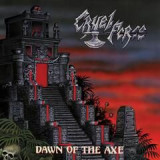
'Dawn of the Axe' harkens to dustier, more archaic times - ones where subgenre delineations weren't so strict and all was mostly heavy metal. For sure, Cruel Force can still thrash with the best of them. The nine songs comprising the 39- minute album exude a wider variety of moods and dynamics, and also sees Cruel Force exploring their more epic side, with three of those songs topping six minutes.
No matter the mood or dynamic, though, energy bristles from every second of 'Dawn of the Axe'- riff, rhythm, lead, vocal, everything - and with the slightly-more-atmospheric recording style, it all gels together to create the band's strongest and most complete statement to date.
No matter how you (axe) slice it, there's no wimping out whatsoever!
It's rare for a band to be away a full decade and then come back with their best work, but such is the case with Cruel Force and 'Dawn of the Axe'. There's some strange magick brewing in the Devil's Dungeon, and they've crossed the Styx to bring you that Power Surge!
Im Februar 1994 veröffentlichten Green Day ihr hochgelobtes drittes Studioalbum, "Dookie". Als erstes Major-Label-Album der Band ist "Dookie" eines der einflussreichsten und prägendsten Alben der 1990er Jahre und verkaufte sich weltweit über 15 Millionen Mal, davon 10 Millionen Mal (RIAA Diamond zertifiziert) in den USA.
Das Album enthält fünf Hit-Singles: "Longview", "Basket Case", "Welcome to Paradise", "When I Come Around", und "She".
Am 29. September 2023 wird Warner Records zur Feier des 30-jährigen Jubiläums des Albums Limited Edition Super Deluxe Box Sets in Vinyl, CD und digitalen Formaten veröffentlichen. Die Sets enthalten unveröffentlichte Demos, Outtakes und unveröffentlichtes
Live-Material. Der Woodstock '94-Auftritt der Band - der erst 2019 als Record Store Day-Veröffentlichung erhältlich war - ist ebenfalls enthalten.
Pressed On Clear Vinyl! To celebrate the 25th Anniversary of UGK's first album, Get On Down goes the extra mile, presenting it for the first time ever on vinyl. AND 2LP clear vinyl at that, giving the strutting, funky grooves the chance to really stretch out on your system. Back in 1992, Southern hip-hop was still proving to the world that it could sustain a fan base that was chiefly raised on rap from New York and LA. The Geto Boys and 2 Live Crew had made strong cases by the earliest '90s, and Pimp C and Bun B were ready to make their own. Most of the trunk-bumping bass comes from drum programs and basic sampling on these tunes - in later years they would build their sound into something even fuller and deeper. Self-produced with additional work from Houston locals Bernie Bismark and Shetoro Henderson, the tracks here are minimal, slow and menacing, which matched their lyrical approach quite nicely. You can hear the beginnings of the group's true greatness in these early lyrical workouts - several taken from the regional cassette-only EP The Southern Way that got them signed to Jive - with tales of street hustles, relationships and self-reliance in a world stacked against them. They may have been done early-on, but that doesn't mean they aren't crucial to UGK's legacy - cases in point being the three singles: Something Good', a charismatic update to Bill Withers' Use Me Up', and Pocket Full Of Stones' (the latter featured on the Menace II Society soundtrack). Beyond the singles, deeper cuts like I'm So Bad,' Feels Like I'm The One Who's Doin' Dope' and Cramping My Style' made it clear to the world that this crew had the attitude and charisma to make even bigger waves in the years to come.
Hydrants beware! Furfriend is back!
Dingo Tush & Das Uberdog have awakened from their well-deserved hibernation and are itching to tell you all about the sweet dreams they had. Dreams that they thought would be best told in a trilogy of earworms which would eventually feed on your brain.
When the news of their awakening broke out, Void+1 Laboratories, against better judgement, made it their mission to log the dreams from these mythical beasts. Regretfully, they did not anticipate that the celestial voice of Dingo Tush could infect the minds of all of their employees and cause a chain reaction that would in matter of days make a whole universe sing in unison for eternity. Although V+1 did learn a valuable lesson (not really), that universe had to be "abandoned" and the exit-point plugged (to answer the question that just popped up in your mind: yes).
After applying Das Uberdog's custom-built, quantum censorship filters (totally not sci-fi gibberish, foogle it) to the original recordings, they were modified into 3 interdimensional, techno megahits that are now safe to be presented to the public (As far as we know... But don't worry, plugs in all sizes are ready for just in case).
'Nothing left but silence' is Erik K Skodvin’s third solo album for Sonic Pieces and his most quiet to date. Subtitled as "Musical improvisations and quiet collages from the subconscious”, Skodvin reduces his instruments to guitar, reverb and amp - and creates a skeleton of eight hypnotic ragas that meanders in an eternal loop between ephemeral and singular.
Only on the horizon it’s possible to sense that Skodvin has also touched the neoclassical terrain in earlier productions - on Nothing left but silence, however, he acts as a twilight player who is not afraid of the coldness of endless space and who knows how to subjugate the shadowiness of the visible world. Carried by the noise of the amp and the occasional click of the effects pedals, a monolithic, reduced blues emerges, whose mediumistic quality nevertheless reveals that Skodvin's music always comes from the body - and as such is always searching for space. A space that - in this case - blends the vastness of the Norwegian steppe with the brittleness of American wasteland (as if Deathprod and Loren Connors were one and the same person), creating a persistent state between deceleration and absence of presence - that leads Skodvin ever closer to the inner essence of sound.
Initially recorded at Saal 3, Funkhaus, Berlin by Nils Frahm in 2015, the album has itself been subjected to silence as a forgotten relic, re-found and now released in a time where it might connect more with the contemporary state of mind. Welcome to the entrance to the periphery.
Boundless was recorded at Silver Bullet Studios in Burlington, CT, which is run by longtime friend of the band Greg Thomas (Misery Signals, Shai Hulud, The Risk Taken) and Chris Teti from The World Is A Beautiful Place And I Am No Longer Afraid To Die, and while With Honor managed to bottle all that energy they’d re-found playing live again, it’s interesting to note that the band took their time doing so. It might sound like one frenzied burst of energy, but the writing process was more considered—With Honor wanted it to sound organic and natural—in other words, true to who both who they are and who they were—rather than forced and contrived. “We named the record after it was all done,” Mackey says. “The whole idea that there’s no limit just resonates all the way through this record. There’s a lot of observing nature healing itself and then believing in that for yourself—and as a result you’re kind of unlimited in that way. And so having the title Boundless just felt the way we wanted it to feel, which, in so many ways, is what this record is all about.”
One from the Skanna vaults again. Another release rescued from the dark depths of jungle history. To say this has been a bloody big effort is understatement! The trouble with all these old Jungle records is everybody who owned a copy purchased it to play, not hoard it for future sale. The few copies that have made it for sale vary in quality from G+ - to VG+ and fetch a hefty price on Discogs in the rare cases somebody parts with a copy.
So when we finally managed to source a nice clean audio file we jumped at the chance. Hours, days, weeks, went by staring in to the abyss of audio restoration tools to finally get a worthy master to hand over to Bob Mac to do his final mastering magic. Topped of with vinyl mastering by Shane The Cutter @ Finyl Tweek we're proper happy with this classic reissue. We have made a comparison of the original 12" and the reissue. We found the reissue to be a have a slight edge on the original with a nice bright high end, and a proper heavy bottom end. That's why we always use Shane! We're proud to have this one available for a reasonable price again.
RIYL: PJ Harvey, Sonic Youth, Dead Can Dance, Black Sabbath, Depeche Mode. In Blood is the group’s 14th album and the follow-up to 2020’s critically acclaimed Dances/Curses (Album Of The Year – The Quietus, Top 10 International Albums – Irish Times). It was typical of a band so well-known for stellar live performances to release their most successful album at a time when they were unable to back it up on the road. As was the case for many, lockdown changed the band’s lives in unexpected ways. Some felt a form of cabin fever at not being able to continue to make music (diverting their energies elsewhere - founding Wrong Speed Records for starters) whereas others relished the peace and quiet, perhaps questioning whether they wanted to return to the life they had before. Gigs (so long the lifeblood of the band) were booked, postponed, and cancelled. Things began to unravel and perhaps for the first time since the band formed in 2003 it was hard to see how it could continue. A plan was hatched to attempt to re-energise and reassemble the band: they would begin work on a new album. They would approach this as though a Somerset version of The Desert Sessions – members old and new and guests would contribute as and when time and restrictions allowed. Lyrically, British folk and ghost mythology provided the starting position for the song themes ranging from mutated stories of grief and loss written in the 14th Century (Perle), spiritual reawakening by ancient apparitions (Avalon) to the growth of nature after devastation (Can’t Feel Around Us, Over Cedar Limb), a metaphor also for spirit and body renewal and rebirth after trauma. The results sound free of any genre shackles and it suits Hey Colossus. They have taken the expansive anything-goes approach that made Dances/Curses so successful and fine-tuned and shaped it into an 8-song single album that never treads water or fills time. The prominent vocals steer the listener through the music, defining it as opposed to punctuating it (or being buried by it). The album is a calling card for the band in their 20th anniversary year. As odd and challenging as long-term fans would expect or hope for, but somehow more accessible and to the point than ever before. It is the closest the group have ever come to a pop record, radiating positivity through the murk like a small ray of light in some very dark and very weird times. Music can never entirely negate these feelings but, like the natural world referenced in the lyrics and sleeve, it invisibly bonds people together, lifting us up if we choose to let it.
Matching expansive ambience with environmental sound, Chihei Hatakeyama’s new album continues Field Records’ exploration of Japan and the Netherland’s shared approach to water management. As with Sugai Ken’s 2020 album Tone River, a specific project becomes Hatakeyama’s area of focus - in this case the Hachirōgata Lake in Akita Prefecture.
Previously the second largest body of water in Japan, the government ordered extensive drainage work of Hachirōgata Lake after the second world war with the help of Dutch engineers Pieter Jansen and Adriaan Volker. After the project was completed in 1977, reclaimed land took up eighty percent of Hachirōgata Lake’s total size. As a result, a new ecosystem was established as plants spread from surrounding areas, bringing with them a wider variety of birds and other wildlife.
Hatakeyama’s approach to this unique subject matter took in field recordings from particular locations around the lake - the drainage channels, the Ogata bridge, grassland conservation reserves and other key areas. The aquatic subject matter and sonic material is a natural fit for Hatakeyama’s accomplished sound, which has featured on numerous solo works for labels including Kranky, Room40 and his self-run White Paddy Mountain.
From the intimate intricacies of the sampled material to the glacial expanses of droning synthesis and languid guitar, Hatakeyama creates a tangible environment which at once reflects the settings around Hachirōgata Lake, while offering the listener any number of imagined scenes to observe in their mind’s eye.
Audiophile reviews rave about saxophone master John Coltrane's immortal Impulse! records, A Love Supreme (1964) and Ballads (1963). In fact, jazz critics have lauded A Love Supreme as Coltrane's most important recording. The rave reviews which appeared in the magazines Downbeat, Jazz Hot, Jazz Podium and Swing-journal reflected this: critics all over the world, in America, Europe and Japan recognized that Coltrane's deep religious belief had influenced both his approach to life and his music-making.
You're about to experience A Love Supreme at its peak of vinyl perfection — in UHQR format on Clarity Vinyl, with the added bonus of a double 45 RPM cut by Ryan K. Smith at Sterling Sound. Ryan's cut has his characteristic clarity and transparency all set against Quality Record Pressing's usual noiseless backgrounds on 200-gram flawless records. Each UHQR will be packaged in a deluxe box and will include a booklet detailing the entire process of making a UHQR along with a hand-signed certificate of inspection. This will be a truly deluxe, collectible product.
For this 45 RPM 2LP edition you'll also receive a 12" x 12" 12-page booklet featuring liner notes by Ashley Kahn and images from the Coltrane home.
The original master tape is available but it's not in the best shape. This LP was cut from a flat tape copy made by Rudy Van Gelder and used for cutting in the UK in April of 1965. Of course, the original recording was in December '64, so only a handful of months later. This tape was discovered at Abbey Road and had been untouched between 1965 and 2002. So while the original tape is available and while we would always opt for the original whenever we can, in this case this copy was the better choice as the tape has incurred less overall wear and sounds much better than the original.
A Love Supreme was Coltrane's pinnacle studio outing that at once compiled all of his innovations from his past, spoke of his current deep spirituality, and also gave a glimpse into the next two and a half years (sadly, those would be his last). Recorded at the end of 1964, Trane's classic quartet of Elvin Jones, McCoy Tyner, and Jimmy Garrison stepped in and created one of the most thought-provoking albums of their relationship.
The album not only enabled Coltrane to express himself with great intensity but also lent him the necessary inner peace to conceive a work of almost 40 minutes in length and to lead his quartet along the same path as himself.
When picturing the German techno scene, one likely imagines the concrete monoliths of its capital city Berlin rather than the vineyards and valleys of the enchanting city of Stuttgart in the southwest. But small cities lack the oversaturation and noise of the metropolis, allowing them to develop their own inspired and distinctive subcultural visions. Stuttgart’s David Löhlein exemplifies this potential, manifesting a singular style of sight and sound through his Vision Ektase project and residency at Lehmann Club. Now, Löhlein’s warm-blooded techno is slinking, slithering and seducing its way through BNR, with the upcoming Hotel Pool EP release.
There’s no hesitation before plunging into the EP’s titular track, with its rushing fingered basslines and rolling polyrhythms. Löhlein cites solo travels in Columbia as the source of his Latin influences, and one hears them throughout “Hotel Pool” in vocal and percussive samples. Elements more commonly found in Latin and tribal house feel uncommonly fresh once Löhlein recontextualizes them within a 144 bpm techno foundation. The words “groovy” and “sexy” are usually reserved for the stuff of Buddha Bar compilations, but “Hotel Pool” is exhilarating because it serves both of the former and none of the latter.
A stream of hedonism flows beneath all of the four-tracker, but if the opener is erotic, A2 “La Piscina” is psychedelic. The bass flutters like a mescaline come-up, as infinite loops of chattering voices and deep bamboo pipe notes mesmerize. Again, Löhlein takes certain genre tropes - in this case from psytrance - and transposes them through his own stylistic signature with thrilling results. Ask Löhlein if he likes psytrance and the answer might be “Yes, when it’s techno.”
Leading the flip, “Cuando Vengas” heats up around a dark and sticky loop of ambiguous, organic origin. Here Löhlein’s masterful sample and drum programming is clearly on display, with vocal chops and subtle rhythmic variations leading the dancefloor to shivering bliss. The EP closes with “I Just Want,” a sparse, cold, and bitcrushed stalker of a track that seems to answer Baudrillard’s famed question “What are you doing after the orgy?” That the Hotel Pool EP’s wild romp ends in the Berlin oeuvre perhaps proves the city’s primacy in the German techno scene, but after a few listens one begins to wonder what rare pleasures they’ve been missing in David Löhlein’s Stuttgart.
- A1: We Crossed The Atlantic
- A2: The Love You Bring
- A3: When I Was Howard Hughes
- A4: Failed Adventure
- B1: Stars (Twilight Mix)
- B2: Grand Central
- B3: International Exiles
- B4: Merry-Go-Round
- B5: Radios Appear
- C1: City Terminus
- C2: Min Min Light
- C3: Oregon Snow
- C4: Cherry Lake
- C5: Blackout
- D1: Please Don’t Say Goodbye
- D2: Museum Station
- D3: Blue Train
- D4: You Were There
- D5: Something Better Beginning
Selected Songs 1997-2003 compiles some of the finest moments in the recording history of Hydroplane, the Melbourne-based indie-pop three-piece that operated alongside The Cat’s Miaow through the second half of the nineties. It’s the third release in what feels, now, like a loosely planned series by World Of Echo, documenting the music made by this group of friends in Melbourne sharehouses (The Cat’s Miaow’s Songs ’94-’98, 2022), or in the case of The Shapiros (Gone By Fall, 2023), while traversing the International Pop Underground.
Hydroplane would be familiar to anyone already following these breadcrumb trails – Andrew Withycombe, Bart Cummings and Kerrie Bolton were the group’s core, all members of The Cat’s Miaow. With Cat’s Miaow drummer Cameron Smith itinerant, having moved to London, the trio used this opportunity to expand their music. It’s a subtle, but important shift. If The Cat’s Miaow was about the perfect, minimalist, two-minute pop song, Hydroplane’s music was far more open-ended, embracing the loops and drones, sampled house-y shuffle beats, the burbling of a Roland Jupiter-4 synth, all of which the trio joined, effortlessly, to their endless capacity for moving, elegant melodicism.
They may have only planned to release one seven-inch single, but the sound Hydroplane created was so bewitching, so compelling, that the project’s lifespan ran for around half a decade, and they ended up releasing three albums, including a self-titled debut recently reissued by Efficient Space, and seven singles. There are all kinds of compelling things happening in the music compiled here – the hazy repetition of the gentler side of Krautrock is in here, somewhere, which also suggests Stereolab at their most intimate and disarmed; the gently drifting guitars, gauzy and oneiric, set the songs adrift and floating, each one lost in its own imagined, distracted world. Songs like “The Love You Bring” set indistinct tonal floats across dance rhythms, in a way not quite heard since My Bloody Valentine’s “Instrumental” – but with the added gift of Bolton’s gorgeous voice.
This loose coalition with dance music, and the quiet experimentalism at the heart of Hydroplane, also gestures towards peers like Hood, Acetate Zero and Other People’s Children, and releases on renegade labels like Wurlitzer Jukebox and Enraptured. Like those groups and labels, The Cat’s Miaow were reconciling independent pop music’s past – sweet melody and melancholy, chiming and droning guitars – with the futures promised by DIY electronics and nascent digitalia, the interface of indie and IDM that led to some of the underground’s most blissful, texturally swoonsome music. All that is here, but also, the poise of the melodies is pure Cat’s Miaow, though, with Bolton’s voice sailing, pacifically, over some of the most pared-down, gorgeous music made during their decade.
It was a time, too, when such music could make waves – “We Crossed The Atlantic”, one of their early singles, was picked up by John Peel, who played it repeatedly on his legendary radio show, the song reaching #13 on his 1997 Festive 50. That the song itself was a cover of a tune by 1960s Australian beatnik-pop-poet Pip Proud felt even more perfect – a group of outsiders paying tribute to another outsider, played on the radio one of the few broadcasters brave and human enough to take a chance on this music. But it was a time where everything was up for grabs, and genres were flowing into each other: folk songs went drone; indie re-discovered noise; ambient pop floated, again, out onto the dancefloor. And while they may have been sequestered away in Melbourne, Australia, Hydroplane felt core to that scene, a quietly driving force.
Compiling material from across their brief but mercurial career, this double album perfectly captures the magic and mystery of Hydroplane’s dreamlike, perfect pop songs.
- A1: The Word Around Town
- A2: She Grew And She Grew
- A3: Rings On Her Fingers
- A4: Talk Like That
- A5: Dream Come True
- A6: Everlasting
- B1: Faithful To 3 Lovers (Bbc Session)
- B2: Everlasting (Bbc Session)
- B3: The Word Around Town (Bbc Session)
- B4: Dream Come True (Bbc Session)
- B5: Take Me To Your Heart (Demo)
- B6: Never Grow Up (Demo)
Described as a ‘minor classic’ by Luke Haines.
Available on vinyl for the first time in 36 years. and CD for the first time in 30 years.
12-Track LP compilation pressed on Clear Vinyl with printed innersleeve.
CD in digipack with 8 page booklet. Sleeve notes by Luke Haines.
Band features Luke Haines, Martyn Casey (The Triffids/Nick Cave & The Bad Seeds ) & Alsy Macdonald (The Triffids).
Includes: DW’s ‘Westlake’ album from 1987; BBC session recorded with members of The Go-Betweens plus two studio demos of unused songs.
David Westlake’s first album finally gets a new day in the sun in the wake of his brilliant current LP ‘My Beautiful England’. 36 years after it first appeared in 1987 on Creation Records
David Westlake formed The Servants in 1985, who released 2 excellent singles and appeared on the NME compiled C86 LP.
Searching for a stable Servants line-up to release an album he recruited Luke Haines (The Auteurs/Black Box Recorder) via an NME advert , who came on board, and stayed for five years. After failing to find a committed rhythm section, he enlisted the help of Martyn Casey (The Triffids/Nick Cave & The Bad Seeds ) & Alsy Macdonald (The Triffids)and recorded the 1987 ‘Westlake’ album for Creation. Overlooked at the time, the record was later described as a minor classic by Luke Haines himself. It is included here on Side One of the album, available on vinyl for the first time in 36 years. and CD for the first time in 30 years
Side Two contains the previously unreleased Janice Long BBC session recorded in the summer of 1987 featuring Go Betweens members Robert Forster, Amanda Brown & Robert Vickers
As chronicled in an interview in US music magazine The Big Takeover (issue 53, 2004), Belle and Sebastian frontman Stuart Murdoch was a huge Westlake fan and tried to locate him in the early 1990s in hope of forming a band with him, before launching Belle and Sebastian in his school class instead
Recorded October 1959, Paris.
Original LP issue: Decca 153.924
Critics often complain that small-group sessions comprised of members of the Duke Ellington Orchestra are somewhat disappointing; this is definitely not the case with this session led by Clark Terry, recorded during a 1959 tour of Europe in the final month of the trumpeter’s almost eight-year tenure with the band. Fellow Ellington sidemen Paul Gonsalves, Jimmy Woode, and Sam Woodyard are present, along with Raymond Fol at the piano. Terry was one of the most gifted trumpeters to grace the Ellington band and he blossoms when he has more opportunities to solo in a small group setting like this one. Gonsalves proves to be the perfect foil for Terry as they trade lines on several of the numbers. Unlike many dates led by Ellington veterans, this one doesn’t rely heavily on songs from the vast Ellington songbook; instead, Terry includes only ‘Satin Doll’, a Monk’s tune, one by Babs Gonzales and three of his own compositions, with ‘Serenade to a Bus Seat’ (a remake of his upbeat instrumental interpretation of the hectic life of a touring musician) proving to be the most memorable.
This studio date was recorded for French Decca label and was almost impossible to find until now.
Clark Terry (Trumpet)
Paul Gonsalves (Tenor saxophone)
Raymond Fol (Piano)
Jimmy Woode (Bass)
G. T. Hogan (Drums)
Nach mehr als einem Jahrzehnt ist es an der Zeit, den heiß begehrten Katalog der Stockholmer Death-Metal-Legenden DISMEMBER endlich neu aufzulegen!
An erster Stelle stehen das legendäre Debüt „Like An Ever Flowing Stream“, das ein dynamischeres Master vom Juni 1991 enthält, das noch nie zuvor auf Vinyl verwendet wurde, die barbarische EP „Pieces“ und das klassische Zweitwerk „Indecent & Obscene“. Alle Alben verfügen über ein hochwertiges Artwork, das auf neuen Hüllenscans der Erstpressungen basiert, und wurden von Patrick W. Engel im Temple of Disharmony für Vinyl gemastert, um einen „originalgetreuen“ Klang zu bewahren.
Alle Neuauflagen wurden zusammen mit DISMEMBERs Mastermind und Schlagzeuger Fred Estby erstellt, um sicherzustellen, dass diese unverzichtbaren schwedischen Death-Metal-Klassiker in makellosen, zeitlosen Editionen zurückkehren.