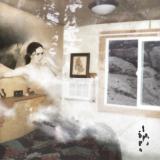
Carve is the second full-length by Bay Area artist Kathryn Mohr. Written over the course of five years and recorded over several weeks in a rural singlewide in the Mojave Desert, the album centers on love experienced as a form of grief, not as an aftermath of loss, but as a condition of intimacy itself.
Mohr describes Carve as an album about how memory exists outside the body, embedded in places and landscapes. It is shaped by her first return to the American Southwest since a childhood road trip at age five, and by the experience of moving through terrain that holds emotional weight long after its origins fade. The record considers how intimacy feels after years of isolation, and what it takes to carve out a life that allows for trust, presence, and feeling rather than mere survival. The project took form after a difficult tour that ended in Joshua Tree. Mohr pointed her car into the desert and drove alone, crisscrossing the Mojave on dirt roads. Months later, she returned to record the album, working alone with an acoustic guitar, a field recorder, and limited supplies. Following that period, Mohr began to allow for intimacy and connection. The time she spent recording Carve in the desert did not create isolation so much as mirror it. Working alone out of an old, western-themed jail Airbnb, the physical enclosure reflected the emotional conditions under which much of the record had been written: distance, restraint, and long stretches of stillness. In that context, love was not experienced as escape, but as something inseparable from impermanence and the awareness of loss.
This tension between connection and inevitability sits at the center of Carve. Some of the album’s songs were written earlier, during a prolonged period marked by emotional distance and apathy. Over those four years, Mohr was working through unprocessed childhood memories and their long-term effects on her ability to connect with others. The work was slow and difficult, involving a fundamental reshaping of how she related to herself and to the world. Carve was mixed by Richard Chowenhill of Flenser labelmates Agriculture. Rather than offering resolution, the album documents the act of remaining present within tension. Carve is not about escaping grief, but about accepting it as inseparable from love itself. Kathryn Mohr’s previous effort “Waiting Room” received the coveted ‘Best New Music' designation and a score of 8.4 from Pitchfork.
Suche:c i a records
Carve is the second full-length by Bay Area artist Kathryn Mohr. Written over the course of five years and recorded over several weeks in a rural singlewide in the Mojave Desert, the album centers on love experienced as a form of grief, not as an aftermath of loss, but as a condition of intimacy itself.
Mohr describes Carve as an album about how memory exists outside the body, embedded in places and landscapes. It is shaped by her first return to the American Southwest since a childhood road trip at age five, and by the experience of moving through terrain that holds emotional weight long after its origins fade. The record considers how intimacy feels after years of isolation, and what it takes to carve out a life that allows for trust, presence, and feeling rather than mere survival. The project took form after a difficult tour that ended in Joshua Tree. Mohr pointed her car into the desert and drove alone, crisscrossing the Mojave on dirt roads. Months later, she returned to record the album, working alone with an acoustic guitar, a field recorder, and limited supplies. Following that period, Mohr began to allow for intimacy and connection. The time she spent recording Carve in the desert did not create isolation so much as mirror it. Working alone out of an old, western-themed jail Airbnb, the physical enclosure reflected the emotional conditions under which much of the record had been written: distance, restraint, and long stretches of stillness. In that context, love was not experienced as escape, but as something inseparable from impermanence and the awareness of loss.
This tension between connection and inevitability sits at the center of Carve. Some of the album’s songs were written earlier, during a prolonged period marked by emotional distance and apathy. Over those four years, Mohr was working through unprocessed childhood memories and their long-term effects on her ability to connect with others. The work was slow and difficult, involving a fundamental reshaping of how she related to herself and to the world. Carve was mixed by Richard Chowenhill of Flenser labelmates Agriculture. Rather than offering resolution, the album documents the act of remaining present within tension. Carve is not about escaping grief, but about accepting it as inseparable from love itself. Kathryn Mohr’s previous effort “Waiting Room” received the coveted ‘Best New Music' designation and a score of 8.4 from Pitchfork.
It is with some degree of surpriseand delight that we were contacted by John Andrew Fredrick, the founder and omnipresent member of Santa Barbara’s the black watch to see if Blue Matter would be interested in putting out their newest album. Of course we were. One listen was more than enough to convince us that it would fit perfectly on to the label. Perhaps a little more indie than other albums we’ve released, but sowhat? ‘Varied Superstitions’ is an intriguing collision of Cure-style indie and trippy psych which had us buzzing right away. the black watch (lower case intentional) wasformed in 1987 by John Andrew Fredrick in Santa Barbara, California, and he has been (and still is) it’s guiding light. They have released 25 albums over the last 38 years and show no sign of ageing. With a fantastic band behind him, John has presented us with a wonderful batch of songs ranging from mesmeric psych to indie/punk. In late 2025 John paid a brief visit to the UK to see friends and also to do a couple of live acoustic performances. The Bevis Frond was lucky enough to share the bill with John at London’s Betsey Trotwood for a wonderful evening of acoustic revelry. Not only is he a hugely talented musician/songsmith, but a thoroughly decent fellow. It’s a true privilege to be able to put out ‘Varied Superstitions’ on our label.
- Checkerlads - The Dreamer
- Checkerlads - Behind Ev'ry Man
- White Knights - There She Goes
- White Knights - Run Run Baby
- Tomorrow's Keepsake - Eat Your Hot Dog Boy
- Plague - Love And Obey
- Plague - We Were Meant To Be
- Lexington Avenue - Wendy Taylor
- Lexington Avenue - Flowing Kind Of Feeling
- Lexington Avenue - Good To Me
- Nrg - It All Comes Back To Me
- Solid Reputation - Things
Highlights include more terrific songs from the Plague and Lexington Avenue, bands whose members would be better known when they created the Jarvis Street Revue. Twelve tough tracks by the Checkerlads, White Knights, Tomorrow's Keepsake, NRG, and Solid Reputation . The Gaiety roster was rich in talent (the 49th Parallel, Jarvis Street Review, and Souls of Inspyration, not to mention the Checkerlads, White Knights, Dewline, Tomorrow's Keepsake, NRG, Merriday Park, and Portland Street South) -- but it was not rich in resources, which is why these singles are as relatively unknown as they are even today
- Love You Still
- Learning To Drive
- 50:
- Responsible Friend
- Bored Of Myself
- When The Doctor Needs A Doctor
- Goodbye Wisdom
- 90: Years Long
- Lost Time
- Cellophane
- Stay
Responsible Friend is an album about the ways in which we show up for one another. What does it mean to be a responsible friend - to be there for someone you love without trying to save them - in a society steeped in conflict and injustice? Some of the songs on Responsible Friend are joyful dedications while others feel more like letters Elizabeth wasn't sure she wanted to send. Taken together, it's a record about slowing down in a world that keeps accelerating. It's a commitment to friends, family, and self, at a time when everyone seems to be carrying more than they can reasonably hold.
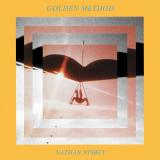
- A1: Golden Method
- B1: Strange Way
Skirting the line between post-punk and electronic music is the world in which this new project from Nathan nisbet resides. The Perth producer is looking back to his favourite bands from the 80s like The Cure and The The while applying his usual techniques for electronic dance music. The end result is analog and gritty yet heartfelt.
- 1: In Order That The First World May Fail
- 2: Clown Utopia
- 3: Rice Timeshare
- 4 11: Days, 700 Years
- 5: Going To Heaven On The End Of A String
- 6: Ick Fantasia
- 7: Geordie Vision
- 8: Athena Allenby
- 9: World Goodnight
Bunker Intimations II by London-based anti-formalists Index For Working Musik is a sister record to their second album Which Direction Goes The Beam, originally issued as a limited edition cassette with early copies of the vinyl pressing of that record. The 50-minute long collection of recordings was made across an intense three day period in March ‘25 under the duress of a very strict deadline. All tracks were improvised and mixed-down on the spot, a genuine document of a moment in time. Some of us think that it’s better than the record that it was trying to sell. And so here it now stands for wider judgment. Bunker Intimations II is released digitally and on vinyl via Tough Love.
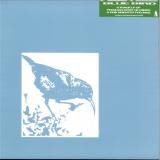
Following the critical success of last year’s ‘Cold Feet’ LP, producer, DJ, and multi-instrumentalist Alek Lee returns to Isle of Jura with his most introspective work to date, the ‘Blue Bird’ album. Across eight tracks, the Athens-based artist explores what he describes as a "Peculiar state of minds & Dub Orientated Feelings," blending his signature guerrilla style production with deep, organic soul.
The album’s centerpiece and title track, ‘Blue Bird’ features the haunting vocals of singer-songwriter Keren Ilan. It is a raw, heartfelt exploration of the aftermath of a breakup. The lyrics speak of a "desert heart" and a "loss that grows tall and loud," eventually finding a path toward healing as the "blue bird sings the dawn." Musically, the track is anchored by hazy, sun drenched guitars, a central instrument that weaves a consistent Balearic thread throughout the LP.
The journey through ‘Blue Bird’ is one of shifting shadows and unexpected textures. ‘Treasures’ is a standout instrumental, leaning into a grit-flecked, bluesy "twang" reminiscent of Duane Eddy, while ‘The Beach Road’ sees long time collaborator and ‘Shame On Us’ bandmate, Yovav, lending his magical bass and guitar work to a track that feels like a slow drive toward the horizon.
Side B shifts the energy toward the dancefloor and the sophisticated leftfield pop of the 80s. ‘First Rain’ is a subtle house leaning gem underpinned by a kick drum and lush, synth heavy emotive chord progression. ‘Thanks to Sade’ is a seductive downtempo groove with epic guitar lines shifting through, while ‘Remember the Good’ brings a subtle reggae skank and a French-influenced organ sound into the mix. The LP comes full circle with a smoked out Dub version of the title track ‘Blue Bird’.
A 180 gram pressing in a 3mm spine full colour sleeve and sticker designed by Bradley Pinkerton.
Tapping into the otherworldly frequencies of the UFO series, UK-born, Lisbon-based prodigy Rene Wise arrives on Dekmantel with an assured demonstration of his position at the cutting edge of real techno.
Andrew Shobeiri appeared in the cut and thrust of the scene fully-formed around 2017, instantly bringing his Rene Wise alias to top-tier labels with a razor-sharp combination of functional minimalism and mind-warping flair. There's no grey area fluctuation in his hypnotic, intentional sound — this is deep, captivating techno for the long haul, music to submit yourself to.
True to his sound, Rene Wise makes his presence felt on Dekmantel UFO with a varied spread of sounds, leading with the melancholic charm of the melodic sequences weaving through 'Johnson's Theme' before sinking into the engrossing folds and low-end rumble of 'Granite Skin'. There's a lighter atmosphere at play in the vaporous impulses that mark out 'Flow' before rolling into the rhythmic urgency and strafing bleeps of 'Kanga'.
This is the Dekmantel UFO experience as expressed by one of the leading lights in modern techno — an artist who understands the psychoactive power contained within the subtleties of production and pursuit of the ultimate loop.
- A1: The Crystal Ship
- B1: Anna Karenina
Cigarettes After Sex return with a double single that showcases both their future and their past. The single featured on the B-side, “Anna Karenina,” is a quintessential Cigs track, sensual, slow-burning, and emotionally oversized, with lyrics so confessional they verge on too much. But its inclusion of spoken word verses adds a striking new dimension to Greg Gonzalez’s world, expanding the band’s intimate palette. Its chorus (“I cried at the end of Anna Karenina, when she threw herself under the train”) might be the most Cigarettes After Sex lyric ever written. The A-side is a long-rumored fan favorite finally seeing release: a gorgeously faithful cover of The Doors’ “The Crystal Ship,” recast in the band’s signature haze. Jim Morrison’s romantic fatalism never sounded more at home.
Malta’s Human Safari returns to R&S Records, building on the momentum of his 2023 debut ‘Sax Paradiso’, with another EP of fast, physical club music on ‘Children Of The Sea’.
Propulsive opener ‘Children Of The Sea’, balances tensile strings and frenzied percussion fused around a high-tempo techno framework. ‘Jazz Affair’ follows suit but shifts the mood inward, pairing feverish, hypnotic drum programming with expressive instrumentation - layering drifting piano chords, fragile pads and a winding bassline that lends the track a kinetic pull.
‘Turbulence At The Orchestra’ draws from the raw spirit of ’90s warehouse techno, weaving in the sounds of sensationalist news reports on illegal raves of the time and overall diving into darker territory, led by a foreboding, spiralling 303 line and punctuated with dramatic horn flares.. Closing track ‘Lido’ locks into another deep, rolling groove, with pulsing low-end, reverberant horns and skittering, Latin and jazz-tinged rhythmic details threading through the mix.
‘Children Of The Sea’ by Human Safari is available on R&S Records from 13th March 2026.
Mannequin Records presents a special release that bridges two generations of electronic body music: DAF’s iconic track “El Que” reimagined by French techno and EBM pioneer Terence Fixmer.
A lifelong admirer of DAF, Fixmer has been playing El Que in his DJ sets for years, considering it one of the band’s most enduring and powerful pieces. His connection to the track and to DAF’s groundbreaking legacy is the core inspiration behind these two new remixes, created with both reverence and bold creative vision.
On the “El Que (Terence Fixmer Leather Remix)”, Fixmer remains close to the original’s raw, muscular pulse while injecting a sharp, modern club sensibility. The remix builds on DAF’s unmistakable rhythmics but adds a contemporary momentum that feels like a natural extension of the band’s DNA. “It was like imagining what I would do if I were a member of DAF today,” Fixmer says.
The second version, “El Que (Terence Fixmer Drive Remix)”, ventures deeper into Fixmer’s own territory: darker, hypnotic, and peak-time focused. Tension and release are crafted with surgical precision, taking the original’s spirit into a harder-edged, suspense-driven sound world. It’s a version built for late-night floors without ever losing the soul of El Que.
Fixmer explains:
“I’ve been playing DAF’s El Que in many of my DJ sets for years. It’s a track I deeply loved from the first listen. I’m super proud to have remixed DAF — one of my cult bands and a major influence on my sound and electronic universe. For the "Leather Remix", I wanted to stay close to the original while bringing modernity and club momentum. For the "Drive Remix", I pushed the track toward darker, peak-time and hypnotic techno, keeping the soul of the original intact. I wanted to make versions that make you think: ‘I know this track… but wait — what is this version? I want it!’ When I tested them, that’s exactly what happened.”
DAF remains one of the most influential bands in electronic music history. These new remixes by Terence Fixmer reinforce the timeless power of El Que while offering two striking, club-ready perspectives for a new generation of listeners.
BCUC – Bantu Continua Uhuru Consciousness – have been channeling the spirit of Soweto for over twenty years. Indigenous funk, hip-hop consciousness, and punk rock energy fused into something utterly original and deeply rooted. Their mantra: Music for the people, by the people, with the people. From humble beginnings rehearsing in a shipping container, a stone's throw from the church where Desmond Tutu organized the escape of the most wanted anti-Apartheid activists, they kept believing in their dream of self-empowerment. Today they command festival stages worldwide: Glastonbury West Holts, Roskilde, Afropunk Brooklyn, WOMAD, Fusion, Sziget, FMM Sines, Beaches Brew, Boomtown, Colours of Ostrava, Couleur Café – to name just a few. In 2023, BCUC were honoured with the prestigious WOMEX Artist Award, an accolade usually reserved for more established artists, in recognition of their fearless work and transcendent live performances.
THE ROAD IS NEVER EASY
The Road Is Never Easy is BCUC's fifth album and their debut on Outhere Records. On this new offering, BCUC take listeners on another Afro-psychedelic journey into the soul of Soweto. It feels like a gospel sermon colliding with a punk concert, "guaranteed to touch untapped corners of your soul" (OkayAfrica). BCUC's music is deeply rooted in history and echoes the voices of the ones who came before. The road was never easy for the people of Soweto who originally came to work in the mines of Egoli, the City of Gold, Johannesburg. When apartheid finally ended after a long struggle, it was hoped that life would improve. But more than 30 years later, many of those initial hopes and dreams are still waiting to be fulfilled. This album is about that struggle. The album contains 10 brand new songs – a record for BCUC, whose previous albums featured an average of 3 songs. It represents the culmination of more than two decades of performing together and building a reputation as a powerful live act. These ten songs encapsulate that same live energy, each one building gradually and drawing you into BCUC's Afro-psychedelic stream of consciousness. It's a seismic tour de force through life in Soweto today. Songs like Amakhandela (Breaking All the Chains) connect history to daily life: "How is this precious metal inflicting so much pain in us," sing BCUC, "this government has been telling us we are free, but we don't benefit from being free." The album also talks about all the hopes and dreams that remain: "I have too many wishes and dreams in my head," BCUC sing in Um duma khanda, "I think I am losing my mind". The album ends with the soothing Matla a rona ke Bophelo, "our strength is life", praising the spirits and thanking the elders for protection. The Road Is Never Easy is about the harsh reality of life in Soweto, where "people always carry heavy loads". BCUC are street poets trying to deal with that burden: sometimes revolutionary, sometimes soothing, but always hopeful and compassionate. "When you are from Soweto you can't retreat nor surrender." (Sebenzela)
RECORDING
The album was largely recorded in Munich, Germany during tour breaks over two sessions, each three days long. It took place in a small studio located in a German WW II bunker converted into rehearsal spaces. The songs were recorded in one take altogether in one room, with only a few overdubs added, mainly backing vocals, by BCUC at Fourways studio in Johannesburg. BCUC have created their own distinctive way of writing, or rather, finding and creating their songs. The recording process is like an improvised live performance. They bring their ideas into a zone where the music, the rhythm and the spirits take over until the song starts to form. In this Afro-psychedelic zone BCUC create their unique poetry that feeds on the dreams still dreamt, the hopes, the fears and the temptations lingering everywhere. BCUC's songs need to breathe and time to build. The right take was the one when the song took over, and just like their live performances, no one knew beforehand where the song would take them. During the recording, BCUC just let it all flow out: inner turmoil, cries of rebellion, but also resilience and a search for healing, love, unity and compassion. You don't have to be from Soweto to feel the deep meaning and impact of this music. In these times of so much hate and division, BCUC are like a campfire for people to gather around.
PRODUCTION & ARTWORK
"BCUC have a unique magic," says Outhere's Jay Rutledge, who produced the album. "It blew our minds. It's like punk and pure gospel at the same time. Their music can make you dance and it can make you cry, all at the same time. And when the song is over, you feel you're not alone in this world anymore. We felt compelled to do this." The album cover is based on a matchbox design, matches being a common household item in South Africa even today. "These were the matches people used to burn government buildings and cars," explain BCUC. Little messages, addresses, or phone numbers used to be scribbled on the back of these boxes; each one a reminder of the strength, resilience, and resistance that once drove the struggle for freedom in Soweto. BCUC keep this flame burning. The Road Is Never Easy is a heavy spiritual road trip, a deep dive into the subconscious of Soweto and a quest for truth, justice and sanity in this crazy world. BCUC tackle the harsh realities of the voiceless, guided by the spirit world of their ancestors. Rather than reinforcing stereotypes of poverty, BCUC's portrayal of Africa is one rich in tradition, rituals and beliefs. "We bring fun and Afro-psychedelic fire from the hood," says vocalist Kgomotso Mokone.
First time reissue of JP free jazz rarity, pre-Seikatsu Kōjyō Iinkai group.
The single album self-released by the quartet Shūdan Sokai in 1977 is one of the most vital documents of mid-seventies Japanese free jazz, documenting Tokyo’s free scene at the precise moment when it began to shift to a handful of tiny venues on the western fringes of the city. In Free Jazz in Japan, Teruto Soejima identifies the extant venue Aketa no Mise in Nishi-Ogikubo as the pioneer of this decamping from the centre: a cramped basement beneath a rice shop, seating just 20 people. Musician-run, operated on a shoestring, these spaces offered a vital site for community, creativity, and a small measure of financial independence — “even though it was in a basement, in spirit it was a loft.”
Among the most active of the new venues was Alone in Hachiōji, nearly an hour from Shinjuku, in a district shaped by universities, lower rents, and a thriving counterculture. Originally opened in 1973 as a jazu kissa, Alone was unusually spacious and equipped with a stage, grand piano, and drum kit. Around 1974, Junji Mori and Yasuhiro Sakakibara began working there, booking free jazz players on weekends and establishing the venue as a crucial hub. Mori recalls early appearances by figures including Kazutoki Umezu, Toshinori Kondo, and others who would define the scene.
In early 1976, Umezu and pianist Yoriyuki Harada — recently returned from New York’s loft jazz environment, where they had played with musicians such as David Murray and William Parker — formed Shūdan Sokai with Mori and drummer Takashi Kikuchi. The name, meaning “mass evacuation,” pointed to their self-chosen exile in Hachiōji. With Alone as their home base, the quartet developed a music characterized by an infectious sense of enjoyment and a willingness to integrate free jazz with elements of song structure. Harada switched between piano and bass; the group experimented with rap-like vocal pieces, jabbering nursery rhymes over bass rhythms.
They returned to Alone on December 24 to record Sono zen’ya (Eve), releasing it on their own Des Chonboo Records, partially funded by advertisements from local businesses printed on the rear cover. The closing “Ballad for Seshiru,” dedicated to Harada’s newborn son, unfolds over a delicate piano melody that moves into emphatic chords as intertwining alto lines rise and spiral.
Alone closed in September 1977, and Shūdan Sokai soon dissolved, later morphing into the expanded Seikatsu Kōjyō Iinkai Orchestra. What remains is a recording rooted in a specific place and moment: a fiercely independent scene sustained by small rooms, close listening, and collective commitment.
mixed by aloisius
mastered by Amir Shoat
tracklist poem written by Isaiah Hull
releasing on digital + physical (Vinyl, CD & Cassette) 9th April 2026. Physical editions will feature a secret unlisted bonus track.
aloisius is a prolific, artist and producer, who recently produced a full length album for Pretty V, which released via life is beautiful records (and sold out at Big Love & Rough Trade). aloisius has also collaborated with artists such as: James Massiah, CTM, Nova Varnrable, DJ Spanish Fly, Cities Aviv, zukovstheworld, Kenichi Iwasa & many others.
‘vernacular’ is the debut studio album by improvisation-based artist, and founder of life beautiful, aloisius.
Built entirely from layers of improvised instrumentation recorded via laptop microphone, using various instruments such as guitar, piano, cello, trumpet, saxophone, drums & voice. vernacular is inspired by the spirit of collective improvisation, and embodies aloisius' instinctual & organic approach to musical composition.
Crafted solely by aloisius (except for track 6, which features a layer of piano by life is beautiful member, friend & collaborator Bianca Scout).
To celebrate the release of the album, a semi-improvised interpretation of the project will be performed live by ‘orchestra379’ (a collective improvisation project curated by aloisius, consisting of a fluctuating lineup that differs on each occasion of performance). Initially in London, then at a select few cities across Europe.
"Morning Star" zeigt Kekht Aräkh auf dem Weg zu einer authentischeren, verfeinerten Version seiner selbst. Das Album wurde in Berlin und Stockholm aufgenommen und entstand in einer Phase intensiven persönlichen und künstlerischen Wachstums. Es verbindet aggressive Black-Metal-Passagen mit immersiven, strukturierten Klanglandschaften, die sowohl intim als auch weitläufig wirken. Seit seinen Anfängen in Mykolajiw, Ukraine, hat Dmitry (alias Crying Orc), der alleinige Kopf hinter dem Projekt, einen unverwechselbaren Weg innerhalb des Black Metal gesucht. Diese Vision entfaltete sich durch sein Debütalbum "Through the Branches to Eternity EP" (2018) und die Alben "Night & Love" (2018) und "Pale Swordsman" (2021), die eine charakteristische Spannung zwischen wildem, viszeralem Black Metal und zarten, introspektiven Balladen etablierten. Auf "Morning Star" erreicht diese Dynamik eine neue Tiefe. Das Album entstand in einer Phase künstlerischer Klarheit und erkundet eine rauere, persönlichere Gefühlspalette, geprägt von Stress, Angst und langen Phasen der Schreibblockade, was ihm eine seltene Unmittelbarkeit und Verletzlichkeit verleiht. Dmitry nahm fast alle Instrumente selbst auf, das Schlagzeug stammt von Jonathan (Spira Me, Vanskapth, Olycka). Bladee steuerte den Gesang bei und war Co-Autor der Texte zu "Eternal Martyr", eine unerwartete Zusammenarbeit, die eine intuitive Chemie offenbart. VS--55 und Varg2Ö fügen abstrakte Samples und subtile Texturdesigns hinzu, die "Morning Star" seine unverwechselbare Körnigkeit und analoge Wärme verleihen, während James Ginzburg (Emptyset, Osmium) sich um das finale Mastering kümmerte und die dynamische Tiefe und atmosphärische Fülle verstärkte. Mehrere Tracks greifen früheres Material mit neuen Perspektiven wieder auf. ,Wänderer" und ,Drömsang" wurden teilweise neu aufgenommen oder komplett neu interpretiert. Intensive, treibende Passagen kollidieren mit spärlichen, kontemplativen Zwischenspielen und erzeugen eine Landschaft, die sowohl viszeral als auch eindringlich ist. Themen wie Isolation und Wanderschaft tauchen in "Wänderer" auf, traumhafte Melancholie in ,Drömsang", existenzielle Kämpfe in "Angest" und Reflexionen über Zeit und Transformation in "Three winters away". Mit "Morning Star" verbindet Kekht Aräkh vergangene Erkundungen mit neuer kollaborativer Energie und produziert ein Album, das die Black-Metal-Tradition der 90er Jahre würdigt und gleichzeitig Lo-Fi-Wärme, melancholische Melodien, klangliche Experimente und emotionale Offenheit umfasst. Das Ergebnis ist ein zutiefst persönliches Statement - ein Album, das sowohl eine Ankunft als auch eine Fortsetzung seiner künstlerischen Reise darstellt.