Some bands reveal themselves immediately, coming right out and winning the listener over the moment they hit play. And then there are bands that open up with time, rewarding repeat listens with new lyrical and musical thrills on every return. Glaswegian jangle pop extraordinaires U.S. Highball have the rare distinction of being both. The duo specialize in the kind of instantly charming songwriting that makes a great first impression, and an even better second, third, and beyond. Their songs are equal parts wit and heart, full of pop culture nods, inside jokes, and hooks upon hooks. Now U.S. Highball’s third full-length, A Parkhead Cross of The Mind, leans even further into their unique dichotomy, offering another goldmine of discovery set to their finest batch of pop gems to date.
Cerca:c of 83
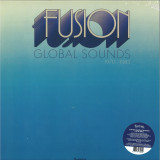
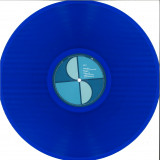
As a fine collector of Jazz-Funk and Fusion for many years, Charles Maurice selected some of his favorite forgotten productions, as he previously did for the AOR Global Sounds, French and Brazilian Disco Boogie Sounds compilations series.
This time, recordings come from Sweden, Switzerland, South Africa, New Zealand, Uruguay, Spain and France, from artists and bands mostly known in their local scenes. You'll hear here the best elements of the Fusion and Jazz-Funk genre: breezy vocal arrangements reminding Flora Purim in Return To Forever or George Duke's albums, sweet and virtuosic Fender Rhodes (kind of common thread of the comp), melodic spiral-shaped fuzzy synthesizers leads, or irresistible basslines, altogether bringing a unique groove to life.
The Bongo Hop is back with his third effort, La Ñapa, an 8 track mini album/EP featuring Angolan legend Paulo Flores, Colombian singer Nidia Gongora, Danish hip hop crew Dafuniks, Voilaaa & more…
With those new tracks, B-sides and remixes all bearing his trademark -infectious afro-caribbean grooves, warm brass, suprising and genre-bending sound ventures - he’ll take you on a ride from Cali to Luanda, via the dunes of Bechar and the clubs of Detroit and Port au Prince.
• Limited edition of 800 copies
KU is paying tribute to one of the most acclaimed and iconic records in the NMS catalogue, with a 2LP vinyl release, with brand new artwork & a bonus remix. The re-release is an opportunity for new fans to be exposed to this masterpiece LP, old fans to explore a NMS classic through fresh ears, and for the band to reflect back on the record they made nearly 15 years ago.
As far as recording the record, there was nothing new about the approach. By this time the band had found a formula for making records that they found to make most sense and suit their chemistry well. Richard Formby was their goto engineer and Hall Place Studios in Leeds, was the space that breeds the desired sounds. This process would remain the same until the band started making records in the United States a few years later.
The KU ‘Plug & Play' Reissue is snapshot in time of a band that was around the 10 year mark of their career. There’s an undeniable chemistry and energy captured in the recordings that could only come from musicians who were tapped in and listening to one another's ideas and playing. With each track leaving you wondering how they were able to find that much pocket, and how much deeper could it possibly go!
- A1: Over The Edge
- A2: Doom Town
- A3: So Young
- A4: Messenger
- A5: Romeo
- B1: Now Is The Time
- B2: What Is
- B3: No One Wants An Alien
- B4: The Lonely One
- B5: No Generation Gap
- B6: This Time
- C1: Mistaken Id (Live)
- C2: No Solution (Outtake)
- C3: Doom Town (Alternate Mix)
- C4: The Lonely One (Alternate Mix)
- C5: Now Is The Time (Alternate Mix)
- C6: Romeo (Alternate Mix)
- C7: Our Past Life (Demo)
Dirty machine gun funk, dripping in fudgy acidic grooves on this twisted heater from native London badass Shy One. Techno collides with Jazz Fusion across three jams recorded straight out the box and cut exclusively onto wax for Eglo Records. This 7" marks the first in a series of releases from the kinetic, undefinable talent.
RATA NEGRA from Madrid deliver twelve songs of dark, crude and moody punk on their debut LP. Formed of members from JUANITA Y LOS FEOS and LA URSS this power trio have distilled the negativity and uncertainly of the young Spanish generation and transformed it into perfectly crafted punk songs. Sharply turning snaps of daily life into melodic anthems for a doomed generation, musically RATA NEGRA fence between dark melodic OC punk a la RIKK AGNEW solo debut album and Spanish Punk ’83 via KGB/ VULPESS. Imagine the non keyboard tracks of Yugoslavian KAOS mixed with LA’S X melody, add to it a layer of distortion and a dose of vital desperation and you get close to RATA NEGRA’s sound. Oído Absoluto comes housed in a reverse board sleeve with printed inner. Both designed by guitarist Fa of Croke Studio and it is released as a collaboration between Beat Generation in Madrid and La Vida Es Un Mus Discos in Hackney.
Long awaited repress of the first album in the Southern Lord trilogy by
Wolves In The Throne Room.
A monumental, genre-defining release. Contains one entirely exclusive bonus track: "To Reveal" and an extendedversion of 'Cleansing.'
Bazan got his start playing to the Christian rock scene, but the narrative
arc of his albums has traced his crisis of faith and his questioning of the
Evangelical Christian world in which he was raised
Yet, this record is not a final statement, not a "breakup letter to G_d." It's the
deepest and most explicit exploration of his struggles to date, and a meditation
on all things passed between the generations, and for the first time in a while,
Bazan seems actually interested in re- engaging in conversations with the
Evangelical community about his doubts (for example, for the first time in years,
he'll be playing huge Christian music festival Cornerstone this summer). Curse
Your Branches is a masterwork by a modern American poet (Paste called him one
of the "100 best American songwriters" in a piece that followed the release of his
solo EP Fewer Moving Parts) at the height of his powers.
Ferocious JP / US free jazz bomb. A rare meeting between the NYC free jazz scene and the Japanese free music scene. Old-style Gatefold LP, with rare photographs & liner notes by Alan Cummings.
Following hot on the heels of the first, mid-sixties generation of Japanese free jazz players like Kaoru Abe, Masayuki Takayanagi, Yōsuke Yamashita, Motoharu Yoshizawa, etc., an exciting second wave of younger players began to emerge in the seventies. Two of its leading members were the saxophonist Kazutoki Umezu and multi-instrumentalist Yoriyuki Harada. Both were post-war babies and immigrants to the city, Umezu from Sendai in the north and Harada from Shimane in the west. They first met as students in the clarinet department at the Kunitachi College of Music, a well-known conservatory in western Tokyo. Harada was already securing sideman gigs on bass with professional jazz groups and was active in student politics, making good use of his connections to set up jazz concerts on campus. It was around this time that the two began to play together in an improvised duo, with Umezu on clarinet and bass clarinet and Harada on piano. They also experimented with graphic scores and prepared piano.
These experiments eventually led to the creation of a trio, with a high-school student called Tetsuya Morimura on drums, that they decided to name Seikatsu Kōjyō Iinkai (Lifestyle Improvement Committee) in joking reference to the Marxist discourse of the student radicals of the time. Around 1973, Umezu and Harada decided to call it a day and go their separate ways. Umezu began playing with the Toshinori Kondo Unit and Harada with the Tadashi Yoshida Quintet. In 1974 Harada formed his own trio and began to play at jazz coffeehouses across Japan.
Then, in September 1974 Umezu travelled alone to New York, where he set about building connections with the loft jazz scene in the city. It was a fortuitous moment to arrive in New York. Rents were cheap in the Lower East Side, possibilities for squatting existed, so many musicians and artists had moved to the area. Umezu soon became known on the scene as Kappo and he started to make connections with some of the young musicians like David Murray, Arthur Blythe, and Oliver Lake. He recalls making the rounds of the lofts every evening, checking out the performances, and getting the chance to sit in with many groups including Juma Sultan’s Aboriginal Music Society and trumpeter Ted Daniel’s orchestra.
Things were going so well that Umezu wrote to Harada and invited him to come to New York. He accepted and arrived in the city in July 1975. Harada and Umezu took the opportunity to resume their artistic collaboration. Their first concert together in over two years took place on July 20th at another loft, Sunrise Studios at 122 2nd Avenue. Umezu remembers Sunrise as an unusually sunny loft with the rarest of things, a grand piano. He invited along Ahmed Abdullah, a trumpeter he had got to know while playing with Ted Daniel. Abdullah led his own group and was a long-term Sun Ra sideman. William Parker, one of the key figures in the loft jazz scene of the period, was on bass. Abdullah also brought along Rashid Sinan on drums. Sinan drummed in Abdullah’s units throughout the seventies, but he had also played on Frank Lowe’s immortal Black Beings album and collaborated with Arthur Doyle, playing on Doyle’s Alabama Feeling album. By all accounts the evening was a huge success, with speed and dynamism of Harada’s piano playing gaining him lots of support.
Since they had managed to save some money from their day jobs, Umezu and Harada decided to set up a recording session with the same line-up on August 11 at Studio We, where there was a well-equipped studio on the third floor. Umezu recalls the session as follows, Of course, we recorded our performances in one take, with zero retakes as far as I remember. On all the tracks we recorded, we moved as one unit, sharp and fast. That was the nature of Lifestyle Improvement Committee, New York Branch.
Umezu and Harada would later become known for the elements of parody and entertainment that they brought to their music, a freewheeling blend of pastiche, humour and on-stage performativity that paralleled the approaches of the Art Ensemble, Sun Ra, and Holland’s ICP. But here, on their first recordings, the humour element is not yet present. Instead, there is a febrile sense of joy in creation and connection. On the Umezu-penned “Kim”, for example, Harada opens the piece with a speedy exploration of the full-range of the keyboard, hitting hard on the bass keys to create a rhythmic bed out of which patterns begin to emerge. Umezu enters at a much slower pace, longer held notes that at first float weightlessly over the urgency of the piano before they begin in splinter and accelerate. When Parker and Sinan kick in, it’s a rollicking tempo with Parker plucking deep and hard and the left-handed Sinan skittering hard across the topside of his kit. Abdullah kicks in a glorious solo twelve minutes in, bright and breathy at once. The piece slows and grows more spacious towards the end, giving Parker a chance to showcase some arco work that shades beautifully into the air against Abdullah’s trumpet.
Black vinyl with download. Bio Ritmo is recognized around the world as one of the most intriguing and influential indie “salsa dura” orchestras of the last three decades. Their music is rooted in Afro-Caribbean rhythms mixed with retro big-band jazz, a little funk, and all things 1970s. The 10-piece powerhouse began in 1991 as an experimental percussion ensemble that grew out of the diverse local music scene of Richmond, VA, which also gave birth to GWAR, Honor Role, Sparklehorse, and Lamb of God, among many others. Bio Ritmo has received global acclaim, with critics heralding them as “Latin music visionaries” and “one of the most innovative salsa bands of the 21st century.” To commemorate the group’s 30-year anniversary, Merge and Electric Cowbell Records are reissuing Bio Ritmo’s 7-inch single “Piragüero” b/w “Asia Minor,” originally released on Merge in 1996. A-side “Piragüero” is an original track that features the soaring, soulful vocals of Rei Alvarez. The flipside is a mambo classic from the ’50s popularized by the great Cuban bandleader Machito, whom Bio Ritmo regarded as a major influence in its conception. This record is a snapshot of the raw essence of Bio Ritmo in its early years that laid the foundation for the band’s evolution and endurance.
From the mountains of Utah to the trenches of Vimy Ridge, Elliott Brood's songs have travelled the gore and glory of history in equal measure for nearly a decade. With the stomp and thrash of their early albums, Elliott Brood carved their niche drawing from history and memory. As heavy and harrowing the past can be, for Elliott Brood, it is also a generous companion, giving the gift of appreciation for times of peace and grace. With Keeper, Elliott Brood's seventh album, the trio deals with the past in more personal terms. The title, which speaks to loyalty and longevity, sets the tone for an album that explores the strength of conviction, and how that strength is tested, again and again, over time. Thoughts of worthiness and dedication, and their emotional flip sides, inform a collection that sees the band exploring those battlefields much closer to home.
Dutch producer returns to Boogie Angst for instrumental sophomore LP
Rotterdam, The Netherlands - Boogie Angst proudly presents Music Ruined My Life, the brand new instrumental LP from Rotterdam-based artist and producer Moods.
Dropping in the wake of front runner singles 'Talk About It,' and 'Music Saved My Life',' the Dutchman's notorious fusion of soul, R&B, and alternative influences takes a whole new dynamic courtesy of his first fully live recorded offering.
Recorded live in the city of Leiden during the peak of the pandemic alongside a full band, the LP taps effortlessly into the balance of soulful and jazz-inspired undertones that have hallmarked the project since breakthrough single 'Love Is Real.' A tastemaker favorite and label staple, the LP shows a more intricate and uncaged spin on the Moods sound, which has been consistently hailed by tastemakers globally and sampled by the likes of Logic.
The supple guitar plucks and resonating brass of 'Deeper Water' sets the LP in motion, building towards the funkier and perkier swells of album cuts such as 'Ecstacy' and 'Push Pull.' Capped by 'Return To 4ever,' a sultry and deeply atmospheric fusion of jazz and contemporary soul sounds, the eight-track endeavour shows that for all his streaming and collaborative success, the rich musicianship of the Moods project has not waivered.
"There really wasn't a huge concept or target for this record, it was more about tapping into the pure joy of making and creating music," he explains. "The pandemic was such a weird time, there was a lot of uncertainty in all aspects of life. So it almost felt like the perfect time to try something new. Having the band together in one room was a real rush, I liked how the record came together and how each artist brought their own energy to the project.
"I enjoy working with vocals, and I think the vocalists I have worked with on projects so far have been amazing. But when you take that element out and focus more on the instrumentation and arrangement, it's a really different experience, and that's something I really enjoyed for Music Ruined My Life.
Moods garnered more than 30m+ streams globally for debut LP Zoom Out, and has continued to leap from strength-to-strength courtesy of his soulful take on the boundaries between electronic and contemporary R&B.
- A1: Valerie Dore - The Night (Special Remix)
- A2: Public Passion - Flash In The Night (Extended Version)
- A3: Biba - Top Model
- A4: Silver Pozzoli - Around My Dream (Extended Version)
- B1: Doctor's Cat - Feel The Drive (Vocal Extended)
- B2: Rene - Don't Hurt Me
- B3: K-A-T-A - Fires In The Night
- B4: Johnny Game - Another Kiss
- C1: Faxe - Time For Changes
- C2: Oxo - Keep On Living
- C3: R Bais - Dial My Number (Club Mix)
- C4: Ray Foster - Run To Me
- D1: Linda Jo Rizzo - You're My First, You're My Last (Maxi Version)
- D2: Hugh Bullen - Alisand (Original Vocal Mix)
- D3: Dyva - I Know (Extended Version)
- D4: P Lion - Happy Children
Reissue of a 1969 trio recording by American guitarist Jim Hall, who
resides at the top of the jazz guitar pantheon
At the time of his death in 2013 at the age of 83, he had long been considered
one of the jazz greats, a major influence on generations of jazz guitarists. It
seems that virtually every major musician wanted to play with Hall. His work as a
sideman ranged from swing era giant Ben Webster to new music pioneer Ornette
Coleman. HIs recording credits include a series of classic albums with groups
headed by Jimmy Guiffre, Sonny Rollins, and Bill Evans; Hall often spoke of
Rollins and Evans as two of his major influences.
This intimate June 1969 musical get-together was due in large extent to the close
friendship between the Hall and legendary German writer/ critic and producer
Joachim-Ernst Berendt. As Hall, his wife and daughter were visiting him in Berlin,
Berendt noticed that, although he had been recording extensively with a number
of major jazz figures over the last years, including several collaborative gettogethers, Hall had not recorded an album solely under his own name in over a
decade. Berendt immediately set up a trio recording for Hall that included two
internationally renowned musicians with whom Hall had previously worked, the
American expatriate bassist Jimmy Woode and Swiss- French drummer Daniel
Humair.
In such a transparent setting, Hall unfurled his finest qualities. Humair
perceptively summed it up: Hall played with "more clarity, more purity, more
sensitivity" than any other guitarist of the period. It resulted in an album of
intensely introspective music.
In 2006, Jimmy Hunt (then a proverbial punk-troubadour usually found in bars) and Ysael Pepin (bassist for Demon's Claws) started to jam here and there in one of the rooms of an apartment located above the late Zoobizarre in Montreal. Brian, Martin, and Dale eventually joined and the quintet recorded their first garage EP in two winter afternoons. Going against the ebb and flow of indie-pop, receiving praise in both languages all over Canada (La Presse, Exclaim!, Voir), Chocolat participated in the Francofolies de Montréal in 2007 and, in 2008, they were one of the first bands signed on a new label named Grosse Boîte, the French section of Dare To Care Records. They went on to release their first album, Piano élégant, which was met with great acclaim. It featured Beatle- esque melodies, a clearer sound and an addictive chanson side. During the two years that followed, between disheveled yet jolly efficient performances, Chocolat strung together shows and insolence, and even performed at the Vancouver Winter Olympic Games. Then, wanting to try something new, the band decided to take a break in the middle of 2010 and Jimmy Hunt eventually released his first solo album. Jimmy and Ysael kept contact and kept playing together, laying the foundations of an abstract project named Fantôme. Then, at the end of 2013, during the Holidays, while on a break from the tour promoting his second solo album, Maladie d'amour, Jimmy Hunt pitched some ideas on his tablet. The few demos he recorded consisted of linear sequences with drawling riffs interspersed with rhythmic breaks and rudimentary electronic effects. Realizing that Chocolat represented the ideal band to play these, Jimmy got the members together and invited his close friend Emmanuel Ethier (Jimmy Hunt, Cour de pirate) to replace Dale who had left for Europe. After only 3 practices, Jimmy booked the Victor studio in January 2014. For a few days, the guys recorded live and full band. In general, they stuck to the second or third take for each of the tracks. This allowed them to take advantage of the spontaneity of Ysael and Brian's garage games played on the mechanical tracks composed by Jimmy. As spring blossomed and schedules filled up, the guys managed to remotely mix what would become Tss tss, an album recorded between friends, a pop dump of white heat, a discharge of hypnotic rock, and, still under the Grosse Boîte label, an essential tool to hit the roads and travel across Quebec again.