LaMenaceRecords is a french parisian independant label.
Pressing of the first vinyl which brings together 4 tracks from various artists, speaking on the 20th district of Paris.
Influenced by all styles of music possible and imaginable, we tried to offer something very varied, exploring house from several angles : from old school refreshed with groovy sounds and lines to hip-hop jams, through much more minimalists atmospheres.
This first EP is the first part of a musical creation project around Paris : this first disc is made, among other things, with various recordings made in the streets and metros of the XXth district.
On the first side, house in the rules with the Groove Boys Project : a deep track based on the 909/303 combo.
Next, Max's track, in a more electro house register, will transport you directly to Belleville with its captivating cadence.
On the other side, you will find 2 pieces that go further from the current definition of house.
First, Pasta Mool's track, in a more minimalist style, sort of progressive and atmospheric minimal-tech house, will enchant the more perched among you.
Finally, as many samples used in house are also in boom bap, Soufflé Caramel, who does not only strip tease, has concocted you a hip hop track resolutely focused on samples, kind of a bonus track that we all wanted.
Suche:cadence
- 01: Bunny&Apos;S Pie (Feat. Bruce Johnson, John Abercrombie &Amp; Chip White)
- 02: Trial N. 5 (Feat. Bruce Johnson, John Abercrombie &Amp; Chip White)
- 03: Dimenticare Stanca (Feat. Bruce Johnson, John Abercrombie &Amp; Chip White)
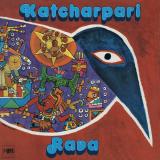
- 04: Katcharpari (Feat. Bruce Johnson, John Abercrombie &Amp; Chip White)
- 05: Fluid Connection (Feat. Bruce Johnson, John Abercrombie &Amp; Chip White)
- 06: Cheerin&Apos; Cherry (Feat. Bruce Johnson, John Abercrombie &Amp; Chip White)
- 07: Peace (Feat. Bruce Johnson, John Abercrombie &Amp; Chip White)
The breakthrough album. Enrico Rava's second solo record, recorded in Milan in January 1973 and released on the German BASF label, is nothing less than a cornerstone of Italian jazz-rock - the record that caught Manfred Eicher's attention and opened the doors to ECM. Rava himself has called it his breakthrough, and history proved him right.
The lineup is killer: John Abercrombie on guitar, Bruce Johnson on bass, Chip White on drums. Four musicians operating at the absolute peak of early seventies fusion energy - electric, cosmopolitan, burning with that particular fire that only existed in that brief window when jazz met rock and nobody knew the rules yet. Abercrombie, already on his way to becoming one of the most distinctive voices in electric jazz guitar, delivers some of his most ferocious early work here. White's drumming is relentless, pushing the music forward with an intensity that never lets up.
If Miles' Bitches Brew-era speaks to you, if Ian Carr's Nucleus gets you moving, if you know Sun Ra's Lanquidity and Don Cherry's Relativity Suite by heart - this is essential listening. Rava's vision was already fully formed: South American rhythms, Mediterranean warmth, free jazz ferocity, rock power - all flowing together without borders or categories. By the early seventies, Rava had absorbed everything - the New Thing, the European free scene, the electric revolution coming out of Miles' studio - and forged something entirely his own.
The seven tracks cover serious ground. "Bunny's Pie" introduces the music with an almost cosmic atmosphere of suspense, hovering in that liminal space before it trails off into the up-tempo vibrant frenzy of "Trial N. 5" - Abercrombie and Rava trading swirling solos at full intensity, the rhythm section locked in tight. "Dimenticare Stanca" moves from Rava's expressive balladic intro into pure funk, guitar and trumpet steering over the rhythmic drive with absolute confidence. The title track carries the lyrical feel and cadence of an Incan-Peruvian folksong - that cosmopolitan spirit made audible. "Fluid Connection" rides a funky bass riff into fusion heaven, with standout trumpet and guitar solos that build and release with perfect tension. "Cheerin' Cherry" pays homage to the great Don Cherry - Rava's spiritual mentor and fellow traveler in world music - exploring a North African soundscape that points toward the global jazz to come. Johnson's "Peace" closes the album with a minute and a half of serene, blissful calm - a moment of stillness after the storm.
This audiophile reissue - cut from the original masters, pressed by Pallas in Germany on 180gm vinyl, housed in a thick laminated hand-glued gatefold - does full justice to an album that remains a collector's holy grail.
Don't sleep on this one. Limited Edition.
Much more than just another punk band, Ideal Victim is a wildfire fueled by fury, grit, and defiance. Formed in Porto in 2022, this young outfit proposes a seemingly improbable formula that proves to be both unique and cohesive: over the raw, unyielding energy of 1980’s British hardcore, they layer the hypnotic vibes of surf rock and the nervous tension of rockabilly—crafting a taut and irresistible balance between atmosphere and aggression.
At the forefront stands the fierce and outspoken roar of vocalist Mariana, supported by the driving cadence of drums and bass, and by a guitar that writhes as it drowns in distortion.
Ideal Victim belong to a lineage of bands that never asked for permission to exist: from Discharge to Bikini Kill, from The Cramps to Dead Kennedys, their influences are undeniable. Yet, Ideal Victim refuse to echo them in exercises of nostalgia. Their music is urgent, combative, and strikingly current—a visceral response to the shackles of patriarchy and the open wounds of a world in accelerated collapse.
Propelled by the impact of their demo Diary of a Pig and a considerable amount of stage experience, Ideal Victim now presents Rage Letters, a debut album that reflects the band's evolution through a set of six brief tracks—where nothing is left unsaid, nor unshouted.
With Rage Letters, Ideal Victim extend us an invitation to insubordination—and it's one we can't help but accept.
Never Sleep charity tape series ends up in Thornton Heath, London for the grimiest of bedroom work outs.
Early Fruity Loops philosopher Plasticman aka Plastician teams up with fellow trailblazers DJ Suicide & N Double A crew for a prompt internet radio set of prototype Grime. Rugged, raw and filled with the occasional KAOS Pad trigger / gunfinger FX; the devilish miscreants bring the lyrical vehemence.
Broadcasting from his parents place and utilising early productions Plasticman keeps the fibre optical momentum burning with early production, laser precision polyphonic instrumentals and quantified eski.
N Double A crew have so many quotables but its a "pass the mic" affair as limited equipment fort his bedroom bedlam. L Man spits certified gold on demand whilst Narstie echoes his signature cadence, Typah goes in hard with the colder than waiting in a queue outside Plastic People flow and Uzi destroys the stream with typical flair.
A landmark moment in innovation, internet radio was a key player in the growth of Grime and Dubstep. Helping build profile, connections and galvanize the online community.
- A1: Roudi Vagou - Gleisende Lichter
- A2: Roudi Vagou - Halb So Schwer
- A3: Roudi Vagou - So Sueß
- A4: Roudi Vagou - Lila Gibt Es Nicht
- A5: Roudi Vagou - Iss Mich Ganz Auf
- A6: Roudi Vagou - Grenzueberschreitung
- A7: Roudi Vagou - Aufgeben Ist Kein Verzicht
- B1: Läuten Der Seele - Komischer Anruf
- B2: Läuten Der Seele - Punkt Mitternacht
- B3: Läuten Der Seele - Nur Fuer Uns Zwei
- B4: Läuten Der Seele - Mineralwasserflasche 1
- B5: Läuten Der Seele - Glaskopf Mit Watte
- B6: Läuten Der Seele - Rathausdach
- B7: Läuten Der Seele - Ein Kitzeln In Den Graebern
- B8: Läuten Der Seele - Mineralwasserflasche 2
- B9: Läuten Der Seele - Mondraetsel
Across an extensive suite of enchanting miniatures, Matthias Kremsreiter and Christian Schoppik present the hypnagogic vision of Taghelle Nacht. Recording under their respective Roudi Vagou and Läuten der Seele aliases, Kremsreiter and Schoppik combine their distinct but equally accomplished instrumental practices into a new collaboration that weaves swooning samples amongst instrumental passages. They lead us through 16 vignettes that revel in the cognitive dissonance and seductive magic of moonlight at midnight.
Both artists have past form within the folds of contemporary experimental electronic music in Germany. Kremsreiter's work as alibikonkret has manifested on DIY tape releases created with a methodical, technically-minded approach. Debuting his Roudi Vagou pseudonym on Taghelle Nacht, he pivots to a more playful, instinctively felt method that allows the compositions to flow with a natural cadence. Schoppik has been a key figure in the celebrated dark-ambient-folk scene, not least as part of the group Brannten Schnüre. His work as Läuten der Seele includes the acclaimed 'water trilogy' of LPs between 2022 and 2024, with a greater emphasis on instrumental, atmospheric production, and a last, stunning collaborative album with Nový Sv?t's Jota Solo.
On Taghelle Nacht the precise ingredients of each piece soften at the edges as tape loops and swathes of reverb seal the joints between spellbinding melodic refrains. Opening track and lead single 'Gleisende Lichter' sets the tone with ghostly murmurs, spine-tingling string refrains and splashes of cymbal that cut through the gloom with stark clarity. A lilting romanticism stirs at the heart of the orchestral samples that populate the likes of "Grenzu?berschreitung" - old-world beauty sometimes buried in dust, elsewhere rendered with startling clarity. 'So Süß' lets buzzing, sustained drones and dissonant sweeps of extended technique glide in and out of each other. Granular processing subtly breaks apart the mellow swell on 'Komischer Anruf', and forlorn sax calls out into heavy-hearted space on 'Glaskopf Mit Watte'. At every turn a new scene is painted, distinct from the last and yet all bound up in the pervasive, pale blue light cast over the sleeping landscape Kremsreiter and Schoppik have sculpted.
Snatches of song drift by like dreamlike fragments, and achingly tender flourishes fleetingly appear and retreat - ideas and expressions momentarily caught in the light before retreating into the shadows once more. This is the evocative world of Taghelle Nacht - an unsettling depiction of the surreal blend of memories and imagination that merge into each other once the sun goes down.
- A1: Shaitan And I
- A2: Pregnant Paws
- A3: A Gospel Reckoning
- A4: Never Ever Trust Them
- A5: Fdatbitchionlyluvgod
- A6: Ms.aquatique
- A7: Dr Lovve
- B1: Icescream Queen
- B2: Subliminal Shade
- B3: Fragrant Aura
- B4: Hidenseek
- B5: The Chronicles Of Dating
- B6: Crazytruluv
- B7: Frenemy Of Progress
Following his debut EP God Iz Enough, South London artist Tomi Ahmedeus unveils “Sereniti Praya” a striking new chapter that deepens his sonic identity. Once again collaborating with Grammy Award-winning engineer IRKO, Ahmedeus crafts an immersive soundscape where brutalist textures, cinematic layers, and visceral rhythms converge. At it's core, Sereniti Praya is both dance driven and emotionally resonant: intricate sampling and percussive detail form the cadence of a project that speaks to love, loss, and self-discovery.
It is a record that moves between the personal and the ephemeral, designed as much for reflective listening as for the energy of the dance floor.
- 1: Intro
- 2: Rocket Science
- 3: Kryptonite
- 4: Couldn’t Find Another
- 5: Magnetics
- 6: The Funnel
- 7: Absotively Posolutely
- 8: This Year
- 9: The Chosen
- 10: Combustion Spontaneous
- 11: World Premier
- 12: Creatively Wise
- 13: Widespread
- 14: Holier Than Thou
- 15: Rain
- 16: Counseling
Over two decades later, the underground classic that lit the fuse on indie hip-hop’s next era finally gets its vinyl debut. Originally dropped in 2001, Table Scraps is a gritty, no-frills compilation of unreleased tracks and lost sessions from the formative years of MHz, the Columbus, Ohio hip hop crew that helped define an era before the mainstream caught wind of the underground. Recorded between 1997–2001, the album is raw, urgent, and packed with early glimpses of the greatness that would follow.
The core lineup is fully intact and fully in form: Copywrite flexes his unmatched wordplay and delivers two self-produced heaters, “The Funnel” (co-produced) and “Combustion Spontaneous,” proving he’s just as deadly behind the boards. Tage Future brings futuristic cadence and sharp delivery, Jakki Da Motamouth stays unapologetically rugged, and the late Camu Tao is in rare, untamed form, a creative force whose brilliance only grew from here. Holding it all together are beats from RJD2, Mighty Mi, Camu, and Copywrite himself.
Pressed on vinyl for the first time ever, Table Scraps is more than a collection, it’s a time capsule from a crew that helped shape the underground before it had a name.
KEG announce new EP Girders set for release September 2nd on Alcopop! Records/BMG. The band also share the frenzied and whip-smart new single Kids. The band, who have been hotly tipped across the board for 2022, will also play their debut UK headline tour plus festivals which include Green Man, End Of The Road, Latitude and more. Kids strides into the deep lineage of British art-punk songwriting that is both self-referencing and outward-facing - while being consistently innovative. Few singles manage to take aim at both the restaurant chain Itsu and the comedian Michael McIntyre, but KEG somehow pull it off.
Following a widely successful debut single release Heyshaw in the summer of 2021, KEG saw major support from publications such as NME, DIY, Dork, So Young, Clash etc. Leading into their debut EP Assembly, released October 2021, KEG toured with contemporaries such as Squid and Talk Show.
KEG are a seven piece. Albert (vocals), Joel (bass) & Will (synth) grew up together around the seaside Yorkshire town of Bridlington; and like many artists growing up in removed quarters of the country, they shared a yearning to leave. Spreading to different parts of the country after leaving school, they found their bandmates in their respective cities and found one another once again on the southern shores of Brighton.
Frank (guitar), whose background resides mostly in hip-hop, afforded a unique pulse with a guitar sound which is manic, discordant but firm. Jules (guitar) whose songwriting sensibilities come from a love of cadence and craft of beautiful soul ballads, imbued the band with his structured sense of composition. Both Charlie (trombone & shell) and Johnny (drums) come from classically trained Jazz backgrounds.
The announcement will receive digital marketing support and will launch with new tour dates announced (below) with pre-order for presale access available.
On “Cold Sweat,” James Brown famously called to “give the drummer some.” In 1974, Philadelphia vibraphonist Khan Jamal called to Give the Vibes Some, with superb results. Pianist and composer Jef Gilson’s PALM label gave Jamal the platform he needed to deliver a thorough exploration of contemporary vibraphone. After launching PALM in 1973, Gilson quickly demonstrated that he would only produce records not found anywhere else. Give the Vibes Some, PALM number 10, was another confirmation of this guiding principle.
Raised and based in Philadelphia, Khan Jamal took up the vibes in 1968, after two years in the army during which he was stationed in France and Germany. Decisively drawn to the instrument by the work of the Modern Jazz Quartet’s Milt Jackson, Jamal studied under Philadelphia vibraphone legend Bill Lewis and soon made his debuts in the local underground.
Early in 1972, Jamal made his first recording, with the Sounds of Liberation. The band attempted an original fusion of conga-heavy grooves with avant-garde jazz soloing. Saxophonist Byard Lancaster, an important figure in Jamal’s development, contributed much of the solo work. Later in 1972, Jamal made his leader debut with Drum Dance to the Motherland, a reverb-drenched, never-to-be-replicated experiment with live sound processing. Both albums appeared on the tiny musician-run Dogtown label.
“We couldn’t get no play from nowhere. No gigs or recording sessions or anything. So I took off for Paris,” Jamal recalled in a Cadence interview with Ken Weiss. “Within a few weeks, I had a few articles and I did a record date. It didn’t make me feel good about America.” That was in 1974, while Byard Lancaster was recording the music gathered on Souffle Continu’s recent The Complete PALM Recordings, 1973-1974.
Jamal’s record date delivered Give the Vibes Some. At its core, it was an exploratory solo vibraphone album, even if two tracks added (through technological resourcefulness?) a très célèbre French drummer very much into Elvin Jones appearing under pseudonym for contractual reasons. Another track, for which Jamal switched to the vibes’s wooden ancestor, the marimba, added young Texan trumpeter Clint Jackson III. The most notable article published on Jamal during this stay in France was a Jazz Magazine interview. Jamal’s last word there were “The Creator has a master plan/drum dance to the motherland.” “Give the vibes some” could be added to this programmatic statement.
- 1: Motion (Feat. Jacob Collier & Seamus Blake)
- 2: Nosso Amor Vadio (Feat. Zelia Duncan) / Banzo (Feat. Omar Sosa)
- 3: Paisagem (Feat. Anat Cohen)
- 4: Hermanos (Feat. Yamandu Costa)
- 5: Chamego No Salao (Feat. Lenine)
- 6: Onde Nascem As Ondas (Feat. Ed Motta)
- 7: Botero (Feat. Eduardo Farias)
- 8: Nossa Valsa (Feat. Leila Pinheiro)
- 9: Catarina E Teresa (Feat. Hermeto Pascoal)
Featuring 10 of his own compositions, Grossi's renowned virtuosity flows with deep sensitivity through various genres, reflecting the solid trajectory of one of the greatest instrumentalists and most creative musicians in Brazilian music. Collaborating with prominent names from both the national and international music scenes, 'Plural' showcases Grossi's music without borders, offering the world a glimpse of his extensive career. For this celebration, outstanding guests were invited to join the musical journey. Several tracks also highlight Grossi's sensitivity as a songwriter and lyricist. In 'Onde Nascem as Ondas', Ed Motta delivers a soulful ballad carried by his distinctive timbre. Zelia Duncan, sings a unique samba in 'Nosso Amor Vadio' with a captivating cadence. 'Chamego no Salao' captures the spirit of north-eastern Brazil and is brought to life by Lenine's vibrant voice and joyful interpretation, adding a playful tone with a jazzy touch. The art of improvisation is beautifully represented by 'Catarina e Teresa', an improvised composition created in collaboration with the legendary Hermeto Pascoal and dedicated to Grossi's twin daughters. Other tracks include 'Banzo', which showcases a rhythmic dialogue featuring Cuban pianist Omar Sosa. 'Motion', with the brilliance of both Jacob Collier and Seamus Blake, merges jazz and pop in a seamless melodic conversation.
With an open mind and without boundaries, he invites us to explore a vast musical universe, embracing art with profound emotion and passion. This is what you will hear and experience in 'Plural': a deep love for the art of sound and a profound respect for musical diversity - qualities that have defined his career.
- 1: Workaround One
- 2: Workaround Two
- 3: Workaround Three
- 4: Workaround Four
- 5: Workaround Five
- 6: Clouds Strum
- 7: Workaround Six
- 8: Workaround Seven
- 9: Workaround Eight
- 10: Workaround Nine
- 11: Square Fifths
- 12: Workaround Bass
- 13: Pause
- 14: Workaround Ten
‘Workaround’ is the lucidly playful and ambitious solo debut album by rhythm-obsessive musician and DJ, Beatrice Dillon for PAN. It combines her love of UK club music’s syncopated suss and Afro-Caribbean influences with a gamely experimental approach to modern composition and stylistic fusion, using inventive sampling and luminous mixing techniques adapted from modern pop to express fresh ideas about groove-driven music and perpetuate its form with timeless, future-proofed clarity. Recorded over 2017-19 between studios in London, Berlin and New York, ‘Workaround’ renders a hypnotic series of polymetric permutations at a fixed 150bpm tempo.
Mixing meticulous FM synthesis and harmonics with crisply edited acoustic samples from a wide range of guests including UK Bhangra pioneer Kuljit Bhamra (tabla); Pharoah Sanders Band’s Jonny Lam (pedal steel guitar); techno innovators Laurel Halo (synth/vocal) and Batu (samples); Senegalese Griot Kadialy Kouyaté (Kora), Hemlock’s Untold and new music specialist Lucy Railton (cello); amongst others, Dillon deftly absorbs their distinct instrumental colours and melody into 14 bright and spacious computerised frameworks that suggest immersive, nuanced options for dancers, DJs and domestic play. ‘Workaround’ evolves Dillon’s notions in a coolly unfolding manner that speaks directly to the album’s literary and visual inspirations, ranging from James P. Carse’s book ‘Finite And Infinite Games’ to the abstract drawings of Tomma Abts or Jorinde Voigt as well as painter Bridget Riley’s essays on grids and colour. Operating inside this rooted but mutable theoretical wireframe, Dillon’s ideas come to life as interrelated, efficient patterns in a self-sufficient system.
With a naturally fractal-not-fractional logic, Dillon’s rhythms unfold between unresolved 5/4 tresillo patterns, complex tabla strokes and spark-jumping tics in a fluid, tactile dance of dynamic contrasts between strong/light, sudden/restrained, and bound/free made in reference to the notational instructions of choreographer Rudolf Laban. Working in and around the beat and philosophy, the album’s freehand physics contract and expand between the lissom rolls of Bhamra’s tabla in the first, to a harmonious balance of hard drum angles and swooping FM synth cadence featuring additional synth and vocal from Laurel Halo in ‘Workaround Two’, while the extruded strings of Lucy Railton create a sublime tension at the album’s palatecleansing denouement, triggering a scintillating run of technoid pieces that riff on the kind of swung physics found in Artwork’s seminal ‘Basic G’, or Rian Treanor’s disruptive flux with a singularly tight yet loose motion and infectious joy. Crucially, the album sees Dillon focus on dub music’s pliable emptiness, rather than the moody dematerialisation of reverb and echo. The substance of her music is rematerialised in supple, concise emotional curves
and soberly freed to enact its ideas in balletic plies, rugged parries and sweeping, capoeira-like floor action. Applying deeply canny insight drawn from her years of practice as sound designer, musician and hugely knowledgable/intuitive DJ, ‘Workaround’ can be heard as Dillon’s ingenious solution or key to unlocking to perceptions of stiffness, darkness or grid-locked rigidity in electronic music. And as such it speaks to an ideal of rhythm-based and experimental music ranging from the hypnotic senegalese mbalax of Mark Ernestus’ Ndagga Rhythm Force, through SND and, more currently, the hard drum torque of DJ Plead; to adroitly exert the sensation of weightlessness and freedom in the dance and personal headspace.
Adey Omotade, a sound artist and cultural cartographer rooted in Lagos and shaped by diasporic experiences in Paris, Johannesburg, Berlin and Ivory Coast, brings a rare sensibility to this work: walking between worlds, bringing with him the cadence of home and the dissonance of diaspora. In his hands, sound becomes ritual: a migration of soul, an assemblage of bells, melodies and chants woven from Ifa shrines, river banks and Yoruba festivals. Playing the dual role of griot and cartographer, Omotade, who works across acoustic ecology, experimental music and sound design, builds each track like a shrine: layered, intentional, alive with breath and blood, each track a libation, each break an invocation. Each track unfurls like aso-oke, the celebratory fabric of the Yoruba people: drums that speak in polyrhythms, synths bending like waves, incantations layered like memory, fading then returning, gently like the water at the banks of the Osun River.
The influence of experimental sound design is evident throughout, but ‘Ni'ran’ is no cold abstraction. It pulses with life, with the heartbeat of talking drums, the breath of ambient textures and the warmth of the voices of babalawos, priests of Ifa, invoking ire (blessings) on all. ‘Oori : Ogbe’ invokes the sacred Odu Ifá — a divination verse that speaks of beginnings, clarity and destiny. In ‘Ofo : 'Nkantation’, polyrhythms unfold like verses, each beat a coded message inviting listeners to reflect on destiny and alignment.The title track ‘Ęęro : Eeşu’ begins with the haunting voice of a priest reciting the Odu Ifá, a calling to give unto Eesu his due. Percussive patterns unfold like verses, each beat both a memory and a prayer.
- 1: Pure Energy 09:8
- 2: Clint 06:53
- 3: 5.000 Feet Up 1:19
- 4: Give The Vibes Some 05:51
On “Cold Sweat,” James Brown famously called to “give the drummer some.” In 1974, Philadelphia vibraphonist Khan Jamal called to Give the Vibes Some, with superb results. Pianist and composer Jef Gilson’s PALM label gave Jamal the platform he needed to deliver a thorough exploration of contemporary vibraphone. After launching PALM in 1973, Gilson quickly demonstrated that he would only produce records not found anywhere else. Give the Vibes Some, PALM number 10, was another confirmation of this guiding principle.
Raised and based in Philadelphia, Khan Jamal took up the vibes in 1968, after two years in the army during which he was stationed in France and Germany. Decisively drawn to the instrument by the work of the Modern Jazz Quartet’s Milt Jackson, Jamal studied under Philadelphia vibraphone legend Bill Lewis and soon made his debuts in the local underground.
Early in 1972, Jamal made his first recording, with the Sounds of Liberation. The band attempted an original fusion of conga-heavy grooves with avant-garde jazz soloing. Saxophonist Byard Lancaster, an important figure in Jamal’s development, contributed much of the solo work. Later in 1972, Jamal made his leader debut with Drum Dance to the Motherland, a reverb-drenched, never-to-be-replicated experiment with live sound processing. Both albums appeared on the tiny musician-run Dogtown label.
“We couldn’t get no play from nowhere. No gigs or recording sessions or anything. So I took off for Paris,” Jamal recalled in a Cadence interview with Ken Weiss. “Within a few weeks, I had a few articles and I did a record date. It didn’t make me feel good about America.” That was in 1974, while Byard Lancaster was recording the music gathered on Souffle Continu’s recent The Complete PALM Recordings, 1973-1974.
Jamal’s record date delivered Give the Vibes Some. At its core, it was an exploratory solo vibraphone album, even if two tracks added (through technological resourcefulness?) a très célèbre French drummer very much into Elvin Jones appearing under pseudonym for contractual reasons. Another track, for which Jamal switched to the vibes’s wooden ancestor, the marimba, added young Texan trumpeter Clint Jackson III. The most notable article published on Jamal during this stay in France was a Jazz Magazine interview. Jamal’s last word there were “The Creator has a master plan/drum dance to the motherland.” “Give the vibes some” could be added to this programmatic statement.
- 1: Reintroduction
- 2: Employees Of The Year
- 3: Your Mans And Them
- 4: Lisa (Never Easty On My Nextel)
- 5: Morris Day
- 6: Dirty Girl
- 7: Early Mornin' Tony
- 8: Breaker Down Like A Shotgun
- 9: Marvin Gaye
- 10: Life Vegas
- 11: Bonet (Cement Angels)
- 12: Woman Tonight
- 13: Gangster Ass Anthony
- 14: The Biggest Lie
- 15: I Shot A Warhol
Cassette[21,43 €]
In 2005, Felt 2: A Tribute to Lisa Bonet brought together two of underground hip-hop’s most respected voices of the time—Murs and Slug—for a second collaboration that felt looser, livelier, and more charismatic than its predecessor. The album captures a moment of creative freedom, where both MCs were firing on all cylinders, trading verses with sharpness, humor, and effortless chemistry. Their interplay reflects a deep mutual respect and a shared drive to push boundaries while keeping things rooted in style and substance.
Working with different producers for each volume allowed Murs and Slug to bring a unique energy to each release, and Ant’s masterful production was central to the chemistry of Felt 2.
With roots in classic soul and West Coast bounce, his beats created a warm, funk-laced foundation that allowed both rappers
to experiment with new cadences and ideas. Rather than lean on moodiness or melodrama, the soundscape of Felt 2 is expansive, colorful, and rooted in rich, infectious rhythm—an aesthetic that has aged gracefully and continues to draw new listeners into its orbit. While undeniably fun, Felt 2 is also structurally tight and full of moments that reward repeat listens. The chemistry between Murs and Slug is effortless, and their shared sense of humor, timing, and respect for the craft creates a lasting impression. It’s a standout entry in the canon of early-2000s indie hip-hop, and one that’s long overdue for a proper vinyl reissue.
- 1: Reintroduction
- 2: Employees Of The Year
- 3: Your Mans And Them
- 4: Lisa (Never Easty On My Nextel)
- 5: Morris Day
- 6: Dirty Girl
- 7: Early Mornin' Tony
- 8: Breaker Down Like A Shotgun
- 9: Marvin Gaye
- 10: Life Vegas
- 11: Bonet (Cement Angels)
- 12: Woman Tonight
- 13: Gangster Ass Anthony
- 14: The Biggest Lie
- 15: I Shot A Warhol
Vinyl[26,01 €]
In 2005, Felt 2: A Tribute to Lisa Bonet brought together two of underground hip-hop’s most respected voices of the time—Murs and Slug—for a second collaboration that felt looser, livelier, and more charismatic than its predecessor. The album captures a moment of creative freedom, where both MCs were firing on all cylinders, trading verses with sharpness, humor, and effortless chemistry. Their interplay reflects a deep mutual respect and a shared drive to push boundaries while keeping things rooted in style and substance.
Working with different producers for each volume allowed Murs and Slug to bring a unique energy to each release, and Ant’s masterful production was central to the chemistry of Felt 2.
With roots in classic soul and West Coast bounce, his beats created a warm, funk-laced foundation that allowed both rappers
to experiment with new cadences and ideas. Rather than lean on moodiness or melodrama, the soundscape of Felt 2 is expansive, colorful, and rooted in rich, infectious rhythm—an aesthetic that has aged gracefully and continues to draw new listeners into its orbit. While undeniably fun, Felt 2 is also structurally tight and full of moments that reward repeat listens. The chemistry between Murs and Slug is effortless, and their shared sense of humor, timing, and respect for the craft creates a lasting impression. It’s a standout entry in the canon of early-2000s indie hip-hop, and one that’s long overdue for a proper vinyl reissue.
- Skyfall (Reg+Fast)
- Sk Web Web Sk Feat Nofuturesk
- Disheveled
- Pleading
- Goin Pro
- Txts Red On Imessage (Reg+Fast)
- Crochet - I Swear Feat Tnotsobad
- Offwrld
- Playboy (Reg+Fast)
- Enough
- Is That Watchu See In Mysele (Reg+Slowed)
- Vip (Reg+Slowed)
- Otr Feat Tnotsobad
- Fantasize (Reg+Fast)
- Crazy Keepyaclose (Fast+Reg)
- Whattitdo
- 007: (Reg+Slowed)
- Yw Sa
- Phone
In syrupy slow pursuit of a strong 2023 debut, Yungwebster's somnolent sequel is bolstered by pitch-perfect production from Space Afrika and Nathan Melja, who vaporise the rapper's auto-tuned post-Future drawl with euphoric orchestral drones, brittle micro-trap beats and weightless pads.
Over a decade ago at this point, Future released 'Codeine Crazy', the decelerated finale of 'Monster', one of his best-loved mixtapes. The track neatly summarised themes the Atlanta rapper had been circling for years at that point, layering his slurred, lean-dizzy rhymes over producer TM88's rubbery, melancholy synths. "Take all my problems and drink out the bottle," he moaned robotically, using the track's minor key bounce to represent the crushing delirium that followed fame and its tasting menu of intoxicants. It's still Future's high water mark creatively, and its traces can be observed in a full spectrum of contemporary sounds, from 6LACK's downtrodden, self-aware R&B to Lil Uzi Vert's feverish trap. But it's Yungwebster who's taken the haze to its logical conclusion, reimagining the Magic City-sculpted bumps as hypnagogic Actavis- 'n Xanax-hued ambient music. You could argue it was bound to happen - the more you sip, the slower it gets - and plays as a cracked mirror to cloud rap's long-smoked hybrid of Southern psychedelia and post-OutKast eccentricity.
Webster's opiated POV is clearer than ever before on 'II'. Just peep the cracks in his voice on the Space Afrika-produced opener 'Skyfall' as he coughs and splutters over watery samples, booming subs and SA's patented collage of soundtrack-ready strings and sirens. Presented at regular speed and in chipmunked form, it sets the pace for an album that, like its predecessor, constantly fucks with the timeline, pitching the whole master into doubletime or slowing it down to a crawl to present a curved, inebriated narrative rather than a straight line. Even without the tempo switches, Webster singles out beats that accent his warbled rhymes that sound as if they'll fall apart at any moment. French DJ and producer Nathan Melja backs 'Disheveled' with Black Ark-styled oscillations and airlock'd echoes, filtering the bassline until it almost disappears entirely; with room to breathe, Webster's able to take the lead - you might not be able to pick out the words, not entirely at least, but you get the message.
In fact it's Webster's voice that's the revelation on 'II' - with a coherent mix from producer tnotsobad, the nuances and fluttering tonalities emerge more vividly than they have before. It makes the flip between the regular speed and fast on 'Txts Red on iMessage' a textural decision, the different pace shifting the warbled cadences so Webster's voice becomes far more important than the additional elements. And on the album's Space Afrika-produced eight-minute centerpiece 'Crochet / I Swear', Webster's mumbled bio-mechanical whines create a much-needed foil for the decelerated boom-clack and suspended save room ambience. We get to encounter a personality here, not just an aesthetic, so as the album moves into its twilit fourth side, the beatless, voice-led somniferousness of 'YA SA' and ululating 'Phone' come off like a descent into tranquillised sedation. Rap has rarely sounded so chimeric.
Living in the present is an album built around the work of American minimalist poet, Robert Lax (1915-2000) who is widely praised for his artistic concept of reduction, in which a pause becomes as important as the things said.
The album brings together the sound of Robert Lax reading his poetry, narrative field recordings by Nicolas Humbert and subtle yet imaginative timbres by Carina Khorkhordina (trumpet) and Miki Yui (electronics) who is also behind the final mixing of the album.
Living in the present is drawing from an archive of audio recordings originally made by film maker Nicolas Humbert while shooting a film on Robert Lax entitled Why Should I Buy A Bed When All That I Want Is Sleep?, ( Nicolas Humbert and Werner Penzel, Germany, 1999) The film was made on the Greek island of Patmos where Lax has lived withdrawn for 3 decades.
More than 25 years after the premiere of Why Should I Buy A Bed When All That I Want Is Sleep?, Humbert, Khorkhordina and Yui are revisiting the original audio material and patiently open worlds within worlds, pointing to new harmonic textures and isolating timbres, synchronizing different layers of time and traces of various locations into a new composition in its own right.
In some ways this album feels like an expansion of the work Humbert and Penzel did with Lax across six years, between 1993 and 1999, where they developed a unique intimacy in their textual-visual collaboration. On two long pieces, for each side of the album, “Where do i begin” and “One moment passes, another comes on” respectively – Yui’s electronics and Khorkhordina’s trumpet interweave beautifully with Humbert’s field recordings, in a manner that shadows the reflective reduction of Lax’s poetry. Indeed, it's no surprise that Lax’s poetry draws musicians into its orbit; it offers the curious a welcoming reduction in which only individual words and syllables represent the essence of language.
Lax’s poetry is notable for its qualities of near-stillness and its capacity to pause the reader’s thought, asking them to hold the sensuality of language for an extended, quietly revelatory moment. His readings on this album share a similar cadence, interested in settling with syllables, with single or several words, for an extended time.
Ultimately, Living in the present unfolds with unforced grace and poetics – one moment passes, then another comes on. (Jon Dale)
- A1: Malavoi - Te Traigo Guajira
- A2: Los Caraibes - Donde
- A3: Tropicana - Amor En Chachacha
- A4: Ryco Jazz - Wachi Wara
- A5: Eugene Balthazar - Dap Pignan
- A6: Roger Jaffort - Oye Mi Consejo
- A7: Les Kings - Oriza
- B1: Les Supers Jaguars - Tatalibaba
- B2: Super Combo De Pointe A Pitre - Serrana
- B3: L'ensemble Abricot - Se Quedo Boogaloo
- B4: Henri Guedon - Bilonga
- B5: Les Aiglons - Pensando En Ti
- B6: Los Martiniquenos - Caterate
In Guadeloupe, many people think that jazz and ka music are like a ring and a finger. To some extent, the same could be said about so called Latin music and the music played in the French West Indies.
Both aesthetics were born in the Caribbean and bear so many connections that they can easily be considered cousins. In constant dialogue, there are lots of examples of their fruitful alliance and have been for a while. The English country dance that used to be practiced in European lounges came to be called kadrille in Martinique and contradanza in Cuba. They both featured additional percussion instruments inherited from the transatlantic deportation. Drawing from shared feelings about the same traumatized identity – later to be creolized – it would be hard not to assume that they were meant to inspire each other. The golden age of the orchestras that graced the Pigalle nights during the interwar period further proves the point. As soon as the 1930s, Havana-born Don Barreto naturally mixed danzón and biguine music in a combo based at Melody's Bar. In the following decade, Félix Valvert, a conductor who was born and raised in Basse-Terre in Guadelupe, also worked wonders in Montparnasse with La Coupole, which was an orchestra made up of eclectic musicians. Afro- Caribbean performers of various origins were often hired on rhythm and brass sections in jazz bands, which used to enliven the typical French balls of the capital. In the 1930s and onwards, Rico’s Creole Band was one of them.
Martinican violinist-clarinettist Ernest Léardée, who would become the king of biguine music as well as the main figure of French Uncle Ben's TV commercials (a dark stigma of post-colonial stereotypes), had musicians from the whole Caribbean sphere play at his Bal Blomet – and they all enchanted "ces Zazous-là" (according the words of Léardée's biguine-calypso piece). In les Antilles (French for French West Indies), music history started to speed up in the 1950s, when trade expanded and radio stations grew bigger. The Guadelupean and Martiniquais youth tuned in their old galena radio sets to South American and Caribbean music. As for the women traders, les pacotilleuses, they bought and sold goods across different islands (the "passing of items through various hands" was thought to be most pleasurable) and brought back countless sounds in their luggage. Such was the case of Madame Balthazar, who once returned from Puerto Rico with the first 45rpm and 33rpm to ever enter Martinique.
Out of this adventure was created the famous Martinican label La Maison des Merengues, a music business she opened and undertook with her husband and which proved to be a major landmark. At the end of the 1950s, in Puerto Rico, Marius Cultier competed in the Piano International Contest playing a version of Monk's Round 'Midnight. He won the first prize and this distinction foreshadowed everything that was to come. Cultier, the heretic Monk of jazz, was quickly praised for writing superb melodies, always tinged with a twist that conferred a unique sound to his music. It didn't take long for the gifted self-taught musician to get to play with Los Cubanos, making a name for himself thanks to his impressive maestria on merengues.
The rest is history. Besides, in the late 1950s, Frantz Charles-Denis, born into the upper middle class in Saint-Pierre and better known by his first name Francisco, went back home after working at La Cabane Cubaine – a club located rue Fontaine where he had caught the Latin fever. Francisco's music was therefore heavily marked by his Cuban cousins' influence, which gave the combos he led a specific style and also led to renewal. Things were swinging hard in La Savane, located in the main square in Fort-de-France. He set up the Shango club close by and tested out the biguine lélé there, a new music formula spiced up with Latin rhythms. Soon afterwards, fate had him fly to Puerto Rico and Venezuela.
As for percussionist Henri Guédon (percussions were only a part of his many talents), he was born in Fort-de-France in May 22nd 1944, the day marking the celebration of the abolition of slavery. As an old man, he could remember that in " his father's Teppaz, a lot of hectic 6/8 music was constantly playing...". In the opening lines of his Lettre à Dizzy, a small illustrated collection of writings published by Del Arco, he highlighted the huge impact that cubop had on him as a teenage boy, around 1960. He eventually turned out to be the lider maximo in La Contesta, a big band steeped in Latin jazz. He was also the one who originated the word zouk to describe music which brought the sound of the New York barrio to Paris. It was the culmination of a journey that started in Sainte-Marie: "a mythical place for bélé, the equivalent of Cuban guaguancó". In the early 1960s, the tertiary economy developed to the detriment of agriculture. Yet rural life was where roots music emerged in Martinique and in Guadeloupe.
Record companies played a major part in the process of Latin versions sweeping across the islands – before reaching everywhere else. Producer Célini, boss of the great Aux Ondes label, and Marcel Mavounzy, both the head of Émeraude records - a firm which was founded in 1953 - as well as the brother of famous saxophonist Robert Mavounzy, were big names to bear in mind. Although there were many of them - all of whom are featured on this record - Henri Debs was definitely the major figure in the recording adventure. He proved to be so influential that he even got compared to Berry Gordy. In the mid 1950s, when he acquired his first Teppaz, he worked on his first compositions: a bolero and a chachacha. Then, he became the one man who made people discover Caribbean music, from calypso to merengue. He was among the first ones to rush out to San Juan, Puerto Rico, to buy records and distribute them through a store run by one of his brothers in Fort-de-France. He had members of the Fania All Star come and perform there, which he was madly proud about. He was also the first one to pay attention to Haitian music, such as compas direct and various other rhythms which would soon flood the market. As a result, many of the combos hitting his legendary studio would end up boosted by widespread "Afro-Latin" rhythms. However, he never denied his identity: gwo ka drums were given a major role, although they were instruments which had long been banned from the "official" music spheres. The present selection bears witness to such a creative swarming. Here are fourteen tracks of untimely yet unprecedented cross-fertilization: all types of music rooted in the Creole archipelago have found their way, whatsoever, to the tracklisting. Whether originating from the city or being more rural, they all go back to what Edouard Glissant, in an interview about the place of West Indian music in the Afro-American scope, called "the trace of singing, the one which got erased by slavery." "It is so in jazz, but also in reggae, calypso, biguine, salsa... This trace also manifests through the drums, whether Guadelupean, Dominican, Jamaican or Cuban... None of them being quite the same. They all point to the idea of a trace, seeking it out and connecting to each other through it. This is the hallmark of the African diaspora: its ability to create something new, in relation to itself, out of a trace. It may be the memory of a rhythm, the crafting of a drum, a means of expression which doesn't resort to an old language but to the modalities of it." The opening track features one of the emblematic orchestras of this aesthetic identity, criscrossing many music types from the archipelago. The 1974 Ray Barretto guajira – Ray Barretto was a major New York drummer influenced by Charlie Parker and Chano Pozzo – is magnificently performed by Malavoi, a legendary Fayolais group (i.e from Fort-de-France). Additionally, the compilation ends on a piece by Los Martiniqueños de Francisco. It symbolically closes the circle as it is a genuine potomitan of Martinique culture which also functions as a tireless campaigner for Afro-Caribbean music. Practicing the danmyé rounds (a kind of capoeiria) to the rhythm of the bèlè drum, it delivers a terrific Caterete, a kind of champeta of Afro- Colombian obedience which was originally composed by Colombian Fabián Ramón Veloz Fernández for the group Wgenda Kenya. The icing on the cake is Brazilian Marku Ribas, who found refuge in Martinique in the early 1970s, bringing his singing to the last trance-inducing track. These two "versions" convey the whole tone of a selection composed of rarities and classics of the tropicalized genre, swarming with tonic accents and convoluted rhythms. It is the sort of cocktail that the West Indians never failed to spice up with their own ingredients. For instance, the Los Caraïbes cover of Dónde, a famous Cuban theme composed by producer Ernesto Duarte Brito, has a typical violin and features renowned Martinique singer Joby Valente and his piquant voice.
The track used to be – or so we think – their only existing 45rpm. The meaningful Amor en chachachá by L'Ensemble Tropicana, a band which included Haitian musicians among whom was composer and leader Michel Desgrotte, also recalls how Latin music was pervasive in the tropics in the mid-1960s. They were the ones keeping people dancing at Le Cocoteraie in Guadelupe and La Bananeraie in Martinique. Around the same time, another "foreign" band, Congolese Freddy Mars N'Kounkou's Ryco Jazz, achieved some success on both islands by covering Latin jazz classics – such as their adaptation of Wachi Wara, a "soul sauce" by Dizzy Gillespie and Chano Pozo whose interweaving of strings and percussions can have anyone hit the dancefloor. How can you resist Dap Pinian indeed, a powerful guaguancó by Eugene Balthazar, performed by the Tropicana Orchestra and published by the Martinique-founded La Maison des Merengues? It also acts as a symbol of the maelstrom at work. Going by the name Paco et L'orchestre Cachunga, Roger Jaffory used to play guaguancó too: his Fania-inspired Oye mi consejo is one example of his style. Baila!!!!! Dancing was also one of the Kings' focus points. Oriza is a Puerto Rican bomba and a "classic" originally composed by Nuevayorquino trumpeter Ernie Agosto, which reserves major space for brasses, giving it a special sheen.
Emerging from the New York barrios crucible was also La Perfecta, a Martinique group originating from Trinidad, whose name directly references the totemic Eddie Palmieri figure as well as his own band, also called La Perfecta. Here they borrow Toumbadora from Colombian producer and composer Efraín Lancheros and interpret it by emphasizing percussions, which set fire to the track even more than the wind instruments. The same goes for Martinique's Super Jaguars, who use Tatalibaba – a composition by Cuban guitarist Florencio "Picolo" Santana which was made famous by Celia Cruz & La Sonora Matencera – as a pretext for sending their cadences into a frenzy. In a more typically salsa vein, the Super Combo, a famous Guadelupean orchestra from Pointe-Noire that was formed around the Desplan family and had Roger Plonquitte and Elie Bianay on board, adapt Serana, a theme by Roberto Angleró Pepín, a Puerto Rican composer, singer and musician also known for his song Soy Boricua. Here again, their vision comes close to surpassing the original. In the 1970s, L'Ensemble Abricot provided a handful of tracks of different syles, hence reaching the pinnacle of the art of achieving variety and giving pleasure. They played boleros, biguines, compas direct, guaguancó and even a good old boogaloo - the type they wanted to keep close to their hearts for ever, "pour toujours", as they sang along together in one of their songs. Léon Bertide's Martinican ensemble excelled at the boogaloo which had been composed by Puerto Rican saxophonist Hector Santos for the legendary El Gran Combo.
Three years later, in 1972, Henri Guédon, with the help of Paul Rosine on the vibraphone, tackled the Bilongo made famous by Eddie Palmieri. Such a classic!!!!! And so were the Aiglons, the band from Guadelupe: choosing to execute Pensando en tí, a composition by Dominican Aniceto Batista, on a cooler tempo than the original, they noticeably used a wonderfully (un)tuned keyboard in place of the accordion. On the high-value collectible single – the first one released by Les Aiglons under the Duli Disc label – there is a sticker classifying the track under the generic name "Afro". Now that is what we call a symbol. Jacques Denis
- A1: Don’t Be Sorry, Be Careful
- A2: Champagne At The Harris Building
- A3: 10Xls In Tulum
- A4: Up The Price
- A5: Great American Poetry
- A6: Grr - Atl - Lga
- A7: Bases Loaded
- B1: Don’t Be Sorry, Be Careful - Instrumental
- B2: Champagne At The Harris Building - Instrumental
- B3: 10Xls In Tulum - Instrumental
- B4: Up The Price - Instrumental
- B5: Great American Poetry - Instrumental
- B6: Grr - Atl - Lga - Instrumental
- B7: Bases Loaded - Instrumental
Willie The Kid and V Don reunite for Catch Me If You Can 2, the anticipated sequel to their 2021 EP, delivering a concise yet potent project that encapsulates their signature blend of cinematic production and sharp lyricism.
V Don's production continues to shine with atmospheric and haunting beats, characterized by eerie samples and hard-hitting drums that create an unmistakable underground feel. This sonic backdrop provides the perfect canvas for Willie The Kid's intricate rhyme schemes and authoritative cadence, as he weaves tales of wealth, street knowledge, and introspection.
From the haunting opener “Don’t Be Sorry, Be Careful” to the luxurious tones of “Champagne at the Harris Building” and the streetwise reflections of “GRR – ATL – LGA,” this EP is a masterclass in refined underground hip-hop.
- A1: Cheb Bakr – Allom
- A2: Group Hewaya – Irja
- A3: Shahd – Erhal Keef Alshams Tgheeb
- A4: Ahmed Ben Ali – Jara
- B1: The White Bird Band– Ya Ummi
- B2: Khaled Al Melody – Jani Bigool
- B3: Fathi Aldiyqz & Sons Of Africa Band – Palestine Is My Homeland
- B4: Libya Music Band – Kol Al Mawaeed
- C1: Stars Of Africa – Baed Al Farha
- C2: Khaled Al Reigh – Zannik
- C3: Khaled Al Zlitni – Jiti Yam Eloyoun Buhoor
- C4: Murad Najah – Hubbi Leeki
- D1: City Lights Band – Kul Ghrub
- D2: Adil Al Ramli – Mawoud
- D3: The Hope Duo – La Tgheeb Anni Wala Youm
2x12"[28,15 €]
Habibi Funk is more than happy to announce our 31st release which happens to be our 3rd various artists compilation. The album is dedicated to the cassette tape scene in Libya from the late 80s to early 2000s, from disco to reggae to pop. All songs previously unreleased outside of Libya and not available on any DSP platforms.
This compilation isn’t a sweeping history of Libyan music — it’s a personal journey into the sounds we fell in love with while digging through tapes, conversations, and stories across Libya and beyond. Rather than spotlighting the country’s most famous musical exports, the compilation brings forward a mix of overlooked gems and local classics of the cassette era: artists whose work thrived despite political limitations, and scarce international exposure. The music featured here blends reggae rhythms, synthy disco grooves, gritty pop, house, and funk, a vibrant collision of genres that reflects Libya’s unique sonic landscape from the 1980s to the early 2000s. Many of these recordings were recovered from the TK7 cassette factory in Sousse, Tunisia, a now-demolished site that once played a quiet but vital role in distributing and manufacturing Libyan music. Other tracks were digitised in a Cairo hotel room in 2021, where we transferred nearly 100 tapes over the course of three days, on-site using a high-grade cassette deck brought into Egypt with us. From that trove emerged artists like Ahmed Ben Ali, Cheb Bakr, and Najib Alhoush & The Free Music, who have already featured on our earlier releases. Their sounds sit alongside contributions from this release from the likes of Khaled Al Melody, Fathi Aldiyqz & Sons of Africa Band, City Lights Band, Libya Music Band, and Group Hewaya. During this era, Independent artists relied on makeshift home studios or travelled abroad to record in Tunisia and Egypt, gradually building their own infrastructures for creativity. By the 90s and early 2000s, as access to digital equipment increased, a few of the artists began setting up their own studios — a shift that gave rise to a more self-sufficient recording culture across the country. The resulting sounds are anything but homogeneous. They reflect Libya’s geographic and cultural crossroads: North African rhythms meet Arab melodies and deep African roots. Reggae, in particular, took on a local Libyan flavour — not just musically, through the slowed-down cadence of traditional shaabi beats, but socially, as a vehicle for expressing identity and pride. What ties all the artists on this comp together is a boundary- pushing approach to genre and style: recorded in small studios, exchanged by hand, and shaped by a cross-pollination of influences, from Benghazi to Tripoli and beyond. All tracks are licensed from their creators and in the case of the artists being deceased from their estates. All profits are being split 50:50 between us in the licensors and ownership remains with the creators, we only licensed the music.
KILN return with an opulent new display of hue and swing on Lemon Borealis , a sumptuous
gallery of dazzling motifs that display a finely hewn concoction of visual tones and vital pulse.
Across its 12 cuts, this collection utilizes a fresh process of condensing immersive sprawl into compact, punchy and colorful sound.
Using aspects of live performance, beatmaking and waveform sculpting, the troika of Kevin Hayes, Kirk Marrison and Clark Rehberg III create
evocative and invigorating dioramas, continuing to surprise and enchant listeners after over thirty years into their collaboration.
Deep in waves of Hi-meets-Lo Fi, KILN delivers a panchromatic daymark arranged to biochemically align and stimulate your personal syntax, forging
a tapestry of sonic reveries ranging from the aquarium-on-fire radiance of DrnkGrlfrnd, a garden groove of field-recorded percussion in
Maplefunk Diptych, to the sizzling guit-noise whiteout of Deacon Rayhand.
Their eighth album, and first for A Strangely Isolated Place, on Lemon Borealis, KILN expands upon the long-explored themes of mosaic
texture, subtle melancholy, eroded consonance, and vivid cadence to reveal yet another aperture to their unique magnetic universe.
Lemon Borealis will be available on 12” Transparent Ochre Smoke vinyl and digital on July
18th. Mastered and cut by Andreas Lupo Lubich, and featuring artwork by KILN.
- A1: Aw, Here It Goes (Feat. Lee Scott)
- A2: Cba
- A3: Flu Game (Feat. Sly Moon)
- A4: Drink Champs (Feat. Stinkin Slumrok)
- A5: Gutter (Feat. King Grubb)
- A6: Mossy Tree
- B1: Council Pop (Feat. Sly Moon)
- B2: Garfield
- B3: Who's On What
- B4: Don Julio
- B5: Yes, Man (Feat. Sniff)
- B6: Tiger Blood (Feat. Sleazy F Baby)
Black Josh continues to carve out his own lane with YSL Bootleg, a project that encapsulates his unique presence in underground rap while setting its sights far beyond any imposed labels. This is a release built on the foundations of collaboration and a genuine community of music makers—his years spent with Levelz, the legendary Manchester-based collective that blurred the lines between rap, grime, and rave culture, shaping a generation of artists, and Cult of The Damned, a crew of rappers who raised him, cultivating an audience that has seen him regularly pack venues and tour the UK, AUS and NZ.
The project captures Josh’s signature blend of sharp wit, undeniable Mancunian cadence, and layered references that land harder for those from the North West. It’s the next step for an independent artist who has never signed a record deal yet has amassed millions of streams across tracks like Paul Scholes, Own Ting (featuring Eliza and Jesse James Solomon), and the Skepta-produced, Cigaweed.
This is the first full-length project Josh has released since supporting Danny Brown on tour, an opportunity that saw him sharpen his already unruly stage presence under the mentorship of one of rap’s most unpredictable voices. Their pairing made perfect sense—two outspoken, off-kilter artists with a mutual disregard for convention. That energy is embedded in YSL Bootleg.
The project includes Council Pop featuring Sly Moon, a track that has been doing the rounds since its release last year. A lead single, Aw, Here it Goes, drops Friday February 28th ahead of the full release.
Garfield (track 8), incorporates a genuine jazz breakdown—an unexpected but fitting evolution from the days of sweaty, beer-stained basement shows that were a rite of passage for a young Black Josh. The production across the tape reflects Josh’s versatility, with tracks produced by Blah mastermind Lee Scott and longtime collaborator Sumgii.
With YSL Bootleg, Black Josh once again proves that his music is on his own terms—crafted with his peers, rooted in Manchester but designed to travel far beyond.
Recital presents a new double album of rarely heard Robert Ashley compositions performed by baritone singer Thomas Buckner.
“(Robert Ashley) turned speech into music” - Alvin Lucier.
In the 1960s, Robert Ashley pioneered the American avant garde with the ONCE Group and festivals, before irrefutably changing the face of American opera later in the 20th century. Buckner, in addition to running the fabulous 1750 Arch record label in the 1970s and 80s, is a noted baritone who has collaborated for decades with the likes of Roscoe Mitchell, Annea Lockwood, and the late Noah Creshevsky, amongst countless others.
The title of the album, Spontaneous Musical Invention, refers to Ashley’s method of instructing the singer to do what he called “spontaneous musical invention based on the declamation of the text.” A vocal practice that Thomas Buckner perfected over the 33 years that he collaborated with Ashley. First performing in Ashley’s 1984 opera Atalanta (Acts of God), Buckner continued on as an integral performer in the ensemble until Ashley’s death in 2014.
The album is composed of two halves, the first is a new rendering of Ashley’s second opera Atalanta (Acts of God). Robert Ashley wrote about ten hours of music for the opera Atalanta, divided into three acts: ‘Max', for the surrealist artist Max Ernst; ‘Willard', for the composer’s uncle, Willard Reynolds, a great story teller; and ‘Bud', for Bud Powell, the great jazz pianist and composer. One is invited to construct a version using any material from these ten hours. Over the years they worked together, Thomas Buckner commissioned three reworkings of arias from Atalanta that he could perform in concert: the ‘Odalisque' aria from Max, 'The Mystery of the River' from ‘Willard', & 'The Producer Speaks' from ‘Bud'. So this first section of the album is one of many possible versions of Atalanta, albeit in strikingly different versions from the originals.
The second section of the album is dubbed Occasional Pieces, and holds two unpublished Ashley works. ‘When Famous Last Words Fail You' & 'World War III Just the Highlights' are not from any Ashley opera. However, each is highly dramatic and theatrical. They were written as standalone pieces for Thomas Buckner. Buckner’s distinct vocal cadence projects the sharp wit and wry storytelling of Ashley’s librettos.
A portion of the record was recorded live at Roulette in Brooklyn, NY, at an intimate memorial concert held for Robert Ashley in 2014. Spontaneous Musical Invention, in essence, functions as a tribute to both exceptional artists, and to their decades of collaboration.
Vinyl edition comes with a 24 page 12” x 8.5” booklet of Ashley librettos, scores, & program notes, with an introduction by Alvin Lucier.
What happens when you combine SUMAC: a band that uses the volume, distortion, and guitar-centric approach of metal to make music that has the malleability of jazz and textural exploration of noise with Moor Mother: a poet and sound artist that has deconstructed hip hop to a point where it"s less about rhyme and rhythm (though obviously both are present in her work) and more about oratorical cadence and power.
The Film is an album that takes attributes of both artists" work and finds common ground in shifting musical patterns, and expressive force. The record is a musical thumbing of their noses at the more traditional approaches of their respective fields, an innovative, powerhouse of an album. The Film"s moniker speaks to the fact that it is conceived and delivered as a complete album, a full story or narrative. Moor Mother puts it best: "The idea is to create a moment outside of the convention. This is a work of art.
Thinking about the work as a Film, instead of an album or a collection of songs. This task is impossible in an industry that wants to force everything into a box of consumption. You won"t understand or get the full picture until the artwork is completed. This work is developing and is requesting more agency within the creative process." The Film is just such a work, a nebulitic collaboration between SUMAC and Moor Mother.
Japanese bamboo flute maestro and goat (JP) cohort Rai Tateishi makes an impressive debut statement with his holistic attempts to transcend the limits of ancient instruments to reveal gently delirious insights.
‘Presence’ is a triumph of improvised, elemental musicality that distills aspects of myriad folk traditions in pursuit of the artist’s own truth. For 40 minutes of singularly weird, locked-in performance, Rai Tateishi diverges his formative training in the shinobue (a bamboo flute) to applications for its elder sibling, the shakuhachi, and its distant relatives in the khene mouth organ of Northeastern Thailand and Laos, and even the Irish flute, with remarkable results returned from each.
Piece to piece, Tateishi adapts a spectra of unusual and extended instrumental experiments to articulate uniquely animist sound arrangements, with judicious use of a ring modulator and delay effects only subtly altering his sound in real-time, gelling the harmonics and smoothing off its contours. Some 15 years of studies and accreted knowledge of histories, timelines, and spirits are deftly tattered in the air and rebound in precisely complex ribbons that become all the more impressive by virtue of its in-the-moment recording.
Presented with no overdubs, the six works were recorded by label head and KAKUHAN/goat lynchpin Koshiro Hino across three days of adventurous improvisation capturing the breadth of Tateishi’s vision in a mix of succinct flights of fancy and one durational wonder where he really cuts loose. An opening piece of rapid percussive fingering and rasping sets the tone for increasingly intricate explorations of the shinobue, and bluesy cadence of a reedy Thai khene - antecedent of the shō - whipped into headier harmonic overtones, whilst his 5th piece for Irish flute best recalls Ka Baird or Michael O’Shea’s lysergic impishness, and a 13 minute closing piece most boldly fucks with folk and jazz traditions, in-depth and with the genre short-circuiting audacity of Rahsaan Roland Kirk.
Landing in the wake of prism-shaking works by Will Guthrie & Mark Fell, goat (jp) and Kakuhan; Tateishi’s ‘Presence’ more than lives up to NAKID’s impressive levels, unflinchingly operating by its wits with a verve and dare-to-differ moxie that gets at it from the first hit to the last, harnessing the kind of skill and ingenuity that’s distinctive but still strikingly minimal and overwhelmingly physical. It's a remarkable achievement.
“Limbs of a Lion” arrives in a dazzling array of shimmering psychedelia, the newest offering on fleet.dreams’ own Vinezza records. Following “Echoes of Ego” his acclaimed inaugural 12”, “Limbs of a Lion” sees fleet.dreams’ artistry and form blossoming into realms of kaleidoscopic cadence & textural buoyancy. The production flows through a classically dubwise live analog mixing setup, new spheres of delays & echoes evolving fleet.dreams’ process to embody a unique & fully realized intersection of live instrumentation & dynamic synthesis.
Each track takes on its own entrancing sway, opening the listener towards beguiling spaciousness, experiences in rhythm, and a healthy dose of surrealist dreaming. “Masked in Porcelain” gleams with mystique, tinged with flanger in a firmly driving dancefloor mode, guiding us deeper into mysteries held by skylines and moonlight. “Secret of the Golden Flower” brings forth photosynthetic gated vocals built for eyes closed body movement, evolving from a cosmic conga groove confidently manifesting in ensnaring kinetic activation.
“iLL Enargeia” brings a touch of depth, stepping into tomorrow with a confident saunter, perfect for the blissful delirium of new beginnings or a space of breadth and reflection in the midst of astral metronomes. The closing title track “Limbs of a Lion” sees us out on a hopeful note, awash in bold luminescence & inviting us to go deeper and deeper within ourselves amidst the grounding embrace of bassline pressure.
Embodying a dance of intangibility towards new unknowns, “Limbs of a Lion” aspires to manifest the grace of movement through our beings - magnetizing and enhancing our danceable forms, frolicking beyond words together. Each track boldly stands on it’s own while orbiting a cohesive whole, perfect for all set and settings, a staple for the DJ crates, and a sign of a musicmaker with even more exciting creations on the horizon.
*words by Kiernan Laveaux
Early support from: Kiernan Laveaux, Daniel Rincón (NAP), 2Lanes & Amelia Holt
Bugge Wesseltoft has long been a shaper of his own jazz idioms, through his diverse solo albums, his group projects such as New Conception of Jazz, OKWorld! and RYMDEN, and collaborations with artists such as Sidsel Endresen, Henning Kraggerud or Henrik Schwarz.
"Am Are" features special constellations of superb musicians that spans both generations and styles, and is an exploration of sonic textures, dynamic contrasts of mood and style, and ranges from sparse arrangements through to complex layers of dubs and loops and improvisational interplay.
The album begins with Bugge alone on "How?" with layers of undulating atmospheric synth, brought into focus by Bugge's piano at the forefront, creating a minimalist miniature that is both emotive and serene. For "Villrein" Bugge is joined by Elias Tafjord on drums, beginning with a santur-like synth figure, floating over ominous formant sci-fi bass synths bubbling and pulsing, and overlaid by phrenetic piano that only stops to lock into the santur figure before relaunching on its own journeys, all underpinned by Elias Tafjord's expressive drumming. "Is Anyone Listening?" demonstrate's Bugge's songcraft, layering muted percussive piano behind Rohey's distinctive and beautiful vocals punctuated by Martin Myhre Olsen's tenor saxophone, creating a soulful mood tinged with desperation.
"BAG" presents the first classic piano trio of the album - Bugge on piano and synths, Arild Andersen on bass, and Gard Nilssen on drums - announcing itself with an insistent riff, chattering drums, breaking into a progressive rock-style passage of bass and piano in unison. "Reel", the second track from this trio, is a mellow soundscape that evolves to become hazy urban downbeat jazz.
The second piano trio of Bugge (Rhodes and Korg MS20 synth), Sveinung Hovensjø (Electric Bass), and Jon Christensen (Drums and Bells) offers a completely different perspective. The first track "Render" features Bugge's Zawinul-esque Rhodes and monosynth leads, Sveinung's fuzz bass in something of a leading role, all carried with chattering gusto by Jon Christensen's dynamic drumming that brings texture and space as well as rhythm to the piece. "Vender" begins as an atmospheric piece, with reed organ-like synth washes, and octave-processed bass with a somewhat sitar-like tone, meandering until the track breaks down into drums and bass weaving around an insistent drum machine loop, dripping with synth pads and monosynth lead.
"JazzBasill" introduces the third piano trio - featuring Bugge (Piano), Jens Mikkel Madsen (Acoustic Bass) and Øyunn (Drums) - and offers a classic piano trio style with urban sophistication, that is lyrical, and interspersed with staccato cadences, giving a feeling of broken swing, slightly staggered yet driving forwards. The title track "AM ARE" is late night jazz, with baroque whispers, and distinctly melodic.
The final track, "Think Ahead" features the non-standard trio of Bugge (Piano/Organ), Oddrun Lilja (Guitar) and Sanskriti Shrestha (Tablas/Harp). Beginning with a minimalist piano figure, table, and sustained guitar, the track breaks down to a noise surge and ambient windscape, with guitar birds and abstract grinding, before returning to minimalist melodicism.
The shifting personnel across the album, as well as the three different studios in which it was recorded - Village Recording in Copenhagen, Rainbow Studios in Oslo, and his own Buggesroom Studio - creates a feeling of dynamic change and musical variety that is unified by Bugge's piano and keyboards. His playing moves between foreground, where he allows the music to elevate him, and background, where he move gently like a beneficent presence, tending to the demands of the spirit of the musical moments he has captured. It is an album powered by restless exploration and shaped by distinctive musical personalities; it is a journey through different moods, illuminated and brought into focus by Bugge's measured approach and guiding hand.
Rich in centuries of creolization*, the music of the Caribbean basin is among the most diverse in the world, and with Sono Mondiale, repertoires cross the oceans and are constantly enriched in a sonic and narrative mise en abîme.
Pambelé's debut album blends Afro-Colombian influences with the acidic, piercing sounds of the sixties psychedelic movement. This cross-fertilization is a powerful expression of the group's transatlantic and definitively Caribbean cultural universality.
Traditional percussion instruments from the north coast of Colombia intertwine and mingle with the joyful cadence of the vocals, while the chiselled words of the guitars, accompanied by the voluptuous sounds of wild organs, draw us into a torrid, exuberant atmosphere.
Pambelé's debut opus is a bewitching trance, a condensed blend of raw, composite material. A boundless playground where the culture of trance, improvisation and dance is the very essence of its strength.
- A1: Sadi Lancreot - Dou Se Vou Ki Siwo
- A2: Max Et Henri - Sé Pou Demen
- A3: Dominique Panol - Come On Baby
- A4: Mariz - Si On Jou
- B1: Jocelyn Mocka Et Kassav - Mizik Maladi
- B2: Christian Yéyé - Misyé Zanndo
- B3: Ramon Pyrmée - An Mwe
- B4: Expérience 7 - Bel Toubonman
- C1: Ka Lévé - Apre Nou Byen Cheche
- C2: Horizon - Neg Mawon
- C3: Ti Celeste - Testaman
- D1: Yo - Fo'w Maye
- D2: Alex Rosa - L'appel Des Champions
- D3: Gwo Siwo - Bèlè
Strut introduces the highly anticipated third volume in the Disques Debs International series, diving deeper into the archives of one of the greatest French Caribbean labels, Disques Debs, based in Guadeloupe. Founded by the visionary Henri Debs in the late ‘50s, the label and studio operated for over 50 years, releasing more than 300 7” singles and 200 LPs, making it a cornerstone of Caribbean music history.
By the dawn of the 1980s, Henri Debs had already established himself as a prolific producer, with a record of releases unmatched in Guadeloupe and Martinique. From its humble beginnings with a 2-track tape machine in the back of a clothes shop, Disques Debs evolved into a powerhouse, boasting a state- of-the-art studio in downtown Pointe-à-Pitre, retail shops for records and musical instruments in Guadeloupe, Martinique, and Paris, a nightclub in Gosier, and international distribution deals reaching Europe, the U.S., and South America.
Disques Debs played a pivotal role in shaping modern Caribbean music. The label bridged traditional genres like biguine and gwoka with contemporary styles like cadence, compas, and zouk, the latter becoming a global phenomenon in the 1980s with contributions from iconic acts like Kassav’ and Zouk Machine. The period also saw Disques Debs champion a new generation of artists while maintaining ties with legendary figures from earlier decades.
Volume 3 in this series spotlights one of the label’s most dynamic and influential periods as it expanded its global reach during the 1980s. Across 2 LPs, the release features a curated selection of tracks from the Disques Debs circle, highlighting both emerging talents and established artists who defined the era.
This collection not only celebrates Henri Debs’ unmatched legacy but also offers a snapshot of Caribbean music’s golden age, cementing Disques Debs as a cultural institution.
AIR 's Jean-Benoît Dunckel & Jonathan Fitoussi have joined forces to release Mirages II, a sonic exploration of analogue synthesis, moving from the minimal to the cinematic.
"After their first album as a duo, released in 2019, JB & Jonathan have gone back together to build another work, in which their two personalities unfold even more surreptitiously, always very attentive to each other.
At their heart, an electronic spirit, anchored to a very mineral rhythm.
There are glimpses and echoes of the great German musicians of the 70s, with their infallible metronome.
There are also ghosts of Detroit's hypnotic machines.
Above all, this album moves forward as if it were running slowly, its rhythms giving a cadence that calms and radiates, in sparkling harmony...
These mirages, second chapter of that name, are at their zenith."
J. Ghosn
Few sounds transcend time and space quite like the driving pulse of Afrobeat, and few artists, for that matter, have defined their own domains quite as profoundly as Tony Allen—the very beat of Afrobeat itself. In 2011, Allen recorded one of his inimitable rhythmic dialogues as part of the Afrobeat Makers Series for the Parisian imprint Comet Records. Charged with the same fervour for uninhibited expression that defined his trailblazing career, Tony Allen’s drumming, free from convention and charting its own course, emanates a cadenced stream of consciousness that speaks its own truth.
If Allen’s language was his beat, then on this record, La BOA—La Bogotá Orquesta Afrobeat—becomes his latest and most fitting interlocutor. What began as a tribute—a song named after Allen—now feels like the prelude to a deeper dialogue in a meeting that seems more like fate than mere happenstance.
Led by producer Daniel Michel, the ever-evolving band has spent over ten years embodying the fluid, transformative spirit of Afrobeat, imprinting it with their distinctly Colombian sensibilities. From Casa Mambo in Bogotá, Michel’s Mambo Negro Records has become a cornerstone of Colombia’s underground scene championing Afro-Colombian and independent music throughout that time.
Across this LP, Allen’s recordings lay down the canvas upon which La BOA paints its own vision of Afrobeat—raw and expansive, locking step with his drum tracks while building around the unmistakable blueprint of their Colombian rhythms: exuding Caribbean beat, rolling with Pacific groove, and, above all, shaped by the rarefied air of the Andean melting pot that is Bogotá. What ensues is an enduring conversation that crosses eras, borders, even life and death—a celebration of the passing of the baton and the boundless nature of Afrobeat as a genre that refuses to settle. Where the beat of Lagos meets the brass of Bogotá, so too La BOA meets Tony Allen.
- A1: The Book Of Sounds - Part 1 07 34 Min
- A2: The Book Of Sounds - Part 2 08 32 Min
- B1: The Book Of Sounds - Part 3 05 05 Min
- B2: The Book Of Sounds - Part 4 05 05Min
- B3: The Book Of Sounds - Part 5 05 52 Min
- B4: The Book Of Sounds - Part 6 03 26 Min
- C1: The Book Of Sounds - Part 7 08 01 Min
- C2: The Book Of Sounds - Part 8 05 09 Min
- C3: The Book Of Sounds - Part 9 02 46 Min
- D1: The Book Of Sounds - Part 10 11 49 Min
- D2: The Book Of Sounds - Part 11 03 30 Min
- D3: The Book Of Sounds - Part 12 04 33 Min
The new recording of The Book of Sounds is an intimate exploration of the piano by pianist Carlos Cipa - a way of looking into the sound, of listening into the moment when Cipa's fingers press down on the piano keys. The Book of Sounds, composed between 1979 and 1982 by composer and pianist Hans Otte, is a musical pendulum movement of one hour in twelve 'pieces', as the composer himself describes them. Chords and melodies repeat themselves, sometimes quickly, sometimes slowly; they follow each other in harmonic cadences and yet never dissolve - a timeless back and forth.
The Book of Sounds is the European-German answer to the concert music of American minimalism. But it is also the essence of many questions about society and the human condition at that time. Inspired by Zen Buddhism, Otte was convinced that a return to simplicity, to the unagitated - a piano, harmonic cadences, a middle register - frees the listener to focus on what is really important in art: the human being. Introspection begins with listening. Seldom have simple chords and melodies been so selectively staged. It is a process of endless reduction - no wild sound dramaturgies, no climaxes, hardly any beginning or end. The interpreting pianist simply prepares a tableaux of perception for the listener. Cipa naturally sets accents; he recorded the 12 pieces on three different pianos - a Steinway grand piano, a Yamaha piano, and a Yamaha CP-70, an early electric piano - to help shape the tonal characteristics.
Carlos Cipa hits the nerve of the times with this new recording. What music can be as art is still up for debate today. The Book of Sounds is not 'art-proof' and in this it is still a provocation today; absolutely unspectacular and practising relaxation. It is a wonderful invitation to feel, experience, and perhaps even find oneself in the confrontation with the work - and for a moment not to fuel the discourse. Cipa, who otherwise appears as a composer himself, here carries out Otte's intended gesture of withdrawal in a double sense and steps into the background as creator but also interpreter, in order to bequeath The Book of Sounds to the loudspeakers and headphones at home in one step forward.
Free jazz poetry by a spry, 85 year old Joe McPhee, adapting his renowned improvised practice to words - juxtaposed with Mats Gustafson’s sparing brass and electric gestures. It’s an utterly timeless and transfixing salvo, another shiny notch for Smalltown Supersound’s Le Jazz Non Series.
As a common ligature to the OG free jazz scene of ‘60s NYC, with formative binds to its European offshoots and the experimental avant garde, Joe McPhee is a true force of nature who has represented jazz at its freest over a remarkable lifetime. In duo with Swedish free jazz and noise standard bearer Mats Gustafson, he upends expectations with an astonishingly vivid and upfront example of his enduring contribution to freely improvised music. In 11 parts he variously reflects on everything from the neon sleaze and scuzz of NYC to contemporary US politicians and laugh out loud imitations of his previous sparring partners such as Peter Brötzmann, with a head-slapping immediacy that leaves you reeling, spellbound.
McPhee’s flow of rare, organic cadence, ranging from urgent to contemplative and dreamlike, is blessed with a unique turn-of-phrase that surely mirrors his decades of instrumental work. Gustafsson, meanwhile, dextrously takes up the mantle with a multi-instrumental spectrum of sounds, leaving McPhee unbound and able to float and sting on the mic. There’s obvious wisdom in his perceptively penetrative observations, as derived from a rich cultural life well spent, but also a playful naivety and levity in his ability to veer from almost melodic speech to explosive aggression and a knowing, bathetic wit. It’s perhaps hard to believe that McPhee only started incorporating and performing spoken word in his work in the past ten years, a half century since his declaration of “What Time Is It‽” announced his arrival on a legendary debut ‘Nation Time’ (1971), ushering in one of free jazz’s most singular characters in the process.
Oscillating between discordant reflections on life as a touring musician, set to Gustafsson’s skronk and culminating in a snort-worthy imitation of Peter Brötzmann’s gruff German accent, on ‘Short Pieces’ or the glowering growl and noise exhortations of ‘Guitar’, he evokes a more sweetly consonant calm in ‘When I Grow Up’ and eerie threat of ‘The Dreams Book’, and viscerality of ‘Disco Death’, where Gustafson’s tonal versatility comes into hugely mutable play, whilst McPhee’s extraordinary, unaffected voice is a constant. It’s perhaps McPhee’s balance of cool measuredness and wellspring of barbed energies that allows us, at least, to get the most out of this one; not stifling with mannered or manicured enunciation that can trigger certain icks; keeping close to the nature of spoken word in a way that avoids cliche and becomes inherently critical of it within his purposeful, non-hesitant clarity and unflinching approach.
"Atria" is an exceptionally deep, easy-to-play-on-repeat work from Denver-based FOANS, a continuity of heartbreaking melodic interludes and nostalgic, otherworldly softness. Originally self-released in 2014, "Atria", comprised of 9 tracks simply titled "Diorama", is a plunge into dubby textures, meditative rhythmic cadence, lamenting chords, and shimmering neon pads. While growing to become a household name, especially for fans of 100% SILK and the now sadly defunct Danish label Speaker Footage, FOANS has offered numerous beloved releases over the last decade, showing listeners who stumble across his artistic microcosm that he has his own trademark sound, one that is often very recognizable even in a crowded space; a remnant from his early years as a bedroom producer, Atria shows us that FOANS’ sound has always shimmered, has always moved through heavy emotions and uneasy silliness. It will likely continue to do so for years to come.
Perfect Location Records is honored to commit this stunning work to vinyl for the first time, with a digital remaster for digital collectors as well. The record will be packaged in a black die-cut jacket and include a download code along with a small matte print of the acrylic-on-canvas cover art by painter Andrea Willems.
Limited run of 200 physical copies.
- Touch Y`all (Remix)
- Amazin`(Kakalak Remix)
- Nuff Love
- Raw Factor
- This Year (Feat. Big Kap)
- If You Got Beef
- My Main Man
- Represent (Feat. Lil Kalef)
- When I Make Parole (Feat. Rock Of Brick Flava)
- I`m On Mine
- Was It Just You
- We Lust For The Papes
- I Gotta Maintain
- Touch Y`all
- Wrecognize
- Freestyle After A Philly
- Stage Presence (Feat. Toz Torcha)
- Rap Vs Crack
- Turn The Party Out
- We Live That Shit
Originally scheduled for release way back in March 1996, "The Raw Factor" by North Carolina native Omniscence is one of the last of the unreleased mid-90's albums to see the light of day. Despite being awarded The Source's coveted "Hip Hop Quotable" and dropping two well-received singles ("Amazin" and "Touch Y'all"), record label politics meant the full-length "The Raw Factor" album was never released and fans were left wondering what might have been.
28 years later, "The Raw Factor" is finally being released on vinyl, CD and digital stores. Featuring punchline-driven lyrics from Omniscence delivered in his unmistakable cadence, and backed by head-nodding production from Fanatic, the album is a must-own for fans of 90's Hip Hop.
Omniscence haunted the same early 90's cyphers and stages that many lyrical greats from the era had to cross. With a gruff delivery and equal adeptness with punchlines and metaphors, his high finish at the 1994 edition Battle For World Supremacy at the New Music Seminar assured heads across the culture were watching. After this, Omniscence locked in with producer Fanatic (who also laced tracks for Notorious B.I.G., Ma$e and Michael Jackson). The result was "The Raw Factor" album, fifteen plus tracks of jazzed out boom-bap, replete with crackin' drums.
Now Below System Records has not only given the album its first deluxe physical release (including 2xLP, CD and digital) as well as a slew of bonus/unreleased tracks.
p Touch Y'all (Remix) feat. Sadat X
[p] Touch Y'all (Remix) [feat. Sadat X]
“Music is my forever cove,” writes Portland, Oregon’s Luke Wyland of the ideas that give shape to Kuma Cove, his latest album under his own name. Though named after a real place on the Oregon coast, Kuma Cove casts its gaze far beyond the sightseer’s line of vision. Recorded live in the studio and blurring obvious lines between computer-based composition and electro-acoustic instrumentation, it is an album about flow, borders, transitory states, and shelter. Composed of discontinuous ripples and repetitions (“I’m forever searching for a better descriptor than looping, which feels too simple and flattened by overuse,” Wyland says), shaped into richly emotive arcs, and informed by his experience as a person who stutters, it is also an album about identity, self-expression, and the energies that sluice through and across what we perceive as linear time—like floodwaters seeking an exit, like streams running into the sea.
Artist’s Statement:
I made this record while spending significant time in the woods by the Sandy River in Corbett, Oregon,
where I've had my studio for the last five years. It is a diary of spontaneous live recordings edited to highlight the moments of clarity that emerge from long-form improvisations. These compositions express a slowing internal rhythm. An unwinding. A somatic recalibration as I enter middle age. A newly empowered vulnerability.
Here are the internalized cadences of my stutter, flowing freely from my fingers. The musicality of my disfluency is revealed in its frictions, elongations, and foreshortenings. Disruptions in linear time, where the bubbling cadences of my stutter find unexpected pathways, reveal the elasticity of the present moment. This is my idiosyncratic language, shaped and inspired by my disability. Subliminally mirroring internal processes, neural firings, cognitive entanglements...
The title, Kuma Cove, refers to a beloved cove on the coast of Oregon my wife and I return to yearly. There has always been something so magnetic about coves. The way they cradle one from the overwhelming enormity of the ocean beyond, muting a primordial fear. I experience these improvisations as ecosystems I'm able to inhabit for stretches of time, embodying the particular rhythms and sensorial textures within each. Music is my forever cove. Everything you hear is created live in Ableton on a setup I've been honing for 15 years. I celebrate MIDI and computer music as an extension of self and strive to make it as expressive as any analog instrument. I was a visual artist for the first half of my life and quickly adapted those skills to composing and producing on a computer. The transition felt natural within the landscape of DAW's interfaces, especially as a synesthete. Ableton and its community of Max creators continue to surprise me with its expansiveness.
I'm forever searching for a better descriptor than looping, which feels too simple and flattened by overuse. I envision sonic loops as tangled masses of time, three-dimensional knots spinning on tilted axes, or overlapping wreaths refracting out a myriad of colors. My practice is continually refocusing my ear to what is revealed in the repetitions, searching for the fingerprint of each. I find it incredible how technology lets us manipulate time like this. Nothing on this record is quantized or locked to a universal bpm. Experiencing numerous tempos at once feels important. Recordings as mirrors. Freedom from expected (conversational) flow as we hold time for each other.
-Luke Wyland, August 2024
Artist Bio:
Luke Wyland is an interdisciplinary artist, composer, and performer based in Portland, OR (USA). Wyland has been releasing critically acclaimed records for the past 20 years in the groups AU and Methods Body, as LWW, and under his own name, working with such labels as New Amsterdam, Beacon Sound, Balmat, The Leaf Label, and Aagoo Records. As a person who stutters, Wyland’s approach to music is informed by his idiosyncratic relationship with language. Wyland believes deeply in the cathartic power of live performance as a means for collective healing. Through an interdisciplinary art practice that focuses on improvisation, somatic embodiment, bespoke tuning systems, the cadences of disfluent speech, and time manipulation technologies, he’s collaborated with choreographers, high-school choirs, filmmakers, sound designers, and renowned musicians such as John Niekrasz, Holland Andrews, Colin Stetson, and Abraham Gomez-Delgado. He’s also the co-creator of the “It’s A Fucking Miracle” dance class with Tahni Holt.
Wyland has toured nationally and internationally and performed at the Whitney Museum, Ecstatic Music Festival, Issue Project Room, PICA’s Time-Based Arts Festival, End of the Road Festival, and Les Nuits Botanique, among others.
This release is a nod to the club. 5 tracks that are made for dancing in the dark.
Hypnosis is a mind control laced phenom. S.Ringer lends his voice as your guide to gratitude, and a good time as you move to the chords that push and pull your body to the beat.
The title track Echo Chamber, is an aggressively rhythmic beat. The atonal melody is accompanied by a looping bass-line that calls for circling the floor indefinitely.
Nasty is Stefan's current interpretation of a chicago style jack track. Simple and effective chunky drums with a jackin’ cadence are agreeably accompanied by panicked staccato synth lines and an almost hollow growling distorted bass that enforce the assignment…. to Jack!
Slanted House is a cool down. Feels like a tall glass of ice water after the heated dance session you just had. With chords that are smooth and deep, laced with that rhythm and bass-line that moves you instantly.
Sweet Chariot is a jewel in the crown of this release. Simply put, a song that is so smooth and yet grooves so strongly. A skating song if you will. Reminiscent of the so so def era in Atlanta but more laid back.
These are indeed 5 interesting dance cuts to match different temperatures of a party.
2024 Reissue
"Ellipses dans l"harmonie - Lights in the dark" is the last work released by Teho Teardo on his imprint Specula Records. This work is entirely inspired by the music contained in the pages of one of the iconic texts of the 18th century, the Encyclopédie by Diderot and D"Alembert, the original copy of which is kept in the archives of the Giangiacomo Feltrinelli Foundation, which produced and commissioned the album. This is the first time the Foundation has produced a musical work. In "Ellipses dans l"harmonie", there is not only a homage to the Encyclopédie, but also a political connection to the spirit of the Enlightenment that guided the genesis of the work and the current need for light in the face of the new obscurantism. At the origins of the Encyclopaedia"s cultural enterprise are three roots: memory, reason and imagination. They are three dimensions that draw attention to three needs that still interrogate us today: to know the past in order to understand the origins of the problems we face today; to exercise rational criticism in order to orient ourselves in reality without taking refuge in bewilderment in the face of the complex challenges it poses to us; to continue to think about different balances in order to want to design a different world.
A hard rock mash up - Bandleader Paul Ngozi's split album with his drummer and co-vocalist Chrissy Zebby Tembo. The set includes an oversized 8 page booklet detailing Ngozi’s arc, rare photographs, discography and annotations.
"Zambia’s Zamrock movement that exploded in the 1970s...provided young musicians access to European and American music, and created a unique sound. At its root, Zamrock melded fuzz-toned psychedelia, chugging garage rock and roiling funk with a broad mix of African cadences and beats...enlivening a scene that included bands like Musi-O-Tunya, Amanaz and the Ngozi Family” - New York Times
Zamrock was a bona-fide rock scene: on the African continent, only Nigeria can claim one so comprehensive, and Nigeria’s was largely catalyzed and funded by subsidiaries of the European major labels. Zamrock was as independent as the newly-named country, formerly known as Northern Rhodesia. Zamrock is starting in its completeness, especially for a scene that emerged, unfurled and disappeared so quickly. From Musi-O-Tunyaís fusion of Fela’s Afro-beat, Hendrix’s rock, South African jazz and traditional Zambian melodies and rhythms to Salty Dog’s acid folk/rock, Zambia’s rock scene contained all of rock’s subgenres. Zamrock was much more than an imitation of American and European rock music: it quickly became a uniquely Zambian movement, befitting of its name. WITCH, Paul Ngozi and Amanaz sound nothing like other rock music from the African continent - or elsewhere. Zamrock came from a nation's youth carrying forth the momentum of a political and social revolution with a musical revolution that maintained the fiery power of early rock - in the mid-to late-70s. From that era, Zamrockís energy is matched only by the punk and hip hop scenes of England and America.