Lingering at the remains of a campfire before dawn, with the politics of the personal burnt into ash, running his stick through what’s left, Wand singer/guitarist Cory Hanson is reflecting on a series of moments in which he steps farther into himself, finding the ultimate big sky country on the inside of his skull. It’s a combination of songs and sounds that journey
through bleak and broken territory and places of sweet, lush remove and it adds up to the best record he’s been involved in yet: his second solo album, ‘Pale Horse Rider’.
Cory’s first solo, ‘The Unborn Capitalist From Limbo’, was an intense affair, a grand experiment that produced inspiring,
nconventional music - but this time around, he wanted to breathe a bit easier, to feel that breath in the music as well. So he and his band drove out to the desert to record in a lowstress environment: Brian Harris’ Cactopia, a house surrounded by 6ft tall sculptural psychotropic cacti. They built a studio inside and then they made music and lived off pots of coffee and chili and cases of Miller High Life as they played guitars, bass, keyboards and drums in what seemed increasingly like a living biomech, their tech made out of fungal networks and cacti needles.
It was loose and flowed onto tape well. Recorded by Robbie Cody and Zac Hernandez (who assisted on Wand’s ‘Laughing Matter’), the sounds were great from the get-go. First takes were mostly best takes. Fuelled with DNA lifted from country-rock cut with native psych and prog strands, Cory guided his craft toward the cosmic side of the highway, a benevolent alien in ambient fields hazy with heat and synths, early morning fog and space echo spreading the harmonies wide.
‘Pale Horse Rider’’s got a lot to get out of its mind, looking around and seeing that, on the surface, things don’t always look like much. A lifelong Californian, Cory’s naturally found himself standing to the left of most of the
country. The west may be only what you make it; these days, the roadside view looks exceptionally sunbleached and left behind. ‘Pale Horse Rider’ eyes the city, the country and the fragile environment that holds them both in its hands - a record as much about Los Angeles as it can be with its back to the town and the sun in its eyes; as much about
ostalgia as new music can be with the apocalypse over the next rise.
On ‘Pale Horse Rider’, Cory Hanson moves ceaselessly forward. The old myths weave and waft, the shadows of tombstones flickering in the mirages and the light that lies dead ahead.
Suche:camp
Lingering at the remains of a campfire before dawn, with the politics of the personal burnt into ash, running his stick through what’s left, Wand singer/guitarist Cory Hanson is reflecting on a series of moments in which he steps farther into himself, finding the ultimate big sky country on the inside of his skull. It’s a combination of songs and sounds that journey
through bleak and broken territory and places of sweet, lush remove and it adds up to the best record he’s been involved in yet: his second solo album, ‘Pale Horse Rider’.
Cory’s first solo, ‘The Unborn Capitalist From Limbo’, was an intense affair, a grand experiment that produced inspiring,
nconventional music - but this time around, he wanted to breathe a bit easier, to feel that breath in the music as well. So he and his band drove out to the desert to record in a lowstress environment: Brian Harris’ Cactopia, a house surrounded by 6ft tall sculptural psychotropic cacti. They built a studio inside and then they made music and lived off pots of coffee and chili and cases of Miller High Life as they played guitars, bass, keyboards and drums in what seemed increasingly like a living biomech, their tech made out of fungal networks and cacti needles.
It was loose and flowed onto tape well. Recorded by Robbie Cody and Zac Hernandez (who assisted on Wand’s ‘Laughing Matter’), the sounds were great from the get-go. First takes were mostly best takes. Fuelled with DNA lifted from country-rock cut with native psych and prog strands, Cory guided his craft toward the cosmic side of the highway, a benevolent alien in ambient fields hazy with heat and synths, early morning fog and space echo spreading the harmonies wide.
‘Pale Horse Rider’’s got a lot to get out of its mind, looking around and seeing that, on the surface, things don’t always look like much. A lifelong Californian, Cory’s naturally found himself standing to the left of most of the
country. The west may be only what you make it; these days, the roadside view looks exceptionally sunbleached and left behind. ‘Pale Horse Rider’ eyes the city, the country and the fragile environment that holds them both in its hands - a record as much about Los Angeles as it can be with its back to the town and the sun in its eyes; as much about
ostalgia as new music can be with the apocalypse over the next rise.
On ‘Pale Horse Rider’, Cory Hanson moves ceaselessly forward. The old myths weave and waft, the shadows of tombstones flickering in the mirages and the light that lies dead ahead.
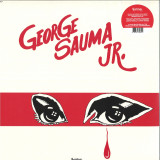
Favorite Recordings proudly presents an exclusive eponymous LP by Brazilian singer and composer George Sauma Jr., originally produced in 1985. Imagine a never-marketed release on which you’d hear not only the beautiful and genuine George’s songs but also the work from two figures of the Brazilian Music Golden Age: Arthur Verocai and Junior Mendes! A much-needed album for all Brazilian connoisseurs.
Back in the days, George Sauma Jr. was a young artist from Rio de Janeiro, learning on his side how to play chords and compose songs since he was 10. Still at the university, he’s influenced by Brazilian artists like Cassiano or Tim Maia, deeply fascinated by the arrangements and the “levada” (the groove) of all these new Brazilian songs. Simple and romantic music that resonated to his soul and creativity.
Around 1985, the story took an unexpected turn. George tells: “Dna Deyse Lucidy, the mother of Junior Mendes was a candidate for deputy and went to my father’s company to advertise. When I saw her, I shouted, “I’m a big fan of your son!” ” Of course, she could not praise more the work of her son. On her advises, George went to his studio on Rua Siqueria Campos at Copacabana. Junior loved the project and sent him to Arthur Verocai to improve the arrangements. Without money, the decision was taken to record everything at Junior Mendes’ studio on an 8-channel mixer. It was a small set-up but the emotions were there! George surely had other plans for some of his songs but without the budget, they ended up doing everything the best they could. And they did very fine with a top-notch team of musicians: Paulo Black on Drums, Arthur Verocai on Guitar, Ricardo Do Canto on Bass and Helvius Vilela on Keyboards.
Leaving the studio with the tapes, George tried to knock doors of international labels, but none did even dare to give him an answer. With less than 1000 copies pressed back in the days and without any distributor or label behind him, he went with proud to record stores, but received nothing than a strong reality check regarding the difficulties for a young Brazilian artist to achieve something on the saturated market of the 80s. Even for free, record stores didn’t want it. In the end, he ended up giving copies to friends and families, knowing deep inside that the songs were good! George tells: “I decided to leave, calm and conscious. I’ve still made three more albums, however on tapes, as it was more affordable. This time, just for my pleasure…”.
Thirty-five years after, it’s with great emotion that this first album by George Sauma Jr. is now made available as Vinyl LP with its original offset printed innersleeve & CD
Columbia Records release the eighth studio album from Grammy Award winning, multi platinum selling US rockers. An 11 track song album which includes the current single 'The Bandit'. Black vinyl double LP and standard CD. Radio support across R1, R2, Absolute, Virgin, Radio X, ILR network with playlists, ad campaign and interviews/sessions. Video plays across MTV/Vevo/Tik Tok. Digital campaign. Ads, features, interviews and reviews across all press. Online/social media activity. TV promo to follow. Poster campaign and database mailout. TV ad campaign.
Second album released on Insanity Records from London based/Bedford born pop/soul singer. This is the follow up to 2018's gold certified 'Lighting Matches'. A 14 track album whose production credits include Dan Grech, Eg White and Lostboy among others. Single LP on black vinyl and standard CD. Plenty of radio support across all the singles released so far: 'Little Bit Of Love', 'Amen', 'Something Better', 'Oh Please' and 'This Is The Place'. Digital campaign. Video plays across MTV/Vevo/Tik Tok. Online/social media activity. Ads, features, interviews ad reviews across all press. TV promo includes Graham Norton Show interview and performance plus more to follow. TV ad campaign. Pending UK tour dates. Poster campaign and database mailout.
"Ultra Eczema rarely reissues records: firstly, because we believe it's hard to improve on a good original (and we would never want to republish anything that isn't); and secondly, it's called the Internet and you can find everything on it. Nonetheless, in 2015 we reissued Kraus' 'I could Destroy You With A Single Thought', a CDR from 2004, because it was camping in our all-time favourite records list for a decade and the data on this erratic medium tends to erase itself, much like a troubled past. 'A Golden Brain' was published in the first wave of the Covid pandemic via Kraus' bandcamp as a digital release. And once again we couldn't help ourselves. This is Kraus at his best: if a bedroom could be a stadium, he would play the main stage! Limited edition of 300 copies. Includes an insert, download code and a UE sticker."
Lancaster had initially cut his musical teeth with the avant-garde on New York’s Lower East Side in the 1960s (famously on sessions with pianist Dave Burrell and drummer Sunny Murray) and in Paris during the ‘70s after an appearance at the Actuel festival but, throughout his career, his path was built around community engagement, positivity and “the Philly jazz sound, Germantown style.” He became an ambassador for the music of the City Of Brotherly Love, starting his own Dogtown label, helping launch the Philly Jazz imprint and campaigning tirelessly to improve the circumstances of the city’s street musicians. Lancaster’s sessions for Black Fire were planned following a gig at Caverns Jazz Club in Washington DC. “Jimmy Gray of Black Fire and I originally met during the ‘riotous blisters’ of the late Sixties there,” explained Lancaster. “We became the best of friends.” Backed by a band of Philly musicians including percussionist Keno Speller and Baba Robert Crowder (drummer for Olatunji and Art Blakey), the album also featured the Drummers From Ibadan led by Tunde Kuboye, another influential figure dedicated to community jazz with whom Lancaster had bonded while teaching in Lagos. The result was a free-flowing set of spirituality and positivity, built around full band groove workouts, solo pieces and heavy African roots. “We had big fun documenting this music,” remembered Lancaster. The message of the album remains as relevant today as ever, “I dedicate this album to all African Americans in the USA. To the youth, I ask ‘What does it profit a man to gain the whole world and lose his soul?’”
'The Times' is a moving and topical solo acoustic performance, a unique collection of songs, recorded by Neil Young at home during lockdown as part of the raw and personal, 'FIRESIDE SESSIONS' series.
The songs include his updated 'Lookin' For A Leader - 2020,' ‘Alabama’ from the seminal ‘Harvest’ album, the Young penned CSN&Y classic ‘Ohio’, the brilliant ‘Southern Man’ from the ‘After The Gold Rush’ album, and Bob Dylan's 'The Times They Are A-Changin' closing with 'Little Wing' from the latest Reprise release, 'Homegrown'.
After initial release in September 2020 on CD, the EP is now available on vinyl for the first time.
- A1: Rodolfo Y Su Tipica Ra7 - La Colegiala
- A2: Gabriel Romero - La Subienda
- A3: Armando Hernandez Y Su Conjunto - La Zenaida
- A4: Adolfo Echeverria Y Su Conjunto - Amanciendo
- A5: Pedro Laza Y Sus Pelayeros - Navidad Negra
- A6: Conjunto Tipico Vallenato - Cumbia Cienaguera
- B1: Rodolfo Y Su Tipica - Tabaco Y Ron
- B2: Gabriel Romero - La Piragua
- B3: Los Immortales - La Pollera Colora
- B4: La Sonora Dinamita - Se Me Perdio La Cadenita
- B5: Los Warahuaco - El Pescador De Baru
- B6: Conjunto Tipico Vallenato - Cumbia Sampuesana
- C1: Pedro Laza Y Sus Pelayeros - Cumbia Del Monte
- C2: Combo Los Galleros - Soledad
- C3: Los Guacheracos - Baila Rosita
- C4: Los Corraleros De Majagual - Llora Acordeon
- C5: La Sonora Del Caribe - Noche De Estrellas
- C6: Los Cumbiamberos De Pacheco - Santo Domingo
- C7: Sonora Dinamita - Ritmo De Tambo
- C8: Lito Barrientos - Cumbia En Do Menor
- D1: Andres Landero - Cumbia India
- D2: Combo Los Galleros - Tabaco Mascao
- D3: Los Corraleros De Majagual - Cumbia Campesina
- D4: Climaco Sarmiento Y Su Orquesta - Cumbia Sabrosa
- D5: Monteria Swing - La Samaria
- D6: Los Guacharacos - Esperma Y Ron
Cumbia, the music and the dance synonymous with Colombia, has been around almost since the 17th century. Today, it’s a badge of identity for Colombians everywhere, but is now also enjoying a global renaissance; filling dance floors and captivating a new generation of music fans.
Originally released by World Circuit as two separate albums – ‘Cumbia Cumbia’ in 1989 and ‘Cumbia Cumbia 2’ in 1993 - this collection brings together some of the greatest recordings made by Colombia’s legendary record label, Discos Fuentes, between 1954 and 1988.
Discos Fuentes was founded in Cartagena in 1934 by the visionary musician, arranger and producer, Antonio Lopez Fuentes. It was the first important record label in the country and grew into a company of immense significance for Colombian music, responsible for thousands of hits and scores of legendary singers and musicians over six decades. Fuentes hand-picked his musicians and singers then meticulously arranged, produced and recorded their music in-house.
This collection presents thirty of these three-minute-masterpieces, showcasing the gamut of styles that make up the distinctive and irresistible cumbia sound; a sound typified by a loping 2/4 gait and a pulsing rocksteady bassline, overlaid with heavy rural percussion, brass, accordion, clarinet, electric guitar and vocals. Disc 1 features a broad range of cumbia styles with recordings from 1960 through to 1988, whilst disc 2 digs further into the classics of the past focusing almost exclusively on the 1950s and 1960s.
Featuring cumbia’s biggest hits from Rudolfo y su Tipica, Gabriel Romero, Sonoro Dinamita and Armando Hernandez, ‘Cumbia Cumbia 1 & 2’ is a flawless collection from the Golden Age of Cumbia.
- 1: Bang Bang
- 2: These Boots Are Made For Walkin
- 3: Sugar Town
- 4: So Long Babe
- 5: How Does That Grab You, Darlin'?
- 6: Friday's Child
- 7: You Only Live Twice
- 8: Summer Wine
- 9: Some Velvet Morning
- 10: Lightning's Girl
- 11: Sand
- 12: Lady Bird
- 13: Jackson
- 14: Happy
- 15: How Are Things In California
- 16: Hook And Ladder
- 17: Hello L.a., Bye Bye Birmingham
- 18: Paris Summer
- 19: Arkansas Coal
- 20: Down From Dover
- 21: Kind Of A Woman
- 22: Machine Gun Kelly
- 23: (L'été Indien) Indian Summer
Definitive compilation spans solo recordings, rarities and duets with Lee Hazlewood Newly remastered from the original analog tapes by GRAMMYr-nominated engineer John Baldwin New interviews with the legendary singer, actress, and activist, Nancy Sinatra Extensive essay by Amanda Petrusich Q&A interview with Nancy & GRAMMYr-nominated reissue co-producer Hunter Lea Never-before-seen photos from Nancy Sinatra's personal archive Deluxe CD housed in 7"x7" hardcover book w/ 64-pg booklet Beautifully packaged Double LP featuring a 24-pg book 2xLP available on Standard Black Wax plus Summer Wine Sunburst Orange Release coincides with Nancy Sinatra's 80th birthday celebration Release to be supported by international press campaign in cooperation with Nancy Sinatra // Light In The Attic Records is proud to present Nancy Sinatra: Start Walkin' 1965-1976. The definitive new collection surveys Sinatra's most prolific period over 1965-1976, including her revered collaborations with Lee Hazlewood, over 23 tracks. Remastered from the original analog tapes by GRAMMYr-nominated engineer John Baldwin, the collection is complemented by liner notes penned by Amanda Petrusich (author and music critic at The New Yorker), featuring insightful new interviews with Sinatra, as well as a Q&A with archivist and GRAMMYr-nominated reissue co-producer Hunter Lea. The CD edition comes housed in a 7"x7" hardcover book (featuring 64-pages) and the two-disc vinyl set is presented in a gatefold jacket (featuring a 24-page booklet), with special color editions available exclusively at and independent record stores. Nancy's performance of the Lee Hazlewood-penned song "These Boots Are Made for Walkin'" was a huge hit in 1966 and became her signature tune. The pair began a three year run of successful albums, duets and singles including "Sugar Town," "Some Velvet Morning," "Summer Wine," "Sand," "Jackson," and the title track to the 1967 James Bond film "You Only Live Twice." Start Walkin' explores Nancy's recordings with Lee, her inspired collaborations with songwriter Mac Davis ("Hello L.A., Bye Bye Birmingham"), producer Lenny Waronker ("Hook and Ladder") and the "should've been hit" song with arranger/producer Billy Strange ("How Are Things In California.") Over the years, she has been cited as an influence by countless artists, including Sonic Youth, Morrissey, Calexico, U2, and Lana Del Rey. Her haunting song "Bang, Bang" gained a new legion of fans when it appeared in the opening credits of Quentin Tarantino's 2003 film, Kill Bill Volume 1.
‘Stay Sane’ is the hotly-anticipated new album from London based artist Ocean Wisdom out now on his own label Beyond Measure Records.
Widely considered to be one the most technical rappers alive, his first release from the album campaign ‘Drilly Rucksack’ is a stellar offering, showcasing Ocean’s rapid-fire flow as he takes on political themes relevant in Britain today. Speaking on the track Ocean said “‘Drilly Rucksack’ is a fictional tale of a magical rucksack that protects its owner from evil Tories whilst also offering consolation and reassurance to the daughters whose lives they have presumably made miserable.”
Given the name Ocean Wisdom at birth, Ocean grew up immersed in hop-hop and reggae and began beatboxing aged seven. His homelife was what he describes as ‘hectic’, as his mum worked as an emergency foster carer. Years of writing lyrics and practicing followed and his uncompromising work ethic drove him to leave home at 17 and start working on his craft daily, never missing a single day. He used his passion for music as a way of channeling his anger and controlling his mental health, in addition to avoiding the fate of some of his friends. His meticulous attention to detail and hardwork paid off and over the past 5 years has seen Ocean’s meteoric rise lead to a quarter billion streams across all platforms and collaborations with legendary artists including Method Man, Dizzee Rascal, Fatboy Slim, Akala, Roots Manuva, Ghetts and Foreign Beggars.
Famed for his technical abilities, Ocean broke numerous records at a young age, including beating the standing Guinness World Record for most words per minute in a hit song, dethroning Eminem’s "Rap God". He remains one of the few UK rappers that can tour worldwide, headlining arenas across Europe, New Zealand, Australia, Russia and the Middle East. Since then he has gone on to set up his own label to release his music as well as building his own studio and creating a platform for future artist to thrive.
Critically acclaimed debut album on Columbia Records from Trinidad born, Romford raised rapper/songwriter/producer. A 10 track album released on standard CD and translucent light blue vinyl. Berwyn came in at #3 on the 'BBC Sound Poll' for 2021. Includes the current single "Vinyl" plus "Glory", "Trap Phone" and others. Radio support across R1, 1Xtra, Apple Music, Capital, KIss, ILR network, with playlists, features and ad campaign. Video plays across MTV/Vevo. Strong press support, with ads, features, interviews and reviews across all press. Online/social media activity. Poster campaign.
The band that became Nightshift formed in 2019 in the ecosystem of Glasgow's current indie scene. The city's fertile & creative group of musicians have been committed to pushing the boundaries of and blurring the lines between DIY, punk, experimentalism and indie pop for decades now; a home to bands like Shopping, Vital Idles, Current Affairs, Still House Plants, and Happy Meals as well as forebears like Orange Juice, Teenage Fanclub and Yummy Fur. Nightshift slot right in with all mentioned, featuring members from current indie stalwarts Spinning Coin, 2 Ply and Robert Sotelo. Initially formed by guitarist David Campbell and bassist Andrew Doig as a "No Wave/No New York/ early Sonic Youth/This Heat-esque" group, the addition of Eothen Stern (keyboards/vocals) and Chris White (drums) instantaneously transformed their approach (guitarist/vocalist/clarinetist Georgia Harris joined as the band was writing "Zöe"). The band self-released a full-length tape on CUSP Recordings in early 2020, laying the foundation of their sound; hypnotic, melodic, understated indie post-punk with hooks that stick around long after you've heard them. "Zöe" is the band's newest effort, and first for Trouble In Mind. Unlike the band's previous album, the songs on "Zöe" weren't conceived live in the band's practice space, but rather pieced together and recorded remotely during quarantine lockdown, with each member composing or improvising their parts in homes/home studios, layering ideas over loops someone made and passing it on. The isolation actually allowed for an openness and creativity to flow and many of the songs took on radically different forms from when they were originally envisioned. Vocalist & primary lyricist Eothen Stern says "The process of writing these songs separately during lockdown was a kind of exquisite corpse - I liked this gesticulation of reaching out to one another and responding. Building up the next layer and passing it on." Stern says "poetic restraints" to writing & Eno's Oblique Strategies concepts were on their mind when composing the words to the songs on "Zöe" and lists the influence of author Rosi Bradiotti's book "The Posthuman". "Zöe" means "live drive", derived from the word conatus. Bradiotti defines conatus as "an effort or striving, endeavour, impulse, inclination, tendency, undertaking, serving is an innate inclination of a thing to continue to exist and enhance itself." and Stern views it as "...a kind of feminist re-claiming of communal public, anti- privatisation, looking to strive for social and environmental justice. Zöe kind of became a character of striving for me when writing.". "Zöe" kicks off with "Piece Together", a hypnotic song anchored by the band's chanted vocals and serpentine guitar licks. "Spraypaint the Bridge" showcases Harris' clarinet in an unexpected & delightful melodic shift during the song's anti-chorus. Elsewhere tunes like the swooning "Infinity Winner" and "Outta Space"s minimalist, slinky rhythm swirl in a late-night vibe, while "Make Kin" ruminates on "Looking to kinship as a way of engaging with entangled environmental and reproductive issues... how a band is a bond" and lurches forward with kinetic guitar strangling and staccato rhythmic percussion from White and Doig. "Power Cut" is the album's centerpiece, kicking off side two and lures the listener into its world over it's 7-minute runtime. Lulling them into involuntary movement with its waves of melodic harmonies, synth drones and metronomic pulse, until they all come crashing down in the song's dissonant midsection. The band acknowledges the whiffs of nostalgia prevalent in "Zöe"s songs (the title track in particular), and the nature of writing and recording the album is soaked in the self-work, reflection and reevaluations involved not only personally but creatively in each member's lives. Consequently, the album becomes a collection of sketches of hope, growth, awareness of the power of the world and the power of self, kith, kinship, friendship, resistance, and possibility.
In the 2000’s Chee Shimizu helmed an untouchable Tokyo DJ collective called Discossession alongside Dr Nishimura (House music buyer for Cisco Records at the time). Balancing out this unit were a young Scotsman-abroad named Jonny Nash (who’d later form Sombrero Galaxy ESP001 and Gaussian Curve as well as the Melody As Truth imprint), and the late guitar virtuoso and tattoo artist Zecky. Formidable DJs and multi-talents on the Tokyo scene, Discossession released two EPs on Kenji Takimi’s Crue-L imprint and various mixes individually on lovefingers, all holding well-deserved eternal cult status. Chee’s Denshi Meisou 2006 and Follow My Dream 2007 for Lovefingers as well as his legendary “listening sessions” at HiFi lounge SHeLTeR in the Tokyo suburb of Hachioji, laid foundation for what would become known to his followers as “Organic Music” or “Obscure Sound”, the former extending as the name of his record shop and the latter as the title of his 2013 book.
Obscure Sound chronicled his tastes in detail and has since become a sort of diggers bible for peers and younger generations. At the ESP Institute’s inception in 2009, Shimizu contributed two tracks to Lovefingers’ Concentration Vol 1 compilation as apéritifs to a later release. “Later” eventually became “forever” and the mythical piano track (appearing only as a demo on Golden Age and Dekmantel 061) is still, to this day, not ready for formal release. Skip a dozen years, musical interests and major life changes, and Chee has now unveiled something quite special in accordance with his Obscure Sound—rather than making new out of old rope, he presents a collaboration with Tokyo guitarist miku-mari a.k.a. Takahiro Matsumura. The artists frequently collaborate at the experimental audio/visual event, Sacrifice, held irregularly at Tokyo’s ForestLimit, and in 2018 when Chee was invited to DJ at Japan’s only Ambient festival Camp Off-Tone, he and miku-mari endeavored to expand these works into a 2-hour improvised performance. Chee collaged various percussion samples and personal field recordings utilizing four CDJs, supplementing with live windchimes and Andean chajchas, while miku-mari coupled a guitar-controlled synthesizer, Sound Tube software (developed by Japanese Ambient composer Hiroshi Yoshimura) and more live elements such as Tibetan bells and pyramid crystals. Rehearsals for this performance were held prior to the festival at ForestLimit, recorded as multi-tracks and edited into these two cerebral Reconstructions.
one of the very rarest underground folk rock private pressings with just one hand made copy known to exist, ntp perform a delicate and complex pop inflected downtempo folk with arch wit and charm, at times very reminiscent of the brilliant and largely forgotten Jimmy Campbell. the masterpiece 'Miranda' is lovelorn and infectious in its bittersweet melody, and all the songs are very subtle and understated, the lyrics often tackle deliberately mundane subjects in a poetic and clever way, much like the aforementioned Campbell. Acoustic Guitar, Piano and vocal...its folky pop and hard to categorise, with outstanding compositions.
Hyperspace will be Beck’s 14th album, following 2017’s Colors, which won Best Alternative Music Album and Best Engineered Album, Non-Classical at the 61st GRAMMY Awards earlier this year. Hyperspace’s new dimensions in sound are the result of Beck’s most collaborative efforts to date. Seven of the album's 11 tracks—including single “Uneventful Days” and “Saw Lightning” (as featured in the Beats by Dr. Dre Powerbeats Pro campaign and also included with pre-orders)—feature co-writing and co-production from Pharrell Williams. Elsewhere in Hyperspace, “See Through” is co-written/co-produced by frequent Beck collaborator Greg Kurstin, “Star” is co-written/co-produced by Paul Epworth, “Stratosphere” features back-up from Chris Martin, the album’s title track features guest vocals from Terrell Hines, and “Die Waiting” is co-written/co-produced by Cole M.G.N. with backing vocals from Sky Ferreira. Longtime Beck bandmates Jason Falkner, Smokey Hormel and Roger Manning Jr. feature on much of the album as well.
- A1: Samba Negra - Eberebijara
- A2: King Somalie - Monkey 'S Dance
- A3: El Grupo Folclórico - Tamba
- A4: Los Viajeros Siderales - El Campanero
- A5: Rio Latino - Ayu
- B1: Aníbal Velásquez - La Mazamorra Del Diablo
- B2: La Francachela - Mosquita Muerta
- B3: El Grupo Folclórico - Juipiti
- B4: King Somalie - Le Mongui
- C1: El Grupo Folclórico - El Tornillito
- C2: Samba Negra - Long Life Africa
- C3: La Banda Africana - Te Clavo La... Mano
- C4: Myrian Makenwa - El Platano
- D1: El Grupo Folclórico - Tucutru
- D2: Grupo Bola Roja - Caracol
- D3: El Grupo D'abelard - Otro Perro Con Ese Hueso
- D4: Conjunto Barbacoa - Wabali
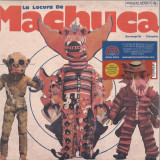
La Locura de Machuca is the story of one man’s bizarre odyssey into Colombia’s coastal music underground, and the wild, hypnotic sounds he helped bring up to the surface.
One night in 1975, a successful tax lawyer named Rafael Machuca had his mind blown in Barranquilla’s ‘Plaza de los Musicos’. Overnight he went from a high ranking position in the Columbian revenue authority to visionary production guru of the newly formed record label that bore his name, Discos Machuca, and for the next six years he devoted his life to releasing some of the strangest, most experimental Afro Psychedelia Cumbias ever produced. La Locura de Machuca is the story of one man’s bizarre odyssey into Colombia’s coastal music underground, and the wild, hypnotic sounds he helped bring up to the surface.
The Colombian music industry was thriving in the mid-seventies, but while homegrown bolero and vallenato tunes were doing well on the charts, it was imported African records that were setting crowds on fire at the picos – the sound-systems that fuelled neighbourhood parties – and wherever those records were played there were always a handful of groups who were inspired to plug traditional Cumbia directly into the electric currents coming from across the Atlantic.
It was these obscure bands, who fused Colombian and African rhythms with the swirling organs and psychedelic guitars of underground rock, that fired Machuca’s imagination. While the label made its money releasing popular hits by legends such as Alejandro Durán and Aníbal Velásquez, that money was poured back into a unique run of experimental releases by fringe artists such as La Banda Africana, King Somalie, Conjunto Barbacoa, and Abelardo Carbono, one of the godfathers of Champeta Criolla.
When Machuca couldn’t find groups to realise his particular vision, he simply created them himself. Drawing on a fearsome roster of musicians associated with the label, he assembled bands that lasted only as long as it took to record an album ,and unleashed the results – complete with arrestingly unusual album covers – under a series of different names such as Samba Negra or El Grupo Folclórico. This unorthodox approach led his longtime recording engineer, Eduardo Dávila, to describes Machuca’s productions as the “B-Movies of Colombian music.”
The story of Doctor Machuca and his eccentric exploits tells of one of Colombia’s most atypical and peculiar record companies; a defining pillar of Afro-Caribbean psychedelia. His productions have come to represent the roots of Champeta and set the pedigree standards for Afro and Costeño avant-garde. The seventeen tracks on La Locura de Machuca, harvested from the darkest, strangest corners of the Discos Machuca catalogue, sound like little else recorded before or since.