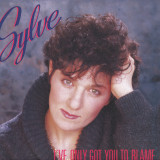
Maai proudly presents a split EP featuring two distinguished Barcelona based talents. On the A side, the Peruvian trio of JJ Beteta, Alonso Bauer and Stefan Cukic delivers a dynamic array of tracks. "Layers" kicks off with an energetic blend of dusty breaks, setting the vibe for the EP. Following this, "Go The Data" takes over with its driving acid bassline, strong rhythm, for a dark and hypnotic vibe. The trio wraps up their side with "Wonky Afthermath," a subtle yet funky combination of deep, groovy elements and breaks that keeps the energy flowing.
On the B side, Canarian artist Javier Carballo, performing under his Look Perry alias, offers a captivating contrast. "I Can't Love U" introduces a track enriched with otherworldly pads and synths, creating an immersive sonic environment. The EP concludes with "Stone Pilots", which takes listeners on a smooth journey through intricate breaks, providing a perfect counterpoint to the A side’s energetic flair. This split EP showcases a rich tapestry of local talent and diverse electronic sounds.
Search:cana
- Riddles
- The Game Needed Me
- Absinthe Party At The Fly Honey Warehouse
- Diamond Lightning
- Hooray
- The Storm
- When We Escape
- Summer Angel
- Empty Party Rooms
- Dayglow Vista Rd
Founded in 2001, Minus the Bear have worked relentlessly over the past 12 years to build a large and devoted following worldwide via consistent releases and non-stop touring. The band has released five full length LPs (Highly Refined Pirates in 2002, Menos el Oso in 2005, Planet of Ice in 2007, OMNI in 2010, Infinity Overhead in 2012) along with various EPs. They have toured throughout the US, UK, Europe, Mexico, and Canada. They have played countless sold out venues throughout the world and have been invited to perform at festivals in the US and abroad. They have played as support to bands such as Foo Fighters, Soundgarden and Jimmy Eat World. In Winter 2008/2009, Minus the Bear released an EP called Acoustics featuring newly recorded acoustic versions of fan favorites from the quintet's prolific career along with one new track. Limited to 5000 copies of vinyl, Acoustics is now out of print. Acoustics II, the second volume in the acoustic series, is a full LP containing eight newly recorded and reinterpreted standout tracks in addition to two brand new songs: "The Storm" and "Riddles." Acoustics II is sure to please longtime fans and welcome new fans to this critically acclaimed rock band.
Equal parts soft and sorrowful, Myriam Gendron’s stunning Not So Deep As A Well LP became something of a sleeper hit upon its initial release back in 2014. Her debut album shone a warm lamp-light glow upon a curious and captivating new voice in the Quebecois folk world.
Nearly ten years on from its release in her native Canada and America, Not So Deep As A Well gets a European release for the first time this autumn, with a new pressing on the Basin Rock label (Julie Byrne, Aoife Nessa Frances, Trevor Beales, Juni Habel) which features two tracks not included on the original release - ‘Bric-à-brac’ and ‘The Small Hours’ - both written and recorded in the early days of 2014.
Recorded alone in her apartment, with no knowledge of sound engineering, it could almost be a lost artefact, a dust-lined document of a forgotten time and place. Taking the poems of Dorothy Parker, whose work Gendron stumbled upon by chance in a Montreal bookstore, she imbues the words with a graceful, gentle expression, a lingering sense of sorrow always present.
A stark, spellbinding collection, Not So Deep As A Well is raw and unyielding in so many ways we no longer expect to hear. As if sitting in the room with her, Gendron’s voice is cracked and unadorned, quietly forced into a push and pull between
Founded in 1961 by George Kooymans and Rinus Gerritsen, Dutch rock band Golden Earring (or Golden Earrings, until 1969) started off as a beat band, experimented as a psychedelic quartet and finally became a heavy rock group in the early 70s. Their ninth album ‘Moontan’ (1973) hit the international album charts and is the band's most successful album in the United States, while the single ‘Radar Love’ reached #10 on the Cash Box Top 100 and #13 in Billboard in the United States and became a bonafide international classic rock song. Their current line-up has been constant since 1970. They have had over 40 hits and released about 30 albums, many achieving either gold or platinum status in their home country, The Netherlands.
In 1984 the band released the album N.E.W.S. (North, East, West, South). It features the song ‘When The Lady Smiles’ which became an international hit in 1984, reaching #3 in Canada and becoming the band's fifth #1 hit in The Netherlands.
Music On Vinyl celebrates the 40th anniversary of this landmark album with fully restored and remastered audio from the original master tapes.
- Court And Spark
- Help Me
- Free Man In Paris
- People's Parties
- Same Situation
- Car On A Hill
- Down To You
- Just Like This Train
- Raised On Robbery
- Trouble Child
- Twisted
Joni Mitchell Gets Jazzy, Counterbalances Love and Trust with Freedom and Confusion on Court and Spark
Mobile Fidelity's UltraDisc One-Step 180g 45RPM 2LP
Plays with Definitive Detail and Clarity: Pressed on MoFi SuperVinyl Strictly Limited to 5,000 Numbered Copies
Box Set Features New Liner Notes
1/4" / 15 IPS / Dolby A analogue master to DSD 256 to analogue console to lathe
Court and Spark, the most commercially successful album of Joni Mitchell's trailblazing career, arrived after a year in which she took some time to breathe and kept a low profile. The pause led to more breakthroughs for the singer-songwriter. Marking Mitchell's increasing drift toward jazz (and affinity for Miles Davis and John Coltrane), Court and Spark garnered four Grammy nominations, earned the Best Album of the Year vote in the prestigious Pazz & Jop poll, and ranks #110 on Rolling Stone’s list of the 500 Greatest Albums of All Time.
Sourced from the original analog master tapes, pressed at Fidelity Record Pressing on MoFi SuperVinyl, strictly limited to 5,000 numbered copies, and featuring new liner notes, Mobile Fidelity's UltraDisc One-Step 180g 45RPM 2LP box set presents the 1974 classic with definitive detail, tonality, and directness. Marking the first time the revered LP has received audiophile-quality treatment, it's one of six iconic 1970s Mitchell records Mobile Fidelity is reissuing on vinyl and SACD sets.
Benefitting from a virtually nonexistent noise floor, dead-quiet surfaces, and superior groove definition, this collectible edition reproduces without compromise the textures, details, and breathtaking craftsmanship that help make Court and Spark into what many fans believe is the Canadian native’s finest hour. Notes bloom and decay as they do amid an acoustic live environment. Soundstages extend far and deep, with black backgrounds and balanced tones adding to the uncanny realism.
The reference-grade presence and openness put in transparent view Mitchell’s incisive words and unique phrasing, as well as the contributions of her prized support musicians — including Tom Scott and the L.A. Express as well as guest turns by the likes of David Crosby, Graham Nash, Jose Feliciano, and Robbie Robertson. Mitchell, experimenting with the melodic parameters of guitar and piano, is rightly found at the center of it all. The jazz-rock rhythms of drummer John Guerin, slippery guitar lines of Larry Carlton, vibrant horns and reeds laid down by Scott — crucial to the songs’ shape-shifting arrangements — can now also be heard with fresh ears.
Visually and physically, the packaging of the Court and Spark UD1S set complements its distinguished status. Housed in a deluxe slipcase, both LPs come in foil-stamped jackets with faithful graphics that illuminate the splendor of the recording. This reissue is for listeners who desire to engage themselves in everything involved with the album, including Mitchell’s “The Mountain Loves the Sea” painting — a picture of waves embracing and receding away from a mountain, a metaphor for the record’s lyrical themes — on the cover art.
Pitching deceptively light compositions against underlying tensions, Court and Spark witnesses the singer-songwriter finding her footing with a group of top-shelf musicians who seemingly understand her visions as well as expanding her lyrical palette and venturing further into territory no artist had dared explore. Mitchell’s accessibly complex structures, beat-propelled rhythms, and spirited interplay with Scott & Co. both give the music a different identity than her prior efforts and point in the directions she soon headed.
Lyrically, Court and Spark matches the wit, integrity, originality, and intellect of anything in Mitchell’s oeuvre — no small feat. Offsetting positives with negatives, and considering circumstances from multiple angles, Mitchell explores issues connected to love and freedom, certainty and confusion, and trust and fear with unfettered boldness and introspective empathy. She teeters between surrender and retreat, and spends a majority of the record sussing out the complications and sacrifices involved with such actions.
Mitchell addresses the transactional nature of desire (the intimate title track, the upbeat “Raised on Robbery,” complete with rock ‘n’ roll pep from Robertson and zesty sax from Scott); anticipation and disappointment of romance (“Car on a Hill,” “”Down to You); fame and celebrity (“A Free Man in Paris,” “People’s Parties”); and sanity (the dark and stormy “Trouble Child,” a satirical cover of Annie Ross’ “Twisted”). Throughout, she sings with an emotionally penetrating beauty and devastating honesty that teaches about ourselves.
Or, as Mitchell relays on “People’s Parties”: “Laughing and crying/You know it’s the same release.”
Neva Dinova, Indieband aus Ohama, veröffentlichte in den 2000ern drei Alben und eine Split-EP mit Bright Eyes. Nun beginnt mit dem neuen Album "Canary" ein neues Kapitel in neuer Besetzung mit frischer Perspektive. Von verzerrter Erhabenheit bis zu Akzenten von Electronica & Hip-Hop tritt die Band klanglich aus ihrem Schatten heraus, während sich die Songs in kraftvollen Explosionen konzentrierter Energie verdichten, eindringlicher als je zuvor. Das verbindende Element bleibt die unverwechselbare Baritonstimme von Frontmann Jake Bellow, mit der er von Existenzangst, Entfremdung und Heuchelei singt. Neva Dinova gelingt mit dem Comebackalbum "Canary" eine Schönheit in Unvollkommenheit.
2024 REPRESS!
Canadian produced, highly sought after Hi NRG masterpiece, who’s legacy continues to live on in certain Mexican dancefloors. Faithfully remastered and officially re-pressed for the first time since 1988, featuring newly edited Bonus Beats version by Castro. In memory of Fred “Kinck” Petersen - R.I.P.
Span over the course of 2 years with the first chapter released in March 2021, CRIMEAPPLE is back to end the YDFWC? trilogy with a masterpiece. With production duties handled by Loman, Chairman Chow, Buck Dudley as well as Oh No, and a sole guest appearance by Canadian emcee Daniel Son, the NJ native of Colombian descent goes out with a bang on this 3rd instalment to ask for the last time… YOU DON’T FUCK WITH CRIME?!
Tina Edwards "absolutely loving Ensoul and Locked! Big fan of what this band are doing. One of the most original outfits in London Jazz atm."
Jamie Cullum "beautiful music from Ambient Jazz Ensemble"
Presenting the genre defining and much hip hop sampled Ambient Jazz Ensemble. AJE’s Colin Baldry has a highly accomplished career in music writing and producing for iconic labels Motown, RCA, Geffen, Virgin and Capitol Records
London Fields describes London energy, vibe, anticipation; ‘fields' of electricity. The phrase conjours something of my own relationship with London. Having moved away after living & working there for 20 years I’ve recently fallen in love with the city again. I've been walking the streets, rediscovering it’s parks, canals, the architecture, the river; … & experiencing new music in London is always a joy. The 'London Fields’ have recaptured my imagination
Ensoul delivers sparse felt piano before Lynsey Ward releases her inner Kate Bush. Locked inspired initially by Tony Robert-Fleury’s 1891 painting ‘Alix Appearing in Mask’. And then the collaboration with singer songwriter Lynsey Ward an inspiration and a joy which comes across in the music
Throughout the 1960s, Canadian composer Bruce Haack was as ubiquitous on children’s and variety shows as were exotic animals from the San Diego Zoo. But he wasn’t there to perform so much as demonstrate. In his formative compositions for theatre and ballet, he had experimented with tape loops and musique concrète techniques; by the early ’60s, he wasn’t just playing around with electronic sounds, but also making the very gizmos that generated them. By day, Haack would eke out a living as a composer for commercials and a series of instructive, interactive children’s records made with collaborator Esther Nelson.
But by night, Haack was making music that was decidedly adults-only.
Originally released in 1970, The Electric Lucifer was Haack’s first work pitched to a contemporary rock audience, released by Columbia Records in the dying days of a post-hippie moment when bizarro outsider-psych could still find a home on a major label. If it was not the first rock record to feature electronics, it was certainly among the first to give them a starring role—both musically and conceptually.
Mac DeMarco, formerly Makeout Videotape, is the anti-thesis to your stereotypical singer-songwriter. Disregarding the seriously somber moments, he replaces them with whimsical and youthful spontaneity, whilst retaining the endearing and subtle commentaries that exude his familiarity. Promptly after leaving his Edmonton garage for Vancouver he embarked on a North American tour accompanying fellow Canadians Japandroids on a grand voyage of enlightenment and alcoholic debauchery. DeMarco's a weird cat cultivating an affinity for occult imagery, nudity and social satire. But his most impressive trait is his undeniable and instinctual ability to compose magical pop jangles, of which he'll likely refer to as "jizz jazz". His dusted jams have garnished him accolades that are as ever-increasing as his song writing abilities; his sound rendering comparisons, but in a nomadic fashion alluding no distinct origin. DeMarco's debut solo EP entitled "Rock And Roll Night Club" will ramble into the great unknown guided by Captured Tracks, DeMarco's inner Elvis a tow.
Before you ancients out there turn your heads and scoff at the premise of a twenty-something rock-and-roll goofball calling himself an old-anything, consider this: Mac DeMarco has spent the better part of his time thus far writing, recording, and releasing an album of his own music pretty much every calendar flip. This Old Dog makes for his fifth in just over half a decade_bringing the total to 3 LPs and 2 EPs. According to the DMV, DeMarco is 26. But in working-dog years, ol' Mac here could easily qualify for social security. To stay gold, turns out all he needed was some new tricks. It was a little space_in time, location, and method_that inspired DeMarco while making the record. Moving from his isolated Queens home to a house in Los Angeles helped give the somewhat transient Canada-native a base, and a few more months on his calendar to create did their job as well. Arriving in California with a grip of demos he'd written in New York, he realized after a few months of setting up his new shop_complete with a few new toys_that the gap was giving him perspective (insert tooth joke here). Right off the bat, from the pops and clicks of the CR-78 drum machine and acoustic strums on the album-opening "My Old Man," the synth-drenched beauty of the second track, "This Old Dog," it's clear that DeMarco's bag is filled with new tricks indeed. This Old Dog is rooted more in a synth-base than any of his previous releases, but he is careful not to let that tactic overshadow the other instruments and overall "unplugged" mood of the work: "This is my acoustic album, but it's not really an acoustic album at all. That's just what it feels like, mostly," says DeMarco. Despite the changes considered during the creation of This Old Dog, Mac DeMarco's mid-twenties masterpiece, it's clear that the engine that motors him is in no danger of slowing down.
Camelot, the legendary seat of King Arthur's court in Early Middle Ages Britain, was probably not a real place. A corruption of the name of a real Romano-Briton city, the word "Camelot" accumulated symbolic, mythic resonances over centuries, until achieving its present usage as a near-synonym of "utopia." In the mid-20th century alone, Camelot inspired an explosion of representations and appropriations, among them the violent, affectless Arthurian court of Robert Bresson's 1974 film Lancelot du Lac and the absurdist iteration of Monty Python's 1975 Holy Grail, both of which feature armored knights erupting into fountains of blood; the mystical Welsh world of novelist John Cowper Powys's profoundly weird 1951 novel Porius, with its Roman cults, wizards and witches, and wanton giants; and the nationalist nostalgia of President John F. Kennedy's White House. Unsurprisingly there are fewer Camelots in more recent memory. Camelot, Canadian songwriter Jennifer Castle's extraordinary, moving 2024 chronicle of the artist in early middle age, charts a realer, more rooted, and more metaphorical place than the fabled Camelot of the Early Middle Ages (or its myriad depictions), but it too is a space more psychic than physical. In Castle's Camelot, the fantastic interpenetrates the mundane, and the Grail, if there is one, distills everyday experience into art and art into faith, subliming terrestrial concerns into sublime celestial prayers to Mother Nature, and to the unfolding process of perfecting imperfection in one's own nature. Co-produced by Jennifer and longtime collaborator Jeff McMurrich, her seventh record is at once her most monumental and unguarded to date, demonstrating a mastery of rendering her verse and melodies alike with crisply poignant economy. For all their pointedly plainspoken lyrical detail and exhilarating full-band musical flourishes, these songs sound inevitable, eternal as morning devotions. "Back in Camelot," she sings on the lilting, vulnerable title track, "I really learned a lot / circles in the crops and / sky-high geometry." The album opens with a candid admission of sleeping "in the unfinished basement," an embarrassing joke that comes true. But the dreamer is redeemed by dreaming, setting sail in her airborne bed above "sirens and desert deities." If she questions her own agency_whether she is "wishing stones were standing" or just "pissing in the wind"_it does not diminish the ineffable existential jolt of such signs and wonders. This abiding tension between belief and doubt, magic and pragmatism, self and other, sacred and profane, and even, arguably, paganism and monotheism, suffuses these ten songs, which limn an interior landscape shot through with sunstriped shadows of "multi-felt dimensions" both mystical and quotidian. The epic scale and transport of "Camelot," with its swooning strings, gives way dramatically to "Some Friends," an acoustic-guitar-and-vocals meditation in miniature on Janus-faced friends and the lunar and solar temperatures of their promises_"bright and beaming verses" versus hot curses_which recalls her minimalist last album, 2020's achingly intimate Monarch Season. (In a symmetrical sequencing gesture, the penultimate track, the incantatory "Earthsong," bookends the central six with a similarly spare solo performance and coiled chord progression, this time an ambiguous appeal to _ a wounded lover? a wounded saint? our wounded planet?) Those whom "Trust" accuses of treacherous oaths spit through "gilded and golden tooth"_cynics, critics, hypocrites, gurus, scientists, doctors, lovers, government, the so-called entertainment industry_sow uncertainty that can infect the artist, as in "Louis": "What's that dance / and can it be done? What's that song / and can it be sung?" Answering affirmatively are "Lucky #8," an irrepressible ode to dancing as a bulwark against the "tidal pools of pain" and the "theory of collapse," and "Full Moon in Leo," which finds the narrator dancing around the house with a broom, wearing nothing but her underwear and "big hair." But the central question remains: who can we trust, and at what cost faith, in art or angels or otherwise? Castle's confidence in her collaborators is the cornerstone of Camelot. Carl Didur (piano and keys), Evan Cartwright (drums and percussion), and steadfast sideman Mike Smith (bass) comprise a rhythm section of exquisite delicacy and depth. This fundamental trio anchors the airiness of regular backing vocalists Victoria Cheong and Isla Craig and frames the guitars of Castle, McMurrich, and Paul Mortimer (and on "Lucky #8," special guest Cass McCombs). Reprising his decennial role on Castle's beloved 2014 Pink City, Owen Pallett arranged the strings for Estonia's FAMES Skopje Studio Orchestra. On the ravishing country-soul ballad "Blowing Kisses"_Pallett's crowning achievement here, which can be heard in its entirety in the penultimate episode of the third season of FX's The Bear_Jennifer contemplates time and presence, love and prayer_and how songwriting and poetry both manifest and limit all four dimensions: "No words to fumble with / I'm not a beggar to language any longer." Such rare moments of speechlessness_"I'm so fucking honoured," she bluntly proclaims_suggest a state "only a god could come up with." (If Camelot affirms Castle as one of the great song-poets of her generation, she is not immune to the despairing linguistic beggary that plagues all writers.) Camelot evinces a thoroughgoing faith not only in the natural world_including human bodies, which can, miraculously, dance and swim and bleed and embrace and birth_but also in our interpretations of and interventions in it: the "charts and diagrams" of "Lucky #8," a daydreamt billboard on Fairfax Ave. in LA in "Full Moon in Leo," the bloody invocations of the organ-stained "Mary Miracle," and all manner of water worship, rivers in particular. (Notably, Jennifer has worked as a farmer and a doula.) The album ends with "Fractal Canyon"'s repeated, exalted insistence that she's "not alone here." But where is here? The word "utopia" itself constitutes a pun, indicating in its ambiguous first syllable both the Greek "eutopia," or "good-place"_the facet most remembered today_and "outopia," or "no-place," a negative, impossible geography of the mind. Utopia, like its metonym Camelot, is imaginary. Or as fellow Canadian songwriter Neil Young once sang, "Everyone knows this is nowhere." "Can you see how I'd be tempted," Castle asks out of nowhere, held in the mystery, "to pretend I'm not alone and let the memory bend?"
Kenner von Richard Swift wissen, dass sein Katalog umfangreich und phantasievoll ist, vollgepackt mit ebenso vielen ausgefeilten, eiskalten Klassikern wie verrückten Ein-Take-Experimenten. Diese Kleinode kommen in allen Formen und Größen, und während das den Eingefleischten nichts ausmacht, ist der Einstieg in die Musik von Swift für den Neuling schwierig: Wo soll man anfangen? Was kommt in die engere Wahl? Wie viele Crooner? Wie viele wilde Lieder? Vor diesem Hintergrund präsentiert Secretly Canadian "4 Hits & A Miss - The Essential Richard Swift", einen bescheidenen Versuch, die siebenundvierzig Minuten und vierzehn Songs zusammenzutragen, die die Uneingeweihten einführen können. Wenn Sie Richard Swift nicht kennen, lassen Sie sich von dem unvergleichlichen Kevin Morby aufklären: "Es gibt einen alten Pfadfindermythos, von dem ich als Kind gehört habe, dass man eine Kapelle bauen kann, wenn man die richtige Person mitten in den Wald setzt, bewaffnet nur mit einem Schweizer Taschenmesser. Wenn ich an diesen Mythos zurückdenke, denke ich an Richard Swift, der, wenn man ihn mitten im Wald mit einem 10-Dollar-Radio-Shack-Mikrofon absetzte, irgendwie ein Studio bauen konnte und in diesem Studio eine Kapelle des Klangs errichtete. Tatsächlich hat er genau das in seinem eigenen National Freedom Studio mitten in den Wäldern von Oregon getan, in einer Stadt namens Cottage Grove, wo er unzählige Stunden seiner eigenen Musik und der anderer Leute aufgenommen hat. Diese Kapellen des Klangs werden - und ich habe es bereits erlebt - kommende Generationen in Ehrfurcht versetzen und inspirieren, so wie es die Steinkapellen im frühen Europa tun. Beide lassen die Menschen verblüfft zurück und fragen sich: Wie konnte etwas so Massives und Schönes mit so minimalen und archaischen Mitteln gebaut werden - und in Richards Fall so schnell? Nach ihrem Tod scheinen die meisten Künstler endgültig zu ruhen, ihre Kataloge ruhen für immer neben ihnen. Aber Richard scheint aus dem Jenseits rastlos zu sein, und die Arbeit, die er hier unten auf der Erde begonnen hat, geht weiter. Sein letztes Album, The Hex, wurde nur wenige Monate nach seinem frühen Tod im Jahr 2018 veröffentlicht, und jetzt haben wir mit 4 Hits and A Miss eine Sammlung seiner beliebtesten Songs sowie einen neuen, noch nie zuvor gehörten Track "Common Law", aufgenommen um 2012. Ob Gelegenheitsfan oder Swift-Purist, 4 Hits & A Miss ist entweder ein perfekter Startpunkt oder ein Ziel für uns eingefleischte Fans, um wieder einmal etwas Neues zu finden, das uns beeindruckt und inspiriert. Wie ein versteckter Raum in seiner bereits beeindruckenden Kapelle gibt es immer etwas Neues von unserem geliebten Freund und Helden, dem verstorbenen großen Richard Swift, zu entdecken." Viel Spaß!
Black Vinyl[31,89 €]
"Good Lovelies are proud to reissue their holiday classic EVERGREEN just in time for the upcoming holiday season. Originally released in 2019, this fifth anniversary limited edition of 500 has been pressed on beautiful peppermint green vinyl.
Caroline Brooks, Kerri Ough and Susan Passmore are a trio of songwriters, multi-instrumentalists, and gorgeous harmonizers known for their nostalgic sound during the holidays that crosses between folk-roots, old-time swing, soul and bluegrass. ""Evergreen"" includes three original songs that the band have added to the Christmas canon alongside their versions of songs like ""Little Saint Nick"", ""Christmas (Baby Please Come Home)"" and ""(Everybody’s Waiting For) The Man with the Bag"" to really get you in the mood for the season ahead.
The band’s annual Christmas tour hits the road again this December, bringing classic holiday songs, timeless winter selections, and original Good Lovelies material to the stage. A Good Lovelies holiday show is a guaranteed good time for the whole family.
“...while most festive albums are best experienced during the correct season, when it comes to the amazing talents of the Good Lovelies, the rule book can be tossed out.” - GREAT DARK WONDER -
“Some of the most gorgeous Christmas harmonies you’ll ever hear on an album jammed full of warmth and good cheer. Featuring a mix of fun favorites, lesser-heard gems and three truly fine originals, the trio strikes the perfect blend of smiles and sentiment...” - BOB MERSEREAU
Good Lovelies first came together in 2006 and have since recorded thirteen albums, including two Christmas collections. They have toured extensively across North America, Europe, the UK, and Australia, and have earned such accolades as a JUNO Award, a SOCAN #1 Single award, and four Canadian Folk Music Awards. Their latest album “We Will Never Be the Same” is in stores now."
The 1990 album Scène De Vie was the big follow-up album to her debut Mademoiselle Chante and it confirmed the singer's talent and potential. The album went straight to the top of the French charts and featured several successful singles, including ""Les Hommes Qui Passent"", ""Les Mannequins d'Osier"", and ""Kennedy Rose"". The album eventually reached 2 million sales worldwide and received a diamond status. The album also had great success in Germany, Switzerland, Belgium, Canada, and Russia. Scène De Vie is available as a limited edition of (1000?) individually numbered copies on crystal clear vinyl and includes an insert.
. For Fans Of: The Weather Station, Weyes Blood, Adrianne Lenker, Phoebe Bridgers, Joan Shelley, Lana Del Rey, Cass McCombs, Angel Olsen & Neil Young. Camelot, the legendary seat of King Arthur’s court in Early Middle Ages Britain, was probably not a real place. A corruption of the name of a real Romano-Briton city, the word “Camelot” accumulated symbolic, mythic resonances over centuries, until achieving its present usage as a near-synonym of “utopia.” In the mid-20th century alone, Camelot inspired an explosion of representations and appropriations, among them the violent, affectless Arthurian court of Robert Bresson’s 1974 film Lancelot du Lac and the absurdist iteration of Monty Python’s 1975 Holy Grail, both of which feature armoured knights erupting into fountains of blood; the mystical Welsh world of novelist John Cowper Powys’s profoundly weird 1951 novel Porius, with its Roman cults, wizards and witches, and wanton giants; and the nationalist nostalgia of President John F. Kennedy’s White House. Unsurprisingly there are fewer Camelots in more recent memory. Camelot, Canadian songwriter Jennifer Castle’s extraordinary, moving 2024 chronicle of the artist in early middle age, charts a realer, more rooted, and more metaphorical place than the fabled Camelot of the Early Middle Ages (or its myriad depictions), but it too is a space more psychic than physical. In Castle’s Camelot, the fantastic interpenetrates the mundane, and the Grail, if there is one, distills everyday experience into art and art into faith, subliming terrestrial concerns into sublime celestial prayers to Mother Nature, and to the unfolding process of perfecting imperfection in one’s own nature. Co-produced by Jennifer and longtime collaborator Jeff McMurrich, her seventh record is at once her most monumental and unguarded to date, demonstrating a mastery of rendering her verse and melodies alike with crisply poignant economy. For all their pointedly plainspoken lyrical detail and exhilarating full-band musical flourishes, these songs sound inevitable, eternal as morning devotions. “Back in Camelot,” she sings on the lilting, vulnerable title track, “I really learned a lot / circles in the crops and / sky-high geometry.” The album opens with a candid admission of sleeping “in the unfinished basement,” an embarrassing joke that comes true. But the dreamer is redeemed by dreaming, setting sail in her airborne bed above “sirens and desert deities.” If she questions her own agency whether she is “wishing stones were standing” or just “pissing in the wind” it does not diminish the ineffable existential jolt of such signs and wonders. This abiding tension between belief and doubt, magic and pragmatism, self and other, sacred and profane, and even, arguably, paganism and monotheism, suffuses these ten songs, which limn an interior landscape shot through with sunstriped shadows of “multi-felt dimensions” both mystical and quotidian. The epic scale and transport of “Camelot,” with its swooning strings, gives way dramatically to “Some Friends,” an acoustic-guitar-and-vocals meditation in miniature on Janus-faced friends and the lunar and solar temperatures of their promises—“bright and beaming verses” versus hot curses which recalls her minimalist last album, 2020’s achingly intimate Monarch Season. (In a symmetrical sequencing gesture, the penultimate track, the incantatory “Earthsong,” bookends the central six with a similarly spare solo performance and coiled chord progression, this time an ambiguous appeal to … a wounded lover? a wounded saint? our wounded planet?). Those whom “Trust” accuses of treacherous oaths spit through “gilded and golden tooth” cynics, critics, hypocrites, gurus, scientists, doctors, lovers, government, the so-called entertainment industry sow uncertainty that can infect the artist, as in “Louis”: “What’s that dance / and can it be done? What’s that song / and can it be sung?” Answering affirmatively are “Lucky #8,” an irrepressible ode to dancing as a bulwark against the “tidal pools of pain” and the “theory of collapse,” and “Full Moon in Leo,” which finds the narrator dancing around the house with a broom, wearing nothing but her underwear and “big hair.” But the central question remains: who can we trust, and at what cost faith, in art or angels or otherwise? Castle’s confidence in her collaborators is the cornerstone of Camelot. Carl Didur (piano and keys), Evan Cartwright (drums and percussion), and steadfast sideman Mike Smith (bass) comprise a rhythm section of exquisite delicacy and depth. This fundamental trio anchors the airiness of regular backing vocalists Victoria Cheong and Isla Craig and frames the guitars of Castle, McMurrich, and Paul Mortimer (and on “Lucky #8,” special guest Cass McCombs). Reprising his decennial role on Castle’s beloved 2014 Pink City, Owen Pallett arranged the strings for Estonia’s FAMES Skopje Studio Orchestra. On the ravishing country-soul ballad “Blowing Kisses” Pallett’s crowning achievement here, which can be heard in its entirety in the penultimate episode of the third season of FX’s The Bear Jennifer contemplates time and presence, love and prayer and how songwriting and poetry both manifest and limit all four dimensions: “No words to fumble with / I’m not a beggar to language any longer.” Such rare moments of speechlessness “I’m so fucking honoured,” she bluntly proclaims suggest a state “only a god could come up with.” (If Camelot affirms Castle as one of the great song-poets of her generation, she is not immune to the despairing linguistic beggary that plagues all writers.) Camelot evinces a thoroughgoing faith not only in the natural world including human bodies, which can, miraculously, dance and swim and bleed and embrace and birth but also in our interpretations of and interventions in it: the “charts and diagrams” of “Lucky #8,” a daydreamt billboard on Fairfax Ave. in LA in “Full Moon in Leo,” the bloody invocations of the organ-stained “Mary Miracle,” and all manner of water worship, rivers in particular. (Notably, Jennifer has worked as a farmer and a doula.) The album ends with “Fractal Canyon”s repeated, exalted insistence that she’s “not alone here.” But where is here? The word “utopia” itself constitutes a pun, indicating in its ambiguous first syllable both the Greek “eutopia,” or “good-place” the facet most remembered today and “outopia,” or “no-place,” a negative, impossible geography of the mind. Utopia, like its metonym Camelot, is imaginary
- A1: Jusant
- A2: Estran
- A3: Amer
- A4: Sémaphore
- A5: Finisterre
- B1: Migration
- B2: Adret
- B3: Contre Jour
- B4: Impluvium
- B5: Champs D'en Haut
- B6 9: C+ (Caillasses)
- C1: Solstice
- C2: Hydrochorie
- C3: Marché Des Canaux
- C4: Reservoir
- C5: Les Affluents
- C6: Mouvements
- D1: Mirage
- D2: Ballast
- D3: Ascension
- D4: Anthropocène
- D5: Syzygie
- D6: Vives Eaux
Jusant is an action-puzzle climbing game by DON'T NOD highly anticipated for its unique vertical gameplay, graphics and story. Its OST was composed by the piano genius Guillaume Ferran influenced by neoclassical artists like Nils Frahm or Max Richter: it follows the game’s meditative vibes with 23 minimalist orchestral tracks that give each instrument its place in a colorful soundscape.
Nach drei Alben auf Fearless Records erscheint das neue Werk der US-Emo-Rocker Real Friends via Many Hats. Bekannt für ihre aufrichtigen, ehrlichen und emotionalen Texte sowie treibende Pop-Punk-Riffs und mosh-fördernde Übergänge, stellt "Blue Hour" den Beginn eines neuen Kapitels der Band dar, in dem sie ihren Sound und ihr Image auf den neuesten Stand bringt. "Blue Hour" enthält die persönlichsten, intensivsten, eingängigsten und wichtigsten Songs, die Real Friends bisher gemacht haben. Canary Yellow Vinyl.
Something About Livingis an album of live recordings by experimental jazz composer/multi-instrumentalist Robert Stillman. The music was captured over the course of Stillman's time as the solo support act for The Smile (Thom Yorke, Jonny Greenwood, Tom Skinner). The album weaves excerpts from various theater and arena shows along the tour's North American routing into a seamless whole, creating a 40-minute program that represents an expanded version of Stillman's ever-transforming live set.
Something About Livingis the product of a steady, on-stage evolution that happened over the course of the nearly 60 shows opening for the Smile across the EU, UK, US, Canada and Mexico. However, the creative origins of the set began in relative isolation during the pandemic, through Stillman's work on projects like his multi-media installationUnseen Forcesand his monthly broadcast for Margate Radio, both of which drew upon solo improvisation using saxophone, cassettes, Yamaha DX7 synthesizer, and effects.
"At the time The Smile asked whether I'd like to open for them on their first tour, I felt like I'd already been preparing without really knowing it," says Stillman. "I'd been doing this music constantly, but always for a hypothetical audience" During the pandemic, Stillman's solo set-up served as the research lab where he worked on all the concepts he was interested in: solo improvisation, creating and manipulating cassettes, FM synthesis, analogue delays chains, no-input mixing, and non-metric rhythmic pulses. So when he was offered the first Smile tour, the idea was to bring "the lab" onto the stage.
What Stillman could not have prepared for was the experience of playing in venues with capacities of up to ten thousand listeners. "The first tour was in summer 2022, so not that long after the worst of the pandemic, when I had pretty much made peace with the idea that I might never be able to perform for an audience again. Then all of a sudden I found myself in front of huge numbers of people, and felt the massive responsibility of being with an audience, of this thing I'd done alone for so longactually being witnessed, and it was completely overwhelming!" On the flip-side, Stillman also recalls, was a new appreciation of how powerful the live performance was as a social phenomenon. "It's a cliche, but also true: the moment of making and hearing music in a shared time and space has a very specific meaning and power; there was a sense that everyone in the venue was necessary to make it real, regardless of what they were doing, or how they felt about it. There was an inevitability about it that I'd never fully appreciated."
Over the course of the tours that followed, Stillman transformed this appreciation of the shared moment into an ethic of spontaneity that guided the development of his live set. "An important reference for this set has always been an Animal Collective show I saw when I first moved to New York, probably in 2001 or so, that has always set the high-water mark for what I wanted to do live- they were improvising a lot, and out of what would seem to be absolute chaos they'd find their way to something structured, and then back out again into the unknown. It was so thrilling to witness".
ThoughSomething About Livingcompiles recordings from different dates along the tour, Stillman has edited and mixed them into a work that seeks to reflect the ebb and flow between 'chaos and control' that characterizes his live set. Among the compositions featured are some from previous album releases ("Time of Waves", "What I Owe", "What Does it Mean to Be American") as well as some new compositions ("The Dream of Waking", "Renaissance 2.0," and the title track, "Something About Living").
The album/track title "Something About Living" is a reference to a line from Stillman's favorite film,My Dinner With André: "André Gregory is explaining the value of life experiences that, as he says, are'to do with living'.That really struck me, the way he articulated it. I strongly believe live music situations can ask these kinds of questions, for performers and audiences. I hope that's reflected in this music."
[a] 01: Time of Waves (Live in Miami FL) [Live]
[b] 02: What Does It Mean to Be American (Live in Forest Hills NY) [Live]
[c] 03: The Dream of Waking (Live in St Augustine FL) [Live]
[d] 04: Something About Living (Live in Richmond VA) [Live]
[e] 05: What I Owe (Live in Chesterfield MO) [Live]
[f] 06: Renaissance 2.0 (Live in Chesterfield MO) [Live]