Nach Kollaborationen mit den DIRTY PROJECTORS in der Vergangenheit oder zuletzt als DECISIVE PINK für ihr gefeiertes Gemeinschaftsalbum mit KATE NV im letzten Jahr, stehen die Zeichen für DERADOORIAN jetzt wieder auf solo. Es ist bemerkenswert, dass "Ready For Heaven" von einer einzigen Person gemacht wurde. Das wiederholte Überarbeiten der Songs bis zu ihrer Fertigstellung ist ein mühsamer Prozess, der eine Energie und einen Raum geschaffen hat, in dem DERADOORIAN voll eintauchen konnte. "I love the production more than the songwriting. ... In fact, I don't even feel like a songwriter at times, I feel like someone who is just inspired by so much music. And I want to try it all out! Like Lizzy MercierDescloux, Mingus, or ESG and Silver Apples, or making weird krautrock and industrial music. I love dub, and Sly and Robbie. I love the productions of those records and the collective energies released by their creators in the studio. It's just a weird thing to do it by yourself!" "Ready For Heaven" handelt von der Gegenwart und beschäftigt sich mit der schrecklichen Natur der Welt um uns herum. DERADOORIAN dazu: "This album is partly about watching humanity erode. It's about mental struggle, and it's avowedly anti-capitalist. I mean; would we have all these identity labels we have to live by, if we didn't live in a capitalist world?" "Ready For Heaven" ist DERADOORIANs kühne und offenherzige Antwort auf die Welt, in der wir uns befinden, und die Musikerin nutzt jedes Quäntchen ihrer Reserven an Witz und Wissen, um eine Quelle des Trostes und der Erleichterung für den Hörer zu schaffen. Verpackt wird dies in wissbegierige Popsongs, die mit einer Leichtigkeit und einem scharfen Fokus gesegnet sind, und den Zuhörer in ihren Bann ziehen.
Suche:capital bra
Rickets EP is the second 12” and tenth release from the label signed by the Valladolid artist Alf.
“The theme of this EP revolves around the hyperactivity that both the capitalist system and ourselves demand of us, thinking that this ultra-productivity will make us feel happy and fulfilled at some point, how we isolate ourselves in our small fortresses and see foreigners as viruses that must be eliminated or expelled.”
The 5 original tracks on this EP have been designed with few tracks but processed thoroughly to create a powerful atmosphere ready for the dance floor.
The technical side of this work is once again the work of Dan Böhler, who has mixed and mastered this album and has also given us a “house brand” remix of the title track of the EP. The visual work is by Marcos Abella.
“Trustworthy”. is the meaning of “danama”, this Bambara word from Mali. Believing in oneself, in others, in the word given, in desirable futures. Advocating optimism, momentum towards the future, collective strength and the wise magic of cultural blending… especially during these troubled times of endless wars, of nationalist withdrawals or the abundance of naturals disasters, all encouraged by a carnivorous capitalism?
So confidence, we need tons of it. Maintained by the flame, the phlegm and the stratagem of these afro-groove scientists, without ignoring their sorrows nor the scandals of History. This is the athletic art of Arat Kilo, who remain without question the best ethio-jazz orchestra in France, on the trail of this fifth album recorded in the Spring of 2024. Confidence was also needed to change the way things worked. For all the previous albums, the band came together in the studio to play each track together, all in the same room, in the romantic idea of a warm, lively, organic gesture, in the manner of the great Ethiopian masters of the 60s and 70s.
For Danama, the music was initially collected in tandem: guitar/bass, drums/percussion, saxophone/trumpet, and the two voices. A few new instruments were added along the way : dark synthesizers, a bass clarinet, a tiny guitalélé (similar to the ukulele) and a Malian n'goni (sometimes described as ‘the griot's lute’). Then, and above all, there was the question of experimenting with real sound production, using sound design, multi-track exploration and effects applied to the textures collected over eight days at the Gong studios in Montreuil and OneTwoPassIt in Bagnolet just outside Paris.
In this way the band, all growing up influenced by the hip French Radio Nova's ‘Grand Mix’, were completely free to express their natural taste for fusion between genres. Borrowing from the frantic rhythms of Newark's jersey club, English 2-step or New Orleans brass bands, grafted onto Arat Kilo's musical base: tezeta, the famous minor pentatonic scale typical of Ethiopian jazz, melancholic to perfection. The result is layers of sound, collages of emotions, like the album cover, created by artist Clément Laurentin from multicoloured fragments of posters torn up in the street.
So Arat Kilo are back: The same band, the same collective strength, the same fight for values, their new album “Danama” carries the demand for a better world even further, with words of hope from singer Mamani Keita and the social critique of American MC and poet Mike Ladd ! The result is this luminous voyage down the Danama canal. In all, eleven songs and an instrumental, mixed by Mathieu ‘Gib’ Gibert - one of French band La Fine Équipe's beatmakers - set to drive the crowds wild and remind us how to stick together again.
- A1: Fiesta En La Jungla
- A2: Fuga En La Selva
- A3: Tu Partida
- A4: Agua De Cachilde
- A5: La Chicharra
- A6: Dolor Y Pena
- B1: Izango
- B2: El Shiringuero
- B3: A Jenny
- B4: Linda Tocachina
- B5: Para Mi Gente
- B6: Tragedia En Uchiza
Carrying the torch of psychedelic cumbia, with a healthy dose
of surf guitar and Amazonian dancefloor flourishes from Peru
and Brazil alike, Fiesta en la Jungla by Los Dexter’s de Uchiza
is the first release from the newly formed London-label Ritmo
del Barrio. Originally released in 1982, it captures the finest
cumbia being made in Peru at the time, decked out with
frenetic surf-rock guitar riffs, rhythms floating on crisp
cumbia percussion and occasionally punctuated by carimbó
breakdowns native to the Pará region of north-eastern Brazil.
The album is filled with energy, a gem that was always
intended to animate any dancefloor. Peruvian cumbia came to national attention in the late 60s
through the recordings of Juaneco y su Combo, Los Destellos
and Los Wembler’s de Iquitos, but it’s had many revivals, and
Fiesta en la Jungla arrived when the style was going through a
major transition. In 1977, a passenger plane carrying most of
the members of Juaneco y su Combo crashed, killing everyone
on board. In 1980, Los Destellos retired, and Los Wembler’s
released their tenth and final record, they were ready for a
break. This left a big void in Peruvian music. Wasting no time,
Los Dexter’s Emerson Ruiz Mosquera took the opportunity and
gave his band new life, filling the band’s ranks with young and
energetic musicians who were hungry for success. He built the
new band around a solid base of dexterous guitars, a dynamite
rhythm section, and added oodles of percussion and an electric
organ, giving them a powerful psychedelic sound that called
back to the sounds of the original chichamasters, but added a
new sheen. Along with bands like Los Shapis and Los Walkers
de Huánuco, Peruvian cumbia was reborn as chicha in the
1980s, and was now the sound of Peru’s barrios up and down
the country.
Based in the city of Uchiza, on the edges of the Amazon basin,
Los Dexter’s were uniquely located in central Peru, closer to the
largest urban centres of the country than Amazonian outposts
like Pucallpa or Iquitos, and therefore better positioned to
travel to the furthest reaches of the country with ease. In a
sense, Los Dexter’s were a bridge between the Amazon and the
rest of Peru, a bridge over which the sounds of Amazonian
cumbia could travel to the rest of the country on their way to
becoming one of the most ubiquitous elements of Peru’s musical
identity. Fiesta en la Jungla represents Los Dexter’s in their third
iteration. Led by Emerson Ruiz Mosquera, who was just a
young boy in 1970 when his older brother founded the group
with four of his friends, the ensemble by the time of Fiesta en la
Jungla included Orlando Abad on the timbales and lead vocals,
Lucho Bendezú on lead guitar, Javier Quiroz as second
guitarist, Alejandro Almeira on bass, Rufino Bustamante on
keyboard, Ramon Siu on bongos and bells, Ivan Rios on conga,
and Emerson as musical director and composer. Remarkably,
most of the group’s members helped to write at least one
track, Los Dexter’s were a collective endeavour.
Reissued on vinyl for the first time by Ritmo del Barrio, this
record is essential for any collector of Peruvian cumbia.
Showcasing the unique sound of Los Dexter’s, it carries hits
like “Fuga en la Selva” and “El Shiringuero”, which are sure to
set any dancefloor on fire, combined with slower, carimbó-
infused cumbias like “Fiesta en la Jungla,”and “Agua de
Cachilde.” Its closing track, “Tragedia en Uchiza'', is a key
piece of local history and tells of the flooding of the
Chontayacu River in 1982, a mortal tragedy that affected
thousands of people. Despite the subject matter, the album
maintains a joyful vibe throughout, with high energy riffs and
irresistible rhythms, contrasted with terse love ballads, like “A
Jhenny.” It is both a piece of musical history, and a sure-fire
tool for the dance floor.
Los Dexter’s became a fixture of festivals and celebrations in
the provinces of San Martin and Huánuco, and from expanded
across the country, taking Amazonian cumbia from the
Peruvian Amazon, to the heights of the Peruvian sierra, the
coastal plains, and the capital city of Lima.
- Riverside
- Marseille
- Alouette
- Blue Left Hand
- Velveteen
- Shotguns
- Rodeo
- Moon On The Water
- Talk Is Cheap
- Banshee
- Divinations
2023 was a whirlwind year for Oracle Sisters. The trio—Julia Johansen, Chris Willatt, and Lewis Lazar—followed the release of their debut album Hydranism with a globe-spanning tour that captivated fans and critics alike. From the highways between Knoxville and Nashville to sold-out clubs in rain-soaked Seattle, and festival stages across the UK, they logged countless hours on the road. Their journey was a tapestry of exhaustion and exhilaration, falling apart, brawls and disputes, love and acceptance. By the year’s end, just two days before Christmas, they found themselves in Tokyo, reflecting on the fleeting nature of time and the fragments of inspiration gathered along the way. It was there the seeds for their next album, Divinations, began to sprout. Composing as a true trio for the first time, Oracle Sisters pieced together sketches formed during stolen moments on tour. These fragments coalesced into Divinations, an album shaped by the band’s nomadic existence. The recording sessions spanned cozy Parisian studios, a barn in northern France, and the storied Valentine Studios in Los Angeles. Their creative process embraced experimentation—swapping primary instruments, playing with toy drum machines, and crafting melodies on quirky tools like the OP-1 and a baby Casio keyboard. This spirit of discovery lent the album a sense of spontaneity and wonder. At its core, Divinations channels mysticism and timeless storytelling. The band’s songwriting draws on diverse influences, from the surrealist poetry of Baudelaire and Rimbaud to the introspective philosophies of Carl Jung. Musically, echoes of Talking Heads, Air, and Leonard Cohen resonate throughout the album and tracks like “Riverside” delve into existential questions— “How far are you going? Is it more than money can buy?” Elsewhere on the album “Marseille,” born in the city that gave the song its name, kicks off as a trance with lyrics that play between the sincere and desperate self-help affirmations, we give ourselves while trying to find a bridge between our individual lives and a universal feeling. Lead-single “Alouette” is Oracle Sisters at their most direct; propelled by a driving bassline and exuberant strings, the track summons the sound of 80’s, 90’s, and early 2000’s rock n roll as they sing about “getting out of dodge, finding a pirate ship and sailing home.” Inspired by the book Caliban and the Witch, “Blue Left Hand” is a lyrical tapestry weaving together history, philosophy, and cultural critique. The lyrics, “It’s in the harbor of every page / It’s in the corner of the playwright’s stage / And every player and every fake / And every witch that we burned at the stake,” reflect on the forces that shaped the capitalist society we know today. Across Divinations’ 11 tracks it’s not only geographic boundaries that were crossed but also the boundaries of time and circumstance. While their work may not consciously reflect specific worldly events, they seek to embrace the universal and offer a space for healing. “Good music would make sense to a farmer in 17th century France as it would to a pastry chef in Slovenia in the 21st century,” shares Lazar. “It’s not written for any temporal powers that be. It’s about expressing our common humanity and taking it from there.” This intuitive approach fuels Oracle Sisters creative process - whether composing in a frozen French farmhouse or performing live with an ever-expanding lineup of collaborators, the band remains committed to exploring the unknown. Through Divinations, they hope to leave listeners feeling transcendent, levitating on waves of intuition and discovery.
The only album released on the Verve Label by prolific Brazilan singer Marcos Valle, Samba '68 has him recording his Brazilian hits in English in order to capitalize on the then-huge Getz-Gilberto-Jobim-Mendes-Astrud market.
Marcos' rapid and stunning artistic growth is apparent on this Bossa Nova classic. Fans of Sérgio Mendes and Astrud Gilberto (both of whom recorded tons of Valle's tunes) will enjoy it immensely, for Samba '68, with brilliant arrangements by Eumir Deodato, is definitely one of the ultimate "loungy" records. The albumreceived a 4 1/2 star rating on AllMusic,with reviewer John Bush stating that "Samba '68 is a vibrant set of Brazilian pop, indebted to bossa nova and samba but undeniably Americanized for a domestic audience. The result is a joyous album throughout. One of the best Brazilian crossovers of the 1960s."
- A1: Suddenly
- A2: Octagonal Room
- A3: She Wakes Up / First Dimension
- A4: Love The Sun
- A5: Cirrus Floccus / Second Dimension
- A6: Cumulous Potion (For The Clouds To Sing)
- A7: Nostalgic Montage
- A8: Meet Zee In 3-D / Third Dimension
- A9: Confessions Of The Metropolis Spaceship
- A10: A Brief Intermission
- B1: Sitting With Thoughts
- B2: Earth Creature
- B3: Peculiar Machine / Fourth Dimension
- B4: Drifting
- B5: You Get Blue
- B6: Diatoms And Dinoflagellates / Fifth Dimension
- B7: Transformation Of A Molecule / Sixth Dimension
- B8: The Artist / Seventh Dimension
- B9: Collision, Gravity, Time
- B10: Heads Turn To Paintings
- B11: Cosmic Dawn / Eighth Dimension
- B12: To Be Continued…
Drawing inspiration from film, literature, art, and music, “Zdenka 2080” was heavily influenced in particular by a series of apocalyptic sci-fi novels by Octavia Butler and Gene Wolf. “They inspired me to explore the realms of fantasy as a means of illuminating concepts and truths about our own society and humanity,” she says. “I also was very inspired by the movies Tekkonkinkreet and Embrace of the Serpent - a beautiful exploration of capitalism, colonialism and greed.” Olsen’s music is highly conceptual and “Zdenka 2080” describes a future dystopian Earth in the year 2080 that has been mis-managed by unethical governments and corporations.
“My introduction to “noise” came from a record shop in Lake Worth, Florida ran by a musician named Kenny 5. Kenny had left Detroit sometime in the mid nineties and had begun selling used records and CD’s from the downtown strip of this tiny southern Florida city in a humble shop sandwiched between a deli and a dog grooming business. Kenny previously was on labels like Amphetamine Reptile and timeSTEREO, and the records and videotapes that would be on repeat at his shop were a vast sonic expanse that spoke to the eclecticism of his experience as a touring musician participating and adjacent to American noise culture through the early to late 90’s. In 1998, I was eleven years old and I would order a pizza with him and watch VHS tapes of Japanese noise and deathmatch bootlegs, as well as any other sonic and subcultural rarities that far outstripped my age to comprehend (notably the RRR “Journey Into Pain” compilation and various Vanilla Tapes videos). This widecast net of information formed an introduction to a reality that did not fall deaf on me, but it took many years later for me to reorient the specific freedoms of what this dense and cathartic sound culture had imparted on my life and would continue onward to.
What does this have to do with this selection of choice recordings from the Secret Boyfriend catalog for the enmossed label? For the uninitiated, Secret Boyfriend is the long running moniker of Ryan Martin, North Carolina musician and label proprietor of the Hot Releases imprint. For over a decade from this writing I have watched Secret Boyfriend, and Hot Releases by extension as a curatorial and archival effort, embodying the multiplanal capacity that noise loosely functions from as an umbrella ideology and formalist avenue for sound creation. For anecdotal purposes, from (before) 2006 until roughly 2023 the East Coast of the United States showcased a vibrant network of eclectic regional festivals that saw wide swaths of artists addressing and negotiating the notion of what qualified “noise” from a conceptual and ideological perspective. Some festivals honed in on particularities in aesthetics and tropes, and others had a kind of “catch-all” implementation that allowed for a salvation of the sort of alienated and singular artistry that was amassing throughout these territories. While clear guidelines had been set from regional predecessors as to how noise with a capital “N” should maneuver, Secret Boyfriend is emblematic in the spirit of fluidity that was either implicitly coupled to the notion of the genre, or grew to evolve towards or devolve from.
Within Secret Boyfriend performances, I have seen and admired a mirroring from a ravenous appreciator of this culture at large back towards itself. Typical of a Secret Boyfriend set is an interchangeable narrative arc wherein blistering feedback laden scrap metal improvisations are forayed into naive ambient or “pop” songs, or skipping CDs, or mixer feedback play, or delayed Roland 707 drum workouts all at once and in a unique hegemony. Secret Boyfriend's stylistic mastery of each endeavor is at once an homage to a history of loving listening and enacting, while a brave step into the realm of actualizing the unique fluidity of his own practice. In performance and the action of network engagement, Secret Boyfriend operates a survey of that which he sought to hear and that which he cultivates around his work. His operations are mirrors, and the project (alongside his other peers) is a reflection on the ethos of his time.
Conversely his recording practice narrows in on these moments and allows for a different kind of intimacy or alienation for the non live listener. This record of selected “pop songs” (let's call them that) is particularly poignant at a time when the culture Martin mirrors is at a strange crossroads with itself. The aforementioned festival networks necessarily change and shift. The onlookers become the artists, the artists find new horizons, and the spaces for these cycles fade into locales of a distant memory. It seems, from my perspective, that audiences currently yearn for a more bottlenecked experience, searching for some ontologically vetted manifestation of an idea, of a sound and less for an experience that functions in opposition to our collective banalities. This makes sense in the face of general global catastrophism that plagues us. We need certainty of what something is somewhere, don’t we? Noise as an idea has expanded and contracted to so many iterations of itself it is hard to tell what it even is, and it is particularly difficult to identify in the absence of solid network activations a moment to reflect on its own complexities and nuances. In the face of so much change, I argue that the language of noise culture at large has on one hand become increasingly didactic and predictable, and laughably inclusive and non linear on the other. Probably has always been this way, but now we are in the midst of a moment of extreme access and indexicality, which somehow cauterizes expansion and naivety and chance.
This record highlights the Secret Boyfriend that obscures didacticism by highlighting output that opens up for more challenging catharsis and emotive signal processing. It provides an entry to the materialism of a cultural field full of ecstatic complexity and beautiful inconsistency. In these muted moments Secret Boyfriend has given us over his career we have an argument for evolving languages that further challenge our notions of what is supposed to happen and how it is supposed to be presented. In his more song oriented expansiveness, we can punctuate the ability to think in new modalities. Listening to these recordings reminds me of the polarity of sitting in the record store as a kid and understanding that His Name Is Alive is on 4AD and (gasp!) timeSTEREO. This trite early impression that nothing is really as different as our imaginations might want them to be, and that we can do whatever we want mostly within the creative realms we work through is an important filter to look through Secret Boyfriend as a project and a vessel. If we can achieve abandon and vulnerability through our artistic endeavors, then we have a sound model for, maybe, new potentialities. If that’s too much projection, or just complete liberal bullshit, I am fine with that. Secret Boyfriend's oeuvre at best offers us moments of reprieve to ponder these complexities, or at least a moment to zone out on a drive through North Carolina Highway 54.
You have one pocket of life that you must do whatever you want to inside of. Secret Boyfriend does it affectionately, in a variety of forms, and always with deep sentimentality. These recordings are a wonderful set of songs to begin further investigation from. Thank you Ryan for allowing as many avenues as possible to continue a broad cultural exchange and conversation that intersect and refract while being the kind of artist that is brave enough to not phone in the effort.”
- Nick Klein , May 2024
Mischievous festa punk meets astral steppas, kalaedoscopic free ambient meets harsh noise, scattered amen breaks with IDM and free jazz trumpets meets the earthly plod of digidub. It can only be Felinto from Sao Paulo.
UTOPIA MILHÃO honors the life forces that allow us to transform the darkness where dreams reside. The album brings a new moment of intimacy for Felinto's musical expression flowing through dirty, raw, dense and brilliant dub fractals, ready to transform unexpectedly into a new shape then another, and another, and another... featuring collaborations with magical people: Sarine (Deafkids), Douglas Leal (Deafkids), Guizado (Afrobombas), Sandra X, Paula Rebellato (Rakta), Lorena Hollander, Yao Bobby, Kiko Dinucci, Paulo Papaleo, Cint Murphy, Rodrigo Lima.
Felinto is a political agitator and musician at the heart of the São Paulo underground - a movement that confronts the various effects of the capitalist system of racial, sexual, ,,,,, and 22222 lawand material oppression.
His provocations range from yoga for children and parenting studies (SACYOGA), theatre (PROJETO CRIOULOS and PROJETO JAMES BALDWIN), web series highlighting the black presence in electronic music in São Paulo (MODULAÇÃO PRETA), reflective groups on gender violence and masculinities, occupation of public spaces for political art q(Coletivo Sistema Negro), artistic curatorship (Residência SOMSOCOSMOS) and studies with sound as a tool in conflict mediation practices. Felinto composes for film, theatre and immersive installations such as MEGACITIES presented at the National Gallery of Victoria, Canada in 2023.
He is currently researching - as part of a masters project in clinical psychology - the collectivised dream realities of black people. A field of action that contemporary anthropology, psychoanalysis and psychology call ONIROPOLITICA.
His interest in affinity groups, autonomous networks of micro-political articulation and penal abolitionism led him to the questions: what do black people dream about within the permanent context of civil war and state violence (like the one in Brazil)? How does this experience create dreams and how does the dream affect the construction of identities beyond the boundaries established by the capitalist unconscious?
Dalton was a band from Tunis, the capital of Tunisia. They came together as a band around 1968 when most of the members studied together at the University of Tunis. The band had five members. Faouzi Chekili on guitar, piano and vocals, Ridha Kouhen on bass guitar, Mustapha Rehouma and sax and percussion, Sadok Gharbi on trumpet and vocals and Skaner Alim on drums and vocals. They were active in the local scene, playing music that was heavily influenced by American soul and funk and at the same time regional musical traditions. In the early 70s the band got a regular gig at a beach hotel called Sahara Beach Resort on the coastline of Tunisia. They had six month contracts for a couple of years in the early 70s and during that time they would play every single night of the tourist season. While the hotel gig required the band to play sets leaning towards tourist entertainment, the regular work helped put some money into the band's accounts. Using those funds the band was able to travel to Rome to record their one and only 7' single release "Alech" around 1971/1972. The band eventually dismantled in the mid 70s and returned briefly as a new group with new members in the late 1970s under the name Carthago but that is a different story.
"That "Soul Brother" is my jam.... !!!!" Lefto
The single itself impressed us heavily when we first stumbled upon it through French collector Victor Kiswell. While the b-side "Soul Brother' sounds like a Tunisian version of modern soul / AOR with it's English lyrics and lush arrangements, the title track "Alech' is the one that will get every party started. An infectious 3/4 rhythm, a great horn arrangement and brillantly layered vocals that made us think of Brazillian music or the Georgian groove band Gaya. Luckily Faouzi Chekili, the former band leader and composer uses social media communication so he was easy to track down. He is still active as a renowned musician in the Tunisian jazz scene and remains active recording and playing concerts both in Tunisia and internationally.
Introducing Wishy, a brand new band from celebrated Indiana songwriters Kevin Krauter and Nina Pitchkites. Wishy came to life as a musical partnership between the two Indianapolis musicians when Pitchkites moved back home from Philadelphia in 2021. The two bonded over their love for 90s alternative bands like The Sundays and My Bloody Valentine and soon began crafting their own brand of swirling pop-rock with an introspective, grungy flair. By day Krauter works as a music teacher, giving drum and guitar lessons to students, while Pitchkites is a seamstress by trade and often makes embroidered merch for the band. While Krauter spent the better part of the last decade cementing his place as a torchbearer of Midwestern dream pop with 2018's Toss Up and 2020's Full Hand, Pitchkites delved into her own indie electro-pop project Push Pop, writing songs like "Spinning" that would later be reworked for Wishy. To round out the live band, Pitchkites and Krauter enlisted guitarist Dimitri Morris, bassist Mitch Collins, and drummer Conner Host. Across two trips to Los Angeles in late 2022 and early 2023, Krauter and Pitchkites linked up with friend and producer Ben Lumsdaine, who had some spare time between Durand Jones tours to record the pair's newly written songs. The result of their fruitful time in sunny California is the aptly named Paradise, a breezy and melodic EP that puts on full display the songwriter's musical fluency. Tastefully blending shoegaze, dreampop, and alt-rock into a heavenly haze, Wishy delivers a strong 5-song introduction that's dense with melodic earworms and stirring sentiment. Wishy's debut single for new label home Winspear, the driving and distorted "Donut," showcases Pitchkites' hypnotic vocal and Krauter's melancholic wash of guitars. Written after a period when Pitchkites was driving on a spare, "Donut" laments the cynical capitalism of Midwest living and the reliance on a car to get around. Of the song Pitchkites says "When you've got the possibility of the open road plus the limitations of your shitty car-and you're stuck driving on a donut spare tire- it's a Catch 22." Throughout Paradise, the band laments on American loneliness and idealism as it relates to our everyday lives. Across the EP's five tracks, Pitchkites and Krauter trade bittersweet reflections on love and self actualization over vast, scrappy guitar chords. The whole thing feels equally indebted to early aughts alt-rock and '90s jangle pop. Wishy's music is cathartic, yet underlined by a subtle brooding energy-sitting nicely alongside the work of their contemporaries like Momma or Tanukichan, both of whom Wishy will have shared the stage with. Wishy will be touring this Fall supporting Tanukichan, and the band will make their first festival appearance at LEVITATION in Austin, TX. After that, they have their eyes set on finishing their debut album, slated for release via Winspear in 2024
Gavin Vanaelst runs the space Aboli Bibelot in Antwerp where exhibitions and musical performances can happen side to side with dealings in centuries-old furniture and unique pieces of folk art or volkskunst. Gavin makes music under the aliases DJ Charme, Kassett and So Sorry. This is the first album under his birth name. Takeaway Loops cycles back to the days when Gavin was working as a courier for .
is a food delivery company. Their couriers - ehm, brand ambassadors, as the company prefers to call them - dressed in bright orange, they race their bikes around the city. They deliver meals and groceries for all sorts. Thanks to them, the privileged can stay tucked in their private spaces. Interaction between the two groups - the privileged and the brand ambassadors - is mostly kept to the bare minimum. And sparse communications are often driven by annoyances - “my Coke is warm because you kept it too close to the French Fries.” And on the streets the general public dis-approaches the brand ambassadors with pity. We tell our peers: “That’s not a good job,” and “stay away from the Sharing Economy.” Because, you know, in our capitalistic dollhouse we all stand our grounds and play our parts wholeheartedly.
During his shifts for , Gavin recorded location sounds on his phone at fast food restaurants while waiting on the orders he had to pick up and deliver. Later in his home studio Gavin added piano and electronics to this source material. The result: a gloomy soundtrack for a shadow world. Seven songs in evening blue with a bright orange glare.
A few years ago, our favorite Belgian publishing house Het Balanseer released Seizoenarbeid by Heike Geissler (available in English trough Semiotext(e)). Geissler writes about her job at Amazon in Leipzig. Because her writing and freelance work did not pay the bills any longer, she was forced towards this underprivileged shadow-world of unwanted jobs. Seizoenarbeid shed a light on freedom in an unfree world. A monument of ‘we are all in this, but not together’. Takeaway Loops gives us a similar peak in a world that is at the same time so visible, but then also very veiled for many. A world that we prefer to use, yet that most of us prefer not to see - a world that we don’t like to enter.
Last year at Harbourland subway station in Kobe i was mesmerized by its sound design, created by Hiroshi Yoshimura. For each part of the subway station he composed a short phrase. While walking trough the station, a full composition grows in your head. The looping melodies guide you trough a microworld. Trough a blue world of commuters, of the homeless, of the lonely, of the fast paced, of the tourist. Gavin creates a similar effect with Takeaway Loops. The tonality somehow corresponds to Yoshimura’s work. Yet instead of being guided trough a building, we are now taken to the after dark. You feel the concrete evening heat of the city. You hear the rain. Stiff fingers during cold winters’ nights. You are alone on the bike, cruising. Your maps app telling you where to go. You just left the fake leather bench of the well-lit pastiche interior of a fast food restaurant.
Next order, number ECN44! Please wait outside, sir?
The brainchild of drummer/producer Chiminyo, NRG is more than just an album, label or event. It’s a concept. Born out of a conversation about the UK Jazz scene (is it really jazz?) Chiminyo concluded that this musical expression is less about ‘jazz’ and more about energy (NRG).
So with this in mind, he set about to explore, celebrate and harness this NRG in its purest form. No labels, no promoters, no industry, no control. Just Chiminyo and members of his musical community exchanging (strictly improvised) NRG with audiences and capturing the spontaneous beauty to be shared with the world.
This third edition, NRG 3, features an all-star line-up. Modular synth wizard and Ariwo band leader Pouya Ehsaei, electro synth-pop artist and incredible keyboard/synth player Maria Chiara Argiró, and Hak Baker's trumpet player Sam Warner. And you can really feel the vibrant NRG of the capital pulsating throughout. Raucous dance-floor stompers such as 'Enter the Dragon' and 'Fred not Again' are beautifully contrasted with the dreamy, cinematic 'Avalon'. And the addition of instrumental and vocal guests on the night really adds a special touch. 'Stories Untold' opens with flautist Lluis Domènech Plana's lyrical exploration on bamboo flute before developing into an up-tempo house inspired dance tune, whilst Nadeem Din Gabisi's 'Fire' presents a unique perspective on a trap groove that you simply couldn't imagine outside of the context of NRG 3, and towards the end of the track the audio cuts to camera audio due to an issue with the desk recording, a magical moment that puts you in right there in the room and reminds you that this was a live gig!
It is incredible to think this record is improvised, because each tune comes across as a carefully sculpted master-piece, a clear testament to the incredible musicians on the line-up.
- Rejection Letter Sample
- No Network
- Contactless
- Gift Shop
- Every Elevator
- A4:
- Bad Deal
- Ketchup
- Brainfog
- Covfefe
- Homework
- Tennis
- Portal
Dischi Fantom’s Sussurra Luce series, blurring the boundaries between text, music and voice, returns with their fifth instalment, an expanded version of Hanne Lippard’s “Talk Shop”. Sculpting a fascinating bridge between radically experimental sound practice, conceptual art, and sound poetry, across its two sides the Berlin based multidisciplinary artist taps an almost dada sensibility, delivering a suite of poems and texts where singular words and sentences are looped and repeated creating a sensory experience of the efficiency and stress found in our private as well as public life.
Roughly a year ago, we had the pleasure of exploring the first two releases from Dischi Fantom’s emerging Sussurra Luce series, Ginevra Bompiani, Caterina Barbieri, and Tomoko Sauvage’s “Il Calore Animale” and Francesco Cavaliere’s “Zoomachia Disc 1”. An extension of the Milan based cultural platform Fantom’s broad and diverse activities (exhibitions, installations, performances, etc.) across numerous artistic disciplines, the series, curated by Francesco Cavaliere and Massimo Torrigiani, delves into the “science of imagination”, working with contemporary authors to explore and blur the boundaries between text, music and voice. Now the brilliant series returns with its latest entry, the Berlin based multidisciplinary artist Hanne Lippard’s “Talk Shop”. Released in a limited edition of 200 copies and coming with an LP-sized booklet, it combines orality and textuality with the idea of loop and repetition to explore the notion of time, and it’s a stunning gesture of performative poetics that plums a startling range of subjects through its sonorous forms.
Working across the fields of text, vocal performance, sound installation, printed objects and sculpture, for more than a decade Hanne Lippard has deployed language as the raw material for her work. Working within a practice that rests at the juncture of the spoken and written word, drawing upon content appropriated from the public sphere (found text) intertwined with her own words, Lippard’s work investigates how the rise in digital communication and mediation reprograms our relationship to language, presenting the subsequent fragility of language - its flaws, oddities, and potential for misinterpretation - and its attempts to convey meaning and sense.
“Talk Shop”, the fifth instalment of Dischi Fantom’s Sussurra Luce series and Lippard’s third recorded release - building upon the ground of 2020's “Work”, issued by Collapsing Market, and 2021's “PigeonPostParis”, released by Boomkat Editions - began as a live performance. Combining orality and textuality with the idea of loop and repetition to explore the notion of time, its relationship with the world of work today, and its personification through the experience of the human body - anonymity as the spearhead of the digital economy - the conceptual underpinnings of the piece depart from the notion that the human voice has become commodified by the ubiquitous nature of contemporary productivity, and intertwined with the mechanics of capital - the voices of satnavs, smart speakers and voicemail systems - while the written word has become increasingly anonymous online.
Addressing vocal anonymity as a spearhead of the digital economy, Lippard’s “Talk Shop” - regarded by the artist as “a compilation of poems and texts where singular words and sentences are looped and repeated creating a sensory experience of the efficiency and stress found in our private as well as public life” - taps an almost dada sensibility through its unexpected layers of meanings drawn from a maximalized approach to the potential of the human voice, creating an engrossing and challenging listen from the first sounding to the last, that continues to reveal itself and unfold with every return.
Sculpting a fascinating bridge between radically experimental sound practice, conceptual art, and sound poetry, it culminates as one of the most strikingly singular creative gestures we’re likely to encounter this year. Highly recommended and not to be missed.
Hanne Lippard (Milton Keynes, 1984) explores the social forms that govern discourse. Her artistic practice, which mainly takes the form of reading and sound installations, investigates the voice as an instrument of emancipation and alienation in times of hyper-connectivity. By mixing personal thoughts and appropriating texts from advertising, slogans and newspaper articles, the text becomes a mix of private and public that regains inventiveness and authorship through the use of the voice, becoming a body of its own. Her recent artistic research has focused on the use of the female body as a container of sounds, on the conscious and unconscious automation of speech and language.
Blue vinyl repress
With a voice of pure gold and a startling sensitivity for heartfelt pop songwriting, on No Reino Dos Afetos (In the Realm of Affections), Berle firmly embraces earnestness, through starry-eyed Brazilian love songs, ambient vignettes, warm, home-cooked beats and gentle strokes of MPB genius.
Maceió, the capital of Brazil’s Alagoas state on its sprawling east-coast, is home to pastel coloured colonial houses, white sand beaches and a brilliant young composer, poet and multi-instrumentalist named Bruno Berle.
With a voice of pure gold and a startling sensitivity for heartfelt pop songwriting, on No Reino Dos Afetos (In the Realm of Affections), Berle firmly embraces earnestness, through starry-eyed Brazilian love songs, ambient vignettes, warm, home-cooked beats and gentle strokes of MPB genius.
“It’s an album that was built from my desire to find beauty”, Berle explains - his simple, graceful words mirroring the graceful simplicity in his music. But amongst the simplicity, the compositions, arrangements and productions on No Reino Dos Afetos tingle with nuance and detail.
On the contemporary R&B inspired lead single “Quero Dizer” - produced by Berle and longtime friend and collaborator Batata Boy - the swirling, lo-fi, kalimba and guitar-fronted beat is turned into a feel-good hit by the ingenuity of Berle’s honey-soaked vocal melody.
Powerfully intimate, “O Nome Do Meu Amor” (My Love’s Name) is a guaranteed tearjerker, with Berle’s stunning voice soaring over gently plucked acoustic guitar and the textural flutter of soft movement, as if we hear him writing the song in the moment.
Drawing upon a close-knit, collaborative scene of Maceió artists and musicians, (of which Berle and Batata Boy are vital members), Berle also recorded some of his friends songs on the album, including João Menezes’ “Até Meu Violao”, the album’s beautifully laid back sunshine soul opener, which has all the charm of early-70s João Donato.
Having cut his teeth in soft-rock group Troco em Bala, and more recently finding himself embedded in both Rio and Sao Paulo’s contemporary music scenes - collaborating with the likes of Ana Frango Eletrico, who took the photo for the album cover - No Reino Dos Afetos is as musically diverse as Bruno himself. It’s hazy indie rock (“É Preciso Ter Amor”), calming ambient and field recording (“Virginia Talk”) as well as Berle’s own take on West African High Life (“Som Nyame”).
Instantly recognisable as a truly special artist, Berle’s character fills every corner of the sound, which is unsurprising considering he played most of the instruments.
- A1: Sam Ruffillo & Fimiani - Mediterranea (Party Mix Extended)
- A2: Tommiboy Feat Dm Disco Band - La Sfinge
- B1: M¥Ss Keta & Kapote - Italomania Intermezzo
- B2: Severino & Giacomo Moras Ft M¥Ss Keta - Maledetto
- B3: Stump Valley Feat Femmina - Non Dire Di No (Extended Version)
- C1: Munk & Kapote - La Musica (Hot Dj Version)
- C2: Fimiani & Angeleri - Sessospaghetti (Extended Version)
- C3: Kapote - Sono Tropical (Extended Version)
- D1: Giovanni Damico - Tropica (Feat Martina)
- D2: Lele Sacchi Feat Elasi - Malamore (Extended Version)
- D3: Daniel Monaco Band - Milly
Toy Tonics ITALOMANIA Vol. 2 is a compilation dedicated to NEW ITALIAN DISCO. (Not Italo Disco.)
13 young contemporary Italian producers made new organic disco, indie dance, avant pop and house tracks with Italian vocals.
Everything on this compilation has been produced in 2023. Fresh dance music by Italian indie electronic star Myss Keta together with DJ Severino (of Horse Meat Disco) and newcomers Sam Ruffillo, Fimiani, Magou, Tommiboy, Daniel Monaco, Giovanni Damico. And new music by artists Stump Valley (from Dekmantel), Munk (Gomma records), Rodion (Slow Motion Records) and DJ legend Lele Sacchi,
The ITALOMANIA compilation was initiated by Toy Tonics boss Kapote. The idea is to show the status of Italian Disco of today. It’s like a „manifesto“!
Kapote invited the most relevant Italian producers to make new tracks with Italian vocals and show different styles of modern Italian disco, dance and house music.
with Italian vocals. All tracks compiled by Kapote aka Mathias Modica aka Munk. Italo-German producer, DJ, keyboarder and head of Toy Tonics and Gomma records.
Italian Disco is not Italo Disco.
While the last years the slightly trashy pop music of the 1980’s called Italo Disco (with English lyrics) had a big revival. But now also the attention for more quality and organic dance music with Italian language is rising. This compilation is about this Italian Disco,
It’s a fact that not just in Italy but also in France and Germany there are now artists singing in Italian or using Italian words and names - even if they are not Italian.
Let’s not forget: The world’s culture of party, dancing, showbizness and pop music would be unimaginable without the heritage and creativity that Italians contributed.
Italy is not just the country of good food, beautiful beaches and high fashion, but it’s also the original country of dance music. Since almost 3000 years, since the ancient roman times the Italians have been making (dance) music culture, creating popular culture and being the maestros in organizing parties.
Also the disco wave of the 1970ies and the Pop music of the 1980ies has been co-created by Italians (and Italo-americans in New York).
The ITALOMANIA artists & tracklist:
M¥SS KETA
The most famous artist on the compilation is singer M¥SS KETA. The Italian press calls her "the Italian Lady Gaga“. M¥SS KETA is an edgy performer that reached the top of the charts with indie pop songs, but is also well rooted in the Milan art, fashion and LGTB scene.
To create a song for Italomania she teamed up with DJ Severino. The Italian part of London’s Horse Meat Disco DJ collective. Probably the world leading queer DJ team. (M¥SS KETA recently was invited to perform Berghain in Berlin).
Sam Ruffillo
Sam Ruffilo has contributed a new (party) version of his song Mediterranea. A organic disco track with lyrics in Neapolitan dialect. Sam Ruffillo is an upcoming Italian DJ and producer and one of the lead artists of Toy Tonics (along with Coeo, Kapote and Cody Currie). He had a few underground hits combining leftfield disco and Lofi House with Italian vocals creating a new genre that is finding lot of fans right now. One of his songs (Chiamami Subito) made it into the rotation of big Italian radio station M20. On Instrgam you can see his DJ sets where hundreds of Italians sing his songs at Toy Tonics parties.
Munk
Toy Tonics head honcho Kapote reworked the Munk song ‚La Musica‘ for this compilation. Munk is the former producer name of Mathias Modica aka Kapote. The creative mind behind Toy Tonics and Gomma records. ‚La Musica‘ is an Italo house song that he originally released 2010 when he was doing his former label Gomma records. Now there is this new version of this catchy dance song with the Italian hookline that became almost iconic when first released.
It made sense to include a new version of this track on ITALOMANIA because its a blueprint of italian disco and sounds so fresh again now.
Giovanni Damico
The south Italian DJ, producer made „Tropica“. The song is a tribute to the music of the Italian discos of south Italy of the 1980ies. A Balearic session that can be great at a beach in the afternoon, but also for dancing in the early morning. Damico is part of the new Italian disco scene releasing his dance tracks on international labels like Lumberjacks in hell and White Rabbit records since 2013.
Kapote
His new song „Sono tropical“ is an ironic Latin pop song based on a classic salsa piano riff and a strong Latin soul bassline. It reminds the big tunes from the 1970ies New York Salsa Scene (Tito Puente, Willie Colon, Fania All Stars). The vocals performed by Kapote are a mix of Italian and Spanish. The girl’s voice is also performed by Kapote. But transferred into a female voice by an AI. All instruments played by Kapote who before starting to get into the DJ and label business used to to study jazz piano. Before starting Toy Tonics Kapote he released 3 albums under his former name Munk and produced records with big names from the electronic music scene like James Murphy of LCD Soundsystem, Peaches, The Rammellzee and three albums of Danish band WhoMadeWho. Mathias/ Kapote also worked with artists like Franz Ferdinand, The Rapture and Asia Argento.
Lele Sacchi
Lele Sacchi is an Italian DJ legend and host of Italy's most important DJ radio show on RAI national radio. He has been djing all around the world playing from Circoloco Ibiza to Avalon LA. He has Besides being on Italian national radio he has been doing shows on NTS Radio or guest on BBC Six. He produced for labels like Soul Clap, !K7, Internasjonal, Nervous, Snatch, Crosstown Rebels, Poker Flat and his own Stolen Goods imprint.
Sacchi teamed up with young vocalist Elasi, a new talent from Milano that is making waves in Italy for a few songs she released in a indie disco style. Their song is an interpretation of late 70’s cult slow disco pop classic ‘Malamore’ by the underdog Enzo Carella. A mix of slow house and playful pop with a slight touch of acid!
Tommiboy
Tommiboy made a nasty, disco rock song called Sfinge. Only 26 years old he is one of the most hyped up Italian disco diggers and collectors. Originally from Rimini, the capital of discos, he is the son of a father who was a regular dancer in Rimini’s clubs of the 1980is and fed his son with all things disco.
Tommiboy started to do parties and compilations under the name Disco Stupenda three years ago. By now he and his parties are a big thing in Italy and has fans all around the country. He also is DJ for fashion brands like Gucci and he is the guy who re-introduced 1980s stars like Pino D’Angio.
Fimiani aka BPlan
The DJ und producer from Napoli is part of the new, vibrant disco scene from Napoli. (NuGenea, Mystik Jungle, Manny Whodamanny )
His collabo with italian 1980ies crooner Angeleri called SessoSpaghetti is a remake of a song originally released in 1983, but never became famous when it came out. The drums on the song are played by Napoli legend Tullio De Piscopo and the guitar by Lucio Battisti guitar player Massimo Luca.
The new version is a ironic summer disco with sexy vocals and Italian fun rapping about beach life, beautiful girls and sex on the beach. Fimiani also does edits of rare italo disco under the name of BPlan
Daniel Monaco
Daniel Monaco is a multi-talented artist, producer, and bass player DJ, bandleader and producer from Napoli - but has been living for many years in Amsterdam where he hosted show on Red Light Radio released on Labels of the likes of Rush Hour and Bordello a Parigi. Is one of the key figures of the scene due to unique fusion of Italo Disco, Proto House, Obscure Disco, and a captivating tropical touch. His latest EPs came out on Slow Rush Hour records and Periodica Records contributed the song ‚Milly‘ for Italomania. Played with a 5 person band.
Stump Valley
The two DJs, producers and vinyl collector are experts in all things Italo Disco and Balearic music. Before joining Toy Tonics they released an album on Dekmantel records. One of the guys (Brain de Palma) is the favorite DJ of Peggy Gou. He is regularly opening the shows of Peggy as a warm up DJ and releases his solo records on Peggy's label Gudu records. For this compilation they made Non dire di no. An old school piano house track with catchy vocals in the finest tradition of the piano house style that Italians invented in the early 1990ies.
Sepultura is a Brazilian heavy metal band formed in Belo Horizonte in 1984 by brothers Max and Igor Cavalera.
Reprint of "Quadra". The 40th Anniversary Edition will be available as 2LP - 180g Ruby Red Marble in gatefold.
Are you a mannequin in the eyes of your beloved? Does your partner compare your relationship to a factory that emits plumes of smoke? Are you in love with a seductive and destructive Credit Default Swap? Someone who sucks you in with skyrocketing short term erotic returns - only to ghost you until you crash so hard that you end up broke(n) in your own bed? Do you pay $300 an hour out of pocket to a psychiatrist who promises to help you strike a deal with a difcult parent - one that will produce more stable long term returns on your psychic investments? If so, then you, my friend, may be drowning in the sea of Love in the Time of Capital. It's where everyone would love to drown. It's a new album from John Davis of The Folk Implosion that fnds him backed with confdence by Eli Moore and Andrew Dorsett of the indie pop band Lake. It was recorded by Nich Wilbur at the Unknown, a cavernous recording studio in Anacortes, WA that has been a favorite destination for indie rockers around the nation. Ben Brodin recorded Megan Siebe playing strings on two tracks at his Hidden Branch studio in Omaha, and the album was mixed by Scott Solter in Durham NC. Arrangements are based on the classic power pop trio of drums, bass and electric guitar. Those elements are tastefully embellished with organs and pianos that call to mind records by classic rock bands like Tom Petty's Heartbreakers. That is, if the Heartbreakers were fltered through the Northwestern International Pop Underground tradition, and cast a critical eye on how commodity culture shapes the way we think of ourselves and our intimate relationships. The album also features four ballads, three drum and electric guitar free, for all you late night introspective heads.
2024 Repress
180 Gram, Tip On Sleeve RSD version of this classic. One of the rarer records of the mythical Strata East albums is finally reissued for the first time on Heavenly Sweetness!
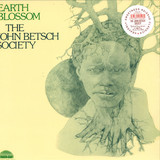
The recording of Earth Blossom, the John Betsch Societys one and only album, seems something of an enigma nowadays. For even though Nashville is clearly one of the towns in the US with the highest number of recording studios, who would have thought that the capital of country music would give birth to one of the forgotten masterpieces of 1970s spiritual jazz. The path leading to the album starts in 1963 when John Betsch, originally from Jacksonville in Florida, arrives in Nashville to study at Frisk University. He is a young drummer and joins Bob Holmes trio. Holmes is one of the towns major jazz organists and pianists; he becomes Betschs mentor and, over the space of two years, John will play alternately with him and with the trumpeter Louis Smiths group. However, in 1965, John leaves town to go to the prestigious Berkeley University in Boston and do a two-year course along with his fellow debutants with names like John Abercrombie, Ernie Watts and Alan Broadbent. Two years later, he is invited by a pianist friend, Billy Chilf, to join the legendary singer/songwriter Tim Hardins group. Just after Woodstock, John Betsch and Tim record a psychedelic album Columbia will never release together with the members of the future group Oregon: Colin Walcott, Glen Moore, Paul McCandles and his friend Billy Chilf. But he soon leaves this group to return to Nashville where he hooks up again with his friend Bob Holmes. Two years later, he is accepted on Archie Shepp and Max Roachs famous course at the University of Massachusetts Amherst (UMASS) and for the next four years he participates in this collective of intellectuals and musicians under the aegis of the two masters.
During this period he returns to Nashville to form his Society whose music is obviously influenced by the Afrocentric ideas of the UMASS student and political movement. However, the album, recorded in one day and in one take, also bears the hallmark of their generations psychedelic experiences, and in the themes and playing of the musicians we can hear a less violent form of music than the radical free jazz of New York or Chicago. Nature and environmental themes are the inspiration behind tracks touched by the spirit of Coltrane but also of Flower Power.
After Amherst, John Betsch joins Marion Browns group in 1976, leaves Tennessee for good and makes his home in New York over the next ten years or so. He plays and records with Dollar Brand, Kalaparusha Maurice McIntyre and many others, before heading off to France. He has lived in Paris for the last twenty years and played in Steve Lacy, Mal Waldron and Archie Shepp bands, as well as forming groups of his own. He now lives in Paris and plays with many musicians/bands.
Announcing the debut album from one of London’s most electrifying acts, New Regency Orchestra. An 18-piece Afro-Cuban big band, inspired by the musical melting pot of NYC in the 1950s, but with the punch and power of a whole host of London’s best Latin and jazz musicians. Blowing new life into these compositions, the album is a reimagining of some of the finest music from that golden era. From early 1950s René Hernandez and Tito Puente, through to the 1970s salsa of Rafael Labasta and Orlando Marin, produced and performed with fresh fire.
NRO is the brainchild of its artistic director, and the man behind Total Refreshment Centre and Church of Sound, Lex Blondin. Through a long-held passion for jazz, Lex discovered the explosive Afro-Cuban rhythms of mid-1940s NYC via the godfather of Afro-Cuban jazz, Mario Bauzá. A time when two musical worlds collided in a fusion of creativity and energy, jazz luminaries like Dizzy Gillespie and Charlie Parker joining forces with Cuban greats like Machito and Chano Pozo. This vibrant sound was music to dance to and found a home at The New York Palladium, a formative space of freedom and expression that was key to the scene’s development.
Although dance-focussed in their makeup, those early recordings are not often heard in modern club environments and Lex dreamt of retelling their story with a contemporary dynamism. A slice of serendipity followed, as a slot at a new festival opened up and Lex jumped at the chance to make this idea a reality, an 18-piece big band breathing new life into these beloved songs.
Enlisting the expertise of some of the capital’s finest talent, Lex and co-captain Andy Wood, of Como No fame, put together a world-class line-up of talent. Bringing in Eliane Correa as musical director and bandleader, a fluid and interchanging 18-piece band was formed.
The album itself is a hand-picked selection of timeless Afro-Cuban jazz classics, reimagined with NRO’s unbridled energy. It contains ten incredible instrumental tracks including 'Pregon' with its anthemic horn stabs and the addictive head nod bounce of 'Mambo Rama', alongside two scorching vocal numbers in 'Papa Boco' and 'Labasta Llego'. Coupling a heavyweight rhythm section with a wall of horns, they provide a fresh spin on songs from Tito Puente and Chico O'Farrill, René Hernandez through to Rafael Labasta.
“Some of the tunes like Tito Puente’s ‘Mambo Rama’ and ‘Scarlet Mambo’ might sound like they went to a gym as extra drums and bass synth were added to them whilst the tune ‘Sahib & Tito’ is a mix of Tito’s ‘Mambo Buda’ and Sahib Shihab’s ‘Nus’. Our intention is to be both respectful to the innovators and inventors of this incredible music and to pay our dues, but also to add something special from London where the city’s new jazz scene connects with its Latin American musicians and the musical influences around us.”
This pure collective joy, shared experience and music you can’t help but move to.
- Automate Insection
- Device For Annihilation
- Jetset
- Years Past
- Post Meridian
- Crushing Blows
- Inertia
- Distance To Empty
- Earache
- Full Steam Ahead
- Jetset (45 Version)
- Epiphany #2
- Sequenced For Explosion
- Send Me An Angel
- Risking Your Life With A Capital R
- Smoky Mountain High
- Strangers Die Everyday
- Crainial Masses
- Kodaliths
- Asphyxial Eclipse
- Iron Curtain
- Five Months In Poland
- Automate Insection (Live Wnyu)
- Kodaliths (Live Wnyu)
- Smoky Mountain High (Live Wnyu)
- Post Meridian (Live Wnyu)
A 2xLP discography from the late 90s post-hardcore/early screamo band, The Red Scare. The band existed during an interesting period when hardcore music was evolving and splintering into various sub-genres. They perfected a blistering hardcore that will appeal to fans of Born Against, Heroin, and Universal Order of Armageddon, as well as fans of later hardcore bands like Saetia, Jerome's Dream, City of Caterpillar, and Ampere. This record comes on high end paper, custom gatefold packaging, and limited edition colored vinyl. "Smoky Mountain High" gathers both of the bands LPs, their singles, as well as 4 live songs from their session at WNYU.
Imaginary time is a representation of time that appears in some approaches to quantum mechanics; mathematically speaking, it simply is a line perpendicular to the time axis. Inspired by this concept and by the possibilty of transcending the normal restrictions of time and space through the power of imagination, Industrial / DIY music cult act Nocturnal Emissions released a first raw and irregular version of Imaginary Time in 1996, followed three years later by a new more rave inspired mix, this time reflecting a political urge of that particular moment in time when the squatting scene, free parties, and non commercial raves - all existing tied up with campaigns of anti-capitalist protests going on in the late 90s - were upsetting the powers of the ruling class and the authoritarian government in the UK. Sunny Crypt is beyond happy to bring back to life all the past forms of Imaginary Time in another particular moment on this timeline as its sixth release with a fully remastered vinyl reissue, with a brand new powerhouse 4/4 remix by all things Techno / Electro / Jacking wizard Gesloten Cirkel and a renewed graphic outfit. There’s another kind of time!
Bruno Berle, the young songwriter and poet originally hailing from Maceió, the capital of Brazil’s Alagoas state, crafts songs that are simple, direct, and full of tender nuance. With his first album No Reino Dos Afetos (which translates to "In the Realm of Affections” and was released in 2022), Berle firmly established himself as a unique and important voice in the burgeoning scene of new Brazilian artists making a global impact, including peers like Ana Frango Elétrico, Tim Bernardes, Bala Desejo, Sessa and more. Now back with his second album, No Reino Dos Afetos 2, he stretches that further.
Bruno Berle’s music lives between two worlds – a traditional Brazilian folk talent steeped in history, and a contemporary, dreamy electronic pop; the result is songwriting that’s genre-bending, intentional, iconoclastic and consuming, spacious and sinewy and singular, a striking reflection of its composer while leaving space for the listener to settle in. The album follows Bruno’s relocation to São Paulo, and the songs are a reflection of his past and present. A rebuke of former categorizations of his work in Brazilian music scenes, and an idea of where his music can move, unfettered.
Berle’s music is purposeful in being a true portrait of himself, and a reflection of the music, art, and fashion scenes he personally moves through. Berle aims to provide an entrypoint for Black queer joy in his music, in his storytelling, in his presence and vision as a creative. For him, it feels subversive to be playing MPB laced with dubstep and lo-fi, a sort of intentional sacrilege, capturing a dialogue of modernity in traditional music.
Berle wrote most of the arrangements and co-produced his new album, Reino Dos Afetos 2 with longtime friend and musical partner Batata Boy, who is also from Maceió; the album was recorded in Rio de Janeiro, Maceió, and São Paulo, his new home, and picks up the conversation begun in 2022 on Berle’s debut album No Reino dos Afetos. Both records are the result of a nonlinear but coherent seven-year music creation process culminating in these albums, holding hands across space and time.
“Tirolirole,” the first single from the record, was released at the end of 2023; sun-soaked rhythms and soft voice coat the song, the lilting refrain of “Tirolirole” throughout – hushed, gentle, but somehow almost tactile, a golden-hour moment unlocked in the mind. “Tirolirole” is a triumphant future classic about the temporality of a blossoming love, with Bruno’s stunning vocal soaring over melodies which ebb and flow like the waters on the Atlantic shore. Of the track, Berle explains: “Despite ‘Tirolirole’ being an expression that evokes my childhood, just like the light words about nature, the harmony, and the poetry are epic, carrying a great hope for love.”
In fact, the guiding theme of No Reino dos Afetos 2 is a relationship, unfolding in the arc of a weekend. It traverses the innocence of an early young love, how that can be formative, can stretch on to take new shapes, or shape you. The album happens at the genesis of meeting someone and falling for them, before the relationship is thrown into overdrive – set in a big city, against a backdrop of major life changes, rising energy, the sound of São Paulo.
Something transcendental emerges in “Dizer Adeus,” with an arrangement that echoes a gospel atmosphere (evangelical and Catholic environments were pivotal to Berle’s upbringing). On “É Só Você Chegar,” piano and flute gracefully intertwine, a dance, while “Quando Penso” skews sparser, the voice-and-guitar minimalism somehow cultivating an entirely different shape – somehow both cozy and melancholy, with the background sound of a rainy day. Coupled with the lo-fi aspects that shape much of the album’s personality in the vocals and the production, No Reino Dos Afetos 2 is meticulously elaborated by Berle’s sonic alchemy, like on the mid-album instrumental “Sonho,” which feels like floating. “It’s the apex. It’s when lovers are sleeping together,” Berle explains of the feeling he wanted to encapsulate in the song.
On “Love Comes Back” Berle interprets Arthur Russell, the late Iowa musician who only reached greater visibility after he died in 1992. “His way of making music is similar to mine,” Berle explains. “He sings in a more fragile way, has more of an experimental way of recording, letting ‘chance’ appear in the final work.”
Even so, Berle doesn’t want his music to be buried in sentimentality – and the purposefulness of his craft serves as a sort of north star. The production, the arrangements, his restraint and intentionality in crafting his songs feel just as vital as their emotional cores. His songwriting is amorphous, fluid, an encompassing genre-bending movement in-and-of-itself, quietly daring. The songs are often in conversation with other works – drinking in fountains as diverse as the filmmaking of Ingmar Bergman, the poetry of Walt Whitman, the rhythm of Djavan, and the painting of Maxwell Alexandre. Musically he weaves together a rich tapestry of Brazilian folk, UK 2-step garage/dub, trip hop and sun soaked west coast songwriters; something akin to the worlds of Milton Nascimento, Arthur Russell, James Blake, Feist, and Sade colliding into one. But even then No Reino Dos Afetos 2 floats separately, a romanticism driven by a simplicity and intimacy, an open-ended possibility, Berle’s singularity as an artist at the helm of the ship.
Here we have a set of Technics branded high quality slipmats with the awesome 'London Skyline' design. In black, with white print this stunning image celebrates one of the coolest capitals of the World. We love London, show your support too!
These slipmats are suitable for any set of vinyl decks.
Made from the finest but strongest felt material, DMC slipmats are the no.1 choice for djs and vinyl lovers across the World.
Dependable & hard wearing, they are also resistant to dust & other particles, so will not scuff, scratch or damage vinyl.
Great for your home, studio, club or in competition.
DMC's superior slipmats are your turntable and vinyl's best friend.
Third Child album Soul Murder released for the first time on vinyl and digipak. Combine the heavy emotion of the blues, the tone and raw power of hard rock, the finesse of soul and a twist of 60's psychedelia. It will give you a visceral musical experience that plays directly to your being. That is CHILD. Living for their art, the pubs, the booze, the endless highways and the blues is what makes this band who they are. Child are a must see for those who are worshippers at "the electric church". The freedom and power of a live performance is important to CHILD in their approach to music, endeavouring to never perform the same way twice. They look forward to once again bringing this to the world on their continued search for sonic paradise. Since the release of their runaway self-titled debut in 2014, Child have continued to develop their unique brand of heavy blues through constant writing and extensive national/international touring. The band released the follow-up 'Blueside' in December 2016, which builds on this foundation to deliver a disc of pure sonic expression whilst following in the long tradition of the blues. 2018 saw the release of Child's first EP, simply titled 'I'. Recorded live to tape, 'I' is a glimpse into the boundless directions that could be taken on upcoming releases.
Blood red vinyl, limited to 350 copies. Third Child album Soul Murder released for the first time on vinyl and digipak. Combine the heavy emotion of the blues, the tone and raw power of hard rock, the finesse of soul and a twist of 60's psychedelia. It will give you a visceral musical experience that plays directly to your being. That is CHILD. Living for their art, the pubs, the booze, the endless highways and the blues is what makes this band who they are. Child are a must see for those who are worshippers at "the electric church". The freedom and power of a live performance is important to CHILD in their approach to music, endeavouring to never perform the same way twice. They look forward to once again bringing this to the world on their continued search for sonic paradise. Since the release of their runaway self-titled debut in 2014, Child have continued to develop their unique brand of heavy blues through constant writing and extensive national/international touring. The band released the follow-up 'Blueside' in December 2016, which builds on this foundation to deliver a disc of pure sonic expression whilst following in the long tradition of the blues. 2018 saw the release of Child's first EP, simply titled 'I'. Recorded live to tape, 'I' is a glimpse into the boundless directions that could be taken on upcoming releases.
On Gut Buster, Yosa Peit spawns fleshy sonic escapades, a swarm of vigorously processed vocals and soulful bass, set to a backdrop of visceral percussive structures. Full of roguish curiosity, the record is cast with an air of lo-fi experimentation, but with a platinum glint of pop sensibility. Peit's second album grapples with the destructive force of modern consumption, Gut Buster is an anti-capitalist battle cry that syntheses intimacy and hostility; a surrealist-punk affirmation and a testament to Peit's singular vision and unique approach. The free-ranging sound of Yosa Peit recalls the intense arrangements of a cyber-era Prince with the surrealist tones of Arthur Russell and early Björk. At the album's core, "World Eaters" unleashes scorching guitars in search of humankind's end, "I was born on a planet, I got hungry and I ate it." Even in the face of planetary doom and personal obstacles, Yosa evokes our propensity for mischief, humor and pleasure. "bb moon" processes sound solely from her bass into wicked oblivion. "CALL ME," a song about friendship, chews up it's anthemic melody into a gnarled strut worthy of an A$AP Rocky production, while "HAD3S" urges us to find balance, nodding to the mystical fuzz of Prince. Yosa's work has been called "personal, punk, poignant, deep" yet her genre-defying production, as textured as it is catchy, escapes definition. Gut Buster takes that collective playground for creation to planetary reaches, congregating friends from Berlin, Cologne, and New York's fuzzy musical underbelly: Employee, Funkycan, Gerry Franke, Glenn Astro, Nauker, Paingel, Tbz, and UCC Harlo. The record was mixed by Brainfeeder affiliate Benjamin Vukelic in Portland and Jan Brauer in Berlin. "Glitchy yet supple, the broken beats and warped abstractions are wholly unpredictable yet deliciously odd, like an esoteric mashup of Bjork, Aphex and Laurie Anderson" Electronic Sound Classic Black Vinyl, Gloss Laminated Sleeve, Printed inner "Gut" sleeve plus DL card.
Bruno Berle, the young songwriter and poet originally hailing from Maceió, the capital of Brazil’s Alagoas state, crafts songs that are simple, direct, and full of tender nuance. With his first album No Reino Dos Afetos (which translates to "In the Realm of Affections” and was released in 2022), Berle firmly established himself as a unique and important voice in the burgeoning scene of new Brazilian artists making a global impact, including peers like Ana Frango Elétrico, Tim Bernardes, Bala Desejo, Sessa and more. Now back with his second album, No Reino Dos Afetos 2, he stretches that further.
Bruno Berle’s music lives between two worlds – a traditional Brazilian folk talent steeped in history, and a contemporary, dreamy electronic pop; the result is songwriting that’s genre-bending, intentional, iconoclastic and consuming, spacious and sinewy and singular, a striking reflection of its composer while leaving space for the listener to settle in. The album follows Bruno’s relocation to São Paulo, and the songs are a reflection of his past and present. A rebuke of former categorizations of his work in Brazilian music scenes, and an idea of where his music can move, unfettered.
Berle’s music is purposeful in being a true portrait of himself, and a reflection of the music, art, and fashion scenes he personally moves through. Berle aims to provide an entrypoint for Black queer joy in his music, in his storytelling, in his presence and vision as a creative. For him, it feels subversive to be playing MPB laced with dubstep and lo-fi, a sort of intentional sacrilege, capturing a dialogue of modernity in traditional music.
Berle wrote most of the arrangements and co-produced his new album, Reino Dos Afetos 2 with longtime friend and musical partner Batata Boy, who is also from Maceió; the album was recorded in Rio de Janeiro, Maceió, and São Paulo, his new home, and picks up the conversation begun in 2022 on Berle’s debut album No Reino dos Afetos. Both records are the result of a nonlinear but coherent seven-year music creation process culminating in these albums, holding hands across space and time.
“Tirolirole,” the first single from the record, was released at the end of 2023; sun-soaked rhythms and soft voice coat the song, the lilting refrain of “Tirolirole” throughout – hushed, gentle, but somehow almost tactile, a golden-hour moment unlocked in the mind. “Tirolirole” is a triumphant future classic about the temporality of a blossoming love, with Bruno’s stunning vocal soaring over melodies which ebb and flow like the waters on the Atlantic shore. Of the track, Berle explains: “Despite ‘Tirolirole’ being an expression that evokes my childhood, just like the light words about nature, the harmony, and the poetry are epic, carrying a great hope for love.”
In fact, the guiding theme of No Reino dos Afetos 2 is a relationship, unfolding in the arc of a weekend. It traverses the innocence of an early young love, how that can be formative, can stretch on to take new shapes, or shape you. The album happens at the genesis of meeting someone and falling for them, before the relationship is thrown into overdrive – set in a big city, against a backdrop of major life changes, rising energy, the sound of São Paulo.
Something transcendental emerges in “Dizer Adeus,” with an arrangement that echoes a gospel atmosphere (evangelical and Catholic environments were pivotal to Berle’s upbringing). On “É Só Você Chegar,” piano and flute gracefully intertwine, a dance, while “Quando Penso” skews sparser, the voice-and-guitar minimalism somehow cultivating an entirely different shape – somehow both cozy and melancholy, with the background sound of a rainy day. Coupled with the lo-fi aspects that shape much of the album’s personality in the vocals and the production, No Reino Dos Afetos 2 is meticulously elaborated by Berle’s sonic alchemy, like on the mid-album instrumental “Sonho,” which feels like floating. “It’s the apex. It’s when lovers are sleeping together,” Berle explains of the feeling he wanted to encapsulate in the song.
On “Love Comes Back” Berle interprets Arthur Russell, the late Iowa musician who only reached greater visibility after he died in 1992. “His way of making music is similar to mine,” Berle explains. “He sings in a more fragile way, has more of an experimental way of recording, letting ‘chance’ appear in the final work.”
Even so, Berle doesn’t want his music to be buried in sentimentality – and the purposefulness of his craft serves as a sort of north star. The production, the arrangements, his restraint and intentionality in crafting his songs feel just as vital as their emotional cores. His songwriting is amorphous, fluid, an encompassing genre-bending movement in-and-of-itself, quietly daring. The songs are often in conversation with other works – drinking in fountains as diverse as the filmmaking of Ingmar Bergman, the poetry of Walt Whitman, the rhythm of Djavan, and the painting of Maxwell Alexandre. Musically he weaves together a rich tapestry of Brazilian folk, UK 2-step garage/dub, trip hop and sun soaked west coast songwriters; something akin to the worlds of Milton Nascimento, Arthur Russell, James Blake, Feist, and Sade colliding into one. But even then No Reino Dos Afetos 2 floats separately, a romanticism driven by a simplicity and intimacy, an open-ended possibility, Berle’s singularity as an artist at the helm of the ship.
- 01: How Can I Help You
- 02: We`ll See
- 03: Away From The Loud Crowd
- 04: Tonight In My Dreams She Found Me And We Finally Fell In Love And It Was A Feeling Long Unknown
- 05: 15Mm Pb
- 06: Floats And Strings
- 07: End Of The Summer (Early Version)
- 08: Veronica
- 09: Louis Vuitton Vs. Guilliame Apollinaire
- 10: I Am The Monster
- 11: No Part
- 12: A Song For The Trees, For The Swell Swishy Trees
- 13: Vyznanie #1
On the outskirts of Bratislava, in the pulsating shadows of a refinery's burning chimneys, on the plot of a family house, there stood a small shack. Initially, it housed trials in domestic mushroom growing. Later, after a makeshift acoustic touch-up - lining the walls with old cardboard egg cartons - it became a shelter for music. Sensitive, evocative, nostalgic, lo-fi music by a man named Cadillac Face.
Today we would probably use the term 'safe space', but back then it was (in Cadillac's words) kutica, a cubbyhole. He hid there from a world that ached. Here, Cadillac secretly smoked, sang, and composed. And tried not to go crazy from anxiety. He wrote music unlike anything during his time.
Here, he struggled. With sound (unable to adjust it to his liking), with instruments (which he couldn't bring himself to play), with the world (with which, understandably, he was at odds).
Cadillac Face was a man who didn't belong here.
He wrote and sang in English (in a post-socialist and early-capitalist Slovakia, when command of English was no matter of course); he also wrote in Slovak (blogs and diaries, which, due to a stream-of-consciousness and surrealist style, were as incomprehensible as they were immersive and intimate); gave advice to teenagers (to their quasi-banal questions on talking forums about relationships, life and adolescence, where they were often met with ridicule and mockery); he composed electronic and noise music (at a time when no one had a clue what the abbreviation DAW meant).
This Cadillac's compilation album is not aiming to compete with/replicate Noizy Days - a compilation of Cadillac's contributions to the project Noize Konspiracy. Underground compilations circulated through a local proto-social network. Borderline music without rules - open but often inaccessible. There, Cadillac contributed mostly with experimental-electronic compositions. Noizy Days was compiled by Ďuro Ďurček, one of the initiators of Noize Konspiracy. Both Ďuro and Cadillac have been dead for years.
Songs For The Trees is a selection from Cadillac's songwriting. The most intimate of his intimate recordings. Cadillac at his most fragile, brittle, and quiet. The most romantic, the most tormented, the most painful and direct of his songs I know.
Cadillac became an anthropomorphic grotesque tree. Neither broadleaf nor conifer. Or perhaps it's a candle slowly incinerating – bored, sad, playing the guitar. A tragicomedy. Sometimes it kindles what it doesn't mean to, and it can't put itself out. Or can it?
The YUM YUMS, Europe's ambassadors of power-pop are back with a brandnew album!!! Their sixth full-length is called "Poppin' Up Again" you you can be sure that whenever they have a new album poppin' up, it's gonna be a hit record!!! It's stacked with catchy hi-energy, guitar-driven power-pop songs, complete with sugary multi-layered harmonies and lyrics that seems to be stolen from some 12 year-old girl's diary. Like Joss Hutton once wrote in Bucketfull Of Brains Magazine, "Let's consider the three minute pop-song for a second or two: so simple in it's construction, so inscrutable in it's perfection, so many who have tried and failed! For me the YUM YUMS have been THE band to watch over the past few years, their perfect (yep, it's true) take on the "power-pop" thang is a source of constant pleasure and amuzement". A pretty good description that is, but what more can we say about the undisputed kings of pop? This time they deliver their idea of REAL POWER-POP, where the word power is written in capital letters and fill it up with a perfect dose of classic rock'n'roll. Putting together the essential ingrediences of the music of the RAMONES, the REAL KIDS, the PLIMSOULS, the DEVIL DOGS, the early SWEET and the OHIO EXPRESS, the 6t's and the 7t's, bubblegum, glam and punk, pop and r'n'r, they create their very own YUMMY sound. So, what we're talking about is extremely catchy pop-music with a fat, rockin' guitar sound, well executed vocal-lines, ridin'-on-the-waves drums and a crunchy punk feel to it. It simply makes you feel good!
Singles V1 is a 6 track, 12-inch beautiful marine blue coloured vinyl EP. It is also the first physical release by Low Girl. As the title suggests the EP is a collection of the band’s singles up to the end of 2023 which features Big Now, So Cool, Blessing, Bored, Uh-Oh and Pockets. If you haven’t yet heard of Low Girl, be in no doubt, you will do soon. The band are a four-piece fronted by singer songwriter Sarah Cosgrove with band mates Toby Morgan, Tom Cosgrove and Bradley Taylor and it is clear to see that their popularity has been steadily growing since the release of their first single Big Now in 2021. The band have featured on the BBC Introducing Stage at the Reading Festival and played at the Texas SXSW Festival at the invite of The British Music Embassy in 2022. They have also regularly toured and provided support for acts such as October Drift, Pale Blue Eyes, The Murder Capital, Dream Wife and most recently Dekker. Low Girl’s indie pop, lo/fi sound, attributable to its vulnerable lyrics, synth licks and guitar driven riffs, has attracted admirers and radio airplay on BBC Radio 1, Radio X and particularly at BBC Radio 6 music, who have play listed a number of the band’s singles. Indeed, their single ‘So Cool’ was one of BBC Radio 1 Introducing’s singles of the week in April 2022 and ‘Bored’, was featured on the Late in the Day program’s International Women’s Day 2023 edition alongside Arlo Parks, Bjork, Sade, Nina Simone and other premier female artists. Sarah Cosgrove has also joined the panellists on one of August’s editions of Steve Lamacq’s round table together with Felix White and Deadletter’s Zac.
Circus of Desire is the much anticipated third studio album from Grammy-nominated folk singer-songwriter Olivia Chaney. Worked up over five eventful years, this collection of lovingly wrought songs was recorded in NYC with long-time collaborator, producer and musician Thomas Bartlett (David Byrne, the Magnetic Fields, Sufjan Stevens, The National, St. Vincent, Father John Misty)
Consisting of ten originals and one cover (a revoicing of Dory Previn’s haunting ballad ‘Lady with the Braid’), this album is Olivia set free. Taking their departure from real life experiences, these songs strain towards the universal. The title track blends the carnivalesque and meditations on ancient wisdom with an anthemic, dancy refrain. ‘Calliope’ is a tribute to Olivia’s daughter, named after the Greek muse of music and epic poetry, picturing this little life as part of the ever-revolving cosmos. ‘To the Lighthouse’ tells the story of her sister who left the capital to live on a remote island. Like ‘Mirror, Mirror’ and ‘Why’, a pair of tracks about erotic love, this song reflects upon our capacity to flee and transcend inherited trauma. ‘Zero Sum’ is a setting of a metaphysical number poem by Olivia’s grandfather, a mathematician and poet. ‘I Wish’ - the album closer, is the ultimate breakup song.
Whilst staying true to her folk roots, Olivia enters new musical territories with Circus of Desire, venturing into the realms of pop and dance. The record features cameos from a number of friends, including string arrangements by Nico Muhly and banjo and guitar from Sam Amidon. The result of this rich blend of musical influences is an album that looks honestly, sometimes despairingly, but primarily hopefully at the carnival that is life - ‘we’re in a dance with death, with fire…we’re all in a circus of desire’.
Circus Of Desire by olivia Chaney, released 22 March 2024, includes the following tracks: "Why", "Galop", "Bogeyman", "Mirror, Mirror" and more.
This version of Circus Of Desire comes as a 1xLP.
London noise-rock quartet USA Nails have announced their upcoming album Feel Worse’, out March 22nd 2024. It’s the first album on their new label One Little Independent Records (home to anarcho-punk bands both old and new; Crass, Bad Breeding and more). The band have forged a considerable reputation since their formation in 2013 from their South London base, comprising of members of Kong, Future Of The Left, Blacklisters, Death Pedals and Silent Front.
‘Feel Worse’ explores schadenfreude; the pleasure derived from another person’s misfortune. With this, they use new material to attack austerity and UK authoritarianism, consumer culture (particularly the consumption of quick fix reality TV and hyper-capitalist agendas), youth culture and bullying, and more. They do so with their intense and unmistakable brand of abrasive, chaotic post-hardcore. There’s a raw and uncompromising energy to USA Nails, and ‘Feel Worse’ is their most powerful and vital album to date.
London noise-rock quartet USA Nails have announced their upcoming album Feel Worse’, out March 22nd 2024. It’s the first album on their new label One Little Independent Records (home to anarcho-punk bands both old and new; Crass, Bad Breeding and more). The band have forged a considerable reputation since their formation in 2013 from their South London base, comprising of members of Kong, Future Of The Left, Blacklisters, Death Pedals and Silent Front.
‘Feel Worse’ explores schadenfreude; the pleasure derived from another person’s misfortune. With this, they use new material to attack austerity and UK authoritarianism, consumer culture (particularly the consumption of quick fix reality TV and hyper-capitalist agendas), youth culture and bullying, and more. They do so with their intense and unmistakable brand of abrasive, chaotic post-hardcore. There’s a raw and uncompromising energy to USA Nails, and ‘Feel Worse’ is their most powerful and vital album to date.
- A1: Garden Of Eden (Feat. Charlotte Savary) - 3’38
- A2: Middle Of Nowhere (Feat. Charlotte Savary) - 4’22
- A3: Insomnia - 3’46
- A4: The Trip (Feat. Charlotte Savary) - 3’44
- A5: Andy’s Dream - 4’27
- B1: Game Over (Feat. Charlotte Savary) - 3’43
- B2: Around The Corner - 2’58
- B3: Stranger Night - 3’19
- B4: One Day (Feat. Charlotte Savary) - 3’30
- B5: Last Call From Earth - 3’29
The Trip is the first solo album by N'Zeng, better known as Sébastien Blanchon. It has to be said that he hid behind his (hollow) nose to sniff out the right projects (ex Le Peuple de l'Herbe, member of Entourloop). His nose is hollow, but not for the trumpet, and yet it's with this instrument that he started out. And he reinvents it, giving it a subtle place on this musical road trip we call The Trip.
A journey open to all, with no tolls and no filters, apart from the cinematic filter of this lover of original soundtracks and trip hop. Beautiful images flash before our eyes, and in our ears, the smooth voice of Charlotte Savary (Wax Tailor). An album, a very good trip for lovers of Portishead, Gorillaz, and well-felt scratches in the form of controlled skids.
He's making a name for himself as N'Zeng, with his smooth arrangements.
N'Zeng's father played trumpet with his grandfather in the Feurs brass band in the Loire department. When he arrived in Saint Etienne, young Sébastien started out with a cornet à pistons at the Conservatoire. His teacher at the time, Marcel Heyte, had won a prize in Paris at the same time as a certain Maurice André.
His father took lessons in orchestral conducting, accompanying the offspring's budding musical career, which included a course at the Festival de Cuivre in Monastier-sur-Gazeille, where he met the soloists of the Radio France orchestra. A new awareness, a new confidence: off to Lyon, not for a soccer derby, but to "beef up his game". In 1997, he was awarded a gold medal for trumpet by a unanimous jury at the Conservatoire National de Lyon.
Lyon, capital of the Gauls, was the starting point for N'Zeng, who went on to become a member of the group Le Peuple de l'Herbe. 15 years later, with several successful records to his credit, a concert in 2003 at the Transmusicales with Beth Gibbons (Portishead), and a Victoire de la Musique award, it was time for N'Zeng to move on to other things.
Arrival in the City of Light, the place where dreams come true. Nzeng's dreams are not only sonic, but also visual, for Sébastien is not only a friendly presence and a talented musician, but also a cinephile. His knowledge of music theory, acquired during his years at the conservatory, enables him to tackle music for pictures.
He created a soundtrack for the cult film Alien - The 8th Passenger, and worked with musician Rone (collaborating with Baxter Dury) and his bandmates from Le Peuple de l'Herbe, composing 2 tracks for the soundtrack of Virginie Despentes's hard-hitting film "Baise-moi". On the album "Hollywood Hustlers", with the group "Mustang Force", he pays tribute to the soundtracks of Lalo Shiffrin, Ennio Morricone... The album is also well received by the critics. He conducts the arrangements and orchestrations for the Degiheuga Orchestra, and composes the original music for the Hôtel Bellevue dance show, another success!
2019 sees the birth of "The Trip" project. On this record, no masks, but a female voice, that of Charlotte Savary (Wax Taylor), laid on a carpet of strings. With this musical voyage, trip hop takes pride of place, with a balance between the body of the instruments and the mechanics of beatmaking.
There's no getting off track on this well-balanced record, with its silky orchestrations. N'Zeng accompanies us elegantly, with his trusty trumpet as GPS, here used subtly. The album cover is a photograph taken by Sébastien Blanchon's mother, in 1973, a year when Saint Etienne was about to become French champion for the 7th time.
Chicago hip-hop outfit Angry Blackmen made up of Quentin Branch & Brian Warren (ABM) have been stretching their arms and tapping into different sounds since they smashed onto the scene with their debut single “OK!” in 2017. A prime introduction starring two emcees showing they deserve to wield the microphone and do so with good cause. Then barely a month later ABM released sophomore single ‘Riot!’ a complete shift in sound that still housed the foundation set in ‘OK!’ A few years later the duo would drop their debut project ‘Talkshit!’ which saw them amass the following they have today.
‘The Legend of ABM’ immediately smacks the listener in the eardrum leaving no second wasted and jumping straight to the point. The 11-track adventure truly presents an expression of hip-hop that we haven’t seen before, infusing multiple sounds with the 50-year old genre. To go even deeper, Quentin Branch & Brian Warren are teaching a masterclass in top-notch poetic lyricism, creating both accessible and mind-bending music. “Stanley Kubrick” has both heroes shattering the beat with their braggadocio for what is just the appetizer to prepare the listener for what’s to come in the next ten tracks. ‘Sabotage’ tells the story of two Black men hustling through the trenches of capitalism and the effect that this journey has on them. While the album exudes catchy wordplay and spine-splitting production, if you lift up the hood, ABM is spinning a tale of depression, existentialism and self-reflection that isn’t always pretty. “Dead Men Tell No Lies” is another mutation in sound for the duo, where the industrial sounds clash, violently yet perfectly together with a blistering hook harkening to the end of time. Warren & Branch’s raw poetry educates the listener of the pre-apocalyptic world we’re already living in throughout this project. ‘The Legend of ABM’ is not an excursion for the weak, the production is meant to snap your spine in half, the lyrics from Quentin & Brian are pathos-infused and relatable to anyone simply trying to survive.
It’s a family affair. One formed almost thirty years ago, back in the mid-nineties, when the pair joined seminal French jazz combo Olympic Grammofon. For twenty-four years they have worked together as Bumcello, each complementing the other, echoing polar opposites. The Boom in Bumcello is none other than Cyril Atef, incisive drummer, relentlessly pushing beats towards new horizons. The Cello is Vincent Ségal, cellist without blinkers and extraordinary musical alchemist. Since 1999, these two die-hard music fans, coming together for mercurial results, have released one record after the other whilst conquering the hearts of their live audiences, old regulars as well as new recruits. We have all been seduced by the way their music leapfrogs categories - these two experts are much more interested in kindred spirits than pigeonholing, and this very spirit is celebrated on more than one track of this ninth record, whose concept is original to say the least.
Everything began with an idea by Cyril Atef - a soundtrack based upon drawings penned by Marin, Vincent’s son, architect and visual artist. The musicians involved then coached their reaction to these images on a score, and the pair were charged with collating and adjusting the results. These thirteen ink drawings, in a heroic fantasy vein, constituted a matrix which was then to serve as a guide, like a roadmap through a singular and multi-faceted labyrinth. The key to this sonic fresco is in Bumcello’s image – an eclectic aesthetic twinned with a great sense of contrast. Herein lies the trademark of this entity animated by the gift of musical ubiquity, gorged on scales and rhythms, capable of a slap as much as a gentle caress. From classical music to electronics, from improvised music to sophisti-pop, everything is allowed with no preconceived ideas. They can even reclaim the traditions of others, all the better to propel them towards new horizons - this is how the very history of music has always panned out.
If you listen between the lines and look at the details, more than one piece bears witness to the moments and individuals that have impacted the criss-crossing lives of Vincent and Cyril. The track Crash is the perfect excuse to create a Jamaican-style jam with New York inflections, and we can see, in capital letters, the name Hilaire Penda, playing alongside Bumcello at the Apollo Theater in the associated drawing. This bass player from Cameroon, who died on 5th November 2018, was more than just a friend for the two Frenchmen. He was one of the family. Similarly, they give a nod to another Cameroonian, and another departed friend - singer of rock band les Têtes brûlées, Zanzibar, through the vocals of fellow countryman Zanzi. The ghost of Rémi Kolpa Kopul, emblematic voice of Radio Nova, haunts the margins of Spark Av, in a vocal sample with a smattering of effects. As for I Remember Tim, it directly honours the memory of Timothy Jerome Parker, aka The Gift Of Gab, another friend who left us in 2021. Tim is depicted in a drawing with the docks of Oakland in the background, and it’s his alter ego within Blackalicious, Chief Xcel, who remotely added his signature to the track, notably by adding the words of Lateef The Truthspeaker to brass and woodwind sounds.
These are the only additions to Bumcello’s original nucleus, all the better to create a genuine musical concoction where Vincent Taurelle is in charge of production and mixing sessions recorded live and direct. He is also invited for a twinkle on the keys (piano, synths, Wurlitzer, organ), on a handful of tracks. Already at the commands of previous opus Monster Talk, always taking care over the slightest detail, the one that makes all the difference, this pianist is now also part of the family. “Everything he brings is perfect, whether added though slight touches or through very important choices”, say the two members of a combo which today, appears to us under the guise of a trio, adding an extra dimension to a far-reaching mix, in the image of the veiled or more explicit tributes making up the cornerstones of this release.
Booker, a drawing where we see the musicians enter a club, honours James Booker, great pianist from New Orleans who has always fascinated Vincent, in a genre that is off-beat and gender defying. Her Story was created by Cyril in support of the Iranian women’s movement. Aysyen Kampe evokes, even in the original drawing, a tradition that remains impactful for Bumcello – Haitian mysticism, and Ouï Khouïette Ouï conjures up the beats of the Allaoui, a war dance from Western Algeria, one they have taken part in in the past with the help of Cheikha Rabia. They deliver a metal version, original and surprising, especially as Marin Ségal’s drawing features the Nicholas Brothers, those iconic dancers of the 30s jazz scene!
Resolutely hard to pin down, Bumcello’s beats can initially take on the structure of disjointed house, though Sangre begins like a film soundtrack, “in a Mexican style” adds Vincent, who was at the origin of this track. A delicate alap on the cello can open up onto afrobeat rhythms, a well-pitched voice can enchant, like on the amazing The City Has Eyes which has everything of a hummable pop hit. Emblematic of this manner of encompassing all music without being exclusive, Le Grand Sommeil, a direct reference to the Howard Hawks movie inspired by Raymond Chandler, a precursor of David Lynch, begins nice and smooth but ends on a wild tempo, on a drum’n’bass tip, as in the good old days of Cithéa, when this Party story began in the other century.
These recordings of Gongs Orchestras were made during Funeral Ceremonies in two Kung villages and one Jaraï village in Ratanakiri province, Cambodia by Laurent Jeanneau (Kink Gong) in 2003 and 2004, at a times when jungle had not been replaced by rubber plantations. Focusing on funeral's ceremonies, those hypnotics pieces are intense and haunting harmonics sonic experiments.
"Adventure brought me to south-east Asia, not academic research. I was based on and off in Banlung, capital of Ratanakiri province between 2003 and 2006. Finding gongs orchestras became my obsession, I've witnessed different contexts in which gongs were being performed, but the most brainwashing ceremonies were the funerals, because they would never end, I remember leaving the 3 days funeral ceremony of a prominent Jaraï dead man in Tang ji village at the border with Vietnam and still hearing the gongs the entire next day going back home through the jungle". - Laurent Jeanneau (Kink Gong)
"Many of the ethnic minority groups, the Jarai, Kac_, Tampuan, Kavet, Kreung, Brao, Bunong, Mnong, Edé, and others, are hill-rice farmers who live in the uplands of the Annamite mountain chain. Collectively these groups have been known by many names, including a number of disparaging terms in local dialects, such as moï, kha, phnong, and others. The term Montagnard was applied to them by the French during the colonial period, and was used by the US military and in popular discourse in English during the United States-Vietnam War. In scholarly and popular literature during the mid-twentieth century these upland farmers were also called hill tribes. I have opted for the word highlanders as a relatively neutral term that avoids the semantic burdens associated with these other namings." - Jonathan Padwe, The book Disturbed forests fragmented memories.
Following the reissue last year of Fairuz's classic 1979 album "Wahdon", Wewantsounds pursue their exploration of great Lebanese music with the reissue of Fairuz's highly sought-after LP "Maarifti Feek," released in 1987. Recorded in Beirut around 1983-84, the album features the Diva's superb voice combined with Ziad Rahbani's jazz and funk orchestration, making it one of the most in-demand albums on the Arabic funk scene. The release will coincide with "Arab Divas," a major exhibition set in the prestigious Institut du Monde Arabe (IMA) in Paris, celebrating the greatest singers from the Arab World and starting 13 May 2020. One of the greatest singers of the Middle East, Fairuz started her career in Lebanon in the 50s and quickly established herself as the most renowned Diva in the Arabic world, playing the most prestigious venues in the world. At the end of the 70s, Fairuz was at a turning point both professionally and personally. Her Husband Assi Rahbani, who, with his brother Elias, had penned her biggest successes, has suffered a stroke a few years earlier. This setback ultimately led to both the demise of their marriage and the end of their professionnal partnership. Enters Ziad Rahbani, Fairuz and Assi's son, a young musician, playwright and producer who had cut his teeth writing a handful of Fairuz's song - including her 1973 hit "Sa'alouni El Nas" - at just seventeen. Ziad Rahbani swiftly took over from his father and uncle as the singer's musical director and composer and this fruitful association, which started in 1979 with the album "Wahdon," broke many new grounds for Fairuz with funkier rhythms and edgier lyrics. It was recorded at the same time as Rahbani's own 12 inch "Abu Ali" which became a sought-after disco classic in its own right. The association between the two continued with a second album, "Maarifti Feek" ("Our Encounter"), recorded between 1983 and 84 in Beirut but only released in 1987. The album was another groundbreaking mix of influences ranging from the traditional arrangements of "Oudak Rannan" and "Ma Kdirt Nseet" to the brazilan flavour of "Version 1" via the synth funk of "Ouverture 83" and its follow up "Reprise 83". Also featured on the album is a beautiful remake of Joaquin Rodrigo's "Concerto de Aranjuez" in the form of a tribute to the lebanese capital, "Li Beirut." This blend of Oriental grooves with jazz and funk orchestrations by Ziad Rahbani is a unique document of Fairuz's career development in the 80s and explains why "Maarifti Feek" is such a sought after album on the DJ and collector circuits which Wewantsounds is delighted to reissue for the first time since the album first came out.
With a voice of pure gold and a startling sensitivity for heartfelt pop songwriting, on No Reino Dos Afetos (In the Realm of Affections), Berle firmly embraces earnestness, through starry-eyed Brazilian love songs, ambient vignettes, warm, home-cooked beats and gentle strokes of MPB genius.
Maceió, the capital of Brazil’s Alagoas state on its sprawling east-coast, is home to pastel coloured colonial houses, white sand beaches and a brilliant young composer, poet and multi-instrumentalist named Bruno Berle.
With a voice of pure gold and a startling sensitivity for heartfelt pop songwriting, on No Reino Dos Afetos (In the Realm of Affections), Berle firmly embraces earnestness, through starry-eyed Brazilian love songs, ambient vignettes, warm, home-cooked beats and gentle strokes of MPB genius.
“It’s an album that was built from my desire to find beauty”, Berle explains - his simple, graceful words mirroring the graceful simplicity in his music. But amongst the simplicity, the compositions, arrangements and productions on No Reino Dos Afetos tingle with nuance and detail.
On the contemporary R&B inspired lead single “Quero Dizer” - produced by Berle and longtime friend and collaborator Batata Boy - the swirling, lo-fi, kalimba and guitar-fronted beat is turned into a feel-good hit by the ingenuity of Berle’s honey-soaked vocal melody.
Powerfully intimate, “O Nome Do Meu Amor” (My Love’s Name) is a guaranteed tearjerker, with Berle’s stunning voice soaring over gently plucked acoustic guitar and the textural flutter of soft movement, as if we hear him writing the song in the moment.
Drawing upon a close-knit, collaborative scene of Maceió artists and musicians, (of which Berle and Batata Boy are vital members), Berle also recorded some of his friends songs on the album, including João Menezes’ “Até Meu Violao”, the album’s beautifully laid back sunshine soul opener, which has all the charm of early-70s João Donato.
Having cut his teeth in soft-rock group Troco em Bala, and more recently finding himself embedded in both Rio and Sao Paulo’s contemporary music scenes - collaborating with the likes of Ana Frango Eletrico, who took the photo for the album cover - No Reino Dos Afetos is as musically diverse as Bruno himself. It’s hazy indie rock (“É Preciso Ter Amor”), calming ambient and field recording (“Virginia Talk”) as well as Berle’s own take on West African High Life (“Som Nyame”).
Instantly recognisable as a truly special artist, Berle’s character fills every corner of the sound, which is unsurprising considering he played most of the instruments.