Mindgames is a new Samurai Music affiliated label aiming to capture the essence of the sound that magnetised label head Presha into Jungle/Drum and Bass in the mid 90’s. Experiencing this musical development as it happened lit a flame of passion and drive that forged a focused musical path that continues unabated today.
94/95 were pivotal years for Jungle with new approaches to production and musical shades that shaped how the music progressed. Light and Dark musical hues were working side by side more frequently in these years as the music found its way, and Mindgames will reflect this.
With the resurgence of artists absorbing this sound and creating updated versions with added production finesse, Mindgames mission is to enlist current-day producers who have successfully captured and reimagined the vibe and feel of these years into new forms that underline the foundation of our sound.
Search:capture
"I don't like rap music at all. I don't think it's music. It's just a beat and rapping."
Nina Simone
Straight off the streets, Hip-Hop burst onto the scene, leaving no one indifferent, igniting a cultural revolution that would shape generations to come. Now, in celebration of its 50-year anniversary, Art That Kills proudly presents HHCOMP01.
HHCOMP01 aims to capture the freshness and innocence of a genre in the midst of defining itself. As the world embraced this new phenomenon, it was a time of raw creativity and unbridled expression.
With a selection of seven fantastic tracks stepped out of the underground, HHCOMP01 is a window into the origins of a genre that has resonated with countless hearts and minds.
Alice In Chains’ “Rainier Fog” is a haunting auditory journey that immerses listeners in a dense atmosphere of introspection and melancholy. Released in 2018, the album’s title track, “Rainier Fog,” encapsulates the band’s signature grunge sound, blending gritty guitar riffs with Layne Staley’s successor William DuVall’s soulful vocals. The music unfolds like a misty landscape, mirroring the album’s title inspired by the ominous Seattle weather. The lyrics evoke a sense of longing and reflection, weaving a narrative that navigates through personal struggles and the passage of time. The song’s dynamic shifts create an emotional ebb and flow, accentuated by Jerry Cantrell’s masterful guitar work. “Rainier Fog” stands as a testament to Alice In Chains’ ability to capture the essence of the Pacific Northwest’s moody ambience while delivering a powerful and resonant musical experience.
An autumnal treasure, East Village’s Drop Out has spent the past thirty years finding new ears to bewitch and new hearts to melt. The only album from this British four-piece, recorded and released in the early nineties, it’s long been considered one of the hidden jewels of its time, and is talked of with hushed reverence by people who know. Bob Stanley of Saint Etienne once called it “an elegy for a particular brand of eighties guitar music, sweet minor chords and Dylanesque lyrics”, which captures what makes it so special; in summarising its era, though, it also effortlessly transcends it.
Like all great guitar gangs, East Village fell together as a four-piece; having relocated from High Wycombe to London in mid ‘80s, brothers Martin and Paul Kelly on bass and guitar, set on forming a group together, were joined by John Wood (guitar) and Spencer Smith (drums). Wood and the Kellys shared writing and vocal duties; it was an ideal combination, and one of the many charms of East Village is their various song writing voices, a tip of the hat, seemingly, to the 60s folk-rock groups who influenced them.
Originally influenced by garage-rock and freakbeat, the band eventually came through via the same scene as groups like Felt, The Go-Betweens, The Weather Prophets, and Primal Scream. They’d formed as Episode Four, releasing an EP, Strike Up Matches, in 1986, which has gone on to become one of most sought after releases of the C86 era. Their first two singles as East Village, ‘Cubans In The Bluefields’ (1987) and ‘Back Between Places’ (1988), were released on Jeff Barrett’s Sub Aqua label.
When it came time to record Drop Out, East Village found a supporter in Bob Stanley, who bankrolled the album sessions until Barrett re-signed the band to his new imprint Heavenly Recordings in 1990. The album that took shape is dusky, heartfelt, lamplit, full of chiming minor chords, close harmonies, rattling organs, all buoyed by a rhythm section that moves as one, steady and elegant. There’s melancholy here, certainly, on songs like ‘What Kind Of Friend Is This’, but also pleasure and freedom, on ‘When I Wake Tomorrow’ and ‘Silver Train’. The group were obsessed with Dylan’s Eat The Document at the time, and the album’s rich with references to the film; Drop Out’s character is also somehow close to the thin wild mercury sound of Blonde On Blonde, and the lambent light of the Byrds’ Notorious Byrd Brothers.
In one of life’s gentler surprises, ‘Silver Train’ became an unexpected radio hit in Australia when released there as a single in 1993. The story of East Village seems marked by such unexpected turns and surprising events. None was more surprising for their fans at the time, though, than their onstage split in 1991, leaving an unreleased album in the can. Encouraged by Jeff Barrett the band revisited the tapes two years on and while mixing the album for its posthumous release in 1993 invited Debsey Wykes (Dolly Mixture, Coming Up Roses, Saint Etienne, Birdie) to sing the quietly devastating album closer, “Everybody Knows”, a perfect, sad-eyed sign-off.
Listening now to Drop Out, its timelessness is clear. It could have been recorded by young folk-pop hopefuls in the late sixties, taking their shot at the big time; but it could just as easily have been recorded yesterday, by a group that’s both reverent to music’s past, but forward looking in spirit and temperament. It’s that kind of album. Drop Out’s pop poetry is fully formed, with a singular charm that takes in wistfulness, romance, and good times, and a clutch of deeply moving songs that are overflowing with melody and gracefulness. It’s pretty much everything you’d want from a guitar pop record.
It's also an album that’s slowly accrued its own legend. From its stunning cover art, photographed by Juergen Teller originally for a Katherine Hammett campaign, to the ten perfectly formed songs within, Drop Out’s significance in the scheme of things is such that, a decade ago, it was given a rare 10/10 rating in Uncut magazine, who called the album “the lost classic of its era”. Drop Out comes round every decade or so, each edition introducing new fans to its understated beauty, and this latest reissue is its most elegant and deluxe yet.
The 30th anniversary edition of Drop Out lands in two formats: an LP with tip-on style jacket and four-page insert, designed to partner with the 2019 vinyl reissue of their singles and rarities compilation, Hot Rod Hotel; and a double CD, featuring an extra disc compiling the group’s early singles and alternative versions. This CD edition previously has only been available in Japan, though it now features a new, superior mix of their second single, ‘Back Between Places’. Both feature new, typically eloquent liner notes from writer Jon Savage.
The members of East Village have all gone on to do inspired things: Martin Kelly joined Jeff Barrett at Heavenly and has managed label mainstays Saint Etienne since 1993; Paul Kelly formed Birdie with Debsey Wykes, and is now a renowned film director and graphic designer; both Paul and Spencer Smith played in Saint Etienne’s live band; John Wood moved to China to teach, and released a lovely, understated folk album, Quiet Storm, in Japan in 2006. But with the hazy perfection of Drop Out, they’ve all already etched their names in the firmament.
Anybody who has witnessed a live performance of Anna von Hausswolff and band can attest to the extraordinary and commanding nature of the experience. The distinctive music, as captured across five full-length albums, comes to life, shifting from hypnotic and mantra-like moods to thunderous drama, dissonance and cacophony. The musicians master playful dynamics and wield immense power.
Stolen Body is delighted to be working with Bristol progressive psych and jazz legends The Brackish for their fifth album ‘Donor Zone’. Attempting to capture our live sound and intensity, Donor Zone was recorded live at gig volume without the tyranny of headphones. The album kicks off with an ADHD epic ' Willox for a new Age' , apocalyptic coda morphing into the fuzz bass drone of 'Donor Zone'. Forboding chord sequences set up ' J und J' before a gargantuan riff drops, motorik middle section developing into a highly satisfying ripping fuzz guitar finish. Last tune BUABB has the faved Tortoise/ beefheart stylings around a Kraut- inspired improv section. The single 'J und J' draws the listener in to a false sense of uneasy security with it's pensive and motorik sections before it's gargantuan riff payoff. The track shifts dynamically back to it's uneasy base, developing into an extremely satisfying and belligerent ripping fuzz guitar ending.
Texan rhythm and blues icon Barbara Lynn made an incredible impact in 1962 with the chart-topping debut single, ‘You’ll Lose A Good Thing,’ which has since been covered by Aretha Franklin, Freddy Fender, and countless others. A southpaw guitarist who wrote her own material, debut LP You’ll Lose A Good Thing captured our heroine at her best, the soulful smoky voice a striking contrast to the blues base of her backing musicians (including Dr John on keyboards). Containing the follow-up hits ‘Second Fiddle Girl’ and ‘Letter To Mommy And Daddy’ as well as the cherished title track, it’s a winner from start to finish.
Announcing the new cassette release from London based solo artist, Bubble People.
Both sides of this tape were recorded in continuous takes over the course of a few days. A mixing session was performed shortly afterwards, in order to preserve the moment that was captured here.
Jasper Sdougos performs using a DSI Prophet 12 and an array of borrowed, vintage drum machines, his melancholic vocals echoing through cascades of drones and synthesis.
Bubble People is a live AV electronica act based in London, UK. Jasper Sdougos performs alongside visual artist Mamoru Watanabe.
50 turquoise cassettes pressed exclusively by Squeeze Trip Records (JP).
This audio was written especially for cassette format.
Includes 2 continuous live recordings, timed to 22.5 minutes in length, for sides A and B.
Trailblazing instrumental synth pop experiments created to soundtrack Japan’s booming 1980s cartoon and comic industries. The brightly futuristic instrumentals on this collection reflect the mindset of composers and musicians who believed in a technological future where everything was possible.
In the late 1980s Japan experienced a brief but heady period where societal changes combined with new-found wealth to open up a world of possibilities. A huge influx of cash - artificially created by slashed interest rates after an agreement with the US to weaken the dollar relative to the yen - resulted in the inflation of real estate and stock market at a rapid pace. While the economic bubble it created was unprecedented and impossible to sustain, for a while money was in plentiful supply.
The musical genre City Pop reflected the aspirations of the country’s booming leisure class. Video games flourished with Nintendo's 1983 launch of their Family Computer (or FamiCom). Studio Ghibli was founded 1985 to later became one of the most famous and respected animation studios in the world, and Anime and Manga were established as major forms of entertainment for all generations of the Japanese public.
Music was no mere footnote to the anime and manga boom: the two forms of media often went hand in hand, and not simply through the presence of background melodies. With generous budgets available, even two-dimensional static manga comics could be released with an accompanying soundtrack of original music known as an ‘Image Album’.
Composer and arranger Kazuhiko Izu was one such beneficiary of this open budget approach. Written to accompany artist Katsuhiro Otomo’s manga comic Domu, the composer and arranger took advantage of the world-leading (and wallet-busting) Japanese synthesiser technology available at King Records’ fully equipped studio. Featured on this compilation, A3: Act 2 Scene 26 reflected the story’s sci fi themes with a blazingly futuristic yet warmly funky slice of synth pop that presents a joyful celebration of synthesisers and their seemingly endless possibilities.
Kan Ogasawara was another composer who made early mastery of the litany of synthesisers, drum machines and sequencers that had become available. Two tracks written to accompany the 1985 period manga Yume No Ishibumi are featured here; Honowo’s experimental electronic textures add spice to a jaunty electro pop melody that recalls the Rah band’s 1983 hit Messages From Stars; the jazz-tinged Utage rounds out Ogasawara’s shimmering synth textures with beautifully crafted backing from legendary musicians Yuji Toriyama (guitar), Pecker (percussion) and Jun Fukamachi (piano).
Before becoming one of the pioneers of Japanese Kankyo Ongaku (Ambient Music), Takashi Kokubo worked on the proto techno track Kiki (Jungle At Night). It was put together for the 1984 anime film Shonen Keniya (Kenya Boy) using some of the most expensive music technologies available at the time. This Africa-Inspired dance track offers a contemporary parallel to the early techno music that young Detroit based producers were then creating using cheap Japanese Roland drum machines and synthesisers.
This is the first compilation of Japanese anime and manga soundtracks curated by Kay Suzuki and Rintaro Sekizuka from Vinyl Delivery Service (a Tokyo based online record shop which also operates in East London's renowned wine and hifi shop Idle Moments). With a cover by artist Kazuki Takakura and two pages of liner notes, this vinyl only compilation of music never before released outside of Japan, captures a vital aural snapshot of an era whose forward-thinking sounds went hand in hand with cutting edge technology.
Colbie Caillat is a master storyteller whose breezy SoCal folk-pop songs laced with a country shimmer speak truth to both the pain of endings and hopefulness of what’s to come when you’re brave enough to follow your wild, wild heart. Along The Way, Caillat’s solo country debut, embodies the positivity in heartbreak’s wake. Though her move to Nashville was done as one-half of a romantic partnership - a personal and professional adventure to the southern city for this west coast girl - she thrived in all of life’s changes. In her musical journey and experimentation with new sounds, Caillat vividly captured a moment in her life through song. The California-raised, Nashville-based girl delivered songs with gratitude for having known this love, learned so many lessons and the joys shared along the way. “The love that you shared shouldn’t be wasted: you help each other grow and become a wiser and more evolved person. We needed to be together to become who we are today, even if we didn’t end up together.” If Joni Mitchell’s quintessential Blue is the deep dive into the caverns of grief following a break-up, Along The Way is a bright, shiny compass Caillat offers to guide people through the tough times and raw feelings that accompany any dissolution. Lover, leaver, left, the woman who’s sung at the Nobel Peace Prize Concert wants to sow compassion for all parties involved.
Ever wondered what a Brian Wilson solo album
from 1969 would sound like?
Look no further. (No A.I. needed...)
Exquisitely arranged by ex-Animal Vic Briggs and
featuring several Wrecking Crew musicians who
also played on Pet Sounds, MARK ERIC’s A
Midsummer’s Day Dream is a unique blend of
Beach Boys/Four Freshmen sensibilities coupled
with wistful, lush surf psychedelia.
Defiantly soft, the 1969 LP captured the tail end
of L.A.’s pop innocence perfectly, just as it
slipped into infinity. First time on vinyl since its
original release.
Coming this summer! Our 2002 & 2009 CD reissues
of A Midsummer’s Day Dream caught the soft pop
collector’s world entirely off guard: Very few
were aware of the LP’s existence, and the
reaction was united: A masterpiece was
unleashed and a new generation of daydreamers
was born! The result was glowing reviews in MOJO
and UNCUT, a Japanese edition, as well as soaring
prices for the original long out-of-print vinyl
pressing. The full-colour gatefold jacket includes
EXCLUSIVE, rare photos, and UPDATED and
EXPANDED liner notes that feature the
participation of Mark Eric himself. Reissue
produced, annotated, and designed by STEVE
STANLEY.
Originally released as a hand-numbered CD on New Year's Eve of 2004, Last Light captures Tor Lundvall 's hushed songcraft at its most ghostly and grayscale, stripped bare like branches bracing for winter. Initially conceived of as "a piano album with sparse electronics" (with the working title November), Lundvall's palette steadily expanded, incorporating synthesizer, samples, bass, metronomes, and his signature spectral vocals. A journal entry from the spring of 2002 proved formative to his evolving vision: "I remember watching the blueish-grey light shimmering outside and hearing distant sounds echoing far away, eventually sinking into silence and stillness." The album's 12 tracks are steeped in this sense of autumnal transience, of bearing witness to what fades. The music moves in whispered swells, between dirge, drift, and devotional. Synths chime like slow-tolling bells; percussion shuffles and shivers, icy and isolated; bass traces a low-lidded plod - it's a mode both austere and seductive, lulling the listener into its landscapes of deepening dusk. Lyrically, Lundvall's language skews observational and depressive ("through lace curtains / grey light falls / dark clouds gather / in my soul" ), with each song like a gauzy glimpse into a different tableau framing winter's descent: rust - colored leaves, frozen ponds, cold crescent moons. Lundvall has long considered Last Light a "personal favorite" in his discography, and it's easy to hear why. In texture, finesse, and pacing, it vividly evokes the rare mood of fragile, frosty pastoral noir depicted in his iconic oil paintings. His is an art of the half-seen and half-remembered, of fleeting figures, shapes and shadows, and gathering darkness. Of all that disappears, and the ghosts that never leave: "So I wait / as the years / slowly drain the magic and the light / and the girl / I never loved / haunts me through the dark roads of my life."
A1 - Healing Properties
Opening his Spatial account with Healing Properties, Eusabia immediately throws down the gauntlet showcasing an inimitable versatility with breakbeats, permeated with a jungle flex so rarely captured in the atmospheric D&B landscape. Pivoting effortlessly as the track progresses from drumloop to thunderous drumloop with a simmering haunted atmosphere and deep, weighty basslines to yearning filtered vocal samples, this track has it all.
A2 - The Space Between
Smooth jungly synthwork seizes the foreground before crisp breaks begin to reveal our direction through The Space Between, jittery key stabs and familiar old school FX create a unique sci-fi style backdrop as the breaks drive the vibe forward, switching and weaving in style, constantly mixing it up to ram the point home that you cannot fully appreciate a Eusabia track until every second has been consumed - many times over, as The Space Between demands.
AA1 - Scope of Understanding
A more contemplative piece, Scope of Understanding strips things back with a synthwave-esque vibe tinged with intrigue and allure. Soon the breakbeats leap into gear and develop with an incredible level of refined detail, expertly edited, chopped and cut to a darkly undertone of sub bass and subtle micro melodies. Scope of Understanding will leave you in awe of the quickfire ideas Eusabia can conjure in the space of 6 minutes.
AA2 - Self Reflection
A smooth atmospheric introduction ushers in a thumping drum tools workout, somehow perfectly in sync with the calm harmonies dancing around in the composition. Certainly a track to enjoy both on the discerning dancefloor and while driving home with rain lashing at the windscreen at 2am, Self Reflection's synths and breaks conclude the EP in style leaving a long lasting memory of a Spatial debut you will not forget.
Words by Chris Hayes.
The entity known as ALTERNATIVE TENTACLES, would like to express its excitement to be working with the Seattle, WA based BAND Sandrider, and enjoyed the previous relationship of Damm and Weisnewski in their former entity known as AKIMBO. ALTERNATIVE TENTACLES is very much a fan of previous work from the BAND on Satanik Royalty Records and highly recommend new listeners investigate the discography further. The upcoming 2-song single by BAND, hereafter referred to as AVIARY/BALEEN has a limited-edition initial pressing on blue and white splatter vinyl pressing of 300 copies, and successive runs will not be as colorful. Immediate orders are encouraged. This cheeky duality of Sandrider is also captured perfectly in the subject matter of the EP’s two tracks: The explosive first track, “Aviary,” portrays the modern hellscape of social media as sinister, soulless mama bird, willfully vomiting disinformation into the eager mouths of enthusiastically consenting participants. “PLEASE MOTHER, FEED THEM YOUR BILE. DOUSE THE BABES WITH YOUR WHOLESOME RETCH,” vocalist/guitarist Jon Weisnewski wails over massive, frenetic riffs, rounded out by bassist Jesse Roberts’ warm low end and drummer Nat Damm’s ultra-hard, punch-like beats. The song concludes in a frenzy of danceable beats, with Weisnewski doing his best Painkiller-era Halford screams as he commands you to flood the whole damn thing – drown those who wish to destroy us. As pissed off as the song is, you’ll feel triumphant by the end anyway. Side B’s “Baleen” on the other hand (while ironically the angrier-sounding song of the two), is about a lighter thought that keeps Weisnewski up at night: Do you ever think about how fucking weird whales are? They’re enormous floating creatures that can't handle gravity, and they hang out in the deepest oceans. Yet they can’t breathe underwater, so they have to stay near the top and come up for air all the time. Seems inconvenient. And you’d think that the biggest mammal that ever lived would be a brutal carnivore, right? But no. They eat the tiniest creatures, through a bunch of hair in their mouths. What the fuck? Anyway, ponder on that while you bang your head along with Sandrider’s signature primal, hypnotizingly heavy riffs.
1STEP Process 180g 45rpm Double LP Pressed on VR900-Supreme Vinyl!
Mastered From The Original Analogue Master Tapes by Bernie Grundman!
Super-Luxe "Monster Pak" Jacket with a Rich 36-Page Booklet & Striking Outer Slipcase!
New lacquers cut for every 500 pressings!
Strictly Limited To 7,500 Numbered Pressings!
There have been more than 40 U.S. releases (and hundreds more worldwide) of Stan Getz's cultural touchstone album and for good reason: few recordings better capture the breezy warmth and easy-going sophistication of Brazilian bossa nova for an American jazz audience. Fewer recordings can replicate the you-are-there presence and flawlessly tight studio acoustics. Only Getz/Gilberto has Billboard Top-10-charting singles like "The Girl from Ipanema." When Impex Records jumps into this densely-populated fray with our own production, we need to bring maximum value and prestige to it. Challenge accepted. We worked directly with Stan's wife Monica Getz and their son Nicolaus to create the most authentic, best-presented Getz/Gilberto ever.
Exclusive to Impex's 1STEP Getz/Gilberto includes an insightful new interview/essay by Charles Granata featuring Monica reminiscences of the making of this record, the subsequent cultural phenomenon, and Stan's battles with some pretty heavy demons. Also unique to this release are two bonus tracks: an alternate mono 7" mix of "The Girl from Ipanema" (without the added echo, thank you very much) and a live recording of "Corcovado" from Carnegie Hall. Finally, the large-format, 36-page booklet features dozens of rare photos, the original album notes, and a fascinating personal remembrance from Monica Getz herself, celebrating her late husband's work and an inside look at Stan's family life while making the record!
Using the original analog master tapes and no computers at all, Bernie Grundman at Bernie Grundman Mastering sought to keep the sense of space and tone on the master tape intact without unnecessary embellishment. Impex 1STEPs get you closer to the source, not the ideal.
We know you have many choices when it comes to enjoying this singular album. The Impex 1STEP of Getz/Gilberto cuts above all other releases with added-value content that takes you deeper into Stan Getz's life and process in a way never previously possible.
The 1STEP Process:
The Impex 1STEP process relies on short, tightly-controlled runs that require a new lacquer after each 500 pressings. This unforgiving format has the lacquer skipping the regular father-mother process, going right to a single convert and then pressing. Though this dramatically increases mastering and production costs, it also assures each run is more consistent from disc to disc, with less noise, clearer details and deeper bass.
Reducing production complexity to just a single "convert" disc between the lacquer and the press greatly improves groove integrity, diminishes non-fill anomalies and increases signal integrity from the master tape to your system.
Features:
The only release of this fundamental jazz classic crafted with the full participation of the Getz family, including never-before-seen photos and notes from Monica and Nick Getz
Exclusive new interview essay about Getz's life and the recording of the album by noted producer and historian Charles L. Granata
Exclusive ultra-luxe Impex 1STEP packaging featuring a deluxe 36-page booklet within a heavy-stock two-sleeve Monster Pack jacket and striking colour-matched slip case
Two all-analogue bonus tracks: an alternate mono 7" mix of "The Girl from Ipanema" and a live recording of "Corcovado" from Carnegie Hall
Limited to 7,500 copies
Their full-length debut, Exit Simulation, captures this sense of deep-rooted divination, cycling between simmering ballads, ghosted R&B, downtempo gospel, and looped vocal improvisations – often within the same track. The title is taken from a science fiction novel she read during the purgatory of the pandemic, alluding to a dimensional ideation of departure – “the permission to imagine leaving.”
Recorded in her current home of Charleston, she characterizes the album’s mood in terms both reflective and raw: an exploration of things suppressed, foundations beginning to crack, “talking myself off a ledge.”
The music of Niecy Blues transposes reverie and reckoning into emotive devotionals of keys, guitar, bass, synth, and bewitched voice, steeped in sacred atmospheres gleaned from a youth spent in a religious Oklahoma household: “My first experience with ambient music was church – slow songs of worship, with delay on the guitar... even if you don’t believe, you feel something.”
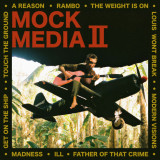
Mock Media, the new Canadian supergroup comprised of Garnet Aronyk (of Crack Cloud), Bennett Smith (of N0V3L), Austin Boylan (of Pottery) and Evan Aesen (of Painted Fruits), share their captivating debut album 'via Meat Machine Records (Crack Cloud, N0V3L, CLAMM)
Mock Media’s debut LP Mock Media II – out on Tin Angel records captures this firebrand four piece’s head-on plunge into enthralling existential contradictions: songs that explore the darkest corners of humanity, yet come out at the other end with the unwavering joy that marked their genesis. It’s an album of sneaky eclecticism: the high-wired punk rock stylings serve as Mock Media’s framework to clad their agog explorations into pop, electronic and world folk music.
In the summer of 2015, Mac DeMarco released Some Other Ones— a collection of original instrumental recordings DeMarco deemed his “BBQ soundtrack” — as a free digital download exclusively on Bandcamp. It was recorded in just 5 days at his home in Far Rockaway, Queens, about a year after the massive success of his third album, Salad Days, and just weeks before the release of mini-LP Another One. Originally released in conjunction with a barbecue DeMarco hosted to promote Another One and collect food bank donations, Some Other Ones soon gained cult status, now regarded amongst his fans as a key entry in his beloved catalog. Now, almost 10 years later, and following the success of his recent full-length instrumental album Five Easy Hot Dogs, Some Other Ones is finally getting the full release treatment. The album will be available digitally across all streaming platforms for the first time starting November 8th, and on limited edition yellow vinyl starting December 15th. The real heads get down to Some Other Ones!
Seven Steps to Heaven arrived at a crucial junction in Miles Davis' career. Recorded at two separate locations in spring 1963, it served as Davis' first release in more than a year – a layoff that was then unprecedented for the jazz visionary who had issued at least one LP a year since debuting in the early '50s. Equally notable, Seven Steps to Heaven marks the point at which the core of Davis' Second Great Quintet started to assemble. The twice Grammy-nominated effort is also Davis' final studio record to blend standards with originals. And it happens to be one of the expressive, well-played albums in the jazz canon.
Sourced from the original master tapes, pressed at RTI, and housed in a Stoughton gatefold jacket, Mobile Fidelity's 180g SuperVinyl LP of Seven Steps to Heaven adds yet another step (or more) towards the bliss suggested by the album title. Playing with standout clarity, detail, tone, and balance, this audiophile reissue pulls back the curtain on the instrumentalists. Afforded the tremendous advantages of SuperVinyl – including a nearly inaudible noise floor, dead-quiet surfaces, and superb groove definition – this numbered-edition version presents Davis and Co. amid a wide, deep soundstage whose dimensions and solidity help bring the record's historical importance and musical merit into focus. Warm, organic, and present, the SuperVinyl LP of Seven Steps to Heaven is what great-sounding hi-fi is all about.
And there's nary a passage on this 1963 landmark that isn't great. That Davis manages to make it feel so cohesive and seamless is a testament to the inspired performances and engaging compositions. Davis didn't draw it up the way it unfolded. No matter. He held trump cards that stayed up his sleeve for the next three decades: A drive to be nothing less than superb, a refusal to settle for mediocrity, and standards to which nearly no other composer or player could match. "The toughest critic I got, and the only one I worry about, is myself," Davis wrote in the liner notes. "The music has to get past me."
Davis' demanding approach partly explains why he switched up his band between the first and second sessions – and underscores how fast his mind was racing with new ideas. Seven Steps to Heaven acts as the stable bridge between the transitional period that followed the dissolution of his First Great Quintet and formation of the Second; without it, Davis perhaps doesn't invite then-23-year-old Herbie Hancock and a still-teenage Tony Williams into the fold. The trumpeter not only got his men – he preserved in amber for the only time (well, magnetic tape anyway) the chemistry and vibe he achieved with pianist Victor Feldman, drummer Frank Butler, tenor saxophonist George Coleman, and bassist Ron Carter.
That line-up gels for half of the six songs on Seven Steps to Heaven. Captured in Los Angeles April '63, the quintet stretches out on a luxurious reading of the late '20s New Orleans staple "Basin Street Blues"; lays on the romance for a candlelit stroll through the '40s standard "I Fall in Love Too Easily"; and explores the rounded contours and melodic crevices of the early blues "Baby Won't You Please Come Home." The performances are refined, elegant, emotional; the band lets the feelings linger and gives the listener time to absorb the colours and textures.
A month later, Davis returned to New York City with Coleman and Carter, and partnered them with Hancock and Williams. Tellingly, the quintet tried its collective hand at the title track and "Joshua" – Feldman-penned songs already recorded in Los Angeles – as well as the yearning "So Near, So Far." Those are the tunes that comprise the other piece of Seven Steps to Heaven, with the revised quintet's liquid pulse, articulate dynamics, and timing shifts a harbinger of things to come.
It's also worth mentioning that the interpretations of the bounding "Seven Steps to Heaven" – a showcase for Davis' trumpet – and interlocking "Joshua" netted considerable radio airplay and attracted the attention of other contemporaries who covered the songs. Keeping Carter and Williams as the rhythmic engine, and Hancock as the anchor between solo flights and structural motifs, Davis would soon soon welcome Wayne Shorter into the family and transform jazz. Again. The aptly – and, in hindsight, perhaps prophetically titled Seven Steps to Heaven – is how he got there.