Those well-acquainted with Los Angeles-based DJ and producer Wheez-ie can attest to his masterful dexterity both behind the decks and in the studio. For the uninitiated, his forthcoming release serves as another testament to the timely-yet-timeless quality his productions have since become championed for. Finding common ground through an emphasis on genre hybridization, Wheez-ie's latest offering, Horizons, benevolently marks the next entry in the rapidly growing catalog of John Frusciante and Aura T-09's Evar Records.
Set for release on October 1st, this 4-track collection has already received advance support from the likes of Nina Kraviz, Sherelle (with the track "Shut the Door" being featured as part of her official BBC Radio 1 Essential Mix), VTSS, Cera Khin and fellow Evar signee Kilbourne, exemplifying how Wheez-ie's tunes are not only certifiably rave-ready but can find a happy home in DJ sets of all styles.
Drawing influence from techno, industrial metal, darkcore jungle and big beat, Horizons culminates in a fierce exploration of sounds that efficaciously capture the essence of early 90s-era rave through a modern lens that is both perceptive and prophetic. While working from a referential or nostalgic place can be cheugy if not executed properly, the Texas-born producer is at his best when pulling from his encyclopedic knowledge of electronic dance music to provide that 2AM banger the dance floor didn't quite know it needed until the cathartic moment it explodes out of the speakers.
As exemplified by the depth of his discography, including recent additions courtesy of London's THEM imprint (2020's Negative Zone EP) and Perth, Scotland's Craigie Knowes (2020's ONLY HUMAN / WEAPONIZED), Wheez-ie has been fiercely applying pressure and challenging genre tropes from the very onset of his career, and doing so with immense care and understanding of nuanced cultural codes. Prioritizing feeling above genre, Wheez-ie's Horizons brilliantly showcases his multifaceted nature, with each track offering a different side of his dynamic arsenal as a producer and DJ.
quête:capture
Docile Recordings continues with part three of a five cat series. Docile #30, the Alpha Cat ep, was produced, arranged, and crafted on vinyl by Andy Garcia at Archer Record Press in Detroit Michigan U.S.A.. This Docile is a reaction to the stimulus of sight and sound; experiences, people and places inspire a sonic approach steeped in the realization of a moment. Docile aims to capture and release this moment in a minimal style that is its own. The Docile style appropriates noise of any sort to weave into its mello brand of 4/4 digi-o-log techno. Docile will continue until it can not; to shape sound into a spartan beauty.
hese arrangements speak soulfully, whether disruptive or smooth they define a struggle.
A1- brian wilson rides again----- this tribute to a master reflects a studio awareness theory in the breakdown of a minimal “good vibration” . a bass line scales down leading waves of synth and effect to crash upon an ambling kick shifting steady through a western soundscape.
A2-too jada ta’ trotta---the trash can of audio is thrown down the stairs with this haughty mover rocking a rolling crash through digi-glitch symposium.
B1-bumper car cocktail party--- a patchwork rhythms stutter and form together in a ruff and tumble jaunt soothed by a sexy sax that brings the assembly into line.
B2----pong-----crisp hi-hats rotate next to a steady clap complimenting a ponging in various forms under a cloud of dramatic synth calming the animal spirit.
"Future indie classics that reek of modern New York City Charm” – DIY Magazine
"Captures honest-to-god truths in a new light’ – The Line of Best Fit
“A nostalgia-tinged hit, filled with jangly guitars and contagious melodies” – Wonderland
‘WANDERKID’ is the sophomore album from New York’s next lo-fi legend, JW Francis, and will be released whilst its creator is in the middle of trekking 2000 miles along the Appalachian Trail in the US. The follow up to JW’s critically acclaimed debut album ‘We Share A Similar Joy’, ‘WANDERKID’ will be released on 3rd September by Sunday Best Recordings. “WANDERKID is an album about escape. It’s supposed to be a gut punch of a record about an anti-hero named WANDERKID who wants to get OUT: out of his living situation, out of his head, out of his life. This album is like looking out the car window with an urgent desire to be on the other side. It was finished during the most recent global pandemic, so hopefully folks find it relatable.”
JW is fast making a name for himself as one of the most exciting new artists around. Born in Oklahoma, JW landed in New York City at 19 to study Economics at Columbia University, but not before making stops, stays and stints in Vermont, aged 12 and Paris, aged 13. Whilst at Columbia, the troubadour started music blog Rare Candy and founded student-run recording studio CU Records. Musically, JW takes his lead from the greats of the Downtown scene - Patti Smith, The Velvet Underground, Television, Talking Heads, The Strokes, Yeah Yeah Yeahs - and is fast emerging at the forefront of the next generation.
FULL OF HELL return with their highly anticipated new album, Garden Of Burning Apparitions. The new album, a genre-bending blitzkrieg of hardcore, grind and death metal, sees the band expand upon the very elements that have propelled them to the forefront of extreme music over the last decade. Produced by Seth Manchester, Garden of Burning Apparitions also sees FULL OF HELL adding new dimensions to their warp-speed hellscape. Guitarist Spencer Hazard and bassist Sam DiGristine's monstrous riffs now have an added noise-rock influence, while drummer Dave Bland commands the rhythm section at blazing speeds.
Lyrically, Garden of Burning Apparitions sees vocalist Dylan Walker exploring (anti)religion, life's impermanence and the fear that comes with knowing death is inescapable. "Industrial Messiah Complex” grinds organized religion to a pulp in under 90 seconds, while Walker contemplates the commodification of spirituality seen in America’s vast network of garish mega-churches and how these practices are at odds with true spirituality. Meanwhile, “Reeking Tunnels” rides a strident noise rock riff down into the sewer. It’s a metaphor for the physical and mental space we become trapped in when we live in a perpetual state of fear and hate. Elsewhere, justifiable ochlophobia propels the guttural death metal blast of “Eroding Shell.” Lyrically, the song seeks to capture our fear of the violent, ignorant mob—a scene glimpsed far too often in this volatile era.
In the end, FULL OF HELL’s boundary smashing has paid off again. “I think it’s good that we tried not to pigeonhole ourselves early on,” Walker reflects. “Because now, 10 years in, we have the opportunity to make whatever record we want, within reason, and people will follow along.”
limpe fuchs' first solo record came about by accident. initially, christoph heemann invited the famous anima duo to do a studio record in his home-town aachen, but paul fuchs decided not to join in, so limpe went on her own - and the recording sessions taking place in late 1986 and early 1987 turned out to become "via", limpe's first solo-record and the (visible) starting point of her ongoing exceptional career as an internationally performing, independent female improviser. besides a plethora of (partly self-built) acoustic instruments that can also be heard on her legendary anima (music) records, such as violin, saw blade, chimes, wood block and limpe's unmistakable unique vocals, "via" featured a korg-synthesizer, that drew limpe's attention in the studio and she decided to give it a try and recorded a lot of electronic music for "via" - and in all the years to follow since then she never got near the instrument again; neither for studio recordings nor live performances . fast forward to 2015: after not having met christoph heemann for many years, they got in contact again and performed selected dates (as macchia forest together with timo van luijk) when he proposed to limpe another korg-synthesizer recording. not having touched the instruments in decades limpe was reluctant at first but warmed up to the idea eventually and improvised a wonderfully meditative and soulful electronic piece of music. she also recorded five of her pendulum strings exclusively for the first time (with a bit of vocals, too) - huge self-built instruments of various size with an amazing sound rich of oscillating overtones. the both side-long recordings - one side korg, one side pendulum strings - featured on "solaia" are a visceral document of limpe fuchs' artistic versatility and musical sensibilities. it's fair to say: the spirit of her musical approach is captured perfectly on this new studio-album (mixed and mastered by her son zoro babel), which is released in conjunction with a first-time re-release of "via" - both to celebrate her long-standing musical career (and her eightieth birthday). "via" and "solaia" are available now as two separate lp's. both records are released in an edition of 300 copies and accompanied by a 30-page longform interview with limpe fuchs and christoph heemann to give an insight in their collaborative history and portray limpe's outstanding artistry.
Ryan James Ford is back on Clone Dub Recordings with his promising first full length album! After relocating to Berlin Ryan realized how much influence the soil of his home town have on him. Exshaw, Canada, where the home of Heart Mountains begin. Ryan has tried to capture his youth and musical influences over the years. Growing up in an area were the interaction of man and technology was more than palpable. Stories of haunted areas... swimming in the cold, strong current river with people disappearing... going to raves in the nineties. Exploration, optimism, youth and and living there forever... His memories of Exshaw are all translated in the sound design and programming on this 14 track album ranging from almost cinematic pieces to full on dancefloor belters. Artwork by Delphine Lejeune & Jonathan Castro.
Events currently taking place throughout the world only serve to stoke a fire under the likes of Pillow Queens, who find themselves continually inspired by a Dublin that is no stranger to fighting social injustice. Street artists, fashion designers, musicians, film makers and more comprise a scene which routinely champions queerness and marginalized groups, and engages with and activates young people in response to the likes of the city’s ongoing housing and mental health crises. Pillow Queens’ songs of togetherness and unity ring out louder than ever before.
In their short lifespan as a band they've released two demo EPs, performed on a successful string of UK & Irish dates & festival appearances, had playlisting from BBC 6 Music, and found themselves opening for the likes of American Football and Pussy Riot, as well as stadium performances opening for IDLES and Future Islands.
With all this under their belt, the band began working with Mercury Prize nominated producer Tommy McLaughlin for their single 'Gay Girls' – which received a nomination for the RTE Choice Music Prize song of the year, as well as International pickup from NPR’s World Cafe and KEXP. The song also found its way into the heart of actor Cillian Murphy and his BBC6 mixtape show.
2019 saw Pillow Queens venture into mainland Europe, as they lit up the Eurosonic festival and completed a string of tour dates opening for Soak. The tour was a messy and joyous affair captured beautifully in the DIY video for the bands summer single 'HowDoILook'.
In Waiting is Pillow Queens’ debut album, the result of four years of brotherly love in a sisterly unit from Ireland’s most urgent, yearning, rock band. Crafted from our lives, and honed in a studio in rural Donegal in the northwest of Ireland, this is a record by queens in waiting and kings in the making. It’s an album about love; self-love, queer love, the anxiety-inducing fault lines of romantic love, and the love for a city and a country that simultaneously has your back and is on your back.
Forming off the back of contemporary jazz outfit Zeitgeist, Voronoi take the power and rhythmic complexity of heavier prog-metal and fuse it with the sophistication of classical music and jazz. A passion for science fiction thematically drives the band’s heaving and
chopping style, whereas artists such as Autechre, Car Bomb, Tigran Hamasyan and J.S. Bach help shape the rigid, experimental structure of The Last Three Seconds.
“Compositionally and stylistically we have moved into much heavier territory than our contemporary jazz foundations,” says Keyboardist Aleks Podraza. “It really shows. If you were to put this record against the first tunes we played together as Zeitgeist, it would be like introducing a much capable Thelonious Monk to a less hectic Dillinger Escape Plan.”
As the first single off The Last Three Seconds, Gamma Signals serves as a toe in the water for the depth of things to come. The full-bodied riffwork captures the stop-start format of prog-metal heavyweights without being explicitly metal. Yet beyond this, glitchy, experimental electronics cut through the composition like a knife. The final product is something that captures the magic of the cosmos – a place where worlds orbit worlds, genres orbit genres. Each element remains different and unique, but still intrinsically tied to the other.
“Gamma Signals is about pulsars and how when Jocelyn Bell-Burnell first discovered them, the media thought they were aliens trying to contact us,” says Podraza. “Broadly, this song is about my love for and fascination with cosmology as a whole. That's a theme that runs through the veins of most of the album.”
Those following Vorono’s career will need little convincing on the quality of The Last Three Seconds. Collectively, band members have performed and recorded with groups like The Cinematic Orchestra, KOYO, NJYO, Jenova Collective, The Often Herd, Mik Artistik’s Ego Trip, Wandering Monster and more. This in turn has garnered sizable attention at festivals such as Leeds and Reading Festival, Download Festival, Ronnie Scott’s Jazz Club - not to mention Voronoi’s thrashing set at 2019’s ArcTanGent.
The cool and collected chaos of The Last Three Seconds serves as a snapshot of this live energy, as passion and fury hum at the end of every complex composition. From start to finish, the record is nothing less than executed perfectly, undoubtedly appealing to even the most seasoned of prog-lovers
10 tracks of beautiful Hip Hop music produced by Vienna Producer Mez & French producer 20Syl.
"We made this album after running into each other on tour in Brazil then again in France. We kept talking about needing to do a project together then eventually met up on my homies farm in Southern Oregon in the U.S. and made this record. Being in the same space and recording in the age of sending verses back and forth seemed a bit crazy in a sense but we really wanted to catch a real vibe of 2 mc’s in sync and where a real moment and connection was captured. We spent 7 days eating bomb food, living, laughing, writing, recording, and just vibing.
We asked for beats from a bunch of folks but ended up feeling the overall vibes of Mez, a Vienna based producer who I previously worked with on my solo material and whose beats just hit us and Rita as the perfect instrumentation to the album we wanted to create. The incredibly talented homie 20Syl (Hocus Pocus, C2C, AllttA) who I also had worked with before and who Rita collaborated with on his group's (C2C) album came in with 2 joints to round it out. We also got some amazing features from our folks Destani Wolf, Wes Restless, and the ever dope Georgia Anne Muldrow."
LP Vinyl include two exclusive remixes by Moar & Mossy P
"Widerstehe dem Drang, den Raum zu füllen." Diesem Impuls folgt die New Yorker Elektronik-Experimentalistin Nicky Mao aka HIRO KONE auf ihren vierten Album "Silvercoat The Throng", das Elemente von experimentellem Techno, Spoken Word, Neo-Klassik und Industrial Noise verwebt. Kompositorisch drückt sich dies in einer schwelenden, schattenhaften Energie aus, die verschleiert, aber variabel ist und in einer Komposition aus Streichern, Synthesizern, Rhythmus und Stimme nachgezeichnet wird. Der Titel spielt auf den poetischen Begriff der "Möglichkeit, die aus der Dunkelheit gerettet wurde" an, was das formverändernde, hingebungsvolle Gefühl dieser ehrgeizigen und eleganten Klangentwürfe treffend beschreibt, die trotz der Vergänglichkeit entstanden sind, angetrieben von dem Streben, "immer artikulierter, differenzierter" zu werden. "Silvercoat The Throng" zeigt HIRO KONE auf dem Höhepunkt ihrer Kräfte, aber lauscht selbst.
- 1: Spencer Krug - Red Dress
- 2: The Besnard Lakes - Good Morning, Captain
- 3: They Hate Change - The Seeming And The Meaning
- 4: Angel Olsen - Cold Blooded Old Times
- 5: Bruce Hornsby - Feel The Pain
- 6: Jamila Woods - Fast Car
- 7: Nap Eyes - Car
- 8: S. Carey - Weight Of Water
- 9: Pink Mountaintops - The Concept
- 10: Cut Worms - One For The Catholic Girls
- 11: Okay Kaya - Nightswimming
Midway through his long, earnest and often very, very
funny essay on the role playing game ‘Dungeons &
Dragons’ in the September 2006 issue of The Believer,
writer Paul La Farge proposes that ‘Dungeons & Dragons’
is not a game at all but rather a ritual. La Farge notes the
marked difference between game and ritual. Whereas a
game seeks to demonstrate how unequal or distinct
players / teams are from one another, rituals seek to do
the very opposite.
And so, across the 25-year history of Jagjaguwar - an
independent record label curiously named using a
‘Dungeons & Dragons’ name generator - we find this idea
of ritual as a conjoining practice. We see it early on when
Jagjaguwar join forces with a midwestern label called
Secretly Canadian for a powerful fusion. We see it in
familial relationships and collaboration among Jagjaguwar
artists and the ways those artists’ most treasured
collaborators make their ways to the Jagjaguwar game
board.
‘Join The Ritual’, a piece of Jagjaguwar’s 25th Anniversary
celebrations, looks to pay homage to the labels and artists
that, whether they know it or not, invited Jagjaguwar to the
table, to this wild, dark magic ritual of music. We’re talking
about independent titans like Drag City, Too Pure, K
Records and Touch & Go. We’re talking about heroes like
R.E.M., Slint, Stereolab and Tracy Chapman. These songs
captured the imaginations of founders Darius Van Arman
and Chris Swanson - and ultimately, opened up worlds to
them.
- 1: Novocaine/Astronaut Mile Thunder
- 2: Novocaine
- 3: The Needle And The Damage Done
- 4: The Little Drummer Boy
- 5: Astronaut
- 6: Treasure Chest
- 7: Furnace
- 1: Bear Catching Fish . Bear Catching Fish
- 2: Rockford Files
- 3: Treasure Chest
- 4: Cabin Fever
- 5: 1/4 Mile Thunder
- 6: Bullfight
- 7: Mountain High
- 8: Winter Time
- 1: Angel Wings . Holes To Fight In
- 2: Windsheildn
- 3: Nailgun
- 4: Fanbelt
- 5: Anchor
- 6: Herbie Hancock
- 7: Expressionists
- 8: Jumper Cables
- 9: Stitches
- 10: A Quinn Martin Production
- 11: Angel Dust
- 12: Lies Like Knives
- 13: Olé
- 1: Split With Iceburn & Everything Left . Trailhead At Lake 22
- 2: Hiking The Circumference Of The Mountaintop Lake
- 3: The Shining Path
- 4: Insulate
- 5: Thigh With A Desolate Thorn
- 6: Breakdown
- 7: The Heater Sweats Nails
- 8: Husk
VERY LIMITED COPIES OF THIS PREVIOUSLY RSD U.S. ONLY RELEASE
Engine Kid, the post hardcore collective featuring Greg Anderson (Southern Lord label owner, also in Sunn O))), Goatsnake & Thorr's Hammer) announce a special Record Store Day 6 x LP box set release Everything Left Inside, featuring the Novocaine/Astronaut 12 inch, Bear Catching Fish 2xLP, Angel Wings 2xLP and Split w/ Iceburn / Everything Left Inside 12 inch.
Almost 30 years since the inception of Engine Kid and the trio find themselves comprehending the enormity of their creation, honouring and celebrating the mountains they formed and the canyons they created.
Engine Kid was born in Seattle, WA 1991. The band's original lineup consisted of guitarist/vocalist Greg Anderson (Southern Lord, Sunn O))), Thorr's Hammer, Goatsnake), drummer Chris Vandebrooke & bassist Art Behrman. The three had all been in hardcore/punk bands around town and all had a burning desire to create a sound that was unlike anything they had done in the past. After just a few months of existence they quickly recorded and self-released the Novocaine 7”. Circa 92’ a close friend and bassist Brian Kraft (Krafty) replaced Behrman, and at that moment the entire aesthetic and execution of sound became heavier, darker and extremely dynamic. The power trio was picked up by local label C/Z records and set out upon recording the new music they were quickly creating. In 1993 the band had two releases on C/Z; their first offering was the Astronaut five song EP recorded by John Goodmanson. The songs were primitive and exemplified the bands worship of Slint and their loud/quiet song dynamic In the summer of 93’ the band drove all the way to Chicago to record with their hero Steve Albini in the basement of his house. They emerged with the eight song album they called: Bear Catching Fish. Albini intuitively captured the band exactly as they were at that moment: raw, vulnerable and mammoth.
Shortly after the albums’ release Jade Devitt replaced Vandebrooke on drums. This transition was extremely crucial in the “second phase” of the group. Devitt was an absolute beast and his power helped launch the band miles beyond where they had ever been before. The sound of “The Kid” started to transform into a sound much more of their own. The three dudes were hellbent on pushing the bounds of sonic exploration to its absolute fullest. Suddenly there was an abundance of depth within the sounds they were creating. Eclectic influences of punk/hardcore (Black Flag, Die Kreuzen), Metal (Entombed, Carcass) and even jazz (Mahavishnu Orchestra, Miles Davis electric era) were in a full collision course with the already dynamically heavy foundation of the band. The levee had broken and the resulting flood of sound completely saturated everything in its path.
Engine Kid toured relentlessly. They were constantly on the road playing every nook and cranny they possibly could. Any moment not spent on the road was instead spent focused on making their new material as potent as possible. Early in 94' the band decided to pay homage to their mutual love of jazz/fusion and recorded three instrumental pieces that would become a split album with like minded powerhouse Iceburn. The Engine Kid/Iceburn album showcased each group's love of jazz loosely framed by the intense enthusiasm of underground music. The album was released by Revelation records in 1994.
During the summer of 94’ the band reconvened with producer John Goodmanson at Bad Animals & AVAST! studios to record the new material that was literally bleeding out of the reinvigorated trio. These recorded songs were much more progressive, heavier, harder and more focused than past works. They even tackled John Coltranes’ “OLE” adding saxophone and trumpet from their brothers in Silkworm. In March of 1995, Revelation Records released these recordings as the Angel Wings album. Unfortunately "the Kid" flew too close to the sun and broke up very shortly after the album's release.
Everything Left Inside 6xLP box set (RSD release) includes:
LORD 288.1 Engine Kid-“Novocaine/Astronaut” 12”
LORD 289 Engine Kid-Bear Catching Fish 2xLP
LORD 290 Engine Kid-Angel Wings 2xLP
LORD 288.2 Engine Kid-Split w/ Iceburn /Everything Left Inside 12”
16-page color photo/liner note booklet.
New York electronic experimentalist Nicky Mao's 4th full-length, Silvercoat the throng, emerged against the backdrop of lockdown, compelled by an intuitive directive: “resist the urge to fill the space.” Compositionally this translated as a simmering, shadowy energy, veiled but variable, traced in a composite of strings, synthetics, rhythm, and voice. The title alludes to a poetic notion of “possibility, rescued from darkness,” which aptly evokes the shape-shifting, devotional feel of these ambitious and elegant sound designs, crafted in defiance of impermanence, driven by the pursuit of becoming “more and more articulated, differentiated.”
Collaborations with travis from ONO, Speaker Music, and Muqata'a further expand the album's lyrical, liminal palette, meshing elements of experimental techno, spoken word, neo-classical, and industrial noise into a fluid, encrypted dialect all its own. Mao speaks of creative strategies of solidification and reification, encounter and transformation, pure being and punctuation – a multitude
of sparks, fuses, and forking paths leading across fresh thresholds and twilit terrain. Taken as a whole, Silvercoat captures Hiro Kone at the peak of their powers, alchemizing disruption and decomposition into regenerative interior worlds: “Within the darkness and absence is an opportunity for discovery.”
In February 1964, Eric Dolphy assembled a formidable quintet of modern jazz visionaries with Freddie Hubbard on trumpet, Bobby Hutcherson on vibraphone, Richard Davis on bass, and Tony Williams on drums, and headed into Rudy Van Gelder's studio to record what would stand as his masterwork: 'Out to Lunch!'. A genius artist of startling originality, Dolphy managed to possess the revolutionary spirit of the avant-garde while keeping a foot firmly planted in the feeling of swing, a rare feat that the five original pieces here perfectly captured from the offbeat swagger of the opening Monk tribute 'Hat and Beard' to the careening closer 'Straight Up and Down.'
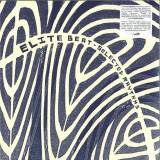
Elite Beat is a musical collective from Portland, Oregon with a history spanning back to 2006.
'Selected Rhythms' captures the finest moments from all three of their ultra limited cassette series 'Casual Rhythms'.
Packed full of DIY dub mixing, cosmic orchestration and raw, percussion driven polyrhythms, the recordings have been remastered and put to vinyl for the first time with sections from Casual Rhythms Vol. 1 being re-shaped into previously unavailable single tracks.
Recording plays a big role in the Elite Beat creative process. The studio as an instrument. Much of the Elite Beat music is mixed in an all-hands-on-deck dub style approach - live with an analog mixer and loads of FX being thrown and dubbed in real time. The sound is genre-less rhythm music with an emphasis on live playing, free form expression and technique that borrows from soundsystem culture. Inspiration can be heard from all parts of time and place. Some Ethio Jazz, Black Ark psychedelia, Exotica, Malian blues, even Haight-Ashbury in the summer of love. Each member an accomplished musician in their own right, Elite Beat thrive on collaboration. 2018 saw the release of their astral-Saharan jams with celebrated Taureg guitarist Mdou Moctar.
The players get together every Wednesday evening, sometimes to chat, sometimes to play. The 'record' button gets pressed when they find what they are searching for. For this crew it's all about 'Casual Rhythms / Harmonious Lifestyles' - if things don't fall under that mantra, then it's got to go. 'Less is more' for Elite Beat and their cosmic sounds.
A work that literally immerses the listener into an acoustical substance. The sound becomes almost like matter, like jelly. Soon, you're swimming in sound, getting lost inside it.
With the Sonic Waters project initiated in 1978, my aim was to situate field of electronic music within a liberating and futuristic experience, outside the concert halls and in sync with the development of new instruments - in particular the Synclavier digital synthesizer, the first model of which I acquired in 1977. As concert space, the Pacific Ocean seemed to me to be the ideal experimental medium for both acoustic and cultural reasons. I then developed the aesthetic and technical elements that would contribute to the conception of Underwater Music. Numerous performances would follow spanning four decades, in natural sites or in large public pools such as those of Sydney, Paris or Venice during the 2006 Biennale.
Michel Redolfi (1951), French composer and sound artist, is the founder of Underwater Music. The natural elements captured and highlighted by experimental technology are a constant in Redolfi's catalogue: many compositions explore the earth environments such as in 'Pacific Tubular Waves', 'Jungles', 'Desert Tracks' (re-released on Sub Rosa records) and especially with 'Sonic Waters', a work that literally immerses the listener into an acoustical substance. During the mid-seventies Redolfi carried out his electro-acoustic research in the United States, with major electronic music centers including the California Institute of the Arts and chiefly the University of California in San Diego. As invited resident of their studios, Michel Redolfi launched the underwater music concerts, with the series 'Sonic Waters' performed in the Pacific Ocean. Michel Redolfi's underwater creations have since been regularly programmed by major international festivals, with multi-media installations held in ecological marine reserves or in historical city pools. Among them, the Sydney Festival, Paris 'Nuit Blanche', Ars Electronica in Linz, the 2006 Venice Biennale (nominated Golden Lion) and lately the 2018 Ars Musica festival in Brussels. This record presents different variations of Sonic Waters from 1980 to 1987, alternating studio mixes with their re-recordings in the depths of the Pacific. Michel Redolfi CD's and LP's are currently published by Sub Rosa, INA-GRM and Radio France.
Love returns with 'Lavender', the follow up to the Canadian crooner’s LP, 'Night Songs' (Taxi Gauche Records, February 2020).
A reflective timeline of dusty folk, 'Lavender' aims to capture the modern loneliness of the 21st century. A sorrowful soundtrack, inspired by the production of great crooners and folk artists of the 70s/80s like Cohen, Lightfoot, and Nick Drake, to name a few, Love achieves a similar quality on Lavender. Like a Chris Isaak trapped in a David Lynch film, Love’s haunted
vocals guide the listener through poetic verses on the archetypes of love and truth, posthumous poetry by his grandfather circa 1930s, and escapism, all melting and flowing into a pool of celestial wisdom.
Acoustic guitars sweep across desolate sonic landscapes of global narcissism, social media and the universal need for connection. Hypnotic bass grooves and lush 3D string ensembles, wrap the listener in a familiar cinematic romance, embraced and mystified. 'Lavender' explores the universal threads that make us feel and experience what we do, in a time when the need to peer into ourselves has never been more important. 'Lavender' draws you inwards, like staring up at the stars at night, or standing alone with the silence of the forest, 'Lavender' wants you to find your own meaning. Self-recorded in a variety of spaces through out Turtle Island (Canada & The USA). Specifically, Toronto Island, a basement in Edmonton, AB, various apartments and motels in Los Angeles and around the United States, on a road trip west via the Trans-Canada highway and ending at a cabin in the foothills of the Rocky Mountains.
“There’s a lonesome vibe to his brand of heartland rock, evoking late nights on a deserted road, or neon-lit streets just after a rainstorm.” (Brooklyn Vegan)
Masters within the evolution of ambient and experimental music over the past forty years, Michal Turtle and Suso Saiz come together for the first time for ‘Static Journeys’, a full-length collaborative album. Unfolding over six diverse tracks, Turtle and Saiz imagine the memories, journeys and textures of half-a-dozen cities borne only of their imagination. Developed closely alongside Swiss agency and label PLANISPHERE, the music was premiered in it’s completed form during a performance installation for ON at Kunstmuseum Basel, a transdisciplinary event designed that featured live visuals from Ezra Miller and more.
While both wildly prolific, the music of both Turtle and Saiz was previously the domain of specialist collectors and obsessive record enthusiasts. Since 2015, a series of reissues on labels such as Music From Memory and reinterpretations of Turtle’s music on Planisphere have brought the back-catalogue of these artists to a much wider audience, and to each other. Far from nostalgic and fundamentally curious as expected, ‘Static Journeys’ captures these innovators transferring their unique chemistry into an ambient tete-a-tete rich in detail.
‘Static Journeys’ was recorded throughout 2019 over two individual recording sessions, each lasting a number of days. The first took place in Turtle’s infamous ‘living room’ studio, his cosy and domestic atmosphere providing the initial foundation for the pair’s long-form improvisations; Saiz focused on synthesis and modulation, Turtle providing hypnotic, looping percussion. Later, in a studio in Madrid, the roles became less defined. Saiz’s textures, musical time standing still began to kindly interweave with Turtle’s offbeat melodies.
The results of these meetings are blissful and adventurous. Following the welcoming undulations of opening track Buonovintra Beckons, ‘Missing Papotl’ dives into soaring, new-age percussion underscored by wistful melancholy. ‘ Returning to Brendelton’ unfolds as analogue tropicalia, static indistinguishable from tropical birdsong. ‘Hattalcuia Awaits’ is bound by mystery and anticipation, whereas ‘Leaving Okovozi’ presents a quietly spectacular exercise in minimalism, led by yearning bass and whistling chimes. Finally, ‘Caravan to Inek’ allow for a dense, hopeful finale, incorporating electronic guitar and the afterglow of new connections forged.
Blissful, diverse and occasionally sublime, ‘Static Journeys’ combines experimentation and creative trust to deliver a timeless musical meeting.
A deep dive into the one of most collectable jazz catalogues in the world, a selection of some of the rarest and most sought-after recordings from the 60s and 70s, a time when British jazz began to find its own identity. Drawn from the iconic labels of Decca, Deram, Argo, EMI Columbia/Lansdowne Series, Fontana, Mercury, & Philips. If one were asked to pick an album that represented the best of British jazz in the 1960s, Le Déjeuner Sur l’Herbe by the New Jazz Orchestra would be a serious contender. Recorded in September 1968, it draws together many of the key streams that had developed in British jazz in the preceding years, and also presages much of what was to come. Notwithstanding the line-up, which includes some of the very best British jazz musicians directed by an inventive and ingenious leader in Neil Ardley, the session features pieces written by the most distinctive jazz composers active in Britain at that time alongside idiosyncratic interpretations of works by John Coltrane and Miles Davis. And it’s all captured beautifully by engineer Howard Barrow and producer Tony Reeves and it features a stella cast of some of the greatest musicians, not just from that era or genre but beyond; Jack Bruce, who would become one of the founding members of Cream, Barbara Thompson, Ian Carr, Michael Gibbs, Dave Gelly, Dick Heckstall-Smith and Jon Hiseman, who went on to form one of the greatest jazz/progressive/rock bands – Colosseum.