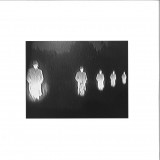
"In Vivo" is the result of the photographic work of Klavdij Sluban at the Fleury-Mérogis Young Offender Institution (France) from 1995 to 2016 Beds in addition to his work from Izalco prison, located in El Salvador, from 2008 visiting rooms connected to the music of Gareth Davis.
Gareth Davis is an artist, composer and musician living in Amsterdam. He plays clarinet(s), the result of a somewhat impulsive purchase whilst window shopping in Covent Garden, London, around ten years before the turn of the century. The serendipitous location of a rather wonderful (and equally important, rather cheap) second hand record shop less than 10m from the bus stop required for seven years of schooling, combined with delivering newspapers on a daily basis, lead to a somewhat eclectic, dusty and generally unclassified taste in music.
The result. Activity covering sonic art and contemporary classical music through rock, improvisation and noise with collaborations that have included the premiering of new written pieces by composers such as Bernhard Lang, Peter Ablinger, Toshio Hosokawa and Jonathan Harvey, soloist with orchestras including the SWR Symphonieorchester, Warsaw Philharmonic and Orquesta de la Comunidad de Madrid, performances with groups and performers ranging from the Neue Vocalsolisten and Arditti Quartet through to improvisers Elliott Sharp and Frances Marie Uitti, electronic artists Robin Rimbaud and Merzbow and multimedia work with artists including Christian Marclay and Peter Greenaway.
"In Vivo" is his second solo release after to have recorded a bunch of collaborative albums with artists such as Scanner, Machinefabriek, Steven R. Smith, Kleefstra Brothers, Frances-Marie Uitti, Merzbow, Adain Baker, Duane Pitre and more...
Klavdij Sluban, winner of the European Publishers Award for Photography 2009, of the Leica Prize (2004) and of the Niépce Prize (2000), main French prize in photography, is a French photographer of Slovenian origin born in Paris in 1963.
He develops a rigorous and coherent body of work, nourished by literature, never inspired by immediate and sensational current affairs, making him one of the most interesting photographers of his generation. The Balkans, the Black Sea, the Baltic Sea, the Caribbean, Central America, Russia, China and the Antarctic (first artistic mission in the Kerguelen islands) can be read as many successive steps of an in-depth study of a patient proximity to the encountered real.
His images have been shown in such leading institutions as the Metropolitan Museum of Photography of Tokyo, the Maison Européenne de la Photographie in Paris, the Rencontres d’Arles, the Museum of Photography in Helsinki, the Fine Arts Museum in Canton, the Musée Beaubourg, the Museum of Texas Tech University. His many books include East to East (published simultaneously by Actes Sud, Dewi Lewis, Petliti, Braus, Apeiron & Lunwerg with a text by Erri de Luca), Entre Parenthèses, (Photo Poche, Actes Sud), Transverses, (Maison Européenne de la Photographie) and Balkans -Transit, with a text by François Maspero (Seuil). Since 1995, Sluban has been photographing teenagers in jails. In each prison he organizes workshops with the young offenders to share his passion. First originated in France, in the prison of Fleury-Mérogis with support of Henri Cartier-Bresson during 7 years, as well as Marc Riboud and William Klein punctually. This commitment was pursued in the disciplinary camps of Eastern Europe –Serbia, Slovenia, Ukraine, Georgia, Moldavia, Latvia – and in the disciplinary centres of Moscow and St Petersburg as well as in Ireland. From 2007 to 2012, Sluban has been working in Central America with imprisoned youngsters belonging to maras (gangs) in Guatemala and Salvador. In 2015, he started photographing imprisoned teenagers in Brazil. In 2013, the musée Niépce showed a retrospective of K.Sluban’s work, After Darkness, 1995-2012. In 2015/16, he was awarded the Villa Kujoyama Residence in Kyoto, Japan. K.Sluban is member of national and international jurys, such as prix Niépce, prix de la Jeune Photographie de Niort, prix Leica, All About Photo…
Cerca:cari
White Vinyl
We taking you down to a trip to Bogotà, Colombia!
“Musica tropicale Colombiana contemporanea con rituales de electronica”, rising stars Romperayo hit it again with a blazing 7”.
On the A side, band leader Pedro Ojeda (Los Piranas / Frente Cumbiero / Ondatropica) delivered “Los Demonios De Aguachica” in combination with his fellow musicians, the result is an uptempo High-Life Caribbean gem!
The B side is a classic Romperayo hypnotic loop that will go straight to your inner soul, just like a Jodorowsky's movie.
We taking you down to a trip to Bogotà, Colombia!
“Musica tropicale Colombiana contemporanea con rituales de electronica”, rising stars Romperayo hit it again with a blazing 7”.
On the A side, band leader Pedro Ojeda (Los Piranas / Frente Cumbiero / Ondatropica) delivered “Los Demonios De Aguachica” in combination with his fellow musicians, the result is an uptempo High-Life Caribbean gem!
The B side is a classic Romperayo hypnotic loop that will go straight to your inner soul, just like a Jodorowsky's movie.
Marble Grey Vinyl
We taking you down to a trip to Bogotà, Colombia!
“Musica tropicale Colombiana contemporanea con rituales de electronica”, rising stars Romperayo hit it again with a blazing 7”.
On the A side, band leader Pedro Ojeda (Los Piranas / Frente Cumbiero / Ondatropica) delivered “Los Demonios De Aguachica” in combination with his fellow musicians, the result is an uptempo High-Life Caribbean gem!
The B side is a classic Romperayo hypnotic loop that will go straight to your inner soul, just like a Jodorowsky's movie.
- A1: Pra Ele (Feat Hermeto Pascoal)
- A2: Viva Hermeto (Feat Hermeto Pascoal)
- A3: De Cá Pra Lá (Feat Hermeto Pascoal)
- A4: Acalanto (Feat Hermeto Pascoal)
- A5: Samba De Avedøre (Feat Hermeto Pascoal)
- B1: Lucas E Lena (Feat Hermeto Pascoal)
- B2: Entre Os Girassóis (Feat Hermeto Pascoal)
- B3: Ventania (Feat Hermeto Pascoal)
- B4: Bandas E Bandeiras (Feat Hermeto Pascoal)
- B5: Na Carioca (Feat Hermeto Pascoal)
Mariana Zwarg represents the third generation of musicians playing and spreading the tradition of "universal music", created by her godfather, the legendary Hermeto Pascoal from Brazil. Mariana is a flautist, saxophonist, composer and arranger and bandleader.
In 2016 she formed her "Sexteto Universal", uniting musicians from 5 different countries and toured the project regularly in Europe and Brazil.
"Nascentes" is Zwarg's debut album and her first solo project. It was recorded between Rio de Janeiro and Berlin at the tail-end of 2019, just before the first cases of Covid-19 were reported. There are 10 tracks in total: 8 songs composed by her, a theme by Hermeto Pascoal and a theme by Itiberê Zwarg, who are also the album's special guests.
- A1: Black Slate - "Sticks Man
- A2: Dee Sharp - "Rising To The Top
- A3: Asher Senator - "One Bible
- A4: Cymande - "Fug
- B1: Digital Mystikz - "Misty Winter
- B2: Winston Curtis - "Be Thankful For What You've Got
- B3: Trevor Hartley - "It Must Be Love
- B4: Shut Up & Dance - "Java Bass
- C1: Brown Sugar - "Black Pride
- C2: The Terrorist - "Rk1
- C3: Black Harmony - "Don't Let It Go To Your Head
- D1: Pebbles - "Positive Vibrations
- D2: Ragga Twins - "Ragga Trip
- D3: Janet Kay & Alton Ellis - "Still In Love
- E1: Funk Masters - "Love Money
- E2: Cosmic Idren - "Compelled
- E3: Harry Beckett - "No Time For Hello
- F1: Sandra Reid - "Ooh Boy
- F2: Tabby Cat Kelly - "Don't Call Us Immigrants
- F3: Brown Sugar - "I'm In Love With A Dreadlocks
Soul Jazz Records new ‘Life Between Islands’ collection coincides with the launch of Tate Britain’s exhibition of the same name. This landmark exhibition explores the links between Caribbean and British art and culture from the 1950s to now.
Soul Jazz Records album, sub-titled “Soundsystem Culture – Black Musical Expression 1973-2006,” focuses on the most important Black British musical styles to emerge out of the distinctly Caribbean world of sound systems. The album features an all-star line-up including Dennis Bovell, Shut Up and Dance, Cymande, Digital Mystikz, Brown Sugar, Funk Masters, Janet Kay, Ragga Twins and more.
The album is a lightning-rod journey across Roots Reggae, Jungle/Drum & Bass, Jazz-Funk, Lovers Rock, Jazz, Dubstep and more. Much of Soul Jazz Records’ catalogue comes out of these genres and this album is partly an overview of some of Soul Jazz’s earlier releases (including Digital Mystikz’ long-deleted groundbreaking and now highly-collectible single, ‘Misty Winter’) alongside some choice rare and classic tunes that span over 30 years of sound system culture.
Many of the tracks represent how Black British artists defined their own identity with songs such as Brown Sugar’s righteous ‘Black Pride’, ‘I’m In Love with A Dreadlocks’ and Tabby Cat Kelly’s powerful ‘Don’t Call Us Immigrants’. Aside from being musically rooted in the distinctly Jamaican-born phenomenon of the sound system, much of this identity is also shaped by the triangular relationship of being British-born, of Caribbean heritage, and with an equal love of African-American Jazz, Funk and Soul, as evidenced with many Lovers Rock tunes reggae covers of American soul tunes (such as those of Jean Carn, William de Vaughan and Rose Royce featured here). This stateside influence can also be heard in groups such as the Funk Masters, a group formed by reggae radio DJ Tony Williams, whose jazz-funk music successfully crossed over into New York’s clubland, as well as the great Cymande, whose unique street-funk became staple material for numerous US hip-hop artists in the years that followed.
In the early 1990s, jungle and drum and bass artists took the essence of reggae’s soundsystem culture – MCs, dubplates, crews – and applied them to their own music, applying heavy reggae bass lines to intense double-speed drum breakbeats. At the forefront of this new movement were the duo Shut Up and Dance, working closely with The Ragga Twins, aka Deman Rocker and Flinty Badman, both MCs for North London’s infamous Unity reggae soundsytem. In the early 2000s, dubstep, spearheaded by Digital Mystikz, became the latest instalment in this ever-evolving soundsystem culture.
Beyond their highly sought after 1978 album Festa Para Um Novo Rei - home to the mystical jazz-funk classic ‘Vidigal’ and released on Philips’ iconic Musica Popular Brasileira Contemporanea series (MPBC) - little is known about Marcos Resende & Index, even to aficionados of obscure Brazilian music. Far Out Recordings is immensely proud to present their previously unreleased self-titled debut album from 1976, contributing a crucial missing work from the glory days of progressive Brazilian instrumental music.
Born in Cachoeiro de Itapemirim, Brazil in 1947, Marcos Resende was a prodigious child who learned to play the accordion at the age of two, and the piano aged six. In spite of his immense musical potential, he travelled to Lisbon in the 60s to study medicine. Yet continuing to explore his musical passion on the side, he formed a trio which went on to open for Dexter Gordon at the Cascais Jazz Festival in 1971. From here he formed the electronic oriented prog-jazz group Status, who opened shows for the likes of Elton John, Phil Woods, Stan Getz, Art Blakey & The Jazz Messengers, but in spite of their relative live success they have no known recordings.
Now established as a highly regarded keyboardist, composer, and innovative electronic musician, Resende returned home to Brazil following Portugal’s Revolução dos Cravos in 1974. Inspired by US jazz and British progressive rock he’d experienced while residing in Europe, Resende went all out acquiring a keyboard arsenal to be reckoned with, which included the Prophet 5, Yamaha CP-708 and Mini Moog. Determined to integrate his newfound inspirations with Brazilian rhythms and jazz traditions, he formed a new quartet with Rubão Sabino (bass), Claudio Caribé (drums) and the late great Oberdan Magalhães, of Banda Black Rio and Cry Babies fame. Marcos Resende & Index recorded their self-titled debut at Sonoviso Studios with the legendary sound engineer Toninho Barbosa, known as the ‘Brazilian Rudy Van Gelder’ whose impressive resumé includes the era defining classics Light As A Feather by Azymuth, Previsão Do Tempo by Marcos Valle, and Quem É Quem by João Donato. Marcos Resende & Index fits perfectly amongst these masterpieces, sharing both the timeless ethereal qualities as well as the progressive and futuristic ideals of Light As A Feather in particular.
Clear Vinyl Repress
After the unbridled success of her eponymous debut album, and the subsequent relentless touring schedule that took her to all corners of the earth, Nina Kraviz has finally found the time to get back in the studio and has bestowed another gift of musical material to the Rekids catalogue. 'Mr Jones' is a neat, 6-track package featuring Nina's first original output since her 2012 LP, which has since been pulled apart, re-imagined and remixed by the likes of Steve Rachmad, KiNK, Marcellus Pittman, Fred P, DVS1, DJ Qu and Radio Slave to name but a few. Now it's Nina's turn to get back behind the mixing desk, and fans of her slightly lesser-known B-side 'Tanya' will be pleased to hear the release kick off with 'Desire' - as Nina's seductive voice surges in and out over a hypnotically dissonant groove with slightly menacing undertones, much like her aforementioned track. On title track 'Mr Jones' Nina's voice is very much the star of the show - musing on the mysterious man himself, while a constant 'oom-pah' backbeat props up ticks and whirling textures generated by Nina's own vocal chords. Detroit's Luke Hess joins the fold on 'Remember', and certainly brings the flavour of his hometown, as the track builds in intensity with battering ram percussion and siren-like bleeps that are sure to land this one straight in Jeff Mills' record bag. Next up, it's back to House on the spicy 'Black White', where enchanted melodic cross-rhythms filter in and out through an Afro-Caribbean bounce, while Nina chants and calls over the top. 'So Wrong' is a more solemn affair, reminiscent of the more melancholic yet danceable tracks from her much lauded album, and 'Sheer' ends the release much like it starts, unnerving whistles and warbling textures combine to disorienting effect over a steady kick drum pulse.
REPRESS!
Marcos Valle - Mentira
Valle is a Brazilian singer, instrumentalist, songwriter and record producer of the highest order. His roots lie in Bossa Nova and he was one of the youngest talents in the scene, extensively touring the USA and residing there for many years. Valle's music crosses touches many styles including samba, rock, soul, jazz, boogie and disco.
Signed by Odeon in 1963, he recorded ten studio albums for them between 1964 and 1974. He also recorded for Verve, Warner and Som Livre among others.
Mentira is a re-record of his own song 'Mentira Carioca' - released four years earlier by Odeon - and appears on his 1973 LP 'Previsão Do Tempo' on Odeon.
Toni Tornado - Me Libertei
This is the second track that we have re-issued by the one and only Toni Tornado, master of Brazilian Funk.
His career began as 'Tony Checker', lip syncing to rock 'n' roll hits and touring extensively outside of Brazil. Whilst in New York he met Tim Maia and became involved in the 'Black Rio' movement. Toni also worked with Ed Lincoln and Antonio Adolfo amongst many others. He had a successful acting career and starred in many soap opera's.
It appears alongside 'O Jornaleiro' on his sought after BR-3 LP from 1971 on Odeon. 'Me Libertei' has never been released on a 7.
- 01: *
- 02: I
- 03: Ii
- 04: Iii
- 05: Iiii
- 06: Iiiii
- 07: Iiiii I
- 08: Iiiii Ii
- 09: Iiiii Iii
- 10: Iiiii Iiii
- 11: Iiiii Iiiii
- 12: Iiiii Iiiii I
- 13: Iiiii Iiiii Ii
- 14: Iiiii Iiiii Iii
- 15: Iiiii Iiiii Iiii
- 16: Iiiii Iiiii Iiiii
- 17: Iiiii Iiiii Iiiii I
- 18: Iiiii Iiiii Iiiii Ii
- 19: Iiiii Iiiii Iiiii Iii
- 20: Iiiii Iiiii Iiiii Iiii
- 21: Iiiii Iiiii Iiiii Iiiii
- 22: Iiiii Iiiii Iiiii Iiiii I
- 23: Iiiii Iiiii Iiiii Iiiii Ii
- 24: Iiiii Iiiii Iiiii Iiiii Iii
Chìsake Algonquin: to chant; to conjure; to cast a spell; this generally involves a shake-house, or shaking tent, in which the conjurer goes into a trance; the conjurer then has an out-of-body experience, going into the future to predict coming events, or into the past; as well as going into any locality in the universe to seek out someone or something generally practiced for ancestral divination.
The unaccompanied flute pieces within this album are adaptations of Anishinaabeg shaking tent chants. The Anishinaabeg also known as Anishinaabe are a group of culturally related Indigenous peoples that reside in areas now called Canada and the United States. They include the Odawa, Saulteaux, Ojibwe (including Mississaugas), Potawatomi, Oji-Cree and Algonquin peoples. The word Anishinaabeg translates to "people from whence lowered". The Anishinaabeg origin myths describe their people originating by divine breath.
The shaking tent or conjuring lodge was the setting for a divinatory rite performed by specially trained shamans otherwise known as Chìsakewininì. During the shaking tent ceremony the Chìsakewininì would construct a special cylindrical framework typically of birch or spruce uprights planted in the ground with respective wood hoops to bind it together. This created a tensile structure of which birch bark, deer skin, or cloth was used as a covering. Rattles of caribou and deer hooves, or cups of lead shot, were tied to the frame. The floor was usually softened with freshly cut spruce boughs. The vertical axis of the shaking tent represents the realm of mediating beings, while the horizontal axis the earth or world of humans. The Chìsakewininì would enter the shaking tent at night and once inside would not be visible from onlookers. The singing of chants and drumming would summon the Chìsakewininì's spirit helpers, whose arrival was signified by animal cries and erratic tent shaking. During this transcendent state, the Chìsakewininì could dispatch these spirit helpers or Manidò to distant regions to answer questions from the onlookers about the most auspicious places to hunt, the well-being of a distant relative, and what would happen in the future.
The chants were usually sung using vocables before, during, and after the Chìsakewininì entered the shaking tent. Like many other similar divination ceremonies, singular or collective, the opening chants begin lyrically. They gradually turn to more reductive abstract structures midway and then end in lyrical chants. This symbolizes the performer and listener leaving the external literal world, entering a more abstract state of mind, and then returning. Traditionally all songs were carved on birch bark for record-keeping with mnemonic pictographs or other marks for future use. Tally mark clustering, sometimes used for song-keeping throughout the Anishinaabeg, is used for this album's track titles and numerical sequence.
The album intro begins with the shaking of a necklace of otter penis bone, fish spine, bear teeth, elk teeth and deer hide, gifted from Algonquin Elder Ajawajawesi. It is meant to focus the listener's attention before the flute pieces begin. The warble or multi-phonic oscillation prevalent in the middle tracks traditionally represented the "throat rattling" vocalization of the tonic note or sometimes known as the horizon of which the melody floats off of. Due to the repetition of multi-phonic oscillation the performer will breathe erratically creating an altered state correlating with the Chìsakewininì ceremonial actions. All songs are repeated seven times to signify the seven sacred directions: east, south, west, north, above/sky, below/earth, and center.
- A1: The Mysterons /Century 21 Television Logo/Main Titles (The Mysterons Version)/The Power Of The Mysterons/ Red Vs Blue
- A2: Winged Assassin/An Officer And A General/The Mysteron Threat (Version 1)/Runway Runaway
- A3: Point 783 /The Oncoming Storm
- A4: Big Ben Strikes Again/Midnight Runner/Atomic Annihilation/The 13Th Hour
- B1: Avalanche/Chills, Thrills And Spills
- B2: Model Spy/Serenade De Monte Carlo
- B3: Seek And Destroy/Walking With Angels
- B4: Operation Time/The End Of Time
- B5: White As Snow/Tvr-17 Pop/Insubordination/End Credits (Original Version)
- C1: Spectrum Strikes Back/Main Titles (Standard Version)/Espionage On The Plains/The Mysteron Threat (Version 2)/ Indigo Fever /Bringing The House Down
- C2: The Trap/Trouble At Glen Garry Castle
- C3: Shadow Of Fear/Of Gods And Men/Wrath Of Phobos
- C4: Fire At Rig 15/Fallen Hero
- D1: Renegade Rocket/Major Disaster/A Wing And A Prayer
- D2: Noose Of Ice /The Tower Crumbles
- D3: Flight To Atlantica /Champagne Buzz
- D4: Expo 2068/Nuclear Detour
- D5: Attack On Cloudbase/40,000 Feet To Heaven/Faint And Empty Hope/Captain Scarlet (The Spectrum Version)
After the international success of Thunderbirds, Gerry and Sylvia Anderson turned their attention to a deadly threat from Mars. Seeking revenge for an attack on their home planet,
the Mysterons plot to use their powers to bring Earth to its knees.
Across 32 episodes broadcast during 1967 – 1968, the series is remarkable for moving away from the more caricatured puppets of previous shows –
they have more realistic body proportions and the storylines are much more violent and darker in tone. Something reflected in the music which has a
more militaristic feel to it although, as always, composer Gray offers up occasional lighter tracks to break up the mood.
The opening narration of each episode sums it up –
"The Mysterons: sworn enemies of Earth. Possessing the ability to recreate an exact likeness of an object or person. But first, they must destroy...
Leading the fight, one man fate has made indestructible. His name: Captain Scarlet."
The Captain Scarlet LP will be sixth album in the series which includes UFO, Supercar, Thunderbirds, Fireball XL5 and Space: 1999.
This is the second issue of the new We Jazz Magazine, 128 pages 174 x 250 mm in size and printed on 140g Edixion paper with laminated 300g Invercote covers. All articles presented IN ENGLISH. Includes inspiring stories on music including John Coltrane by Ashley Kahn, Irreversible Entanglements by Daniel Spicer, Ben Lamar Gay by Stewart Smith, Linda Fredriksson by Arttu Tolonen, Marshall Allen by David Mittleman, French Caribbean Music by Markus Karlqvist, Pablo Held by HT Nuotio, record reviews, book reviews, plus more. This is a magazine put together by a quality cast of writers and illustrators/photographers with references such as The Wire, The Quietus, Pitchfork, Jazzwise, etc.
"In Vivo" is the result of the photographic work of Klavdij Sluban at the Fleury-Mérogis Young Offender Institution (France) from 1995 to 2016 Beds in addition to his work from Izalco prison, located in El Salvador, from 2008 [visiting rooms] connected to the music of Gareth Davis.
Gareth Davis is an artist, composer and musician living in Amsterdam. He plays clarinet(s), the result of a somewhat impulsive purchase whilst window shopping in Covent Garden, London, around ten years before the turn of the century. The serendipitous location of a rather wonderful (and equally important, rather cheap) second hand record shop less than 10m from the bus stop required for seven years of schooling, combined with delivering newspapers on a daily basis, lead to a somewhat eclectic, dusty and generally unclassified taste in music.
The result. Activity covering sonic art and contemporary classical music through rock, improvisation and noise with collaborations that have included the premiering of new written pieces by composers such as Bernhard Lang, Peter Ablinger, Toshio Hosokawa and Jonathan Harvey, soloist with orchestras including the SWR Symphonieorchester, Warsaw Philharmonic and Orquesta de la Comunidad de Madrid, performances with groups and performers ranging from the Neue Vocalsolisten and Arditti Quartet through to improvisers Elliott Sharp and Frances Marie Uitti, electronic artists Robin Rimbaud and Merzbow and multimedia work with artists including Christian Marclay and Peter Greenaway.
"In Vivo" is his second solo release after to have recorded a bunch of collaborative albums with artists such as Scanner, Machinefabriek, Steven R. Smith, Kleefstra Brothers, Frances-Marie Uitti, Merzbow, Adain Baker, Duane Pitre and more...
Klavdij Sluban, winner of the European Publishers Award for Photography 2009, of the Leica Prize (2004) and of the Niépce Prize (2000), main French prize in photography, is a French photographer of Slovenian origin born in Paris in 1963.
He develops a rigorous and coherent body of work, nourished by literature, never inspired by immediate and sensational current affairs, making him one of the most interesting photographers of his generation. The Balkans, the Black Sea, the Baltic Sea, the Caribbean, Central America, Russia, China and the Antarctic (first artistic mission in the Kerguelen islands) can be read as many successive steps of an in-depth study of a patient proximity to the encountered real.
His images have been shown in such leading institutions as the Metropolitan Museum of Photography of Tokyo, the Maison Européenne de la Photographie in Paris, the Rencontres d’Arles, the Museum of Photography in Helsinki, the Fine Arts Museum in Canton, the Musée Beaubourg, the Museum of Texas Tech University. His many books include East to East (published simultaneously by Actes Sud, Dewi Lewis, Petliti, Braus, Apeiron & Lunwerg with a text by Erri de Luca), Entre Parenthèses, (Photo Poche, Actes Sud), Transverses, (Maison Européenne de la Photographie) and Balkans -Transit, with a text by François Maspero (Seuil). Since 1995, Sluban has been photographing teenagers in jails. In each prison he organizes workshops with the young offenders to share his passion. First originated in France, in the prison of Fleury-Mérogis with support of Henri Cartier-Bresson during 7 years, as well as Marc Riboud and William Klein punctually. This commitment was pursued in the disciplinary camps of Eastern Europe –Serbia, Slovenia, Ukraine, Georgia, Moldavia, Latvia – and in the disciplinary centres of Moscow and St Petersburg as well as in Ireland. From 2007 to 2012, Sluban has been working in Central America with imprisoned youngsters belonging to maras (gangs) in Guatemala and Salvador. In 2015, he started photographing imprisoned teenagers in Brazil. In 2013, the musée Niépce showed a retrospective of K.Sluban’s work, After Darkness, 1995-2012. In 2015/16, he was awarded the Villa Kujoyama Residence in Kyoto, Japan. K.Sluban is member of national and international jurys, such as prix Niépce, prix de la Jeune Photographie de Niort, prix Leica, All About Photo…
What do you get when you blend a reverential take on the diverse canon of popular Caribbean music with an all-star cast of seasoned studio musicians from the heart of Brooklyn? The answer lies in Combo Lulo's much anticipated debut studio long-player, Neotropic Dream. The group takes its influence from the deep musical heritage of New York's cultural pedigree, especially the heyday of the city's Caribbean record distribution industry — a culture of music that still bubbles today in the crevices of the city's independent neighborhoods and record communities.
Despite the general scope of the muse, it's hard to precisely pin down this fantastic re-imagining. In some ways, that's why the title for the band's debut album is Neotropic Dream, a nod to the biogeographic region that encompasses the countries along the Afro-Caribbean diaspora, a region intensely diverse in its climate, fauna and flora. This theme manifests musically as you journey through Combo Lulo's original compositions and cleverly chosen covers. More than anything, it's a dreamy storm of styles and musical moments born anew. And just as weather swiftly travels and transforms the Caribbean, so the varied musical styles carry the listener from the album's start to finish. Not just a talented band's showcase of styles, but rather a sumptuous feast of savory and sweet ingredients on display, together. A musical curry roux, if you will, that fits together so harmoniously, it's no wonder the band engenders automatic appreciation both in their studio recordings and in their uproarious live shows.
Whether it's cumbia gone rock steady, or reggae gone chicha, or vocal vs. version, there's a little something for everybody on here, depending on where you drop the needle. With splendid original compositions and horn arrangements from band leader Mike Sarason and saxophonist Anant Pradhan, respectively, Combo Lulo is quickly proving themselves to be a powerhouse of the highest caliber.
Game returns after their 2019 full-length No One Wins with the Legerdemain EP. Piercing the listener with nonstop aural carnage, the EP would be an apt soundtrack to the armageddon. Part Venom, part Death Side, all live and loud, Legerdemain offers no restful moments. An instrumental masterclass with blistering drumming from Jonah Falco, weird and wonderful guitar melodies conjured up by Cal Baird, and a rumbling and decapitating buzzsaw bass by Nicky Rat, the release's finishing move is an ever-changing vocal tone by Ola H. Legerdemain can be a rewarding, or punishing, aural journey depending on your perspective. The new release, which was recorded and mixed by Jonah and mastered by extreme music legend Arthur Rizk finds Game leaning heavily into their metal influences, with sounds of early 80s UK steel given extra ferocity through the lens of Japanese hardcore punk from the same era. Having toured multiple times in Europe and North America, Game, which features members of Fucked Up, Arms Race and Violent Reaction, is equally comfortable playing to punks, metalheads and everyone in between. ‘Legerdemain’ is a magician’s term meaning sleight of hand, a key skill of deception. The term is used as a metaphor for our current post-truth society where governments, technocracies, and financial institutions use smoke and mirrors to create a farcical and bewildering existence where one cannot know if something is real or not in order to cover up social injustice and mechanisms that drive inequality. As Legerdemain progresses, one is being continually dragged along towards an apocalyptic ending on "Release", which reflects on this current predicament as a nuclear explosion approaches with nothing left to do except give into the madness. There is a constant cycle of rising again, fighting against wrongdoing, exhaustion, and endings. The lyrics in Polish, English and a sprinkle of French, represent the multinational members of the band, who feel culturally in a no man’s land, which in fact is everyone’s experience in 2021. Legerdemain tries to answer this anomie with urgent metal punk that is hauntingly relevant. Check out the music video for single "Atomowa Rekonstrukcja," from NYC punk freaks D4MT Labs here
Having further honed his craft, Reuben Vaun Smith returns to
Soundway Records with a sonic odyssey through lo-fi Balearic
and Afro-Caribbean influenced synth.
Heralded as one of the best summer releases of 2020 (Beat
Caffeine), ‘Warm Nights’ introduced his unique blend
of synth-based balearic grooves, mid-tempo lo-fi beats,
and sun-drenched sonic landscapes. A lush debut and an
inspiring story of resilience from the former football promise
that turned to music production serendipitously after an injury
halted his career.
Smith’s second album continues his exploration into
improvised live instruments and programming, while
venturing into new territories of music-making and genres
including soca, benga and trip hop. Also sliding into the mix
are organic sounds and riffs reminiscent of 2000s Villalobos
sunrise scorchers such as ‘Waiworinao’, keeping the Balearic
thread firmly present throughout the album.
Having learned to sail along the southern coast of Spain in
the last year, Smith spent a winter locked down in Yorkshire,
channeling summer memories into his music and drawing
influences from his own record collection which he would
play everyday in the studio. With a few local friends and his
brother to jam with, the result is dreamy and lo-fi, with more
guitar-led melodies, distant vocals and lush pads.
Smith’s debut album from 2020, ‘Warm Nights’, received an
array of rave reviews and support from DJs including Tom
Ravenscroft, Antal and Bill Brewster. One year later, with
‘Sounds From The Workshop’ Reuben Vaun Smith delivers
a matured, varied sound and a glimpse into his incredible
future potential.
With endless Afro-latin percussion & drums patterns woven throughout ten tracks of tropical dance floor heaters, Italian multi-instrumentalist and master percussionist, Worldwide FM presenter and director of the Yoruba Soul Orchestra, Gabriele Poso is to release his seventh LP, Tamburo Infinito, via New York record label Wonderwheel Recordings. Recorded in Lecce in the south of Italy and almost entirely on his own (unlike previous productions), the undisputed star of the show is once again the drum and the percussion, the Tamburo Infinito.
Although born in Italy, Gabriele has always looked across the Atlantic for inspirations and rhythms, and this album is no different. This time his sonic adventures took him to the French West Indies and the French Caribbean island like Guadeloupe Martinique, "I'm in love with everything about the sound of their drums, it's very unique warm and deep sound."
The album kicks off with the hot & sticky Ritmo, setting the tone for the record with a kaleidoscope of tropical rhythms and influences. First single La Bola is jammed full of exultant horns and syncopated drum beats carried on the back of a driving, funky bassline. By the time the horns drop in on the aptly named Party People the carnival is in full swing over jubilant percussion and spaced out synths.
Gabriele Poso's musical passion has taken him around the world, initially to Rome, then to Puerto Rico, Cuba, and most recently, Berlin. Between 1998 and 2001, Gabriele delved deep into the study of Afro-Cuban percussion, first at the "Timba" School Of Music in Rome, under the guidance of the most important representative of Afro-Cuban culture in Italy, Roberto "Mamey" Evangelista. Later in 2001, he moved to San Juan, Puerto Rico to attend the "Universidad Interamericana De Puerto Rico" to continue his studies, finally culminating in a masterclass at "Escuela Nacional De Arte" in Havana, Cuba.
2008 saw the release of Poso's debut solo album, From The Genuine World, released on Yoruba Records, Osunlade's label, which sparked a career performing around Europe and the rest of the world. His second solo album, Roots of Soul arrived in 2012 on the German label INFRACom!, his third solo album entitled Invocation in 2014, on the German label Agogo Records with other full length efforts released on renowned British labels, Barely Breaking Even (Awakening - 2018) and Soundway Records (Batik - 2019), culminating in an impressively deep and diverse catalogue of solo work.
Paz en La Tierra is a result of a search by the Meridian Brothers & Conjunto Media Luna of the heart of something that can be called a 'power format' of Colombian Caribbean music; Accordion , Guacharaca, Caja, Congas, Electric bass, and vocals.
Departing from this idea, and casually working with the music of a documentary on the famous singer Diomedes Diaz, Iván Medellín (accordionist of Conjunto media luna), and Eblis Álvarez from the Meridian Brothers, embarked on a new work building a sound exclusively on the traditional format, searching for several spaces between the lines in the universe of accordion in Colombian music.
The duo departed from the basic: the line of vallenato, the most famous in the country but not the only one, the line of sabanero music more of the lands of Sucre and Córdoba inclined towards cumbia, bullerengue, son vallenato among other airs fed the group's ideas. The Barranquilla center deserves a separate mention, due to its cosmopolitan approach, using all kinds of influences, from the Caribbean islands to ancient rhythms or even modern rock and funk, also used as an inspiration for this record.
In the process, new ways of melody appeared and new ways of expression emerged. Although the rhythms used in the record are rooted in the traditional, the duo glitched those rhythms turning them into new directions in the style, using exclusively the past references to transmute the sound into something that looks inside a parallel future.
Using several theatrical situations, alterations in musical structures, and slight deformations of the traditional harmony (a tonal center and its dominant) the result of "Paz en la Tierra" is enigmatic and charming, and at the same time directed towards the dance floor keeping the past alive and flourishing the essence of the tradition.
- A1: Que Bolá (Feat. Oldjay, Buddy Sativa)
- A2: Luchando (Feat. Dela, Medline, Oldjay
- A3: La Sombra De La Palma (Feat. Niko Coyez, Florian Pellissier)
- A4: Luna Habanera (Feat. Obsession)
- B1: El Café De María Y El Baile De Celso (Feat. Buddy Sativa)
- B2: Oda (Feat. Jorge Bolaño, Florian Pellissier, Dan Amazig)
- B3: La Lanchita De Regla (Feat. Oldjay, Dan Amazig)
- C1: Babalawo Y Caracoles (Feat. Niko Coyez, Dan Amazig)
- C2: Caminando Tu Lumbre (Feat. Florian Pellissier, Dan Amazig)
- C3: Planchao Y Criollos (Feat. Oldjay, Medline)
- C4: Batido De Trigo (Feat. Niko Coyez)
- D1: Taínos (Feat. Fulgeance)
- D2: La Danza De Mis Muertos
- D3: Ella Y El Resto De Mis Dias (Feat. Vinczdef)
You have to know how to move away from the rich, strong and noisy streets, if you want to discover another Havana. A Havana far from the tourist circuits and preconceived images. A Havana where one discovers bucolic, but hard and stripped too after slow journeys in the crowded buses, a Havana with which Al Quetz maintains a passionate history since more than fourteen years.
Installed in one of those neighborhoods that can only be reached by going deeper into the alleys, from the open window of the studio comes the sound of banging drums and thumping bass. The sound reaches the streets on which the day rises.
The place wakes up in a growing tumult, with some rare engines coughing, conversations under the windows, songs of the street vendors , an urban ballet sets up as the sun darts its rays.
Far from the musical clichés with percussions and horns, Cuba is an island bombarded with influences that one discovers.
An island which vibrated for the jazz, the soul, the psychedelic rock , from the waves coming from the Caribbean to those of the bulky neighboring ogre.
A musical flowering as varied as abundant that the glorious post-revolutionary label Areito has on thousands of recordings,
and that Al Quetz has designated as the sole source of his samples to compose Habanologia.
From the ambiences that punctuate the local daily life caught by his samplers, he let the melancholy infiltrate his hip hop beats, the nostalgia melting in the depths of his grooves. Nostalgia in the Cuban air, even during moments of intense laughter, which never totally disappears.
Habanologia restores these moments when the song of the birds has extinguished those of the cars. Where, sitting on a doorstep, we comment on the life of the neighborhood, we watch the women's swaying at eye level. The whole day if necessary, the coffee at one peso, after a certain hour, which leaves its place to the Planchao rum. Wandering through its streets where a chance encounter can itself bring others and lead to the essence of the habanera life. From Regla, after a short trip on the bus-boat that crosses the bay, savor the end of the day, observe the capital from afar, let the nocturnal insects ensure some arrangements and drift towards mysterious horizons, bringing to the contemplation of the place and the moment.
A flute, a keyboard, percussions or a voice. Al Quetz also invited his friends from the island or elsewhere to decorate his productions with their live touch. To share with him this Havana for which he covered his tracks, mixed times and distorted space-time to make it timeless.
To write with Habanalogia, a declaration of love to the Cuban capital, to make Havana, His Havana.