Поиск:carlos g

Стили
Все
Peter Case - Let Us Now Praise Sleepy John (15th Anniversary Edition)

Folk singer-songwriter Peter Case challenges listeners to be more
attuned to the world through his politically-fueled lyricism and intricate
finger-style acoustic guitar heard in Let Us Now Praise Sleepy John
This record reflects Case's transformation from power- pop songwriter to
traditional folk artist with strong roots in Americana. This Grammy award
nominated 11-track collection includes original songs from Case and a cover of
the traditional blues tune 'Get Away Blues.' The album features guest musicians
Richard Thompson, Duane Jarvis, Carlos Guitarlos, and Norm Hamlet. For its 15th
anniversary, Let Us Now Praise Sleepy John is available now for the first time on
vinyl.

Сделать предзаказ18.11.2022

он должен быть опубликован на 18.11.2022

27,69
Vinicius De Moraes - The Poet Of The Bossa Nova

This collectors' special edition on 180g yellow vinyl presents 17 seminal
tracks featuring Vincius De Moraes' poetic lyrics set to music composed
by Antonio Carlos Jobim, longtime collaborates and icons of Brazilian
music
Brazilian poet, lyricist, essayist and playwright, Vincius de Moraes (1913-1980)
became a seminal figure in modern Brazilian music and literature. He served as a
national diplomat, composed his own bossa nova music and recorded several
significant albums. Along with his longtime collaborator, composer, arranger,
singer, and pianist/ guitarist Antonio Carlos Jobim, he composed hundreds of
songs that have become true classics and have transcended the bossa nova, as
they continue to be played and recorded by countless singers and
instrumentalists within Brazil and throughout the world.

Сделать предзаказ11.11.2022

он должен быть опубликован на 11.11.2022

21,81
Ron Carter & Richard Galliano - An Evening With

Ron Carter and Richard Galliano decided to risk intercontinental
collaboration for the second time after 1990, when they recorded their
acclaimed album "Panamanhattan" in Paris
Here the French accordion master, whose fingers fly over the keyboard with
acrobatic ease and can make the instrument weep in melancholy or rejoice with
joy. There the American bass wonder, whose deeply tuned strings enhance more
than 2,500 (!) recordings and are among the cornerstones of the complete artistic
works of Miles Davis, Eric Dolphy, Archie Shepp, Herbie Hancock, Aretha Franklin,
Roberta Flack and Antonio Carlos Jobim. Two who have already gained hero
status in their own worlds and can actually only lose when they transgress into
each other's terrain. "Believe me, there is nothing more real than to go on stage
with a gambler," Carter raved about the refreshed liaison with his Gallic buddy.
The two rediscovered the once lost central thread in March 2016 at Jazz Week in
Burghausen as a short intermezzo during a joint appearance with the WDR Big
Band. The provisional climax was then the recording made in Theaterstu?bchen
in Kassel on October 29. Galliano recalled: "Before we got going, I said to him:
"Can you believe it? Twenty- seven years have passed, we are still the same and
I'm still playing the same accordion. To which Ron just responded: "And we have
still same fingers!" With these 20 nimble tools, the two protagonists of the
musical joint venture interact without fear of contact. Neither remains in his
accustomed position. Like two intrepid mountaineers, they balance over a
yawning abyss, perform daring maneuvers and clear the way for each other time
and again. The longer the intimate wanderings of subtle nuances and sensitive,
dancing elegance last, the greater the familiarity seems to be. "Richard really
seizes every rhythmic and harmonic chance," the American marveled about his
French partner. And he replies gallantly: "Ron still looks so young, fresh and
elegant like three decades ago. And he is still enthusiastic, straightforward and
comes straight to the point." An often thoughtlessly used image rarely fits better
than on this very special evening: Ron Carter and Richard Galliano create a
universal musical language, whose vocabulary consists of notes. Risk- free
enjoyment

Сделать предзаказ11.11.2022

он должен быть опубликован на 11.11.2022

26,01
Seth Avett - Seth Avett Sings Greg Brown
также имеющийся в продаже

Black Vinyl[23,74 €]


New solo album from Seth Avett of the Avett Brothers (his first in 5 years), featuring songs written by lauded folk singer Greg Brown, whose songs have also been performed and recorded by Joan Baez, Willie Nelson, Lucinda Williams, Carlos Santana, Ani DiFranco, Gillian Welch, Mary Chapin Carpenter, and more. For those who may need reminding, Greg Brown is the ultimate songwriter's songwriter. Over a forty-plus-year career, he's occupied the same rarefied air as Loudon Wainwright III and John Prine - a keen-eyed poet and diarist of the human condition. And he's done it mostly on his own. “This is a man who put forty records out because he had to,” Avett says. “He made his own record label. He played the coffee shops, the bars, the little theaters. He built it. He's a world-class artist who did it all under the radar, which is just mind-blowing to me.” As Avett's new solo record makes clear, this collection is an expression of admiration and gratitude for one of his heroes. But it's also a reflection of his own artistry and ability as an interpreter. Though Brown's songs have been a part of his listening diet for decades, Avett gained a more profound appreciation once he put his own voice behind them. And though on the surface it's a covers record, it dovetails seamlessly with the most recent Avett Brothers album The Third Gleam and Seth's solo outing IV, which find him in equally stripped-down settings exploring the light and shadows of his own personal stories.

Сделать предзаказ04.11.2022

он должен быть опубликован на 04.11.2022

23,74
Jonas Kaufmann & Ludovic Tézier - Insieme - Opera Duets 2x12"

2 x 180 g black LPs

"Insieme" ("Zusammen") heißt das erste Duett-Album von Jonas Kaufmann und seinem Freund, dem französischen Star-Bariton Ludovic Tézier. Die berühmten Duette aus Opern von Verdi, Puccini und Ponchielli wurden mit dem Orchestra dell'Accademia Nazionale di Santa Cecilia unter der exzellenten Leitung von Antonio Pappano aufgenommen. "Insieme" erscheint als Doppel-Vinyl (180g) am 11. November bei Sony Classical.Auf der Bühne sind sie oft Rivalen, im wahren Leben verbindet Jonas Kaufmann und Ludovic Tézier eine enge Freundschaft. Nach zahlreichen gemeinsamen umjubelten Live-Auftritten erscheint das erste Duett-Album der beiden Ausnahmesänger: "Insieme", Italienisch für "Zusammen" ist der Titel. Mit dem hervorragenden Orchestra dell'Accademia Nazionale di Santa Cecilia unter Antonio Pappano präsentieren sie Duette, die sie zusammen auf der Bühne gesungen haben, und Stücke, die sie extra für dieses Album einstudiert haben.Seit ihrem gemeinsamen "Werther", 2010 in Paris, sind sie immer wieder Bühnenpartner in verschiedenen Produktionen; und wie bei ihrem Duett-Album spielen die Werke Verdis dabei eine zentrale Rolle. Als sie 2013 an der Bayerischen Staatsoper zum ersten Mal die Rivalen in "La forza del destino" verkörperten, war sofort zu spüren: da haben sich zwei gefunden, die sich gegenseitig anfeuern. 2017 standen sie in Paris in der französischen Urfassung von Verdis "Don Carlos" auf der Bühne; da ist es nur logisch, dass das berühmte Duett von Carlos und Rodrigue auf ihrem Duett-Album in dieser Fassung erklingt. Hier sind sie einmal nicht die ewigen Widersacher, sondern echte Verbündete, in einer der schönsten Männerfreundschaften der Oper. Außerdem sind die beiden hier zum ersten Mal zusammen in "Otello" zu hören. Bei Kaufmanns Debüt als Otello, 2017 am Royal Opera House in London, sollte eigentlich Tézier an seiner Seite als Iago debütieren, doch leider musste er absagen. Und so kam es, dass die Aufnahmesitzungen während des Lockdowns 2021 zum ersten gemeinsamen "Otello" der beiden wurden, noch bevor Tézier seinen ersten Bühnen-Iago an der Wiener Staatsoper "nachholte". Dass mit Antonio Pappano am Pult seines Orchestra dell'Accademia Nazionale di Santa Cecilia einer der profiliertesten Operndirigenten unserer Zeit mit seinem exzellenten Orchester an Bord ist, ist ein weiterer Glücksfall für diese Einspielung.Beide Sänger sind hier erstmals in den großen Duetten aus Verdis "Les vêpres siciliennes" zu erleben, in der selten gespielten französischen Fassung. Auch das Duett aus Ponchiellis Verismo-Meisterwerk "La Gioconda" ist ein echtes Doppel-Debüt, dem bald auch eine gemeinsame Aufführung der kompletten Oper folgen soll. Puccinis "La bohème" hingegen haben beide bereits auf der Bühne gesungen, jedoch noch nicht gemeinsam; hier sind sie zum ersten Mal gemeinsam mit dem Duett aus dem 4. Bild zu hören.

Сделать предзаказ28.10.2022

он должен быть опубликован на 28.10.2022

30,88
Various - Tangos From Buenos Aires

Various

Tangos From Buenos Aires

12inch5054197180729
Warner UK
28.10.2022

Daniel Barenboim will turn 80 on November 15th. Warner Classics are celebrating the great musician, who has had tremendous success since the ‘60s both at the piano or conducting, with an album made in the mid-90s that is close to his heart and Argentinian origins, though aside of the classical repertoire. Tangos Among Friends - Mi Buenos Aires Querido (named after a tango by Carlos Gardel) proves again all the talent and swing Daniel Barenboim has, and has been a huge success since released by Teldec on CD in 1996.

“I spent the first nine years of my life in Argentina and only in Argentina. The rest of the world was far away. Everything Argentinian was close to my heart. The concepts of cosmopolitan existence or international thinking were not yet awakened. The air that I breathed was Buenos Aires, the language that I spoke was Spanish porteño and the rhythm to which I danced (figuratively speaking…) was the tango! My idol was Carlos Gardel. Nearly half a century later I came back not only to Argentina, not only to my childhood but especially to my Buenos Aires querido and many other wonderful melodies that make up this sentimental record.”
Daniel Barenboim – from album booklet


In an interview made in the 90s, Daniel Barenboim added: “In Argentina during the late 1940s there was no chasm between classical music and the tango, in the way there was a chasm between classical music and jazz. The tango is a basic part of Argentine popular culture; when you went to a restaurant or a party, that was the music you would hear. (…) Already as a child I was crazy about the tango. I still am.”

“The young Daniel found himself drawn to the bittersweet tales of passion, tragedy and nostalgia sung by Gardel, the tango singer and songwriter who exerted a major influence in popularizing the tango throughout the Western hemisphere and Europe. (…) Over the following decades Barenboim would regale friends at home or at parties with piano arrangements of tangos he heard in his youth. (…) Barenboim never thought of sharing his passion for tangos with the public until last year when he had returned to Buenos Aires for concerts with his Berlin Staatskapelle orchestra. At a reception he found himself talking tangos with a young Argentine. Learning of Barenboim’s interest in performing them, he offered to drum up a few local musicians with whom Barenboim could play tangos at home. That’s how he met Mederos and Console. “The first day we just played for fun,” Barenboim says. “Then we decided to make a recording. So we rehearsed for two days and made the record in one afternoon.” (…) Once he, Mederos and Console set out to record their tango program, Barenboim was surprised at how much of the characteristic tango rubato – a subtle alteration of rhythmic weight and accent – he still had at his fingertips, more than four decades after leaving Buenos Aires. That said, he insists on sharing credit for the success of the disc with his Argentine colleagues. “What they gave me was a pure sense of the tango, especially in the melodic freedom over a very strict rhythmic foundation. Performing tangos, you are constantly anticipating the downbeat or coming after it; this is part of the tradition. What I gave them was the necessity to rethink certain aspects – say, the volume and transparency of sound – so that playing tangos didn’t sound routine.”
– The Chicago Tribune, Oct. 1996

Сделать предзаказ28.10.2022

он должен быть опубликован на 28.10.2022

31,05
HARKIN - S/T

Harkin

S/T

12inchHM01
HAND MIRROR RECORDS
28.10.2022

Debut Harkin LP now available via Forte: Recorded at: Seahorse Sound, Los Angeles USA (Carlos Gonzalez), Tesla Studios, Sheffield UK (Richard Formby and David Glover), Echo Canyon West, New Jersey USA (John Agnello), Spirit Level, Peak District UK (Harkin). Additional recording by Jeff T Smith at The Bungalow, Leeds UK. Mixed by John Agnello at Water Music, New Jersey USA Mastered by Heba Kadry

Сделать предзаказ28.10.2022

он должен быть опубликован на 28.10.2022

22,48
RAVIN/BUDDHA BAR PRESENTS - BUDDHA BAR - BEST OF 1996 - 2013 LP (3x12")
нет на складе

Закажите сейчас, и мы закажем товар для вас у нашего поставщика.

48,32

Последний логин: 2 г. назад
Mister Water Wet - Significant Soil

West Mineral return with a followup to Mister Water Wet’s 2019's subtropical ambient slow-burn debut ‘Bought the Farm’, expanding Iggy Romeu's horizons to contrast feverish Afro-Caribbean ambient jazz with jaunty illbient and atmospheric freakouts. Low-lit heat that’s highly recommended if yr into Nick León, Carlos Niño, Kelman Duran, Gonçalo F. Cardoso.

Mister Water Wet continues to excavate the tropical soundscapes that simmer the producer's Kansas City home with his Puerto Rican roots, on a new album of extended vignettes and mood pieces that cross a late 90’s Mo Wax instrumentals vibe with present day feelings of displacement and ennui.

LP opener ‘Bory’ tunes us into Water Wet’s weirdly fuzzed frequencies, where tremeloed strings and found sounds resemble what might have been a lost dean blunt x dean hurley sound design concept for Inland Empire, while ‘I Saw the Green Flash' opens a swirl of strings and traditional rhythms caught in a reflecting pool of canned classical orchestrals and 1950s theremin wails. 'Good Apple’, meanwhile, cranks up the mood with aged x looped piano paired with an undulating, bass-heavy shuffle that wouldn't sound out of place on a Kelman Duran x Martin Denny mixtape.

'When Kennybrook Burned to the Ground' leans into heady jazz vapours, spreading crackle over pitch-fucked horn samples, but it’s the producer's weird use of percussion that keeps us gripped: scattering his arrangements across the grid, mimicking an ensemble of players deployed in irregular formations. Romeu embraces trip-hop on 'Any Other Time', blending Afro-Caribbean percussion with a swung downtempo beat, while ‘Isthmus’ reminds us of the clatterbox plunder of Moonshake’s PJ Harvey hookup ‘Just a Working Girl’ - with all its asymmetric hooks.

The extended closing track 'Losing Blood' takes a leaf out of Fennesz's glitched rulebook, stretching and folding disintegrating loops through an 11 minute descent into the elegiac aether.

нет на складе

Закажите сейчас, и мы закажем товар для вас у нашего поставщика.

25,67

Последний логин: 3 г. назад
Ecovillage - The Road Not Taken

Ecovillage

The Road Not Taken

12inchLAAPS022LP
LAAPS
14.10.2022

il Holmström and Peter Wikström are a duo from Northern Sweden. The duo have collaborated with many artists over their almost twenty year long music career such as 4th Disciple, Dwight Trible, Carlos Niño, Fennez, Green-House, Laraaji, Lo-Fang, Masayoshi Fujita, Purl and many more.

»The Road Not Taken« is the tenth released studio album from Ecovillage and the first one released on vinyl. The album has a more sacramental and human feel to it compared to their previous work.

Сделать предзаказ14.10.2022

он должен быть опубликован на 14.10.2022

23,40
Nutrients - Different Bridges

Reflecting upon their new album Different Bridges, Nutrients discovered a
time capsule from the dullest days of the pandemic
The 10 hopeful songs manage to sonically sound as optimistic as their lyrics.
Unbeknownst to the band, they were composing an ode to the way life had once
been. Lyrically, Teeple subconsciously penned love letters to everything he had
taken for granted: parties, air travel, even just meeting new people. The band's
sun-drenched guitars continue to jingle and jangle on Different Bridges, yet this
time around, other ingredients are in the spotlight. Sean McKee's basslines
ecstatically bounce around on the album's title track opener, while Iulia Ciobanu's
ghostly harmonies and tense keys soar on the jazzy, lounge pop bop Nauseous.
Ben Fukuzawa's steady cadence and vivacious fills animate tracks like the spritely
closer, Kool Kat '22. Saxophone by guest Emily Steinwall shimmers alongside the
buoyant congas, bongos, and triangle added by percussionist Juan Carlos
Medrano. Still, guitar work on songs like the wordplay-adorned I and the nostalgic
House Fire Painting sturdily underpin Taylor Teeple and Will Hunter's smooth
songwriting. Compositionally, the band has freshened up forgotten cliches from
'70s soft rock and '80s new wave and incorporated them into a signature sound
listeners first discovered on their self- titled debut. Some of the more oblique
noodling may bring to mind bands like Steely Dan, while certain funk-lite grooves
evoke British pop groups like Orange Juice or Haircut 100. Contemporarily,
Different Bridges would likely find fans in listeners of fellow Canadians TOPS,
Video Age, or even Drugdealer. That optimism was perhaps a bit….well optimistic,
the band now recognizes. But they still believe that keeping a positive mindset is
key to creating music you can be proud of, and living a fulfilling life in general.

Сделать предзаказ14.10.2022

он должен быть опубликован на 14.10.2022

30,21
GRUPO PAN - PAN LP

Grupo Pan

PAN LP

12inchVAMPI263
Vampisoul
30.09.2022

First time reissue of one of the essential and most sought-after Venezuelan rock albums, originally released in 1970, along the lines of what other artists such as Santana or El Chicano were doing from the United States in those same years. Grupo Pan was led by Carlos "Nené" Quintero, former member of Los Dementes, Ray Pérez's group, and through this record he aims to retain the rhythmic strength and brass arrangements typical of salsa, but also explore other sounds based on powerful guitars. This reissue includes original artwork, liner notes and exclusive photos. 180g vinyl Grupo Pan was formed in 1970 in the popular Caracas neighborhood of Marín at the initiative of Carlos "Nené" Quintero together with his brother Jesús "Chú" Quintero. His experience as a professional musician as part of Los Dementes, Ray Pérez's group, would allow him to retain the rhythmic strength and brass arrangements typical of salsa, but also explore other sounds based on powerful guitars. The band would be completed with Alfredo Padilla (percussion), David Azuaje and Carlos Guerra (trombones), Henry Camba (trumpet) and Rubén "Micho" Correa (electric guitar), already with a solid reputation as a guitarist after years playing in rock bands. Nené Quintero would resume contact with his acquaintance Mario Tepedino, at that time artistic director of 2001 Juvenil, a Venezuelan tv show focused on the promotion of young musical values, who would offer them to appear on said program. Through the popularity provided by their frequent television appearances, they were offered the opportunity to record an album. In December 1970 their first and only LP would release, recorded at the Fidelis studios in Caracas and produced by Mario Tepedino. It was published by Souvenir, a label responsible for the release of many other essential Venezuelan rock albums, such as the highly sought-after records by The Love Depression or Ladies W.C. "Pan" successes in overcoming through its grooves the eternal rivalry between the followers of the hard rock sounds and those who, on the contrary, were devotees of salsa. All the songs on the album are written by "Nené" Quintero himself and remain as fundamental milestones in the history of Venezuelan rock. The album would contribute to the birth of a new paradigm of Latin rock, along the lines of what other artists such as Santana or El Chicano were doing from the United States in those same years. After this Souvenir release, the band would also record two singles on another label called Promus. Grupo Pan would remain active until 1973 when the band members would follow different paths. "Pan", their only LP, has become one of the essential and most sought-after Venezuelan albums, and we are pleased to now be able to present the first-time reissue, including liner notes and exclusive photos.

Сделать предзаказ30.09.2022

он должен быть опубликован на 30.09.2022

24,58
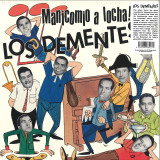
LOS DEMENTES - MANICOMIO A LOCHA LP

This album marks the debut recording for Venezuela's Velvet label by pianist Ray Pérez and his trombone-led salsa band Los Dementes. Heavy dance numbers and the distinctive vocals of Perucho Torcat make this historic 1967 rarity a sought-after collector's item. Now the LP has been lovingly restored, mastered from the original tapes, with its original artwork intact, preserving the legacy of Los Dementes for today's generation of salsa lovers everywhere. First time reissue. Salsa pianist, vocalist, composer and arranger Ray Pérez, acquired his nickname "Loco" by being a free, independent spirit, an innovator and iconoclast who was initially branded as "crazy" for the freshness and audacity of his sound. Amazingly, he is not that well known in the US, where he spent some time in the late 1960s and salsa was king during the 1970s. Yet he was quite popular in his home country from the beginning, especially amongst the working class of Caracas and Maracaibo, who adopted Cuban music played by New York Puerto Ricans as their own and called it "salsa" years before the term was employed by US labels like Fania as a marketing tool. Pérez is revered in Venezuela, as well as in Mexico and Colombia, and his storied career, which spans seven decades and thousands of concerts, has yielded more than 35 albums recorded by his various bands, including Los Dementes, Los Kenya, and Los Calvos, all of which are collector's items today. At the start of 1967 Pérez debuted Los Dementes, with vocalists Claudio Zerpa and Perucho Torcat backed by an ace band featuring only trombones in the brass section. Titled "¡Alerta mundo! Llegaron los 'The Crazy Men'" the record was released on the small Venezuelan label Prodansa. Soon after, Prodansa folded and Los Dementes were left without representation or much compensation for their efforts, being paid only in records. In the end of February of that year, Pérez returned to Caracas from a stint in Maracaibo in order to finish his first LP with the well-established and larger Velvet label, entitled "Manicomio a locha". In the first quarter of 1967, Velvet unleashed a trilogy of salsa records in order to compete with rival label Palacio and their recent success with Federico y su Combo Latino: "Porfi '67 Salsa & Boogaloo" by Porfi Jiménez y su Orquesta, "Guasancó" by Sexteto Juventud and lastly "Manicomio a locha". The LP begins appropriately with the boisterous title track, written by the band's conguero Carlos "Nené" Quintero, who would become a legend in coming years. Torcat describes a jam session in mental institution and introduces the band, with tasty solos by trombonist Rufo García followed by Ray on piano. Already you can hear something was different about Ray and his "Crazy Men"-a sound as wild and innovative as what was happening in New York with Eddie Palmieri, but with a more unhinged, raw feeling in line with Willie Colón and other younger Nuyorican bands. Next up is an intriguing track sung in a mix of Italian, English, Spanish and Papiamento by Pérez himself, performed in the complicated rhythm of the mozambique, an Afro-Cuban carnival beat developed in the early 1960s. This is followed by the heavy dancer 'Rico guaguancó', penned by Angelito Pérez, which changes from the guaguancó to the mozambique rhythm mid-way through, proving that Los Dementes were "different from the rest" as the lyrics say. 'Puerto Libre', sung by Torcat, is dedicated to the Venezuelan island of Margarita in the Oriente region, and the independent spirit of its working people. The rhythm changes from guaguancó to guajira and back again but remains danceable all the way through. The side closes out with a "3 in 1" medley inspired by the popular formula of the mosaicos of Billo's Caracas Boys, seamlessly knitting together several different tempos, rhythms, moods and compositions. Side two starts strong with the fierce yet satirical 'Corte e' patas', then 'Alma Cumanesa', a typical folk song refashioned as a guaguancó. This is followed by the funky 'Guajira con Boogaloo'. The tune echoes the sound of young Latin New York, pointing out the connection between Cuban and African American soul music. The pace picks up again with 'Fiesta de trombones', a hot descarga and then the album closes with another medley. Though this marks the end of a rather short album, it also signaled the emerging success of Los Dementes and their involvement with the salsa boom in Venezuela, quickly selling out of its initial run of 1000 records and making for a memorable debut on the Velvet label. Now this rare and sought-after LP has been lovingly restored, mastered from the original tapes, with its original artwork intact, preserving the legacy of Los Dementes for today's generation of salsa lovers everywhere.

нет на складе

Закажите сейчас, и мы закажем товар для вас у нашего поставщика.

24,58

Последний логин: 3 г. назад
JOAO GILBERTO - CHEGA DE SAUDADE

Born in Juazeiro, Bahia, Brazil on June 10, 1931 (and 87 years .old at this writing), singer/song writer Joao Gilberto is a living legend of bossa nova. While Antonio Carlos Jobim set the standard for the creation of bossa nova in the mid-’50s (with songs like “The Girl from Ipanema” and “Desafinado”), it was Gilberto who brilliantly reimagined (and, arguably, defined) the genre. The first bossa nova song, titled “Bim-Bom”, was written as Gilberto watched passing
laundresses on the banks of the Sao Francisco River balance loads of clothes on their heads. In 1956 he went to Rio de Janeiro and struck up old acquaintances, most significantly Antonio Carlos Jobim, who was by then working as a composer, producer and arranger with Odeon Records. Jobim was impressed with Gilberto’s new style of guitar playing, and set about finding a suitable song to pitch the style to Odeon management. In 1959 Gilberto presented his first LP, Chega de Saudade. The title song turned into a hit, launching Gilberto’s career and the bossa nova craze. Besides a number of Jobim compositions, the album featured older sambas and popular songs from the 1940s and 1950s, all performed in Gilberto’s distinctive style. This album was followed by two more in 1960 and 1961, by which time the singer featured new songs by a younger generation of performer/composers such as Carlos Lyra and Roberto Menescal.
By 1962, bossa nova had been embraced by North American jazz musicians such as Herbie Mann, Charlie Byrd, and Stan Getz, who invited Gilberto and Jobim to collaborate on what became one of the best-selling jazz albums of all time, Getz/Gilberto. Chega de Saudade was issued in the United States as The Warm World of Jo o Gilberto.

нет на складе

Закажите сейчас, и мы закажем товар для вас у нашего поставщика.

21,81

Последний логин: 3 г. назад
Colorado - Colorado / Para Ti

"Matasuna Records" returns to Mexico for a third time to dig for rare treasures. They got their hands on a special gem - two obscure Latin/Jazzfunk tunes by a band called "Colorado" from "Mexico City". The songs were released in 1976 on the Mexican label Peerless and the super rare original 7inch is virtually unavailable. Fortunately, the release is finally available for the first time as an official reissue in a remastered edition. An unjustly under-the-radar Latin jazzfunk highlight!

The song "Colorado", named after the band, opens the "A-side" of the single. The hypnotic fender rhodes puts the listener in the right mood right from the start, before the drums and percussion set the rhythm. The horns also add depth and melodiousness before the song takes a turn and reveals its funky side with guitars, synths and bass. A nice guitar solo also reveals the affinity for rock music without losing sight of the vibe of the song or tipping it a different direction. Definitely a fabulous song that comes up with a lot of ideas and inspirations, offering an unexpected richness in the under 3-minute running time.

The "B-side" also continues musically energetic in the same way with "Para Ti". Here, too, you can feel and hear the playfulness and experimentation of these extraordinary musicians. Atmospherically dense passages alternate with quieter phases and solo parts, before the tension rises again and literally explodes. As in the song "Colorado", rhodes, brass, guitars & bass offer a great and varied interplay. The secret highlight, however, might be the drum and percussion parts in the middle of the track, which will surely enchant not only the B-Boys and B-Girls.

Artist info:

The internet, a source of almost endless knowledge, offers no information about the band Colorado. All the more fortunate that one of the band's founding members, "Emilio Espinosa Becerra", provides detailed info for the reissue.

In 1968 the three brothers "Luis", "Francisco" and "Emilio Espinosa Becerra" from Mexico City started to rehearse together to play wellknown rock & pop songs at friends or family parties. At first, they played on Japanese guitars and a Teisco bass borrowed from a school friend. They saved up money to then buy guitar & bass amps and a microphone, which they always had to rent until then. However, the budget was only enough for Mexican replicas of the legendary Fender Bassman and the Fender Super Reverb. Original equipment was simply unaffordable.

Shortly thereafter, more members joined the band. Three musicians from the school band "Tepeyac": "Marco Nieto Bermudez" (trumpet), "Raymundo Mier Garza" (tenor saxophone) and "Alfonso Romero" (trombone). Another classmate named "Carlos Mauricio Fernández Ordóñez", who studied piano, also joined the group. His father had a chemical factory in the United States and helped bring equipment (amplifiers and a Farfisa Fast 5 organ) - hidden in the back of a truck - to Mexico. In the time that followed, more instruments were acquired, including bass and guitars (from Gibson, Rickenbacher and Fender) and microphones (from Shure) for vocals and horns.

With a larger band and new equipment, they played many parties in their district of "Lindavista" in "Mexico City" and neighboring areas from 1970 to 1973, as well as gigs at various festivals and school events. The group's band name at the time was "Sound Core Brass". However, more and more often people with turntables and speakers showed up at parties, which were also able to heat up. The so-called "Sonideros", a sound system culture that was emerging in the 1960s, charged less than a multi-piece live band, so the band's performances declined.

During those years, three other "Espinosa Becerra" family members joined the band: "Jorge Rafael" (trombone), "Sergio Alejandro" (tenor saxophone) and "Felipe de Jesus" (drums and percussion).

A brother of the musicians, "Carlos Espinosa Becerra", studied electrical engineering at the University. Together with another fellow student, he designed and built a 10-channel console with a variety of functions and features that far surpassed the devices available at the time. They also went to the US again to buy JBL speakers & tweeters to build their own sound system. On another trip to Los Angeles, they bought Phase Linear amplifiers, which offered enormous power by the standards of the time and had an extremely low distortion factor. With this equipment they could turn up the volume really loud and noise-free.

This was also the time when they stopped playing music from English bands & youth groups and changed their repertoire completely. They played mambos, chachachas, pasodobles and tangos on special occasions in big ballrooms and halls. Also, every now and then they hired a string quartet of well-known Mexican violinists to provide the musical entertainment at dinner events.

During those years, classmate "Pablo Rached Diaz" joined the band, playing tenor saxophone. Pablo was very active and organized many parties. He was also the one who helped the band to record on the Mexican label "Peerless". So in 1975 they were asked by Peerles Records to record their own songs. They had recorded a total of 12 songs - six of these songs were released on three vinyl singles (45rpm). Most of the songs were composed by "Gustavo Ruiz de Chavez Sr.". The band was asked to adopt a more commercial name, and so they had chosen the band name "Colorado". In the course of the releases, the band made some promotional tours and appeared in shows on "Televisa", the most important television station in Mexico in those years.

Later, several members of "Colorado" graduated and began to pursue regular professions. They didn't stop playing at events, but priority was given to more formal duties and the band was no longer as active as it had been in its heyday.

About 8 years ago, the band got back together to play again. The next generation of musicians also joined the band: two sons, a nephew and a brother-in-law of the original band members. Currently, they are back playing at friends' parties and family gatherings in Mexico City.

нет на складе

Закажите сейчас, и мы закажем товар для вас у нашего поставщика.

10,71

Последний логин: 3 г. назад
Tresor: True Stories - English Edition - The Early Years- Limited Tresor Book - 352pg

Content:
- Softcover: 300g/m² raw cardboard, granular lamination, open spine binding
- 352 pages: Neon CMYK print on Lessebo Smooth Natural 90g/m² and Galaxi ArtSamt 115g/m²
- Dimensions: 22,0 x 30 x 2,2cm (1,4kg)

Tresor: True Stories is the first printed excavation of Tresor’s legendary history. Digging deeply into its rich
archives, the venerable institution has unearthed countless treasures from its over three-decade old history.
Over 400 never before seen photographs, flyers, faxes and other artefacts illustrate a story that intersects
with the most important social and musical trend in the modern history of Berlin. The story is told with the
voices of those that were there - over 40 protagonists share their first-hand reminiscences of the ‘big bang’
that launched techno into the world. Through the story of Tresor, the book charts the heady days of 80s West
Berlin through to the explosion of new energy that midwifed in the new social reality of reunified Germany.
This is a unique and essential printed monument to the institution that changed electronic music forever,
and the city that allowed it to exist.

Chapters:

I. Dada at the End of the World
II. The Wild Years
III. Tresor Never Sleeps

Editors:
Harry Glass, Paul Reachi, Sven von Thülen

Authors:
Dimitri Hegemann, Paul Hockenos, Regina Baer

Interviews and transcriptions:
Felix Denk, Jeannette Goddar, Jürgen Laarmann, Ruro Efue

Digitization:
Felix Moser, Rüdiger Müller

Translations, proofreading and copyediting:
Edessa Malke, Paul Fleischmann, Paul Sabine

Photography:
Gustav Volker Horst
Oliver Wia
Tilman Brembs
Wolfgang Brückner

Additional photography:
Anja Rosendahl
Carlos Alberto Heinz
Carola Stoiber
Daffy
Eberle & Eisfeld
Ernst Stratmann
Jan Hillebrecht
Jo?rg Blank
Helge Birkelbach
Helge Mundt
Marie Staggat
Martin Holkamp
Norbert Smuda
Susanna Kubernus
Susanne Deeken
Uwe Reineke

Concept, layout and design: onlab
Vanja Golubovic, Matthieu Huegi, Thibaud Tissot
8 rue des Vieux Grenadiers, 1205 Geneva, Switzerland

Lithography, printing and binding: Druckerei zu Altenburg GmbH
Gutenbergstrasse 1, 04600 Altenburg, Germany

нет на складе

Закажите сейчас, и мы закажем товар для вас у нашего поставщика.

41,18

Последний логин: 3 г. назад
Arthur Verocai - Arthur Verocai - 50 Years Edition LP

A complete album masterpiece in every sense of the word, considered by many people to be one of the greatest ever made, regardless of genre.
Recorded at Studio Somil, Rio De Janeiro in 1972, the album was produced, arranged, directed by the self-taught, Arthur Verocai.

Previously he had worked on many records in various capacities, with artists including Jorge Ben, Ivan Lins and Celia, but this album gave him the chance to do his thing in it’s most pure form.

The 29 minute masterpiece, perfect in it’s arrangement and fusion of sonics, epitomises the sound of Brazil at the time; strings, guitars, pianos, break beats, bass lines, synthesizers, vocals from the wonderful Célia, Carlos Dafe and Oberdan (Banda Black Rio), plus percussion from Pedro Santos and Paulo Moura on sax. Bossa nova, samba, jazz, MPB, psychedelics and funk sit side by side effortlessly.

The album transcends the genre of Brazilian music, and infact all genres. Highlighted in part by the number of artists that have sampled from it; MF Doom, Ludacris & Common, Little Brother, Jneiro Jarel aka Dr Who Dat?, Dibiase and Action Bronson amongst others.

The original Continental version of the album now fetch around $2000. Our definitive re-issue is an exact replica of the gatefold original LP and the source master is taken from the Continental tapes, re-mastered in 2012 under Arthur’s supervision.

нет на складе

Закажите сейчас, и мы закажем товар для вас у нашего поставщика.

41,13

Последний логин: 3 г. назад
KIKAGAKU MOYO - KUMOYO ISLAND LP

In many ways Kumoyo Island represents the culmination of a journey for Kikagaku Moyo. While their decade-long career can be summarized as a series of kaleidoscopic explorations through lands and dimensions far and near, there's a strong intention in each of their works to take the listener to a particular place, however real or abstract they may be. In that sense, the title and cover art for the band's fifth and final album draws you into a magical mass of land surrounded by water-but the couch suggests that Kumoyo Island may not be a fleeting stop, but rather a place of respite, where one could pause and take it all in. Reconvening at Tsubame Studios in Asakusabashi, Tokyo, where their earliest material had been recorded, the five members of Kikagaku Moyo found new inspiration in a familiar and comfortable environment. With their adopted homebase of Amsterdam under lockdown and their touring activities halted due to the pandemic, the band felt a renewed sense of freedom being back in shitamachi, or the old downtown area of their hometown. With unrestricted time in the studio, they began to build upon the demos and song fragments they'd amassed since their last tour. In the 1.5 months spent in Tokyo, everything started to come together. "Monaka", its name taken from a type of Japanese wafer sweets, takes melodic inspiration from traditional minyo folk styles, while "Yayoi Iyayoi" is a rare instance of the band singing in their native tongue, its evocative lyrics utilizing archaic words taken from old poetry and nature books found in one of the many secondhand bookstores of Tokyo. For "Meu Mar", an Erasmos Carlos cover, the original Portuguese lyrics were translated into English, then to Japanese. Strangely enough, the words seem to conjure an image of the protagonist floating among the clouds, looking down upon Tokyo Bay. In fact, it may be possible to draw a parallel between the topography of the band's home country-an island nation, surrounded by bodies of water-and the mysterious isle of Kumoyo. Are they one and the same? Has the band finally made it back home? It's up to the listener to decide.

нет на складе

Закажите сейчас, и мы закажем товар для вас у нашего поставщика.

46,35

Последний логин: 3 г. назад
ANA Y JAMIE - DIRI A MI GENTE LP

"Diré a mi gente" is a 1969 Colombian pop classic with one foot in protest song and the other in acid rock, harsh sounding but also current and sincere. The rawness of the lyrics, the simple and dynamic electrified instrumentation and the contrast with the sweetness and innocence of the adolescent vocals make it reminiscent of Nadaism via Pablus Gallinazo, the bittersweet tenderness of Elia y Elizabeth and the post Los Yetis duet of Norman y Darío. First time vinyl reissue. Liner notes by Mexican DJ and collector Carlos Icaza aka Tropicaza (Dublab / Worldwide FM). "Diré a mi gente" is an essential Colombian album that connects the new generations that grew up after the fall of the socialist block. It's a classic with one foot in protest song and the other in acid rock, harsh sounding but also current, raw and sincere. It's reminiscent of Nadaism via Pablus Gallinazo, the bittersweet tenderness of Elia y Elizabeth and the post Yetis duet of Norman y Darío. It was recorded by the brothers Ana y Jaime Valencia and originally released in 1969 on the local label Discos 15. The messages it conveys are still fresh and the blend of superb songs, arrangements and the candor of the duo's performance proves the relevance and importance of re-listening to this album in an increasingly nihilistic and depoliticized world. The teenage voices enhance the truthfulness and power of conviction of the classic songs of Alí Primera and Daniel Viglietti. The endearing song 'Cuántos momentos', originally recorded by Iván Darío López from Los Yetis-Norman y Darío, stands out on the album. 'Es largo el camino', with more stark lyrics by Nelson Osorio backed by Astudillo's screeching guitar, sends shivers down your spine. "Diré a mi gente" reaffirms that the transformative power of music is still there, latent, waiting to be unleashed. Even though the road traveled to get there is sometimes long.

Сделать предзаказ26.08.2022

он должен быть опубликован на 26.08.2022

24,58
Продуктов на странице:
N/ABPM
Vinyl