"Don't Trust Mirrors" markiert eines der prägendsten Kapitel in der Karriere der New Yorker Komponistin und Produzentin Kelly Moran. 2019, frisch von der Tour zu ihrem Warp-Debüt "Ultraviolet", begann sie, inspiriert von langen Nächten auf der Tanzfläche, an einem rhythmischeren Nachfolger zu arbeiten. Doch persönliche Umbrüche und die pandemiebedingt unterbrochenen Tourneen änderten ihren Weg und führten zunächst zu "Moves In The Field" (2024), das von der New York Times als "weichherzig, aber stahlhart" gelobt wurde. Jetzt kehrt Moran zu dem Projekt zurück, das sie einst pausierte. "Don't Trust Mirrors" erkundet Verzerrung, Reflexion und die langsame Arbeit, sich selbst wieder zusammenzusetzen. Die zehn Tracks mit Warp-Labelkollege Bibio schimmern vor strukturellen Brechungen und bilden eine immersive Reise zu Selbstfindung und Fokus.
Suche:cathedral echo
- 1
'Cupar Grain Silo' is Sam Annand's first release on the Blackford Hill label. Its nine tracks blur the lines between ambient electronica and sonic history, as synthesised melodies and rhythms reverberate through the extreme acoustics of the disused Cupar Grain Silo in Scotland. Built in 1964 as a sugar store, the silo towers 60 metres above the surrounding Fife countryside. Its industrial life was short: in 1971 it was closed, and barring a short period as a grain store, remained empty for decades.
In 2014, Sam Annand was given access to the silo as part of the Resono project, set up to study a series of highly reverberant locations across Scotland. The ambitious industrial architecture of the Cupar Grain Silo has given the space a reverberation time of 36.5 seconds. This measurement describes the time a sound takes to decay or 'fade away' in a closed space. To put this in perspective, the Cupar Grain Silo reverb time is around three times longer than that in cathedrals like York Minster and St Paul's.
"The acoustics are immediately noticeable when climbing the ladder into the main chamber", Sam says. "The sound of your voice begins to circle around and above you, inviting you to shout, clap and bang objects to excite the space into revealing its intimidating architectural voice."
Sam began to experiment with musical compositions which responded to the unique acoustics of the silo space. He used impulse responses – a short, sharp sound like a gunshot – to record these acoustics, allowing him to experiment with the silo's reverb in his production. Sam's compositions were performed using a modular synth system, a Roland Juno-6 polyphonic synthesizer and a bowed ride cymbal.
"Chords can be constructed in time by hanging successive single notes in the air," Sam describes, "The flutter echoes from the immediate cylindrical walls can be used to create bursts of scattering spatial imagery and harmonic blooms, following short percussive moments."
Originally recorded on 21st May 2016, 'Cupar Grain Silo' is now released on 12" vinyl with an accompanying booklet of imagery and essays. The compositions are at once true to the unique architectural acoustics of the silo whilst also being playful and experimental with the creative possibilities it offered. Arpeggiated melodies ebb and fall across extended call-and-response shapes formed by the silo's reverb; modular drum patterns crackle like dying machinery; whilst bowed drones waver and wash over.
"We all love reverberation," reflects Prof. Peter Stollery, Professor of Composition and Electroacoustic Music at the University of Aberdeen, on the project. "As kids, we play in it – yelling in forests and caves, surreptitiously dropping objects in huge churches – mouths wide open at the lingering smears of sound which come back to us."
In 'Cupar Grain Silo', Sam Annand has harnessed the extraordinary acoustics of the disused silo to tap into this sense of joy and amazement that reverberation can bring.
Operating under the moniker Eat Them, Johannes Hofmann ravenously ingests and rearranges pretty much everything of interest that electric guitar music has produced over the last 50 years. King Crimson, Dinosaur Jr, Talking Heads or Germany's Tocotronic all resonate in Hofmann's expansive oeuvre. Having begun to record music as a 13-year-old for the main purpose of burning compilation CDs of his work for his grandma, the Eat Them catalogue now spans around 20 Bandcamp albums.
Chosen from these, a selection of 12 tracks will be released via Fun In The Church on March 1st. Entitled "All" in keeping with the holistic aspect of the project - and, of course, complementing the band's name - the album covers everything from Sonic-Youth-with-drum-machine-style mashups to nervous post-funk and anthemic lo-fi indie rock, recorded and sung entirely by Hofmann himself.
The first single, out today, is "Do You Love Me When I'm Dead?", a DIY pop diamond whose sonics are lovingly and firmly rooted in a garage-cum-teenage practice space. The track reflects the project's live line-up, which has been expanded to include bass and drums. However, Hofmann transcends the suburbs with urgent echoing vocals expressing an emotional need to stay on the move, to resist being pinned down.
This is framed by guitar arpeggios that actually point in a more introspective direction. This penchant for contrast and movement can be found in many Eat Them pieces - they are snapshots of an ongoing development, a work that you listen to as it grows and lives. To rephrase the question posed in this single's title: Would we love it if it was already dead?
There may already be 20 albums on Bandcamp - and that CD at Grandma's - but the journey has only just begun. Bon appétit!
Excelsior Ruth is a composer, DJ and producer born in the North-East of England but who currently resides in South London.
On her eponymously titled debut, she combines a life-long love of euphoric trance with echoes of her live performances as exlRuth, which incorporate sound recordings, drone, traditional choral music and the makina backdrop of her youth. Embedded in community heritage, it’s a record that probes connections between the classical and contemporary.
Gossamer harp drifts across time on ‘Haunt’, leading to the affecting arpeggios, strings and high BPMs of ‘Dream Of Night’, programmed, as much of the EP was, on classic 90s synthesisers, including the Roland JP8080 and Quasimidi Rave-0-Lution 309. Drinkwater’s ‘Dawn Return mix’ reduces ‘Dream Of Night’ down to a moment of 6am E-motion, limbs weaving through dry ice like mist on long-forgotten moors.
A cathedral of angelic voices swells in ‘Dream Of You’, their hymn to oceanic feeling rooted to earth by a raining cascade of kicks. And ‘Sleepy Hollow’ journeys further into deep, unspeakable bodily knowing, pushed and pulled between propulsion and stasis as fizzy high hats and restless melodies weave through shrouds of ambient pads.
Words by Joe Roberts.
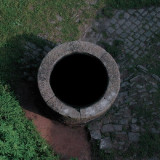
The album opens with the ominous guitar-driven Hollow Sky, accompanied by its haunting music video's verdant vistas. The song, with Iceglass ghostly vocals, shimmers with that sounds like an Omnichord flittering like sonic firefly lights and brooding bass. This perfectly scores the less traveled wanderings through the dark wooden path of Dante's perdition, leading to the titular well that graces the album cover. The Crater opens with an unsettling riff and bass, with low, repetitive frequencies on the synth create a sense of unease. Here, Iceglass recounts a fatalistic requiem for the king of romance that is cataclysmic and leaves a scar upon the earth. With Fall Industrial Wall, once again, Iceglass channels a silky and Nico-like emotive deadpan; against a dirgelike melody backed by minimal synth, bass, and drum. Almost medieval and plaintive, with its folk droning horns, deep and shallow in their resonance. This song is anachronistic, setting the scene of ruins centuries-old with crumbling edifices strewn about like memories lost in time. With the poetic lyrics of The Chamber do we find the eponymous abyss. Here, dualities are laid bare; besides love, there is heartbreak, and without this sorrow, what meaning would there be to love if one knows not what it is to lose? This song encapsulates the idea that love is heartbreak, and love lost is reaching the deepest chamber of the heart. This is carried through a sombre horn, minimalist drum machine, and deliberate bassline overlaid with Iceglass german and english lyrics. The Well is led in with a softly distorted bassline overlaid with eerie banshee howls give way to Iceglass otherworld vocal refrain, echoing through time as if emanating from a hole in the ground, and encircling that hole is a garden of woe and despair. The sinfully seductive song The Moor features a captivating SAX SOLO courtesy of Perseas; a welcome shift in tone, juxtaposed well with the intensity of Iceglass tenebrous vocal purr. This hitherto unexplored foray into dark sensuality takes the song into sordid mid 80s territory, bringing to mind a dusky drive along a serpentine road, with equally haunting instrumentations straddling time with icy fire. Broken Characters is an acoustic folk interlude featuring Selofan's Dimitris Pavlidis on guitar. Here we find a more gentle approach with its earnest and romantic lyrics. The song's melodic hook is a soft caress along with the forlorn horn elements highlighting Iceglass at her most Nico-sounding vocal yet, singing the sorrowful truth that most artists are indeed broken characters. Chimerical opens with dirgelike synth organs. The chill of winter has befallen the lamentations sung by Iceglass carried by haunting chord progressions and minimal percussion, plaintively beseeching the song's subject to remain elusive, idealistic, and a dreamer. After an album highlighting more Jill than Jack, our male protagonist finally makes his ascent in the sonorous and breathtaking Dark Hill, a masterful march of sweeping synth horns, and trepidatious drum machine with William Maybelline's bellowing voice cracking like thunder, rattling the atmosphere like his heart against his ribs. Spirals swirls in a cautionary knell of cathedral-esque droning synth dirge, with Icarian lyrics shining like a sombre ray of hope; like the sun's rays creeping into the darkest of places. The song, minimalist in its tight percussion, echoes with the solace of Larissa Iceglass vocal litany; invoking elements of the supernatural, almost like a Casio preset sequenced to the beating of an angel's wings.
Whitelands' second album Sunlight Echoes builds on their elemental debut - that won them fans from Slowdive to David Jonsson - with a more expansive sound that takes them out of the shoegaze shadows to somewhere bigger, better and brighter. Produced by long-time collaborator Ian Flynn and mixed by double Grammy Award-winner Eduardo De La Paz (New Order, The Horrors, The Charlatans, The KVB, Drug Store Romeos), there are soaring string arrangements (by Iskra Strings) and Lush guest vocals from labelmate Emma Anderson. "We're coming back with a lot more maturity and realness," says singer and guitarist Etienne Quartey-Papafio of their step up. "It shows in how much more emotional our music has become." With maturity comes a newfound confidence, so not only are there stunning melodies everywhere, but Etienne's vocals are front and centre throughout. "It's been really cool to watch Etienne push through boundaries," adds bassist Vanessa Govinden. "I like the direction we've taken on this album. We're taking a risk. It's half and half." She's right - the first half of the album has an almost Britpop breeziness, that belies the serious subject matter that inspired the songs, while the second half gets heavier, in all senses, with added grit and gravitas."This album is one of enduring," says Etienne of the overarching theme. "We had family that were dying, I was broke, there was a shortage of my ADHD medication_ I was suffering, but not just me, everyone around me was too." "The last two years have been challenging," concludes Vanessa. "The universe really fucked with us. That's why there are themes of loss, disconnection, fragmentation and yearning, but on the other side there is also unity and hope." Sunlight Echoes is a poetic, melodic statement of intent from this formidable band. Whitelands have fought back and triumphed in the face of adversity.
- A1: Endless Sea Of Dead Mirrors 07:54
- B1: At My Funeral 09:48
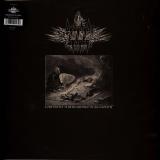
BEWARE! THE ECHOES OF DEATH’S HORRID CHANT ARE DRAWING CLOSER…From the endless fields of obsidian darkness rise eerie hymns, echoing an ancient, long-forgotten apocalypse that slices through the eternal night. OBSIDIAN SCAPES are the embodied nightmare – a deathly veil of cascading riffs, raining down like the lethal erosion of cosmic worlds. Layered with relentless, thunderous drums and ghostly dirges, their music summons visions of a dying universe.Their sounds crawl like molten madness into the depths of the mind, painting aphotic images of shadowy, chthonic cathedrals and titanic monoliths rising against a crumbling horizon. Despair and anguish permeate every note – dirges for a world drowning in the abyss of decay and tributes to powers lurking beyond human comprehension.Including one song from the upcoming debut-album Death Chants Echo From Aphotic Void and an unique and exclusive cover-version from SIGH’s “At My Funeral” (only available on the 12″EP).Mixed and mastered by Thomas Taube at FiveLakes Tonstudio.ltd 500, 300 x black vinyl, 200 x cream white bone. Incl. download-code. S
Special fifth anniversary repress of 2020 debut album by bdrmm. Named after a postcode in their native Hull, the HU5 Edition comes pressed on blackand amber vinyl, features alternate artwork and a printed lyric insert. The almost self-titled Bedroom was hailed by The Guardian as a lockdown classic on its original release and ended up in Rough Trade's top ten albums of the year. The 10-track album was recorded in 2019 at The Nave studio in Leeds by Alex Greaves (Working Mens Club, Bo Ningen) and mastered in Brooklyn by Heba Kadry (Slowdive, Beach House). It's a hugely accomplished debut and a real step up both sonically and lyrically from their early singles and EPs. Musically, there are nods to The Cure's Disintegration, Deerhunter and DIIV, while the band reference RIDE and Radiohead. There are also echoes of krautrock and post-punk, from The Chameleons to Protomartyr, plus the proto shoegaze of the Pale Saints' The Comforts Of Madness, not least in the cross fading of some tracks, meaning the album is an almost seamless listen. "A modern day shoegaze classic" - NME "The general roller coaster of being twenty-somethings in post-Brexit England who find themselves awash with a shimmering soundscape that recalls Oshinera DIIV, Deerhunter's Microcastle, or even The Cure at their most ambiently grandiose" - Under The Radar "Assured and brilliant" - The Line Of Best Fit
Fünf lange, meditative Titel zwischen Jazz, Ambient und World Music präsentiert „Openness Trio“, das
Blue-Note-Debüt eines einzigartigen musikalischen Kollektivs, bestehend aus Gitarrist und Produzent Nate
Mercereau, Saxophonist Josh Johnson und Schlagzeuger Carlos Niño. Die drei Künstler bringen umfassende
Erfahrungen aus der Zusammenarbeit mit Künstlern wie André 3000, Meshell Ndegeocello, Kamasi Washington, Shabaka, Jeff Parker, Makaya McCraven und vielen anderen in das gemeinsame Projekt ein.
Die Musik von Nate Mercereau, Josh Johnson und Carlos Niño ist mal überwältigend und bildhaft („Hawk
Dreams“), mal abstrakt und voll subtiler Stimmungen („Elsewhere“). Alle Titel verbindet die intensive
Kommunikation der drei Künstler, die eindringliche Emotionalität und die Faszination gemeinsamer Erkundungen und Entdeckungen. Die Aufnahmen entstanden in fünf verschiedenen Sessions in Los Angeles und
Ventura County – unter freiem Himmel in den Hügeln von Ojai mit Blick auf die Topatopa Mountains, in
einem stimmungsvollen Wohnzimmer im Elysian Park, in einer „Oak Tree Cathedral“ im Churchill Orchard
in Ojai, inmitten einer Sammlung elektronischer Instrumente im Hof eines Hauses in Echo Park und unter
einem Pfefferbaum in Elsewhere / Topanga Canyon
On ‘Animal’, Ash Fure appeals to “animal intelligence” by using sounds that are inherently physical and driven by perception, athleticism and interaction. Placing polycarbonate sheeting over an inverted subwoofer she built alongside her partner Xavi Aguirre and brother Adam, Fure isolates the physical impact of sound by focusing on psychoacoustic sub-bass pulses, semi-perceptible micro-rhythms and discomfiting white noise bursts, linking the process to her experiences in Berlin and Detroit’s techno dungeons where the sound has to adapt to the space it’s performed in. When she performed ‘Animal’ for the first time, Fure fabricated a “listening gym”, allowing the audience to interact in real-time by circuit training in response to the sound. The sweat is almost audible across the record, a run-on selection of rhythms, resonances and abstractions that sound like interlocking heartbeats on a series of treadmills. Her fascination with techno’s cavernous cathedrals is clear from the beginning, but Fure doesn’t worship at the altar: we’re hit with the feeling, not the aesthetic. The beats themselves, made from unstable vibrations and waterlogged, reverberating clicks, echo the brain’s unconscious reaction to repetition in a vast concrete box, the feeling you get when each percussive snag ricochets from every surface in the building. Coddling these whirring, criss-crossing polyrhythms with harsh, distorted low-end retches, Fure accurately recreates the energy and fatigue of the endless weekend sesh. We never once encounter techno in its expected shell, just its residue - the outline of humans figuring out their relationship with technology, architecture and each other. Fure’s use of dynamics is also deviously smart, marking out an overall rhythm that’s not tied to the strength of the sounds themselves, but just volume and physical impact. Often her most brutal sounds - ear-splitting squeals and overdriven mechanical whirrs - are reduced to an almost inaudible level, a bit like the bandy legged trip to the bathroom, or the escape to some dimly lit nook, the part of the night where you can still detect the sound on your skin without being battered by it. When the undulating rhythm returns in earnest, Fure masks acidic sequences in jet engine expulsions, still refusing to objectify anything that an AI model might be able to pick up on.
- That's Amazing Grace
- Kaleidoscope
- Blossoms In Her Mind
- Sirens Echo In An Iron Lung
- Non Waltz
- I Believe You About The Moon
- What Do Dolls Dream?
- Time
- Lady Buzz Killer
Ltd Clear w/ Splatter Vinyl[27,94 €]
Neue Musik von Anton Newcombe von BRIAN JONESTOWN MASSACRE und DOT ALLISON (u.a. ONE DOVE, Solo, Sonic Cathedrals). Eine Zusammenarbeit zwischen den beiden Soundtüftlern. Während des Lockdowns in Berlin und Schottland aufgenommen, arbeiten Dot Allison und Anton Newcombe als All Seeing Dolls zusammen. Produziert von Anton Newcombe in Berlin, schickten er und Dot sich gegenseitig Gesangs- und Musikideen, um Dots eindringlichen Gesang mit ihren Fähigkeiten als Multiinstrumentalisten zu vereinen. Auf dem Album finden sich Gitarre, Ukulele, Klavier und Autoharp, gespielt von Dot, sowie zusätzliche Beiträge von Hakon Adalsteinsson (Gitarre) und Uri Rennert. Im Interview mit Clash Magazine sagte Dot über den Entstehungsprozess: "Wir haben unseren Weg gefunden... viele der Songs wurden während des Lockdowns geschrieben... wir sprachen über Musik, das Leben, was wir für wichtig halten und teilten Songs, die wir mögen und sprachen über Künstler, die wir mögen... wir beschlossen, Ideen auszutauschen... also schickte ich etwas mit Autoharp und Stimme oder Akustik und Stimme, und er schickte mir tolle Ideen zurück... wir haben uns gegenseitig unterstützt und gestärkt... und ich sagte zu ihm, dass es ein bisschen wie ein kleines Weihnachten ist, die Tracks zu hören, nachdem er sie zurückgeschickt hatte." Auf erstem hören musikalisch näher an DOT ALLISONs letzten Sonic Cathedral-Output, finden sich hier die eher BRIAN JONESTOWN MASSACRE-typischen Ideen in den klanglichen Tiefen wieder.
Neue Musik von Anton Newcombe von BRIAN JONESTOWN MASSACRE und DOT ALLISON (u.a. ONE DOVE, Solo, Sonic Cathedrals). Eine Zusammenarbeit zwischen den beiden Soundtüftlern. Während des Lockdowns in Berlin und Schottland aufgenommen, arbeiten Dot Allison und Anton Newcombe als All Seeing Dolls zusammen. Produziert von Anton Newcombe in Berlin, schickten er und Dot sich gegenseitig Gesangs- und Musikideen, um Dots eindringlichen Gesang mit ihren Fähigkeiten als Multiinstrumentalisten zu vereinen. Auf dem Album finden sich Gitarre, Ukulele, Klavier und Autoharp, gespielt von Dot, sowie zusätzliche Beiträge von Hakon Adalsteinsson (Gitarre) und Uri Rennert. Im Interview mit Clash Magazine sagte Dot über den Entstehungsprozess: "Wir haben unseren Weg gefunden... viele der Songs wurden während des Lockdowns geschrieben... wir sprachen über Musik, das Leben, was wir für wichtig halten und teilten Songs, die wir mögen und sprachen über Künstler, die wir mögen... wir beschlossen, Ideen auszutauschen... also schickte ich etwas mit Autoharp und Stimme oder Akustik und Stimme, und er schickte mir tolle Ideen zurück... wir haben uns gegenseitig unterstützt und gestärkt... und ich sagte zu ihm, dass es ein bisschen wie ein kleines Weihnachten ist, die Tracks zu hören, nachdem er sie zurückgeschickt hatte." Auf erstem hören musikalisch näher an DOT ALLISONs letzten Sonic Cathedral-Output, finden sich hier die eher BRIAN JONESTOWN MASSACRE-typischen Ideen in den klanglichen Tiefen wieder. Exklusiv für den Indie-Handel: Transparentes mit farbigen Splatter Vinyl
2024 coloured (violet) vinyl repress for this year's Sonic Cathedral's 20th anniversary! Hull/Leeds based five-piece bdrmm release their much anticipated debut Bedroom on July 3, via Sonic Cathedral. The 10-track album was recorded late last year at The Nave studio in Leeds by Alex Greaves (Working Mens Club, Bo Ningen) and mastered in Brooklyn by Heba Kadry (Slowdive, Beach House). It's a hugely accomplished debut and a real step up both sonically and lyrically from their early singles, which were rounded up on last year's If Not, When? EP. Musically, there are nods to The Cure's Disintegration, Deerhunter and DIIV, while the band reference RIDE and Radiohead. There are also echoes of krautrock and post-punk, from The Chameleons to Protomartyr, plus the proto shoegaze of the Pale Saints' The Comforts Of Madness, not least in the cross fading of some tracks, meaning the album is an almost seamless listen. As a result, Bedroom becomes an unexpected and unintentional concept album, running through the different stages of a break-up set against the backdrop of the ups and downs of your early twenties. "The subject matter spans mental health, alcohol abuse, unplanned pregnancy, drugs_ basically every cliché topic that you could think of," reveals frontman Ryan Smith. "But that doesn't mean they ever stop being relevant. It's a fucker growing up, but I'm lucky enough to have been able to project my feelings in the form of this band, surrounded by four of the best people I've ever met." And that band name, in case it needs explaining, is pronounced the same way as the album title. "I never thought I'd get to the stage where I would have to explain it so much," says Ryan. "We have been pronounced as Boredom, Bdum and my old boss thought we were a ska band called Bad Riddim. We're all sarcastic cunts, so Bedroom spelt correctly seemed like the perfect title." He's right. The perfect title for the perfect debut album. "A modern day shoegaze classic" - NME "The general roller coaster of being twenty-somethings in post-Brexit England who find themselves awash with a shimmering soundscape that recalls Oshin-era DIIV, Deerhunter's Microcastle, or even The Cure at their most ambiently grandiose" - Under The Radar
Squama regulars Enji and Popp join forces on ‘Nant’, the debut LP by their newly minted duo ‘Poeji’, exploring the confines of Post-Dub and Downtempo.
2022’s 3-track EP ‘031921 5.24 5.53’, released as a limited run of dubplates, was the first testament to their open approach to writing, which takes only very basic ideas and relies on non-verbal communication to define form and pace.
Enji’s vocals are less centre-stage than on her solo endeavors, piercing through reverb plates and guitar pedals while Simon inked his signature set of wooden and metal percussions with chains of tape echoes and analog delay.
Listening to ‘Nant’ as a snapshot of Poeji’s artistry at a certain time and place can instill a sense of gratitude within the listener that something so fleeting can be captured.
Composed by Jim O’Rourke and pieced together by Jim together with longtime collaborator and trumpeter Eivind Lønning at Jim and Eiko Ishibashi’s home in the Japanese mountains, this engrossing new album blows brass wails and tense fanfares across O'Rourke's manipulated Kyma tapestries for a deep, captivating trip into the aether.
Eivind Lønning has been sharing ideas with O'Rourke for several years: the duo collaborated on music for the Whitney's 'Calder: Hypermobility' exhibition, and Lønning played trumpet on O'Rourke's brilliant 2020 album 'Shutting Down Here'. For this new work, Lønning headed to O'Rourke and EIko Ishibashi's home studio in the Japanese mountains, where he teased unfamiliar, alien textures from his trumpet to open the labyrinthine three-part composition. O'Rourke took the material and subsequently funnelled it through his Kyma system, transforming it into a swirl of sound that hums alongside Lønning's original takes. The album was composed, mixed and mastered by O'Rourke, with everything's based on Lønning's virtuosic performance.
The album begins by cautiously introducing us to its sonic palette: wavering, bird-like horn wails that O'Rourke contorts around quiet synth oscillations and computerised swarms. Lønning's spittle-drenched blasts are given the spotlight, but O'Rourke's manipulations - often gentle and illusory, and sometimes utterly lacerating - lift the sounds into completely new territory. When Lønning begins to turn rhythmic cycles using the trumpet keys, popping with his mouth to compliment its leathery timbre, O'Rourke replies with dense, hallucinatory drones, juxtaposing unstable electronics with Lønning's breathy, sustained notes. All these sounds coalesce into a dizzy vortex, but O'Rourke is careful not to overwhelm the senses, dropping to near silence as the first act transitions into the second. O'Rourke pelts Lønning's vertiginous wails, steadily mutating them into Xenakis-like stabs until they sound like cybernetic strings and icy tones that extract the tension from Lønning's brassy harmonics.
The third act is more screwed, with O'Rourke allowing Lønning's improvisations wail into cathedral-strength reverb, accompanying the sound with glassy penetrations and throbbing subs. Here, Lønning sounds as if he's heralding the arrival of a celestial being, piercing the atmosphere with bright, sustained tones and muted, jazzy flourishes. O'Rourke hangs back, carefully spinning the notes into naturalistic fibres and orchestral drapery, before he allows the electronics to subside completely and the trumpet to echo into the imposing negative space.
'Most, but Potentially All' is a dumbfounding piece that shifts the dial on contemporary experimental music; dizzyingly complex but never showy, it's the kind of record you can spin repeatedly and hear something different each time. As an exploration of the trumpet, it's a unique expression, and as a progression of electro-acoustic compositional techniques, it draws a deep trench in the sand, setting a new standard.
Their 2018 debut Pink Noise (released on Sonic Cathedral) gained them a spot on Rough Trade's best album of the year list and praise from Drowned in Sound, CLASH Magazine, BBC Radio 6 and more.
This music has been in development for quite a while, and you still find clear inspiration from some of the shoegaze greats such as Jesus and the Mary Chain, A Place To Bury Strangers, Slowdive, and many more. This album is built on the same foundation that Echo Ladies curated during their past releases, but with a more unyielding presence.
Echo Ladies have always tried to balance two emotions at the same time throughout their songs. While their past songs tried to convey the feeling of nostalgia and hope for the future, mixed with worries and anxieties about defining who you are and what you will become, this album instead tries to balance the emotions of sorrow and loneliness, with anger, frustration, and the determination to make a change for the better.
Dot Allison returns with a new solo album, Consciousology. After over a decade away, the former One Dove singer and songwriter broke cover in 2021 with Heart-Shaped Scars and this new album follows just two years later, as she hits a purple patch of songwriting. It’s also her first full release for Sonic Cathedral after contributing to Mark Peters’ acclaimed Red Sunset Dreams last year. Consciousology finds multi-instrumentalist Dot joined by the London Contemporary Orchestra, her new labelmate Andy Bell from Ride, who plays guitar on two tracks, and Hannah Peel, who is responsible for some of the string arrangements with both the LCO and a stellar group of Scottish string players. It expands on the styles and themes of the previous album, all while pushing everything just that little bit further – the songs sound bigger, more avant-garde and experimental and, occasionally, properly out-there and psychedelic. “I wanted to make some albums that felt like a set, exploring love, what lies beyond the visible and how all these aspects dovetail together,” explains Dot. “I see Consciousology a more psych Heart-Shaped Scars with a far fuller, more immersive sound and so, in that sense, it’s a more wayward, bolder, rule-breaking partner.” Right from the eye-catching artwork by PJ Harvey collaborator Maria Mochnacz it definitely does not play it safe. It veers from the techno-played-as-folk of opener ‘Shyness Of Crowns’ and ‘220Hz’ and the Linda Perhacs-meets-The Velvet Underground chug of the first single ‘Unchanged’ to the Mercury Rev-style fantasia of ‘Bleached By The Sun’, the Brian Wilson-esque harmonies of ‘Moon Flowers’ and the kaleidoscopic colour trip of ‘Double Rainbow’. Elsewhere there are echoes of Desertshore-era Nico, Jack Nitzsche’s work with Neil Young, Karen Dalton and Anne Briggs before the relative simplicity of the Tim Hardin-inspired closer ‘Weeping Roses’. It’s a brilliant, breathtaking record.
Florence Cats is a poet, visual artist, sound composer, performer and acupuncturist. Born in Vilvoorde (Belgium) in 1985, she is currently living and working where Brussels merges with the Sonian forest.
Florence Cats’ working process involves things about to appear or disappear, and echo one another : air, light, wind, tone, print, voice, water, color, dust, junk, rumor… She creates eclectic pieces related to travel, porosity, natural energies and celestial events. Each proposal is in tune to a context, a space, an environment.
Ys is a generous debut. Raw, courageous.
Sunken Cathedral is Florence interpreting Claude Debussy’s La Cathédrale Engloutie (trans. the Sunken Cathedral). The track reminds me of one of those fabled Charles Ives home recordings. Where he records himself on Speak-O-Phone - an old brand of recordable aluminium phonograph discs - while practicing and composing his music. But unlike Charles Ives treating these home recordings as personal sketches, Florence Cats shares her captured moments as compositions for the public.
Similar to the Speak-O-Phone recordings, we now meet the piano as a physical expression - not as an archetype. We are together with Florence in a room. The pedal. The keys. The hiss of the room. Learn, repeat.
Trough Florence’s hands and feet, La Cathédrale Engloutie is brought out of its pupa stage to become a presence. Instead of being grounded in luxurious concert halls or on high end recordings, the piece is now natural. Sunken Cathedral is a template, an affirmation for amateurs.
The piece was originally created for the group exhibition "Here Comes the Wave” at Project(ion) room, Brussels, February 2020.
In Fall Call, we find ourselves at QO2, a sound art initiative in Brussels. This piece was captured during a residency Florence took over the summer of 2022. We listen to the moment when a summer storm just washed the city.
Fall Call is a testament to Florence’s magical - humanistic way of playing her custom-made theremin. By pushing the controls of the instruments so high, her whole body starts to control the instrument - instead of just her hands. So when she walks around in the room, the instrument answers in full color.
And then, a phone-call. Giving it a bit of a Poulenc vibe.
For the last piece, Drop Out, we find ourselves in Florence’s apartment. When Florence opens the windows, the ambience of the surrounding Sonian Forest seeps in. This is an adorable moment. It predicts new beginnings. The smell of wet dirt and dripping leaves in the air. The poetry of rain.
Quoth is the brainchild of Alex Egan (Utter) and Mike Smaczylo (Half Edge). Singular in focus, this newly minted (sub)label harnesses the pair’s diverse and expansive tastes in weird and hallucinatory sonics, aimed squarely at the dancefloor. We're very proud to present ‘Barney’s Maze’, a four-track EP of twisted techno, drawing influence from IDM, bass, and older strains of textural music.
‘Barney’s Maze’ is the work of Nottingham producer Coralie (aka Steven Randall). It fell on our ears strangely dislocated from time and place. Its sound world is utterly modern, technical and weird; mangled sonics slip deftly out of reach of easy categorisation. But the spirits evoked feel ancient, spectral resonances of a psychedelic continuum older than memory.
Haunting voices predominate: human, not too human, but captured and distorted by technology, cut from any source of context and voided of meaning. The sonic spaces conjured here are cavernous; great cathedral-like structures resonating with the collapsed centuries of digital time. Broken techno rhythms roll echoing in an artificial void with synthetic voices, raised to synthetic heavens. Strains of the sacred glimmer within a form that’s entirely profane, the most human of constructs.
It’s a stunning EP - moody, atmospheric and gorgeous, each track a world unto itself, but fully primed for the dance. We recommend it wholeheartedly.
Coralie tells us it’s dedicated to his dog.
Available on hand stamped vinyl, limited to 200 copies (including insert), and digital formats. Mastered by Beau Thomas at Ten Eight Seven.
- Something Like Love (Acoustic)
- World Of Echo (Acoustic)
- She Calls The Tune (Acoustic)
- Lifeline (Acoustic)
Stripped down versions of tracks from Flicker. “On my debut solo album The View From Halfway Down I did all of my promotion via Zoom and pre-recorded interviews and acoustic sessions,” explains Andy of the EP. “I enjoyed making the acoustic versions and decided to do some more for this album.” “‘Something Like Love’ is the most popular song from Flicker and one of the oldest, starting life in the ’90s. It’s probably the only one that dates back to the Ride era. "The riffs for ‘World Of Echo’ were written while I was on tour with Oasis, at the height of my La’s obsession. It went through a few iterations from then onwards, but never had a final melody until last year. ‘She Calls The Tune’ was the first song I wrote after I joined Oasis, ending a period of writers’ block which I had started going through some time in 1999. The very first performance of it was to an audience of Liam Gallagher, Gem Archer and Richard Ashcroft in a Milan hotel room. No pressure! I don’t think I ever saw this as an Oasis song, but I have them to thank for the fact that I was able to write songs again at all.” ‘Lifeline’ was another riff I came up with while on tour with Oasis. I remember being on a UK tour with Shack, and sitting around backstage on acoustics with Mick and John Head jamming around the Simon & Garfunkel version of ‘Scarborough Fair’. The riff for ‘Lifeline’ followed soon after. It was always called ‘Lifeline’ but I never found the right lyric for it until recently. A1 Something Like Love A2 World Of Echo B1 She Calls The Tune B2 Lifeline
- Listen, The Snow Is Falling
- Light Flight
- The Way Love Used To Be
- Our Last Night Together
Songs that inspired Flicker by Yoko Ono, Pentangle, The Kinks and Arthur Russell. “The idea was that I would be covering songs which helped in some way to colour in the edges of the picture of the influences that make up Flicker,” explains Andy. "The song ‘Jenny Holzer B. Goode’ on the album refers to a few of the female artists from the music and art worlds who I find inspiring, including Yoko Ono, so it felt right to include a cover of ‘Listen, The Snow Is Falling’, my favourite Yoko Ono song. “Pentangle’s ‘Light Flight’ came out in 1970, the year I was born, and I’ve loved it ever since I heard it on the 1997 folk compilation Transatlantic Ticket. “Nat Cramp, the head honcho of Sonic Cathedral, requested that I cover ‘The Way Love Used To Be’. I’d never heard this song despite being a big fan of The Kinks, but it’s lovely and it felt very natural to do a version of. All hail Ray Davies! “Arthur Russell has been a big reference point for all my music away from ‘band world’. There is something impressionistic and open-ended about his records. I guess you could describe the production style I’m trying for on ‘Our Last Night Together’ as ‘World Of Echo meets This Mortal Coil doing Skip Spence’.” A1 Listen, The Snow Is Falling A2 Light Flight B1 The Way Love Used To Be B2 Our Last Night Together
Emerging from a live recording at St.Mary's Episcopal Cathedral in 2021, Alliyah Enyo’s ‘Echo’s Disintegration’ is a transformational project; a coded reflection on loss, metamorphosis and rebirth.
It’s a work of two parts, each incarnation informed by the parameters of the recording environment. In the initial live performance, Alliyah harnesses the organic echo and reverb formed by the vast open space of the cathedral. Her luminous vocals break through a dense sea of layered noise, a reverberating wailing drenched in heartache.
Her words are fractured and frayed, broken into segments, and enshrouded in mysticism. Yet through the ambiguity, there’s an innate spirituality to the work; iridescent melodies are heightened by the imposing presence of the surroundings.
The five studio tracks, made in retrospect, carry the live performance within the DNA of their reinterpreted sounds and loops. Recorded in Glasgow’s renowned Green Door Studio, constructed reel-to-reel tape loops further fragment and transform compositions, evoking the intoxicating tape feedback of Eliane Raidgue and the harrowing loops of William Basinski.
There’s a radiant clarity to the recordings, Alliyah’s voice implemented as the guiding instrument, the heady sensuality of her vocals layered and echoed in enchanting formation. Through the agony and longing, we reach reincarnation in the culminating euphoria of ‘the healer’. We’re left amongst the blissful reverberations of an awakened soul.
Echo’s Disintegration is the debut album by Alliyah Enyo. The work has received early support from Jack Rollo (NTS), Lucinda Chua (NTS), Pako Vega (Fade Radio, Athens), Elina Tapio (Radio Radio, Amsterdam), Conna Harrawy (INDEX:records) and Martyna Basta (Unsound festival).
Alliyah Enyo - Bio
Alliyah Enyo is an Edinburgh-based artist. She comes from a visual-arts background which is evident in her theatrical live performances that encompass elaborate stage design and choreographed dance. She recently performed her 9-month collaborative project ‘Selkie Reflections’ for Hidden Door festival, working with dancers and classical musicians to explore Siren and Selkie myth. She has performed at multiple venues across Scotland and previously supported Erika De Casier.
Somewhere Between Tapes - Bio
Somewhere Between Tapes is a Glasgow-based record label, formed in 2022 via connections made at local community radio station Clyde Built Radio and at Green Door Studio’s sound workshop.
The label is primarily drawn to working with artists who use experimental processes, often as part of an interdisciplinary practice, where live performance and visual accompaniments are intrinsic to the work. Our focus is on diaristic, sensitive approaches to sound, from ethereal ambient to avant-folk and psychedelic-infused electronics.
The label is run by Lizzie Urquhart and Tim Dalzell. Both are residents at Clyde Built and have contributed to Mutant Radio, Refuge Worldwide, Lyl Radio and Rinse FM. Collaboratively and independently their shows are characterized by their reflective nature, designed for deep listening. This is supplemented by their online mix series ‘Somewhere’, and involvement in co:clear; a new collaborative listening series formed with Conna Haraway of INDEX:Records that commenced with a performance by Berlin-based artist Perila.
- A1: The Sky Without You
- A2: It Gets Easier
- A3: World Of Echo
- A4: Something Like Love
- A5: Jenny Holzer B. Goode
- B1: Way Of The World
- B2: Riverside
- B3: We All Fall Down
- B4: No Getting Out Alive
- C1: The Looking Glass
- C2: Love Is The Frequency
- C3: Gyre And Gimble
- C4: Lifeline
- C5: She Calls The Time
- D1: Sidewinder
- D2: When The Lights Go Down
- D3: This Is Our Year
- D4: Holiday In The Sun
‘Flicker’ is the second album from Ride guitarist and songwriter Andy Bell. Written almost as a conversation with his teenage self, it follows the triumphant solo debut that was 2020’s ‘The View From Halfway Down’. This 18-track double album finds Andy moving towards classic songwriting, notably on the reflective lead single ‘Something Like Love’, the strident harmonies of ‘World of Echo’, the joyous refracted loops of ‘Jenny Holzer B. Goode’ and the fuzz-laden late-’60s balladeering of ‘Love Is The Frequency’. Stylistically, the four sides of ‘Flicker’ take in everything from modern psychedelia to fingerpicked folk, whimsical baroque pop, and Byrdsian 12-string beauty. It’s a breathtaking array and makes it even more abundantly clear that Andy has entered a purple patch in his songwriting, hitting a new velocity in contrast to his initial inhibitions about becoming a solo artist. He gradually overcame these after the passing of David Bowie in 2016, with the Thin White Duke’s bountiful 50 years of music providing inspiration from beyond the grave. ‘Flicker’ is also an apt description for the genesis of the album. At the start of 2021, Andy returned to the stems of the recording sessions he made at Beady Eye and Oasis bandmate Gem Archer’s North London studio and added fuel to the fire, writing melodies and lyrics and turning them into fully formed songs. The same sessions were also the starting point for ‘The View From Halfway Down’ and this album picks up where that one left off, quite literally, with the very first words being “I was halfway down…”. This is the first of several playful, possibly intentional, references to albums and song titles that litter the record like a musical breadcrumb trail. As much as this is a modern sounding and forward-looking record, it’s also very much about looking back, something that is clear from the first glimpse of the front cover – a previously unseen outtake from Joe Dilworth’s photo sessions for the inner sleeve of Ride’s debut album, ‘Nowhere’. “When I think about ‘Flicker’, I see it as closure,” explains Andy. “Most literally, on a half-finished project from over six years ago, but also on a much bigger timescale. Some of these songs date back to the ’90s and the cognitive dissonance of writing brand new lyrics over songs that are 20-plus years old makes it feel like it is, almost literally, me exchanging ideas with my younger self.” This conversation takes place across ‘Flicker’’s 18 tracks. Essentially it advises us to stop worrying about the future and enjoy each day as it comes, embracing the crushing, unpredictable lows of life as much as the almighty highs of being in love. Some of it remains unspoken, taking place sonically rather than verbally: the album has a reflective, meditative feeling throughout, exploring many aspects of mental health, and the beautiful stillness of first single ‘Something Like Love’ could almost be a musical salve to the heartache 19-year-old Andy poured into ‘Vapour Trail’ in 1990. “The ‘Flicker’ I’m talking about in the lyrics is that flame that makes a person who they are,” explains Andy. “I wanted to find that in myself, so I went back to the teenage me – a technique I learned in therapy and have been doing ever since – and got some advice on how to live and be happy in the 2020s.“‘The View From Halfway Down’ was about turning 50 in a very weird time of introspection. ‘Flicker’ is about gathering the tools to equip myself mentally for life in 2022 and beyond – post-pandemic, post-Brexit, post-truth.”
Svart Records reissue of Morbus Chron’s game-changing atmospheric Death Metal album “Sweven”, together with the remastered ltd ed. EP “Saunter Through The Shroud”. Gatefold sleeve with original Sweven booklet included. Pressed on black vinyl and limited dark green vinyl (400 copies). On “Sweven”, Morbus Chron carved out their very own territory of unorthodox death metal, far beyond their raw and simple initial style, adding many uncanny acoustic parts to create a nightmare world of utter horror. Together with producer Fred Estby (ex- Dismember), the band found a warm, yet haunting sound to go with their vision. The resulting soundscapes spread out like a wasteland of death and terror, sending chills down the hardest of spines. Guitar and drum patterns flow in various directions, building cathedrals of darkness in which tormented vocals echo in agony. The EP ‘A Saunter through the Shroud’, was a revelation upon its release in July 2012, displaying tremendous progression from previous efforts. Instead of playing it safe, sticking to traditional death metal patterns, Morbus Chron had started to transcend the genre to incorporate elements of progressive rock as well as black metal. With patterns oozing of Voivod, Atheist and Darkthrone, as well as Death and Autopsy, Morbus Chron was on their way to something majestic. Possessing unrelenting integrity, the band shunned all trends to go further into the unknown with “Sweven”. Smell the coffin with these two pioneering recordings, available in one lush package for the first time! Morbus Chron’s idiosyncratic legacy has never sounded or looked finer.
The venerable composer and keyboardist Stale Storlokken follows up his previous Hubro release (and solo debut recording), The Haze of
Sleeplessness, with a second solo album performed entirely on pipe organ and recorded at Steinkjer Church by Stian Westerhus.
He describes the album as “a cavernous cathedral of sound”. While the Norwegian Grammy-nominated ‘The Haze of Sleeplessness’ used a whole keyboardmuseum’s worth of antique synths and contemporary digital software to create
its vast array of sounds, everything on ‘Ghost Caravan’ is the product of one organ’s pedals, pipes and sonic plumbing.
“There’s not so much of a relationship to ‘Haze’, says Stale Storlokken of the new album. “That album was more based on improvised ideas that were tweaked and arranged , while this one is all improvised with almost no editing at all. Everything you hear is from the church organ, with no additional instruments.
The basic concept of the record, and the arrangement of the titles and pieces, is done in such a way that they alternate between a fluent, “on the move”, abstract mood and a more recognisable, concrete and grounded mood. At the same time it should be so open that listeners will hopefully have their own unique experience. The organ at Steinkjer is not a big organ but it has some really nice sounds, with a number of quirks and mechanical eccentricities that suit my music.”
The organ is partly a reconstruction based on a Wagner organ in Nidarosdomen built originally in 1741, the organ is housed in the strikingly modernistic Steinkjer kirke, designed by Olav S. Platou in 1965, and featuring glass panels by the artist Annar Millidahl. What Ghost Caravan does share with its predecessor is a seemingly limitless acoustic space for the listener’s imagination to roam in, with Storlokken creating a cavernous cathedral of sound.
The audio dynamics span an enormous range, capable of stretching from the quietest breathy whisper to a basso profundo squawk or scream, sometimes within seconds of each other. Similarly, the incredible variety of sounds that Storlokken coaxes from the organ can defy rational analysis, with the resolutely analogue instrument appearing to echo the industrial, found-sounds of clanking machinery or buzzing electronics that one might expect to encounter through digital sampling or the tape-based experiments of musique concrete.
Over ten separate improvised pieces which connect into an informal suite through the repetition of key elements and sequential titles (with four ‘Spheres’ and four ‘Cloudlands’, plus ‘Ghost Caravan’ and ‘Drifting on Wasteland Ocean’), Storlokken has made a strikingly unified, self-referential aesthetic world that can stand as a true work of art.
Repressed in 2023, limited!
Hull/Leeds based five-piece bdrmm release their much anticipated debut Bedroom on July 3, via Sonic Cathedral. The 10-track album was recorded late last year at The Nave studio in Leeds by Alex Greaves (Working Mens Club, Bo Ningen) and mastered in Brooklyn by Heba Kadry (Slowdive, Beach House). It's a hugely accomplished debut and a real step up both sonically and lyrically from their early singles, which were rounded up on last year's If Not, When? EP. Musically, there are nods to The Cure's Disintegration, Deerhunter and DIIV, while the band reference RIDE and Radiohead. There are also echoes of krautrock and post-punk, from The Chameleons to Protomartyr, plus the proto shoegaze of the Pale Saints' The Comforts Of Madness, not least in the cross fading of some tracks, meaning the album is an almost seamless listen. As a result, Bedroom becomes an unexpected and unintentional concept album, running through the different stages of a break-up set against the backdrop of the ups and downs of your early twenties. "The subject matter spans mental health, alcohol abuse, unplanned pregnancy, drugs_ basically every cliché topic that you could think of," reveals frontman Ryan Smith. "But that doesn't mean they ever stop being relevant. It's a fucker growing up, but I'm lucky enough to have been able to project my feelings in the form of this band, surrounded by four of the best people I've ever met." And that band name, in case it needs explaining, is pronounced the same way as the album title. "I never thought I'd get to the stage where I would have to explain it so much," says Ryan. "We have been pronounced as Boredom, Bdum and my old boss thought we were a ska band called Bad Riddim. We're all sarcastic cunts, so Bedroom spelt correctly seemed like the perfect title." He's right. The perfect title for the perfect debut album.
1954 is the fifth vinyl release on the Modern Cathedrals label by recent Detroit export Altstadt Echo. Staying true to the themes of the the 'year series' that began with the 1913 EP and was followed by the 1905 EP, the artist continues to explore somber, broken beat techno with an eroded, highly-textured percussive focus.
In the previous two EPs from this series, Altstadt Echo was joined by Varg, Abdulla Rashim, Stave, and Evigt Morker on remix duty. For the 1954 EP, he's commissioned UK artist Szare, who delivers a highly danceable revision that combines the ghostly vocals of the original with highly frenetic percussive injections.
The artwork of the EP is aligned with the label's greyscale documentation of Detroit, this time featuring the stunning architecture of the New Center district of the city. The photos were taken by the artist prior to his move to Berlin in Fall 2017.
Exhumed Tapes I is the first in a multi-artist series of cassette releases on the Modern Cathedrals label. With label art featuring small details of 'important graves,' the series will dig into eery, broken beat techno with gritty textures. The first cassette begins in a natural place: with Altstadt Echo crafting four works presented with an image depicting the grave-side rubble of his often-referenced inspiration Albert Camus. It will be limited to 50 hand-numbered physical copies.
The fifth Modern Cathedrals release by Altstadt Echo seeks to exhume genuine, complex, and often contradictory human emotion from dead samples and broken beat structures. Throughout the 1905 EP, the artist crafts melodies that embody a tension between nostalgia and frustration, supported by carefully textured and relatively functional percussion. The remix of 'Dry Despair' by Abdulla Rashim (AR) strips the original of its lofty chords, instead pursuing a focused and bone-dry experimental techno approach. In contrast, the remix by Stave combines elements of the original's drifting atmosphere with violent industrial percussion.
In the fourth Modern Cathedrals release, Altstadt Echo crafts three original works with a focus on experimentation with broken beat structures and grainy percussive texture, against a backdrop of austere atmospheres. Varg contributes a remix that emphasizes the despairing tones of "The Descent," contrasted with glistening treble percussion and and stumbling bass. To end the release, Evigt Mörker offers an extended hypnotic version of the track that slowly develops from a functional framework into an atmospheric drift.
The thematic aspects of the release follow the development of Modern Cathedrals as a label, expressing existentialist themes centered around the search for meaning in a life that forbids it. The label art features photographs of the beautiful remains of one of Detroit's many unused churches.
The second release on Modern Cathedrals includes an original mix by Altstadt Echo supplemented with remixes crafted by Donor, Luigi Tozzi, and Asop. The inclusion of Donor's remix represents a continued effort to link together the Detroit and Brooklyn scenes, while the Luigi Tozzi remix connects Modern Cathedrals to the ghastly, dark styles of techno that Italian artists have become so respected for. As a core member of the Modern Cathedrals team and a primary force behind the label's event series, Asop's remix is the very first public release of work by this incredible new Detroit-based artist.
But while the artist names change from record to record, the philosophy does not. We continue in a desperate attempt to generate meaning during the short spasm of a lifetime we are given in a world that seems to conspire to prevent this effort's realization. This situation might be inescapable, but through the rejection of complacency and dogma, we can approach our end with the bitter comfort that we were at least willing to be honest about our situation.
- 1