Across eight tracks, Tilliander and Kajfes masterfully balance slow, lumbering machine pulses, delicate synth textures, and impeccable trumpet lines. Tilliander's use of both analog and digital synths carve out the structure of these sonic sculptures, while Kajfes's elegant trumpet playing pushes against them, infusing the dreamy soundscapes with both acoustic tension and melodic detail. Individually, Andreas Tilliander and Goran Kajfes have long been recognized as leading names in Swedish electronic music and jazz, respectively. Both have consistently pushed and transcended the boundaries of their genres. Tilliander has explored everything from techno, drones, and dub to clicks'n'cuts under monikers like TM404 and Mokira. Kajfes has been a relentless innovator in jazz, playing a central role in bands such as Oddjob, Subtropic Arkestra, Tropiques, Nacka Forum, and Fire! Orchestra. Now, they join forces, forging a new path for both ambient and jazz music.
Search:central fire
- A1: Fiesta En La Jungla
- A2: Fuga En La Selva
- A3: Tu Partida
- A4: Agua De Cachilde
- A5: La Chicharra
- A6: Dolor Y Pena
- B1: Izango
- B2: El Shiringuero
- B3: A Jenny
- B4: Linda Tocachina
- B5: Para Mi Gente
- B6: Tragedia En Uchiza
Carrying the torch of psychedelic cumbia, with a healthy dose
of surf guitar and Amazonian dancefloor flourishes from Peru
and Brazil alike, Fiesta en la Jungla by Los Dexter’s de Uchiza
is the first release from the newly formed London-label Ritmo
del Barrio. Originally released in 1982, it captures the finest
cumbia being made in Peru at the time, decked out with
frenetic surf-rock guitar riffs, rhythms floating on crisp
cumbia percussion and occasionally punctuated by carimbó
breakdowns native to the Pará region of north-eastern Brazil.
The album is filled with energy, a gem that was always
intended to animate any dancefloor. Peruvian cumbia came to national attention in the late 60s
through the recordings of Juaneco y su Combo, Los Destellos
and Los Wembler’s de Iquitos, but it’s had many revivals, and
Fiesta en la Jungla arrived when the style was going through a
major transition. In 1977, a passenger plane carrying most of
the members of Juaneco y su Combo crashed, killing everyone
on board. In 1980, Los Destellos retired, and Los Wembler’s
released their tenth and final record, they were ready for a
break. This left a big void in Peruvian music. Wasting no time,
Los Dexter’s Emerson Ruiz Mosquera took the opportunity and
gave his band new life, filling the band’s ranks with young and
energetic musicians who were hungry for success. He built the
new band around a solid base of dexterous guitars, a dynamite
rhythm section, and added oodles of percussion and an electric
organ, giving them a powerful psychedelic sound that called
back to the sounds of the original chichamasters, but added a
new sheen. Along with bands like Los Shapis and Los Walkers
de Huánuco, Peruvian cumbia was reborn as chicha in the
1980s, and was now the sound of Peru’s barrios up and down
the country.
Based in the city of Uchiza, on the edges of the Amazon basin,
Los Dexter’s were uniquely located in central Peru, closer to the
largest urban centres of the country than Amazonian outposts
like Pucallpa or Iquitos, and therefore better positioned to
travel to the furthest reaches of the country with ease. In a
sense, Los Dexter’s were a bridge between the Amazon and the
rest of Peru, a bridge over which the sounds of Amazonian
cumbia could travel to the rest of the country on their way to
becoming one of the most ubiquitous elements of Peru’s musical
identity. Fiesta en la Jungla represents Los Dexter’s in their third
iteration. Led by Emerson Ruiz Mosquera, who was just a
young boy in 1970 when his older brother founded the group
with four of his friends, the ensemble by the time of Fiesta en la
Jungla included Orlando Abad on the timbales and lead vocals,
Lucho Bendezú on lead guitar, Javier Quiroz as second
guitarist, Alejandro Almeira on bass, Rufino Bustamante on
keyboard, Ramon Siu on bongos and bells, Ivan Rios on conga,
and Emerson as musical director and composer. Remarkably,
most of the group’s members helped to write at least one
track, Los Dexter’s were a collective endeavour.
Reissued on vinyl for the first time by Ritmo del Barrio, this
record is essential for any collector of Peruvian cumbia.
Showcasing the unique sound of Los Dexter’s, it carries hits
like “Fuga en la Selva” and “El Shiringuero”, which are sure to
set any dancefloor on fire, combined with slower, carimbó-
infused cumbias like “Fiesta en la Jungla,”and “Agua de
Cachilde.” Its closing track, “Tragedia en Uchiza'', is a key
piece of local history and tells of the flooding of the
Chontayacu River in 1982, a mortal tragedy that affected
thousands of people. Despite the subject matter, the album
maintains a joyful vibe throughout, with high energy riffs and
irresistible rhythms, contrasted with terse love ballads, like “A
Jhenny.” It is both a piece of musical history, and a sure-fire
tool for the dance floor.
Los Dexter’s became a fixture of festivals and celebrations in
the provinces of San Martin and Huánuco, and from expanded
across the country, taking Amazonian cumbia from the
Peruvian Amazon, to the heights of the Peruvian sierra, the
coastal plains, and the capital city of Lima.
Efficient Space honours the memory of producer and MC Ali Omar with Hashish Hits, a posthumous selection from the dub rebel’s self-released discography.
One of ten children in working-class Liverpool, Omar drew deep influence from his father's Arabic heritage—a thread central to his identity and sample origins. After art school and a spell clubbing during Manchester's halcyon days, he relocated to Sydney, where he cofounded the blunted downbeat duo Atone with fellow British expatriate Andy Fitzgerald. As an MC, he infiltrated the city’s house, dub, jungle, and bass circuits, becoming a regular fixture at the Bentley Bar, where he commanded the mic with his versatile, rumbling baritone and charisma.
Freakishly talented in the studio, Omar was a pioneer of the Akai sampler and Atari, deftly recording live sessions straight to DAT. Drawing on industry insights from his sister, Merseybeat firebrand Beryl Marsden—who supported The Beatles on their final UK tour and was signed to Decca and Columbia—the non-conformist sought to build a self-sufficient business model. Between 1998 and 2004, he independently issued four albums on CD through his Hashish Studios imprint, hustling copies directly to local record stores and live shows for instant returns, even hand-sewing screen-printed hessian sleeves for his final release.
Uncompromising in his principles and refusing to suffer fools or charlatans, Omar relished the opportunity to collaborate with those who embodied the same spirit. Hashish Hits offers a snapshot of his inner sanctum—Fitzgerald on the opening track's billowing smoke stacks, the serpentine vocals of Gina Mitchell and the magic hands of mixer Louis Mitchell on 'On Release,' and Wicked Beat Sound System’s Kye on 'Poor Man Beggar Man Thief'. Meanwhile, 'Suicide Bomber' smoulders with the tension of a lost Muslimgauze relic, as the instructional 'Roll Up' and 'The Last Straw' spiral deeper into Omar’s signature production vortex— where space stretches in slow motion and walls reverberate with ricocheting delay.
A true icon of Sydney’s underground scene, the larger-than-life Omar passed away on 23 June 2009 after a valiant battle with cancer. He is remembered for his assertive spirit, larrikin humour, wild anarchic personality, and enduring mantra: “Love and live your life”.1
- Cold Outside
- Nick Of Time
- Lonely One
- It's My Time
- Left Unsaid
- Try Try Try
- Hall Of Mirrors
- Much Too Much
- Your Kinda Thing
- New Questions
- Kill City
- I'm Not Gonna Do It
- Don't Wanna Play
- Nashville Nights
- Today I Shot The Devil
- Tell Me Things
- Live With Me
- Just Another Day
The Fluid are arguably the great unsung band from the fertile underground rock scene of the late '80s and early '90s. The Denver five-piece - John Robinson (vocals), James Clower (guitar), Matt Bischoff (bass), Garrett Shavlik (drums), and the dear departed Ricky Kulwicki (guitar) - fused the fire of '80s hardcore with crunching Detroit protopunk, '60s garage rock, and '70s rock swagger. Think MC5, Faces, '70s Stones, all cranked up and really high on Sex Pistols and Black Flag singles. Rising from the ashes of early-'80s Denver bands Frantix (whose "My Dad's a Fuckin' Alcoholic" is a true gem of American punk) and White Trash, The Fluid were the first non-Seattle band to sign to Sub Pop, and Clear Black Paper was the second full-length album the label ever released. The label honchos were fans of Frantix, and happily got involved with The Fluid when the opportunity arose via the label's European licensing partner, Glitterhouse. Witnessing The Fluid's dominant live presence helped - a particularly fiery early show at Seattle's Central Tavern featured The Fluid, Mudhoney, Mother Love Bone, and Soundgarden all trying to outdo one another on stage. The band fit right in on Sub Pop's nascent roster of acts who, wherever they stood on the spectrum of punk/rock/metal, shared a commitment to thunderous riffs and explosive live shows. Legendary for their ferocious stage presence, The Fluid toured all over the US and Europe, holding their own and then some on bills with Mudhoney, Nirvana, Soundgarden, Dinosaur Jr., and other powerhouses of the era. From 1986 to 1993, The Fluid put out four albums and a number of EPs and singles, including a split 7" with Nirvana in 1991, before doing one album for a major label and promptly disbanding. Yet, while their partners-in-crime bulldozed into the mainstream, The Fluid remained something of a cult band, their audience confined to those who got hip during the band's existence, and crate diggers who nabbed original vinyl or CDs, which had quickly become rarities after selling through their original runs. Why? Record industry machinations? The fickle finger of pop culture? Being from Denver, not Seattle? Who the hell knows_ and who cares! The point is the band ripped, and the world deserves to hear them again. The Fluid took influences they shared with their contemporaries and ran in their own direction, focused on ass-shaking grooves more than misanthropic sludge. Rock anthems like "Cold Outside" sit alongside Stooge-oid rhythmic poundings ("Black Glove"), bluesy romps ("Leave It"), the occasional grungy dirge ("Wasted Time"), and raw punk bangers ("Is It Day I'm Seeing?" from the seminal 1988 Sub Pop 200 compilation). The band wasn't shy about their inspiration, either: scattered through their catalog are covers of The Troggs, The Rolling Stones, MC5, Iggy Pop and James Williamson, and Rare Earth. The Fluid stand out as champions of a feral, urgent, exuberant approach to rock 'n roll. As it turns out, that wasn't a recipe for stardom in the era of hyper-slick pop, boomer dinosaurs crying tears in heaven, and hair-metal power-ballads. But someone had to do it. To set things right, Sub Pop, The Fluid, and producer Jack Endino (Nirvana, Soundgarden, High on Fire, Mudhoney) teamed up to refresh and reissue The Fluid's entire indie-label catalog: their 1986 debut, Punch N Judy; 1988's Clear Black Paper; 1989's Roadmouth; the 1990 Glue EP (produced by Butch Vig, of Nevermind fame); and a treasure trove of rarities and previously unreleased material. All the music has been remastered from original tapes by Endino and JJ Golden, and the bulk of it has been meticulously remixed by Endino and the band, righting some sonic quirks that diminished the impact of the original records. Now, with their definitive material sounding better than ever, it's high time The Fluid get their due.
- You
- Goin' Away
- Saccharine Rejection
- Mouse Trap
- Turn Away
- Static Cling
- Preacher Man Blues
- My Future
- Madhouse
- 13: Th Nite
- Graveyard Tramps
The Fluid are arguably the great unsung band from the fertile underground rock scene of the late '80s and early '90s. The Denver five-piece - John Robinson (vocals), James Clower (guitar), Matt Bischoff (bass), Garrett Shavlik (drums), and the dear departed Ricky Kulwicki (guitar) - fused the fire of '80s hardcore with crunching Detroit protopunk, '60s garage rock, and '70s rock swagger. Think MC5, Faces, '70s Stones, all cranked up and really high on Sex Pistols and Black Flag singles. Rising from the ashes of early-'80s Denver bands Frantix (whose "My Dad's a Fuckin' Alcoholic" is a true gem of American punk) and White Trash, The Fluid were the first non-Seattle band to sign to Sub Pop, and Clear Black Paper was the second full-length album the label ever released. The label honchos were fans of Frantix, and happily got involved with The Fluid when the opportunity arose via the label's European licensing partner, Glitterhouse. Witnessing The Fluid's dominant live presence helped - a particularly fiery early show at Seattle's Central Tavern featured The Fluid, Mudhoney, Mother Love Bone, and Soundgarden all trying to outdo one another on stage. The band fit right in on Sub Pop's nascent roster of acts who, wherever they stood on the spectrum of punk/rock/metal, shared a commitment to thunderous riffs and explosive live shows. Legendary for their ferocious stage presence, The Fluid toured all over the US and Europe, holding their own and then some on bills with Mudhoney, Nirvana, Soundgarden, Dinosaur Jr., and other powerhouses of the era. From 1986 to 1993, The Fluid put out four albums and a number of EPs and singles, including a split 7" with Nirvana in 1991, before doing one album for a major label and promptly disbanding. Yet, while their partners-in-crime bulldozed into the mainstream, The Fluid remained something of a cult band, their audience confined to those who got hip during the band's existence, and crate diggers who nabbed original vinyl or CDs, which had quickly become rarities after selling through their original runs. Why? Record industry machinations? The fickle finger of pop culture? Being from Denver, not Seattle? Who the hell knows_ and who cares! The point is the band ripped, and the world deserves to hear them again. The Fluid took influences they shared with their contemporaries and ran in their own direction, focused on ass-shaking grooves more than misanthropic sludge. Rock anthems like "Cold Outside" sit alongside Stooge-oid rhythmic poundings ("Black Glove"), bluesy romps ("Leave It"), the occasional grungy dirge ("Wasted Time"), and raw punk bangers ("Is It Day I'm Seeing?" from the seminal 1988 Sub Pop 200 compilation). The band wasn't shy about their inspiration, either: scattered through their catalog are covers of The Troggs, The Rolling Stones, MC5, Iggy Pop and James Williamson, and Rare Earth. The Fluid stand out as champions of a feral, urgent, exuberant approach to rock 'n roll. As it turns out, that wasn't a recipe for stardom in the era of hyper-slick pop, boomer dinosaurs crying tears in heaven, and hair-metal power-ballads. But someone had to do it. To set things right, Sub Pop, The Fluid, and producer Jack Endino (Nirvana, Soundgarden, High on Fire, Mudhoney) teamed up to refresh and reissue The Fluid's entire indie-label catalog: their 1986 debut, Punch N Judy; 1988's Clear Black Paper; 1989's Roadmouth; the 1990 Glue EP (produced by Butch Vig, of Nevermind fame); and a treasure trove of rarities and previously unreleased material. All the music has been remastered from original tapes by Endino and JJ Golden, and the bulk of it has been meticulously remixed by Endino and the band, righting some sonic quirks that diminished the impact of the original records. Now, with their definitive material sounding better than ever, it's high time The Fluid get their due.
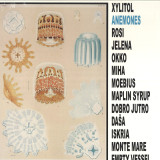
Xylitol is the alias of Catherine Backhouse, producer and DJ under the name DJ Bunnyhausen. She was a resident DJ at Kosmische, the now dormant Krautrock club and is a fan of jungle and hardcore. She currently co-hosts the radio show Slav To The Rhythm, which focuses on vintage central and eastern European pop and electronica and she's also co-writing a book on Yugoslavian pop culture. 'Anemones' is a total project from the cover to the music. Backhouse is fascinated by early botanical illustrations of anemones and other aquatic fauna, and how the act of taxonomy reveals as much about human psychology, desire and sublimation as it does about the organic specimen as a thing in itself. Each track is a microcosm of this 'other life', an allegory for the extraordinary potential latent within bodies that the dancefloor has the power to activate. Using early jungle and garage as starting points to connect dots and open up contrasts between dance music and vintage electronics, Backhouse finds a sweet spot which, in her words "feels like something that's simultaneously still and ancient yet propulsive and ecstatic." Not afraid of letting the the hiss and flutter of the music show, 'Anemones' holds attention with ancient bubbling synths and gracefully drifting arpeggiations, occasionally brought to heel by charming melodies, all accompanied by breakbeats that explode like fireworks. 'Anemones' has a lively and unpolished aesthetic that's a kindred spirit to Nondi_'s 2023 album of smeary, water-damaged footwork, 'Flood City Trax'. 'Moebius' pits the spaced out neon chords of the track's namesake against absolutely tearing breaks, allowing time for this almost overwhelming combination to become near enough transcendental, while the bleeping melody and sad slavic chorus motif in 'Okko' feels like an artifact from an alternative future. The Drexciya meets 2-step garage of 'Dobro Jutro' creates a welcome respite at the album's midpoint before the flow builds up again to 'Daša' with its glassy sounds from a lost radiophonic workshop miniature meeting bruising kicks and snares. Meanwhile 'Iskria' has purring synth chords and 8-bit melodies evoking the cosmonaut age. The subliminal influence of the Yugo era is felt in DIY synthesis and Mitteleuropean melody and seen in song titles such as 'Jelena', 'Miha', 'Daša' (named after novelist Daša Drndič) and 'Iskria' (taken from the fictitious Balkan region in Ottessa Moshfegh's bleak fable 'Lapvona'). 'Anemones' very effectively folds experimental genres from different times and places into a very enjoyable new sound.
Finnish electro duo Morphology, comprised of Matti Turunen and Michael Diekmann, is set to release ‘Made Up Reality’ on Deeptrax Records, the label with a mission to deliver high-quality, groundbreaking electronic music focusing on the deeper side of electronica and eclectic leftfield dance jams, exploring those spaces between deeper house and techno, with hints from the past and a strong vision of the future.
Continuing Morphology's tradition of dark, melodic, and skilfully produced electro funk that has captivated international audiences, they’ve have been holding down the retro-activism of Detroit and its call for an illuminated future of programmable, motorized, electro-fantasies for over 15 years. With releases on Semantica, Solar One Music and a slew of albums for Germany’s Zyntax Motorcity, it’s been Cultivated Electronics and Central Processing Unit that have given new rise to the music of Morphology. Their Traveller LP released through FireScope, helmed by the UK’s B12 in 2018, the floodlights remain unshakably fixed on the Finnish pair’s brilliance, appearing on landmark compilations like CPU’s 50th release jubilee to DJ Stingray’s Kern mix for Tresor, or holding it down in the underground at Scand nights in London, to bookings at Concrete Paris and Closer in the Ukraine, to Berlin’s unmissable Berghain. With a forever exploratory live set, Morphology’s place as a mainstay of futurist electro is rock solid and burning bright.
Renowned for their soul charged, emotion rich melodies and signature blend of techno and traditional electro, Morphology's new EP takes listeners on an unforgettable auditory journey. ‘Made Up Reality’ showcases the duo's ability to integrate acid lines and vibrant drum patterns creating a sonic landscape that is both innovative and deeply resonant. ‘Seven Fingers’ is a deep dive into the darker side of electro, with haunting melodies and pulsating rhythms. ‘Particle Swarm’ is an acid-infused cut that melds techno elements with classic electro beats. ‘Gradient Descent’ is a more electrifying electro acid heater, blending head nodding bassline with sharp acid riffs and pulsating rhythms that will ignite the floor. ‘Active Inclusion’ is a vibrant, drum-heavy composition that brings the EP to a powerful close.
Born in Aldershot on 11 September 1947, Catley's family moved to the Tile Cross area of Birmingham when he was young. He went on to attend the nearby Central Grammar School for Boys (Birmingham) and left to start an apprenticeship at the GPO before deciding on a musical career shortly after meeting similarly minded individuals at college. Whilst at college he joined several bands, such as The Smokestacks (Jeff Clark-guitar, Ron Savage-guitar, Derek Danks-bass & Brian Worrell-drums, Life and Clearwater). His first professional band was when he joined local outfit The Capitol Systems. The initial line-up was Bob Catley (vocals) Paul Sargent (guitar) Paul Whitehouse (bass), Dave Bailey (keyboards) and Bob Moore (drums). Shortly afterward they changed their name to Paradox, inspired by a science-fiction novel. A one-off deal was arranged with Mercury after Paradox had come to the attention of Francis Rossi and Rick Parfitt. The tracks were "Ever Since I Can Remember", backed with "Goodbye Mary". In addition, they recorded "Mary Colinto" and "Somebody Save Me". All of these songs were written by Dave Morgan. Paradox played festivals in the Netherlands and Italy before splitting up upon their return to the UK in 1970. Formed in 1972, Magnum throughout the next 16 years consisted mainly of Bob Catley on vocals and Tony Clarkin on guitar. Magnum began as the house band at Birmingham's famous Rum Runner night club (later the home of Duran Duran). They began to develop their own style by playing Clarkin's songs at a residency at The Railway Inn, in Birmingham's Curzon Street, in 1976. Joining Clarkin and Catley were drummer Kex Gorin and bassist Dave Morgan (later a member of ELO). Their most notable success during these early years was the Jeff Glixman produced Chase The Dragon (1982) which reached No. 17 in the UK, and included several songs that would be mainstays of the band's live set, notably ‘Soldier of the Line’, ‘Sacred Hour’ and ‘The Spirit’. Their breakthrough album came in 1985 with On a Storyteller's Night which featured the single ‘Just Like an Arrow’. This success continued in the following years with the Roger Taylor (Queen) produced Vigilante in 1986, the top 5 album Wings of Heaven in 1988, and the Keith Olsen produced Goodnight L.A. reaching No. 9 in the UK album charts in 1990. Subsequently, Clarkin decided to maintain a tighter control, and after their initial mainstream success, the band lost their major label backing and returned to a more personal level of production. This finally found the band splitting and the formation of Hard Rain in 1995, which saw Clarkin pursue a more Pop orientated direction with a band that included Sue McCloskey on lead vocals. This new direction didn’t sit well with Catley, and after a headline performance at The Gods in the late 90s, a conversation with Bruce Mee of Now & Then Records saw Catley agree with a decision which eventually led to his debut solo album, ‘The Tower’. This release was completely written by Gary Hughes of Ten, with the writing completely decided to be in the vein of classic Magnum. The album itself was recorded by various members of Ten, including the amazing Vinny Burns (Dare) on guitar. On release, the many positive reviews concluded that the release of ‘The Tower’ had succeeded beyond its wildest imagination…..and Bob Catley’s solo career had been launched with amazing success!! With a lyrical intricacy and majestic pomp, songs like ‘Far Away, ‘Fear of the Dark, ‘Madrigal’ and ‘Deep Winter’ take you back to that glorious period of Magnum between ‘Chase The Dragon’ and ‘Wings Of Heaven’ whilst hard melodic rockers such as ‘Scream’, ‘Dreams’ and title track ‘The Tower’ show just what Magnum would have sounded like if they’d gone a little bit harder. Another absolutely brilliant album that totally deserves to be filed alongside those mid-period Magnum classics.
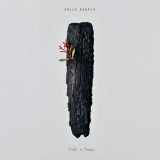
LA-based singer-songwriter Lily Kershaw returns with Pain & More, her new concept album that is a collection of exquisitely heartbreaking, proof-of-life ruminations about existing behind a pall of melancholia. Collectively, they feel like a lifetime of repression, suddenly liberated. Central to Lily’s narratives is the idea that others will probably relate to, or benefit from, her pain. Humbled yet highly melodic, the facetiously named Pain & More is an emotionally tactile album that confronts the many incarnations of the prolonged, persistent depression that has shrouded Lily’s life for decades. It may be her third full-length, but it’s her defining moment -- a vivid, if sometimes uncomfortable, whirl of the angst and hope.Lily released her debut album Midnight In The Garden in 2013, featuring break-out single “As It Seems.” The album scored millions of streams and critical acclaim, and in the following years she landed multiple syncs on shows like Criminal Minds, Grey’s Anatomy, Finding Carter, Ted Lasso and more. She followed it up her 2018 EP Lost Angeles and her 2021 sophomore album Arcadia, which received acclaim from Nylon, American Songwriter, Vulture, Earmilk, Refinery29, CNN and more. Along the way, Lily cut her teeth on tours alongside Radical Face, Mason Jennings, The Weepies, and Joshua Radin, to name a few, and today has amassed more than 80 million streams.
Lucila Justina Sarcines Reyes was born on July 19, 1936, in the Rímac district. Lima, which had just mourned the death of the emblematic composer Felipe Pinglo two months earlier, was a city on the verge of modernization that clung to its colonial and racist ways. Having been born black marked a difficult path in her life: after the father's premature death and a fire that left her and her 15 siblings homeless, she takes the streets to financially support her mother, and at 5 years old learns to sing in bars while begging for money in the port of Callao. After being admitted to a Franciscan convent and studying only until the third grade of primary school, now a teenager, she returns home, but suffers an attempt of rape by her new stepfather; she is forced to move to the central neighborhood of Barrios Altos, to live with her uncle, a guitarist from the legendary Guardia Vieja, also known as the founders of the Peruvian criollo waltz. This group of non-professional musicians, made up of bricklayers, merchants, artisans, marble workers and other employees, prolonged the oral traditions of their African slave ancestors in working-class neighborhoods of the capital. While the wealthy reject the music of their peons, which they associate with alcohol and disorder, it is the workers who listen carefully to the European waltzes and Aragonese jotas at the aristocratic halls, and later, back in their famous one-pipe alleys, transform their music under the spell of the night. It is in these sociability spaces that house numerous low-income families, where these criollos cheer up birthdays, weddings, anniversaries and other parties until dawn with the trill of their guitars and cajones. It is there that Reyes, at 16 years old, picks up the legacy of the Guardia Vieja and her life changes forever: she is often asked to sing in jaranas (criollo parties), and since her voice stands out immediately, she is encouraged to make her debut on a radio show called "El Sentir de los Barrios", whereshe performs the waltz "Abandonada" by Sixto Carrera.
Y2K! is a sugar rush of playful sensuality and unbothered cool—a true representation of the Bronx baddie herself. Ice Spice, born on January 1st, 2000, brings the Y2K vibes and undeniable beats that will make you want to party like it's 2000, before you had to worry about your late-night social media going viral. Ice Spice lives up to her name, bringing straight fire to your speakers this season.
The opening line of Emily Dickinson’s short poem ‘‘Hope’ is the thing with feathers’ inspired the central image of Emily Barker’s new single ‘Feathered Thing’, written while she navigated cumulative grief.
When Barker was first introduced to producer Luke Potashnick (Gabrielle Aplin, Jack Savoretti, Katie Melua) in May 2022, she brought with her a full album’s worth of songs. But after visiting Potashnick’s storied studio, The Wool Hall and hearing his ambitious production ideas, she was inspired to write one more song.
“I also needed to process some heavy news” she comments. Barker and her husband Lukas Drinkwater had been trying to start a family. Following a couple of failed IVF cycles (and other “starts that we’d lost”), they investigated adoption and had decided to relocate to Australia to be closer to Barker’s family.
“It felt like we couldn’t work out what we wanted, but we finally reached a point where we both felt at peace with not having kids,” Barker recalls. “It had been an incredibly intense time, coinciding with a house move and the pandemic.”
And then Barker found she was pregnant. “We’d done all these things to try to make it happen, and then it happened naturally (and against all biological odds). Having previously navigated losses throughout our pregnancy journey, we now had to get our heads around what having this new person in our lives might look like - emotionally and practically.”
Soon after work began on the album, Barker had a miscarriage.
“Songwriting has always been a way of processing throughout my life.” Barker reveals how the new song came quickly as she sat at her piano at home. She shared an early version with Potashnick and remembers him politely asking, “Do you mind telling me what this is about?”
“I think I’d left it too abstract, initially,” she reflects. “It was difficult to open up about the miscarriage, but Luke was very supportive and encouraged me to dig a little deeper without necessarily being specific. I revisited the lyrics, and the result is much stronger.”
“I went to the burnt-out woods/ A tourist with some damaged goods/ Remembered how the trees withstood fires before…”
“The opening line is a metaphor for knowing that I’ll get through this,” Barker clarifies. “It’s about recovery and hope, allowing yourself both the space to grieve and permission to move on”. But Barker’s optimism is never misplaced – she knows the imprint of imagined futures and lost children are carried in hearts and minds forever:
“It’s so hard to let go, wanted to know wanted to know you …”
“I think that it's important to share and normalise these stories, which are all too common, yet not openly spoken about. People hide their pain and don’t want to burden friends and family. I think behind all this anguish, there’s a deep, often untold story.”
Now that Barker is settled back in Western Australia, she’s embracing being an auntie. “I’ve got three younger siblings over here who I’m close to, and they all have kids,” she enthuses. “I look after my brother's kids, aged two and five, one morning a week.”
Recorded - along with the entirety of the new album - at The Wool Hall, ‘Feathered Thing’ begins gently, with oscillating piano and distant drums, until the arrangement gradually transforms into an instrumental dervish of vibrant strings, bass drones and cymbal crashes. Throughout, Barker’s vocals float tantalisingly like a slipstreaming feather.
Watch the video, filmed at The Wool Hall here. The Wool Hall is a studio in Beckington, Somerset, set up by Tears for Fears in the 1980s and used by artists including The Smiths, Pretenders, Joni Mitchell and many more.
Emily Barker is an award-winning singer-songwriter, best known as the writer and performer of the theme to the hugely successful BBC crime drama ‘Wallander’ starring Kenneth Branagh.
Her last album, 2020's ‘A Dark Murmuration of Words’, was produced by Greg Freeman and recorded at StudiOwz, a converted chapel in the Welsh countryside. Lyrically probing, by turns both dark and optimistic, Barker searches for meaning through the deafening clamour of fake news and algorithmically filtered conversation, delivering a timely exploration of the grand themes of our age. It garnered widespread acclaim, with Uncut calling it “…a kind of Australian equivalent of PJ Harvey’s Let England Shake”.
Barker has released music and toured as a solo artist as well as with various bands and collaborations, most notably her long association with Frank Turner, and has written for TV and film, including composing the soundtrack for Jake Gavin’s lauded debut feature ‘Hector’ starring Peter Mullan and Keith Allen.
‘Fragile as Humans’ is scheduled for release on May 3rd 2024 through Everyone Sang/Kartel Music Group. The album will also feature earlier singles: the vast, cinematic ‘Wild to be Sharing This Moment’ and the meditative, crestfallen ‘Loneliness’.
Fabiana Palladino announces full details of her hotly anticipated self-titled debut album. The UK vocalist, songwriter, multi-instrumentalist and producer releases ‘Fabiana Palladino’ via Paul Institute / XL Recordings. Made in the wake of the end of a long relationship, the album is an intimate record that sees Fabiana Palladino confront complex questions about love, loneliness and normativity in relationships. The result is a 10-track full-length of shapeshifting sonics that draws inspiration from the big R&B, soul, pop and disco studio productions of the 1980s and 90s and filters them through a modern lens.
Written and self-produced by Palladino, the album features performances from renowned musicians and close friends including Paul Institute co-founder Jai Paul, her father and legendary session bassist Pino Palladino, brother and Yussef Dayes bassist Rocco Palladino, renowned drummer Steve Ferrone and strings from Rob Moose.
Speaking on the new music and forthcoming album, Fabiana Palladino says: “A central theme of the album is aloneness. Whether it’s a song where I’m searching for connection with someone else, or trying to embrace the aloneness, it tends to come back to me, who I am when I’m alone, what I feel when I really look inwards. I’d say it’s a pretty introspective record overall. The songs are often about trying to go deeper into yourself, exploring your true feelings and how they then relate to and affect your relationships with others
Miles Davis' A Tribute to Jack Johnson is the best jazz-rock record ever made. Equally inspired by the leader's desire to assemble the "greatest rock and roll band you have ever heard,” his adoration of Johnson, and Black Power politics, Davis created a hard-hitting set that surges with excitement, intensity, majesty, and power. Bridging the electric fusion he'd pursued on earlier efforts with a funkier, dirtier rhythmic approach, Davis zeroes in on concepts of spontaneity, freedom, and identity seldom achieved in the studio — and just as infrequently accepted by the mainstream.
Sourced from the original analog master tapes, pressed on MoFi SuperVinyl, and housed in a Stoughton jacket, Mobile Fidelity's 180g LP reissue brings it all to fore with startling realism. Benefitting from SuperVinyl’s nearly inaudible noise floor, superb groove definition, and clean, ultra-quiet surfaces, this 180g LP showcases everything — from the bold tonality of the headliner's white-hot trumpet solos to the decay of crashing cymbals, carry of wiry guitar notes, and echoes of the studio — in reference fashion.
Bristling with exuberance, Davis' high-register passages explode with authority and commanding presence. Around him, a barrage of urgent backbeats, knifing riffs, and supple bass lines emerge amidst black backgrounds. One of the most prominent differences long-time fans will notice is how much more aggressive, immediate, and vibrant the music sounds, with those aspects central to the composer's original desires.
Utilizing wah-wah and distortion, the go-to instrumentalist of the performances— guitarist John McLaughlin — attacks with a nasty edge, slashing style, and vicious streak that allows A Tribute to Jack Johnson< cross the until-then-impenetrable divide between rock and jazz. Davis puts both feet in the former camp and erases any gap. The stories of the record’s creation are nearly as legendary as the sounds within: Two sessions, multiple jams, different sets of musicians (several uncredited), and near-miraculous production perfectionism that made it all appear cohesive.
The least-well-known masterpiece of Davis' career, the 1971 record — seamlessly assembled and spliced together by producer Teo Macero — was a victim of limited record-label promotion. Audiences also didn’t immediately know what to make of its original cover art — faithfully replicated here. In addition, the powers that be at Columbia Records were directing the public’s attention to Miles at Fillmore, a completely different kind of album guided by two keyboardists. A Tribute to Jack Johnson practically lives in a different universe, one from the future. To many listeners who did manage to hear it — among them critic/musician Robert Quine, Stooges leader Iggy Pop, and renowned critic Robert Christgau — it surpassed everything that came before.
Indeed, Davis treated it as a personal manifesto: An opportunity to salute the Black championship boxer admired for his threatening image to the establishment and impeccable taste in clothes, cars, women and music. Davis explains in the liner notes his affinity for Johnson — a stance mirrored by the defiant music, which hits with a prize fighter's force and reflects the graceful elegance with which a pugilist navigates the ring — and closes the album with a Johnson quote read by Brock Peters.
Inspired not only by Johnson but by Jimi Hendrix and Sly Stone, Davis changed his approach and his band. He surrounds himself with a cadre of musicians in their 20s and, in the case of bassist Michael Henderson, a 19-year-old fresh from touring with Stevie Wonder. Henderson gives Davis what he requested: boogie-based grooves that don’t lose shape or direction. Soprano saxophonist Steve Grossman, drummer Billy Cobham, and organist Herbie Hancock adhere to a similar aesthetic that prizes brazenness, innovation, and energy.
In that vein, during a portion of “Yesternow,” Davis segues into a separate performance (which became known in its entirety as “Willie Nelson”) played by guitarists McLaughlin and Sonny Sharrock, bass clarinetist Bernie Maupin, keyboardist Chick Corea, bassist Dave Holland, and drummer Jack DeJohnette. Dig it!
Talking with jazz scholar Bill Milkowski — who himself noted how McLaughlin’s unrestrained style, decibel-forward volumes, and rapid-fire power chords engendered himself to the rock crowd at the same time that his harmonics and syncopation still definitely made him a jazz player — guitarist Henry Kaiser summed up part of the appeal of A Tribute to Jack Johnson as well as anyone, saying: “It’s a jazz record that way way more open than other jazz records at the time, but still not free jazz. McLaughlin’s rhythm guitar playing on ‘Right Off’ — the use of different chords in a rock shuffle than what anybody had used before — was revolutionary.”
And to think that’s just one aspect of a record that contains multitudes. “Never let them forget it.” Indeed.
Progressive dark group TVINNA returns with their second act "Two - Wings Of Ember" - stylistically more open, more experimental and thoroughly free. A logical consequence of their own visions and artistic concept. But also a result of the new line-up. Laura and Rafael
Fella have remained from the original line-up. She, one of the enchanting voices in pagan folk band "FAUN", he, playing guitars for Swiss folk metallers "Eluveitie".
“Two - Wings Of Ember“ is the second out of four chapters, in which TVINNA breaks down the different episodes of life - each linked to one of the four elements. On this release, the element of fire takes the central stage.
White vinyl, limited to 500 copies. Liam Cromby, known for his work as the lead singer and songwriter of We Are The Ocean until 2017, has today announced his forthcoming debut solo album What Can I Trust, If I Can't Trust True Love, due for release on December 1st 2023, also sharing the title track, available to stream/download worldwide now. "Drawing from my own experiences, this song is a testament to those early, fragile moments of a relationship_where every misstep feels like a fall and every kind gesture feels like flying," he explains. "Choosing to name the album after this song was instinctive, given that it was among the final tracks to be crafted. Even though it came later in the creative journey, it perfectly embodies the central theme of the album." Since revealing the first taste of new music in March, with the release of `Here I Am' - accompanied only by a contemplative, artful film featuring an elaborate dance between two performers - followed by `Breakdown', and last month, `At This Table', this new phase of his career is already off to an impressive start. With early airplay from BBC Introducing and Absolute Radio Country among others, an appearance at The Great Escape festival and sold-out headline shows across the country, Cromby was invited to play at the prestigious Black Deer Festival of Americana, and along with a full-band set, joined Brandy Clark, Drake White, Elles Bailey and Bella White for a Songwriter Session. Although recorded in a matter of days, the project was at least five years in the making.
Producer / composer / multi-instrumentalist Angel Marcloid records music under the moniker Fire-Toolz. Though Marcloid’s output emerges in a litany of aliases and projects — from the jazz fusion / new age of Nonlocal Forecast to the vaporous nostalgia of MindSpring Memories — the Fire-Toolz catalog remains the central focus of the prolific artist’s musical universe and a home for Marcloid’s most ambitious work.
"I am upset because I see something that is not there.", the fifth Fire-Toolz album to join the Hausu Mountain catalog since 2017, follows 2021’s sprawling double-album Eternal Home and 2022’s self-released EP I will not use the body’s eyes today. I am upset… offers listeners a prismatic cross-section of juxtaposed genres and compositional contortions to explore, maintaining Fire-Toolz’s signature density and complexity while tightening the scope of Marcloid’s experimentation into the project’s most focused song cycle to date.
Perhaps more than any previous Fire-Toolz album, I am upset... presents some form of pop music, carried in Marcloid’s passages of clean vocals, in the bright synth tones that animate its tracks, in the yearning saxophone lines that pour into view and whisk the narrative onto a new path. The format of a one-person “band” carries a different weight in a landscape of solo artists crafting modernist productions that don’t allude in the slightest to various twentieth-century rock-related traditions. Fire-Toolz exists on both sides of this divide. The music of Fire-Toolz draws energy on a moment-to-moment basis from the constant fluctuation between seemingly disparate styles, yet Marcloid repeatedly pulls off the impossible feat of making chaotic deviations and improbable jump-cuts between ideas sound holistic, as if such compositional gambits were already logical to begin with. Bursts of harsh textural noise cut into drifts of new age synth bliss, while screamo verses bookend passages of hyper-technical jazz fusion.